


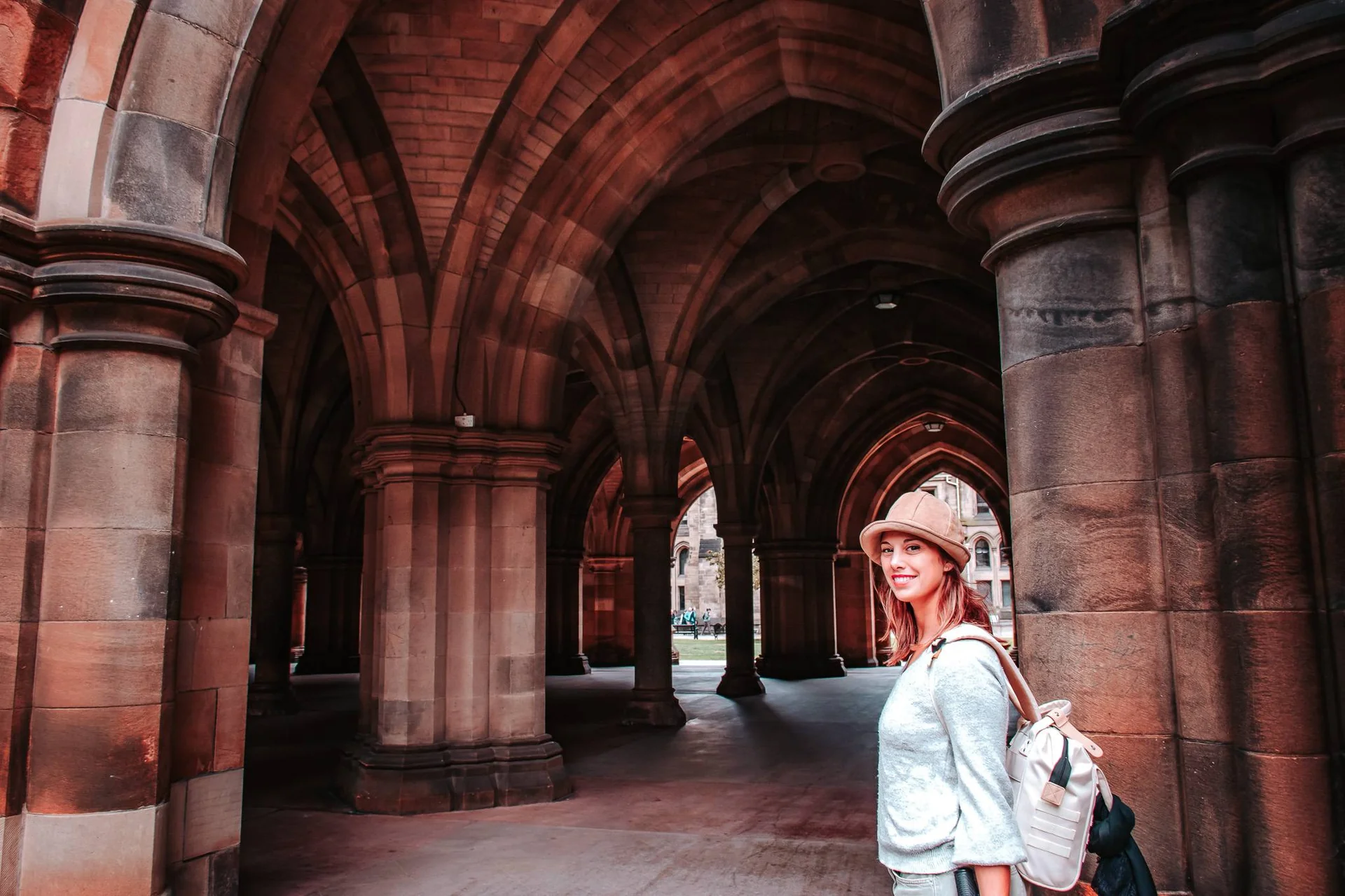
Glasgow is a city that is beautiful in its sadness.
It came out all by itself, right in the middle of a cobbled alley where nothing was happening at all, and at the time I thought it might not be very nice (Caroline looked at me like “do you hear yourself talking?”). But the more I think about it, the more I realise that it’s the only honest sentence I’ve said about this city.
We went there twice. The first time in a campervan, to meet a friend of Caroline’s she hadn’t seen in a long time, and the second time in the middle of August, on foot this time, without a van, just to walk the streets and see what they had to say. And both stays say the same thing: Glasgow doesn’t reveal itself at first glance, it takes some effort. Come on, let’s take you along.
Glasgow is the largest city in Scotland (~600,000 inhabitants), a cultural capital unlike Edinburgh, which is more political and touristy. Victorian stone architecture, a huge music scene, one of the oldest universities in the UK, and a West End full of bars and restaurants that are definitely worth a visit.
Glasgow : Places we can tell you about
Here's our selection of places in Glasgow: spots we've visited that might be useful to you. Use the list view to discover each address in detail, and export everything to add to Google Maps or your favorite GPS app.
| Place | Address | Download |
|---|---|---|
| University of Glasgow | University Avenue, Glasgow G12 8QQ, Scotland | |
| The Hidden Lane: Glasgow hides a whole village behind a close | 1103 Argyle Street, Finnieston, Glasgow G3 8ND, Scotland |
| Place | Address | Download |
|---|---|---|
| Waxy O'Connor's, Glasgow: the jug of water is free, and in Scotland that is the law | 44 West George Street, Glasgow G2 1DH, Scotland | |
| Stravaigin, Glasgow: the name shares a root with extravagant, and the menu proves it | 28 Gibson Street, Glasgow G12 8NX, Scotland |
| Place | Address | Download |
|---|---|---|
| Òran Mór | Òran Mór, Glasgow, Scotland | |
| Kelvingrove Art Gallery & Museum | Kelvingrove Art Gallery & Museum, Glasgow, Scotland | |
| Kelvingrove Park | Kelvingrove Park, Glasgow, Scotland | |
| Glasgow Botanic Gardens | Glasgow Botanic Gardens, Glasgow, Scotland | |
| St Mungo Cathedral | Cathédrale St Mungo, Glasgow, Scotland | |
| Necropolis | Necropolis, Glasgow, Scotland |
Glasgow : a glimpse of the weather
5-day forecast
Fancy a last-minute trip? Here's the 5-day forecast to help you decide.
Monthly climate
We prefer sunny days without too much rain, but everyone has different tastes! Here's the monthly climate to help you choose your ideal time.
| Month | Min temp | Max temp | Rain | Weather | Rating |
|---|---|---|---|---|---|
| October | 8°C | 12°C | 120 mm | 🌦️ | |
| November | 4°C | 9°C | 165 mm | 🌧️ | |
| December | 4°C | 8°C | 149 mm | 🌧️ | |
| January | 1°C | 5°C | 103 mm | 🌧️ | |
| February | 3°C | 7°C | 90 mm | 🌧️ | |
| March | 3°C | 10°C | 109 mm | 🌧️ | |
| April | 4°C | 13°C | 81 mm | 🌦️ | |
| May | 8°C | 16°C | 62 mm | 🌧️ | |
| June | 11°C | 18°C | 135 mm | 🌧️ | |
| July | 13°C | 20°C | 70 mm | 🌦️ | |
| August | 12°C | 19°C | 100 mm | 🌦️ | |
| September | 11°C | 16°C | 164 mm | 🌧️ |
Quota RapidAPI dépassé (limite par minute/mois). Réessayez plus tard.
Glasgow on a road trip: the West End as a base camp
First thing to understand: Glasgow has two faces. The city centre with Buchanan Street (a pedestrian shopping avenue), George Square (the central square), and historic pubs like Waxy O’Connor’s. And the West End, further west, where student and creative life is concentrated: University of Glasgow, Kelvingrove, Botanic Gardens, and all the nice little bars and restaurants in the area.
For us, the West End was the base camp because that’s where Caroline’s friend lives. But even if you don’t have anyone there, I recommend prioritising this neighbourhood: within walking distance of all the good spots, relaxed atmosphere, accommodations and restaurants that are more human-sized. The centre can be done in half a day, it’s more than enough.
Plan your trip to Glasgow
Compare rental companies and book at the best price.
Booked on Trip.com — partner link.
Provided by Holafly, our partner.
5% off with code LAPLANETEDECARO
Booked on Holafly — partner link.
Grey or green? Even the name Glasgow has never made up its mind
So, let’s start by debunking something you read absolutely everywhere. You’ll be told that Glasgow means “the dear green place”, and it’s so pretty that everyone copies it without questioning (me included, before I checked).
Except that it’s not true. This translation is recent, dating from the mid-20th century, and it’s highly contested. The name is of Brittonic origin, and the starting word, glas, is precisely the word that refuses to choose: in Brittonic as in Gaelic, it means green as well as grey, even grey-blue. The second element refers more to a hollow, a valley. So the honest translation would be something like “the grey-green hollow,” which, let’s admit, doesn’t sound nearly as good on a fridge magnet.
And the craziest thing is that after three days there, I physically felt this hesitation. On one side, you have the stone, the brown and grey tones, the massive facades, something really austere and serious, especially when coming from the Algarve with its whitewashed houses and colourful bands around the windows. It’s not ugly, mind you. It’s just completely something else. And on the other side, you have a surprisingly green city for its size, parks everywhere, dense vegetation, an air that is quite pleasant while walking.
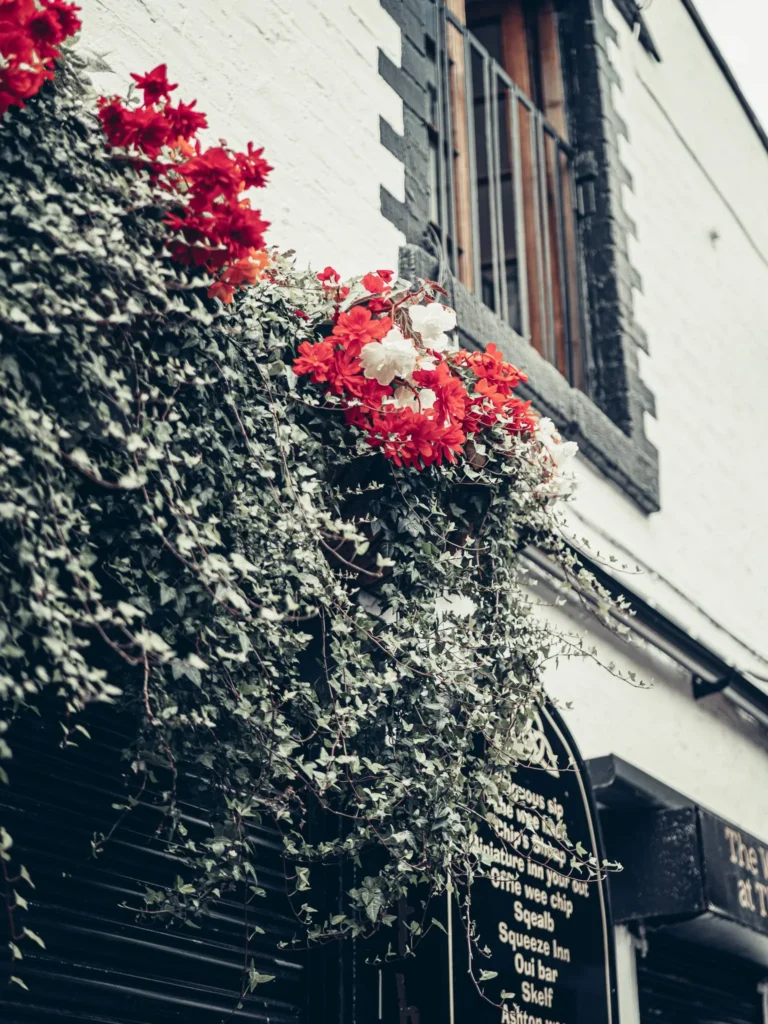
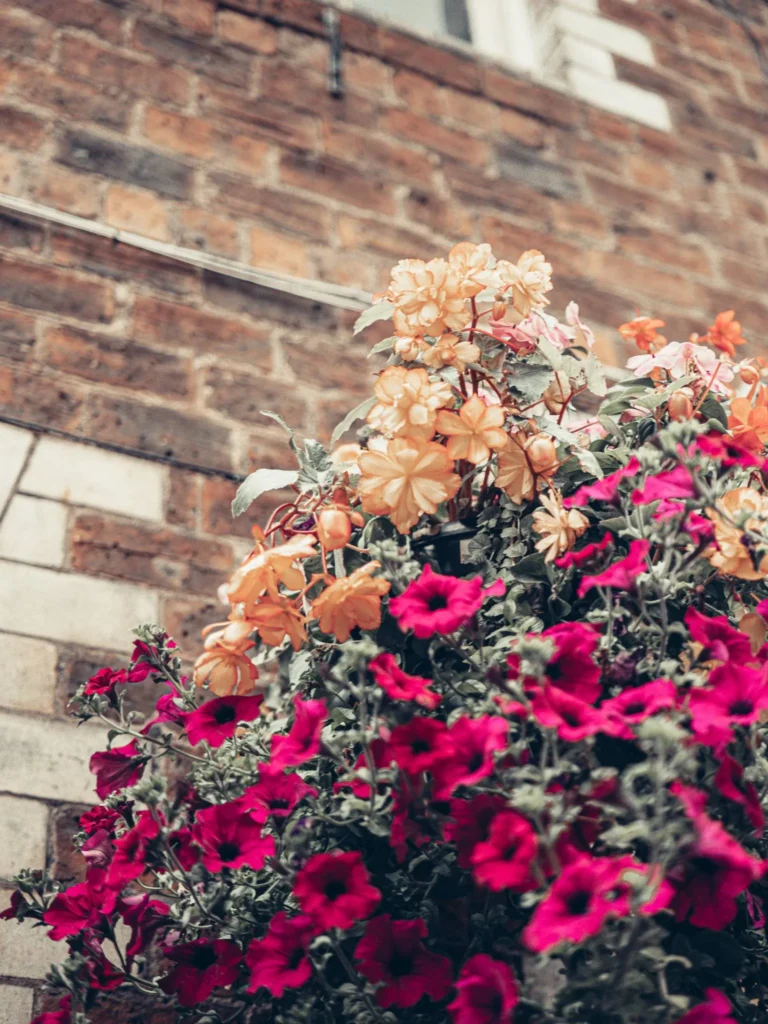
So when colour appears, it explodes. A planter of red flowers above a pub door, a café front overflowing with petunias, a red cast-iron pillar box sitting at the corner of a street… in a setting where everything is in the same stone range, every splash of colour stands out ten times more than elsewhere. That’s something I hadn’t anticipated.
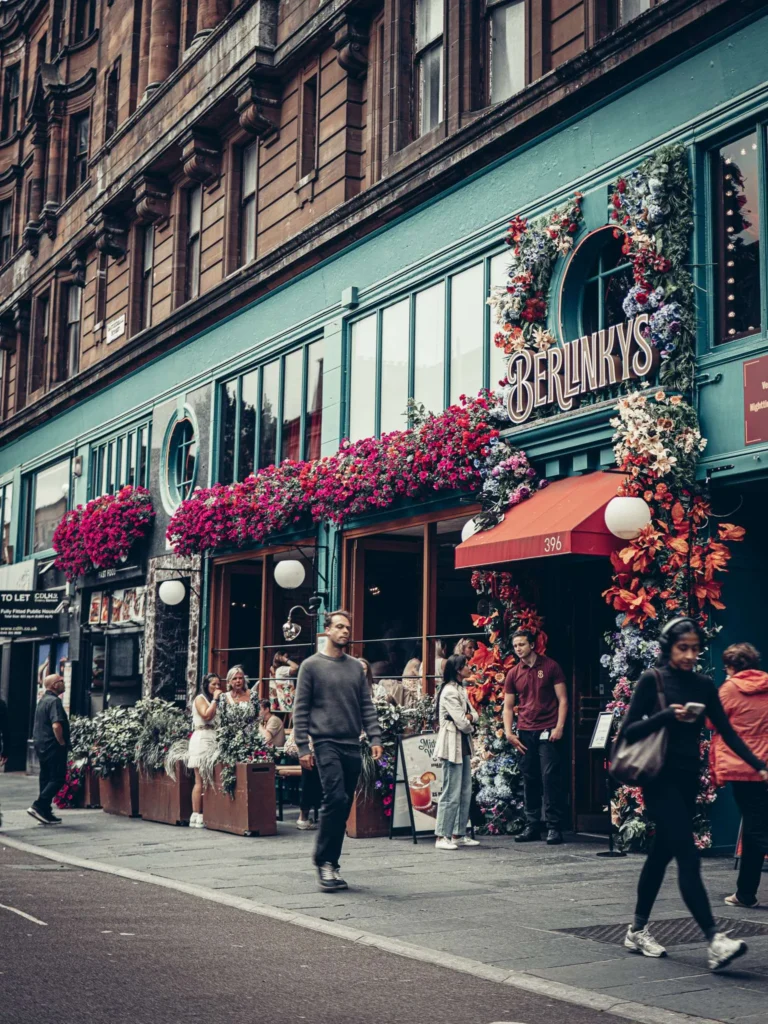
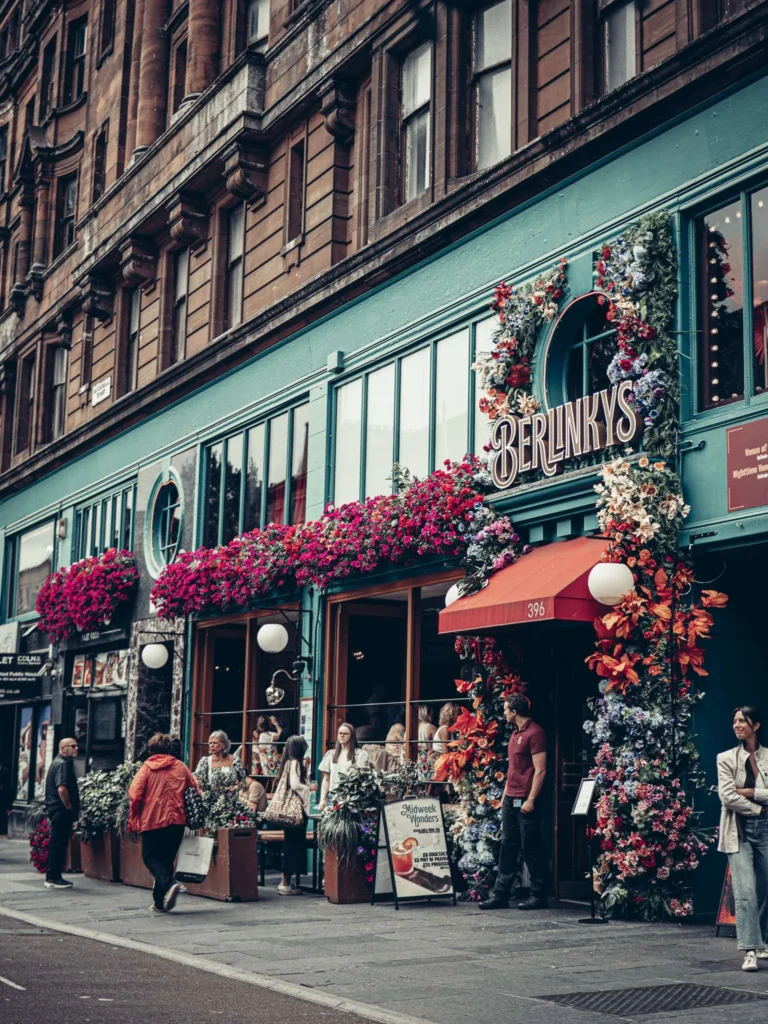
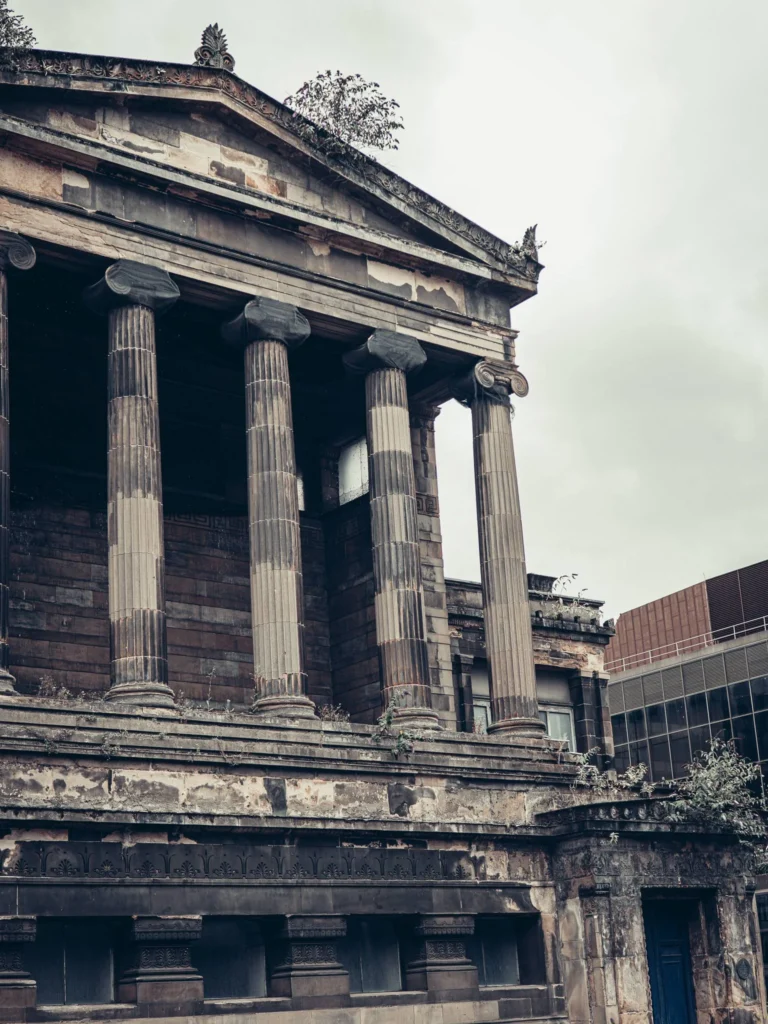
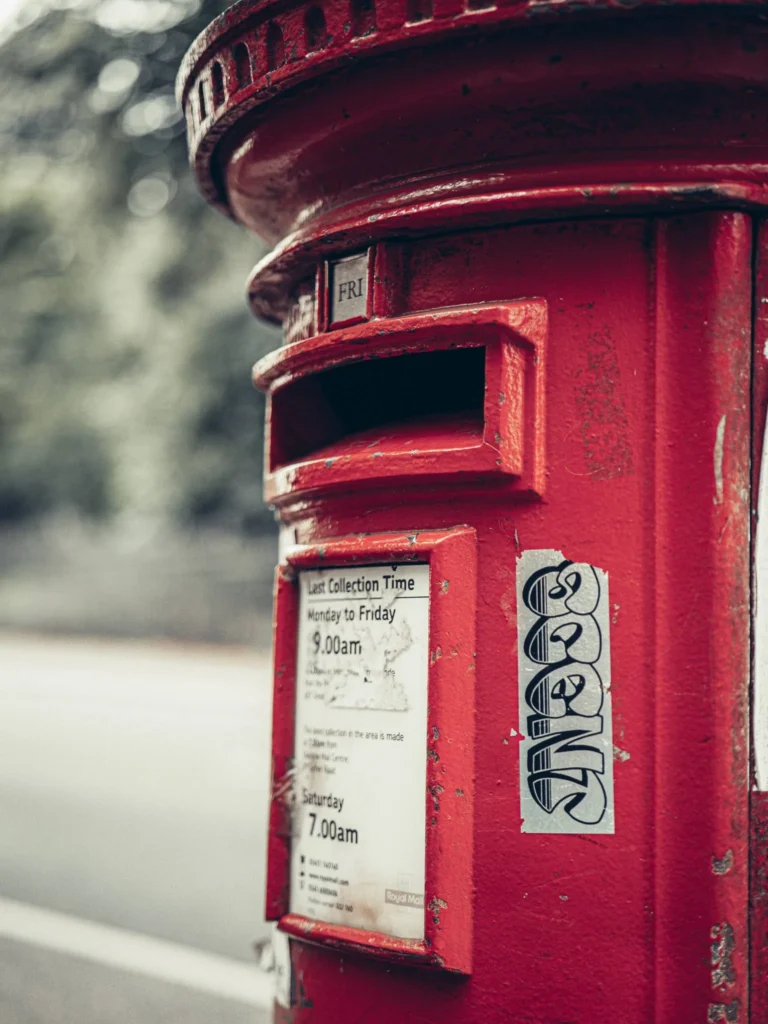
Oh, and the weather, let’s talk about it. We were lucky on paper (constant alternation of grey and sunny spells, no real downpour), but in reality, you have to love being able to take off and put on your jacket every four seconds. It’s sporty. The advantage, and it’s really an advantage, is that the light continuously changes on the facades: the same street photographed ten minutes apart doesn’t give the same result at all.

We're Caroline and Xavier
We drive to a place, stay long enough to get it wrong a few times, then write the guide we wish we'd had: parking, timing, what's worth the detour.
Ce que vous souhaitez recevoir :
Reading a Glasgow facade: blond sandstone, red sandstone, and bay windows
So this is THE thing I wish I had known before going, because it completely transforms a walk in the city. Glasgow is a city that you can literally read on its walls, and once you have the key, you can’t stop.
The colour of the stone tells you the date of the building. The entire historic city is made of sandstone. For decades, they built with the blond sandstone from local quarries, around Giffnock and Bishopbriggs, just south and north of the city. Then around 1890, these quarries began to deplete, at least for the beautiful stone. Architects then turned to the red sandstone from Dumfriesshire, at Locharbriggs, which the Carlisle-Glasgow railway finally made affordable. The first building in Glasgow made of Locharbriggs red was completed in 1889.
As a result, the rule is almost silly: blond means before 1890, red means after. And when you see the two colours side by side in the same street, as I photographed unknowingly on St Vincent Street, you are looking at two generations of builders and a depletion of quarries. I find that dizzying (yes, I know, I get excited about stones, but still).
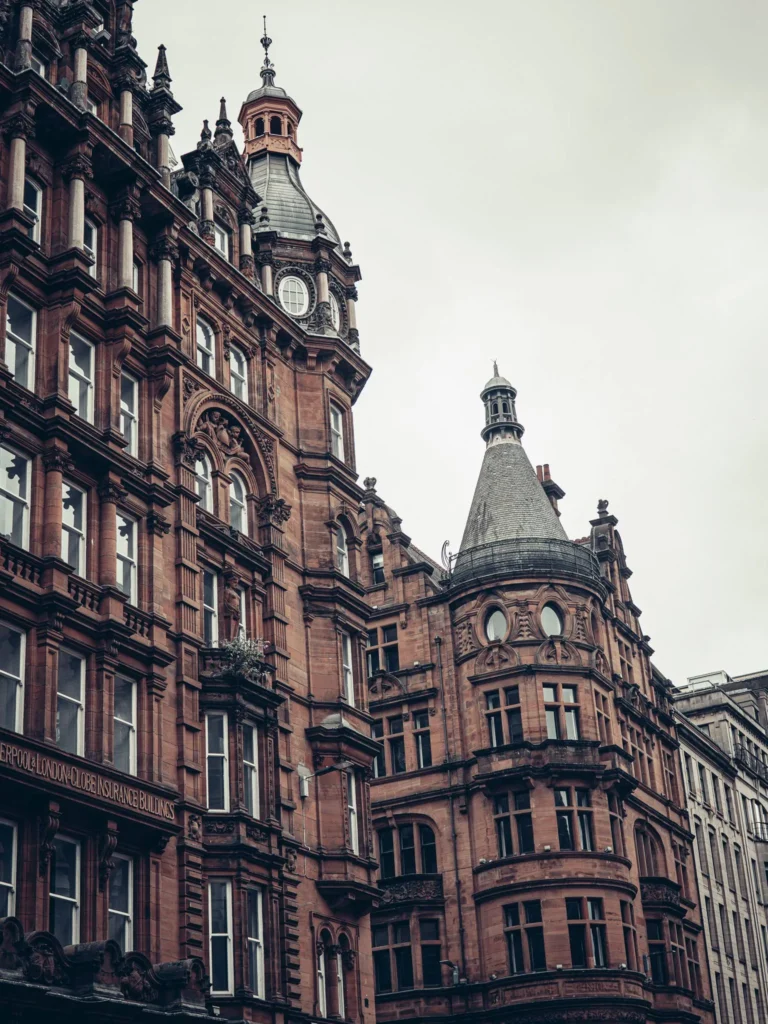
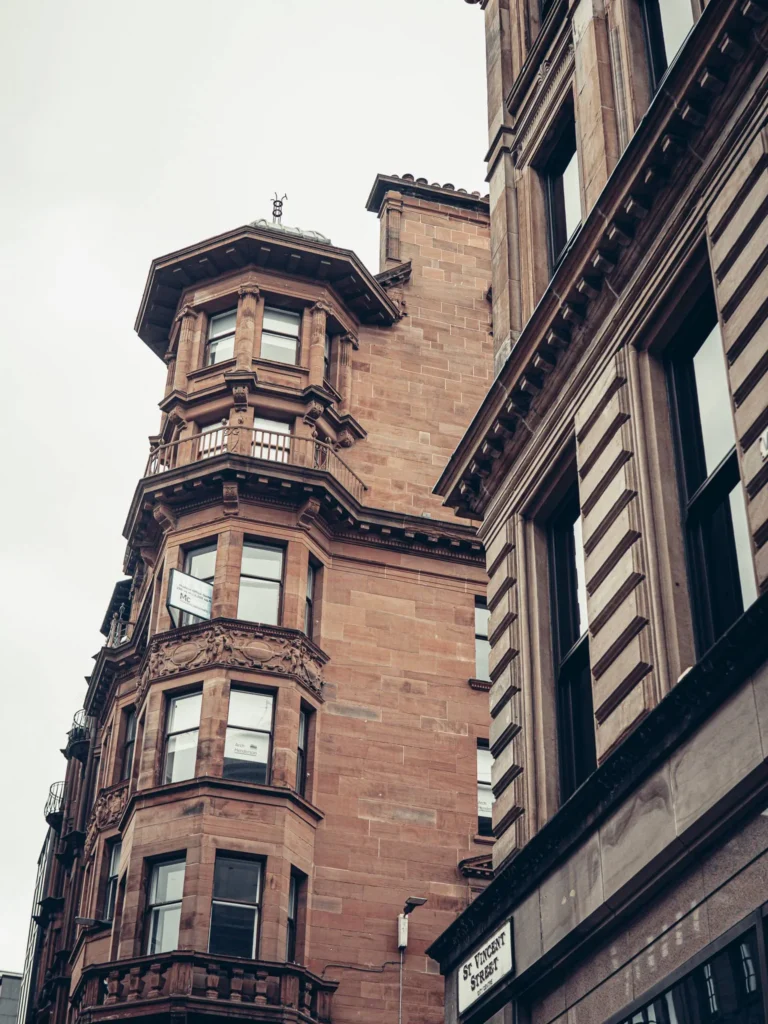
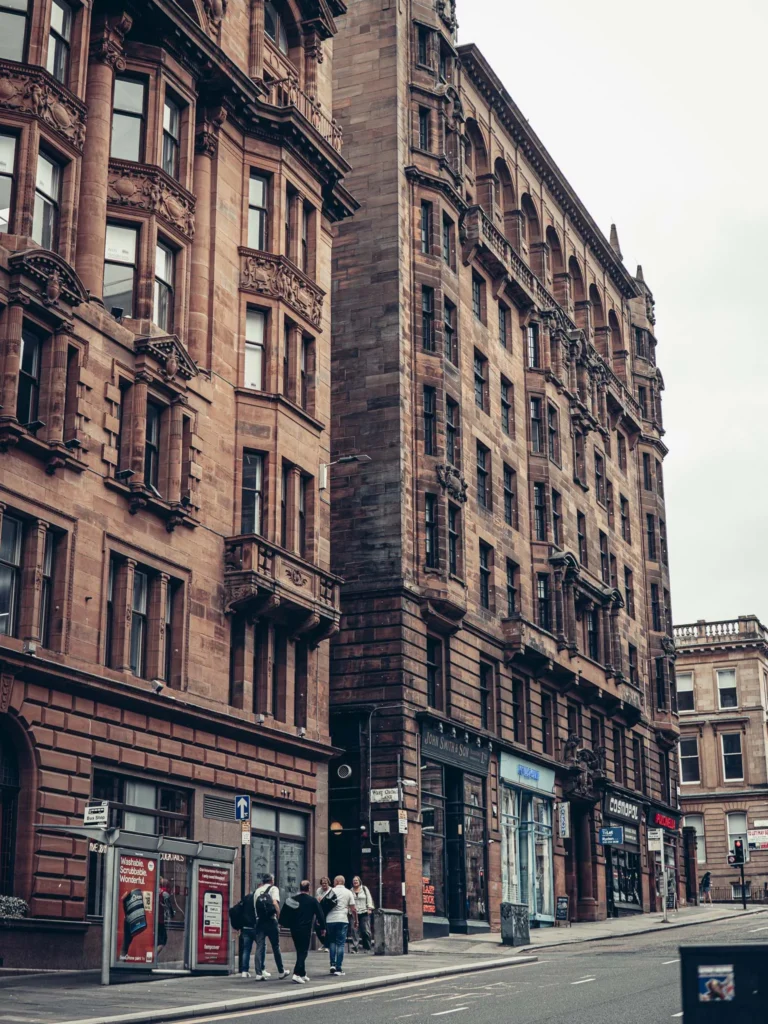
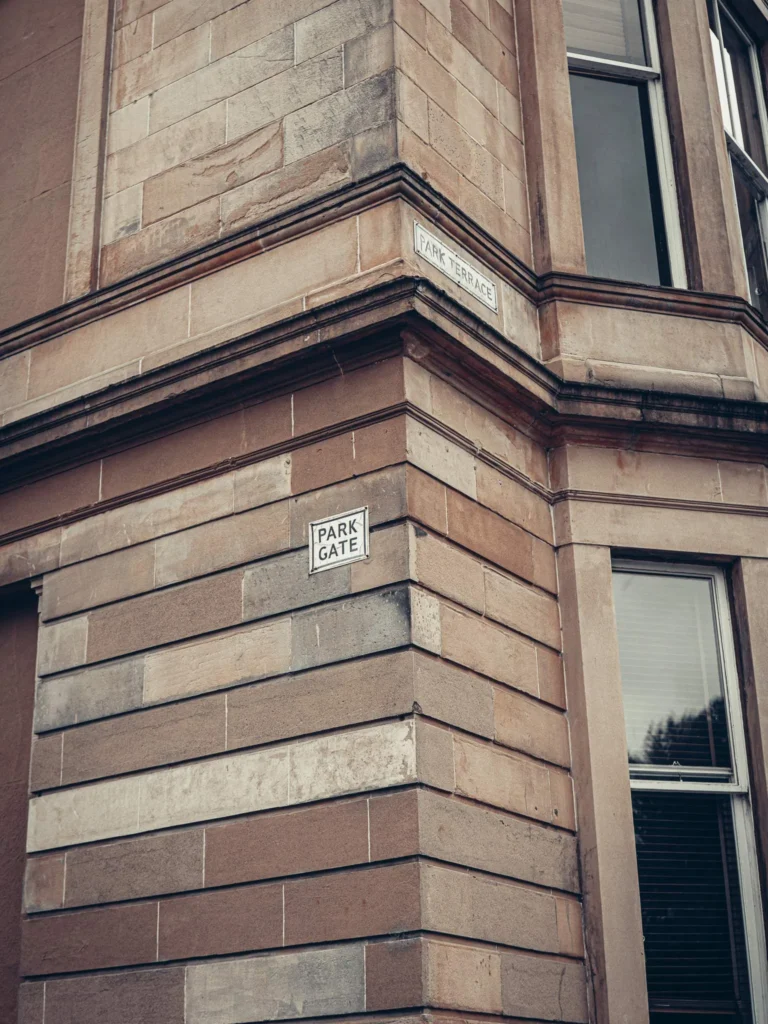
The second thing that caught my eye: bay windows everywhere. Bay windows, often three-sided (they’re called canted bay windows), on entire buildings. And on site, I made up a whole story: I thought that in a country where the sun is rare, a multi-paned window must capture light from more angles than a flat bay. Logical, right?
Well, no. I worked this out on my own while walking, because they can also be found on facades facing north, which never see a ray. Checking it out, Historic Environment Scotland presents them as a marker of standing of Victorian tenements: the higher-ranking apartments were distinguished by these expensive bay windows and facade ornaments. It’s social show-off, not solar engineering. My hypothesis was pretty, but it was wrong, there you go.
Third detail, and this one reconciled me with our first night. In many streets, you enter your home by going up a few steps: the ground floor is raised above the pavement, and below there is a half-buried level, with its own windows flush with the ground. This is not an accident. Builders dug down about a quarter of a floor and dumped the earth in front to raise the street level. The noble floor was thus elevated (better view, and especially much less humidity, which was not a luxury), and the lower level housed the kitchens and household staff. The small courtyard below the window is called an area, and in the 18th century, it was nicknamed the airy, because it served to ventilate and prevent cooking smells from rising into the drawing rooms.
And so our famous first room, the one I described at the time as “almost in the basement” for about 140 euros a night… well, it wasn’t a basement. It was the servants’ floor (I’ll let you ponder the value for money, I did nothing but that for two days).
The University of Glasgow: our visual highlight
And here we enter the thing that really pleased us. The University of Glasgow, founded in 1451, one of the oldest in the English-speaking world. The building we see today is not the original medieval one: it is the neo-Gothic Main Building by George Gilbert Scott, from the late 19th century, with its tower visible from afar.
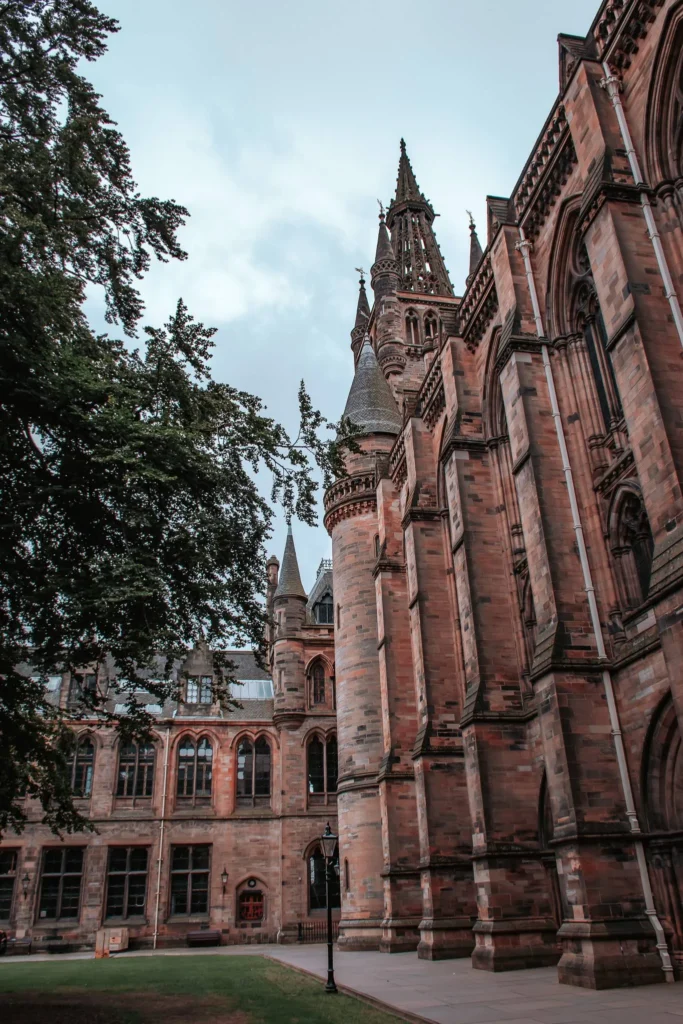
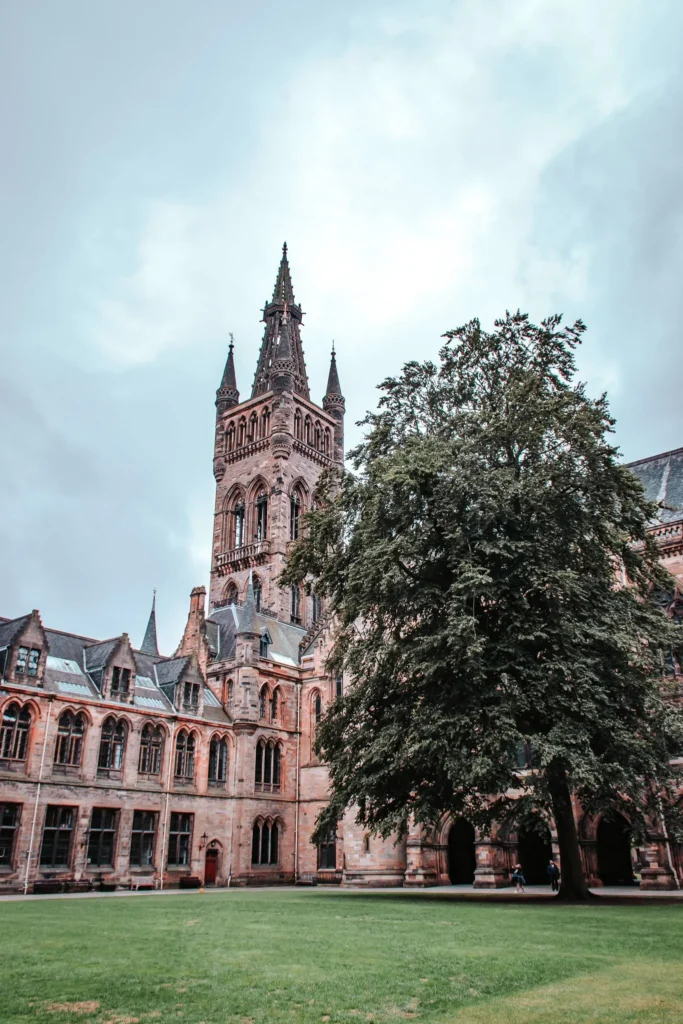
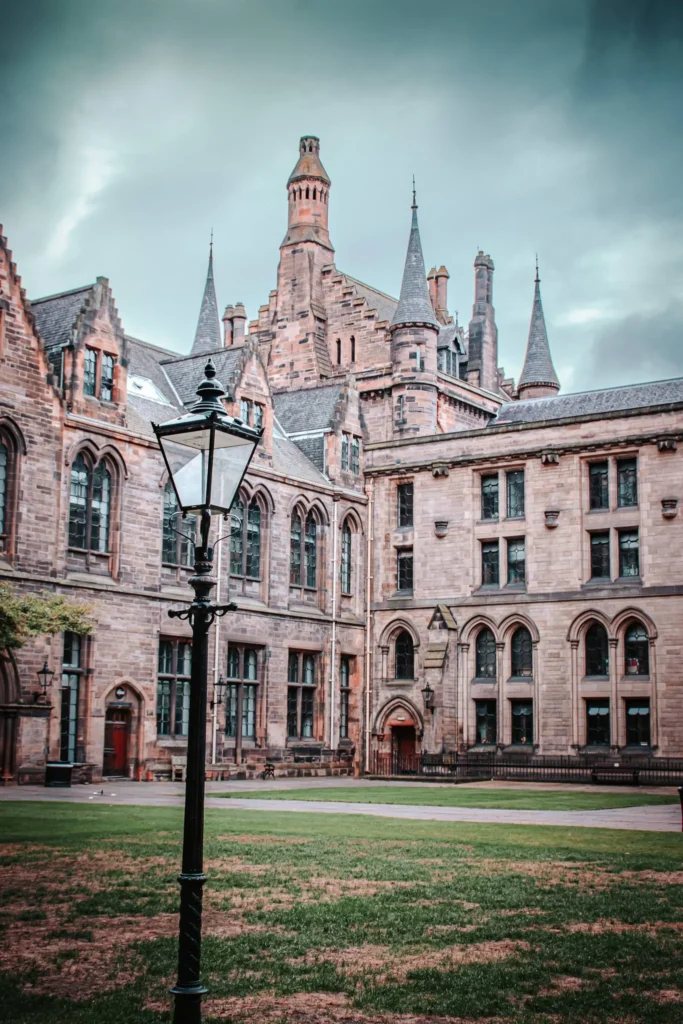
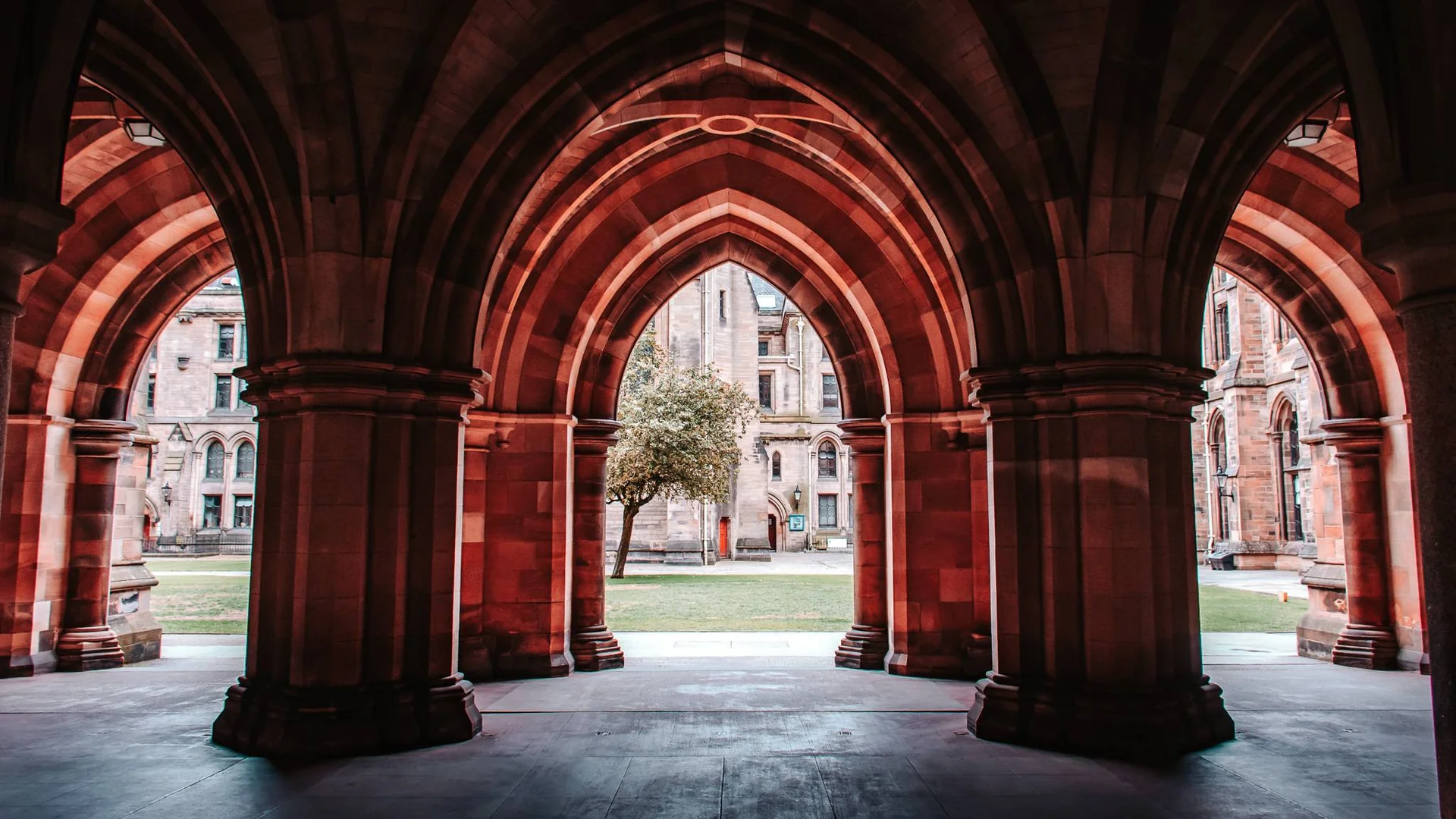
What you need to see are the cloisters under the Bute Hall (the Cloisters, or the Undercroft), these vaulted stone corridors that have become the most photographed spot in the city. If you’ve seen Cloud Atlas, where one of the quadrangles plays Cambridge, or Outlander, where the cloisters play Harvard, you’ve already seen them. The visit to the exterior and the cloister is free, plus the Hunterian Museum inside (Scotland’s oldest public museum, 1807, also free).


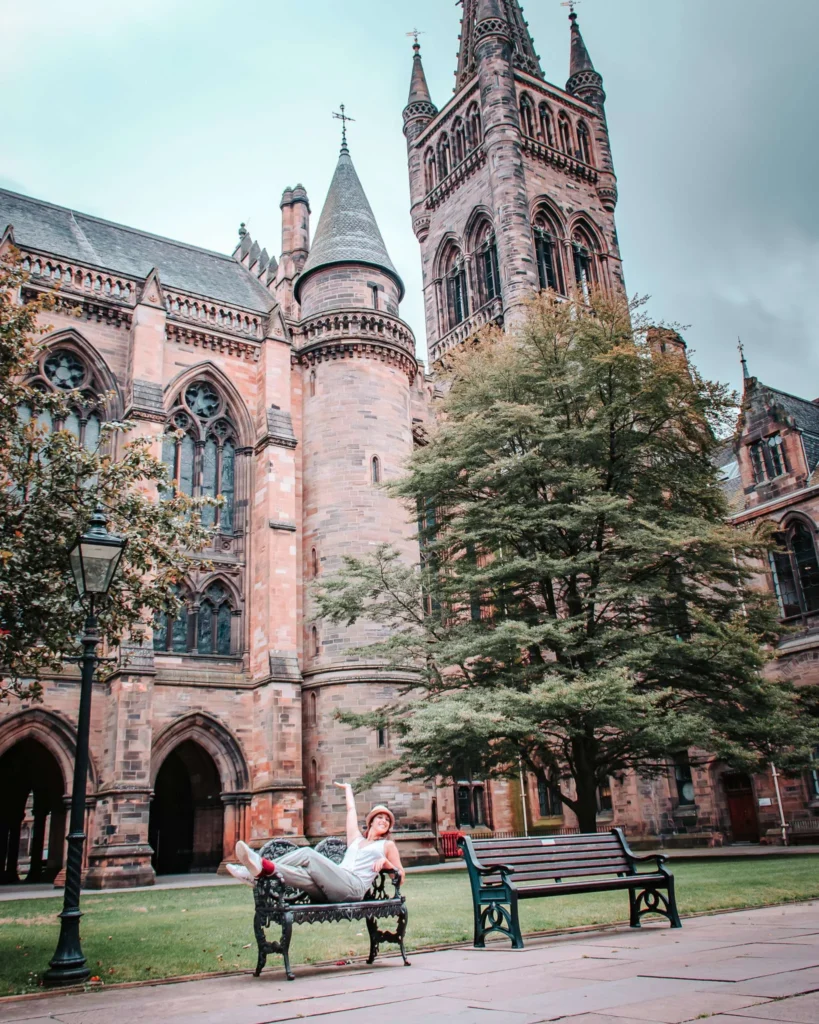
Plan for a leisurely 2 to 3 hours. Caroline took a lot of photos, I stood in front of the arches for a quarter of an hour trying to catch the right light (it changed every four seconds, see above). We wrote a whole sheet on this campus, notably addressing the Hogwarts question that everyone asks:
University of Glasgow
Under the arches the light switches on and off every fifteen seconds. It is the Glasgow weather holding the switch, and we just stood there, doing nothing but watching the...
Read moreKelvingrove Park and Park Circus: the walk we hadn’t planned
So this was supposed to be a simple shortcut to get home. We ended up spending the afternoon there.
Kelvingrove Park is a small haven of peace, and it definitively settles the question of “Glasgow is grey.” Very dense vegetation, chestnut trees, benches everywhere, large open spaces, the Kelvin River running through, and a background sound of crows cawing in the trees. It’s calm, it’s relaxing, and personally, I spent the whole time thinking it would be a perfect spot for running. From the park, you also get a beautiful view of the university tower, which rises above the trees and you would honestly mistake for a church steeple if you didn’t know.
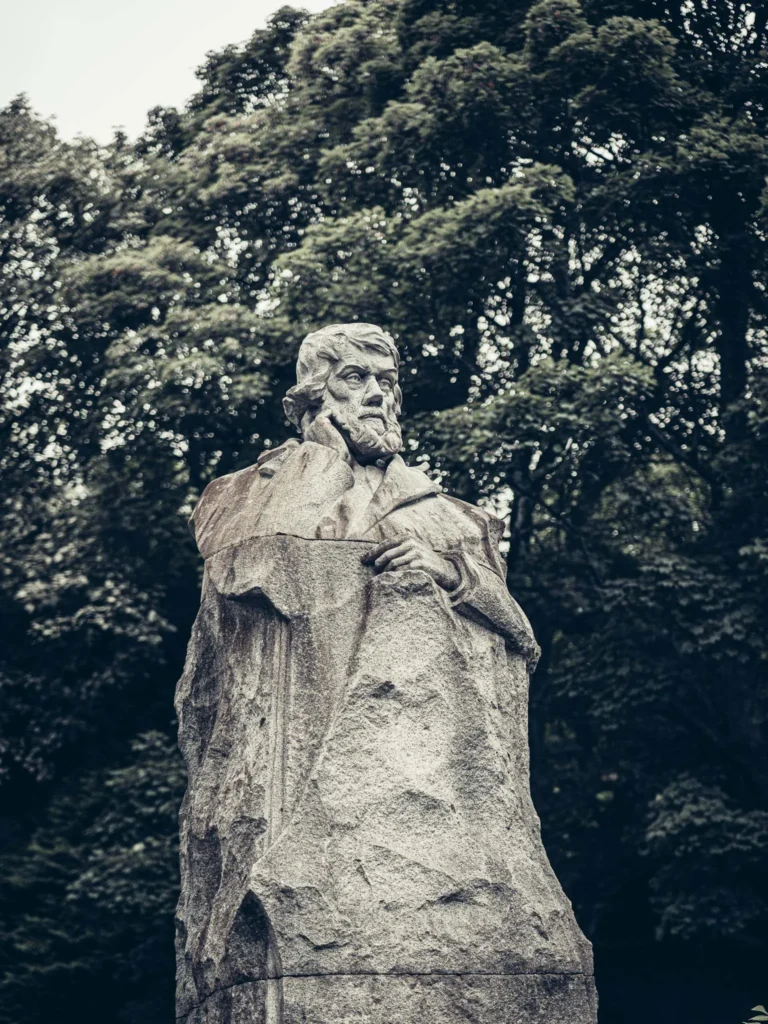
And there are statues and monuments everywhere, which intrigued me at the time. Explanation: the park was created in 1852 under the name West End Park, with Joseph Paxton (the guy from the Crystal Palace in London) and architect Charles Wilson, and it is the first public park in Scotland designed as such. Moreover, it hosted three giant international exhibitions in 1888, 1901, and 1911, which attracted millions of visitors. The monuments we encounter are largely remnants of all that. And the icing on the cake: the profits from these exhibitions funded the construction of the Kelvingrove Art Gallery.
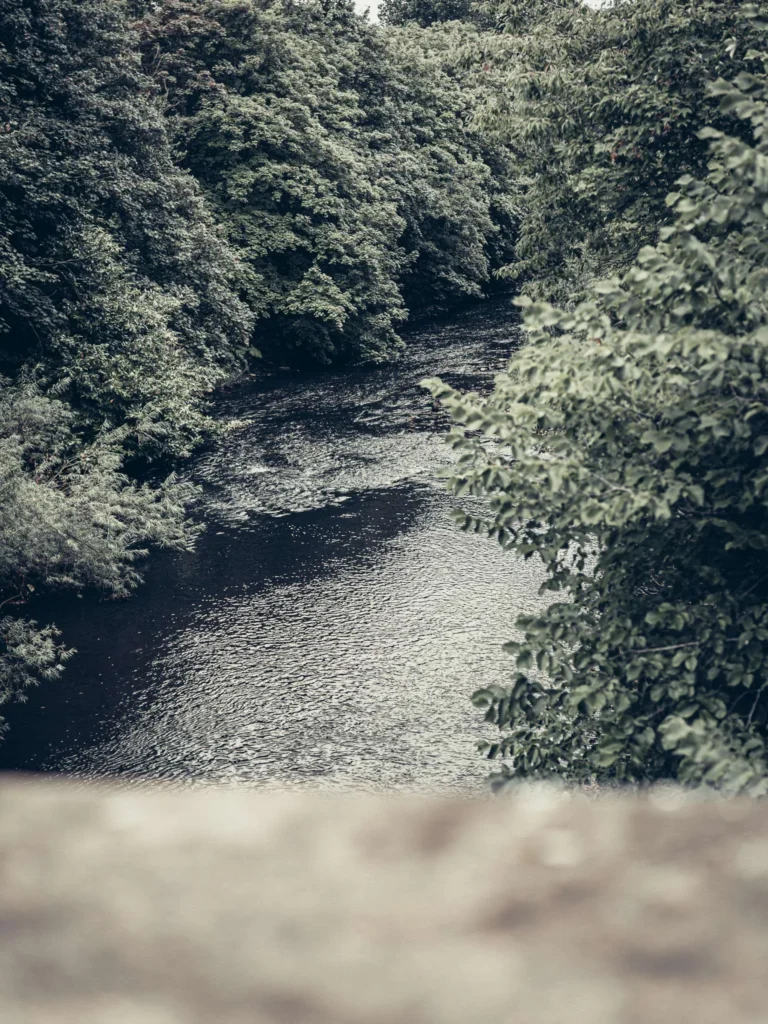
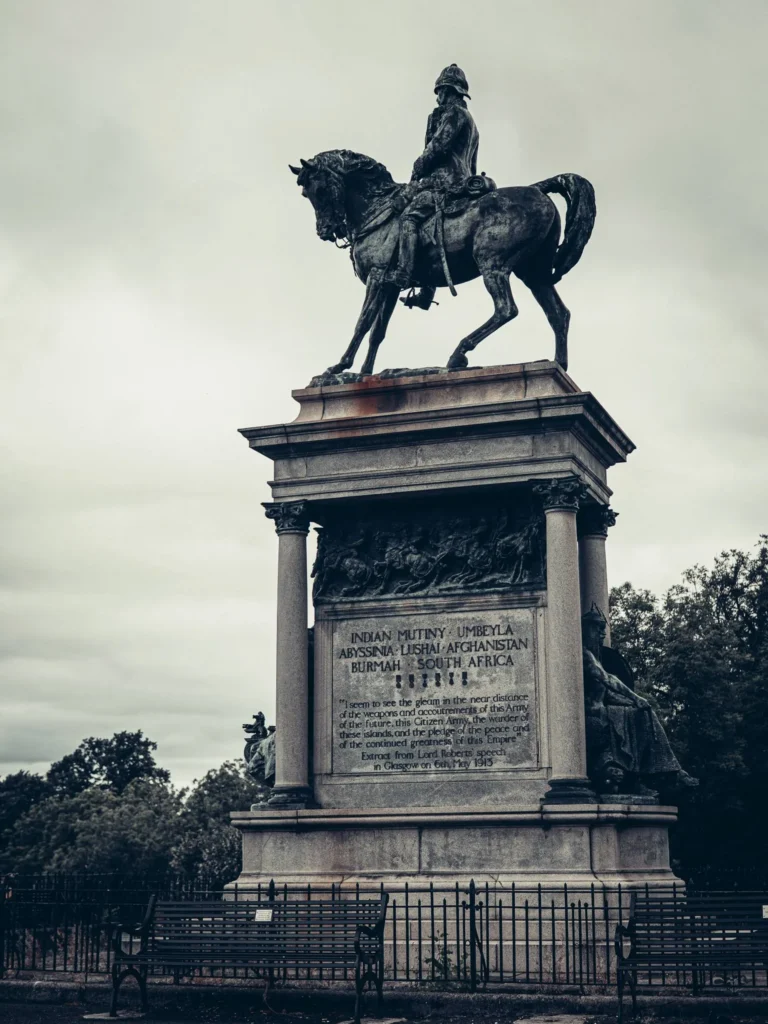
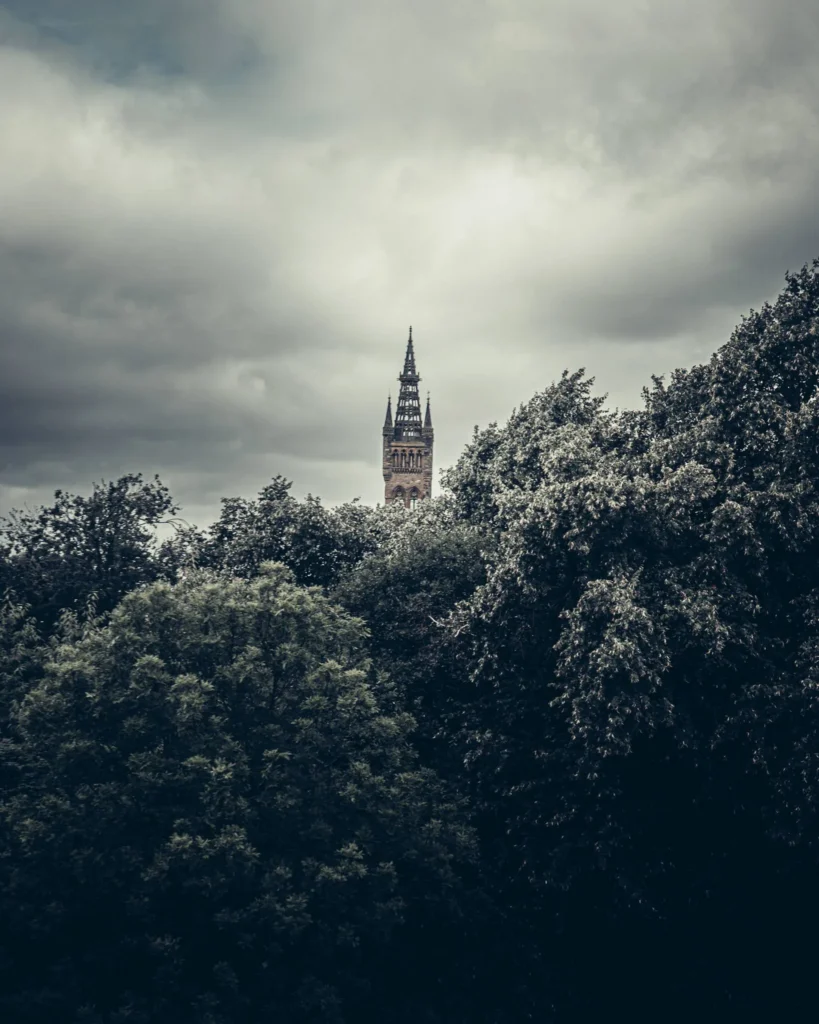
As we walked up the park, we emerged onto Park Circus, and there we suddenly found the entire stone identity of the neighbourhood, but in a very high-end and homogeneous version. Again, this is not a coincidence: it was the same Charles Wilson who was commissioned in 1851 to design the top of the Woodlands hill, and who laid out Park Circus in 1855 (built shortly after in 1857-1858), 29 curved houses around a private garden reserved for residents. In other words, our walk from the park to the top of the hill followed the plan of one and the same man, drawn in the 1850s. We had no idea at the time, and maybe that’s why it flowed so well.
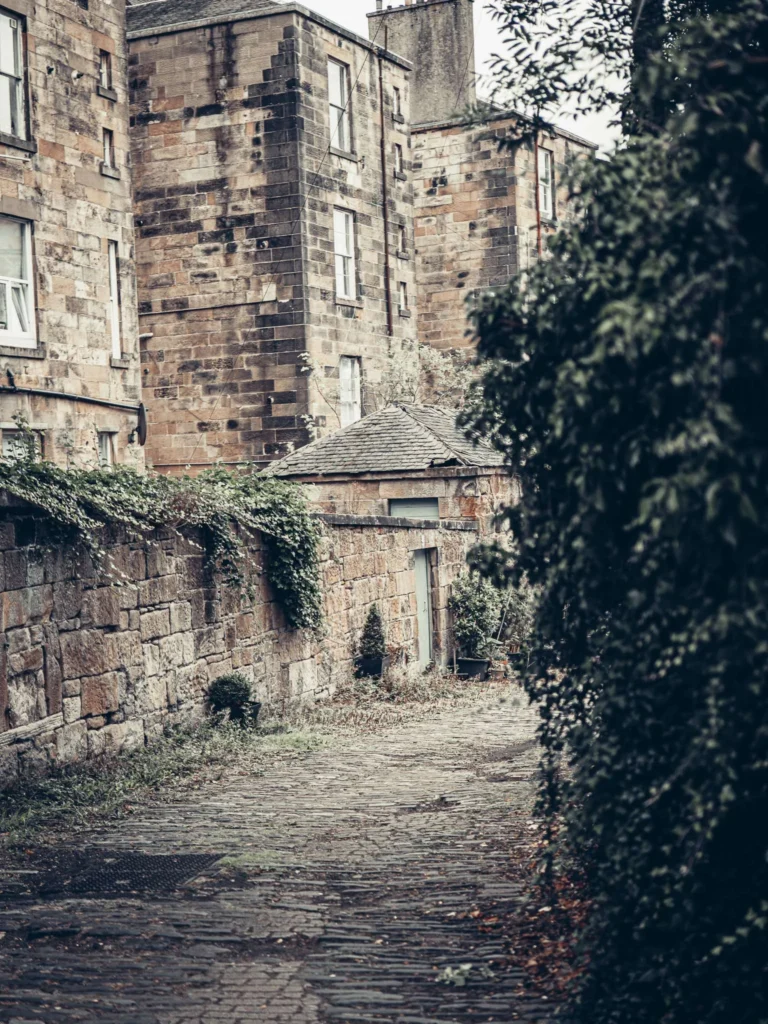
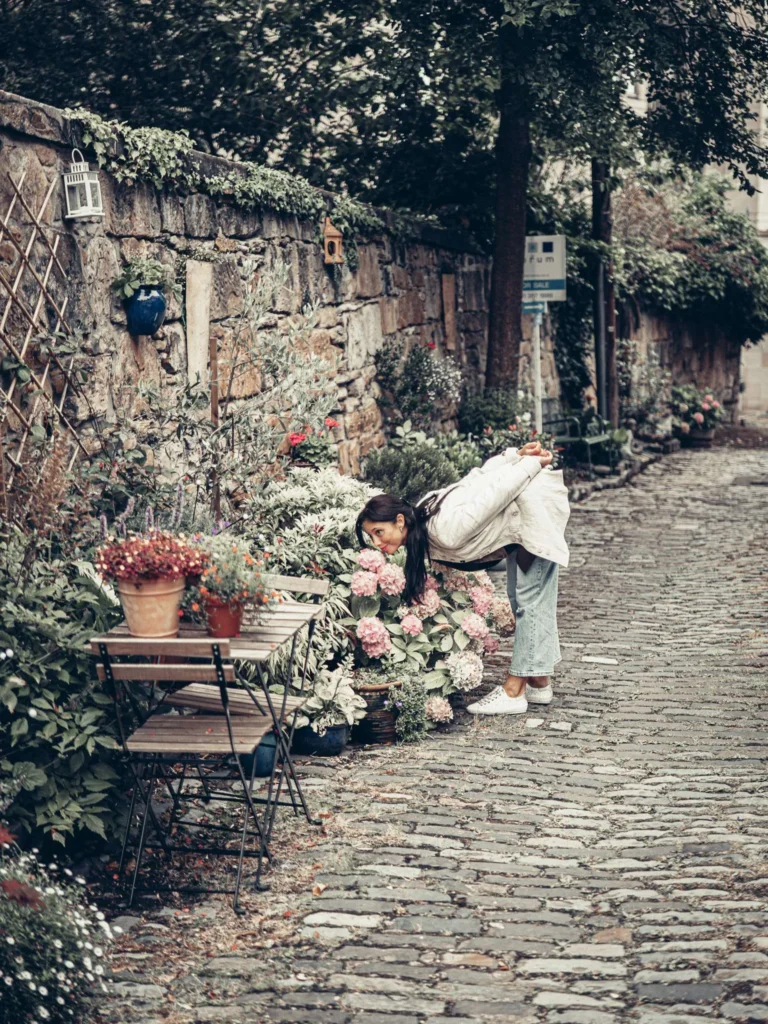
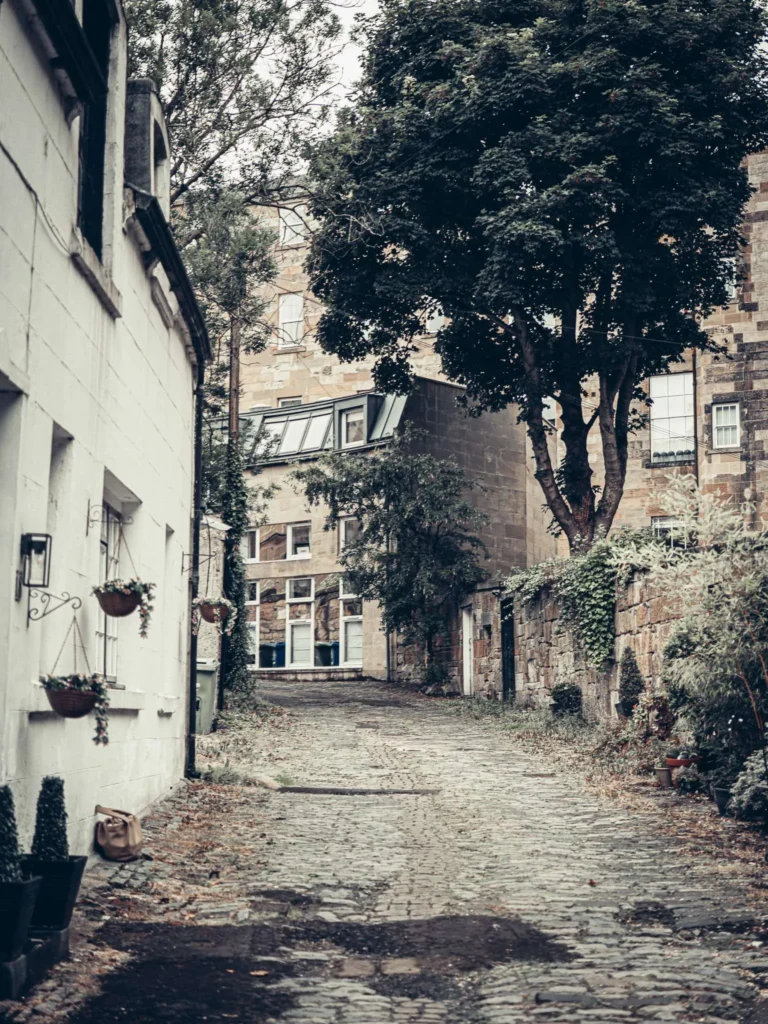
But the real find is a few steps further on. Upon reaching the top, the first impression is not spectacular, and then we take a small street to the left, go down, and find ourselves on Park Circus Lane. Grey cobblestones with dirt and small plants creeping between the joints, climbing plants rising along the walls, and above all, huge rectangular stone blocks marked by time, the kind of material that has seen years, decades, centuries pass. The palette is of total sobriety, everything is in the same grey. And it is the residents who bring the only colours, with their flower pots and hydrangeas placed along the facades.
It’s both sad and beautiful at the same time. That’s when the phrase from the beginning came to me.
Three alleys not to miss in Glasgow
And since we’re talking about alleys, I might as well give you the three that are worth the detour, because it’s really a thing in this city.
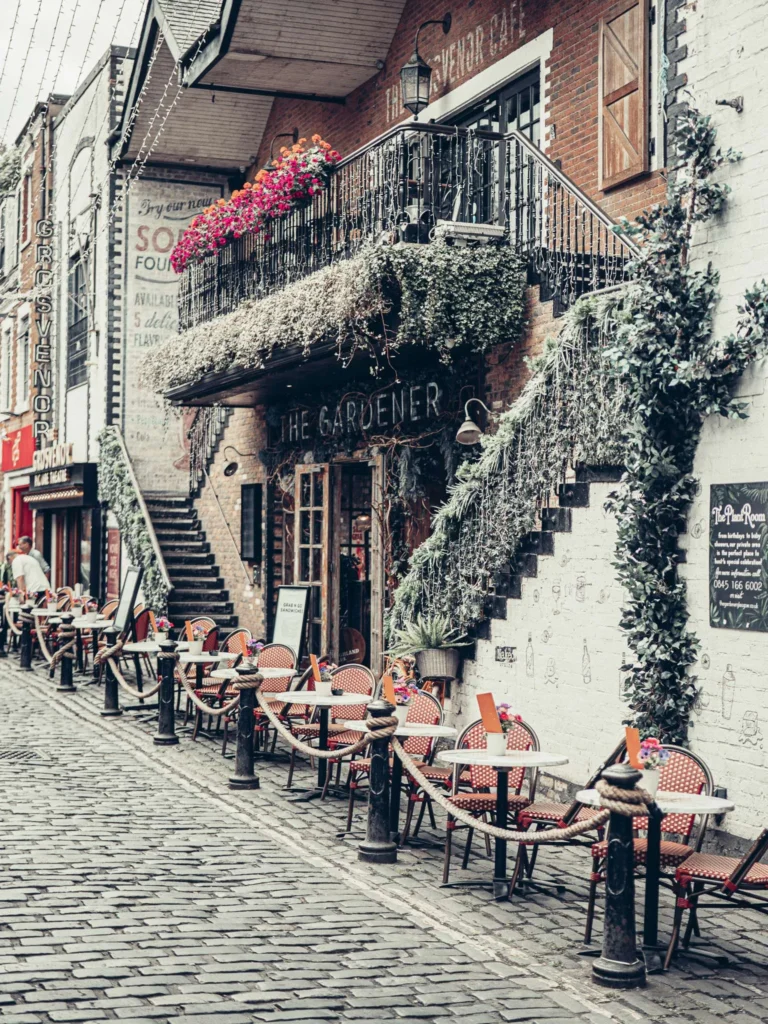
Ashton Lane, in the West End just behind Byres Road, is the postcard: a cobbled alley lined with bars and restaurants, fairy lights, terraces, bistro chairs lined up. We passed through during the day and it was already very pretty, but honestly, you can tell that its moment is in the evening, when everything fills up (we couldn’t go back at night, so I’ll avoid selling you an atmosphere I haven’t seen). A little historical bonus that I really liked: the alley dates back to around 1878 and it was not at all a party place, it was the service road behind Byres Road. Stables, coach houses, workshops, and the coachmen housed just above their boss’s horses. Today, we drink pints there. Urban recycling, you know.
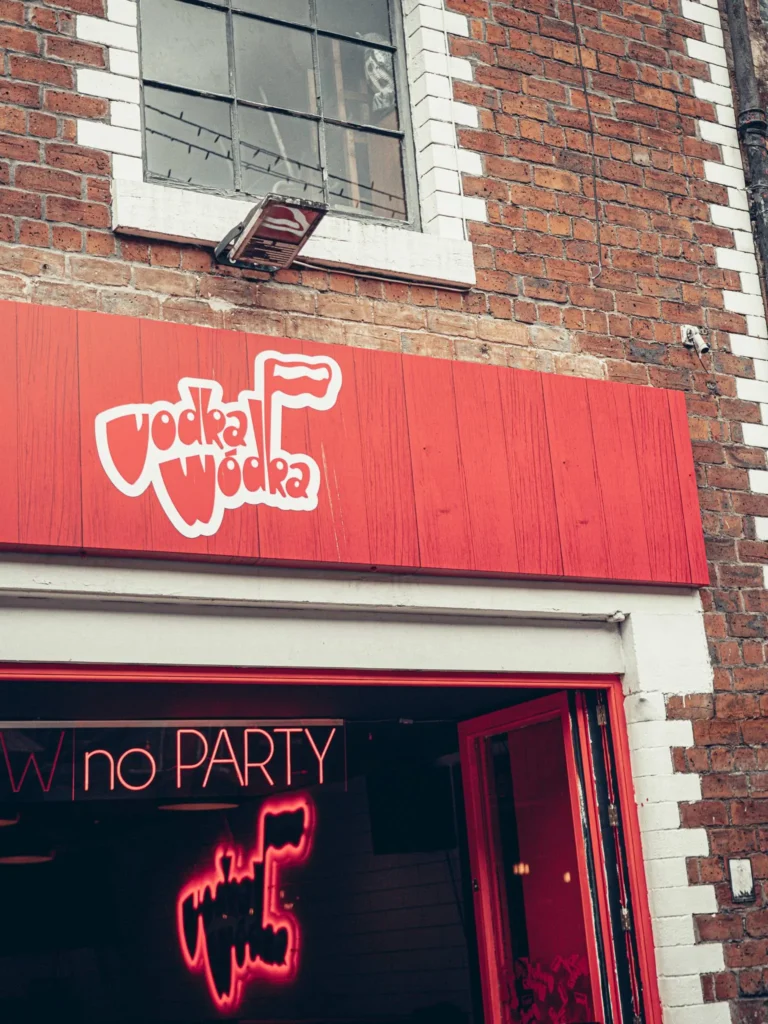

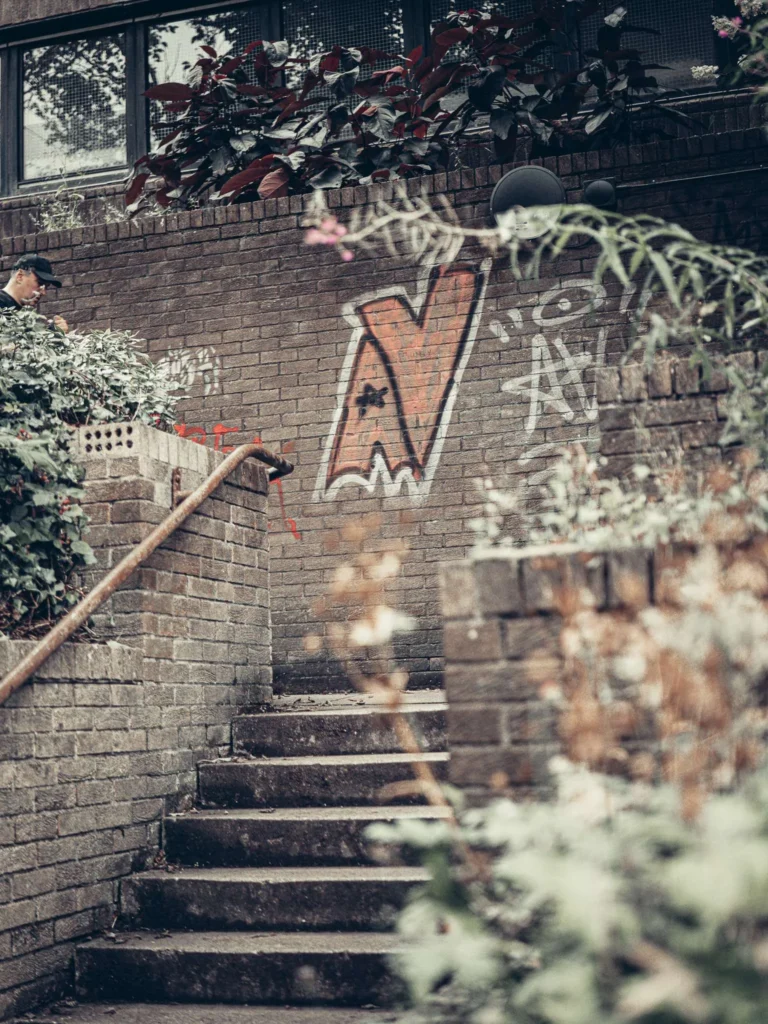
The Hidden Lane, in Finnieston (1103 Argyle Street), is our unplanned and most surprising stop of the three. You access it through a long corridor under a building, wide enough for a car, a kind of covered mini-road, and you come out into what looks like an entire neighbourhood hidden in the middle of the area. Artists’ studios, doors and window frames painted in all possible colours, plants, paintings. After three hours of stone and grey sky, the contrast is visually quite striking. Caroline browsed the shops without buying anything, I have less affinity with this type of art, but the place is worth it just for the surprise effect. Plan for 10 to 15 minutes if you’re just passing through.
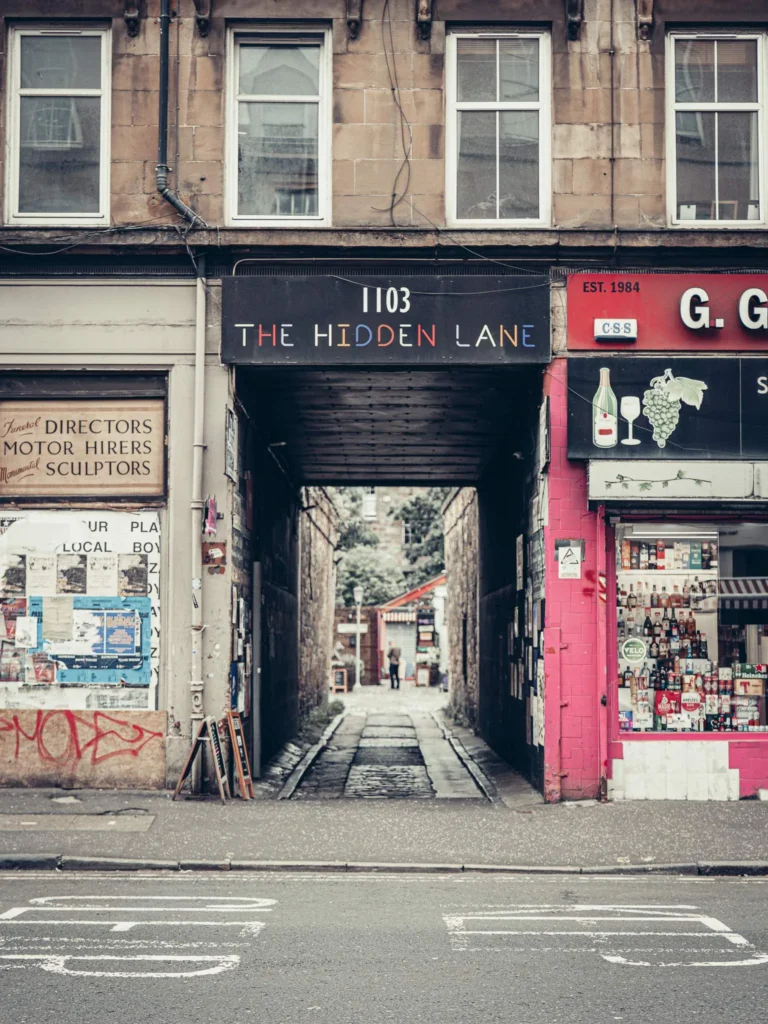
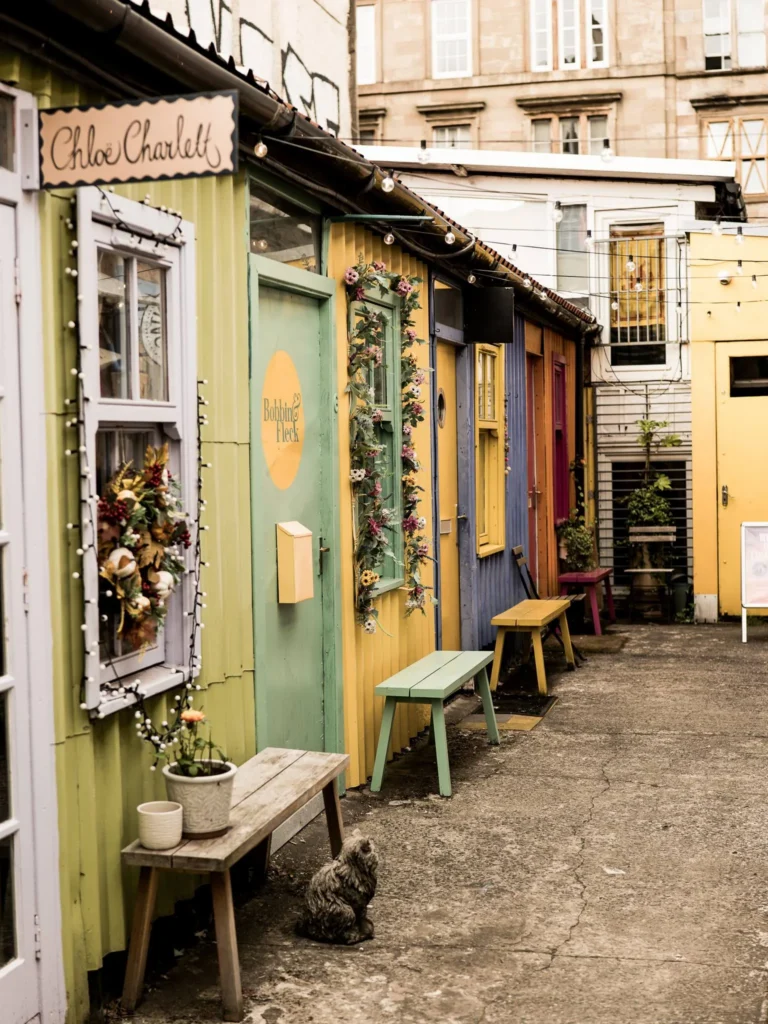
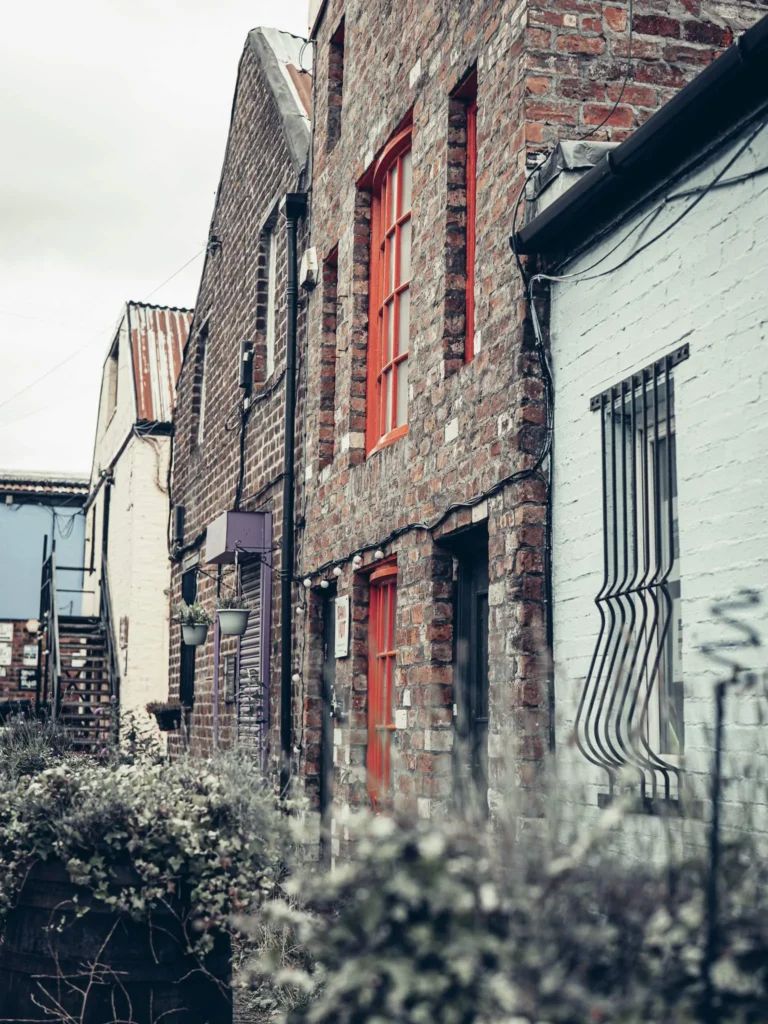
The Hidden Lane: Glasgow hides a whole village behind a close
Just to the left of the close there is an old painted sign that nobody looks at: Funeral Directors. Motor Hirers. Monumental Sculptors. Two of the three you can still...
Read moreSauchiehall Street, finally, it’s the complete opposite of the rest. Here, it’s a joyful mess of colours in terms of shops, as if each shopfront were competing in a contest for the most eye-catching, with no consideration for the neighbors. Neon lights, signs, saturated facades. And the funny thing is, all you have to do is look up one floor: above the windows, you immediately find the stone and the cool palette of Glasgow. Two cities stacked in the same building. By the way, the name comes from the Scots saugh (the willow) and haugh (a floodplain): it was the willow meadow, before the street was widened in 1846 and the villas were replaced by tenements.
Eating and drinking in Glasgow: our three addresses
The three addresses below were all given to us by Caroline’s friend. Without her, we would probably have ended up in a tourist pub on Buchanan Street, so thank you to her.
Waxy O’Connor’s (44 West George Street, city centre) is a pub entirely covered in carved woodwork, on several levels connected by narrow staircases, with stained glass, alcoves, nooks, and a tree that runs through the entire atrium over three floors. We circled around four times before managing to sit somewhere. A useful clarification because the legend circulates a lot: the trademark tree, the one that’s told everywhere as a 250-year-old elm, is actually an Irish beech, and it has been in Waxy’s in London since 1995, not here. Glasgow’s (opened in 1999) does have its own, but the operator gives neither the species nor the age. And no, the building has never been a church: the woodwork comes from churches.

Waxy O’Connor’s, Glasgow: the jug of water is free, and in Scotland that is the law
“Damn, this is so good, come on, let's sit here.” We must have said this phrase four times. Four times, going up one more staircase, pushing through one more door,...
Read moreÒran Mór (intersection of Great Western Road and Byres Road) occupies a deconsecrated Victorian church, and that’s where we went for cocktails. However, be careful, we ourselves wrote a mistake here for months: it is not the former St Mary’s Cathedral. St Mary’s does exist, it is also on Great Western Road, but it is the episcopal cathedral and it is still active. Òran Mór, on the other hand, is the former Kelvinside Parish Church, first stone laid in 1862, architect J. J. Stevenson, closed as a church in 1978 and converted in 2004. The name means “great song” in Gaelic. Bar on the ground floor, brasserie, and a concert hall in the former nave under a ceiling painted by Alasdair Gray. The cocktails are creative and seasonal, and we stayed there for a good hour and a half before going to dinner: drinking a cocktail under the original vaults, in dim light, is memorable. They also have a lunchtime theatre slot, A Play, a Pie and a Pint: a short play of fifty minutes, a slice of pie, and a pint, every lunchtime from Monday to Saturday. We didn’t have time to test it and I still regret it.
Stravaigin (28 Gibson Street, West End), was by far the best meal of the trip. A bistro open since the 90s, contemporary Scottish cuisine with Asian and Indian influences, and especially their signature: spicy mussels. Truly amazing. The best mussels of my life with chilli, I’m still salivating while writing this sentence. Caroline had a vegetarian curry, which was also very good, but still, the mussels. Book, especially at the weekend.
Stravaigin, Glasgow: the name shares a root with extravagant, and the menu proves it
For years I have been going on about it. For years I have used exactly the same words the moment anyone says Glasgow in front of me: the best mussels...
Read moreAround: Kelvingrove Art Gallery, Botanic, St Mungo, Necropolis
If you stay more than 2 days, here are other spots worth visiting.
West End (walking distance from the University):
- Kelvingrove Art Gallery & Museum. Facing the University, free, one of the most visited museums in Scotland. Large facade made of red Locharbriggs sandstone (yes, built between 1892 and 1901, so definitely red), very eclectic collection with a Spitfire suspended in the hall, a Dalí, Scottish archaeology. Allow 1.5 to 2 hours.
- Kelvingrove Park. The park around the museum mentioned above. Ideal for a walk after lunch.
- Glasgow Botanic Gardens. Victorian botanical gardens, free, famous for their Kibble Palace (iron and glass greenhouse from 1873, tree ferns, Victorian jungle vibe).
Historic city centre (by Subway or taxi):
- St Mungo Cathedral (Glasgow Cathedral). Medieval cathedral, one of the few in Scotland to have survived the Reformation almost intact. Crypt of St Mungo, patron saint of the city. Free.
- Necropolis. Just behind the cathedral, on a hill, Victorian cemetery opened in 1832 with spectacular funerary monuments and a panoramic view of the city. Allow 2 hours for both.
Further out (taxi or Subway):
- Riverside Museum. Transport museum in a building by Zaha Hadid (2011), by the Clyde. Free, with the tall ship Glenlee moored in front.
- Pollok Country Park. To the southwest, a large park that houses Highland cows in the city, plus Pollok House and the Burrell Collection.
Where to sleep and park a campervan in Glasgow
Now the practical part, because this is also what makes a difference when you are living in a van. Glasgow city centre is really not campervan friendly. Our solution: park in a residential street in the West End, near Caroline’s friend’s place. Without this local network, it would have been more complicated.
Day parking for visiting:
- The parking near the Botanic Gardens in the West End allows campervans during the day. Be careful: the payment app refuses cards issued outside the UK, which we found out the hard way. A UK card is fine; otherwise a Wise or Revolut card does the job.
- Several Park & Ride options on the outskirts (Shields Road, Kelvinbridge): park there and take the Subway into town. Cheap and stress-free.
Night:
- Glasgow has no council-run motorhome service point. The simplest is to leave the city in the evening towards a campsite on the outskirts: Craigendmuir Park (to the northeast, on the way to Loch Lomond) or Strathclyde Country Park (to the southeast).
- There is no chemical disposal point in the city either: you have to drive out and spend a night at a campsite to empty the tanks. That’s what we did, we had no choice.
And if you are sleeping in a building rather than in a van, reread the passage on raised ground floors before booking: when an ad offers you a room garden level or lower ground, you now know exactly what we’re talking about, and you can negotiate with full knowledge (we paid full price for our architecture lesson).
Practical tips: weather, budget, and eSIM connection
With that, let’s wrap up with logistical advice to prepare for your visit.
Weather: Glasgow is one of the rainiest cities in the UK (yes, even more than Edinburgh, which is fifty miles to the east but sheltered by the Pentland hills). In summer, expect temperatures between 14 to 20°C, with possible rain at any time of the day, and very long days in June and July. Bring a waterproof jacket, and especially a jacket that comes off quickly.
Budget: this is the point that struck us the most, twice. We were arriving from Portugal, so our sense of what things should cost was not yours and you can discount the sticker shock accordingly. What survives the exchange rate is the gap between what you pay and what you get. To give you an idea: a dinner for two in a decent restaurant, a pint in a pub, a cocktail in a West End bar, a night of camping on the outskirts, and a subway ticket can quickly add up in a day. The Subway remains the best value for money in the city, with its day pass.
eSIM connection or local SIM: If you are coming over from the continent, your operator stopped treating the UK as Europe at Brexit and moved it to the world zone, which hurts. Solution: an eSIM bought before you travel, or a local SIM on arrival. A useful side effect, an eSIM also lets you pay for parking without a UK card.

Best UK SIM for a Scotland Road Trip: Highlands, Skye and NC500 Coverage
What internet connection to use during a stay in Scotland? Often questioned by travelers, we explored the various options available in Scotland in this comprehensive article. As always, each solution...
Discover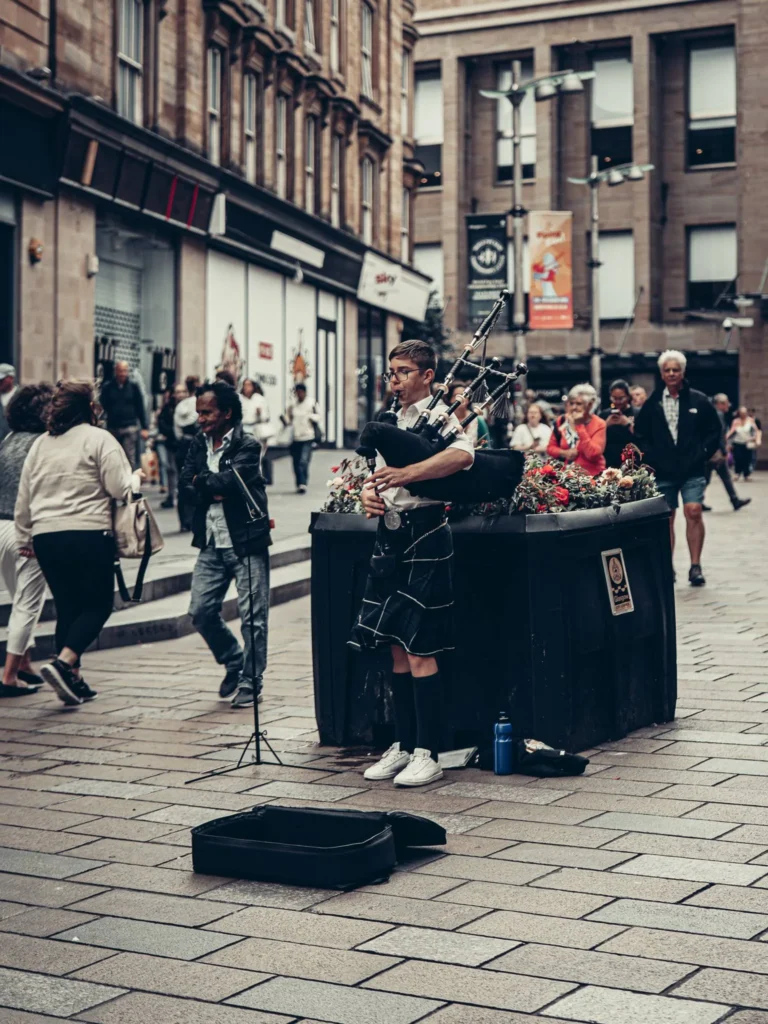
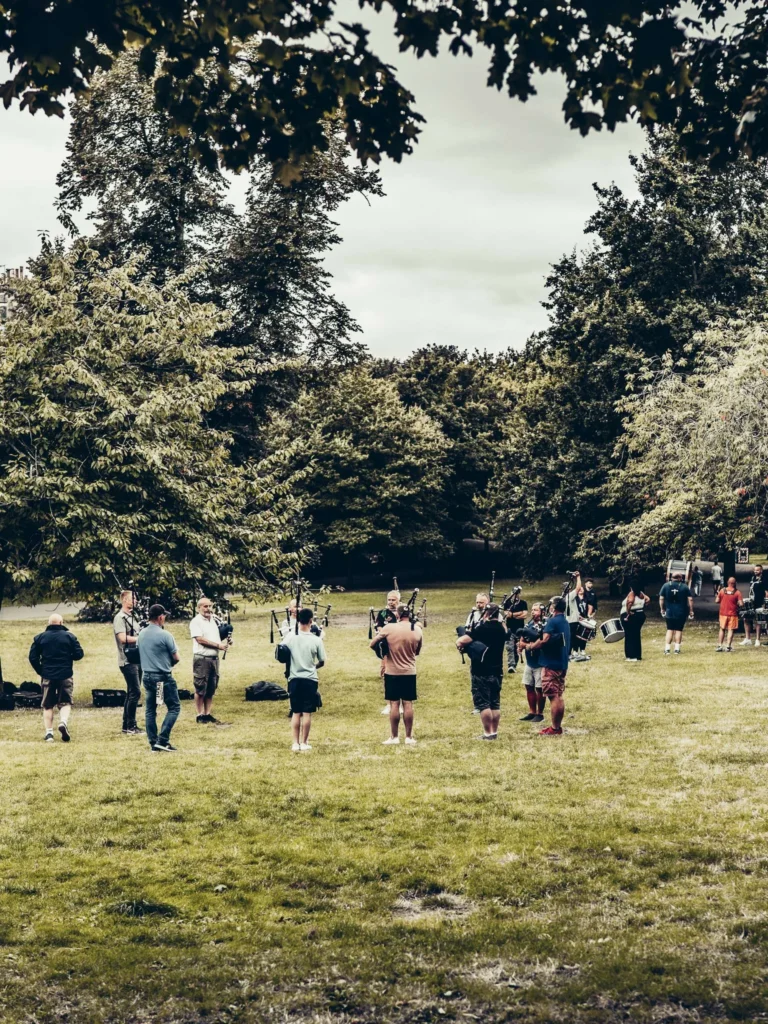
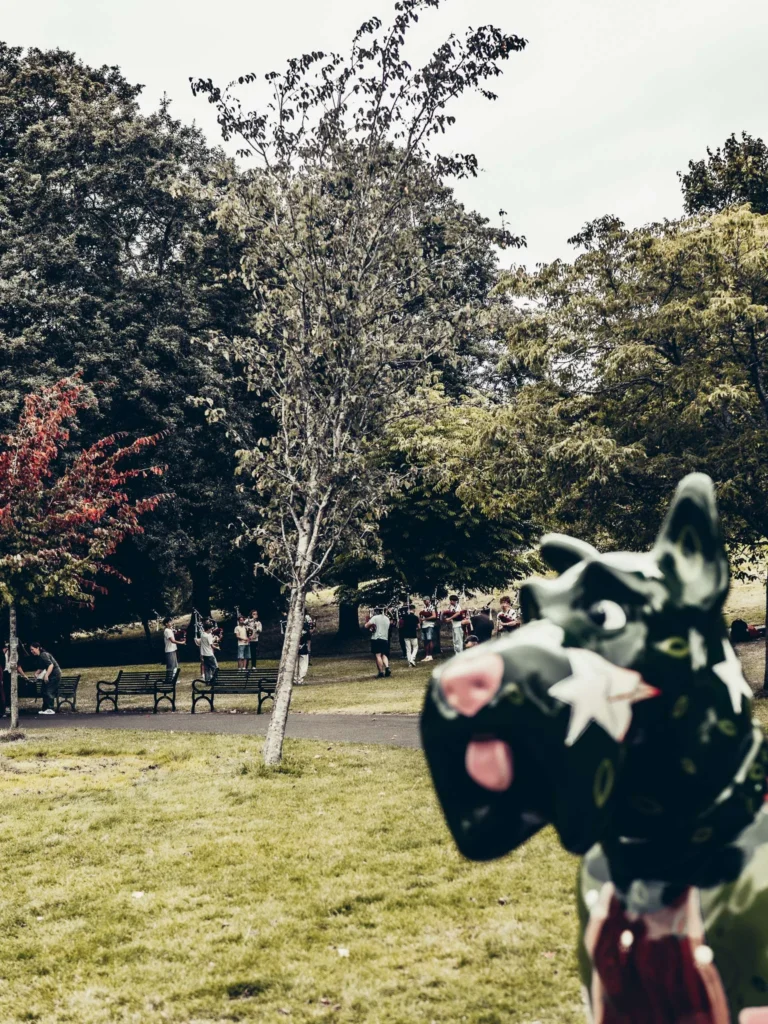
One last thing, and it might be my best memory of the city: we stumbled upon a pipe band rehearsing in the park one Sunday afternoon, with people sitting on the grass around. No one had organised anything for tourists; it was just people practising. And there, amidst the grey stone, the very green grass, and the sound of the bagpipes, I felt like the city was quietly explaining to me what I had tried to convey with my opening sentence.
FAQ Glasgow on a road trip
When to visit Glasgow?
How much time to plan for in Glasgow?
Glasgow or Edinburgh, which should you choose?
Can you visit Glasgow on a day trip from Edinburgh?
What to do in Glasgow when it rains?
How to get around Glasgow without a car?
Is Glasgow dangerous?
What to see around Glasgow in one day?
PS: we spent an entire article talking about the chilli mussels at Stravaigin and we still don’t have a single photo. It’s because we eat them too quickly. Next time we’ll take photos first, promise (I promised that last time too).
After Scotland, we keep going
Two years of full-time van life, and the Algarve as our base ever since. We still hit the road, by van or otherwise, and we write up what we find along the way. An email when we have something to say, no more.
Ce que vous souhaitez recevoir :