Alsace and the east: fairytale villages and storks
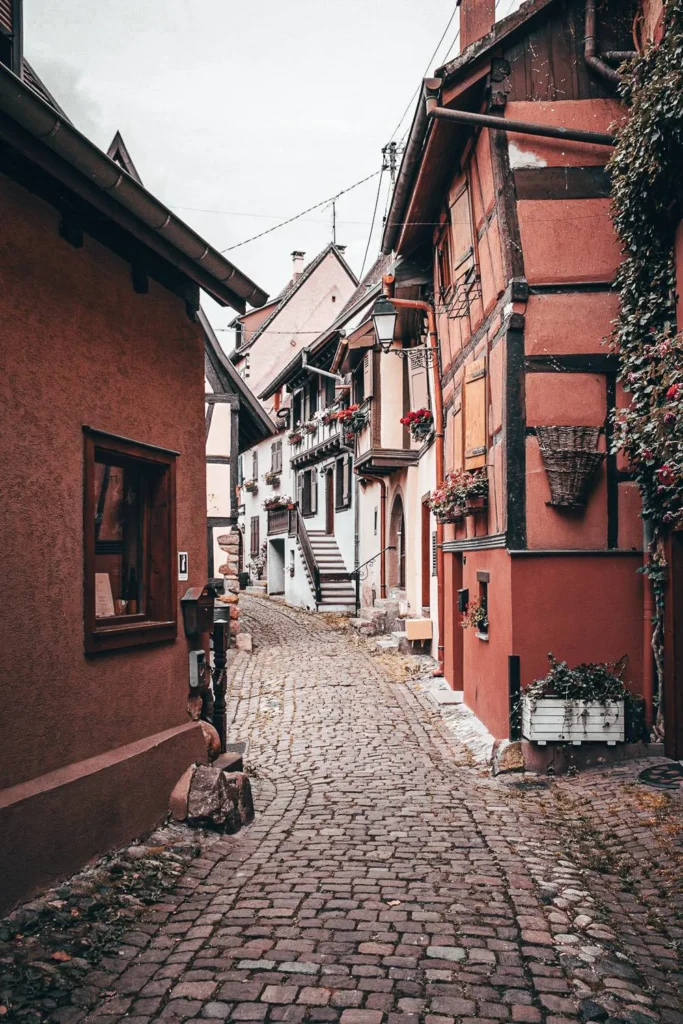
France usually shows up early on our trips, because heading south from the UK towards our base in the Algarve means the whole country is more or less in the way, and honestly we are glad it is. We fell hard for Alsace on one of our first proper outings, wobbling into Eguisheim for what was meant to be a quick lunch and staying half the afternoon. It was once voted France’s favourite village and you understand why the moment you see the storks nesting on the rooftops above the timber houses. We sat outside a little brasserie with a glass of Riesling, a flammekueche and a plate of Spätzle, and decided the drive south could wait.
Just up the road is Kaysersberg, another of those absurdly pretty places crowned with a ruined hilltop castle, and a short hop away sits Colmar with its canals and painted facades. We spent a night on a France Passion farm at the edge of the Vosges du Nord regional park, where a peacock strutted about, some Cameroonian sheep watched us cook, and an enormous pony took a firm liking to Caroline’s knee. It is the kind of evening that never makes the postcards but is exactly why we do this. If you are new to touring this part of France, treat the vineyards and the villages as one long, slow, glass-in-hand meander.
Brittany and the Atlantic coast
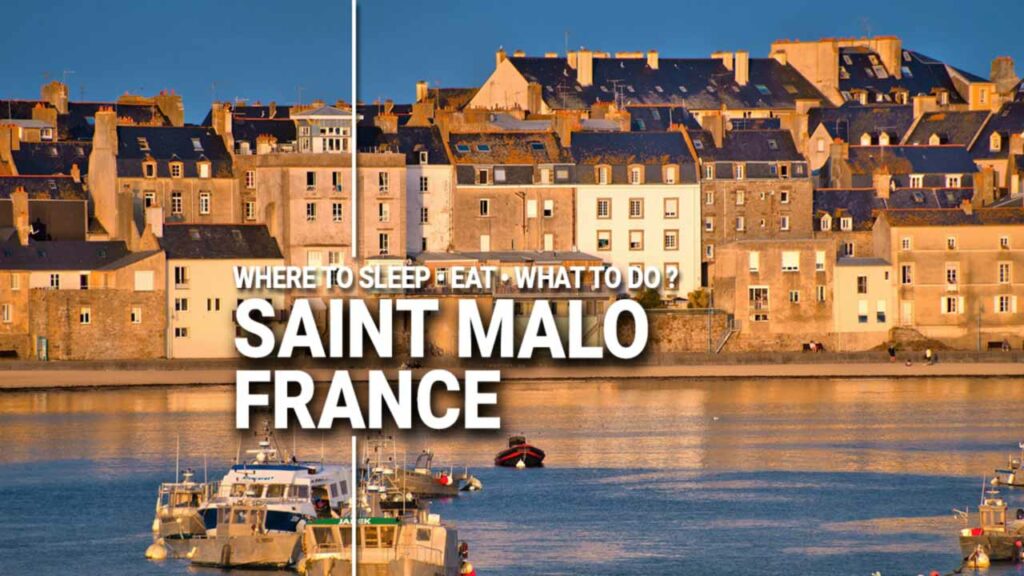
Brittany is where France stopped being a corridor for us and became a destination in its own right. We arrived in St Malo after roughly six weeks of solid rain, the sun finally came out, and the whole walled city glowed. Xavier had his first ever galette-saucisse at the market, braced for something like a fried red sausage and instead getting a proper grilled pork sausage rolled cold in a buckwheat pancake with a smear of mustard. We walked the ramparts, watched the little tidal forts appear offshore, and were firmly told the difference between a gull and a mouette by locals who took the matter very seriously. That same afternoon we drifted down the coast to Cancale, sat by the little oyster beds at the water’s edge, and shared a dozen of the famous flat oysters straight off the stall, pretending very hard not to look like the tourists we absolutely were.
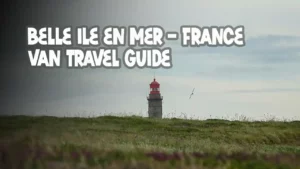
Further inland we wandered the mossy paths of the Broceliande forest, the legendary home of Merlin and King Arthur, in a yellow rain cape under a properly grey Breton sky. A bearded man appeared, introduced himself as a druid, and told us with total sincerity that the forest had the power to heal us. We never did find a fairy or a magic mirror, but we did find our way to Quiberon, where we caught the ferry across to Belle-Ile-en-Mer. Caroline lived on that island for a summer years ago and had wanted to go back for a decade, so we lapped it in a single hire car: the wild fishing harbour at Sauzon, the lighthouse at the Pointe des Poulains, the surf beach at Donnant, and the jagged Aiguilles de Port-Coton that Monet painted, all rounded off with a kouign-amann eaten on the sand. The nearby city of Rennes makes a handy base if you want to explore all of this at a saner pace than we managed.
The Loire and the heart of France
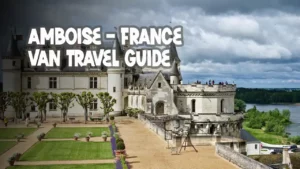
When we want a break from the coast we cut inland to the Loire, which is basically a valley designed to make campervanners feel underdressed. We stayed on a France Passion farm near Amboise and cycled twelve windy kilometres into town, where Caroline swapped the usual vanlife scruff for a dress and declared herself human again. The Amboise royal chateau sits high on a spur above the river, with Leonardo da Vinci buried in its little chapel and gardens spilling out below. It is the sort of stop where you can happily lose a day to castles, wine and pedalling, and it makes a lovely bridge between the Atlantic and the south.
The north and the Opal Coast
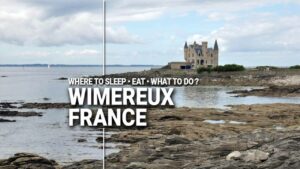
The far north often gets skipped by people racing to the Med, and we think that is a genuine mistake. On the Cote d’Opale we spent a few days in Wimereux, visiting family, walking a huge beach dotted with private white bathing huts, with the chalk cliffs and Boulogne-sur-Mer stretching away in the distance. The Belle Epoque villas here have a lovely mongrel look, part English, part Norman, part Flemish, thanks to generations of British and Belgian holidaymakers. One evening Caroline’s cousin, a baker by trade, made us a proper Welsh: melted cheddar and comte loosened with beer and mustard, a fried egg on top, and homemade chips underneath, the whole thing stirred constantly so it melts but never sets. It remains, to this day, our favourite reason to head that far north.
Not far along the coast is Honfleur, all cobbled lanes and slightly imagined pirate romance, with its extraordinary Sainte-Catherine church, the largest wooden church in France, built by shipwrights who clearly could not stop thinking about boats. We crossed in over the vast Pont de Normandie, which feels a bit like driving through a film set, and celebrated with oysters and moules-frites around the old harbour. It is a proper end-of-the-day sort of town, and a fine spot to ease yourself back into the joys of French seafood.
The Basque Country and the Landes
Down in the deep south-west, where France gets Spanish around the edges, we drove the coast from Saint-Jean-de-Luz to Biarritz with a friend who showed us the good bits. Saint-Jean-de-Luz is a working tuna and anchovy port with a sheltered beach and a church where Louis XIV married, while Biarritz still carries its imperial swagger: the Rocher de la Vierge, the surf breaking on the Cote des Basques, and a scattering of grand Art Deco. Somewhere between the two the ocean does something genuinely spine-tingling, and Caroline came out with one of her more poetic lines about the sea showing off its grandeur. It is a stretch that rewards slowing right down here, ideally with a good local restaurant booked for the evening.
Campervanning in France: our practical notes
France is, for our money, one of the easiest countries in Europe to tour by van, largely thanks to two systems. The first is France Passion, a scheme where farms, vineyards and small producers let you park up overnight for free, no strings beyond the gentle hope that you might buy a bottle or a cheese. Some of our happiest nights have been on these farms, peacocks and sheep and all, and we could not recommend the network more warmly. The second is the enormous grid of municipal aires, dedicated motorhome stops with services that most French towns provide as a matter of course.
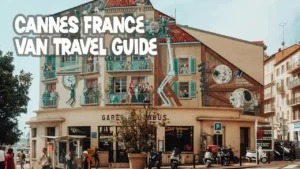
We plan our spots with the usual campervan apps, cross-checking reviews before we commit, especially in high season when the popular coastal aires fill up fast. One honest warning: the glossy French Riviera around Cannes and its neighbours is fairly hostile to vans, with height barriers, overnight bans and eye-watering campsite prices, so we tend to base ourselves inland and day-trip in rather than fight for a spot. If you fancy testing the water anyway, our Cannes guide lays out what to expect. Everywhere else, from Alsace to the Atlantic to the Basque coast, France is a country that seems almost built for life on wheels.
We keep coming back, partly because France is on our road home and partly because it never quite runs out of villages, oysters and farm fields to surprise us. Pick a region, take it slowly, and let the detours happen.