

If you ask us the exact moment Seville hit us right in the chest, we would both give you the same answer: Plaza de España. For Caroline, it was unstoppable, tears of joy right there in the square for several minutes (a dream she had carried with her for a long time). For Xavier, same thing, completely overwhelmed by a wave of happiness and pride, totally unable to take in the whole scene at once because the sound of flamenco in the distance set the mood so perfectly.
That is how this guide begins. Not with practical tips, not with opening times, just with the moment a city grabs you emotionally. And that is exactly why we came back to Seville the following year, this time at Christmas, to sleep in Édouard (our motorhome) and see the square again through a winter lens. So in what follows, you are getting both trips.
A quick practical teaser before we start: Seville by camper van or motorhome works really well, as long as you know where to leave the vehicle. We will get to that next. And one overall tip that is worth its weight in gold: 3 or 4 days is not enough, plan more like 5 to 7 days if you really want to sink into the city.
Road trip video in a camper van in this destination
How to get to Seville by camper van (and prepare for arrival)
We are going to prepare you for a bit of a visual shock, because honestly, arriving in Seville by camper van is not glamorous at all. The first time we rolled in, it felt like we had been dropped into a Californian suburb: port area, cranes everywhere, long lines of palm trees and warehouses stretching into the distance. Caroline and I looked at each other thinking, “what on earth are we doing here?” Truly, those first 5 minutes do not exactly make you fall in love.
Reassuring spoiler: once you reach the centre, it is a completely different world. So take a breath, drive through the outskirts, and stick with it because the real Seville makes you work a little for the reward.
Where to stay in Seville by camper van or motorhome (service area and campsites)
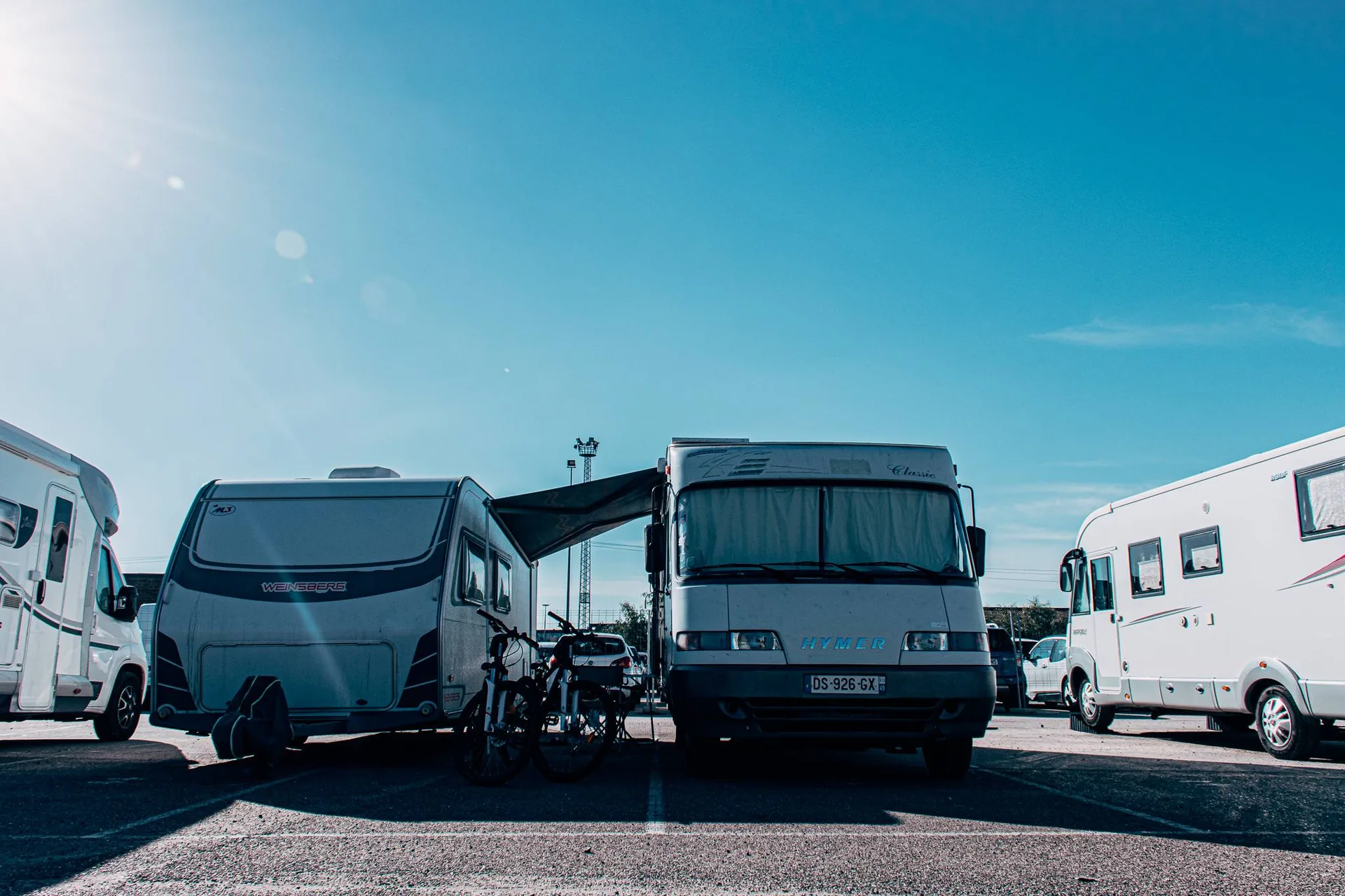
This is the question we asked ourselves every time we came, and we have a clear answer to share. The most practical service area is right on the edge of Seville, dedicated to motorhomes and camper vans. It is ugly, set on a car park, but it is secure and costs around €14 per night (€10 in earlier years). For Seville, it is the best compromise between safety, proximity and price.
Our ritual every time we arrive, by the way, is to wander between the rows and quietly inspect the other vans and motorhomes. It has become a little game between us, looking at different layouts, daydreaming over a buggy strapped to the back of someone’s van, comparing it all with our good old Édouard. That, right there, is service-area vanlife.
Motorhome aire in Gelves (Seville): secure, 10 min from the centre
Motorhome/van service area in Gelves (south-west Seville), supervised car park, around €14 per night. Secure, ten minutes from the centre.
Read moreFor those who prefer a more structured campsite, we also tried Camping Dehesa Nueva on Carretera Isla Mayor: peaceful setting, relaxed atmosphere, and we had a genuinely calm stay there in the middle of nature, rated 4/5 in our notebook. It is further from the centre, but ideal if you want a quiet night and do your trips in by bike or bus.
For the other options (car parks, campsites and service areas across the wider outskirts), you can check the interactive map at the bottom of this article: we have marked every spot we know.
How to visit Seville by camper van in 5 to 7 days (suggested itinerary)
We tried to rush it the first time. Bad idea, and that is the big lesson we took away. 3 or 4 days is clearly not enough for Seville. At the very least, give yourself a week if you want to explore without sprinting and still have the energy to sit out on a terrace with a drink and watch life go by. Here is the kind of itinerary we would have followed if we had known:
Day 1. Arrive at the service area, get settled, then take a gentle walk into the centre along the Guadalquivir to decompress. Terrace tapas and a pre-dinner drink to ease into the atmosphere.
Day 2. Cathedral + Giralda in the morning (book your tickets online the day before, we will come back to that in a moment). Afternoon stroll through Santa Cruz and the area behind Jardín de Murillo, we love its tight little lanes and flower-filled patios.
Day 3. Real Alcázar for the full day (yes, really plan the whole day, it is huge). Evening: flamenco in Triana, on the other side of the Guadalquivir.
Day 4. Parque de María Luisa and Plaza de España in full contemplative mode. Take your time, this is where we felt our biggest emotions. You can also go for a boat ride on the canal.
Day 5. Triana in detail (ceramics, market, authentic little streets) + an evening of tapas with a more local feel.
Days 6-7 (optional). Excursions nearby: Córdoba (140 km) or Doñana National Park as a day road trip. Come back in the evening to sleep at the service area or campsite.
Neighbourhoods you absolutely should explore
Seville is, above all, a series of neighbourhoods that all feel completely different from one another. We have our favourites, so here is our sentimental list:
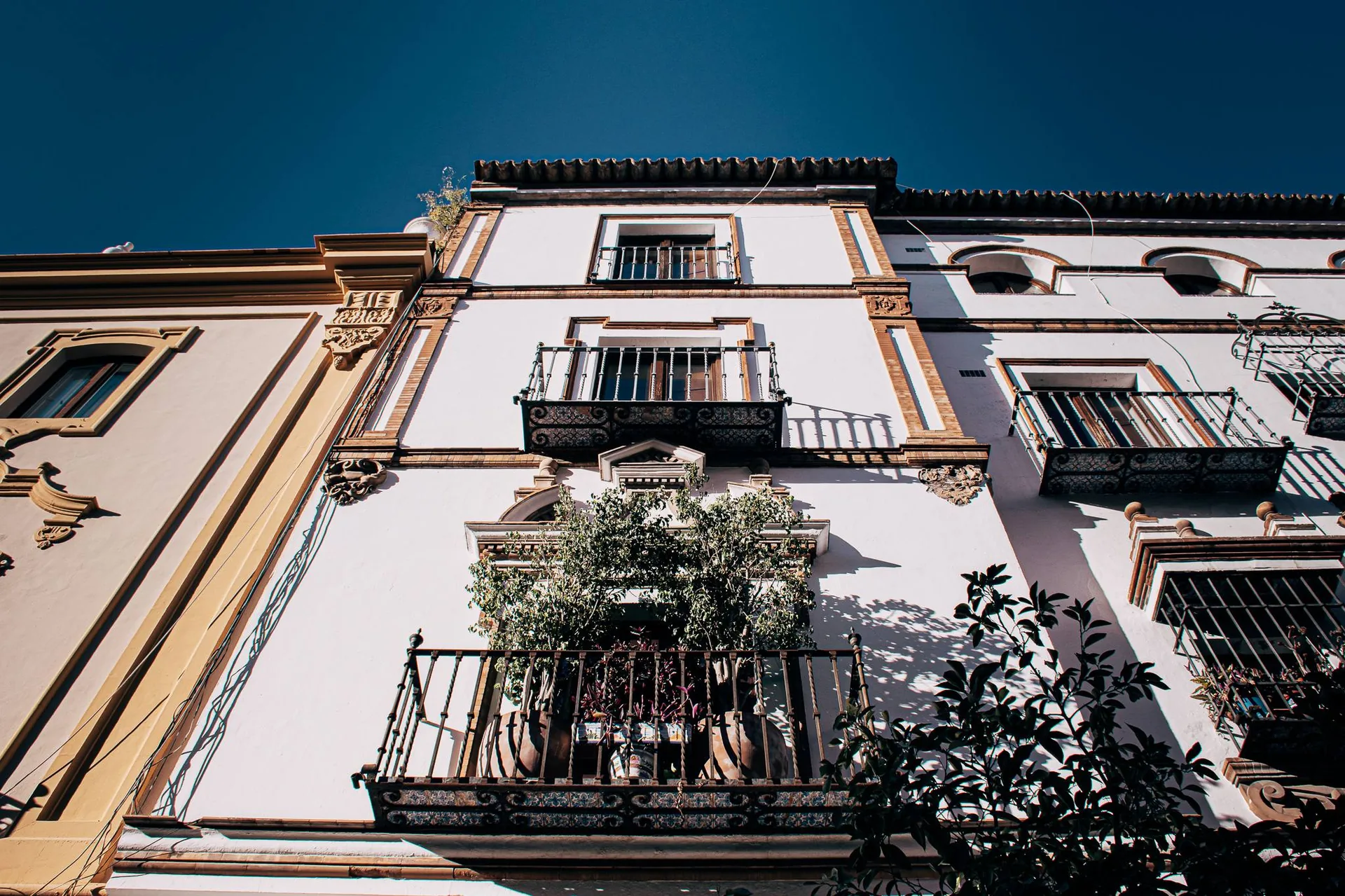
Santa Cruz and the area behind Jardín de Murillo. This is our little gem. Every corner reveals a new atmosphere: very narrow lanes, flower-covered balconies cascading down, wrought-iron inner courtyards visible from the street (those famous Andalusian patios), little boutique hotels, artists’ galleries. You walk without GPS, you get lost, and that is exactly how you experience Seville properly.
Triana (the other side of the Guadalquivir). We discovered it on our second trip and regretted not going sooner. It is the emblematic traditional neighbourhood, where flamenco genuinely lives (not just the tourist version), with its intimate little venues. Walk across the bridge in the late afternoon, have lunch in Triana, and you see Seville from a completely different angle.
The shopping centre. More modern, pedestrian streets full of shops, terraces everywhere. Not especially typical, but useful for picking up supplies, grabbing something quick to eat, or finding gifts. It is also where we keep bumping into our favourite musician in Seville (we saw him on both trips), a gentleman on Avenida de la Constitución singing into a microphone somewhere between Hotel California and No Woman No Cry, not always in tune, but visibly delighted to be there.
The must-see monuments (and what we wish we had known beforehand)
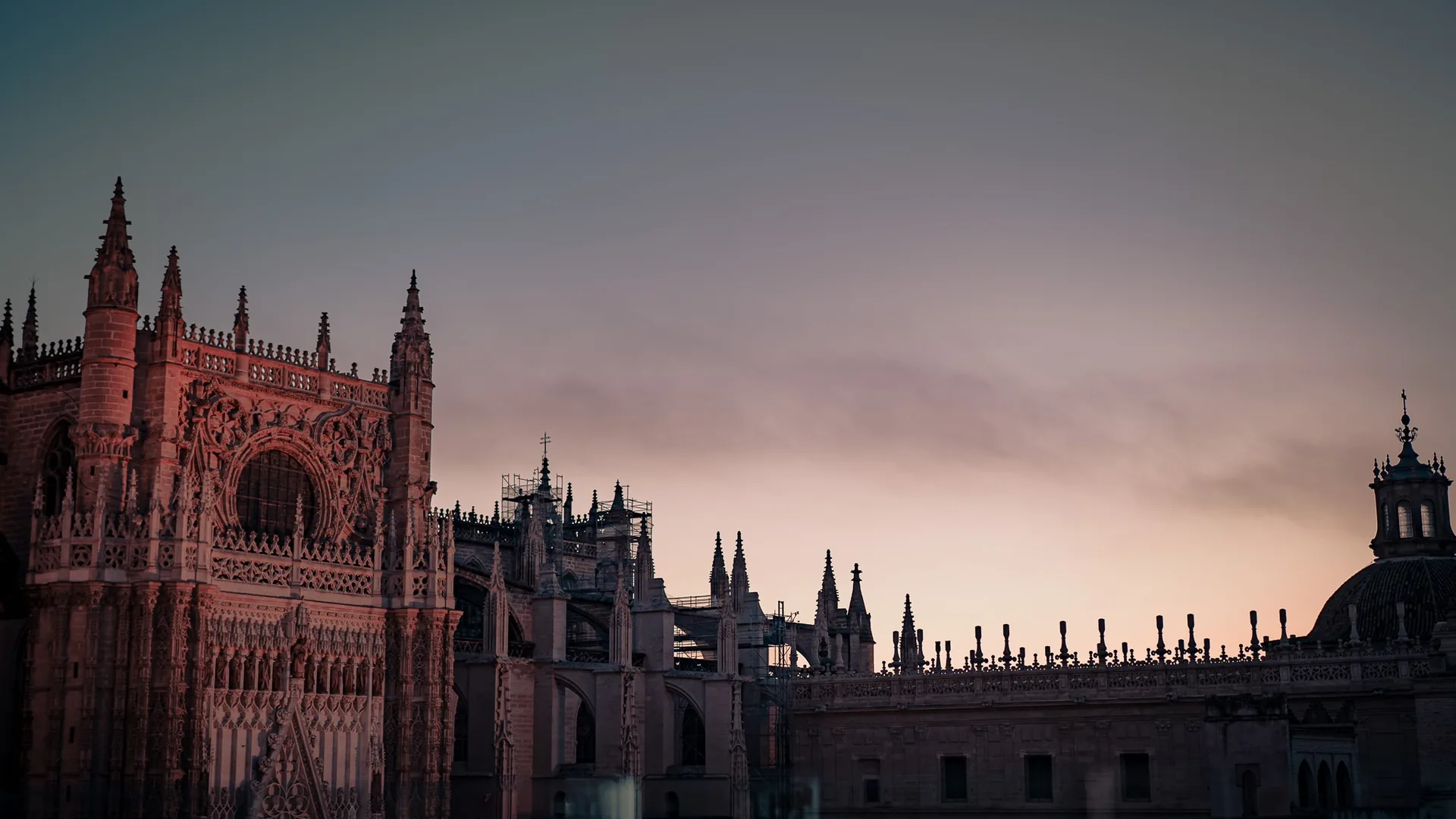
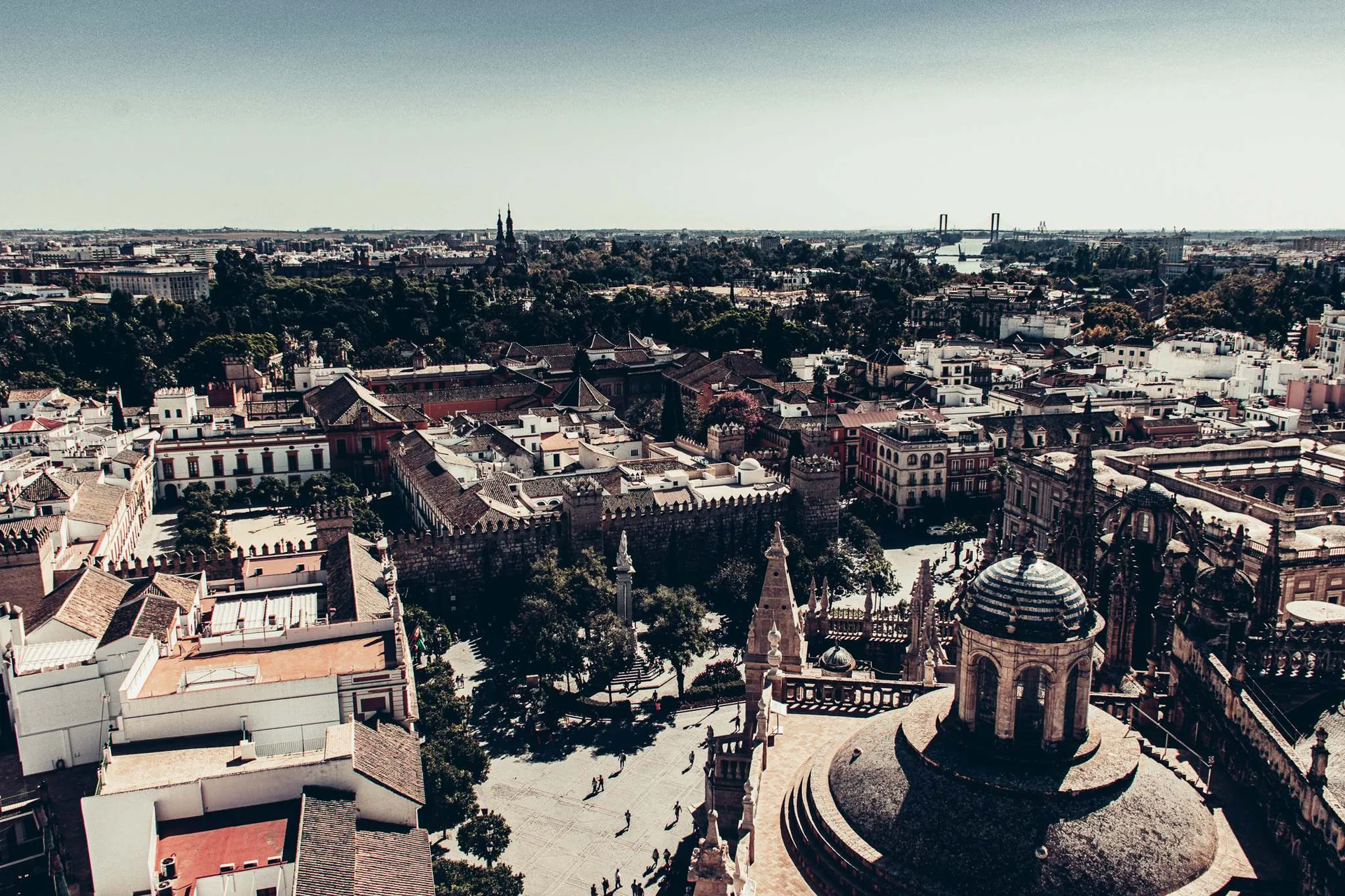
Seville packs in monuments with a density you rarely come across. Here are our three unmissable highlights, in the order we recommend doing them: the Alcázar (set aside the whole day), the Cathedral + the Giralda (half a day), then Plaza de España (in full contemplative mode). Here is a panoramic view to give you a sense of the setting from above:
The Real Alcázar: our own saga
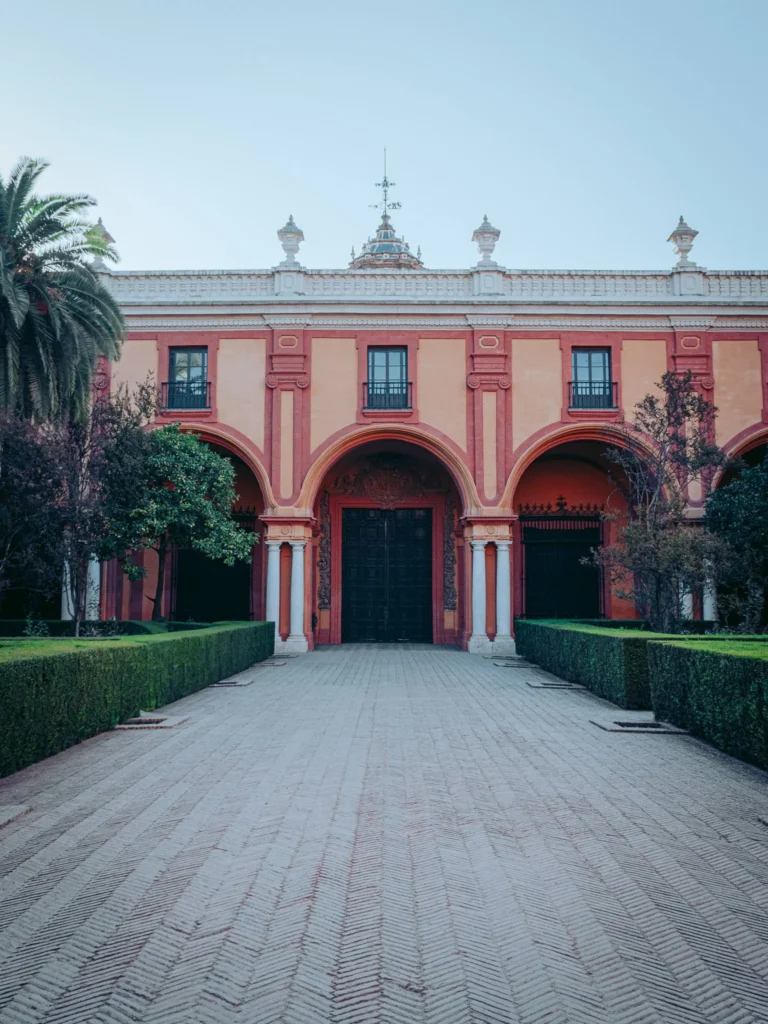
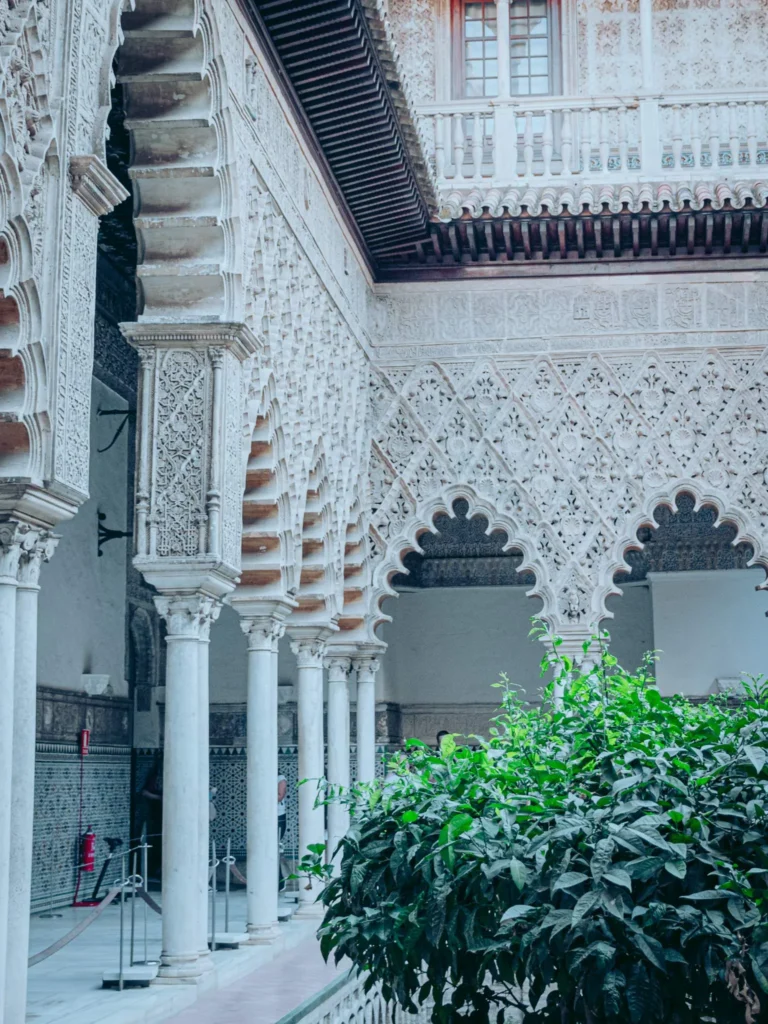
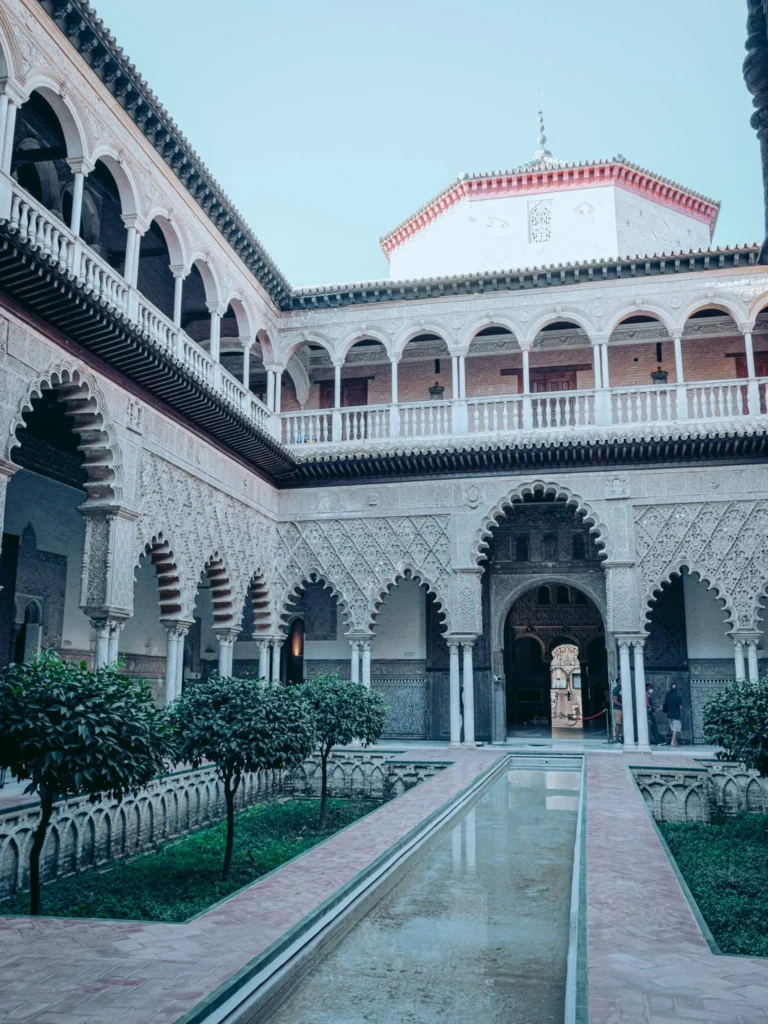
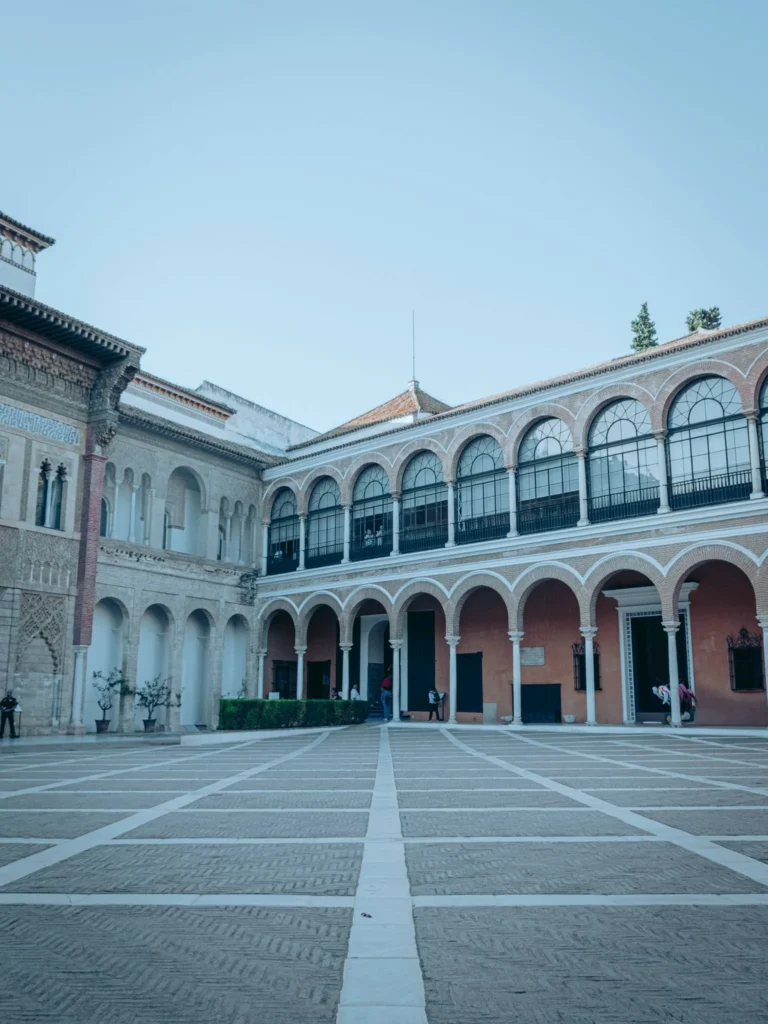
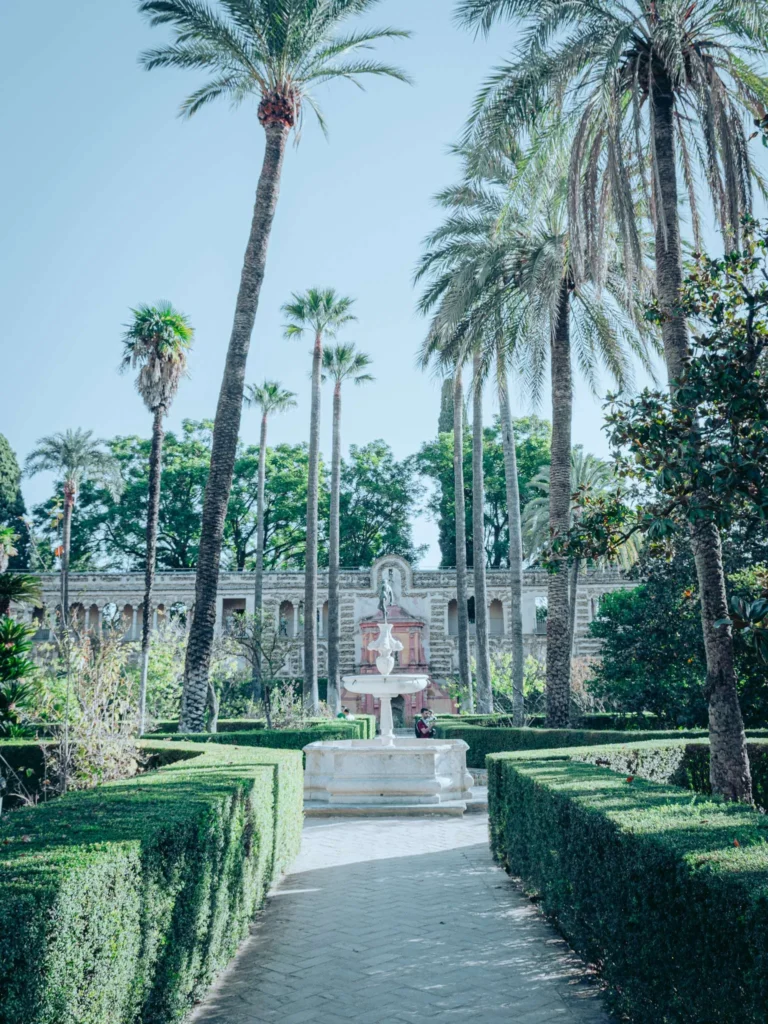
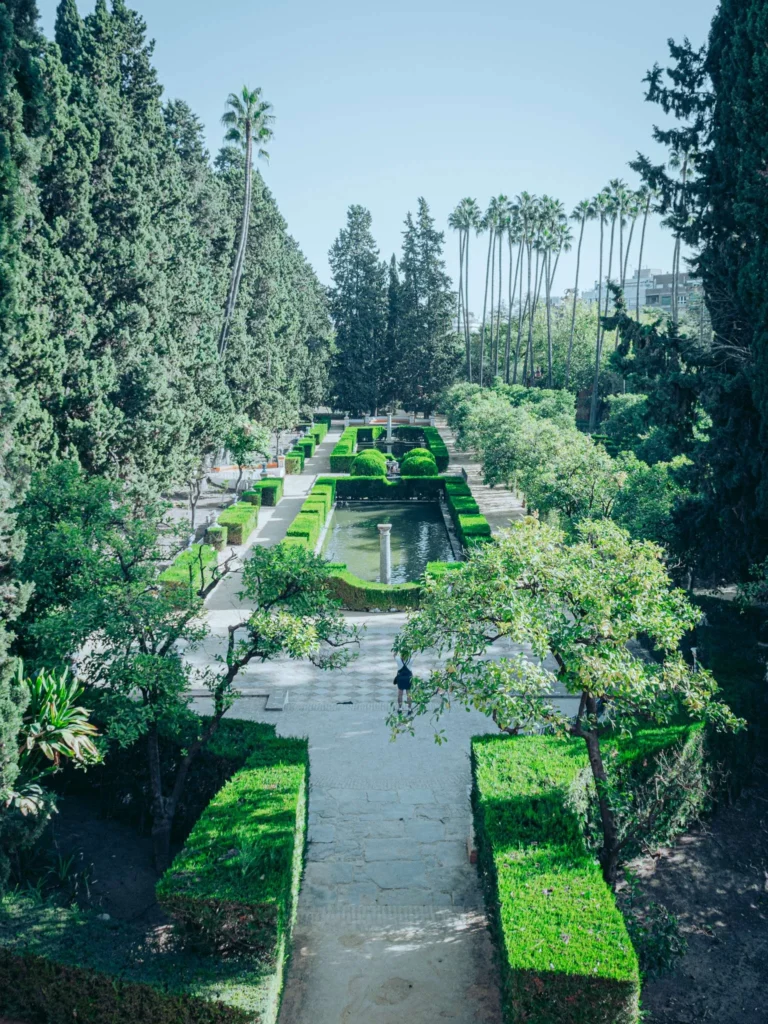
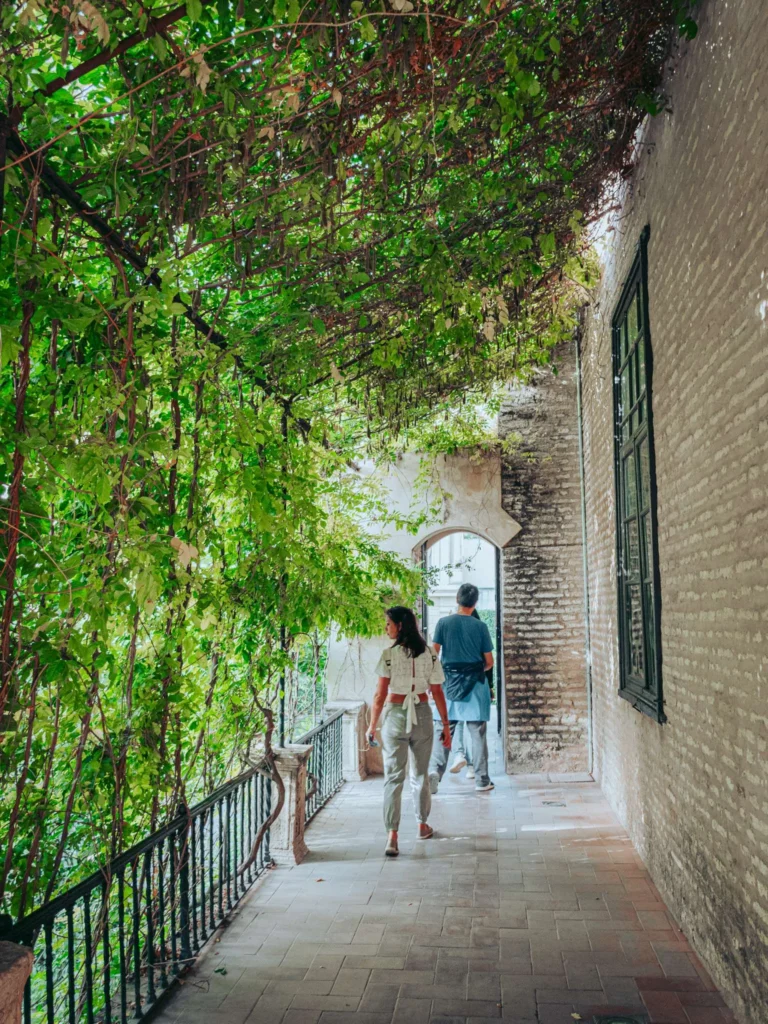
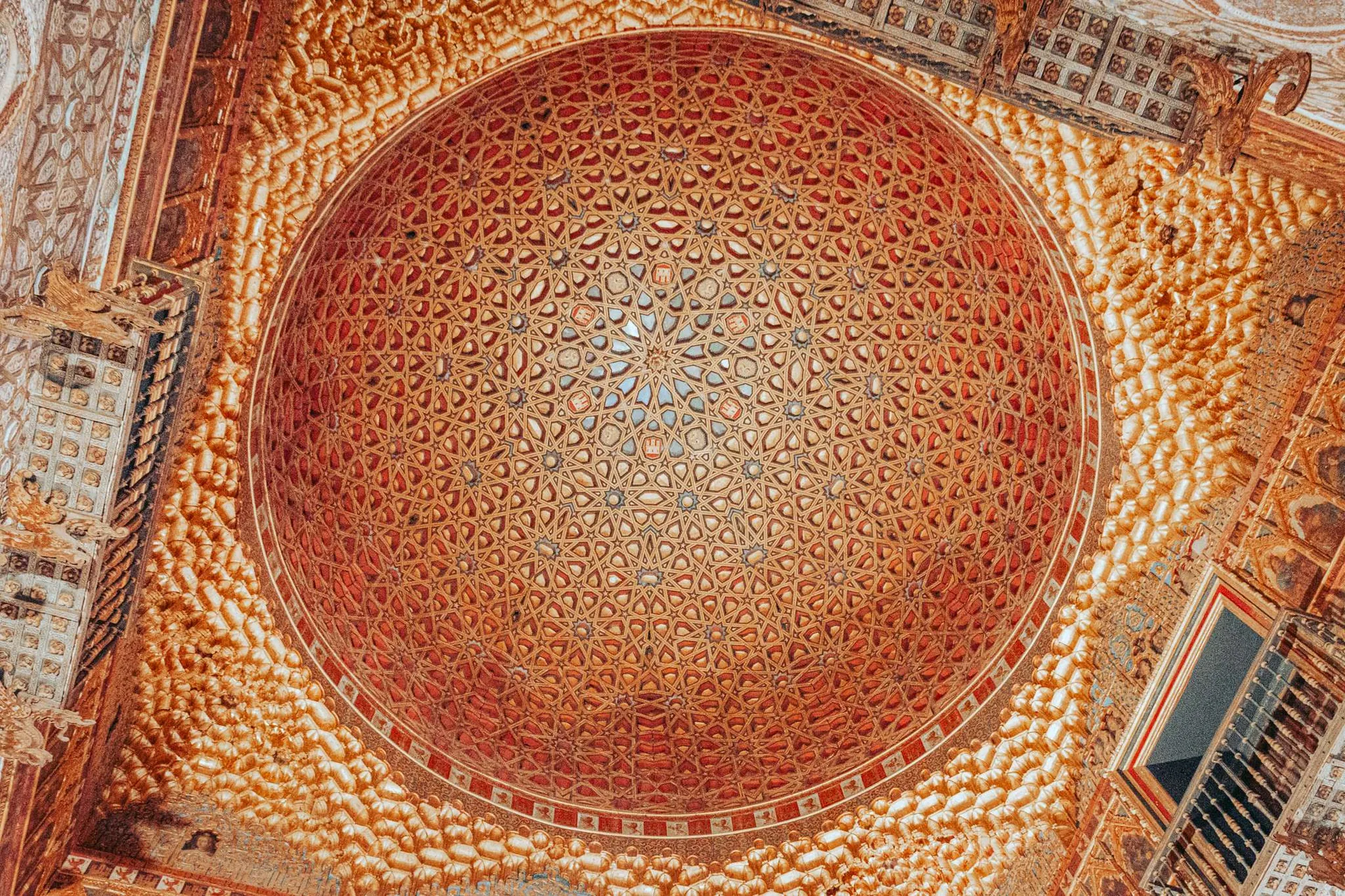
The Alcázar is an 11th-century Muslim palace, transformed and expanded over the centuries, full of Mudéjar courtyards, gardens and golden ceilings that make you stop and stare upwards because they are simply unreal. It is one of the oldest palaces in Europe still in use today (the Spanish royal family still stays there).
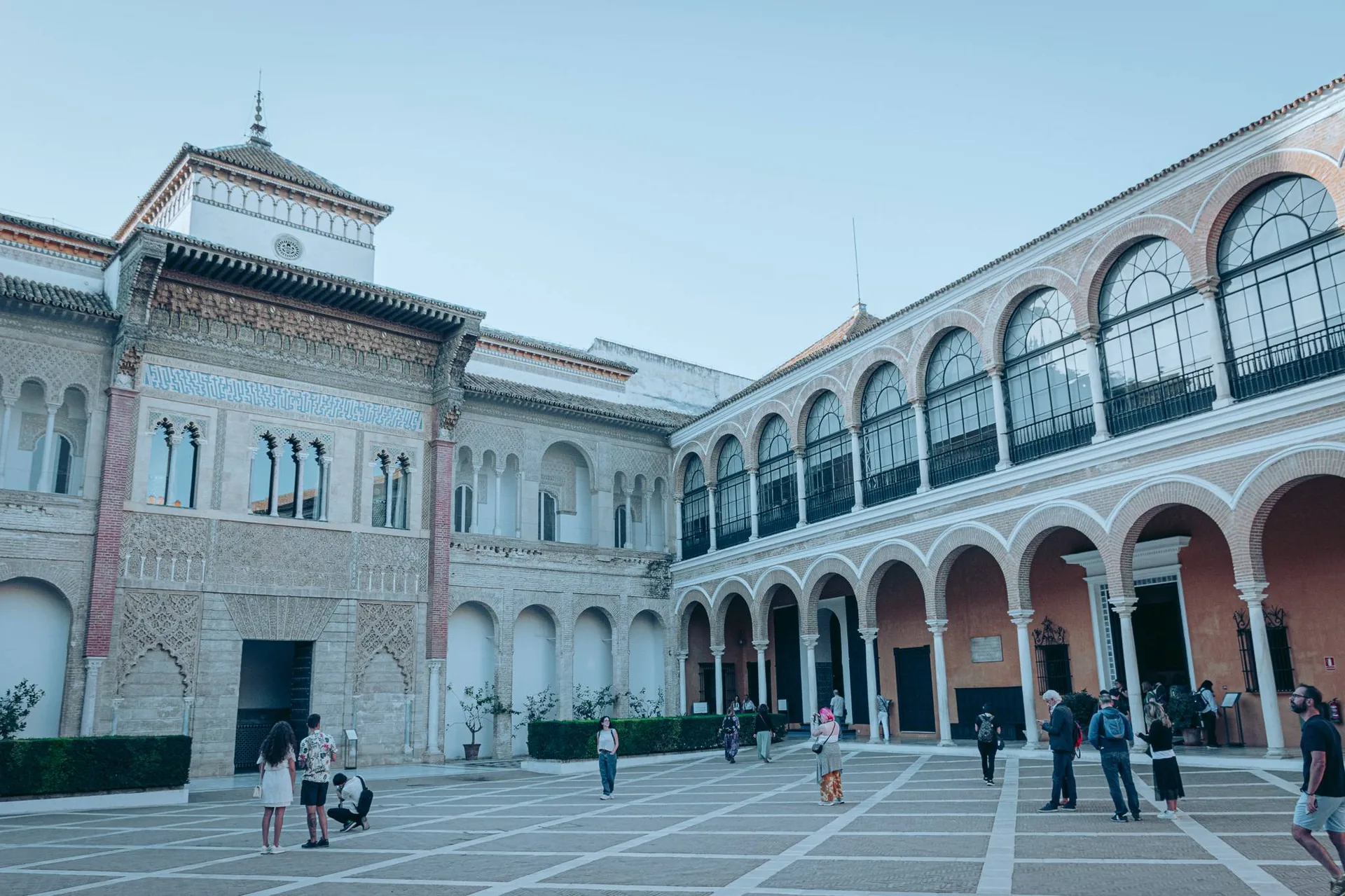
Now for the confession. It took us three attempts to actually manage a visit, so let us tell you the story so you do not make the same mistakes.
Attempt 1 (trip 1, day 1). We set off on foot from the parking area, completely lost, unable to find the entrance. We nearly signed up for a dance class at the University of Seville because we thought it was the Alcázar (yes, I know, we are hopeless). A local saw us struggling and pointed us the right way. Except by then it was too late, there was no time left to visit. Postponed until tomorrow.
Attempt 2 (trip 1, day 2). We reached the ticket desks and there was not a single space left for the day. We booked online for the day after. Except we had already left before then.
Attempt 3 (trip 2, Christmas weekend). This time we got organised. Tickets booked online. Full visit. Verdict: magnificent, it swallows up your whole afternoon, and we came out exhausted but with stars in our eyes.
Seville Cathedral and the Giralda
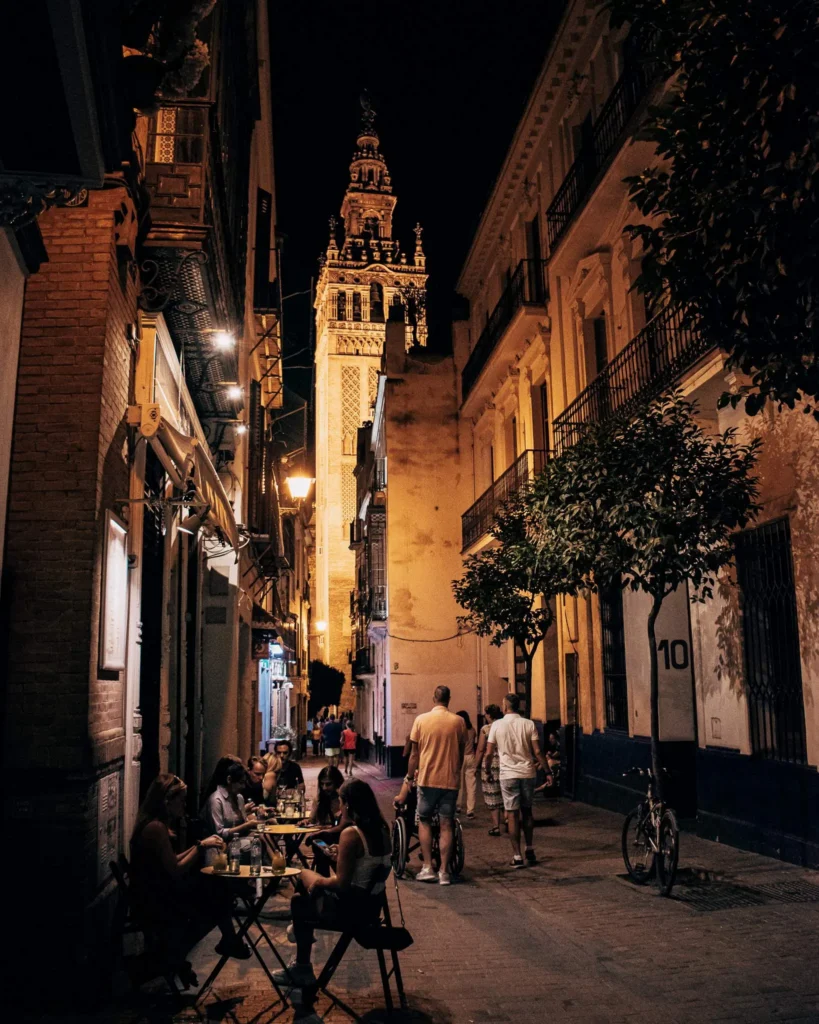
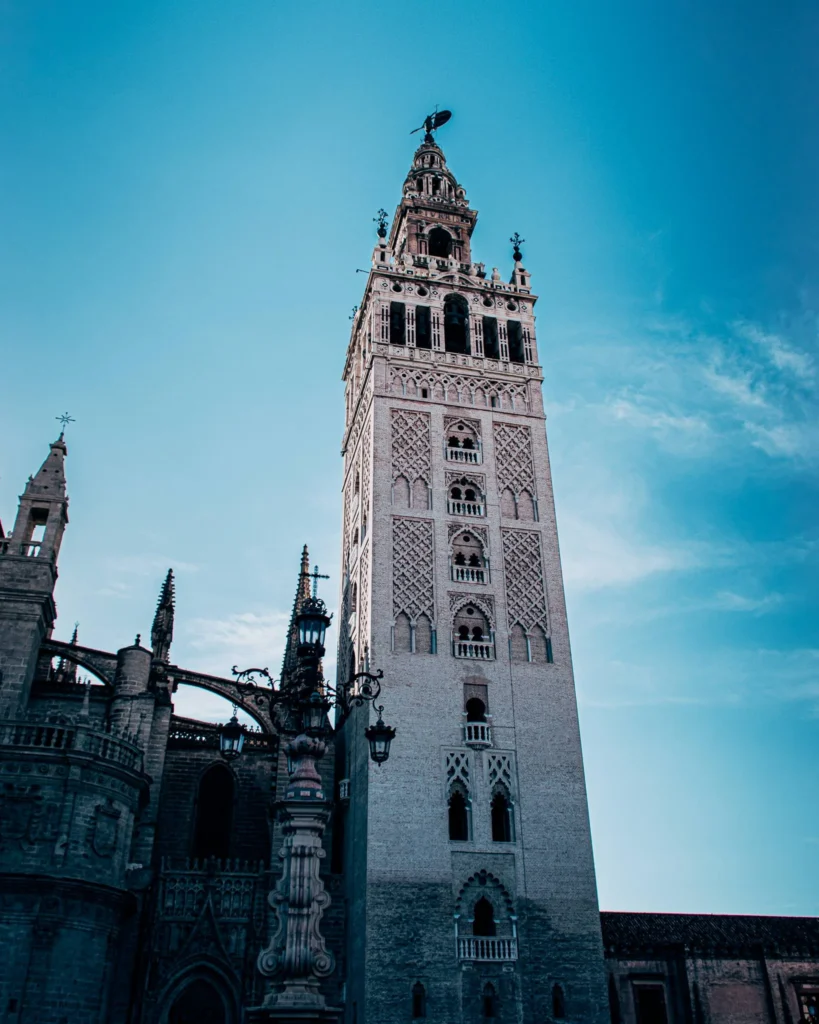
Seville Cathedral is the third-largest church in the world, and above all the first great Gothic church ever built. It was constructed after the Reconquista in 1248, on the site of a former Muslim mosque. The Giralda, its bell tower, is the mosque’s former minaret, preserved and repurposed.
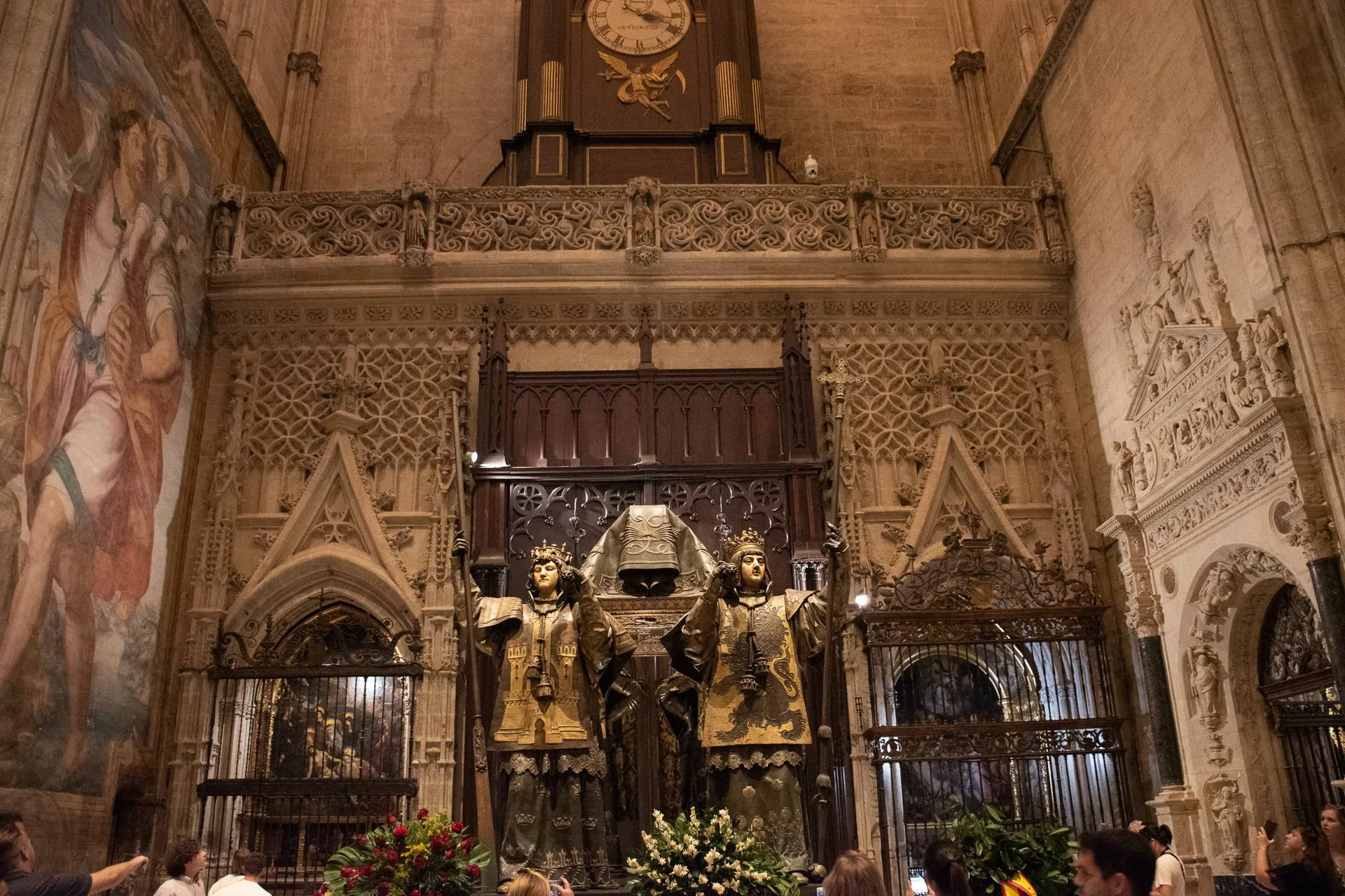
Inside, you will find the monumental tomb of Christopher Columbus, carried by four royal statues, in a vast nave where the light filters through the Gothic stained glass. Honestly, it is a gem, we could have spent hours simply looking around. And you can climb the Giralda (by ramp, not stairs) for the rooftop views.
Plaza de España and Parque de María Luisa
We are coming back to it because this is the place where Seville got under both our skin. Plaza de España was designed by architect Aníbal González for the 1929 Ibero-American Exposition. It is roughly 50,000 m² of splendour, with ceramic benches all around the square, each one representing a Spanish province (Spaniards traditionally sit in front of the bench for their home province, and it has become a tourist ritual too).
A 515 m canal runs around it, and you can hire a rowing boat at the entrance to glide around the water. Not bad for a romantic couple moment, or so we thought while watching everyone else having a brilliant time on it as we stayed on the edge taking it all in.
On the film side, it is worth knowing that Plaza de España was a Star Wars filming location (Episode II, beneath the battlements) and several scenes from Game of Thrones were shot there too. When you walk through it, you understand why: it is literally an open-air film set.
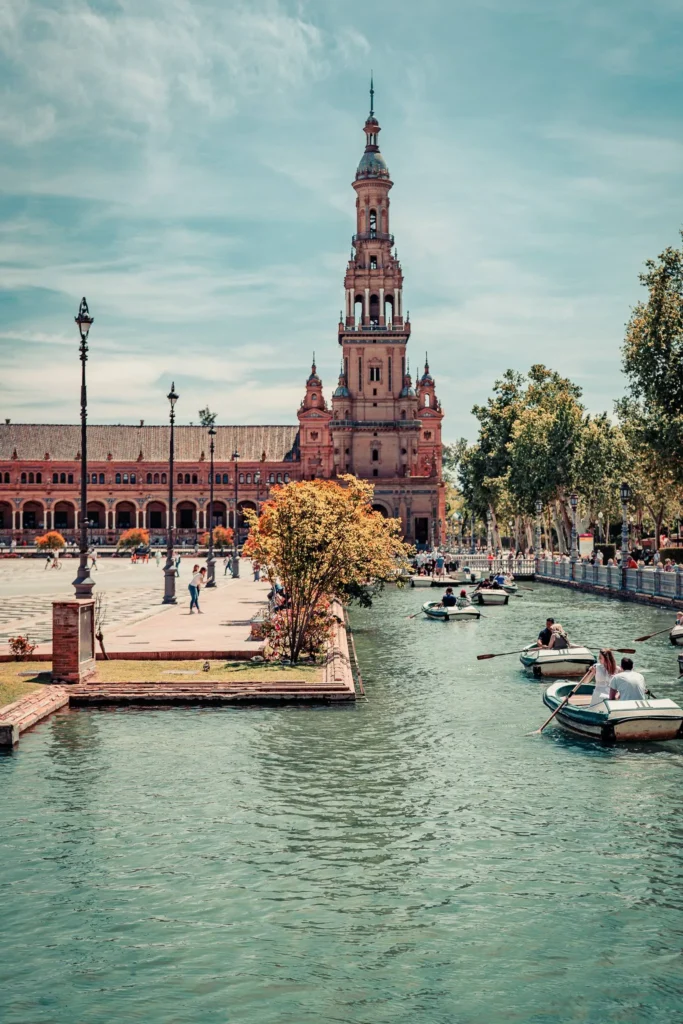
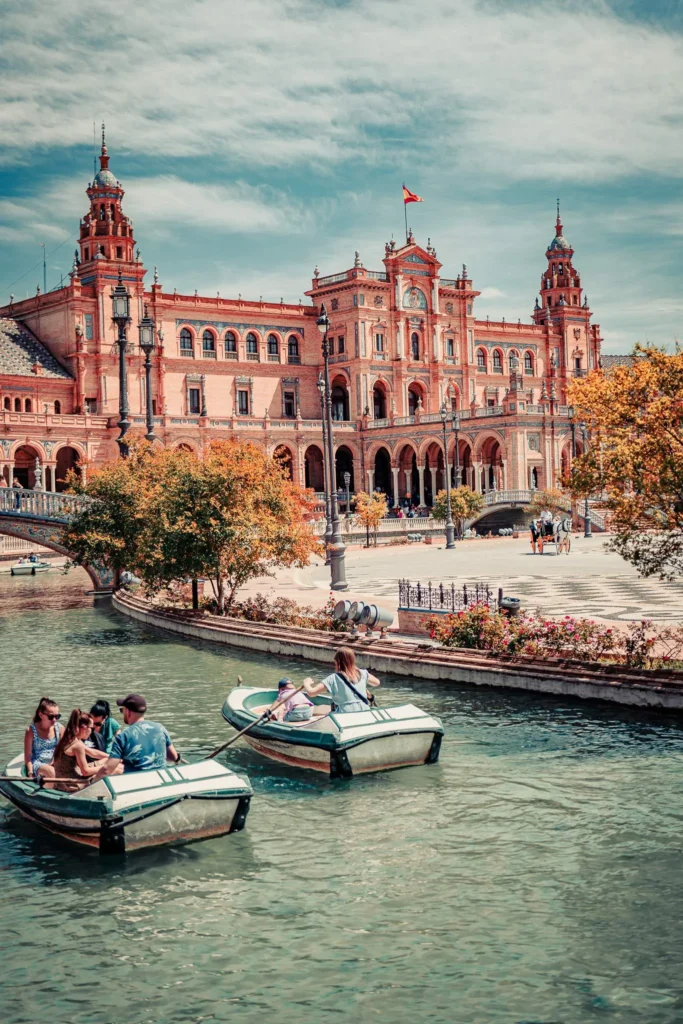
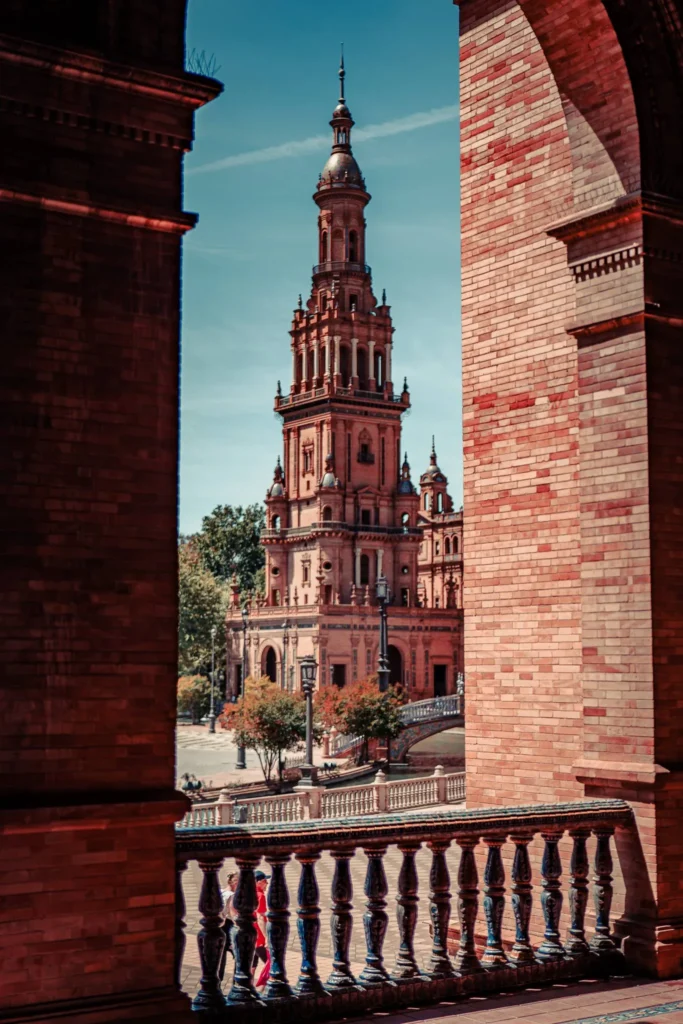
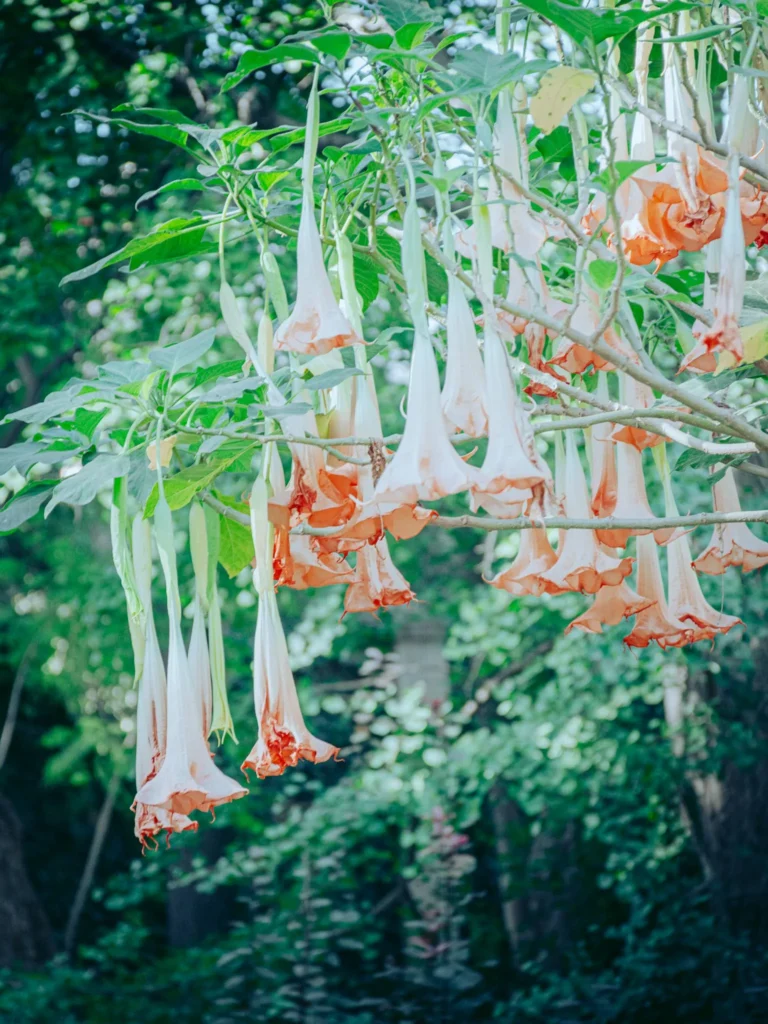
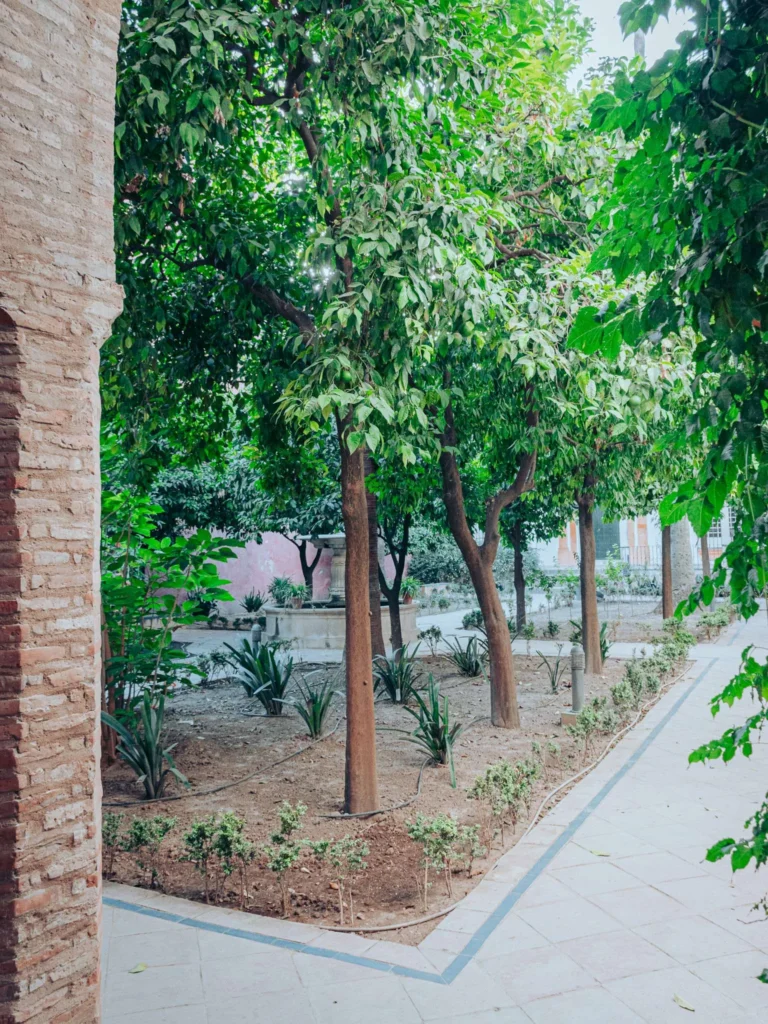
Right next to it is Parque de María Luisa, “one of the places locals love most”, as Caroline would put it. With a very distinctive soundtrack too: wild parakeets screeching in the trees non-stop. There are orange trees, clementine trees, masses of jasmine, lush biodiversity everywhere. “In summer, when it gets hot, the park keeps a certain freshness thanks to the vegetation, it is so pleasant”, Caroline tells us. Perfect for breathing between two monuments.
Climate: when should you visit Seville by camper van?
Seville : a glimpse of the weather
5-day forecast
Hesitating about leaving now? Here are the forecasts for the coming days.
Monthly climate
Let's be honest, we prefer beautiful sunny days. But if you enjoy cooler weather or rain, here's everything you need to find your perfect time.
| Month | Min temp | Max temp | Rain | Weather | Rating |
|---|---|---|---|---|---|
| May | 16°C | 28°C | 19 mm | ☀️ | |
| June | 22°C | 36°C | 4 mm | ☀️ | |
| July | 23°C | 37°C | 0 mm | ☀️ | |
| August | 23°C | 37°C | 1 mm | ☀️ | |
| September | 20°C | 33°C | 4 mm | ☀️ | |
| October | 18°C | 28°C | 81 mm | 🌦️ | |
| November | 10°C | 19°C | 113 mm | 🌦️ | |
| December | 8°C | 15°C | 100 mm | 🌦️ | |
| January | 8°C | 14°C | 157 mm | 🌧️ | |
| February | 10°C | 18°C | 118 mm | 🌦️ | |
| March | 10°C | 20°C | 32 mm | ☀️ | |
| April | 14°C | 25°C | 31 mm | ☀️ |
Where and what to eat: tapas and Sevillian specialities
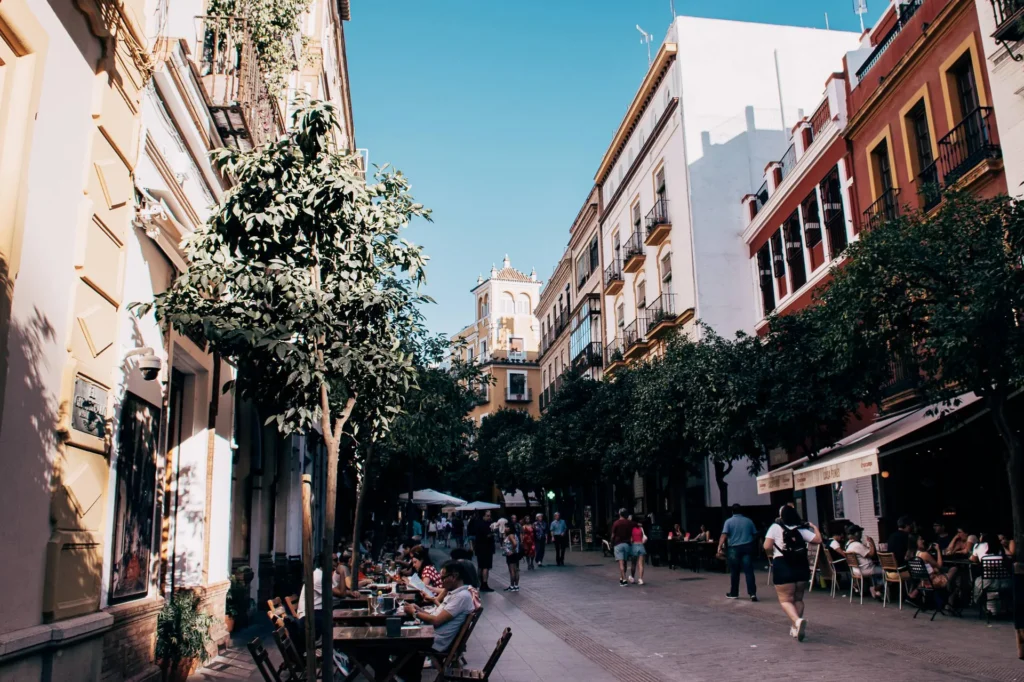
We fell for tapas from the very first evening. The format is brilliant: 3 or 4 small plates to share instead of one big dish, more variety, and often cheaper too. Here is what we genuinely loved (and what we did not, because we are honest).
Our favourite tapas
- Salmorejo: cold Andalusian soup made with tomato, crumbled hard-boiled egg and Iberian ham. Much heartier than a classic gazpacho, almost creamy. Xavier still has not recovered.
- Oxtail stew (rabo de toro): meat slow-cooked for hours until meltingly tender, served with a wine-based sauce. Traditional to the core. Caroline says it is superb.
- Deep-fried porcini croquette: we tried this in a tapas bar and it was properly elite (top tier in our language). Crispy little shell outside, silky cream inside.
- Grilled artichokes with sautéed vegetables: veggie, simple, perfect.
- Regional chorizo: not supermarket chorizo, the real thing, smoky and intense.
- Fried cuttlefish sticks: the Andalusian take on fried squid, and a light one.
What about sangria then?
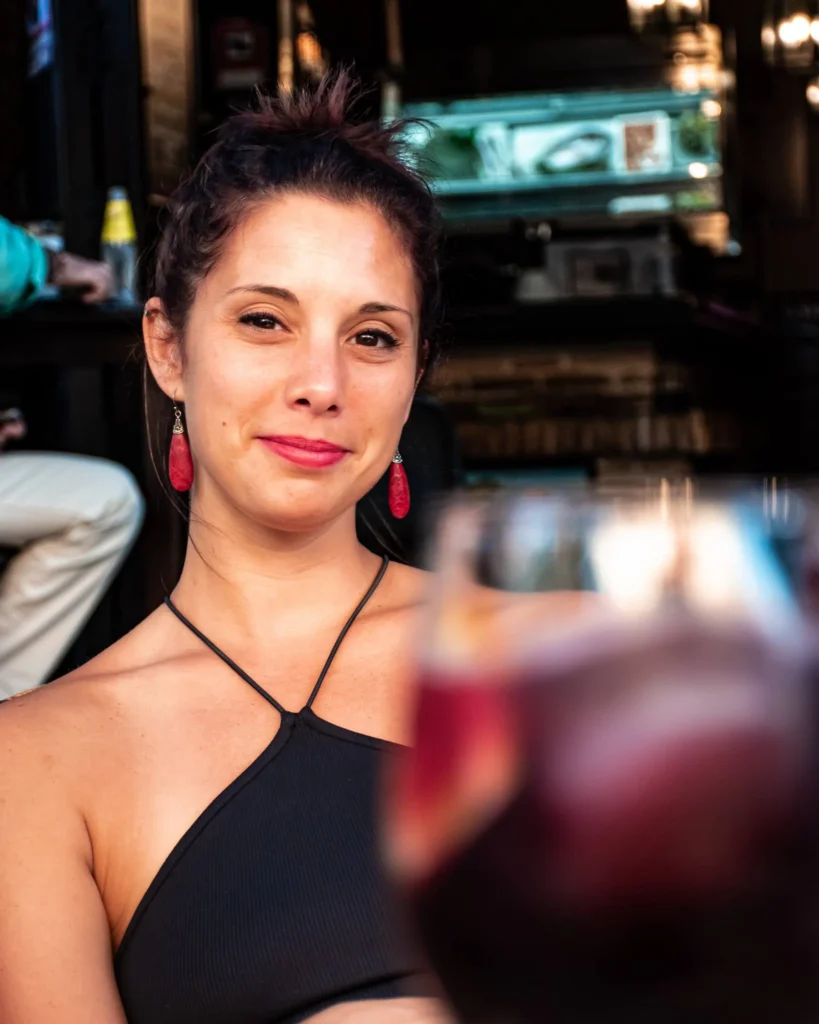
Spoiler: we were disappointed. Sangria in Seville is honestly nothing special in our opinion, at least in the bars around the centre. If you want something nicer, go for a tinto de verano (red wine + lemon-lime soda), which locals actually drink day to day, or a good regional wine. Sangria still feels quite “tourist version”.
And dessert?
Another small disappointment from trip 1: we did not find a dessert in the tapas bars that really stuck with us. Proper Sevillian pastries (pestiños, torrijas, polvorones) are better hunted down in traditional bakeries in the morning than in evening tapas bars. We did stumble across a Sunday brunch spot (avocado and salmon, clementine açai bowl with muesli), a good modern address for recovering after a big night out.
Quota RapidAPI dépassé (10 req/heure sur plan gratuit). Réessayez dans une heure.
Useful spots and points of interest for vans and motorhomes in Seville
On this map, you will find all the useful points of interest for your stay in Seville by camper van or motorhome: service areas, car parks, campsites, restaurants we tested, and monuments to visit.
Seville : Places we can tell you about
Here's our selection of places in Seville: spots we've visited that might be useful to you. Use the list view to discover each address in detail, and export everything to add to Google Maps or your favorite GPS app.
| Place | Address | Download |
|---|---|---|
| Camping Villsom Sevilla | Cádiz, N-4, Km 555, 41703 Dos Hermanas, Sevilla, Spain | |
| Motorhome aire in Gelves (Seville): secure, 10 min from the centre | C. de PuertoGelves, 41120 Gelves, Seville, Spain | |
| Dehesa Nueva Camping | Carretera Isla Mayor, km. 3,200, 41849, Sevilla, Spain | |
| Motorhome area | C. África, 5, 41500 Alcalá de Guadaíra, Sevilla, Spain | |
| Camping Sierra Brava | Av Lago del Serrano, s/n, 41210 Guillena, Sevilla, Spain | |
| FREE BUS PARKING | Av. de la Solea, 2, 41007 Sevilla, Spain | |
| Parking Louis Pasteur | C. Louis Pasteur, 41092 Sevilla, Spain | |
| Parking of the dogs | C. Huerta del Rosal, Norte, 41015 Sevilla, Spain |
| Place | Address | Download |
|---|---|---|
| My Self Laundry Laundry | Jesús del Gran Poder, 5, Casco Antiguo, 41002 Sevilla, Spain | |
| My Laundry Alfalfa Laundry | C. Muñoz y Pabón, 2, Casco Antiguo, 41004 Sevilla, Spain | |
| The Laundry Room | C. Sta. María la Blanca, 2, Casco Antiguo, 41004 Sevilla, Spain | |
| Parking Las Razas | Av. de las Razas, 41, 41012 Sevilla, Spain | |
| CARAVAN PARKING AREA | C. Aeropuerto de San Pablo, Km 536, 5, Norte, 41020 Sevilla, Spain | |
| Makalu Camper Sevilla | P.I. La Red Norte, C/ La Red Dos, 46, 41500 Alcalá de Guadaíra, Sevilla, Spain |
| Place | Address | Download |
|---|---|---|
| El Rinconcillo | C. Gerona, 40, 41003 Sevilla, Spain | |
| The Passage Santa María la Blanca | C. Ximénez de Enciso, 33, 41004 Sevilla, Spain | |
| Antigua Abacería de San Lorenzo | C. Teodosio, 53, 41002 Sevilla, Spain | |
| Restaurante Los Rincones del Marqués | C. Santiago, 31, 41003 Sevilla, Spain | |
| Pelayo | C. de Pelayo, 2, 41004 Sevilla, Spain |
What can you do in Seville?
Here is the list of activities we recommend in Seville, depending on what you enjoy:
– Walk through the gardens of Parque de María Luisa
– Romantic dinner in a typical restaurant in Triana
– Boat ride on the canal at Plaza de España
– Cathedral visit and climb up the Giralda
– Authentic flamenco show in Triana
– Museum of Fine Arts of Seville
– Plaza de Toros de la Maestranza (historic bullring)
– Horse riding in Doñana National Park
– Hiking in the Sierra de Aracena
– Kayak hire on the Guadalquivir
– Semana Santa: spectacular religious processions across the city
– Seville Flamenco Festival: concerts, performances, workshops
– Christmas market (December): sparkling atmosphere, distinctive white stalls
Seville in winter and at Christmas (our December return)
We discovered Seville in winter during a Christmas weekend, and it shows you a completely different face of the city. The decorations are wild, you are genuinely not prepared for it: streets lighting up as night falls, squares turned into something magical, an atmosphere that definitely reminds you you are in a very, very Catholic country.
One local curiosity: the Christmas market with its white stalls. We are so used to the dark wooden chalets of French markets that it catches us off guard at first. It is typical of southern Spain, and it feels refreshingly different.
For accommodation at that time of year, we made an exception and rented an Airbnb in the city centre so we could enjoy the evening atmosphere without doing the journey back to the service area late at night. Good idea on paper. Catastrophic in practice: Sevillian flats are designed for 42°C summers, not cold December nights. Freezing tiled floors, blue hands in the morning, air-con heating unit high up on the wall (even though heat rises, make that make sense). Caroline in full grumpy French mode: “it is honestly warmer outside!”. Conclusion: in winter, either stay in a well-insulated van, or check the insulation and heating setup of your Airbnb before booking.
Staying connected in Spain (the smart vanlife move)
A quick practical vanlife tip: if you do not want to depend on tapas bar wifi to post your stories or find your way through the maze of little streets, we recommend getting a Spanish eSIM. It activates in 5 minutes on your phone, gives you 4G/5G across Andalusia, and saves you from unpleasant roaming surprises.
On the practical side, we have been using Holafly for 3 years while travelling, and for us it is the best balance of simplicity and coverage.
If you are travelling from the UK, do not assume EU roaming will be as straightforward as it used to be before Brexit. Depending on your provider, fair-use caps and extra charges can kick in quite quickly. EE, Three UK, Vodafone UK and O2 can all have different roaming rules depending on your plan, and once you go beyond the allowance, costs can climb fast, sometimes around £20/GB or more. That is exactly why an eSIM like Holafly is often the simplest option for a road trip like this.
More details and comparisons in our dedicated article: Which unlimited SIM plan for Spain?. Use our promo code LAPLANETEDECARO if it is still active when you book.
To go further in Andalusia
If you are extending your Andalusia road trip, which we very warmly recommend, here are our other tested camper van guides in the region:
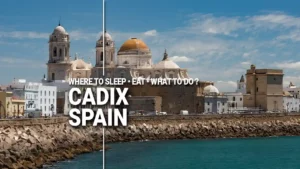
Discovering Cadiz in a Motorhome: Complete Guide
Discover our ultimate guide for an unforgettable road trip in Cadiz, Spain: fascinating history, practical tips, and must-do activities for a memorable adventure!
Read moreConclusion: why Seville really is worth the detour
There you go, that is almost everything. Seville is one of those places that leaves an emotional mark on you, not just another tick on a list of beautiful European cities. Caroline sums it up perfectly: “a very beautiful city, friendly, full of history, very lively. There is a softness to life that you really feel in Seville. A wonderful discovery.” And we came away with one single urge: to come back. Which we did. And would do again without hesitation.
To sum it up practically: secure service area at the entrance to Seville for around €14 a night (€10 in earlier years), allow at least 5 to 7 days, book the Alcázar online (absolutely essential), eat as much salmorejo and rabo de toro as you can, do flamenco in Triana, and give yourself a long contemplative moment in Plaza de España, just to see whether it hits you the same way it hit us.
If you go, or if you have already been, come and tell us in the comments about your favourite corner of the city. And say hello to our Hotel California musician if he is still singing on Avenida de la Constitución.