


Introduction
I don’t know if many vanlifers are like us, hoping for a day when solar panels and technology alone could recharge the vehicle and make us almost self-sufficient, but currently, we’re far from that.
This article explores the current challenges of electric vanlife, including limited vehicle range, high costs, and the lack of charging infrastructure. We’ll also discuss possible alternatives like hybrid technologies, electric retrofitting, and the potential of hydrogen to make this dream more accessible.
Why is the Issue of Diesel Engines Central to Vanlife?
On one hand, diesel engines, though powerful and durable, have a significant environmental impact. They emit considerable amounts of harmful pollutants, such as fine particles and nitrogen oxides. This chemical mix is far from harmless; it significantly contributes to air pollution, exacerbating public health issues and climate change.
On the other hand, in response to these concerns, the European Union, along with other regions worldwide, is imposing increasingly strict CO2 emission standards and planning to halt the sale of new diesel vehicles by 2035. This means the used vehicle market will also evolve, not necessarily favoring diesel engines, as we have already explained in our article The End of RVs and Vanlife with Petroleum.
Is the Electric Solution Viable for Vanlife?
On paper, the idea is appealing, but practical reality has a few nuances. Even though technology is advancing quickly, there are significant hurdles, especially for a mobile, nomadic lifestyle. Let’s take a closer look.
The Clear Advantages of Electric
Electric vehicles have their perks: a notable reduction in pollutant emissions, lower maintenance costs, and a quiet motor that could transform the driving experience in nature. Driving while hearing the birds—doesn’t that sound blissful?
Persistent Challenges
However, some challenges remain, mainly related to range and charging time. Electric vehicles, especially RVs and campervans, still struggle to offer a range comparable to their diesel counterparts.
- Range: The variety is significant, ranging from less than 100 km (62 miles) to over 300 km (186 miles) depending on the model and configuration. For instance, some electric campervans don’t exceed 150 km (93 miles) of range, while more compact vans might reach or surpass 300 km (186 miles) on a single charge. It’s better, but it still limits destinations, especially if you don’t live in the van year-round.
- Charging Time: Wait times for recharging have improved but can still be long, particularly if relying on standard charging stations. This can be problematic during long explorations far from dedicated infrastructure. The advantage is that in a van, there are more things to do than in a car. One hour of recharging = one hour of work?
Why Are Electric Campervans So Rare?
Electric campervans struggle to become mainstream primarily due to their limited range and weight challenges. The batteries needed to power these vehicles add significant weight, which directly impacts their load capacity and effective range.
Range: The Real Current Problem
Range remains the Achilles’ heel of electric campervans. For a standard vehicle, a full charge can offer between 150 and 300 km (93 to 186 miles), but this measure is often based on an empty vehicle. Once outfitted and loaded with all the necessary equipment for nomadic life, your actual range can drop drastically, posing a real problem for long trips or off-the-beaten-path adventures.
Heavy Weight = Reduced GVWR
The weight of the batteries significantly increases the GVWR (Gross Vehicle Weight Rating) of the vehicle. This not only presents performance challenges but also legal issues, as exceeding the standard GVWR may require a special license to drive legally in Europe. Recent regulations attempt to raise these GVWR limits to accommodate electric vehicles, but these adjustments are still insufficient to fully meet users’ needs.
How Much Does an Electric RV Cost?
An electric RV is quite expensive, significantly more than traditional models. Currently, you can expect prices to start around €200,000 (approximately $223,000 or £171,000) for basic models, reflecting the high costs of advanced electric technologies and large-capacity batteries.
For comparison, traditional combustion engine models are often available starting at €50,000 (approximately $56,000 or £43,000), highlighting the considerable gap in initial cost. This difference is due to investments in research and development as well as the materials used for the more sophisticated batteries and electrical systems. Despite the high purchase cost, long-term savings on fuel and maintenance could at least partially offset the initial investment.
What Electric Campervans Are Available or Coming Soon?
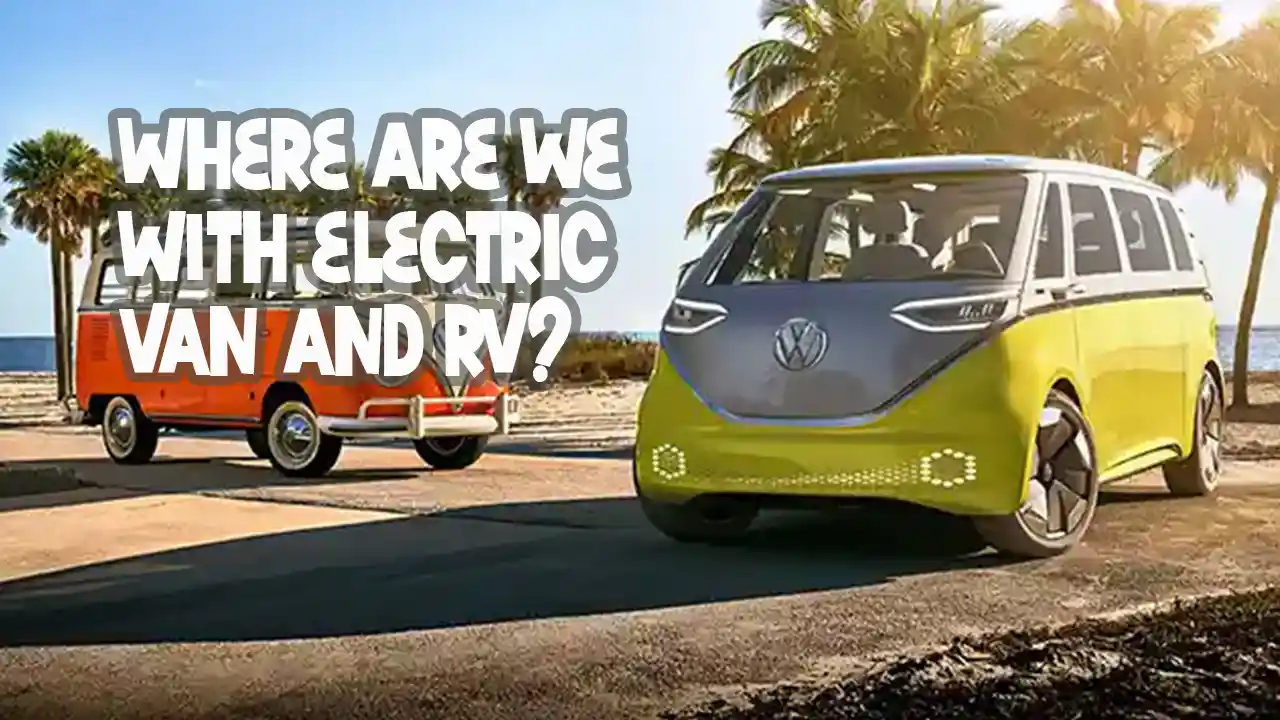
Several electric campervan models (both converted and ready-to-convert) are already available or set to hit the market soon. Among them, the VW ID. Buzz evokes the classic Combi with a modern touch and promising range. The Mercedes EQV stands out as a luxurious option with an impressive range of nearly 350 km (217 miles) per charge. Lastly, the Ford E-Transit offers a variety of configurations with a solid range and a payload capacity suitable for professional needs.
What Are the Electric RV Models?
When it comes to electric RVs, options are still limited, but the market is beginning to evolve. Among the pioneers is the Iridium model, available for a few years now with a range of 400 km (248 miles), a significant feat for a vehicle of this size. Brands like Winnebago are also exploring electric prototypes, though their commercialization has not yet been announced. These vehicles often combine advanced battery technologies and energy management solutions to maximize efficiency.
- Base: Ford E-Transit chassis
- Range: 125 miles (approximately 200 km)
- Features: Advanced battery system, solar panels, off-grid camping capability for up to a week
- Status: Prototype in testing phase, production expected soon
[vc_gallery interval=”3″ images=”11815,11816,11817″ img_size=”full” css=””]
- Type: Hybrid RV based on a Fiat Ducato
- Range: 90 km (56 miles) in electric mode, up to 600 km (373 miles) with the gasoline engine
- Features: 180 kW e-drive electric motor, energy recovery during deceleration, 35 kWh battery
- Status: In testing phase, production planned before 2024
[vc_gallery interval=”3″ images=”11818,11819″ img_size=”full” css=””]
- Type: Electric RV concept
- Expected Range: Up to 300 miles (approximately 483 km)
- Features: Modern design with digital mirrors, smart glass windows
- Status: Concept phase, launch expected after 2025
[vc_gallery interval=”3″ images=”11820,11821,11822″ img_size=”full” css=””]
What Are the Electric Delivery Van Models for Vanlife?
In the van market, electric options are already more diverse, although they are typically not pre-converted. The Ford E-Transit, for example, offers various configurations with a range of up to 317 km (197 miles), making it ideal for conversions into small RVs or campervans. The Fiat e-Ducato and Peugeot e-Boxer also provide electric alternatives for those looking to convert vans into mobile homes while reducing their carbon footprint.
- Type: Electric delivery van
- Range: 259 km (161 miles) for the 500 version, 246 km (153 miles) for the 700 version
- Cargo Capacity: 14,158 liters (500 cu ft) for the 500 version, 18,677 liters (660 cu ft) for the 700 version
- Status: Available for pre-order
[vc_gallery interval=”3″ images=”11823,11824″ img_size=”full” css=””]
- Type: Compact electric delivery van
- Cargo Capacity: Over 11,327 liters (400 cu ft)
- Features: Designed for smaller, more frequent deliveries, suitable for standard parking
- Main Client: Verizon
- Status: Production planned for 2024
[vc_gallery interval=”3″ images=”11826,11827,11828,11829″ img_size=”full” css=””]
- Type: Electric delivery van
- Range: Up to 360 km (224 miles) with a 79 kWh battery
- Features: Large cargo space, customization options for various commercial uses
- Status: Available
[vc_gallery interval=”3″ images=”11830,11831″ img_size=”full” css=””]
- Type: Electric delivery van
- Range: Up to 156 km (97 miles) with a 55 kWh battery
- Features: Ideal for urban and intercity trips, advanced connectivity with the MBUX system
- Status: Available in select regions
[vc_gallery interval=”3″ images=”11832,11833″ img_size=”full” css=””]
- Type: Large electric van
- Range: Up to 248 km (154 miles) with a 75 kWh battery
- Features: Suitable for large deliveries, offers substantial and modular cargo space
- Status: Available
[vc_gallery interval=”3″ images=”11834,11835″ img_size=”full” css=””]
- Type: Versatile electric van
- Range: 200 km (124 miles) with a 57 kWh battery
- Features: Various configurations to meet professional needs, robust and reliable for transport and services
- Status: Available
[vc_gallery interval=”3″ images=”12102,12104″ img_size=”full” css=””]
- Type: Electric delivery van
- Range: Specific range details not provided, designed for commercial use
- Features: Level 2 charger, various configurations
- Status: Announced, expected soon
What Are the Electric Van Models for Vanlife?
Electric vans, lighter and more agile, are already a reality in some markets. It’s likely that electric vanlife will gain traction through these vehicles. The VW ID. Buzz is one of the most anticipated, promising to combine VW’s iconic design with modern electric technology. It aims to provide a completely new driving experience while being environmentally friendly. Other models, like the Mercedes EQV, are already available, offering up to 350 km (217 miles) of range, making them suitable for both short getaways and daily use. But there are more:
- Type: Electric van for leisure and transport
- Range: 419 km (260 miles) with an 82 kWh battery
- Features: Modern retro design, spacious and modular, suitable for family trips or short getaways
- Status: Available
[vc_gallery interval=”3″ images=”11839,11841,11842″ img_size=”full” css=””]
- Type: Mid-sized electric van
- Range: 380 km (236 miles) with an 83 kWh battery
- Features: Customization options for cargo transport or leisure use, advanced connectivity
- Status: Production planned for 2023
[vc_gallery interval=”3″ images=”11845,11843,11844″ img_size=”full” css=””]
- Type: Luxury electric van
- Range: 353 km (219 miles) with a 100 kWh battery
- Features: Premium interior, MBUX navigation system, ideal for families and professionals
- Status: Available
[vc_gallery interval=”3″ images=”11846,11847″ img_size=”full” css=””]
- Type: Compact electric van
- Range: 330 km (205 miles) with a 75 kWh battery
- Features: Flexible for personal or professional use, modular seat configurations
- Status: Available
[vc_gallery interval=”3″ images=”11848,11849,11850″ img_size=”full” css=””]
- Type: Small electric van
- Range: 300 km (186 miles), battery details not confirmed
- Features: Compact and agile, suitable for urban deliveries and small families
- Status: Available
[vc_gallery interval=”3″ images=”11851,11852″ img_size=”full” css=””]
- Type: Versatile electric van
- Range: 240 km (149 miles) with a 57 kWh battery
- Features: Generous cargo space, suitable for professionals needing to transport equipment
- Status: Production planned for 2023
[vc_gallery interval=”3″ images=”11853,11854,11855″ img_size=”full” css=””]
- Type: Compact, modular design suitable for delivery and personal use
- Range: Up to 250 miles with an 80 kWh battery
- Features: Modular electric platform, compact design
- Status: In production, initial deliveries started
- Type: Available in two sizes, suitable for delivery and possible camper conversion
- Range: MPDV 1 up to 230 miles, MPDV 2 up to 190 miles
- Features: Modular electric platform, various configurations for delivery and cargo
- Status: In production, reservations open
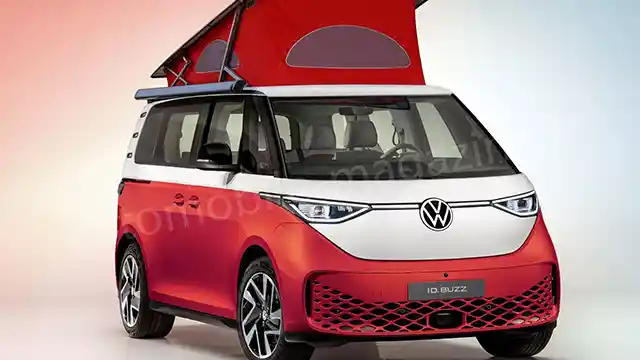
Why Is the ID. Buzz Our Favorite?
The VW ID. Buzz is truly a class act with a modern twist. Imagine, it has that 60s Combi look, which is super cool for standing out on the road, but with an electric motor that can go up to 419 km (260 miles) — perfect for eco-friendly road trips. Inside, it’s all about comfort with top-notch gadgets. If you love retro style and want to drive green, this van could be just what you’re looking for.
Technical Alternatives or a Different Mode of Vanlife with Electric Vehicles?
Sure, electric vehicles often have a limited range, usually around 300 km (186 miles), but isn’t this a golden opportunity to rediscover slow travel?
Alternative Technologies
- Hybrids: These systems combine an electric motor with a conventional engine, offering greater flexibility and better range compared to fully electric vehicles.
- Electric Retrofit: This involves converting a combustion engine vehicle to electric, reducing emissions without needing to produce a new vehicle.
- Hydrogen: Still in the early stages for vans, this technology promises near-zero emissions and quick refueling, although the refueling infrastructure is still limited.
Redefining Travel
By opting for a fully electric engine, you can rediscover slow travel. Committing to cover fewer kilometers per day, often limited to around 300 km (186 miles) matching the average range, this constraint becomes an opportunity to travel differently: covering less distance each day means more time to explore, discover, and fully experience each destination.

We're Caroline and Xavier
We got most of it wrong before we got it right. We share what actually holds up day to day in a van, and what we wouldn't do again.
Ce que vous souhaitez recevoir :