Our review of The botanical garden of Coimbra
Benefits
- The bamboo forest below, truly exotic
- Large, calm, a real green break in a mineral city
- Generally free entry
- A beautiful story (the explorers' plants, quinine)
Disadvantages
- The Estufa Tropical greenhouse can be closed (it was for us)
- It goes up and down again, the 10,000 steps are guaranteed
A beautiful green breath in the middle of a very steep city, with a bamboo forest that is worth the descent.
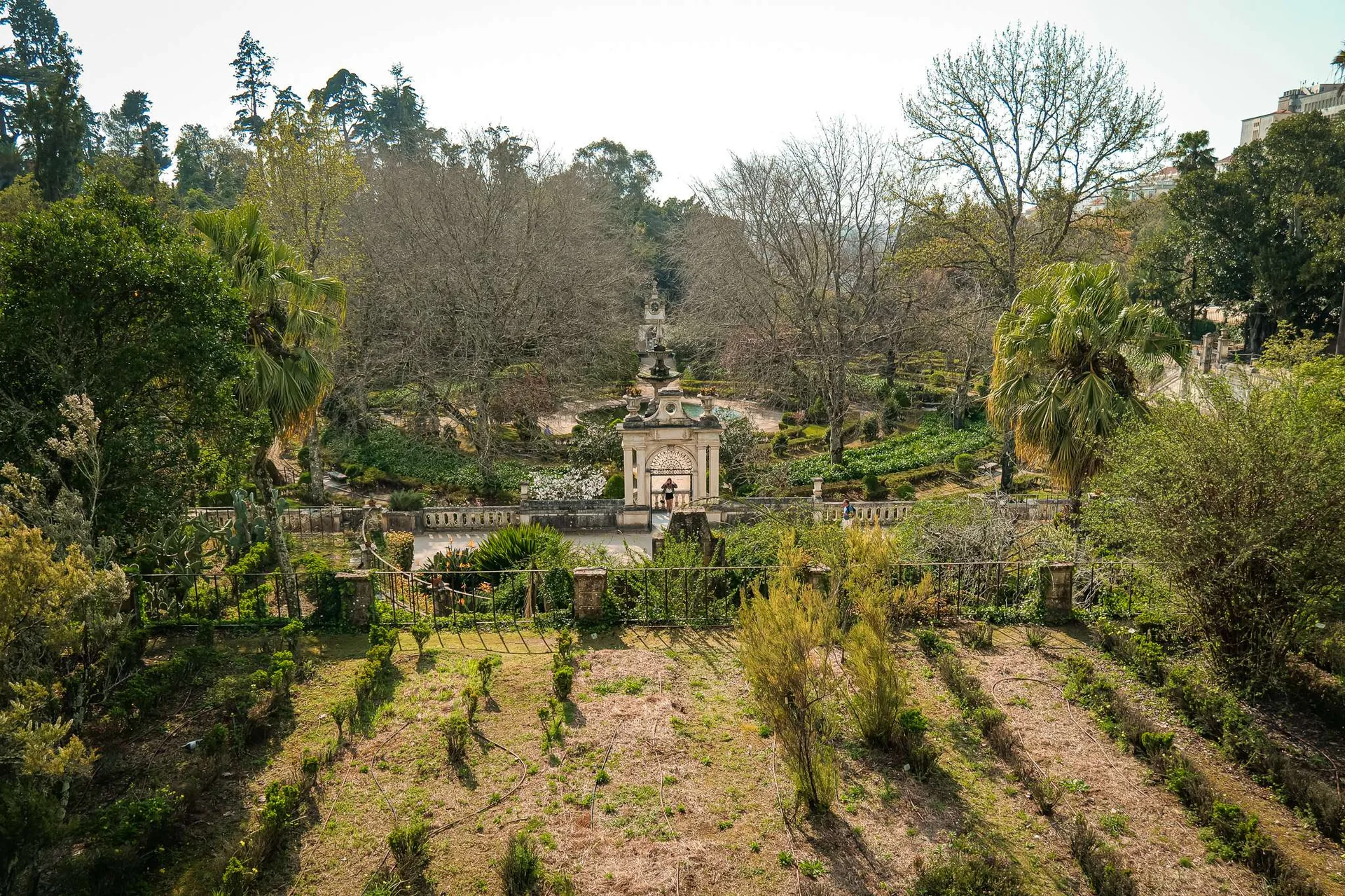
So this one, I will never remember its name. The Botanical Garden of the University of Coimbra, I ended up calling it “I can’t remember the name”, pronounced with a strong Portuguese accent (Caroline is not too fond of it, but hey, someone has to lower the bar). No matter the name, it’s a big part of the visit: a large terraced garden that goes down, another story of going up and down, and of course the 10,000 steps in the pocket at the end. In the middle of such a mineral and steep city, coming across so much green feels amazing.

A terraced garden (and the great couple debate)
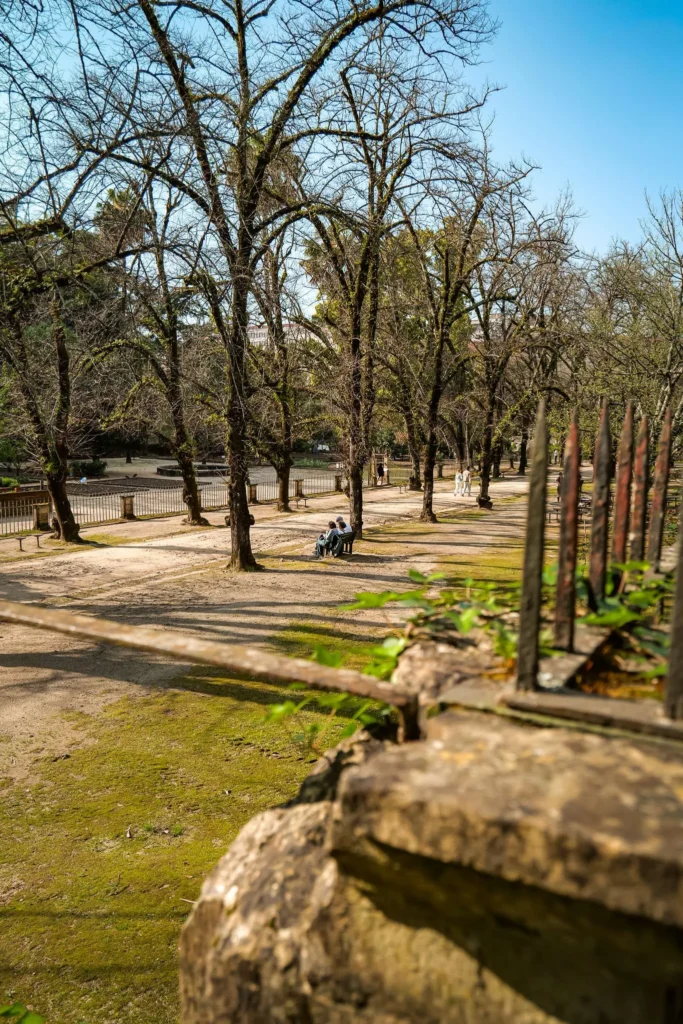
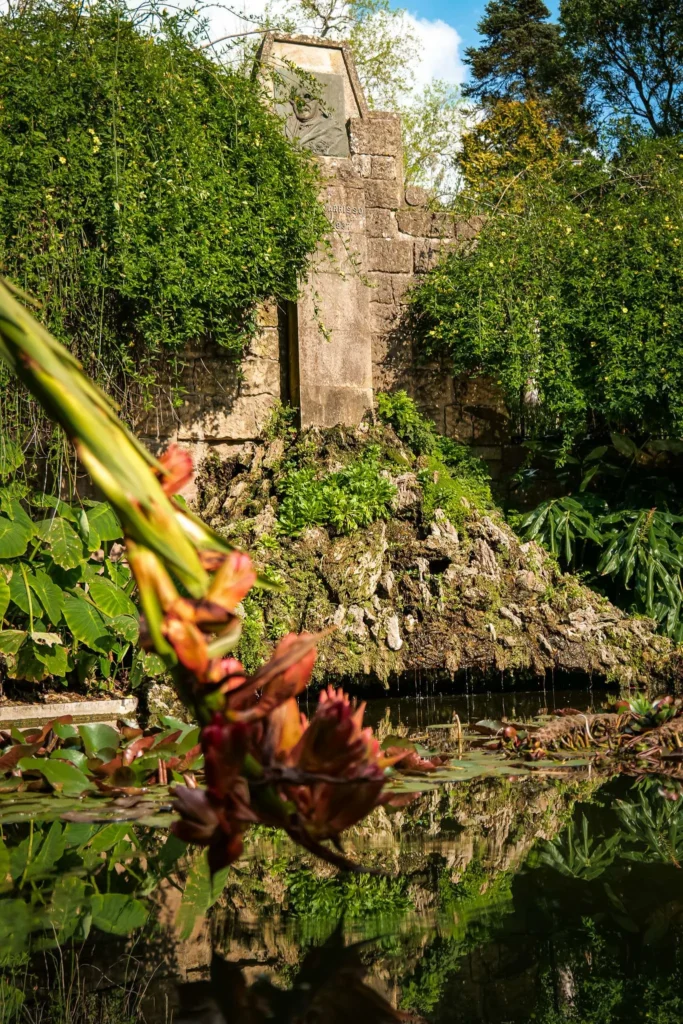
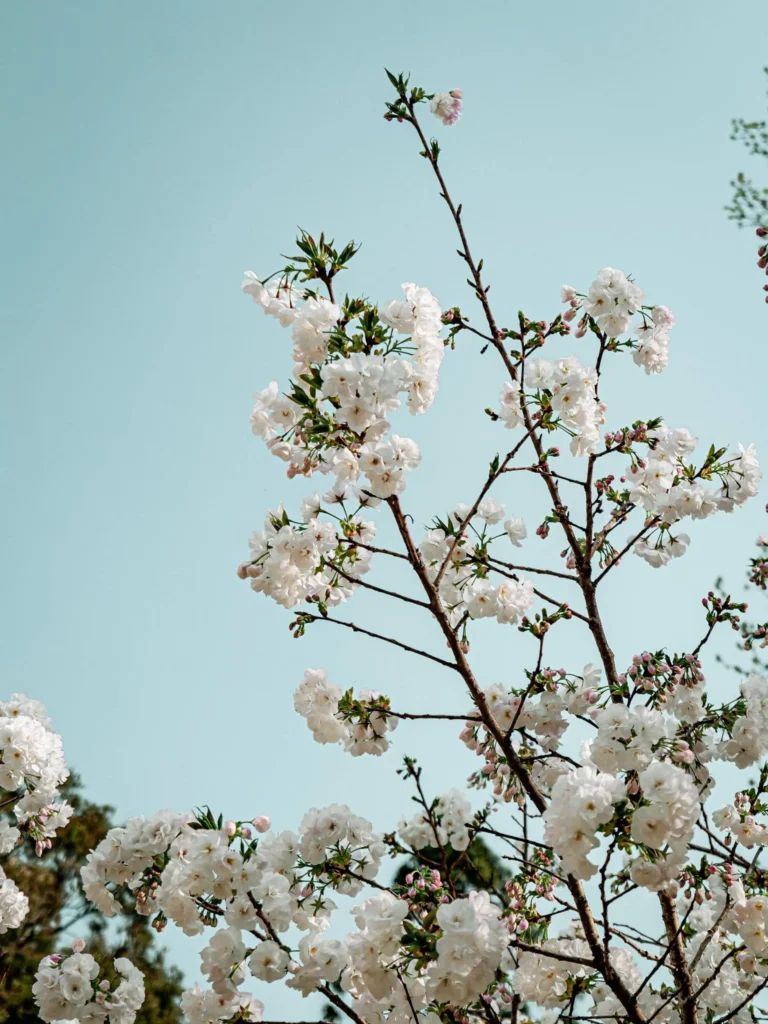
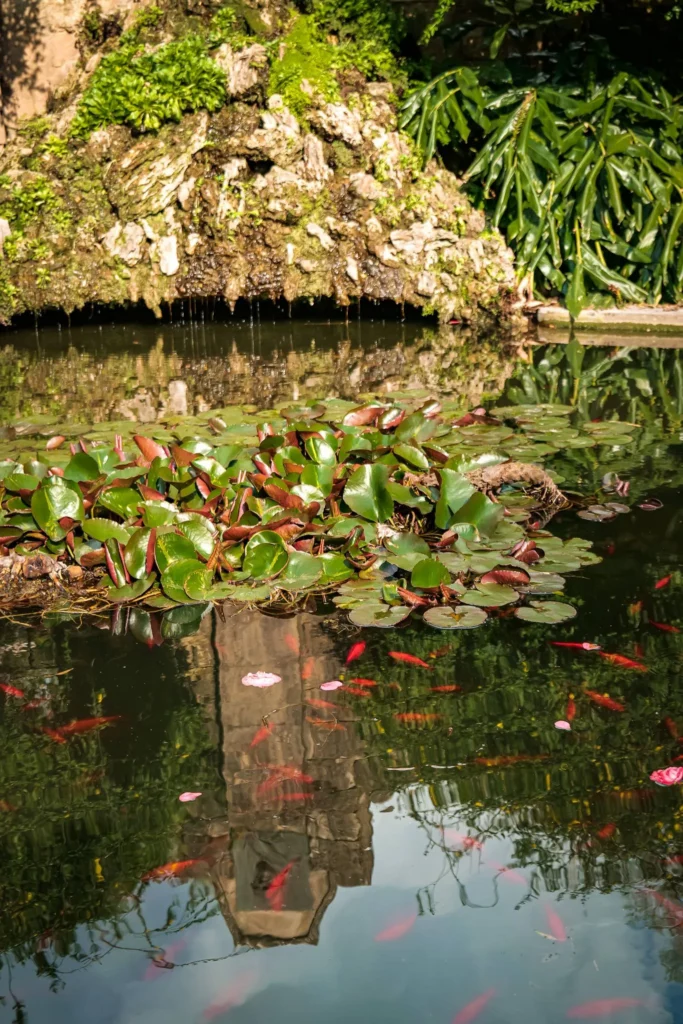
This is where our main thread of the episode makes perfect sense: we don’t visit the same way whether we are a man or a woman. Caroline stops at the blooming camellias, the light on the petals, a cherry tree bursting with pink, a tranquil pond covered with water lilies. Meanwhile, I am looking at the elevation and calculating how much it will cost my calves. Different perspectives mean debate, and a garden like this is the perfect playground for that.
What’s beautiful is that the two viewpoints complement each other. She sees the delicacy, I see the relief; she photographs a flower, I photograph the staircase climbing behind. And in the end, we bring back two different gardens in the same camera. (Well, I also slipped in a joke about “my big bamboo,” we can’t help it, but shh.)

Where this garden comes from (spoiler: malaria)
Two words of history, because this one is really cool. The garden was created in 1772 by the Marquis of Pombal, during a major reform of the university. At the time, it was not a tourist backdrop: it was a real open-air lab. Scientists studied the plants that Portuguese explorers brought back from their travels, from South America, Africa, or Asia, to understand what they could be used for.
And some have changed the course of things. The absolute star is quinine, the bark from which quinine was derived, the first real treatment for malaria. In other words, a corner of the garden that helped save millions of lives (admit it, it’s definitely cooler than three rose beds, I’m just saying). Just for this story, we look at the old flowerbeds differently.
The bamboo forest, the real highlight
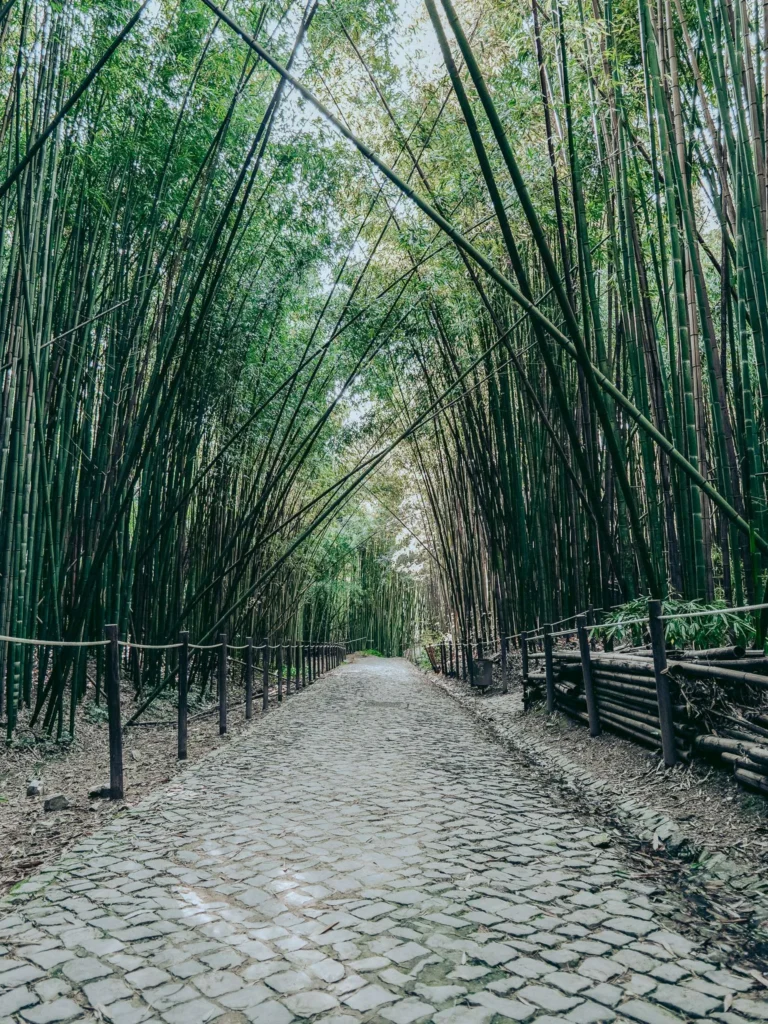
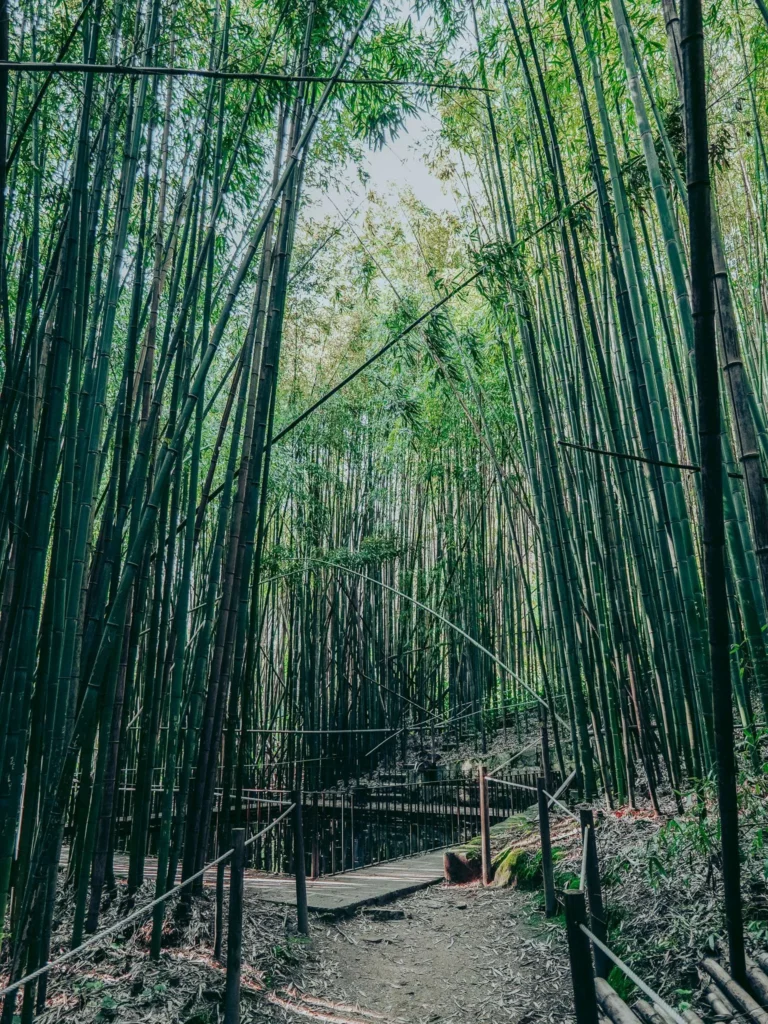
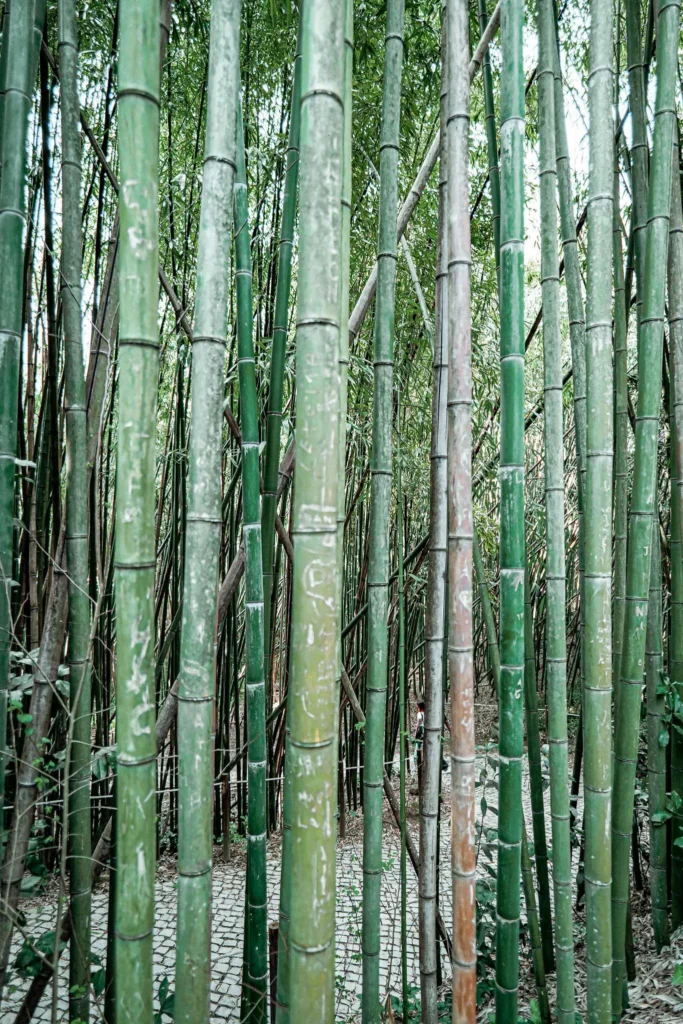
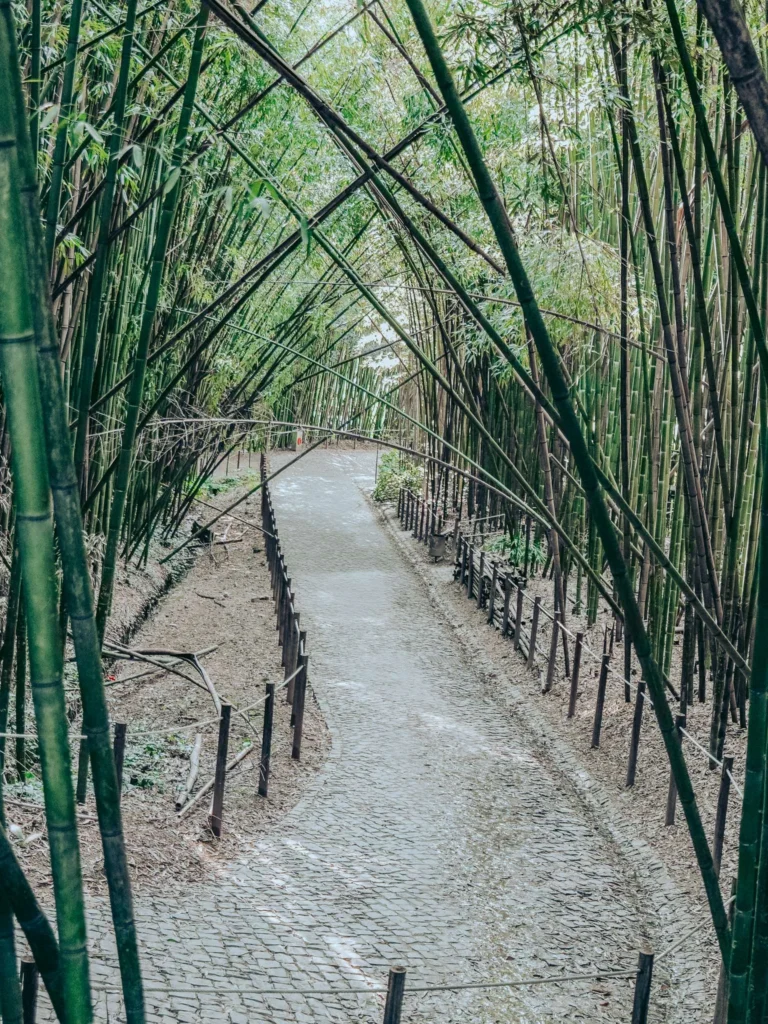
And then we go down, we go down again along the terraces, and we come out to a real bamboo forest. We lingered there for a good while, looking up, feeling tiny among the stalks reaching for the sky. It’s the kind of magical place where you completely forget you are in a university city. The light filters through the canes, it creaks, it rustles, we lower our voices without realizing it.
It’s clearly the highlight of the visit, the one that stays in memory once we are back in the van. If you were to remember just one image of the garden, it would be this: the cobbled path that disappears under the arch of bamboo, green, fresh, and a bit unreal.


The squirrels, the closed greenhouse, and the hidden corners
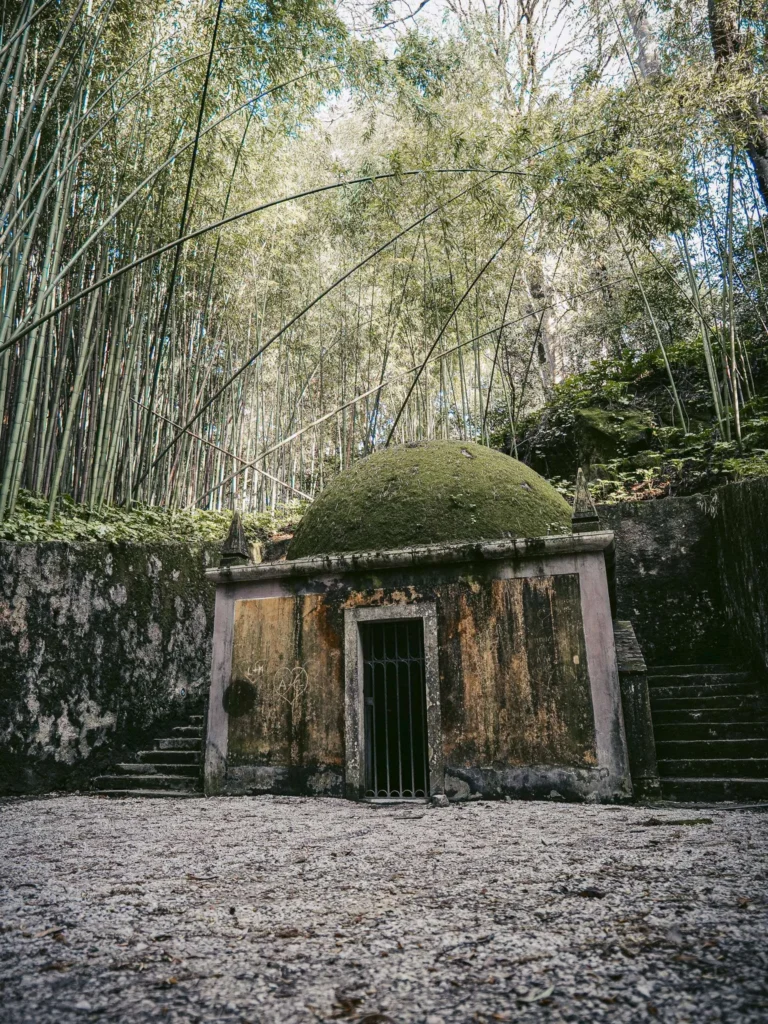
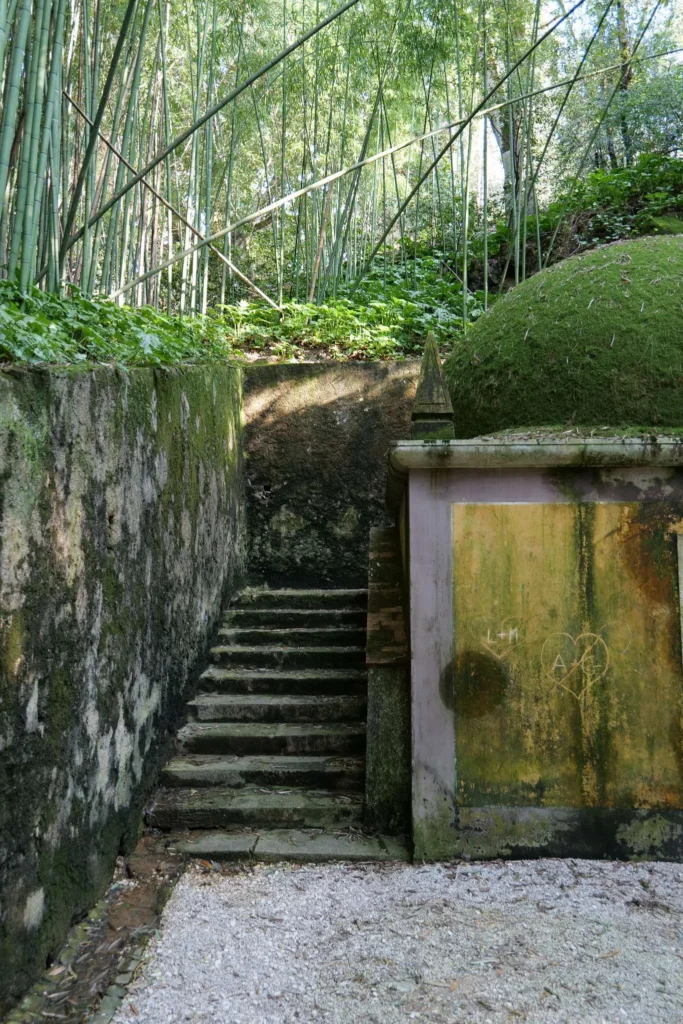
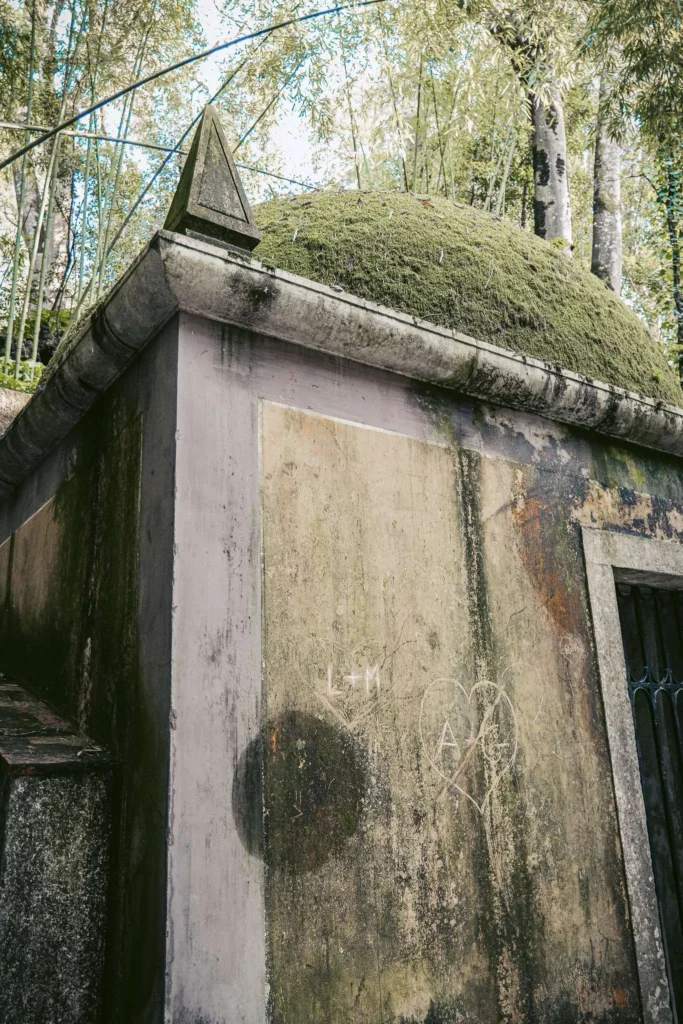
The garden has other surprises for those who take the time. Squirrels have been introduced and have adapted quite well, so keep an eye out, they dart between the trunks. We also come across old stone structures covered in moss, forgotten stairs, little dome-shaped buildings that look like they came out of a fairy tale. It’s a garden where you willingly get lost, without a map, just following the slope.
One small disappointment: the greenhouse was closed. The Estufa Tropical, the large greenhouse that normally houses all the exotic vegetation, had its doors closed on the day of our visit. We just peeked through, a bit frustrated, promising to come back (Coimbra, after all, likes to give us a reason to return).
A break on a bench, just the two of us
Between two climbs, we settled on an old stone bench, taking turns to catch our breath. And maybe that’s what we remember most from a garden like this: not a particular plant, not a rare species, just the calm, the shade, the green everywhere, and the fact of being there together doing nothing special. In a city that keeps climbing, this kind of break is worth its weight in gold.




Practical information
Also to see in Coimbra
The rest of our stay in Coimbra (spots for sleeping in a van, the weather, the budget, where to eat) is detailed in our complete guide to discovering Coimbra by camper van.
PS: if you find the real name of the garden before I do, keep it to yourself. “I can’t remember the name” works just fine for me, and it always has a nice effect with the Portuguese accent.