Our review of The Sé Velha of Coimbra
Benefits
- A stunning Romanesque fortress appearance (one of the best preserved in Portugal)
- The stable coolness inside, pleasant in summer
- On the natural path that descends from the university to the Baixa
- The fado of Coimbra, sung on the steps
Disadvantages
- Paid indoor visit (small fee)
- Short to visit
The must-see Roman monument of Coimbra, short but full of charm, on the path that descends towards the lower town.
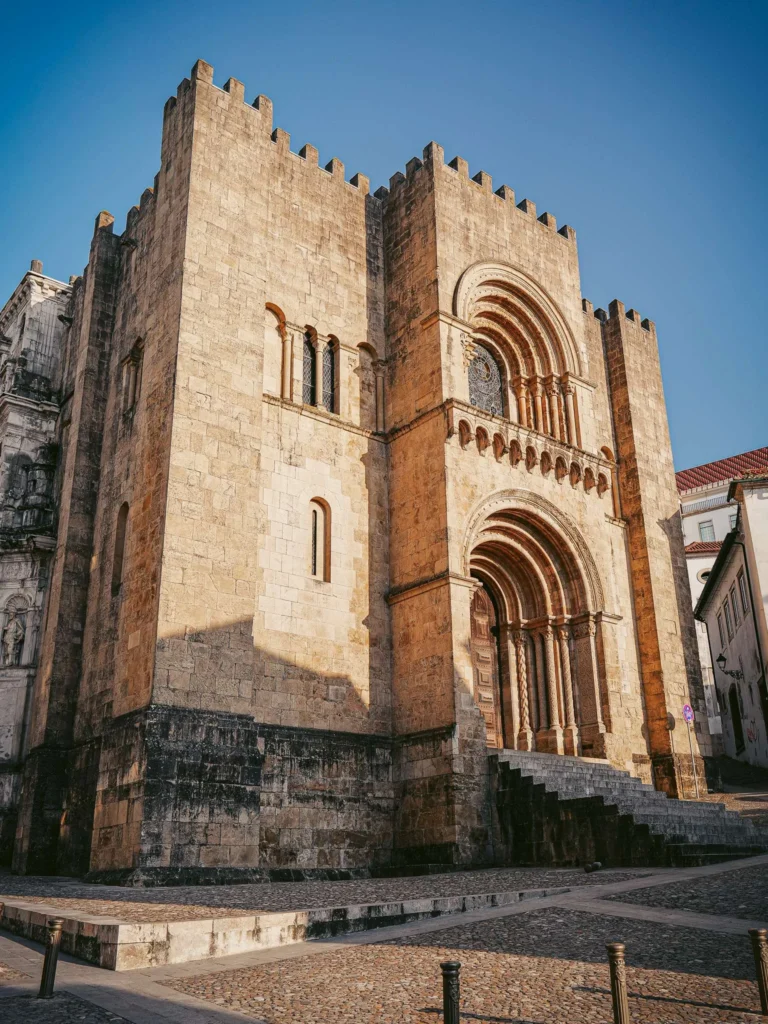
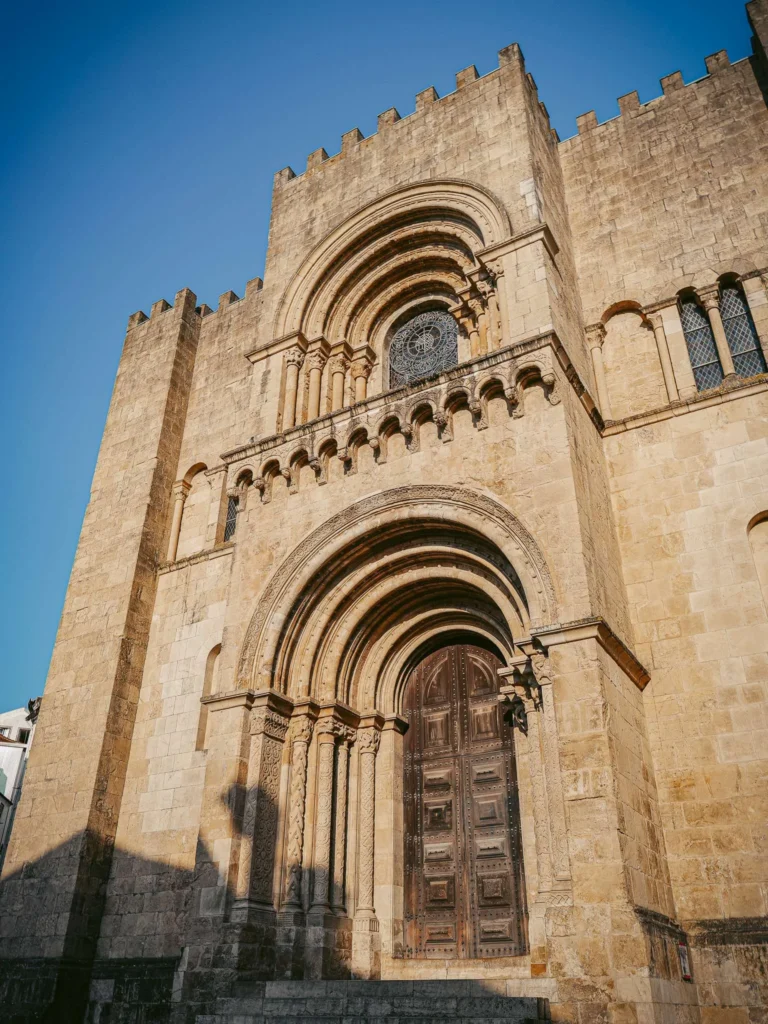
Look, on the way down from the university to the lower town, you come across the Sé Velha, the old cathedral of Coimbra (“Sé” for cathedral, “Velha” for old, there you go, Portuguese lesson courtesy of the house). And the first thing that strikes you is that it doesn’t really look like a church: it has the appearance of a fortress, massive, stocky, crenellated at the top like a castle, ready to withstand a siege. It seems like it was built to last a thousand years, and to be honest, it has already seen quite a bit.
A cathedral that looks like a fortress
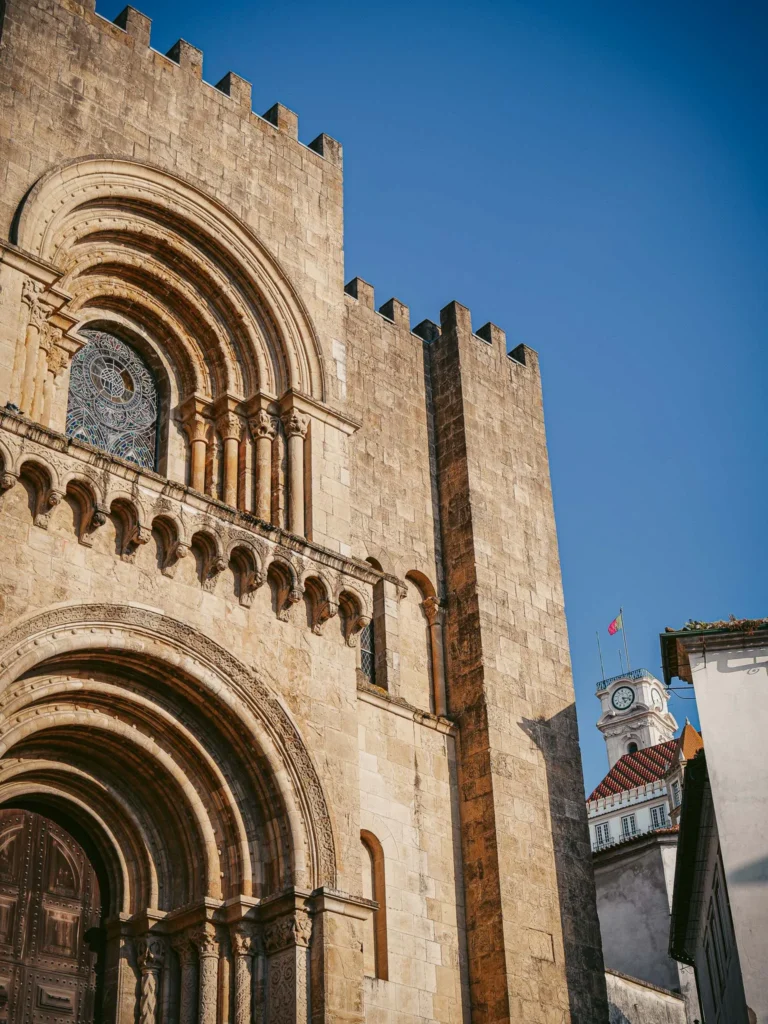
You naturally find it on the path that descends from the Alta to the Baixa, impossible to miss, it is planted in the middle of the slope. Its main façade, framed by two stocky towers, with its small window up high and its simple portal, really makes an impression. This is not a cathedral that seeks to seduce with lace; it is a cathedral that asserts its presence, raw and solid.
A bit of Romanesque history
As promised, a little history page. The construction of the Sé Velha began around 1162, under Afonso Henriques, the very first king of Portugal, at a time when Coimbra was still the capital of the kingdom. We are in the midst of Romanesque art: massive volumes, bare stone, round arches, and this silhouette of a fortress that is no coincidence. At that time, a cathedral also had to be able to withstand a blow, and this one did not joke around with defense.
A Gothic cloister was added in the following century, and today the whole remains one of the best-preserved Romanesque cathedrals in all of Portugal. Suffice it to say that by pushing the door, you are not just visiting a pretty old church: you are stepping into the very birth of the country, when a brand new kingdom was looking for a capital and symbols.
From Alta to Baixa: the geography of the area
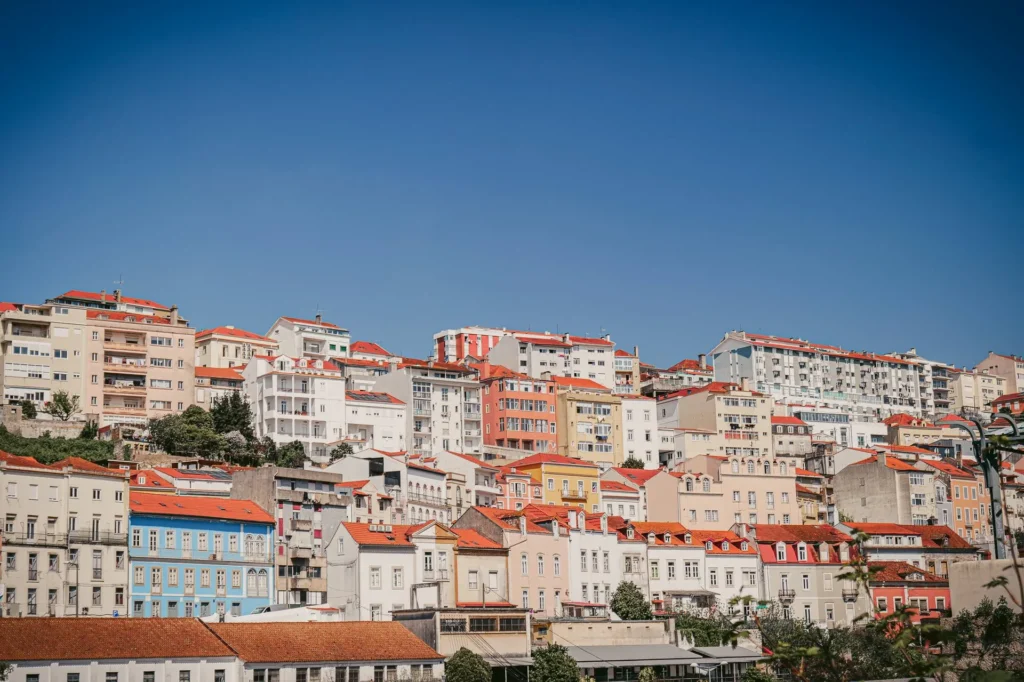
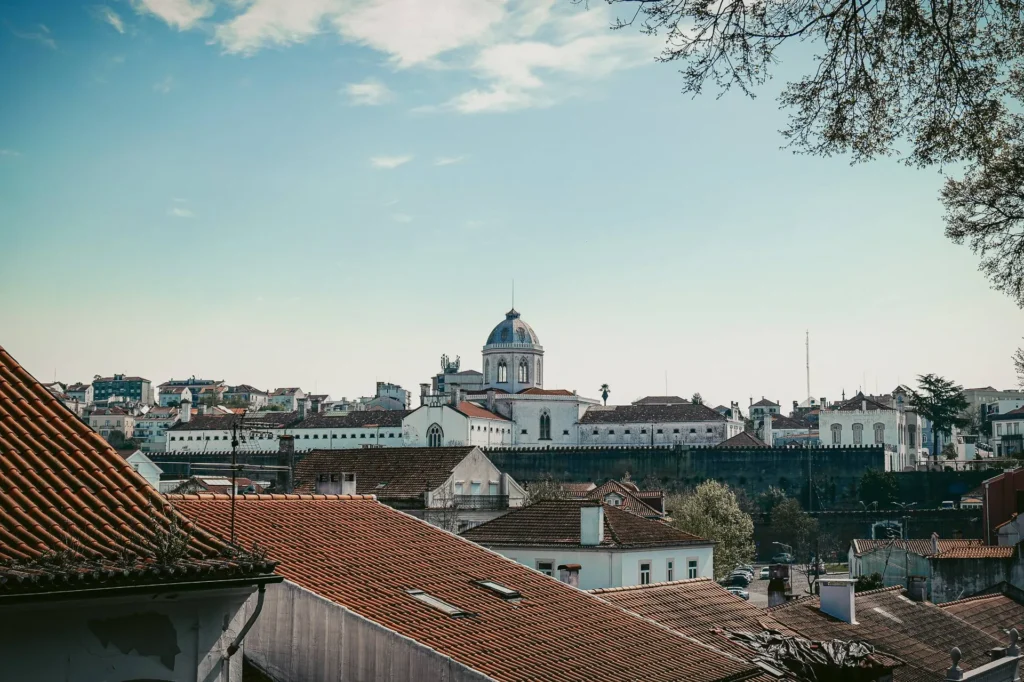
Geographically, the Sé Velha is situated on the hillside, on the Largo da Sé Velha, right on the line that connects the high town (the university, knowledge, the capes) to the low town (the Baixa, shops, the bustling life). It’s the kind of monument you don’t look for: you calmly descend from the heights, turn into an alley, and bam, you stumble upon it, often at the moment you least expect it.
“Small pavilion to renovate, 16 degrees summer and winter”
Well, I couldn’t help myself: in front of these walls, I improvised as a real estate agent à la Stéphane Plaza. “So, a charming little pavilion with an interior garden, a few rooms to renovate, count on £2,000,000 net seller, no heating but 16 degrees summer and winter thanks to the thickness of the walls, and ideal for electro-sensitive people because you can’t even get 5G here.” The real point behind the joke is that these huge walls maintain a stable coolness all year round, a true delight when it’s 35 degrees outside and the city is sweating.
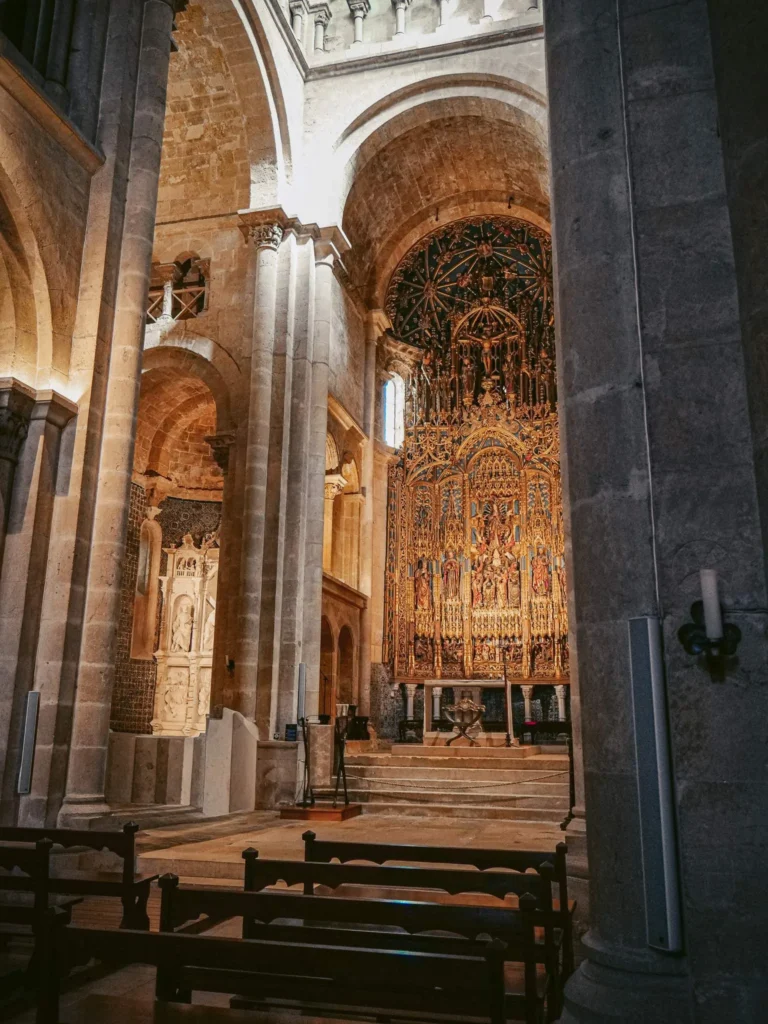
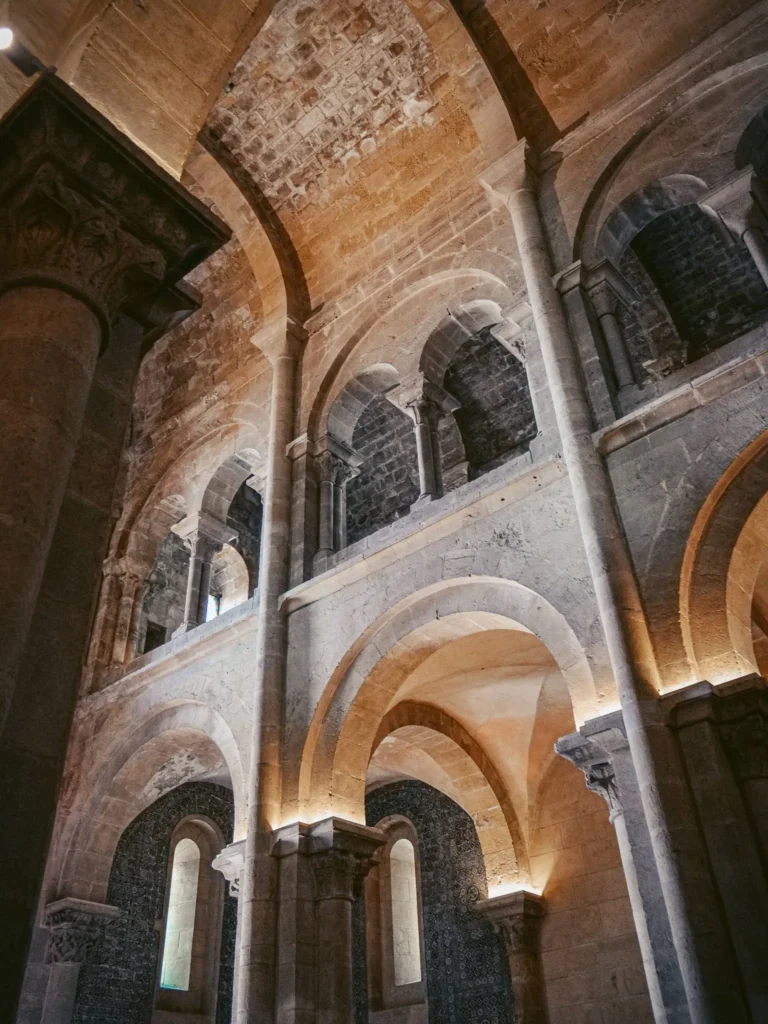
Bonus home gag: seeing electrical outlets inside the church, I thought that Master Gims was finally right about electricity in the pyramids. My punchline of the day, of which I am quite proud: “when Jesus passes, the waves pass away.” There you go, I’m out, but admit that the coolness of the place deserved a little guided tour in reality TV real estate style.
The fado of Coimbra, sung on the steps
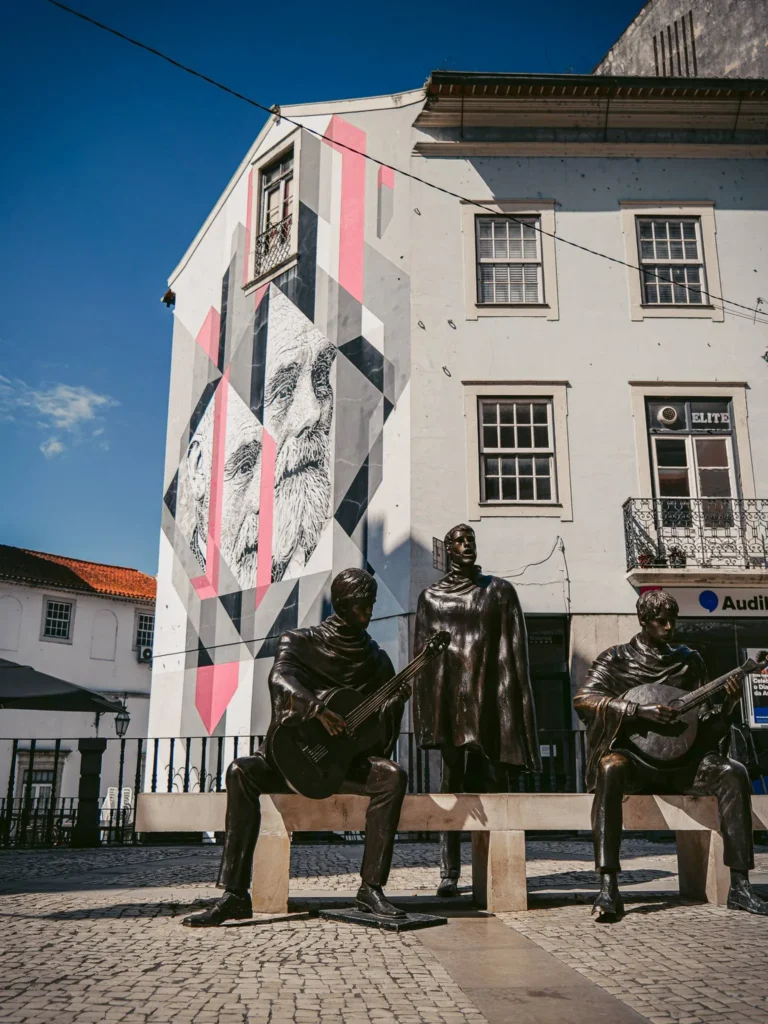
The Sé Velha is also one of the main places for fado in Coimbra, and be careful, this fado has nothing to do with that of Lisbon. Here, it’s a song of students, sung by men, often in black capes, sometimes right on the steps of the old stones, at nightfall. The city’s great serenata is traditionally performed in front of a cathedral, with Portuguese guitar in support, and just imagining those deep voices resonating here in the evening, you understand why Coimbra holds this tradition so dear.
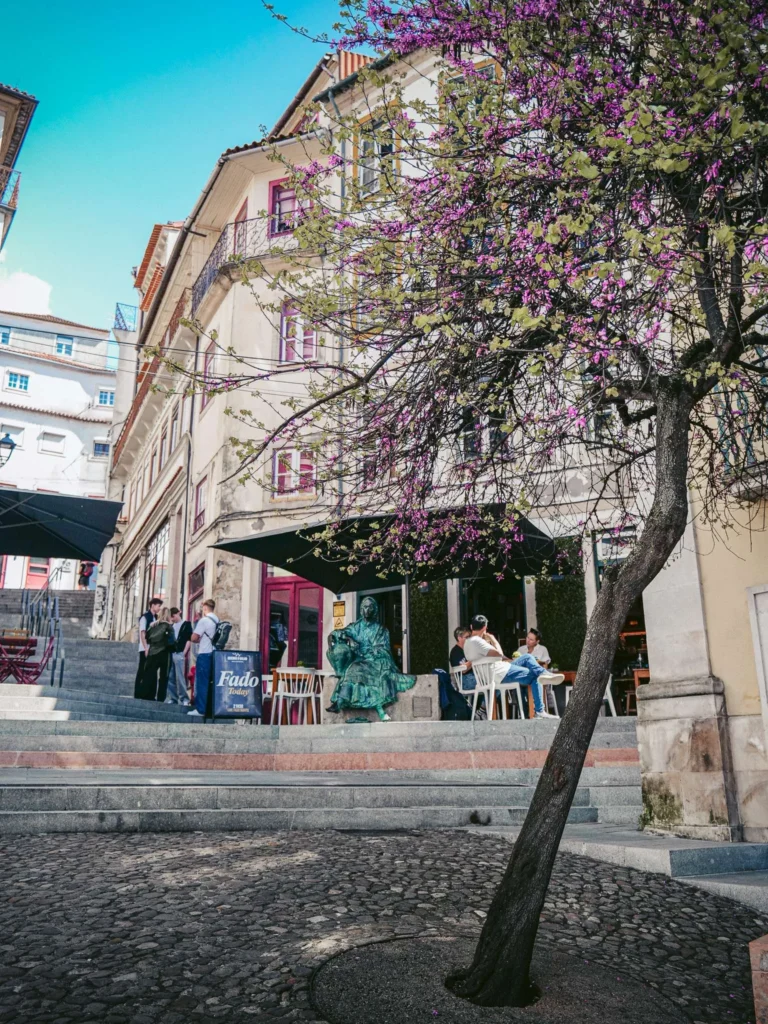
In the area, you also come across statues and frescoes that pay tribute to these musicians in capes, guitar in hand. It’s a detail, but it alone tells the soul of the city: here, music is not a backdrop, it’s a heritage passed down from generation to generation.

The descent, alleys and old stones
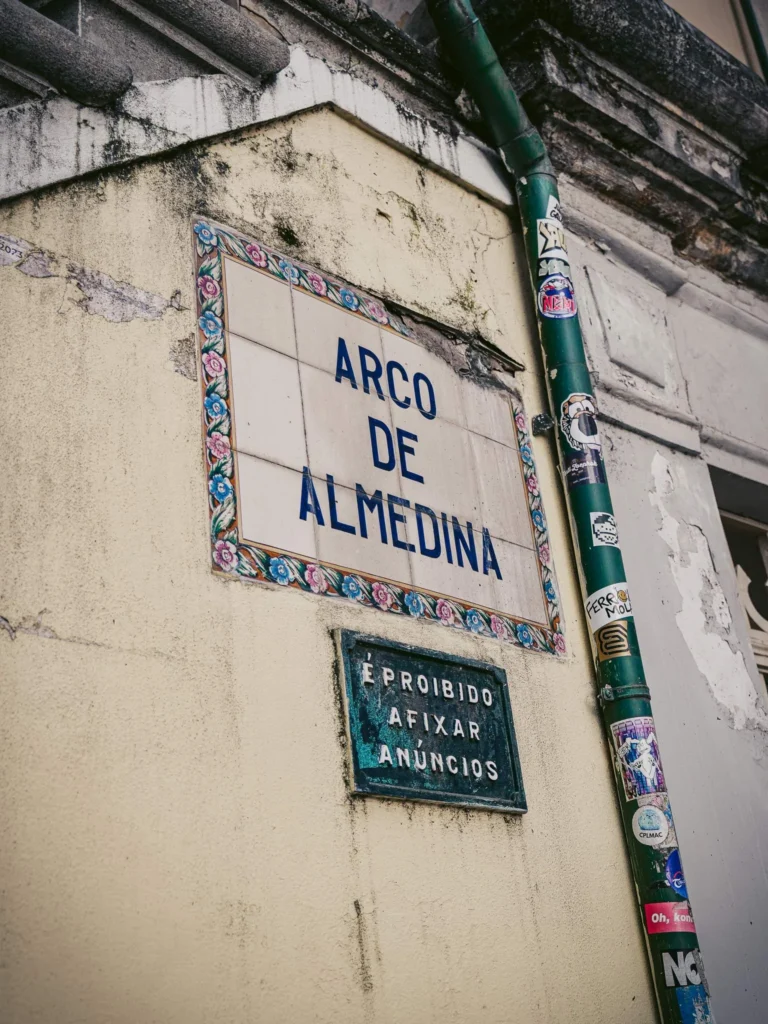
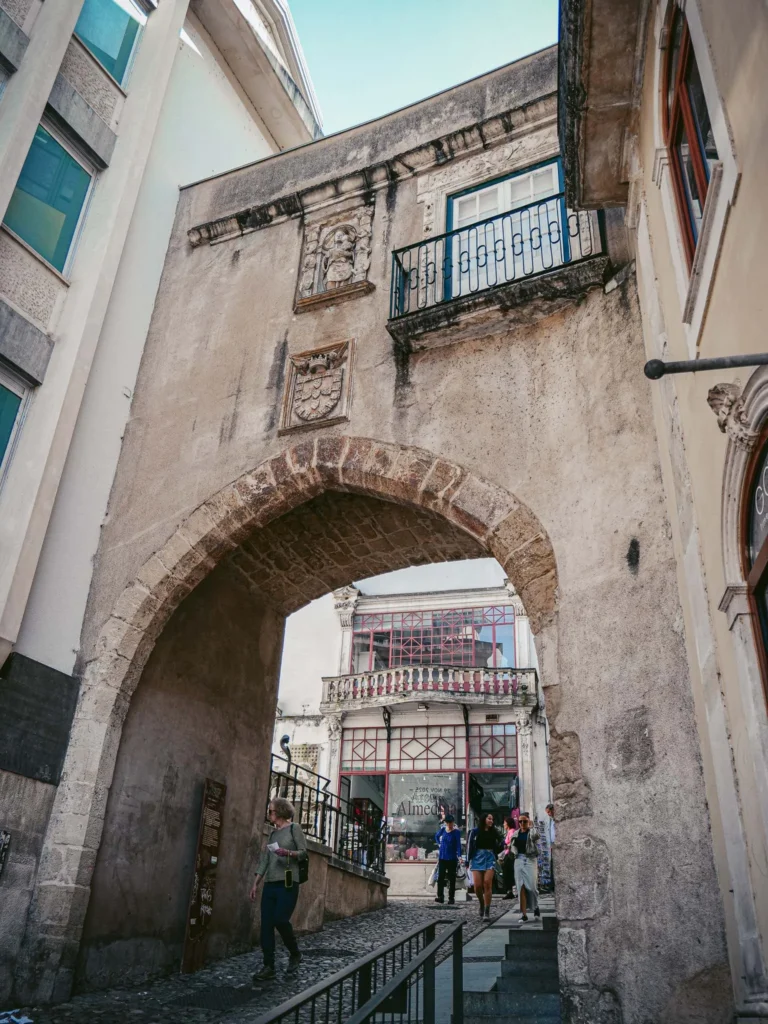
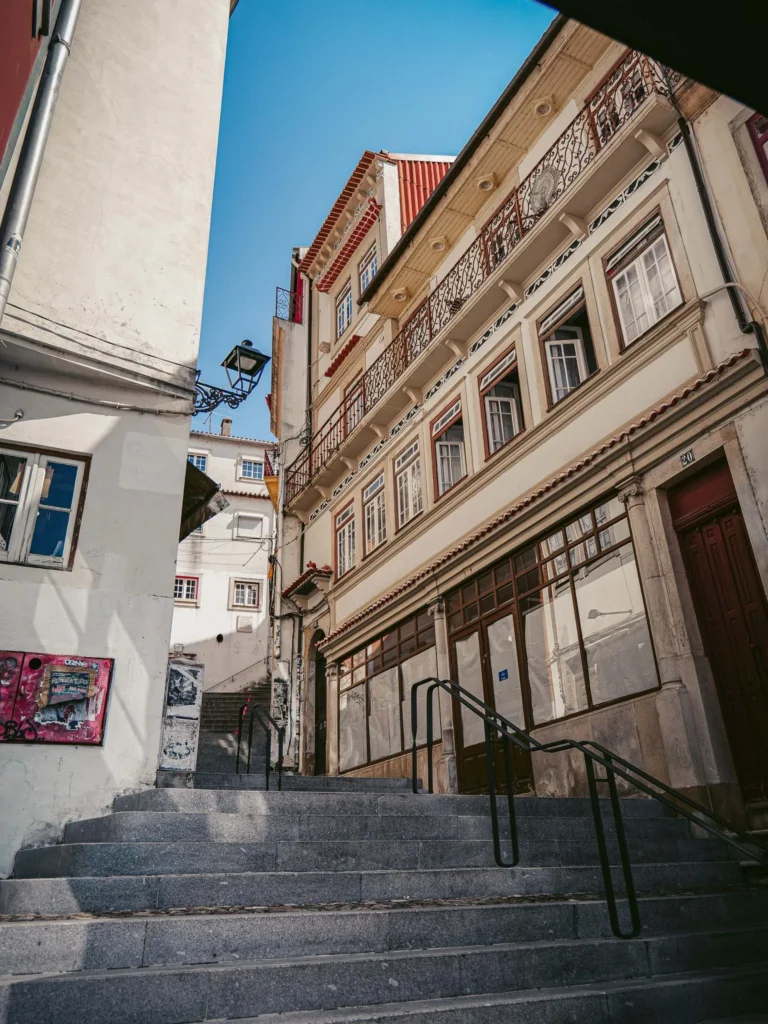
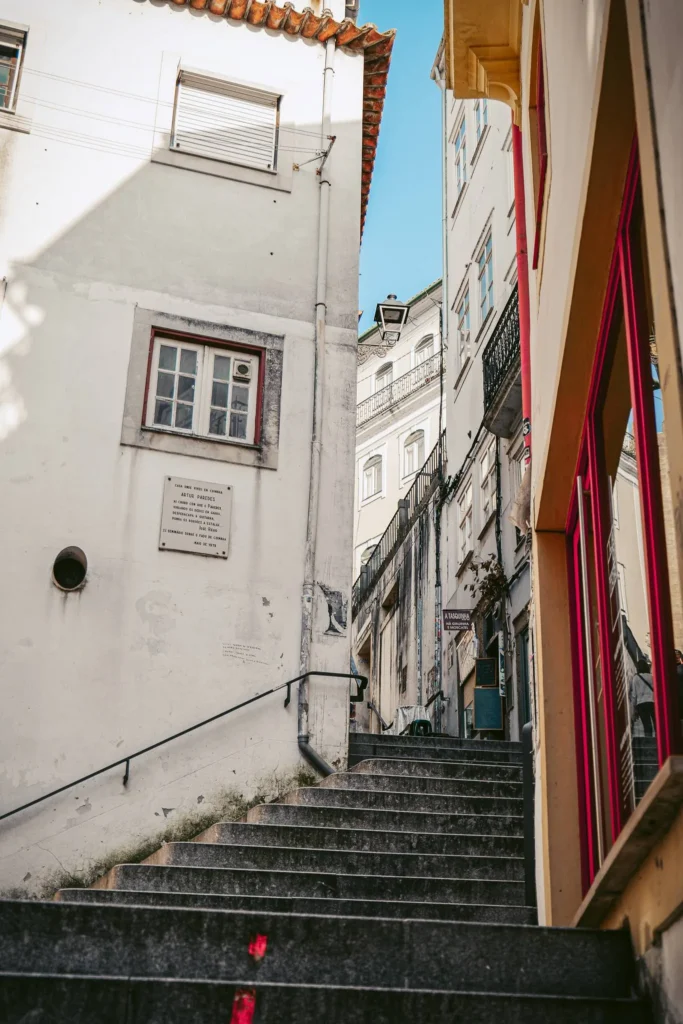
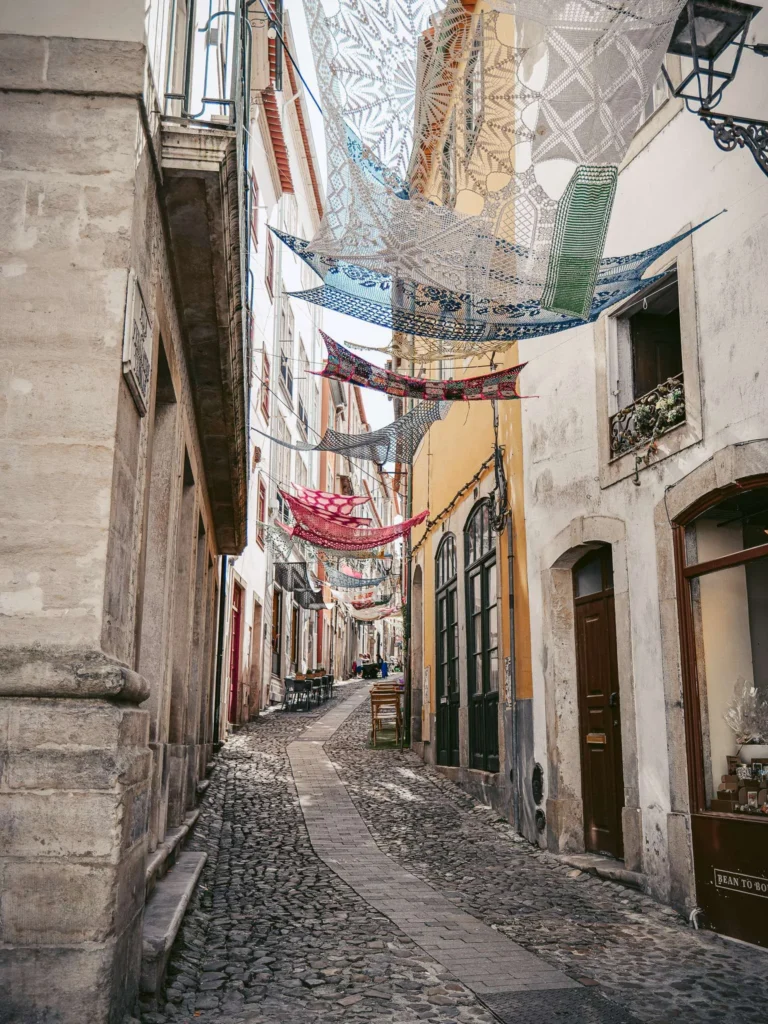
All around, it’s the old Coimbra in its juice: the medieval gate of the Arco de Almedina (the old entrance to the fortified city), narrow stairs worn by the centuries, sloping alleys decorated with colorful nets overhead, small squares where a flowering tree provides shade to two benches. We take our time, look up, and slowly descend back to the Baixa (and towards a well-deserved little café, let’s be honest).
Sé Velha or Sé Nova: do not confuse
A little marker to avoid getting it wrong: the Sé Velha is the old one (Romanesque, 12th century), the one lower in the city, the one we visited. The Sé Nova, the “new” cathedral (16th-17th century), is located higher up, near the university, in a much later and more ornate style. Two cathedrals for one city, Coimbra certainly does nothing like everyone else. If you’re looking for the one on the postcard, with the appearance of a fortress, it’s definitely the Velha.
Practical information
Also to see in Coimbra
We tell you all about the stay (sleeping in a van, budget, where to eat, what to do around Coimbra) in our complete guide to discovering Coimbra by camper van.
PS: no, the Sé Velha is not actually for sale (too bad). But admit that 16 degrees all year round without air conditioning, in 2026, is at least worth considering.