Our review of Settle Inn
Benefits
- A genuine stone vault in the back room
- The welcome from the regulars, once the first ten seconds are over
- Three rotating cask ales, recommended with real warmth
- A listed 1733 building, with the lion of its old name still on the facade
Disadvantages
- The first ten seconds are intimidating, you feel looked at
- Small, very dark, and no food served
Who is this place for?
- Anyone who would rather have a proper local than a bar built for visitors
- Cask ale drinkers
- Travellers coming back down from Stirling Castle
Neither the prettiest nor the most spectacular pub in Scotland, but the one that gives you the strongest feeling of walking into a place that still lives off its regulars.
We walked into this pub wondering whether we were allowed to be there. We walked out being kissed on both cheeks. In between: one hour, two beers, and the kind of turnaround you cannot engineer.
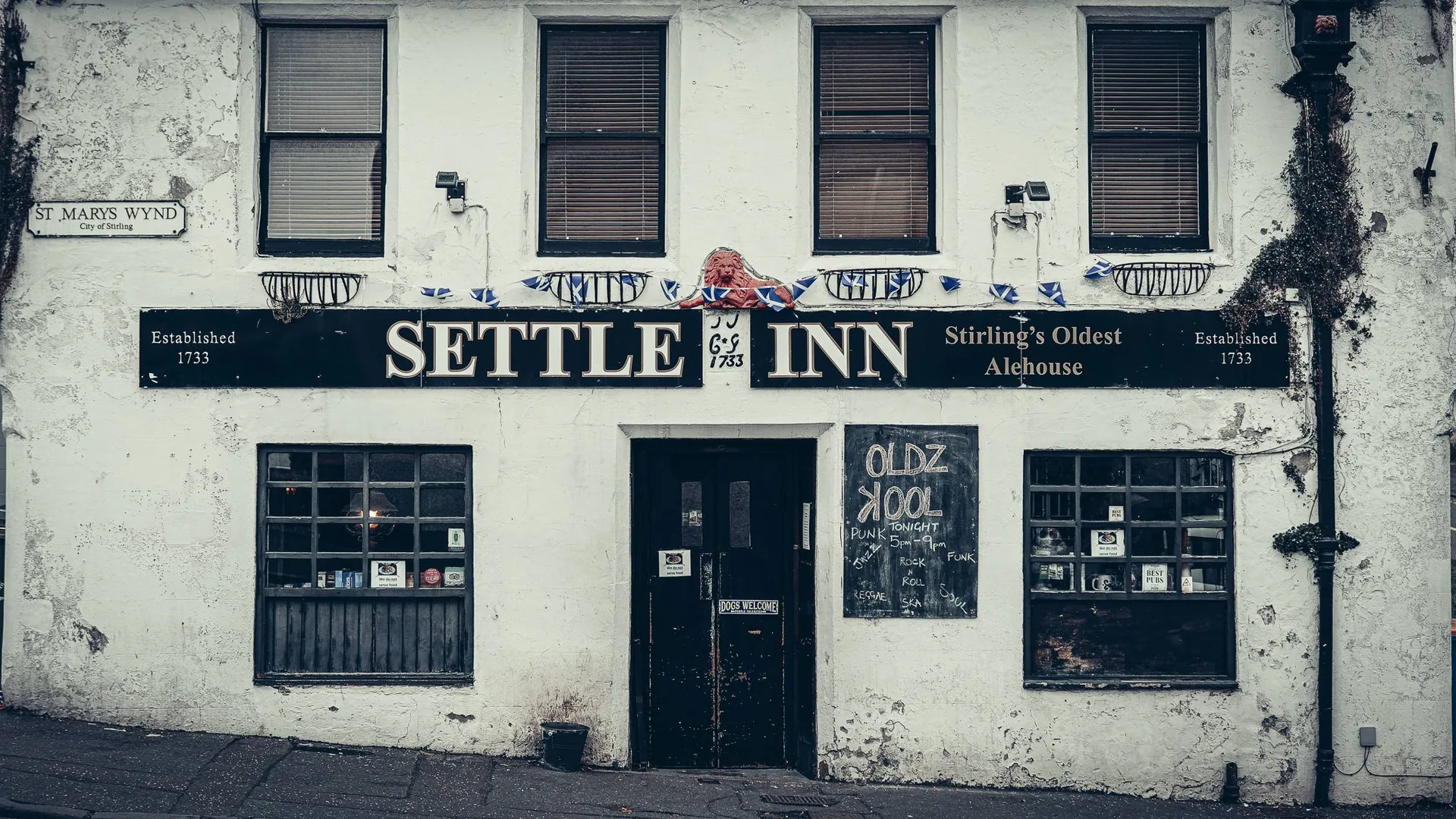
The Settle Inn sits at 91 St Mary’s Wynd, in Stirling, on the climb that leads up to the castle. We got there at the end of the day, after working our way through the old town, the graveyard at the Church of the Holy Rude and the castle itself. Our legs, let us say, had had enough. And the plan was never just to have a drink: we wanted to finish the day somewhere that genuinely belongs to the history of the town.
The first ten seconds, we nearly walked back out
We have to be honest about that moment, because it is the one that makes everything else worth telling. We pushed the door open and immediately felt looked at by absolutely everyone. Not hostility, nothing like it. Just that second and a half of stillness where every regular glances up to see who has come in. The line that came out of us, word for word: “Oh shit, what are we doing here?”
We kept walking anyway, all the way to the back. Which was probably the best decision of the evening, because this pub is not played out at the door.
The back room, under a stone vault
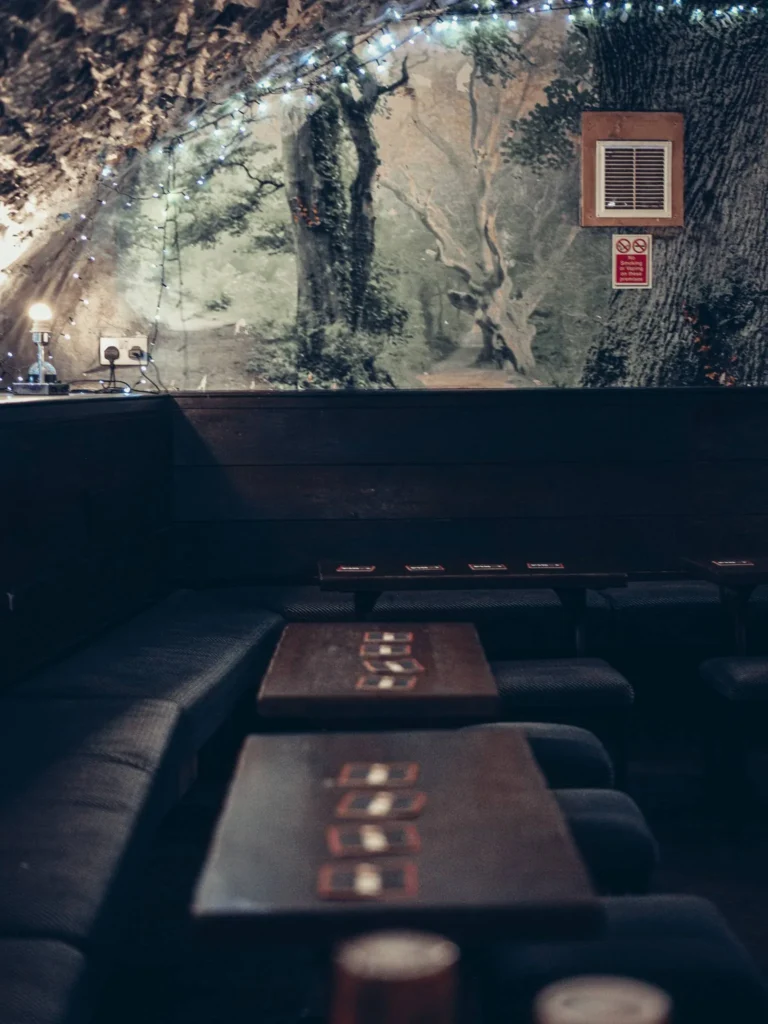
At the end of the corridor the room changes character completely. You pass under a real stone vault, bare and low, with wooden benches running all the way round and tables in front of them. A large forest mural on the wall, fairy lights strung along the vault, and that very distinct feeling of having dropped into another century without leaving the building.
It reminded Xavier of somewhere: the Amstel, a bar in Cannes with the same vaulted cellar, where a group of them used to end up after lectures in 1998. Except that here it is not a set built to look old. It is the structure of the building, and it is listed.
The red lion nobody looks up to see
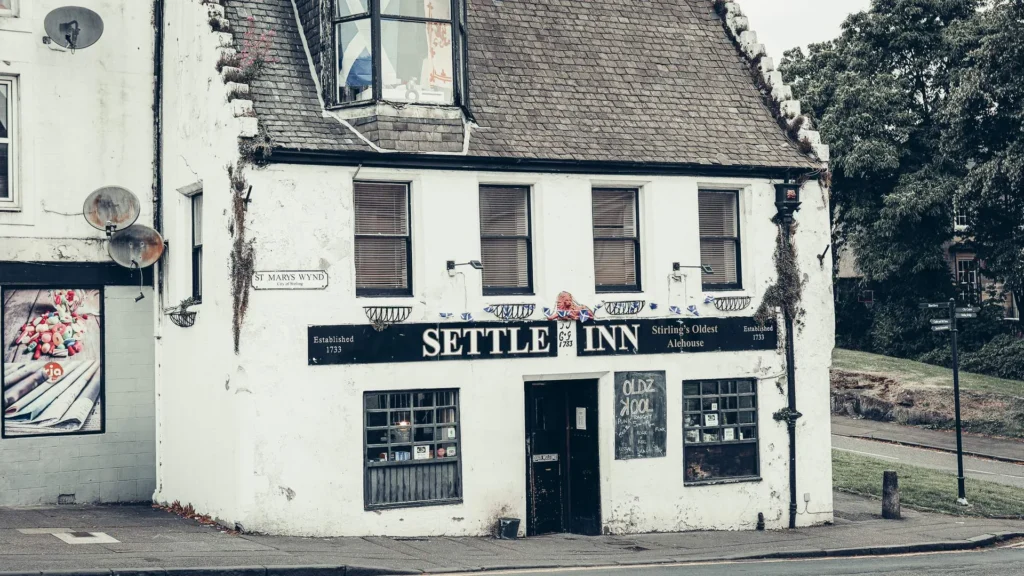
Here is the thing we photographed without knowing it, and only worked out once we were home. Just above the sign, between the two first-floor windows, there is a carved lion painted red. And just below it, a small stone cut with a set of initials and a date: 1733.
That lion is not decoration. It is what is left of the previous name. The Historic Environment Scotland listing for 91 St Mary’s Wynd (reference LB41467, category C, listed in February 1978) is terse but perfectly clear: “Dated G T E G 1733”, and then, as the entire statement of special interest, one line. “Formerly the Red Lion Inn.” The Settle Inn was the Red Lion, and its lion is still up there on the facade, with the current sign bolted around it.
The same listing describes a building of two storeys and an attic, four windows, stuccoed, with crowsteps, those stepped stones running up the line of the roof that show clearly on the photo taken from the corner of the street. And it closes on a remark the surveyors of 1978 evidently saw no reason to soften: the ground floor is “badly altered as public house”. You can picture them standing there with the form.
The oldest pub in Stirling? Depends what you call a pub
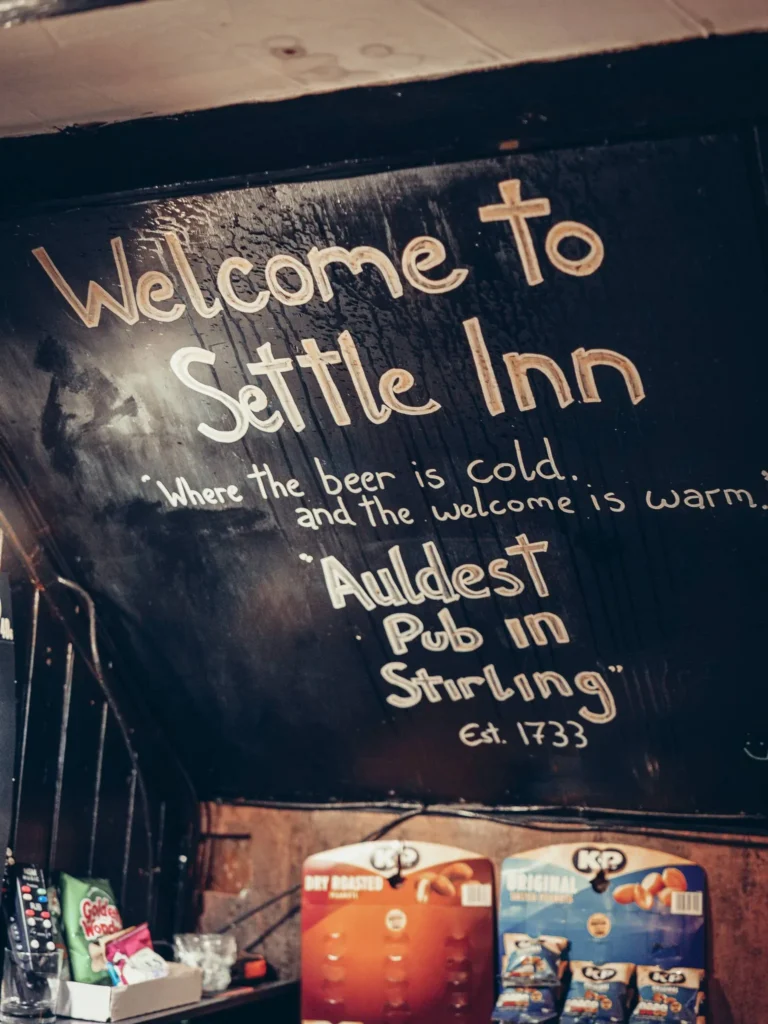
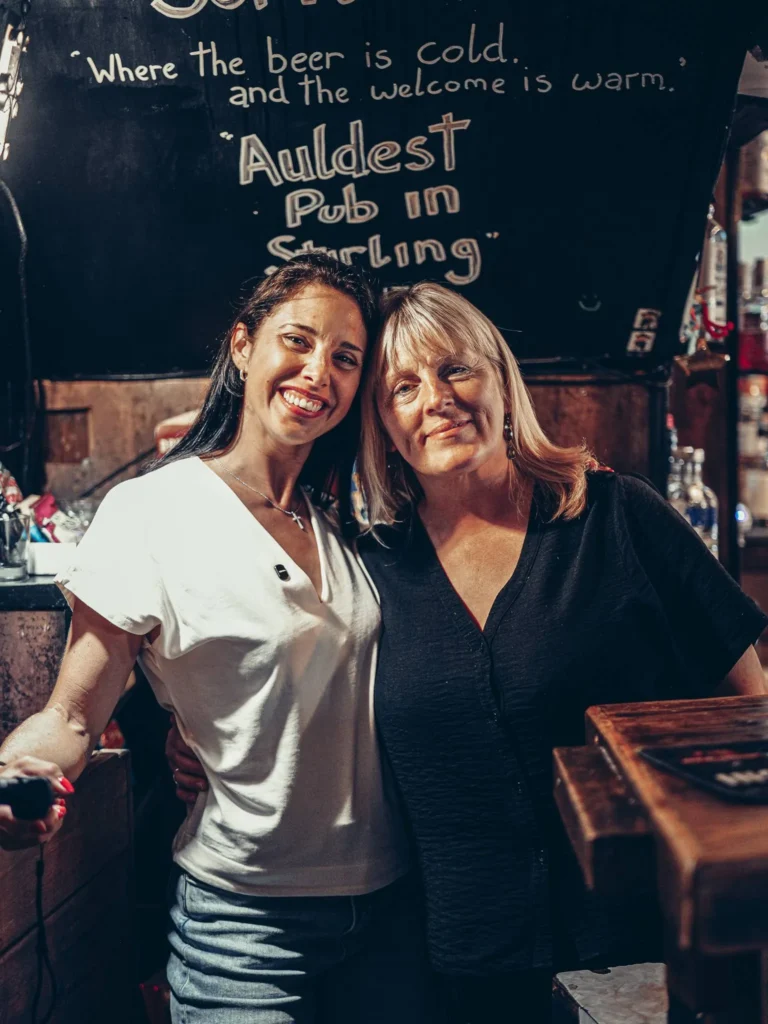
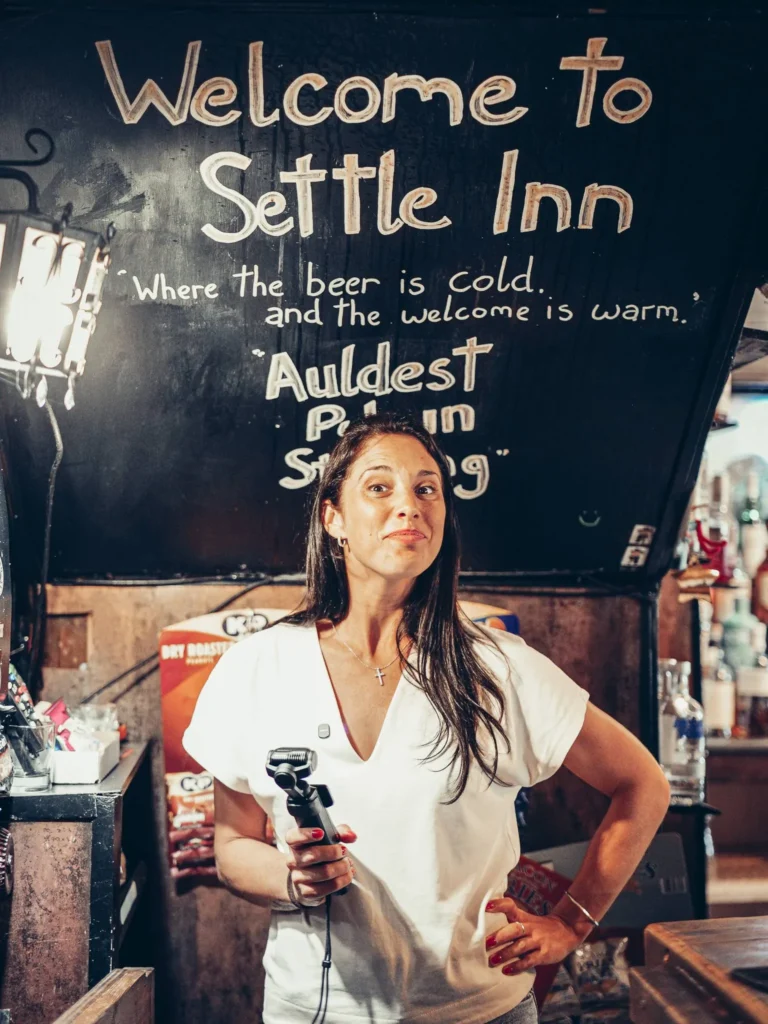
The sign says “Established 1733” twice, and inside, a blackboard greets you with “Auldest Pub in Stirling”. Except that the 1733 comes from the datestone on the facade. It dates the building, not the business of selling drink. That distinction is not a technicality. If you have drunk your way around Britain you already know the genre: almost every town has a pub claiming a record, and almost every one of those claims rests on a datestone rather than on a licence.
And there is a serious rival a few minutes’ walk away. Nicky Tams, on Baker Street, claims 1718, fifteen years earlier. So who is right? Honestly, we do not know, and we are wary of any ranking nobody can source.
What we like is that the Settle Inn seems to know it too. Outside, the sign hedges: “Stirling’s Oldest Alehouse”, the oldest alehouse, not the oldest pub. Inside, the blackboard puts “Auldest Pub in Stirling” in quotation marks, and nothing else. Nobody is being fooled, and there is something rather likeable about that.
At the bar, everything flips
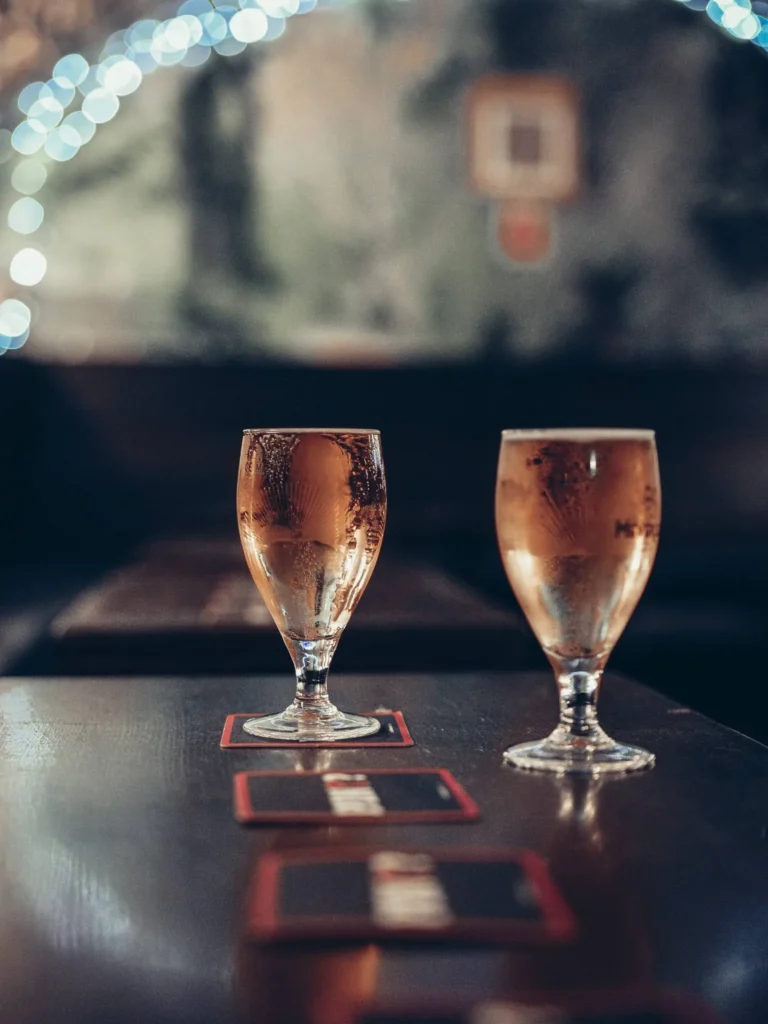
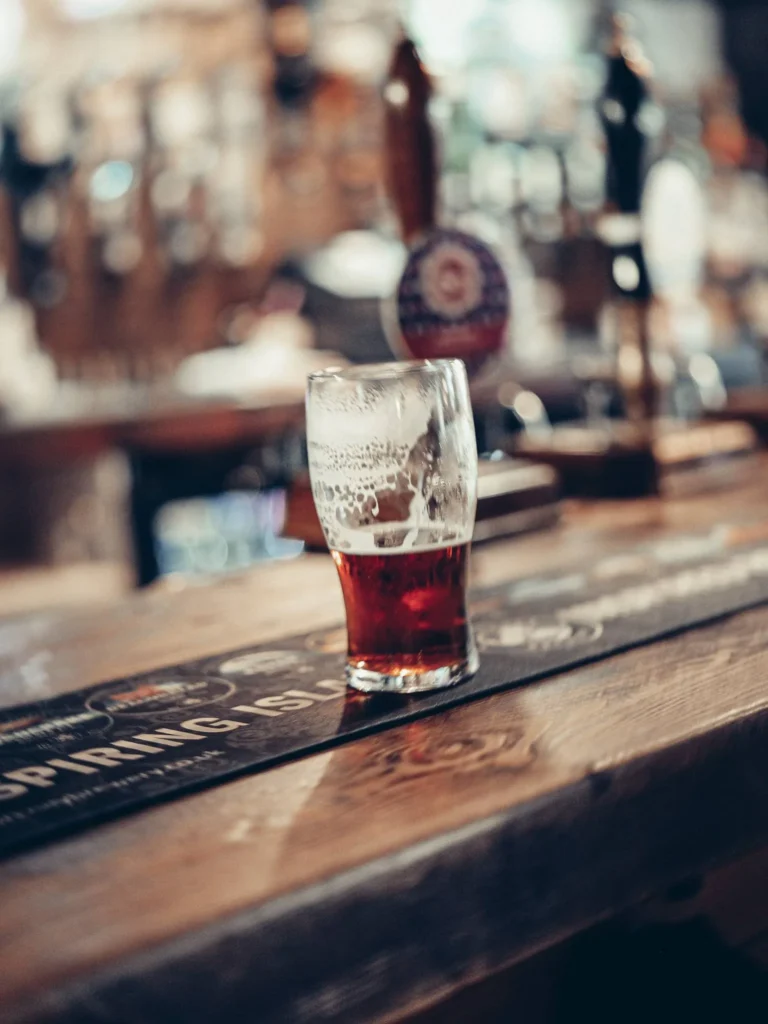
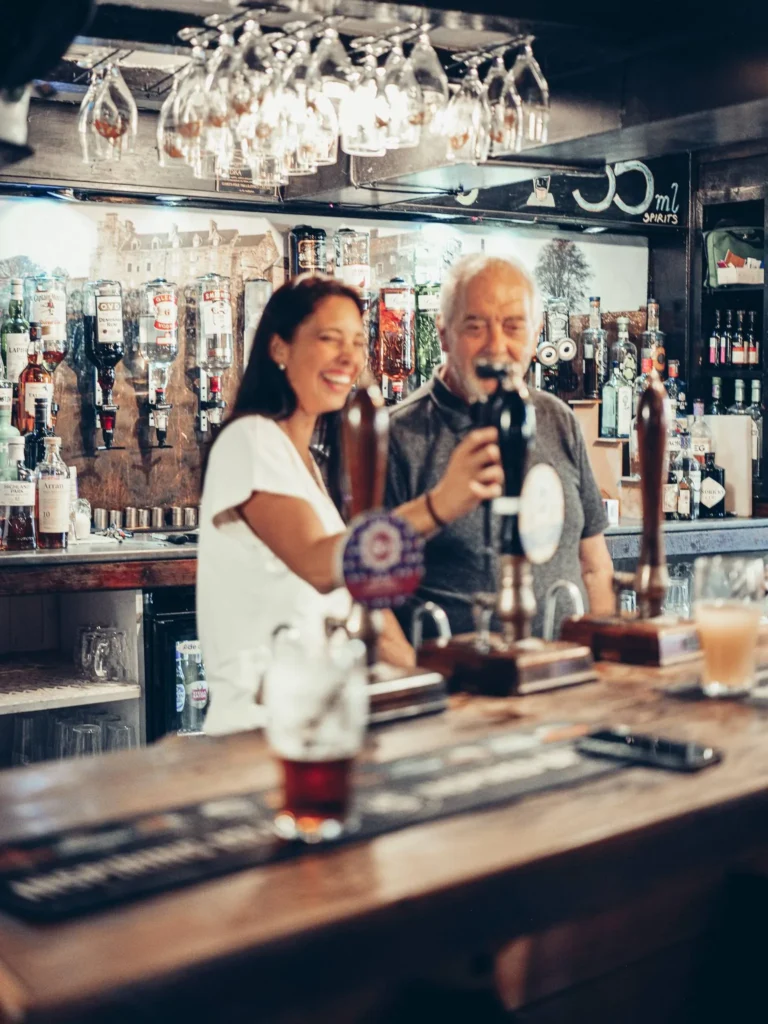
We ordered, and that is where the evening turned. The barman, whom we will kindly describe as being roughly the same age as the bar (which dates from 1900, for the joke), invited us to take our pick. We wanted something light. He showed us fifty. All right, maybe not fifty, but that was the effect.
Directly opposite, a woman was sitting at the bar, barefoot, feet propped against the counter. We asked her what to have. And rather than choose from everything the barman had just lined up, we went with her. Light, very drinkable, exactly what we were after. Whoever you are, thank you.
And what we ended up with was an Amstel. Same name as the bar in Cannes, which we had not thought about in years and had just been talking about at the back of the room ten minutes earlier. Xavier had not had one since roughly that era. Of all the pubs in Scotland to close that particular loop, a listed 1733 building on the way up to Stirling Castle was not the one we would have bet on.
And by the end, they were kissing us goodbye
The rest happened on its own. Caroline got talking to the barman, then ended up having her photo taken with him behind the counter. She made a friend of the woman at the bar. And regulars came over to kiss us on both cheeks, continental style, which is not what you expect on your way out of a Scottish pub. An hour earlier we were wondering whether we would leave as fast as we had come in.
It reminded us of a pub in England where we stopped on the way north and called in again a month later on the way back: people recognised us. Same thing here, and we genuinely think that if we come back in six years, somebody will say “here, you’re the two that came in six years ago”.
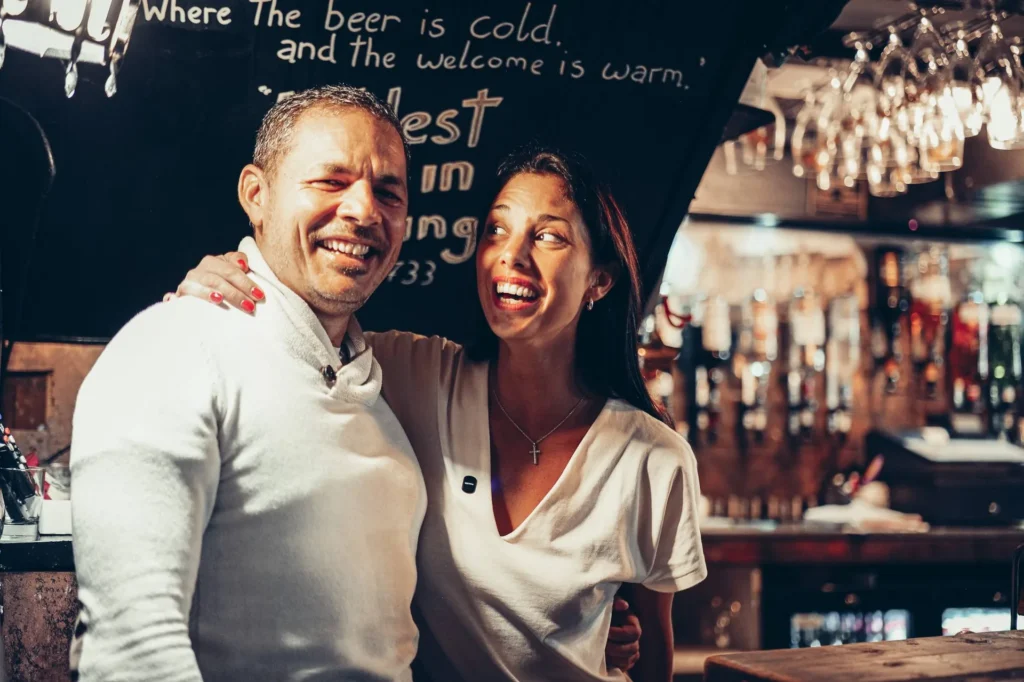
One caveat, because we would rather not talk nonsense. We do not think the Settle Inn never sees a stranger: it is a historic pub in a town full of visitors, people must come through constantly. Our impression is more that they are used to the curious, and much less used to anyone being interested in them, in the people who actually keep the place going, to the point of wanting to photograph them and write about them. That would explain why it warms up so fast once they understand what you are doing.
The jukebox, the three-metre stage and the curling stones
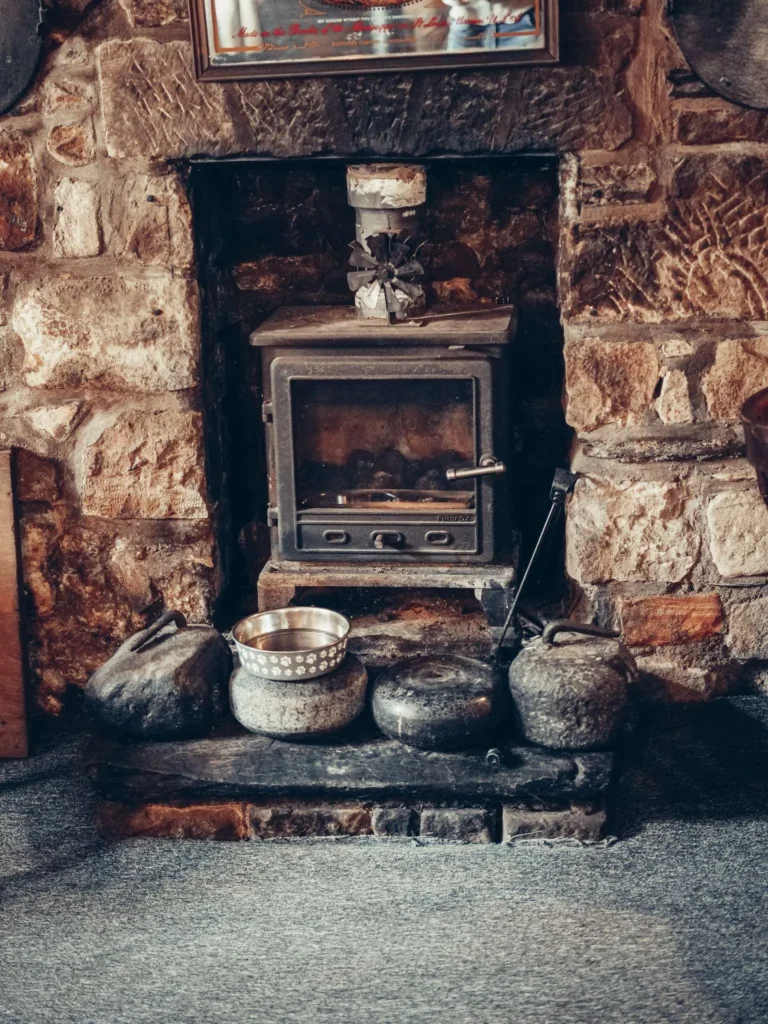
Three details are worth the look. First the hearth, immediately on your left as you come in: a tiny stove you genuinely wonder how it heats anything, and in front of it, sitting on the stone, three old curling stones. We arrived having read about them somewhere. We left having seen them.
Then the music. It comes out of a jukebox, which you do not see much any more, and while we were there it served up Bon Jovi and Aerosmith, then “Blackbird” and “Let It Be”. Nothing obscure, nothing curated, and it suits the place exactly.
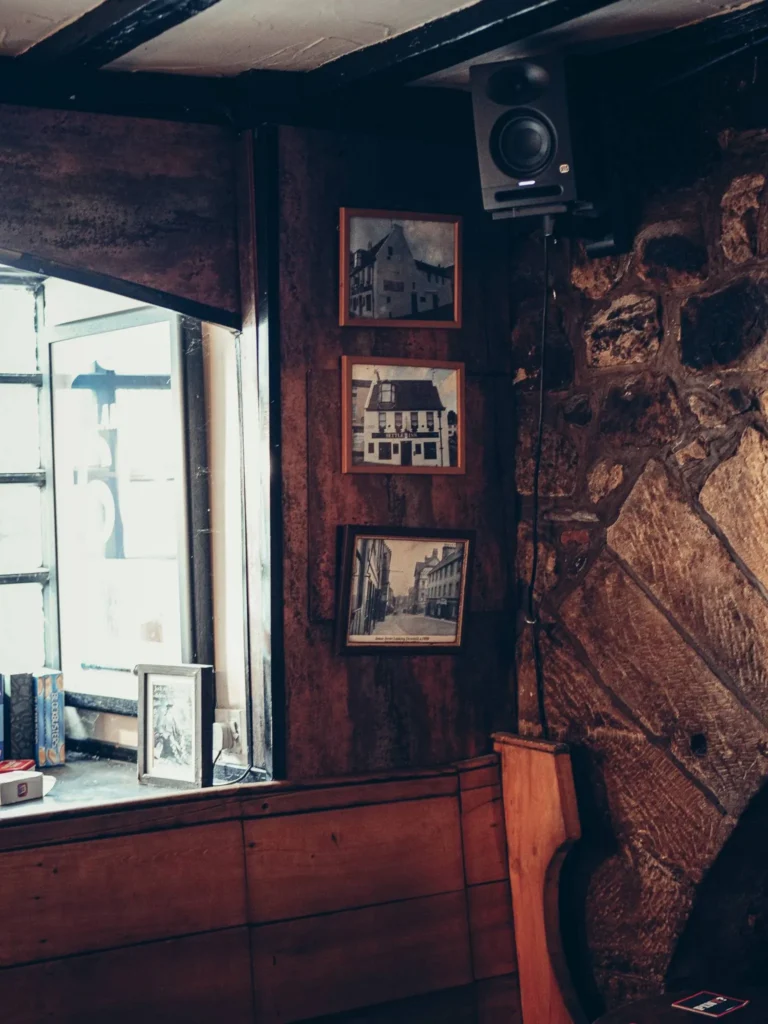
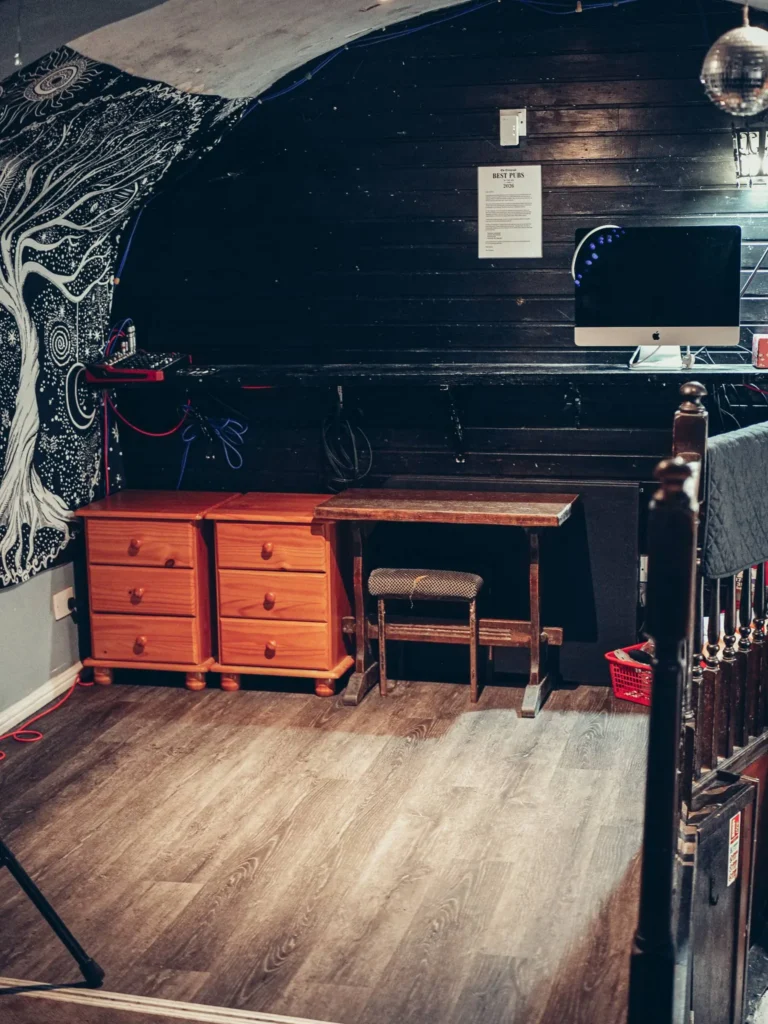
Finally, what we assume is the stage. We do say assume: there are speakers and an old iMac behind them, so we take it musicians play there. But when we say stage, it is three metres by three, at the very most. Hanging on the wall beside it there is also a framed letter from the Telegraph about its Best Pubs in the UK 2026 list. We are reporting what is on the wall. We have not gone through the list.
The real contrast: grey outside, shelter inside
There is a faintly comic moment where you work out that the pub, dark as it is, looks brighter than the sky outside. And that is where something clicked about the whole trip. Coming from a country where sitting outside in August is simply assumed, we finally got it: over here the pub is not the place you go to drink, it is the place you go to be indoors.
The Settle Inn is a long way from the modern city-centre pub. No neon, no screens showing the football, no decor designed to photograph well. It is raw, dark, old and completely unstandardised. It is not the prettiest or the most spectacular pub we went into in Scotland. It is the one that gives you the strongest feeling of walking into a proper local that still lives off its regulars.
Who it’s for
- Yes, no hesitation: if you want a proper local rather than a bar built for visitors, if the idea of talking to strangers at the counter appeals rather than alarms, and if you like a rotating cask line-up.
- Worth knowing before you push the door: it is small, it is dark, and the welcome takes ten seconds to kick in. Leave after thirty and you will have missed the whole thing.
- Probably not: if you want somewhere bright and roomy with a food menu and a considered interior. That is not remotely what this is.
And while you’re in Stirling
The Settle Inn works best at the end of the day, because it is on the same climb as everything else. We covered the whole town, the old streets, the Church of the Holy Rude, its graveyard and the castle in our Stirling campervan guide. And if you are looking for somewhere to sleep, we also stayed at the Allan Park Hotel, ten minutes’ walk away.
Practical information
PS: if you do go, do not stop at the front room. Walk to the back, under the vault. And on your way out, take a second to look up at the lion.