Our review of The Nomad
Benefits
- An almost 360 view of the Ria Formosa, the city, and the Rio Gilao
- City center bar prices despite the setting
- Open to everyone, without staying at the hotel
- Open all year round, unlike seasonal terraces
Disadvantages
- In high season, the best spots facing the ocean sell out quickly.
- In winter, the sun sets well before the usual happy hour.
One of the most beautiful views of Tavira has downtown bar prices. The first piece of advice given to someone staying in the city.
The hotel bar is usually exactly the kind of place we avoid. You go up, you pay double for your drink compared to downstairs, you come back down thinking that the view was nice but that the bill wasn’t worth the trip. It’s the reflex we all have, and we had it too.
Except in Tavira, there’s the Nomad, and the Nomad breaks that reasoning in two minutes. It’s the rooftop of the Maria Nova Lounge, right at the top of the building, and we’ve been going there for several years now, summer and winter. We live in the city, so we’ve had the time to compare, and honestly, it has become one of our best recommendations when someone arrives in Tavira for a few days.
No, you don’t have to stay at the hotel to go up
That’s the question we get asked every time, so let’s clear it up right away: the Nomad is open to everyone. You’re not staying at the Maria Nova, you haven’t made a reservation, you’re just stopping by for a drink in the evening, and no one will ask you anything. You take the elevator, go up to the top floor, that’s it.
Second thing, and it matters if you come off-season: since it’s the rooftop of a hotel, and the hotel operates year-round, the place doesn’t close in winter. It’s not a beach hut that packs up at the end of September. We go there in January, we go there in August, it’s open.
The terrace goes all around, and Tavira changes its face at every angle
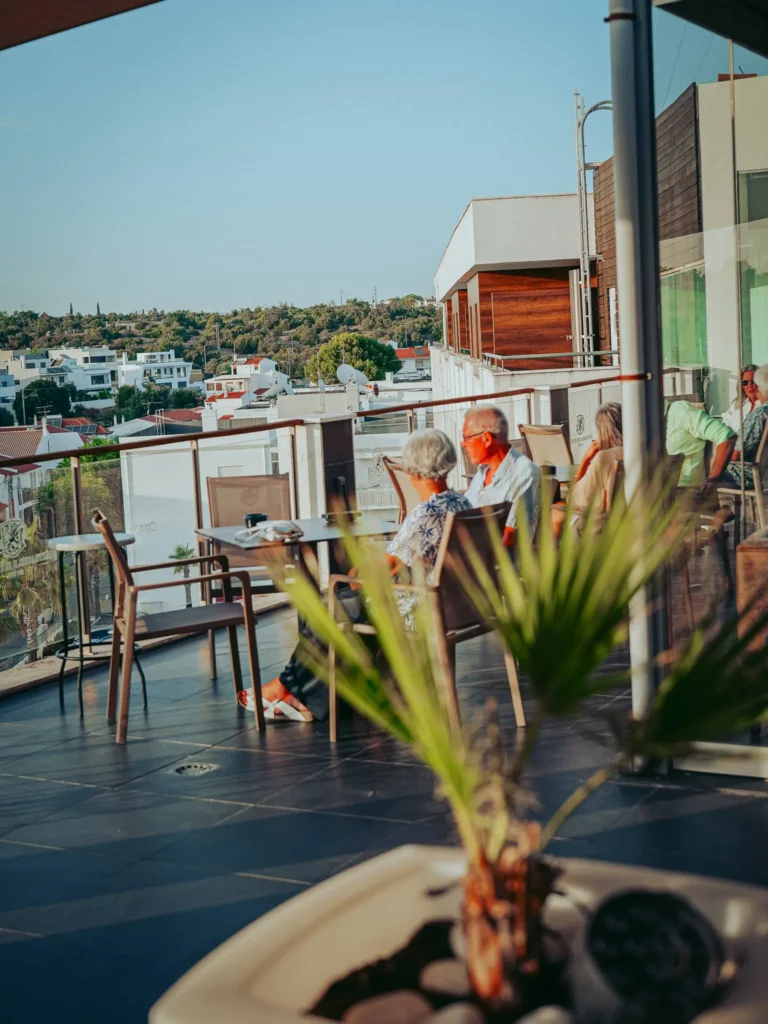
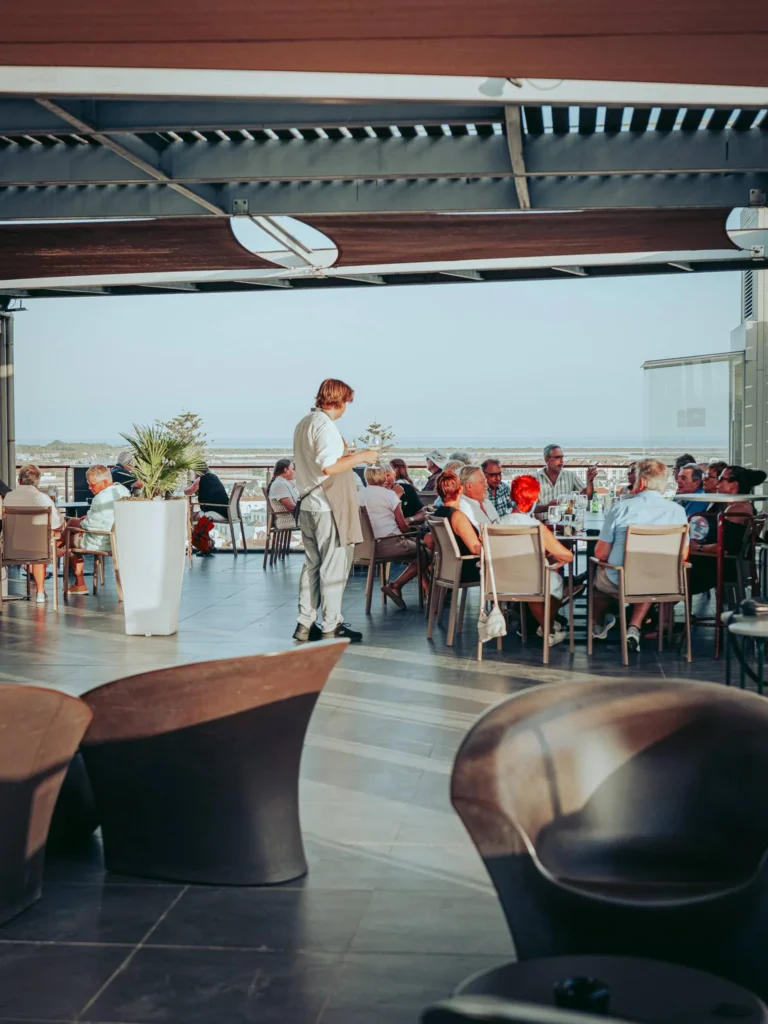
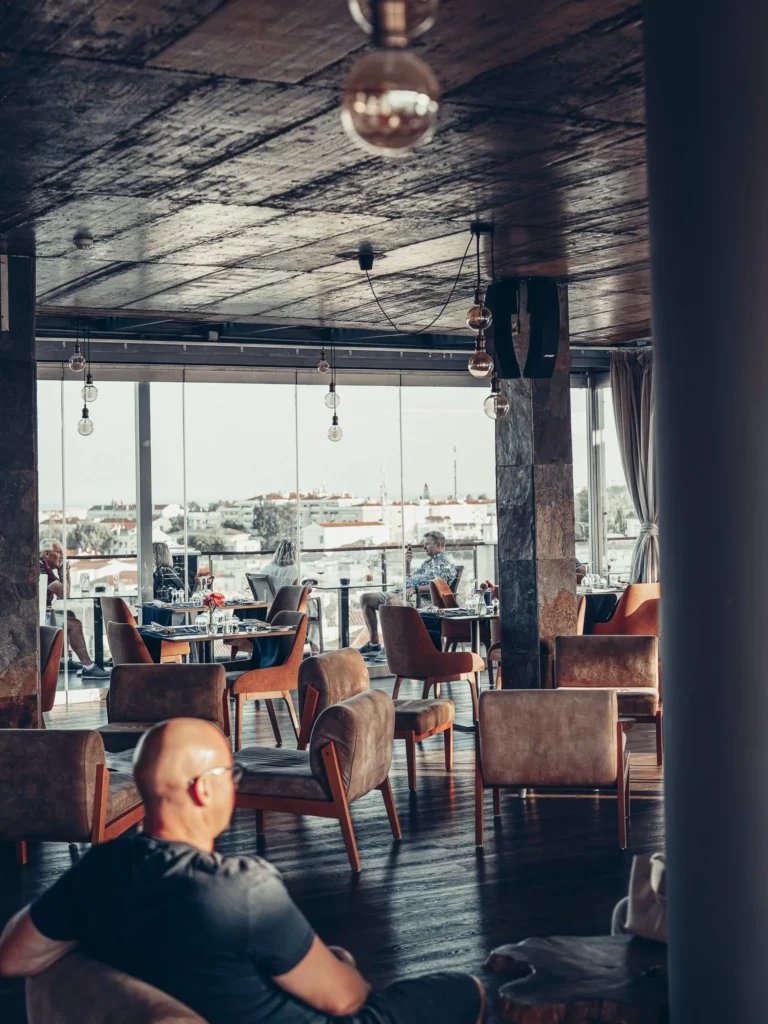
The rooftop is divided in two: an indoor space, and a very large terrace that practically goes all around the bar. And that’s what makes the place interesting, because it’s not just one viewpoint, it’s four. You move ten meters and you’re looking at a completely different city.
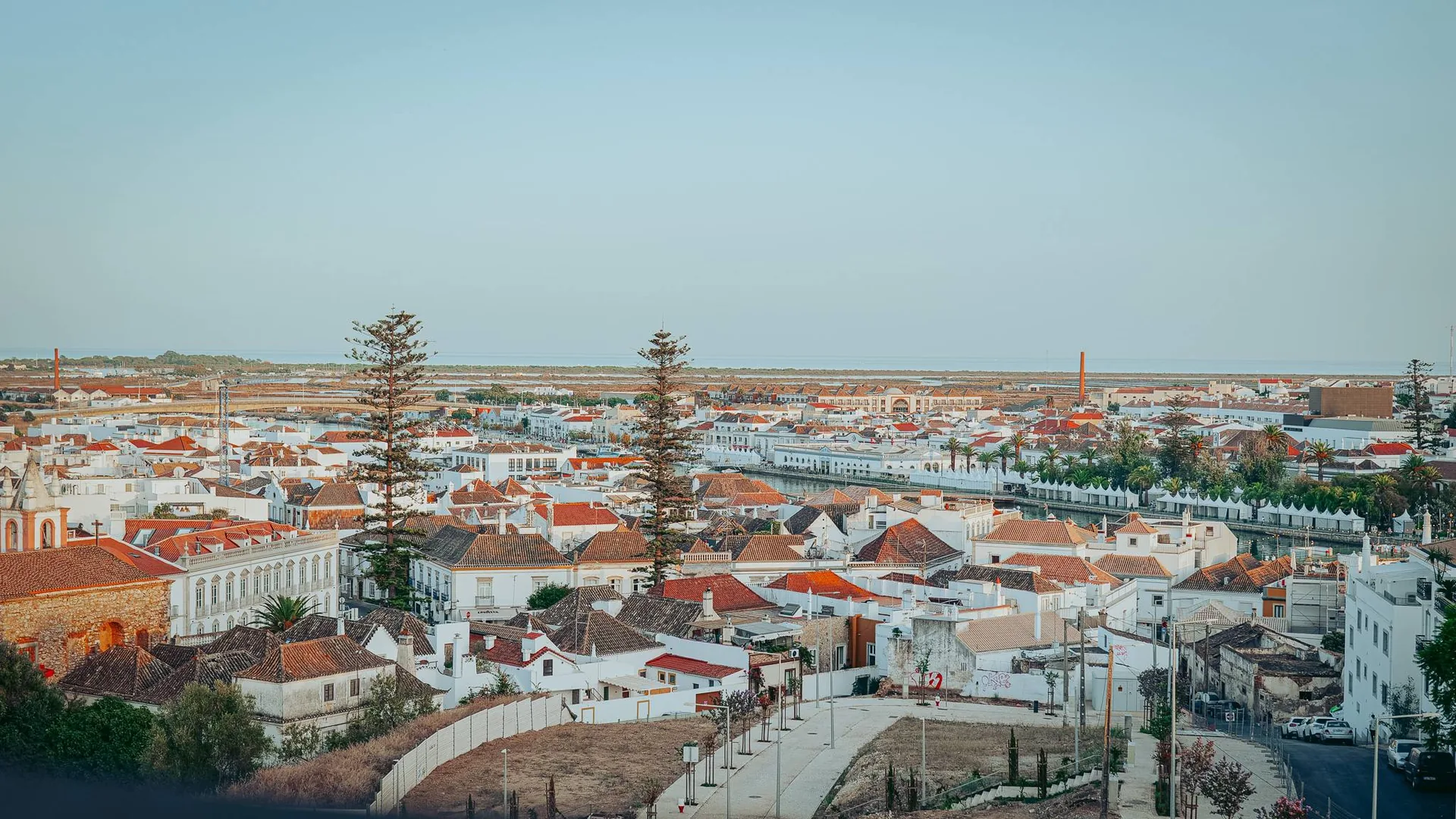
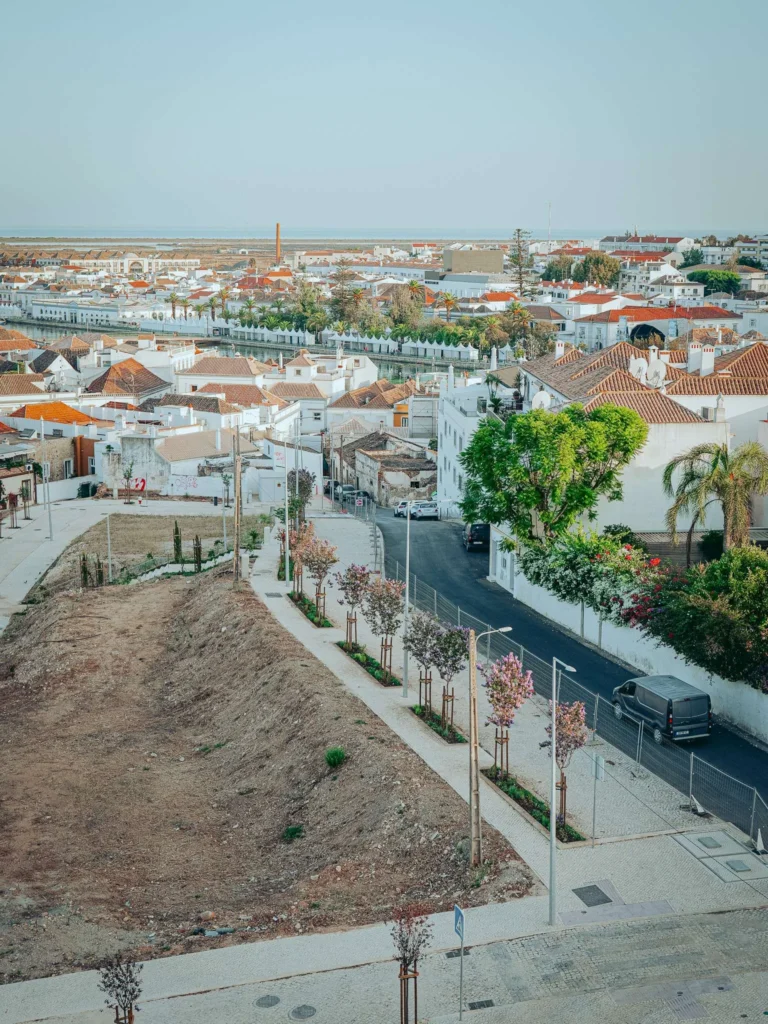
On one side, you overlook the Ria Formosa and the entire front that opens towards the ocean, with sandbanks and canals cutting through the lagoon. You turn, and you have a large part of Tavira in front of you with the Rio Gilão running through it. You turn again, and it’s the hills of the hinterland. Take the time to walk around, that’s really where it’s at, and it’s the kind of thing you forget to do when you sit down directly at a table.
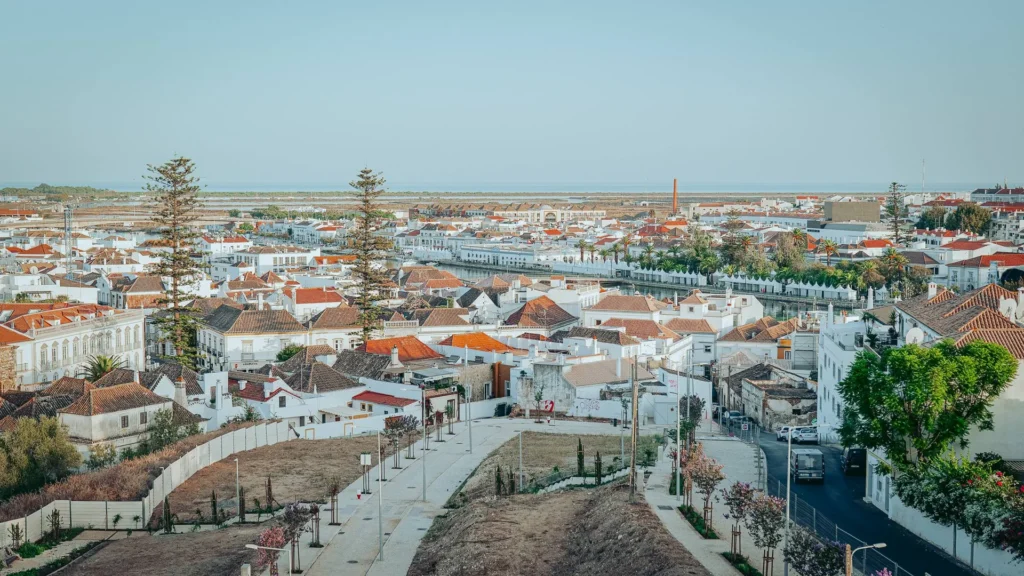
Even inside, by the way, you don’t miss much. The room is surrounded by large windows, so the view continues to come in even when you’re settled in comfortably. It’s handy in winter or on evenings when the wind picks up, which happens more often than is mentioned in brochures.
Those pointed roofs down there are not like other roofs
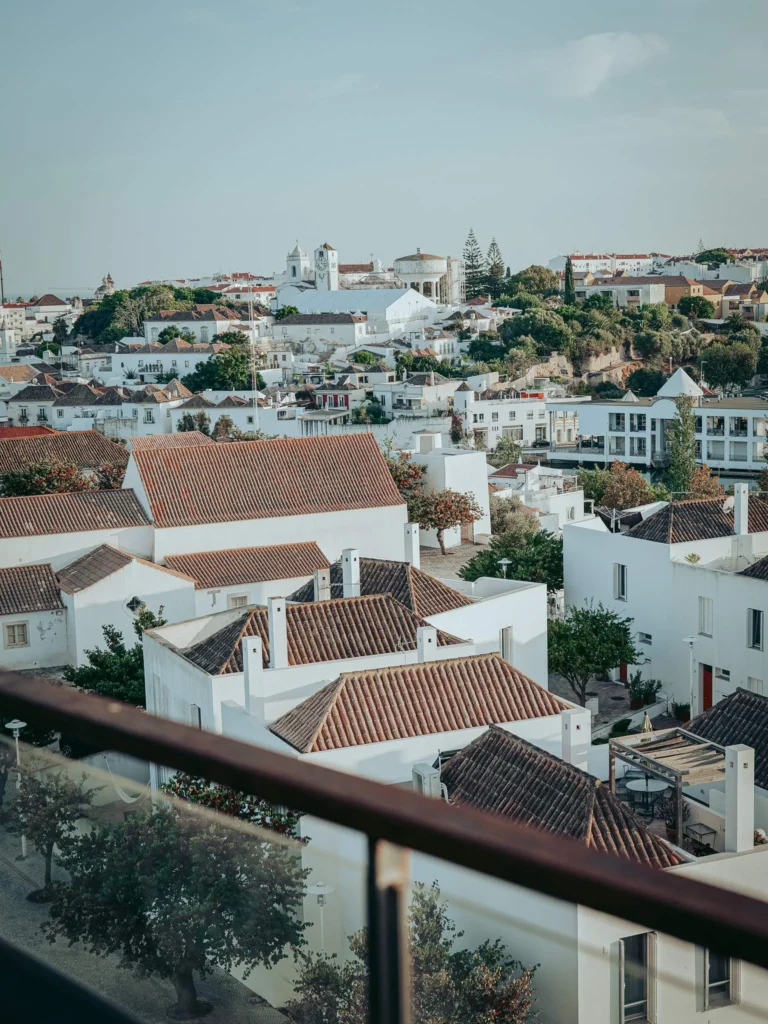
When you lean over the city from the Nomad, there’s one thing you notice even before you know what it is: the roofs of Tavira don’t look like those of other cities in the Algarve. They are small pyramids of tiles lined up next to each other, like a raised checkerboard. The Portuguese call them telhados de tesoura, scissors roofs.
The detail that makes it readable from above: each pyramid covers a single room. A small house has one of these roofs, a large one lines up five or six, and that’s why the landscape gives that impression of a mosaic when viewed from a rooftop rather than from the street.
Regarding their origin, let’s be honest: no one really knows. It’s read everywhere that it might be an influence brought from India or Asia by Portuguese navigators from the 15th century, while elsewhere it’s said to be a heritage from the Moorish period. Both hypotheses circulate, none have consensus, and serious sources acknowledge that we don’t really know. So if a guide tells you this with certainty, take it with a grain of salt. What’s certain is that it’s a signature of Tavira and you won’t find it anywhere else in the region.
The sun sets on different sides depending on the season
Now here’s a practical point we didn’t anticipate the first time. The hillside side, the hinterland, is objectively the least pretty of the four angles when you arrive: next to the lagoon and the Rio Gilão, it doesn’t compare.
Except that at the very beginning of September, it’s precisely behind those hills that the sun sets. So the side we found the most ordinary suddenly becomes the best observation point of the rooftop. This observation holds true for early September; we did it on the 2nd, and the takeaway is mainly that the orientation of the sunset shifts with the season. Spot where the sun is setting before choosing your table, not after.
What we drank, and what it really costs
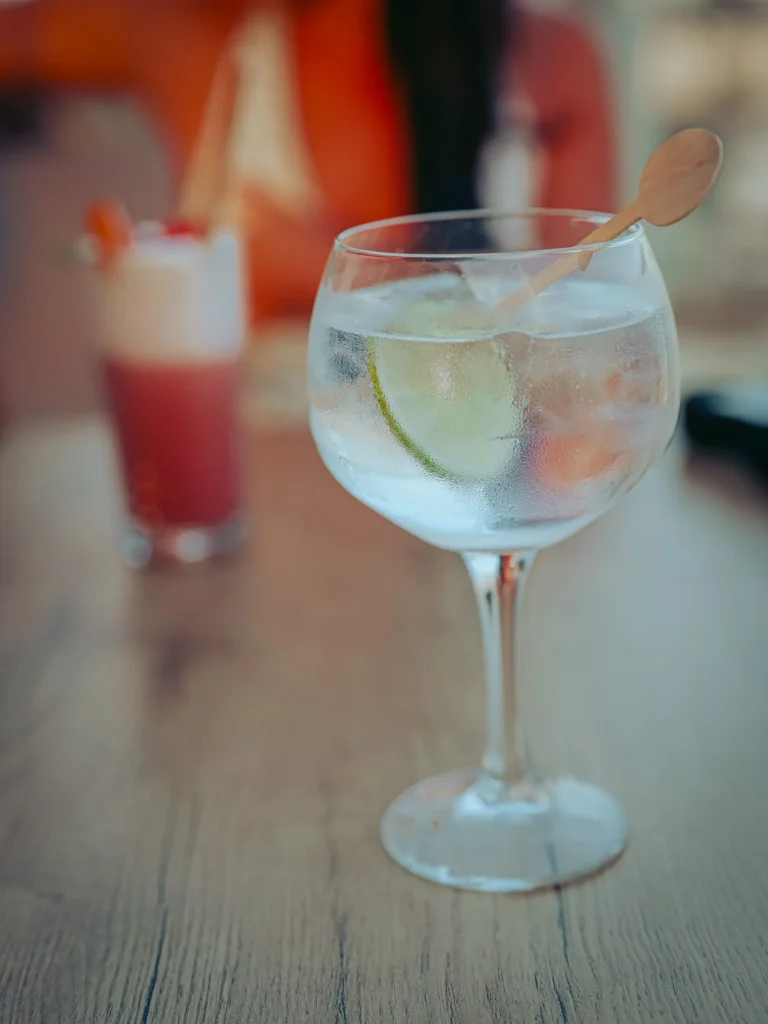
On the evening we’re talking about, I had a gin and tonic and Caroline had a Rooftop Gin, a house cocktail based on gin. Nothing extravagant, we’re not there to test the entire menu, we’re there to have a decent drink while looking at the city.


The total: 16.50 € for both. For a hotel rooftop with that view, it’s actually quite cheap, and that’s exactly what breaks the initial prejudice. We’re looking at city center bar prices, not panoramic terrace prices.
The point of comparison that comes to mind immediately is the bar at Tavira Castle, where a glass of wine quickly climbs to around 9 €, for a view that we honestly like much less. There, the difference in setting is huge and the price difference is not. If you’re looking for the other end of the spectrum, further down the alleys, we really like la Bodeguita Salinas for its glasses of wine and tapas, but you obviously don’t go there to watch the sunset.
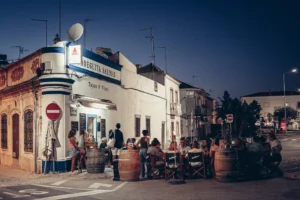
La Bodeguita Salinas, the small tapas bar in Tavira that closes the street to seat us
Our opinion on Bodeguita Salinas in Tavira: a tiny tapas and wine bar that closes its street in summer to set up its terrace, simple tapas, and especially wines by...
Read more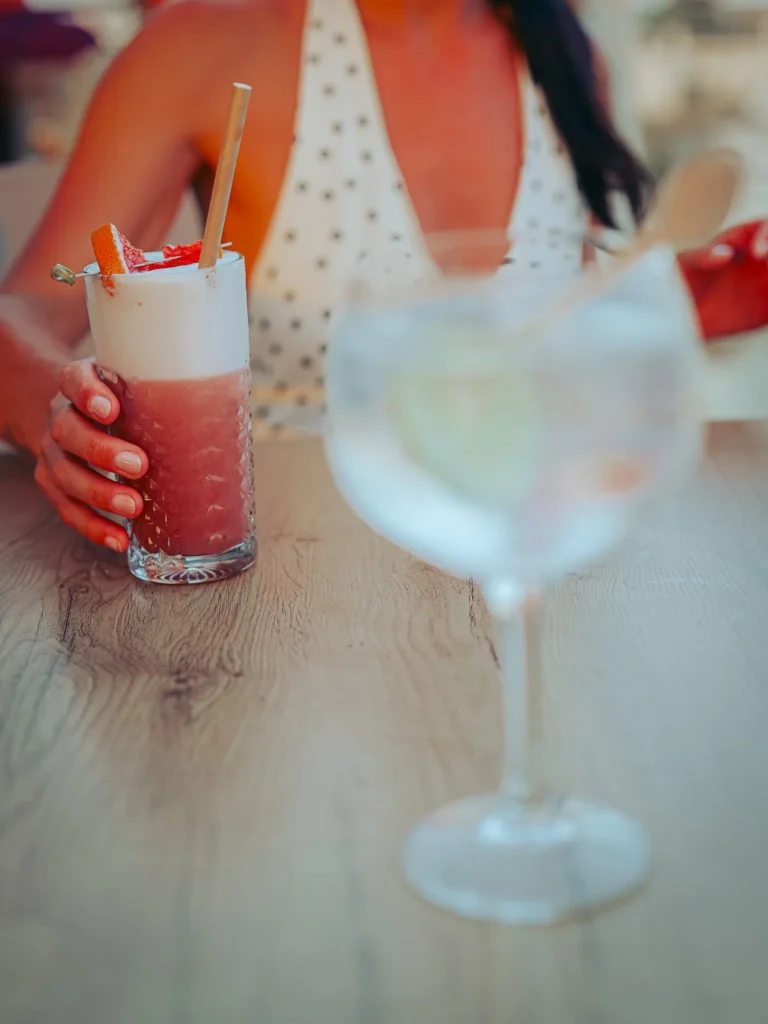
In winter, it’s not the same place at all
At the beginning of September, at aperitif time, the terrace is full and the best seats facing the ocean are already taken. It’s the price of success, the place is known, and if you’re aiming for a table with a full-frame view in summer, come earlier than the logical hour. It’s a matter of twenty minutes.
In winter, it’s the opposite; there’s almost no one and you can sit wherever you want. The trap is the time: the sun sets so much earlier that arriving at our usual aperitif hour, you only catch the last few minutes. So in winter, adjust your timing, otherwise you go up for the night view, which is nice too but it’s not the same.

Who we recommend the Nomad to
To everyone, and that’s not an easy answer. When someone tells us they’re spending a few days in Tavira and asks what to do one evening, it’s the first thing we suggest. Go up to the Nomad one evening, if only to see the city from above.
It’s not just about the sunset, by the way. It’s mainly that Tavira is better understood from up there: the lagoon, the river that cuts the city in two, the historic center, the hills behind. In ten minutes on the terrace, you have the map in your head, and the rest of your stay is read differently. If you want the complete context of the city before going up, we’ve written all about it in our article on Tavira.