


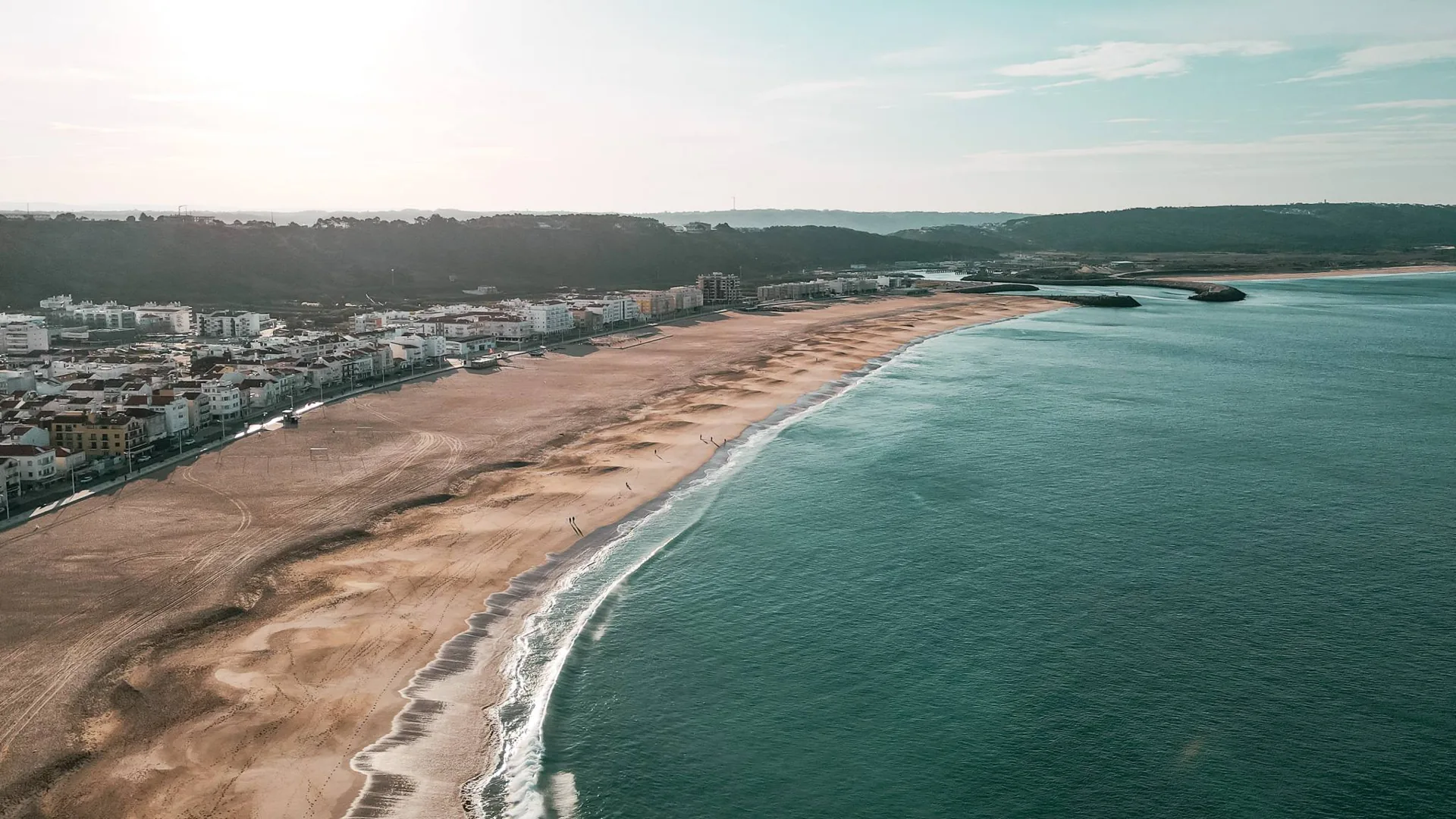
We associate Portugal with Lisbon, Porto, and the golden beaches of the Algarve. Nazaré is not necessarily the first place that comes to mind. And yet, it has become one of our favorite cities in the country, one of those places we have returned to several times without ever getting tired of it. The first time, we arrived in the middle of winter, with the ocean as flat as a lake. The calm before the storm, literally, because here the storm is not a weather problem: it is the main show. Sit back, we’ll tell you everything.
The video of our visit to Nazaré
Before diving into the details, here is the video taken during our very first visit. We were treated to several days of beautiful weather, then a rainy day, and since we can’t sit still, we took the opportunity to get the drones out and film the city from above. It gives a good idea of the atmosphere, that of a quiet day where no one suspects what this ocean is capable of.
Plan your trip: Portugal
Compare rental companies and book at the best price.
Booked on Trip.com — partner link.
Provided by Holafly, our partner.
5% off with code LAPLANETEDECARO
Booked on Holafly — partner link.
Why Nazaré has the biggest waves in the world
If Nazaré has gone from a quiet fishing village to a global star, it’s because of a number that seems insignificant: here rise the biggest surfed waves on the planet. Walls of water measuring in tens of meters, a handful of crazy surfers on top, and thousands of curious onlookers clustered on the cliff to watch. What is fascinating is that this is not a lucky weather phenomenon. It’s pure geography, and it hides just beneath the surface.
The Nazaré canyon, a fault 5,000 meters under the ocean
Just off Praia do Norte, the north beach, the ocean hides the largest underwater canyon in Europe. A dizzying gorge that plunges to about 5,000 meters deep and stretches nearly 200 kilometers offshore. Its head rises almost to the foot of the cliff, a kilometer from the shore. It is this unique configuration that creates the monsters.
The mechanism, in a not too complicated version: the swell that travels above the deep canyon goes faster than the one that crawls over the shallow plateau right next to it. As a result, the waves bend, converge, and concentrate their energy at a single point, right in front of Praia do Norte. Since the water from the canyon never rubs against the bottom, it arrives intact, at full power, and suddenly crashes into the nearby shallows. This collision makes the wave rise in an instant. The same swell thus gives enormous waves at this precise spot, and small ripples two hundred meters away. Nature is well made.
The records: from Garrett McNamara to Sebastian Steudtner
It all started media-wise in 2011 when American Garrett McNamara surfed a wave measured at 23.77 meters, the world record at the time. Brazilian Rodrigo Koxa pushed the marker to 24.38 meters in 2017. Then German Sebastian Steudtner entered into legend: his wave from October 29, 2020, certified in 2022 after eighteen months of analysis, peaks at 26.21 meters. This is currently the official record for the biggest wave ever surfed.
The figure of thirty meters often circulates. To be honest, it is not yet certified: in February 2024, Steudtner did tame a wave estimated at 28.57 meters using a drone measurement system, but it is still awaiting official validation. It’s safe to say that the record won’t hold forever, and the next winter could change everything.
Justine Dupont and the extreme female surfers
Nazaré is not just a man’s affair, far from it. Frenchwoman Justine Dupont has written some of the most beautiful pages of women’s big wave surfing here, with a wave of 21.5 meters on February 11, 2020, and a victory at the first edition of the Nazaré Tow Surfing Challenge. On the same day, at the same spot, Brazilian Maya Gabeira set the women’s world record at 22.4 meters. Two women, one cliff, and waves that most professional surfers wouldn’t even dare to look at too closely.
Where and when to see the giant waves
The observation point is the Forte de São Miguel Arcanjo, at the tip of the Sítio promontory, just above Praia do Norte. This fort from 1577, topped with a small red lighthouse since 1903, has become the official balcony for the show. Inside, an interpretation center tells the story of the famous canyon, and a surfers’ wall pays tribute to those who have tamed the giants. From there, you will see tiny silhouettes gliding on the walls of water.
For the waves, forget about summer. The monster season runs from October to March, with a peak from November to February, when the big depressions from the North Atlantic send the swell. The rest of the year, the ocean calms down and Nazaré becomes a peaceful seaside resort. Which, believe us, has its own charm as well.
Our Nazaré: the calm before the storm
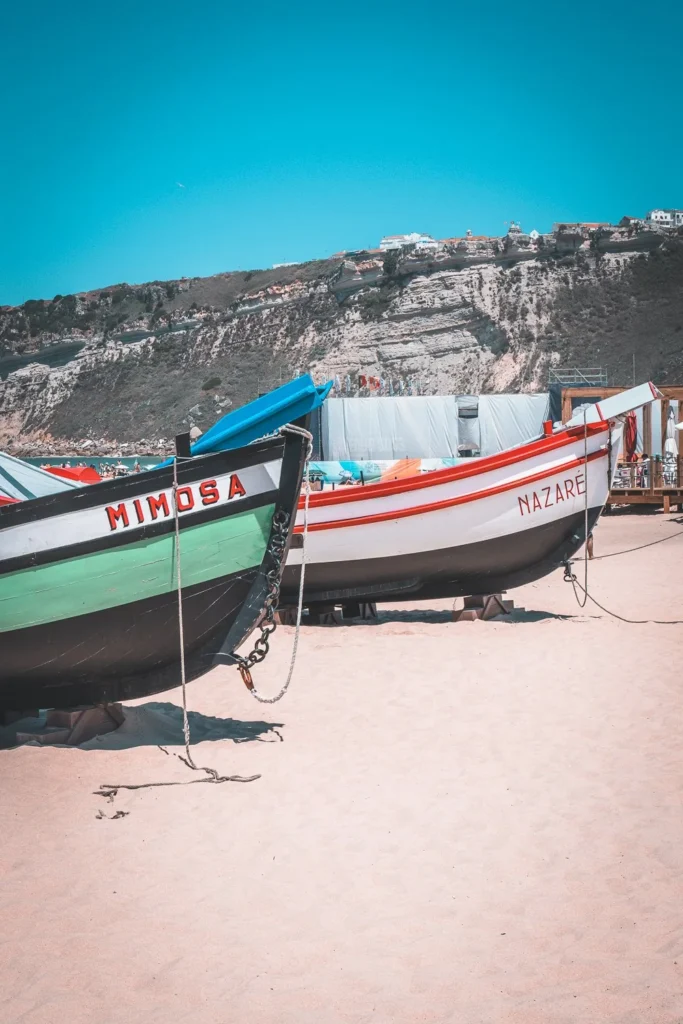
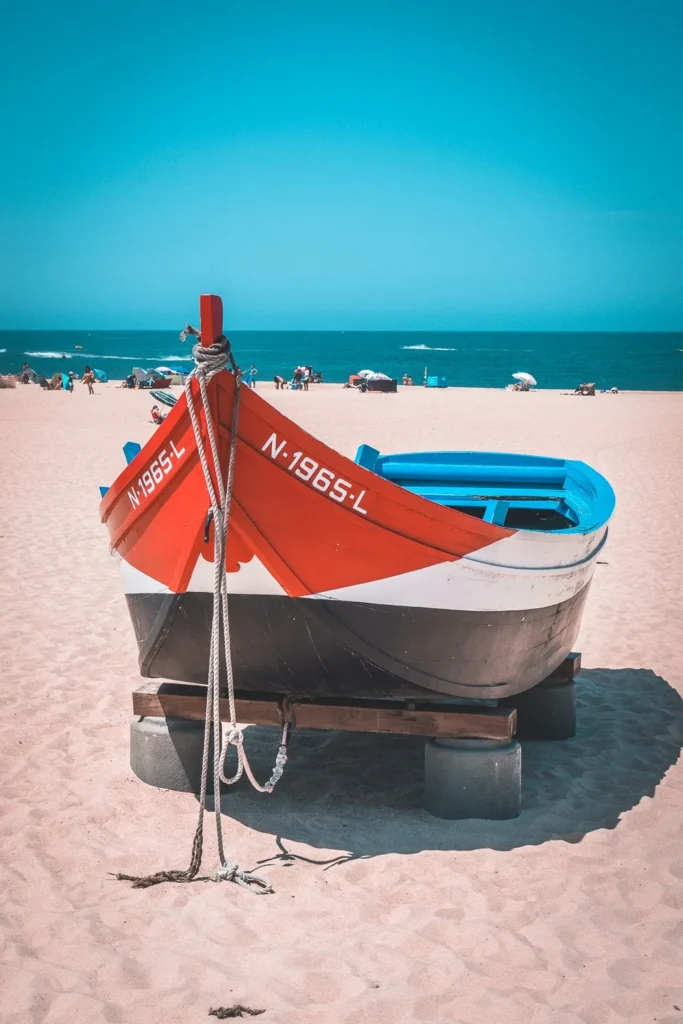
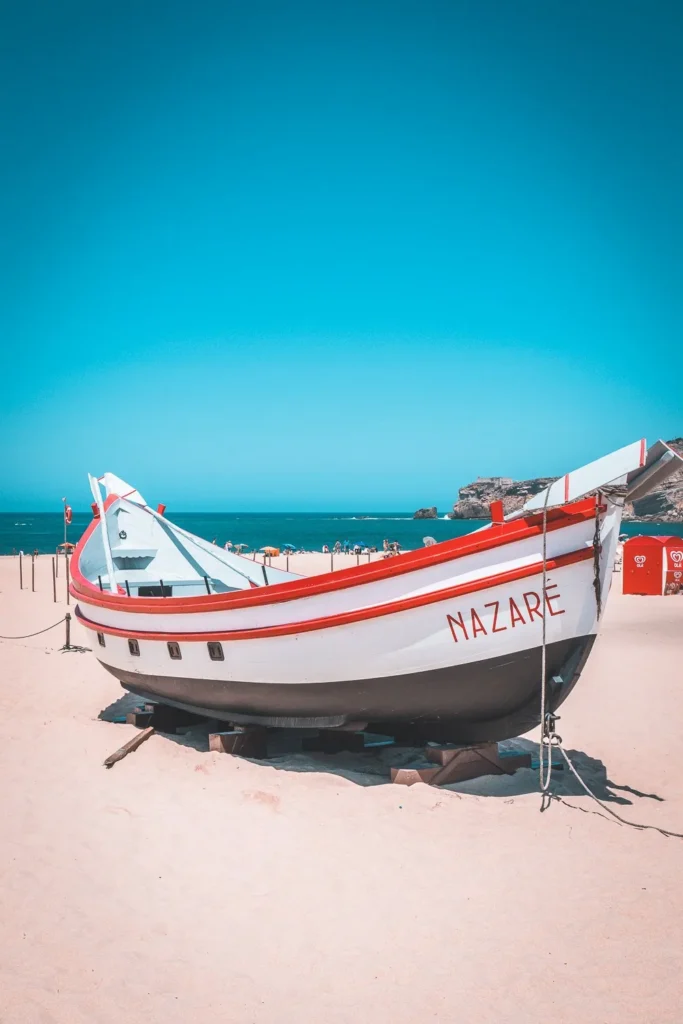
We, in fact, stumbled upon the tranquil side. We were sold the nirvana of surfers, and upon arriving in the center, we discovered a peaceful seaside, a large well-behaved beach, colorful boats resting on the sand. Not a wall of water on the horizon. The few surfers present, like us, were watching for the next swell while scanning the horizon. This contrast between the legend and the flat calm of the day has an unreal quality that we have never forgotten.
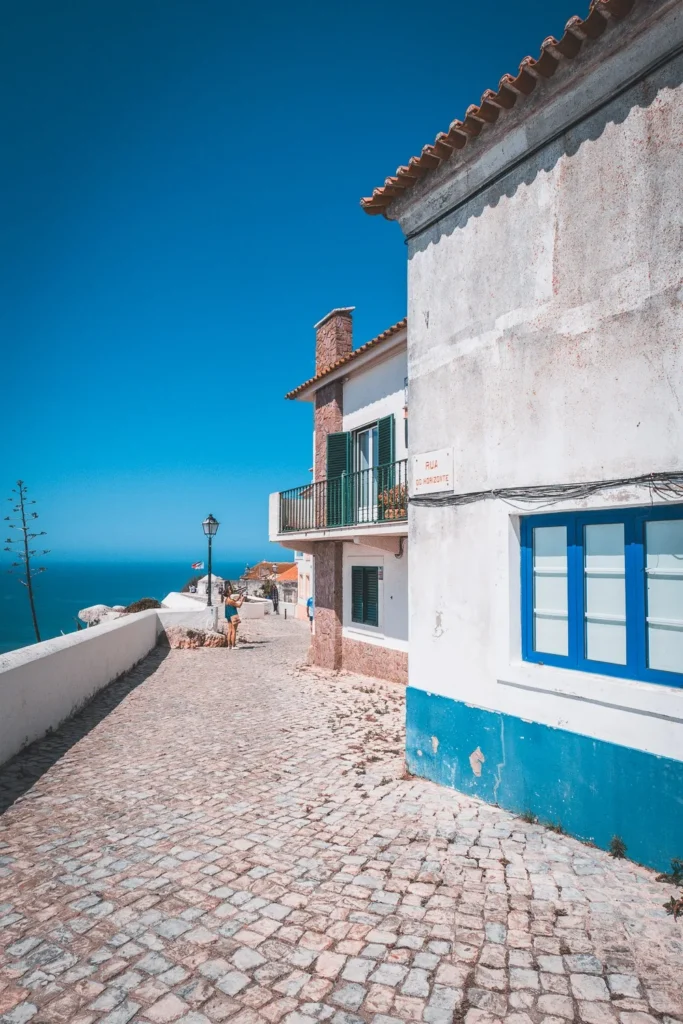
What really got us was the viewpoint. The first time, we parked down below, so we took the funicular to go up to Sítio, the high town perched on its cliff. This little cog train has been climbing since 1889, over 318 meters and a 42 percent gradient, and it drops you up there with all the views at once: on one side the city and its large crescent beach, on the other the surfers’ spot and its endless ocean. Quite beautiful, to say the least.
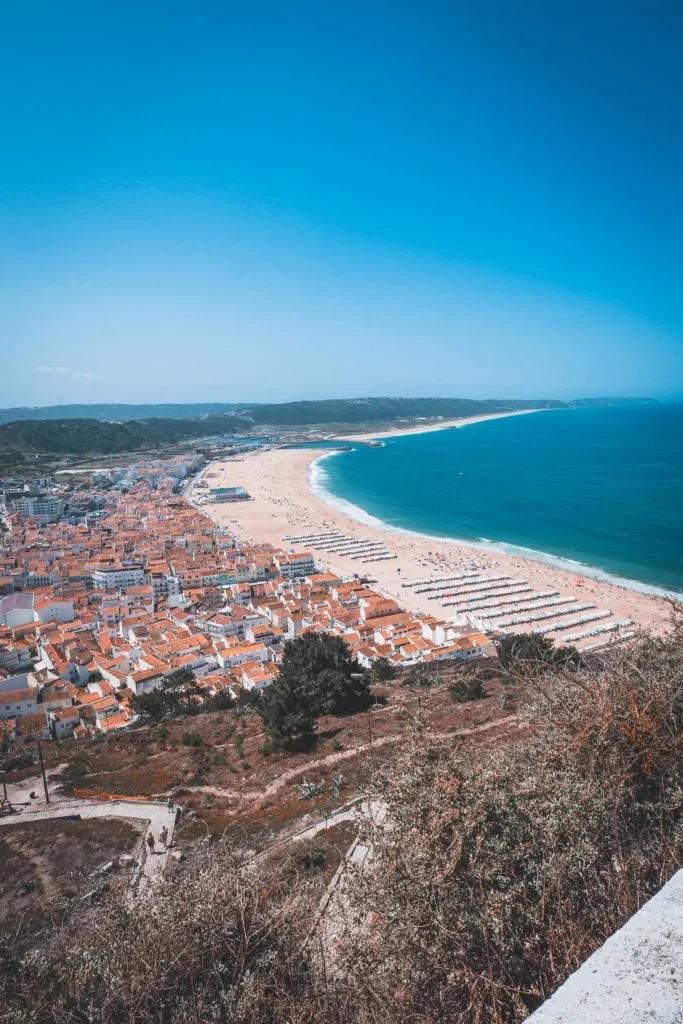
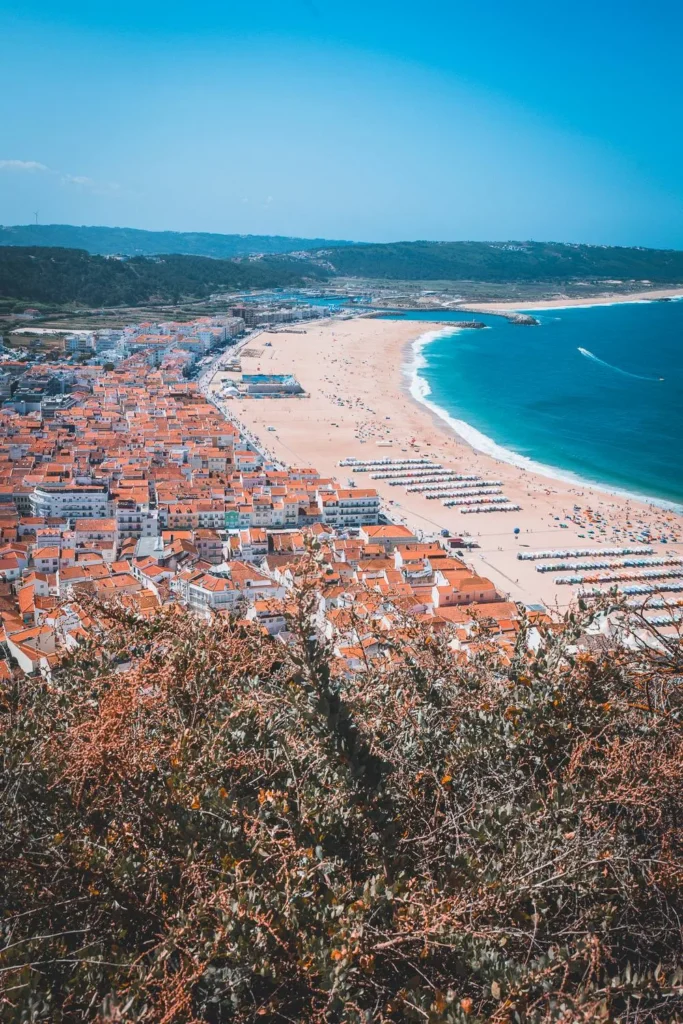
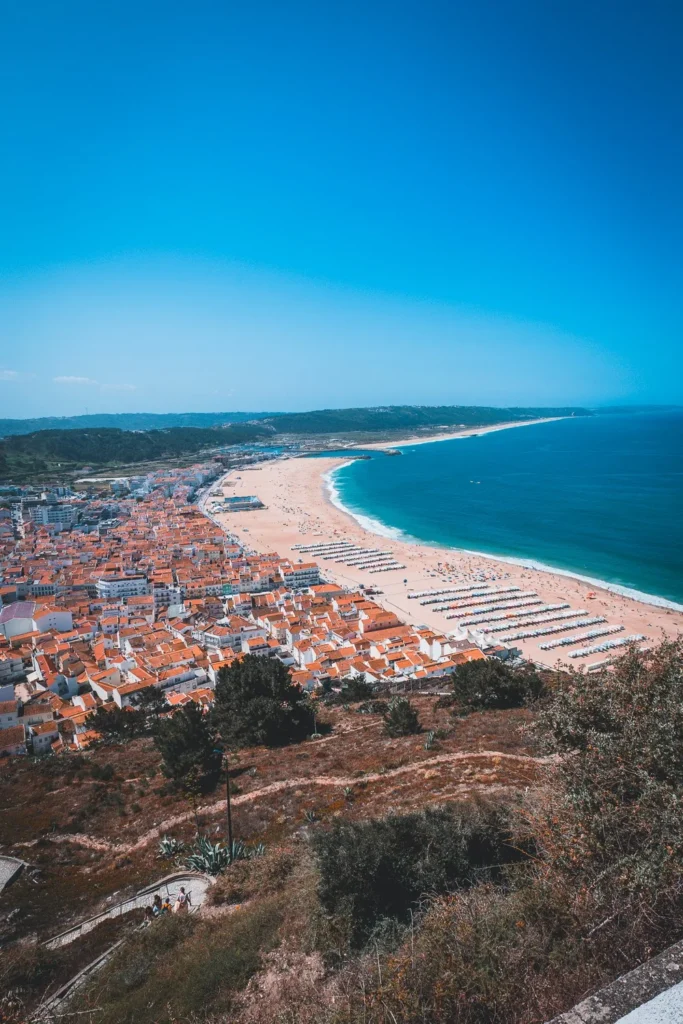
Another time, we parked up top, in a motorhome parking area in the heights, and we walked down to the town. On the way, there is a beautiful swing set up facing the landscape, where you really feel like you are swinging into the void, the ocean in front of you and nothing else. We stayed there much longer than expected. It seems that we never quite grow up.
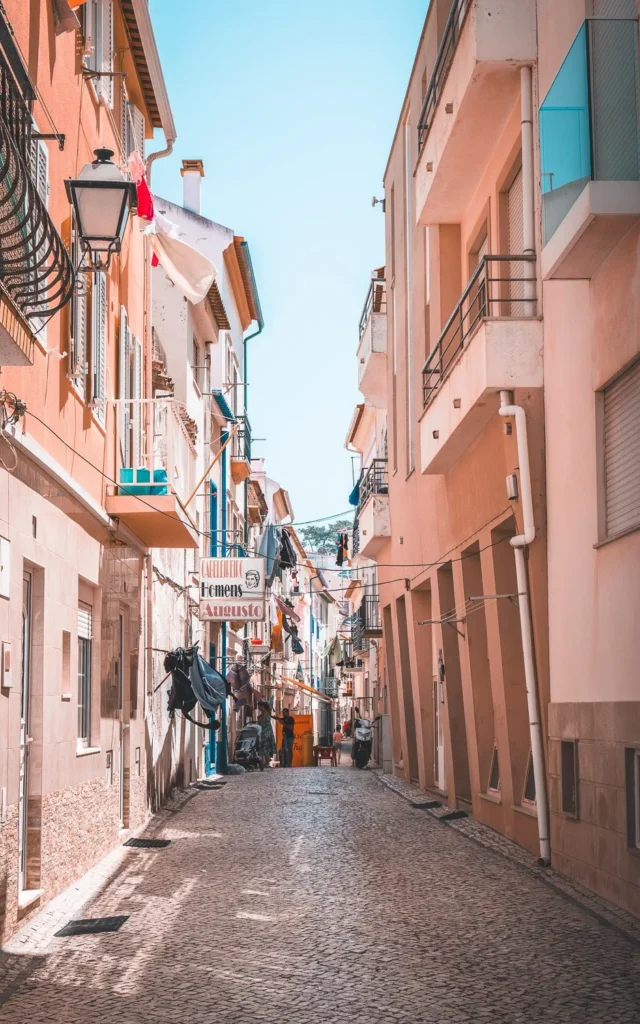
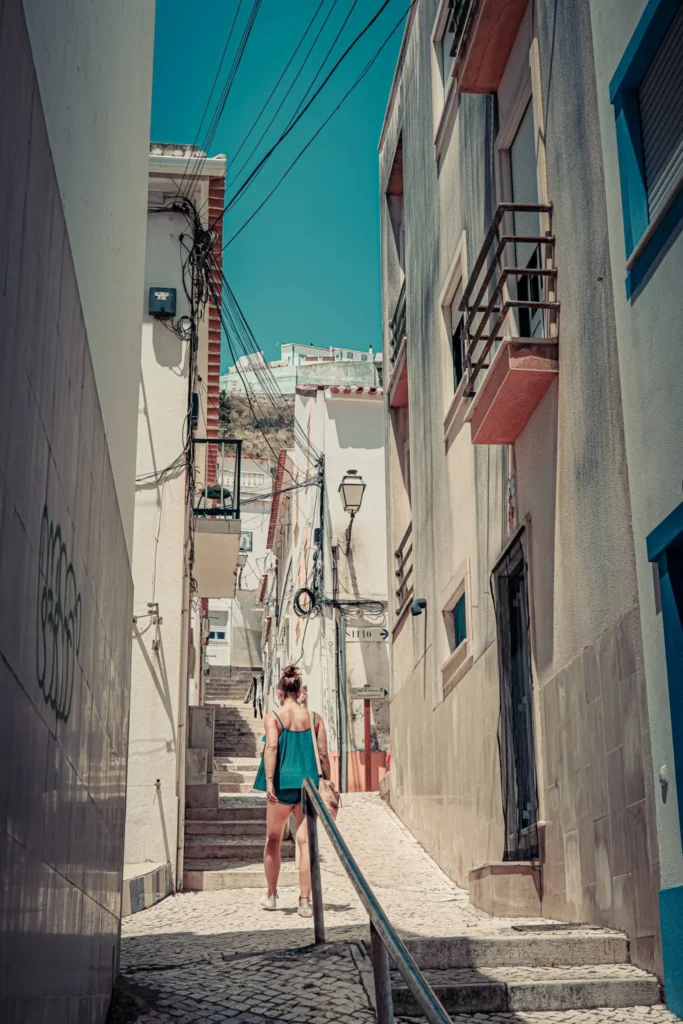
History and traditions of Nazaré
Behind the waves and the drones, Nazaré remains above all an old fishing village, where men would go to sea for months and return with the precious catch (my grandfather was one, so the subject touches me). That soul has not diluted in tourism, and that’s probably why we keep coming back.
The legend of Our Lady of Nazaré
The name of the city comes straight from Nazareth, in Galilee, the city of the Virgin. A small statue of Mary, said to have been brought back from the Holy Land, was hidden in a cave in the cliff in the 8th century. The word Nazareth itself comes from the Hebrew root naçar, to keep, to watch. A nice coincidence for a place where so much attention has been paid to the sea.
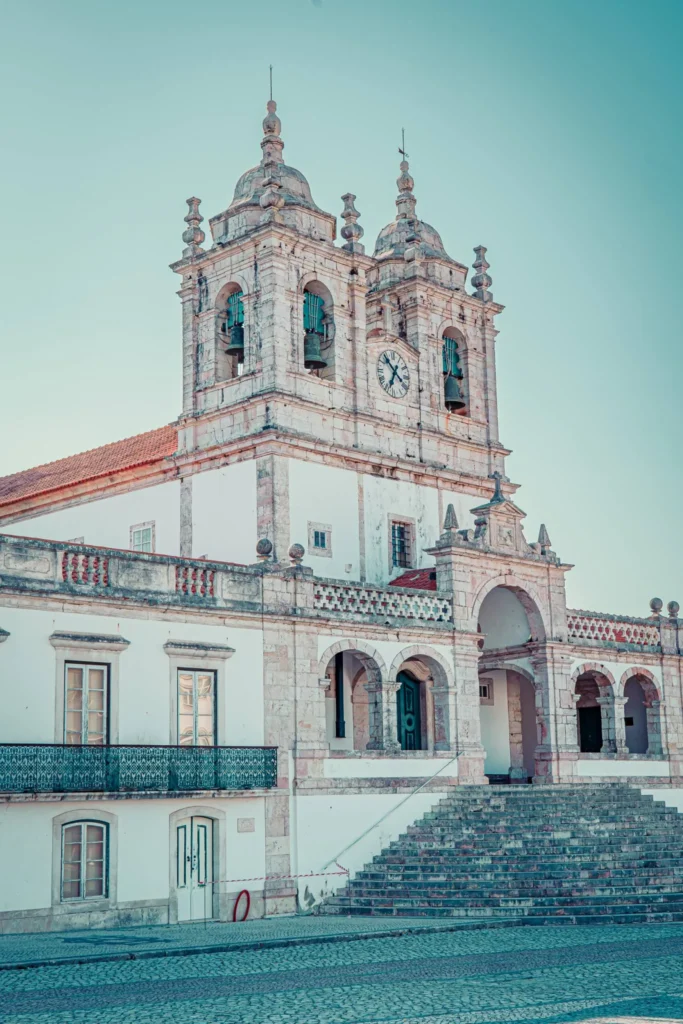
The founding legend takes place on September 14, 1182. The knight Dom Fuas Roupinho is hunting a deer in the early morning when a thick fog rises from the ocean. Caught up in his pursuit, he rushes towards the edge of the cliff, a hundred meters of void beneath his hooves. At the last moment, recognizing the Virgin’s cave, he implores Our Lady, and his horse freezes at the edge of the precipice. In gratitude, he builds the Capela da Memória on the cave. Later, the grand Sanctuary of Nossa Senhora da Nazaré will rise, a first church in 1377, then the imposing baroque building reconstructed at the end of the 17th century, azulejos and gilding included, still standing at Sítio.
The seven petticoats and the fish that dries in the sun
If you encounter a lady in a multicolored puffed skirt, you have the tradition of the seven petticoats, the sete saias. Originally, nothing folkloric: women waited for hours for the return of the boats, and the layers of fabric protected them from the cold and the Atlantic wind, the top petticoat being pulled over their heads when it rained. Why seven? No one really agrees, between the seven waves, the seven days, or the seven colors of the rainbow. Today, the costume comes out mainly for festivals, but a few older women still wear it daily.
The other strong image, we saw with our own eyes: the fish drying on the beach, laid out on racks by the water’s edge. Mostly carapau, the local horse mackerel, gutted, salted, opened, and left for two to three days in the sun. A smell of iodine that catches in the throat, and behind, women fishermen bundled up in their clothes, standing there all day, attacked by salt and wind. We imagine the harshness of the job, and the fact that it has been practiced this way for generations. The tradition is becoming rarer, caught between modern hygiene standards and the passage of time, but it still endures.

Staying Connected in Portugal: Visitor or Resident?
What internet connection to use during a stay in Portugal? This is a common question we ask ourselves before leaving. Caroline and I, Xavier, have explored the different options available...
DiscoverThe beaches of Nazaré: the city and the surfers’ spot
Nazaré has two beaches that are completely different. First, there is Praia da Nazaré, the city’s main beach, a long arc of blonde sand in a sheltered bay, bordered by its lovely promenade where it’s nice to stroll. We have walked this beach several times, with its traditional boats stranded on the sand and its beach huts. This is the well-behaved beach, monitored in summer, where you can swim without a second thought.
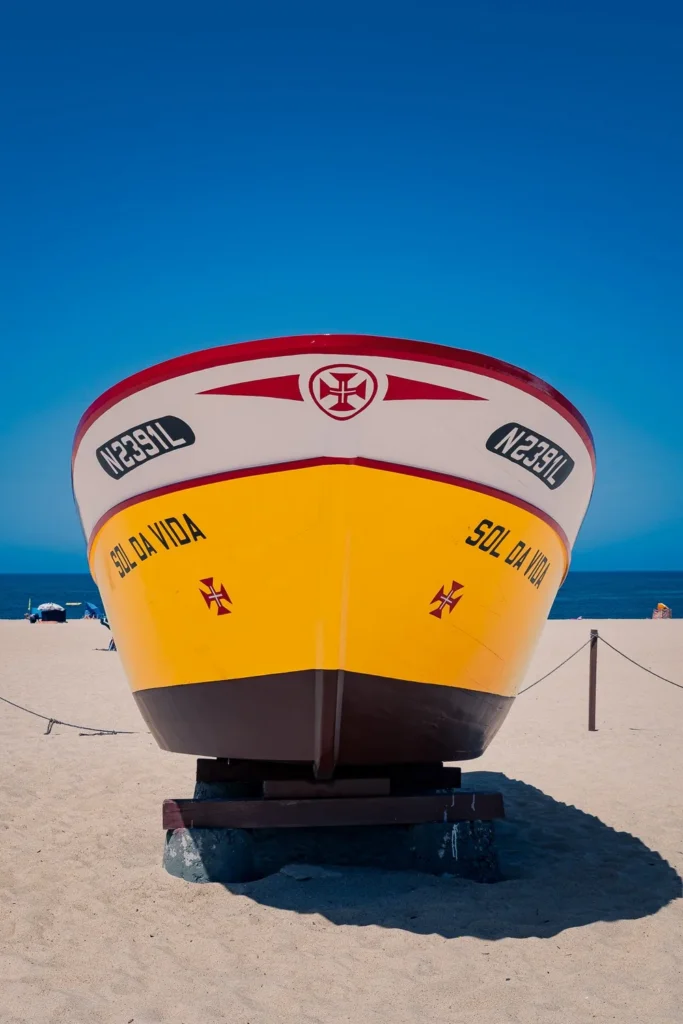
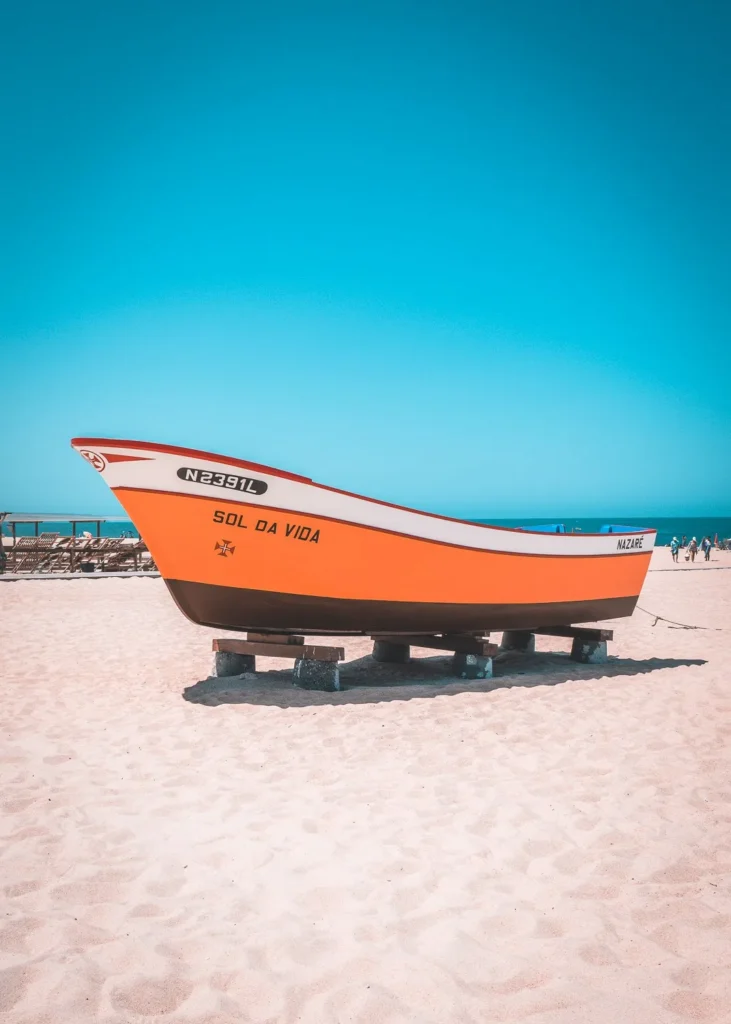
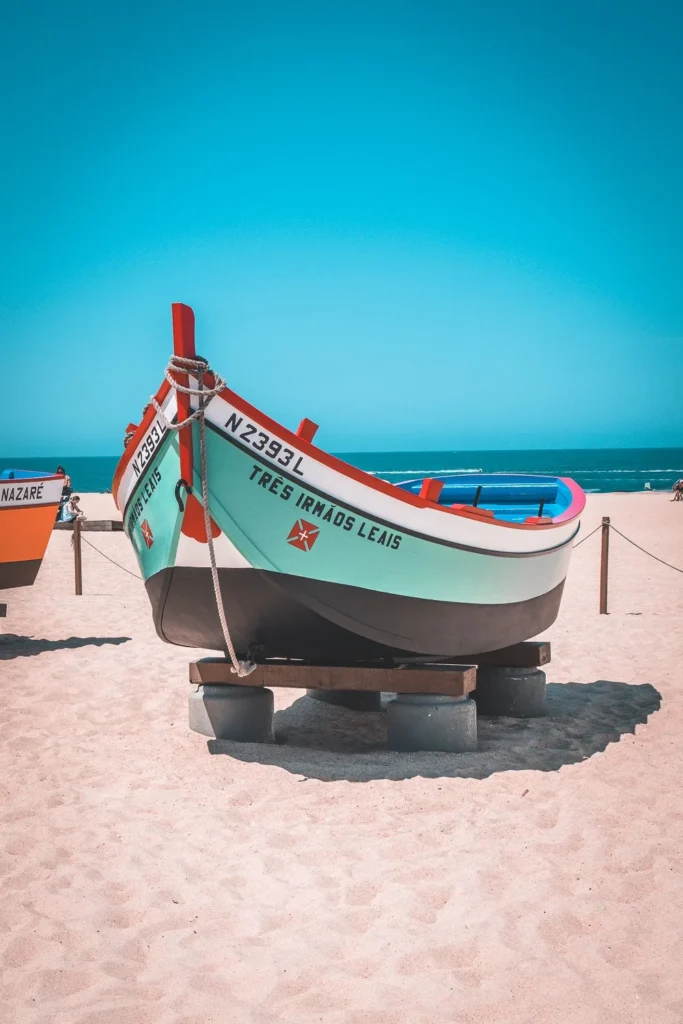
And then there is Praia do Norte, on the other side of the promontory, the one of records. This one, we have never done from below, only admired from the top of the cliff, and for good reason: it’s a current trap, dangerous even in calm seas, reserved for tow surfers assisted by jet skis. We have never slept there either, although, seen from above, you can always spot quite a few motorhomes parked in the area. The kind of beach you respect from a distance.
Where to eat in Nazaré (and the story of bolas de Berlim)
Being a fishing town, you can eat here fish and seafood of remarkable freshness. Caldeirada stew, grilled sardines and sea bream, arroz de marisco, and of course the famous dried carapau grilled. Two addresses stood out to us. Sítio dos Petiscos, rua Azevedo e Sousa, a restaurant so well-kept that we wondered, upon entering, if the plate would match the decor (my suspicious logic: when everything is put into design, it’s not always at the same level). Well, yes, very good, and since we didn’t take any photos, we have an excellent excuse to go back.
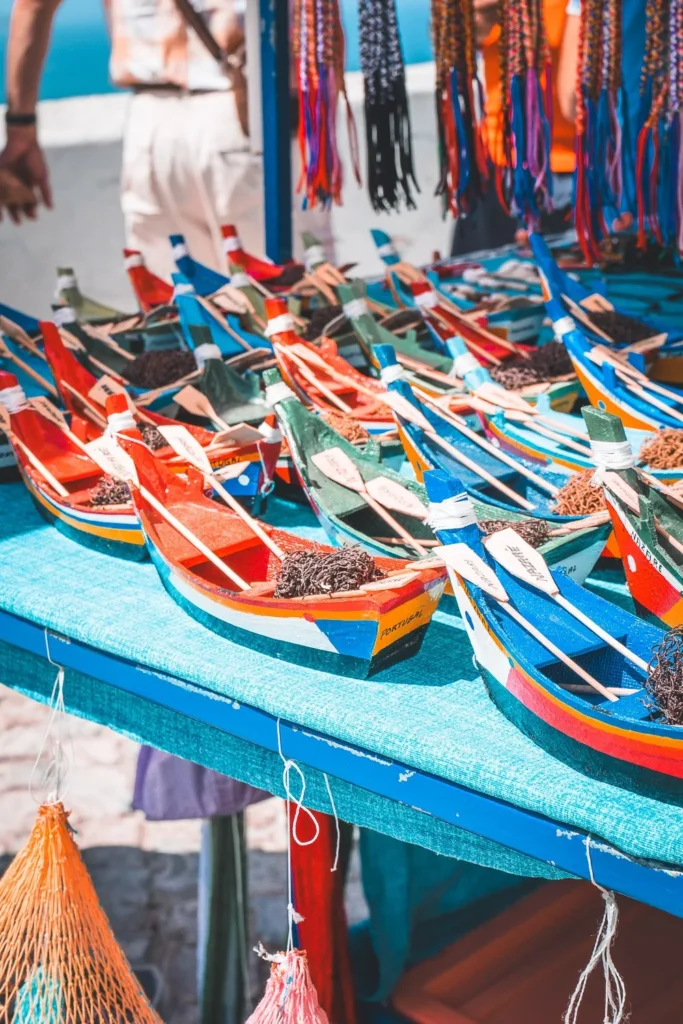
The other is the Gaivota restaurant, largo Comandante Cândido dos Reis, run by a friend of Xavier’s uncle who lives near Porto. We ate there twice, typical Portuguese cuisine, unpretentious and generous. And then there is the sweet sin of the beach: bolas de Berlim, those cream-filled donuts sold in the huts and sometimes at the beach auction on the sand. A little story on the side, they arrived in Portugal in the 1930s with refugees from Central Europe, who swapped German jam for local cream. The funniest part is that in Tavira, where we live, the sellers pass by with their boxes of bolas and we never buy any. In Nazaré, for some reason, we crack every time.
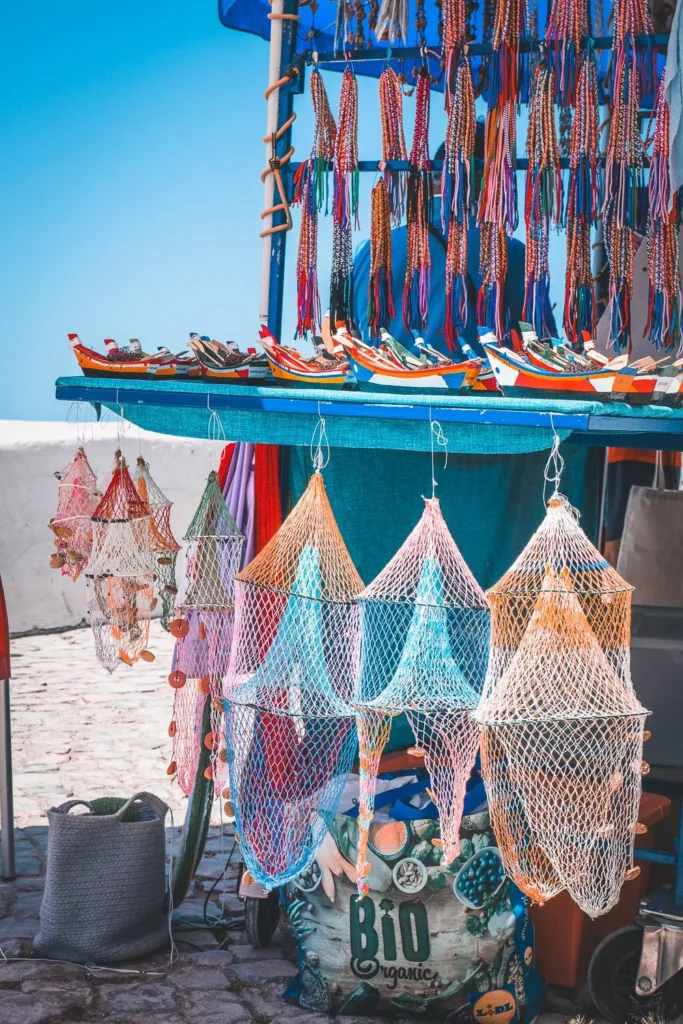

We're Caroline and Xavier
We drive to a place, stay long enough to get it wrong a few times, then write the guide we wish we'd had: parking, timing, what's worth the detour.
Ce que vous souhaitez recevoir :
Sleeping and parking a motorhome in Nazaré
Let’s be honest, this is the weak point of the area. Free spots for motorhomes are rare and quickly taken, even in winter, and Nazaré applies fairly strict parking restrictions. The first time, we couldn’t spend the night there: we settled for a dirt parking lot for the day, quiet and secure, while we visited everything. Another time, we found a spot in a motorhome parking area in the heights, at Sítio, from where we walked down to the town and its famous swing.
If you want to play it safe, the Orbitur campsite in Valado remains the closest official option. For the rest, scout your spots in advance, arrive early, and keep in mind that parking is earned here. All our useful points, parking lots, areas, laundries, and restaurants are gathered on the map below.
Nazaré : Places we can tell you about
Here's our selection of places in Nazaré: spots we've visited that might be useful to you. Use the list view to discover each address in detail, and export everything to add to Google Maps or your favorite GPS app.
| Place | Address | Download |
|---|---|---|
| Parking Rua Maritony | 5 Rua Maritony, Nazaré | |
| Largo da Fonte Velha | 18 Largo da Fonte Velha, Nazaré | |
| Camping Orbitur Valado | Rua dos Combatentes da Grande Guerra, Valado dos Frades |
| Place | Address | Download |
|---|---|---|
| Parking Rua 25 de Abril | Rua 25 de Abril, Nazaré |
| Place | Address | Download |
|---|---|---|
| A Tasquinha | Rua do Adrião 1, Nazaré | |
| Rosa dos Ventos | Rua Gil Vicente 4, Nazaré | |
| Sitiado | Rua dos Tanoeiros 2, Nazaré (Sítio) | |
| Gaivota | Avenida da República 34, Nazaré |
| Place | Address | Download |
|---|---|---|
| Nazaré Lighthouse (Fort of São Miguel Arcanjo) | Estrada do Farol, Nazaré | |
| Nazaré site | Largo de Nossa Senhora da Nazaré | |
| Sanctuary of Our Lady of Nazaré | Largo de Nossa Senhora da Nazaré |
| Place | Address | Download |
|---|---|---|
| Praia do Norte | Praia do Norte, Nazaré |
| Place | Address | Download |
|---|---|---|
| Self-Service Laundry Nazaré | Rua Sub-Vila, Nazaré |
| Place | Address | Download |
|---|---|---|
| Nazaré Funicular | Rua do Elevador, Nazaré | |
| Nazaré Municipal Market | Avenida Vieira Guimarães, Nazaré |
Nazaré, an idea of the weather
Contrary to what is sometimes read, the climate of Nazaré is not really Mediterranean: it is oceanic and temperate, shaped by the Atlantic. Mild and windy summers around 20 to 25 degrees, mild but humid winters, and a sea that never gets very warm. For swimming, aim for May to September. To see the waves, as we said, it’s the opposite. Here’s the month-by-month detail.
Nazaré : a glimpse of the weather
5-day forecast
For spontaneous travelers ready to leave tomorrow, here's what to expect this week.
Monthly climate
Between us, we love sunshine and warmth. But not everyone shares our preferences, so here's the climate data to plan according to your wishes.
| Month | Min temp | Max temp | Rain | Weather | Rating |
|---|---|---|---|---|---|
| October | 16°C | 22°C | 80 mm | 🌦️ | |
| November | 12°C | 17°C | 180 mm | 🌧️ | |
| December | 10°C | 15°C | 218 mm | 🌧️ | |
| January | 10°C | 14°C | 275 mm | 🌧️ | |
| February | 11°C | 16°C | 305 mm | 🌧️ | |
| March | 11°C | 17°C | 87 mm | 🌦️ | |
| April | 12°C | 19°C | 36 mm | ☀️ | |
| May | 14°C | 20°C | 59 mm | 🌦️ | |
| June | 16°C | 22°C | 15 mm | ☀️ | |
| July | 18°C | 24°C | 12 mm | ☀️ | |
| August | 19°C | 24°C | 56 mm | ☀️ | |
| September | 18°C | 24°C | 11 mm | ☀️ |
How much does a stay in Nazaré cost
Good news for the wallet: Portugal remains affordable, and Nazaré is no exception outside the tourist peaks of summer. A meal of fresh fish at a good place, a coffee on the terrace, a stroll, and a funicular ride don’t weigh heavily compared to other European destinations. Here’s an overview of budgets to set your stop.
Quota RapidAPI dépassé (limite par minute/mois). Réessayez plus tard.
What to do around Nazaré
Nazaré is ideally located for exploring. Half an hour away, the fortified medieval village of Óbidos and its flower-filled streets are well worth the detour, as are the classified monasteries of Alcobaça and Batalha, two Gothic jewels within van reach. Heading south, Peniche and the Berlengas archipelago offer another wild face of the coast.
And if you extend the road trip, Portugal continues to unfold its wonders: the templar city of Tomar nearby, the Portuguese Venice of Aveiro and its moliceiros, the capital Lisbon just an hour and a half to the south, or the university town of Coimbra. Enough to turn a stop into a true epic.
And to prepare for the next stops, here are our complete guides to the neighboring cities not to be missed.
Discover Tomar by Campervan: Complete Guide
With its rich historical heritage and peaceful lifestyle, Tomar in Portugal is becoming an increasingly popular destination for road trip travelers. Today, we're taking you to discover Tomar, a city...
Read more
Exploring Aveiro by Motorhome: Complete Guide for an Unforgettable Trip
Located in the center of Portugal, this destination is ideal for travelers in motorhomes or on road trips seeking natural beauty and tranquility. This article introduces you to Aveiro, its...
Read more
Discovering Coimbra by Motorhome: Complete Guide
With its fascinating historical sites, pleasant climate, and proximity to nature, this city is a must-stop for campervan adventurers. However, as you will see, it is not always easy to...
Read moreNazaré: frequently asked questions
How to get to Nazaré from Lisbon?
Count about 1 hour and 30 minutes of driving from Lisbon, which is nearly 120 km via the A8 motorway (toll road). Without a car, Rede Expressos buses connect Lisbon to Nazaré in just over two hours. There is no train station in Nazaré itself: the nearest one is in Valado dos Frades, about 6 km away, from where a local bus or taxi completes the journey.
How long does it take to visit Nazaré?
One day is enough for the essentials: the large beach, the old town, the funicular, and the viewpoint of Sítio over the waves. But to truly experience the atmosphere, stroll along the promenade and try two or three restaurants, two days are ideal. During the peak wave season, winter, one can easily stay longer to watch the swell.
Can you swim in Nazaré?
Yes, but not everywhere. Praia da Nazaré, the city's main beach, is sheltered in a bay and monitored in the summer: swimming there is safe. In contrast, Praia do Norte, the surfers' beach, is dangerous, swept by strong currents even when the sea looks calm. You watch it from above, you don't dip your toes in.
Is Nazaré worth a visit outside of wave season?
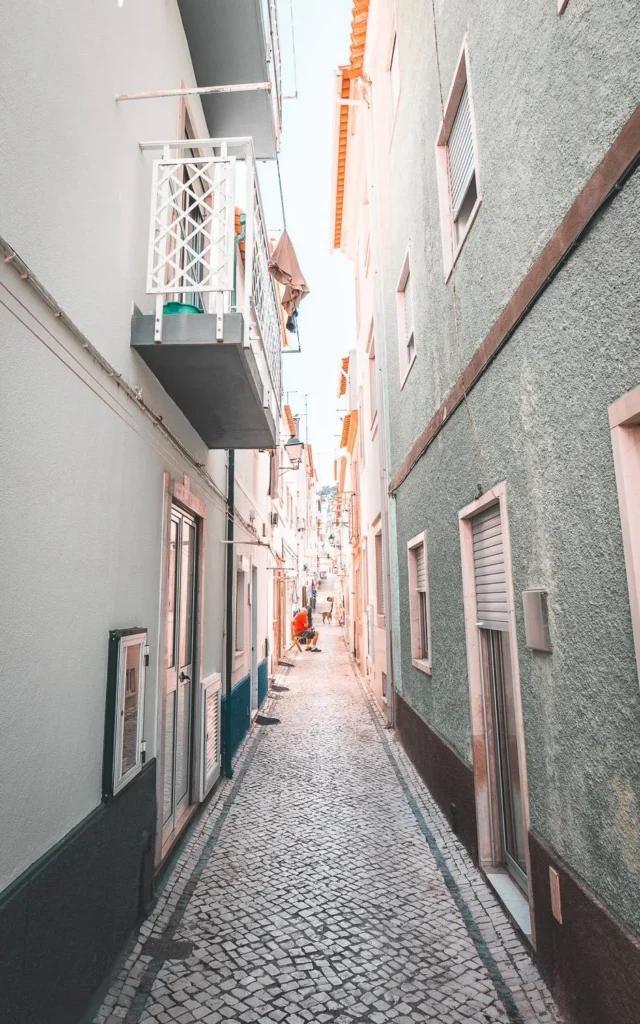
Absolutely. We discovered it in the middle of winter with an ocean as flat as a lake, and it has remained one of our favorite cities in Portugal. Outside of monster season, Nazaré becomes a peaceful seaside resort: golden beach, white alleys, funicular, seafood cuisine, and stunning viewpoints. The spectacle of the giant waves is a bonus, not a requirement.
Where is the Forno d'Orca cave in Nazaré?
It is located on the northern side of the Sítio promontory, below the fort. This natural cave carved by erosion is accessible at low tide and offers a spectacular photo setting, still unknown to hurried visitors. Caution with the tides and sea conditions, especially during swell periods.
Have there ever been fatal accidents while surfing in Nazaré?
Yes, only one death has been recorded to date: the Brazilian Marcio Freire, nicknamed Mad Dog, who died in January 2023 during a tow-in surfing session. Other surfers have come close to the worst, such as the Brazilian Maya Gabeira, hospitalized after a near-drowning in 2013, or the Portuguese Alex Botelho, revived on the beach in 2020. These waves remain among the most dangerous in the world.
PS: we still owe a real photo evening at Sítio dos Petiscos, the one where we finally think to take out the camera before tackling the plate. And one day, we promise, we will sleep up top to experience a real storm head-on. Finally, if we stop the bolas de Berlim long enough to get back in the van.
Portugal, we live here
Two years of full-time van life, and the Algarve as our base ever since. We still hit the road, by van or otherwise, and we write up what we find along the way. An email when we have something to say, no more.
Ce que vous souhaitez recevoir :