
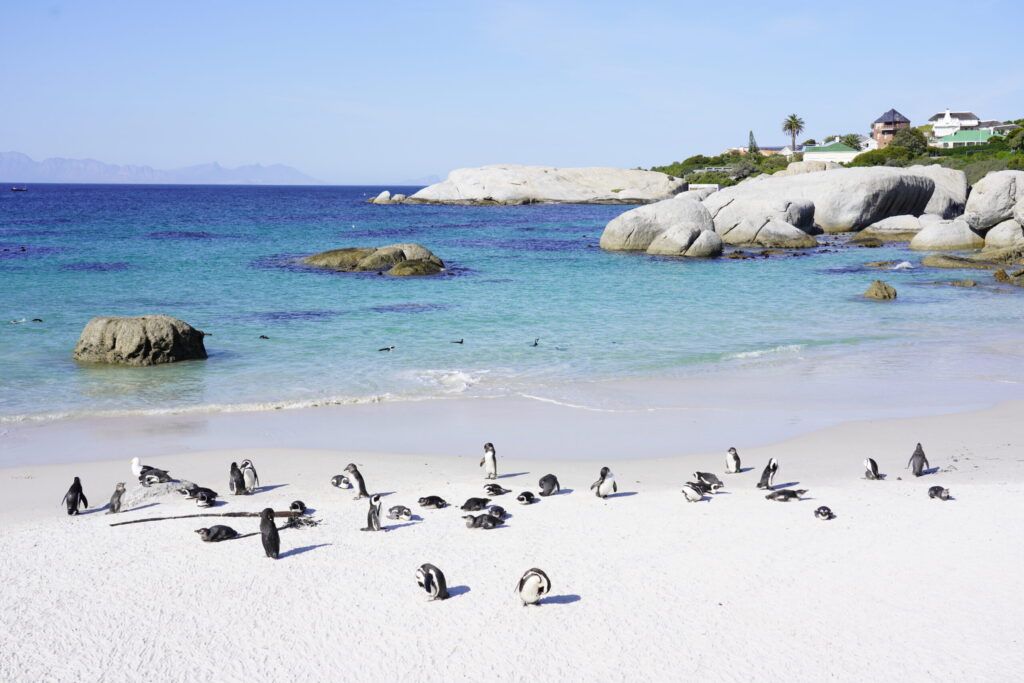
A safari in Kruger National Park, the legendary Garden Route road trip from Cape Town to Port Elizabeth, the penguins at Boulders Beach, and Table Mountain at sunset. South Africa is the ultimate grand adventure, often behind the wheel for several weeks, and this is exactly where the question of connectivity becomes serious (because between a lodge in the bush and a mountain road, your GPS and reservations are as crucial as filling up the tank).
Good news: we have thoroughly researched the topic for you, operator by operator, from the city to the bush where the network disappears, to save you both from a painful roaming bill and the hassle of RICA upon arrival.
We will therefore review the three main options for getting internet in South Africa, give you the real prices, honestly tell you where it works and where it struggles (because between downtown Cape Town and a game drive in the heart of Kruger, it’s day and night), and explain this RICA business that surprises all travelers.
Why you need a real internet solution in South Africa
Let’s be clear for a second: yes, lodges and cafes often have WiFi. However, on a road trip, as soon as you hit the road, data becomes essential. GPS for navigating from Cape Town to Oudtshoorn, Knysna, and the Garden Route, booking a campsite or a game drive, checking the weather, and of course sharing that photo of the elephant spotted around a bend.
You have three options: use your UK plan while roaming, buy a local SIM card on-site from Vodacom or MTN, or get a Holafly eSIM South Africa from home before you leave. We’ll go through them all, and you’ll see that for South Africa, the first option is pricey: it’s a Rest-of-World zone.
Solution 1: will your UK plan work in South Africa?
Let’s be blunt: South Africa isn’t Europe. It sits in every UK network’s most expensive Rest-of-World zone, so free EU roaming doesn’t apply. Here’s the operator-by-operator reality:
EE. South Africa needs the Roam Abroad pass: £5 for 24 hours, or £25 for 7 days. Some premium plans include an allowance, but check yours.
O2. The O2 Travel Bolt On covers South Africa at £7/day (unlimited data, calls and texts within the 75-destination zone). Without it, you’re charged around £7.20/MB, which is catastrophic.
Three. South Africa is in Go Roam Around the World at around £7/day, with a 12 GB fair-use cap. Multi-day passes run roughly £17.50 to £49.
Vodafone. Around £6 to £7.86/day depending on when you joined, with cheaper multi-day passes (8 days £15, 15 days £20) for Rest-of-World.
Budget MVNOs (Giffgaff, Voxi, Tesco, Lebara). South Africa is not in their free zones: Giffgaff needs a travel data add-on, Voxi uses small Global Roaming Extras bundles, Tesco charges per destination, Lebara falls to PAYG. If you’re on one of these, assume no free South Africa roaming.
The catch: roaming only makes sense for a few days of light use. On a two-to-three-week Garden-Route-plus-safari trip, £5 to £7.86 a day times two or three weeks is £70 to £150-plus, which the eSIM and local SIM sections easily beat.
You’ll find the UK networks and their South Africa coverage just below, so you can see at a glance how yours stacks up.
South Africa: does my plan work there?
| Plan | Data | Duration | Price | Network | 🇿🇦 South Africa |
|---|---|---|---|---|---|
| EU Roaming 7-Day Pass Recommended | 50 GB | 7 days | €17.90 | 4G | ✗ No |
| Zone 1 Weekly Pass Recommended | 50 GB | 7 days | €29.85 | 4G | ✓ Yes |
| EU Roaming Daily Pass | 50 GB | 1 day | €3.10 | 4G | ✗ No |
| Zone 1 Daily Pass | 50 GB | 1 day | €5.97 | 4G | ✓ Yes |
| Zone 2 Daily Pass | 50 GB | 1 day | €8.96 | 4G | ✗ No |
| Zone 3 Daily Pass | 512 MB | 1 day | €8.96 | 4G | ✗ No |
| Zone 4 Daily Pass | 10 MB | 1 day | €17.92 | 4G | ✗ No |
| EU Roaming 12-Day Pass | 50 GB | 12 days | €25.70 | 4G | ✗ No |
| Zone 2 Weekly Pass | 50 GB | 7 days | €44.78 | 4G | ✗ No |
| Plan | Data | Duration | Price | Network | 🇿🇦 South Africa |
|---|---|---|---|---|---|
| Go Roam in Europe Recommended | 12 GB | 1 day | €3.29 | 4G | ✗ No |
| Go Roam Around the World | 12 GB | 1 day | €9.56 | 4G | ✗ No |
| Go Roam Around the World Extra | 12 GB | 1 day | €9.56 | 4G | ✓ Yes |
| Plan | Data | Duration | Price | Network | 🇿🇦 South Africa |
|---|---|---|---|---|---|
| 8-Day Europe Pass Recommended | 25 GB | 8 days | €19.12 | 4G | ✗ No |
| Euro Roam Daily | 25 GB | 1 day | €3.29 | 4G | ✗ No |
| Global Roam Daily (Zone C) | 25 GB | 1 day | €9.56 | 4G | ✓ Yes |
| Global Roam Daily (Zone D) | 25 GB | 1 day | €9.56 | 4G | ✗ No |
| 15-Day Europe Pass | 25 GB | 15 days | €25.10 | 4G | ✗ No |
| Plan | Data | Duration | Price | Network | 🇿🇦 South Africa |
|---|---|---|---|---|---|
| Europe Zone (included) Recommended | 25 GB | 30 days | €0.00 | 4G | ✗ No |
| Data Roaming Bolt-On Zone 1 (1 GB) | 1 GB | 30 days | €7.17 | 4G | ✗ No |
| O2 Travel Bolt On | Unlimited | 1 day | €8.37 | 4G | ✓ Yes |
| Data Roaming Bolt-On Zone 2 (1 GB) | 1 GB | 30 days | €10.76 | 4G | ✓ Yes |
Last verified: 25 October 2026
Conclusion on the UK plan option: cheapest on EE (£5/24h) or an O2/Three day pass, but always a daily charge that adds up. For everyone else, let’s move on to the two real solutions below.

We're Caroline and Xavier
We got most of it wrong before we got it right. We share what actually holds up day to day in a van, and what we wouldn't do again.
Ce que vous souhaitez recevoir :
Vodacom, MTN, Cell C: the landscape of local operators
Three major networks share the country, and the choice really changes your experience, especially if you’re going on safari.
Vodacom is number one, and by far the safest choice for a trip that goes beyond the cities. It’s the operator with the best coverage in the country, and especially the most reliable in the bush: it has the best reception in Kruger National Park, private reserves, and the hinterland of the Garden Route. It’s also the network that the Holafly eSIM relies on most often. If your itinerary includes a safari, choose Vodacom without hesitation.
MTN is the good challenger, often cheaper per gigabyte. Very good in the city and on major routes, it has improved a lot but still lags behind Vodacom in Kruger and the most remote areas. A good price/data compromise if you mainly stick to the main roads.
Cell C and Telkom are cheaper, but with weaker rural coverage. Acceptable if you stay in Cape Town or Johannesburg, to be avoided as soon as you head out on safari or into the hinterland.
That’s the overview. Now, the details of the advantages and disadvantages.
Use your UK plan abroad thanks to roaming agreements
Buy a local SIM card to benefit from local rates
Activate an eSIM before your departure, without changing your physical card
Advantages and disadvantages of SIM cards for South Africa
| Comparison of internet solutions while traveling | |||
|---|---|---|---|
| International plan | Local SIM card | eSIM | |
| Cost | High | Low | Moderate |
| Purchase | Online (operator option) | On-site, in-store | Online, before departure |
| SIM card change | No | Yes | No |
| Ease of use | Easy | Restrictive | Easy |
| Support in English | Yes | Rarely | Yes |
| Unlimited data | No (limited) | Yes | Yes (depending on offer) |
| Keep your UK number | Yes | No (replaced) | Yes (dual SIM) |
| Flexible stay durations | No (monthly) | Variable (commitment possible) | Yes (1 to 90 days) |
| Top up the plan | Operator customer area | In-store | Via the app |
| Risk of extra charges | Yes | Prepaid: no. Other: yes | No |



How much does a SIM card cost in South Africa in October 2026
We will give you the ballpark figures because prices fluctuate and tourist plans regularly change names (but the ranges remain quite stable).
The physical SIM card is almost free: it’s the data plan that counts, and South Africa remains reasonable. At Vodacom, expect around 299 rands (about £15) for 3GB with some minutes over 30 days, and around 699 rands (about £35) for 10GB. MTN is often a bit cheaper per gigabyte (4.5GB around £8.50, 7.5GB around £15).
But there’s a local catch, and that’s where it gets complicated: RICA registration. We’ll get back to that shortly because it’s THE point that drives many travelers towards the eSIM.
South Africa: local SIM cards available for your stay
The number one choice, especially for a safari. Vodacom has the best coverage in the country and is by far the most reliable in the bush: it's the one that connects best in Kruger Park, the reserves and the Garden Route backcountry. It's also the network most travel eSIMs (including Holafly) lean on. To activate the SIM, RICA registration is mandatory (passport + proof of accommodation). If your trip leaves the cities, get Vodacom.
The low-cost option, good per gigabyte in cities but with the weakest rural coverage. Fine if you stay in Cape Town, Johannesburg or on the main Garden Route, to avoid for a safari or the backcountry where it often drops. RICA mandatory (passport).
The challenger, often cheaper than Vodacom per gigabyte. Very good coverage in cities and on main routes, much improved but still a notch behind Vodacom in Kruger Park and the most remote areas. A good price/data compromise if your route stays mostly on main roads. RICA mandatory (passport) at activation.
| Carrier | Plan | Data | Duration | Price | Network | Buy |
|---|---|---|---|---|---|---|
|
Cell C
|
Cell C Data 5 Go | — | 30 days |
€7.00 (139 ZAR) |
4G | Boutiques Cell C et grandes... |
|
MTN
|
MTN Tourist 4,5 Go | — | 30 days |
€8.50 (169 ZAR) |
4G,5G | Aeroports et boutiques MTN ... |
|
Vodacom
|
Vodacom Tourist 3 Go | — | 30 days |
€15.00 (299 ZAR) |
4G,5G | Aeroports JNB/CPT, boutique... |
|
MTN
|
MTN Tourist 7,5 Go | — | 30 days |
€15.00 (299 ZAR) |
4G,5G | Aeroports et boutiques MTN ... |
|
Vodacom
|
Vodacom Tourist 10 Go Reco | — | 30 days |
€35.00 (699 ZAR) |
4G,5G | Aeroports JNB/CPT, boutique... |
Last verified: 25 October 2026
Buy your SIM card on-site or in advance from the UK?
Three main ways to get mobile internet in South Africa. We’ve scrutinized them all, here’s our honest feedback on each.
No counter, no RICA, no passport to present. You download the eSIM via the email or QR code received after purchase, and you’re connected as soon as you land in Johannesburg or Cape Town. The Holafly eSIM relies on the best available network, often Vodacom. Compatible with nearly all smartphones since 2018 (iPhone XS+, Galaxy S20+, Pixel 3+).
Cost: £20 to £112 depending on the duration, unlimited. Code LAPLANETEDECARO for -5% discount.
Consider if: you only need data, not a local number, you want to arrive connected without the RICA paperwork, you want to keep your UK number.
The cheapest option for a long stay, and you get a real local number with the best coverage in the bush (Vodacom). But behind that, you pay in paperwork: RICA registration is mandatory, with a passport and often proof of accommodation (your lodge reservation is sufficient). This is done at the counter, at the airport, or in-store.
Cost: the card is almost free, data plans range from £8 to £35 depending on the volume.
Consider if: you’re staying for a long time, going on a safari, need a local number, and are comfortable with the paperwork.
A somewhat old-school solution that still has its followers, especially for families or groups: you connect your phone, tablet, and laptop to the same hotspot. Convenient for sharing on a road trip, but it’s one more device to carry, charge, and not lose. And the battery rarely lasts a full day of heavy use.
Cost: £5 to £10 per day for rental.
Consider if: you’re traveling with several people, need to share a stable connection, or don’t want to fiddle with the settings of your main smartphone.
Holafly South Africa: why it’s our recommendation
Let’s be honest for a second. Even with an O2 or EE day pass, South Africa roaming is a daily charge that adds up over a multi-week trip. And the real argument for the eSIM here isn’t just the price: it’s to avoid RICA and arrive connected without wasting an hour at the airport.
With Holafly:
- you buy from your couch in the UK before leaving
- you activate in two clicks just before boarding
- you arrive in South Africa already connected, without RICA or passport to present
- you rely on the best available network, often Vodacom
- you keep your UK number active in parallel (two profiles on the same eSIM chip)
- you return to the UK, the eSIM expires automatically, end of story
One limitation to know, and we prefer to be transparent: tethering (hotspot) is capped at around 1GB per day on the Holafly eSIM. If you plan to connect your laptop continuously or share for the whole family in a 4×4, it’s better to aim for a local SIM or a pocket WiFi. For standard smartphone use, it’s a non-issue. And let’s be clear on one point: no solution, eSIM or local SIM, guarantees network coverage deep in Kruger, we’ll discuss that just below.
You just click below to activate your discount and go directly to the Holafly South Africa eSIM plans, with updated durations and prices.

Network coverage in South Africa: where it works, where it struggles
A little field overview, because between a street in Cape Town and a game drive in Kruger, the network experience is vastly different.
It works well
- Cape Town, Johannesburg, Pretoria, Durban: 4G everywhere, 5G in city centers and recent neighborhoods.
- The N2 and the towns of the Garden Route: Mossel Bay, Knysna, Plettenberg, George are well covered.
- Major routes and tourist areas: continuous coverage with Vodacom and MTN.
- Around the main camps in the southern Kruger: it works for the most part.
It struggles
- In the middle of a game drive and in the bush: no network at all, that’s the rule.
- North of Kruger (Mopani, Shingwedzi): sluggish 2G or nothing.
- Tsitsikamma forests and secondary roads: the signal drops quickly outside the N2.
- Isolated private reserves and backcountry: Vodacom or nothing, and even then.
Safari, RICA and road trip: what to anticipate in South Africa
Here are three very South African situations that most guides gloss over, which can change your entire trip.
The network on safari in Kruger. Let’s be clear: the connection in the park is camp by camp, not continuous. The southern camps (Skukuza, Lower Sabie, Crocodile Bridge, Berg-en-Dal) have decent coverage, and some restaurants like those in Skukuza offer free WiFi, which is slow and often overloaded. But as soon as you go on a game drive, and in the northern part of the park (Mopani, Shingwedzi), it’s a dead zone. Vodacom remains the best network in Kruger, MTN follows, while Cell C and Telkom are nearly absent. The right attitude: accept the digital detox during drives, and download the essentials beforehand.
The RICA, this paperwork that surprises everyone. In South Africa, the law requires that every SIM card be registered before it can be activated. Specifically, at the Vodacom or MTN counter, you will be asked for your passport and often a proof of accommodation (the confirmation of your lodge or hotel reservation will do). It’s quick at the airport, where sellers are used to tourists, but more laborious in a regular shop. This is exactly what the eSIM saves you from: no registration, you activate it before takeoff and you step off the plane already connected.
The self-drive tour of the Garden Route. Good news, the N2 road and the stopover towns from Cape Town to Port Elizabeth are well covered: you stay connected for GPS, campsite bookings, and weather updates throughout most of the route. It mainly drops in the Tsitsikamma forests and on secondary roads. For a self-drive, data mainly serves as a navigation tool: a modest quota is enough, but reliability is key, so Vodacom or an eSIM that relies on it.
In summary: the Holafly eSIM brilliantly covers the typical traveler, the RICA is the real reason to prefer it over a local SIM for a short stay, and the safari remains the only time you have to accept disconnecting, whatever your solution.



SIM card and eSIM in South Africa: your questions
Will my UK plan work in South Africa?
South Africa is outside free EU roaming, in the Rest-of-World zone, so a daily charge applies. EE needs the Roam Abroad pass (£5/24h or £25/7 days), O2 covers it at £7/day, Three around £7/day (12 GB cap) and Vodafone £6 to £7.86/day. Budget MVNOs (Giffgaff, Voxi, Tesco, Lebara) don't include South Africa free, so check your add-ons. Roaming is fine for a few days; over a two-to-three-week safari trip an eSIM or local SIM wins easily.
Will I have network coverage on safari in Kruger National Park?
Partially only, and you should know that. The coverage is concentrated in the south of the park and around the main camps (Skukuza, Lower Sabie, Crocodile Bridge), where you can get a signal and where some restaurants have WiFi (slow). In the north (Mopani, Shingwedzi) and especially during bush safaris, expect zero network. Vodacom has significantly better coverage than the others in the park. Download your maps offline before entering.
What is RICA and why are they asking for my passport?
The RICA is the South African law that requires registering any SIM card before activating it. For a tourist, you need to present your passport and often proof of accommodation (the reservation of your lodge or hotel is sufficient). Registration is done at the counter, at the airport (Johannesburg OR Tambo, Cape Town) or in-store. This is the big advantage of eSIM: no RICA, no queue, no passport to present, you are connected as soon as you leave the plane.
Which local operator to choose in South Africa?
Vodacom without hesitation if your trip includes a safari or goes outside the cities: it has the best coverage in the country, and by far the most reliable in the bush and in Kruger. MTN is a good challenger, often cheaper per gigabyte and solid in the city, but a notch behind in remote areas. Cell C and Telkom are cheaper but should be avoided as soon as you leave the big cities.
How much does a Holafly eSIM for South Africa cost?
For unlimited data, expect around £20 for 3 days and up to around £112 for 30 days. The code LAPLANETEDECARO gives you a 5% discount. Note: tethering (hotspot) is limited (around 1 GB per day). For light GPS and messaging use, a volume eSIM (Airalo, Ubigi) is cheaper.
Will I have network coverage on the Garden Route?
Yes, overall good. The N2 road and the stopover towns (Mossel Bay, Knysna, Plettenberg Bay, George) are well covered in 4G by Vodacom and MTN. It gets tricky in the forests (Tsitsikamma), gorges, and secondary roads. For a road trip, data is mainly used for GPS, bookings, and weather: a modest quota is enough, the important thing is reliability, so Vodacom.
Local SIM card or eSIM in South Africa?
For a short stay, the eSIM wins: you arrive connected without going through RICA or the counter, keeping your UK number. For a long road trip with safari, the local Vodacom SIM becomes interesting in terms of price, gives you a local number and the best coverage in the bush, at the cost of RICA registration upon arrival.
Is my phone eSIM compatible for South Africa?
Yes for most smartphones since 2018: iPhone XS and newer, Samsung Galaxy S20 and later, Google Pixel 3 and beyond. You can keep your UK SIM active (for your bank SMS) and activate the South Africa eSIM for data, on the same phone.
Extending to the islands, or up the continent
After the Kruger a lot of people add an island, and the roaming rules do not travel with you. Mauritius has only two networks, Emtel and my.t, no RICA-style paperwork, and no usable Three roaming whatsoever. The Maldives are stricter still on coverage, where the network your eSIM picks decides whether you get a signal off the atoll. And going north instead, Egypt puts you back in a pricey bracket with Vodafone Egypt in charge.

Mauritius SIM & eSIM: your UK plan won’t roam free, here’s what works
What internet connection should you prioritize for a stay in Mauritius? This is a common question among travelers, and we have explored the different alternatives in this detailed article. As...
Read more
Internet in the Maldives: your real problem is signal outside the villa
In the Maldives you picture the hammock, the lagoon and zero screens. Then comes the very real moment when you want to confirm a connecting flight from a sandbank, reassure...
Read more
Egypt internet: the right SIM card from Cairo to the Red Sea
SIM card or eSIM for Egypt? We compare your UK plan (outside the inclusive zone, and the trap that comes with it), the local operators Vodafone Egypt, Orange and e&,...
Read moreConclusion: what we honestly recommend
There you go, we’ve covered the three solutions. If you want the summary in one sentence: start by checking your plan: South Africa is a Rest-of-World zone, so roaming is a daily charge (O2 and Three around £7/day, EE £5/24h), fine for a few days but pricey for a long trip.
If your plan does not cover the country, get the Holafly eSIM with the code LAPLANETEDECARO, you save -5%, you activate it from home and you arrive connected without the RICA paperwork. And if you’re going on a long safari, the local Vodacom SIM still makes sense in terms of price and coverage in the bush, as long as you accept the registration upon arrival.
If you have a question we haven’t covered, ask it in the comments, we’ll take the time to respond. And if you know other good tips for staying connected in South Africa, share them, it benefits the whole community.
Safe travels in South Africa, and enjoy (the connection can wait five minutes when an elephant crosses the track right in front of your 4×4).
PS: if you ever find yourself in the middle of a game drive in Kruger with your phone displaying “No service,” don’t panic, it’s normal and it’s even a bit of the point. You will have downloaded your maps offline before entering, warned your loved ones that you would be unreachable for a few hours, and you will enjoy the spectacle with peace of mind, like the traveler who has anticipated everything.
Connected everywhere, and the rest of the trip
Two years of full-time van life, and the Algarve as our base ever since. We still hit the road, by van or otherwise, and we write up what we find along the way. An email when we have something to say, no more.
Ce que vous souhaitez recevoir :