


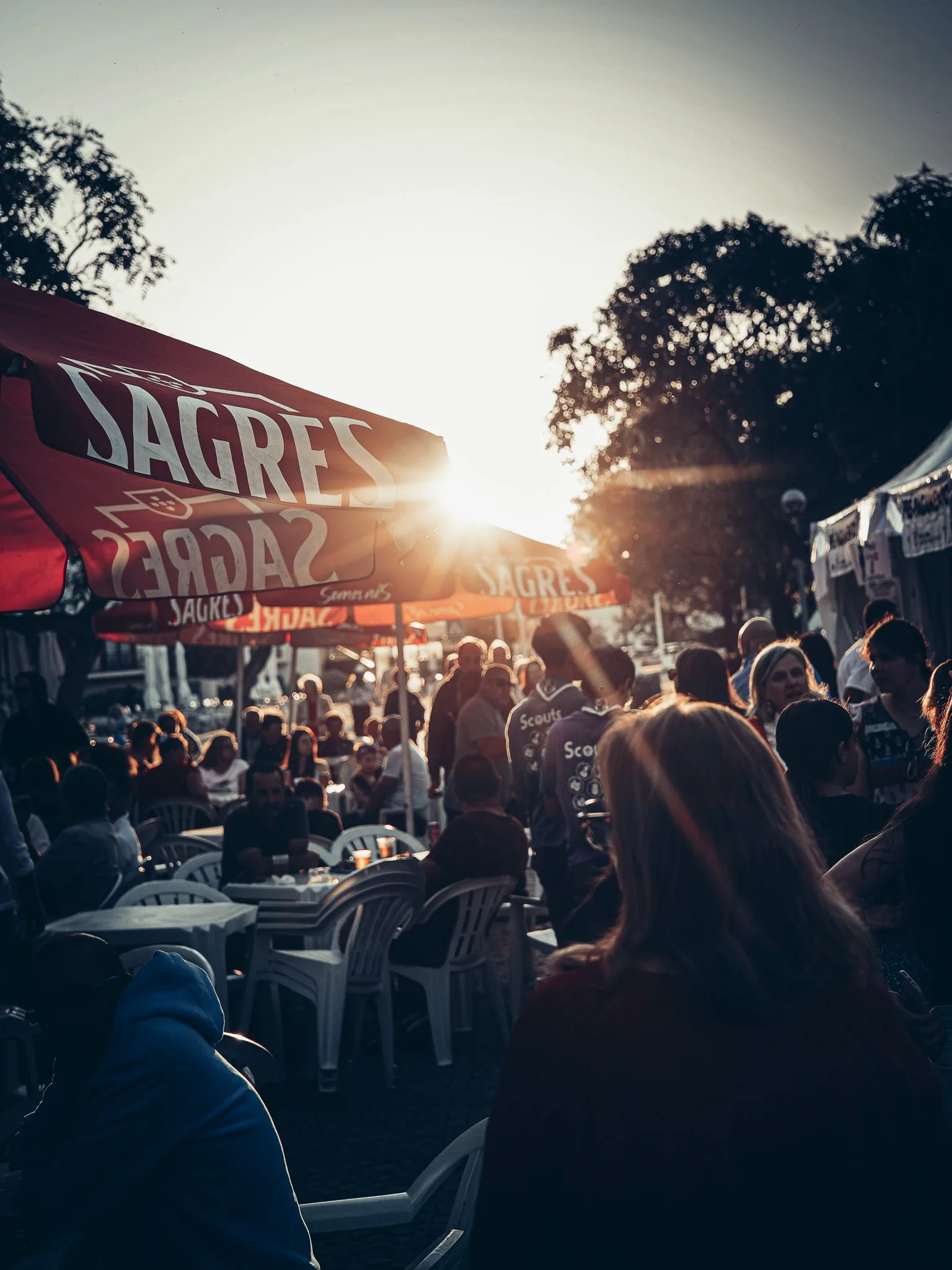
Saturday, May 16, 2026, past 7 PM. Caroline is wearing sunglasses that are no longer much use, while I have an appetite that has been serving her since the morning. We are walking towards the square. For the second consecutive year, we are returning to the caracois festival in Tavira… and this time we at least know where it takes place (the first year, we ended up calling a Portuguese friend from the wrong market, saying “so, uh… where exactly is it?”… you see where I’m going). We are going there more calmly, more like regulars… with still a few surprises (the party, the snails, the April cold that lingers into May, and the joke I made about Caro’s cup… I’ll get back to that).
What is the caracois festival in Tavira?
Spoiler: it is NOT the big Festa do Caracol in Faro (the one held in the historic center, Vila Adentro, from May 8 to 11 each year, attracting its crowd of tourists and regional press). It is also not the Festival do Caracol in Porches, which lasts 5 days in July near Lagoa.
Ours, in Tavira, is a notch smaller in size… and three notches higher in authenticity (yes, I dare). A small local festival, in the square of Mercado da Ribeira (the real vegetable market, not the other one you might be looking for upon arrival… speaking from experience). The stalls are run by the Corpo Nacional de Escutas (basically, the Portuguese Catholic scouts… themselves… serving beer and preparing the snails). The entertainment is provided by the D-Danse dance school in Tavira, with local folk groups and the village children. The first year we came, we actually passed by because the daughter of a Portuguese friend was dancing. We stayed. We came back the following year.
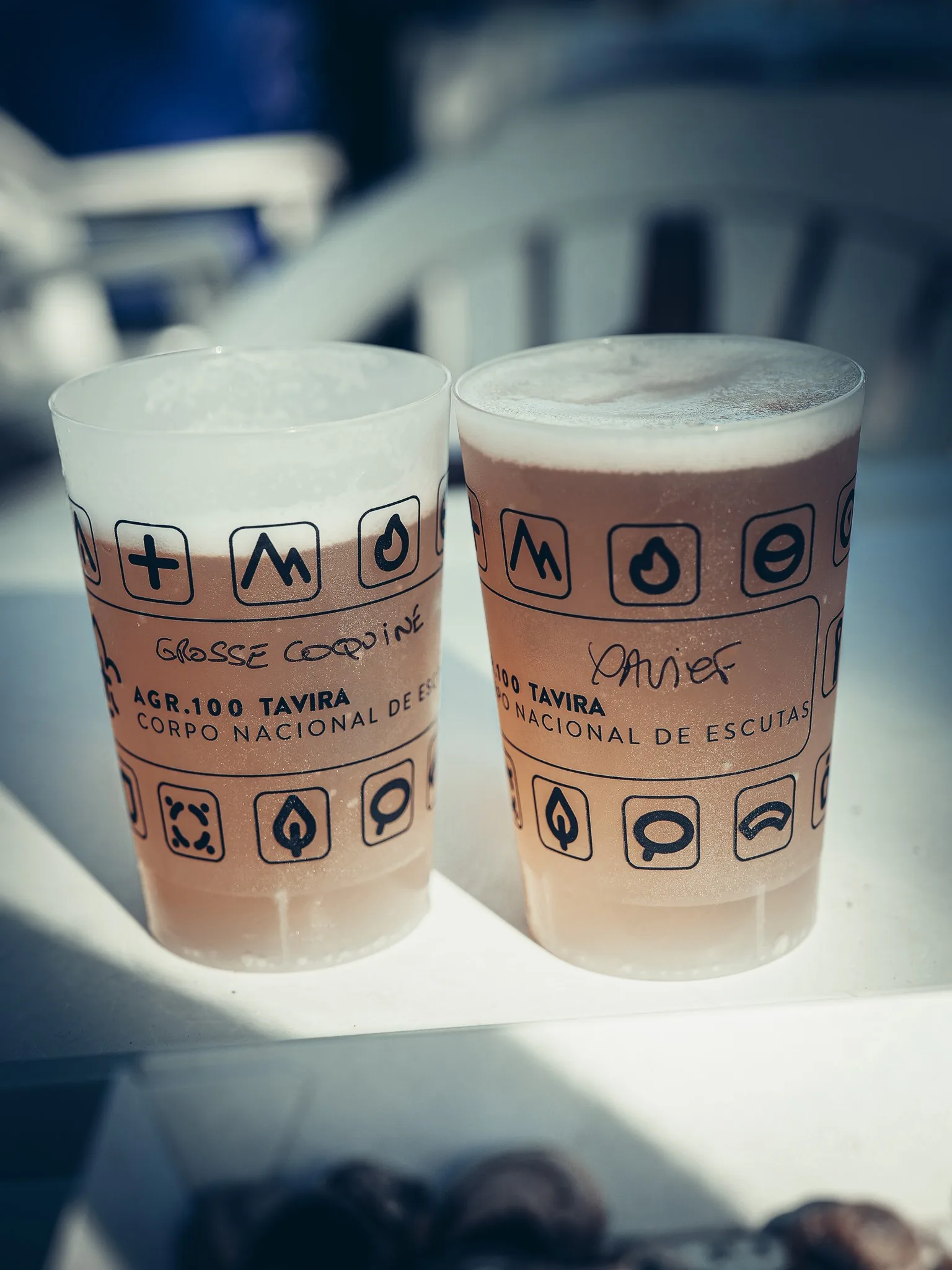
We come as neighbors, we grab our cup, we write our name on it with a marker so we don’t lose it in the crowd. It was exactly at that moment that Caro handed me the marker saying “write my name”. I hesitated for two seconds. No more. I’d written something cheeky on her cup. She found out when she came back from the snails… moderate joy, but she still laughed (I think).
A little aside that hits home: this kind of small, scruffy, joyful local festival has been so regulated, risk-assessed, insured and policed that it has nearly vanished from most of northern Europe. Village fêtes in England? A handful still cling on, kept alive by retirees who spend half the year arguing with the parish council about health and safety forms. Morris dancing? Hanging on by goodwill and the odd Arts Council grant. Meanwhile in Portugal, no one questions any of it. The scouts cook, the town hall closes the street, the old folks dance in their grandfathers’ costumes, the kids tear around between the tables, and everyone heads home at midnight without a single bureaucrat poking their nose in. And honestly, it’s so much better that way.
Plan your trip: Portugal
Compare rental companies and book at the best price.
Booked on Trip.com — partner link.
Provided by Holafly, our partner.
5% off with code LAPLANETEDECARO
Booked on Holafly — partner link.

We're Caroline and Xavier
We drive to a place, stay long enough to get it wrong a few times, then write the guide we wish we'd had: parking, timing, what's worth the detour.
Ce que vous souhaitez recevoir :
What exactly is a caracois?
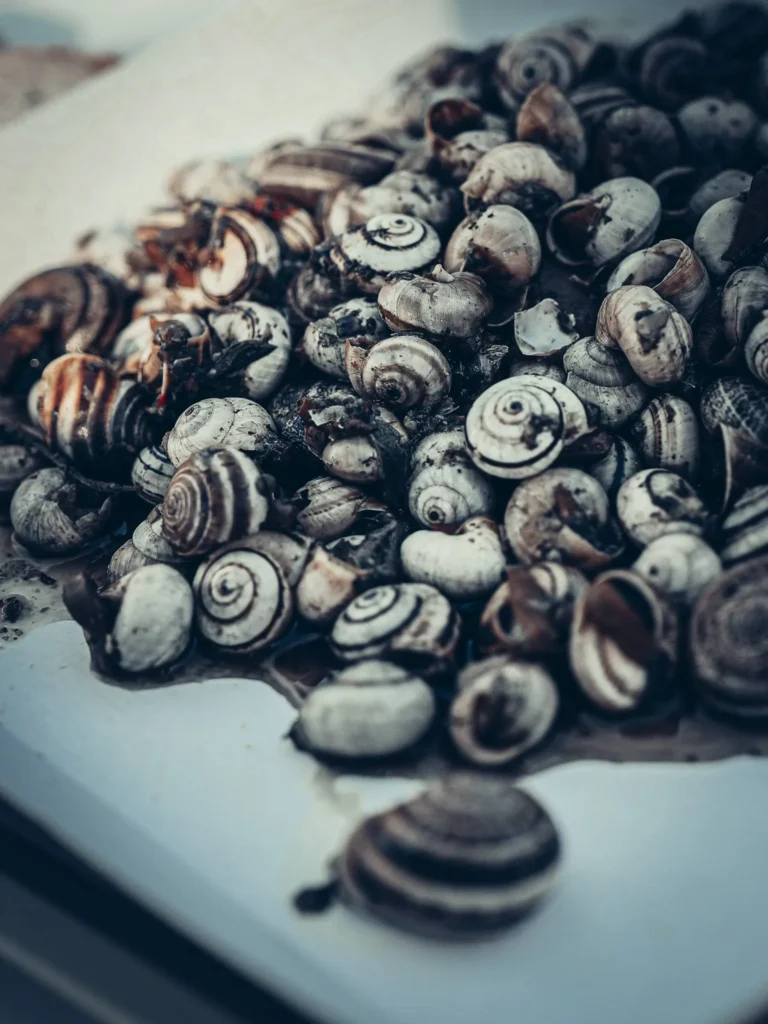
For a first-time visitor, “caracois” simply means “snail” and that’s that. Except that no. It is NOT the Burgundy snail (the big one, butter-parsley, oven 200°C, Christmas feast). The Portuguese caracois is its little southern cousin: a mini-snail (generally Helix aspersa or Theba pisana), barely bigger than a white bean, cooked in a chicken broth flavoured with garlic, bay leaf, and oregano. If you like it spicy, you ask for the piri-piri bottle on the side (and you dose it to your liking, because the Portuguese don’t joke around with piri-piri). They also give you some bread and a bit of butter on the side… but between us, it’s almost just for show, the caracois stands on its own.
And let’s be honest: it’s even a cute snail. The French way, smothered in garlic and parsley butter, you can’t even see the snail underneath, you’re basically eating a flavoured cork. Here, you can see the little curled antennas, you can guess the trace of a creature that has frolicked in the air… not long enough, certainly… but that had a real snail life before landing in the broth. It’s more honest. And strangely, it makes you hungrier rather than disgusted (yes, I say “cute” about a snail, while technically, up close in the palm of your hand, it mostly looks like a big booger… let me know if you try it).
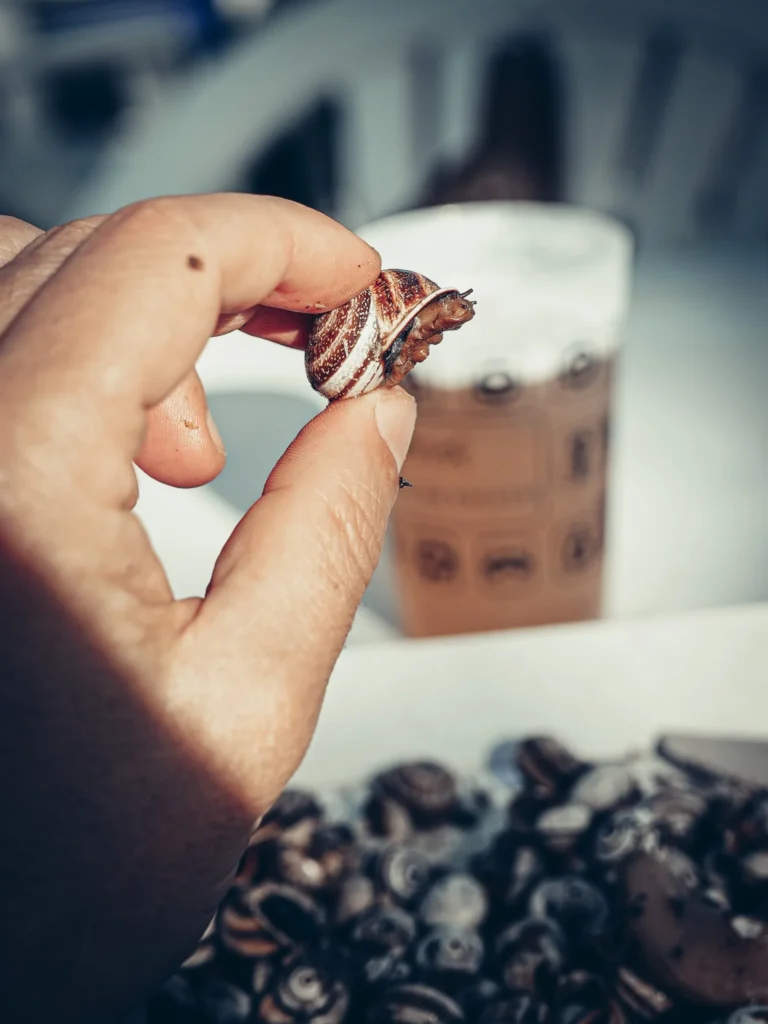
How do you eat it? With a toothpick (traditionalist Portuguese suck them straight out but well… toothpick is more polite for the table neighbors). You poke, extract the creature from its shell, swallow it, and follow up with a sip of well-chilled Sagres. And you repeat. For an hour. Talking a lot. Laughing more. This is what the Portuguese call a petisco: a little something to nibble on in good company, the local equivalent of a tapa, but with an even more relaxed protocol.
Staying Connected in Portugal: Visitor or Resident?
What internet connection to use during a stay in Portugal? This is a common question we ask ourselves before leaving. Caroline and I, Xavier, have explored the different options available...
DiscoverCaroline and the snails, season 2: the turnaround
Last year was the big premiere. Caroline discovering, Caroline hesitating, Caroline finally going for it with that look that says “I can’t believe I’m doing this”. Verdict of the time, faithfully: “it’s edible, it’s different, I like eating things that change me… but well, they are much smaller than ours, and sometimes there’s a little pebble.” Polite conclusion. (Everything is in the video at the top of the article, if you want to see the exact moment of the shift, I leave you to click.)
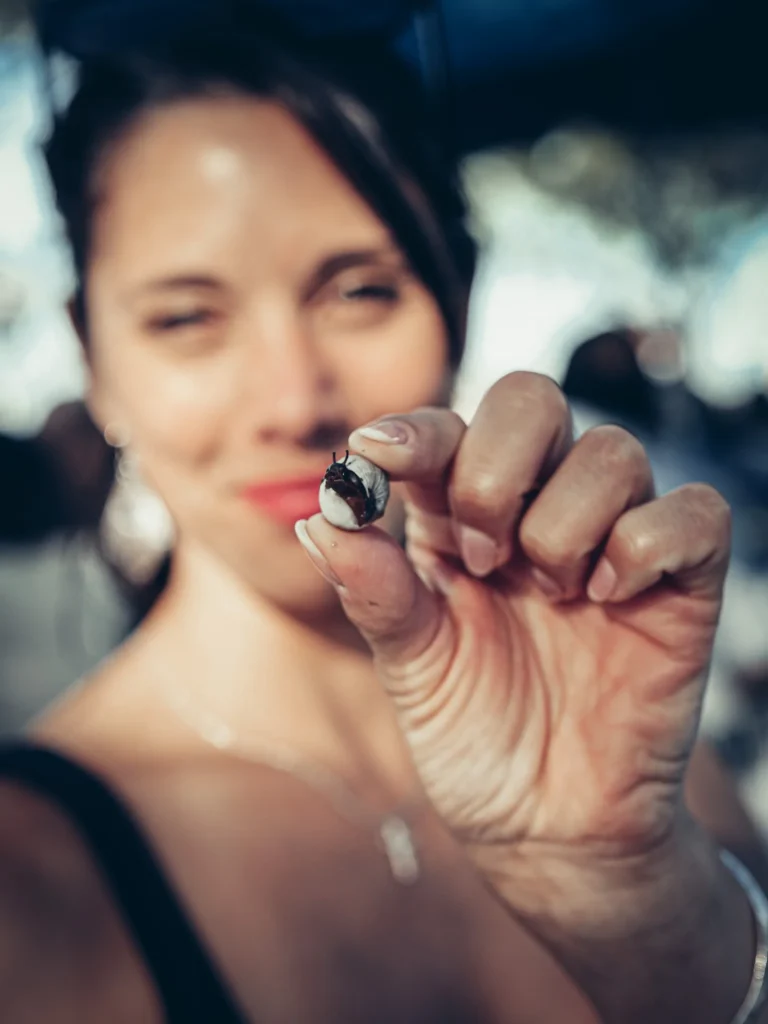
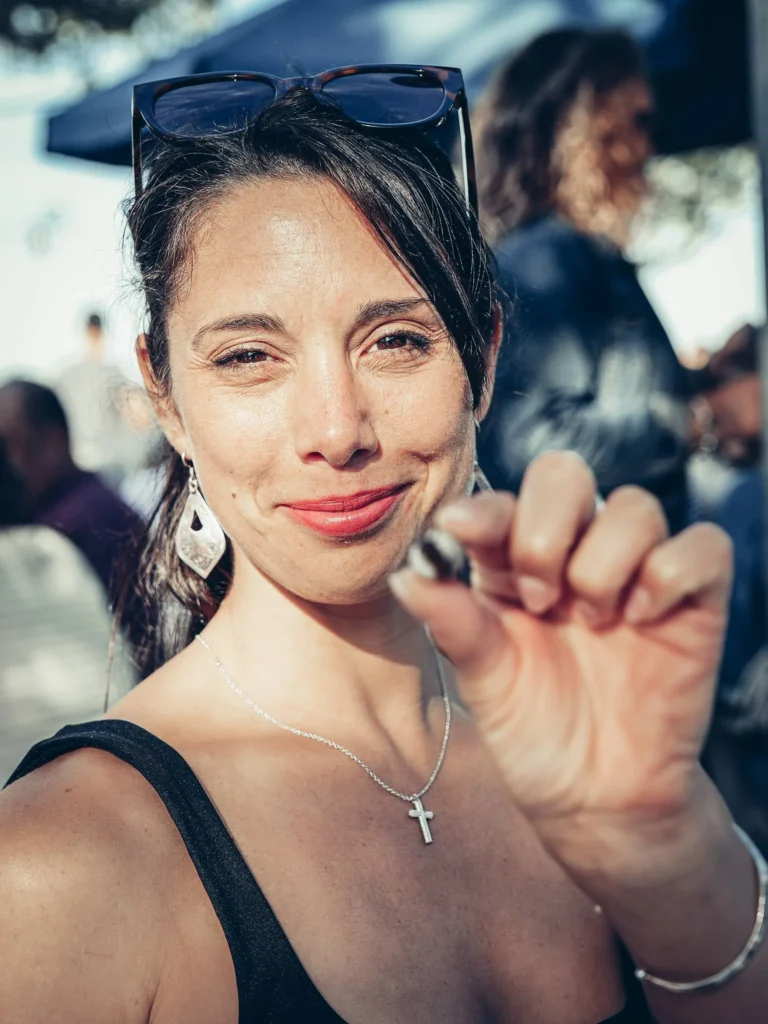
Except this year… plot twist. Madame held the snail. Madame posed for the photo. Madame watched the scene. Madame did NOT eat. “I tasted it last year, it’s validated, I’m passing my turn”. There you go. The curiosity of year 1 became the privilege of year 2. I didn’t insist (would you have insisted? Honestly… no).
So, guess who ate for two? A little practical note: here, the caracois are ordered by volume, with a very clear pricing grid (see box below).
Last year I had the half portion, “just to do things right.” Verdict: it was already HOT to finish. Not unpleasant, but at some point, sucking on your thirtieth snail with a toothpick feels more like a sporting challenge than a gastronomic pleasure. The Portuguese, on the other hand, down the liter in a row, without flinching, while discussing football. This year, we played it humble: the small dose at 2 deciliters, that’s it. (And Caro watched. With a little smirk. The kind that says “see, I was right to abstain.”)
Provisional conclusion: we don’t have the same relationship with caracois. For her, it’s “I saw, it’s good, we won’t talk about it again.” For me, it’s “as long as I have a toothpick and an imperial, let’s go.” Next year, we’ll see who has changed their mind.
The atmosphere: folk dances, scouts, and a girl we know on stage
While we nibble, on the square, they dance. The D-Dance school of Tavira lines up its groups in traditional Portuguese costumes (long patterned dresses, embroidered jackets for men, impressive hats…) with accordion, Portuguese guitar, and a sound system that has seen better days (at one point, we left… the head is buzzing after two hours of traditional music at full blast, it’s physical).
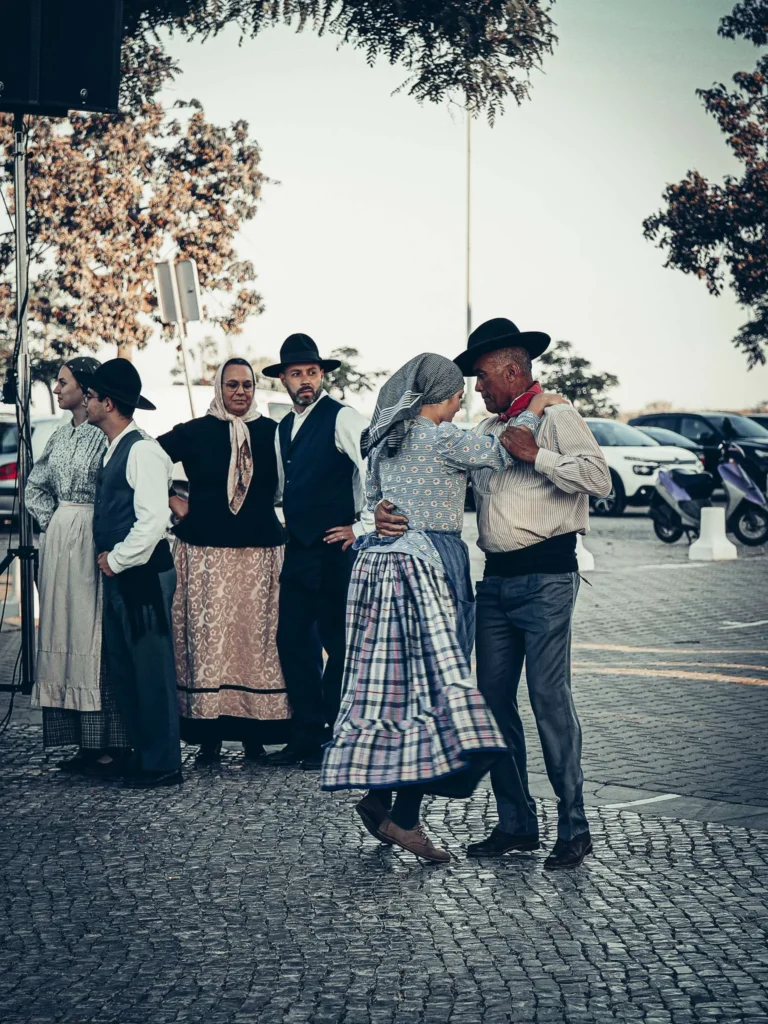
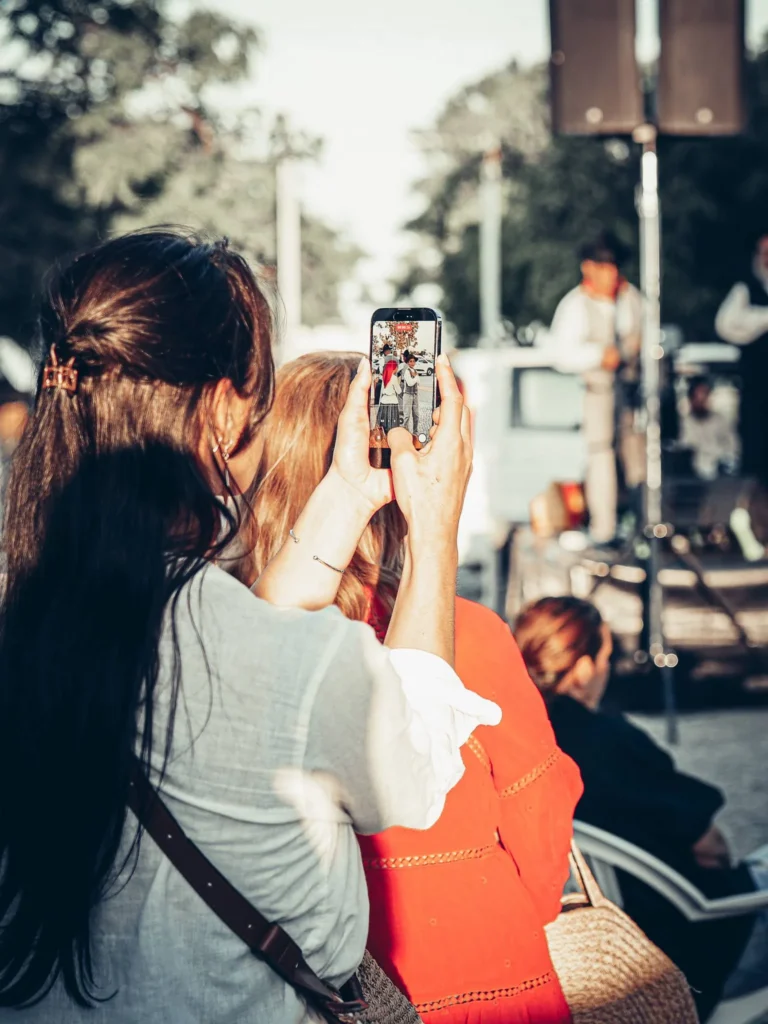
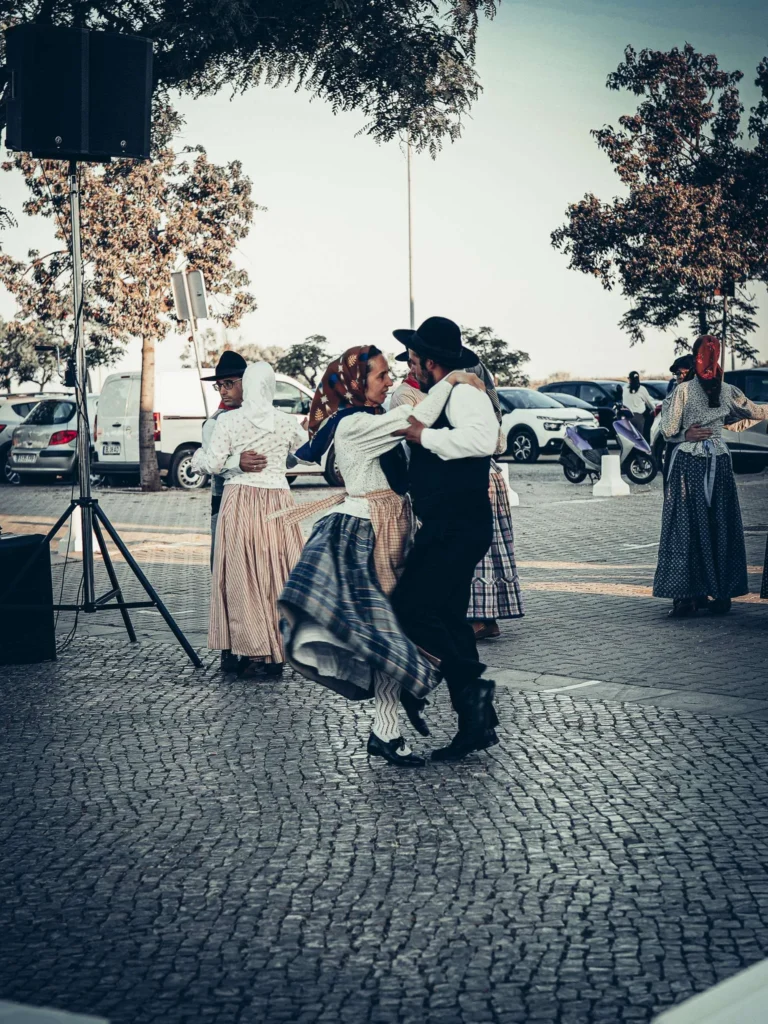
No staged setup for Instagram, no DJ, no ticketing. Real folklore, done by village folks who learned this at home when they were 8. And the daughter of a Portuguese friend who danced last year, whom we initially came to see, and who became our entry point into this festival that could have completely passed us by. Caroline filming everything, as usual (her camera is more present than my plate during our outings… but I’m not complaining, she’s the one who makes these moments last).
And this is where it reminds us why we love life here so much. This festival doesn’t really kick off the summer (between us, given the cold April we had again this year until mid-May, the “summer season” is still theoretical). But a little bit, nonetheless. It’s the first signal. The first terrace that fills up until midnight. The first “Há caracóis!” on a sign when leaving the market. The first shorts we try, regret, and try again the next day.
Contextual bonus for enthusiasts: that evening, at the same time, it was also the last day of the Portuguese championship. Benfica against Sporting somewhere on the screens of the bars in the street. In Tavira, the scout serving the snails has one ear on the square and the other on a friend’s phone who is following the match. Everything coexists, without hiccups.
Is it worth coming?
If you’re passing through the Algarve in May and you see a sign “Festival do Caracol” in a village? Go for it. If you’re in Tavira specifically, this scout festival usually takes place on a weekend (dates to be confirmed each year, you find out by walking in the old town a few days before, or by asking the vegetable market vendors… not the other one, the big one). You pay a pittance, get your cup, sit down, observe, taste. That’s it. And that’s exactly why it’s good.
Where to eat caracois in the Algarve outside the festival?
For those who don’t hit a festival: the rule is simple. May-August, look for the signs “Há caracóis!” or “Temos caracóis!” at the door of tascas (the popular Portuguese bistros… not the fancy restaurants on the waterfront). You can find them all over the Algarve, particularly:
- In Tavira: around the Mercado da Ribeira and on José Pires Padinha street (after the old market, where we avoid the first restaurants, I talk about it in more detail in our Tavira notebook)
- In Faro: the Festa do Caracol at Vila Adentro, early May, and plenty of tascas in the city center
- In Porches (Lagoa): the annual Festival do Caracol, 5 days in the middle of summer
- In Olhão: in the alleys of the center, several tascas serve them
We will go back
Without hesitation. It has become our little seasonal ritual in Tavira… even when the season takes time to settle in. It’s also our reminder: what we love about this city (and more broadly in this country) is precisely what resists standardisation. The scouts serving the beer. The folklore danced without irony. The chicken broth that flavors a shell of 1.5cm. The daughter of a friend dancing in front of the full square. And the possibility of scribbling something cheeky on a cup without anyone being offended (except the person concerned, briefly).
See you next year, at the same time. We’ll try not to mix up the markets.
PS: Caro saw the draft of this article. She read it silently. Then she just said to me, “are you really going to leave the cup story?” Answer: yes. (Sorry darling.)
Portugal, we live here
Two years of full-time van life, and the Algarve as our base ever since. We still hit the road, by van or otherwise, and we write up what we find along the way. An email when we have something to say, no more.
Ce que vous souhaitez recevoir :