


Which camper battery to choose for autonomy?
Are you tired of finding yourself in total darkness in the middle of nature because your energy reserve has failed without warning? Choosing the right camper battery is the secret to transforming your vehicle into a true autonomous cocoon without risking running out of power at the first cold snap. Discover how to compare lead, AGM, GEL, and lithium to find the technology that can power your adventures without ever letting you down.
Why your engine battery cannot power your living space
To understand autonomy in a camper, you must first grasp that not all batteries are alike, despite a similar appearance.
The specific role of the deep cycle service battery
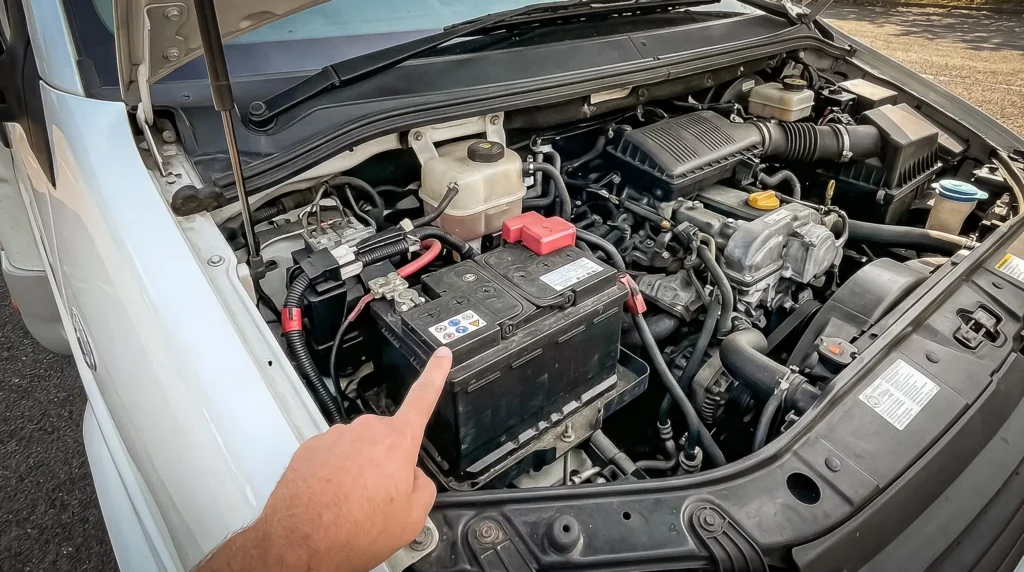
The starter battery provides a brief peak of intensity to start the engine. In contrast, the service battery delivers a constant flow. The internal design of the plates varies according to use. One starts, the other powers life.
A starter battery does not handle repeated deep discharges well. Its use in a living space causes irreversible damage. Domestic cycles wear it out prematurely. You risk running out of power quickly.
The deep cycle technology can withstand long demands. It retains its initial capacity despite cycles. This is the secret to comfort on board.
Separating the two electrical parks is a vital safety measure. This ensures that you can restart the vehicle every morning. Your autonomy remains preserved.
Voltage and capacity: understanding key terms
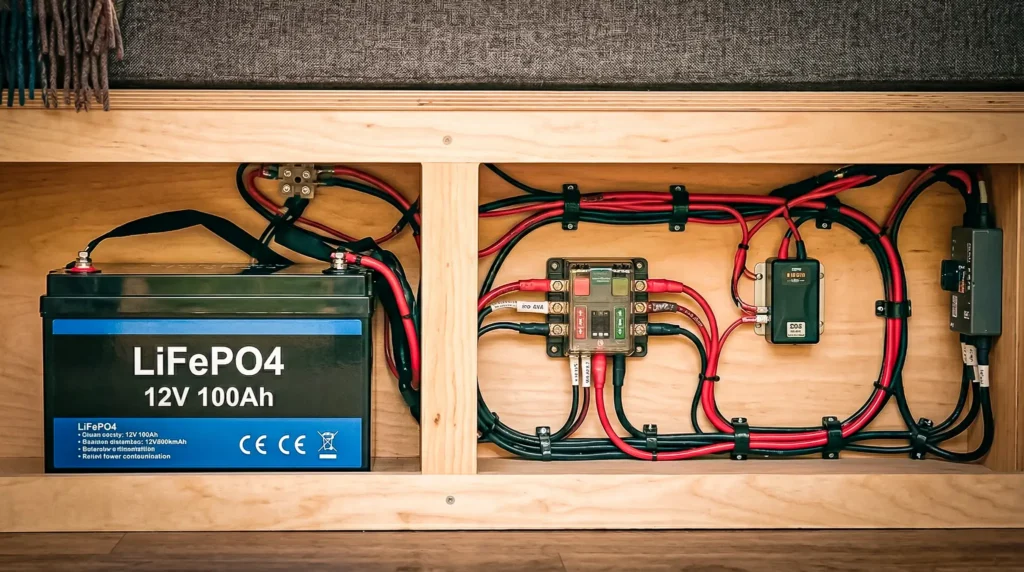
The Ampere-hour (Ah) represents the energy reservoir of your system. The higher this number, the longer you can stay stationary without recharging.
The standard voltage in a living space is 12V in direct current. Most camper equipment uses this standard. Always check the compatibility of your charger with this voltage.
The charge cycles represent the number of times you can charge and discharge the battery before it loses efficiency. This is a decisive criterion for comparing technologies.
The space dedicated to the battery tray is often very limited. The housing under the seat or in the trunk dictates the format. Measure the location precisely before choosing a high-capacity model. Weight also directly impacts your payload.
Choosing between lead, AGM, GEL, or lithium: the technology match
Once the basics are established, you need to decide on the internal chemistry that will store your electricity according to your budget and usage.
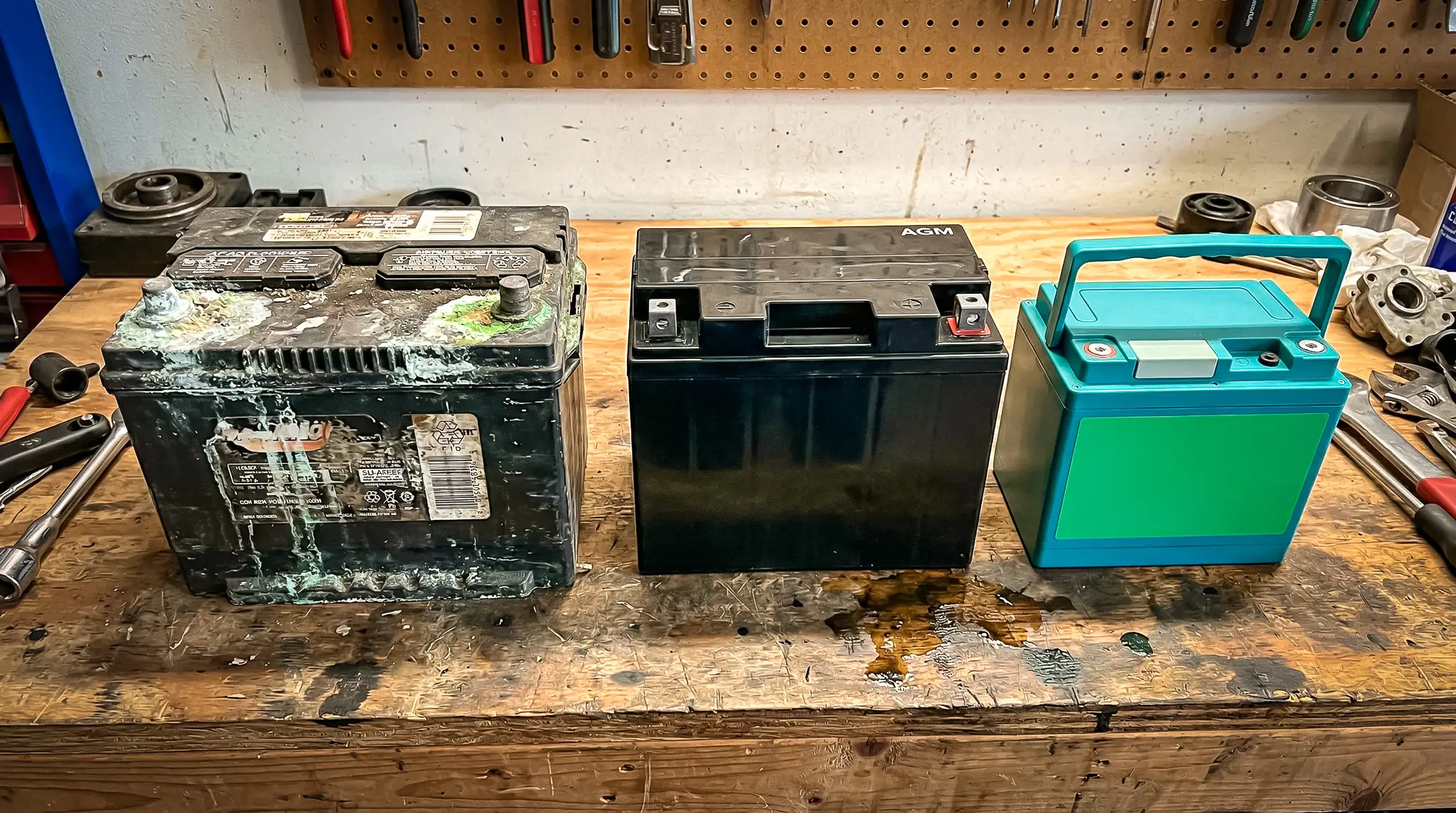
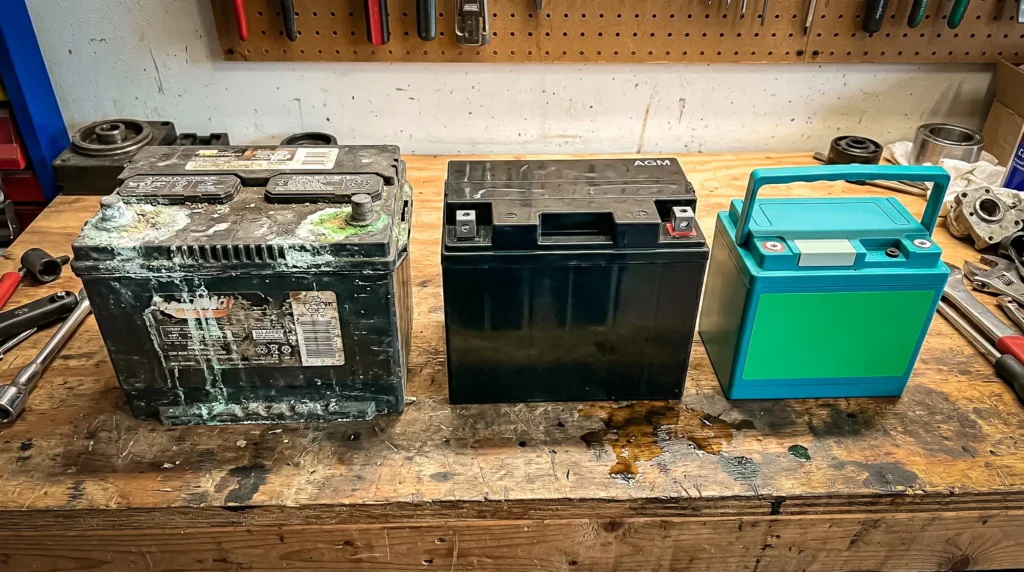
Lead-acid batteries: the economical choice
Lead-acid batteries operate through a reaction between lead and sulfuric acid. They come in starting version (brief energy peak) and deep discharge version (long duration flow). They contain lead plates immersed in an electrolyte, which requires installation in a well-ventilated space.
Their biggest advantage is their cost. They remain accessible for most budgets and withstand a respectable number of cycles. However, they require regular maintenance: checking the distilled water level, mandatory ventilation to dissipate gases. Their discharge capacity is limited to 50% — going below destroys the plates through sulfation.
AGM and GEL: the reliability of lead without maintenance
The AGM battery uses fiberglass mats to immobilize the acid. It withstands vibrations and shocks on the road perfectly. It is a robust choice for off-road tracks. Maintenance-free, leak-proof, it can be installed in any position.
The GEL solidifies the electrolyte in silica gel for increased longevity. This technology allows for slower and more regular discharges. It handles prolonged inactivity better and performs well in cold temperatures. However, caution is advised: gel is sensitive to overcharging and high currents, which can harden the gel and reduce performance.
When it comes to discharge, caution is essential for these two technologies. Never go below 50% capacity for AGM, 60% for GEL. These proven technologies represent an interesting economic compromise but require rigorous gauge management.
The supremacy of lithium LiFePO4 and the utility of the BMS
Lithium LiFePO4 is revolutionizing the leisure world. The weight gain is massive: about half that of a lead-acid battery of the same capacity. Recharging is also much faster while driving.
The integrated Battery Management System (BMS) plays a vital role. This electronic brain monitors each cell in real-time. It cuts off the current in case of overheating or short-circuit. This is a protection that lead technologies do not offer.
This technology allows for discharge up to 90-100% without damage. This nearly doubles the actual autonomy at equal volume compared to lead. The number of cycles is ten times higher, with a lifespan estimated between 10 and 15 years.
It’s a higher initial investment but pays off over time. The only weak point: lithium refuses to charge below zero degrees. A heating BMS can circumvent this limitation.
| Comparison of camper van battery technologies | ||||
|---|---|---|---|---|
| Lead-Acid | AGM | GEL | Lithium LiFePO4 | |
| Price (100 Ah) | 80 – 150 € | 150 – 300 € | 200 – 350 € | 500 – 1,000 € |
| Weight (100 Ah) | ~25 kg | ~23 kg | ~22 kg | ~10 kg |
| Max discharge depth | 50 % | 50 % | 60 % | 90 – 100 % |
| Actually usable energy | ~50 Ah out of 100 | ~50 Ah out of 100 | ~60 Ah out of 100 | ~90 Ah out of 100 |
| Number of cycles | 200 – 400 | 400 – 800 | 500 – 1,000 | 2,000 – 5,000 |
| Estimated lifespan | 2 – 3 years | 4 – 6 years | 5 – 7 years | 10 – 15 years |
| Maintenance | Yes (water level, ventilation) | None | None | None |
| Vibration resistance | Low | Excellent | Good | Excellent |
| Charging in extreme cold (< 0 °C) | Slow | Slow | Slow | Blocked without heating BMS |
| Recharge speed | Slow (8 – 12 h) | Medium (6 – 8 h) | Medium (6 – 8 h) | Fast (2 – 4 h) |
| Integrated BMS | No | No | No | Yes (overheat protection, short circuit) |
| Risk of sulfation | High | Moderate | Moderate | None |
| Compatible DC-DC booster | Optional | Optional | Optional | Essential (smart alternator) |
| Ideal for | Occasional use, small budget | Tracks and vibrations, regular use | Long parking, slow discharge | Vanlife, total autonomy, intensive use |

We're Caroline and Xavier
We got most of it wrong before we got it right. We share what actually holds up day to day in a van, and what we wouldn't do again.
Ce que vous souhaitez recevoir :
How to size your battery bank without making mistakes
Choosing the right technology is useless if you underestimate your actual needs during your wild stops.
Calculate your daily electricity consumption
List every device in your camper. The compressor fridge and heating consume a lot of energy. Add up the watts consumed per hour for each piece of equipment. Do not overlook any small consumers on board.
Then convert these watts into amperes: simply divide the power by twelve volts. This gives you a reliable basis for defining your necessary Ah.
Should you multiply the units? A large single battery often simplifies everything. The wiring remains clean, and balancing is natural. It’s much simpler than a parallel setup.
Keep a safety margin. Add twenty percent to the total. The weather is often capricious. To help you, use our interactive calculator:
Calculator: size your battery park
The values are estimates based on average consumption. Actual consumption varies according to temperature, battery condition, and usage. In winter, plan for an additional 20 to 30% capacity.
Impact of climate and road conditions
Cold is a real poison for chemistry. Capacity drops sharply when the thermometer falls. Lithium even refuses to charge below zero degrees. This is a non-negotiable physical point.
Vibrations on tracks are also formidable. Poorly tightened connections create electric arcs. Check your terminals after each long trip. It’s a fire safety issue.
Sulfation lurks during prolonged storage. An empty battery dies in just a few weeks. Always maintain a minimum charge level. Use robust fastening straps: your equipment must remain stationary while driving.
If you’re new to vanlife, our article Small guide to mistakes to avoid when starting vanlife will help you avoid classic pitfalls, including on electricity.
The secrets of optimal charging to boost lifespan
A quality camper battery is worthless without a charging system capable of feeding it properly.
DC-DC boosters and regulators: recharge while driving
The DC-DC booster charger is vital on newer vehicles. Smart alternators cut off the charge too early to save fuel. This device then forces a stable and perfectly adapted voltage.
It works in tandem with solar panels and MPPT regulators. This free source keeps your batteries at one hundred percent while stationary. It’s the secret to total autonomy while traveling. We discuss it in detail in our article Having electricity in wild vanlife.
Monitor the section of your cables to avoid energy losses. A wire that is too thin heats up and significantly slows down recharging. Set the charging profile precisely according to your technology: lithium requires a specific voltage curve.
Good wintering practices and signs of end of life
Manage the battery seriously during the winter break. Leave the vehicle plugged in or use a small charge maintainer. This prevents deep discharge, often fatal to internal plates.
Learn to detect a battery at the end of its life. A sudden drop in voltage when turning on a lamp is suspicious. If the charge caps, your element is likely tired.
Perform a simple test with a multimeter at rest. A voltage below twelve volts after a night indicates a problem. Do not delay in replacing your failing accumulator. Regularly clean the terminals to avoid oxidation.
Portable stations: the all-in-one solution
LiFePO4 portable stations have changed the game for camper enthusiasts. No more complex wiring or electrical installations: it’s plug & play with integrated solar, integrated BMS, and the possibility of expansion.
When I converted my camper, this type of station did not exist, or at least, they were not yet mainstream. If I were to do it again today, I would seriously consider basing my entire living space setup on a portable station connected to my rooftop solar panels. The other major advantage is mobility: when winter comes, you unplug the battery, bring it home, and there’s no need to leave your setup running empty for months. So if you’re planning your electrical setup, really ask yourself: wouldn’t a portable station be simpler, more flexible, and more suited to your needs?The brands we recommend
EcoFlow is the premium reference. Their X-Stream technology allows for a recharge in 45 minutes. The range goes from 256 Wh to 7,200 Wh, with a comprehensive mobile app to control everything. The Delta series (Delta 2, Delta 3 Classic, Delta Pro) offers an excellent combination of capacity and portability. We have tested several models, starting with the EcoFlow DELTA 3 Classic.
Jackery focuses on simplicity and reliability. Their range is perfect for regular travelers who want a hassle-free solution, with dedicated solar panels.
AllPowers offers the best quality/price ratio for high needs. Their range goes up to 4,000 Wh with solar panels up to 600 W, all at prices well below the competition.
Aferiy and Pecron are challengers for small budgets. Ideal for first equipment or occasional use, they offer solid performance at a reasonable price.
| Comparison of LiFePO4 portable station brands | |||||
|---|---|---|---|---|---|
| EcoFlow | Jackery | AllPowers | Aferiy | Pecron | |
| Technology | LiFePO4 | LiFePO4 | LiFePO4 | LiFePO4 | LiFePO4 |
| Capacity range | 256 Wh – 7,200 Wh | 256 Wh – 2,160 Wh | 200 Wh – 4,000 Wh | 200 Wh – 3,600 Wh | 300 Wh – 3,600 Wh |
| Fastest recharge | 45 min (X-Stream) | 1 h 40 | 1 h 30 | 1 h 30 | 2 h |
| All-in-one solution | Yes (solar + storage + management) | Yes (solar + storage) | Yes (solar + storage) | Partial | Partial |
| Additional batteries | Yes (expandable) | On some models | Yes (expandable) | Yes (expandable) | Limited |
| Compatible solar panels | Wide range (100 – 400 W) | Dedicated range (40 – 200 W) | Wide range (100 – 600 W) | Limited range (100 – 400 W) | Limited range |
| Mobile app | Yes (full) | Yes | Basic | No | No |
| Value for money | Premium | Mid-high | Excellent | Very competitive | Very competitive |
| Customer service and warranty | 5 years, responsive customer service | 3 – 5 years | 3 years | 2 – 3 years | 2 – 3 years |
| Promo code available | Yes | Yes | Yes | Yes | Yes |
| Ideal for | Max autonomy, tech, pro vanlife | Regular travelers, simplicity | High needs, controlled budget | Small budget, first equipment | Small budget, occasional use |
Conclusion
For a peaceful autonomy, remember the essentials: clearly distinguish between starting the living space, choose lithium for performance or AGM for budget, and calculate your Ah with a safety margin. Portable stations today offer a remarkably effective all-in-one alternative, regardless of the chosen brand. Equip yourself and enjoy total freedom during your next wild stops.
Fitting out, equipping, making it last
Batteries, solar, conversion, security. What we found after months of real use, and what we would not buy again. An email when we have actually tested something, not before.
Ce que vous souhaitez recevoir :