



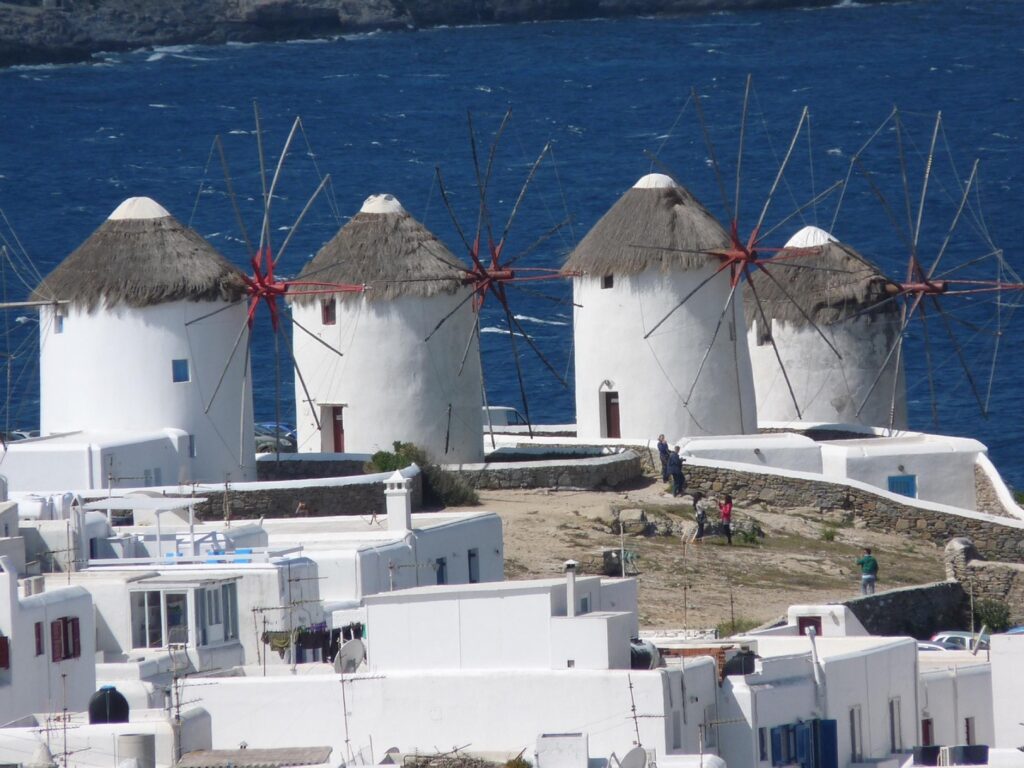
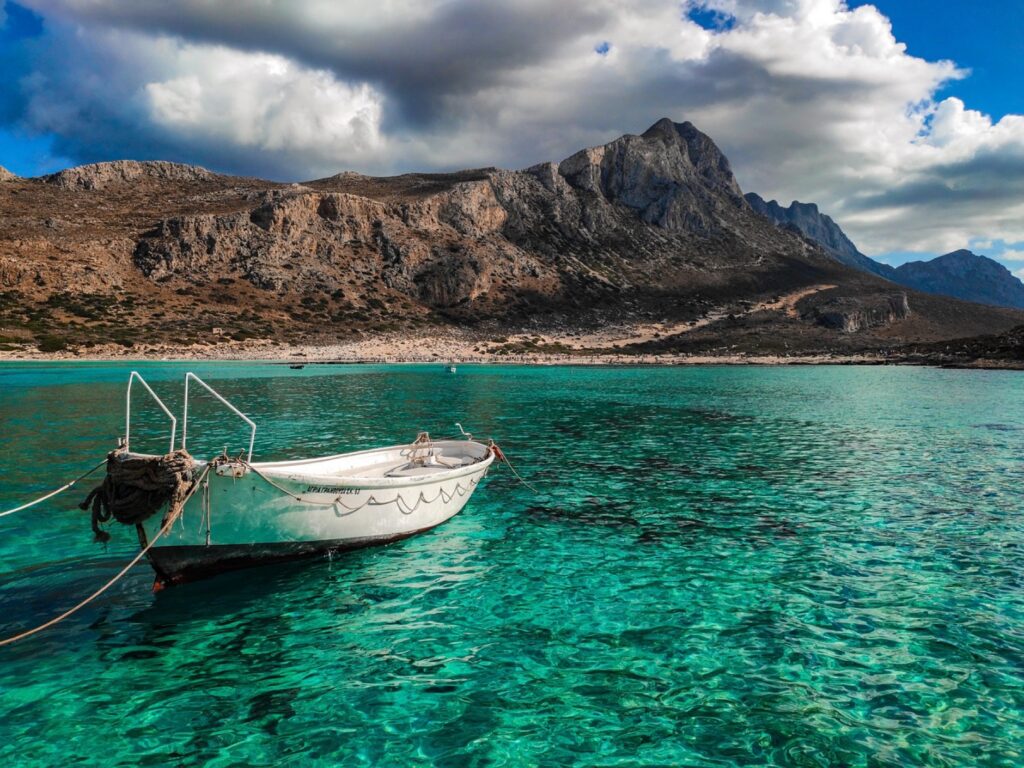
Santorini at sunset, the morning ferry to Naxos, the Meteora rocks rising out of the mist, a turquoise cove in Crete. Greece is rarely a single place: it is an itinerary that hops from island to island and site to site. And the same question comes up when you book: SIM card, eSIM, or will your phone plan do? Here is the twist most guides skip. Greece is in the EU, so EU visitors roam for free, but the UK left the EU, and that changed the maths for British travellers. Some networks still include Greece for nothing; others now slip in a daily surcharge, and on a new Three contract it can be eye-watering.
We have dug into this properly, because Greece deserves better than a copy-paste guide: the real plans, the genuine prices in October 2026, and above all the coverage island by island and on the ferry, the thing the “best eSIM” round-ups completely skip. Because between Santorini’s 5G and the black hole in the middle of a crossing to a small Cyclade, there is a world of difference.
On the menu: your UK plan under the microscope (and the hidden, sometimes brutal, daily fee), the Cosmote / Vodafone / Nova line-up, what a Greek SIM really costs, the Holafly eSIM, network coverage from the mainland to the islands, and our signature section: staying connected while island-hopping, ferry included, plus a word on the mainland road trip.
Why you need mobile data in Greece
Greece is an easy country to travel, but your phone works hard from morning to night. For getting around first: ferry times and tickets (Ferryhopper has become a reflex), Google Maps to climb to Meteora or find the right cove, the KTEL bus apps, booking archaeological sites to skip the Acropolis queue. Without data you waste time at every step, and in Greece everything is a step.
Then there is everyday Greece: booking a hillside taverna, scanning the QR-code menu, contactless payment, grabbing a last-minute boat trip, checking the weather and the wind (the meltemi can pin the ferries in port), sending your Santorini photos before everyone else posts theirs. For a trip that strings several islands together, a connection is not a luxury, it is what holds the itinerary together.
Three ways to stay connected: your UK plan roaming (which may or may not be free now), a local Greek SIM (Cosmote, Vodafone or Nova) bought on arrival, or a Holafly Greece eSIM activated from home before you leave. We go through each, and we save the decisive point for last: coverage when you are on the move.
Plan your trip: Greece
Compare rental companies and book at the best price.
Booked on Trip.com — partner link.
Provided by Holafly, our partner.
5% off with code LAPLANETEDECARO
Booked on Holafly — partner link.
Solution 1: will your UK plan still work in Greece (and at what price)?
Start with the most profitable advice in this whole guide: before buying anything, check what you already have. Since Brexit, this matters more for British travellers than for anyone else in Europe.
Greece is firmly in the EU, so EU residents roam there as if at home. The UK is not, so free roaming is no longer guaranteed for you. In practice the picture splits in two. The good news: O2 (25GB fair-use), Smarty (12GB), Lebara, Giffgaff and Lyca still include Greece at no extra cost, so you can land and surf for free. The catch: the big contracts now add a daily surcharge, roughly EE around £2.47/day, Vodafone around £2-2.42/day, and Three is the one to watch.
Because Three has flipped from roaming hero to roaming trap. Long-standing customers may still roam free or pay around £2/day, but anyone joining on a newer contract faces up to £8/day with a 12GB cap. That is not a typo: a ten-day trip on a new Three plan can add around £80 in roaming alone. So the honest first step is not “buy an eSIM”, it is “open your network’s app, find the roaming terms, and check your sign-up date”. The table just below spells it out network by network.
Greece: does my plan work there?
| Plan | Data | Duration | Price | Network | 🇬🇷 Greece |
|---|---|---|---|---|---|
| EU Roaming 7-Day Pass Recommended | 50 GB | 7 days | €17.90 | 4G | ✓ Yes |
| Zone 1 Weekly Pass Recommended | 50 GB | 7 days | €29.85 | 4G | ✗ No |
| EU Roaming Daily Pass | 50 GB | 1 day | €3.10 | 4G | ✓ Yes |
| Zone 1 Daily Pass | 50 GB | 1 day | €5.97 | 4G | ✗ No |
| Zone 2 Daily Pass | 50 GB | 1 day | €8.96 | 4G | ✗ No |
| Zone 3 Daily Pass | 512 MB | 1 day | €8.96 | 4G | ✗ No |
| Zone 4 Daily Pass | 10 MB | 1 day | €17.92 | 4G | ✗ No |
| EU Roaming 12-Day Pass | 50 GB | 12 days | €25.70 | 4G | ✓ Yes |
| Zone 2 Weekly Pass | 50 GB | 7 days | €44.78 | 4G | ✗ No |
| Plan | Data | Duration | Price | Network | 🇬🇷 Greece |
|---|---|---|---|---|---|
| Go Roam in Europe Recommended | 12 GB | 1 day | €3.29 | 4G | ✓ Yes |
| Go Roam Around the World | 12 GB | 1 day | €9.56 | 4G | ✗ No |
| Go Roam Around the World Extra | 12 GB | 1 day | €9.56 | 4G | ✗ No |
| Plan | Data | Duration | Price | Network | 🇬🇷 Greece |
|---|---|---|---|---|---|
| 8-Day Europe Pass Recommended | 25 GB | 8 days | €19.12 | 4G | ✓ Yes |
| Euro Roam Daily | 25 GB | 1 day | €3.29 | 4G | ✓ Yes |
| Global Roam Daily (Zone C) | 25 GB | 1 day | €9.56 | 4G | ✗ No |
| Global Roam Daily (Zone D) | 25 GB | 1 day | €9.56 | 4G | ✗ No |
| 15-Day Europe Pass | 25 GB | 15 days | €25.10 | 4G | ✓ Yes |
| Plan | Data | Duration | Price | Network | 🇬🇷 Greece |
|---|---|---|---|---|---|
| Europe Zone (included) Recommended | 25 GB | 30 days | €0.00 | 4G | ✓ Yes |
| Data Roaming Bolt-On Zone 1 (1 GB) | 1 GB | 30 days | €7.17 | 4G | ✗ No |
| O2 Travel Bolt On | Unlimited | 1 day | €8.37 | 4G | ✗ No |
| Data Roaming Bolt-On Zone 2 (1 GB) | 1 GB | 30 days | €10.76 | 4G | ✗ No |
Last verified: 2 October 2026
So your UK plan is the first thing to check, and on the right network it may be all you need. But if you are on a daily-fee network, want unlimited data without watching a cap, or you are heading for the small islands where coverage gets tricky, read on for the local and eSIM options.

We're Caroline and Xavier
We got most of it wrong before we got it right. We share what actually holds up day to day in a van, and what we wouldn't do again.
Ce que vous souhaitez recevoir :
Cosmote, Vodafone, Nova: the Greek operator line-up
The Greek market is built around three national operators, and choosing between them is not just about price: in Greece it is first and foremost about island coverage.
Cosmote is the former incumbent, the ex-monopoly, the undisputed leader. And it is our hero operator for one simple reason: it has the best coverage in the country by a distance, especially on the islands and in remote areas. Over 99% population coverage, 4G/5G on virtually every inhabited island, including the small northern Cyclades and the far-flung Dodecanese where the others drop out. Pricier, but if your itinerary leaves the big islands, it is the one to have.
Vodafone Greece, the challenger, is solid. Good coverage on the mainland and the big islands (Crete, Rhodes, Corfu), a fast network, and a clear tourist presence with readable packs. Where it weakens is on the small, isolated islands, where it falls behind Cosmote. For a trip combining Athens and one or two big islands, it does the job perfectly.
Nova (formed from the Wind/Nova merger) completes the trio. Its strength is price, cut hard through its Free2Go prepaid brand. Coverage is decent in cities and on the big islands, patchier the further out you go. A good shout if you stick to the well-trodden routes and watch your budget.
Before comparing a local SIM against your plan or an eSIM, two tools to see clearly what each option really gives you.
Use your UK plan abroad thanks to roaming agreements
Buy a local SIM card to benefit from local rates
Activate an eSIM before your departure, without changing your physical card
Pros and cons of SIM cards for Greece
| Comparison of internet solutions while traveling | |||
|---|---|---|---|
| International plan | Local SIM card | eSIM | |
| Cost | High | Low | Moderate |
| Purchase | Online (operator option) | On-site, in-store | Online, before departure |
| SIM card change | No | Yes | No |
| Ease of use | Easy | Restrictive | Easy |
| Support in English | Yes | Rarely | Yes |
| Unlimited data | No (limited) | Yes | Yes (depending on offer) |
| Keep your UK number | Yes | No (replaced) | Yes (dual SIM) |
| Flexible stay durations | No (monthly) | Variable (commitment possible) | Yes (1 to 90 days) |
| Top up the plan | Operator customer area | In-store | Via the app |
| Risk of extra charges | Yes | Prepaid: no. Other: yes | No |

How much does a SIM card cost in Greece in October 2026?
Now the concrete bit. Mobile data in Greece is affordable, as long as you understand the system, which is a little particular at Cosmote.
At Cosmote, the leader, you do not buy a ready-made “tourist plan”: you take a base SIM (the famous “Cosmokarta”, or the youth brand “What’s Up”, around £9 with credit), then activate a pack on it. The most popular is the Giga Week, unlimited data for a week, around £6. It is a bit confusing the first time, but unbeatable on coverage. Vodafone Greece is simpler with its full tourist pack (unlimited data plus 200 minutes), more like £18-26 in an official shop, sometimes far cheaper in neighbourhood kiosks in Athens. Nova cuts prices with Free2Go (everything unlimited, around £17).
Where to buy them? In operator stores, in Germanos shops (the multi-brand reseller you see everywhere), at kiosks, and of course at Athens airport. ID is enough. The one real downside versus an eSIM: you have to find the shop (not always easy in a Cycladic village), get your head around the pack system, and topping up later can be awkward with a foreign card.
Here is an up-to-date, priced overview of the SIM cards and eSIMs available for Greece, with current plans and rates:
Greece: local SIM cards available for your stay
The incumbent and undisputed market leader in Greece. Offers the best 4G/5G coverage, which is crucial for Island Hopping or remote areas. More expensive but more reliable.
Operator formed from the Wind/Nova merger. Often the most aggressive rates via its prepaid brand 'Free2Go'. Decent coverage in cities, sometimes weaker in isolated spots.
Solid number 2. Strong tourist presence with clear offers. Good coverage on the mainland and major islands.
| Carrier | Plan | Data | Duration | Price | Network | Buy |
|---|---|---|---|---|---|---|
|
Cosmote
|
Cosmote Prepaid Giga Week Unlimited Reco | Unlimited | 7 days |
€6.50 (7 EUR) |
4G,5G | Boutiques Cosmote, Germanos... |
|
Vodafone Greece
|
Vodafone Giga WiFi on the spot | 40 GB | 30 days |
€9.90 (10 EUR) |
4G,5G | Boutiques Vodafone |
|
Cosmote
|
Cosmote DIY Pack | 10 GB | 30 days |
€12.00 (12 EUR) |
4G,5G | Boutiques Cosmote, Germanos... |
|
Nova (ex-Wind)
|
Free2Go Tourist Unlimited Reco | Unlimited | 30 days |
€20.00 (20 EUR) |
4G,5G | Boutiques Nova/Wind, Kiosques |
|
Vodafone Greece
|
Vodafone International Tourist Reco | Unlimited | 15 days |
€25.00 (25 EUR) |
4G,5G | Aéroport ATH, Boutiques Vod... |
Last verified: 2 October 2026
Buy your SIM on arrival or in advance from the UK?
Three ways to sort your data for Greece, each with its own logic. Our no-nonsense comparison.
No shop to find, no pack system to understand, no number to change. You receive the eSIM by email or QR code after purchase, install it, and you are connected the moment you land in Athens or on your island. Compatible with nearly every smartphone since 2018 (iPhone XS and newer, Galaxy S20+, Pixel 3+). Unlimited data, UK number kept, mainland plus islands coverage.
Cost: around £17 for 7 days. Code for off. For a trip combining Greece with another Mediterranean country, go for a regional Europe eSIM.
Consider it if: you are hopping between islands, you want to leave the airport already connected, and you would rather never hunt for a shop.
The right call for a long stay, to have a local number, or to get the best island coverage (pick Cosmote for that). ID is enough for prepaid. More friction than an eSIM (finding the shop, decoding the packs, top-ups awkward with a foreign card), but low prices and, with Cosmote, the most reliable network in the country.
Cost: Cosmote base SIM around £9 plus an unlimited Giga Week pack around £6; Vodafone tourist packs £18-26; Nova Free2Go unlimited around £17.
Consider it if: you are staying a while, want a Greek number, or are heading to small remote islands (pick Cosmote).
The slightly old-school option that still has fans: connect phone, tablet and laptop to the same hotspot. Handy for a family or a group travelling the same islands together. But it is one more device to carry, charge and not leave behind in the room, and battery life rarely lasts the day. With cheap local data and free EU roaming, its appeal has faded in Greece.
Consider it if: you are travelling as a group and need shared connectivity for many devices.
Holafly Greece: our honest recommendation
Let us be straight. First step, again: check your UK plan. If you are on O2 or a free-roaming MVNO and sticking to the big islands, you may need nothing, and we will not pretend otherwise. Keep your money.
But if you are on a daily-fee network (EE, Vodafone, and especially new-customer Three at £8/day), want unlimited data without watching a meter, or you would rather not hunt for a shop mid-trip, our pick is the Holafly eSIM. Not because it is the cheapest per gigabyte (the local Cosmote SIM wins that one), but because it is the most hassle-free: no shop to find, no packs to decode, your UK number stays live, and the islands are covered.
With Holafly:
- you buy from your sofa in the UK before leaving
- you activate just before boarding, in two taps
- you land in Greece already connected, with no shop to hunt down
- no top-ups to manage, no pack system to understand
- you keep your UK number active alongside it
- unlimited data covers the mainland and the islands
In fairness, we will also say it: Holafly’s unlimited data is comfortable but can be throttled beyond heavy daily use, and tethering is limited. One more point of transparency: on truly remote islands, the underlying Greek network decides, and there a Cosmote local SIM keeps a slight edge. For Athens, Santorini, Mykonos, Naxos, Paros, Crete and Rhodes (so the vast majority of trips), the Holafly eSIM is flawless.
Tap just below to activate your discount and land straight on the available Greece eSIM plans.
Network coverage in Greece: from the mainland to the islands
Greece has a very good mobile network in the cities and tourist areas, with excellent 5G in Athens, Thessaloniki and on the star islands. But the country’s geography, hundreds of islands and a mountainous interior, creates nuances worth knowing before you go.
Strong signal
- Athens, Thessaloniki, Heraklion: 5G everywhere, excellent network, all operators.
- Star islands (Santorini, Mykonos, Naxos, Paros): very good coverage in the towns, 5G common.
- Big islands (Crete, Rhodes, Corfu): well covered along the coast and in the towns.
- Major sights: Acropolis, Meteora, Delphi all get signal without trouble.
Weak spots
- Small northern Cyclades and remote Dodecanese: only Cosmote truly holds.
- Out at sea, on the ferry: signal lost for a large part of the crossing.
- Mountainous interior (Pindus, Crete gorges): the Samaria gorge is 16km of zero signal.
- Mainland mountain roads: patchy as soon as you climb.
Staying connected while island-hopping (and the ferry black hole)
Here we are, and this is the section that sets this guide apart. Because everyone will tell you “Greece is the EU, your plan works”, and everyone stops there. Except Greece is not a city where you stay put: it is an itinerary that keeps moving, island to island, and that is where connectivity is really won or lost. The “best eSIM” guides and the “island-hopping” guides live in two separate worlds that never talk to each other. We bring them together here.
Which island actually gets signal. On the big ones (Crete, Rhodes, Corfu) and the stars (Santorini, Mykonos, Naxos, Paros) you are fine: 5G in the towns, all operators, your plan roaming is enough. It is the small ones where it gets tricky: northern Cyclades (think Donousa, Anafi), small Dodecanese islands, isolated hamlets. There, coverage becomes the number-one factor, and only one network truly goes the distance: Cosmote. If your itinerary flirts with the remote islands, choose your solution accordingly (a Cosmote local SIM, or at least an eSIM you know routes a solid signal).
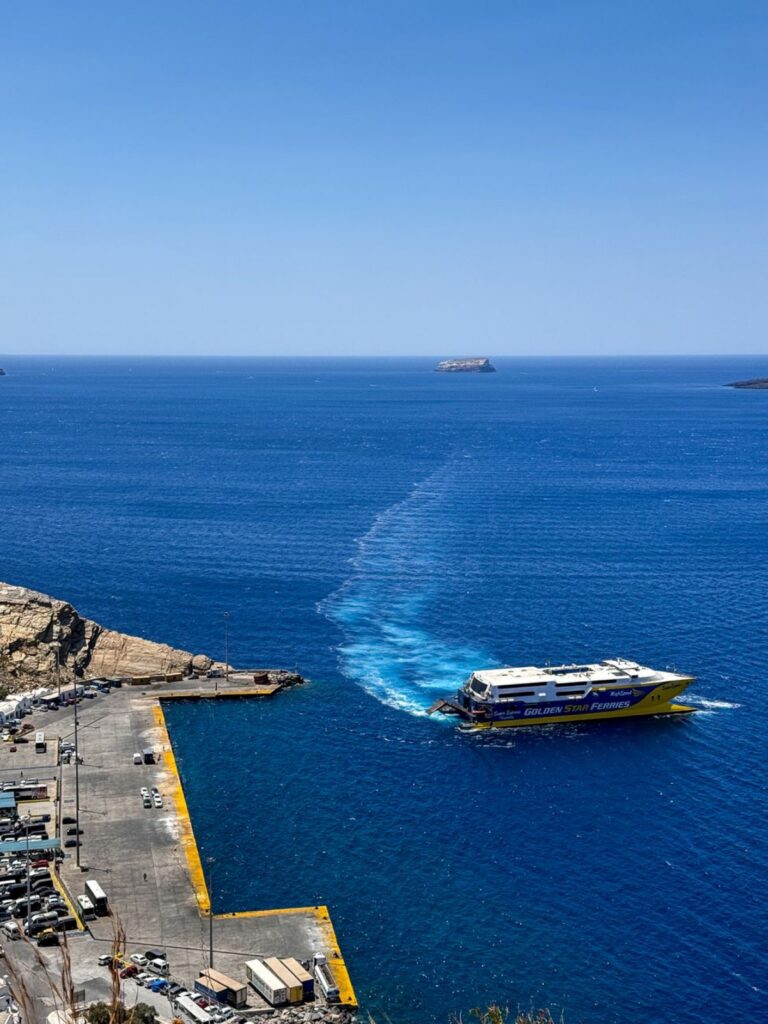
The ferry black hole. Here is the thing nobody tells you. Between two islands, out at open sea, you lose the network for a large part of the crossing, often half or more, with signal returning as you near the coast. On a Piraeus-to-Cyclades run, that is several hours without reliable data. The reflex to build, and it is worth gold: download your tickets, your offline maps and your accommodation address BEFORE you board. No eSIM, no SIM, no plan can catch a network that does not exist in the middle of the Aegean. The crossing is for resting and watching the sea, not for answering emails.
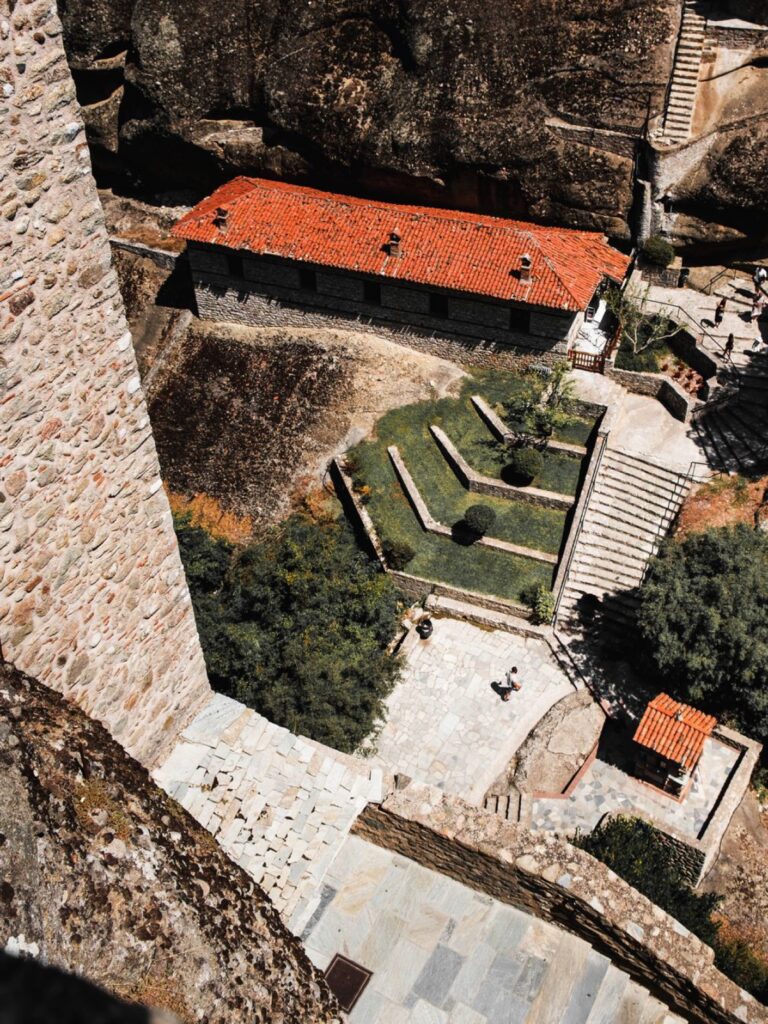
And if you do the mainland. A bonus for road-trippers, because Greece is not only islands. The mainland (Meteora, Delphi, the Peloponnese, gorges) has its own dead spots, different from the islands: Pindus mountain roads, monastery switchbacks, isolated archaeological sites. In towns and on main roads, everything runs on 5G. The moment you climb, it is again Cosmote that holds best, and the offline-maps reflex becomes your best friend. A mainland-plus-islands road trip means two coverage profiles to anticipate, not one.
The bottom line: in Greece, the price of data is a detail; it is coverage on the move that counts. Big islands and cities, any solution works. Small islands, ferries and mountains, go for Cosmote and download everything in advance.
Greece SIM cards and eSIMs: your questions
Does my UK plan work in Greece?
It depends on your network and, crucially, on when you signed up. Greece is in the EU, but since Brexit the UK is not, so free "roam like at home" is no longer guaranteed. Most UK networks still bundle Greece into their Europe zone, but the picture splits in two. O2, Smarty, Lebara, Giffgaff and Lyca still include Greece for free within fair-use limits. The big contracts charge a daily fee: EE around £2.47/day, Vodafone around £2-2.42/day, and Three is the trap, free or £2/day for older customers but up to £8/day for anyone joining from late 2025. So before assuming you are covered, check your plan and your sign-up date. The interactive table below shows it plan by plan.
Which UK networks charge for roaming in Greece?
As a rule of thumb in %currentyear%: O2 (25GB fair-use), Smarty (12GB), Lebara, Giffgaff and Lyca include Greece at no extra cost. The fee-charging side: EE about £2.47/day, Vodafone about £2-2.42/day (25GB cap), and Three, which has gone from roaming champion to £8/day for new joiners (late-2025 sign-ups onward), with a 12GB cap. Voxi also charges around £2.45/day. The maths: on a daily-fee network, ten days in Greece adds £20-25, or a brutal £80 on new-customer Three, at which point a Holafly eSIM wins easily.
Which Greek operator has the best island coverage?
Cosmote, no contest. It is the former incumbent and market leader, and the only one that genuinely holds up on the small Cyclades, the remote Dodecanese and inland Crete. Over 99% population coverage, 4G/5G on virtually every inhabited island. Vodafone Greece is solid on the mainland and the big islands (Crete, Rhodes) but weakens on the small ones. Nova (ex-Wind) is mostly urban and budget. Our advice for serious island-hopping: pick a solution that runs on Cosmote.
Will I get signal on the ferry between islands?
Only partly, and this is the thing nobody tells you. On the big crossings (Piraeus to the Cyclades, inter-island hops), expect to lose signal for a large chunk of the journey, often half or more out at open sea, with the network returning as you approach land. The reflex to build: download your tickets, offline maps and bookings BEFORE you board. Treat the crossing as downtime, not work time. And carry a power bank: between port GPS and the phone hunting for signal, the battery drains fast.
Does Holafly cover all the Greek islands?
Yes, the Holafly Greece eSIM runs unlimited data across the whole country, mainland and islands, on the local networks. You buy and install it from home before flying, it activates on arrival, and your UK number stays active alongside it. Reckon on the low twenties of pounds for a week. One point of transparency: if your trip reaches truly remote islands in the northern Cyclades or the Dodecanese, it is the underlying Greek network that decides coverage, and Cosmote is the most reliable there. For 90% of itineraries (Athens, Santorini, Mykonos, Naxos, Paros, Crete, Rhodes), the eSIM is flawless. Code LAPLANETEDECARO for your discount.
eSIM or local SIM card for Greece?
First check your UK plan: if you are on O2 or a free-roaming MVNO, you may need nothing. If you are on a daily-fee network (EE, Vodafone, and especially new-customer Three at £8/day) or want worry-free unlimited data, the Holafly eSIM is the best compromise: buy from home, activate before boarding, keep your UK number, and skip hunting for a shop in a Naxos backstreet. A local Greek SIM (Cosmote leading) makes sense for a long stay, a Greek number, or if you specifically want the best coverage on remote islands. Code LAPLANETEDECARO on Holafly.
What about a mainland road trip (Meteora, Delphi)?
The mainland has its own dead spots, different from the islands: Pindus mountain roads, gorges, isolated Peloponnese archaeological sites, the switchbacks up to the Meteora monasteries. On main roads and in towns (Athens, Thessaloniki, Kalambaka), everything runs on 5G. The moment you climb or head inland, it is again Cosmote that holds best. The road-trip reflex: download offline maps, and if you take a local SIM, take Cosmote. Your UK plan roaming also does the job on the mainland, within your fair-use cap and minus any daily fee.
Where your plan behaves differently, one ferry away
Greece is the cheapest Mediterranean guide we have for a UK phone, because since Brexit some networks (O2, Smarty, Lebara) still include it free while others charge by the day. Cross to Turkey and that stops: rest-of-world zone, plus the IMEI rule and the eSIM shops you cannot reach from inside the country. Go north to Albania and it stops too, no inclusive zone on any network. Sail south to Egypt and you are in the priciest bracket of the three.

Turkey SIM Card: the IMEI Trap and Why to Buy Your eSIM Before You Fly
What Internet Connection to Use During a Stay in Turkey? This is a frequently asked question by travelers. We have explored the various options available in Turkey in this comprehensive...
Read more
Internet in Albania: your UK plan won’t roam free, here’s what actually works
Which Internet Connection to Use During a Stay in Albania? This is a common question before departure. We, Caroline and Xavier, have researched the different options available in Albania for...
Read more
Egypt internet: the right SIM card from Cairo to the Red Sea
SIM card or eSIM for Egypt? We compare your UK plan (outside the inclusive zone, and the trap that comes with it), the local operators Vodafone Egypt, Orange and e&,...
Read moreConclusion: what we honestly recommend
If we had to sum it up in one line: in Greece, check your UK plan first, because since Brexit some networks include it for free (O2, Smarty, Lebara) while others charge a daily fee, and new Three contracts can sting at £8/day. If you are on a free-roaming network and stay on the big islands, you may need nothing. Otherwise, or if you want unlimited data without watching a cap, get the Holafly eSIM with code for off.
A local Greek SIM is worth it for a long stay, a local number, or if you are specifically aiming for the small remote islands: in that case it is Cosmote and no one else, the king of island coverage. And whatever you choose, the real reflex in Greece is not price per gigabyte, it is anticipating coverage on the move: offline maps and ferry tickets downloaded before you board, because in the middle of the Aegean no plan on earth will save you.
The only mistake to avoid is choosing your solution on price alone without thinking about WHERE you will actually get signal. Know where your itinerary takes you (easy big islands or remote little Cyclades), and the right choice becomes obvious.
If we have missed a question, drop it in the comments and we will answer. And if you come back from Greece with a good connectivity tip (or a painful memory of three hours without signal on a ferry), share it.
Safe travels in Greece (and save a little battery for the sunset over the caldera, that one, we promise, no story will ever do justice).
PS: the little rule we apply for Greece as anywhere: check your roaming terms BEFORE you fly (Greece may be free, or £2-8/day on the wrong plan), install your eSIM before the plane if needed, and download ferry tickets and offline maps before every crossing. Three reflexes, and you will never curse the middle of the Aegean.
Connected everywhere, and the rest of the trip
Two years of full-time van life, and the Algarve as our base ever since. We still hit the road, by van or otherwise, and we write up what we find along the way. An email when we have something to say, no more.
Ce que vous souhaitez recevoir :