


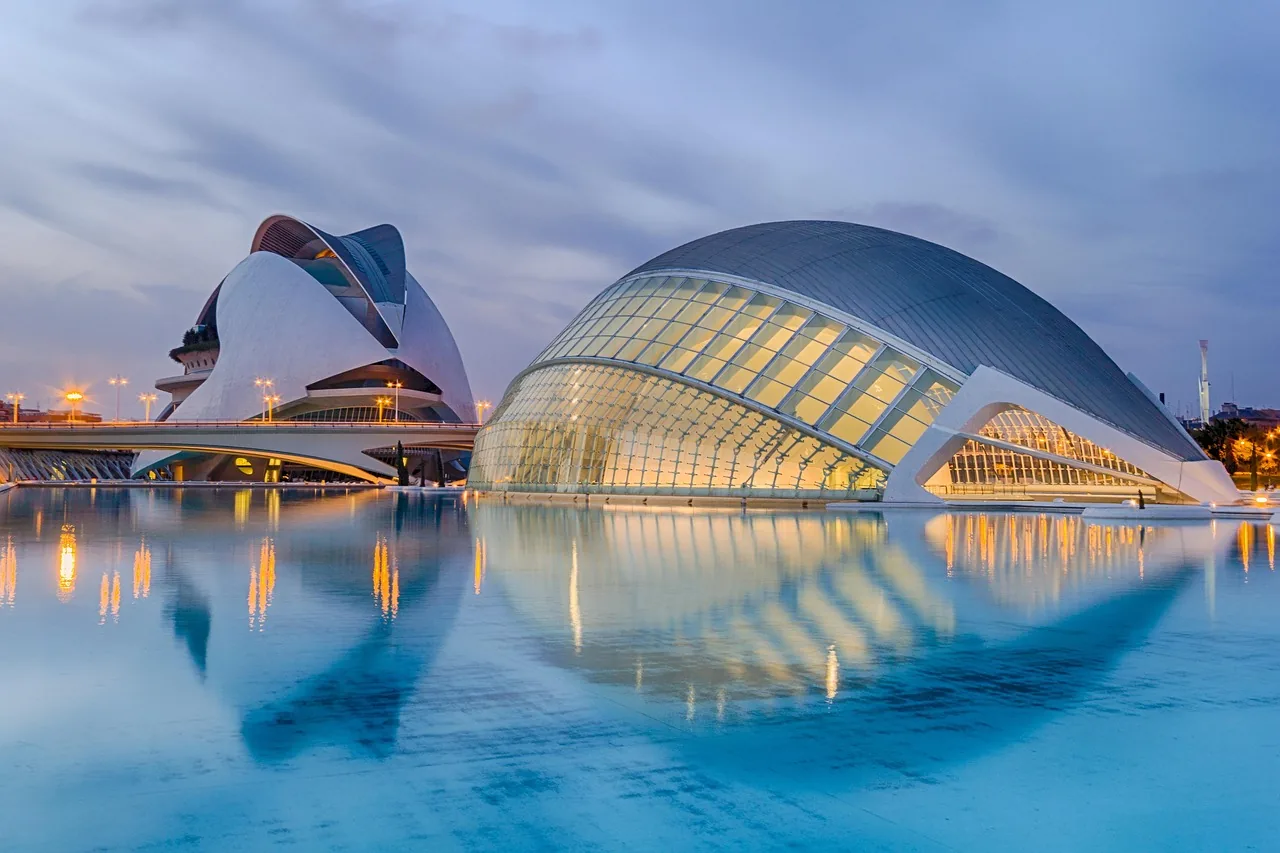
I’ve visited Valencia. For a three-day stay, I’d divide the time between the old town, the Turia gardens and the coast, with Albufera as an optional trip outside the city. Trying to fit it all into day one would mean spending most of your time getting between neighbourhoods… I’d leave room for a few breaks.
Here’s one way to organise a motorhome stay, using a suitable base for the vehicle and giving each area its own day. This guide is about Valencia in Spain, rather than Valence in France’s Rhône Valley.
Compare accommodation in Valencia
First day: the old town around the Lonja and the market
I would start with the Mercado Central and the Lonja de la Seda, which face each other. The market is a modernist building dedicated to food products; the Lonja is part of the history of silk trade. Visiting them together takes you through two periods of the city’s trading history, without crossing town.
The Lonja, built from the late 15th century, is known for the twisting columns of its hall and its secular Gothic architecture. Its UNESCO World Heritage designation pertains to this merchant complex. For the visit, check the official information of the Lonja de la Seda: check the monument’s own admission arrangements and opening hours, which differ from the market’s.
The Mercado Central is best discovered while the market is trading, with its stalls and its architecture of metal, glass, and ceramics. Check its opening days and hours before reserving a late afternoon slot. You can then continue on foot to the squares in the centre and the Carmen neighbourhood. For a first visit, I would keep the afternoon quite flexible rather than counting each monument as a must-see.
Second day: crossing the Turia garden to the City of Arts
The Turia garden occupies the former riverbed and runs through Valencia for about nine kilometers. It is both a park and a route across the city, with access points that allow you to choose the distance to cover. You can follow a section on foot or plan a bike ride to connect several neighborhoods. The Visit València’s guide to the Turia help to build this route.
At its eastern end, the City of Arts and Sciences completely changes the landscape. The Hemisfèric, the Science Museum, and the other buildings do not serve the same function, even if they appear in the same photo. A walk outside and a day of paid visits are two different programs. First, choose what you want to do inside.
I would allow a proper block of time for the attraction you choose, especially if you are coming with children. Going from museum to screening to aquarium requires more than a stop in the middle of a bike ride. You can also enjoy the outdoor spaces, then save a visit for another day if the weather or you change your plans.
Third day: the beach or a trip to Albufera
To stay in the city, the seaside neighbourhoods and the Malvarrosa beach make for another day. They are distinct from the old town: plan the route, then a walk in this area, rather than a quick round trip between two visits. The pace can be lighter, with a meal and time by the water.
Albufera is another option, south of Valencia. The natural park combines a lagoon, rice fields, and areas of dunes and beaches. A trip to El Palmar can include a walk or a boat ride with a provider, depending on the conditions and availability at the time.
The official information of the Albufera park specifies access via EMT buses 24 and 25. Line 24 serves El Palmar; line 25 continues to El Perellonet. This is a route to consider for leaving your motorhome at its base, paying attention to the arrival stop and the last return departure.
If you only have two days, I would choose between this excursion and the seaside neighbourhoods. There is no medal for checking everything off, and you will mainly save time to enjoy what you have chosen.
Valencian paella and horchata: watch what you order
Valencian paella deserves clarification: the traditional version isn’t necessarily the large seafood dish you might picture when you think of Spain. Visit València describes a preparation with chicken, rabbit, green beans, and garrofó, a large white bean, along with rice and seasoning. Other rice dishes exist, but they do not all have the same name or ingredients.
To choose a table, the page dedicated to paella by the tourist office gives background and restaurant suggestions. Look at the price per person, the minimum number of diners, and the announced preparation time. I prefer a reservation that allows time for the meal rather than a paella ordered between a museum entrance and a train to catch.
Horchata de chufa is another speciality to seek out: a drink made with tiger nuts, a tuber. Fartons are the elongated pastries often served with it. This can make for a different break from coffee, without forcing you to turn every stop into a complete tasting of the region.

We're Caroline and Xavier
We drive to a place, stay long enough to get it wrong a few times, then write the guide we wish we'd had: parking, timing, what's worth the detour.
Ce que vous souhaitez recevoir :
Valencia in a motorhome: choose a base connected to the city
I would prepare the stay with a suitable spot for the vehicle and a clear route to the centre. The campsites on the southern coast and a site located inland do not involve the same travel. The name “Valencia” in the name of an establishment does not mean you can reach the Lonja on foot.
Valencia Camper Park is located, for example, in Bétera, northwest of the city. Its official site provides services and stay conditions. For access to the centre, check the station, the transport available on your dates, and the return time to the vehicle.
On-site, keep the organisation of services with your accommodation: water, waste disposal and electricity according to your needs. A beach or a parking spot identified for an outing does not replace a spot that accepts the vehicle for the night. The most useful thing is to settle this part before starting the visits.
Transport, connection, and budget: the choices that matter
To prepare for travel and stops, our motorhome travel apps can help you plan. For mobile data, check your UK network’s Spain allowance before paying for an additional solution; our comparison of SIM and eSIM plans for Spain details the choices based on the duration of the trip.

The apps we really have on the phone (and those that are dormant)
In this article, we will present the mobile applications that we use on a daily basis. Apps to find places...
Read the guide
Which Unlimited SIM Plan for Spain? (Holafly promo code)
What kind of internet connection should you use during a stay in Spain? It’s a question we often ask ourselves...
Read the guideThe budget is then divided between the spot or hotel, transport, meals, and paid visits. A day in the centre and the gardens does not cost the same as a day with several tickets to the City of Arts and Sciences. Before choosing a tourist card, add up the visits and transport you’ll actually use and see what remains to be paid separately.
For the road trip, check the route into your accommodation and the restrictions announced by the city for your vehicle. Also, consider traffic around the arrival time: having a reserved spot already makes this first part of the stay much easier.
When to come to Valencia?
Spring and autumn are periods to consider if you want to walk and bike for a good part of the day. Summer requires taking the heat into account, especially for trips in open spaces. In March, the Fallas significantly change the city’s atmosphere and the conditions of the stay: choose this period for the festival itself, with its crowds and installations.
Valencia : a glimpse of the weather
5-day forecast
For those who love last-minute adventures, here's what the weather has in store.
Monthly climate
Personally, we always choose warm and dry periods. But everyone has their ideal weather! Here's the info to make your choice.
| Month | Min temp | Max temp | Rain | Weather | Rating |
|---|---|---|---|---|---|
| November | 11°C | 20°C | 13 mm | ☀️ | |
| December | 9°C | 16°C | 104 mm | 🌦️ | |
| January | 8°C | 15°C | 44 mm | 🌦️ | |
| February | 11°C | 19°C | 14 mm | ☀️ | |
| March | 9°C | 17°C | 58 mm | ☀️ | |
| April | 13°C | 22°C | 20 mm | ☀️ | |
| May | 16°C | 24°C | 28 mm | ☀️ | |
| June | 21°C | 28°C | 4 mm | ☀️ | |
| July | 25°C | 32°C | 1 mm | ☀️ | |
| August | 25°C | 32°C | 9 mm | ☀️ | |
| September | 20°C | 29°C | 65 mm | ☀️ | |
| October | 16°C | 24°C | 228 mm | 🌧️ |
The map: centre, coastline, and excursion to the south
The markers highlight the distances between the old town, the City of Arts and Sciences, the beach, El Palmar, and the Bétera base. Use them to plan your route and transport.
Valencia: practical questions
Does a City of Arts and Sciences ticket cover every building?
Not automatically. Individual tickets and combinations are available for the Science Museum, Hemisfèric and Oceanogràfic; some workshops also require a reservation or separate ticket. Check the venues and time slots included in the ticket information from Visit València.
What changes in Valencia during the Fallas?
Temporary monuments are installed in the neighbourhoods, alongside events and many loud and pyrotechnic displays. Burning the fallas traditionally closes the festival on 19 March. If you are coming for the usual sights, allow for occupied streets and crowds. If you are coming for the festival, plan your stay around its programme.
PS: between the beach and the museum, I would still leave a slot for the meal. That too deserves more than a quick stop.
The next route, straight to your inbox
Two years of full-time van life, and the Algarve as our base ever since. We still hit the road, by van or otherwise, and we write up what we find along the way. An email when we have something to say, no more.
Ce que vous souhaitez recevoir :