



Introduction
You bought your motorhome, van, or camper van, and you’re wondering how much maintenance will cost you each year? Good question, because the purchase price, frankly, is just the tip of the iceberg… the rest comes later, quietly, month after month. Between mechanics, tires, technical inspections, insurance, and all the little daily maintenance tasks, the maintenance cost of a converted vehicle can quickly add up if you don’t keep an eye on it.
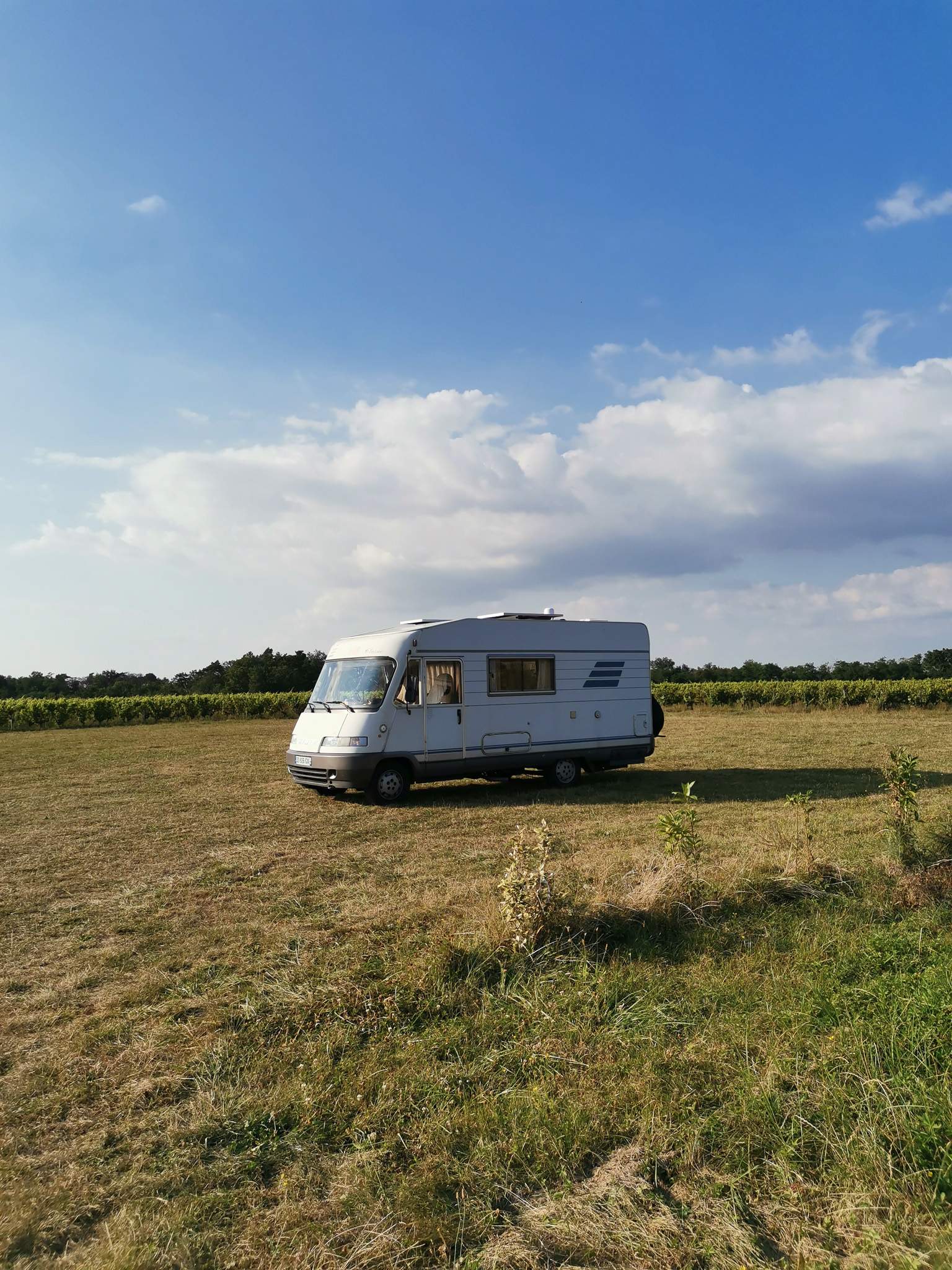
After several years of full-time motorhome living, we have a pretty clear view of what it actually costs. In this article, we give you all the prices, item by item, so you can anticipate your motorhome maintenance budget without any nasty surprises. We also share our struggles (and there have been many) and our tips to reduce the bill by 20 to 30%.
Our video on motorhome maintenance
Before diving into the numbers, we’ve prepared a video that summarizes the main expense categories and our practical advice. If you prefer the video format, it’s right here:
Our experience of breakdowns and maintenance costs
Earlier overview of the main maintenance categories
Overview of motorhome maintenance costs
To give you a quick overview, here is our interactive summary table with all the expense categories. You can use it as a checklist to plan your annual budget:
| Maintenance costs of a converted vehicle | |||
|---|---|---|---|
| Category | Expense item | Estimated annual cost | Frequency |
| Basic maintenance | Mechanical maintenance | £400 | Annual |
| Tires | £200 | Every 2-3 years | |
| Technical inspection | £55 | Every 2 years | |
| Tank maintenance | £40 | Annual | |
| Specific equipment | Batteries | £200 | Amortized over 5 years |
| Gas system | £20 | Annualized | |
| Leakage control | £100 | Annual | |
| Winterising | £75 | Seasonal (if stored) | |
| Estimated total annual cost | £1,090 – £2,550 | ||
We now detail each item one by one, with updated prices and our feedback.
What are the technical maintenance costs of a motorhome?
Technical maintenance is by far the biggest expense: between £1,500 and £3,000 per year depending on the age and condition of your vehicle. It’s a house on wheels, you see, so yes, you will have to reach into your wallet, but that’s the price to keep it reliable, the one that always brings you back, the one you sleep in at night.
Mechanical maintenance
Let’s start with the heart of the beast: the engine and its little mechanical friends. You should budget between £200 and £600 per year for an annual service. It’s like your car, but in XXL version. And don’t forget the famous timing belt! It’s every 120,000 km or 5 years, and it will cost you around £400 to £600. The same goes for the clutch, by the way.
Here’s the list of parts you need to pay particular attention to during servicing:
- The filters (oil, air, fuel): to be changed regularly to preserve your engine
- The brake pads: crucial for your safety, especially with the weight of your motorhome
- The shock absorbers: they take a hit with all your adventures!
- The starter battery: not to be confused with the auxiliary batteries which are the batteries in your motorhome.
- The belt (not just the timing belt): they drive a lot of things in your engine
- The fluid levels: oil, coolant, brake fluid… they are all important
- The clutch
And if you’re not a mechanical whiz, don’t hesitate to hand your vehicle over to a pro. It might cost you a bit more, but it will save you a lot of trouble on the road.
Price of a motorhome oil change
The oil change is the most frequent maintenance task you’ll perform on your motorhome. The price varies greatly depending on the engine type and the type of oil used:
Standard diesel engine (2.3L)
- Simple oil change (oil + filter): £150 to £200
- Frequency: every 20,000 to 30,000 km
- Synthetic oil recommended
More powerful engine (3.0L and above)
- Simple oil change (oil + filter): £200 to £300
- Frequency: every 20,000 km
- Higher oil quantity
If you’re handy, you can do your oil change yourself and save on labor (around £60 to £90 per hour in a garage). The cost of parts alone is around £50 to £80 for the oil and filter.
Tire maintenance
Another important item, especially on a house on wheels, as you might have guessed, is the tires. You need specific tires for motorhomes, the famous “Camper” (or CP), especially if you drive year-round. Budget between £120 and £220 per tire, totaling £480 to £880 for all four. And this needs to be changed every 50,000 km on average.
Remember: good tires guarantee good contact with the road. And with the weight of your motorhome, believe me, you don’t want to skimp on this!
The MOT test
Ah, the MOT! That yearly appointment that always makes you cringe a little. In the UK your motorhome needs an MOT every year once it turns 3, no way around it. Most motorhomes up to 3,000 kg unladen take a Class 4 test (capped at £54.85), while those between 3,000 and 3,500 kg take a Class 7 (capped at £58.60). Go over 3,500 kg and you’re into the DVSA heavy-vehicle regime, which is another story. Book it through GOV.UK, and don’t leave it to the last week of the month, the good testing stations fill up fast.
Maintenance of electrical installations
Electricity in a motorhome is a bit of the nerve of the war. Your batteries are sacred! Here are the two main options:
- Price: £100 to £300 per battery
- Lifetime: 3 to 5 years
- Advantage: accessible purchase price
- Disadvantage: weight, limited capacity, sensitive to deep discharges
If you want to know more about the different technologies, check out our guide on the types of batteries for motorhomes.
- Price: around £1,000 per battery (and more depending on capacity)
- Lifetime: 8 to 12 years
- Advantage: lightweight, durable, deep discharge possible
- Disadvantage: higher initial investment
In the long run, lithium often ends up being cheaper due to its longevity. It’s the choice we made for our setup.
And what about solar panels? Well, once installed, they require very little maintenance. A little wipe down now and then to remove dust, and you’re good to go!
Gas, heating and the habitation service
If your motorhome runs on gas, there’s no joking around, safety is at stake. In the UK no law forces a private owner to hold a periodic gas certificate, but every workshop and manufacturer will tell you the same thing: get the gas system checked once a year by a Gas Safe registered engineer. In practice that check is folded into the annual habitation service (through an Approved Workshop Scheme centre), which also covers the damp check, the 12V and 230V electrics, the ventilation and the appliances. Budget £150 to £250 per year for the full habitation service, or £30 to £80 for a standalone gas check.
The Truma heater (or equivalent) is central to your comfort, especially if you travel off-season, and cleaning the burner, the combustion chamber and the flue is all part of that habitation service. And if you’d rather skip the whole gas question altogether, remember it’s entirely possible to run a gas-free converted vehicle.
The day our brakes failed in the middle of a road trip
This misadventure highlights the importance of having a precautionary savings fund for unexpected events. We recommend keeping at least £2,000 to £3,000 set aside for urgent repairs. If you want to know how to react in situations like this, read our article on what to do in case of a breakdown on a road trip.
Maintenance and servicing of Fiat Ducato
The Fiat Ducato is by far the most common mechanical base for motorhomes in Europe. If your vehicle is built on this platform (Hymer, Bürstner, Pilote, Challenger, Chausson…), here’s what you need to know specifically.
Fiat Ducato maintenance schedule
- Every 20,000 km / 1 year: oil change + filter, level check
- Every 40,000 km / 2 years: air filter, cabin filter, glow plugs
- Every 60,000 km / 3 years: brake fluid, pads (depending on wear)
- 120,000 km / 5 years: timing belt + tensioner
- 150,000 km: clutch (depending on use)
- 80,000 to 120,000 km: shock absorbers
- 100,000 km: coolant
Annual service price
The annual service of a Fiat Ducato in motorhome version costs between £250 and £500. The price difference is explained by the type of garage:
At a Fiat dealer
- Complete service: £350 to £500
- Advantage: original parts, tracked history
- Disadvantage: higher price
At an independent mechanic
- Complete service: £250 to £350
- Advantage: lower price, often more flexible
- Disadvantage: check certifications
Timing belt and clutch
These are the two most expensive items on a Ducato. The timing belt (with replacement of the tensioner and water pump, while we’re at it) costs between £400 and £600. The clutch, depending on your driving style and the weight of your vehicle, can last between 100,000 and 200,000 km. Its replacement costs between £600 and £1,000.
What are the other maintenance costs to consider?
Did you think you were done with expenses? Not so fast! It’s not just the technical side that you’ll need to check annually, but also the maintenance of your living “cell.” Individually, it’s not much, but in total, it represents between £200 and £350 per year (excluding insurance).
Cleaning and maintenance of water tanks
Let’s start with the water tanks. It’s a bit like the circulatory system of your motorhome, so you might as well take care of it! You will need to clean them regularly to avoid bad odors and bacteria. Budget around £30 to £50 per year for specific products. (And believe me, you don’t want to skimp on this, unless you dream of turning your motorhome into a mobile cheese factory!)
For a thorough cleaning of the system, white vinegar is unbeatable: a good dose in the clean water tank, let it sit, run the pump to circulate it through all the pipes, and rinse. It descalers, disinfects, and saves you from buying the umpteenth “miracle product” at £15 a bottle. To combat the algae that turn the tank green, likewise, a splash of vinegar or a cleaning tablet will do the trick.
Maintenance of chemical toilets
Now let’s talk about a topic that can be unpleasant: chemical toilets. It’s not glamorous, but it’s necessary! You will need to invest in special products to maintain them properly. Budget around £50 per year for that. And don’t forget to empty them regularly, okay? Nobody wants a mutiny on board due to questionable odors!
Specific maintenance products
Your motorhome will require a whole range of specific maintenance products. Between the roof cleaner, the joint cleaner, the floor product… You’ll become a pro in the “motorhome maintenance” aisle! Budget £70 to £100 per year for these products.
A little friendly advice: opt for biodegradable products when possible. Nature will thank you, and so will your camper karma!
Waterproofing inspection
This is a bit of a nightmare for motorhome owners, but it’s super important. A leak, even minor, can cause considerable damage in the long run. This inspection will cost you between £120 and £150 per year.
Motorhome insurance: how much does it cost?
Insurance is an important item that we sometimes forget to include in the overall maintenance budget. Rates vary greatly depending on the profile and the vehicle:
Third party, fire & theft
- Price: £250 to £350 per year
- Fine for an older vehicle (5+ years)
- Check the exclusions (contents, awning, etc.)
Fully comprehensive
- Price: up to £600+ per year
- Best for a newer or high-value motorhome
- Often includes contents and European breakdown cover
Whatever cover you pick, read the small print on the number of European travel days allowed, it’s the detail that catches full-timers out.
Working out your yearly budget on the road

We're Caroline and Xavier
We got most of it wrong before we got it right. We share what actually holds up day to day in a van, and what we wouldn't do again.
Ce que vous souhaitez recevoir :
Winterising your motorhome: the cost of putting it away
Honestly, we don’t winterise: when the cold comes, we head south, down to Portugal, and we carry on living in the van right through winter. But if you put yours into storage from November to March, winterising the motorhome becomes a real maintenance job, and one worth doing properly, because a water circuit that freezes will crack, and then it’s not £50 but £500.
In practice, winterising is about beating two enemies: frost and damp. You fully drain the fresh and grey tanks, the water heater and the whole plumbing circuit (the smallest pocket of trapped water bursts a fitting when it freezes), you put the leisure battery on a trickle charger so it doesn’t sulphate, and you keep the living area ventilated to fight condensation and mould on the seals.
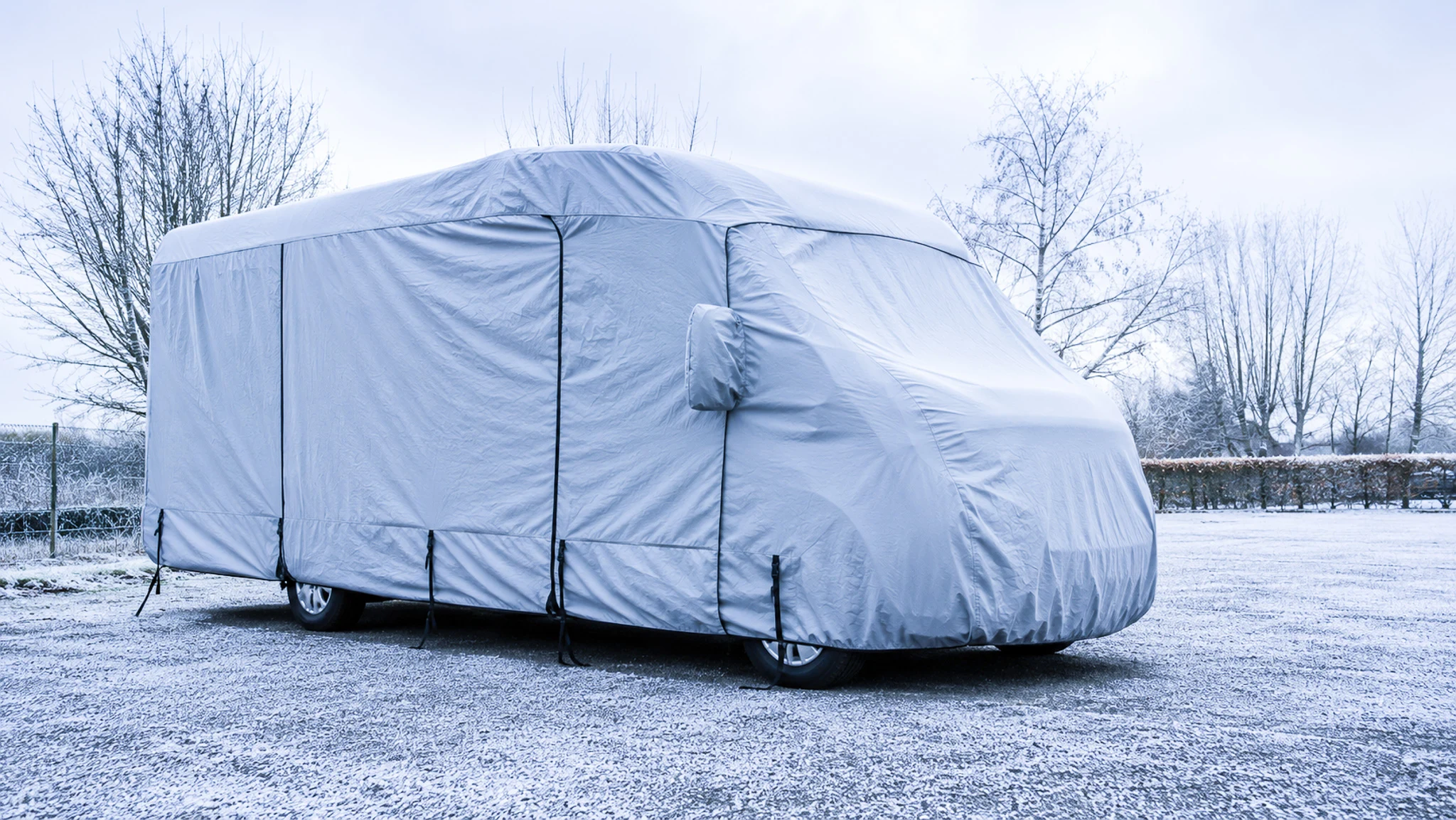
Cost-wise, there are two schools. Doing it yourself, budget £50 to £100 a year (plumbing antifreeze, a dehumidifier). Handing it to a professional or putting it into covered storage is more like £150 to £300 for the season, full winterisation included. It comes down to whether you’ve got a dry space to hand, or not.
Van and campervan conversions: the specifics
If you drive a van or panel-van conversion (Renault Master, Citroën Relay, Mercedes Sprinter, VW Crafter…), the maintenance costs differ a little from a coachbuilt motorhome with a separate body.
Differences from a motorhome
The main advantage of a van or panel van is its monocoque structure. Unlike a coachbuilt with a bonded body, there’s no joint between the living area and the base vehicle, which greatly reduces the risk of water ingress. As a result, the damp side is often less of a worry (and cheaper).
The mechanical side, though, is identical. A panel-van conversion is heavy (often close to 3.5 tonnes loaded), so brake, tyre and clutch wear is comparable to a motorhome.
Van/conversion maintenance budget
- Annual service: £200 to £450
- Timing belt: £400 to £600 (every 120,000 km)
- Tyres: £100 to £180 per tyre (commercial tyres, “Camper” not always needed)
- MOT: from £54.85
- Damp/sealing: often under £100 per year (door and window seals)
- Heater (diesel type Webasto/Planar): £50 to £100 annual maintenance
- Tanks and toilets: same as a motorhome
- Electrics: same as a motorhome
Total estimated budget for a van/conversion: between £1,400 and £2,800 per year, roughly 10 to 15% less than a coachbuilt motorhome, mainly thanks to savings on sealing and sometimes tyres.
How can you cut motorhome maintenance costs?
Right, I can already see your face. “More expenses?” you’re thinking. Don’t worry, I’ll give you a few tricks to lighten the bill a bit. Because we’re not all millionaires, are we? With a little organisation, you can cut your maintenance bill by 20 to 30%.
Tips to reduce the bill
- Do it yourself: some jobs are well within reach. Changing filters, checking levels, cleaning tanks… all of that you can do yourself. (Just be honest, if you’re not handy, leave the tricky stuff to the pros!)
- Buy smart: compare the price of parts and products online. Sites like Euro Car Parts or GSF Car Parts are often 30 to 50% cheaper than a garage counter.
- Share the load: got mates with motorhomes? Buy certain products or tools together. It saves money and it’s a good excuse to meet up and tinker.
- Bundle the jobs: if you’re having the timing belt done, get the water pump and tensioner done at the same time. The labour is billed once.
Hourly labour rate: how to compare
The hourly labour rate is the single factor that swings your bill the most:
Independent garages
- Rate: £60 to £75 / hour
- Often more flexible
- Quality varies, ask around locally
Dealers / motorhome specialists
- Rate: £75 to £90 / hour
- Specific motorhome expertise
- Access to original parts
The gap looks small over one hour, but on a 4 to 6 hour job (like a clutch) it easily adds £60 to £180 in labour alone.
Why preventive maintenance pays
It’s a bit like going to the dentist regularly rather than waiting for raging toothache. It hurts less… on the wallet!
A pound spent on preventive maintenance can save you ten in future repairs.
So what does that mean in practice? Inspect your motorhome regularly. Check the seals, the levels, the state of the tyres. Don’t wait for something to snap before you replace a wear part. And above all, follow the manufacturer’s service schedule.
Keep a service book up to date. It helps you track what’s been done and when, and it’s a real plus if you ever decide to sell or hire out your motorhome to offset the costs.
Our extra tip
How does it compare to a car and a flat?
That’s the big question. Is your motorhome your main home, or your little holiday nest? Because believe me, it changes everything!
Scenario 1: You live in your motorhome year-round
If you’ve decided to make your motorhome your full-time home, congratulations, you might just have cracked the code of the century.
Settled life (car + flat)
- Rent: £700 to £1,200/month
- Bills (water, electric, heating): £150 to £250/month
- Car maintenance: £100 to £200/month
- Home + car insurance: £100 to £150/month
- Total: £1,050 to £1,800/month
Full-time motorhome life
- No rent: £0
- Fuel: £200 to £500/month
- Motorhome maintenance: £150 to £300/month (spread)
- Campsites/pitches: £100 to £300/month
- Motorhome insurance: £40 to £100/month
- Total: £490 to £1,200/month
It’s as if you’d merged all your living costs into one mobile package. Not bad, is it?
The result: living year-round in a motorhome, you can save around 50% compared with a settled life, especially if you travel through countries where the cost of living is lower (Portugal, Spain, Greece…).
Scenario 2: Leisure vehicle
More the type to keep a base and use your motorhome for holidays? That’s great too, but on the wallet it’s a different story. You stack the fixed costs of the motorhome on top of your main home.
In that case the extra cost is around 20 to 40% compared with conventional holidays. But you gain in freedom and flexibility.
FAQ: common questions about maintenance costs
Frequently asked questions about motorhome maintenance costs
How much does it cost to maintain a motorhome per year in the UK?
Annual motorhome maintenance costs between £1,700 and £3,500 depending on age and use. This covers the mechanical service (£200-600), tyres, the MOT (around £55), the annual habitation service with damp and gas checks (£150-250), insurance (£250-600) and everyday maintenance products. Regular preventive maintenance saves 20 to 30% on these costs.
Does a motorhome need an MOT in the UK?
Yes. A motorhome must pass an MOT test every year once it is 3 years old. Most motorhomes up to 3,000 kg unladen take a Class 4 MOT (max £54.85), while those between 3,000 and 3,500 kg take a Class 7 MOT (max £58.60). Vehicles over 3,500 kg follow the DVSA heavy-vehicle testing regime instead. You can check and book via GOV.UK.
How much does a motorhome oil change or service cost?
A motorhome oil change costs between £150 and £300 depending on the garage and engine. For a standard 2.3L diesel (Fiat Ducato), expect around £150 to £200 for a full oil-and-filter change. A full annual service on a Ducato base runs £250 to £500. The oil change is recommended every 20,000 to 30,000 km or once a year.
What is a habitation service and how much does it cost?
A habitation service is the annual health check of the living area of your motorhome, separate from the mechanical service. Carried out by an Approved Workshop Scheme (AWS) workshop, it covers the gas system (by a Gas Safe registered engineer), a damp/water-ingress check, the 12V and 230V electrics, ventilation and appliances. Budget £150 to £250 per year. It is not a legal requirement for a private owner, but many manufacturers link the warranty to it.
How much is motorhome insurance in the UK?
Motorhome insurance costs between £250 and £600 per year for most owners, depending on the value of the vehicle, your mileage and whether you live in it full time. Third-party, fire and theft cover starts around £250-350, while comprehensive cover on a newer or high-value motorhome can reach £600 or more. Check the exclusions (contents, awning, European travel days).
What is the hourly labour rate for motorhome repair?
The hourly labour rate in the UK ranges from £60 to £90 depending on the region and type of workshop. Main dealers and motorhome specialists usually charge £75 to £90 per hour, while independent mechanics are closer to £60 to £75. On a long job such as a clutch, always compare two or three quotes with parts and labour itemised separately.
How do you winterise a motorhome and what does it cost?
Winterising means fully draining the fresh, grey and water-heater tanks and the whole plumbing circuit so trapped water cannot freeze and crack a fitting, putting the leisure battery on a trickle charger, and keeping the interior ventilated against damp. Doing it yourself costs £50 to £100 a year (antifreeze, dehumidifier). Covered storage with a professional runs £150 to £300 for the season.
When should the timing belt be changed on a Fiat Ducato?
On a Fiat Ducato motorhome the timing belt should be changed every 120,000 km or every 5 years, even if the mileage is not reached, because the belt ages with time. The replacement (with tensioner and water pump) costs £400 to £600. Never exceed this interval: a snapped belt destroys the engine.
What engine oil does a Fiat Ducato motorhome need?
A Fiat Ducato 2.3L Multijet needs a synthetic engine oil meeting the manufacturer specification (usually 5W30 or 5W40 depending on the year, check the handbook). The oil change is done every 20,000 to 30,000 km or once a year, costing £150 to £200 at a garage, or £50 to £80 in parts if you do it yourself.
How do you clean a motorhome water tank and pipes?
The simplest and cheapest method is white vinegar. Pour a good dose into the fresh water tank, let it sit, run the pump so the mix circulates through all the pipes, then rinse thoroughly. It descales, disinfects and clears the algae without buying a special product. Do it once or twice a year, especially before and after winter storage.
Can I service my motorhome myself?
Yes, for a good part of it. Oil changes, filter swaps, level checks, tank cleaning and tyre-pressure checks are all within reach of a competent DIYer and save on labour (£60-90 an hour). However, the timing belt, the clutch, the gas check and the MOT should be left to a professional.
Where can you get a motorhome serviced more cheaply?
An independent mechanic typically charges £60 to £75 an hour against £75 to £90 at a main dealer or motorhome specialist. On a long job like a clutch the gap quickly tops £100. If you travel through Europe, having your service done in a lower-cost country (Portugal, Spain) reduces the bill further, but always ask for an invoice for the warranty and resale.
PS: our brakes went once, our clutch twice.. and we’re still rolling. A well looked-after vehicle forgives a lot.
Van life day to day, unfiltered
Two years of full-time van life, and the Algarve as our base ever since. We still hit the road, by van or otherwise, and we write up what we find along the way. An email when we have something to say, no more.
Ce que vous souhaitez recevoir :