


Introduction
Sure, a motorhome can be driven with a standard driver’s license, but that doesn’t make it just another car. In this article, we’ll reveal the secrets to mastering your rolling palace like a pro. Savings, eco-friendliness, and vehicle preservation—get ready, it’s going to be a ride!
Why Is Efficient Motorhome Driving So Important?
By adopting efficient driving habits in your motorhome, you can reduce fuel consumption by up to 20% and extend the lifespan of mechanical components. These benefits result in substantial savings (allowing you to enjoy your travels even more) and make for a more pleasant journey. Practicing economical driving and preserving your vehicle are essential goals for every motorhome enthusiast.
How to Properly Prepare Your Motorhome Before Departure
That’s right, good driving starts with proper preparation of your vehicle, which involves three key steps: inspecting and maintaining the vehicle, optimizing the load, and carefully planning your route. These steps will ensure a safe, economical, and enjoyable trip.
Let’s start with the vehicle inspection and maintenance. It’s like your car, but in XL size. Check the fluid levels (oil, coolant, windshield washer fluid), tire pressure (super important for fuel economy!), and brakes. Don’t forget to check the lights and wipers. (Because driving in the rain with squeaky wipers is pure misery, trust me!)
Next up is loading. Optimizing the load and weight distribution isn’t just for aesthetics. A poorly loaded motorhome is like an elephant on a unicycle: unstable and fuel-hungry. Distribute the weight evenly, keeping heavy items low and centered. And most importantly, avoid overloading! Your motorhome isn’t Mary Poppins; its storage isn’t bottomless.
Finally, there’s route planning. Yes, it might sound a bit like Boy Scouts stuff, but it’s super important. Mark out gas stations along your route (especially if you have refillable LPG bottles), motorhome rest areas for breaks, and roads suitable for your vehicle’s size. There’s nothing worse than getting stuck in a narrow medieval alley with your rolling palace!
How to Drive Your Motorhome Economically
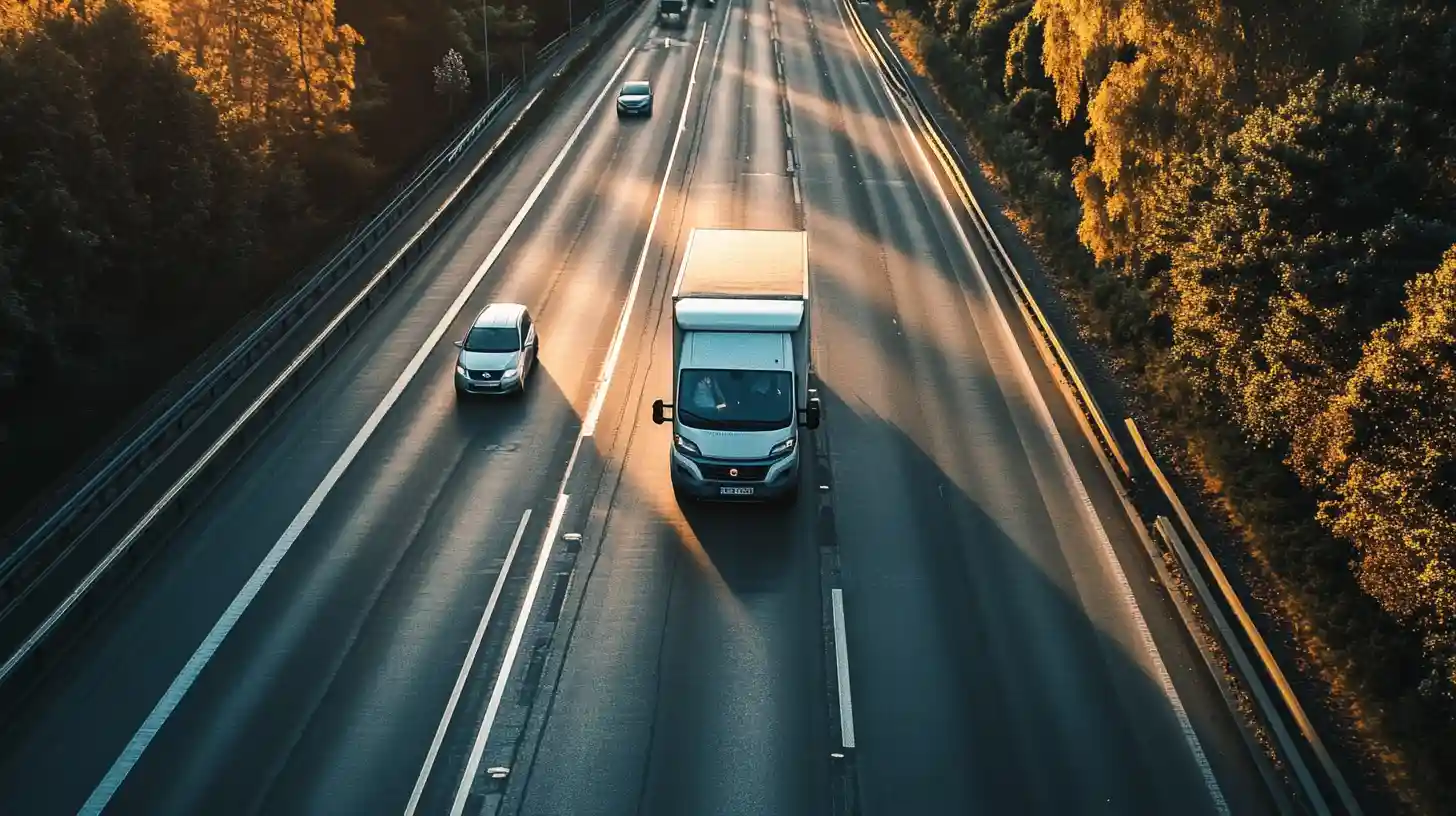
To drive your motorhome economically, maintain a steady, moderate speed, accelerate and brake smoothly, use gears optimally, and anticipate traffic. These techniques can reduce your fuel consumption by up to 20%.
That’s the short version, but now let’s dive into the details.
Starting with speed management. Your motorhome isn’t a Ferrari, and I’m sure you already know that, so there’s no need to play Fast and Furious. The secret is to maintain a constant, moderate speed. On the highway, driving at 110 km/h instead of 130 (for the more recent models!) can save you up to a litre per 100 km! That’s nothing to sneeze at, especially when these beasts can gulp down 10 to 12 litres per 100 km (i.e., 21-26 MPG).
Next, let’s talk about acceleration and braking. Forget about quick starts and rally-style braking. Your motorhome prefers a gentle touch. Accelerate gradually, as if you have an egg between your foot and the pedal. And for braking, anticipate! This allows you to slow down smoothly without wearing out your brake pads. (Plus, it’ll keep your dishes from turning into a roller coaster ride in the cupboards!)
Using gears wisely is also crucial. Your motorhome likes to run at low RPMs, so shift up as soon as possible. And when going downhill, take advantage of engine braking by downshifting rather than wearing out your brakes.
Finally, anticipating traffic and road conditions is the cornerstone of economical driving. Look far ahead, spot traffic lights, roundabouts, and forming traffic jams. The more you anticipate, the less you’ll need to brake abruptly and accelerate again. This is a win-win for your fuel consumption!
How to Adapt Your Driving to Specific Conditions in a Motorhome
To adapt your driving to specific conditions in a motorhome, you need to master driving uphill and downhill, handle crosswinds, and navigate carefully in urban areas and on narrow roads. These techniques help save fuel and preserve your vehicle.
Because, let’s face it, the road isn’t always smooth sailing, especially when you’re driving a house on wheels. Buckle up, and let’s explore how to handle your beast in all kinds of situations.
Let’s start with driving uphill and downhill. Going uphill, your motorhome is going to struggle a bit—it’s normal. The key is to keep a constant engine speed. If you feel it’s straining, don’t hesitate to downshift. And when descending, it’s time to put the engine brake to work! Downshift and let the engine naturally slow the vehicle. Your brakes will thank you, trust me!
Now, let’s talk about crosswinds. Your motorhome is like a giant sail on the road. When the wind blows hard from the side, things can get challenging! The secret? Slow down a bit and keep a firm grip on the steering wheel. If you feel it’s getting too strong, don’t hesitate to pull over. Better to lose 10 minutes than end up in the ditch!
Finally, navigating in urban areas and on narrow roads can be a beginner motorhome driver’s nightmare. But don’t worry; with a few tricks, you’ll manage like a pro. In cities, anticipate as much as possible: watch out for narrow streets and tight turns. Don’t hesitate to have your co-pilot get out and guide you through tricky maneuvers. (And if you get stuck, stay calm. Take a deep breath—everyone has been there at some point!)
How to Preserve the Wear-and-Tear Parts of Your Motorhome
To preserve the wear-and-tear parts of your motorhome, use the brakes carefully and take it easy on the transmission and clutch. These techniques can extend the lifespan of these components by up to 30%.
Alright, we’re in the final round, my friend! Let’s talk about how to avoid turning your motorhome into a money pit. Because wear-and-tear parts are like weeds—if you’re not careful, they’ll quickly become a costly problem!
Let’s start with the brakes. Your motorhome isn’t a Formula 1 car, so keep a calm attitude behind the wheel! Anticipate braking, use the engine brake when going downhill (remember, we covered this earlier), and avoid sudden stops. Your brake pads (and your wallet) will thank you!
Next up: the transmission and clutch. This is the heart of your beast, so treat it with care! Avoid quick starts, abrupt gear changes, and, most importantly, stop resting your foot on the clutch! (Yes, I know, it’s tempting, but it’s the quickest way to wear it out in record time!)

We're Caroline and Xavier
We got most of it wrong before we got it right. We share what actually holds up day to day in a van, and what we wouldn't do again.
Ce que vous souhaitez recevoir :