Stumbling upon the Quinta da Regaleira in Sintra feels like accidentally bursting into an Aztec temple right in the middle of Portugal. At first glance, you think, “wait, who built this?”. On the second look, you say, “okay, I want to explore every square meter of this place.” On the third, you find yourself descending 9 levels underground in a Templar initiation well, not quite sure how you got there.
There you go, that’s a bit of what the Regaleira is like. Our favorite spot in Sintra, without a doubt. And probably the most unusual site in the entire Lisbon region, because you enter with the idea of visiting “another Portuguese palace” and leave with the conviction that you’ve explored the set of an adventure film that no one has ever shot.
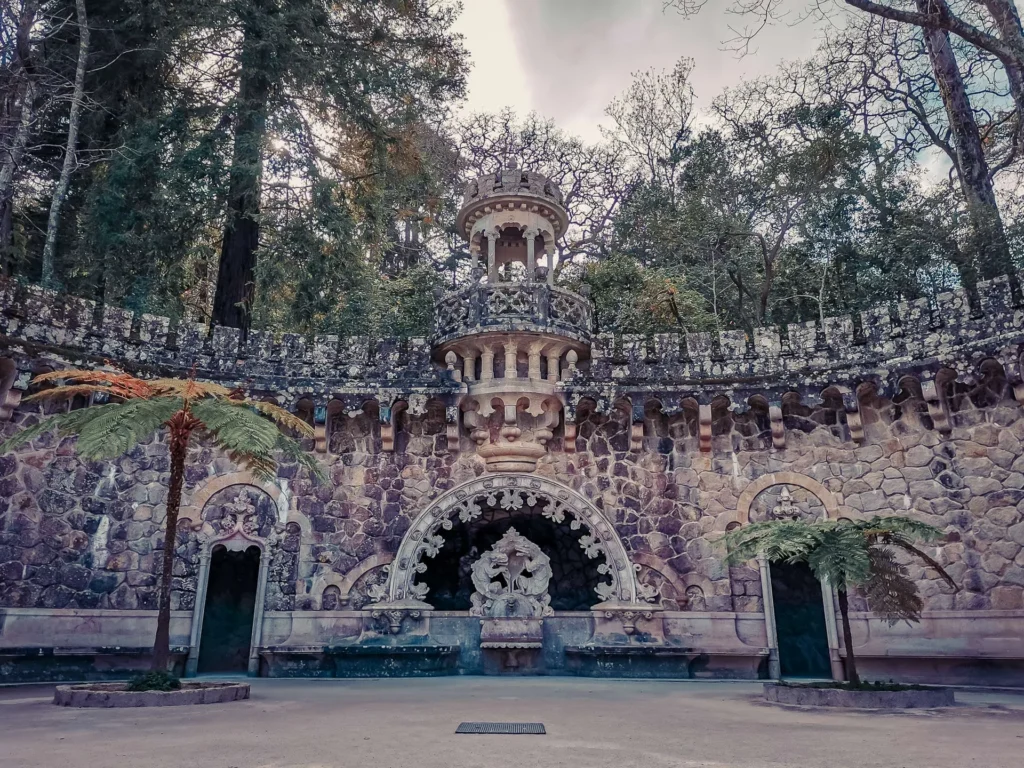
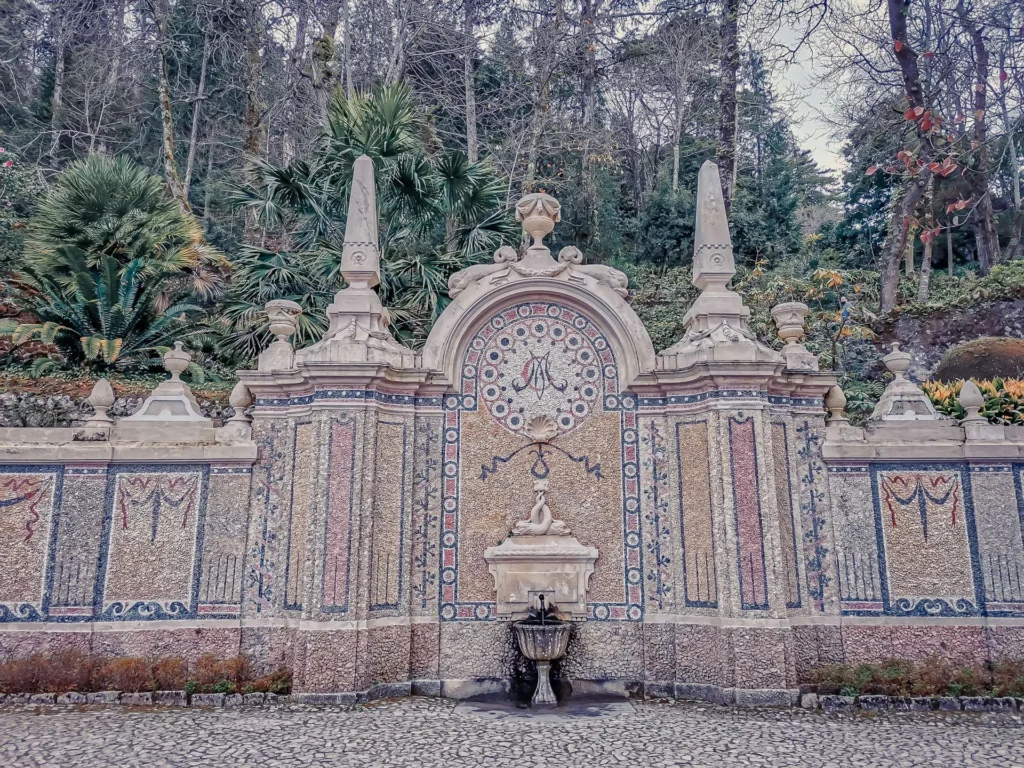
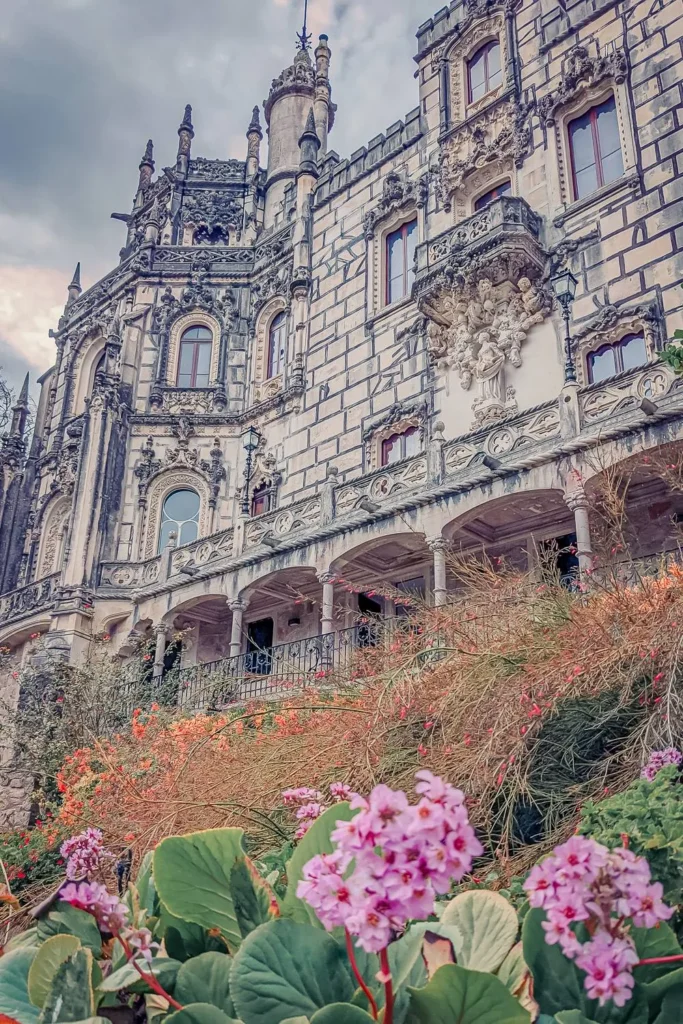
A Masonic estate between temples and gardens
A quick history point, because it’s honestly fascinating. The Quinta da Regaleira was built between 1898 and 1912 by a Portuguese millionaire named Antonio Augusto Carvalho Monteiro (nicknamed “Monteiro dos Milhoes”, Monteiro of Millions). The guy made his fortune in Brazil through coffee and precious stones, and he returned to Portugal with an obsession: to build an estate that reflects his passion for Freemasonry, alchemy, the Order of the Templars, and Rosicrucianism.
To do this properly, he hired an Italian architect, Luigi Manini, who was also a theater decorator (and you can tell, because the entire Quinta has a pronounced theatrical side). The result: a main palace in neo-Manueline style (the Portuguese style of the 16th century), surrounded by a 4-hectare park full of hidden esoteric symbols, underground tunnels, artificial caves, chapels, and the highlight of the show, the initiation well.
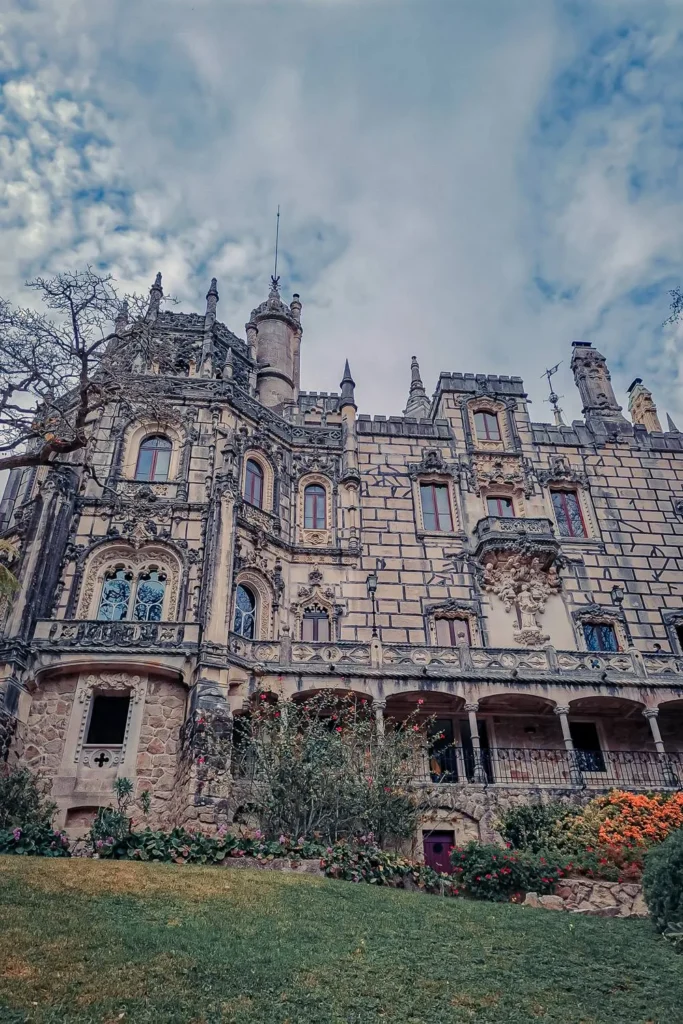
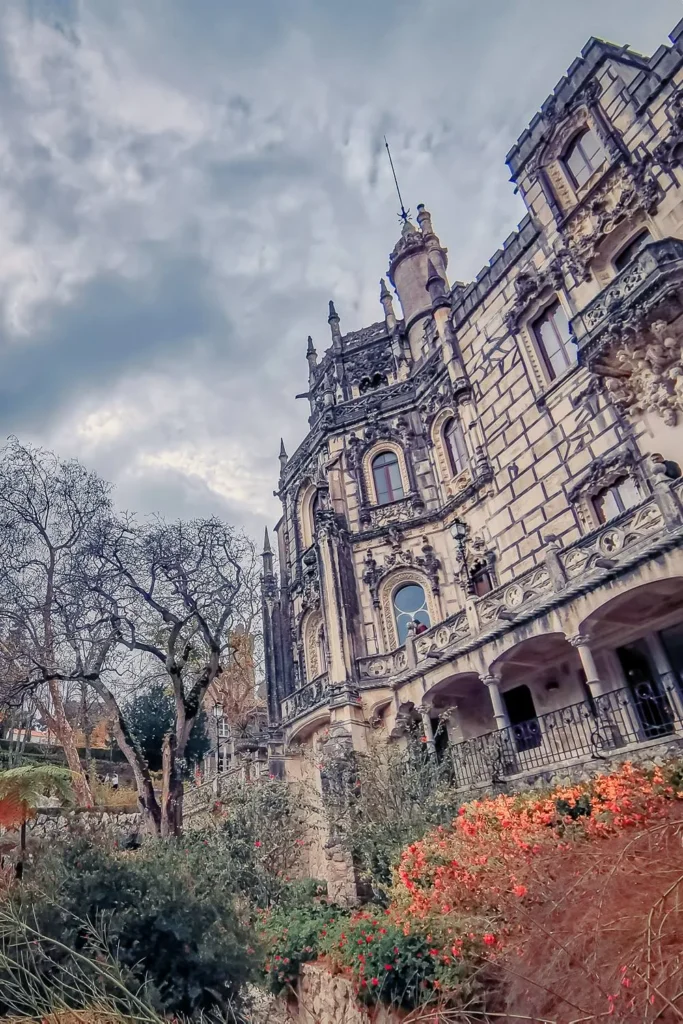
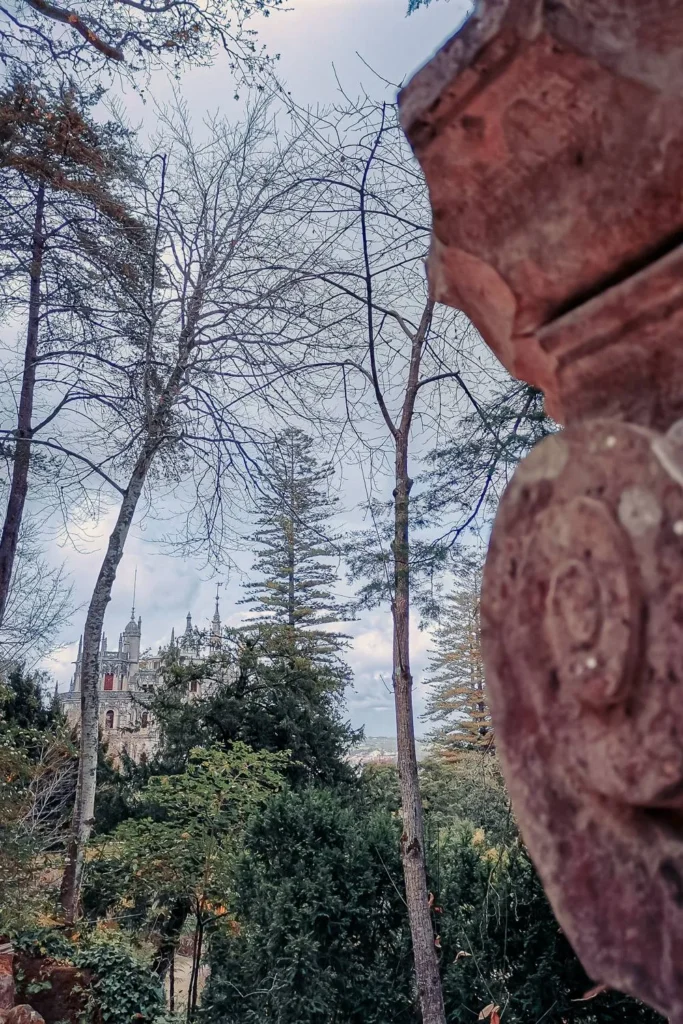
In short, an eccentric 19th-century capitalist orders himself an esoteric park with a symbolic well for his personal use. What more could one ask for? And 100 years later, UNESCO classifies it all as a World Heritage site (1995, along with the entire cultural landscape of Sintra) and the whole country uses it as a backdrop to sell postcards. Well done, Monteiro, you won.
The Templar initiation well (the inverted tower)
Well, the thing. If you only do one thing at the Regaleira, it’s to descend into this well.
It’s called the Poco Iniciatico (initiation well), also nicknamed the inverted tower. Instead of rising towards the sky like a classic tower, you descend underground via a spiral staircase that hugs the walls of a circular well. Depth: 27 meters. That’s the equivalent of a 9-story building, except you’re going in the wrong direction.
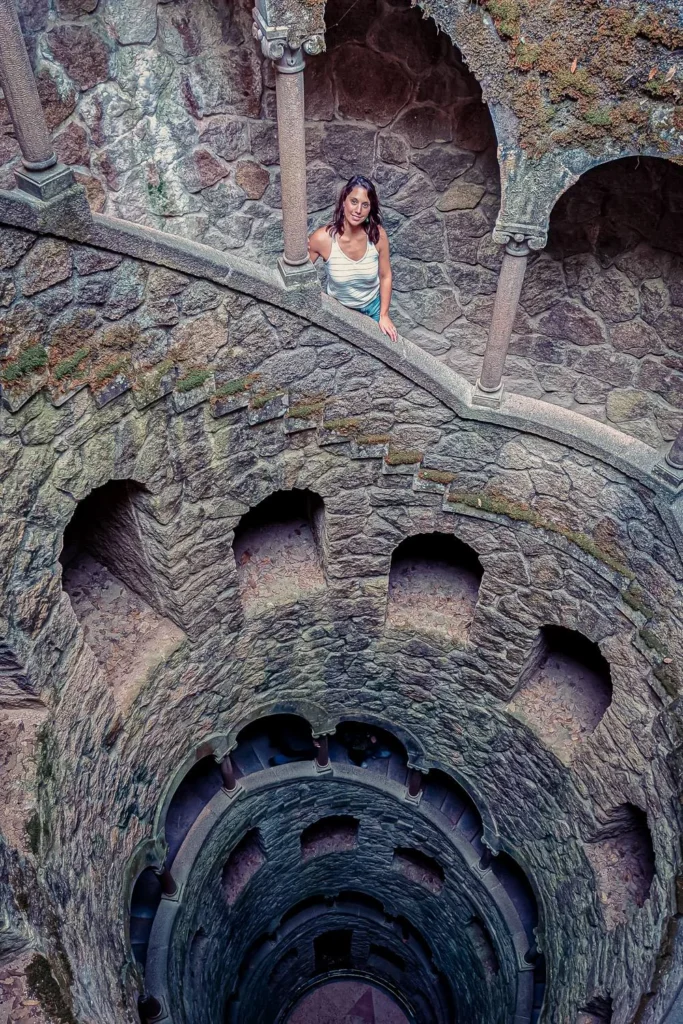
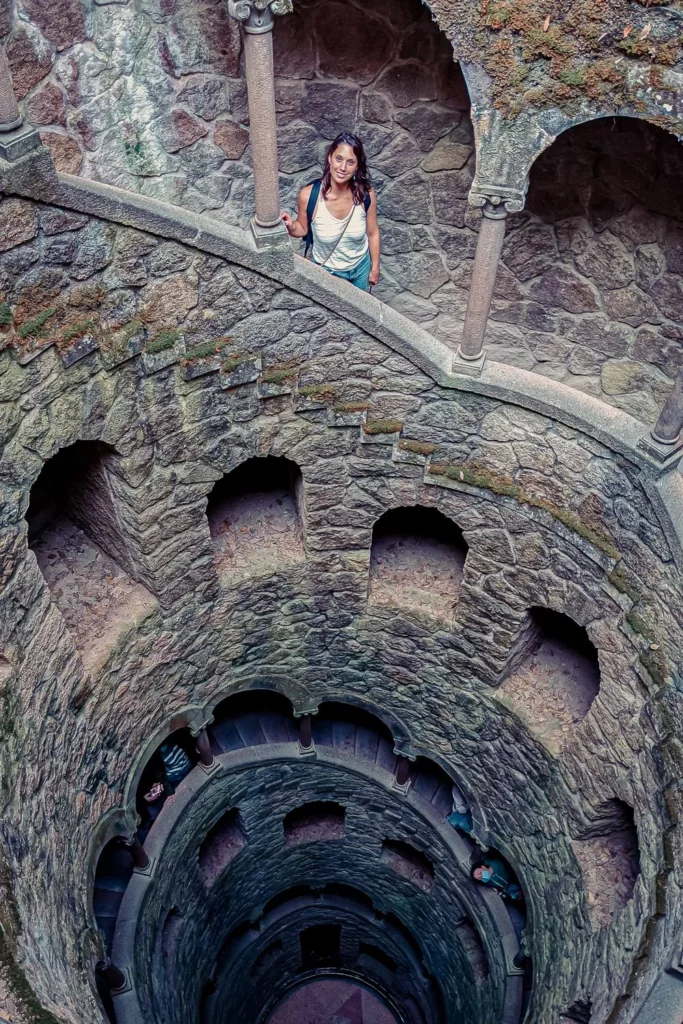
The staircase has 9 levels, and this number is not a coincidence: it directly references the 9 circles of Hell in Dante’s Divine Comedy. Symbolically, descending the well represents a Masonic initiation: the symbolic death of the old self to be reborn purified. When you reach the bottom, you walk on a marble rose window representing the Templar cross. Then you head back through a dark tunnel (flashlight welcome) that opens up… near a lake. All within barely lit artificial caves.
Sensation during the descent: impressive. The stone vaults, the humidity increasing as you go, the other visitors whispering like in a cathedral, your own breathing becoming strangely more audible. Even if you don’t believe for a second in the esoteric side of it, the ambiance works 100%. You come out feeling like you’ve done something more than just a tourist visit.
Secret passages and caves
Once you’ve done the well, the reflex is: “is that it?”. Oh no, my friend. All around the estate, there’s a network of tunnels and artificial caves that connect the different key points of the park.
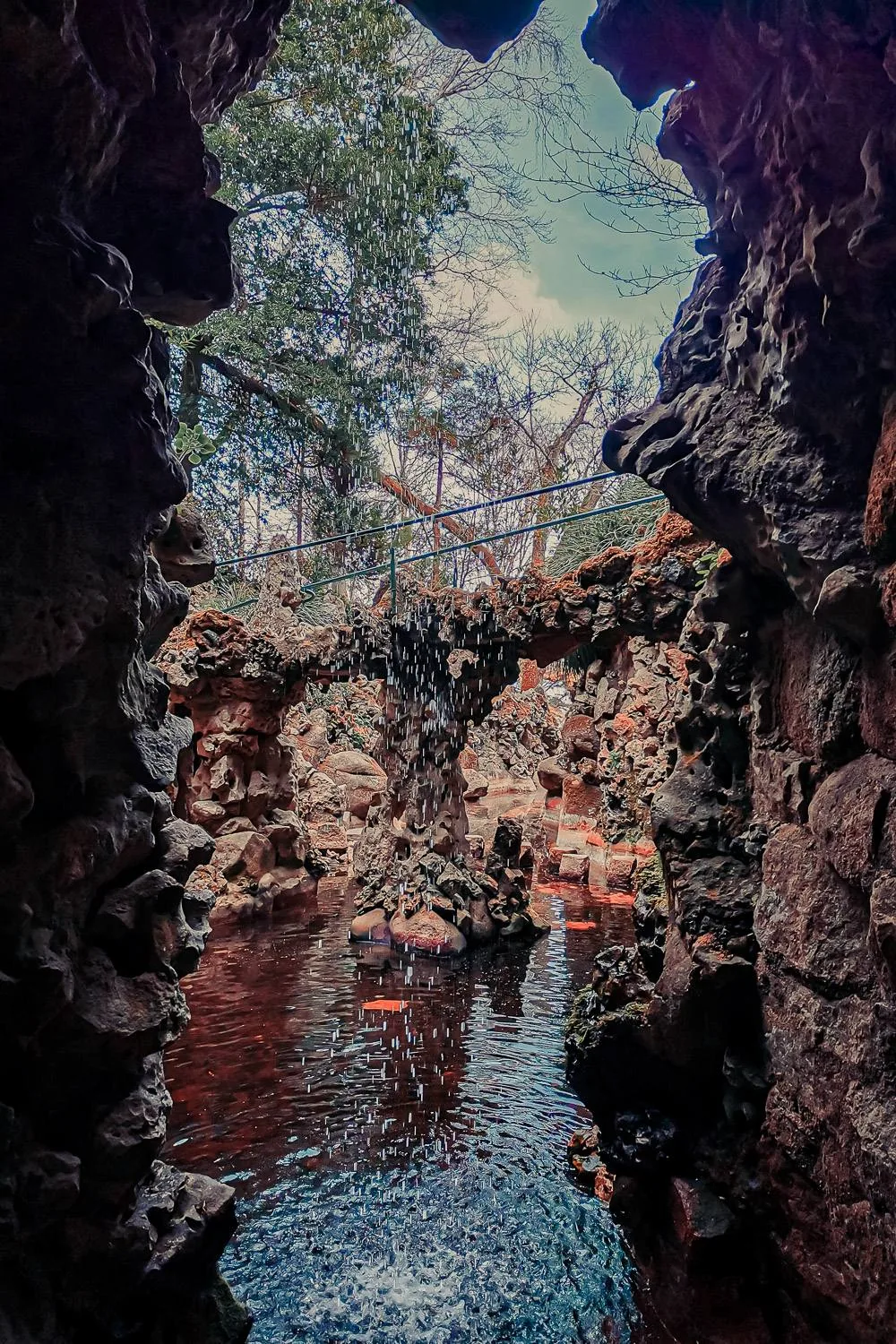
The idea of Carvalho Monteiro and Manini was that initiated visitors (or Monteiro’s guests at the time, more likely) could move from one point to another in the park without going back through the main paths, using hidden galleries. So you wander around the park, see a cave entrance somewhat camouflaged by vegetation, go inside, and come out 80 meters later in a completely different spot without having seen the sky in between.
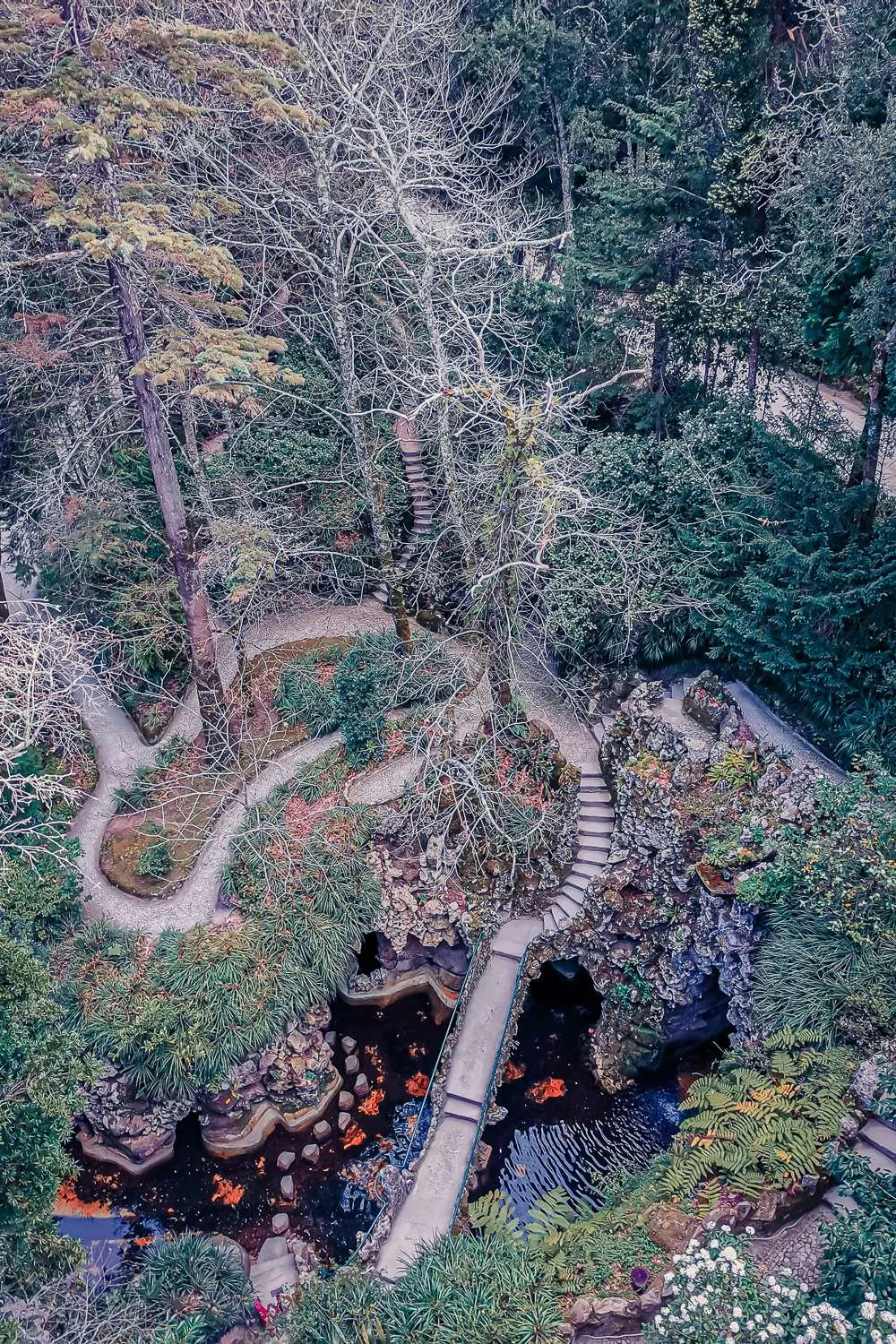
We had a great time rummaging around to find all the entrances. There’s one that opens behind a waterfall, it’s typically the kind of detail that makes you feel like you’re in Indiana Jones and the Temple of Doom. There’s another that leads directly at the foot of the initiation well. And there are probably more that we missed because that’s the principle of the thing: you’re supposed to discover them.
While we were searching, we saw someone at the bottom of a well. Another well than the main initiation well, a smaller, more austere hole. We tried to communicate with the guy, without success (either he was deaf, or he wasn’t a living dead, or he didn’t exist, we never found out). In short, it adds to the atmosphere.
The tower and the view of the Castle of the Moors
If you want to change things up a bit after the underground, climb up to the tower of the palace. Not the inverted tower, but a real classic tower this time, perched at the highest point of the estate.
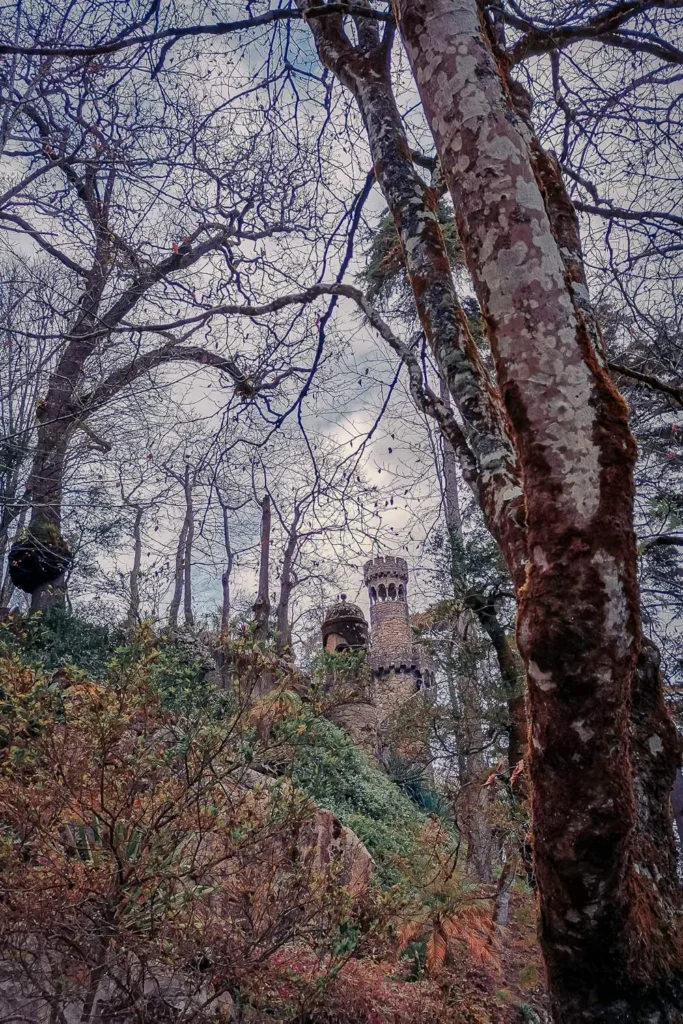
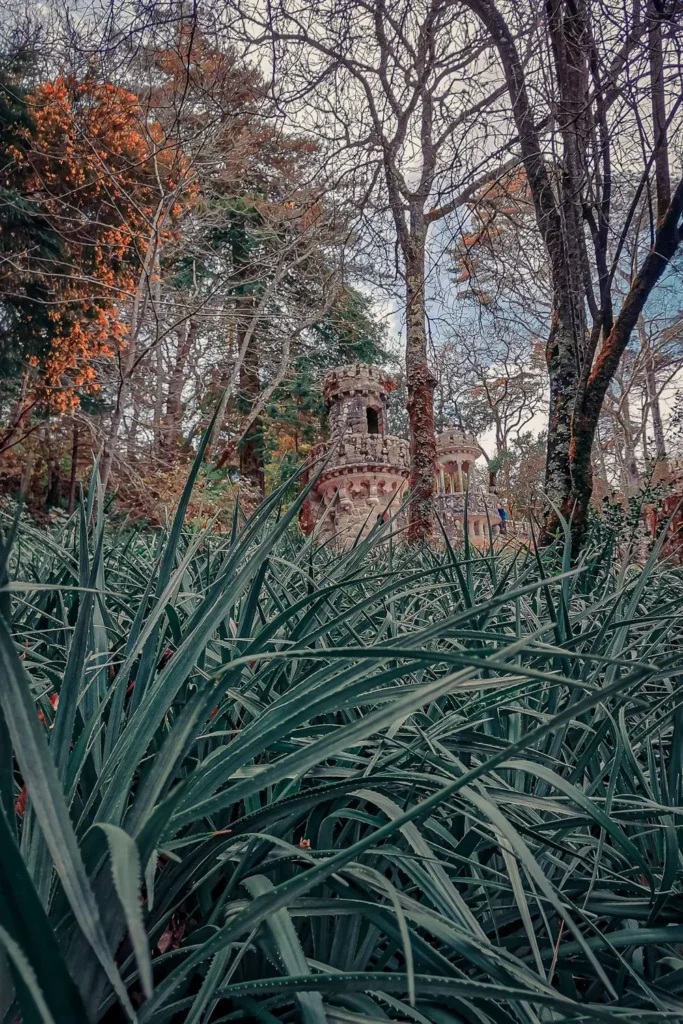
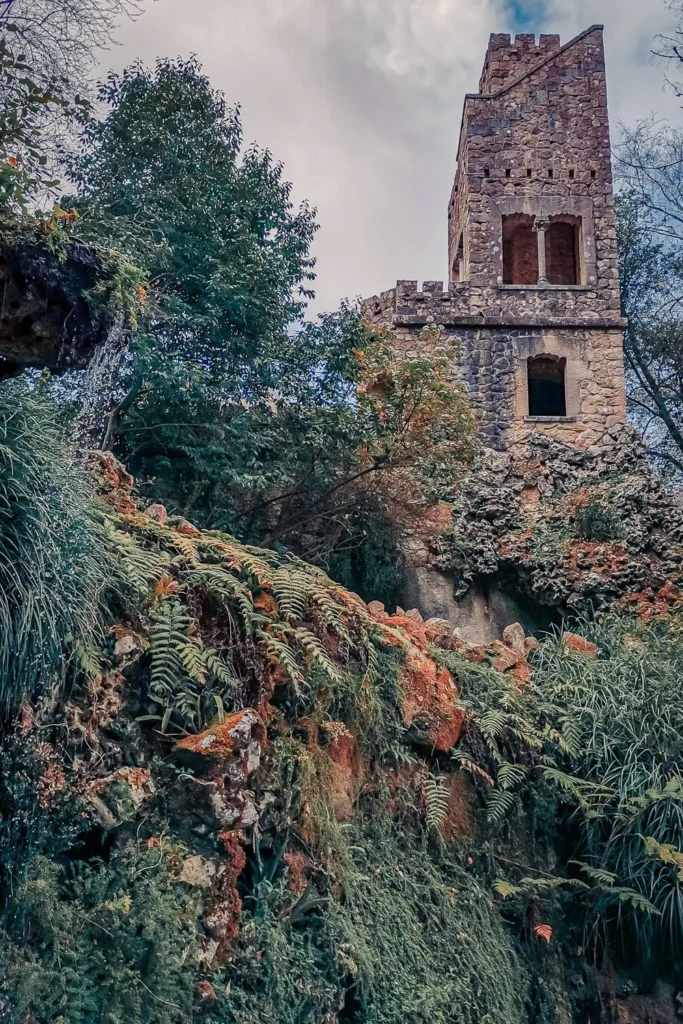
From the top, you have a panoramic view of all of Sintra: the historic center below, and especially, facing you, perched on the ridge across, the Castle of the Moors (Castelo dos Mouros) silhouetted against the sky with its crenellated walls. It’s one of the most beautiful Moorish castles in Portugal, a remnant of the Arab occupation in the 9th century, and seeing it from above from the Regaleira tower is just magnificent. You can also see the Pena Palace a bit further along the same ridge.
If you don’t have time to visit all the sites in Sintra (and you probably won’t have time, based on our experience), this view from the Regaleira is probably the best compromise to see all the sites of Sintra in one visual plan. Crazy architecture, a feeling of traveling through time. Everything we read about Sintra online or see in videos, we are really there at that precise moment. Zero disappointment.
Seasonality and practical tips
Practical information
If I had to choose just one site to visit in Sintra, it would be this one. The Pena Palace is more famous, more emblematic on postcards, but the Regaleira is more immersive, more surprising, more unusual. You don’t leave saying, “okay, that was beautiful,” you leave saying, “okay, I need to come back with more time to really explore everything.” And personally, that’s exactly the kind of visit I prefer.
PS: if you see someone at the bottom of a well, try to communicate. We tried, it didn’t work for us, but maybe you’ll have better luck. Keep us posted.