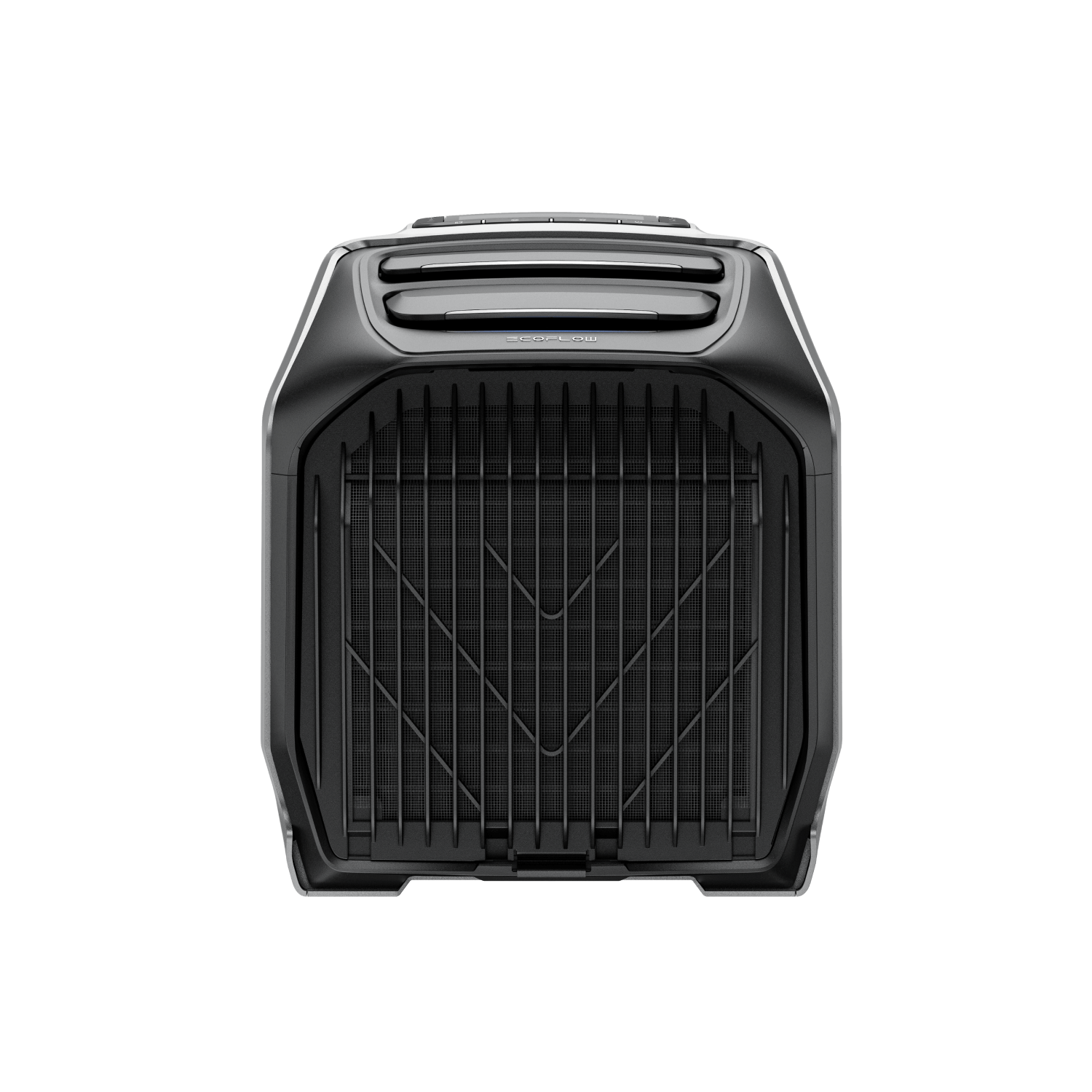
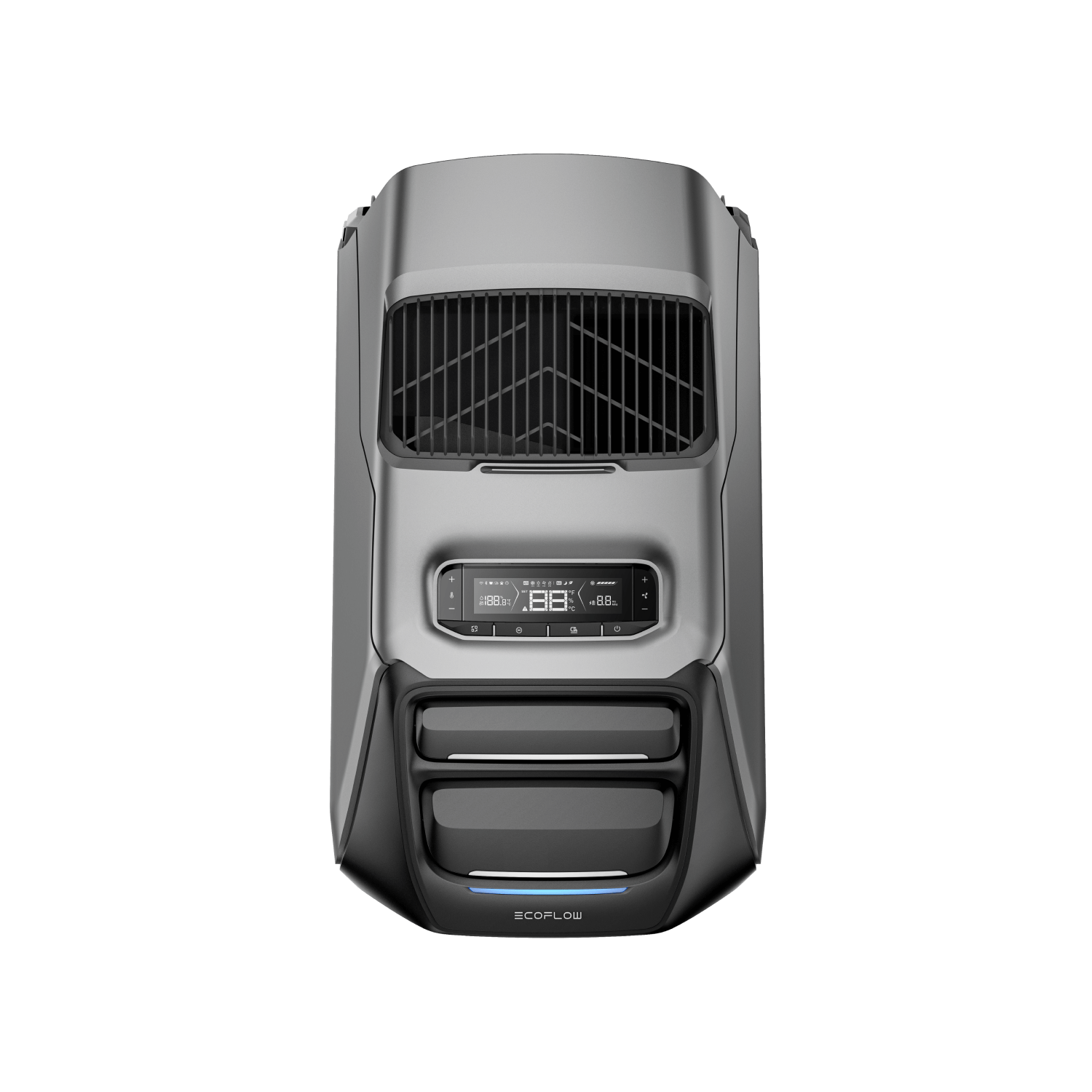
EcoFlow Wave 3: portable battery air conditioner and heater
CARO5**Verified price on 17 October 2026. The final price may vary.
Why use our link and our code?
Video
Description
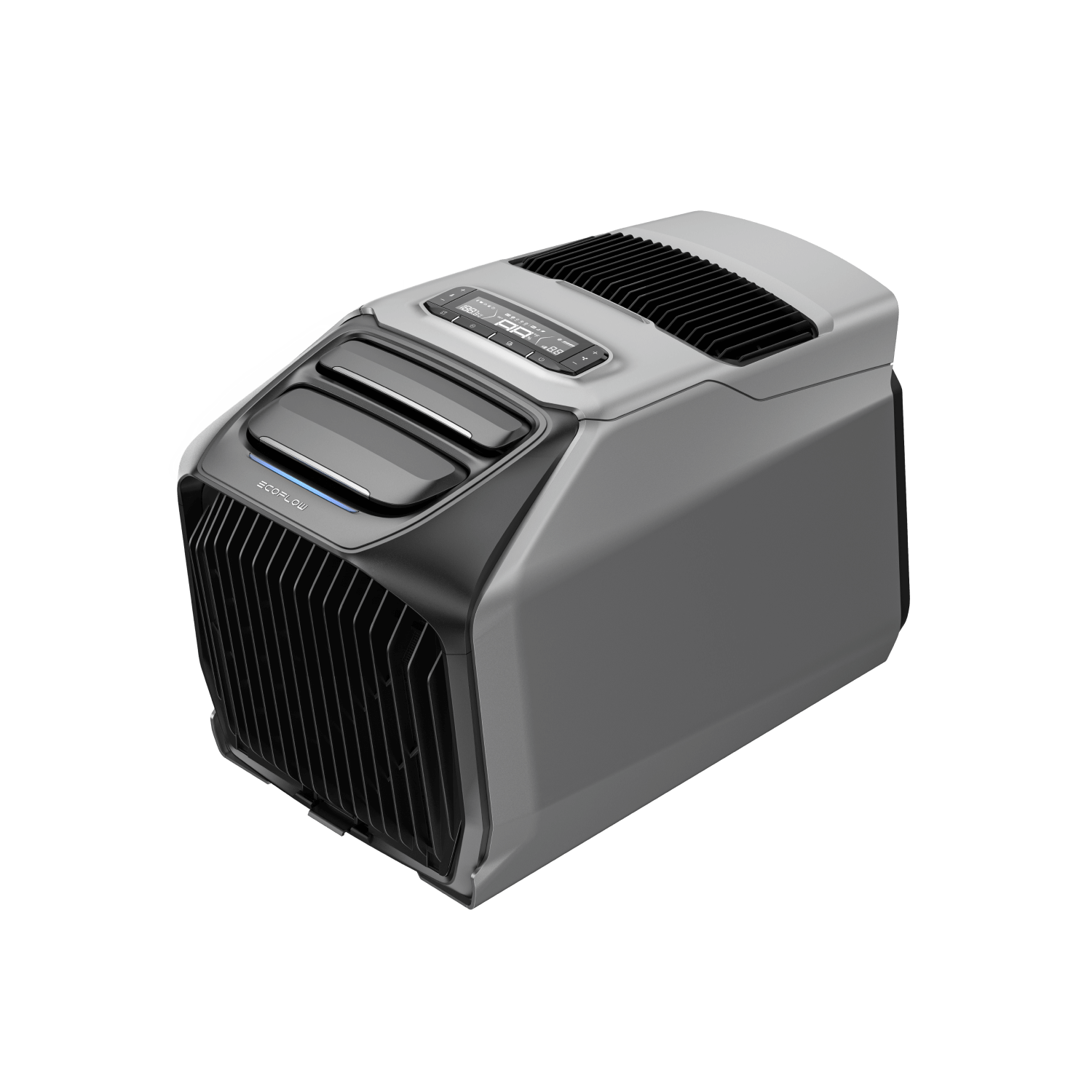
The EcoFlow Wave 3 is the air conditioner that cools, heats and dehumidifies on battery, with no fixed install and no drilling. Successor to the Wave 2 (which we owned and genuinely used), it targets the same job: cooling a corner of a campervan or a room with no AC, fully self-contained. It is one of the two references in portable van-life cooling today, alongside the Zero Breeze Mark 3.
Let's be straight: at this price, this is not the one-week-a-year holiday gadget (a clip-on fan and a shady spot do the trick there). The Wave 3 makes sense when you drive a lot, or when you have a fixed room with no cooling to handle day to day at home (an office, a garden shed) and you want the same unit on hand for the campervan. One machine, two lives.
Who is this portable air conditioner for?
We recommend it first to anyone already in the EcoFlow ecosystem. If you own a Delta station, the Wave 3 plugs straight in with no extra battery to buy: that is its big edge. It also suits slightly larger living spaces, since it pushes more BTU than its rivals.
If you head off once a year for a few days, though, the price is hard to justify: geography and a fan will do. We used that exact strategy for years with our own camper before the portable AC generation arrived.
What to know before buying a portable AC
Honest point, true of the Wave 3 as of every rival: a portable AC does not turn a van into a cold room. In full sun a van stays a metal box that heats faster than the machine cools it. The right move is a localised bubble of cool air (aim it at yourself, partition the sleeping area) rather than the whole volume. Lab claims like "minus 8 in fifteen minutes" hold on a tiny sealed volume; in a real 20 cu m camper, expect roughly minus 4 over an hour, better in the shade.
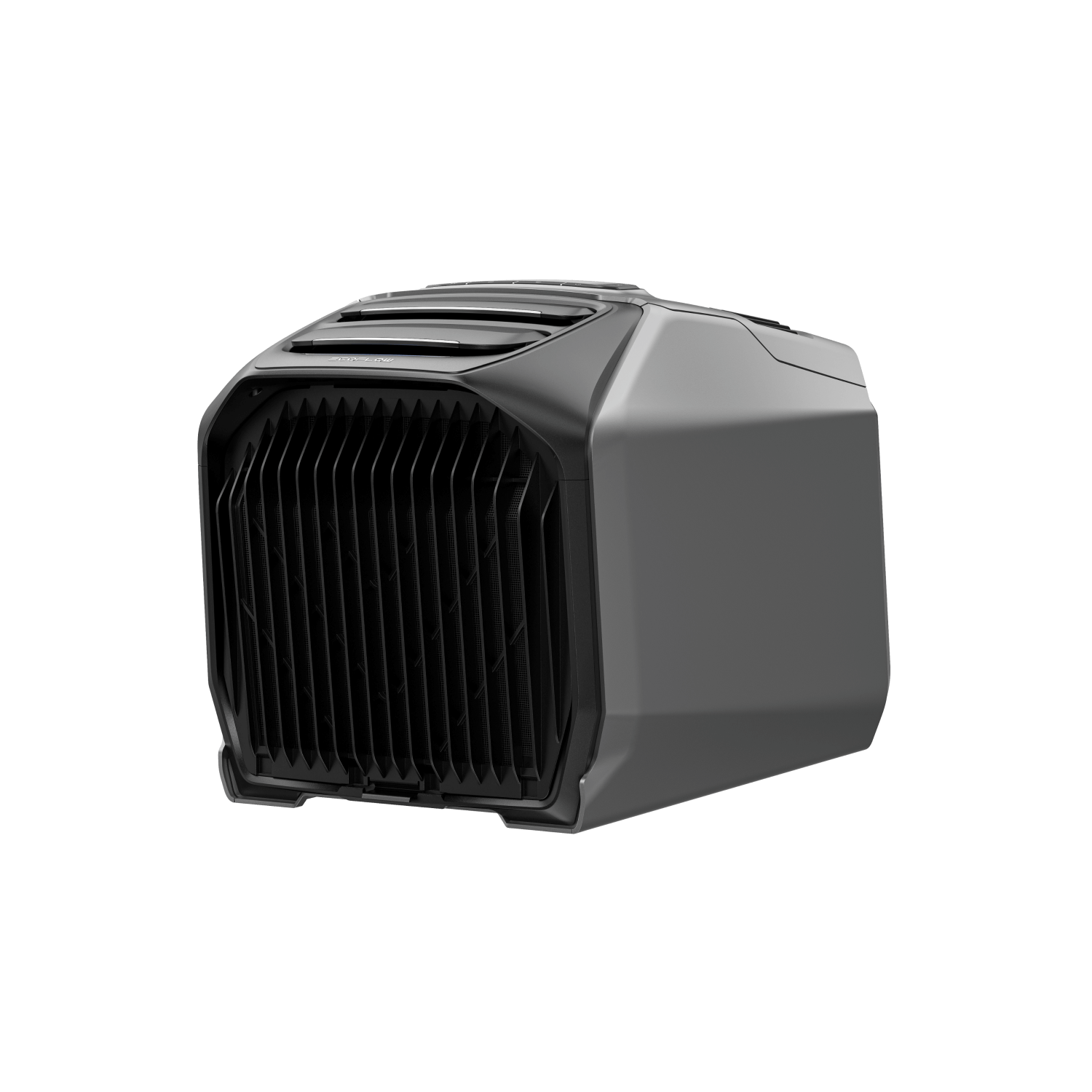
The make-or-break is sealing the hot-air exhaust. We learned it on our Wave 2: the kit was good, the sealing made the difference. The Wave 3 answers with two insulated hoses (separate intake and exhaust) and active water drainage.
Cooling, heating and dehumidifying: one unit all year
The Wave 3 rates 6,100 BTU cooling and 6,800 BTU heating, more than most rivals, with a 330 cu m/h airflow. Cooling draws from about 180 W in eco mode to roughly 450 W flat out. It is a true reversible AC: it heats down to about zero degrees ambient, better than the Wave 2, though it stops heating below freezing. It dehumidifies too, and it is quieter than the Wave 2, from about 47 dB in eco to 58 dB at full power.
EcoFlow ecosystem and runtime
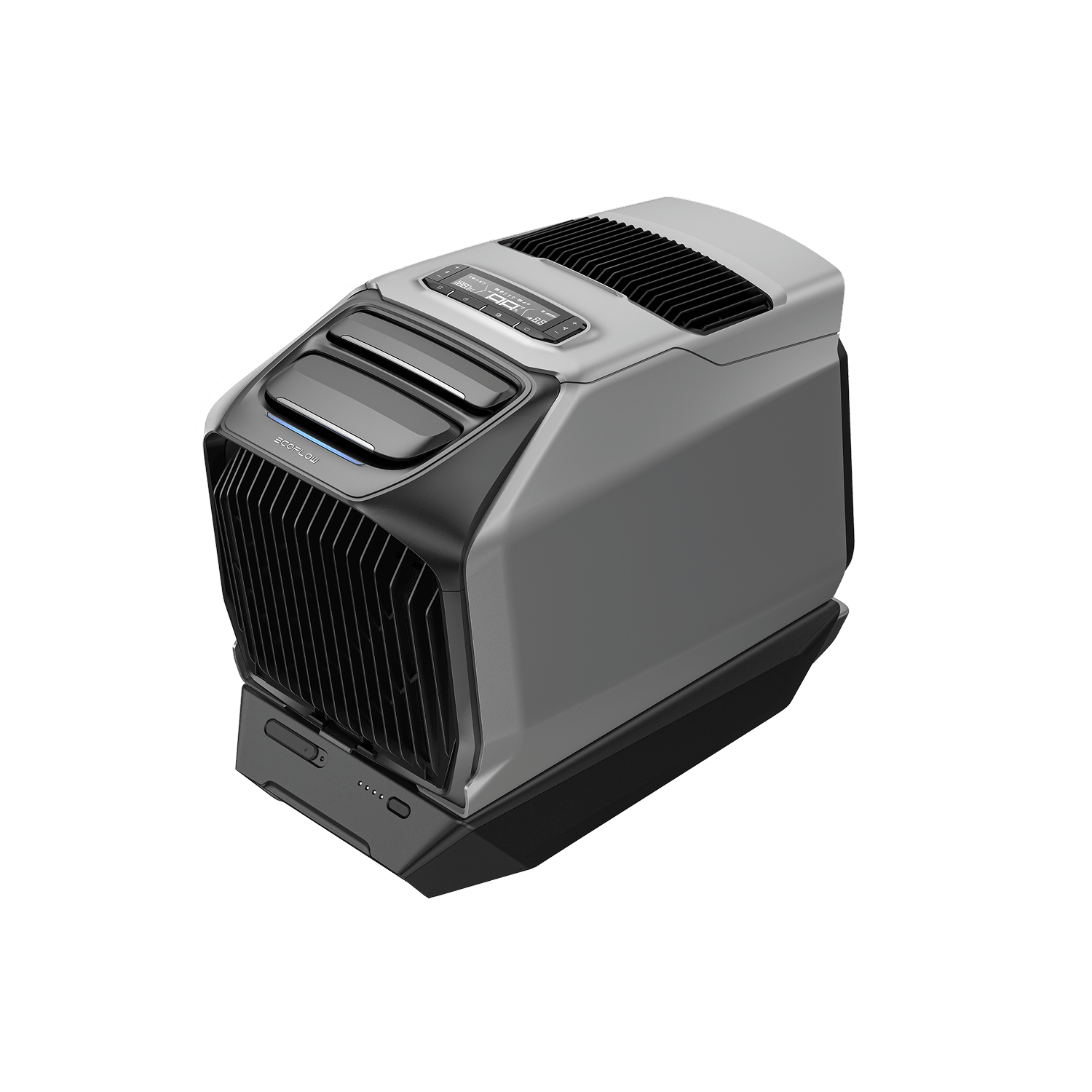
This is the Wave 3's real signature. The add-on battery is a 1,024 Wh LiFePO4 (around 4,000 cycles, far more than the Wave 2's chemistry), roughly 10 kg. Reckon about eight hours in eco mode and a little over two hours flat out on one battery. But you may not need the dedicated dock at all: the Wave 3 plugs into any EcoFlow Delta station (Delta, Delta 2, Delta Pro) through an adapter cable. Not a River, too small.
It also runs on 12V through the battery, and with the engine running it draws almost nothing, so it can run near-continuously while you drive. Solar goes to the battery or straight to a Delta. A full app handles remote start, and the Pet Care mode kicks in on its own if it gets too hot for the animal.
Fitted without drilling
The unit is heavier, about 15 kg (roughly 25 kg with the battery), with a handle front and back. It sets up with no drilling, ducting run through a roof vent or windows. Worth planning where it sits, because at this weight it will block a locker or walkway if you are not deliberate about placement.
EcoFlow Wave 3 or Zero Breeze Mark 3?
The question we get most. Both are excellent, and the right pick depends on your need. The Wave 3 is the ecosystem and big-cell choice: more BTU, a durable LiFePO4 battery, it runs off a Delta you may already own, and it works in 12V with the engine running. The Zero Breeze Mark 3 is the pure nomad choice: lighter (10 kg against 15), colder air, stackable batteries, but a smaller cell. Already on EcoFlow, we lean Wave 3; chasing the lightest, most self-sufficient setup, we lean Mark 3.
Our take
Full transparency: we did not test the Wave 3 itself, but we owned and used the Wave 2, so our read is anchored in real EcoFlow use, not just a spec sheet. What creators report in the field matches our logic: build a localised bubble rather than chasing the whole van, start it before the heat builds, and lean on the ecosystem for runtime. The honest snag: it is heavy, and without a battery or a Delta it runs on mains only.
For the bigger picture on staying cool in a van, see our guide on van and motorhome ventilation.
Why buy on Vantour?
Because we buy straight from the brand: a genuine, official product, stock managed by EcoFlow, and warranty handled by the maker. No dodgy reseller, no counterfeits.
On price, to give you a concrete idea:
Technical specifications
| Net Weight | 15.60 kg (34.39 lb) |
|---|---|
| Dimensions | 519.00 mm (20.43 in) |
| AC Charging | 820.00 W |
| Number of Extra Battery Ports | 1.00 |
| Application | ✓ |
| Noise | 58.00 dB |
| Waterproof Rating | 4.00 % |
| Cooling Capacity | 1,800.00 W |
| Heating Capacity | 2,000.00 W |
| Refrigerant / Quantity | 112.00 g |
| Air Volume | 330.00 g |
| Rated Cooling Power (AC) | 690.00 W |
| Rated Cooling Power (DC) | 640.00 W |
| Rated Heating Input Power (AC) | 645.00 W |
| Rated Heating Input Power (DC) | 606.00 W |
Compare with similar products
£749,00
This product
|

£1359,00
See the product
|
|
|---|---|---|
| Net Weight | 15.60 kg (34.39 lb) | 10.00 kg (22.05 lb) |
| Dimensions | 519.00 mm (20.43 in) | 560 x 260 x 310 |
| Application | ✓ | ✓ |
| Noise | 58.00 dB | 46.00 dB |
| Waterproof Rating | 4.00 % | 4.00 % |
| Cooling Capacity | 1,800.00 W | 1,550.00 W |
| Heating Capacity | 2,000.00 W | 1,700.00 W |
| Refrigerant / Quantity | 112.00 g | - |
| Air Volume | 330.00 g | - |
| Rated Cooling Power (AC) | 690.00 W | 500.00 W |
| Rated Cooling Power (DC) | 640.00 W | - |
| Rated Heating Input Power (AC) | 645.00 W | - |
| Rated Heating Input Power (DC) | 606.00 W | - |
Our verdict
Benefits
- More BTU than its rivals (6,100 cooling / 6,800 heating)
- Very durable LiFePO4 battery (around 4,000 cycles)
- Plugs into an EcoFlow Delta station and runs in 12V on the vehicle
- Full app, remote control and Pet Care mode for the animal
- Reversible, it heats down to about zero degrees ambient
Disadvantages
- Heavy (about 15 kg the unit, more with the battery)
- Without a battery it runs on mains only (solar and 12V need the battery)
- In full sun it makes a bubble of cool air, not a fully cooled van
- High price, justified mainly for regular use
The ideal pick if you are already on EcoFlow (it plugs into a Delta) or want more BTU and a durable battery. Heavier than the Zero Breeze Mark 3, but more complete on the ecosystem side.
Frequently Asked Questions
Can the EcoFlow Wave 3 cool a whole campervan?
Do you need the battery, or can it run off an EcoFlow Delta station?
Does it work while driving, in 12V?
How cold does the Wave 3 heat down to?
What is the difference with the Wave 2 I already know?
Customer reviews
Review
There are no reviews for this product yet.
Additional information
| Option | Price | Availability |
|---|---|---|
| Standard | £749,00 £711,55 | In stock |