



Did you know that you exhale up to two litres of water per night? That moisture doesn’t evaporate by magic. In a flat, you never see it. In a 6 m² van, it lands straight on the first cold surface it finds, and in the morning you wake up with condensation everywhere (for us, it was the windscreen, I’ll get back to that).
Honestly, at first we all thought ventilation was just a summer thing, to stop yourself cooking. But the real danger is in winter, lurking in the condensation, and it works away while you sleep. That’s why this slightly thankless topic deserves a proper look, whether you drive a self-built van or a factory motorhome (spoiler: the motorhome isn’t spared, it’s just better kitted out from the start).
Why ventilation is vital, summer and winter
The sneaky damp of winter
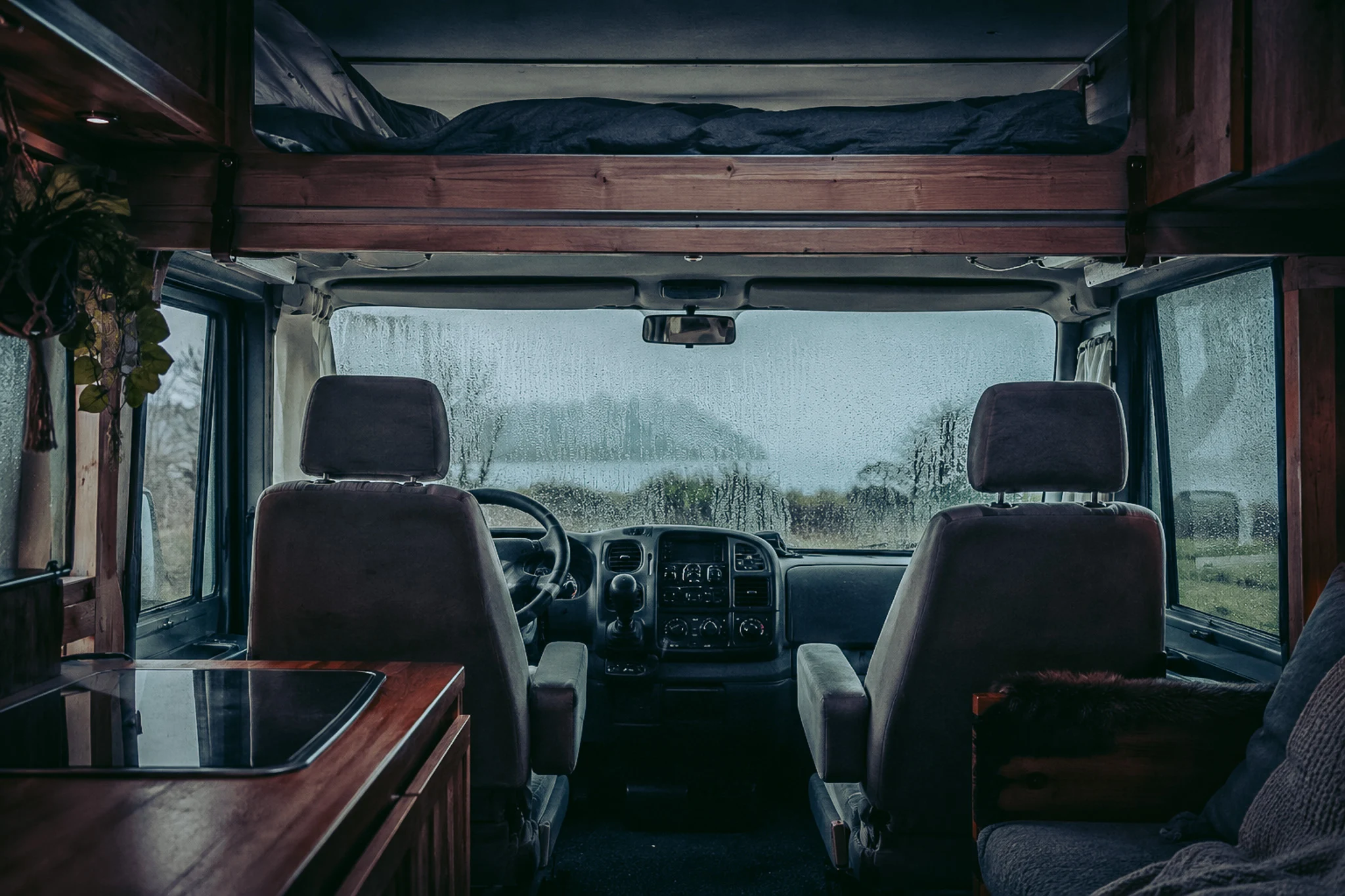
It’s the enemy you don’t see coming. Your warm, moisture-laden air (your breath, your cooking, your shower) meets a cold surface and, bam, it turns into droplets. In our Édouard, our Hymer B544, the pop-top bed sits right above the cab, so against the biggest window in the vehicle: the windscreen. The upshot, on winter mornings, was waking up to a proper little pond of condensation on the glass. Imagine what that does to the rest, on wood or fabric that won’t dry off with a quick wipe.
And this is where it gets serious: above 70% humidity, mould takes around 48 hours to colonise a wall. It isn’t just about a smell or a van ageing badly; the WHO links a significant share of asthma cases to indoor mould. In short, we’re not talking décor, we’re talking about your lungs.
In summer, the heat and the gas you forget
In summer, the overheated air stalls under the roof and quickly climbs past 40 degrees. Unpleasant, but not the worst of it. The real risk is the gas from your hob: with no air renewal, carbon monoxide builds up, and you won’t feel it coming. Proper ventilation isn’t a comfort feature; it’s what stops a daft accident.
Beyond that, managing a heatwave is a whole job in itself (fans, blackout, air-con, orientation). We put together a full guide just on that in our article on beating the heat in vanlife, so here I’ll stick to background ventilation.

Refreshing your van or camper, how to avoid heat in Vanlife?
Heat can quickly turn your vanlife adventure into a nightmare. But with the right insulation techniques, thoughtful layout, and a few clever tips, you can keep your van pleasantly cool,...
Read moreHow air actually circulates (two principles, zero electricity)
No need for an £800 system. Just two laws of physics you already know without realising it: warm air rises, cool air sinks, and it all follows from there. The first plays on height (the chimney effect), the second on width (cross ventilation). A little diagram beats a long speech.
The chimney effect (bottom to top)
Warm air rises and exits through the roof, cool air enters from the bottom. A constant flow, without electricity.
Cross ventilation (side by side)
Two opposing openings: the wind enters from one side and exits from the other. Immediate coolness.
In practice, the chimney effect works even while you sleep: give it an exit up top and an inlet down low, and it does the rest. Cross ventilation is the one that saves you when you’re parked up on a hot day: two opposite windows, a bit of wind, and you get an instant through-draught. Our summer reflex is to point the van so the side window catches the wind and open the opposite rooflight.
Low and high vents: good practice (and the gas-safety point)
Here’s the good news for the UK: there’s no habitation inspection to pass, so on paper a private conversion isn’t forced to carry any particular vent. That’s exactly the trap: the moment you fit a gas hob or a heater, fixed low and high ventilation stops being optional. It’s the gas-safety standard, and it’s what a Gas Safe engineer checks if you ever want a habitation gas certificate (increasingly asked for by insurers and some campsites).
How much vent area, in practice
The figures everyone works to come from BS EN 1949, the standard for LPG installations in leisure vehicles. It sets permanent ventilation (meaning: that can’t be blocked) sized to the space and to any gas appliance. In short:
- Low vent: less than 10 cm from the floor, to clear the heavy, damp air.
- High vent: high on the wall or straight through the roof.
- With a gas hob on board, add dedicated vents for the gas locker (reckon around 100 cm² of high ventilation for a 6 m² van).
- These vents stay open permanently: a vent you can close, as far as safety goes, doesn’t count.
Reclassifying the van as a “motor caravan” with the DVLA is a separate matter (it hangs on windows, seating and layout, not on vents), and GOV.UK spells out the criteria if you go down that route.
Ventilating without drilling the bodywork (yes, it’s doable)
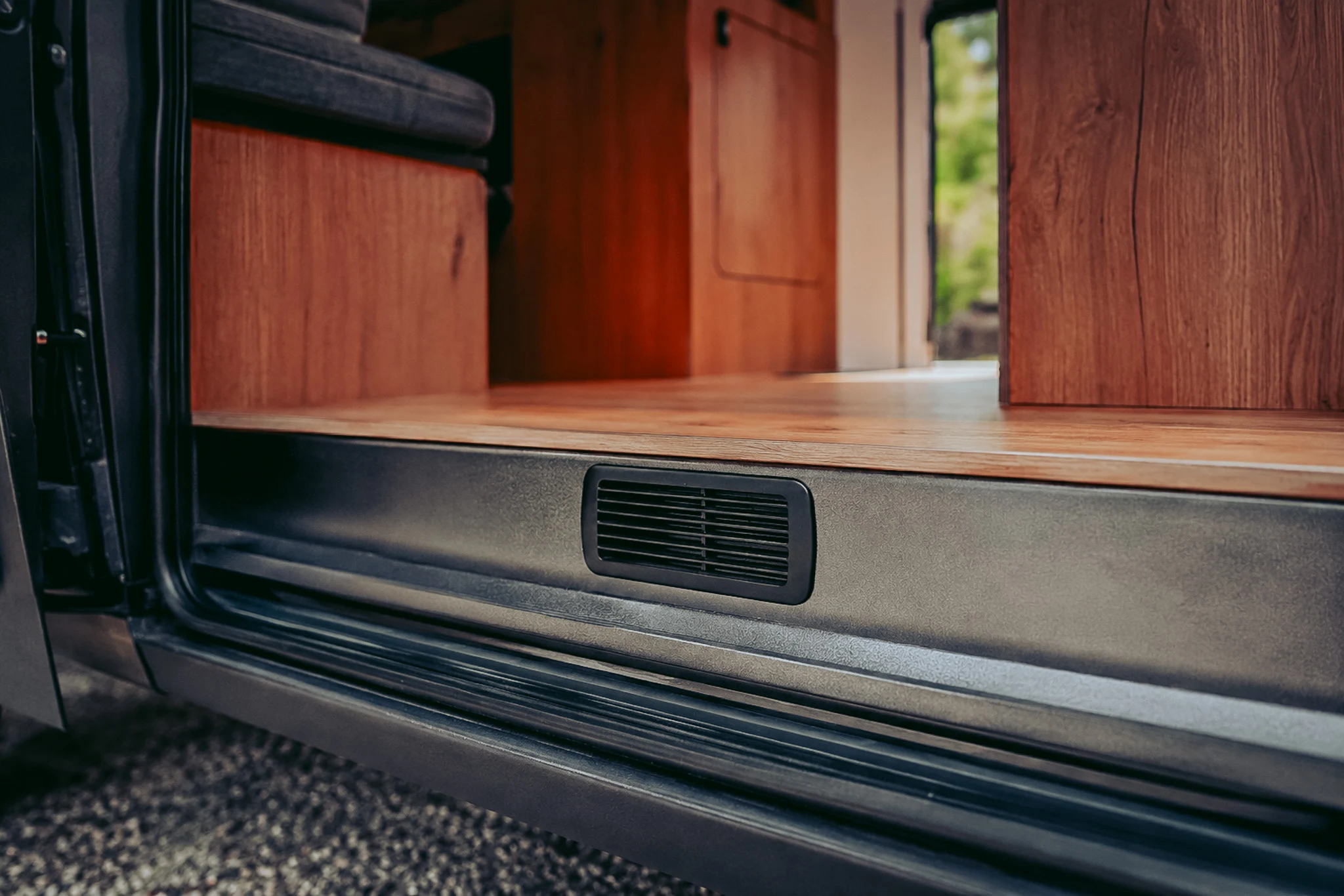
This is THE question that nags when you’re converting the van yourself: do I have to cut a hole in my lovely panels? Not necessarily. The best-known trick is to fit the low vent on the sliding door, at step level. Fresh air comes in low, flows towards the chassis, and you’ve no visible grille cutting into your bodywork. For the high vent, an existing rooflight already does the job. The moral: in plenty of cases you can be sorted without ever reaching for the hole saw.

We're Caroline and Xavier
We got most of it wrong before we got it right. We share what actually holds up day to day in a van, and what we wouldn't do again.
Ce que vous souhaitez recevoir :
Which passive ventilation solution to choose
Enough theory, let’s get to the kit. Here are the passive options, from the plain window to the wind-driven extractor, with what each is really worth.
| Solution | Airflow | Safety | In the rain | Indicative cost | Ideal for |
|---|---|---|---|---|---|
| Windows with deflectors | High (cross-flow) | Medium (grills recommended) | No | £10 to £50 | A strong draft when stationary |
| Permanent ventilation grills | Low to medium (constant) | High | Yes | £5 to £20 each | Basic ventilation and gas safety |
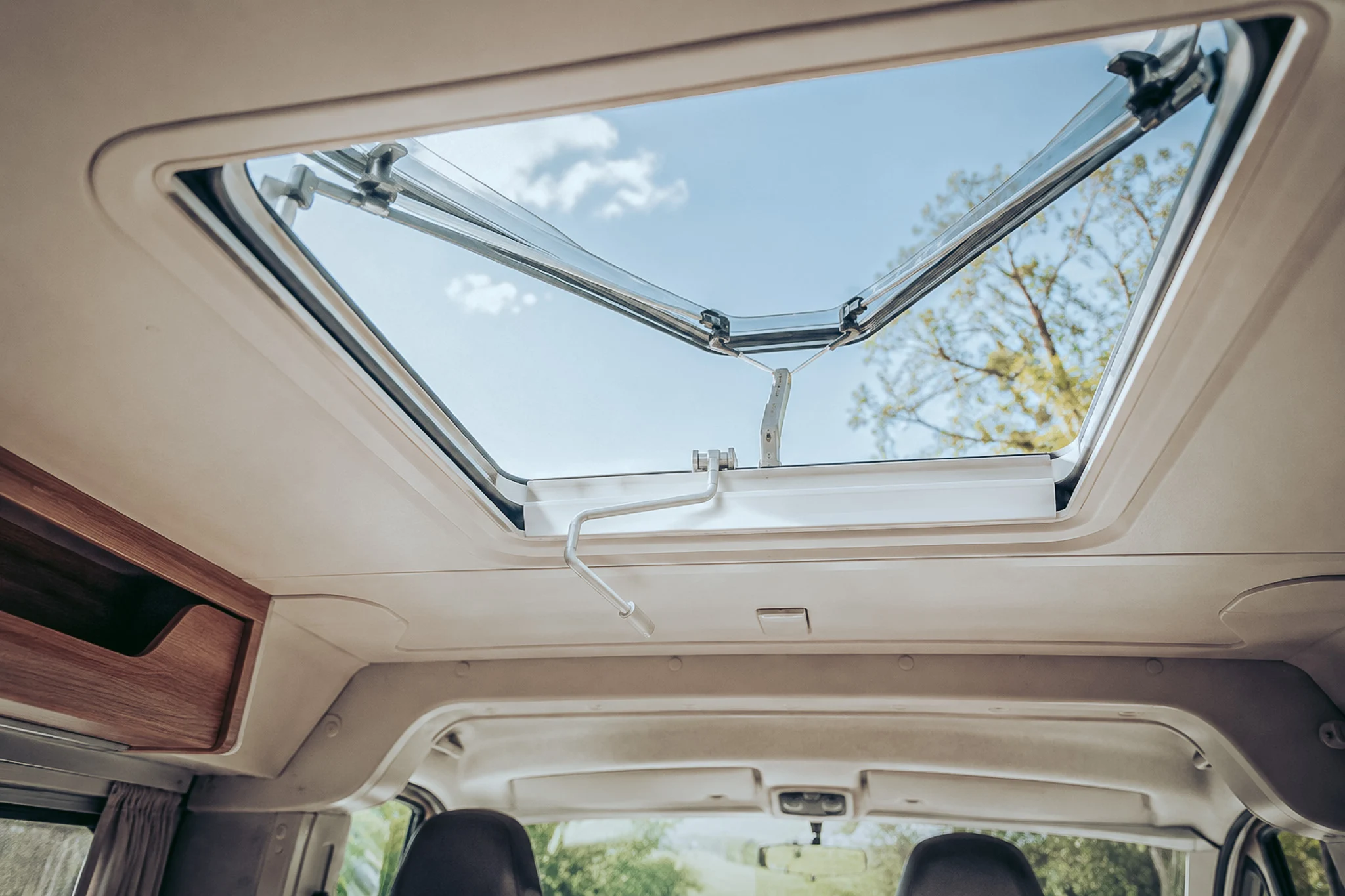
| Single skylight | Low (opening only) | Low if open | No | £100 to £300 | Bringing light and occasional ventilation |
| Mushroom roof ventilator | Medium | High | Yes | £20 to £100 | A simple and effective high ventilation |
| Wind turbine roof ventilator | Medium to high (with wind) | High | Yes | £35 to £90 | Extracting hot air without electricity |
On a motorhome, windows and rooflights are there from the start; on a self-built van, the choice is yours. A mushroom vent stays usable even in the rain but lets in less air than a lift-up model. The newer versions also give you a constant airflow, precisely because the cabin is small and a gas leak is unforgiving.
For background renewal, nothing beats the pairing of a low grille plus a high extractor. A wall or floor grille gives you permanent ventilation for a laughable price. And if you want to boost extraction without a scrap of electricity, the wind-driven roof extractor spins on its own the moment there’s a breeze. It’s simple, it’s bombproof, and it works for you around the clock.

Beating damp for good: keeping a van genuinely healthy
Ventilating is half the battle. The other half is stopping moisture settling in the first place.
Insulation, your first line of ventilation
It sounds counter-intuitive, but the best anti-condensation weapon is good insulation. The logic is simple: the closer your walls sit to the indoor air temperature, the less cold surface there is for water to condense on. We learned it the hard way, funnily enough. Our first winter in the Algarve, we rented a stone house and left Édouard in the car park. Well, we were colder and damper in the house (15 degrees, no air movement, walls built for summer) than in the van out in the sun. I ended up asking the local owners, and finally understood why the shops around here are stacked with dehumidifiers.
Moisture absorbers and everyday habits
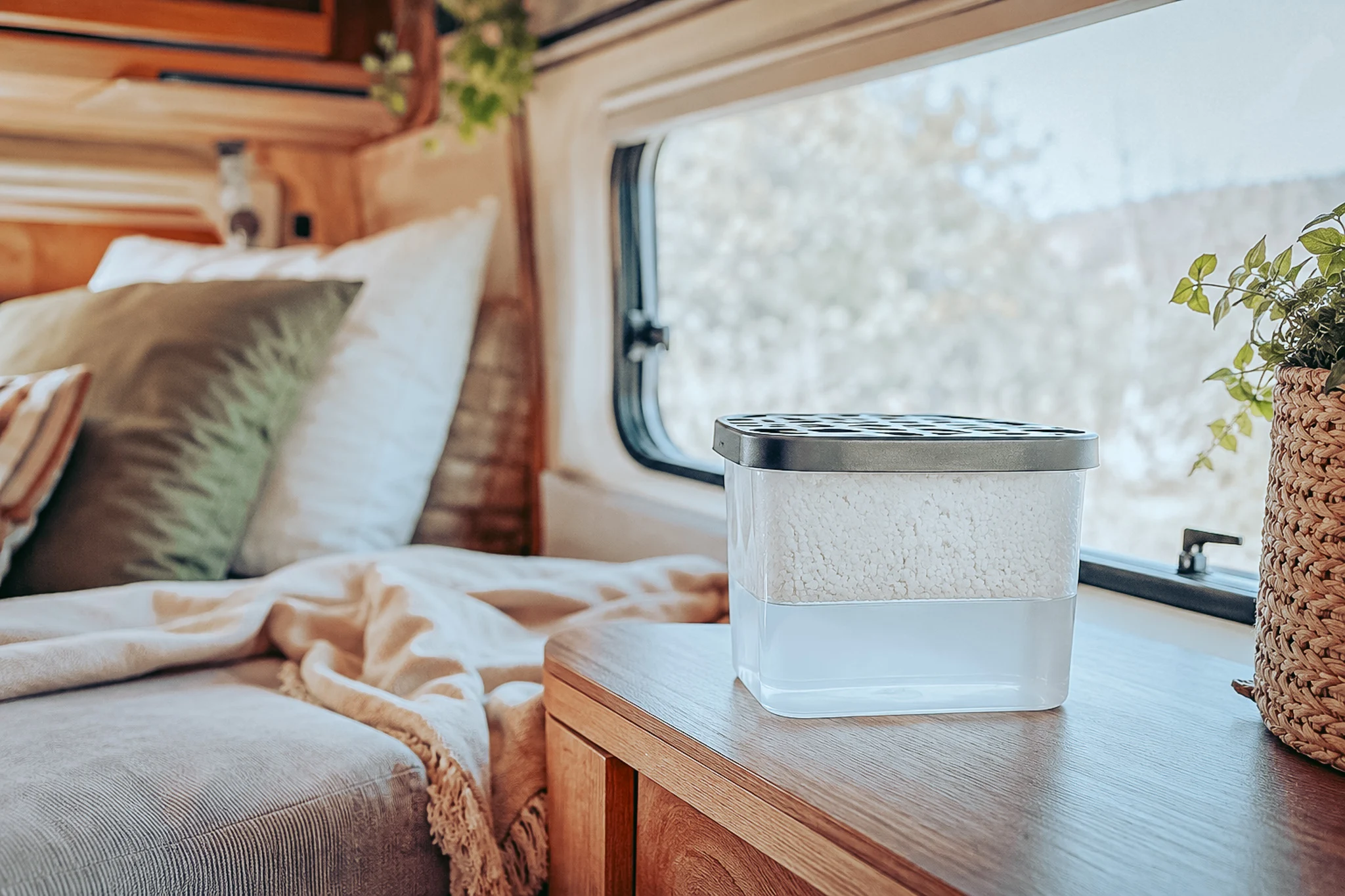
On top of that, a simple moisture absorber (the refillable salt tub, a few pounds) works wonders in small spaces, especially when you’re parked several days in the same spot. Then there are the free habits: cooking outside in the evening when you can, wiping the morning condensation off with a microfibre cloth, not drying three loads of washing with the doors shut, and easing an adjustable vent partway in a bitter draught rather than sealing everything up. The idea is to help the air do its job, not to trap it.
Van ventilation: frequently asked questions
How do I fit a ventilation grille in a van myself?
You cut the opening with a hole saw (or use the sliding door to avoid drilling the panel), fit the inner grille and its outer counterpart with a Sikaflex-type sealant, and check it sits less than 10 cm from the floor. Allow about an hour of work per grille.
Do I need a powered extractor or a heat-recovery unit in a van?
It isn't essential: passive ventilation is enough for most conversions. A 12V extractor or a mechanical heat-recovery unit becomes useful if you live in the van year-round in a very damp climate, or if the layout blocks a good natural draught. It's a comfort upgrade, not a substitute for permanent vents.
Is solar ventilation worth it?
A small solar roof fan runs in the daytime without touching your battery and helps clear moisture when the van is shut in the sun. Worth it if you often leave the vehicle parked in the heat, but skippable if your passive vents are already well placed.
Can you over-ventilate and lose all your heat in winter?
Permanent vents are sized to renew the air without draining your heater, so their flow stays low. Heat loss comes mainly from poor insulation, not from the grilles. In an icy wind you can close an adjustable opening, but never block the low and high vents.
How do I ventilate without letting rain or insects in?
A mushroom roof vent stays open even in the rain, and most modern rooflights and windows have a built-in fly screen. For low grilles, choose a baffled model that breaks the water's path while still letting air through. You keep the flow without the nasty surprises.
Does double glazing cut condensation?
Yes, noticeably. A double-skinned window or secondary glazing keeps the inner surface closer to the cabin temperature, so less mist settles on it. Same principle as insulating the walls: fewer cold surfaces, less condensation. It doesn't replace ventilation, it complements it.
Should you ventilate a van left parked all winter?
Especially then, yes. A van shut for several weeks becomes a moisture trap. Leave the permanent vents open, crack a rooflight sheltered from the rain if you can, take out any damp textiles and put a moisture absorber inside. You'll come back to a healthy cabin rather than a mould nest.
Do you need ventilation even with no gas on board?
Yes. Even with no gas fitted, permanent vents renew the air, clear condensation and give you a safety margin. Gas simply adds dedicated vents for the locker. The moment you fit a hob or heater, fixed low and high ventilation becomes a genuine gas-safety point, checked by a Gas Safe engineer for a habitation gas certificate.
How much does it cost to ventilate a conversion properly?
It's one of the cheapest jobs in a build: a few permanent grilles at £5 to £20 each usually cover the low and high ventilation. Add a vented rooflight or a wind-driven extractor and you're looking at £20 to £300 depending on the model. Cheap peace of mind.

Vanlife in winter: we escaped the cold for the sun (here’s where)
Breakdowns are the worst thing that can happen during your road trip, so in this article, we give you all the tips to make this moment easier to accept!
Read more
Van Conversion: The Key Steps to a Successful Transformation
The Fiat Ducato dominates the market by equipping about 40% of vans and motorhomes thanks to its chassis specifically designed for leisure vehicles. By following this guide from A to...
Coming soonPS: for us, the day we twigged that the soaking windscreen each morning wasn’t fate but simply an airflow problem, Édouard stopped weeping at wake-up. You’ll get there too. Open the right vents, in the right places, and let physics do the graft.
Van life day to day, unfiltered
Two years of full-time van life, and the Algarve as our base ever since. We still hit the road, by van or otherwise, and we write up what we find along the way. An email when we have something to say, no more.
Ce que vous souhaitez recevoir :