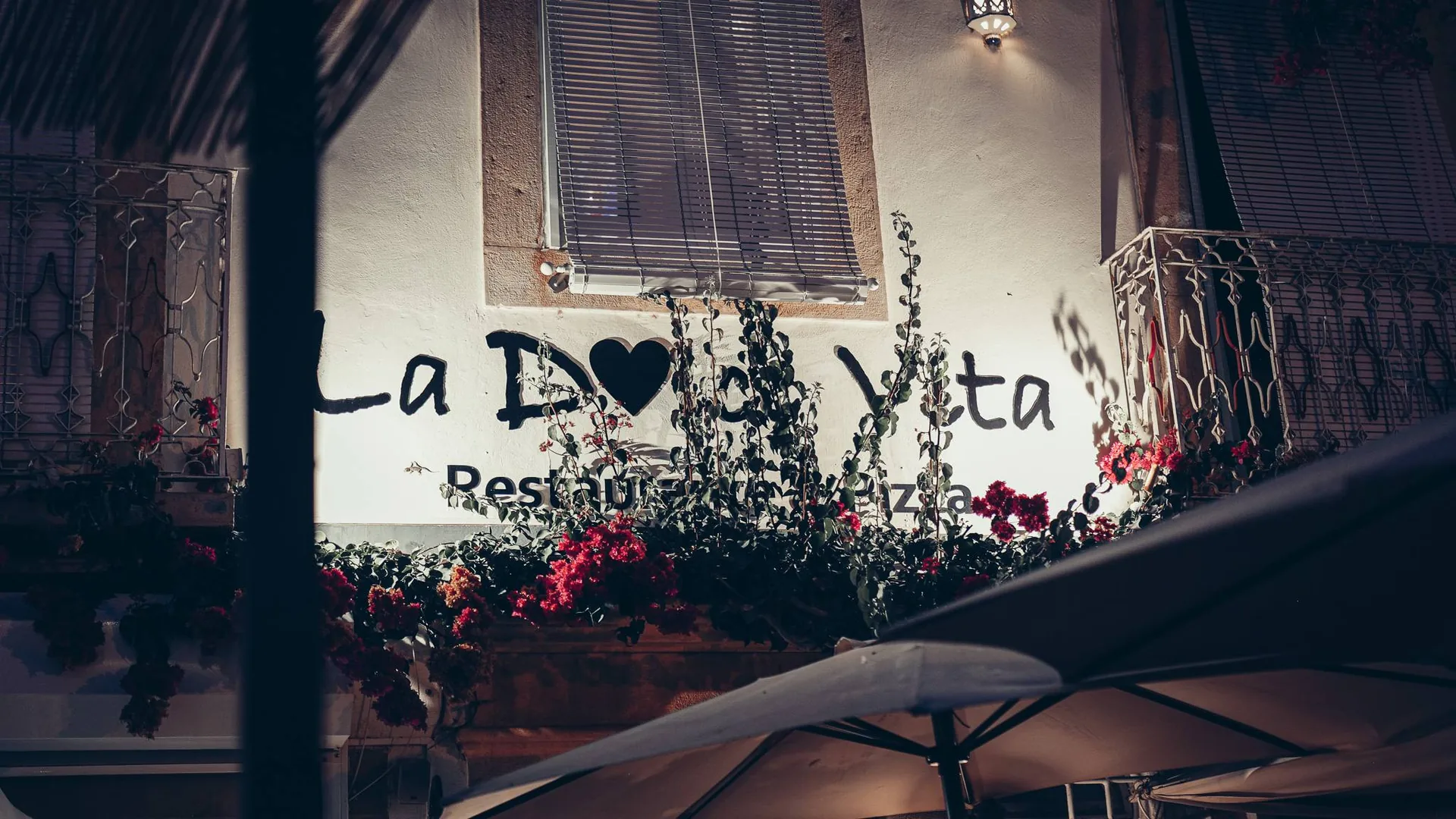
Our review of La Dolce Vita
Benefits
- A real wood-fired oven, the only one we've identified in Tavira
- The taste of embers and the smoky note that comes with it
- One of the prettiest spots in the city for outdoor dining
- A budget that remains reasonable for an entire stay
Disadvantages
- Unremarkable toppings, two different pizzas look very similar
- Cash only, no cards accepted
- Closed on Tuesday
An honest pizzeria with a real wood-fired oven, whose best asset remains the location it is situated on.
No one will tell you this way, so I will: the best thing about this place is not on the plate. It is around, it is behind you, it is in the square where the terrace is set. And once you understand that, you come to Dolce Vita for good reasons.
Dolce Vita is an Italian pizzeria restaurant run by Italians, open since 2017, on the other side of the bridge over the Rio Gilão compared to the historic center. We have eaten there several times, we live in the city, and we have always ordered pizzas. We will return, but not just for what we thought.
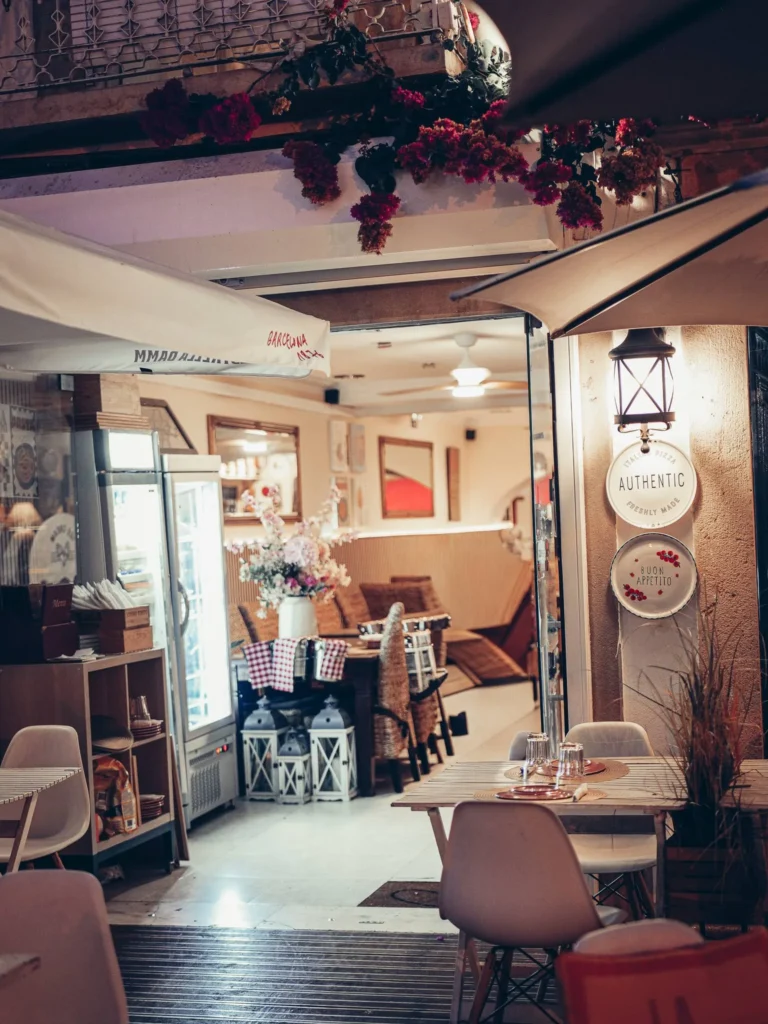
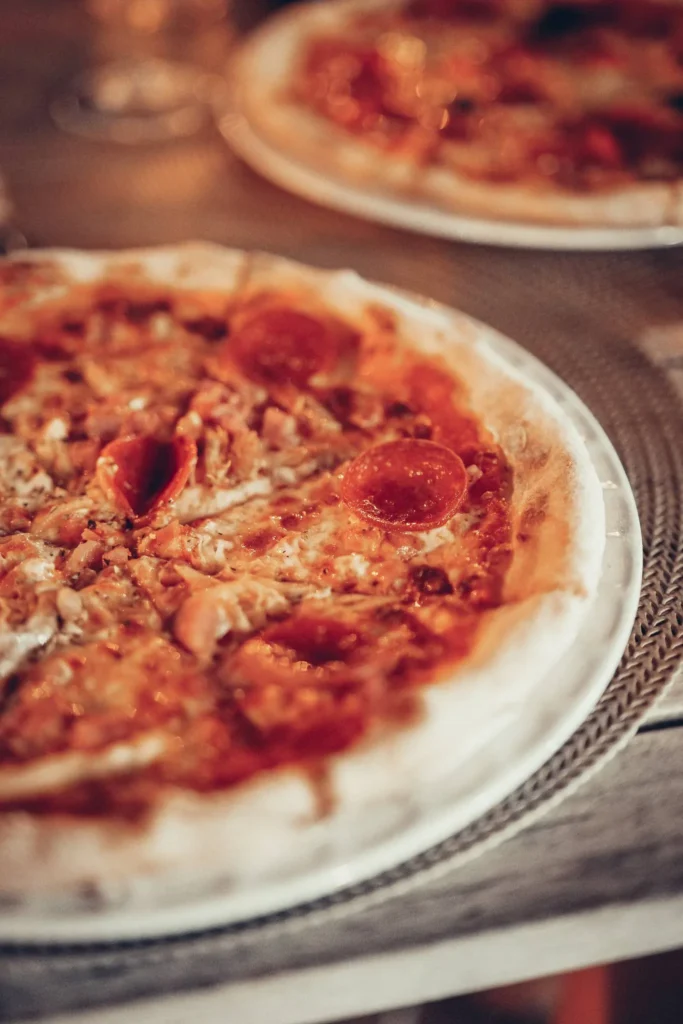
The real wood-fired oven, and it’s rarer than you think
Let’s start with what gives the real value to the house: the oven. A real wood-fired oven, not a disguised electric oven, not a gas oven with two logs placed in front for the photo. And in Tavira, it is the only one we have found so far. I choose my words carefully: I am not saying there are no others in town, I am saying that at this stage of our trials, we have not come across a second one.
You can feel it right away, and that’s where the pizza gains points. The dough has that ember taste and that little smoky note that no electric oven can imitate, with the irregular blisters on the edge that go with it. It’s the only place in Tavira where you find that, and for a pizza lover, it’s already a sufficient reason to cross the bridge.
Our pizzas, and the reservation we own up to
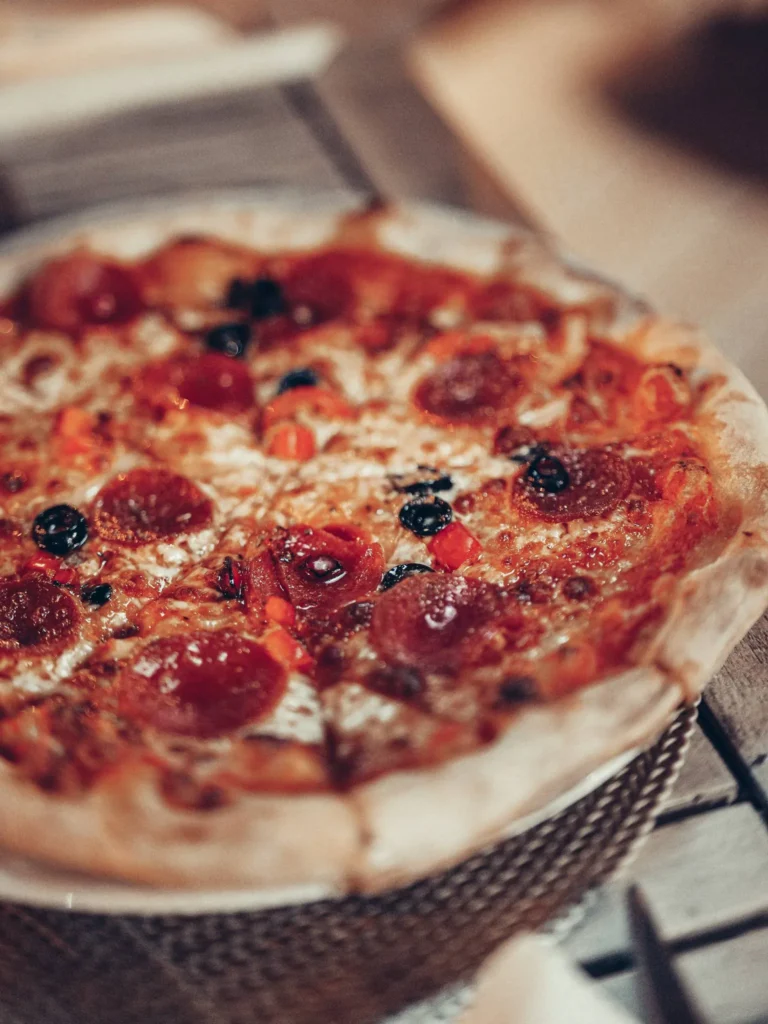
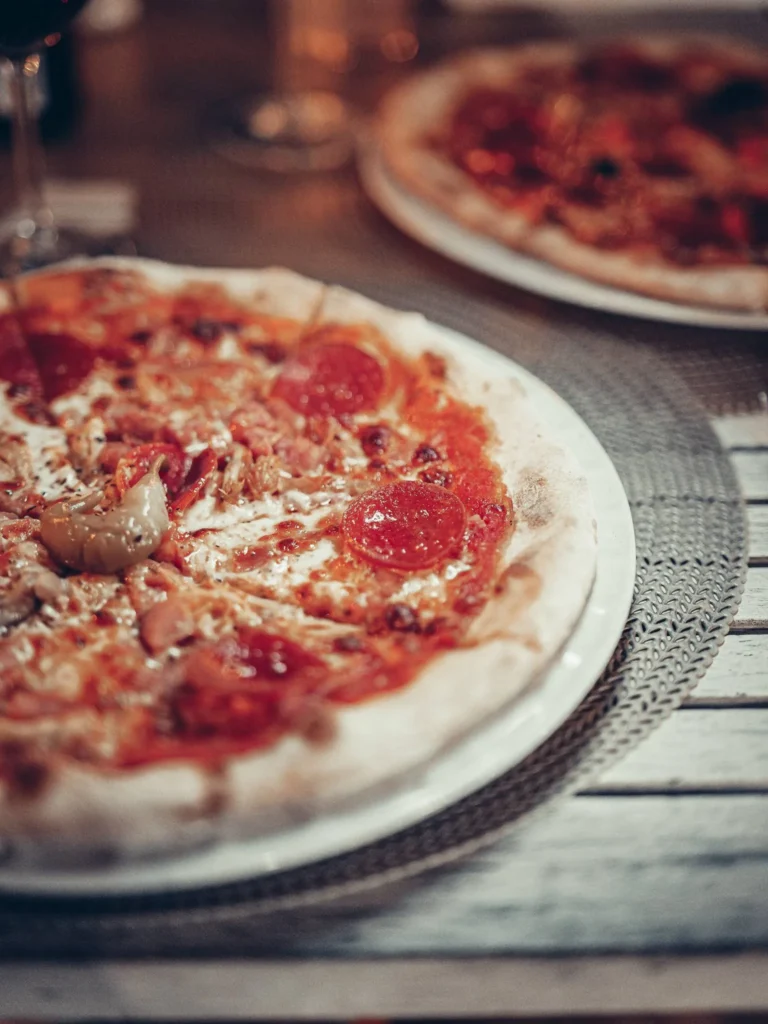
On September 2, I had the Meat Lover at 14.90 €, tomato, mozzarella, ham, bacon, chicken, pepperoni. I even called it “Love Meat” throughout the meal, which didn’t help with ordering. Caroline had a pepperoni pizza. Both were good, in the category of honest pizzas.
And here’s the reservation. Visually, the two pizzas looked so similar that we had trouble distinguishing them at first glance, and the impression was confirmed in the mouth: despite two different recipes, the tastes were quite similar. We would have liked a bit more elaborate toppings, a bit more decisive.
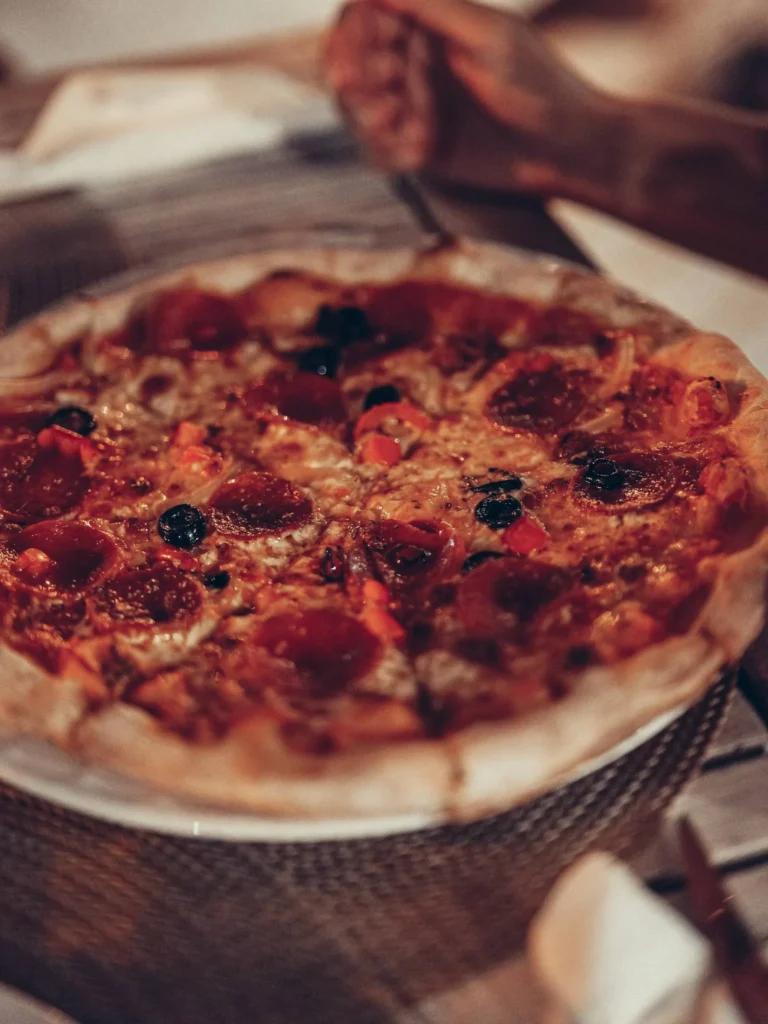
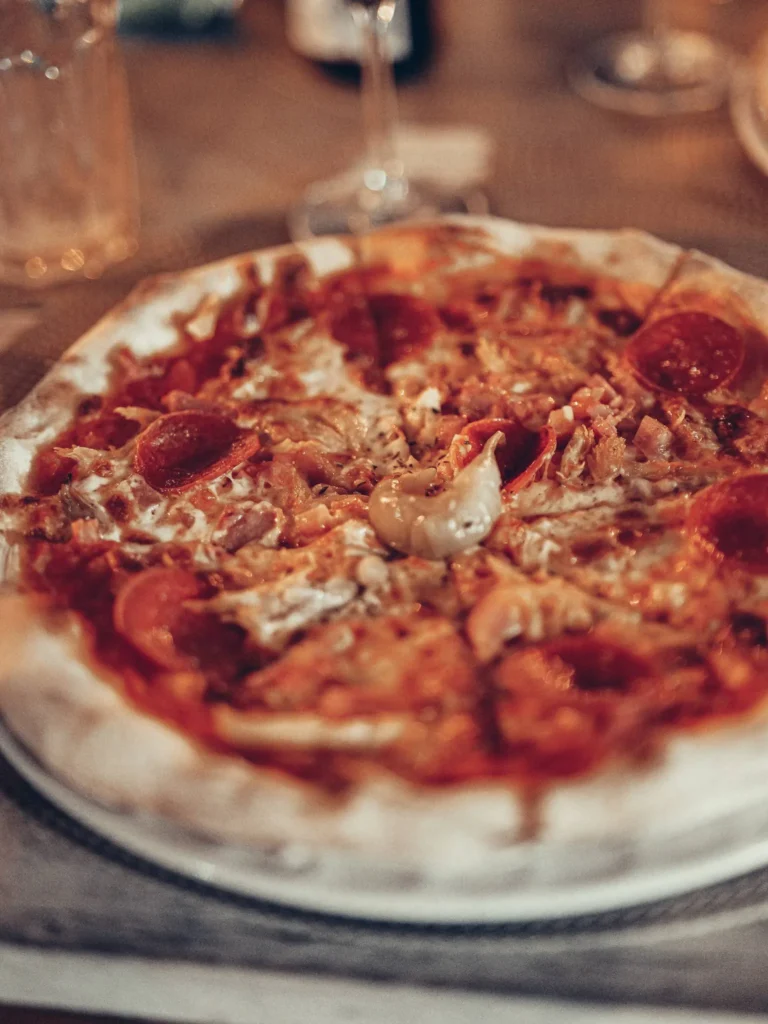
Honesty requires that we nuance this right away: a Meat Lover and a pepperoni are mechanically likely to resemble each other, since both contain pepperoni. The criticism does not stand alone on these two, and we will need to test other recipes before turning it into a judgment.
The general feeling is therefore not “the pizzas are not good,” because they are. It’s more that with a real wood-fired oven in hand, there could be room to go much higher. The tool is there, it is rare, and we want to see it better utilized.
Our mistake: we never tasted the pasta
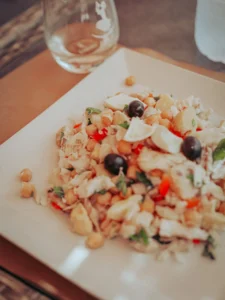
Here I am a bit self-flagellating. The house is run by Italians, the menu offers several pasta dishes that seriously tempt, tortellini with spinach, pesto, and cream at 13.90 € for example, and we, on each visit, have ordered a pizza. Every time.
In hindsight, it’s probably a judgment error on our part: we judge an Italian cuisine on half of its repertoire. Next time, it’s decided, we will order the pasta, and we will come back to complete this review. There are also appetizers that tempt, grilled goat cheese with rosemary and honey at 8.50 € or smoked salmon bruschetta at 9.50 €.
Beware, it’s cash only
The practical point that can really ruin your evening if you ignore it: Dolce Vita is cash only. It’s written in black and white on the menu, a visible sticker saying “WE ARE CASH ONLY,” but you usually only read it once seated.
So stop by the ATM beforehand, especially if you are coming with others and planned to split the bill. It’s not complicated, there’s what you need in town, but it should be prepared in advance rather than at the time of payment.
What Caroline sees from her table
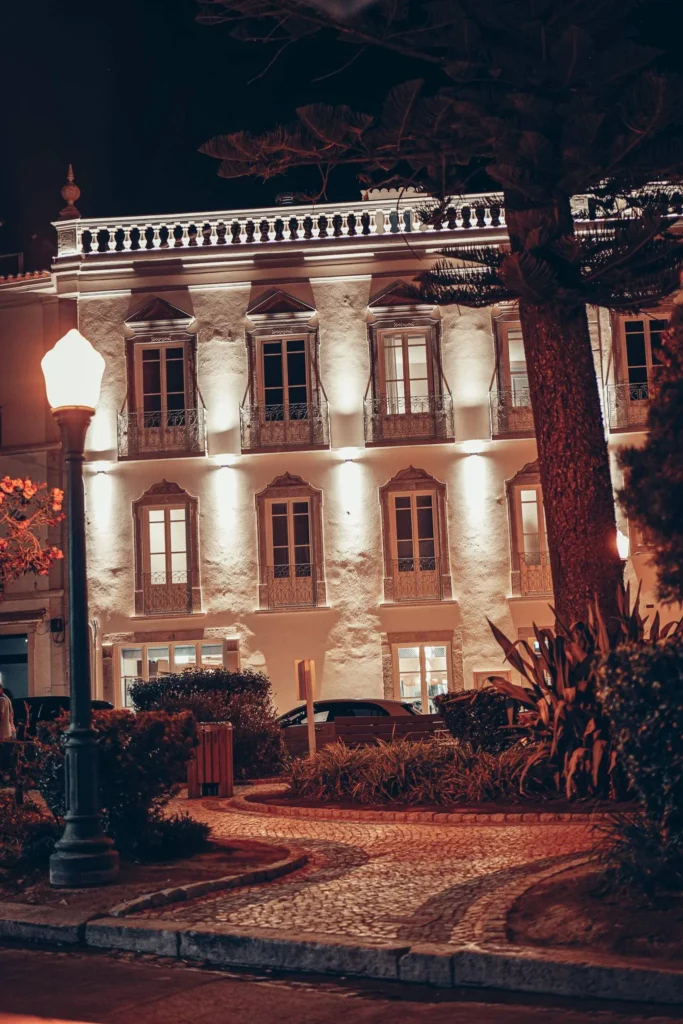
This is the real subject of this review. Caroline finds the view particularly pretty from her table, especially at dusk when the lights come on. Sitting facing the square, she has in front of her a piece of garden and, in the background, the facade of the Palácio de Tavira highlighted by a series of spots that light up both up and down.
What she likes is the harmony of the whole more than each element taken separately. A lamp post of a slightly old style, in a shade she describes as rose-gold, which responds to the flowers of a small neighboring tree almost the same color. Around, a tall conifer that rises high, a plant with aloe-like shapes, a small bush, another small tree almost trimmed into a ball, and a palm tree a little further left. All of this holds together without anyone knowing why.

This garden didn’t just arrive here by chance
And this is where it gets interesting, because Caroline has unknowingly described a botanical inventory over a century old. The Jardim da Alagoa was created in 1915, based on a plan by Carlos Peres, at the initiative of António Padinha, the first elected president of the Tavira city hall, and he is the one who gave his name to the square. A bust was added on site in 1982.
This barely nine hundred square meter garden has been planted with species from five different continents. What Caroline takes for a large pine is a Norfolk araucaria, a conifer from the South Pacific. The palm tree is a Canary Phoenix. The small tree trimmed into a ball is a Chinese thuja. And the rose-gold flowers that respond to the lamp post are most likely those of the oleander in the garden.
In other words, the feeling of harmony she perceives from her table without being able to explain it is a deliberate composition, designed more than a hundred years ago by someone whose project it precisely was. She didn’t find it pretty by chance.
And the name “Alagoa,” it comes from the water
Last piece of the story, and it completely changes the way to look at the place. “Alagoa” is “lagoa,” the lagoon. The garden bears this name because it is set on an old marshy area, at the confluence of small waterways, an arm connected to the Rio Gilão that has silted up and filled over the centuries.
So the square where you eat your pizza on the terrace, with its araucaria and its rose-gold lamp post, was water. It’s the kind of detail that also explains why the area is as flat as a hand while the rest of Tavira goes up and down constantly.
A place where there is really food and drink
The other reason to come is that this small square concentrates completely different styles of establishments. There is the Alagoa bar, a very old bar run by Leonardo, where we like to have an aperitif. There is the Tavila Café, in a corner of the square, tapas spirit with a real vegetarian and vegan offer, where we have already eaten. There is an Indian restaurant and a place for traditional Portuguese cuisine. And there is Dolce Vita. In barely fifty meters.
The Palácio de Tavira completes the picture. It’s the former palace of the Tavares family, renovated, now a Small Luxury Hotel of the World with thirty-six rooms and a rooftop pool, at 35-37 of the square, and it serves lunch and dinner. It is also the one featured in the hotel selection of the Michelin Guide: it’s the same building, not just another address. We haven’t set foot there yet, it’s on the list.
Who we recommend Dolce Vita to
Especially to vacationers staying in Tavira without a car and looking for a place accessible on foot. And particularly to those who have been there for a few days, who have had grilled food and Portuguese cuisine, and who want to find something familiar for a meal.
There is also a budget argument when eating out several nights in a row: an honest pizza in a pleasant setting does not blow up the meal budget for the stay. It’s not the place to look for the most sophisticated pizza of your life, it’s a practical and friendly address to vary the pleasures. If you want pure and hard Portuguese at noon, we prefer to send you to Machado, and for the context of the city, everything is in our article on Tavira.
Machado, the Portuguese canteen in Tavira where the bones in the cod are good news
Machado, a snack bar in Tavira since 1990, where you can enjoy authentic family Portuguese cuisine at lunchtime. Six daily specials on a sheet, generous portions, a team of women...
Read more