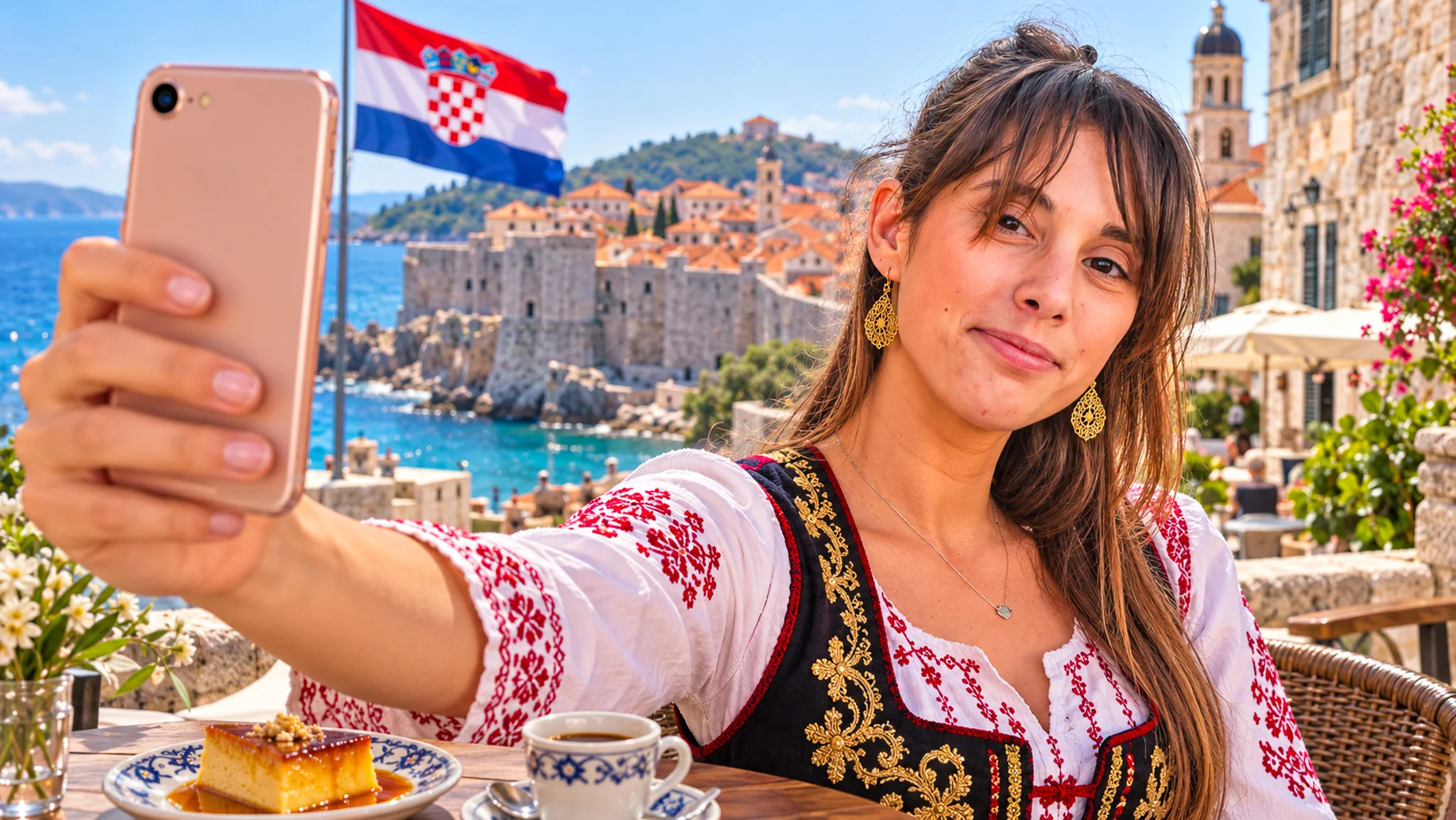
Croatia is where the post-Brexit roaming maths stops being a rounding error.
A long weekend in Rome on a charging network costs you a few pounds you barely notice. A fortnight island hopping from Split is a different proposition: at £2.72 a day with EE, that is £38.08 before you have bought a single ferry ticket, and you will have burned through a chunk of your UK allowance doing it.
At the same time, Croatia is genuinely well connected. More than 98 percent of the populated territory has 4G, 5G is close to universal along the coast, on the motorways and in the main island resorts. This is not a country where you need a local SIM to function.
So the honest guide is a counting exercise, not a sales pitch. We worked out where each option overtakes the others, which network you actually want if your trip goes beyond the big islands, and the one thing no amount of money will fix: what happens to the network in Split and Hvar in August.
Why you actually need data in Croatia
The Croatian need is maritime logistics, which makes it quite different from Italy or Spain.
The first is the ferry. Moving between Split, Hvar, Brač, Korčula and Vis means living by timetables that shift with the season, the wind and the operator. Tickets are bought online, the fast catamarans sell out within hours in high season, and last minute changes are handled on a phone, never at a window.
The second is the bora. This northeasterly drops off the mountains without warning, closes bridges and cancels sailings. A live weather app is not a gadget in Croatia, it decides your day.
The third is accommodation. The country runs heavily on private rentals, the sobe and apartmani, with owners you reach on WhatsApp or Viber to arrange the keys. There is no hotel reception, so there is no plan B if you arrive at eleven at night in a Trogir alley with no data.
Add navigation in a very stretched country, the A1 tolls, and seafront car parks that only take app payments, and the need is real.
Solution 1: will your UK plan work in Croatia, and for how long?
Croatia sits in the same EU roaming zone as Italy for every UK network, so the daily rates are identical. What differs is how long you stay, and that is what decides the answer.
What each UK network charges you in Croatia
EE: £2.72 per day, 47 destinations, applies if you joined or upgraded after 7 July 2021. Fair use 50 GB, then roughly £3.69 per gigabyte. Resets at midnight UK time.
Vodafone: £2.75 per day, 52 destinations, applies after 11 August 2021. Fair use 25 GB, then £3.84 per gigabyte. Runs 24 hours from first use.
Three: £2.75 per day, free if you joined before October 2021 or are on a Value or Complete plan. Fair use 12 GB a month.
O2: free on all plans, 48 destinations, 25 GB cap only on plans of 25 GB or more.
giffgaff free with a 5 GB cap per plan. Smarty free to 12 GB a month. iD Mobile free, cap suspended since October 2024. Voxi needs paid passes, Lebara depends on the plan.
Here is the coverage detail by operator. The prices in the widget are shown in euros; use the pound figures above for the UK comparison.
Croatia: does my plan work there?
| Plan | Data | Duration | Price | Network | 🇭🇷 Croatia |
|---|---|---|---|---|---|
| EU Roaming 7-Day Pass Recommended | 50 GB | 7 days | €17.90 | 4G | ✓ Yes |
| Zone 1 Weekly Pass Recommended | 50 GB | 7 days | €29.85 | 4G | ✗ No |
| EU Roaming Daily Pass | 50 GB | 1 day | €3.10 | 4G | ✓ Yes |
| Zone 1 Daily Pass | 50 GB | 1 day | €5.97 | 4G | ✗ No |
| Zone 2 Daily Pass | 50 GB | 1 day | €8.96 | 4G | ✗ No |
| Zone 3 Daily Pass | 512 MB | 1 day | €8.96 | 4G | ✗ No |
| Zone 4 Daily Pass | 10 MB | 1 day | €17.92 | 4G | ✗ No |
| EU Roaming 12-Day Pass | 50 GB | 12 days | €25.70 | 4G | ✓ Yes |
| Zone 2 Weekly Pass | 50 GB | 7 days | €44.78 | 4G | ✗ No |
| Plan | Data | Duration | Price | Network | 🇭🇷 Croatia |
|---|---|---|---|---|---|
| Go Roam in Europe Recommended | 12 GB | 1 day | €3.29 | 4G | ✓ Yes |
| Go Roam Around the World | 12 GB | 1 day | €9.56 | 4G | ✗ No |
| Go Roam Around the World Extra | 12 GB | 1 day | €9.56 | 4G | ✗ No |
| Plan | Data | Duration | Price | Network | 🇭🇷 Croatia |
|---|---|---|---|---|---|
| 8-Day Europe Pass Recommended | 25 GB | 8 days | €19.12 | 4G | ✓ Yes |
| Euro Roam Daily | 25 GB | 1 day | €3.29 | 4G | ✓ Yes |
| Global Roam Daily (Zone C) | 25 GB | 1 day | €9.56 | 4G | ✗ No |
| Global Roam Daily (Zone D) | 25 GB | 1 day | €9.56 | 4G | ✗ No |
| 15-Day Europe Pass | 25 GB | 15 days | €25.10 | 4G | ✓ Yes |
| Plan | Data | Duration | Price | Network | 🇭🇷 Croatia |
|---|---|---|---|---|---|
| Europe Zone (included) Recommended | 25 GB | 30 days | €0.00 | 4G | ✓ Yes |
| Data Roaming Bolt-On Zone 1 (1 GB) | 1 GB | 30 days | €7.17 | 4G | ✗ No |
| O2 Travel Bolt On | Unlimited | 1 day | €8.37 | 4G | ✗ No |
| Data Roaming Bolt-On Zone 2 (1 GB) | 1 GB | 30 days | €10.76 | 4G | ✗ No |
Last verified: 15 October 2026

We're Caroline and Xavier
We got most of it wrong before we got it right. We share what actually holds up day to day in a van, and what we wouldn't do again.
Ce que vous souhaitez recevoir :
Croatia’s mobile networks: a hierarchy that actually shows
Unlike Italy where all four networks are equally good, Croatia has a clear ranking, and it matters.
Hrvatski Telekom is the leader and the best coverage in the country, with around 95 percent 4G availability. This is the network you want if your trip includes the smaller islands or the mountainous interior. It sells prepaid under the Simpa brand.
A1 Hrvatska follows at roughly 87 percent, very good on the coast and in the cities. Its Tourist offer is the most visible in shops and kiosks.
Telemach brings up the rear at about 84 percent, with one useful quirk: it roams onto Hrvatski Telekom in rural areas, which claws back part of the gap.
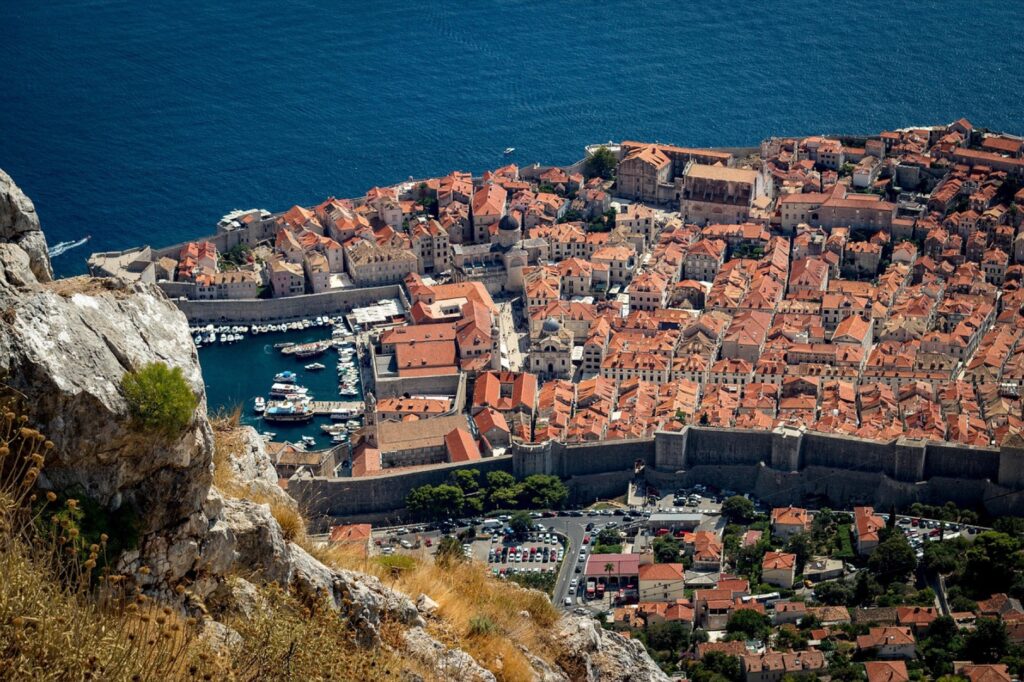
None of this matters if you spend a week in Dubrovnik or Zagreb. It matters a great deal if you get on a boat to Lastovo.
To help you decide between a physical SIM and an eSIM for your kind of trip, we built two small tools.
Use your UK plan abroad thanks to roaming agreements
Buy a local SIM card to benefit from local rates
Activate an eSIM before your departure, without changing your physical card
| Comparison of internet solutions while traveling | |||
|---|---|---|---|
| International plan | Local SIM card | eSIM | |
| Cost | High | Low | Moderate |
| Purchase | Online (operator option) | On-site, in-store | Online, before departure |
| SIM card change | No | Yes | No |
| Ease of use | Easy | Restrictive | Easy |
| Support in English | Yes | Rarely | Yes |
| Unlimited data | No (limited) | Yes | Yes (depending on offer) |
| Keep your UK number | Yes | No (replaced) | Yes (dual SIM) |
| Flexible stay durations | No (monthly) | Variable (commitment possible) | Yes (1 to 90 days) |
| Top up the plan | Operator customer area | In-store | Via the app |
| Risk of extra charges | Yes | Prepaid: no. Other: yes | No |
What a local SIM card really costs in Croatia in October 2026
Croatia joined the euro in 2023, so local prices are in euros with an approximate pound conversion.
Hrvatski Telekom sells unlimited data for ten days at around €11 (approx. £9.45), and, more interestingly, 120 GB valid for 90 days at €20 (approx. £17.15). That second one is the best value in the country for a long stay or repeat visits.
A1 sells a Tourist card at around €12 (approx. £10.30) with unlimited data, 100 minutes and 100 texts over ten days, and unlimited for thirty days at €29 (approx. £24.90). Note that EU roaming is not included in the Tourist card: it works in Croatia and nowhere else.
Telemach starts around €10 (approx. £8.60) for roughly 10 GB and 200 minutes, with ten to thirty day validity.
Here are the offers available in Croatia, local operators included.
Croatia: local SIM cards available for your stay
Croatia's market leader and the country's best coverage, with roughly 95 percent 4G availability. It is the network to favour if your trip takes in the smaller islands or the mountainous interior, where the others drop out.
The number two, with around 87 percent 4G availability, very good along the coast and in the main cities. It is one of the two networks behind the travel eSIMs sold for Croatia.
The third network, around 84 percent 4G availability, with roaming onto Hrvatski Telekom in rural areas. It is the other network the Croatian travel eSIMs rely on.
| Carrier | Plan | Data | Duration | Price | Network | Buy |
|---|---|---|---|---|---|---|
|
Telemach Hrvatska
|
Telemach Tourist | 10 GB | 30 days |
€10.00 (10 EUR) |
4G | Boutique Telemach ou kiosqu... |
|
Hrvatski Telekom
|
Simpa Tourist Unlimited 10 dana Reco | Unlimited | 10 days |
€11.00 (11 EUR) |
5G | Boutique HT, poste ou kiosq... |
|
A1 Hrvatska
|
A1 Tourist 10 dana Reco | Unlimited | 10 days |
€12.00 (12 EUR) |
5G | Boutique A1, poste ou stati... |
|
Hrvatski Telekom
|
Simpa 120 GB 90 dana | 120 GB | 90 days |
€20.00 (20 EUR) |
5G | Boutique HT, poste ou kiosq... |
|
A1 Hrvatska
|
A1 Unlimited 30 dana | Unlimited | 30 days |
€29.00 (29 EUR) |
5G | Boutique A1, poste ou stati... |
Last verified: 15 October 2026
Buy on arrival or in advance: the three options compared
In Croatia its argument is not dodging paperwork, because there is none. It is having a second, independent data line the day your main allowance runs dry mid-trip, or when you are sailing and losing one connection means losing contact with the charter company.
The weakness is the same as anywhere in Europe: over a fortnight or more it costs more than either a local SIM or a monthly roaming pass.
A passport is enough, it takes five minutes, and cards are sold in operator shops, kiosks, Petrol stations and post offices. No tax formality, no biometric registration, no activation delay. If you have just read our Italy guide and its codice fiscale problem, you will appreciate the difference.
It is the option to take past ten days, and the only one that lets you pick your network, which means Hrvatski Telekom if you are heading for the islands.
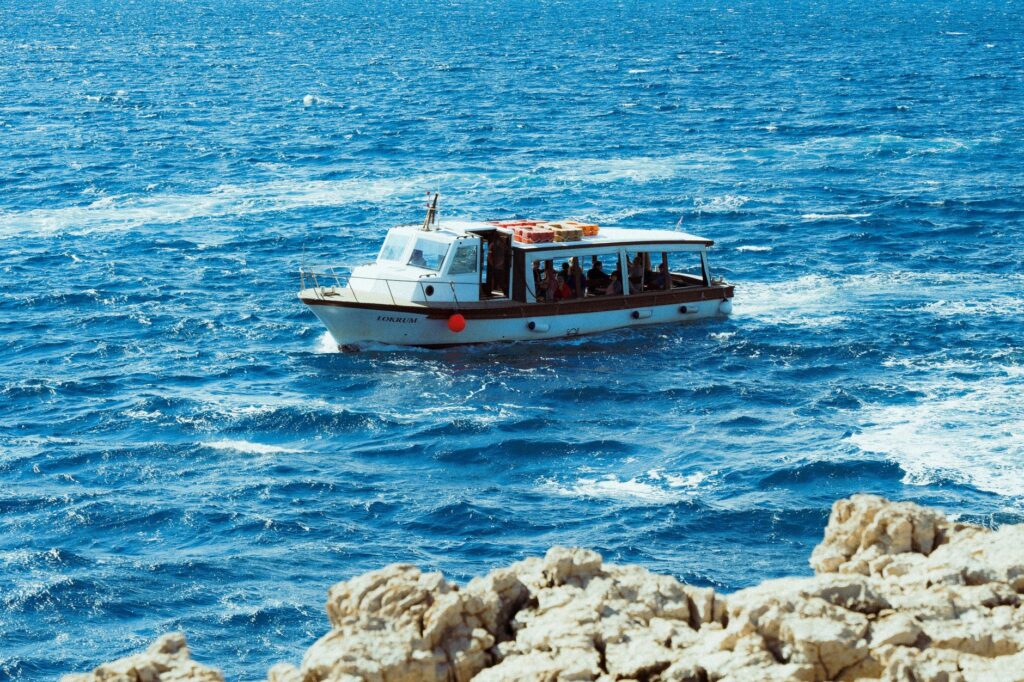
The reason is the boat. If you charter a yacht or string together crossings as a group, a box sitting in the saloon, powered from the boat’s battery and running on the country’s best network, serves the whole crew without draining phones.
Away from sailing the argument collapses: it picks up exactly the same network a phone does, and everyone aboard already has a plan.
Holafly Croatia: the honest use case
Same position as Italy. We are not going to sell you an eSIM you do not need.
It makes sense if you are on EE, Vodafone or a charging Three plan for a trip under ten days. If you want a backup line while sailing, which is a serious argument when losing signal means not being able to reach the charter base. Or if you need your UK allowance kept intact for work.
It does not make sense if you are on O2, Smarty or iD Mobile, or if you are staying more than two weeks, where a monthly pass or a local SIM wins on price.

Network coverage: where it works and where it struggles
Zagreb, Split, Rijeka, Zadar and Dubrovnik, on 4G and 5G alike.
The whole A1 motorway, from the capital down to Dalmatia, with decent continuity.
The large tourist islands, Hvar, Brač, Korčula and Krk, well served across inhabited areas.
Istria as a whole, Rovinj and Pula included, one of the best covered regions in the country.
The main ferry ports and their approaches, at both ends of a crossing.
The small islands, Lastovo and Mljet above all, where signal can fall away to nothing.
The middle of the channels during crossings, between the two coasts.
The mountainous interior between Plitvice and the coast, with genuine dead zones.
The Velebit massif and the Lika hinterland, thinly populated and thinly equipped.
Central Split and Hvar harbour at August peak hours, not for lack of network but from congestion.
August and the small islands, the real Croatian issue
Here is what genuinely sets Croatia apart from its Mediterranean neighbours, and it is neither price nor paperwork.
Croatia is a saturable country. The infrastructure is good, but it is sized for a nation of under four million and it absorbs an enormous seasonal influx every summer, concentrated on a narrow coastal strip and a handful of islands. In July and August, at peak hours, throughput collapses locally: around Diocletian’s Palace in Split, in Hvar harbour, along the busiest waterfronts.
This is not an operator problem. Changing SIM does not help, because every network shares the same overloaded masts in the same place at the same time. It is a constraint of place and hour, and the only real countermeasure is to shift your habits: make bookings in the morning, download maps the night before, and do not count on uploading video at nine on an August Saturday on the Riva.
The second issue is the small islands, and this is where the operator ranking stops being theoretical. On Hvar or Korčula all three networks work. On Lastovo, on Mljet, on the thinner populated islets, the gap between Hrvatski Telekom and the other two becomes very concrete. And it comes with a detail that matters here:
The travel eSIM sold for Croatia runs on Telemach and A1, not on Hrvatski Telekom. It is the same pattern as Kenya, where the travel eSIM runs on the number two while the leader is the only network covering the difficult ground. The logic is commercial rather than technical: aggregators rarely negotiate with a country’s first network.
So the recommendation is simple. If your trip is coastal and urban, Split, Dubrovnik, Istria and the big islands, an eSIM covers you perfectly. If the heart of the trip is the deep archipelago or the mountainous interior, the right answer is not a travel eSIM at all: it is a Simpa card from Hrvatski Telekom, around eleven euros for ten days unlimited, on the best network in the country.
Your questions about the internet in Croatia
Does a day trip to Mostar or Kotor stay inside my Europe zone?
What happens at the Neum corridor on the coast road?
Do the island ferries stay on Croatian networks?
How far out does the signal reach if I am sailing?
Croatia now uses the euro and is in Schengen. Does that change roaming?
Can I pay for tolls, parking and ferry tickets without a data connection?
Is there a limit on how long I can stay in Croatia on a UK plan?
Where to go next
If Croatia is one stop on a longer route, or you are comparing European destinations, we have covered the same ground elsewhere.

Internet in Italy: check your UK network before you buy anything
Here is the thing nobody puts in the first paragraph of an Italy SIM card guide: whether you need one depends entirely on a decision you made when you last...
Read more
Internet in Senegal: no UK plan covers it, so here is what does
West Africa is where the UK roaming conversation gets simple again, and not in a good way. Italy and Croatia at least give you the possibility that your plan already...
Available on 27 October 2026
Staying Connected in Greece: Island-Hopping, Ferries and the Real Coverage
What internet connection to use while staying in Greece? This question often arises before flying out. Caroline and I, Xavier, have researched the various options available in Greece for you...
Read moreSo which option should you pick for Croatia?
Three lines, if we had to.
Count your days first. Under ten days on a charging network, take the daily fee or a travel eSIM. Ten days or more, buy EE’s Roam Abroad Pass at £25 a month or your network’s equivalent, it is cheaper than the meter. And if you are on O2, Smarty or iD Mobile, do nothing at all.
For two to three weeks, or if you are heading for the small islands, buy a Simpa card from Hrvatski Telekom on arrival. Eleven euros for ten days unlimited on the best network in the country, with nothing but a passport required, is the best value of the trip.
And if you want an independent backup line while sailing, the eSIM does that job, and the code LAPLANETEDECARO takes -5% off it.
If we have got the coverage wrong on an island you know well, tell us in the comments. On archipelagos, first-hand reports beat any table.
Fair winds, and keep an eye on the bora (it does not ask your opinion, and it does not consult the ferry captain either).
Connected everywhere, and the rest of the trip
Two years of full-time van life, and the Algarve as our base ever since. We still hit the road, by van or otherwise, and we write up what we find along the way. An email when we have something to say, no more.
Ce que vous souhaitez recevoir :