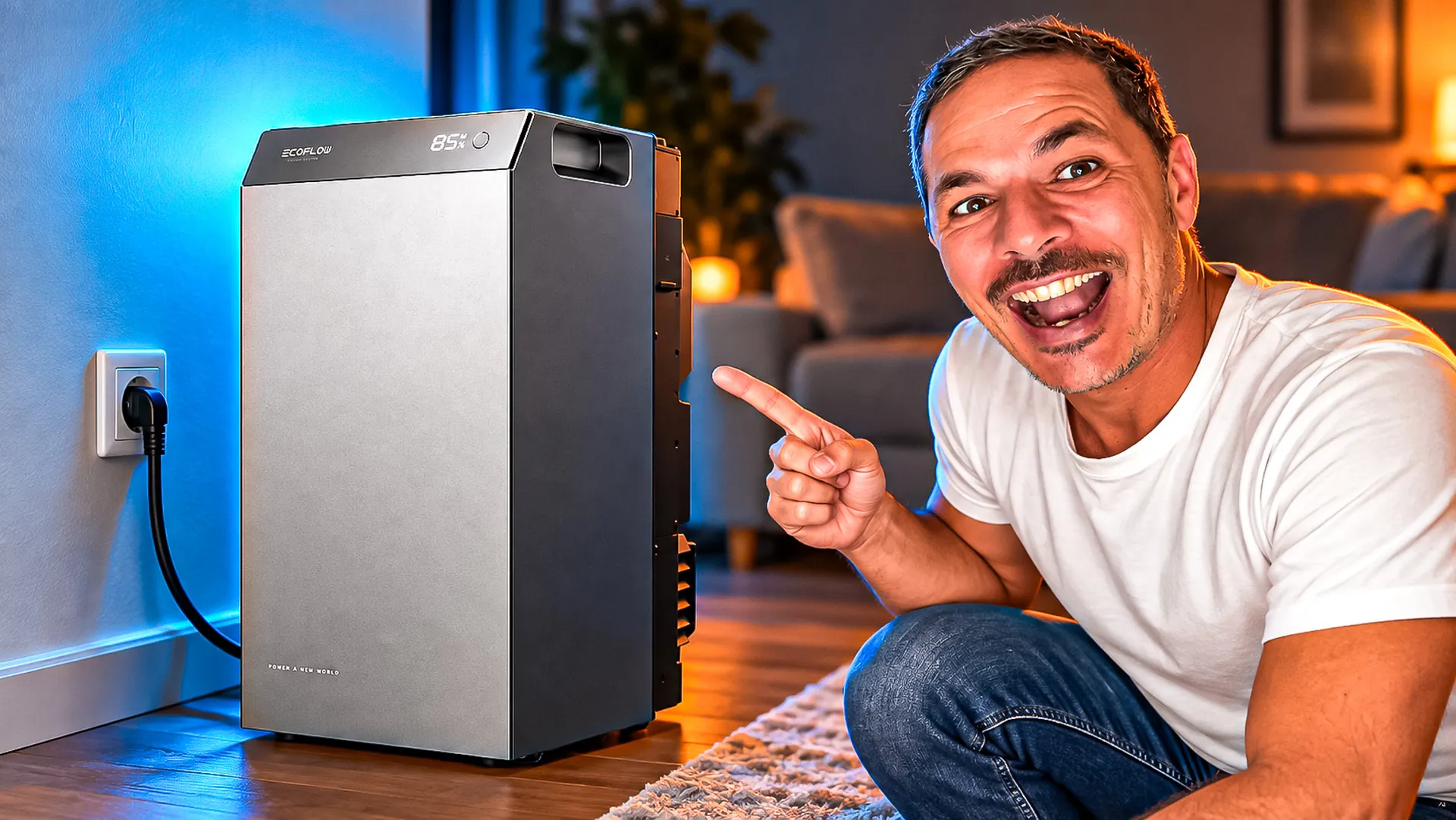
My first EcoFlow STREAMs are no longer on my balcony. The Ultra and AC Pro are now at a friend’s house, in a villa equipped with over 2 kW of solar panels, and it’s this setup that makes me want to take a closer look at the new EcoFlow STREAM 5000. More storage, more power for large appliances… on paper, there’s plenty to be curious about. But if you’ve already purchased the first generation, one question comes before all others: can you keep what you have?
The accompanying presentation is in French; this article is adapted for UK readers.

EcoFlow Stream Ultra + AC Pro: My Review After Almost a Year
Ecoflow sent me their latest plug-and-play gem, I present to you the Ecoflow Stream and Ecoflow AC Pro, let's take a look...
Read the test of the first STREAMMy first opinion on the EcoFlow STREAM 5000: who is it for?
The STREAM 5000 primarily targets households that produce solar electricity and want to store more for later use. If your panels produce mainly when you’re away, the benefit is to retrieve some of that energy in the evening when you’re cooking, watching TV, or running your appliances. The benefit depends on the actual surplus available: a large battery that remains half empty does not fulfill all its promises on the bill.
It may also interest those who want to keep certain appliances running during a power outage, provided they connect them to the designated outputs and respect their power requirements. You need to choose what you want to preserve: router, refrigerator, lighting, possibly a more power-hungry device. The entire house is not automatically backed up.
However, if you’re mainly looking for a battery for weekends, if you have little solar surplus, or if a few small devices meet your needs, this format may be too large and too expensive. What interests me here is its use at home. We will see below the case of someone starting from scratch and someone who already has a STREAM.
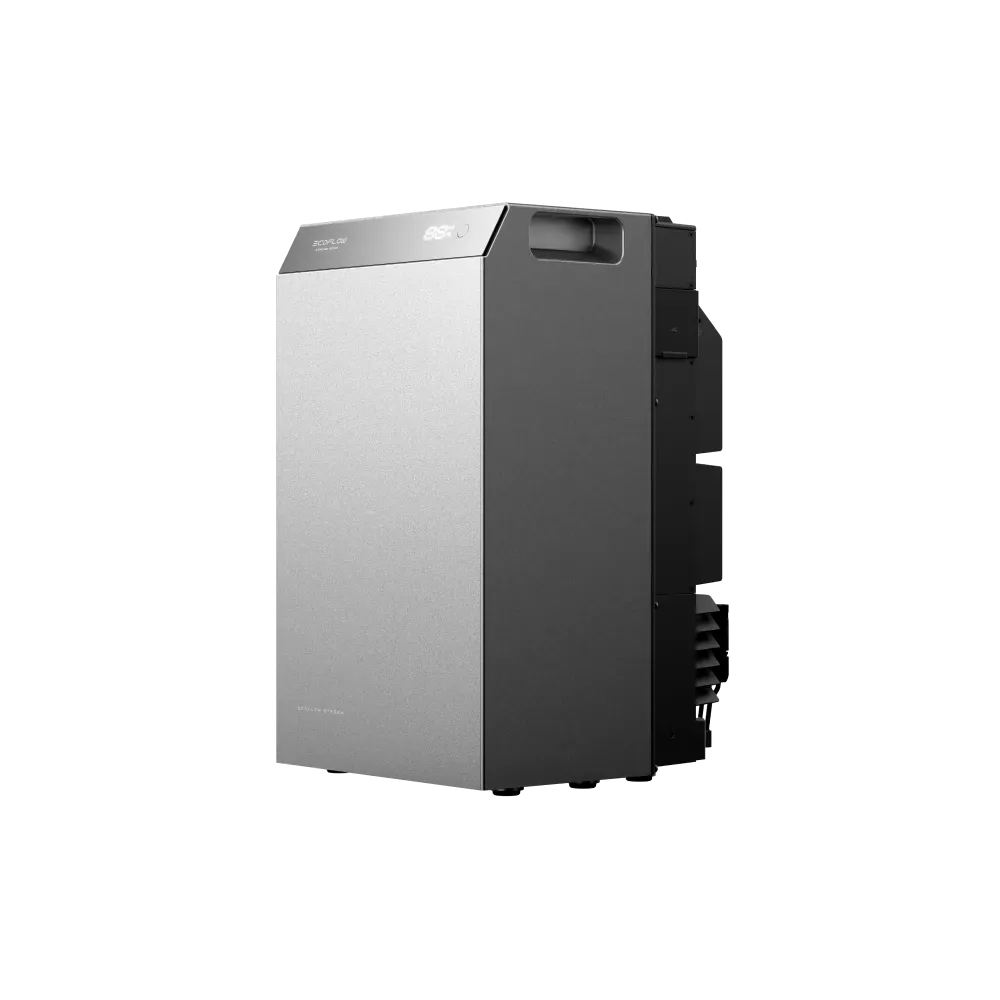
Official EcoFlow visual. I have not yet received or tested the STREAM 5000.
From 1.92 to 5.024 kWh: what does it change for you?
In my memory, the old one had “about 2 kilowatts” of storage. There you go, even when we talk about it often, we end up mixing up the units (I plead guilty). The correct value is 1.92 kWh for a STREAM Ultra. The 5000 goes up to 5.024 kWh: about 2.62 times the reserve of a single Ultra.
The power in watts indicates what you can run at any given moment. The kilowatt-hours indicate how much energy you have in reserve. A larger battery can extend usage, but its capacity does not eliminate the power limit of its outlets or the conditions of its connection.
To see what this reserve represents for you, we take the principle of the calculator from the first STREAM: you indicate how many kWh you want to cover each day, and then you compare the two batteries. The table just after gives examples for a router, a television, an air conditioner, and a washing machine.
Compare your needs with STREAM Ultra and STREAM 5000
Move the slider to set the energy you want the battery to supply each day. For example: 1,000 W for 3 hours = 3 kWh.
Full batteries, assumed efficiency of 90%, 10% reserve, no solar recharging or grid input. This calculation compares stored energy only: it does not guarantee appliance startup or simultaneous operation. Check power requirements and connections separately.
Some examples to read the results
For this table, I start from fully charged batteries, without recharging, with an assumed efficiency of 90% and 10% of reserve kept. This gives an estimated usable 1.56 kWh for the Ultra and 4.07 kWh for the 5000. These are calculations, not my test readings.
| Usage example | Energy requirement | Ultra only | 5000 only |
|---|---|---|---|
| Router of 12 W for 24 h | 0.288 kWh/day | 5.4 equivalent days | 14.1 equivalent days |
| TV of 80 W for 4 h | 0.32 kWh/day | 4.9 equivalent days | 12.7 equivalent days |
| Air conditioner consuming 1,500 W for 2 h | 3 kWh | Exceeds the 1,200 W limit on battery alone | Sufficient energy for these 2 h; startup to be verified |
| Washing machine: 0.6 kWh/cycle, peak of 2,000 W | 0.6 kWh per cycle | Exceeds the 1,200 W limit on battery alone | Budget for 6 complete cycles; actual operation to be verified |
Each line corresponds to a device used alone. The equivalent days only compare energy; over several days, the battery’s own consumption also counts. For a washing machine, you need to look at the kWh consumed per cycle and the power peak during water heating. Treating it as a 2,000 W device running at full capacity throughout its program would distort the calculation.
Air conditioner and washing machine: beware of what 3,000 W means
This is one of the points that interests me the most. The STREAM Ultra alone provides 1,200 W per battery. EcoFlow also announces 2,300 W for certain configurations connected to the grid, especially with a second Ultra or AC Pro. Therefore, you need to compare equivalent connections.
For the new one, the official STREAM 5000 assistance distinguishes 2,500 W off-grid on the unit alone and 3,000 W with an Expansion battery. The 3,600 W mentioned in bypass implies a contribution from the grid. They do not represent what the battery can provide alone during a power outage.
A washing machine requiring 2,000 W thus falls within the announced limit of the 5000 alone. For an air conditioner, we look at its electrical consumption and its peak at startup, not the cooling power written large on the box. This opens up more possibilities than the Ultra alone, but I want to keep the difference between a technical possibility and a device that has actually been tested.
A more angular design and the return of the display on the battery
Here, EcoFlow has clearly made a break from the previous version. The first STREAMs had rounded fronts and edges, with a very discreet presentation. On the one I used, there was no screen that provided operational information: it was mainly a light indicator that informed about the battery level, then the app for more details.
On the visuals of the STREAM 5000, the lines are much more angular and the display returns directly on the battery. It embraces its electrical equipment side more. Personally, I really, really, really like this new version, even though I also liked the discretion of the old one. The two approaches simply do not have the same presence in a room.
I wonder if they received feedback from customers who wanted to check information without having to open their phone every time. This is just a hypothesis of mine; EcoFlow did not provide me with the reason for this change. In any case, that’s the benefit I expect from this display. I cannot yet judge its readability in direct sunlight, from a distance, or once the battery is installed.
It also seems more imposing to me, but I haven’t placed it next to the old one for comparison. EcoFlow announces 45.4 kg for the STREAM 5000. With my memory of the Ultra being carried up to the third floor, the weight is something to consider before delivery. I would plan for a permanent location, with the access and clearances required by the manufacturer.
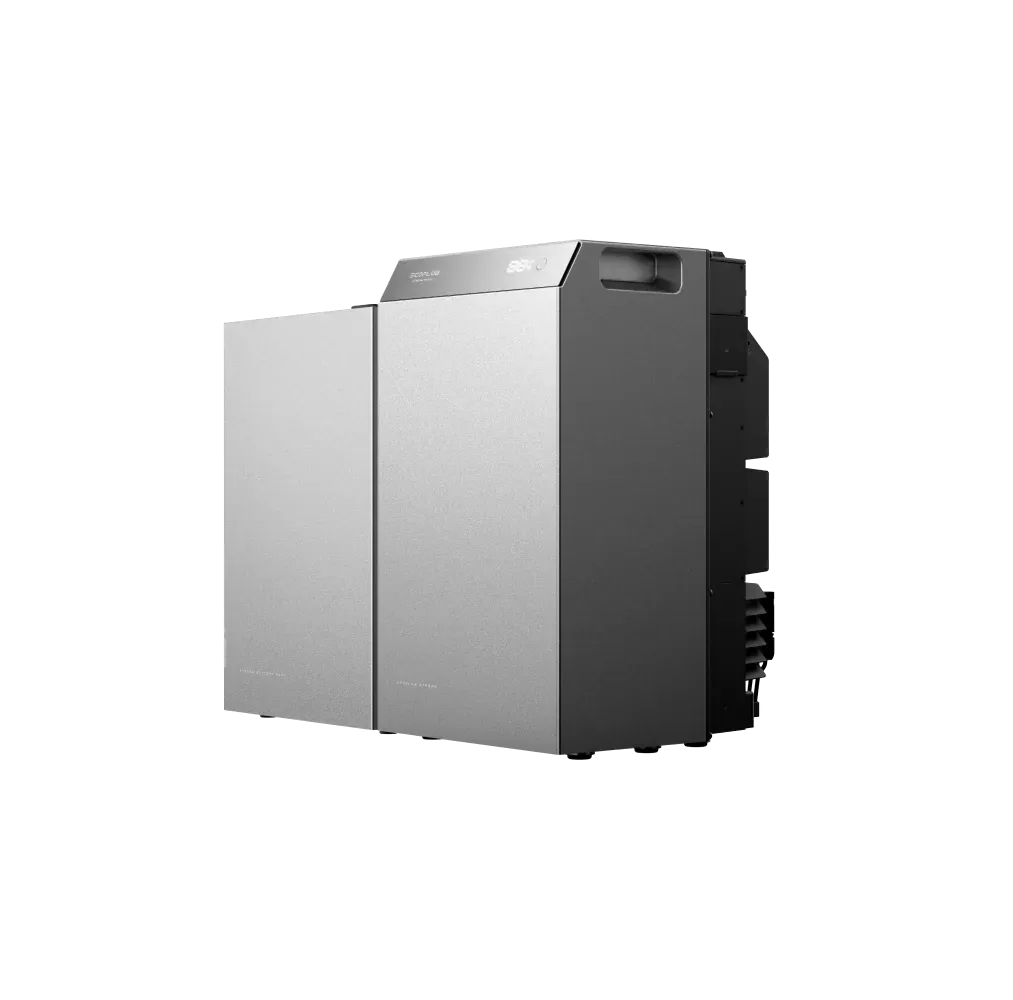
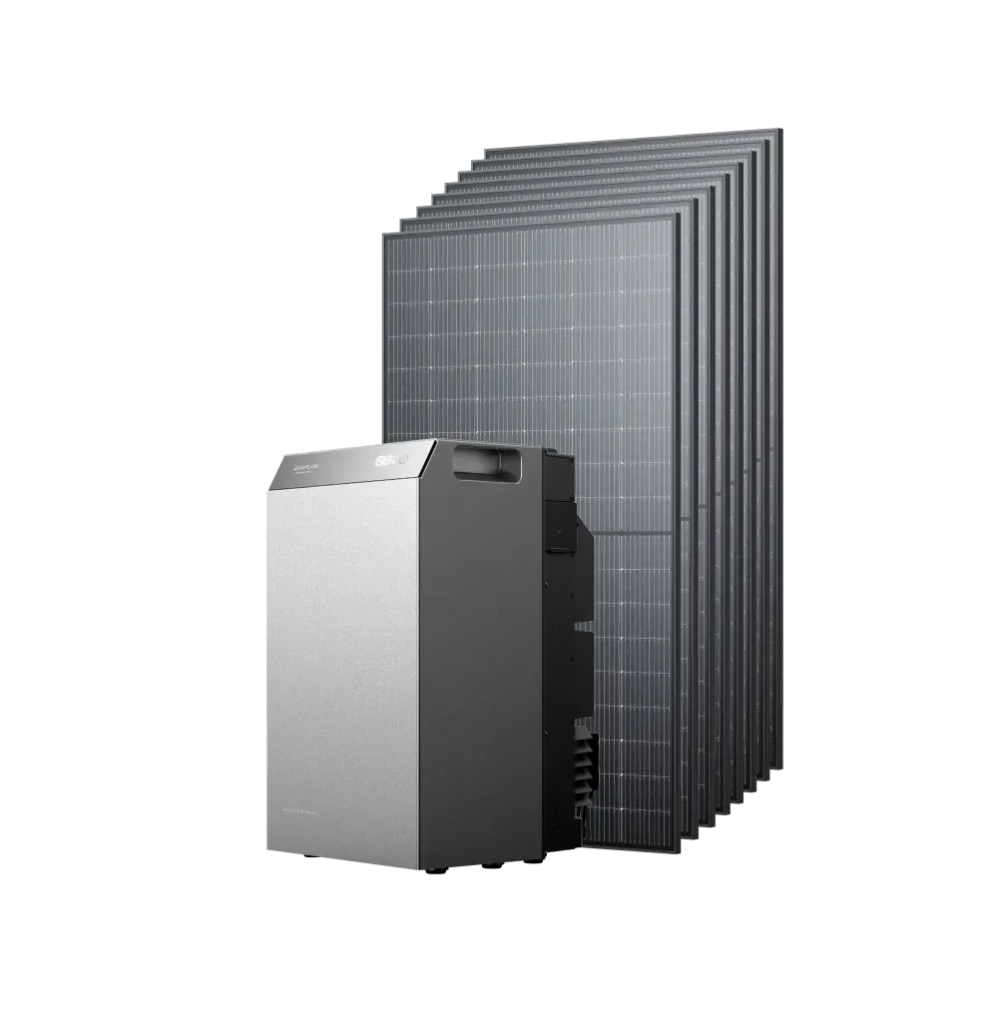
Manufacturer visuals of the STREAM 5000 range. My appreciation of the design is based on these images; I do not yet have the product in hand.
STREAM 5000 or AC 5000: start from your panels
The names are similar, but the choice mainly depends on your setup. The STREAM 5000 with solar input has four MPPTs, the circuits that optimize panel production, with up to 5,000 W of photovoltaic input in total. If you plan to add compatible panels directly to the battery, this is the version to look at.
The STREAM AC 5000 does not have these direct photovoltaic inputs. Its interest lies particularly in a house already equipped with panels and an inverter, to add storage to existing production. This does not exempt you from checking the connection and the necessary measuring equipment, but it’s another starting point.
And 5,000 W of panels does not mean 5,000 W produced from morning to night. Orientation, shadows, and season remain decisive. For me, the right sizing starts with two very concrete questions: how much surplus do you actually have to store, and how much do you consume when the sun is no longer producing?
The app: what I expect from it on a daily basis
I find the EcoFlow app frankly very good on the first generation. On the 5000, what I want to see is if it helps to use solar at the right time without spending the whole day in the settings. The announced programming and peak management functions go in this direction, but the old STREAM already offered peak/off-peak control.
The local mode with a compatible meter also deserves attention. It does not retain all functions: the EcoFlow documentation notably excludes AI, solar forecasts, and OTA updates without cloud. Some functions may require Internet or a subscription. I have not yet used the new OASIS 3.0 and EcoBot features, so no usage verdict at this stage.

I'm Xavier
I test gear over months, in the van and day to day, and I say what doesn't work. If that saves you one bad purchase, leave me your address.
Ce que vous souhaitez recevoir :
Is storage becoming cheaper per kilowatt-hour?
A bigger battery can cost more overall yet less per nominal kWh. On the official UK shop on 14 October 2026, the standalone STREAM Ultra was £899 and the standalone STREAM 5000 £1,699, before any code, panels or accessories.
| Standalone battery | UK price checked | Nominal capacity | Price per nominal kWh |
|---|---|---|---|
| STREAM Ultra | £899 | 1.92 kWh | £468.23/kWh |
| STREAM 5000 | £1,699 | 5.024 kWh | £338.18/kWh |
At those UK prices, the 5000 is about 27.8% cheaper per nominal kWh. That is a capacity-price comparison, not proof of a lower lifetime electricity cost. Losses, usage, ageing and the complete installation cost still matter, and a larger battery is poor value if you cannot fill it.
Prices can change. These figures come from the official STREAM Ultra and STREAM 5000 listings; our EcoFlow offers and codes are tracked separately.
You can find the configurations and prices tracked on our EcoFlow STREAM 5000 sheet. Make sure you compare a battery alone or a pack with panels and extension.
EcoFlow STREAM 5000 promo code
 In stock
EcoFlow STREAM 5000
CARO5*
*Verified price on 4 November 2026. The final price may vary.
Backward compatibility: the point that deserves a real answer
Honestly, if moving to the 5000 required replacing batteries that still work, I would find that quite unfortunate. The point of a scalable system is still to be able to grow it over time, not to restart your installation with each generation.
The problem today is that EcoFlow’s pages do not all say the same thing. The UK product presentation announces compatibility with previous-generation batteries. But the official UK FAQ still explains that it will be developed, without giving definitive details, for the STREAM Ultra, Pro, AC, AC Pro, and Max.
So I’m not going to say it’s incompatible; that would be jumping to conclusions. I also won’t advise you to buy while promising that everything will work together as soon as it’s plugged in. Compatibility is announced, its operation remains to be confirmed.
- Add a solar STREAM 5000 to your first STREAM: common operation to be confirmed.
- Add a STREAM AC 5000 to a first generation installation: same reserve.
- Keep your old AC or AC Pro with a new STREAM 5000: same question, no precise validation found.
What is missing is a clear matrix: which models, which firmware, which common control in the app, and what power limits. Two batteries present in the same house do not necessarily form a single coordinated system. Also, be careful with the name: PowerStream is a different range that should not be confused with the STREAMs.
Should you get this EcoFlow STREAM 5000?
You already own a STREAM: start from what you lack
If your current setup meets your needs, a larger capacity does not by itself create additional savings. The right indicator would rather be a battery that is regularly full while you still have solar surplus, then empty when you consume in the evening. You need to look at the curves, not just the total produced in the year.
In our case, my friend’s new data will actually allow us to update the old installation. I have not yet received them. In the meantime, to buy a 5000 to complement the first STREAMs, I would confirm the exact backward compatibility before ordering. Models, firmware, common functions: a general promise is not enough to size a purchase.
If the old AC Pros could be kept and controlled with the new one, the evolution would become much more interesting. If they had to be replaced, it would be a real disadvantage for me. Today, the contradictory information does not allow for a clean decision.
You are starting from scratch: check if you need 5 kWh
Here, you don’t have old batteries to integrate. You can choose based on need: evening consumption, available solar surplus, devices to back up, and space for installation. A larger reserve can make sense if you have a way to fill it and regular uses to empty it.
With a few small devices and little production, the cheaper old Ultra remains an option to compare. With an air conditioner, a washing machine, or more consumption after sunset, the 5000 deserves calculations, always separating energy and power. The criterion is not to buy the largest; it’s to choose a capacity that you will actually use.
Finally, the AC 5000 and the 5000 solar do not exactly respond to the same setup: the latter has direct photovoltaic inputs. The choice also depends on what already exists at your place, especially a solar inverter. For a battery to move while traveling, our EcoFlow, Aferiy, and AllPowers comparison addresses another use.
Are you hesitating between ALLPOWERS or AFERIY?
The BS5000 Pro and the AFERIY PH062/PN062 also revolve around 5 kWh, but their app, evolution, and installation change the decision. I grouped this choice in our comparison of EcoFlow, ALLPOWERS and AFERIY home batteries. Here, I focus on the STREAM 5000 and what it can bring to an existing EcoFlow installation.
UK installation: check the connection before buying
Supplying your own appliances, providing backup power and exporting electricity to the public grid are different functions. The 2,500/3,000 W backup figures do not establish what you may inject into a UK circuit or export to the grid.
The official UK STREAM 5000 FAQ describes connection to the distribution board and requires a professional installer or electrician. Ask that installer to confirm the intended configuration, circuit protection and any distribution-network requirements for your existing solar installation. I would include those costs in the comparison before ordering. A setting used for a German balcony-solar installation does not automatically make this a UK plug-in kit.
What I want to verify during the STREAM 5000 test
There are the announced characteristics, and there is what we get once the installation is in place. To move from this first opinion to a field test, here are the points that matter to me:
- The energy actually returned, measured over a cycle, with the reserve and the indicated settings.
- Operation with a washing machine and an air conditioner: startup, consumption, devices used together, and possible network supplement.
- The system’s own consumption at low load, to know what remains when mainly powering small devices.
- The noise, heating, and readability of the display in real installation conditions.
- Control in the app and, above all, the associations actually possible with the old STREAM and AC Pro.
I do not yet have these measurements for the 5000. My friend’s next readings will concern our first-generation installation in Portugal. They will update that usage report; I will not present them as test results for this new model.
My verdict before testing: the decision depends on your existing system
The larger reserve, the advertised ability to run higher-power appliances and the new display give me reasons to investigate. I already know and like the first-generation EcoFlow app. But attractive specifications are the beginning of a test, not its result.
If you are starting from scratch, compare the STREAM 5000 with other home-storage options using your actual consumption, solar production and full installation cost. If you already own a STREAM, backward compatibility can change the buying decision. Keeping working batteries is a real advantage; having to replace them would be a drawback. Until EcoFlow confirms the precise combinations, I would not order on the assumption that everything will work together.
Our STREAM 5000 product sheet gives the configurations, specifications and current offer. For the equipment I have actually used, read our test of the STREAM Ultra and AC Pro, including the six-month update.
EcoFlow STREAM 5000: your questions answered
Have you ever tested the STREAM 5000 at home?
Not yet. This article is my opinion before the test. My usage feedback concerns the first generation STREAM Ultra and AC Pro, first at my home and then at a friend's. The battery life figures for the 5000 are estimates, not my measurements.
Can you add a STREAM 5000 to older STREAM or AC Pro models?
The UK product presentation advertises backward compatibility, while its FAQ still refers to development without a definitive model-by-model matrix, as checked on 14 October 2026. Confirm the exact models, firmware and shared functions with EcoFlow before ordering to extend an older installation.
What is the difference between the STREAM 5000 and the AC 5000?
The STREAM 5000 has inputs to directly connect solar panels. The AC 5000 receives energy on the alternating current side: it does not have these direct photovoltaic inputs. The choice therefore mainly depends on your existing installation and its inverter.
How long can it power an air conditioning unit?
With an air conditioner that consumes an average of 1,000 W, the calculation gives about 4 hours on a single STREAM 5000, starting full, without recharging, with 90% efficiency and 10% reserve. The actual consumption, the compressor cycles, and its starting peak can change the result. To compare the necessary storage, multiply the power consumption by the duration of use and report this daily need in the calculator.
Does the STREAM 5000 provide 3,000 W on its own?
The announced power on battery is 2,500 W alone and can reach 3,000 W with an Expansion battery. The 3,600 W in bypass includes operation with the grid: this is not the power provided solely by the battery. And 5.024 kWh refers to the amount of energy stored, not the output power.
Should a first STREAM be replaced by the 5000?
Not just because it is bigger. If your old battery already covers your needs, the gain may be limited. I would first check if you regularly lose excess solar energy during the day and if your battery drains too early in the evening. Then I would confirm the possibility of keeping the old modules.
Our gear tests, in real conditions
Batteries, solar, conversion, security. What we found after months of real use, and what we would not buy again. An email when we have actually tested something, not before.
Ce que vous souhaitez recevoir :