


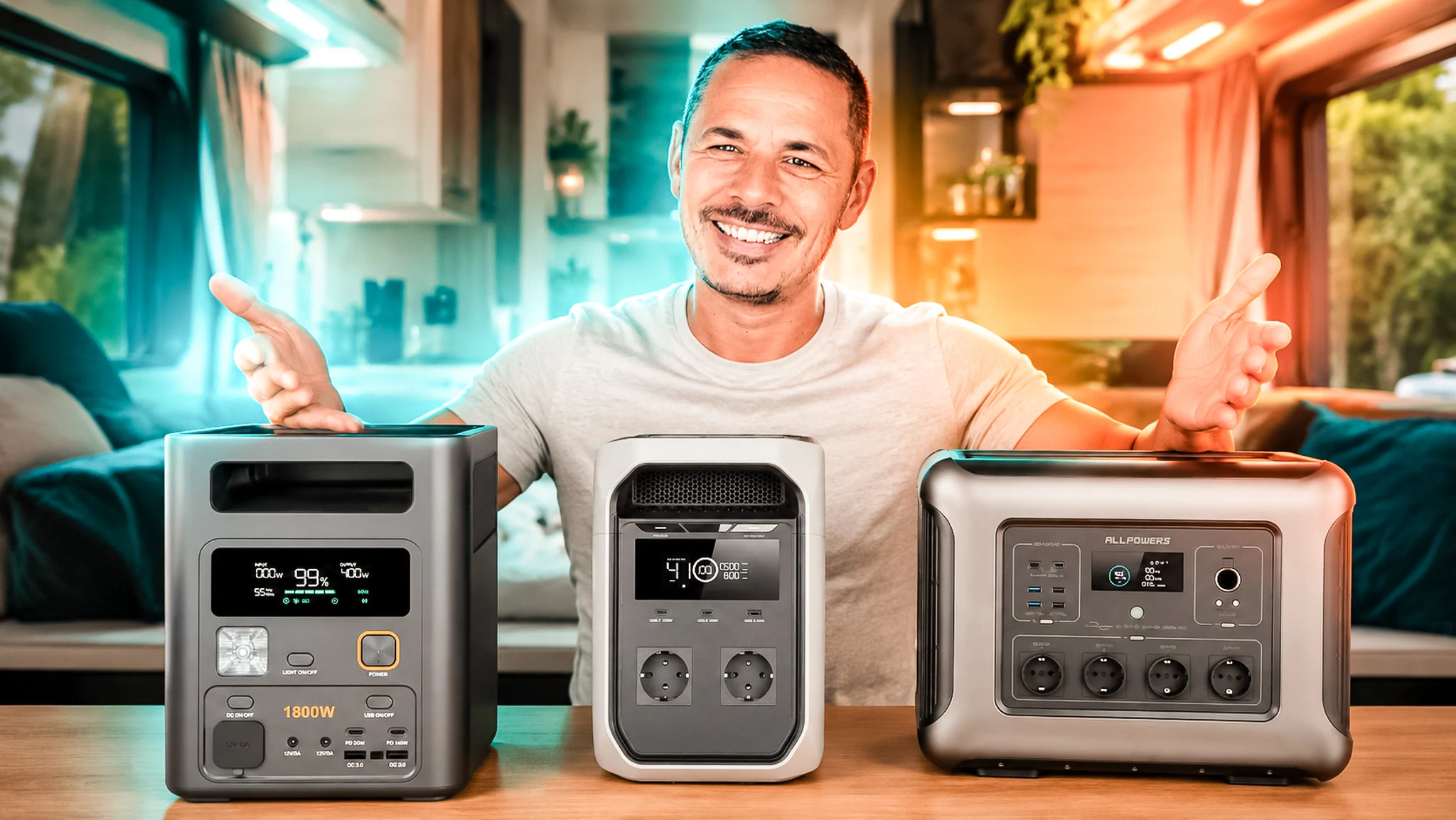
Well, I have to confess something a bit ridiculous, when we open the cupboard under the van bench, we have three power stations staring at each other like cats and at home, there are two more working (yes, we have a slight problem with batteries, we own it). EcoFlow, Aferiy, AllPowers, we have bought all three, plugged them in, shaken them, transported them, and sometimes cursed them quietly one bivouac evening. And that’s exactly why this article exists.
Because there are tons of comparisons of portable batteries, written by people who have never lifted the device or heard its fan at two in the morning. We’re not going to sell you the brand that makes the most money, we’re going to tell you what it’s like to live with them, in a camper van as well as as a backup at home when the Portuguese electrical panel decides to act up. And in the end, you’ll know which one is made for you, promise.
A little clarification that changes everything, we bought these three brands with our own money, not press loans returned the next day. That means we’ve kept them, we’ve seen how they age, how they perform a year later, what detail annoys after the hundredth use. A comparator that tests for three days and returns the package can’t tell you that. It’s our only real added value, but it’s worth its weight in gold when you drop several hundred pounds on a device.
How do we judge them, then? Always on the same concrete points, those that make us grumble or smile, the actual output power (not what’s on the box), the experienced charging speed, the fan noise, the ergonomics of the plugs, the app, the warranty, the weight to carry, and especially the relationship between all that and the price paid. Keep these criteria in mind, it’s the grid we roll out for each one.
EcoFlow, our go-to when we want zero hassle
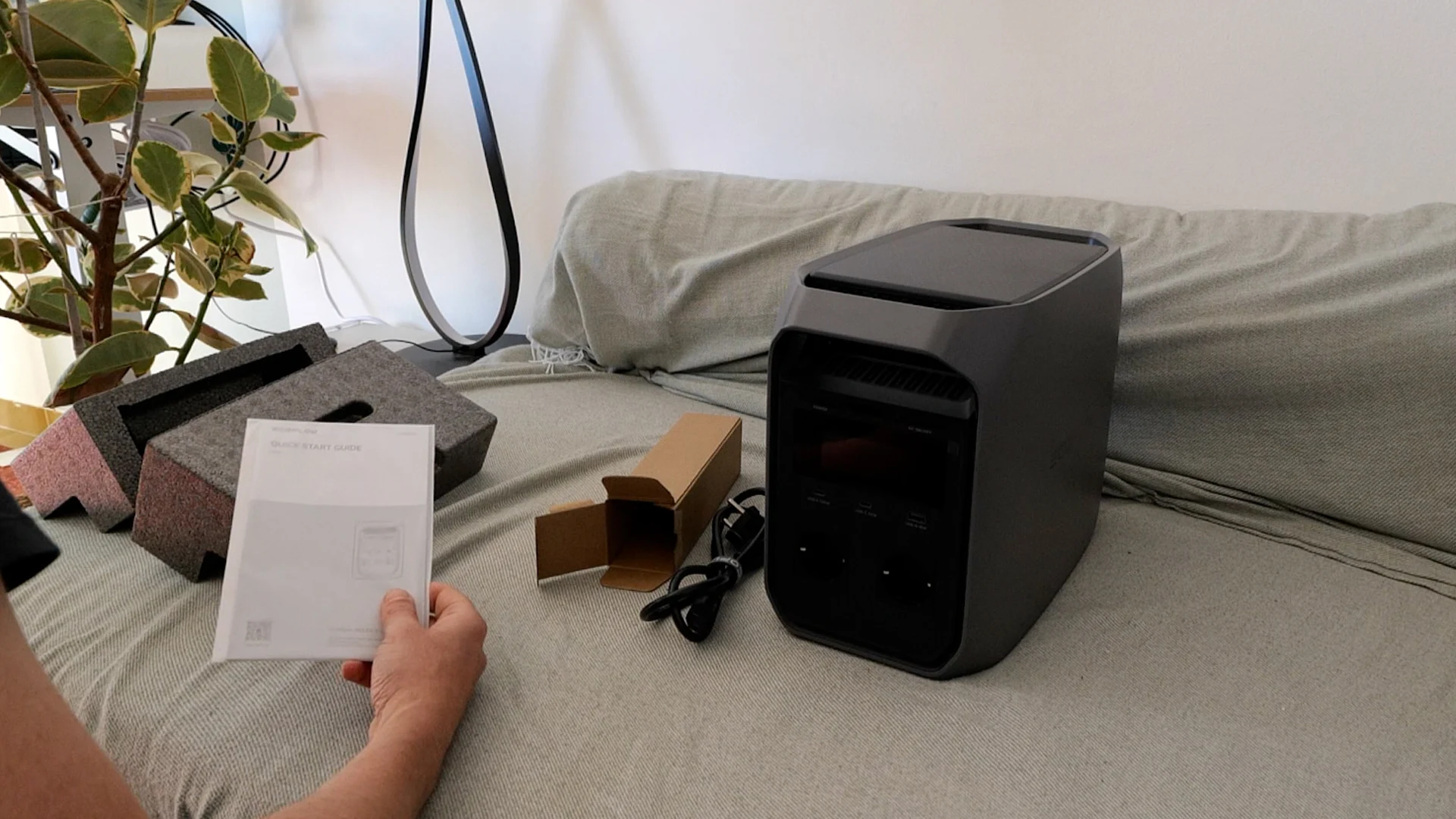
So EcoFlow is a bit like the comfort brand. We’ve been using it for years, we’ve had the Delta Mini, the Delta 2, the Delta 3 Classic, the big Delta Pro at home, power banks, the Powerstream, in short, the entire ecosystem has passed through. And what sets them apart is not a magic number on the box, it’s this feeling of a finished and reliable machine that we find in every product. It turns on, it works, the app connects, and you don’t think about it again.
In terms of positioning, EcoFlow is the giant of the sector, the one that popularized ultra-fast charging and offers an enormous range, from the small pocket power bank to the residential monsters that can power an entire house. It’s also the most premium brand in terms of price, but you’re buying an established name, structured customer service, and accessory compatibility (panels, extensions, smart plugs) that follows you from one product to another. When you’re starting out and want to avoid mistakes, it’s objectively the most reassuring choice.
The app, precisely, is where they really stand out. On my Delta Pro, which is plugged in all the time, I cap the charge at 80 percent to preserve the battery, I schedule the low range to fill up with solar, and I monitor everything from my phone without getting up from my chair. When we talk about home backup, this ecosystem that switches automatically and can be controlled with a finger, it really changes your life, and that’s what justifies paying a little more.
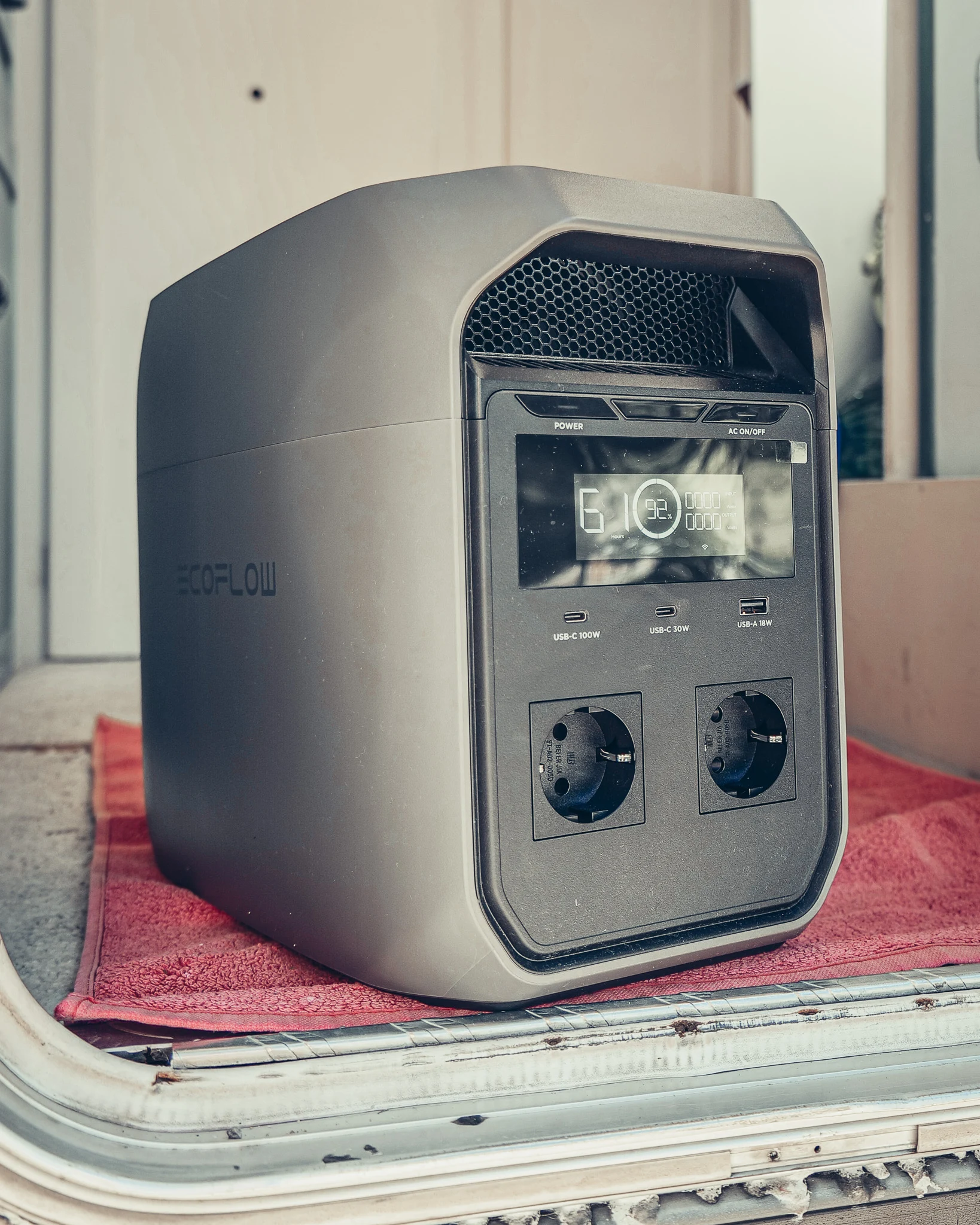
Now, the downside, because there is one and I won’t hide it from you. The Delta 3 Classic, when we plugged it in at home to recharge, the screen showed 500 W of actual input, far from the advertised performance, and it surprises you the first time. Add to that the fan of the Delta Pro that can sometimes be heard from the next room at night, and the little River 3 Plus that shuts off as soon as we exceed 600 W (goodbye vacuum cleaner), and you have the honest portrait, a great brand but not perfect.
Technical specifications
| Color | Light Gray |
|---|---|
| Capacity | 1,024.00 Wh |
| Net Weight | 12.10 kg (26.68 lb) |
| Dimensions | 398,200,283.00 mm (15,677,184.96 in) |
| Total Number of Output Ports | 5.00 |
| Number of AC Outputs | 2.00 |
| Max AC Output | 1,800.00 W |
| USB-A | 1*12W |
| USB-C | 1*100w+1*30W |
| DC 12V Output | None |
| AC Charging | 1,400.00 W |
| Solar Charging | 500.00 W |
| Battery Chemistry | LFP |
| Wi-Fi | ✓ |
| Bluetooth | ✓ |
| Application | ✓ |
| Warranty | 5.00 an |
| Noise | 50.00 dB |
| Life Cycles | 10 years |
| Operating Temperature | -10 to 45°C |
| Waterproof Rating | 20.00 % |
| Charging Temperature | 0.00 °C (0.00 °F) |
Our verdict
Benefits
- 1024 Wh usable capacity
- 1800 W AC output
- LiFePO4 chemistry, long cycle life
- Solar charging for real off-grid use
- Brand-direct, app and features with no subscription
Disadvantages
- Heavier than a power bank
- Mains recharge time to plan for on big loads
A genuinely versatile station for vanlife and home backup, with the right balance of capacity and portability.
EcoFlow DELTA 3 Classic (1024Wh) Portable Power Station promo code
 In stock
EcoFlow DELTA 3 Classic (1024Wh) Portable Power Station
CARO5*
*Verified price on 17 September 2026. The final price may vary.
Aferiy, the shock of value for money
Well, Aferiy is the brand that made us raise an eyebrow. We knew it less, we took it a bit out of curiosity, and honestly, we were blown away by what we have in our hands for the price. The P210, its charging amazed us, going from zero to a hundred percent in two hours on a capacity of 2048 Wh, we didn’t expect that. The P280, on the other hand, consumes up to 1800 W on mains without flinching and powers a 1500 W kettle for over an hour. For the price, it’s an unbeatable value for money.
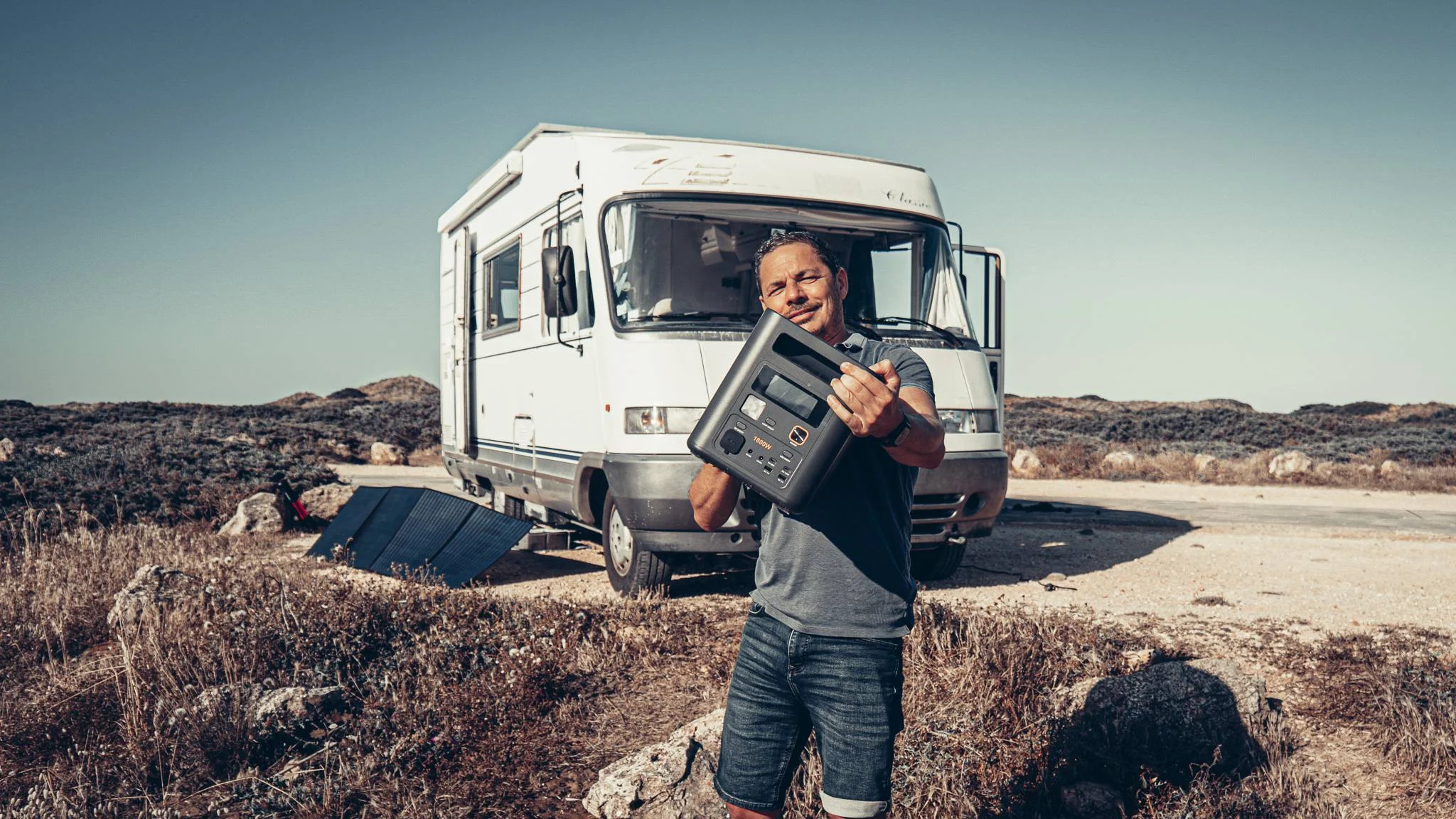
It’s really the brand for big needs without the big budget. You want the maximum watt-hours for your money, you don’t care much about the logo, you want it to handle a microwave and a coffee machine at the same time without voltage drop, and well, that’s exactly Aferiy’s territory. We simulated this domestic use and the P210 maintained both devices, which impressed us for the price paid.
Aferiy is the younger brand that fully plays the volume and price card, with a range focused on good capacity stations and, importantly, expandable models like the Nomad 1800 Pro that can be enlarged with additional batteries. On paper, it aligns exactly the same ingredients as the big players (LiFePO4, pure sine wave inverter, fast charging, long warranty), but at a price that stings less. The brand’s bet is to make you forget that you didn’t know the name two years ago, and honestly, in use, the bet is rather successful.

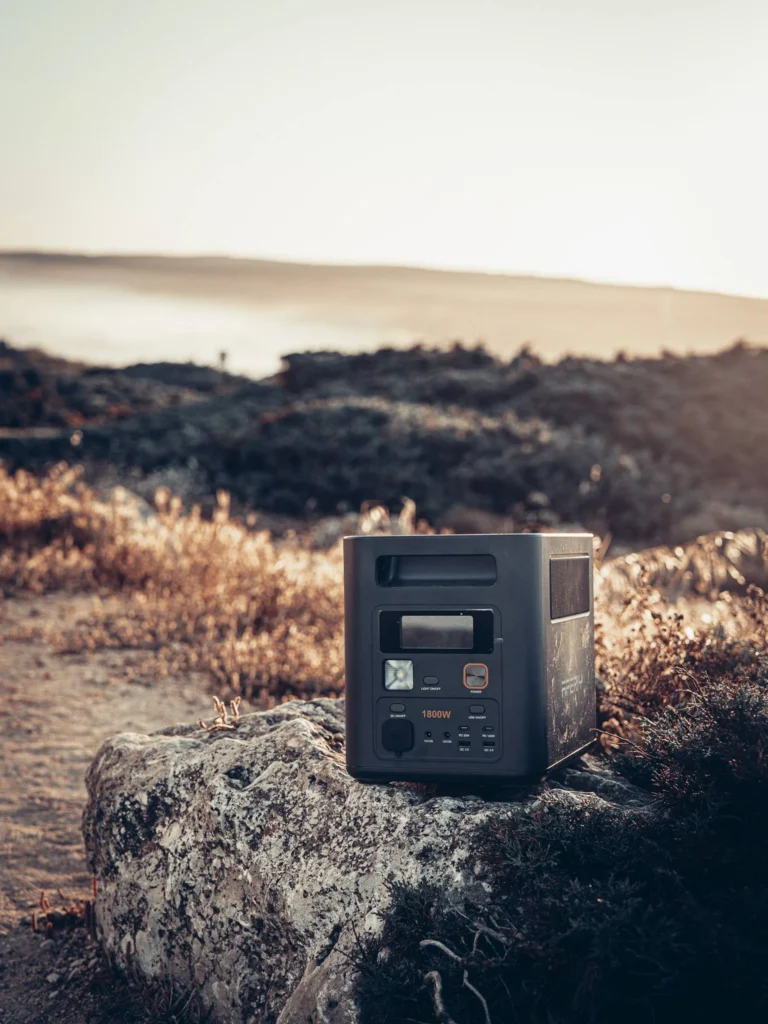
The catch, and it’s real, is the ergonomics and the app. On the P210, the plug covers open upwards, so you have to lift the battery to plug it in, a real chore on the field. And the native app never connected, we had to download Bright EMS to control the P280. It’s a younger brand, you can feel it in the details, but on the core of the product, reliability is there. If you want the full story, we have a detailed test of the Nomad 1800 that digs into all that.
Aferiy Nomad 1800 & 1800 Pro: the battery test that saved our night in Bordeira
Field test of the Aferiy Nomad 1800 power station (1024 Wh, 1800 W) in the Algarve: compact format, 1000/500 W input switch, charges in under an hour, 7-year warranty. My...
Read moreAllPowers, the tough one that never flinches
Well, AllPowers is the tough guy of the group, the Asian brand with such American branding (the name, the design) that you’d swear it comes from Texas. The one we really have on hand is the R2500, the station you’ll find in the comparison just below, and we’ve had it at home for a year. 2016 Wh, 2500 W continuous, 4000 W peak, and above all, a smart horizontal format that fits under a camper van bench where vertical competitors simply won’t fit.
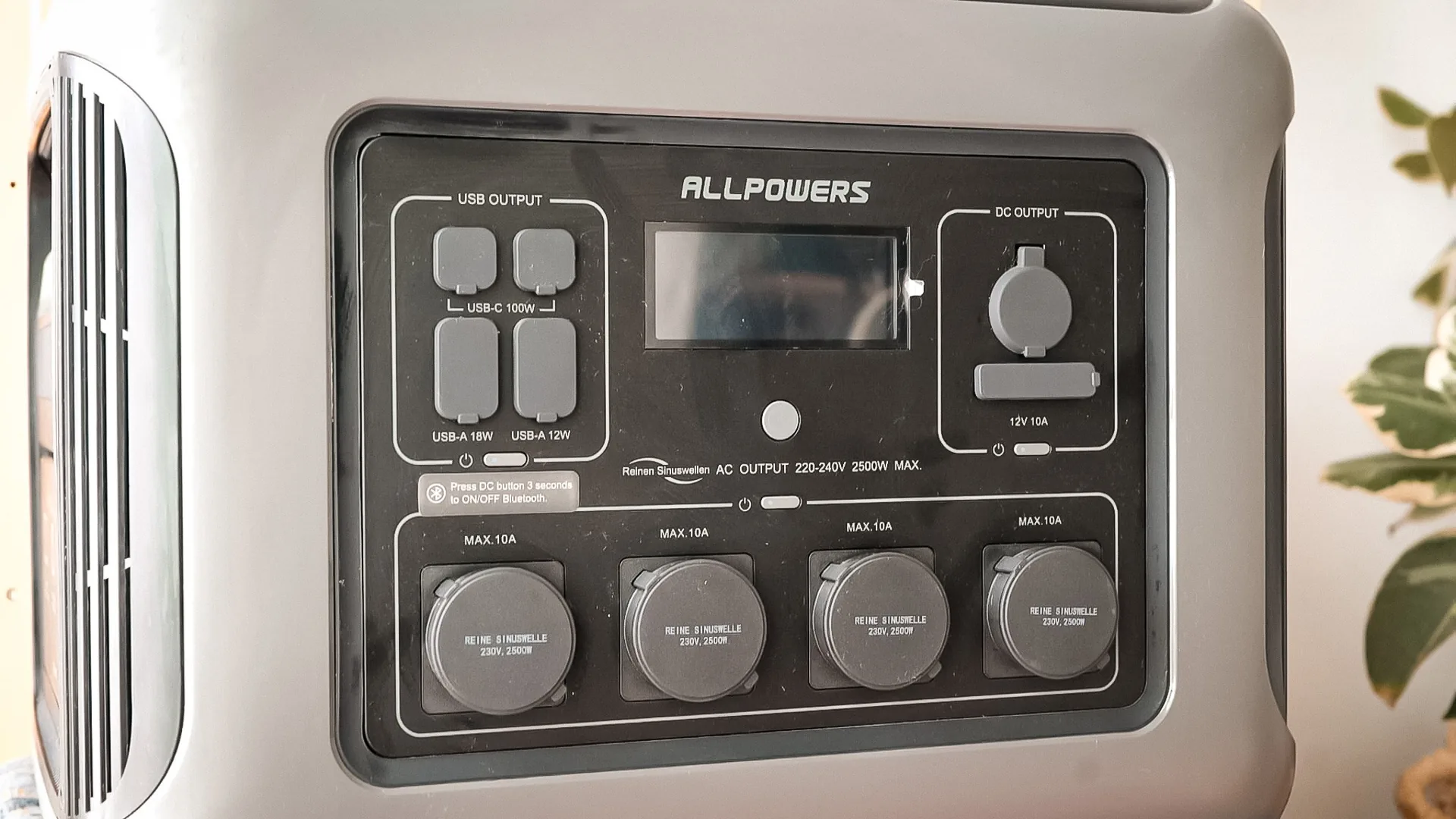
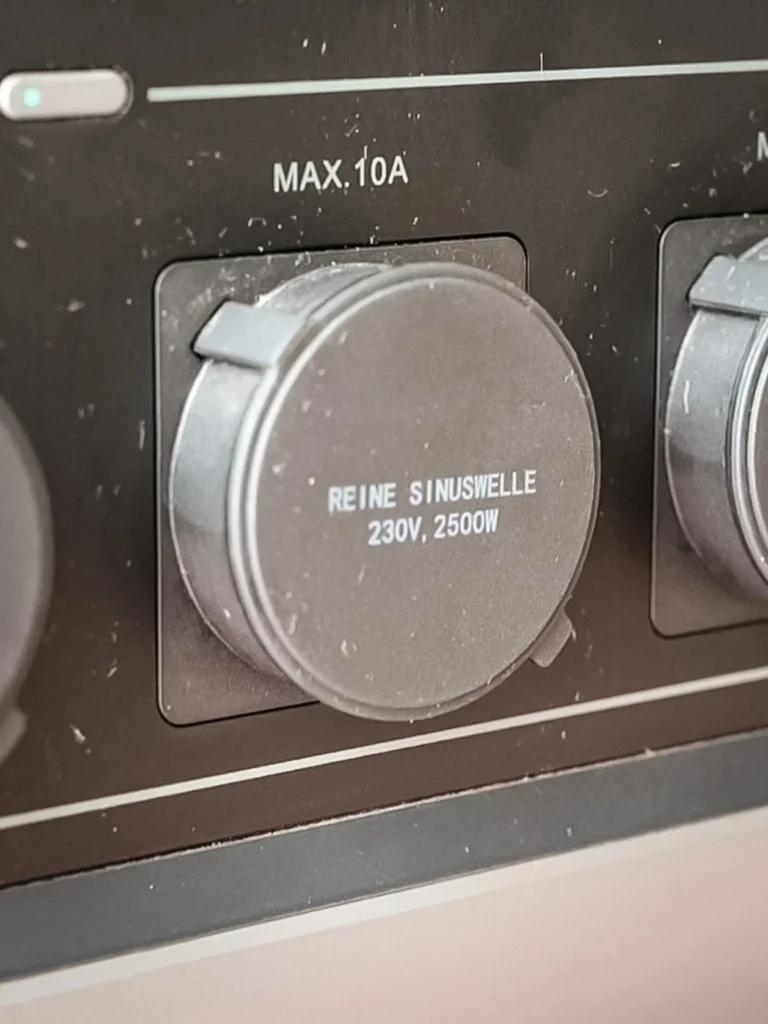
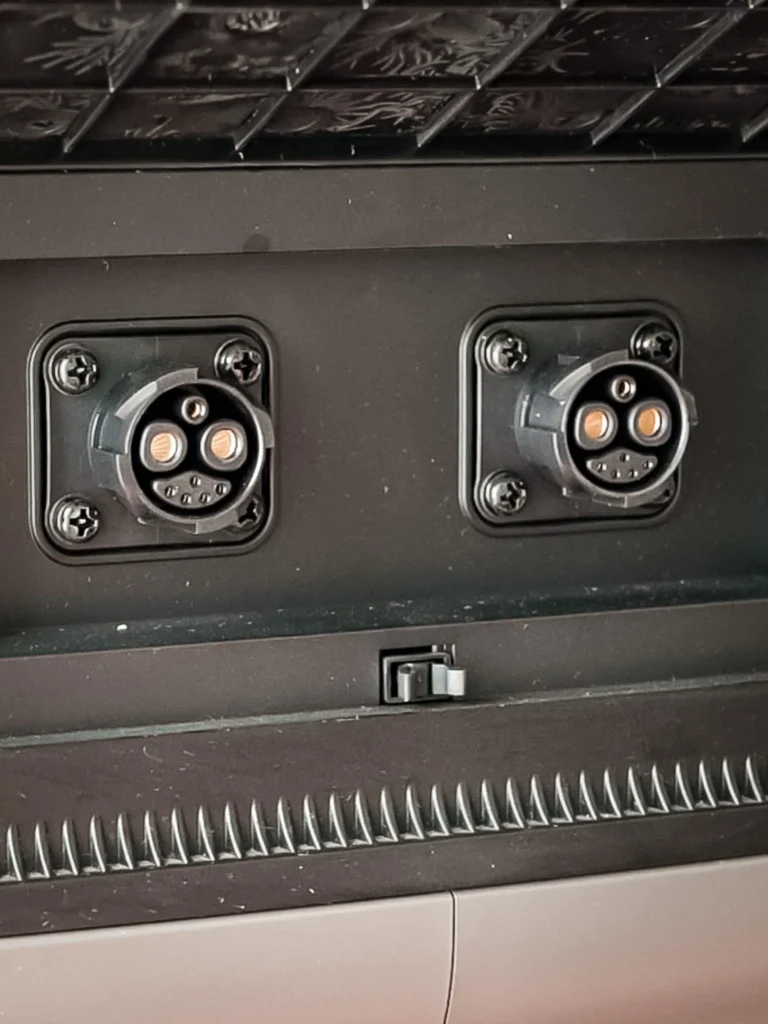
On pushed it for real, iPad, power bank, scooter, drone, and a 2000 W hairdryer plugged in at the same time, and it didn’t flinch, we stopped at 2000 W due to a lack of devices to add. On the big R4000, we even plugged in a heat gun and a 1950 W hairdryer without it batting an eye. In short, heavy-duty appliances, a drill, household appliances, it handles it all without question.
And the most surprising thing is the silence, the fan stays below 40 dB even under heavy load, nobody wants a disguised generator humming next to the table. Add the details that make a difference in use, anti-oxidation silicone covers on almost every socket (another brand left on the balcony had its ports oxidized, not the AllPowers), two handles integrated into the cooling system, a compact screen, WiFi with an app, and an inverter switch, and you have a solid and surprisingly versatile station, expandable by modules for large volumes for home backup.
The downside, as you might guess, is the weight, around 29 kg, and you feel it when you have to climb three flights of stairs without an elevator. Let’s just say it’s perfect if it stays put and works hard, less so if you dream of hauling it from the hold to the beach every day. AllPowers comes from the solar world, focusing on robustness rather than flashy interfaces, and in this specific area, holding a lot of watts without making noise, it checks the box better than anyone. A little confession, the complete test article for this R2500, we never wrote it, the video remained orphaned for a year (yes, we’re working on it).
And what about Jackery, Bluetti, and the others?
Well, you’re going to ask me, what about Jackery, Bluetti, and Anker, all these names that dominate the comparisons? A legitimate question, and I’ll be honest, we haven’t owned and tested them like the other three, so we won’t pretend to know them by heart. They are excellent brands, Jackery is a safe bet for simplicity, Bluetti impresses with capacity and speed, but our legitimacy stops where our experience ends.
What you need to remember is that these mainstream brands play roughly in the same league as EcoFlow in the premium positioning, with excellent value for money for Jackery on smaller capacities. If you have them in mind, our comparison does not disqualify them, it just gives you a reading grid (price per Wh, app, noise, warranty, weight) that you can apply to any brand. We prefer to talk about what we’ve really experienced, it’s more honest and much more useful.
The real match, criterion by criterion
Now that we’ve made the introductions, let’s put them face to face on what really matters in daily life. Because on paper they all look alike (LiFePO4, pure sine inverter, screen, ports galore), but it’s in the lived details that it plays out. Here’s our take, not lab numbers, user experience after having had all three on hand.
EcoFlow, Aferiy, AllPowers: the match at a glance
Our take after having all three at home. Not lab numbers, just user experience.
| Criteria | EcoFlow | Aferiy | AllPowers |
|---|---|---|---|
| In a word | The reliable premium | The value for money | The tough one |
| Price per watt-hour | The most expensive | The cheapest | In between |
| Native app (control) | Yes, complete | Bright EMS, average | Station screen, app depending on model |
| Fan noise | Audible when charging | Discreet once started | Very discreet (under 40 dB) |
| Warranty | Solid | Generous (up to 5 to 7 years) | Solid |
| Expandable by modules | Yes (wide range) | Yes (Nomad Pro, P280) | Depending on model |
| For whom | Home backup, ecosystem, peace of mind | High needs, low budget | Raw power, intensive use |
None is the best in absolute terms. The right choice depends on your budget, your usage, and what you can tolerate daily (noise, app, weight).
On the price per watt-hour, Aferiy wins without discussion, it’s the nerve of the war for many people. EcoFlow is the most expensive, but you’re not just paying for watts, you’re paying for the app, the ecosystem, and peace of mind. AllPowers fits between the two, with the argument of silence and continuous power that is worth its weight in peanuts when pulling heavy loads.
On the control side, EcoFlow dominates, it’s the only truly complete and enjoyable ecosystem to operate. Aferiy is lagging behind (the app, we can do without, but it barely exists), AllPowers depends on the model. Regarding the warranty, Aferiy is surprisingly generous for a young brand, which reassures about longevity. And on expandability by modules, EcoFlow and Aferiy stand out with stations that can be expanded over time.
On recharge speed, they all hold their own as soon as you plug them into mains power, often talking about less than one to two hours for a full charge, which was science fiction five years ago. The real gap lies elsewhere, in the small everyday gestures, the orientation of the sockets, the readability of the screen in bright sunlight, the weight when lifting it into the van. It’s silly, but it’s this kind of detail that makes you love or hate a station after six months, much more than a line on a technical sheet. Compare the specs side by side, prices and promo codes included, it speaks for itself.

I'm Xavier
I test gear over months, in the van and day to day, and I say what doesn't work. If that saves you one bad purchase, leave me your address.
Ce que vous souhaitez recevoir :
One representative station per brand, comparable capacity
£399,00
See the product
|
£829,00
See the product
|
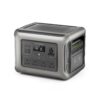
£854,99
See the product
|
|
|---|---|---|---|
| Capacity | 1,024.00 Wh | 2,048.00 Wh | 2,016.00 Wh |
| Net Weight | 12.10 kg (26.68 lb) | 21.60 kg (47.62 lb) | 29.00 kg (63.93 lb) |
| Dimensions | 398,200,283.00 mm (15,677,184.96 in) | 398.00 mm (15.67 in) | 456.00 mm (17.95 in) |
| Total Number of Output Ports | 5.00 | - | 13.00 |
| Number of AC Outputs | 2.00 | 3.00 | 1.00 |
| USB-A | 1*12W | 2 ports, QC 3.0 12W | QC 3.0 18W, 5V⎓3A/9V⎓2A/12V⎓1.5A 36W Max. |
| Application | ✓ | - | - |
| Warranty | 5.00 an | 7.00 an | - |
| Noise | 50.00 dB | - | - |
| Life Cycles | 10 years | 4000+ Charge/Discharge cycles to 80% | - |
| Operating Temperature | -10 to 45°C | - | - |
| Waterproof Rating | 20.00 % | - | - |
| Charging Temperature | 0.00 °C (0.00 °F) | - | - |
| Number of DC Outputs | - | 2.00 | - |
| UPS Function | - | ✓ | ✓ |
| Total Output Power | - | - | 2,500.00 W |
Who wins for which profile, and the famous double life
Well, here we go, the real question, which one for you. And here I’m going to break a myth, there is no universal winner, there are profiles. If you mainly go van camping with reasonable needs (laptop, fridge, box, light) and want zero hassle, EcoFlow is the calm reflex. If you have high needs but a small budget, Aferiy gives you the most capacity for your money. And if you often pull heavy loads with a station that stays put, AllPowers handles it without faltering.
For home backup, it’s a whole different world. Here, the number one criterion is the inverter function and the ability to keep the unit plugged in permanently. Here in Portugal, power cuts are frequent (old wiring, and often it’s our own circuit breaker that trips when we turn on the AC with the oven), and my entire office, computer plus hard drives, is plugged into the Delta Pro which acts as a continuous buffer. The day it goes out, I feel nothing, everything continues, and my drives are saved. That’s real backup experience, not a demo.

The home backup battery that also goes on weekends
The last real power cut we had here in Portugal lasted about twenty minutes. And the craziest part is that I didn't even notice it.. I was sitting in front...
Read moreAnd this is where my current obsession comes in, the thesis of the two-life station. My Delta Pro is great at home, but it weighs around 40 kg, so it never moves (unless you travel by bus). For me, the real versatile battery, the one that goes in the van in summer and backs up the house in winter, is a lightweight station with extensions, keeping the capacity while reducing the weight. It’s the perfect solution for people like us, both sedentary and campervan users.
An expandable station delivers a bit less pure output than a large dedicated home battery, it’s fair to say, but in terms of grid reinjection, we are anyway limited on the watts sent back to the socket, so this limit does not penalize this use. In short, if your profile resembles ours, aim for a light and modular station rather than an immovable monster. We have a dedicated guide for choosing by profile and a complete file on the versatile solar generator if you want to dig deeper.
Technical specifications
| Capacity | 1,024.00 Wh |
|---|---|
| Net Weight | 11.64 kg (25.66 lb) |
| Dimensions | 350.00 mm (13.78 in) |
| Number of AC Outputs | 2.00 |
| Max AC Output | 1,800.00 W |
| Number of DC Outputs | 2.00 |
| USB-A | 2 ports, QC 3.0 18W |
| USB-C | 1 port, PD 20W; 1 port, PD 3.0 140W |
| DC 12V Output | 1 port, 12V/10A |
| AC Charging | 1,000.00 W |
| Solar Charging | 500.00 W |
| Battery Chemistry | Lithium Iron Phosphate Battery (LiFePO4) |
| Warranty | 7.00 an |
| Life Cycles | 4000+ Charge/Discharge cycles to 80% |
| UPS Function | ✓ |
Our verdict
Benefits
- 1024 Wh usable capacity
- 1800 W AC output
- LiFePO4 chemistry, long cycle life
- Built-in UPS (millisecond switchover)
- Solar charging for real off-grid use
- Brand-direct, app and features with no subscription
Disadvantages
- Heavier than a power bank
- Mains recharge time to plan for on big loads
A genuinely versatile station for vanlife and home backup, with the right balance of capacity and portability.
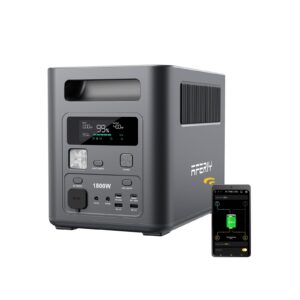
AFERIY Nomad1800 Portable Power Station 1800W 1024Wh promo code
 In stock
AFERIY Nomad1800 Portable Power Station 1800W 1024Wh
VANTOURUK*
*Verified price on 17 September 2026. The final price may vary.
How to Choose Your Portable Electric Station: Buying Guide
The market for portable batteries has exploded in recent years, offering solutions for autonomy ranging from simply recharging a smartphone to fully powering a household in distress. But between pocket-sized...
Coming soon
Solar generator: the station that lives two lives, in a van and at home
A few years ago, to me, a solar generator was necessarily a bulky thing you dragged around a campsite, with a motor roaring while neighbors looked at you sideways. Then...
Read moreHaven’t decided yet, take the test
If at this stage you’re still unsure (which is perfectly normal, it took us years to form our opinion), we’ve prepared for you a little honest questionnaire. Six questions about your budget, your usage, and what you can or cannot tolerate in your daily life, and it guides you towards the most logical brand for you. It’s not gospel truth, just a little help to make a decision.
Which brand of station is made for you?
What you are still asking us about these three brands
Is Aferiy a reliable brand despite its young age?
This is the question that comes up the most, and it's legitimate. We've been using it for a while, we've even had to manage a tired battery in the field, and honestly, the equipment holds up. The LiFePO4 chemistry is the same as the big brands, the warranty is generous, and the value for money is real. The real downside remains the app and a few ergonomic details, not the reliability of the core.
Can you connect a computer and hard drives to it without risk in case of a power outage?
Yes, provided that you keep the device permanently plugged into the station and choose a model with inverter function. That's how we protect our office in Portugal: the station acts as a buffer continuously, so on the day the power goes out, there’s nothing to catch up on and nothing turns off. It's the home backup use, not a last-minute connection.
Do these stations accept solar panels from other brands?
In the vast majority of cases, yes. A solar panel connects via a standard socket (often MC4 then an adapter), and the MPPT regulator is integrated into the station. The only point to check is the open-circuit voltage of the panel (Voc), which must not exceed the maximum input of the station. Below this limit, we can mix brands without worry.
Is an app required to use the station?
No. They all display the essentials on a physical screen: battery level, incoming and outgoing power, remaining time. The app mainly serves to finely control (cap the charge, schedule a solar reserve, monitor remotely). On Aferiy, the app is secondary, but we manage perfectly well without it on a daily basis. On EcoFlow, it quickly becomes a reflex.
Does a budget station age faster than a premium one?
Not mechanically. What matters is the chemistry and the number of announced cycles, not the logo. A good LiFePO4 lasts several thousand cycles regardless of the brand. What differentiates a premium one is more about the support, the app, the ecosystem of extensions, and sometimes the service. The pure longevity of storage is determined by the specs, not the price.
Which one to choose if I'm going van life AND I want to secure the house in winter?
It's the famous one station, two lives profile, and it's ours. The answer lies less in the brand than in the format: a lightweight and expandable station, which we take in the summer and reconnect at home in the winter, beats a large non-removable battery. The three brands have this kind of model. We lean towards an expandable model to keep the capacity without carrying the weight.
Can you combine a promo code with the brand's sales?
Often yes, and that's where the real deals are made. During a Black Friday for example, the brand discount and our in-house code usually stack, which brings the price down much lower than the displayed rate. We always check in the cart that the discount applies additionally before confirming.
How long does a 2 kWh station keep a fridge running during a power outage?
Count on a good day for a recent fridge, often 20 to 30 hours, because a fridge does not draw continuously: it cycles. The honest calculation is usable capacity times 0.85 divided by average consumption. Be careful of the compressor's startup peak, which is much higher than the displayed consumption: it is this that requires a somewhat robust station, not the average.
P.S. If you were to remember just one thing, it’s this: don’t look for the best brand, look for yours. We get along just fine with the three under one roof, each has its role and its moment (and a dedicated drawer, of course). Tell us in the comments which one catches your eye, we love comparing our watt struggles.
Our gear tests, in real conditions
Batteries, solar, conversion, security. What we found after months of real use, and what we would not buy again. An email when we have actually tested something, not before.
Ce que vous souhaitez recevoir :