


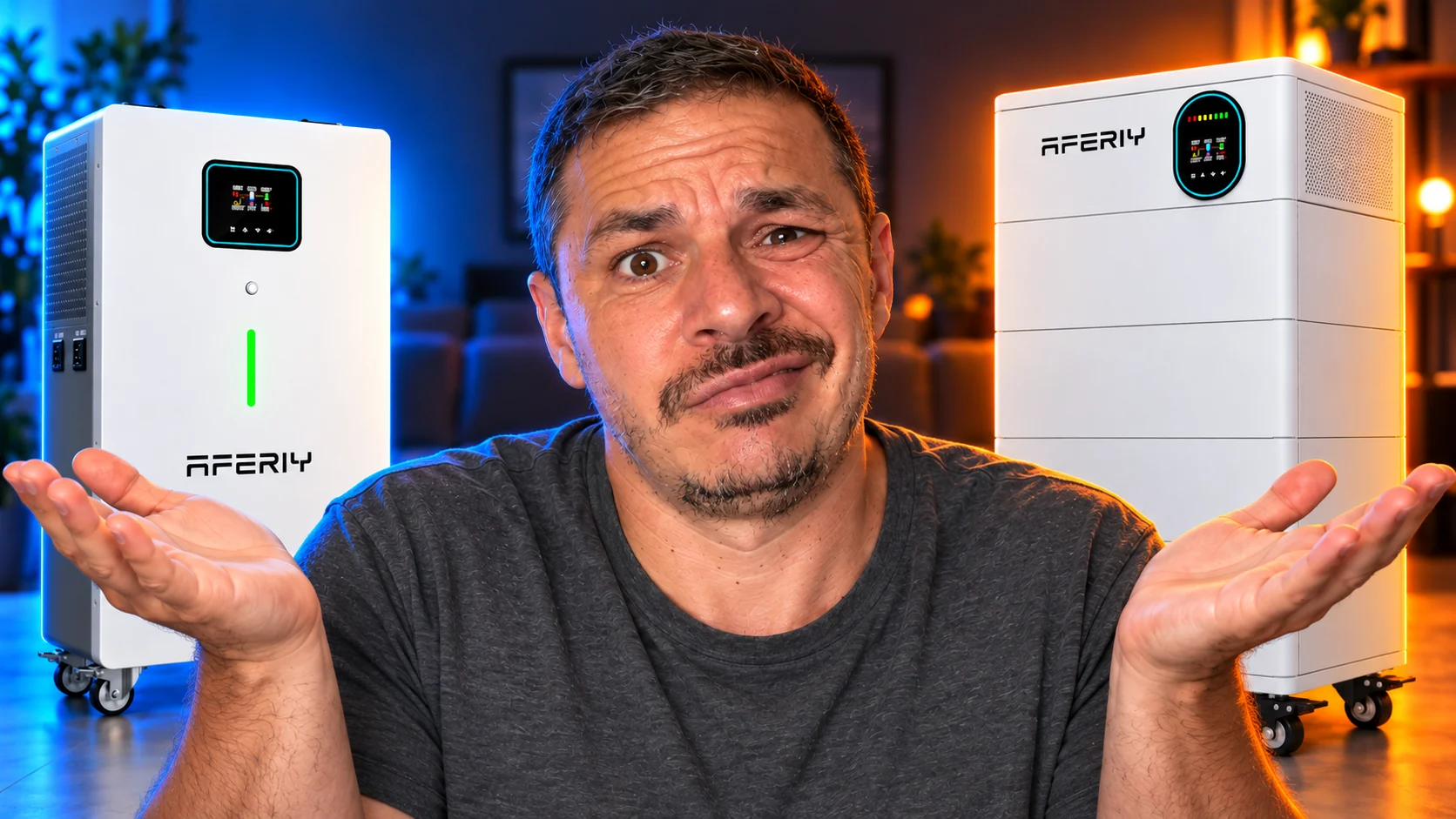
Two batteries, the same initial capacity, the same advertised power… and only one that clearly allows for additional storage. Well, I must admit that I had a hard time understanding the positioning of the AFERIY PH062 and PN062. Especially since, when I was preparing this article, the gap between the two on AFERIY’s French store was only €100 on promotion.
I like following what AFERIY does. But when two products seem to meet the same need, I want to understand what justifies choosing one over the other. The weight? The space it takes up at home? Whether you can plug it in yourself? Those are the points I looked at, with a preference starting to take shape… and an open question about installation.
The video below is in French.
From portable equipment to home battery: the shift I find interesting
EcoFlow, ALLPOWERS, AFERIY… These are three brands I follow and partner with, and I find it quite funny to watch them gradually move into the home. We mostly associated them with life on the move. Today, they offer to leave several kilowatt-hours in a corner of the house.
I imagine the evolution of batteries and their cost has something to do with it. That’s my impression when I look at the ranges: capacities are showing up that would have seemed huge on the portable models we used to look at. I won’t draw a price-drop curve from that, because I haven’t measured one.
In the AFERIY family, our Nomad 1800 test fits that mobile use better. With the PH062 and PN062, the scale changes, and so does the question: you need to understand how the equipment fits into your home.
Why I didn’t request them for testing
Honestly, I would have loved to try them. What holds me back isn’t the idea that AFERIY couldn’t send us some. It’s first of all my building: three and a half floors to climb, with equipment of this size. When I see the 58.5 kg announced for the PH062, my enthusiasm cools a little.
And above all, I don’t currently have the use that would justify bringing these batteries home. Getting free products just for the sake of it doesn’t interest me. I hope to live in a villa one day and take the time to try this kind of equipment properly. For now, I’d rather give you a documented opinion, saying what appeals to me and what holds me back.
PH062 and PN062: what brings them together, what separates them
The common point that stands out is the duo 5.12 kWh of storage and 6,200 W of advertised power. But the construction is different. The PH062 combines storage and electronics in a single cabinet. The PN062 pairs an inverter with B050 modules: the starter pack includes one battery, then you can add more.
| Specification | AFERIY PH062 | AFERIY PN062 |
|---|---|---|
| Starting capacity | 5,120 Wh | 5,120 Wh (one B050) |
| Storage expansion | None announced that we found | Up to 20.48 kWh (four B050 in total) |
| Announced system output | 6,200 W | 6,200 W |
| AC output sockets | 2 | 2 |
| Solar input (MPPT) | Up to 6,500 W | Up to 6,500 W |
| Battery chemistry | LiFePO4 | LiFePO4 |
| Weight | 58.5 kg | 16.9 kg for the inverter alone; complete pack to be confirmed |
| Dimensions (H × W × D) | Approx. 78 × 44 × 23 cm (sales page; height to be confirmed on the delivered unit) | Approx. 52 × 53 × 40 cm (estimate with one B050 and the wheels) |
Specifications announced by AFERIY. The 6,200 W corresponds to the system’s advertised power, not to a confirmed power on each outlet. Details on weight, dimensions, and connections are below.
Chemistry doesn’t separate these two models: both use lithium iron phosphate, or LiFePO4. The lifespan announced by the manufacturer is not a test result of ours. The real change, for me, lies in the possible evolution of storage.
The PN062 and its B050: starting from 5.12 kWh, then expanding
With the PN062, the range goes from 5.12 to 20.48 kWh, with a total of four batteries in the maximum configuration. That matters: four in total, not four extra on top of the one in the starter pack. The B050 is a storage extension for this system; it is not a standalone station with its own outlets for devices.
For the PH062, we did not find any announced capacity extension. So I’d compare it as a 5.12 kWh solution, and not buy it hoping for an upgrade path that isn’t documented. And nothing in our research allows us to present the PH062 and PN062 as two devices to be paired together.
If your needs grow, the PN062’s modularity has an obvious appeal for me. It doesn’t force you to buy all the storage up front. That doesn’t mean stacking batteries for fun: you still need energy to put in them and a use for getting it back out.
Two designs that don’t really tell the same story
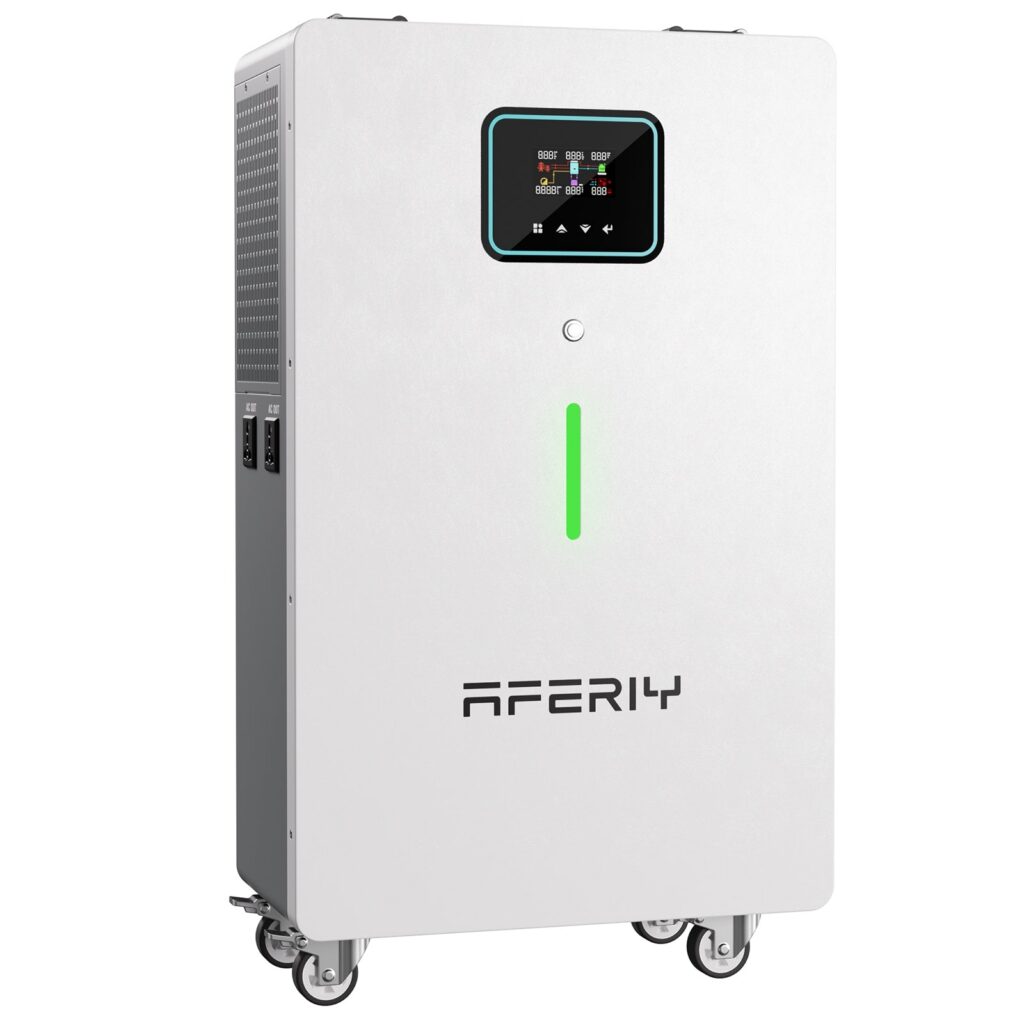
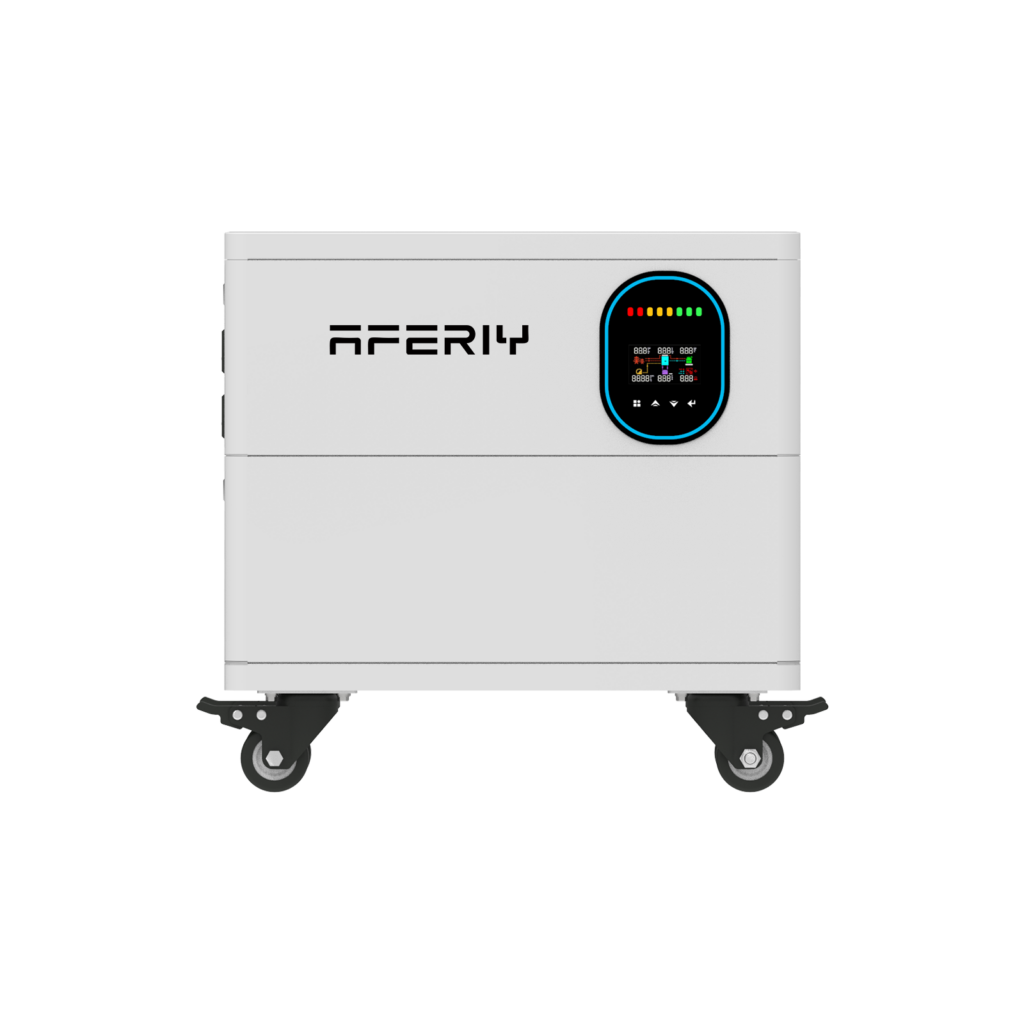
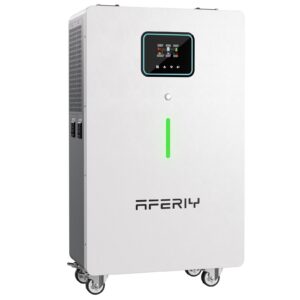
Manufacturer visuals: PH062 on the left and PN062 on the right. The PN062 is illustrated with several modules; this is not the starter configuration with one battery.
Visually, I find the difference quite surprising. The PH062 has its screen centered at the top of the front. On the PN062, the display is located at the very top right, on the inverter module. The information on the screen seems to have a family resemblance, but the cabinets look nothing alike.
At first glance, it almost feels like looking at two products designed separately, then brought together under the same brand. That’s a design impression; I have no information telling me who makes them. But as a buyer trying to understand the range, I don’t find it the clearest.
The PN062 is shorter with one battery, but takes up more floor space
Don’t compare the PH062 with the tall PN062 tower full of batteries you see in some images. With one B050 module, we can estimate the height of the PN062 by adding the dimensions from the manufacturer’s diagram: 20.5 cm for the inverter, 19 cm for the battery, and 12 cm for the wheels. We arrive at about 52 cm high, 53 cm wide, and about 40 cm deep.
The PH062 sales page gives about 78 cm high, 44 cm wide, and 23 cm deep. The base PN062 is therefore shorter, but wider and deeper. Behind a piece of furniture or along a wall, that doesn’t necessarily work out the same. Also note that the PH062 manual gives a different height from the sales page. Before reserving a spot to the centimetre, get the size of the delivered model confirmed.
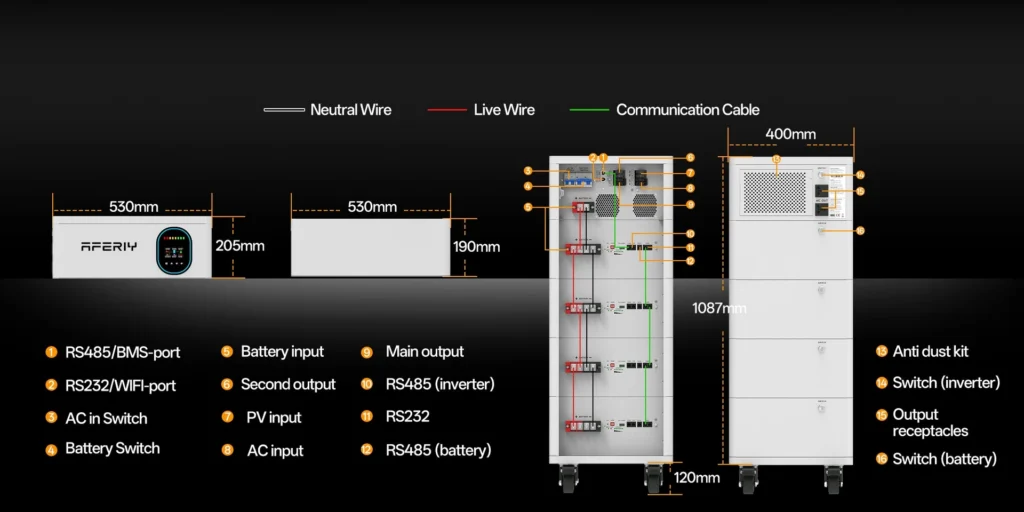
AFERIY diagram: dimensions of the modules and connections of the PN062. The height of the pack with one battery is an estimate obtained by adding the dimensions, not a measurement from us.
For the weight, the 16.9 kg of the PN062 corresponds to the inverter alone. It would be misleading to set them against the 58.5 kg of the complete PH062. The shop also lists 58.5 kg for the PN062, but the information from the different configurations does not allow for a clear isolation of the weight of each element. So I can’t sell you the PN062 as a much lighter set. Splitting it into modules isn’t enough to conclude it will be easy to carry up a staircase.
AC outlets, solar panels: what can you actually plug in?
I had a doubt when looking at the images: do these batteries only serve to power the home installation, or can you also plug in devices? The manuals clearly show two AC output sockets on each of the two models. They are therefore not limited to storage without an outlet intended for devices.
However, the 6,200 W advertised is a system power. This does not prove that a single outlet can provide 6,200 W. For a washing machine, air conditioning, or several devices at the same time, you need to distinguish the limit of each outlet, the cumulative power, and the startup peaks. I haven’t tried it, and I won’t promise you that a specific combination will work.
Both systems also provide a photovoltaic input with MPPT regulation, announced for up to 6,500 W of panels. On the PN062, this input belongs to the inverter; the B050 adds storage. This does not mean that any panel or cable can be plugged in: the manuals describe connections and electrical ranges to respect, not just the accessories of a small camping power station.
Finally, there are AC inputs and outputs on terminals, as well as communication interfaces. I see them more as equipment to integrate into an electrical project than as a row of USB ports within easy reach. The presence of a Wi-Fi interface does not allow me to judge the application either: I have not tested it with these models, and the communication options supplied with the pack need confirming.

I'm Xavier
I test gear over months, in the van and day to day, and I say what doesn't work. If that saves you one bad purchase, leave me your address.
Ce que vous souhaitez recevoir :
Plug-and-play or installer: the question we couldn’t clarify
It has been impossible for us to clearly determine whether these two models are truly plug-and-play for the intended home use. By plug-and-play, I mean something very concrete: you receive the equipment, you plug it in as intended into a wall outlet, and you can use it without needing a professional to connect it.
Why this doubt? Some AFERIY sales pages use the term, notably for the PH062 on other European stores. But the manuals for the PH062 and PN062 describe wiring on terminals and interventions reserved for qualified personnel. We did not find a clear enough explanation to reconcile these two presentations and specify, for each use, what comes ready to plug in.
Personally, I would tend to think that there is a simple use behind these presentations. But that’s my intuition, not a confirmation. And if the use you have in mind requires a connection to the consumer unit, dedicated protection devices or a qualified electrician, it’s no longer the same purchase.
That might even explain why there are two models: one could be particularly simple to install, the other could need more integration. For now, I cannot assign these roles to the PH062 and PN062. The useful answer would be a wiring diagram matching the pack actually sold in the UK, with the accessories included and the steps that must be done by a professional.
For me, this point weighs more than a few lines on a spec sheet. If the PH062 has no announced storage extension and also requires professional installation, it becomes significantly less interesting for my use.
£1,699 for the PH062, no PN062 in the UK: what the price changes
On 3 November 2026, AFERIY’s UK store listed the PH062 at £1,699, with a crossed-out price of £2,299. On the same day, the PN062 did not appear in the UK catalogue. As things stand, if you buy from AFERIY UK, the choice comes down to the PH062.
That’s a shame, because my preference took shape in France, where both were sold side by side. When we checked the French store on 26 September 2026, the gap was only €100 on promotion, but €400 between the reference prices. At €100 more, being able to grow the storage seemed to me a very strong argument for the PN062. At €400 more, someone who knows 5.12 kWh will be enough could see it differently. If the PN062 arrives in the UK, that’s the comparison I’d redo with British prices.
Relative to the 5.12 kWh nominal capacity, the UK price works out at about £332/kWh for the PH062. That’s the price of the complete system divided by its announced capacity, not the cost of a kilowatt-hour of electricity or a payback calculation. Panels, any installation work and accessories can change the bill. Our product pages track prices regularly, but I won’t call an amount a “usual price” without the hindsight to back it up.
Aferiy PH062 6200W promo code
 In stock
Aferiy PH062 6200W
VANTOURUK*
*Verified price on 5 November 2026. The final price may vary.
Who I would recommend these batteries to
If you’re considering storage for a house, with a suitable spot and clearly identified needs, these two products are worth a look. Before the maximum capacity, I’d look at how much energy you want to keep for the evening or for a power cut, then at exactly how your appliances will be supplied. Having 5.12 kWh doesn’t mean the whole house automatically benefits.
If you want to be able to grow your reserve later, the PN062 is the one I find the most coherent, provided you can actually buy it: on 3 November 2026 it wasn’t listed on AFERIY’s UK store. It also depends on the wiring and the total budget. For me, the point would be to start with what I need and keep the option of adding a B050.
If you’re mainly after a very simple product for a flat, I wouldn’t buy on the word “plug-and-play” alone. Weight, footprint and wiring need clearing up before you decide. That’s exactly what explains my own hesitation today.
What if you’re also weighing up EcoFlow or ALLPOWERS?
I’ve written a separate piece on that choice: our comparison of home solar batteries around 5 kWh puts the AFERIY models up against the STREAM 5000 and the BS5000 Pro, looking at apps, expansion, price and ease of installation side by side. Here, I stick to the AFERIY question: PH062 or PN062, and on what conditions I’d pick one over the other.
My opinion: the PN062 attracts me more, under two conditions
I’m still rather puzzled by this range. The two models make the same big promises, but the PN062 has an advantage I find easy to grasp: the storage can grow. If it reaches the UK at a price close to the PH062’s, and if I don’t have to pay an installer for the intended use, that’s where my interest would go.
The PH062 could win me back with a clearly lower price, a footprint that suits the space better or installation that is clearly shown to be simple. But today, I don’t want to invent that difference just to justify its existence.
So that’s where I stand: interested in what AFERIY is offering for the home, more drawn to the PN062’s modularity, but waiting for a clear answer on the wiring. That answer, and the total cost that comes with it, is what would take me from “I’m interested” to “I’d choose this one”.
Frequently asked questions about the AFERIY PH062 and PN062
Have you tested the PH062 and PN062 at home?
No. This article is a review based on AFERIY's documentation and my personal opinion. I haven't measured their runtime, noise or efficiency, and I haven't tried their app. The weight, and not having a suitable use for them in my flat, explain why I didn't ask for them to test.
What is the main difference between the PH062 and the PN062?
The PH062 is an all-in-one 5.12 kWh unit, with no storage expansion announced that we could find. The PN062 pairs an inverter with one 5.12 kWh B050 battery in its starter pack. It takes up to four B050 in total, for 20.48 kWh.
Can you simply plug them into a socket at home?
We couldn't clear this up for the intended home use. Some sales pages talk about plug-and-play, while the manuals describe wiring on terminals by qualified personnel. Charging from the mains, powering an appliance and feeding power back into the home's wiring are separate functions. Feeding power back through a wall socket is not confirmed in this article.
Do both models have sockets to power appliances?
The manuals show two AC output sockets on each model, in addition to other connections. The 6,200 W announced for the system is not a confirmed limit per socket. Check the output you'd use and the needs of the appliances concerned, especially their start-up surge.
Can solar panels be connected to both models?
Yes, both systems have a solar input with MPPT regulation, rated up to 6,500 W. On the PN062, it sits on the inverter. The B050 on its own only adds storage; it doesn't replace the inverter and its solar input. Wiring and panel specifications must match the manufacturer's requirements.
Is the PN062 pack with one battery smaller and lighter?
It's lower according to the available dimensions: about 52 cm with one battery and the wheels, a figure obtained by adding them up. But it's wider and deeper than the PH062. The 16.9 kg only covers the PN062 inverter, so it can't be used to compare the weight of the complete pack with the PH062.
Which one would you personally choose?
I'd lean towards the PN062 for its expandable storage, provided it's sold where you live at a price close to the PH062's and the intended use doesn't require paying an installer. On 3 November 2026, AFERIY's UK store only listed the PH062, at £1,699. The wiring and the total budget need clearing up before this preference becomes buying advice.
Our gear tests, in real conditions
Batteries, solar, conversion, security. What we found after months of real use, and what we would not buy again. An email when we have actually tested something, not before.
Ce que vous souhaitez recevoir :