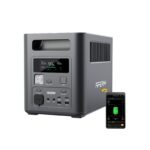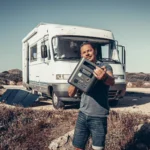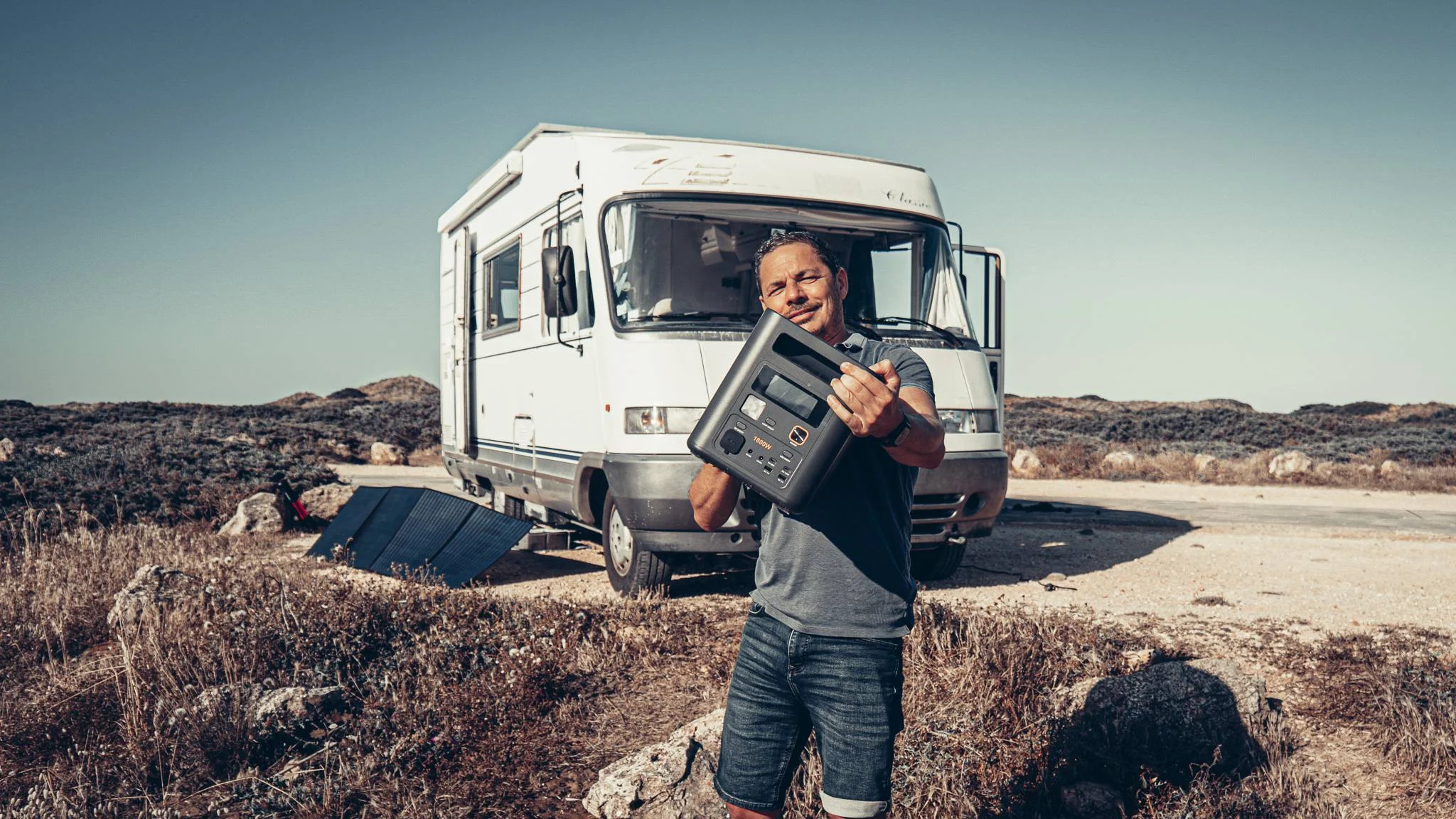
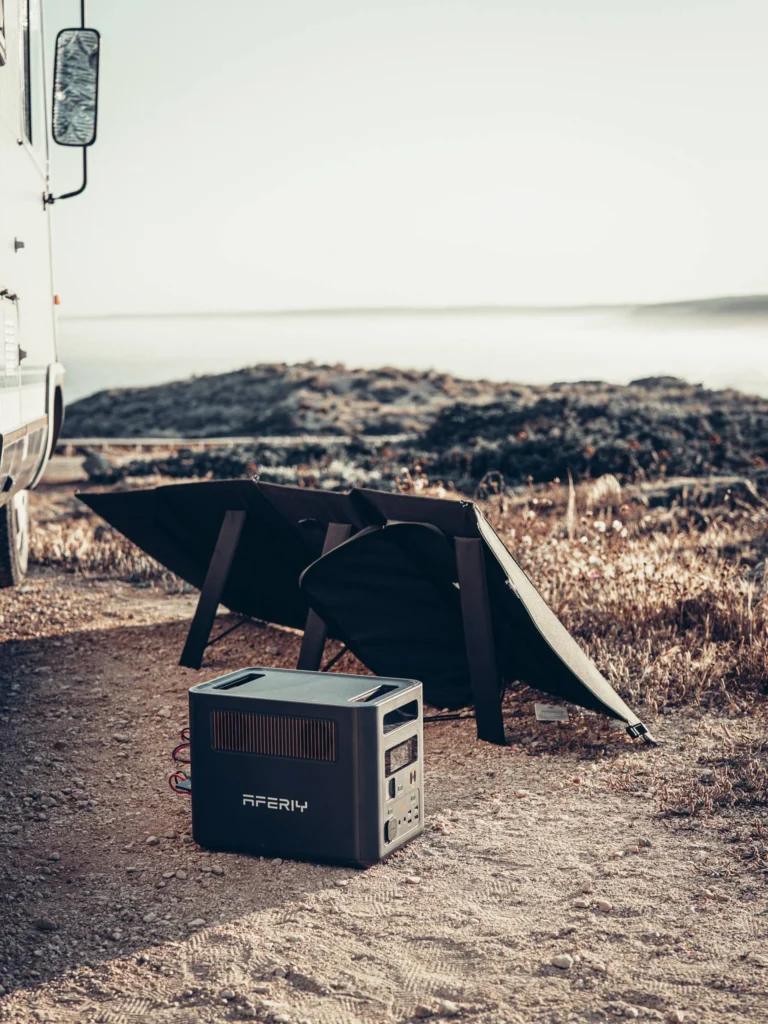
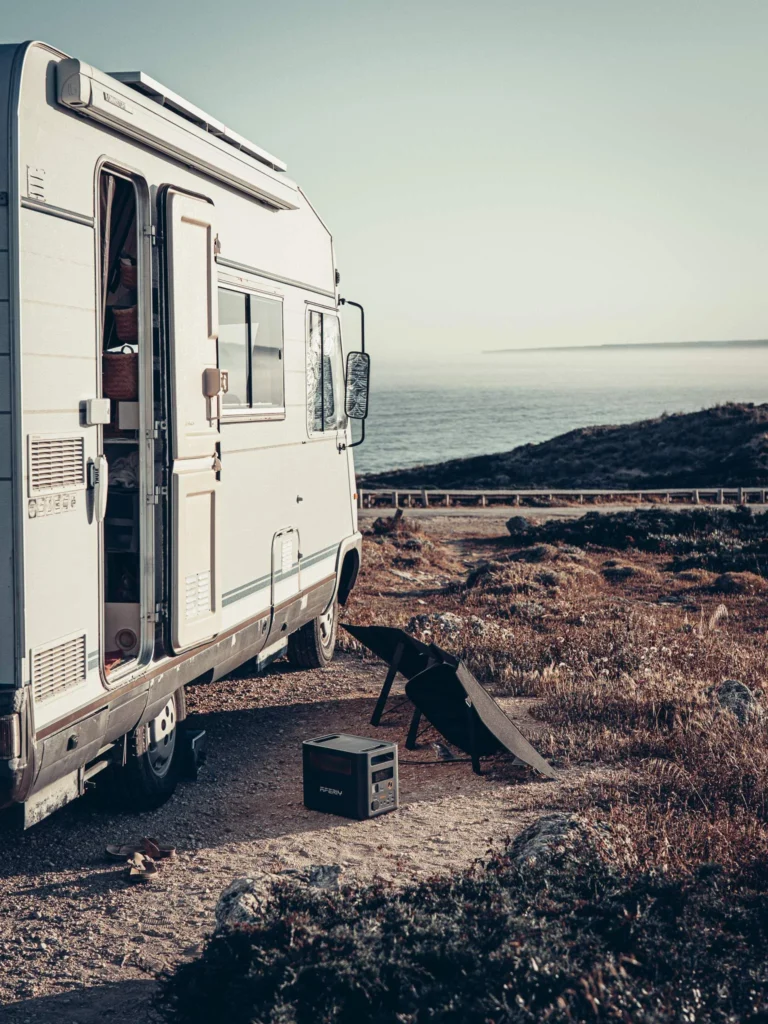
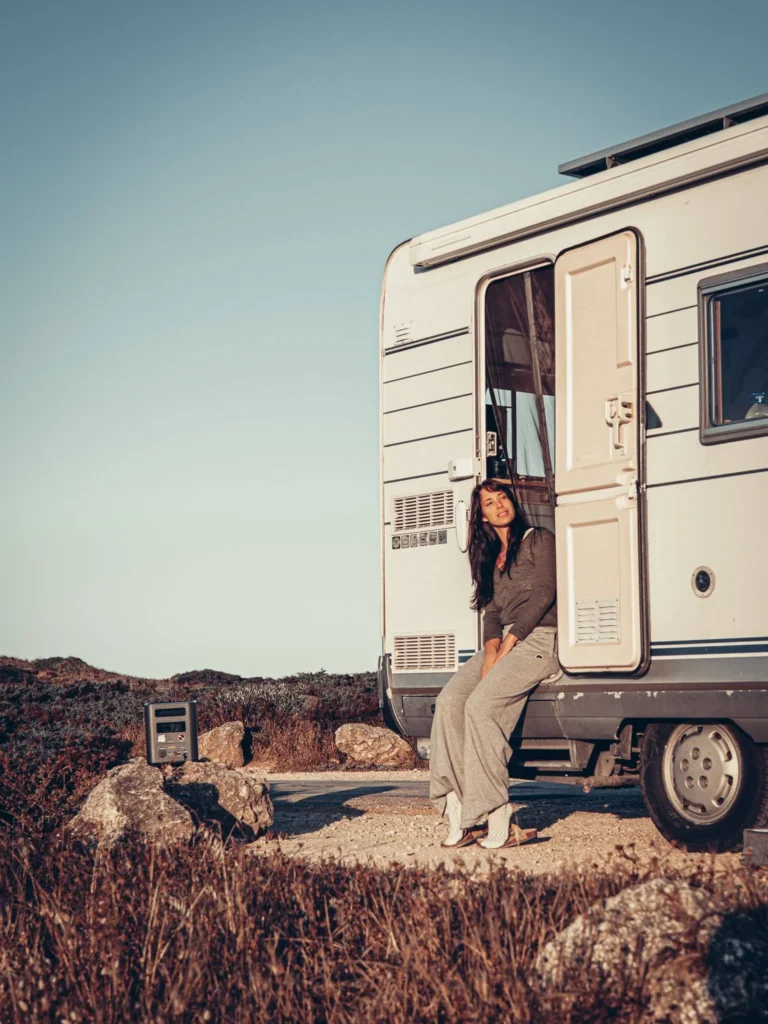
Hello friends. Here I am writing to you from Bordeira beach in the Algarve, a small coffee in hand, the sun having just risen an hour and a half ago, and a view that, frankly, I won’t even try to describe to you (you wouldn’t believe me anyway). We spent the night here, we picked up Édouard, our camper van, and as always when we pick up Édouard… well, we found ourselves with a problem. Except this time, the problem was solved by today’s partner, Aferiy, who had just sent me their new station, the Nomad 1800. So settle in, because this battery surprised me a bit, and I have things to tell you.
And before we dive into the details, I’ll share the video, because there’s Caroline, there’s the cat, there are snails racing on the battery (yes, yes), in short, there’s the atmosphere, and it tells better in images.
Why Édouard has (once again) caused us trouble
So to understand, I need to explain my electrical setup. In the camper van, I have two batteries, well… actually three. The original engine battery, the one everyone has in their truck. The original cell battery, which mainly powers the pumps, and which I changed two years ago. And then a third one, the secondary network we rigged up for work, to be able to work on the road. And it’s this one that’s the culprit.
Because since our last little road trip in April (and now it’s June, do the math), this secondary battery is simply… dead. Completely dead. You can even see the positive and negative terminals are corroded, just to give you an idea. Before, I could still squeeze out a few hours at the end of the day. Now, as soon as the sun goes down, I have nothing. No battery at all. So let me tell you that when Aferiy said to me, “hey, try the Nomad 1800,” the timing was… perfect, let’s say.
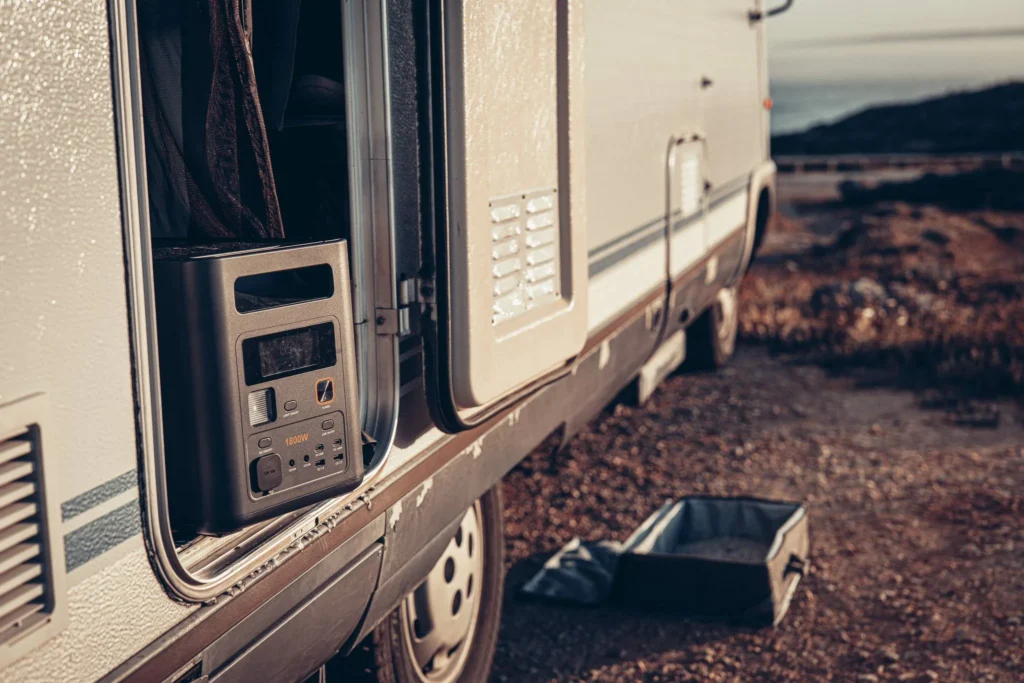
Unboxing: a format that surprised me
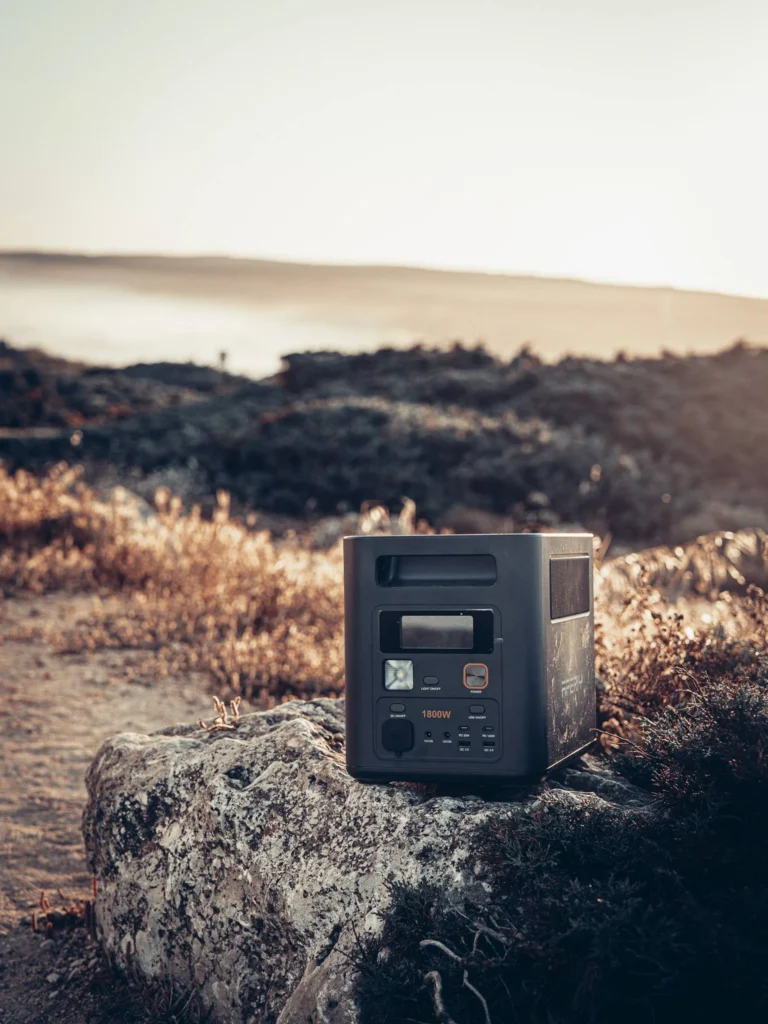
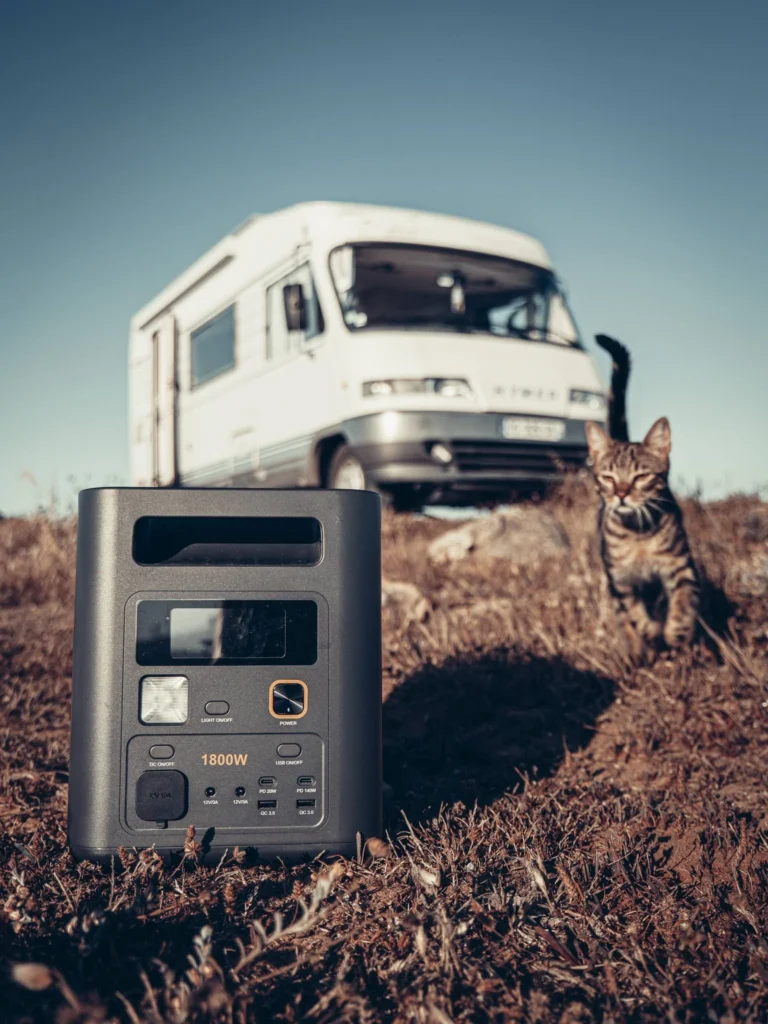
The first thing that caught my attention when opening the battery was the format. Because Aferiy, historically, made batteries that were wider than long, with the information and screen laid out along the length. Here, they did the opposite. And just that alone, I found it clever.
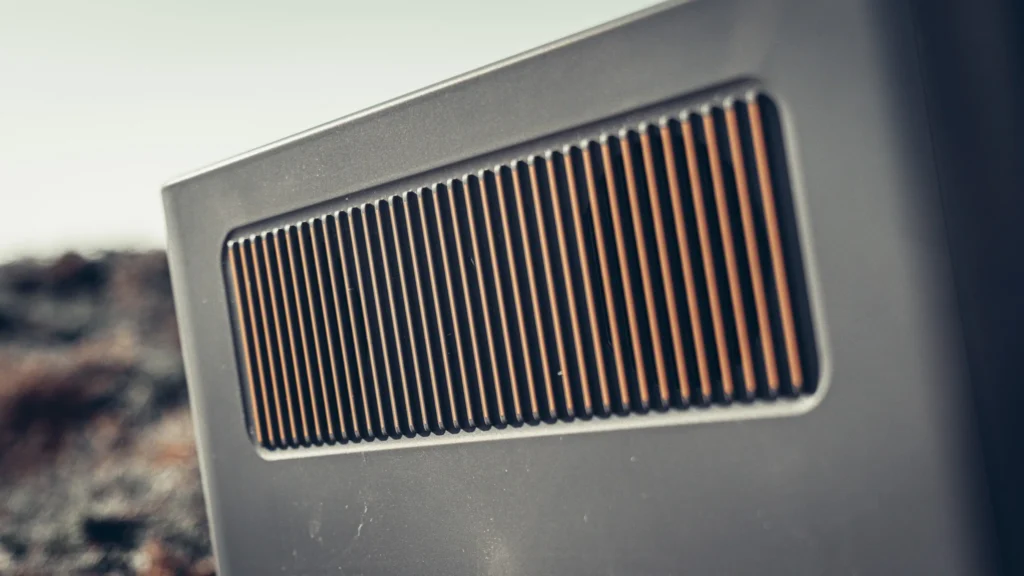
But above all, I was surprised by its size. When I read its capacities, I honestly expected something bigger, because we’re talking about 1024 Wh, roughly 1 kWh. Compared to competitors of the same capacity, I find it smaller, or at least less tall. You can tell there was real research on the design, and that, coming from Aferiy, is worth mentioning. Because let’s be honest, Aferiy has often released batteries that weren’t the prettiest on the market (that’s putting it nicely). Their thing was more about the good old basics: capacity, reliability, enough ports to plug everyone in, and that’s it. Not the most stylish screen, not space-age features. Here, with the Nomad 1800, you can feel a step up. A little detail that I love, by the way: they added a touch of orange on the ventilation grilles, and I think it looks great.
The port overview: it has everything you need
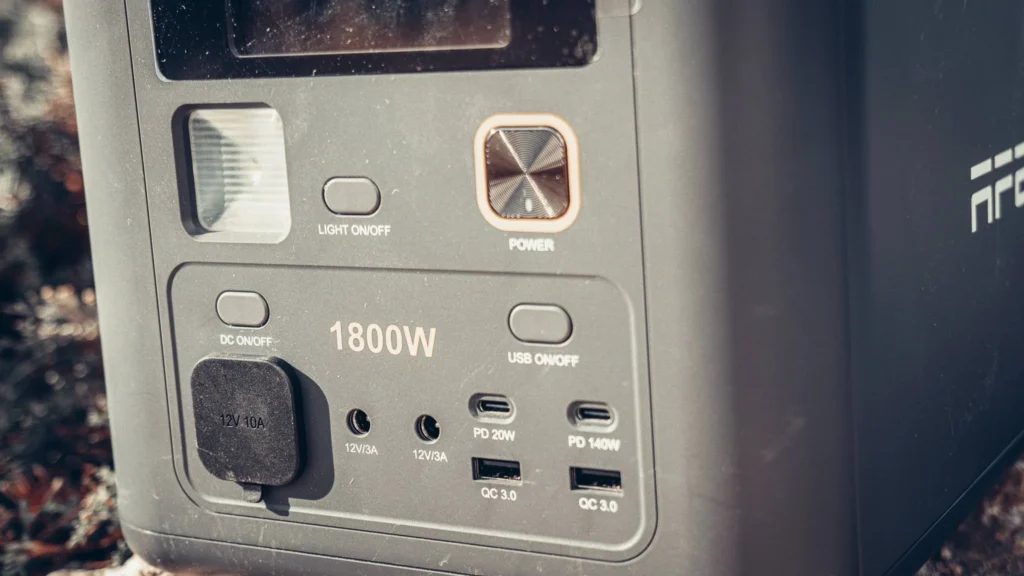
In terms of connectivity, and considering the capacity of the beast, I find it really well balanced. On the front, we have two USB 3.0 ports and two USB-C ports: one that outputs up to 140 W (perfect for our MacBook Pro, then), and another at 20 W. We also find the famous flashlight, like on all Aferiy products. Now, I’ll admit, I personally never use the flashlight… although. I just thought of it: last night I plugged the battery outside to help my cell, and the light could have been useful to say, “hey, there’s a battery sitting here, don’t run over it.” Well, there’s also the SOS signal, which could come in handy one day, who knows.
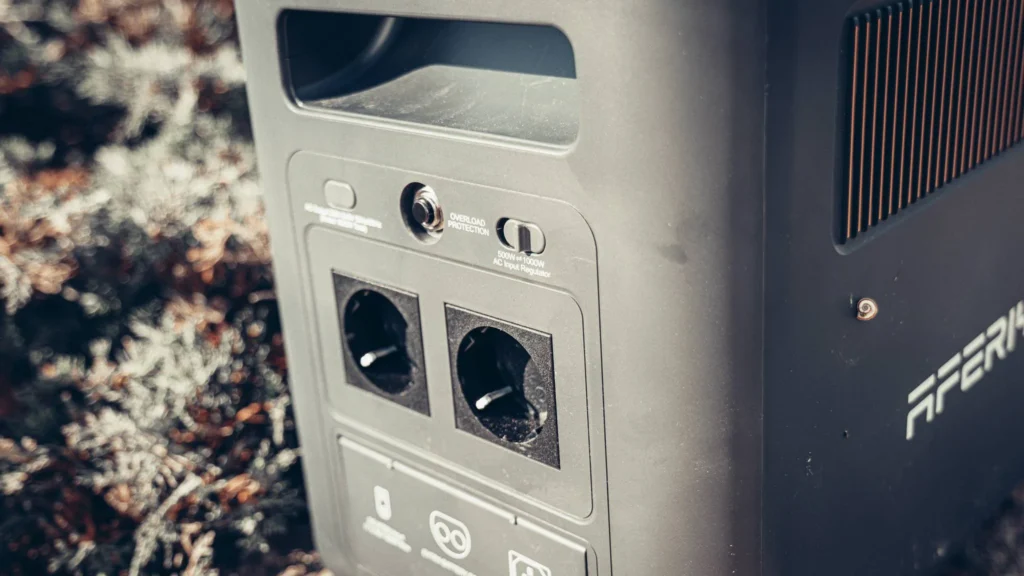
However, the port I will never let go of is the cigarette lighter. That’s essential for me. Because believe it or not, we also lost internet (Édouard, him again), and my modem actually works on a cigarette lighter socket. So without this port, I would have been left with carrier pigeons. A handy little feature: all the front ports can be activated and deactivated with a dedicated button, to save battery, and it’s the same at the back, where we find two 220-240 V mains sockets, also controlled by a button.
The real novelty: the 1000 W / 500 W input switch
And here we arrive at the thing that spoke to me the most, because it addresses a real problem I face in the camper van. Hold on, I’m simplifying.
On Édouard’s solar panels, I’m limited to 450 W. However, a station like this can take up to 1000 W input from a mains socket. The problem is that when I plug it into the truck’s sockets and it demands 1000 W while the solar only provides 450, it’s my poor cell battery that has to make up the difference. And that tires it out, which is not cool at all. With a competing brand, I loved being able to tell the battery, via the app, “no, you’re only taking 250 W input, I’ll charge more slowly but I won’t drain my cell.” Aferiy, on the other hand, did it differently, and I find it almost smarter: they added a physical switch that toggles the input from 1000 W to 500 W. No app to pull out, no menu to dig through, just flip the little switch and boom, it’s set.
And I tested it, it really works: I was at 1000 W, switched to 500, and only 500 W were coming in. Knowing that today a well-equipped camper van easily runs around 500 W of solar, that’s exactly the right value. And a little bonus: it seems that charging more slowly allows the battery to recharge better. What more could you ask for?
Charging: from 30% to full in under 40 minutes
On the charging side, I was blown away. Before putting it in the truck, I plugged it in at home: it was at 30% upon arrival, and it took me 38 to 40 minutes to get it back to 100%. Officially, Aferiy claims 0 to 80% in 36 minutes and a full charge in just over an hour on mains, and if we combine mains and solar (up to 1500 W total), we’re still looking at about an hour. In short, it’s fast, really. On the morning of the shoot, I was even able to give it a little boost with a foldable solar panel I carry in the camper van.
For the curious: the numbers that really matter
Well, I saw you, you sensed I was beating around the bush with my stories about the cell and snails. So here’s the technical side, quickly and clearly, because this is where the Nomad 1800 shines.
A battery you can take anywhere
Another thing I appreciate about this kind of format is that you can add an expandable battery. This makes the Nomad 1800 semi-versatile: you take it in the camper van, and when you get back home you can plug it into larger batteries to increase your storage capacity. So it’s no longer a battery you use six months a year in a truck; it serves you all year round, making it much more cost-effective.
And then there’s the weight. It weighs 11.64 kg, which is quite light for this type of device. When you see the big stations that weigh 40 or 45 kg, can you imagine hauling them from home to the camper van? Neither can I. Here, we can move it with us without throwing out our backs, and personally that’s exactly what I’m looking for.

I'm Xavier
I test gear over months, in the van and day to day, and I say what doesn't work. If that saves you one bad purchase, leave me your address.
Ce que vous souhaitez recevoir :
Nomad 1800 vs P110: the internal match-up
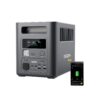
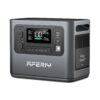
To give you a sense of the beast, I put it up against another Aferiy you might know, the P110. And the verdict is quite telling: the Nomad 1800 offers more capacity, is significantly lighter, more compact, handles more cycles… Hard to be picky.
Aferiy Nomad 1800 vs Aferiy P110
£429,00
See the product
|
£409,00
See the product
|
|
|---|---|---|
| Capacity | 1,024.00 Wh | 960.00 Wh |
| Net Weight | 11.64 kg (25.66 lb) | 15.50 kg (34.17 lb) |
| Dimensions | 350.00 mm (13.78 in) | 392 x 230 x 315 |
| Number of AC Outputs | 2.00 | 2.00 |
| Number of DC Outputs | 2.00 | - |
| USB-A | 2 ports, QC 3.0 18W | 2 ports, QC 3.0 18W |
| Warranty | 7.00 an | 7.00 an |
| Life Cycles | 4000+ Charge/Discharge cycles to 80% | 3500+ Charge/Discharge cycles to 85% |
| UPS Function | ✓ | ✓ |
| Total Number of Output Ports | - | 12.00 |
After all, having already tested and owning the Aferiy P210 and the Aferiy P280 at home, I can tell you that with this Nomad 1800, you can really feel a step-up. The quality, the design, the research effort: we’re no longer on the basic model at all. They even tried a little novelty with this input intensity selector, and honestly, hats off.
The mobile app: still room for improvement
The Nomad 1800 can also be controlled via a mobile app. So I prefer to be honest with you: I’ll download it to check if it’s the same as the old one, but from memory, we don’t have a ton of features, aside from doing remotely what the battery already does manually (activating, deactivating the ports). I hope they’ve made updates, but well, the app has never been Aferiy’s strong point. Aferiy’s strong point, I’ll give you a hint, is the cost per kilowatt-hour. And on that, we come back just below.
The ultimate test: the hairdryer
And then there’s THE test, the one that validates a battery when you’re a nomad, and which usually comes from the ladies: the hairdryer. You rarely have something that consumes more than that in a camper van life, so thank you Caroline for the help. We plug it in, the battery shows 87%, and…
“Is the strand validated?” Well, the strand is validated. The hairdryer purrs, the Nomad 1800 doesn’t flinch. Test passed.
So, who is this Nomad 1800 for?
In the end, this battery is made for those who don’t want to spend a fortune on a solar generator while still looking for reliable and affordable equipment. If you have a small camper van like ours, already equipped inside, and you want a backup battery that you can take with you and then bring home, with just enough capacity to last two days comfortably if you’re working, and that doesn’t weigh a ton… you’re in the right place. All with the famous 7-year warranty from Aferiy, where many brands stop at three.

There you go, that was the Nomad 1800 from Aferiy, tested between two of Édouard’s mishaps, a coffee facing the ocean, and a cat (Vasco, to give him his little name) who spent the night bothering us before sprinting on the beach. Sending you hugs, and we’ll see you very soon, because during the four days we have the camper van, believe me, we’re going to make a ton of videos.
PS: no, the cat did not get into the USB port. The snails tried, though. Nature, right?
Our gear tests, in real conditions
Batteries, solar, conversion, security. What we found after months of real use, and what we would not buy again. An email when we have actually tested something, not before.
Ce que vous souhaitez recevoir :