



So, you know what’s worse than a cold night in a van? A hot night. Cold, you can fight it: a sweater, a duvet, the diesel heater purring, and that’s it. Heat, on the other hand, once you’re in your birthday suit at 2 AM staring at the ceiling… well, you don’t have much left to take off (unless you want to get into naturism, but that’s another topic). The thing is, we long thought we were safe. Our strategy from the beginning has been to head south in winter and go north in summer: we follow the mild weather all year round. Except in 2020, we headed back to Brittany in the middle of summer to seek the coolness of the ocean, and then… the air became unbreathable in Édouard. It was that day we realized that an unprepared van turns into a solar oven, no matter if you’re by the Atlantic. A vehicle in the sun can reach between 50 and 65 degrees inside, which is 20 to 30 degrees hotter than outside. Let’s just say we searched for that Breton coolness for a while.
Our video on managing high temperatures in a van
Why a van turns into a solar oven (and why it’s worse than the cold)
Let’s talk physics for two minutes, I promise it won’t hurt. Your van, with its large windows, is a greenhouse on wheels. Rays come in, heat the surfaces, and the heat gets trapped inside. Result: 50 to 65 degrees on the dashboard one summer afternoon, I’m not exaggerating. And unlike the cold, you can’t really add a layer in reverse. You tackle the cold with gear and energy (we discuss this in our article on winter in a van). Heat, however, requires mostly cunning and anticipation, because in 10 m², every degree counts. Your breathing, your shower, your cooking plates, your fridge, your computer running: all of this generates heat in a tiny space. And then there’s the nerve of the war: sleep. A night at 28 degrees in the cabin, you turn and toss, pressing your cheek against the wall hoping for a cool spot that doesn’t exist. The equipment doesn’t like that either: the fridge struggles, the batteries heat up, and your beers warm up (and let’s be serious, that’s the real tragedy).

Park smart: shade, orientation, and a bit of geography
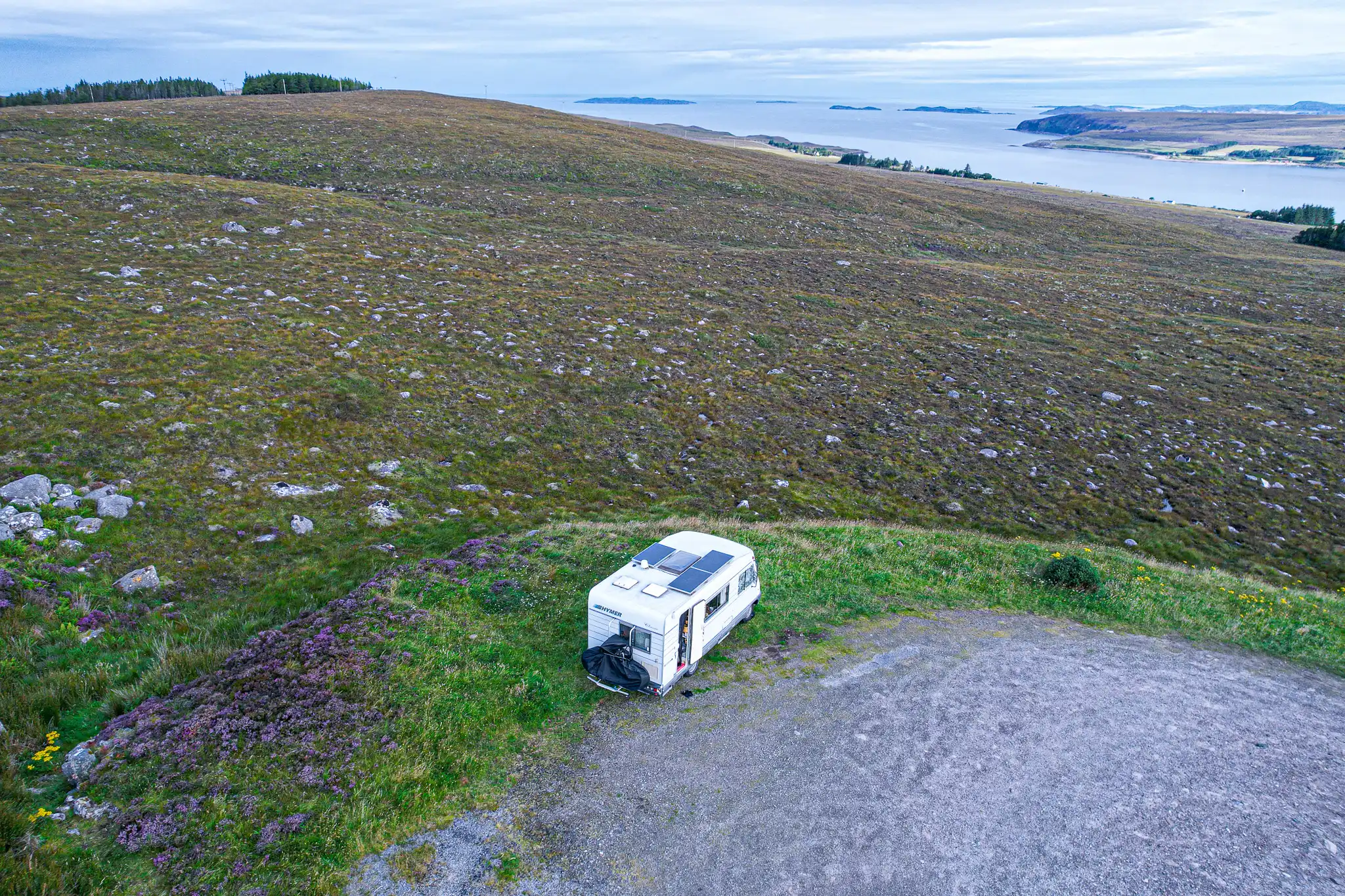
Here’s the number one lever, and it’s free: where you park your van. It’s a bit like choosing your spot at the beach, except here you’re chasing shade, not sun. Look for large trees, a building wall, anything that blocks the afternoon rays. The detail that changes everything: orient the front towards the north. The windshield is your largest glass surface, that’s where the most heat comes in. By keeping it opposite the afternoon sun, you directly limit the greenhouse effect. Simple, effective, zero cost. Except that (there’s always a catch) we ran into the Cornelian dilemma of the nomad: you park right under the tree to stay cool, and then your solar panels no longer see the sun, so they don’t charge your batteries. Cool but empty, or charged but sweating. Our workaround when we have foldable panels: park Édouard in the shade and send the panels into the sun with ten meters of cable. The best of both worlds. But the real trick, the one we still apply today even though we’re sedentary in the Algarve: the best air conditioning is to move. When we want a few cool nights, we take the camper van and head to the Atlantic coast, where the sea breeze drops the night temperatures by several degrees. In summer, aiming for altitude or a waterside rather than a stifling valley is worth all the fans in the world. That’s the freedom of the van: you don’t fight the heat, you roll under it.
Block out the day, ventilate at night: the real thermal routine
If you could only remember one discipline, it’s this one. People from the south know it by heart: in the morning, you open everything to let in the coolness of the night. As soon as it starts to heat up, you close and block. You trap the fresh morning air instead of letting the oven turn back on. Curtains drawn, vents closed on the sunny side, and you play hide-and-seek with it all day long. When it comes to blocking windows, that’s where you gain the most: reflective sunshades on the windshield and thermal curtains on the windows, and some travelers report 10 to 15 degrees difference inside the cabin. A little secret that few people apply: screens placed outside the windows are much more effective than those inside (ADAC has quantified this, we’ll discuss it in the FAQ), because they reflect the rays before they even touch the glass. More cumbersome to set up, but unbeatable. And then when evening comes, it’s time for cross ventilation. Opening just one window is useless: you need an entry on one side and an exit on the other for the air to flow through. Ideally, fresh air enters low, hot air exits high, because hot air rises (by the way, that’s why sleeping low can save you a degree or two). An open window on one side, a vent fan on the other, and you’ve created a free airflow. Bonus: it also removes humidity and sock odors, let’s be honest. One last thing, and not the least: mosquito nets. Because all this lovely plan of open windows at night falls apart if you get eaten alive or if you close everything because of mosquitoes. A good mosquito net on the vent fan and the windows is what allows you to sleep truly open. Underestimated.


We're Caroline and Xavier
We got most of it wrong before we got it right. We share what actually holds up day to day in a van, and what we wouldn't do again.
Ce que vous souhaitez recevoir :
Fan, cooler or air conditioning: what’s really worth it
Well, let’s be honest for a second, because this is where everyone sells you dreams. Here’s what really works for us, what disappoints, and how much it costs. For the complete breakdown on the electrical autonomy needed (because all this drains your batteries), check out our file on electricity in wild camping and how to choose your portable power station.
Heat protection in a van: what is really worth it
Our honest comparison, from free to more expensive
| Solution | Indicative cost | What it really does | Energy / autonomy | Our verdict |
|---|---|---|---|---|
| 12V / USB clip fan | £10-£30 | Circulates air, cool feeling on the skin | Minimal | Essential |
| Reflective blackout / sunshade | £30-£150 | Blocks rays, up to 10-15°C cooler inside | None (passive) | Great passive gain |
| Ventilated roof vent (like MaxxFan) | £200-£400 | Actively extracts hot air from the top | Low | Top investment |
| Evaporative air cooler | £50-£150 | -3 to -5°C, but adds humidity | Low | Dry climate only |
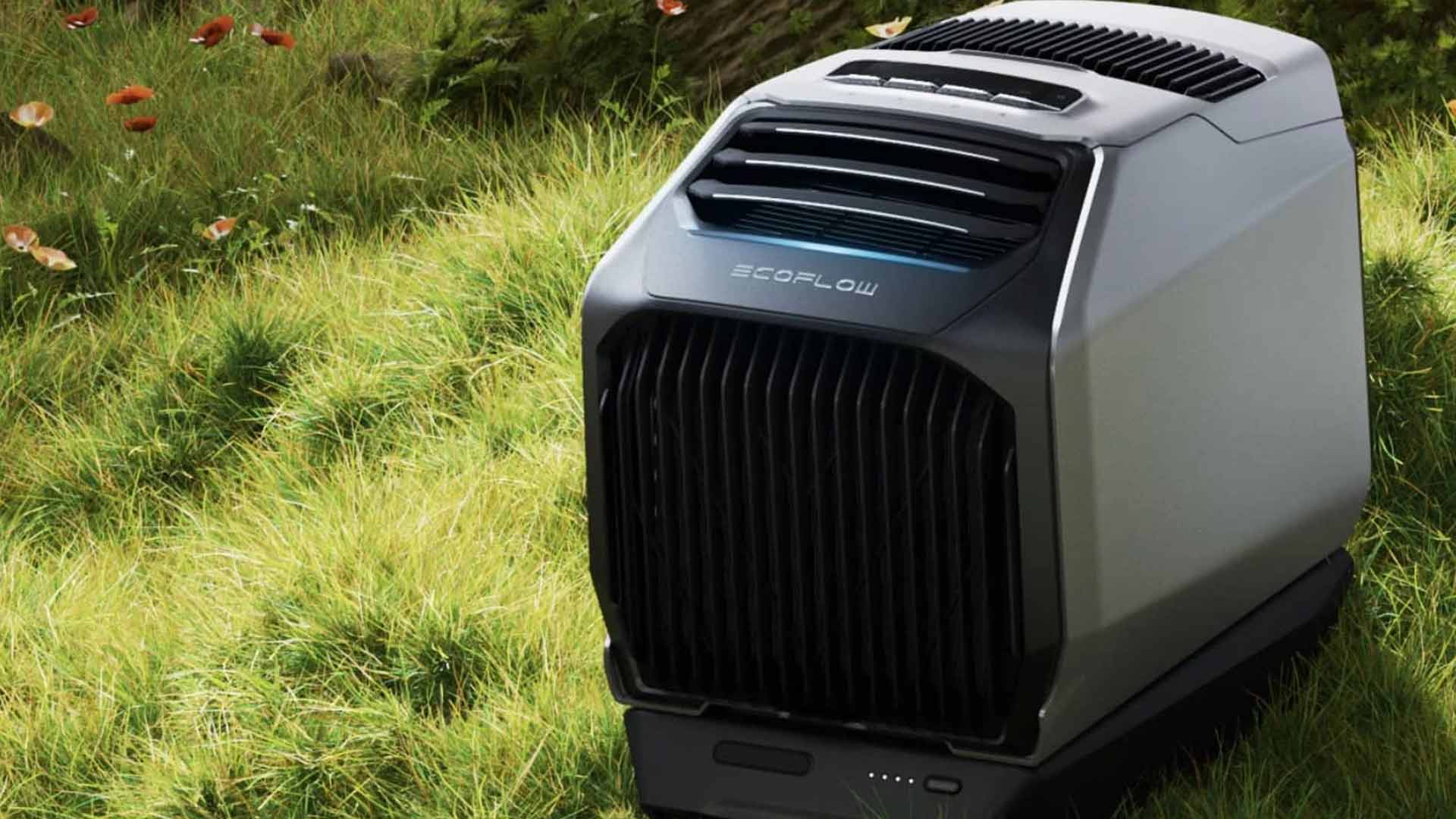
| Portable air conditioning (EcoFlow Wave) | £900-£1,300 | The only one that really lowers the temperature | High (short autonomy) | Effective but power-hungry |
Our lived priority order: we start with the free options (shade, blackout, cross ventilation) and the clip fan, and we only pull out the wallet for air conditioning if the electrical autonomy really supports it.
The 12V clip fan: our true hero
I’ll let you in on a secret: after years of van life, what has changed our nights the most isn’t a big machine costing a thousand euros. It’s two small USB clip fans, costing £10-30 each, plugged into Edward’s USB ports. The clip is the genius of the thing: we can clip them anywhere, and we attached them to the straps that secure the pop-up bed, directed right at us. Minimal consumption, direct air on the body, and honestly… it was great. Just be clear about what a fan does and doesn’t do: it moves air without cooling it. On your skin, moving air evaporates your sweat and gives you a real feeling of coolness. But at 40 degrees in the van, all alone, it just blows warm air in your face. It’s the essential basic, not a miracle remedy.
- Ridiculously cheap (£10-30) and almost no consumption on USB
- The clip attaches anywhere, even on the bed straps
- Direct air on the body: perfect for falling asleep
- The very first purchase to make, before anything else
- Does not cool the air, it only moves it
- Useless alone when it’s really 40°C
- It needs to be directed right at you to be effective
The ventilated vent fan (like MaxxFan)
Now we’re stepping it up a notch. The vent fan with integrated ventilation, like the famous MaxxFan, doesn’t just let air pass: it actively extracts hot air from the top, where it accumulates. Coupled with an open window at the other end of the van, you get a constant flow that refreshes the entire space. Some models even stay open in the rain, which is a real comfort. It’s the most cost-effective structural investment against heat, in my opinion. The downside is that it needs to be cut into the roof (so either you have it from the factory, or it’s a project), and like the fan, it moves air without cooling it. But to remove the heat from the pop-up bed before going to sleep, nothing is better.
- Extracts hot air from the top, where it stagnates
- Creates a real cross flow with an opposite window
- Some models stay open even in the rain
- The best sustainable investment against heat
- Installation = cutting into the roof (a real project)
- Higher price than a simple fan
- Moves air but doesn’t cool it either

The evaporative air cooler: it depends on where you are
Beware of the marketing trap: a cooler is not an air conditioner. It uses water evaporation to lower the temperature by 3 to 5 degrees, it’s cheap (£50-150) and consumes little. On paper, great. Except that it adds humidity to the air. In dry climates (southern Spain, Morocco), it works quite well. But in a van that’s already poorly ventilated, or worse in humid climates (Brittany, Netherlands), you turn your air into soup and collect condensation. To be reserved for very dry destinations, otherwise, move along.
- Cheap (£50-150) and very energy-efficient
- Real drop of 3 to 5°C in dry climates
- Light and easy to move
- Adds humidity: condensation in a van
- Almost useless in humid climates (Brittany, Netherlands)
- Definitely not to be confused with a real air conditioner
The portable air conditioner (EcoFlow Wave): effective, but read this carefully
It’s the only one on the list that really lowers the temperature of the air, not just the feeling. We tested the Wave 2 (our full review of the EcoFlow portable air conditioner is here, and the test of the Wave 3 is over there). When the autonomy allows, it changes life for falling asleep cool. But here’s the thing no one tells you, and what we learned the hard way: a portable air conditioner exhausts hot air through a duct, which needs to be taken outside. If you run this hose through a slightly open window and don’t seal the edges properly, the hot air you just expelled comes right back in through the same opening. You cool with one hand what you heat with the other, and your autonomy goes up in smoke. The real project of an air conditioner in a van isn’t the machine, it’s sealing the exhaust. And on battery, know that it won’t necessarily last all night: we mainly used it to cool the space before going to bed, not to run it until morning. For the question of pure autonomy, that’s the whole subject of our article on electric vanlife.
- The only one that really lowers the air temperature
- Autonomous when paired with a large power station
- Ideal for cooling the van just before sleeping
- Real comfort on the hottest nights
- Expensive (£900-£1,300) and heavy to fit
- Very power-hungry: rarely lasts all night on battery
- Trap of poorly sealed hot air exhaust to anticipate
- Significant noise for sensitive ears
Daily gestures when it’s 40 degrees
Beyond the equipment, it’s your lifestyle that makes the difference. The first reflex, don’t generate heat inside. The classic mistake: cooking pasta in the van at 7 PM. The steam and the gas flame, and boom, guaranteed sauna for the night. A small stove outside, and you become the king of the nomadic barbecue while your van stays livable. Your sleep will thank you. On the fridge side, remember to keep it in the shade and not to expose its ventilation grilles to the sun: it already works twice as hard when it’s hot, no need to finish it off. And any electrical device running, including computers, generates heat: if you’re working in the van, take the table outside when you can, it relieves the van as much as you. The rest is Mediterranean common sense: drink before you’re thirsty, eat fresh and light (gazpacho is life), wear loose and light clothing, and adjust your rhythm to that of the locals. The Spaniards have understood everything with the siesta: you enjoy the cool hours and take it easy when the sun is blazing. And then multiply swimming breaks in a lake or river, it’s free, it cools you down for hours, and it creates much better memories than a humming air conditioner.
Sleeping well in a van in the heat
It’s the final boss, the night. Finding sleep at 28 degrees in the van is the real challenge of summer vanlife. The first rule, hot air rises: if, like us, you have a loft bed above the cabin, it’s a furnace at bedtime. Remember to air it out one to two hours beforehand, windows wide open, to expel the day’s heat. And if you can lower your bedding closer to the ground, you can gain 2 to 3 degrees just like that. Next, the combo that saved us: USB clip fan directed at your body, a quick shower just before slipping under the sheets to lower your body temperature, and lightweight linen or cotton sheets (forget synthetic, it’s a plastic bag). Nothing complicated, but put together it makes the difference between a sleepless night and real sleep. And keep in mind the ultimate lever, the one we mentioned earlier: the choice of spot. You lose about 0.6 degrees for every 100 meters of altitude. A night at 1,500 meters instead of the valley floor, or a bivouac facing the sea breeze, and sometimes you won’t even need all the rest. Geography, again and always, is our favorite air conditioning.
Heat in a van: your frequently asked questions
How to cool down a van or camper without air conditioning?
The free combo that works: park in the shade, facing north (the windshield is the largest glass surface); open early in the morning and then close and cover as soon as it gets hot; create a cross breeze in the evening (a window on one side, a hatch on the other); cook outside to avoid heating the cabin. A 12V clip fan does the rest on the skin.
Why is it so hot in a van?
It's the greenhouse effect: large windows let in rays, which heat the surfaces, and the heat gets trapped. A vehicle in the sun rises between 50 and 65 degrees inside, which is 20 to 30 degrees more than outside. On 10 m², even the smallest appliance (fridge, plates, computer) adds more heat.
Where to park to stay as cool as possible?
In the shade of trees or buildings, move the vehicle north to protect the windshield from the afternoon sun. Beware of the shade/solar dilemma: under a tree, your panels won't charge anymore. With foldable panels and an extension cord, park the van in the shade and send the panels into the sun.
Is it better to have a fan or a portable air conditioner?
It depends on your need. A fan circulates the air but does not cool it: great on the skin for sleeping, useless alone at 40°C. A portable air conditioner really cools the air, but it is heavy, expensive, and power-hungry. Always start with the fan (£10-30) before investing.
How to sleep well in a van when it's hot?
Air out the bedding 1 to 2 hours before by opening wide (especially a pavilion bed, a real furnace), sleep as low as possible (hot air rises, you gain 2-3°C), direct a USB fan on your body, take a quick shower before bed, and choose linen or cotton sheets. The ultimate lever remains the spot: altitude or seaside.
External sunshade or interior curtains: which is more effective?
The outside clearly wins. Reflective screens placed outside the windows bounce the rays back before they hit the glass: the ADAC measures about -8 to -10°C with an outdoor screen compared to only -4°C indoors. More cumbersome to install and remove, but unbeatable. Interior thermal curtains remain a good complement.
Can a portable air conditioner run all night on battery?
Rarely. A portable air conditioner is power-hungry and will drain a good part of your battery pack in a few hours. We mainly used it to cool down the cabin before sleeping, not to last until morning. And make sure to seal the hot air outlet well, otherwise it will reabsorb what it expels. For the necessary autonomy, see our file on electric vanlife.
Does an evaporative air cooler really work in a van?
Only in dry climate (south of Spain, Morocco), where it can lower the air by 3 to 5°C for cheap. In humid climate or in a poorly ventilated van, it only adds humidity and creates condensation. It's not an air conditioning: don't count on it for a real drop in temperature.
How to avoid condensation and humidity at night?
Ventilation is key: a cross breeze removes moisture from your breath and shower. To be able to sleep with the windows open without being eaten alive, equip the hatch and openings with mosquito nets. Avoid evaporative coolers that worsen humidity.
Should you insulate your van for heat or mainly for cold?
Insulation is mainly for cold. In summer, over-insulation becomes counterproductive: if heat eventually gets in (and it always does after a few days), a van that is too insulated traps it like a thermos and becomes impossible to cool down at night. Aim for balance. For detailed layout and insulation, see our dedicated guide.
How to keep the fridge efficient when it's very hot?
Keep it in the shade and do not let its ventilation grilles in the sun: a fridge that heats consumes much more and cools less effectively. Position the van so that the sun does not hit the front of the fridge, and clear the space around the grilles for air circulation.
Mosquito nets, essential or gadget?
Essential as soon as it gets hot. The whole strategy of "windows wide open at night" goes out the window if you have to close everything because of mosquitoes. A good mosquito net on the skylight and the windows is what allows you to sleep truly open and cool.
Van life day to day, unfiltered
Two years of full-time van life, and the Algarve as our base ever since. We still hit the road, by van or otherwise, and we write up what we find along the way. An email when we have something to say, no more.
Ce que vous souhaitez recevoir :