



Setting off in a motorhome in winter may sound crazy to some, but for us, it’s one of the most beautiful aspects of vanlife. We are Caroline and Xavier, and we have spent several winters on the roads of Europe with our trusty Edouard. From the snowy Alps to the sunny coasts of Portugal, passing through Spain and Morocco, we have experienced nights at -15°C as well as days at 18°C in the middle of January.
In this article, we share everything we’ve learned to live comfortably in a van or motorhome when temperatures drop. Heating, insulation, humidity management, vehicle preparation, choosing between a van and a motorhome, and most importantly: where to go to enjoy winter without shivering. Whether you are in a van year-round or preparing for your first winter road trip, this guide is for you.
Get ready to dive into a reservoir of practical tips and tricks to make your winter vanlife a comfortable and joyful adventure.
Winter Vanlife Video
Your converted vehicle and winter
Preparing your tires and being more vigilant on the road
Winter in a motorhome turns roads into tricky tracks where every turn requires caution. The first snowfall, while magical, brings a silent danger that demands constant vigilance.
Equipping our trusty Edouard for these conditions is crucial. Tire chains or snow tires provide our home on wheels with the necessary grip on unpredictable roads. Be aware of the regulations: since the Mountain Law II (November 2024), winter tires marked with 3PMSF (the alpine symbol with the snowflake) are mandatory in many French mountain ranges between November 1st and March 31st. The simple M+S marking is no longer sufficient. With the weight of a loaded motorhome, this is not a detail to overlook.
Even when well-equipped, caution remains key. Reduce your speed, maintain a generous safety distance, and avoid sudden movements are essential for winter driving. On top of that, it improves your fuel consumption and the lifespan of your brake pads. So, relax!
Batteries and winter in a van
Winter poses a particular challenge in terms of energy. With shorter days, sunlight is scarce, limiting the charge that your solar panels can store. This is a simple yet ruthless reality:
Less light means less energy.
And in the biting cold of winter, your batteries also feel the sting of frost. Low temperatures reduce their efficiency, limiting their ability to hold and provide energy. Specifically, a standard AGM battery can lose 30 to 40% of its capacity in extreme cold. Lithium batteries (LiFePO4) perform better with about a 10% loss at 0°C, but they are more expensive to purchase.
It is crucial to insulate your batteries from the cold and, if possible, place them in a heated area of the vehicle. And above all, be frugal: turn off non-essential lights, unplug unused devices, and be (even) more mindful of your energy consumption.
Check your plumbing
Winter in a van requires special attention to plumbing. Cold and water are a problematic combination, especially when temperatures drop below zero. Frozen water in pipes can cause blockages or even burst pipes, a scenario every vanlifer wants to avoid.
That’s why regular checks of your plumbing system are not just recommended but necessary.
Knowing where your pipes run is crucial. Areas exposed to the cold outside are the most vulnerable. Insulating these pipes is a proactive step: heating tapes or insulating foams help minimize exposure to the cold. A vanlifer tip: if your pipes run through cabinets, leave the doors slightly open so that the heat from the heating circulates around the pipes. It’s often in confined and unheated areas that frost causes the most damage.
Also consider draining your pipes if you plan to park for a long time in freezing temperatures. An empty plumbing system is a safe system. And keep an eye on the weather: if a cold snap is forecasted, take preventive measures. A little maintenance can save you a lot of hassle.
How to heat your van or motorhome in winter?
Heating is the crux of the matter in winter. Without a good system, the winter adventure can be cut short. There are several solutions depending on your vehicle, budget, and travel style.
Stationary diesel heating
This has become the most popular solution among vanlifers. The principle is simple: the device draws directly from your fuel tank to heat the cabin air. Premium brands like Webasto or Eberspacher cost between £1,500 and £3,000 including installation, consume between 0.1 and 0.5L/h, and are incredibly reliable.
But the real game-changer is the Chinese diesel heaters. For £200 to £400, they have revolutionized budget vanlife. The price-to-quality ratio is unbeatable: 0.1 to 0.3L/h consumption, immediate heat, and operation even with the engine off. It’s a bit louder than a Webasto, but more than sufficient for most travelers.
Gas heating
Truma gas systems are very common in motorhomes. They are quiet, efficient, and often already installed as standard. An important point: use propane and not butane, as butane freezes at 0°C. Propane withstands temperatures down to -40°C, giving you some leeway.
The advantage of gas: if you also have a diesel heater, your bottle will only be used for cooking and hot water, which allows you to last 3 to 4 weeks easily.
Electric alternatives
If you are plugged in while camping, a small ceramic heater or an electric blanket works wonders to complement your main heating. The electric blanket is particularly clever: it warms the bed without having to heat the entire vehicle, and the consumption is minimal.
Our choice and feedback
For Edouard, we opted for a stationary diesel heater that has accompanied us through all our European winters. For us, it’s the best compromise between autonomy, operating cost, and efficiency. Diesel is available everywhere, the consumption is negligible, and at -10°C in the Alps, Edouard stayed at 20°C inside.
Preparing your campervan for winter: the checklist
A poorly prepared vehicle is an open door to technical troubles. Here are the essential points to check before heading out to face the cold.
Insulation: windows, floor, walls
Windows are the biggest points of heat loss. Forget thin curtains and switch to multi-layer Isoflex insulation or custom thermal mats. It’s an investment that pays off immediately: the temperature difference is spectacular from the first night.
But don’t stop at the windows. Armaflex remains the king for insulating walls and the roof if it hasn’t been done already. The floor is often neglected, yet it represents a significant area of heat loss, especially if you are parked on frozen ground. An insulating mat or a layer of Armaflex under the flooring makes a huge difference. Finally, check the door and window seals: a worn seal means a constant draft.
Water circuit and plumbing
Frost is the number one enemy of your plumbing. The essential steps:
- Insulate exposed pipes with heating tapes or foam
- Locate the quick drain of your water circuit (you will need it)
- Use antifreeze for wastewater in the grey water tank
- Never leave a full water tank if you park in extreme cold
Batteries and energy
As mentioned above, the cold drastically reduces your batteries’ capacity. The ideal is to thermally insulate them or place them in a heated space. If you have AGM batteries, plan for a capacity greater than your summer needs because you will lose 30 to 40% in winter. A alternator booster or a smart alternator can also compensate for the lack of solar during short days.
Complete checklist before departure
Converted van, van, or motorhome: which one for winter?
Not all vehicles are equal when the thermometer drops. Here are the important differences to know.
The converted van: compact but demanding
A small van has the advantage of heating up very quickly due to its small volume. However, it loses its heat just as quickly, especially if you have a pop-up roof (think of the external insulating cover!). Insulation is harder to optimize, and the reduced space makes managing humidity more critical. But with a good diesel heater and careful insulation, it’s entirely feasible.
The van: the good compromise
The converted van offers more space for proper insulation, a better living volume that retains heat better, and often better original insulation. It’s the most popular choice among long-term travelers. However, be cautious of thermal bridges at the rear doors and floor.
The motorhome and the 4-season concept
The 4-season motorhome is the ultimate for winter. These vehicles are designed to be used year-round, even in extreme cold. They stand out due to their enhanced insulation (double floor, thickened walls), an integrated high-performance heating system, a water circuit protected from frost (insulated pipes, tank in heated zone), and often double glazing. Brands like Hymer, Burstner, or Carthago offer ranges certified “winter-proof.”
In a converted van, you can achieve a similar result by investing in insulation and a good diesel heater, but it requires time and effort.

We're Caroline and Xavier
We got most of it wrong before we got it right. We share what actually holds up day to day in a van, and what we wouldn't do again.
Ce que vous souhaitez recevoir :
The traveler and winter
The worst enemy is not the cold but the humidity
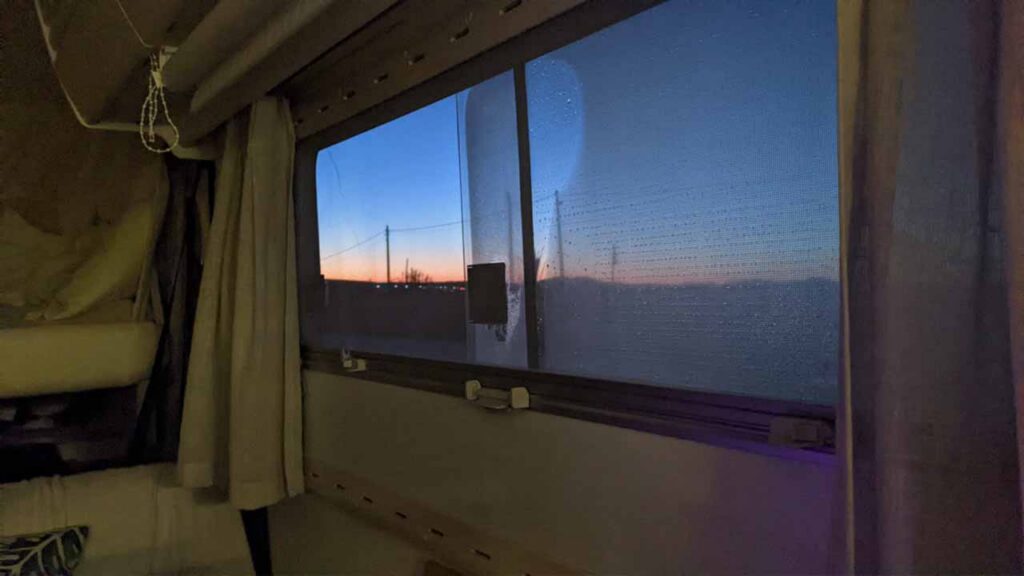
In van life, especially in winter, humidity is often a more formidable adversary than the cold itself. A couple emits between 1 and 2 liters of water vapor per night just by breathing and sweating. Add cooking, and you understand why the windows are dripping in the morning.
Humid air conducts cold better than dry air, making the feeling of cold even more intense. The golden rule:
It may seem counterintuitive to open the windows in the middle of winter, but regular ventilation is essential to exchange humid air for drier air.
Ventilate for 5 to 10 minutes morning and evening, even in freezing weather. If your vehicle has a VMC or a roof fan, turn it on. A small electric dehumidifier (200 to 400 mL per day) can help if you are plugged in. Otherwise, chemical absorbers like Rubson also work.
Absolute rule: never dry laundry inside the van. It’s a real humidity factory. And after showering or cooking, systematically wipe down the damp walls with a microfiber cloth.
Increase your insulation by covering your windows
Insulation is key to staying warm. As soon as the sun sets, the temperature inside can drop drastically through the windows, which are the weak points in the battle against the cold.
Using insulators like thermal curtains, custom Isoflex, or even heavy blankets can make a significant difference. For optimal results, think beyond the windows: Armaflex for the walls and roof, insulating mats for the floor, and check your door and window seals. A worn seal allows a constant draft that ruins all your insulation efforts.
Voir les isolations de vitre pour véhicule aménagéAs soon as the sun starts to set, get ready. Cover those windows and keep the heat inside. Every little degree counts.
Your new winter friend, the blanket and fleece clothing
When the cold sets in, textiles become your best allies. fleece clothing is lightweight, soft, and incredibly warm. They add an insulating barrier between you and the biting cold. And blankets are not just for comfort: they trap heat and create a welcome warmth bubble.
Acheter Plaid pour vanlifeAcheter Polaire pour froidFleece clothing is a smart choice for vanlifers.
A vanlifer tip: slip your clothes for the next day to the bottom of your sleeping bag or under the duvet. They will be nice and warm when you wake up, making the transition from bed to coffee much less heroic!
Using sleeping bags in bed
Designed for the coldest environments, sleeping bags wrap the body in an insulating embrace, retaining body heat more effectively than a traditional duvet.
You can open them up and spread them out like a large shared blanket, creating a cozy cocoon for two.
Sleeping bags are valuable allies, especially if you are two. Use each person’s body heat to stay warm without spending extra energy on heating. In the battle against winter cold, every layer counts.
Acheter sac de couchageStay hydrated and eat well
Hydration and proper nutrition are crucial in winter. The cold often tricks our sense of thirst, reducing our water intake, but the need for hydration remains constant. Keep a water bottle handy and drink regularly throughout the day.
Regarding nutrition, the body expends more energy to warm up, increasing our caloric needs. Opt for calorie-rich and nutrient-dense foods: nuts, seeds, legumes, and healthy fats. Hot meals are not just comforting; they help raise body temperature from the inside.
Where to spend winter in a motorhome?
If you’re not particularly attached to winter landscapes, one of the great advantages of van life is the freedom to follow the sun. The idea is simple: follow the isotherms and stay where average temperatures remain above 10°C.
Southern France
The French Riviera, Hérault, and Pyrénées-Orientales offer mild winters with temperatures between 5 and 15°C. It’s pleasant during the day, but nights can remain cool. The advantage: no border to cross, many campsites open year-round, and familiar infrastructure. It’s a good compromise if you don’t want to go too far.
Portugal
It’s the favorite destination for winter motorhomers, and we understand why. The Algarve offers 15 to 18°C in mid-January, with campsites ranging from £8 to £15 per night off-season. The Silver Coast (further north) is a bit cooler but less crowded. The cost of living is low, the welcome is warm, and the community of winter vanlifers is immense.
We have spent several winters in Portugal, and it’s always a joy. If you’re hesitating, check out our guides on Tavira, the most beautiful town in the Algarve, Olhão and its typical atmosphere, or Porto for a winter city trip.
Spain and the Canary Islands
Andalusia and the Spanish Levant offer 12 to 16°C in winter with many motorhome areas. If you really want to break out the t-shirts in January, head to the Canary Islands (accessible by ferry from Cadiz or Huelva) with 20-25°C all year round.
Morocco
For those looking for a complete change of scenery, Morocco attracts many motorhomers from October to March. Agadir, Essaouira, and Tiznit offer generous sunshine and a very low cost of living. Adventure awaits, although the logistics (border crossing, insurance) require a bit more preparation.
Living places in a van and winter
Finding open campsites
A concrete challenge of van life during winter is finding open campsites. Many close their doors during the coldest months, significantly reducing options. Using apps like Park4Night can help you identify those that remain operational year-round. Check recent reviews as available services may be limited.
This shortage of campsites can also be seen as an opportunity. Public parking areas are viable alternatives, and the low season often offers reduced rates in open campsites: the perfect chance to enjoy a long hot shower and recharge your batteries at an electric point.
Why stay in the cold?
If winter becomes too harsh, it’s legitimate to ask: why stay in the cold? Living in a van offers unprecedented mobility, and heading towards milder climates is an option we have embraced whenever possible.
A milder climate reduces the need for constant heating, allowing for significant energy savings. Longer, sunnier days in southern regions are beneficial for your solar batteries, ensuring more efficient and reliable charging. Ultimately, the beauty of van life lies in this freedom of choice, allowing you to change your environment according to your desires.
Frequently Asked Questions about Winter Vanlife
How much does a full winter in a van or motorhome cost?
The budget heavily depends on your destination and lifestyle. If you stay in Portugal or Spain, expect to spend between £800 and £1,500 per month for a couple (camping/areas £8-£15/night, fuel, food, gas). If you prefer wild camping and home cooking, you can go down to around £600. In the UK, costs are a bit higher (more expensive campsites, more expensive fuel). Diesel heating adds about £1 to £3 per day depending on usage.
Can you live in a caravan during winter?
It is possible, but the caravan has specific constraints. The insulation is often not as good as in a motorhome or a van, and you depend on an electric hookup for heating (unless you install gas heating). The advantage: once set up on a pitch, the caravan offers a comfortable living space. Many caravaners winter in southern campsites with electric hookups and running water.
Is it dangerous to sleep in a van in extreme cold?
With good equipment, it is not dangerous but it requires preparation. The main risks are carbon monoxide (install a CO detector), frozen pipes, and hypothermia if your heating fails. Always have a plan B: cold weather sleeping bags, emergency blankets, and locate nearby accommodations just in case. Never park under an avalanche risk area or under branches loaded with snow.
How to have hot water in a camper van during winter?
Most motorhomes have a built-in water heater (often Truma) that runs on gas or electricity. In a converted van, you can install an instant gas water heater (like the Kampa Geyser) or use your diesel heater combined with a heat exchanger. Cost-effective solution: heat water on the stove and use a pressurized shower. While camping, take advantage of the facilities for hot showers and save your water for washing dishes and quick hygiene.
Should you drain your motorhome if you don't use it in winter?
Yes, it is highly recommended if your vehicle remains parked in an area where it freezes. Completely drain the clean water system, the water heater, and the wastewater. Open all taps to allow residual drainage. If possible, blow compressed air into the pipes to eliminate any trace of water. For the toilet tank, add specific antifreeze. Also protect the seals by coating them with silicone. A proper winterization will save you from costly repairs in the spring.
What is the best time to go campervanning in Portugal?
To escape the French winter, the ideal period is from October to March. The Algarve offers 15-18°C during the day even in January, with little rain. The Silver Coast (around Nazaré) is a bit cooler (10-15°C) but less crowded. Avoid July-August if you hate crowds and high prices. Spring (April-May) is also beautiful with wildflowers. Many vanlifers head down as early as November and return in March-April when the weather warms up in Britain.
Van life day to day, unfiltered
Two years of full-time van life, and the Algarve as our base ever since. We still hit the road, by van or otherwise, and we write up what we find along the way. An email when we have something to say, no more.
Ce que vous souhaitez recevoir :