


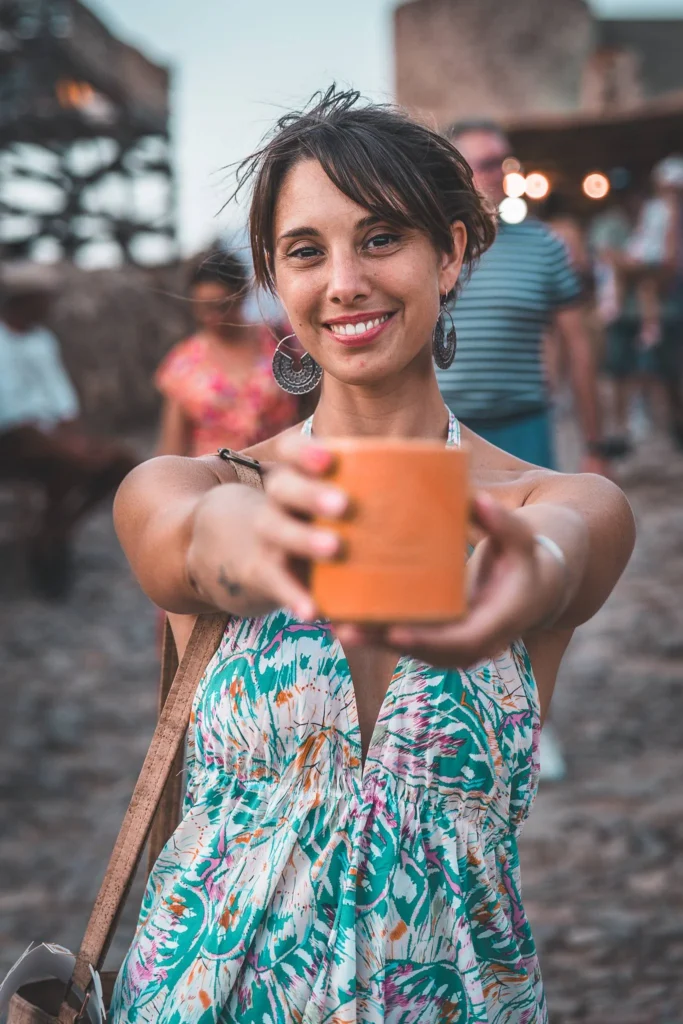
I have a coffee mug that comes from a medieval festival. It’s three years old, it’s a bit wobbly terracotta, and I drink from it almost every morning (Caroline gave up long ago trying to replace it with a normal mug, she understood it was a lost cause).
It comes from Castro Marim, a village in the Algarve perched on a hill a few kilometers from the Spanish border. Every late August, this village transforms for five days into a life-sized medieval town, and at the ticket office, they ask you a question that decides everything: com copo ou sem copo? With glass, or without glass (yes, it all hinges on that, at the checkout, even before you enter). Twenty-five cents more, and the glass goes home with you… that’s how you inherit tableware from 2023.
Well, we’ve been there twice. In 2023 during the day, camera around my neck. In 2026 at night, with two cameras and the somewhat silly idea of filming the same evening from two viewpoints (the idea was mine, of course, and I spent the evening watching Caroline position herself just next to me to frame exactly the same shot). Three years apart, and I can tell you what changed between the two: nothing. Even the llama is still there. No one has ever understood what the llama is doing there.
And yet, beneath the babouches and the spit-roasted pig, there is a story that no one tells: Castro Marim was the first seat of the Order of Christ. Not Tomar. Castro Marim. We get there (I can already anticipate the messages from those who will tell me I’m wrong, no, I have the papal bulls, hold on until halfway through the article).
The Medieval Days of Castro Marim, what exactly is it
So, the official name is Dias Medievais de Castro Marim, literally “the medieval days” (free translation, you’re welcome). We say “medieval festival of Castro Marim” in French and everyone understands, but if you look on site, it’s the Portuguese name that’s written everywhere (on posters, on tickets, on signs at the village entrance… and nowhere in French, of course).
The principle is simple: the whole village transforms. The main street becomes a market, the square turns into a mini-amphitheater where minstrels and actors perform, the castle fills with artisans, and the fort across the way hosts reenactments. All this over five days (five, yes, it’s not an evening squeezed between two beaches), from late morning until very late at night (very late, really, we left while it was still going on).
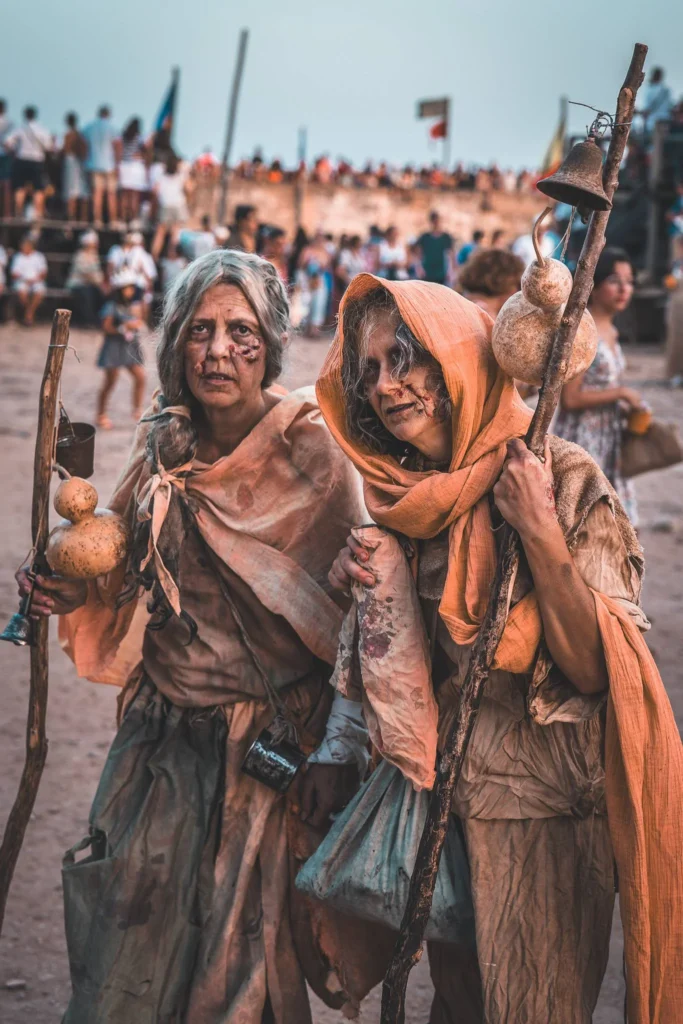
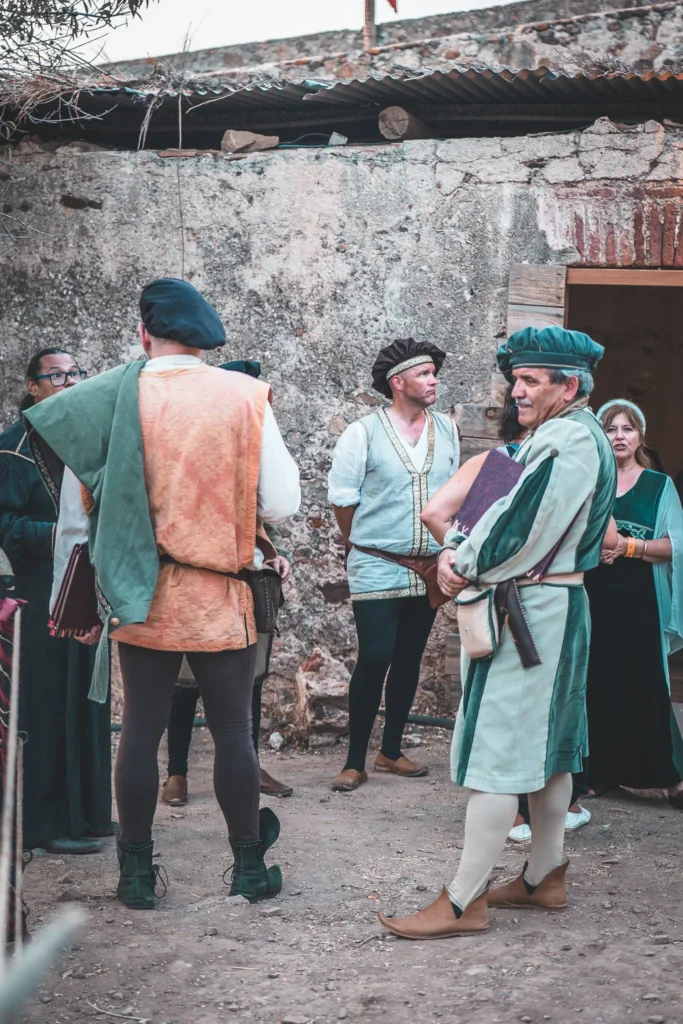
And what makes the difference with the outsourced medieval festivals you find elsewhere is that it’s the locals who carry it. They create, they dress up, they run the stalls, they play the extras. It’s not an animation placed on a village, it’s a village that transforms (and honestly, you can feel that within ten minutes, long before anyone explains it to you). Lots of extras, yes, but extras who seem to be having just as much fun as we are.
The other marker is the calm. Family atmosphere, zero hassle, everyone plays along. It’s something you find in many Portuguese events, like at the Saint John we experienced from the inside, and it changes absolutely everything when you just want to stroll with a drink in hand (I have in mind some French festivals where I wouldn’t have taken out the camera at that hour, but let’s move on).
When does the medieval festival of Castro Marim take place (no, not in July)
I specify this because you read all sorts about it, including on our own site for a while (mea culpa, it’s been corrected since, and no I won’t say how long it took): the Dias Medievais take place at the end of August, never in July. The 2026 edition was the twenty-seventh (they keep count, and it shows in the mechanics of the thing), from August 26 to 30.
A word about the arrival time, because that’s exactly where we got caught in 2026. We arrived at 7 PM thinking we would avoid the heat… except everyone had the same brilliant idea at the same time. The castle was already packed, we gave up on the first attempt, and we only got in on the second try after a fifteen-minute wait (a fifteen-minute wait that I estimated at ten minutes, which gives you an idea of my estimation skills).
Plan your trip to Faro
Tours, tickets and day trips in Faro.
5% off with code PLANETEDECAROT
Booked on Trip.com — partner link.
Compare rental companies and book at the best price.
10% off with code PLANETECAROLOC
Booked on Trip.com — partner link.
Provided by Holafly, our partner.
5% off with code LAPLANETEDECARO
Booked on Holafly — partner link.
Prices, deposit glass, and the trick to pay nothing at all
The prices are frankly gentle for what it is. The full ticket (market + Forte de São Sebastião + castle, that’s the one you need) was 8 € per adult from 12 years old, 5 € for 6-11 years old, free for those under. There’s also a market + fort ticket alone for 5 €, and a five-day adult pass for 16 € if you live nearby or if you’re the type to go back every night (we didn’t dare, but the idea crossed our minds).
Our two completos tickets cost us sixteen euros in total. For a whole evening with shows, reenactments, access to the castle and a 17th-century fort… well, I can’t complain (and you know I complain easily).
Then there’s the glass, and that’s the real subject. At the checkout, they ask you com copo ou sem copo, and the right answer is com copo. Twenty-five cents (the best investment of the evening, all categories), a medieval terracotta glass, and you keep it at the end. Mine has been serving as a coffee mug for three years, and 2026 allowed me to renew it before it broke into pieces (which, between us, was a matter of weeks). It’s the only festival souvenir I’ve never put away in a drawer.
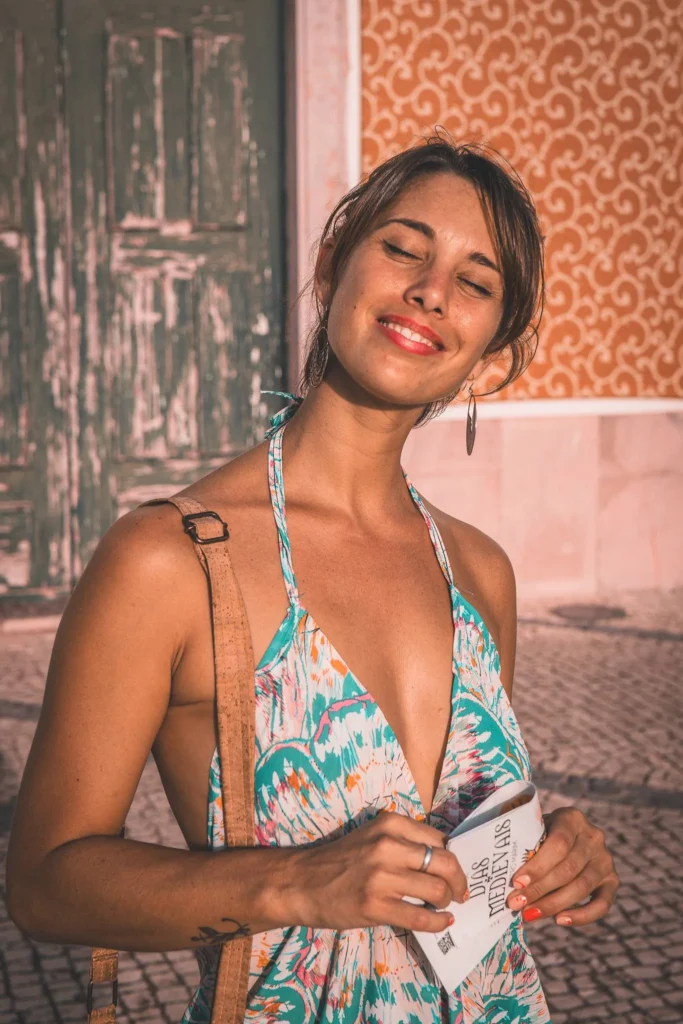
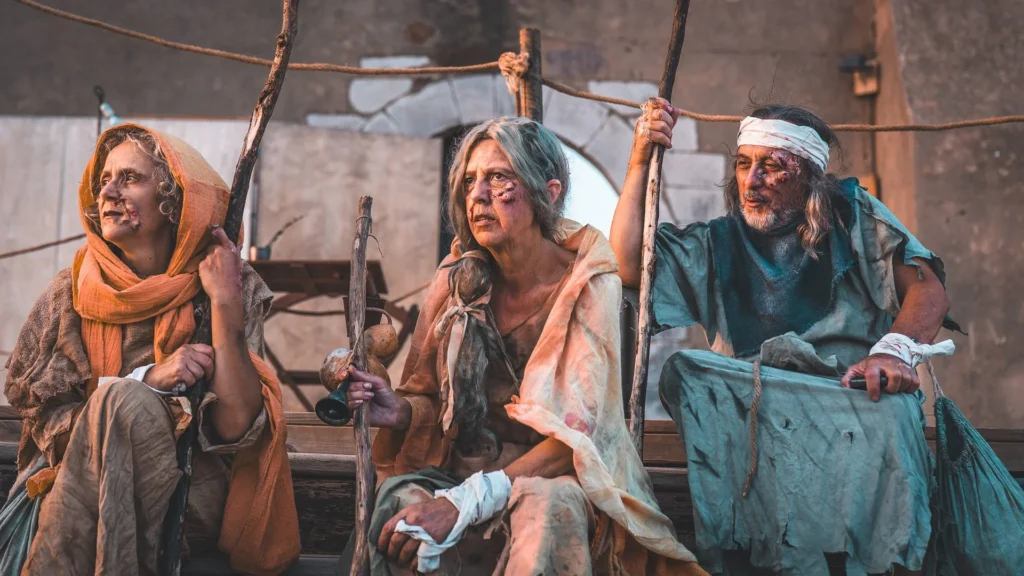
Well, for tickets, there are three options: the online ticket office BOL, local market sales points, and the counters at the entrance of the recinto (the festival grounds, for those who don’t speak Portuguese). There’s also a medieval banquet, very expensive compared to the rest and especially limited to a dozen places, so reserve well in advance if that idea tempts you. We preferred to eat standing like the beggars… which, historically, was probably more faithful anyway.
What we see as we go up to the castle
The route starts on the main avenue, and I’ll be honest: it’s the part I like the least. Jewelry, leather goods, little snacks, drink stalls (everything you need to empty a wallet in three hundred meters). Caroline finds it appetizing and very nice, I think we’re wasting time (I’m a poor judge, we’ve been here before and I know what’s next… which doesn’t excuse my impatience, she pointed that out to me).
After this street, we emerge onto a square where actors, comedians, and minstrels perform in a sort of mini-amphitheater. We sit down, watch, drink a beer, eat a garlic bread (the Portuguese garlic bread, the one that follows you for three days). That’s when I realized a silly thing: in the same place, we heard French, Spanish, Arabic, and Portuguese. Almost everyone who loves the medieval in Southern Europe gathers here once a year (and apparently, they meet at this exact square).
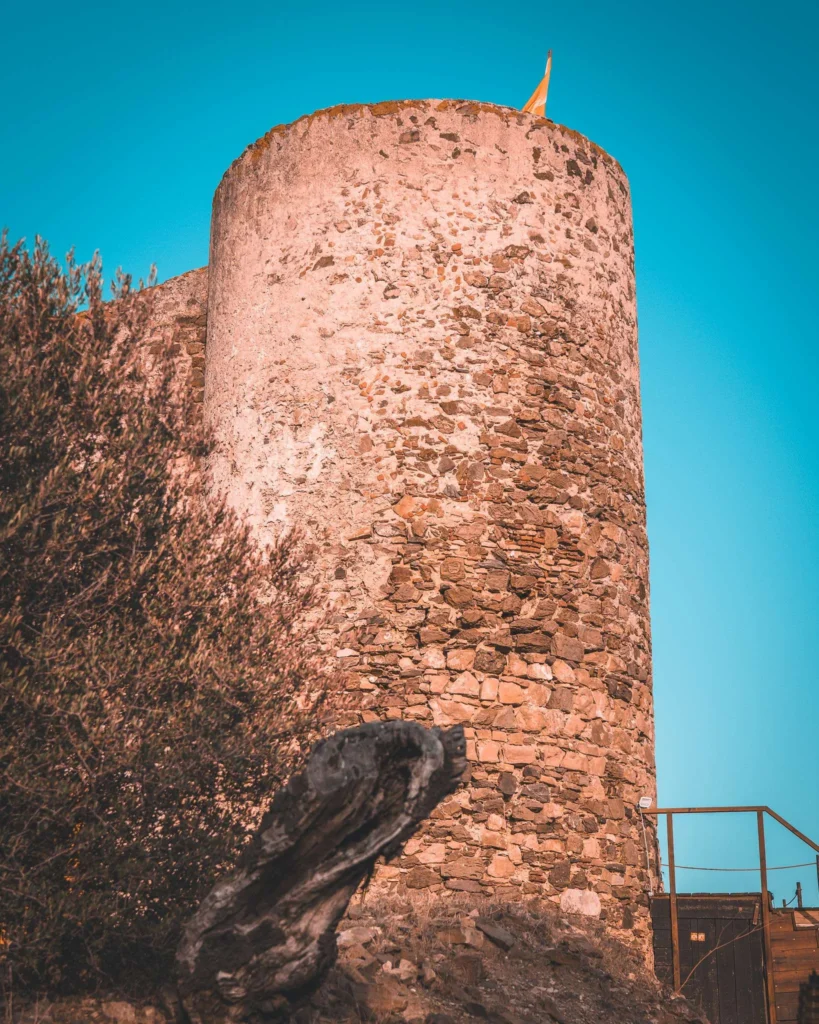
And then we gain some height, and that’s when it becomes something else. From the viewpoint, with the sun setting over the ramparts, the feeling of time travel is real (I know, it’s the kind of phrase you read in all the tourist brochures in the world… but here it really works, and I was the first surprised). In the distance, as night falls, you can see the red lights of the border bridge between Portugal and Spain. Two eras in the same frame, without having moved.
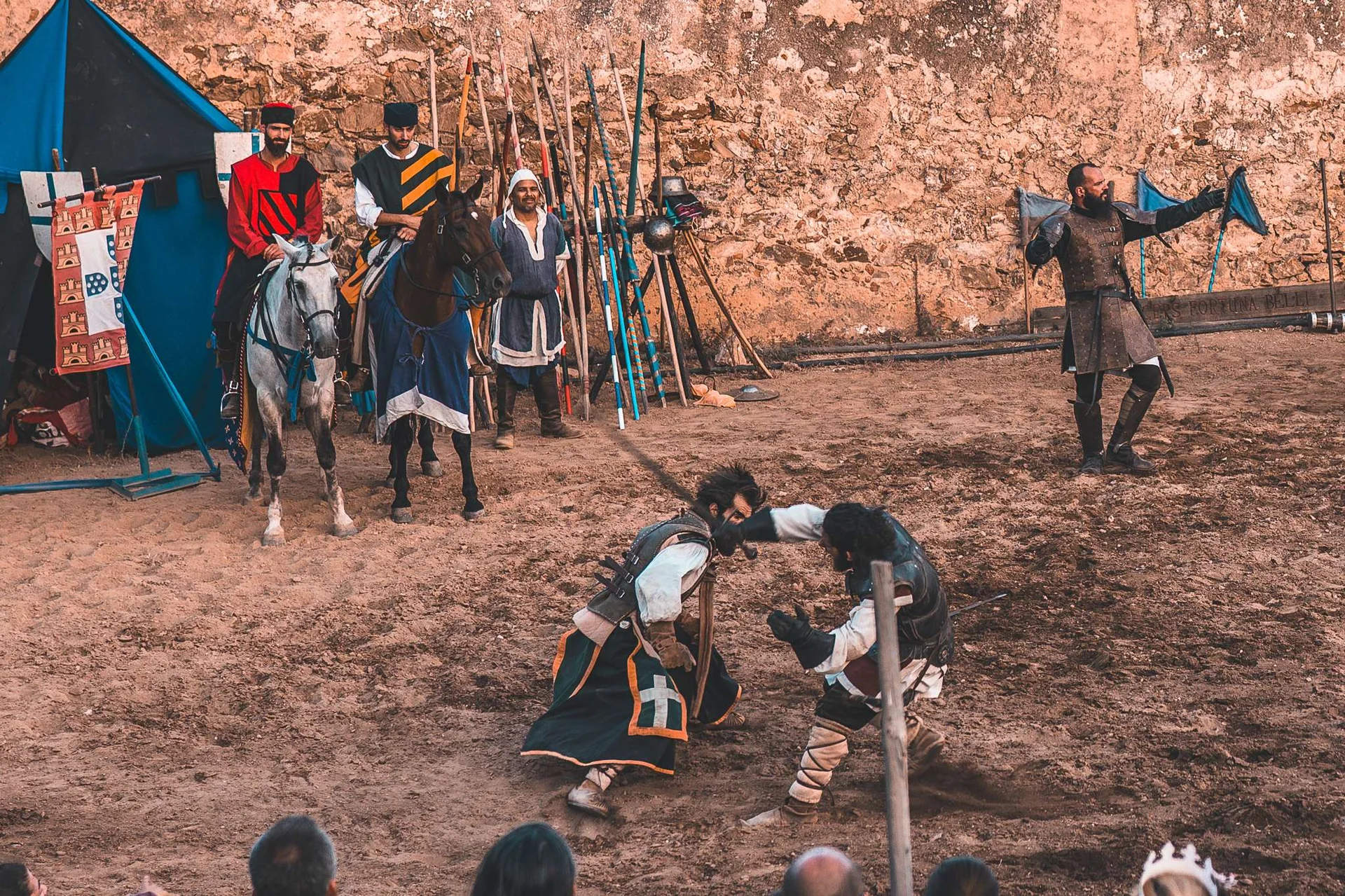
On the animation side, there’s enough to occupy an entire evening: sword fights, armored knight tournaments, archery in front of the ramparts, traditional dance (at 30 degrees, in armor, hats off to the extras). On the dance, we completely disagree: Caroline finds it “absolutely wonderful,” I find it long. She jokes about the “extremely complicated” choreography, which consists pretty much of going in circles holding hands (I quote, I’m not making this up). There you go, you have the level of the marital debate.
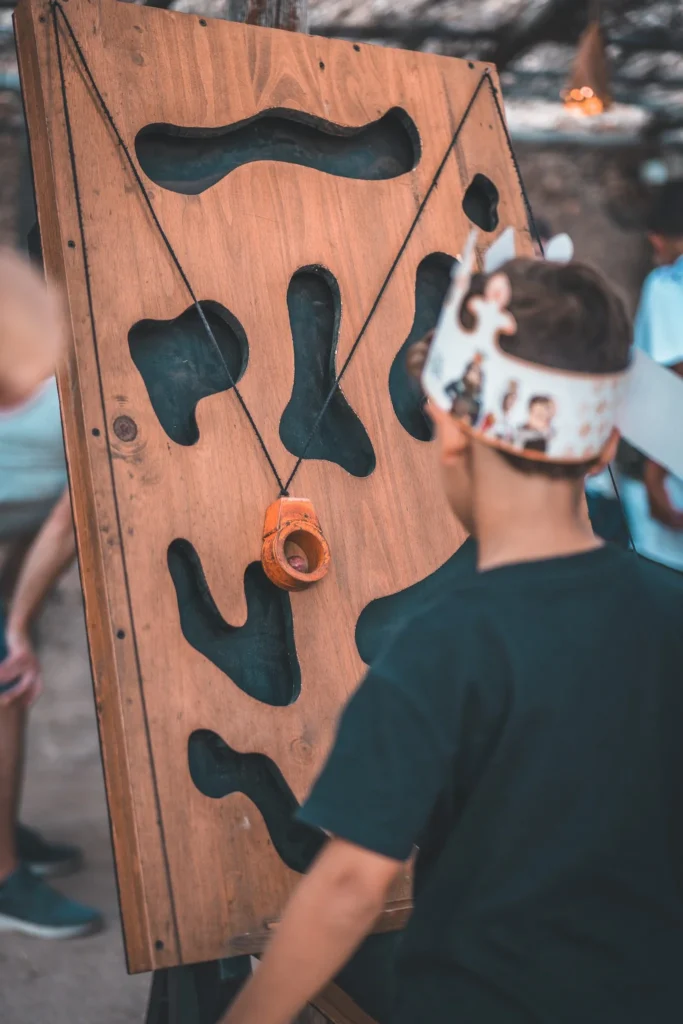
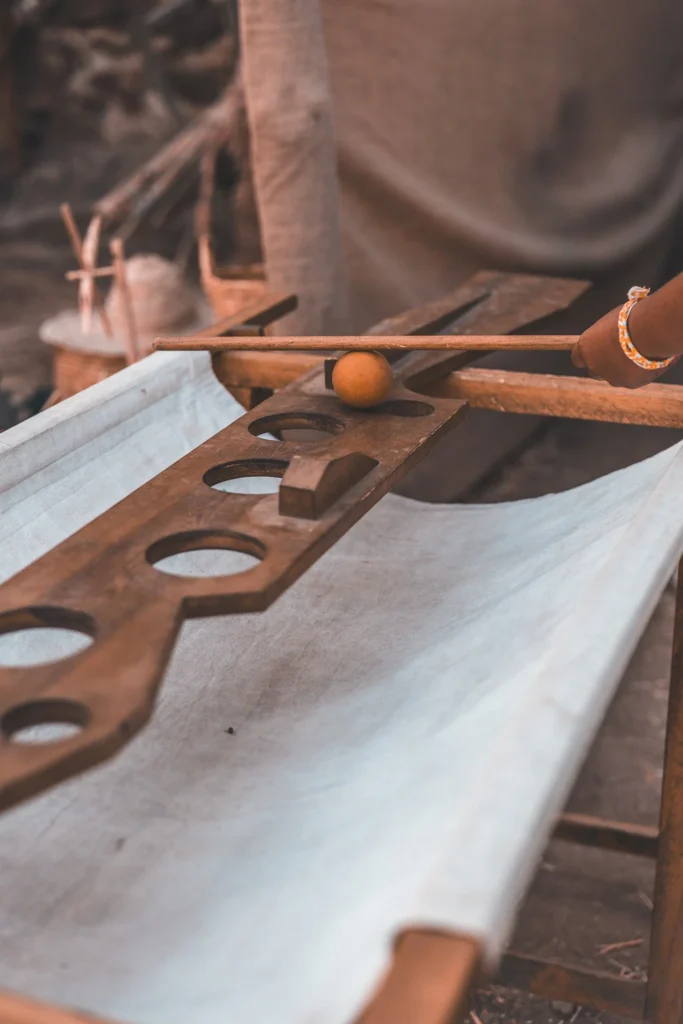
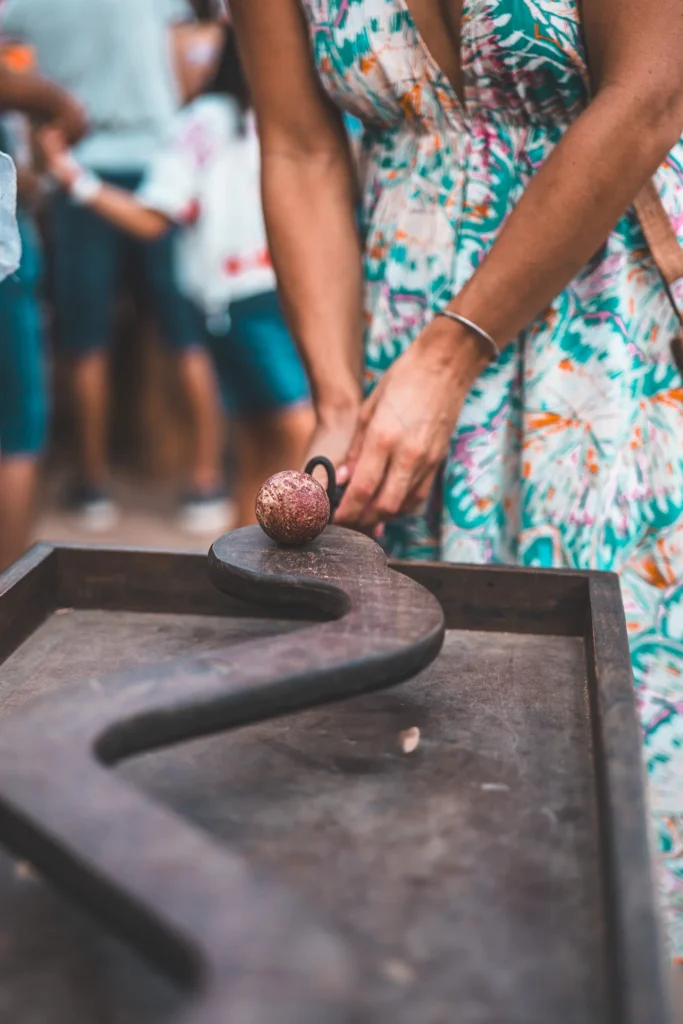
The wooden games, however, are a real pleasant surprise: medieval board games, skill games, and a space that feels very much like Fort Boyard (the atmosphere is there, the Ball is too, just missing Passe-Partout). The problem is that in the evening, everything is monopolized. We managed to do just one, where I publicly doubted Caroline’s ability to balance a piece (she who can’t keep her tripod steady, the argument seemed solid). She succeeded on the first try. I looked foolish.
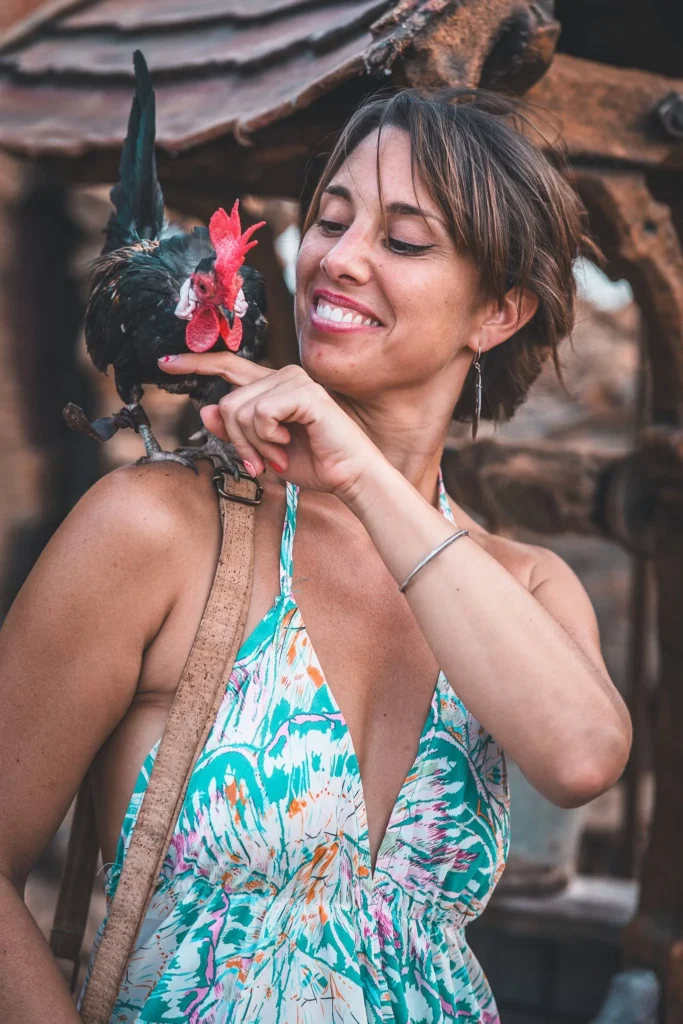
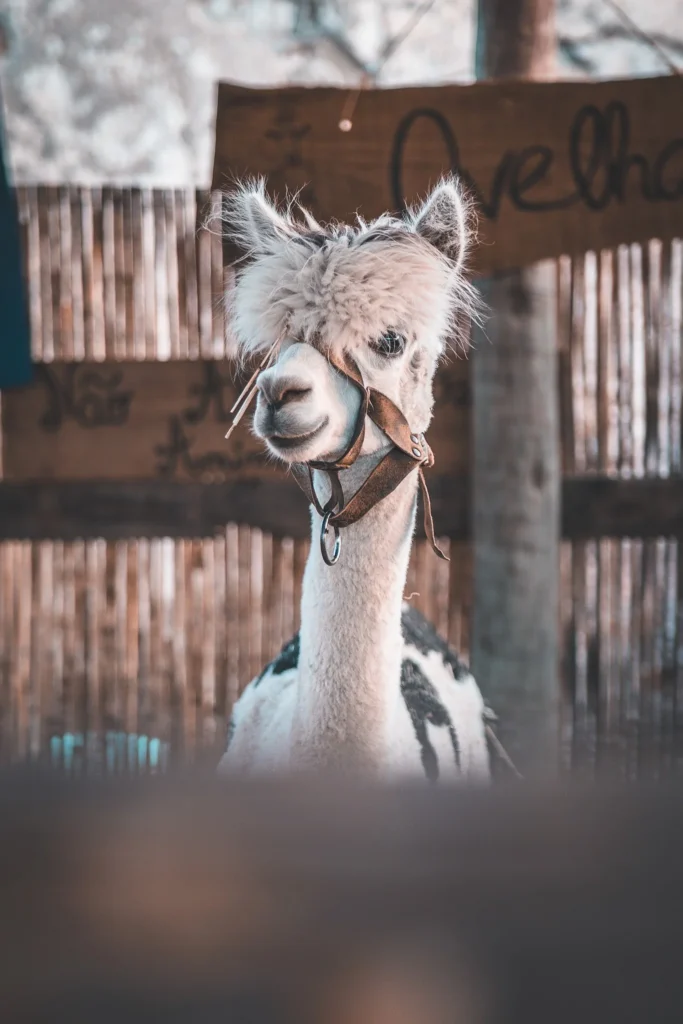
Next to the other castle, under Arab-style tents, there are animals: birds of prey, absolutely adorable mini-owls, rabbits, chickens, goats. For a small coin, they put a chicken on your shoulder and it brings luck (in 2023, Caroline did this with a rooster, and the photo has become a classic in our archives… it comes out every time we look for an image of Castro Marim). And there’s the llama. Still no explanation, neither in 2023 nor in 2026.
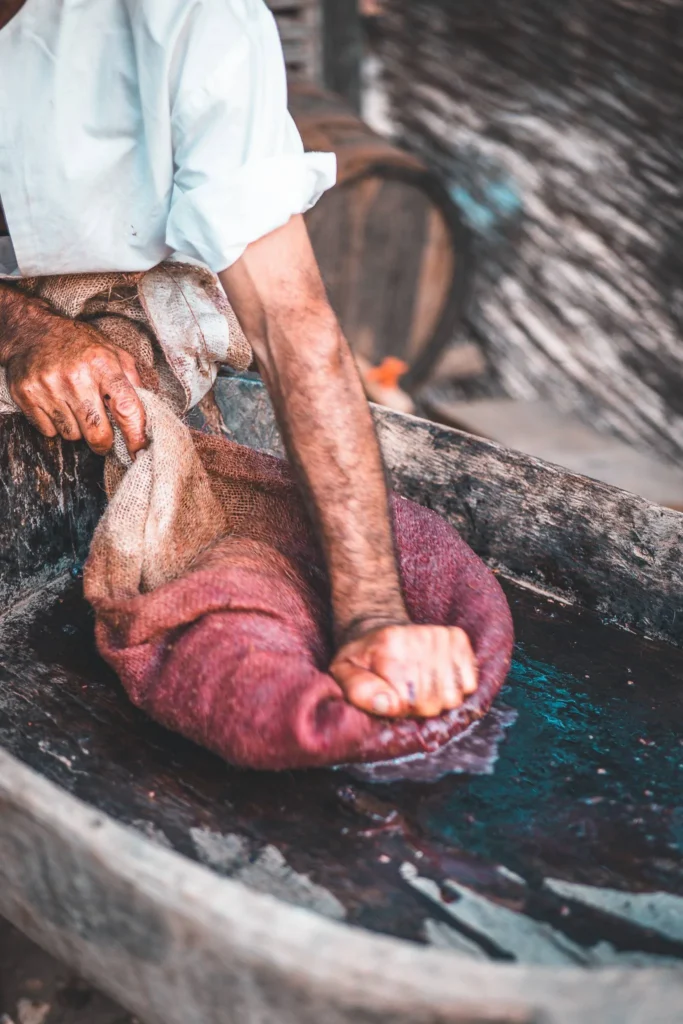
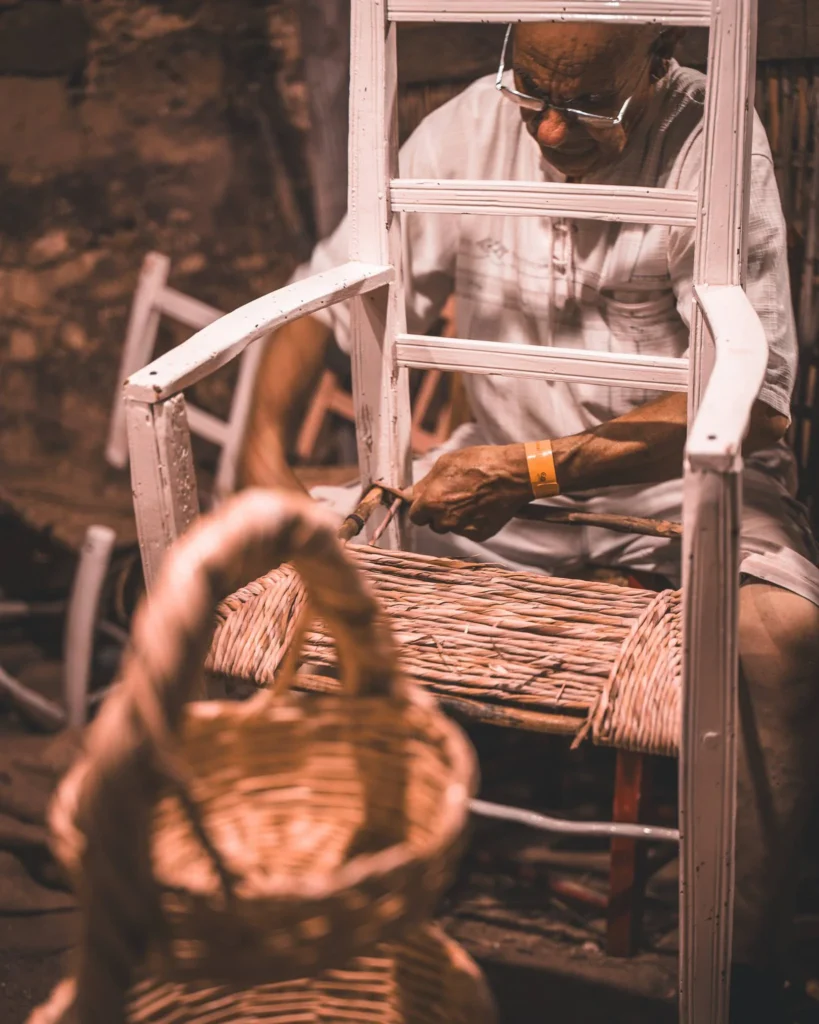
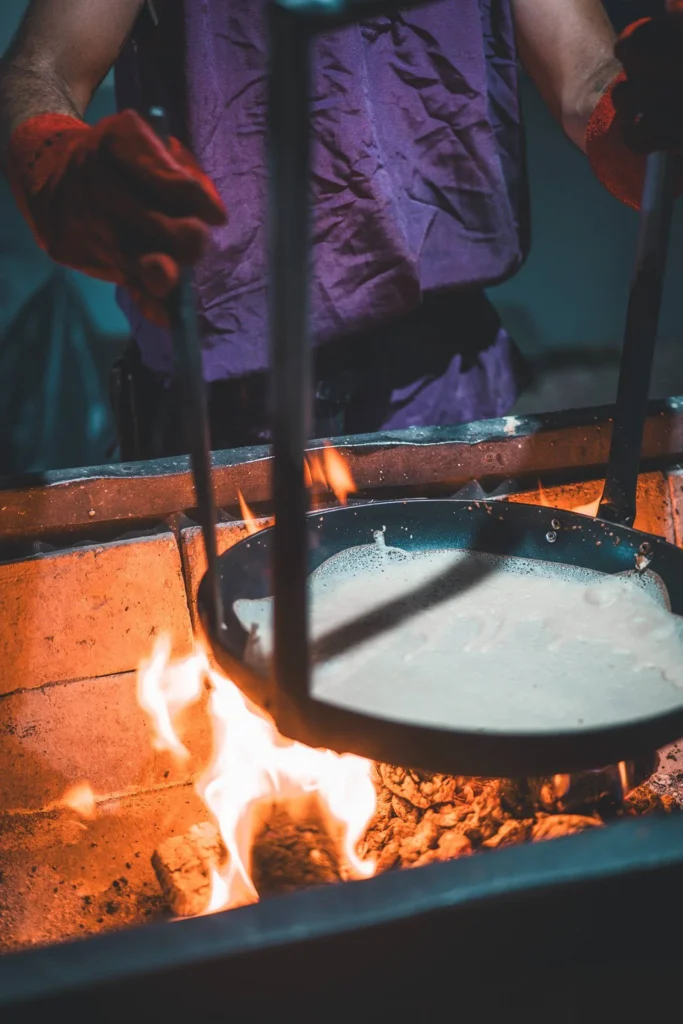
Finally, the castle. It’s the highlight, and it’s Caroline’s favorite part. Inside, the locals showcase the crafts of the time: dyeing in vats, basket weaving, cooking over a wood fire (real gestures, not a demonstration rushed in thirty seconds). There are especially grandmas crocheting, sitting in a circle, making placemats and doilies while chatting with each other (they’re not playing anything, they’re just doing what they do every day, and that’s precisely what’s beautiful). Caroline still talks about it: it’s exactly what you see in the real Portuguese streets today, grandmas outside chatting with beautiful smiles. Nothing reconstructed in that… and maybe that’s why it’s the most beautiful sequence of the evening.

I'm Xavier
I write up what we learn on the road, from the gear we wear out to the paperwork that lets us live off it. Without dressing it up.
Ce que vous souhaitez recevoir :
What we eat and drink at the Dias Medievais
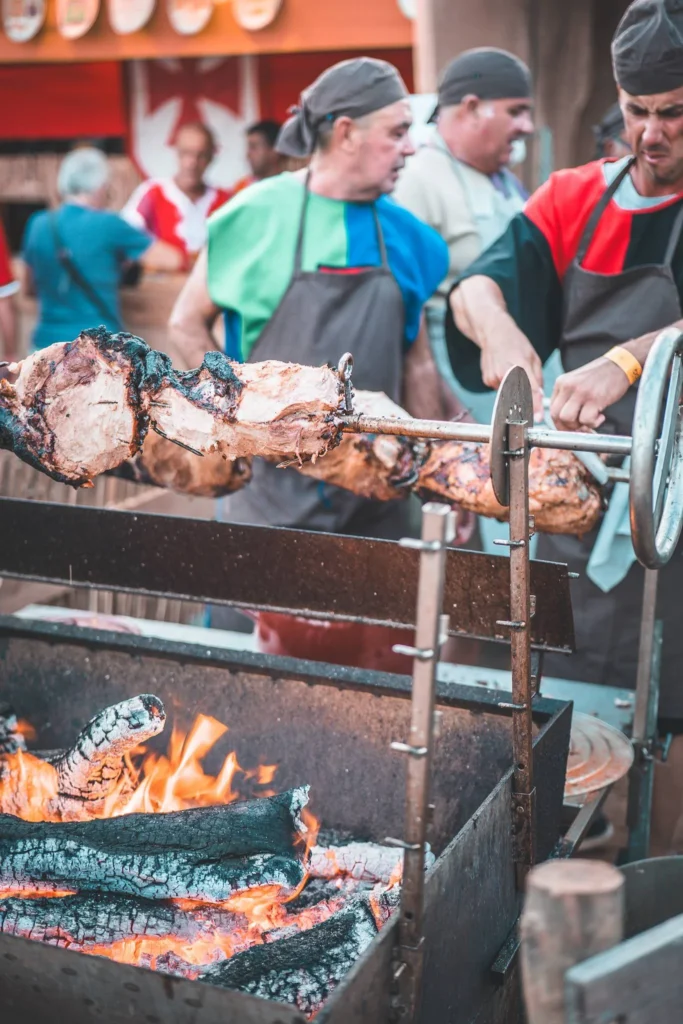
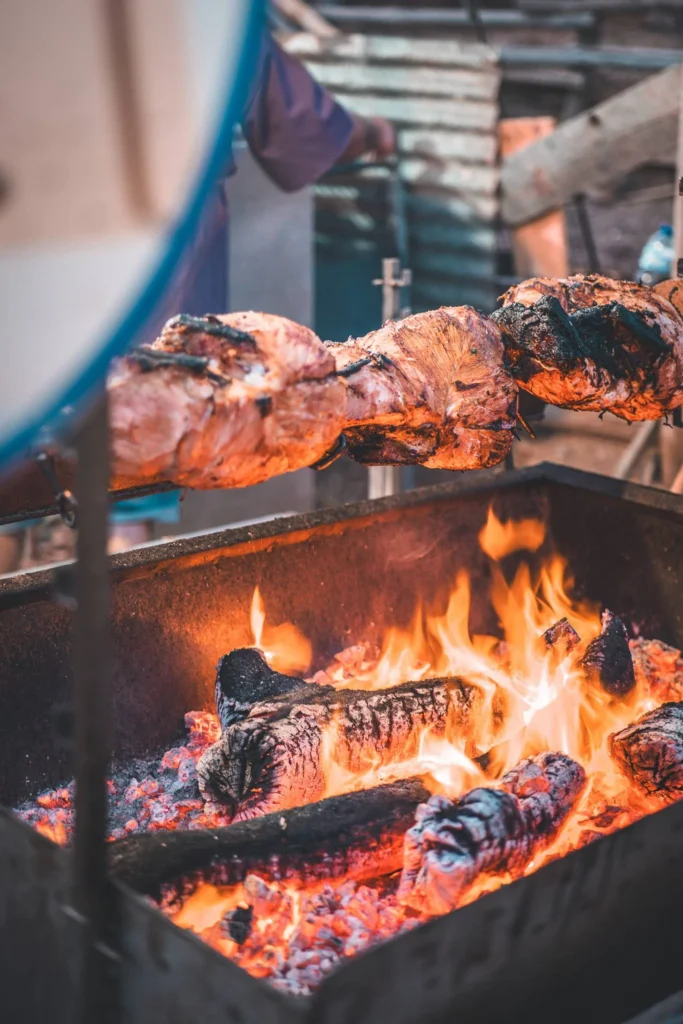
Well, let’s talk seriously. The stand that crushes all the others is the leitão, the spit-roasted pig, which grills all day on its spit (all day, that’s not a figure of speech, it’s been turning since morning). It’s so good that I almost forgot to film (which, for someone whose job it is a bit, says a lot). If you should eat only one thing here, it’s that.
Next to it, you find msemen, the Moroccan flaky pancake, at five euros each. I hesitated (in Morocco it’s forty cents, and I know because I spent quite some time eating them there, without moderation). Honest verdict though: it’s not the same, but it’s edible (I complained, then finished the plate, which is quite representative). And we ended the evening with a bifana, the Portuguese pork sandwich, served here in sliced bread… which is a choice. It was our first sitting after three hours.
To drink, the Super Bock in the medieval glass is the classic, but there’s craft beer all over the site if you prefer (we took a tour out of curiosity, we returned to Super Bock, go figure). And in the castle, the long tables offer mixed charcuterie-cheese boards, with plenty of choices (and the banquet atmosphere that goes with it, elbows tight and strangers across).
A little note for Caroline, who spent a good part of the evening in front of the jewelry stands: flower-shaped earrings around 12.50 €, flower crowns at 15 €. She found it very fairy-tale-like, very fine, and well-priced given the work (she’s right, I specify, but let me have my role). I simply note that we returned with a flower crown. I won’t comment further.
Why there are babouches and mint tea at a medieval festival
That’s the question everyone asks upon arrival, and it’s also what makes this festival more interesting than average. You walk in a Portuguese medieval street and you cross Moroccan leather goods, babouches, mint tea stalls, artisans from North Africa (real artisans, not extras dressed as artisans). And ten meters from the kebab seller, someone is roasting a whole pig (ten meters, I measured by eye, this great gap makes me laugh every time).
Except that… it’s not a marketing mix. It’s historically accurate. Castro Marim was a Muslim stronghold for centuries before being reclaimed, and the Moorish heritage is part of the place as much as the ramparts. A Portuguese medieval festival that would only show Christian knights would tell, very exactly, half the story.

The turning point is 1242: Castro Marim is reclaimed from the Moors by D. Paio Peres Correia, master of the Order of Santiago (in our video I said 1942 orally, which would indeed have been a remarkable military feat, it’s been corrected since in the subtitles). But the site is much older than that. There has been continuous occupation since the end of the Bronze Age (the excavations of the 1980s settled the question), defensive walls as early as the 8th century BC, and the Romans called it Besuris.
Why here, and not three kilometers further? Because the village overlooks the Guadiana, the river that today separates Portugal from Spain. When you’re up there, you physically understand: you can see from very far away (and at the time, seeing coming was the whole question). The Phoenicians were already sailing up this river to Alcoutim and Mértola to collect ore and bring it down to the port here, an activity that the Romans continued afterwards. Castro Marim wasn’t born in the Middle Ages… it just became strategic then.
Castro Marim, first seat of the Order of Christ (and not Tomar)
Here, we hold the strongest angle of the subject, and curiously no one tells it. You cross Templars in the alleys during the festival, red cross on a white background, and you think it’s just festive costume folklore (me first, the first year). It’s not that at all.
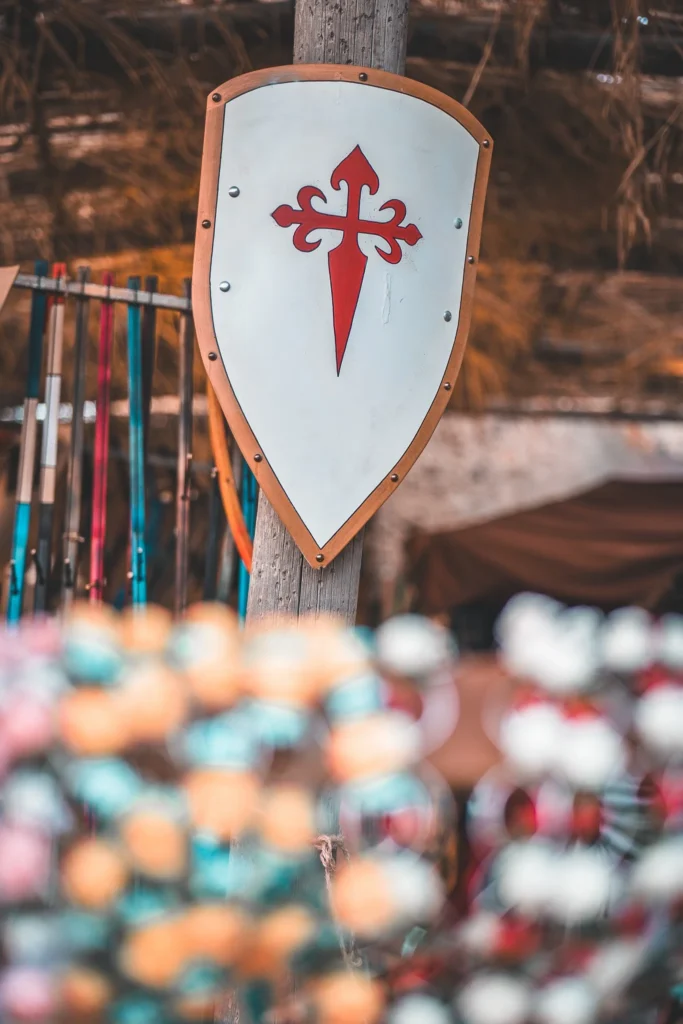
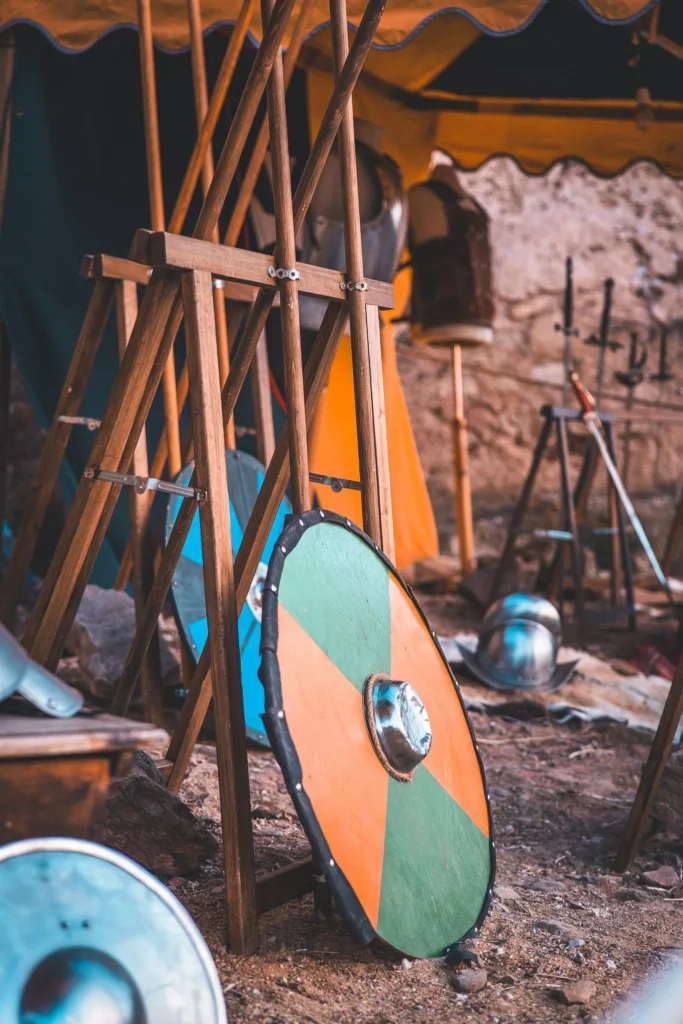
Let’s go back in order, because that’s exactly where a tenacious myth lingers. Pope Clement V dissolved the Order of the Temple by the bull Vox in excelso, on April 3, 1312. End of the story, everywhere else in Europe. Except that in Portugal, King D. Dinis doesn’t see it that way: he negotiates for seven years with Rome to keep the goods and the men (seven years, yes… we’re far from a bloodbath, it’s long-term diplomacy).
The result: on March 14, 1319, Pope John XXII signs the bull Ad ea ex quibus cultus augeatur and creates the Order of Christ, which inherits the Portuguese Templar heritage (goods, castles, revenues, it all goes through). And its first seat is the church of Santa Maria do Castelo… in Castro Marim. In this castle. The order remains there until the transfer to Tomar, in 1357, under D. Pedro I.
So to be precise, because that’s where the myth completely derails: the Templars did not “secretly take refuge” in Portugal to continue clandestinely. There was neither a nighttime escape, nor a hidden society, nor treasure buried under a tower (sorry for those who saw the documentary, I don’t make the rules). There was a seven-year diplomatic negotiation between a king and a pope, and a perfectly official legal refoundation, enacted by a bull that can still be read today. It’s much less romantic… and much smarter.
And what makes Castro Marim savory is that everyone associates the Order of Christ with Tomar, where we visited the Convento de Cristo and its medieval heritage, while Tomar comes thirty-eight years later. The cradle is this hill in the Algarve where you’re eating spit-roasted pig (I find it wonderful, no one knows, and yet it’s written black on white in the archives).
The couto de homiziados: when Portugal populated its border with convicts
Here is the part nobody puts on the posters. Taking Castro Marim back in 1242, fine, a nice feat of arms. Except that after the conquest the region empties completely. Nobody wants to live on a border you can wade across with an army waiting on the other side (and frankly, you can see their point).
So the kings went at it in two stages. First the tax carrot: Afonso III ordered the resettlement in 1272, granted a foral charter on 8 July 1277, and D. Dinis confirmed and widened it on 1 May 1282. Tax breaks to bring people in, basically (they were already doing that in the thirteenth century… it always makes me smile when free zones are presented as a modern invention).
And when the carrot was not enough, they opened the prisons. On 10 April 1421, D. João I made Castro Marim a couto de homiziados, a land of asylum for convicts, originally planned for forty places (forty, the figure is in the charter). The principle is simple and fairly brutal: a man sentenced for a common law crime could commute his punishment, prison or exile to Africa, into forced exile here, a few years, defending the border. In exchange he was exempt from military service elsewhere, from taxes, from fines, and above all out of reach of the judges (an official no-law zone, in a way, created by royal charter).
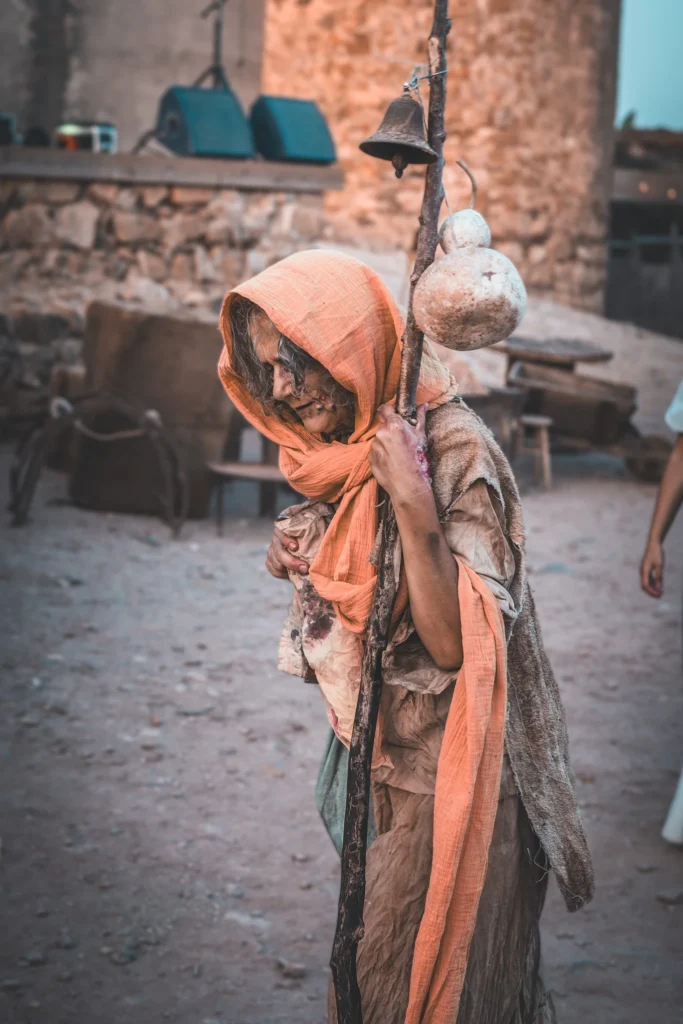
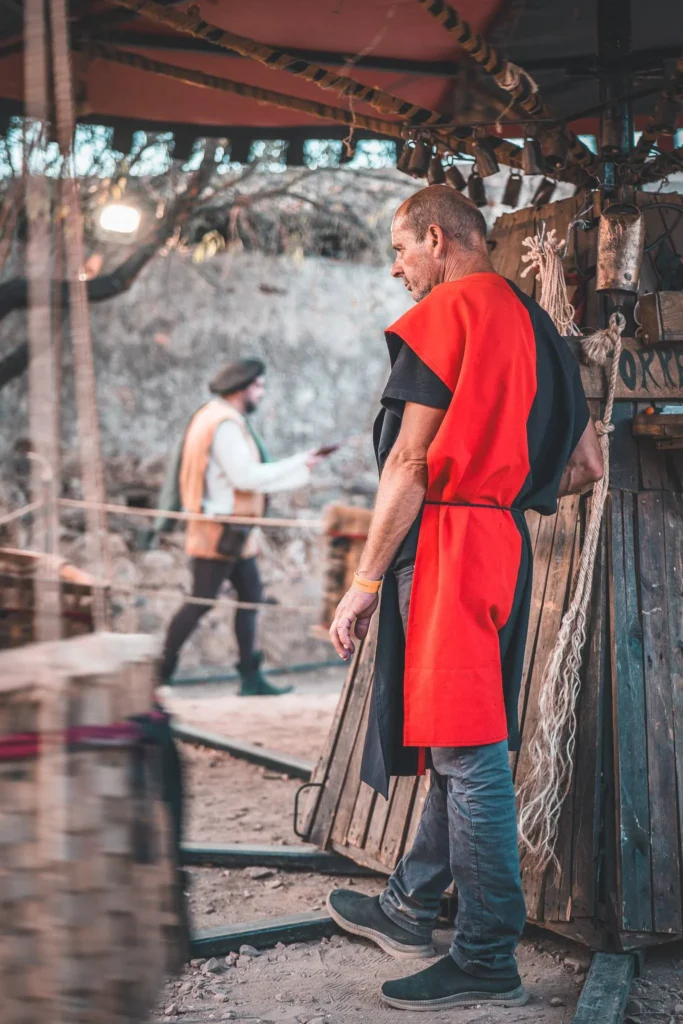
Many preferred the border to prison, which says a great deal about the prisons of the time. And for the kingdom it was free defensive manpower that needed no convincing. The Algarve had several coutos of this kind, among them Sagres, Lagos, Portimão and therefore Castro Marim (and when you know the headland at Sagres and its wind beaten end of the world, you can picture the atmosphere of that stay quite well).
A small correction on the date, because my instinct was right and my century was wrong: it was not D. Dinis who did this, it really was D. João I, a hundred years later. Fifteenth century, not fourteenth (there, it is said, we move on).
The fort across the way that was never attacked
During the festival, part of the re-enactments takes place at the Forte de São Sebastião, the fort facing the castle from the other side of the hill (you can see it from the ramparts, it is the squat one down below). A costumed local explains there in Portuguese, very seriously, how it worked: when a fort was attacked, the men from the other forts gathered inside it to form a stronger garrison. Then he adds, in exactly the same tone: but this one, it was never attacked.
I thought that was wonderful. A fort built for a siege that never came… it is almost a metaphor for my life (I will let you pick which part).
Historically it belongs to the seventeenth century bastioned remodelling, after 1656, during the Restoration War, under D. Afonso VI, together with its twin the Forte de Santo António. By then the medieval castle was no longer a match for the artillery of the day: low angular lines were added to it, made to absorb a cannonball rather than to dominate the landscape (a whole change of philosophy, really, between the tower that impresses and the bastion that absorbs). The 1755 earthquake would finish the job on what remained of the old walls (the Lisbon one, yes, it shook the whole Algarve on its way).
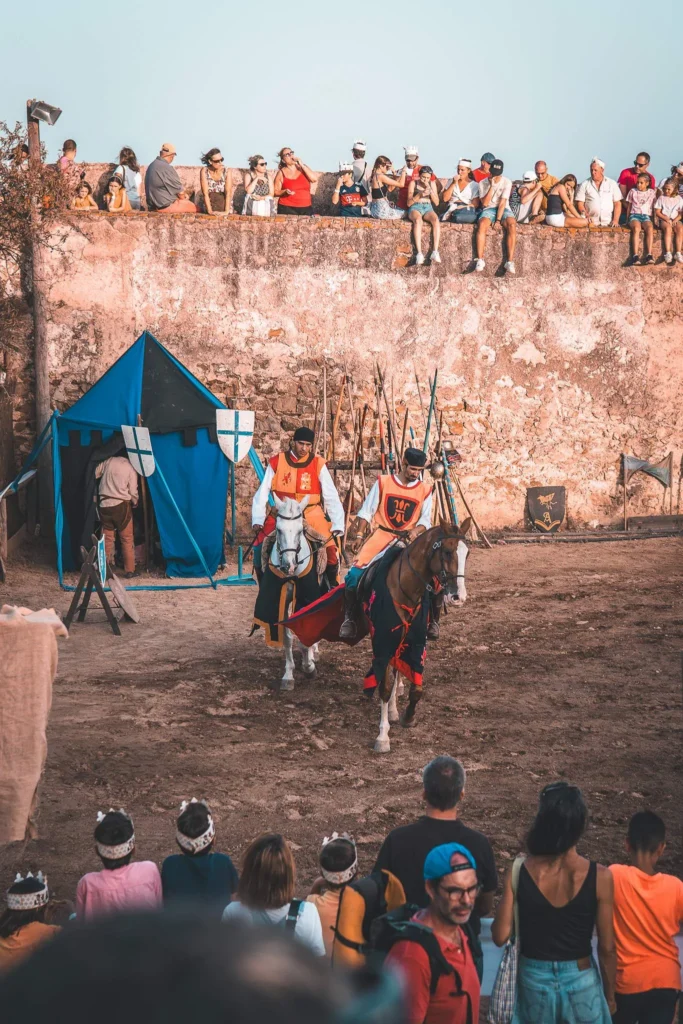
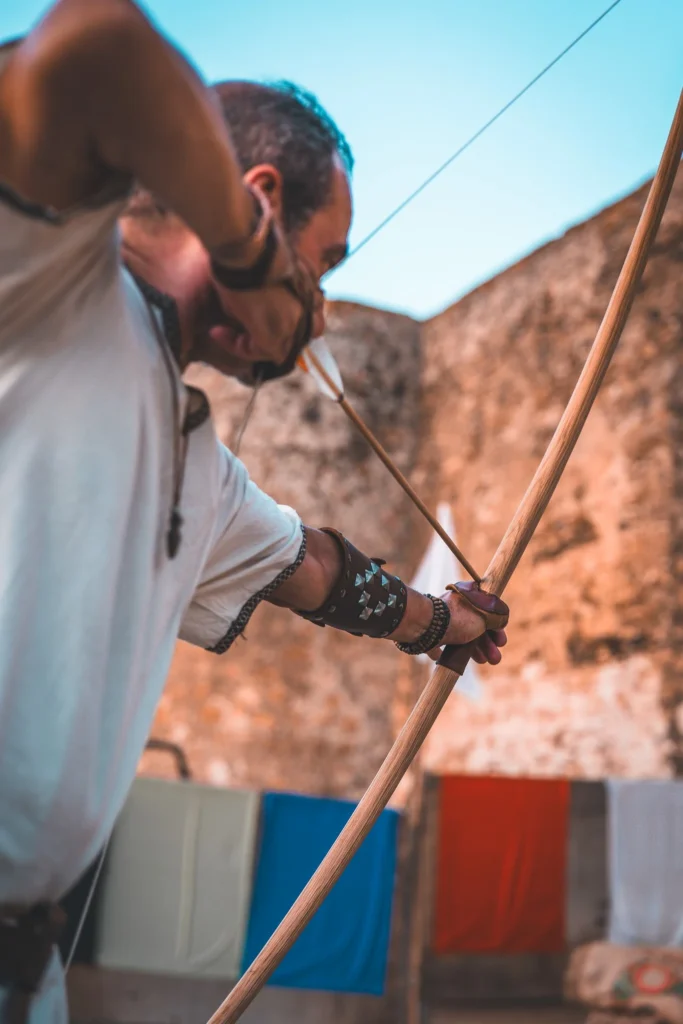
The one thing at the festival that is not period
There is one detail I love which is nevertheless a complete anachronism: the merry-go-rounds. Not electric ones, no, definitely not. Elbow grease merry-go-rounds, with someone turning a crank and spinning the structure by arm power alone (and who, by the end of the evening, must have remarkable forearms).
On site I had told the camera that I could not certify it had been like that back then. Having checked… I was right to be wary. The word carousel does come from equestrian games, the Neapolitan carosello and the Iberian juego de cañas, where riders faced each other with blunted lances, but the merry-go-round as a rotating machine only appears in European fairs in the seventeenth century. The first official French carousel dates from 1605, under Henri IV (yesterday, on the scale of the subject). That is, at the very least, two centuries after the Middle Ages we are busy celebrating.
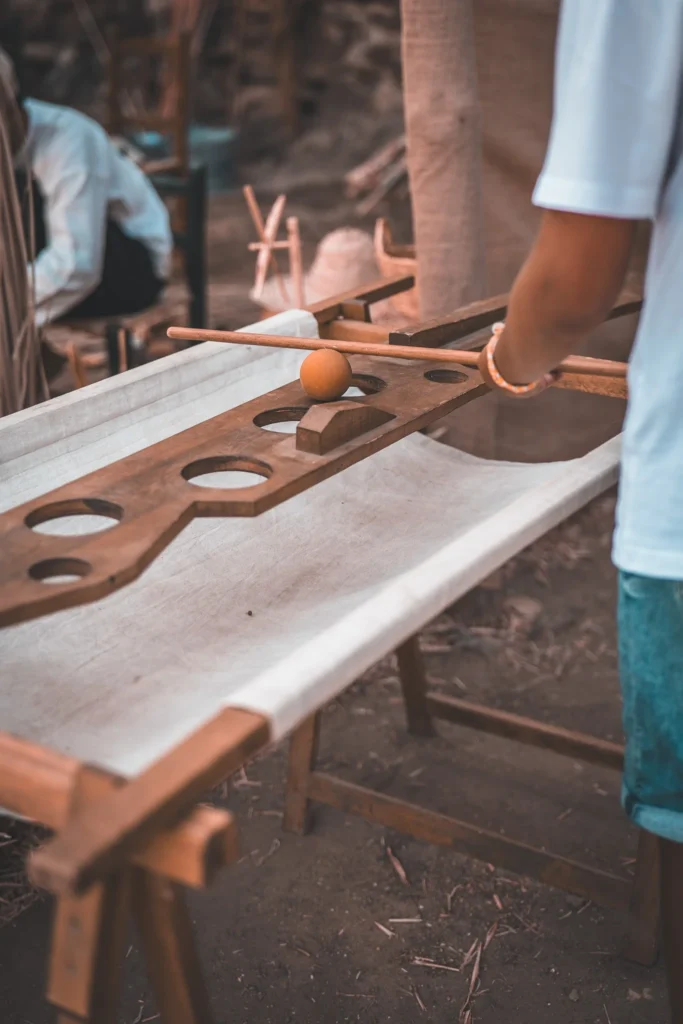
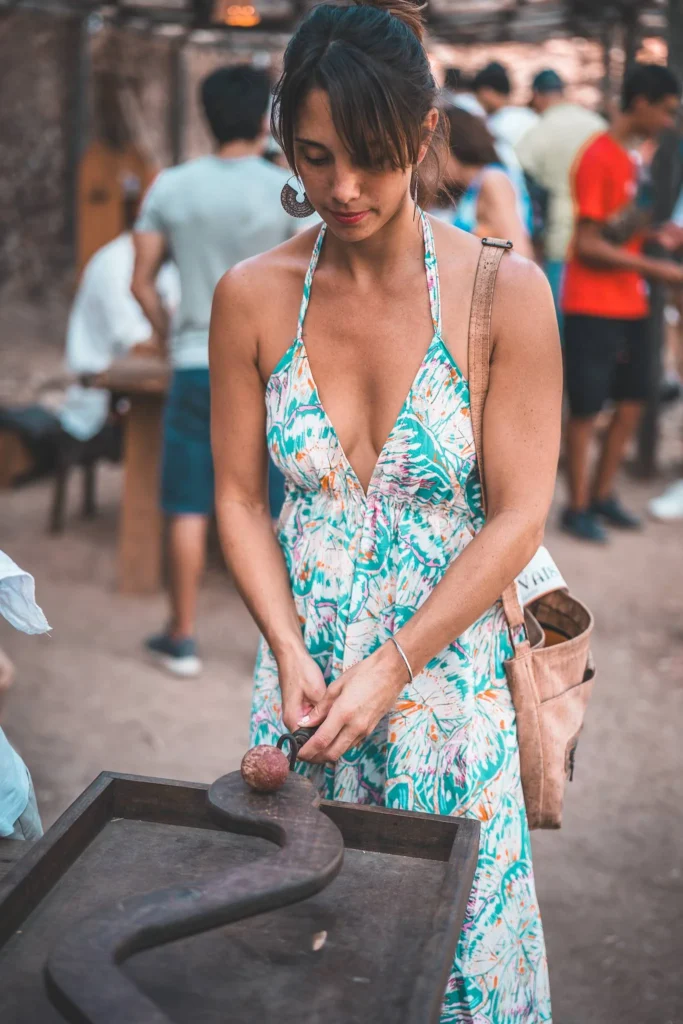
Does it bother me? Not in the slightest (I queued up to watch, which tells you enough). The crank powered merry-go-round is one of the best ideas at the festival, it makes a show, and children love it. I would just rather we knew what we were looking at… and incidentally, a festival that is honest about its anachronisms strikes me as more credible than one swearing everything is authentic.
Our tips for making the most of the Dias Medievais
A few things we would have liked to know beforehand, and that we learned by taking them in the face (a proven method, but an expensive one).
First, timing. If you want to see the castle without queueing and to play the wooden games, come early in the evening rather than at 7 pm… or simply late in the afternoon. After 8 pm the castle fills up and the games are stormed by kids who, unlike certain adults I will not name, arrived on time.
Then, shoes. It climbs, it is cobbled, it is sandy in places (the sand, nobody expects it, and yet), and we walked for three hours straight without sitting down once before the bifana. This is not a festival where you drift about seated, it is a festival where you climb.
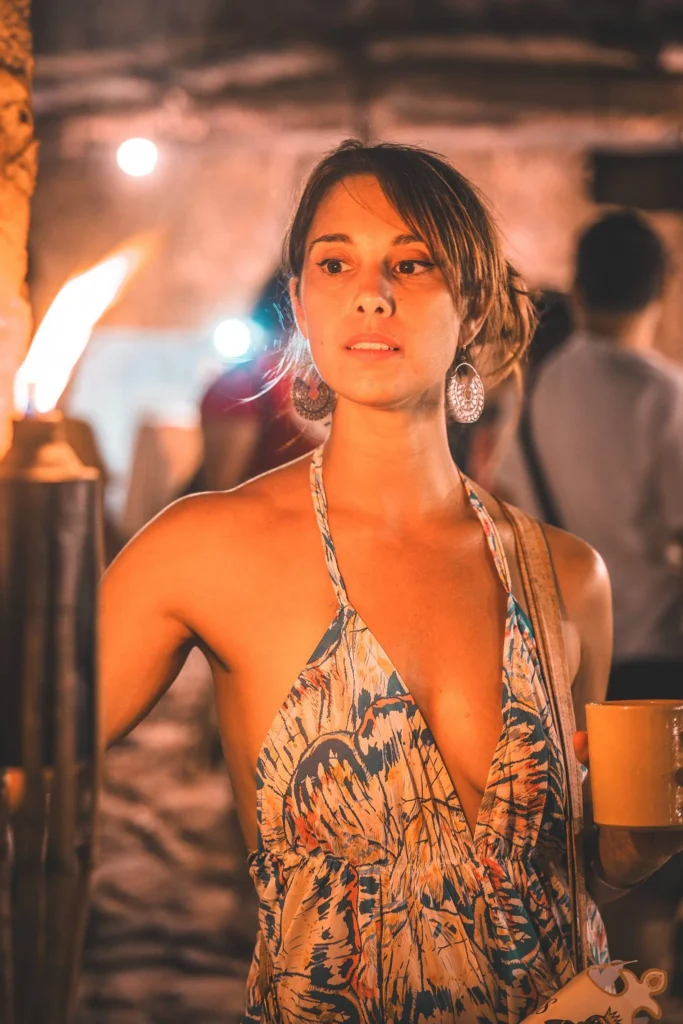
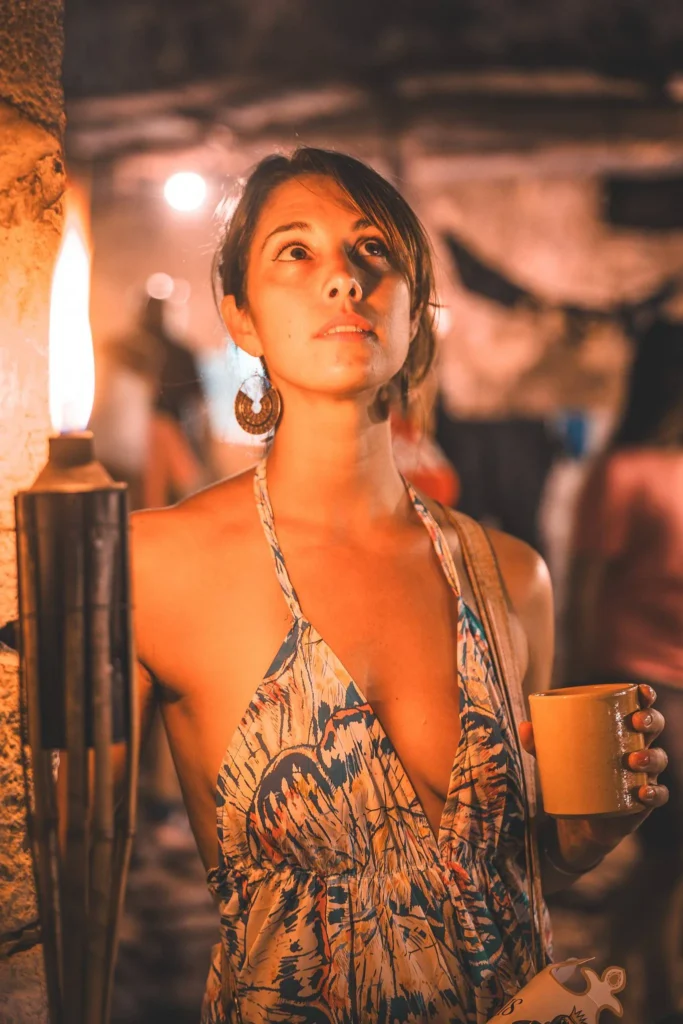
Another thing: expect your hair and your clothes to smell of smoke on the way home. Braziers everywhere, meat on the spit, torches once night falls (magnificent to film, less so to wear). Caroline found it funny in the car, I was mostly thinking about the seats (we do not have the same priorities, it is one of this couple’s recurring themes).
Finally, if you are coming by camper van, we have covered parking, service areas, spots and the rest of the village in our complete guide to Castro Marim by camper van. The festival lasts five days, the village is worth the detour on the other 360 (approximately, I am not going to quibble over a day).
The questions we are asked about the medieval festival of Castro Marim
Is the medieval festival of Castro Marim suitable for children?
Very suitable, it's even one of its strengths. There is a large wooden play area and obstacle course, crank rides, an enclosure with birds of prey, rabbits, chickens, and goats, and many Portuguese families. The atmosphere is calm and there is no visible drunkenness despite the beer stands.
The only downside: after 8 PM, the rides are crowded and you have to wait a long time. If you come for the children, come in the late afternoon.
How much time should you plan to spend on-site?
Count at least three hours to visit the market, the square for shows, the fort, and the castle without rushing. We stayed for an entire evening and we didn't do everything: the games were busy and we gave up on a first visit to the castle because there were so many people.
If you want to see the fort reenactments and the shows in the square and the crafts at the castle, two evenings are more comfortable than one (there is a multi-day pass available).
Is the site accessible by stroller or wheelchair?
Honestly, it's difficult. The village is built on a hill, it's a steep climb between the lower street and the castle, the surface alternates between cobblestones, uneven slabs, and sandy ground, and access to the castle is through a compact line.
A stroller can pass with help. For a wheelchair, it's better to inquire directly with the town hall of Castro Marim before coming: the lower part of the market remains accessible, the castle much less so.
Do you need to speak Portuguese to enjoy it?
No. We heard French, Spanish, Arabic, and Portuguese in the same place, and some of the extras switch from one language to another without any problem.
The historical reenactments of the fort, on the other hand, are performed in Portuguese. We lose the detail of the text but the scene is understood, and it's the only moment when the language really matters.
What outfit to plan for an evening at the end of August?
Closed and comfortable shoes above all: it goes up, it's uneven, and you walk much more than you think. A light layer for the end of the evening, the air cools down once the sun sets over the Guadiana.
And especially mosquito repellent: the elevated area near the Arabic-style tents is infested as soon as night falls. Also avoid clothes you care about, everything smells like barbecue smoke on the way back.
Can you attend the Silves festival and the Castro Marim festival in the same year?
Yes, and it's actually quite easy since they don't overlap. The Medieval Fair of Silves takes place in the first half of August (nine days), the Medieval Days of Castro Marim in the last week (five days), and the two villages are about an hour and a half drive from each other.
They don't tell the same story: Silves highlights its Andalusian past as the capital of the Algarve kingdom, while Castro Marim emphasizes its role as a border fortress and its connection to the military orders.
Can you visit the castle of Castro Marim outside of the festival?
Yes. The castle has been classified as a National Monument since 1910 and is open for visits all year round, with a small museum on the premises and a view that alone is worth the climb: you can see the Guadiana, the salt flats, and Spain across the way.
It's even a good idea to visit it outside of the festival if you want to understand the site: during the Dias Medievais there are so many tents, people, and activities that you can't really see the architecture anymore.
Are there other festivals in Castro Marim throughout the year?
More than one might imagine for a village of this size. The International Snail Festival honors snails with Portuguese, Spanish, French, and Moroccan chefs. The Lucía Festival, created in 2016, pays tribute to Paco de Lucía, whose mother was born in Monte Francisco, in the municipality.
There is also the Almond Blossom Festival during the almond trees' bloom, the Terra de Maio Fair in spring, the Nossa Senhora dos Mártires festivities on August 15th, a monthly market on the second Saturday of the month, and a salt nativity scene, a crib carved from the salt of the salt pans, at Christmas.
PS: I left 2026 with a new glass, a flower crown that was not for me, and the smell of embers in my hair for two days. If you go and you come across the llama, ask him what he is doing there. We gave up.
Portugal, we live here
Two years of full-time van life, and the Algarve as our base ever since. We still hit the road, by van or otherwise, and we write up what we find along the way. An email when we have something to say, no more.
Ce que vous souhaitez recevoir :