


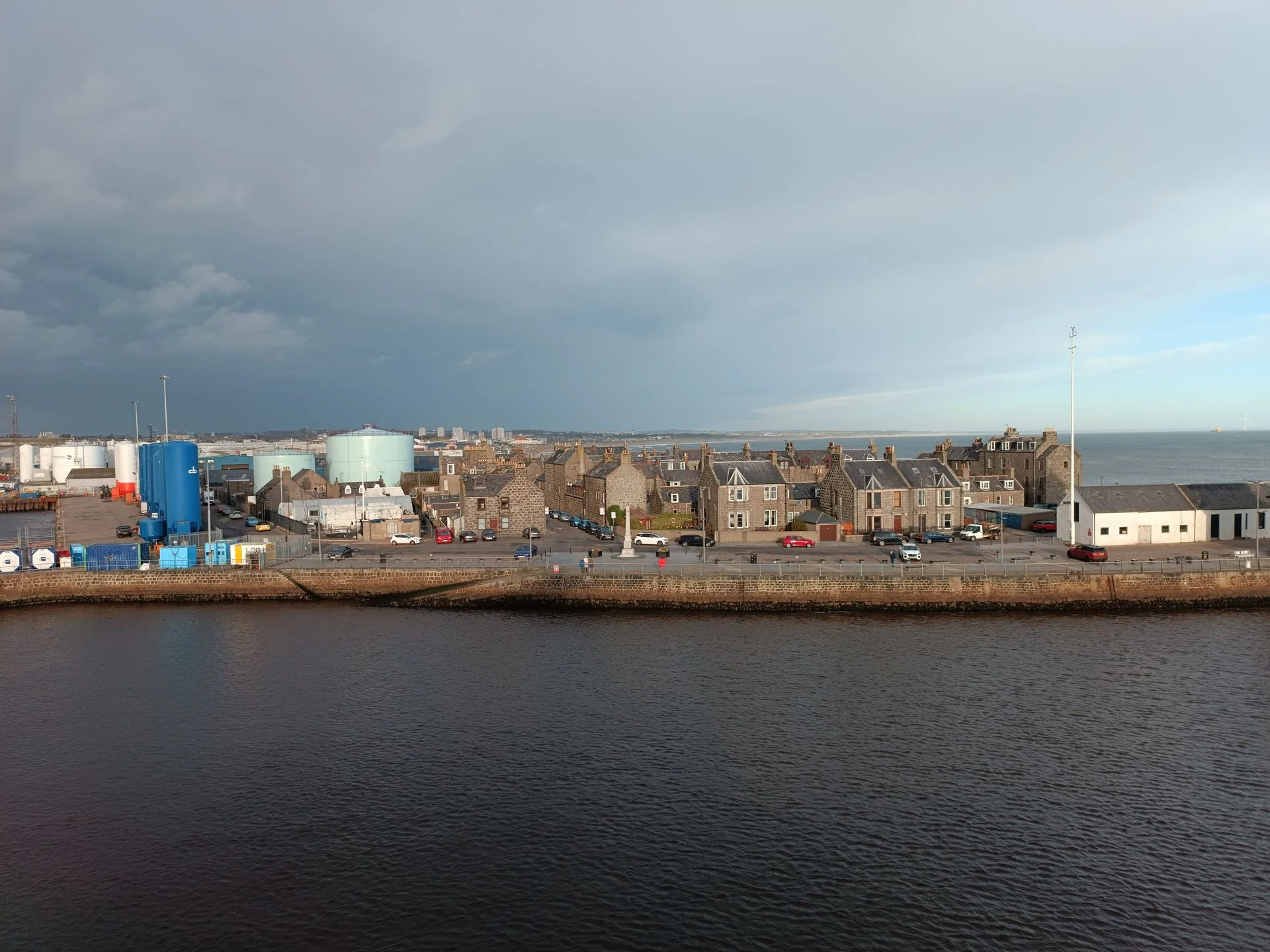
Aberdeen, the third largest city in Scotland, nicknamed the “Granite City” because of its sparkling grey-silver granite buildings that take on golden hues at sunset. The European oil capital (or what remains of it, the sector has taken a few hits in recent years). And above all, a city apart in the Scottish landscape: neither a capital like Edinburgh, nor a Highlands hub like Inverness, rather a North Sea city, dense, urban, a bit rough around the edges, but one that reveals itself without worry.
We went there on a road trip with Édouard, our camper van. Honestly, we passed through quite quickly, we didn’t sleep there. But since we hate guides that pretend to have experienced everything, we will tell you what we did, what we should have done, and everything you need to know to prepare your visit well. Let’s go.
Aberdeen : Places we can tell you about
Here's our selection of places in Aberdeen: spots we've visited that might be useful to you. Use the list view to discover each address in detail, and export everything to add to Google Maps or your favorite GPS app.
| Place | Address | Download |
|---|---|---|
| Saint-Machar Cathedral | Cathédrale Saint-Machar, Scotland | |
| Marischal College | Marischal College, Scotland | |
| Aberdeen Art Gallery | Aberdeen Art Gallery, Scotland | |
| Footdee (Fittie) | Footdee (Fittie), Scotland | |
| Aberdeen Beach | Aberdeen Beach, Scotland | |
| Duthie Park | Duthie Park, Scotland | |
| Dunnottar Castle | Château de Dunnottar, Scotland | |
| Stonehaven | Stonehaven, Scotland |
Aberdeen : a glimpse of the weather
5-day forecast
Planning an unexpected departure? Check out the weekly weather before packing your bags.
Monthly climate
Weather-wise, our heart leans towards bright sunshine. That said, you might have different criteria for choosing when to visit.
| Month | Min temp | Max temp | Rain | Weather | Rating |
|---|---|---|---|---|---|
| October | 8°C | 13°C | 124 mm | 🌧️ | |
| November | 4°C | 9°C | 99 mm | 🌦️ | |
| December | 4°C | 8°C | 77 mm | 🌦️ | |
| January | 2°C | 5°C | 184 mm | 🌧️ | |
| February | 3°C | 7°C | 116 mm | 🌧️ | |
| March | 4°C | 10°C | 31 mm | ☀️ | |
| April | 5°C | 10°C | 86 mm | 🌦️ | |
| May | 7°C | 13°C | 78 mm | 🌧️ | |
| June | 11°C | 17°C | 89 mm | 🌧️ | |
| July | 12°C | 18°C | 101 mm | 🌦️ | |
| August | 12°C | 17°C | 75 mm | 🌧️ | |
| September | 11°C | 17°C | 85 mm | 🌦️ |
Quota RapidAPI dépassé (limite par minute/mois). Réessayez plus tard.
Aberdeen on a road trip: the Granite City facing the North Sea
A little identity card: Aberdeen has about 200,000 inhabitants (that’s quite a city), located on the northeast coast of Scotland facing the North Sea, halfway between Edinburgh (112 miles south) and Inverness (106 miles northwest). Three elements define the city:
- The granite. Almost the entire center is built from local granite extracted in the 19th century. It is this stone that gives Aberdeen its unique sparkling appearance in Europe (yes, sparkling, it shines in the sun thanks to the mica flakes in the granite).
- The university. Founded in 1495, one of the oldest in the UK (5th). It carries historical and cultural weight.
- The oil. Since the 70s and the discovery of North Sea deposits, Aberdeen has become the European capital of the sector. Today it is declining, but the economic footprint remains.
To get there from Inverness, it’s 2h30 via the A96 (open road, gentle landscapes). From Edinburgh, expect 3h via the A90 (fast motorway) or the more picturesque coastal A92 (4h, but you pass through Stonehaven and Dunnottar, and that’s a whole different level).
Plan your trip to Aberdeen
Compare rental companies and book at the best price.
Booked on Trip.com — partner link.
Provided by Holafly, our partner.
5% off with code LAPLANETEDECARO
Booked on Holafly — partner link.

We're Caroline and Xavier
We drive to a place, stay long enough to get it wrong a few times, then write the guide we wish we'd had: parking, timing, what's worth the detour.
Ce que vous souhaitez recevoir :
Old Aberdeen and St. Machar’s Cathedral: the neighborhood you wouldn’t suspect
Let’s start with what is probably the most beautiful neighborhood in the city and one that most tourists miss: Old Aberdeen. This is the old medieval town, which was independent from Aberdeen until the 19th century, and has retained a timeless charm. Cobblestones, alleys, light granite buildings, a university atmosphere (because this is where the historic university, King’s College, is located).
The highlight is the St. Machar’s Cathedral. A little detail that impresses in company: it is the oldest granite cathedral in the world. Foundations laid in the 12th century, current structure dated 1520. Two unique sandstone spires above the west portal. Inside, an extraordinary painted ceiling (heraldry of the kings of Europe), and according to legend, a part of the body of William Wallace (the independence hero) is said to be buried in one of the walls. True or false, we may never know, but the anecdote is worth the detour.
Right next door, stroll through King’s College, the historic campus of the University of Aberdeen. Perfectly preserved medieval architecture, chapel with typical crowned vault (rare in the UK). And it’s free to visit, which is a bonus.
Count 2-3 hours to fully enjoy Old Aberdeen. This is probably when the city convinced us the most.
The city center and Marischal College: monumental architecture and free museums
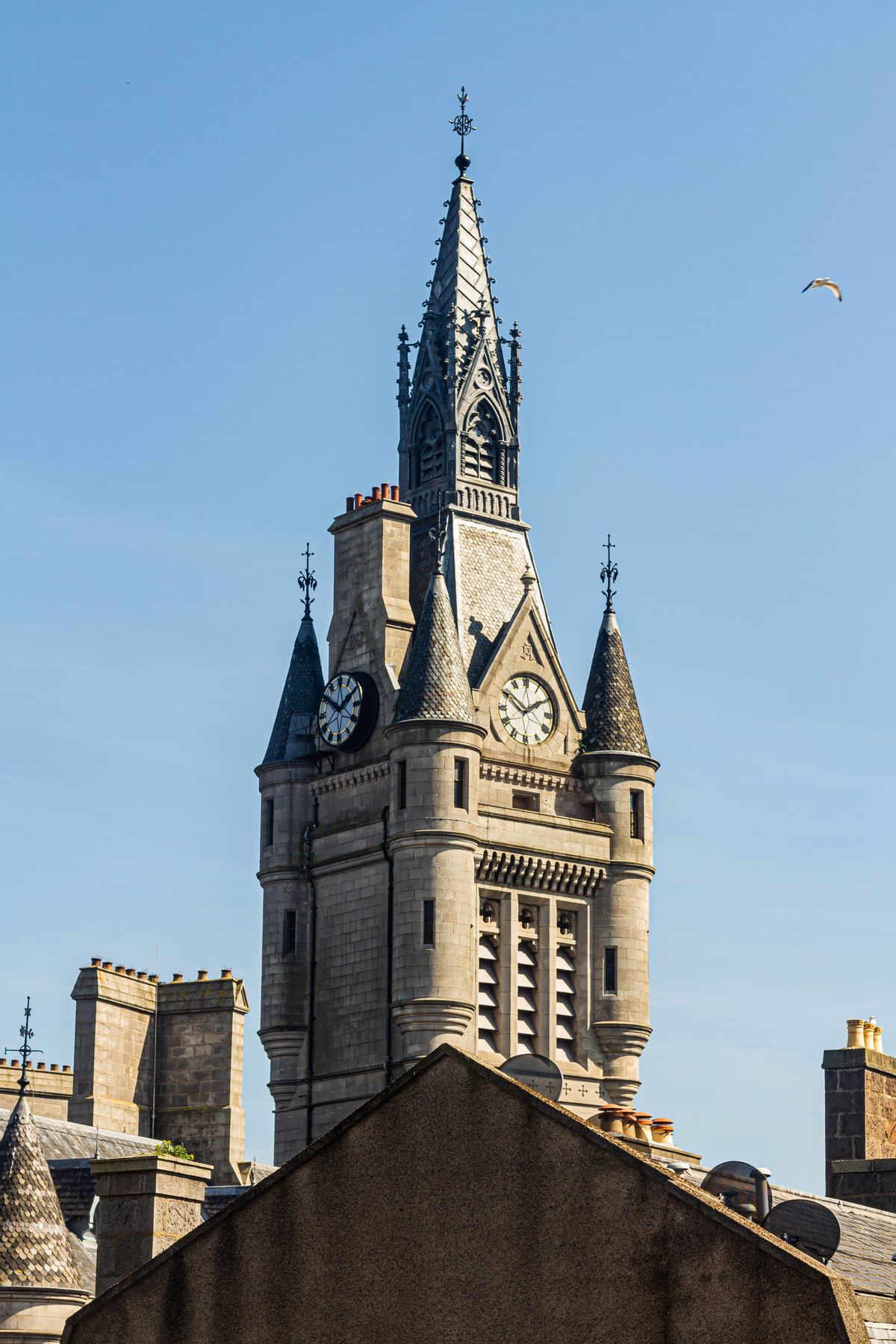
Alright, let’s head down to the center of Aberdeen. The absolute must-see is Marischal College. Built from white granite (a different granite from the rest of the city, lighter), it is the second largest granite building in the world, just behind the Escorial in Spain. And honestly, when you arrive in front of it, you get a visual shock. Gothic facade, immense, white, almost unreal. Today the building houses the city council (so limited access inside), but the facade viewed from the street is more than enough.
Good news for tight budgets: most museums in Aberdeen are free. Notably:
- Aberdeen Art Gallery. Recently renovated (reopened in 2019, I won’t say more), collection ranging from the 15th century to contemporary, quality temporary exhibitions. Really good.
- Aberdeen Maritime Museum. The city’s history related to the sea, fishing, oil. Well done and accessible.
- Provost Skene’s House. 16th-century historic house in the heart of the city, one of the oldest inhabited houses in Aberdeen.
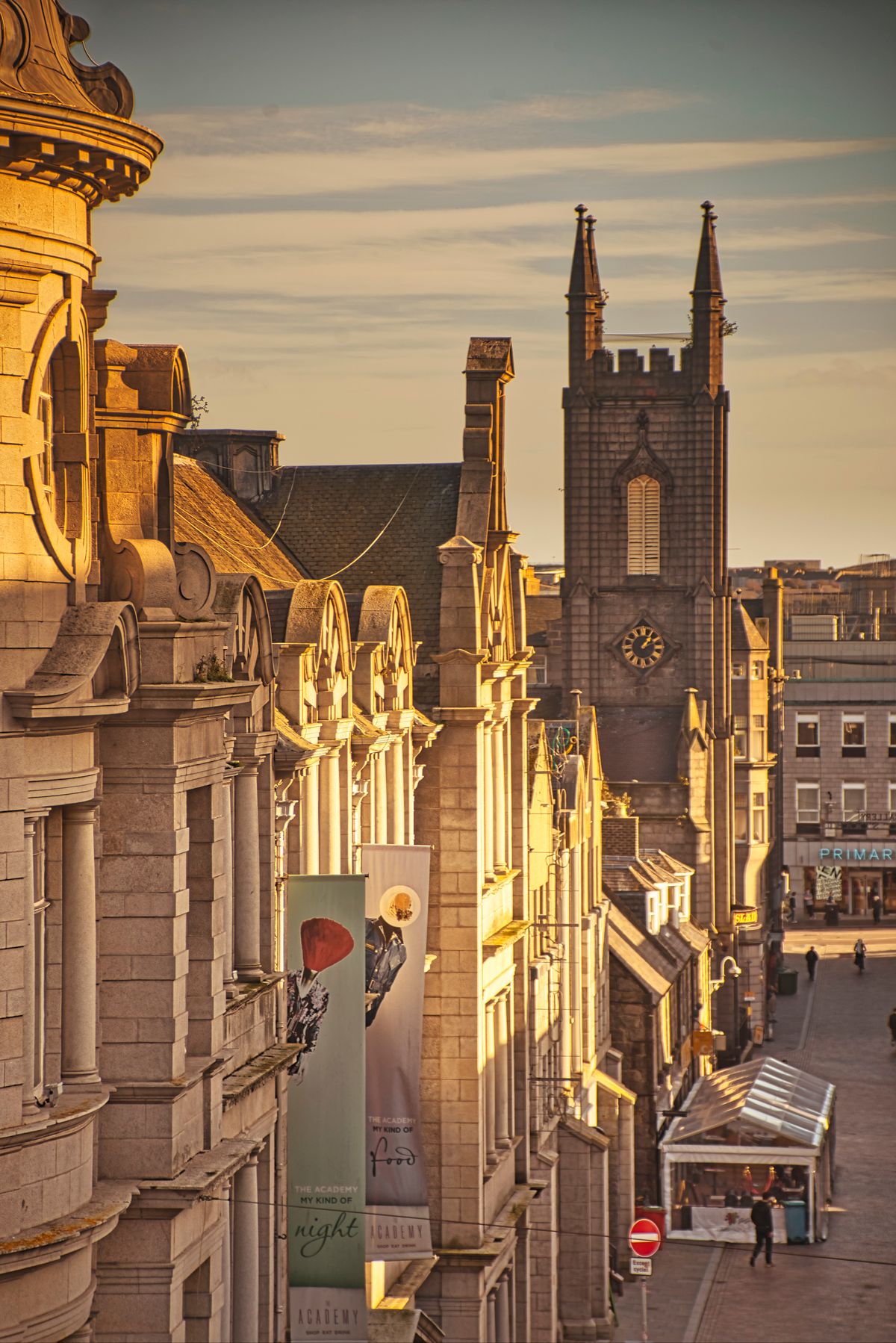
If you have time, take a detour to Union Street, the main avenue (1.3 miles long, completely granite). It was once one of the most beautiful avenues in Europe (yes, yes), today it has aged a bit (closed shops, facades that could use a clean), but it remains impressive.
Footdee and Aberdeen Beach: the fishing village and the urban beach
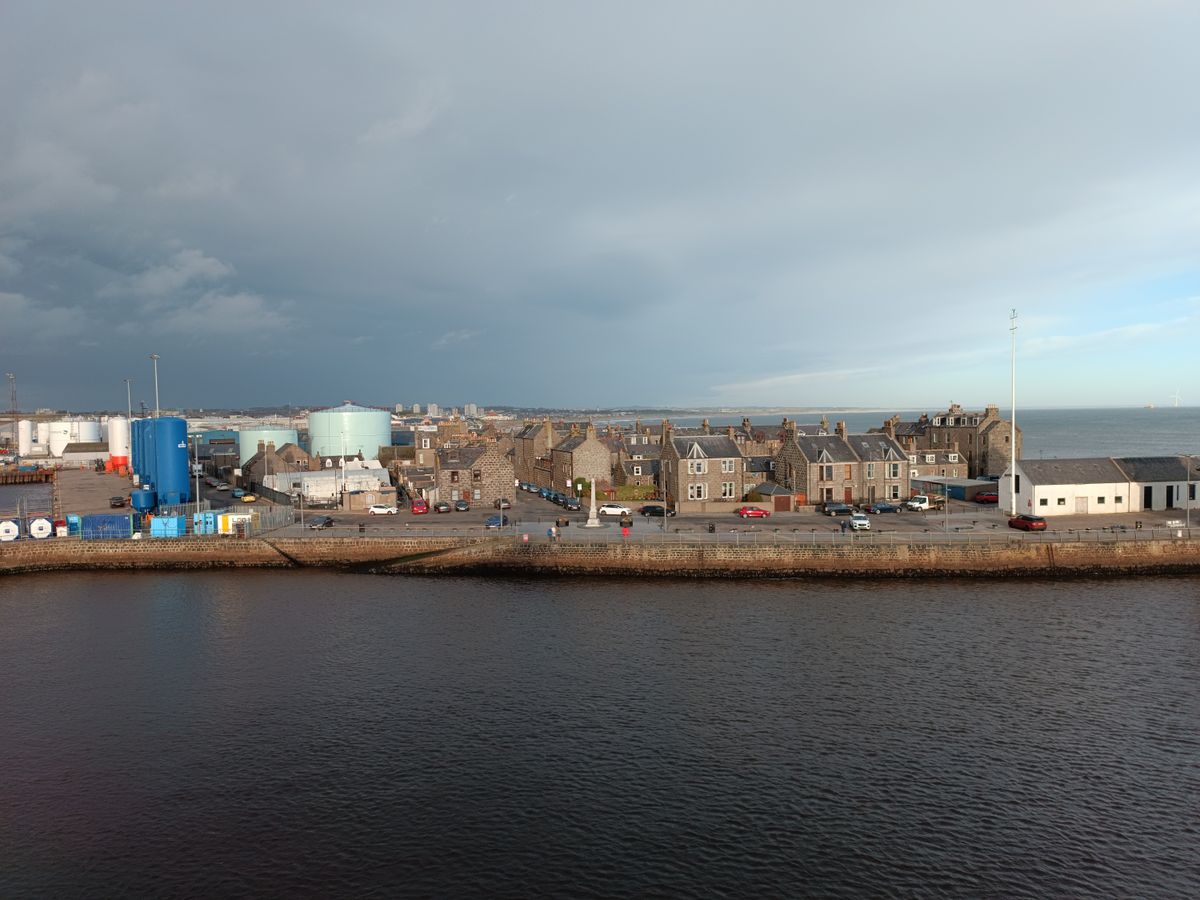
Let’s go see something we really loved and saved for the end of the tour. Footdee, pronounced “Fittie” by the locals, is a fishing village built in 1808 at the eastern end of Aberdeen’s port. The thing is, the cottages (about fifty small colorful houses) are arranged in a circle, around communal courtyards, as if the whole village was huddling together to face the storms.
Today, the fishermen have given way to residents who have renovated the cottages with great care (decorated sheds, flower gardens, colorful paintings). The result: a timeless neighborhood that resembles a mini artist village, ultra-photogenic, yet authentic (people really live there, we’re not in Saint-Paul-de-Vence). Count 30 minutes to tour around. We stayed longer because we couldn’t bring ourselves to leave.
Right next door, stroll along the Promenade to Aberdeen Beach. It’s a long sandy beach (2 miles!), urban, facing the North Sea. The advantage: accessible on foot from the center. The downside: the North Sea is cold. Very cold. We saw swimmers in the middle of summer, they were probably Scottish and acclimatized. We just dipped our toes in the water, that was quite enough.

Best UK SIM for a Scotland Road Trip: Highlands, Skye and NC500 Coverage
What internet connection to use during a stay in Scotland? Often questioned by travelers, we explored the various options available in Scotland in this comprehensive article. As always, each solution...
DiscoverMust-see excursion: Dunnottar Castle and Stonehaven
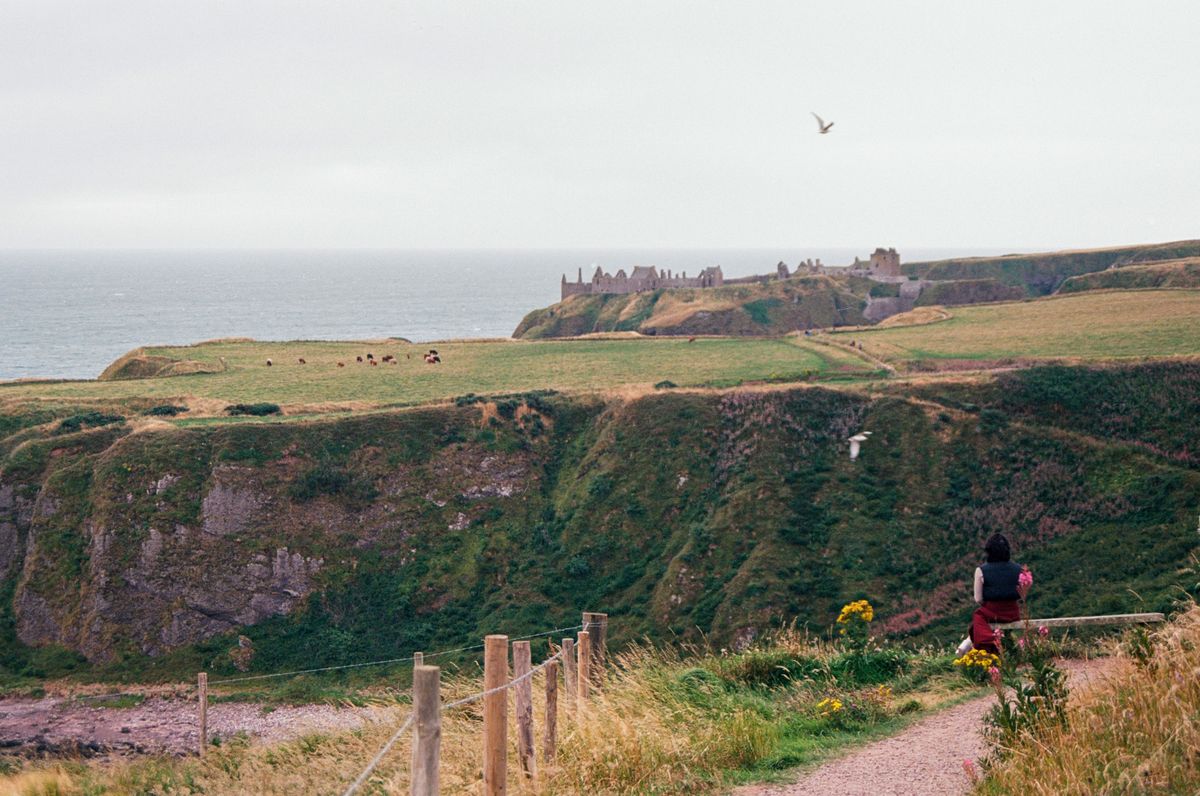
On that note, if you have just half a day more in the area, rush to Dunnottar, 19 miles south of Aberdeen. It is honestly one of the most spectacular sites in Scotland. A ruined fortress perched on a 440-million-year-old red sandstone cliff, isolated from the coast by a narrow neck of land, facing the North Sea that crashes against the rocks below. The kind of place where you feel tiny, and where you understand why this site hosted for centuries the powers that wanted to control the east coast.
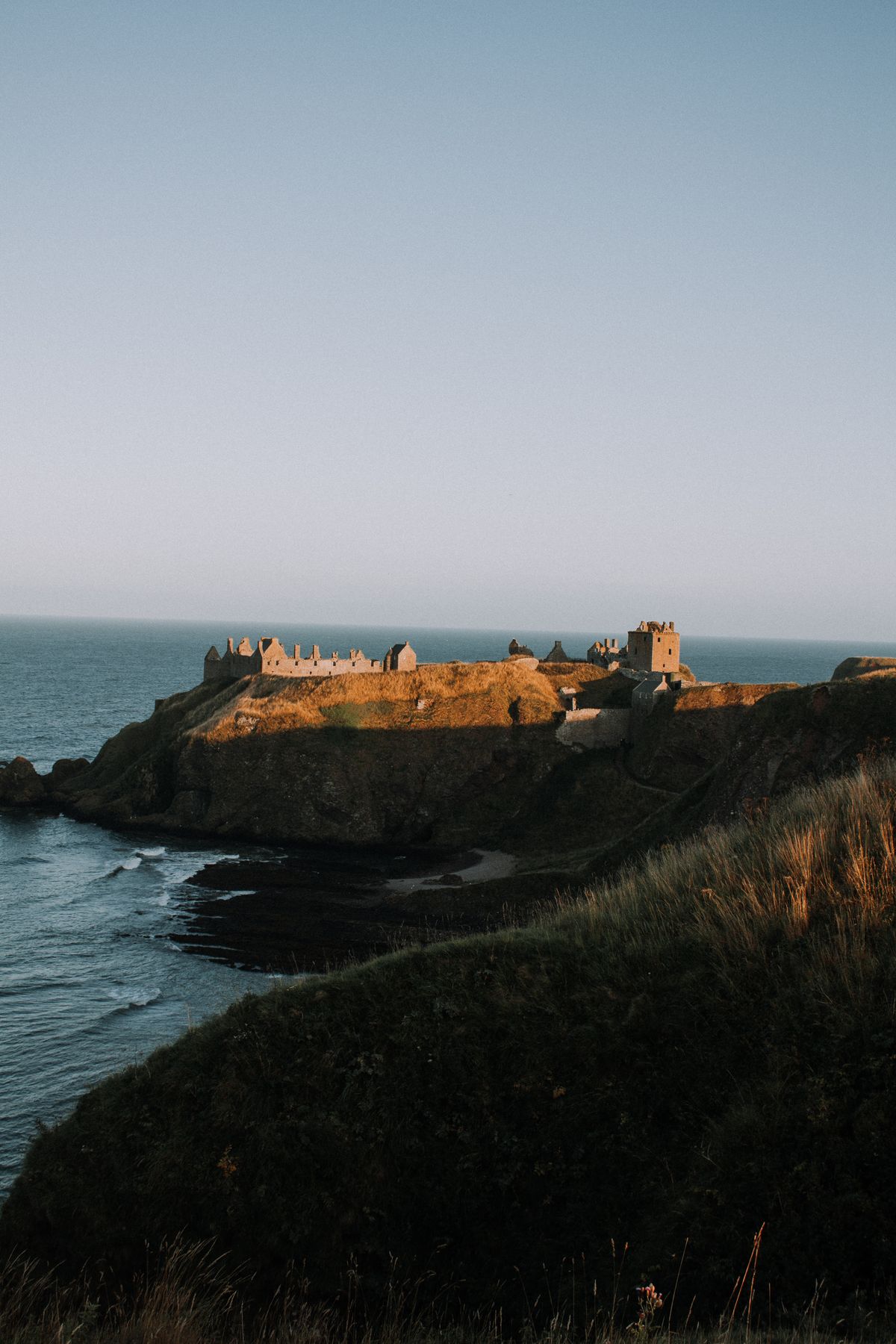
The site has been historically significant: in 1652, it was here that the Scottish Crown Jewels (crown, scepter, sword) were hidden to escape Cromwell, then buried under a nearby church while the castle was under siege. Later, it was bombed, partially burned, and ultimately abandoned in the 18th century. Today what remains are 11 ruined structures (the kitchens, the dungeon, the chapel, the guardroom) scattered across the promontory.
Entrance ticket about £9 per adult. Count 2 to 3 hours on site to fully enjoy (down and up via steep stairs, be careful if you have vertigo or a stroller). We also direct you to our dedicated guide Stonehaven + Dunnottar that details all this.
Also take the opportunity of your visit to stop by Stonehaven next door, a picturesque fishing port where it’s nice to eat fish & chips. The restaurant “The Bay” is notoriously among the best fish & chips in Scotland, we hear nothing but good feedback about it.
Where to sleep in a camper van in Aberdeen and around
Alright, let’s tackle the logistics part. Aberdeen is really not the most camper van friendly city in Scotland, let’s be clear. No municipal site, few suitable parking spaces in the center, and the “wild camping” option is to be forgotten in urban areas. But a few solutions exist:
Day parking for visiting:
- Aberdeen Beach Esplanade: parking along the beach, allows camper vans during the day, free or very cheap depending on the area. Convenient for visiting Footdee on foot afterward.
- Park & Ride (several on the outskirts): park there and take the bus to the center. Economical and stress-free.
Night:
- Deeside Holiday Park (5 miles west of Aberdeen): organized camping, full services, about £30-35 per night. The closest to the center.
- Hillhead Caravan Park (30 min south): decent option, quieter, similar rates.
- If you also plan to do Dunnottar, sleep in Stonehaven (Queen Elizabeth Park, more tolerant spots).
Practical tips: weather, restaurants, and eSIM connection
Let’s finish with practical information, because that’s what makes the difference between a well-prepared stay and a botched one.
Weather: Aberdeen has a slightly drier climate than the west of the Highlands, thanks to its east coast position that protects it from Atlantic fronts. In summer, temperatures range from 12 to 17°C during the day, long days (the sun sets just before 10 pm in June-July). Rain is present but less frequent than in Inverness or Skye. A good point for vanlifers who need to dry out condensation.
Restaurants:
- We had an Italian. For the record, in Scotland we went from one Italian to another, it became a running gag of the stay. Each time we ate well, who knows why. In Aberdeen too, then.
- Didn’t try the smoked haddock from Aberdeen, the famous “Finnan haddie” which is a local specialty (smoked haddock with wood, cream sauce). We regret it, we promise to do it next time.
- Brewdog Headquarters Ellon: 16 miles north of Aberdeen, the world-renowned craft brewery (yes, that’s where it comes from). Tour of the facilities + restaurant on site. For beer lovers, really a detour worth taking.
Current budget:
- Dinner for two in a decent restaurant: £45-55.
- Fish & chips to take away: £15-18.
- Pint of beer in a pub: £5-6.
- Organized camping: £30-35 per night.
- Museum ticket: free for most (Aberdeen Art Gallery, Maritime Museum). Dunnottar ticket: £9.
eSIM connection or local SIM: EU operators no longer cover the UK in European roaming since Brexit (it’s in the “world” pricing zone, ouch). Quick solution: eSIM Holafly with unlimited plan covering the UK before departure, or local SIM from Vodafone / EE / Three upon arrival. We refer you to our dedicated guide for details.
FAQ Aberdeen on a road trip
What to see in Aberdeen in one day?
Where to park a camper van in Aberdeen?
Should you visit Aberdeen or go straight to Dunnottar Castle?
Is Aberdeen suitable for campervans?
When to visit Aberdeen?
Is Aberdeen expensive?
PS: if someone is reading who has tasted the Finnan haddie in Aberdeen, we welcome all your feedback, we have a gap to fill.
After Scotland, we keep going
Two years of full-time van life, and the Algarve as our base ever since. We still hit the road, by van or otherwise, and we write up what we find along the way. An email when we have something to say, no more.
Ce que vous souhaitez recevoir :