


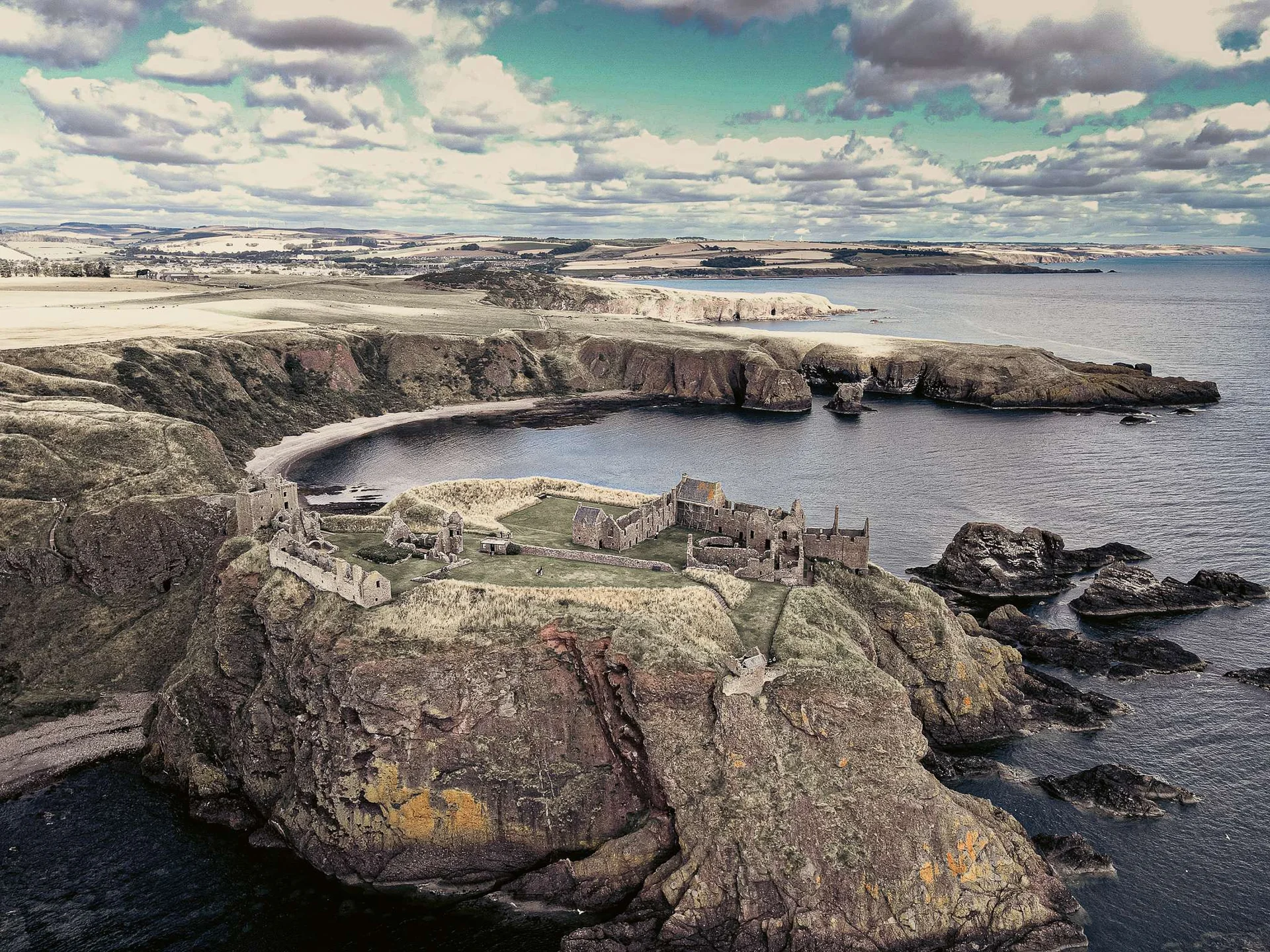
Video of our visit to Stonehaven and Dunnottar
We filmed a dedicated video for this Dunnottar day. You’ll see the road up from Arbroath, Édouard’s struggle when he stalled just before the car park (the beginning of a vanlife saga that we’ll come back to below), the stairs, and the castle ruins with that frankly ridiculous view over the North Sea.
Plan your trip: United Kingdom
Tours, tickets and day trips in London.
5% off with code PLANETEDECAROT
Booked on Trip.com — partner link.
Compare rental companies and book at the best price.
10% off with code PLANETECAROLOC
Booked on Trip.com — partner link.
Provided by Holafly, our partner.
5% off with code LAPLANETEDECARO
Booked on Holafly — partner link.
Stonehaven and Dunnottar: why this stop changes everything
Well, let’s be honest, we don’t have a huge memory of the town of Stonehaven itself. A pleasant coastal town, a harbour with a few boats, a volunteer-run local museum (the Tolbooth Museum), an Art Deco heated seawater pool (the Open Air Pool, running since 1934)… it does the job, but it doesn’t have the magnetism of Arbroath or the scale of Edinburgh.
What makes this stop essential is Dunnottar Castle, 2 miles south of the town centre. A ruined fortress perched on a rocky outcrop above the North Sea, in a setting that is genuinely spectacular. If you’re road-tripping the east coast from Edinburgh, Stirling, St Andrews or Arbroath, this is the stop likely to leave you with the photos you’ll still be talking about afterwards. We’ll tell you all about it below.
How to get to Stonehaven and Dunnottar
Stonehaven sits on the east coast of Scotland, 15 miles south of Aberdeen and 50 miles north-east of Dundee. Dunnottar Castle is 2 miles south of the centre of Stonehaven.
When to visit Stonehaven in a van
Aberdeenshire : a glimpse of the weather
5-day forecast
Planning an unexpected departure? Check out the weekly weather before packing your bags.
Monthly climate
Weather-wise, our heart leans towards bright sunshine. That said, you might have different criteria for choosing when to visit.
| Month | Min temp | Max temp | Rain | Weather | Rating |
|---|---|---|---|---|---|
| October | 8°C | 14°C | 150 mm | 🌧️ | |
| November | 4°C | 9°C | 93 mm | 🌧️ | |
| December | 4°C | 8°C | 93 mm | 🌦️ | |
| January | 2°C | 5°C | 215 mm | 🌧️ | |
| February | 3°C | 7°C | 137 mm | 🌧️ | |
| March | 3°C | 11°C | 40 mm | 🌦️ | |
| April | 4°C | 11°C | 69 mm | 🌧️ | |
| May | 7°C | 14°C | 70 mm | 🌧️ | |
| June | 10°C | 17°C | 104 mm | 🌧️ | |
| July | 11°C | 20°C | 62 mm | 🌦️ | |
| August | 12°C | 18°C | 86 mm | 🌧️ | |
| September | 10°C | 17°C | 106 mm | 🌦️ |
Temperate oceanic climate, very similar to Arbroath or Aberdeen. Average temperatures: 5°C in January, 16°C in July. May to September remains the best period for vanlife, with a sweet spot in July and August for the weather, though the castle is busier then.
Where to sleep in a van and camper at Stonehaven
No interactive map in this article yet (we’ll add one in a future update), but here are the concrete options we tested or spotted on site.
All these spots, the castle, the harbour restaurants and the coastal path are pinned on the map below. Tap a marker for the address and the details.
Aberdeenshire : Places we can tell you about
Here's our selection of places in Aberdeenshire: spots we've visited that might be useful to you. Use the list view to discover each address in detail, and export everything to add to Google Maps or your favorite GPS app.
| Place | Address | Download |
|---|---|---|
| Parking Queen Elizabeth Park | Braeside Crescent, Stonehaven, Scotland |
| Place | Address | Download |
|---|---|---|
| Catterline | Catterline, Aberdeenshire, Scotland |
| Place | Address | Download |
|---|---|---|
| Dunnottar Castle | A92, Stonehaven, Scotland |
| Place | Address | Download |
|---|---|---|
| Tolbooth Museum | Old Pier, Stonehaven, Scotland |
| Place | Address | Download |
|---|---|---|
| The Tolbooth Restaurant | Old Pier, Stonehaven, Scotland | |
| Carron Fish Bar | 1 Allardice Street, Stonehaven, Scotland | |
| The Marine Hotel | 8 Shorehead, Stonehaven, Scotland | |
| The Bay Fish and Chips | Beach Road, Stonehaven, Scotland |
| Place | Address | Download |
|---|---|---|
| Stonehaven Open Air Pool | The Links, Stonehaven, Scotland | |
| Stonehaven to Dunnottar Coastal Path | From the south end of the harbour, Stonehaven, Scotland |

We're Caroline and Xavier
We drive to a place, stay long enough to get it wrong a few times, then write the guide we wish we'd had: parking, timing, what's worth the detour.
Ce que vous souhaitez recevoir :
Mobile coverage around Stonehaven
Stonehaven itself has solid mobile coverage, with 4G widely available and 5G in parts of town depending on your operator. Once you head farther into rural Aberdeenshire, and even more so if you’re continuing into the Highlands or islands, signal can become patchy quite quickly. If you’re planning to roam beyond the town, it’s worth checking your provider’s coverage map before you set off. If you’re visiting from outside the UK or EU, see our dedicated guide below.

Best UK SIM for a Scotland Road Trip: Highlands, Skye and NC500 Coverage
What internet connection to use during a stay in Scotland? Often questioned by travelers, we explored the various options available in Scotland in this comprehensive article. As always, each solution...
Read moreDunnottar Castle: what you need to know before visiting
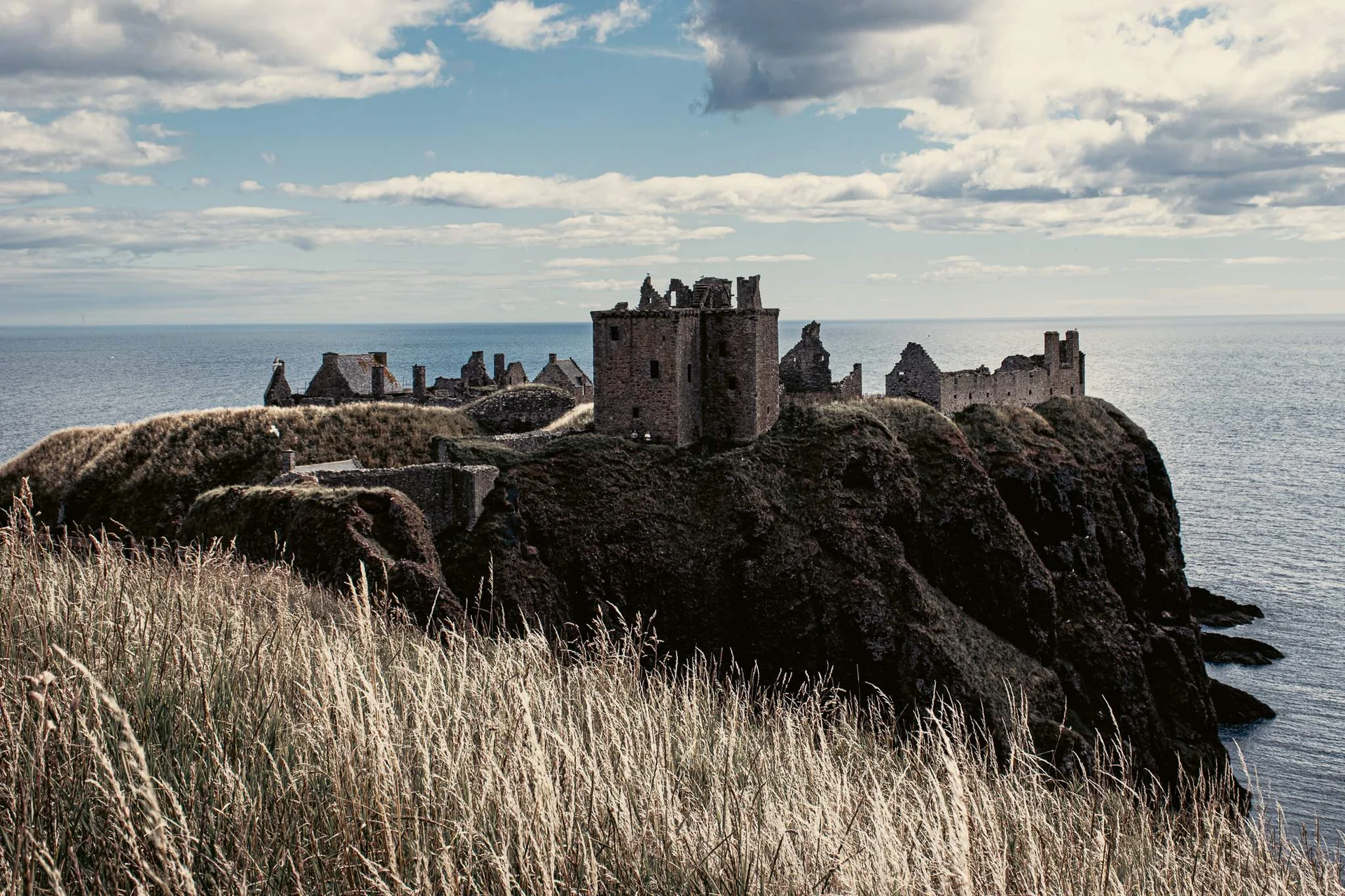
It’s the attraction that justifies the diversion. You’ll find a ruined fortress perched on a rocky spur 50 metres above the North Sea, separated from the mainland by a narrow strip of land. Historically, it’s one of the most visited medieval sites in Scotland, set on a red sandstone cliff more than 440 million years old.
Strategic position and brief history
The rock has been inhabited since the Neolithic period. A Pictish chapel stood here in the 6th century, followed by a medieval castle in the 13th. The fortress made it possible to monitor both sea traffic offshore and movements inland. When you climb the ramparts, you understand the logic immediately: 360° visibility, and no easy way to approach unnoticed.
The most famous episode came during the Anglo-Scottish wars under Oliver Cromwell in 1651-1652, when the Scottish Crown Jewels (the crown, sword and sceptre, gifted by the Pope in the 16th century) were hidden here. Cromwell besieged the castle for 8 months, but when it finally fell, the jewels had already been smuggled out by women from the garrison and hidden in a nearby church, Kinneff Old Church, which you can still visit. They are now displayed at Edinburgh Castle.
Access and physical difficulty
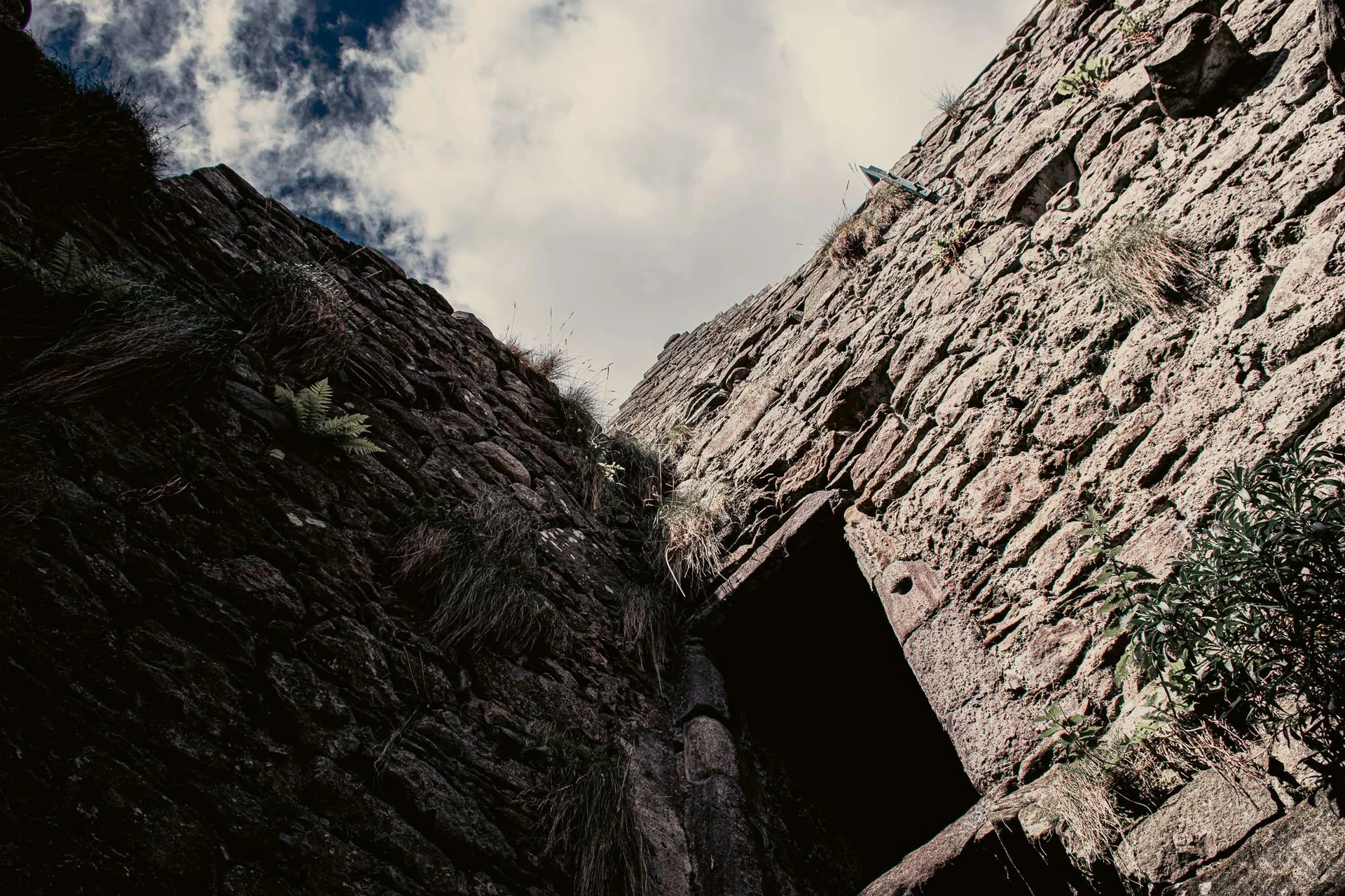
Let’s be clear: you earn the access. From the car park above the site, the path drops down a series of fairly steep stone steps, skirts the rock, then climbs again by another set of steps to reach the castle grounds. Allow 10 to 15 minutes for the descent, then the same again on the way back up, with properly heavy legs by the end.
11 structures to explore at the top
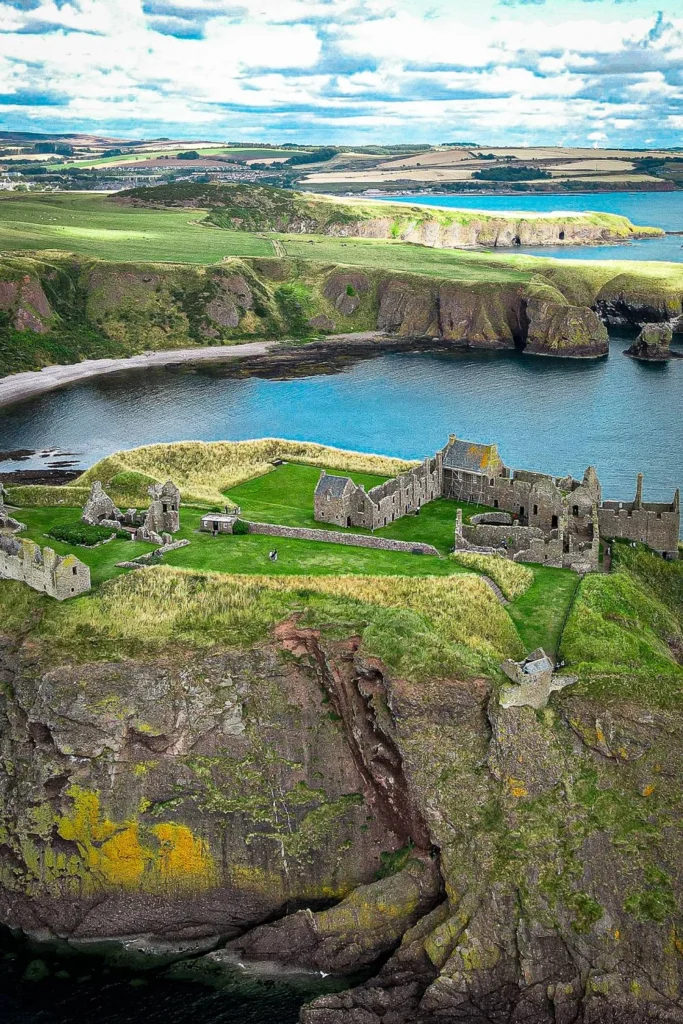
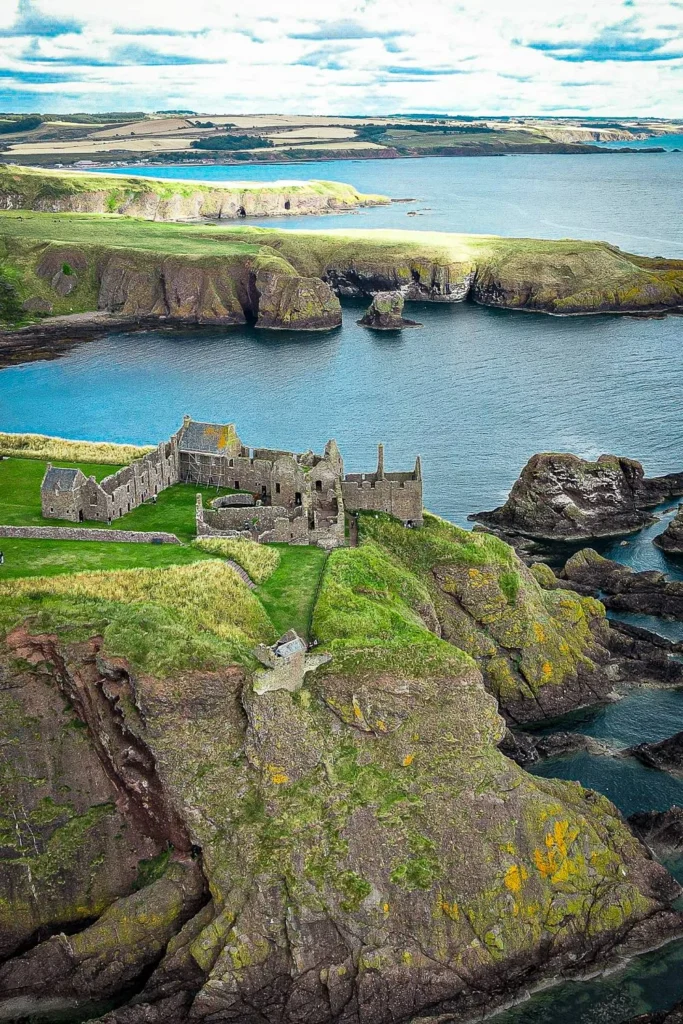
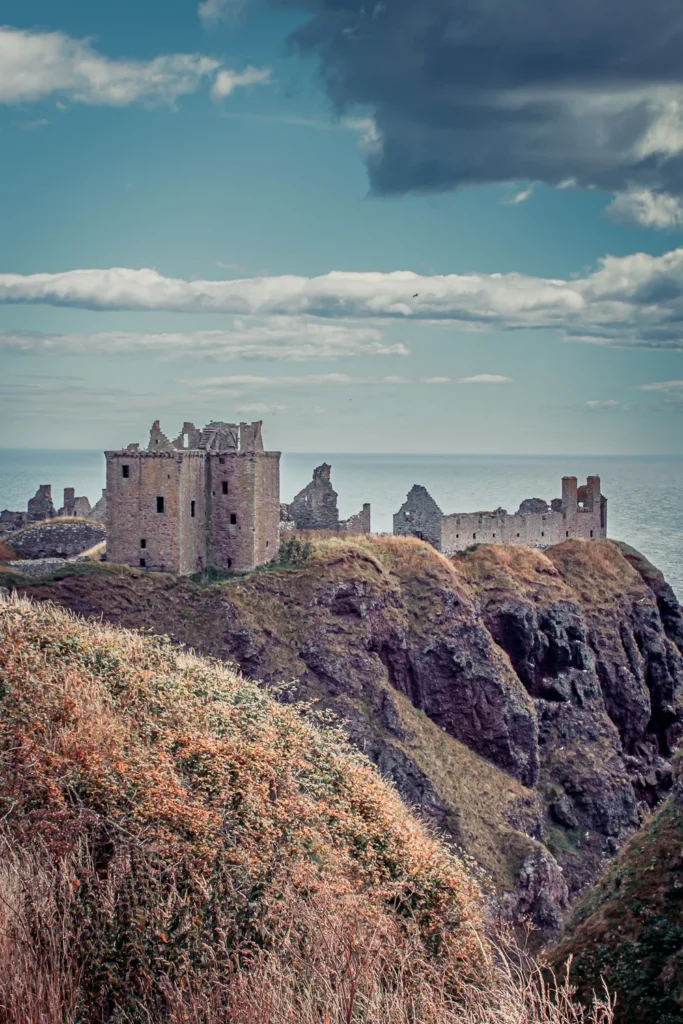
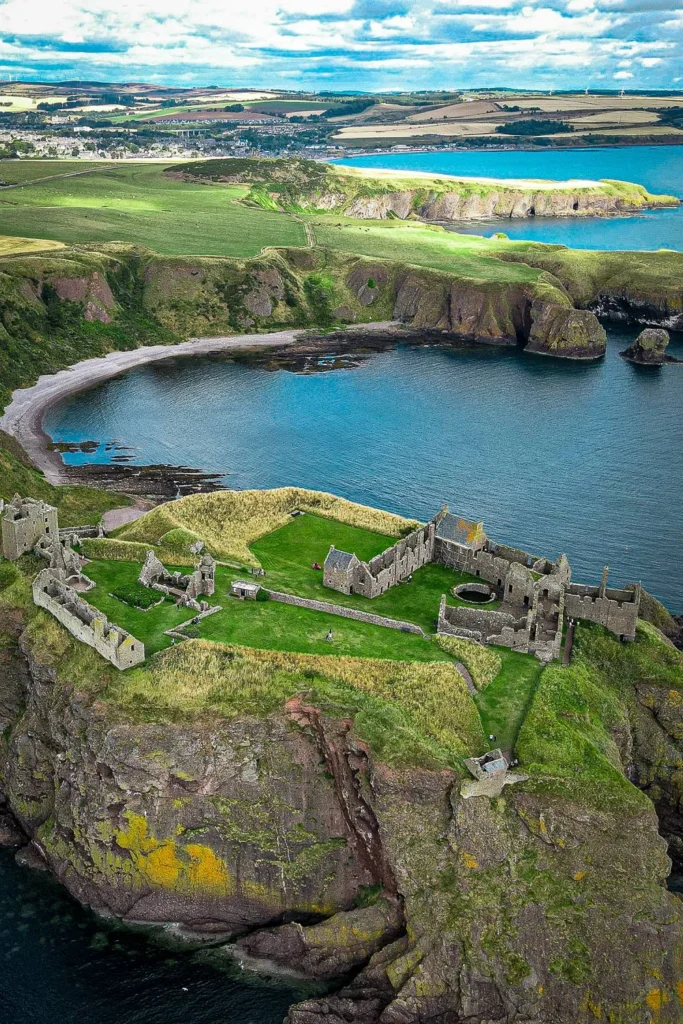
Once inside the grounds, you discover 11 ruined structures to explore, each with its own story and explanatory panel. You pass by:
– The old kitchens with the bread oven positions still visible.
– The guard post which was used to watch for invasions from the sea (including French ships in the 18th century).
– The keep and towers with surprisingly generous spaces and a particularly striking sea view.
– The chapel with the graves of former inhabitants.
– The stables, the living quarters, and several rooms that probably served as storage areas.

Prices and hours
Your membership card will not get you in here, and that catches people out. Dunnottar is owned and run by Dunecht Estates, so it sits outside Historic Environment Scotland and outside the National Trust for Scotland. Historic Scotland membership, the Explorer Pass, the English Heritage reciprocal deal, none of it works at this gate. You pay like everybody else, and it is card only. Worth knowing if you have built a week around a membership, because the rest of this coast is full of HES sites where it does work.
Opening is 09:00 to 18:00 from April to September, last entry 17:00, and from 10:00 in winter with the closing time sliding earlier as the light goes. It shuts when the wind gets up, which is not a rare event on that headland, so check their page the morning you go rather than the week before.
Entry fee: £9.50 adult, £4.50 child (5-15 years), free for under-5s, roughly £22-25 for a family. The site is managed by a private foundation (not Historic Environment Scotland), so National Trust for Scotland membership does not apply here. You can buy tickets on site or online. Opening hours: April-September 9am-6pm, October-March 10am-3pm. Closed in stormy weather, so check conditions before you start the descent.
Seals and wildlife below
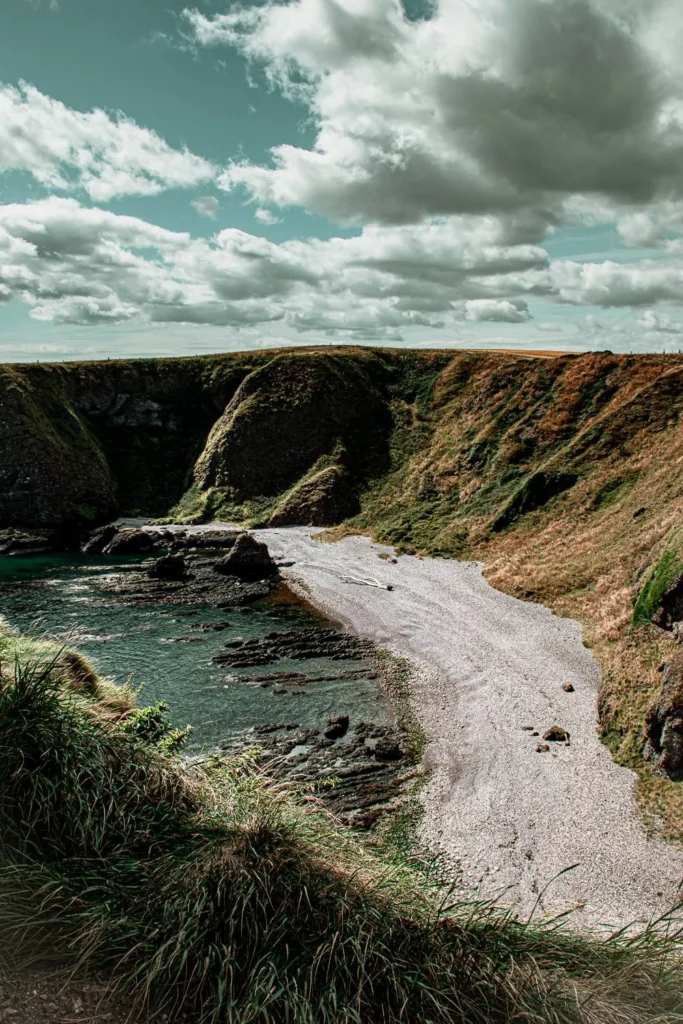
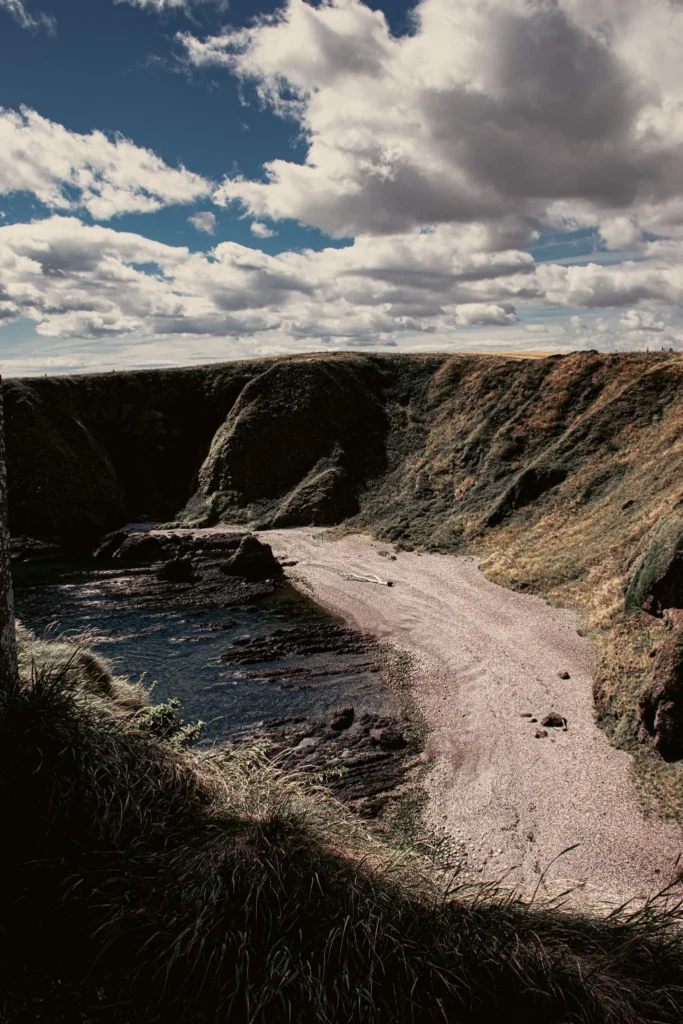
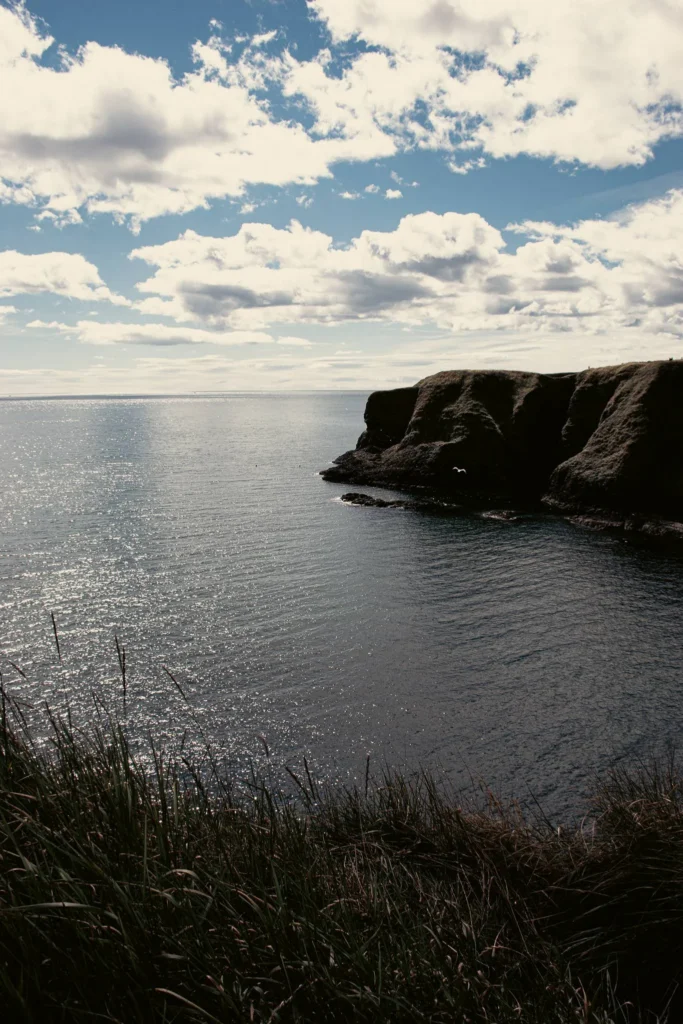
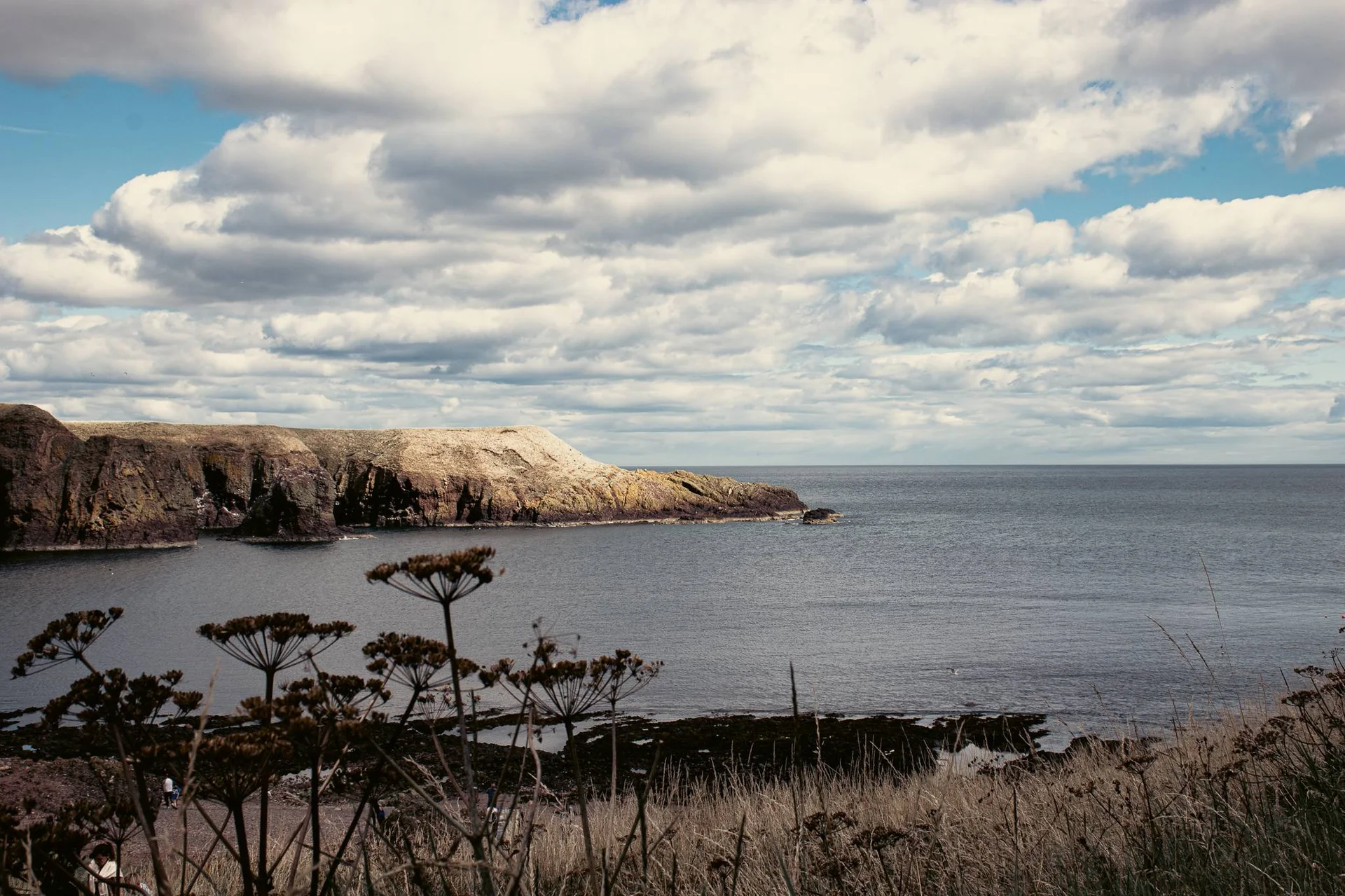
The site is also an important wildlife reserve. At low tide, you can often spot seals stretched out on the little pebble beach right below the cliffs (binoculars help). The sky and the rock faces are also home to huge numbers of seabirds, including gannets, fulmars, guillemots and kittiwakes, and their calls carry all around the fortress. Best viewing is from May to July during the nesting season.
What to see in Stonehaven outside the castle
The town itself is worth a detour, if only to understand why Dunnottar is so tied to its history. Here are 5 things we did or spotted on site.
1. The Tolbooth Museum on the harbor
A small free museum inside the Tolbooth, a 16th-century building that served both as a customs house and a prison (local smugglers waited for trial here). Run by volunteers and open from May to October, it tells the story of Stonehaven through fishing, the jute trade, 18th-century smugglers and the Fireballs Festival. Slightly dated in presentation, yes, but touching because of the volunteer effort, and genuinely useful for understanding the town’s character.
2. The Open Air Pool: swimming in sea water heated to 28°C
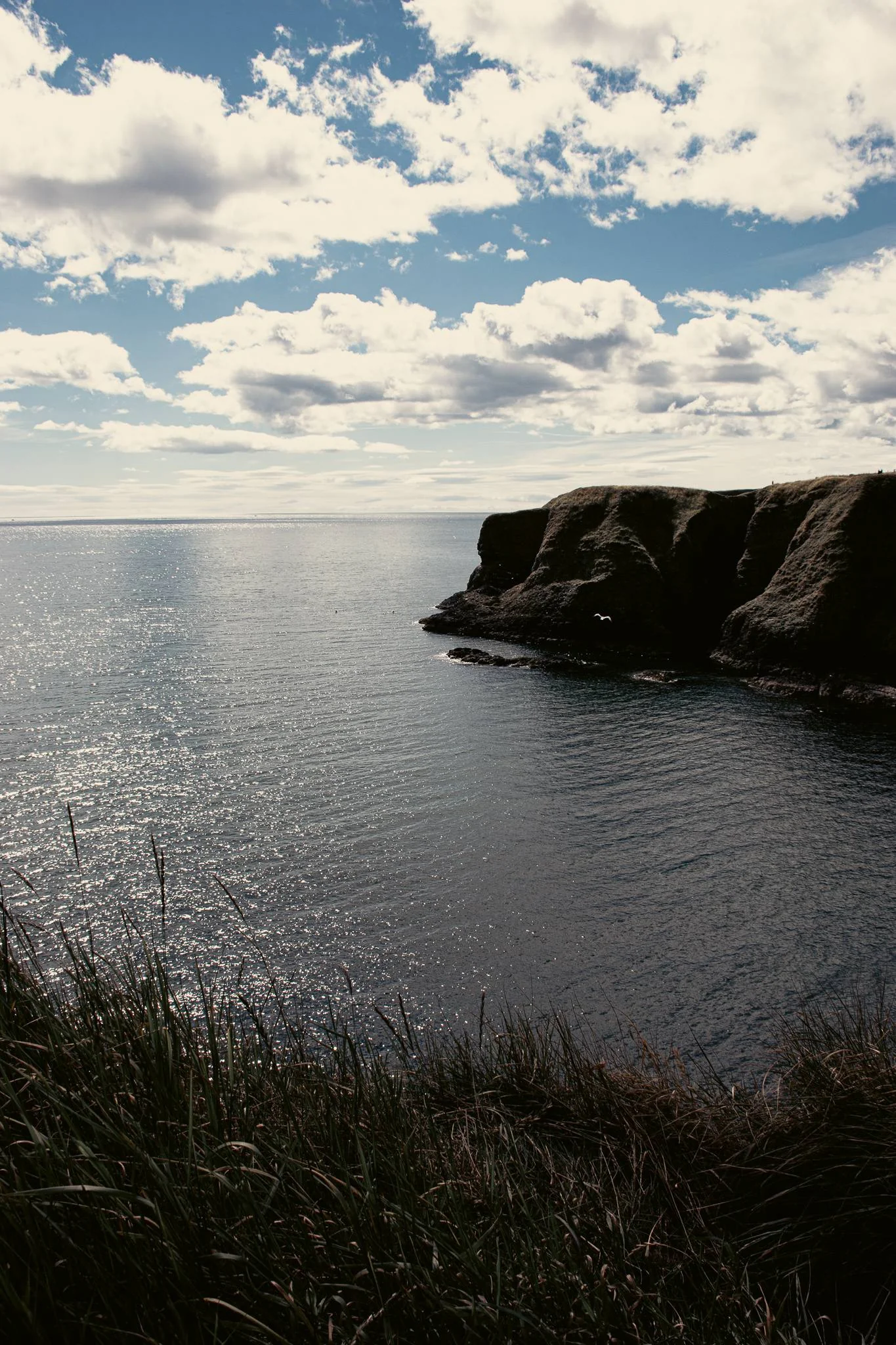
The Stonehaven Open Air Pool is an Art Deco swimming pool built in 1934, one of the last heated seawater pools still operating in Scotland. Filtered water heated to 28°C in an outdoor 50-metre pool, open from June to September. The contrast between the freezing North Sea five metres away and the warm pool next to it is slightly surreal. Caroline considered a swim, then we both looked up at the grey sky and, well, we gave it a miss.
3. The coastal walk Stonehaven → Dunnottar
The coastal path linking Stonehaven harbour to the cliffs of Dunnottar (2 miles, around 45 minutes on foot) is a real alternative to driving. Starting from the south harbour, you climb steeply at first to gain height above the town (superb panorama at the top), then follow an almost flat path along the cliffs to the castle. It’s worth doing at least one way, then returning by bus 107 or taxi if your legs start negotiating terms.
4. The Carron Fish Bar and the deep-fried Mars bar
If you’re in Stonehaven, you really should try, or at least photograph, the deep-fried Mars bar, which was invented here in 1995 at the Carron Fish Bar. The recipe is gloriously simple: take an ordinary Mars bar, dip it in batter, and lower it into the fryer. Result: melted chocolate, flowing caramel, crisp coating. A frankly improbable Scottish speciality that locals seem only half proud of. Expect to pay around £2-3 for one. Ideal for the photo, and for baffling somebody later over dinner.
5. Catterline and the Joan Eardley legacy
5 miles south of Stonehaven, the tiny village of Catterline is well known to lovers of Scottish art. It was here that the painter Joan Eardley (1921-1963), a major 20th-century Scottish figure, created some of her strongest work in the 1950s and 1960s: North Sea storms, heavy skies, crashing waves. Her studio-home, The Watch House, still stands on the cliff above the bay. The village is tiny, but the detour is worth it for the pebble bay and the almost mystical atmosphere.
6. The Fireballs Festival (December 31, if you’re there for New Year’s Eve)
A tradition unlike anything else: every 31 December at midnight, dozens of locals process down the High Street swinging fireballs (cages filled with newspaper, rags and wood soaked in paraffin, attached to long chains) above their heads. Pagan roots, meant to chase away bad spirits before the New Year. It’s hypnotic, 30 minutes of luminous chaos, then the fireballs are thrown into the sea. Stonehaven in winter is this too.
Where and what to eat in Stonehaven
The town is not a major gastronomic destination, but a few spots stand out for grabbing something around the harbour or after the castle.
– The Bay Fish & Chips: a local favourite for fish and chips, sea view, sensible prices (£12-15 for a dish).
– The Marine Hotel: gastro-pub feel on the harbour, traditional Scottish cooking and fresh fish (£20-30 for a dish).
– The Tolbooth Restaurant: more upmarket, on the harbour in the old Tolbooth (the former 16th-century prison), booking recommended.
Budget for a road trip to Stonehaven and Dunnottar
Quota RapidAPI dépassé (limite par minute/mois). Réessayez plus tard.
Stonehaven is easier on the wallet than the bigger cities farther south, but castle entry does add up. Useful benchmarks (summer 2022):
– Entrance to Dunnottar Castle: £9.50 adult / £22-25 family.
– Restaurant meal (starter + main + drink): £25-35 per person on the harbour.
– Takeaway fish and chips: £8-12 per person.
– Pint in a pub: £4-5.
– Paid campsite (Belmont Caravan Park): £20-25 per night.
– Diesel (summer 2022): £1.80-1.90/litre.
Our experience: a memorable detour
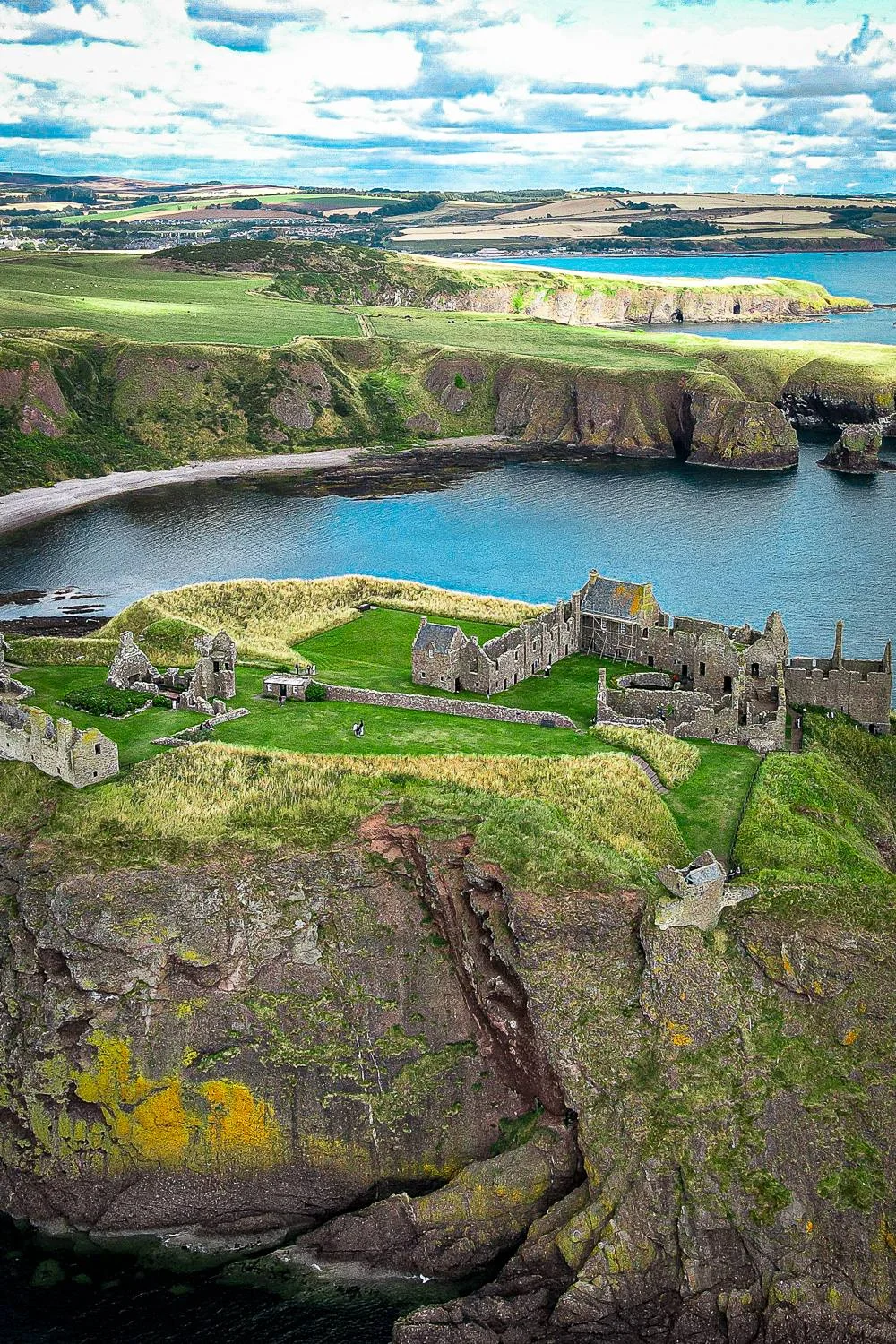
We did Stonehaven and Dunnottar in a single day, starting from Arbroath in the morning. A journey of 58 miles (about 1 hour by road via the A92), arriving around midday, lunch in the van in the castle car park, visit in the afternoon, then back to Stonehaven at the end of the day to spend the night.
The highlight: the first view of the castle when we reached the car park. Édouard had stalled 10 minutes earlier (total stress at the time), we had nudged him a little, and then you leave the van, walk 100 metres, and suddenly there it is, this completely improbable silhouette on its cliff above the sea. Caroline and I went quiet for 30 seconds, which is rare. Photo, photo, photo.
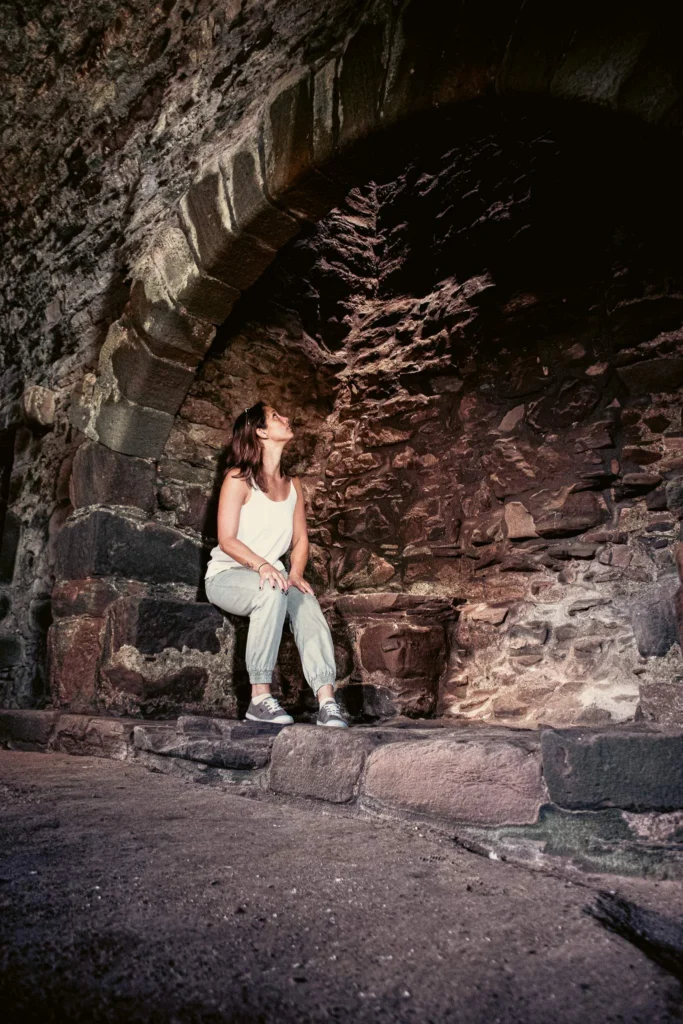
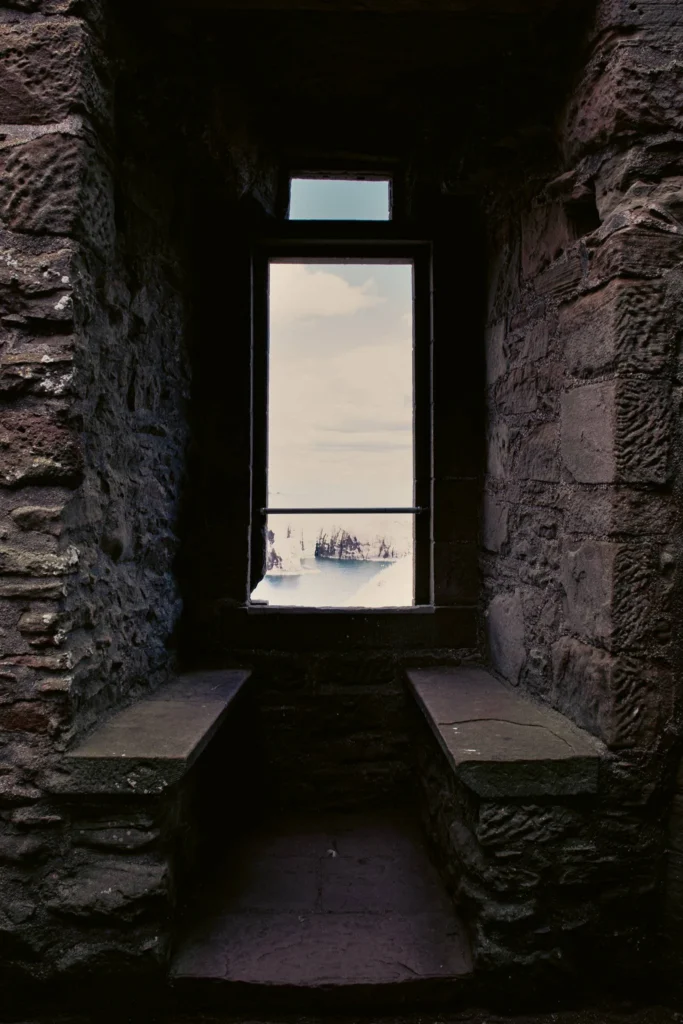
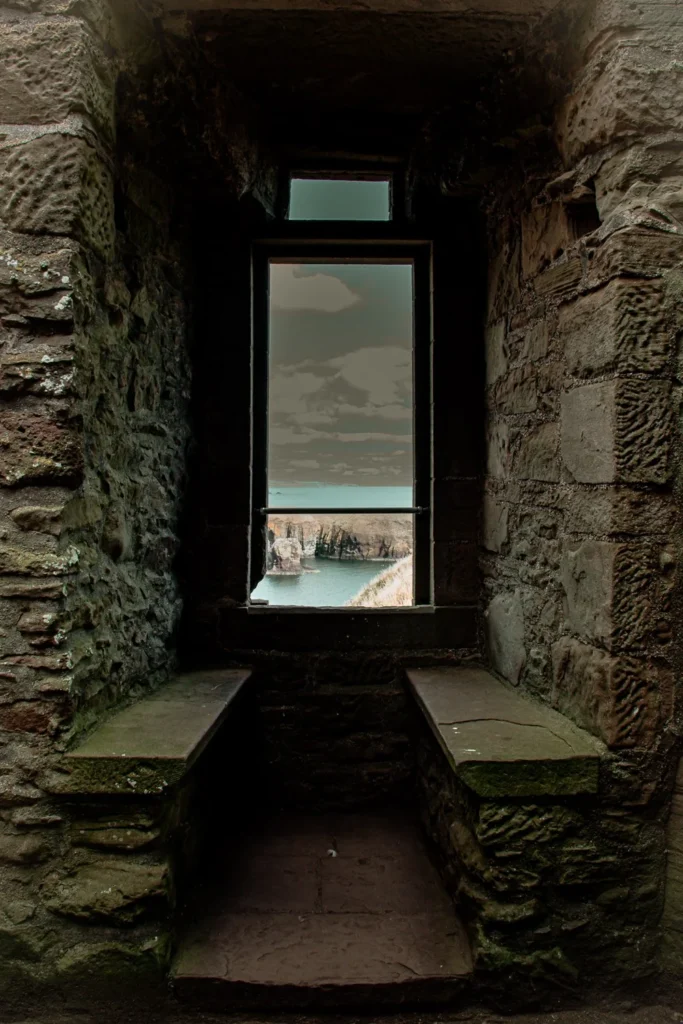
The descent, the visit, the ascent: allow 2.5 hours if you want to take it slowly. We lingered in the ruins (the stone window openings onto the North Sea are worth the pause), Caroline posed under an arch for photos, we watched the seals through binoculars. The climb back up the steps afterwards, yes, we definitely felt that in our legs.
The evening in Stonehaven: we parked near Queen Elizabeth Park, had dinner in the van (we’d stocked up at Tesco in the morning to avoid £30-per-head restaurant prices), then took a digestive stroll along the harbour as the sun dropped over the boats. The Carron Fish Bar was shut by the time we got there, so no fried Mars bar for us that evening (we survived).
Anecdote from the next morning. Calm wake-up, coffee in the van, Caroline opens the sliding door and comes face to face with a Scottish grandmother walking her dog. Conversation starts immediately. North-east locals do not always need much encouragement to chat to strangers. She told us she’d been walking there every morning for 30 years, that we’d picked a great spot, and that she had a grandson living in Paris. We talked for 15 minutes, her dog eventually lost patience, she wished us “safe travels”, and off she went.
Departure to the north. We decided to continue towards Aberdeen for a 30-minute drive, then push up the north-east coast towards the Highlands. Stonehaven was the shortest stop on our east coast road trip, but it gave us the most iconic photos (Dunnottar on its cliff is in our top 3 Scottish shots, along with Arthur’s Seat and the Fairy Pools on Skye).
To go further on the Scottish east coast
Stonehaven and Dunnottar are a logical stop between Arbroath and Aberdeen. Here are our guides to the stages immediately before and after, best followed in road-trip order.
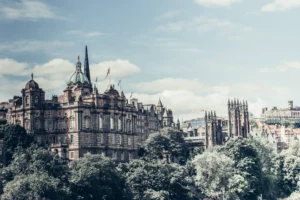
Discovering Edinburgh by road trip and van: Complete Guide
Discover Edinburgh in this travel guide for everyone, perfect for van road trip enthusiasts. Explore the history, budget, where to sleep, where to park, where to eat, and what to...
Read more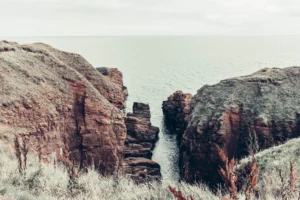
Discovering Arbroath on a Campervan Road Trip: Complete UK Guide
Red sandstone cliffs, the famous Smokie, Arbroath Abbey and a working harbour. Our UK guide to Arbroath by campervan, with overnight spots, Smokie tasting and Angus coast walks.
Read more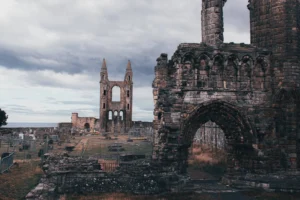
Discovering St Andrews on a Campervan Road Trip: Complete UK Guide
Cathedral ruins, the Old Course, Prince William's university and a windswept beach. Our UK guide to St Andrews by campervan in the Fife peninsula.
Read more
Discovering Stirling on a Campervan Road Trip: Complete UK Guide
This guide takes you to Stirling, the perfect destination for a Van Road Trip. Discover the history, budget, where to sleep, where to park, where to eat, and what to...
Read moreFAQ Stonehaven and Dunnottar Castle on a road trip
What is the price to visit Dunnottar Castle?
How long is the walk from Stonehaven to Dunnottar Castle?
Where to park to visit Dunnottar Castle?
What is the Declaration of Arbroath signed at Dunnottar?
Is Dunnottar Castle accessible for strollers and people with reduced mobility?
Where to sleep in a van and motorhome in Stonehaven?
Can you see seals and seabirds at Dunnottar Castle?
What other activities are there in Stonehaven besides the castle?
PS: If you come across someone claiming that the Declaration of Arbroath was signed at Dunnottar (it happens, it’s a common mix-up), feel free to correct them gently, it was signed at Arbroath in 1320. Dunnottar is more the “crown jewels hidden while the fortress is under siege” part of the story. Two major Scottish episodes, two different places, and on the same stretch of coast, so one can see why people muddle them up.
The next route, straight to your inbox
Two years of full-time van life, and the Algarve as our base ever since. We still hit the road, by van or otherwise, and we write up what we find along the way. An email when we have something to say, no more.
Ce que vous souhaitez recevoir :