


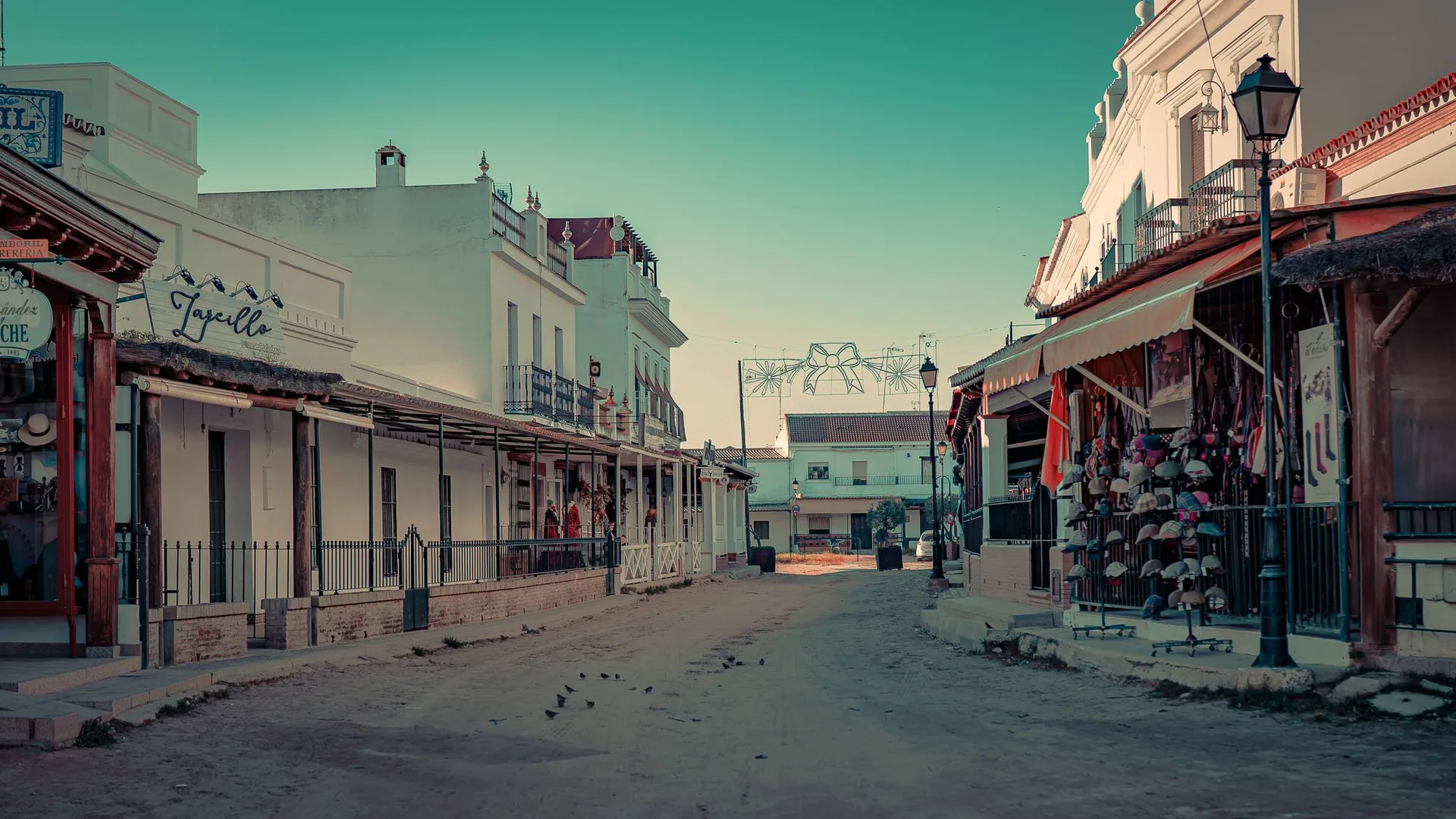
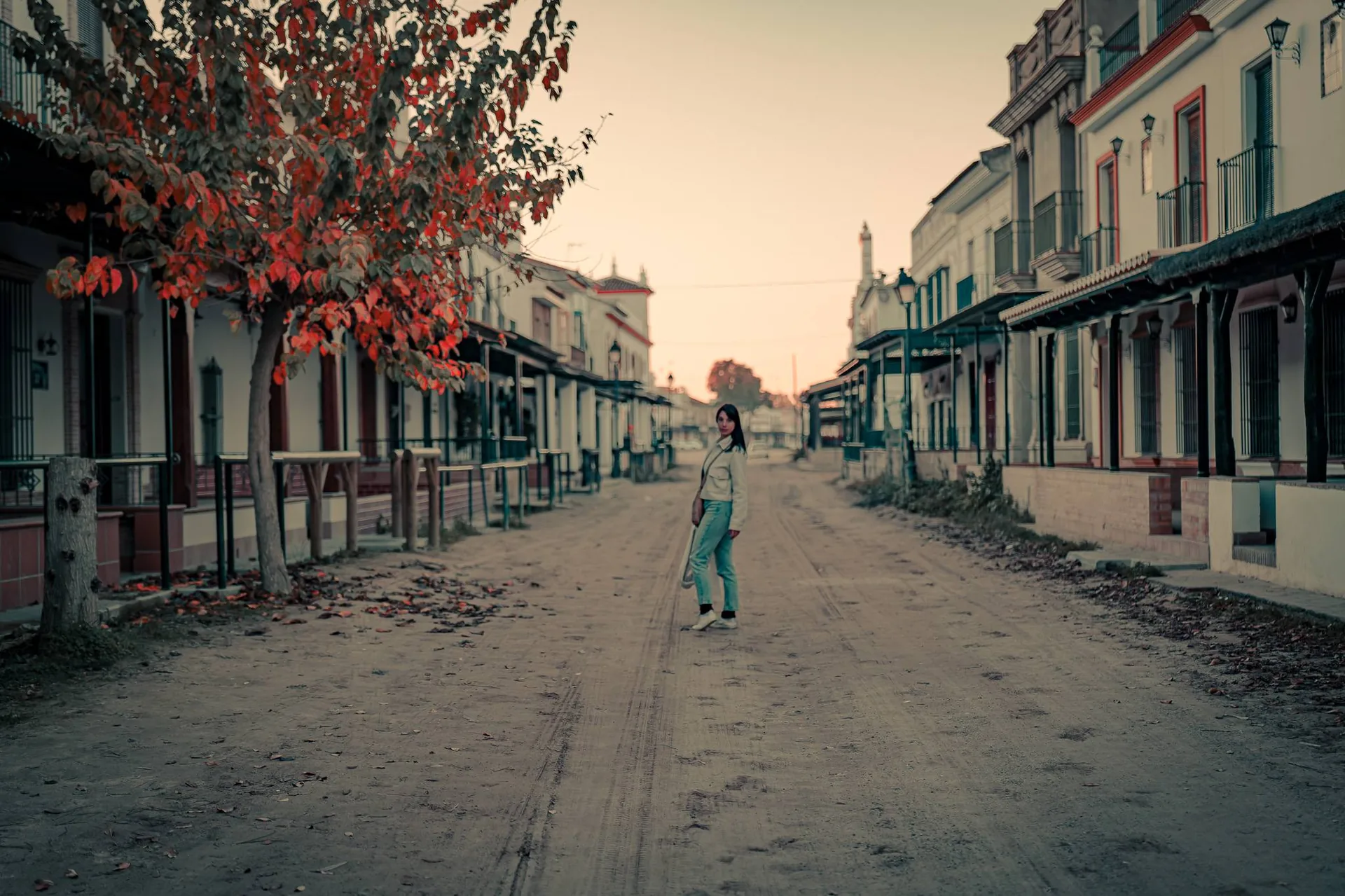
Well… let’s not kid ourselves, El Rocío is not a town. It’s not really even a village in the way you imagine. It’s more like a unique place, situated on the edge of the Doñana National Park, in the province of Huelva in Andalusia, where you move around on horseback or in a carriage on sandy streets, where all the houses have a hitching post in front of the facade, and where the white sanctuary stands in the middle as if it had been dropped there by chance.
We passed through in December with Édouard (our camper van, our beloved home after all), just before Seville for Christmas. Two days are enough to soak up the atmosphere, but personally, I think we could have stayed a week without getting bored. Here’s why.
What exactly is El Rocío?
A little history before I tell you about our experience, because otherwise you won’t understand why everyone is walking around in Andalusian shirts and cordobés hats at 4 PM on a Tuesday in December.
El Rocío is a pilgrimage hamlet that administratively belongs to Almonte. Permanent population: less than 1500 inhabitants. Except at Pentecost, when more than a million pilgrims (yes, a million, I didn’t add too many zeros) arrive on foot, on horseback, in carriages, and in pilgrimage trucks for the Romería del Rocío, one of the largest religious gatherings in Europe.
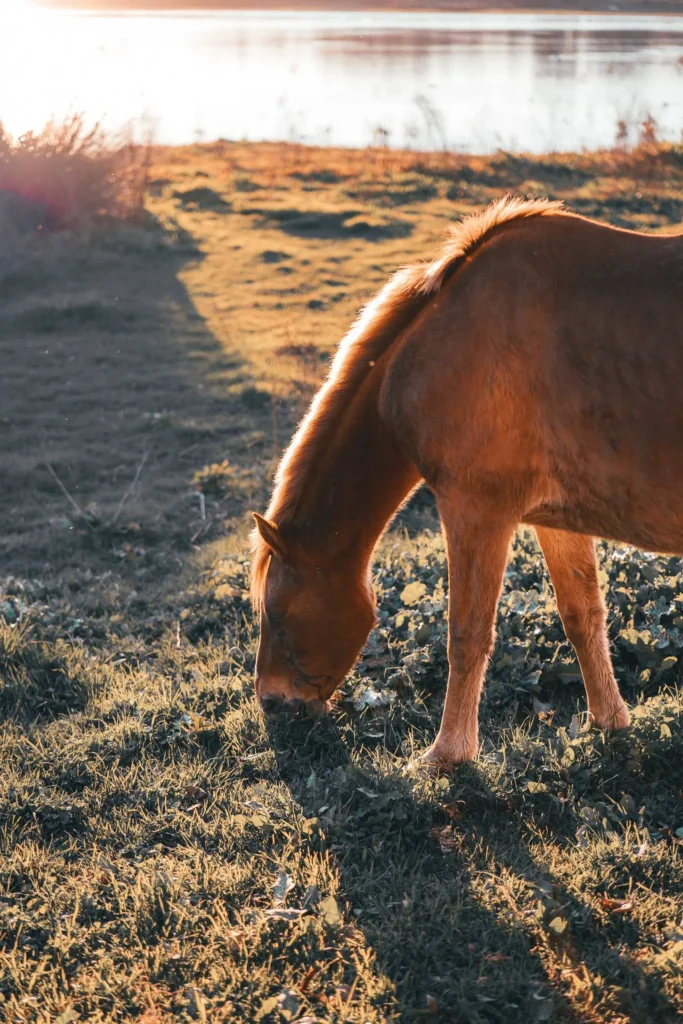
The rest of the year, the village lives at a slow pace, in an atmosphere that makes you think “hey, I’m in a western.” Except it’s not a tourist re-enactment, it’s just normal life here. The horse remains the common means of transport. The streets are sandy because when the first stone was laid, it was decided that it would be like this and they wouldn’t touch it. And 200 years later, they still haven’t touched it. Respect.
Plan your trip: Spain
Compare rental companies and book at the best price.
Booked on Trip.com — partner link.
Provided by Holafly, our partner.
5% off with code LAPLANETEDECARO
Booked on Holafly — partner link.
How to get to El Rocío
El Rocío is tucked away between Seville and the coast of Huelva, so you will definitely arrive by car, van, or bus. No direct train line, the nearest airport is Seville.
Without a doubt the best way. From Portugal (Algarve), you cross the border over the A22 / A49 bridge above the Guadiana (very nice by the way, be sure to take a look to the right), you lose an hour because you change time zones, and you continue for 1.5 hours to El Rocío. From Seville, it’s exactly 1 hour on the A-49 then A-483.
The main road that crosses the village is paved, so you can access it without any problem, even with a large vehicle. All the other streets are sandy, but you’re not supposed to venture there with a camper van anyway. We park at the edge of the village, on the sand, for free, with other vans for the most part.
Rental car from Seville (the classic option), or from Faro in Portugal if you’re doing a Vantour-style eSIM combo. Free parking at the entrance of the village, right next to the vans. No need to overthink it, just park where you can and that’s it.
Damas Autocares connects El Rocío to Seville and Huelva 2 to 4 times a day. Journey takes 1 to 1.5 hours, tickets around €7 to €10. Less flexible, but it helps if you don’t want to rent.
Climate: When to visit El Rocío by camper van?
Andalusia has a Mediterranean/sub-desert climate. In short, it’s hot when it’s hot, and in winter you still wear a sweater. Here’s our seasonal breakdown.
El Rocío : a glimpse of the weather
5-day forecast
Fancy a last-minute trip? Here's the 5-day forecast to help you decide.
Monthly climate
We prefer sunny days without too much rain, but everyone has different tastes! Here's the monthly climate to help you choose your ideal time.
| Month | Min temp | Max temp | Rain | Weather | Rating |
|---|---|---|---|---|---|
| September | 18°C | 32°C | 2 mm | ☀️ | |
| October | 16°C | 28°C | 76 mm | ☀️ | |
| November | 10°C | 20°C | 97 mm | 🌦️ | |
| December | 7°C | 16°C | 101 mm | 🌦️ | |
| January | 8°C | 15°C | 193 mm | 🌧️ | |
| February | 10°C | 18°C | 113 mm | 🌦️ | |
| March | 9°C | 20°C | 42 mm | ☀️ | |
| April | 12°C | 25°C | 25 mm | ☀️ | |
| May | 14°C | 28°C | 23 mm | ☀️ | |
| June | 19°C | 34°C | 0 mm | ☀️ | |
| July | 20°C | 36°C | 0 mm | ☀️ | |
| August | 19°C | 34°C | 3 mm | ☀️ |
- December to February: cool nights (3 to 8 °C at night), mild days (12 to 18 °C in full sun). That’s what we experienced, and honestly, it’s perfect for visiting on foot, sleeping in the van without overheating, and having the sites to yourself. On December 21, we were at 16 °C out of the wind in long-sleeve t-shirts. Conversely, Caroline caught a cold…
- March to May: the best period in theory. Mild, sunny everywhere, nature in bloom (the marshes fill up, the flamingos return). Beware: it’s also right around the Pentecost Romería (late May/early June). If you’re aiming for those specific dates, be prepared for 1 million pilgrims. Otherwise, it’s probably the best compromise of the year.
- June to August: very hot (35 to 40 °C during the day, 25 °C at night). The sand heats up, the village comes alive at night. On June 26, it’s the Saca de las Yeguas, the collection of wild mares in the Doñana park, a raw equestrian spectacle not to be missed if you’re in the area (but crowded).
- September to November: mild and calm. The good plan if you want to avoid the crowds without compromising on the climate.
The village that refused asphalt
Well, we need to talk about this a bit more in depth. Because the first time you set foot in El Rocío, there’s something that strikes you even before the horses.
It’s the sand. You walk on sand. The main street is concrete because a garbage truck needs to pass, but 10 meters to the right or left, you’re on a sandy street. And all the locals find this normal. The mailman passes on sand. The children go to school on sand. The ranchers ride horses, tie their mounts to a post planted in front of each house (they’re everywhere, it’s not folklore, it’s urban furniture), and go in for a coffee.
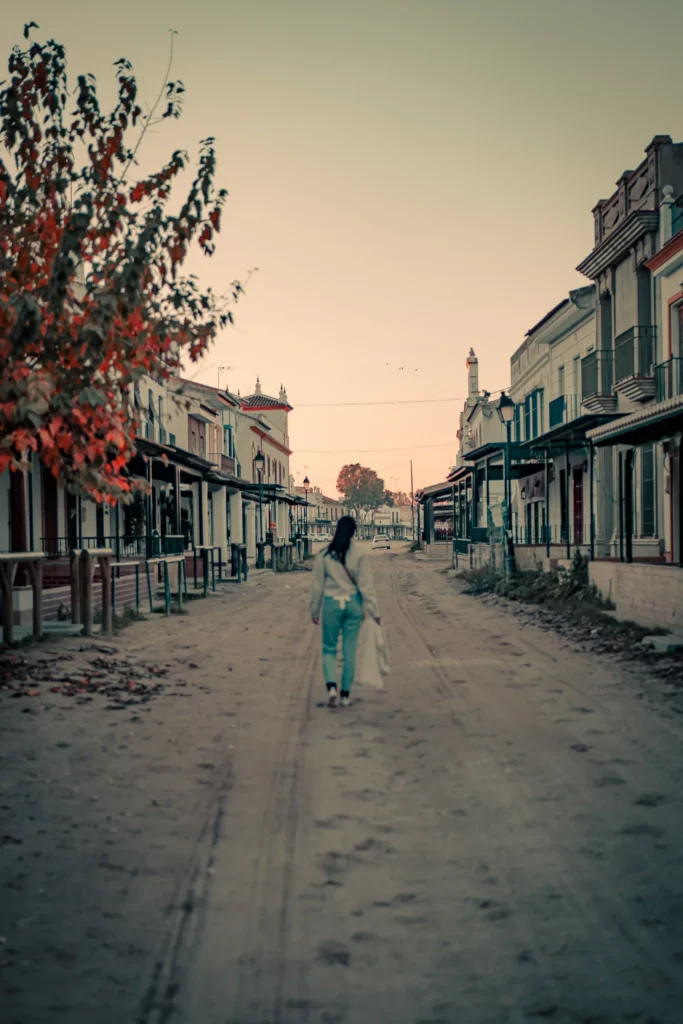
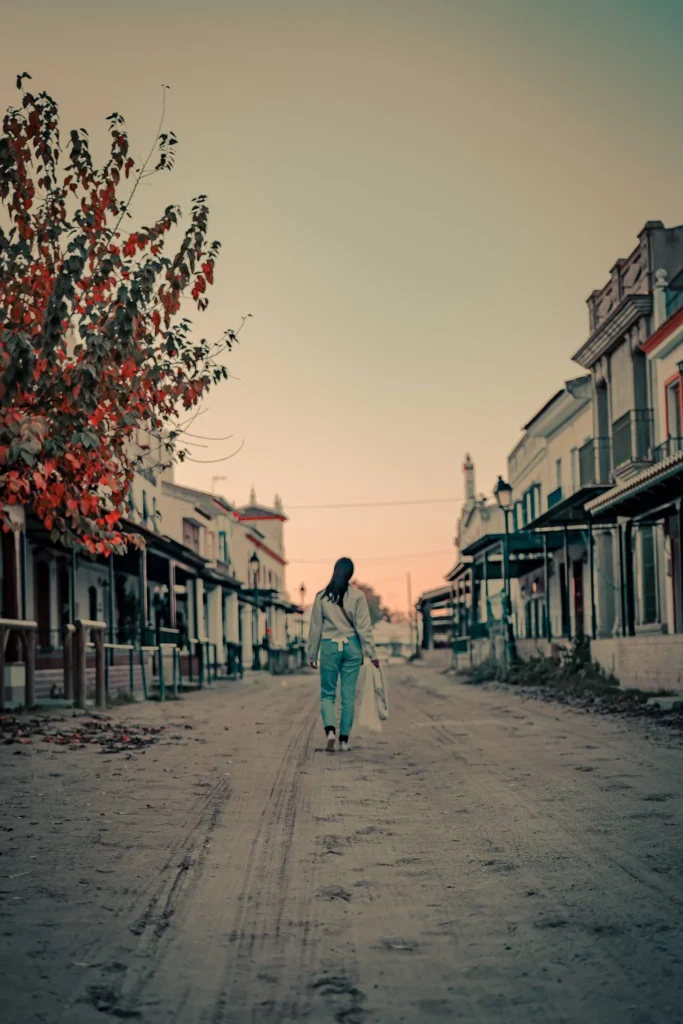
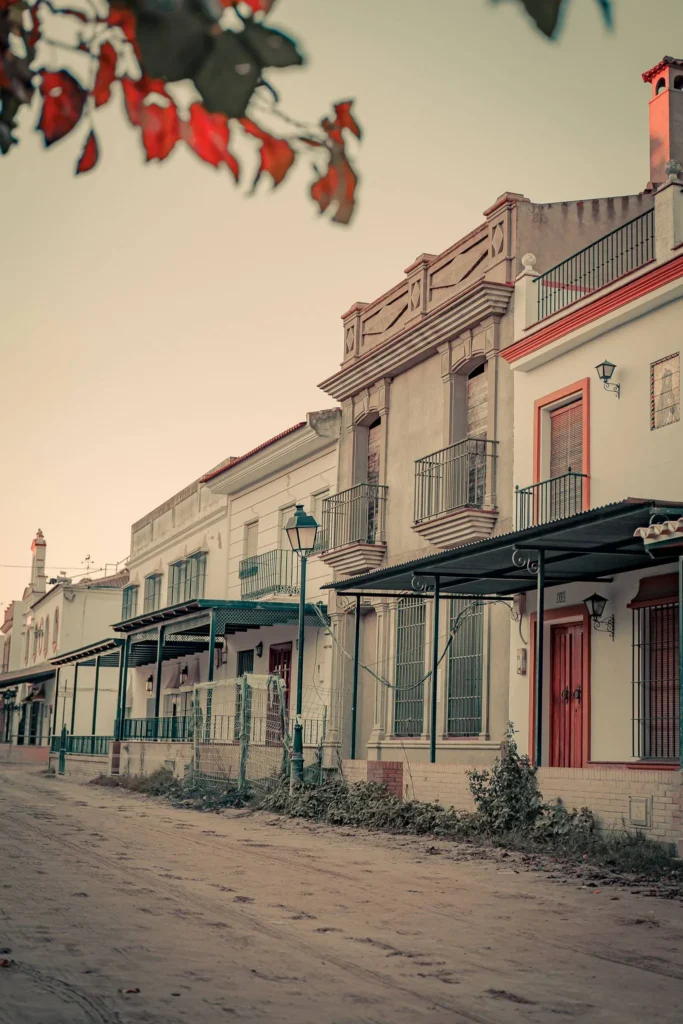
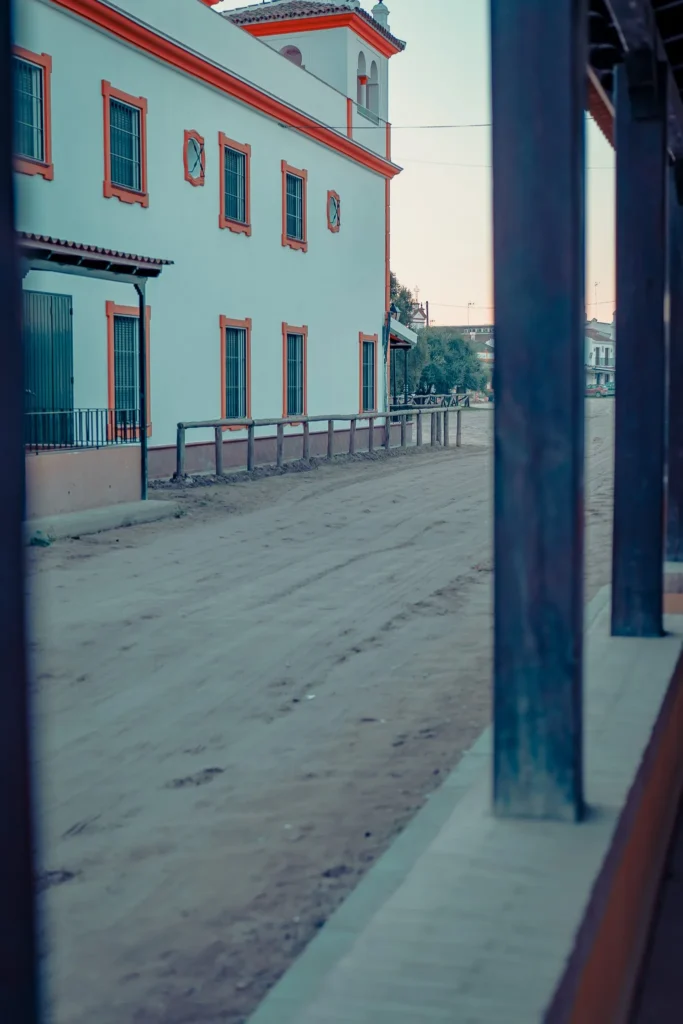
Caroline immediately said “time travel in the present,” and personally, I thought it was a perfect description. You’re in 2024, your phone is doing 5G in the background, and yet you wonder if you might not run into Clint Eastwood around the corner with his cigarillo. I even said “it’s a sandy station actually,” like we say ski station but without the snow (Caroline added: “yeah, except the snow is brown”). So there you go, sandy station, we mark that.
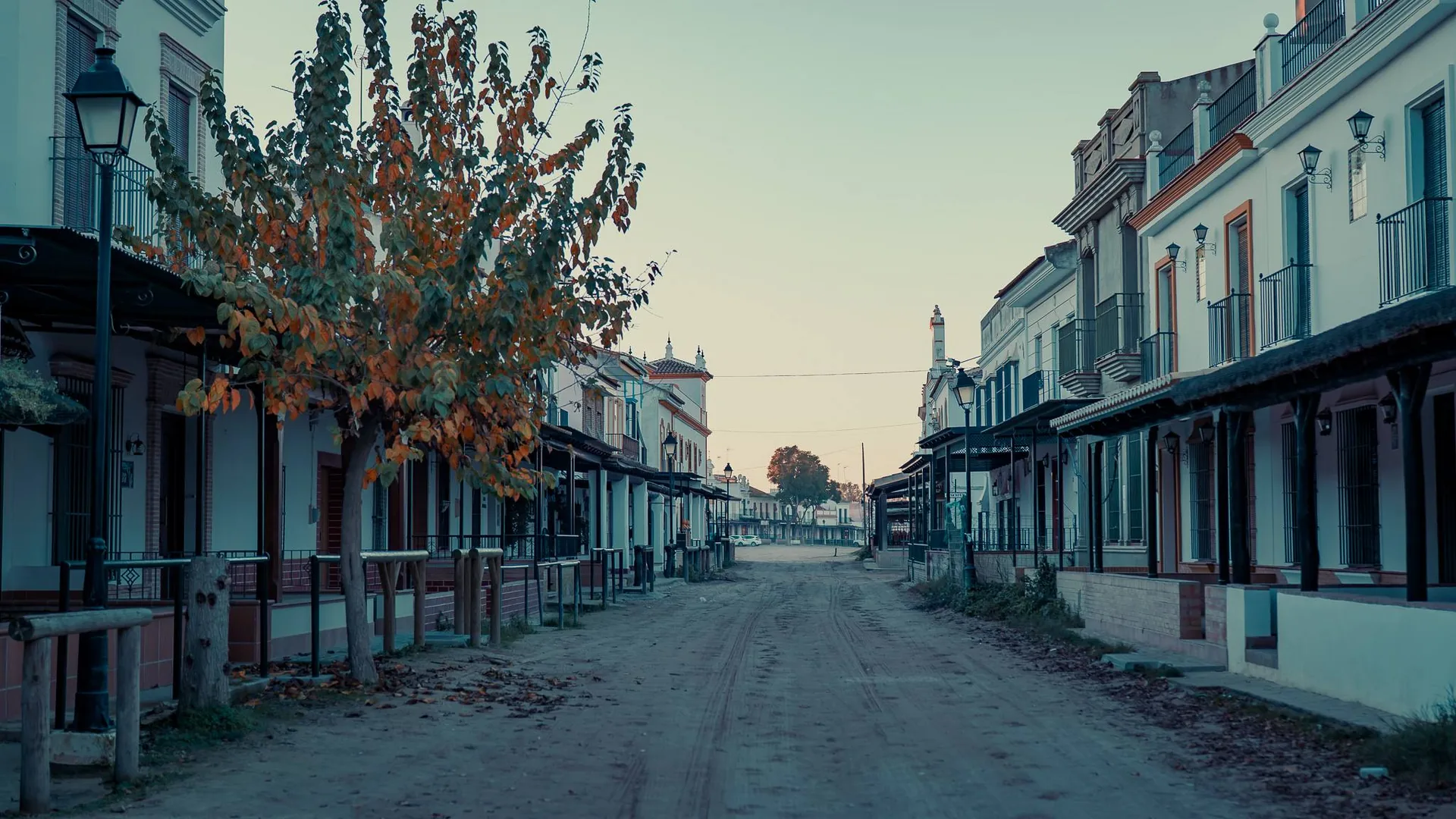
The other striking detail is the pure Andalusian architecture. Whitewashed facades, ochre or orange frames, wooden shutters, wrought iron on the windows, sometimes a colorful ceramic above the door with a religious figure. It’s as simple and as coherent. You take 30 photos and they all look alike, but you can’t help but take a 31st.
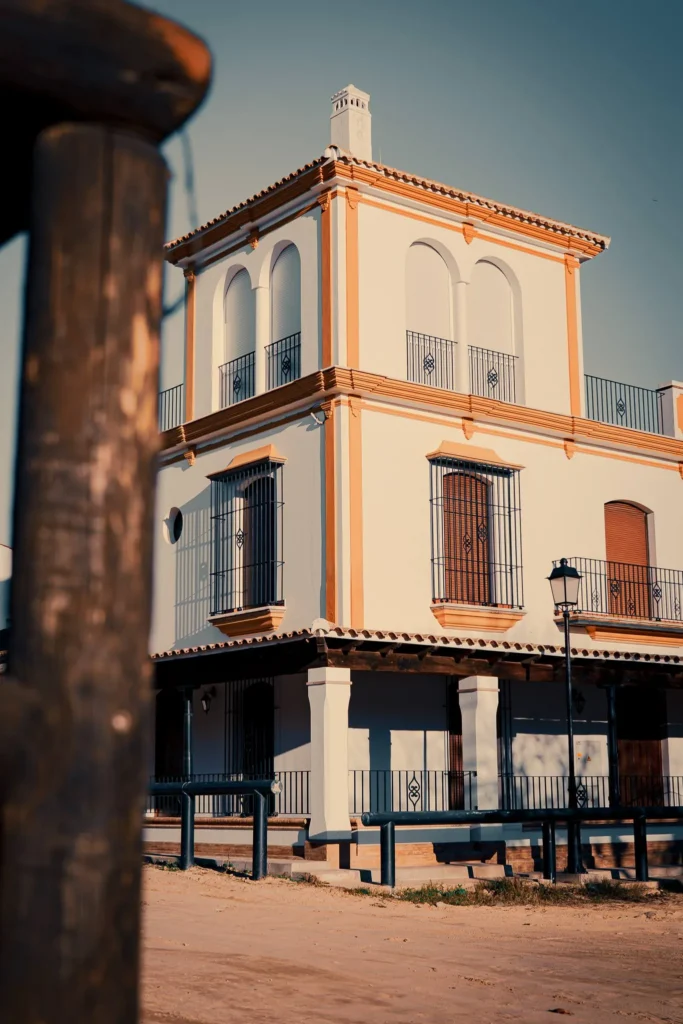
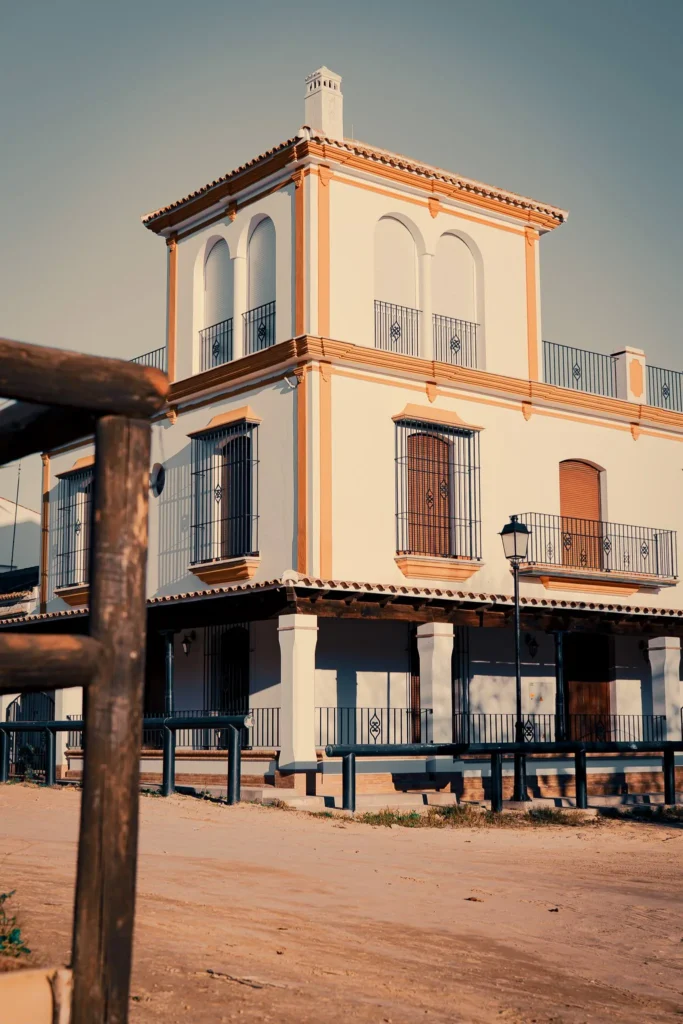
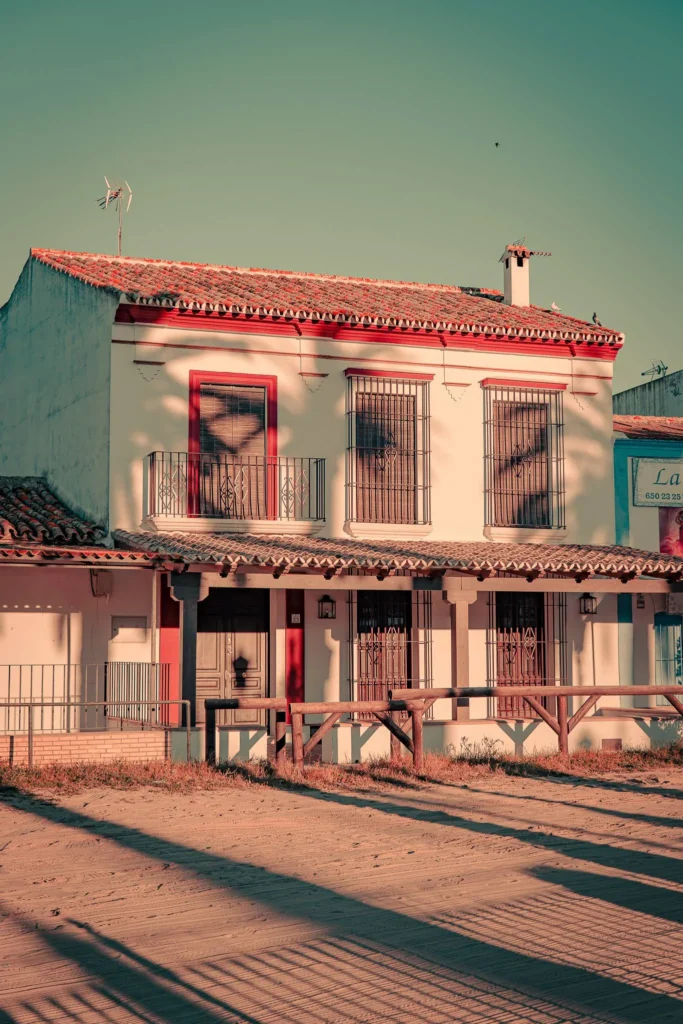
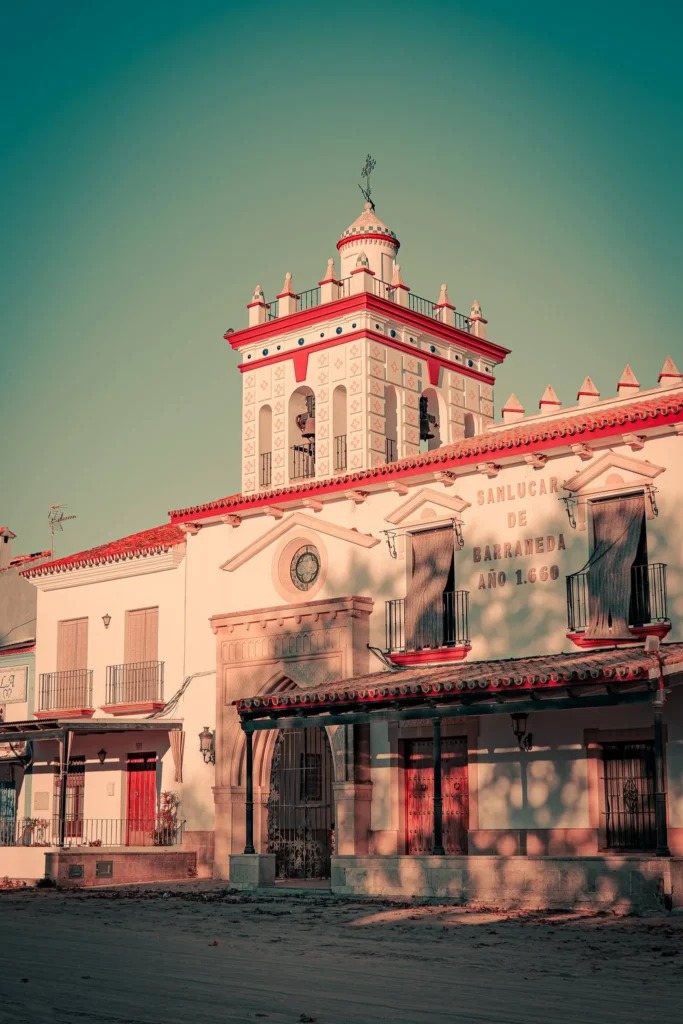
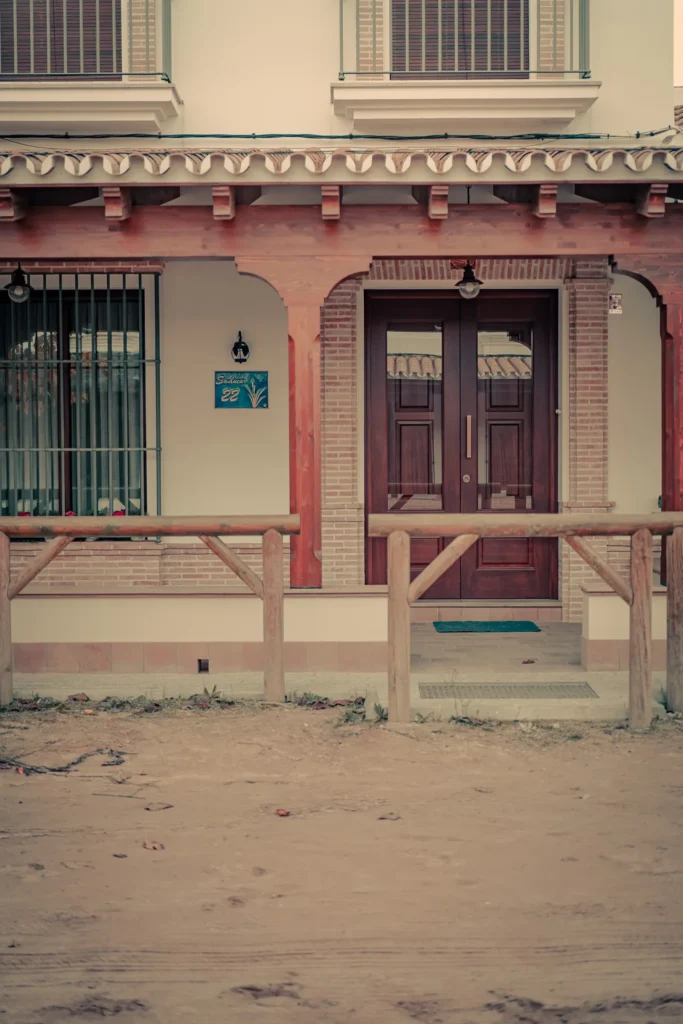
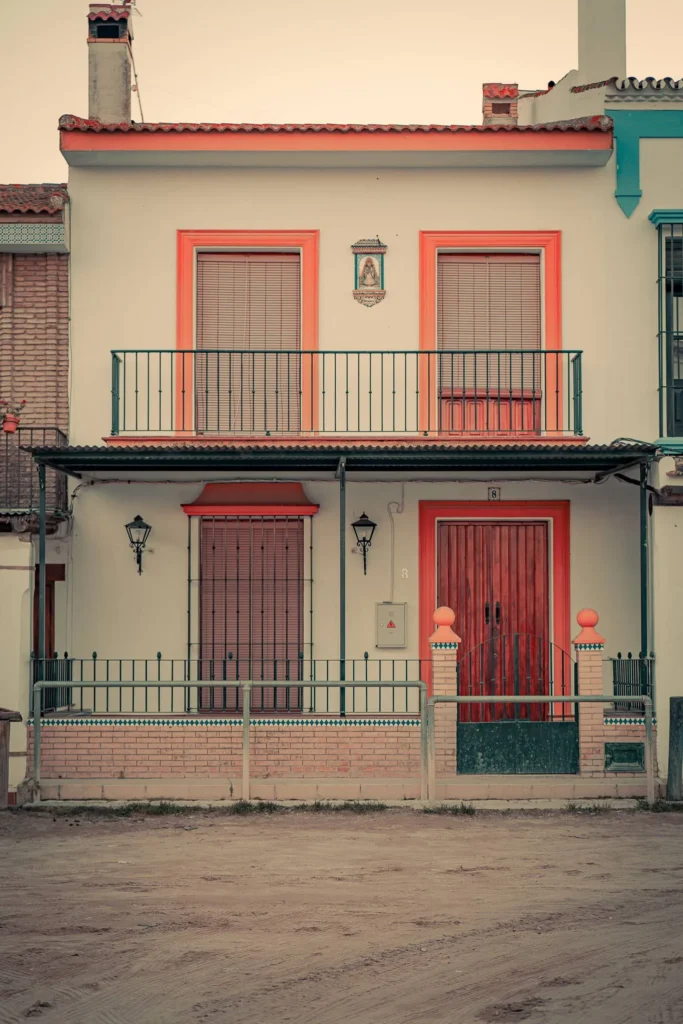
The bonus detail for fans of immaculate cleanliness: the sand collects the waste, so you sometimes find candy wrappers and stuff along the way (I had a little “AAAh” moment). But hey, it’s a real inhabited village, not an open-air museum, and personally, I prefer that 100 times over.

We're Caroline and Xavier
We drive to a place, stay long enough to get it wrong a few times, then write the guide we wish we'd had: parking, timing, what's worth the detour.
Ce que vous souhaitez recevoir :
Important spots for vans and camper vans in El Rocío
El Rocío is a tiny village, so the sleeping-eating-drinking options are quite limited. You have a few nice campsites at the entrance, free parking for vans, and that’s about it. Here’s our map with the spots we noted (click on the markers for details, coordinates, and notes).
El Rocío : Places we can tell you about
Here's our selection of places in El Rocío: spots we've visited that might be useful to you. Use the list view to discover each address in detail, and export everything to add to Google Maps or your favorite GPS app.
| Place | Address | Download |
|---|---|---|
| Camping La Aldea | Carretera de El Rocío, km. 25, 21750 El Rocío, Huelva, Espagne | |
| Kampaoh El Rocío | Carretera de El Rocío, km. 25, 21750 El Rocío, Huelva, Espagne |
| Place | Address | Download |
|---|---|---|
| Ermita del Rocío | Plaza del Acebuchal, 21750 El Rocío, Huelva, Espagne |
| Place | Address | Download |
|---|---|---|
| Madre de las Marismas (the Lagoon) | Bord sud du village, El Rocío, 21750 Huelva, Espagne |
| Place | Address | Download |
|---|---|---|
| Restaurante Casa Marcelo | El Rocío, 21750 Huelva, Espagne | |
| Meeting Point | El Rocío, 21750 Huelva, Espagne | |
| Restaurante Toruño | El Rocío, 21750 Huelva, Espagne | |
| Restaurante d'María | El Rocío, 21750 Huelva, Espagne | |
| Bar Er Peregrino del Ajolí | El Rocío, 21750 Huelva, Espagne |
Our favorites for accommodation:
- Camping La Aldea: that’s where we parked Édouard. Picturesque setting, surrounded by pines, sunsets that make you want to take a million photos. Friendly staff, clean facilities. The reference in El Rocío.
- Kampaoh El Rocío: right next to the previous one. Comfortable safari tents if you don’t have a van and still want to live outdoors. A good alternative for a couple or a family in glamping mode.
- Free van spot: at the edge of the village, on the sand, free. That’s where we saw other camper vans when we arrived, including a neighbor with his little dog Watson. No service area (water/waste), be sure to fill up before arriving or stop in Almonte (15 km away).
Where and what to eat in El Rocío
First of all: we eat late in Andalusia. Late late. Like the evening service rarely starts before 8:30 PM. If you arrive at 7 PM thinking “I’m starving, I want some jamón,” you’ll find the lights off and a guy who will tell you “no, at eight thirty” before going back to his cigarette. We experienced it, we laughed about it, and we mention it because you might want to avoid it (or not).
For the addresses, here are our thoughts after 2 dinners on site:
- Restaurante Casa Marcelo: that’s where we had dinner one evening. Warm atmosphere, mesa camilla with a brazier under the table (the traditional Andalusian heating, I’ll get back to that in 30 seconds), traditional dishes spot on. Caroline had artichokes (served warm, as is often the case here, that’s normal), I had more jamón, we drank a Tinto Rioja, and we ended with a “Salud” in Spanish (not Saúde which is Portuguese, it took me 2 days to get used to it). Address noted.
- Punto de Encuentro: friendly, central, for a quicker meal.
- Restaurante Toruño: more typical, local specialties, terrace by the lagoon.
- Bar Er Peregrino del Ajolí: picturesque tapas bar, good for having a drink + snacking in the “real village” atmosphere.
Our experience: 2 days in El Rocío in December
So… we come to the part where I tell you what we actually did, because personally, when I read a guide, that’s what I want to know.
We arrived in the afternoon after a tapas stop in Ayamonte (the first Spanish town after leaving Portugal, recommended for a hassle-free lunch, mini fried octopuses and jamón included). First shock upon entering the village: the sand. Second shock: the silence. Third: Caroline stopping dead in front of the first carriages saying “there, I know what I want for Christmas.”
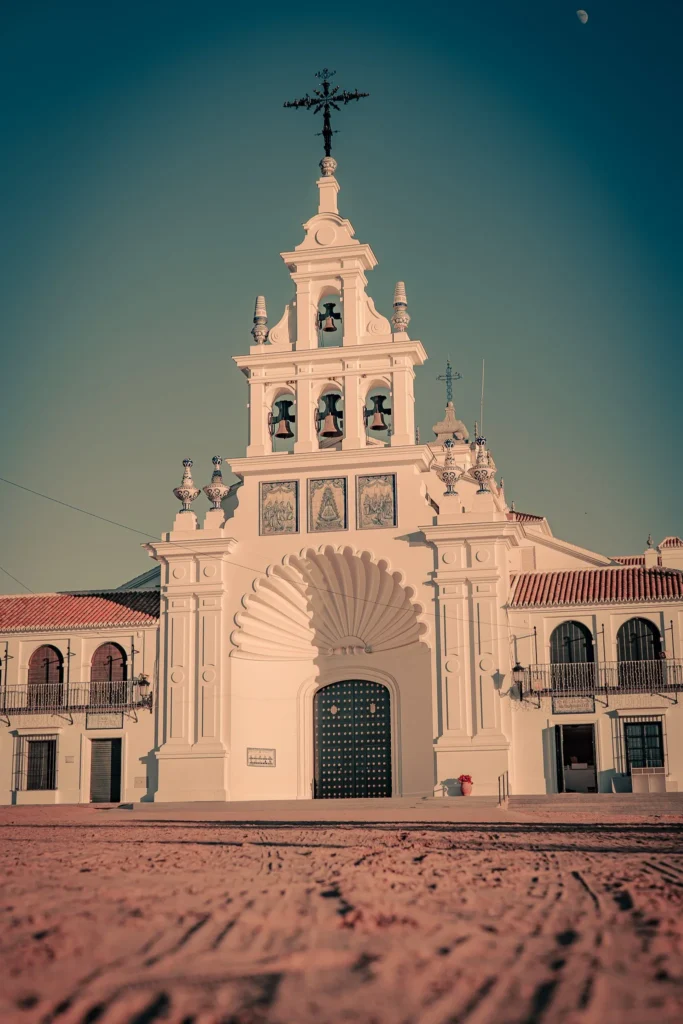
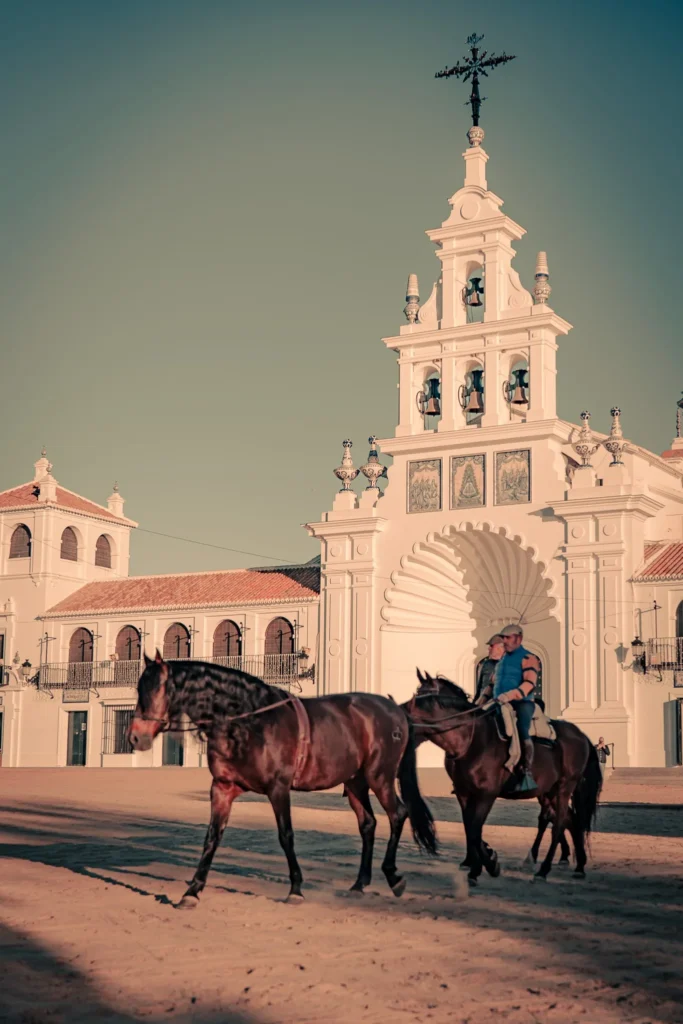
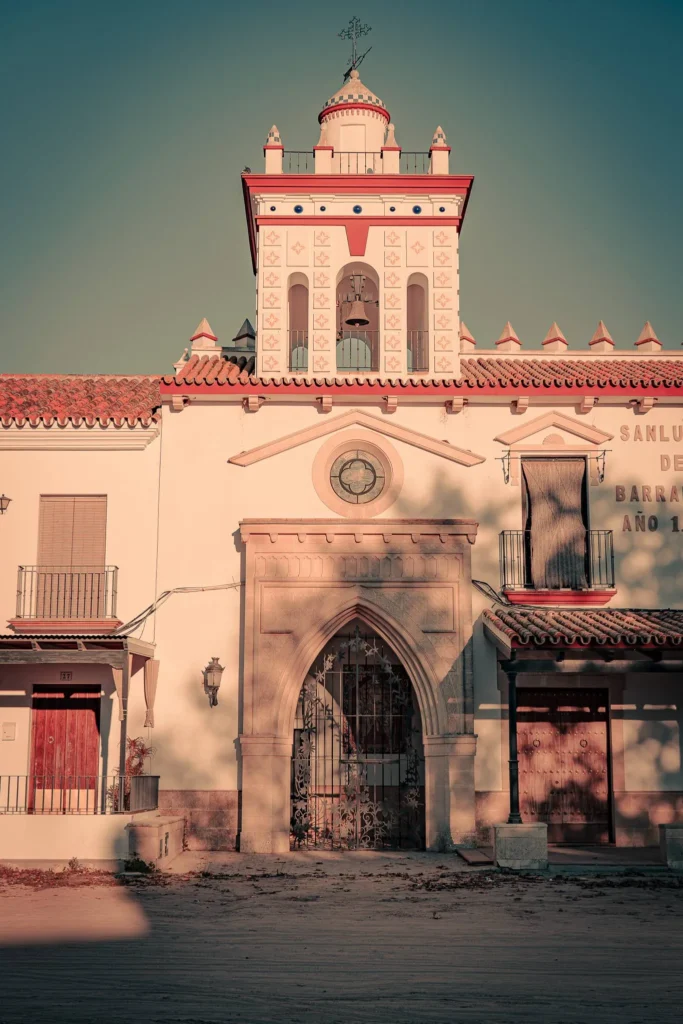
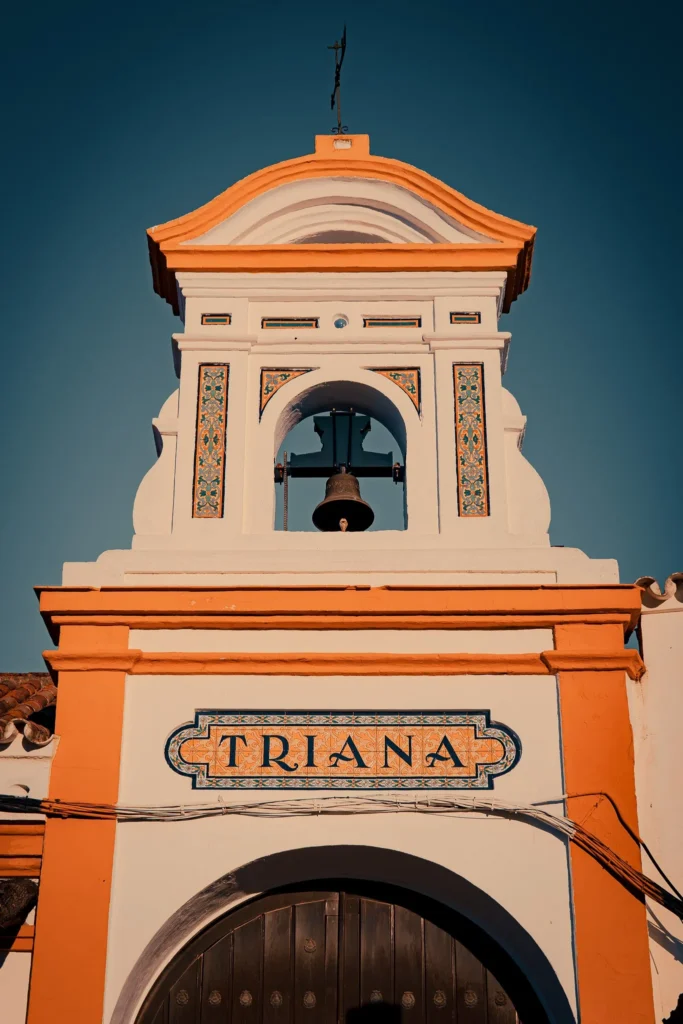
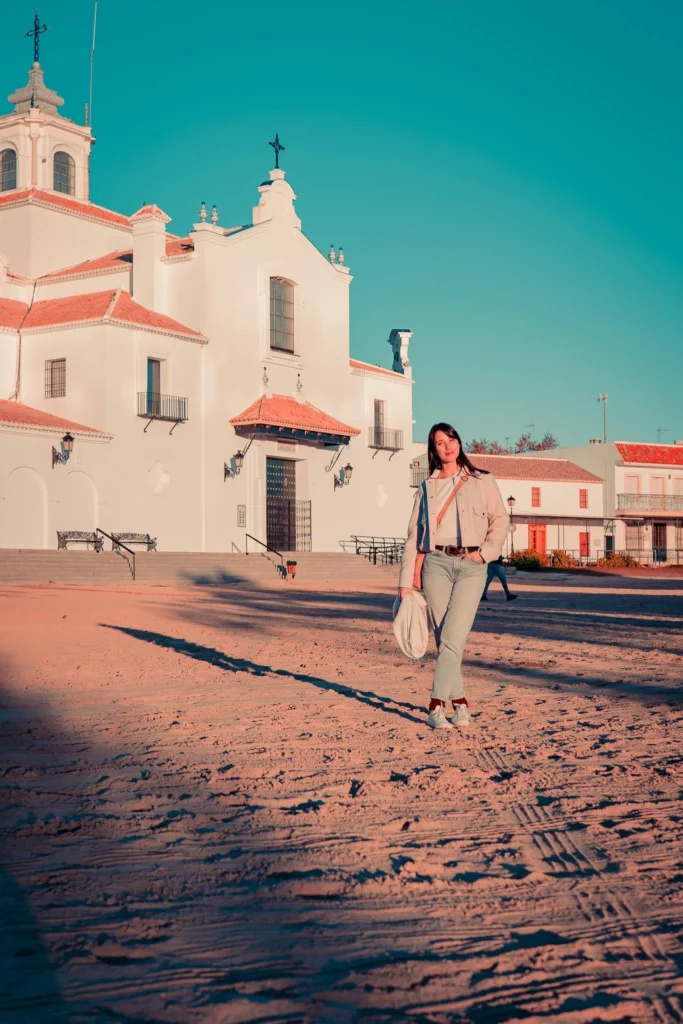
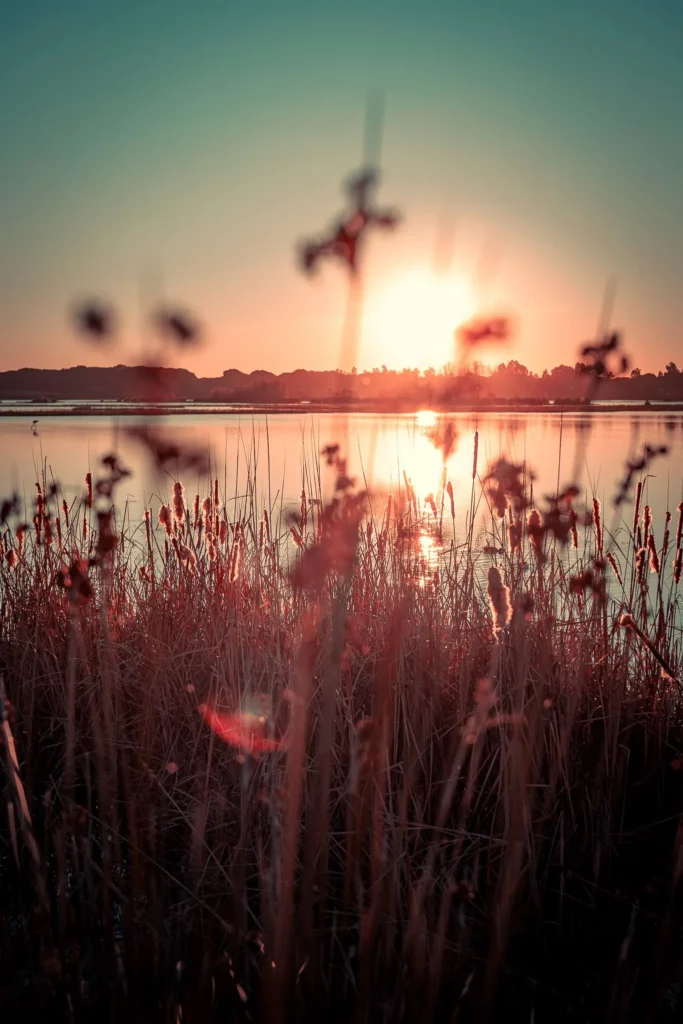
We settled at the edge of the village with Édouard, chatted for 10 minutes with the French neighbor in the next camper van (him and his dog Watson), and went for a walk for 2 hours. Destination: the main street, then the white sanctuary that stands in the middle (l’Ermita del Rocío, we’ll come back to that shortly), then the edge of the lagoon for the sunsets. Caroline in photographer mode, personally in commentator mode. We repeated “it’s so beautiful” so many times that it became a running gag (self-deprecation is our friend).
In the evening, as planned, restaurant at 8:30 PM. Mesa camilla, Caroline’s burned leg, jamón, Tinto, Salud. Good night in the van. And the next morning, that’s when we caught the thing we would have missed without neighbor Watson: he told us “they’re renovating the statue of the Virgin, they’re putting it back in the church at 10 AM, there will be cannon shots.”
Well, we went. At exactly 10 AM, BOOM, salvo of cannons. The church opens. A few gypsies inside singing while accompanying themselves on guitar (I still don’t know if it’s technically flamenco, sevillanas, or something else, I admit my Spanish musical ignorance, sorry). Sacred atmosphere. We understand while talking that El Rocío is one of the major gathering points for gypsies in Spain, especially during the big festivals. That’s why you feel this vibrant atmosphere, even in December when it’s dead.
That’s the real vanlife advice I can give you for El Rocío: talk to your van neighbor. You change plans, learn something, and leave with an anecdote for life. That’s what makes this way of traveling so special, and personally, I never get tired of it.
What activities to do in El Rocío
El Rocío is not a town where you check off 12 museums and 3 castles. It’s a town where you take your time, walk, photograph, observe. Here’s still the list of what we recommend doing (and what we did).
The white sanctuary of the Virgen del Rocío, the spiritual heart of the village. Bare facade, baroque interior with the statue of the Virgin surrounded by ex-votos and candles. Open all day except during services. Free. A must-see, even if you’re not a believer, just for the atmosphere.
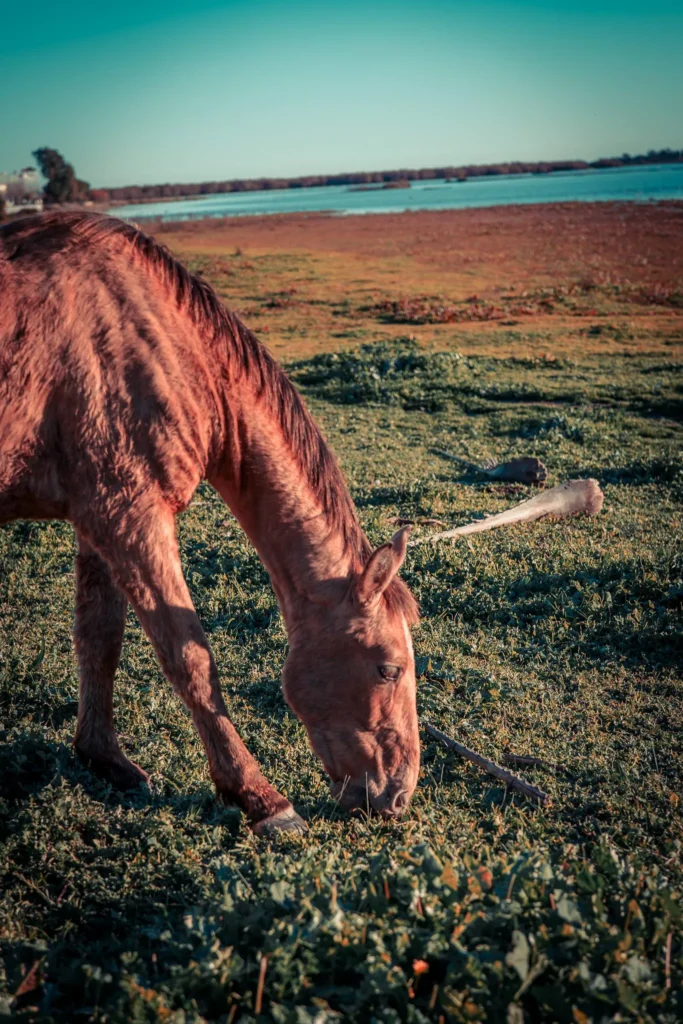
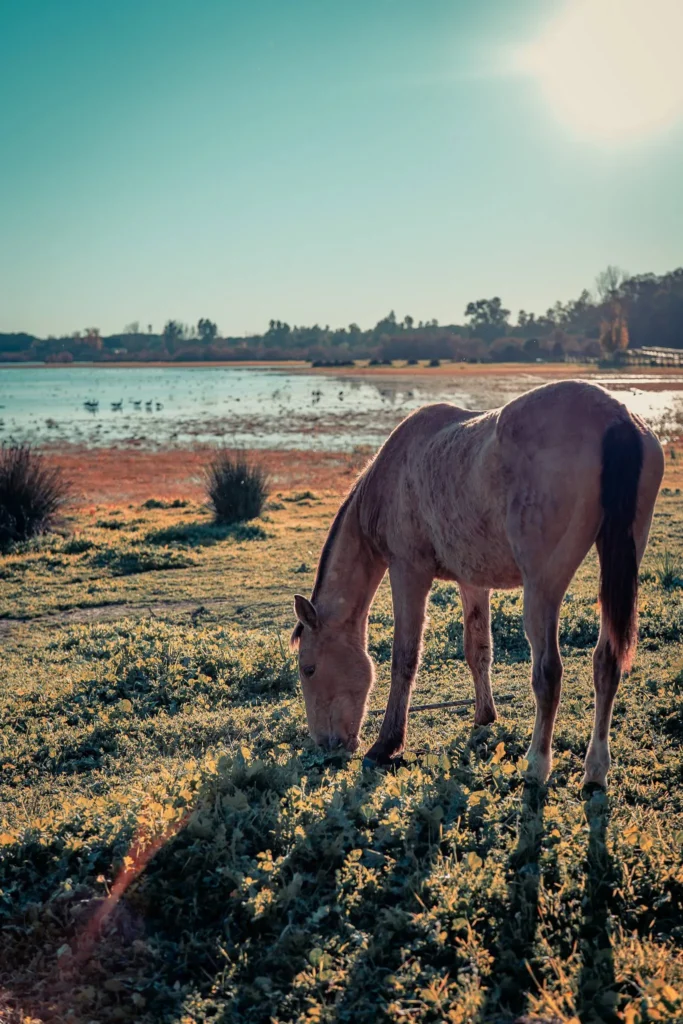
The body of water at the foot of the village, bordered by reeds and frequented by flamingos, herons, and… horses that come to drink. Absolute photo spot in El Rocío, especially at the end of the day. We spent a good hour snapping away. There’s a well-placed wooden bench to sit and watch.
Several ranches offer horseback rides in the marshes, at the border of the Doñana National Park. Caroline didn’t dare (she did 2 years of riding a long time ago, but still), but it’s probably the thing to do in El Rocío if you want to experience the complete atmosphere. Expect to pay €25 to €40 for a ride depending on duration.
El Rocío is the northern gateway to the Doñana National Park, a UNESCO World Heritage site. A giant wetland (50,000 hectares), incredible wildlife (flamingos, Iberian lynx, wild boars, deer). Guided 4×4 excursions from El Rocío or Matalascañas, to be booked in advance. Expect to pay €30 to €35 for a 3-4 hour outing.
A few shops selling traditional equestrian gear along the main street. Cordobés hats, straps, boots, harnesses, clothing for the Romería. Caroline asked the lady if we could film, she said yes with a smile. One day we’ll have to bring her a carriage.
Travel budget for a road trip to El Rocío

Which Unlimited SIM Plan for Spain? (Holafly promo code)
What kind of internet connection should you use during a stay in Spain? It’s a question we often ask ourselves before heading off on a trip. Caroline and I, Xavier,...
DiscoverEl Rocío is in Spain, so it’s cheap compared to France, well… not exactly dirt cheap either, because of its tourist-pilgrimage side. Here’s what we spent there and what we’d recommend budgeting for.
Quota RapidAPI dépassé (limite par minute/mois). Réessayez plus tard.
- Van parking : €0 if you’re parking freely, or €18 to €24 a night on a campsite (Camping La Aldea).
- Traditional restaurant meal : between €20 and €35 per person with starter, main, house wine. That’s very fair.
- Tapas / bar : allow €8 to €15 per person for a nibble and a drink.
- Horseback ride : €25 to €40 per person for 1h-1h30.
- Doñana 4×4 excursion : €30 to €35 per person for 3-4h.
- Coffee / breakfast on a terrace : €4 to €8.
Over 2 days for two of us we spent about €110 (free van parking, 1 restaurant dinner at €60, 2 morning coffee-snack stops at €20, emergency groceries at €15, 1 extra half-cartload for Caroline mentally at €0). Very reasonable.
The Romería and the village festivals
El Rocío without the Romería is a bit like Pamplona without San Fermín or Rio without Carnival. You can go all year round, but if you want to understand why this village exists, you need to go at least once during the big festivals (even from a distance, just for the day).
The two dates to know:
- The Romería del Rocío (Pentecost) : the big procession, more than a million pilgrims, including tens of thousands on horseback or in horse-drawn carriages. The hermandades (brotherhoods) arrive from all over Andalusia and even beyond, some after more than a week on the road. An atmosphere that is absolutely unique in the world, mixing religious devotion, non-stop fiesta, flamenco, and equestrian tradition. If you go, get ready to sleep wherever you can and pay more for everything.
- The Saca de las Yeguas (26 June) : the breeders go and fetch the wild mares in the marshes of Doñana National Park and bring them to El Rocío, then on to Almonte for shoeing and sale. A raw equestrian spectacle, with no tourist filter. Much less known than the Romería, much more authentic, much more accessible for the ordinary passer-by. If you’re nearby on that date, don’t miss it.
Otherwise: Día del Rocío Chico (mid-August, a local mini-Romería), various processions, and all the hermandad festivals dotted through the year. A mad calendar for a town of 1,500 inhabitants.
Planning a wider Andalusian road trip? Here are the other stops we covered nearby, which combine perfectly with El Rocío:
Discovering Cadiz in a Motorhome: Complete Guide
Discover our ultimate guide for an unforgettable road trip in Cadiz, Spain: fascinating history, practical tips, and must-do activities for a memorable adventure!
Read more
Discovering Seville by Camper Van: Complete Guide
Sevilla (Seville) in Vanlife: Routes, Tips, and Tricks for an Unforgettable Road Trip in Spain!
Read moreFAQ: everything you need to know about El Rocío
Is there an ATM or a supermarket in El Rocío?
No, not really. El Rocío is a pilgrimage hamlet, not a trading village. A few small grocery stores and souvenir shops, but no supermarket, and no reliable ATM. Withdraw cash and do your shopping in Almonte (15 km north) or Matalascañas (12 km south) before arriving.
Can you enter Doñana National Park by car or on foot alone?
No. The heart of the park is a UNESCO protected area, accessible only with a licensed guide in a 4x4 or on horseback (reservation in El Rocío or Matalascañas). However, from El Rocío you can stroll freely along the lagoon (Madre de las Marismas) and in the buffer zone, perfect for flamingos and birdlife without spending a dime.
Are the horses we encounter in the streets of El Rocío wild?
No, these are horses ridden or tied up by the local inhabitants and ranchers. The true wild horses are the mares of Doñana, which only leave the park once a year, on June 26, during the Saca de las Yeguas. The rest of the year, what you see in El Rocío are domestic horses that move around as if on foot.
Where to sleep in El Rocío without a van or motorhome?
You have several pilgrimage hotels in the village itself: Hotel Toruño, Hotel Puente del Rey, La Malvasía Hotel Rural, generally rated 3-4 stars, priced around £70 to £140 per night outside of Romería. For an original glamping option, Kampaoh El Rocío offers fully equipped safari tents by the pine forest.
Is there a dress code to enter the Ermita del Rocío?
No strict dress code like in some European basilicas, but visitors are expected to dress appropriately: shoulders covered for the indoor visit, no beach shorts for men, and respectful silence during services. For the Romería, the pilgrims wear the traditional gitana dress, and the pilgrims a white shirt or the cordobés suit, but it's more of a local pride than a requirement.
Conclusion: why visit (or come back to) El Rocío
There you go, we’ve reached the end. Quick summary: El Rocío isn’t an 8-day destination. It’s the perfect stop between the Huelva coast and Seville, the detour that sticks with you without eating up your whole itinerary, the village that makes you realise that sometimes modern life is pretty cool to just… not bother with. It’s one of those places you need to see at least once in your travelling life, and personally if we go back through Andalusia in the van one day, we’d do sunset at the lagoon again without a second thought.
By the way, for fans of the full road-trip experience, we’ve written the next episode of our Andalusian Christmas trip: our guide to Seville by camper van. So now you know what we did after El Rocío. Spoiler: the Airbnb was colder than the van.
ps: if you go to El Rocío between December and February, bring a jumper. Not a big one, just a jumper. The sunset-at-the-lagoon photo without a jumper looks romantic on Instagram, but when you’re actually there you’ll be freezing, expert’s word.
ps 2: Watson the dog, if you’re reading this, kisses from us.
Spain, and the road after
Two years of full-time van life, and the Algarve as our base ever since. We still hit the road, by van or otherwise, and we write up what we find along the way. An email when we have something to say, no more.
Ce que vous souhaitez recevoir :