


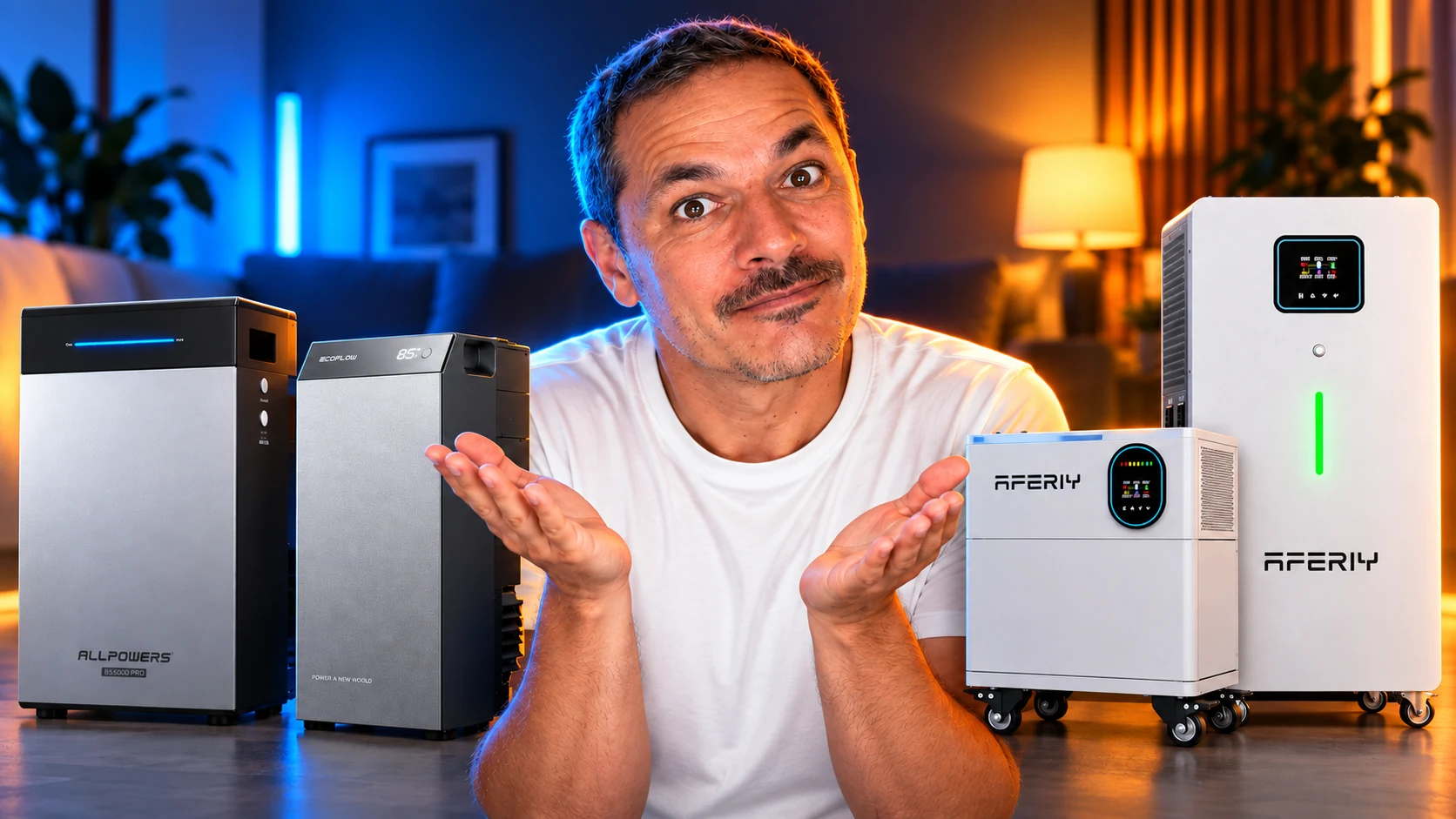
You’re looking for a solar battery for your home: do you want the one that wins on the spec sheet, or the one you actually want to install in your house? Because after comparing EcoFlow, ALLPOWERS and AFERIY for a while, I caught myself looking less at the big numbers and more at the small print… and some of that small print takes up a lot of room in my decision.
I follow these three brands, they’re our partners, and I find it quite funny to watch them move from batteries you take on the road to batteries you leave at home (given the weight, these ones have very little chance of coming along for the weekend). But being a partner doesn’t oblige me to hand out three medals. Right now, I find it easier to stand behind the EcoFlow STREAM 5000 than the ALLPOWERS BS5000 Pro. And at AFERIY, the PN062 interests me more than the PH062, with one reservation about installation that could completely change my choice.
The accompanying video is in French; this article is adapted for UK readers.
Here I’m comparing setups of around 5 kWh: the STREAM 5000, the BS5000 Pro, the PH062 and the PN062 with one B050 battery. This is home storage; portable power stations for travelling are covered in our comparison of portable batteries for campervans. The BS2500 Pro exists too, but its 2.6 kWh puts it in a different budget and a different need. I’m not going to let it win a price contest by forgetting that it stores half as much.
Home batteries around 5 kWh available in the UK

£1699,00
See the product
|
£1699,00
See the product
|
|
|---|---|---|
| Capacity | 5,024.00 Wh | 5,120.00 Wh |
| Net weight | 45.40 kg (100.09 lb) | 58.50 kg (128.97 lb) |
| Dimensions | 295 x 488.5 x 298 mm (EcoFlow spec table) | 78 x 44 x 23 cm (H x W x D), from the sales sheet; height to be confirmed against the unit delivered |
| Total Output Power | 2,500 W on battery, unit alone (3,000 W with the extension) | 6,200.00 W |
| Number of AC Outputs | 1.00 | 2.00 |
| Application | ✓ | ✓ |
| Warranty | 10.00 an | 10.00 an |
| Noise | Under 30 dB (EcoFlow claim) | - |
| Life Cycles | 10,000 cycles at 60% remaining capacity (EcoFlow conditions) | 6000 |
| Operating Temperature | -20 to +55; self-heating for low-temperature charging | Inverter: -10 to +50 (manual) |
| UPS Function | ✓ | ✓ |
| Waterproof Rating | IP65 | Not stated in the documents consulted |
| Number of MPPT Inputs | 4.00 | 1 documented PV input; number of independent trackers not specified |
| Maximum Input Voltage | 60.00 V | 500.00 V |
| Grid-Tied AC Output | 800 W / up to 3,000 W depending on configuration and wiring | Grid injection not confirmed; AC input and bypass are documented |
| AC Charging Input | 3,000 W on the AC side; main battery 2,500 W max | - |
| Connectors | 4 PV inputs; 1 AC socket for appliances; separate network port; expansion port | AC input, PV +/- terminals, two AC outlets and AC OUT terminal blocks; RS232/Wi-Fi port |
| Connectivity | Wi-Fi / Bluetooth / CAN | RS232/Wi-Fi; WLAN and GPRS announced for mobile monitoring, bundled module to be confirmed |
| Storage expandability | About 15 kWh per unit with two extensions; up to six units in a system, about 90 kWh | 5.12 kWh built in; no expansion announced |
| App features | Self-consumption, scheduling, weather and tariff optimisation, peak shaving; local mode with a compatible meter, reduced features offline | Real-time charge and discharge monitoring over WLAN/GPRS; app name and bundled hardware to be confirmed |
| Installation and connection | Plug-in solution; higher-power wiring to the consumer unit must be done by a professional | Manual covers AC/PV wiring and calls for a qualified installer; plugging into a domestic socket is not confirmed |
| Backup switchover time | Automatic backup on the AC socket; switchover time not quantified in the French sheet | 10 ms typical in UPS mode; 20 ms in appliance mode |
| Battery Protection | - | Overcharge, over-discharge, short circuit; active cell balancing |
The “solar charging” row shows the maximum photovoltaic input announced by the manufacturer, not a guaranteed charging speed. The table follows our product sheets. The prices discussed below were checked on the brands’ official UK stores on 3 November 2026, before any discount code. The ALLPOWERS BS5000 Pro and the AFERIY PN062 aren’t in the table: I couldn’t find either of them on the brands’ UK stores. Their specs are discussed further down.
What I want to buy: storage, without signing up for a building project
Sure, I could start with the cells, the voltages and the charging currents. But my first questions are much more down to earth: can I install the system simply, does the app make my life easier, and will I be able to add storage if my needs grow? The rest comes after. A home battery is supposed to work while I’m doing something else (I already have plenty of software asking for my attention).
I’d love to try these big systems. The thing is, I live three and a half floors up, and right now I don’t have the use that would justify carrying all that weight home. The STREAM 5000 is listed at 45.4 kg, the BS5000 Pro at 65 kg and the PH062 at 58.5 kg. The complete weight of the PN062 with its battery is still to be confirmed. My gym is already included in the flat, but I’d rather not add a solar storage option to it.
Getting free kit just for the sake of getting free kit doesn’t interest me. The day I have a villa and a suitable installation, I’ll happily talk about it again. For now, what interests me is understanding who each system suits, and at which compromise I’d stop wanting to recommend it.

I'm Xavier
I test gear over months, in the van and day to day, and I say what doesn't work. If that saves you one bad purchase, leave me your address.
Ce que vous souhaitez recevoir :
EcoFlow STREAM 5000: the one I find easiest to recommend
To me, EcoFlow is the best-known brand of the three, and the one whose app looks the most complete. I already have a point of comparison with the older STREAM range: the Ultra and the AC Pro now live at a friend’s place, a villa with more than 2 kW of panels. That’s where my interest in how they work comes from, not from an imaginary week testing the 5000 on my balcony.
What I like about the STREAM approach is the idea of growing the installation and spreading compatible units around the house, instead of concentrating everything in one spot. With the AC Pro, I find the principle genuinely well thought out. You add storage where it makes sense, the units work together… it feels like a solution that was thought through to the end, and that’s exactly what I like about it.
A word of caution though: compatibility has to be checked model by model. What I know from the first generation doesn’t prove that every older AC Pro pairs with the STREAM 5000 without conditions. The information we looked at doesn’t allow us to promise that kind of general backward compatibility. If you already own EcoFlow kit, that’s the first thing to get confirmed before ordering, even if, personally, I don’t see the point of switching ecosystems when the one you have can still grow.
For a new installation, the STREAM 5000 offers 5.024 kWh and accepts up to two extra batteries per main unit, about 15 kWh in total. EcoFlow also describes setups combining several compatible main units. Don’t confuse this capacity expansion with the hardware needed for the different output powers: you don’t unlock every possibility with the starter box.
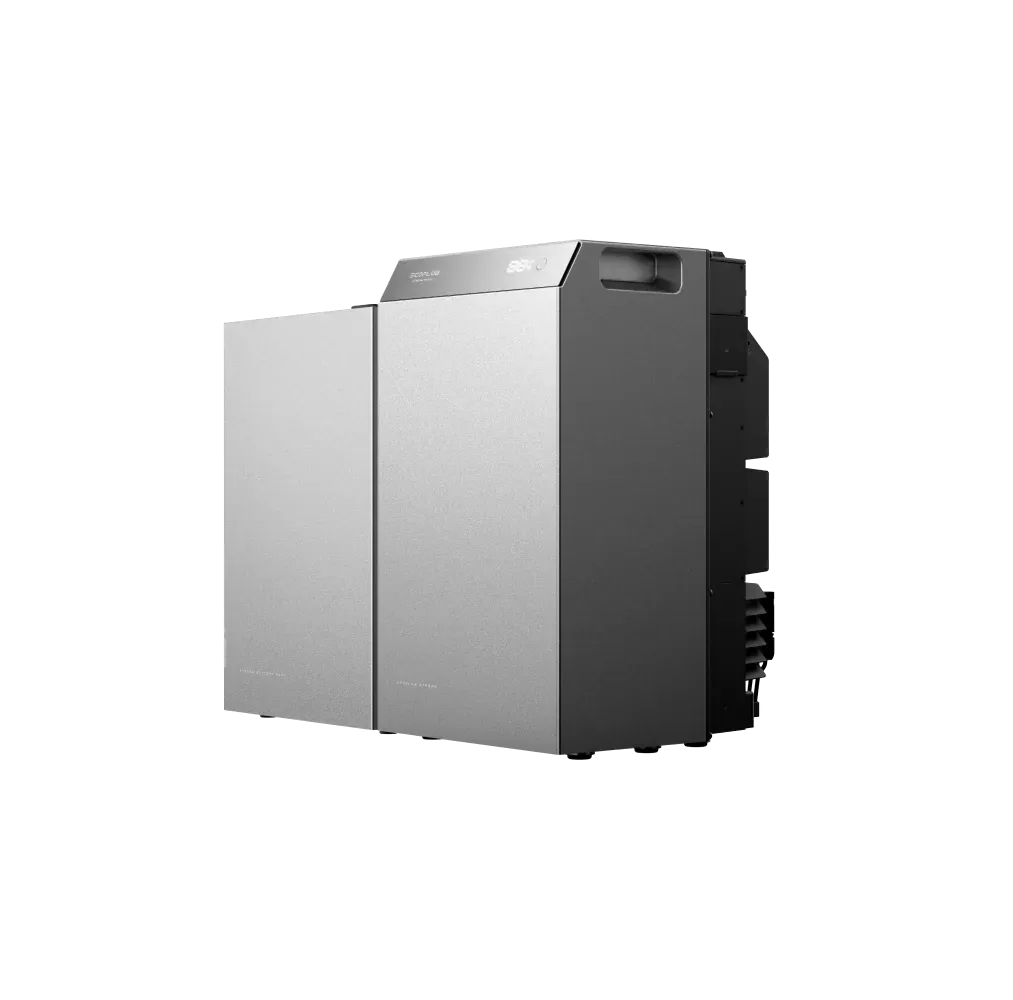
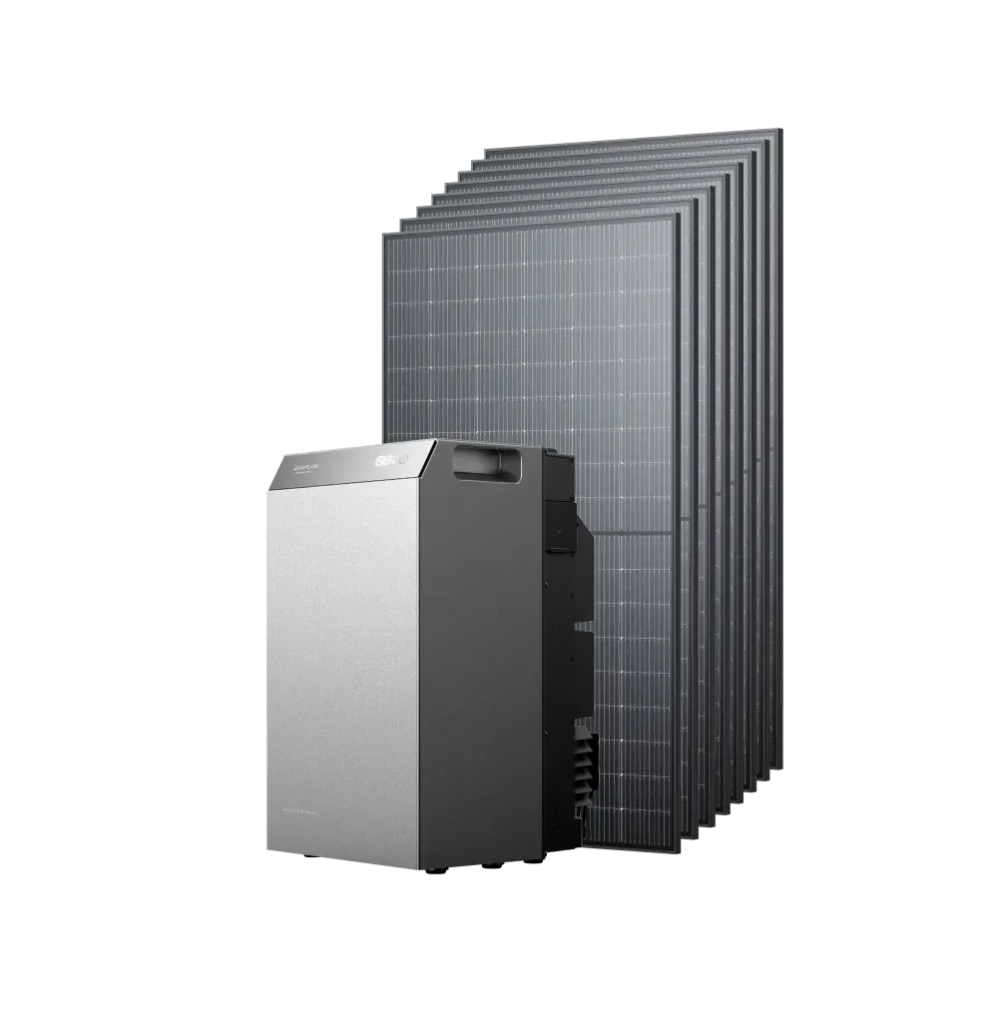
Design-wise, they’ve made a clear break from the old one. The first STREAM units were discreet and rounded, with a light to show the battery status. The 5000 is more angular and puts information back on the device itself. Personally, I really like this new version. Mind you, how discreet a 45 kg object can be is a fairly personal notion, but at least I feel they’ve worked on it.
Who is it for? Someone who wants a well-known brand, a rich app and an installation that can grow. And especially someone already equipped with EcoFlow, provided their models are compatible. My detailed take on the new EcoFlow STREAM 5000 goes through its possibilities and this question of generations.
The apps: a “yes” in a box doesn’t say much
All four products work with an app. Done: we could tick four boxes, call it a draw and go and have a coffee. Except that seeing your battery percentage and organising your consumption aren’t quite the same thing.
EcoFlow documents monitoring, custom tasks and optimisation features that take into account electricity rates, the weather or your habits. That level of features is why I consider its app the most complete of the group. It isn’t a ranking after using the four interfaces side by side: I know the EcoFlow environment, and here I’m comparing the features announced for these new models.
Some advanced features do depend on an internet connection and may require a subscription. The local mode with a compatible meter loses part of the connected features. Before counting a feature among your reasons to buy, check that it works with your electricity tariff, in your country and in the plan included.
ALLPOWERS announces a Wi-Fi/Bluetooth app, energy-flow monitoring and priority settings between storing solar and powering your appliances. AFERIY also offers mobile monitoring; the PN062 manual describes optional Wi-Fi or GPRS modules. The name of the software, the module actually included in the pack and the detail of the features are less clear in the documents we found. I’m not going to turn that lack of information into “bad app”, but I can’t credit it with the same features as EcoFlow just to be polite.
What about Shelly? Yes, ALLPOWERS announces compatible meters. That’s useful, especially to measure the household’s consumption and drive the system accordingly. Only EcoFlow announces that compatibility too. I had noted it as a small ALLPOWERS advantage, and then… well, I had to take away its exclusive status. Check the exact meter model: the Shelly logo isn’t enough to make the whole range interchangeable.
ALLPOWERS BS5000 Pro: I still can’t find what justifies choosing it
I find the BS5000 Pro good-looking, and it has arguments: 5.2 kWh, two AC sockets for appliances, IP65 protection, cold-weather management and a backup function announced with a switchover under 15 ms. It can also grow, which was a real question for me at the start of this comparison.
The manual describes a physical connection using cables and parallel ports, up to three units; ALLPOWERS therefore announces 15.6 kWh with three BS5000 Pro. We’re talking about complete units wired together, not proof of wireless operation with one battery in each room. And three batteries don’t automatically mean three times the power on one socket.
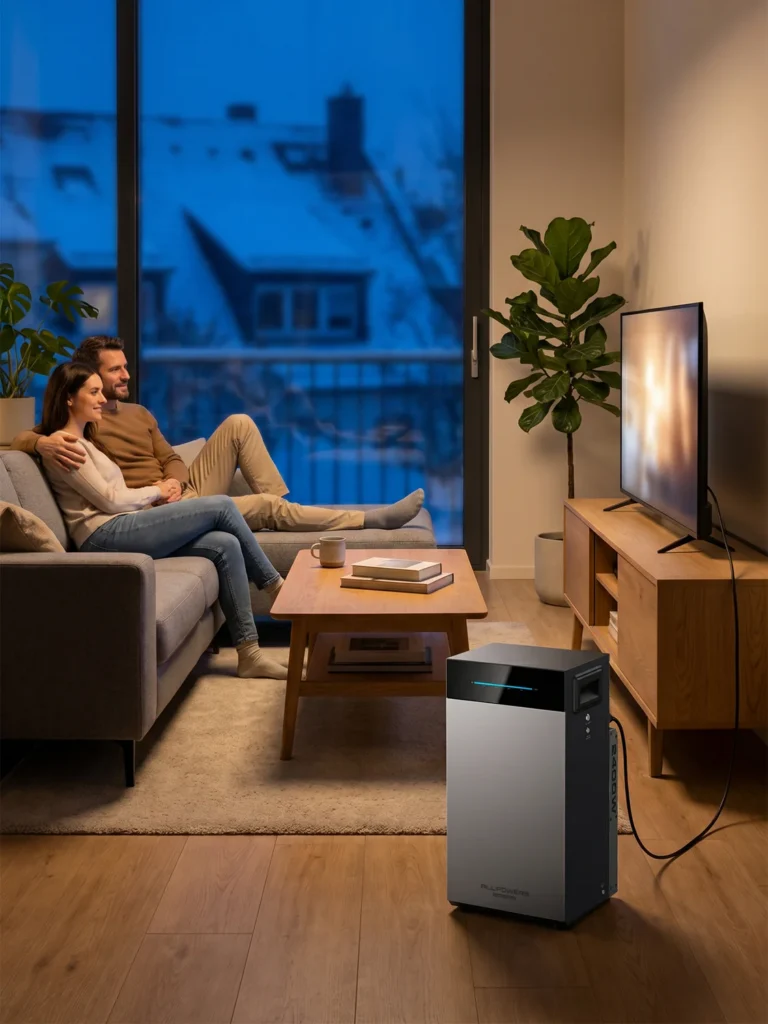
Now, the price, and for a UK reader the question comes even before the price. On 3 November 2026, I couldn’t find the BS5000 Pro on ALLPOWERS’ UK store; it’s listed on the brand’s European store, in euros. So I can’t give you a UK price to compare with the £1,699 of the STREAM 5000 on EcoFlow’s UK store. If you look at a European store, check delivery to the UK, the socket type of the version sold, the after-sales handling and the final cost in pounds before comparing anything.
And even before money, there are the specs. It stores a bit more than the STREAM, yes, about 3.5% more, not enough to change your evening. On the other side, EcoFlow announces a ten-year warranty against five, four MPPT trackers against two, and a maximum solar input of 5,000 W against 2,000 W. So I can quite honestly tell you that ALLPOWERS offers an interesting battery. Telling you why I’d pick this one over the STREAM, in this particular comparison… that’s much harder. I’m not going to develop a sudden passion for an argument just because there’s a medal missing on the shelf.
The “semi-solid” LiFePO4 chemistry ALLPOWERS puts forward is worth looking into, but that word alone proves neither a longer lifespan nor better safety than the other systems. And comparing cycle counts without looking at the capacity left at the end doesn’t help: the 6,000 cycles at 80% announced by ALLPOWERS and the 10,000 at 60% from EcoFlow aren’t measured against the same threshold.
Who is it for? Someone whose needs fit its capabilities, who wants this exact system, or for whom the delivered price and local availability change the comparison. If EcoFlow or AFERIY don’t deliver to you and ALLPOWERS does, obviously the choice changes. For a UK buyer today, availability actually works the other way round. At comparable price and availability, I struggle to put it ahead of the STREAM.

AllPowers BS2500 and BS5000: our review of these home storage batteries
Here are two devices that I've kept in the back of my mind for a while, because they represent a...
Read my take on the ALLPOWERS BS2500 and BS5000 ProAFERIY PH062 or PN062: my preference goes to the one that can grow
At AFERIY, there are two products that start at 5.12 kWh, announce 6,200 W of system power and accept up to 6,500 W of solar. Reading that, you’re already wondering why there are two of them. So was I. They even have quite different designs, with a screen in the middle of the PH062 and at the top right of the PN062. I got the impression of two products competing for the same house (the brand apparently decided to run its own comparison).
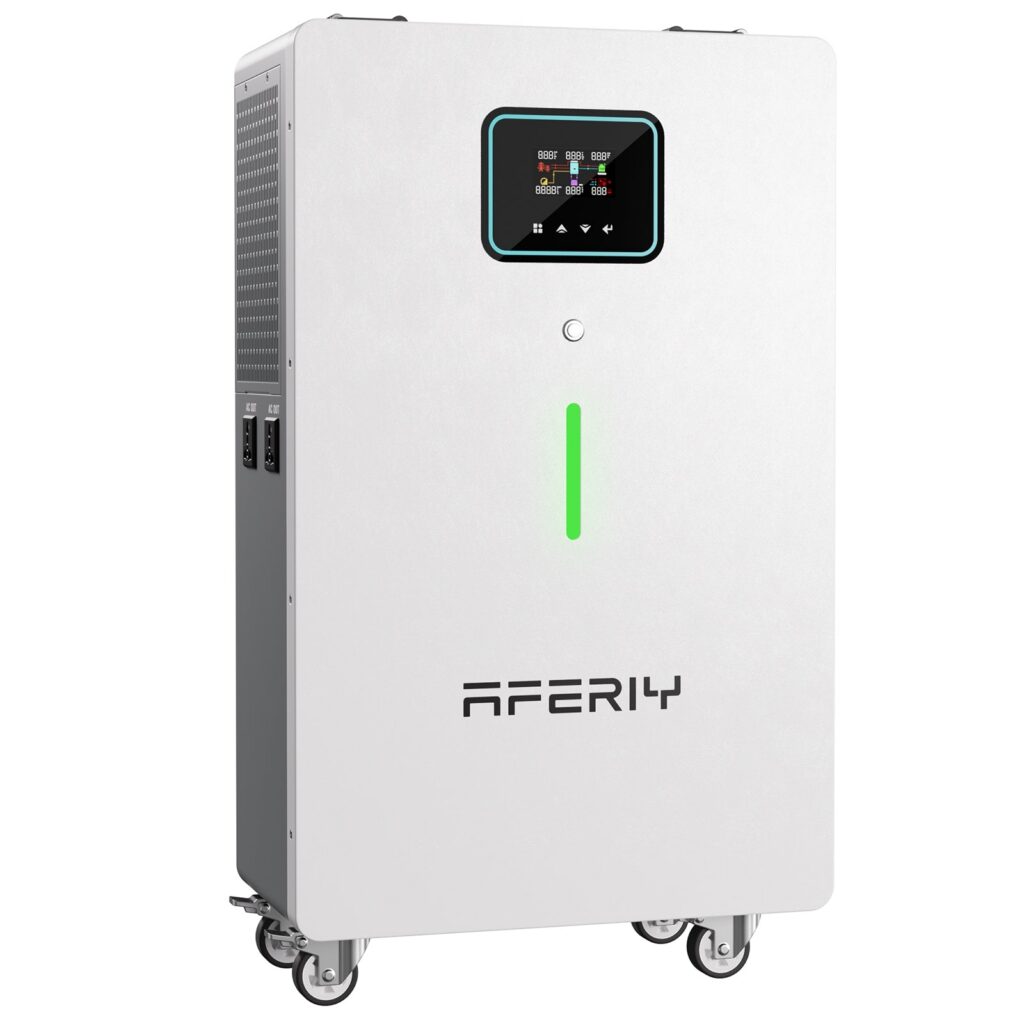
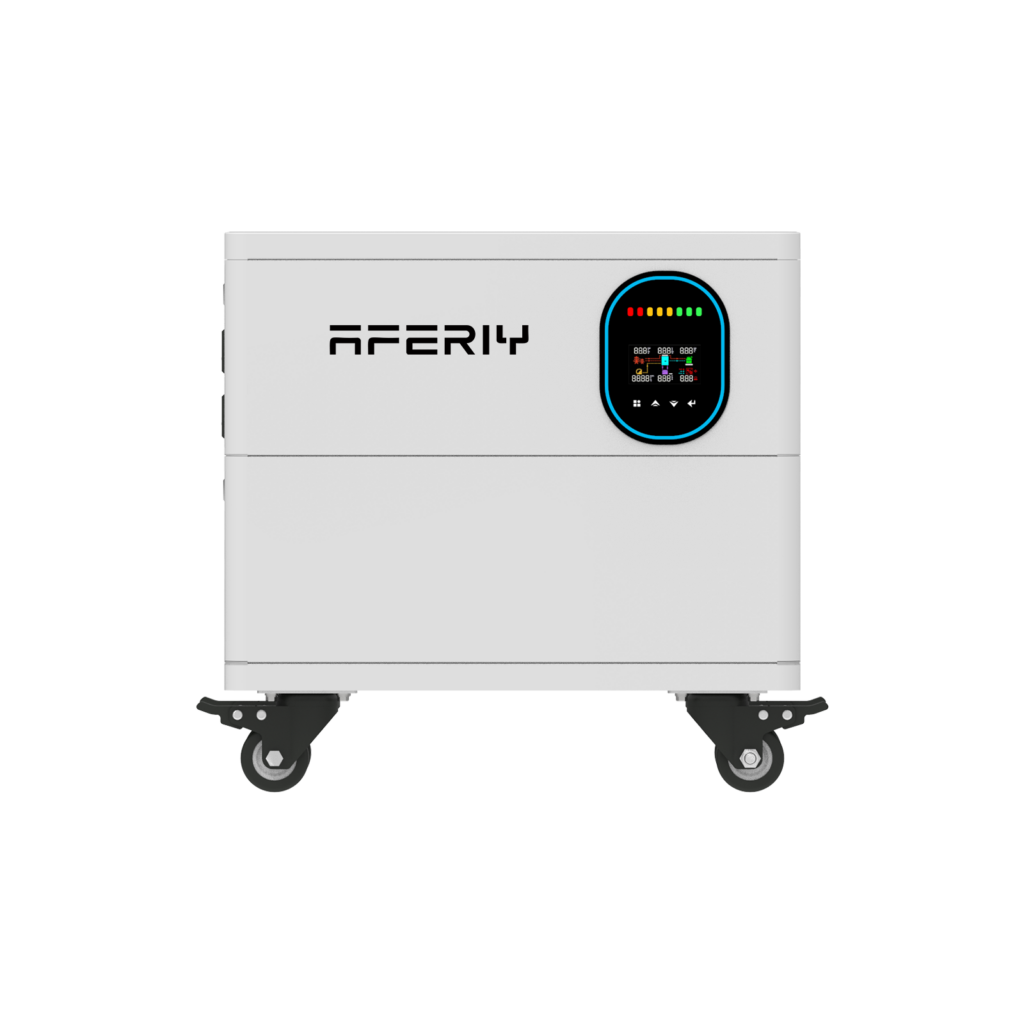
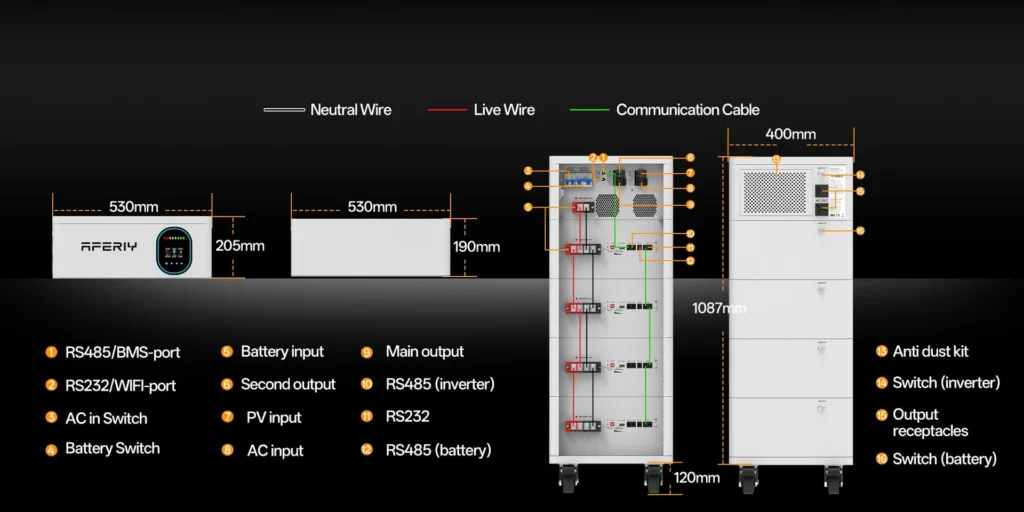
The difference I keep in mind is expansion: the PH062 is an all-in-one unit, with no capacity expansion announced in the documents we looked at. The PN062 pairs an inverter with a B050 battery and can take up to four B050 in total, which makes 20.48 kWh. For someone who wants to start with 5 kWh and grow their storage later, that changes a lot.
In the UK, though, the choice is limited for now. On 3 November 2026, AFERIY’s UK store listed the PH062 at £1,699, but I couldn’t find the PN062 or the B050 battery there. So the expandable version I prefer isn’t the one a UK buyer can simply order today from the brand’s UK store. The store also showed a crossed-out price, but I’m not going to make my decision based on money the shop tells me I could have spent. What counts is the amount actually asked on the day I buy.
The PH062 can appeal to someone who knows 5.12 kWh will be enough and who gets a worthwhile deal. I’m not saying nobody should buy it. I’m saying that, given the choice, I’d rather keep the option to expand. And if on top of that I have to pay someone to install a battery I can’t expand, then personally, my interest fades quite fast.
On paper, the PN062 is aimed at someone planning more storage or a high system power need. But before turning that into a recommendation, there’s one point that weighs a lot more than the wheels under the battery.
To place the components, here’s the manufacturer’s diagram of the PN062: the inverter, the battery modules and their connections. A presentation diagram doesn’t replace the installation procedure for the pack you buy.
Plug-and-play home battery: installation could reverse my choice
Do I unbox it, plug it into a wall socket and it works for the intended use? Or are we talking about wiring the whole thing with a professional? For the AFERIY PH062 and PN062, we couldn’t clarify this well enough to promise the first scenario.
The manuals show AC/PV connections and involve qualified personnel. Having sockets to plug appliances into doesn’t show that the system installs in a home like a plug-in self-consumption kit. And a mains input, which is there to receive electricity, doesn’t prove you can export through that same socket either. That’s why I’m not going to write “plug-and-play” in big letters and then hide this doubt three miles further down.
And I apply the same standard to the other side: not every EcoFlow possibility is available by simply plugging into a socket. The brand also plans setups wired into the consumer unit, with a professional, for some power levels. Comparing a simple use on one side with the heaviest setup on the other would be a convenient way to pick a winner… but not much use to you.
Before buying AFERIY, I’d therefore want a written answer on the exact connection needed for my use, the hardware included and the possible installation cost. Until I get that answer, the PN062 remains an interesting candidate, not a recommendation I’d make with my eyes closed. The details of both models are in my take on the AFERIY PH062 and PN062.
2,000, 5,000 or 6,500 W of solar: here there’s a real difference
We double-checked these values, because the gap made me raise an eyebrow: 2,000 W of solar input on the BS5000 Pro, spread over two MPPT trackers, 5,000 W on the STREAM 5000 with four MPPT trackers, and 6,500 W on both AFERIY units. The number of independent AFERIY trackers remains unconfirmed; a visible terminal block isn’t a sufficient answer.
If you’re planning lots of panels, ALLPOWERS therefore has a lower ceiling per unit. That’s a concrete point to weigh up. If your installation never produces more than 2,000 W, on the other hand, buying a solar input that can take 6,500 won’t make extra sunshine appear. Even with an app, let’s be serious.
You also need to separate solar input and battery charging. EcoFlow announces 5,000 W of PV input, but 2,500 W of maximum charging for the main battery on its own. So you can’t conclude from that line that the STREAM charges its cells two and a half times faster than the ALLPOWERS. The system, the appliances running, the state of charge and real-world conditions all affect the result.
The electrical architectures differ too: you can’t transfer a panel wiring layout from one model to another by looking only at the watts. Voltages, currents and MPPT ranges have to match. The AFERIY figure is attractive for a sizeable solar project, but it doesn’t settle our original question about installation.
Price, warranty and backup: the lines I read before paying
For the two models I found on the UK stores, the prices checked on 3 November 2026 give about £332 per nominal kWh for the PH062 (£1,699 for 5.12 kWh) and £338 for the STREAM 5000 (£1,699 for 5.024 kWh). That’s the purchase price divided by the announced storage, not the cost of the electricity you’ll get back over ten years. If profitability could be worked out with one division, I’d have finished this article a while ago. For the BS5000 Pro and the PN062, I don’t have a UK store price to put in this calculation, and I’d rather leave the line empty than make one up.
The full budget also includes the accessories you need, the expansions and possibly the installation. A small price gap between two batteries can become secondary if one needs hardware or an installation that the other doesn’t for the same use. Codes and promotions can change the result; our product buttons link to the offers attached to each product sheet.
As for the announced warranties, EcoFlow gives ten years, ALLPOWERS five, and AFERIY’s French warranty policy states ten years for home storage; check the policy that applies to the store you buy from. The seven-year badges you may see at AFERIY mostly concern other product families. It’s a difference worth knowing, but a warranty length doesn’t tell me how customer service will handle your case: I haven’t tested these four after-sales services on these models.
Finally, a backup function doesn’t mean your whole house will stay powered automatically. You need to look at which sockets or circuits are actually backed up. The BS5000 Pro announces a switchover under 15 ms; the AFERIY manuals give 10 ms typical in UPS mode and 20 ms in appliance mode. EcoFlow describes backup on its AC socket, without a figure for the delay in the French spec table we used for this comparison.
AFERIY’s 6,200 W is a system power, not a promise of 6,200 W on every socket. And the announced output power isn’t, on its own, permission to export that much to the grid. I’d rather this distinction is clear before someone plugs their whole house in behind one line of a comparison table.
So which one would I choose, depending on the project?
For someone who wants an installation that can grow, a recognised brand and a complete app, EcoFlow is the easiest choice for me to explain today. It’s also one of the two models in this comparison that I could actually find on the brands’ UK stores. If you already own compatible kit, the case for staying in that ecosystem is even more obvious to me.
If you’re looking at AFERIY, I favour the PN062 for its expansion up to four batteries, provided you can get hold of it. But I want to know how it installs before putting it in the same basket as a simple plug-in solution. Professional required for my use? It drops behind EcoFlow and ALLPOWERS in my choice. No such requirement? It deserves a serious look, without that being enough to crown it winner of the whole comparison.
The PH062 I’d rather keep for a fixed storage need, with a price advantage that really justifies giving up expansion. In the UK today, the PN062 isn’t on AFERIY’s UK store, so the PH062 is the AFERIY you can order there; it only makes sense to me if 5.12 kWh really is enough and the installation question is answered. As for the BS5000 Pro, it can suit some people, but its lower solar ceiling and shorter warranty make it hard to defend against the STREAM, and in the UK you first have to find a way to buy it. A better offer or different local availability could change that calculation.
That’s where I stand. Three partners, four models, and not four winners invented to keep everyone happy. My goal is for you to know what you’re buying, what you’ll be able to add later and what you’ll need to do before you press the button. A nice box in the living room is fun for five minutes; after that, I’d still like the battery to do some work.
And the comparison of who climbs three and a half floors best will have to wait. On that criterion, for now, I’m the one throwing in the towel.
Questions to ask before choosing a home battery
Can a 5 kWh battery run a 5 kW appliance?
Not necessarily. kWh measure storage and kW measure power. A battery can hold about 5 kWh while its output is limited to 2.4 or 2.5 kW. Look at the output you'll use, its continuous power and any start-up surge the appliance needs.
How long does 5 kWh of storage last?
On paper, 5 kWh means ten hours at 500 W or five hours at 1,000 W. In practice, you have to subtract losses and account for the battery reserve, its usable capacity and a consumption that varies. This calculation isn't a runtime measured on these models.
How many batteries do I need to power a house?
Start from the appliances or circuits you want to power and how much they use over the period you're aiming for. For example, an average of 500 W for ten hours is 5 kWh before losses and reserve: a nominal 5 kWh of storage doesn't guarantee those ten hours in practice. You also need to check the simultaneous power and how the backed-up circuits are connected. The number of batteries doesn't follow from the size of the house alone.
Can I start without solar panels?
The systems compared can be powered or charged from the grid. That alone doesn't guarantee savings: you need to compare the rates when you charge and when you use the energy, the losses and the purchase cost. For AFERIY, the connection required for your scenario still needs to be clarified.
Will these batteries keep my house running during a power cut?
Not automatically. The appliances or circuits concerned have to be connected to the backed-up outputs, according to the planned installation. A UPS function doesn't mean every circuit in the house stays powered, and the energy available depends on the state of charge when the power goes off.
Can I mix expansion batteries from different brands?
Don't count on it. Each system has its own compatible models: B050 for the PN062, units and accessories specified by ALLPOWERS, compatible expansion batteries and units at EcoFlow. The same chemistry or a similar capacity doesn't prove electrical or software compatibility.
Are EcoFlow's 10,000 cycles directly comparable with ALLPOWERS' 6,000?
No: the figures used here correspond to 60% remaining capacity for EcoFlow and 80% for ALLPOWERS, under each manufacturer's conditions. You'd need identical protocols and thresholds to rank their longevity. We haven't run those tests.
What should I ask AFERIY before ordering the PN062?
Written confirmation of the connection for your specific use, of whether a professional is needed, of the number of B050 batteries included, of the communication module supplied and of the accessories required. For me, having to pay for an installation can push the PN062 behind EcoFlow and ALLPOWERS; this point isn't definitively clarified. Also check that it is sold and supported where you live.
Our gear tests, in real conditions
Batteries, solar, conversion, security. What we found after months of real use, and what we would not buy again. An email when we have actually tested something, not before.
Ce que vous souhaitez recevoir :