



So let’s get it out of the way straight off, because it’s the first thing people throw at us when they hear we lived full-time in Edward (our motorhome, yes he has a name, long story)… No, living in a van is not illegal. There is no law that says “you are not allowed to live in your vehicle”. What’s regulated is where you stop and how you settle in, and that’s where the whole thing becomes an art of living.
Living in a van is legal (the straightforward answer)
Let’s start by killing the anxiety, because it’s the anxiety that ruins your first nights. No UK law forbids living in a vehicle full-time. In the eyes of the law your van stays a vehicle, full stop. You can sleep in it, eat in it, work in it, spend your life in it: it isn’t the act of living inside that’s the problem. As long as the van is road-legal (taxed, MOT’d, insured) and parked somewhere parking is allowed, you have every right to sleep in it.
What changes everything is that the van is never “your address” the way a house sitting on a plot is. It’s a vehicle that parks. And a parked vehicle answers to the same rules as your neighbour’s car. The legality problem is never “living in a van” in the abstract: it’s where you park, and whose land you’re on. Get those two right and nobody can tell you otherwise (we’ll come back to that, because there’s always a “but”).
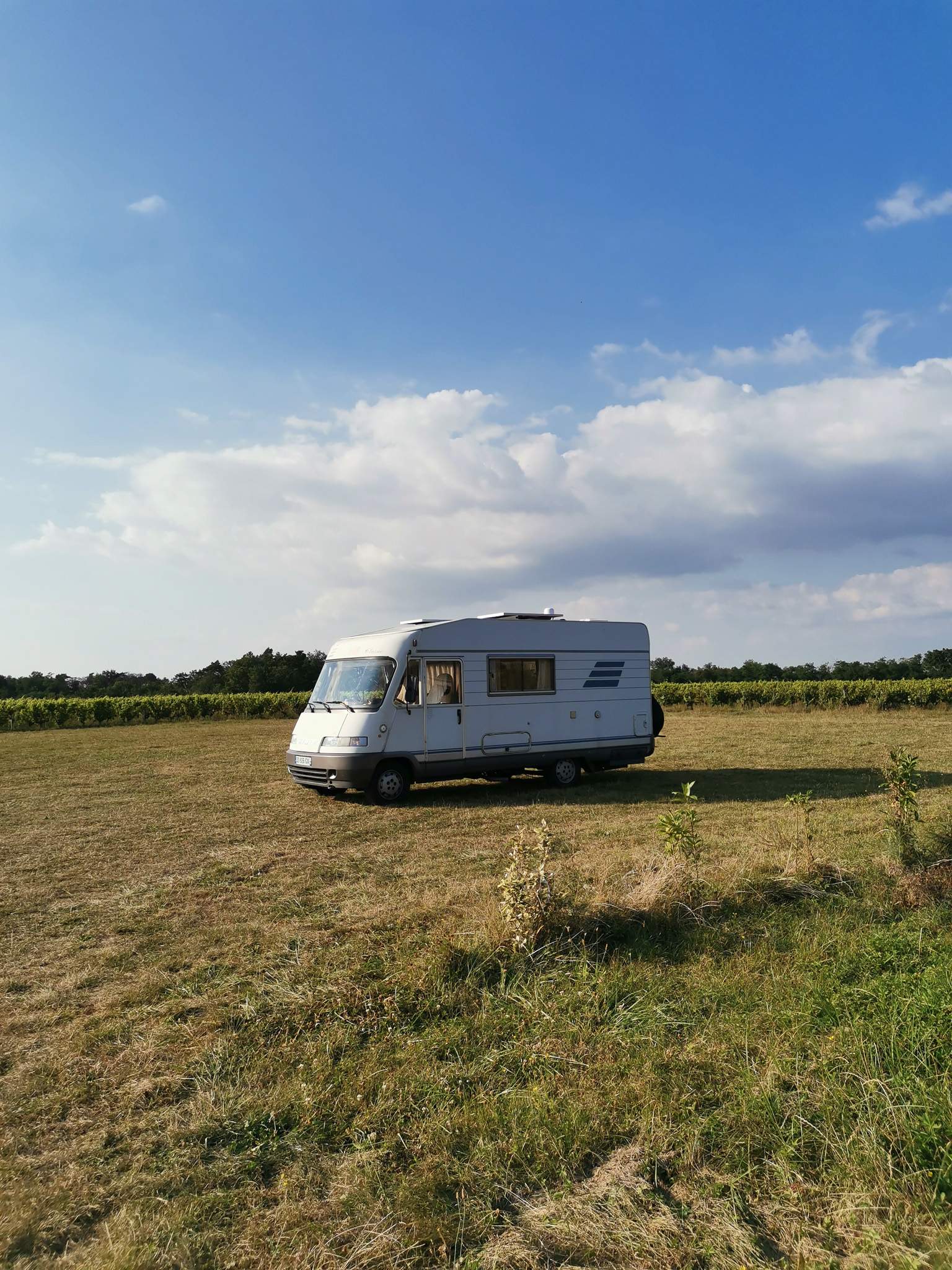
So the fear of a police officer hammering on your door at 3am to drag you off because you live in a van? You can file that away. The real subject, the only one, is the invisible line between “I’m parked” and “I’m camped”, and which rung of the enforcement ladder you’re standing on.
Tolerated, legal, or asking for a fine: the overnight ladder
Here’s the heart of it, the bit most articles get muddled. In the UK, overnight van life sits on three rungs, and knowing which one you’re on is what saves your night. Legal, tolerated, or criminal, that’s the real ladder. Legal means a proper site, an aire, a Britstops farm pitch, a CL/CS five-van site, or a permit zone. Tolerated means a discreet roadside layby where you arrive late and leave early; nobody bothers you, but it’s a favour, not a right. Criminal is the rare top end: ignoring a council ban or refusing to move on.
And here’s the single most misunderstood point in the whole country, so let me say it plainly: Scotland’s wild camping right does not cover vans. The famous right to roam (Land Reform (Scotland) Act 2003, section 9) is for tents on foot; it explicitly excludes being on land “in or with a motor vehicle”. So sleeping in your campervan by a Scottish loch isn’t a legal right anywhere in Scotland, it’s tolerated when you’re discreet. And inside the Loch Lomond camping management zones you actually need a motorhome permit (around £4.50 a night). I put together this little table to show which rung you’re on:
| Where you spend the night | Which rung you're on |
|---|---|
| A proper site, an aire, a Britstops farm or a CL/CS five-van pitch | Legal |
| A Loch Lomond camping zone with a motorhome permit (~£4.50/night) | Legal |
| Parked on a road or car park with no restriction, sleeping inside | Legal |
| A discreet roadside layby, self-contained, arrive late and leave early | Tolerated, not a right |
| Sleeping in your campervan by a Scottish loch with no permit | Tolerated, not a right |
| Overnight in a council car park covered by a PSPO ban | £100 fixed penalty |
| Refusing to leave private land when asked, causing real harm | Criminal, PCSC Act 2022 |
| Camping out: chairs, table and awning out where it's banned | Moved on or fined |
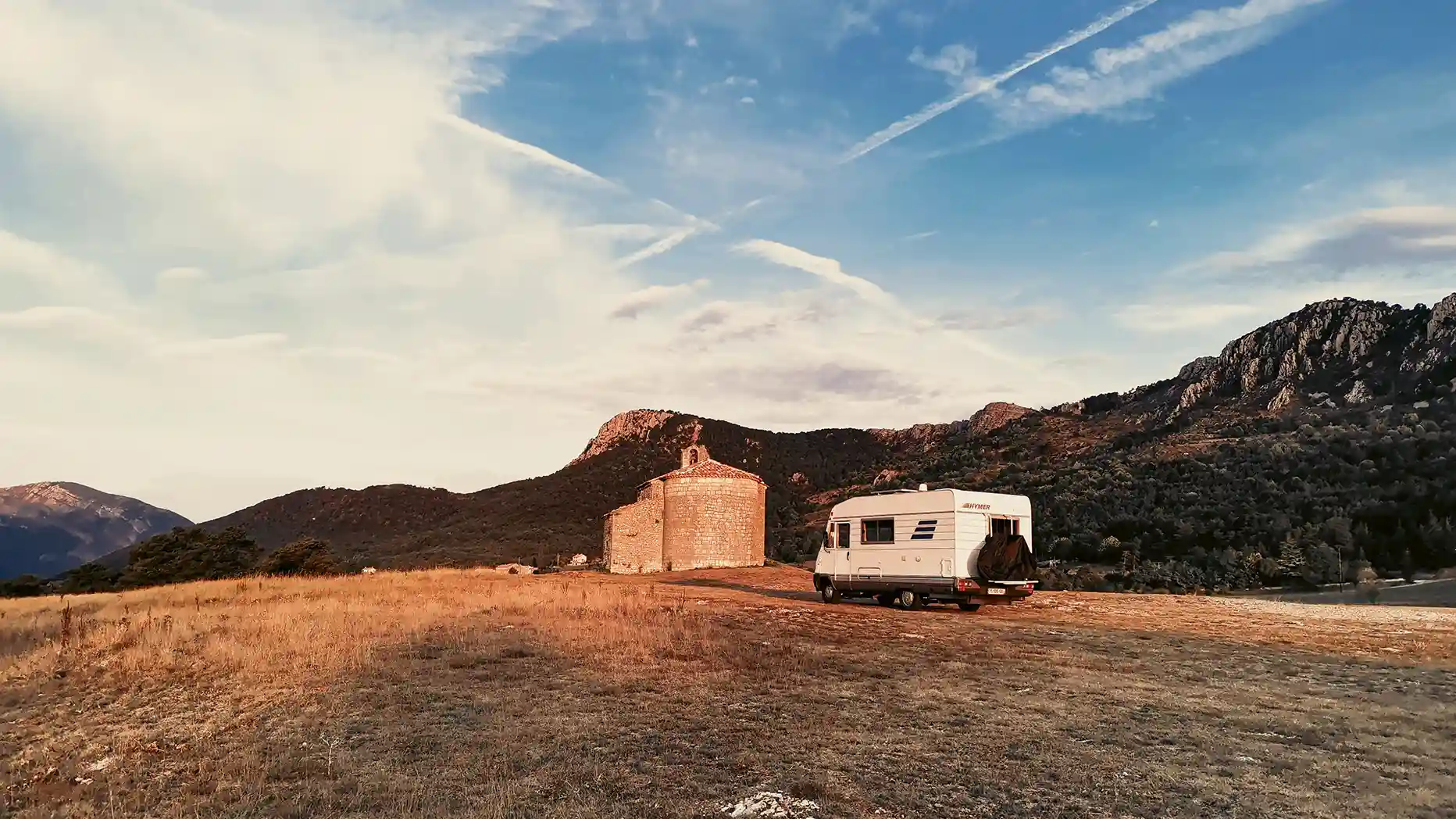
In England and Wales it’s softer in one sense and sharper in another. Sleeping overnight in your van isn’t “wild camping” with any right attached; without the landowner’s permission you’re technically trespassing, which is a civil matter, not a crime, so the owner (not the police) can ask you to move on. The sharp bit is recent: since the Police, Crime, Sentencing and Courts Act 2022, residing on land in a vehicle without consent and refusing to leave, where you cause significant damage or distress, is now a criminal offence (up to a £2,500 fine and your vehicle seized). It targets the worst cases, not the considerate solo van, but it’s the legal teeth behind “you can be made to leave”.
How long, and where you can really park the van
Right, let’s say you’re parked sensibly, in proper vehicle mode. Where can you actually stay? The real enforcement tool isn’t a vague law, it’s the Public Spaces Protection Order. A council can lawfully ban overnight parking of campervans on its land, and breaching that PSPO is a £100 fixed penalty before it climbs to prosecution. The hotspots we’ve learned to read: the New Forest (a blanket overnight ban in car parks and laybys), chunks of the Cornwall and Devon coast in summer, and some Lake District villages. Laybys are short stops, never passing places, and a “no overnight parking” sign on the public highway is often only advisory unless it’s backed by an order.
Want the van on your own land? That’s a material change of use, and a permanent pitch generally needs planning permission; the 28-day rule allows only limited temporary use, and the safe route is a Lawful Development Certificate. A van you sleep in on your own driveway is a far lower-risk case than siting a static home, but “I’ll just park up and live here forever” is exactly the bit that trips people up.

The one night we genuinely got moved on was in Portugal, in Lagos, right opposite the Ponta da Piedade (that ridiculously beautiful rock headland in the Algarve). And you know what? It wasn’t out in the middle of nowhere, it was on THE spot, the prettiest, the busiest, the one everyone wants to sleep on. The lesson stuck: the more postcard-perfect the place, the higher the odds of a polite shove out the door. Remote nature almost always left us alone. It’s the too-pretty that draws the trouble.
Over time we built a reflex that saves a lot of nights: read the signs first. A “no overnight parking” board, a barred motorhome pictogram, a time limit on the machine… it takes thirty seconds to spot once you’ve got the eye for it. When in doubt, the considerate, self-contained, arrive-late-leave-early van is the one that stays firmly in the “tolerated” zone. It feels obvious, but it’s exactly what separates “I didn’t know” from “I slept like a baby”.
Existing on paper when you’re on the road all year
This is the part nobody really talks about, because it’s less sexy than a sunset. A van isn’t an address. To keep existing on paper (the DVLA, your insurer, your GP, the electoral roll), you still need a physical address somewhere. There are no PO boxes for your V5C. Us, the first year on the road, we used family; plenty of full-timers use a relative’s address or a postal service, and that’s also what your council tax position hangs on (if the van is genuinely your sole and main residence, council tax can in principle apply, though a roaming van with no fixed pitch usually isn’t banded).
I won’t unroll the whole paperwork here, because we’ve got a full guide on administration and taxes in vanlife that digs into addresses and the rest far better than one paragraph could. Same for insurance: you need specialist campervan cover and you must declare full-time, residential use, or an ordinary van policy can be voided. And if your van isn’t sorted yet on the conversion side, that’s another box to tick before you move in for good.

We're Caroline and Xavier
We got most of it wrong before we got it right. We share what actually holds up day to day in a van, and what we wouldn't do again.
Ce que vous souhaitez recevoir :
What we really experienced: tolerance can’t be decreed
Now the bit that might surprise you, because it surprised us. The least welcoming country for vans, the one where we felt the most suspicion, the most anti-motorhome by-laws and “no habitable vehicles” signs… was France (yes, our own backyard, go figure). And the big revelation the other way were the Netherlands, astonishingly kind, people whose friendliness completely caught us off guard. So whatever you assume about “it’s tougher abroad”, you can leave it at home.
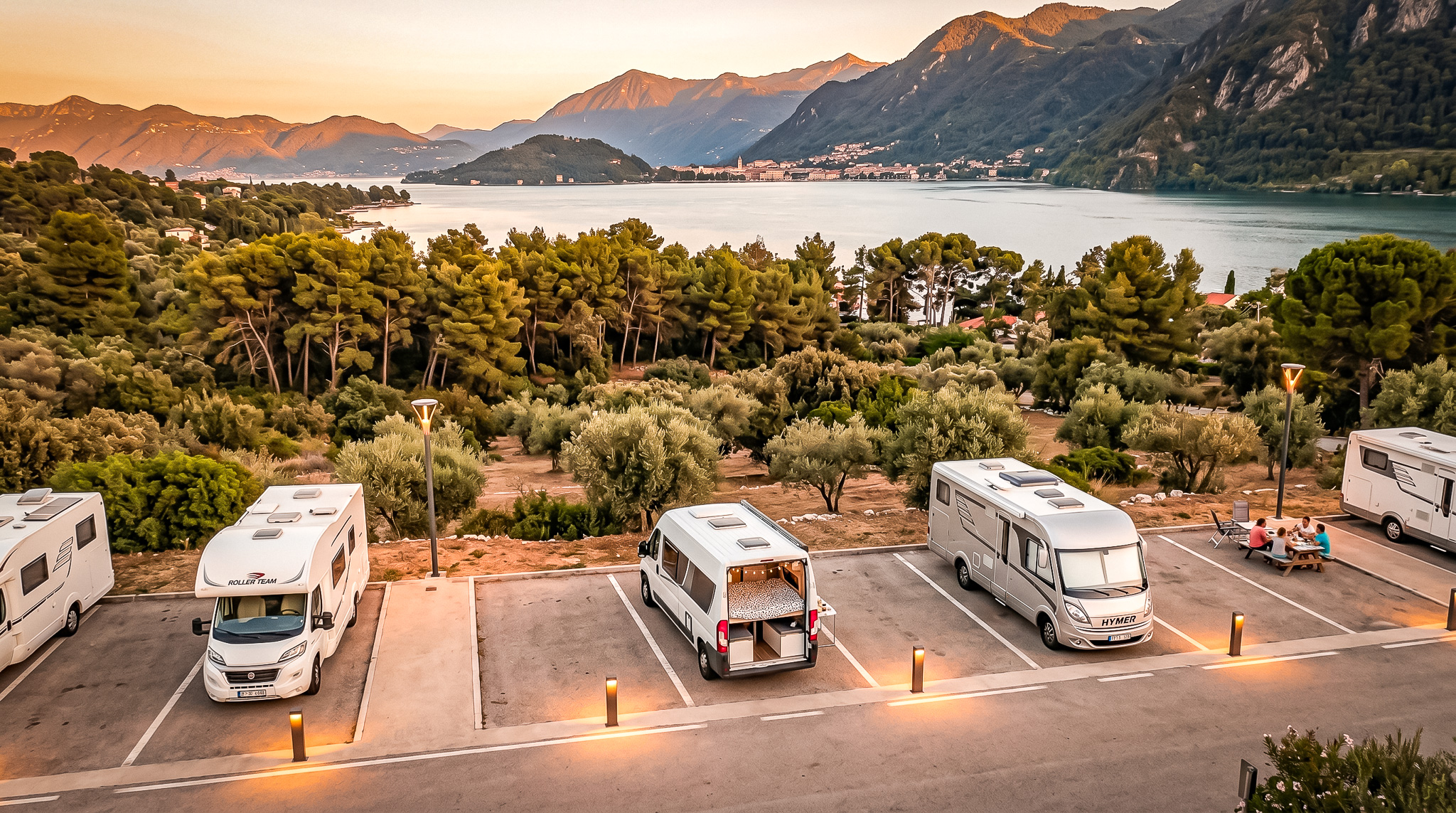
And that’s where the one real lesson of these years lands: tolerance can’t be decreed, it’s earned. Even Scotland, which everyone quotes as the wild-sleeping paradise, never makes van sleeping a right, only a tolerance (the access right is for pitching a tent on foot, remember, not parking a vehicle). It’s the same everywhere: you’re left alone as long as you bother no one.
So our rule fits in one word, and it’s discretion above all. Arrive late, leave early, deploy nothing outside, pick a corner that gets in nobody’s way, stay ready to move. The law sets the frame, sure, but on the ground it’s your behaviour that turns a technically grey stop into a perfectly peaceful night. The most discreet van is always the most legal van.
Living in a van and the law: your questions
Is it legal to live in a van in the UK?
Yes. No UK law forbids living full-time in a vehicle. In law your van is just a vehicle: it isn't living inside that's regulated, it's where and how you park. As long as the van is taxed, MOT'd and insured and you're parked somewhere lawful, sleeping in it is perfectly legal.
Can you wild camp in a campervan in Scotland?
Not as a right. Scotland's celebrated right to roam (Land Reform (Scotland) Act 2003, section 9) is for tents on foot and explicitly excludes being on land in or with a motor vehicle. So sleeping in your campervan is tolerated when you're discreet, never a legal right, and inside the Loch Lomond camping management zones you need a motorhome permit (around £4.50 a night).
Is it illegal to sleep in your van overnight?
No, not for sleeping itself. You can be fined for obstructive or banned parking, or for breaching a council PSPO, but never simply for being asleep in a properly parked vehicle. The line is always "parked vehicle" versus "installed camp".
Can you park a campervan overnight anywhere in the UK?
No. A council can ban overnight parking on its land with a Public Spaces Protection Order, and breaching it is a £100 fixed penalty. Hotspots include the New Forest, parts of the Cornwall and Devon coast in summer, and some Lake District villages. Laybys are short stops only, never passing places.
Are 'no overnight parking' signs legally enforceable?
It depends. On private land such a sign is a notice of trespass conditions (a civil matter). On the public highway a sign alone is usually only advisory unless it's backed by a Traffic Regulation Order or a PSPO, which is what gives it real teeth.
Can the police move you on for sleeping in your van?
On private land, trespass is civil, so the landowner asks you to move, not the police. But since the Police, Crime, Sentencing and Courts Act 2022, residing in a vehicle without consent and refusing to leave, where you cause significant harm, can be a criminal offence with a fine up to £2,500 and vehicle seizure. It targets the worst cases, not the considerate solo van.
Can you live in a campervan on your own land?
Stationing a van as a dwelling on your land is a material change of use and a permanent pitch generally needs planning permission. The 28-day rule allows only limited temporary use; the safe route is a Lawful Development Certificate. Sleeping in a van on your own driveway is a much lower-risk case than siting a static home.
Can a van be your main residence or registered address?
A van can legally be your main home, but it isn't an address on its own: you still need a physical address for your V5C, insurance, GP and the electoral roll (no PO boxes for the V5C). Most full-timers use a relative's address or a postal service.
Do you have to pay council tax if you live in a van?
If the van is genuinely your sole and main residence, council tax can in principle apply, but a roaming van with no fixed pitch usually isn't banded. A van on a residential pitch or private land is more likely to be assessed. Councils look at where your life is actually centred.
What insurance and MOT does a live-in van need?
You need specialist campervan or motorhome insurance and must declare full-time, residential use, or an ordinary policy can be voided; our administration guide covers the paperwork. The MOT is mandatory annually once the vehicle is three years old, residential use or not.
Is trespassing in a van a criminal offence in England?
Ordinary trespass is a civil matter: the landowner can ask you to leave and use civil process if you don't. It only tips into criminal territory under the 2022 Act when you reside in a vehicle without consent, cause significant damage or distress, and refuse to move on when asked.
And abroad, are the rules the same?
No, and it varies in surprising ways. France is one of the strictest for anti-motorhome by-laws; the Netherlands surprised us with how welcoming they were. And even where van sleeping is widely tolerated, like Scotland, it's a tolerance, never a guaranteed right. Stay discreet everywhere.

Where to Sleep on a Road Trip
Ready to find the best places to park your van for the night? From wild nature spots to service areas, this article explores the top spots for a peaceful night's...
Read more
Vanlife Taxes and Admin in the UK: The Complete Guide
Living in a van means almost total freedom, but it also involves juggling administrative obligations. From tax domicile to mail management, and specific tax implications, this guide helps you navigate...
Read more
Van Conversion: The Key Steps to a Successful Transformation
The Fiat Ducato dominates the market by equipping about 40% of vans and motorhomes thanks to its chassis specifically designed for leisure vehicles. By following this guide from A to...
Coming soonPS: no, we never ended up in handcuffs for sleeping in a van. The worst that ever happened was a very polite “sorry folks, you’ll have to move along” facing the Ponta da Piedade… and honestly, with that view, we’d almost have paid to stay.
Van life day to day, unfiltered
Two years of full-time van life, and the Algarve as our base ever since. We still hit the road, by van or otherwise, and we write up what we find along the way. An email when we have something to say, no more.
Ce que vous souhaitez recevoir :