



Introduction
Setting out on a road-trip is more than just an adventure on the open road; it’s a complete immersion into new cultures, landscapes, and tales. But what if, in addition to discovering new vistas, you could also enrich your journey by picking up a new language?
In this article, we’ll delve into the invaluable benefits of learning a foreign language during your travels. We’ll share personal stories highlighting the significance of communication in various situations, practical tips for incorporating language learning into your traveler’s daily routine, as well as modern tools and resources that will revolutionize the way you approach foreign languages.
Why Learn a Foreign Language While Road-Tripping?
Embracing a language while traveling lets you dive deep into the culture, history, and traditions of a country. It’s also a way to forge deeper connections with locals, share genuine moments, and live unforgettable experiences. This skill can also assist in everyday situations, such as:
Seeking Information in English
Our proficiency in English proved invaluable on our trips across Europe. In countries like the Netherlands, England, and Scotland, our linguistic abilities allowed us to travel with ease, simplifying every interaction, whether it was asking for directions, booking accommodation, or just chatting with locals. However, there’s a flip side to this ease. Currently, as we’re staying in Portugal, we find that most residents speak English. Though this may seem convenient at first, it becomes a hurdle in our quest to learn Portuguese. As soon as we try to practice, the conversation often switches to English, making learning the local language more challenging.
Navigating Technical Troubles in Spanish
On a trip through Spain, Caroline and I faced a significant hitch: the clutch of our camper van gave out right in the heart of Andalusia. We found ourselves in a small village where, contrary to popular belief, nobody spoke a word of French or even English.
t’s a common misconception to think that our native language is widely spoken abroad. Faced with this situation, we had to adapt swiftly. Using translation apps, we communicated our issue: “El embrague está roto” (The clutch is broken). Had we been better versed in Spanish, perhaps we wouldn’t have been taken advantage of by the repair shop!
Feeling More Integrated in Portuguese
Caroline and I spend most of the year in Portugal, a country that has captivated us with its cultural richness and human warmth. Though the country is welcoming to foreigners, we quickly understood the importance of speaking Portuguese for deeper integration.
Learning the language isn’t just a means of communication; it’s a gateway to the local culture, traditions, and genuine relationships.
By saying, “Estou a aprender português para me sentir mais próximo da cultura” (I’m learning Portuguese to feel closer to the culture), we’ve been able to build stronger ties with the locals. Whether it’s discussing the best bacalhau recipes, attending village festivals, or simply sharing everyday moments, knowing the language has allowed us to experience Portugal from within, far beyond just being tourists.
Which Languages to Learn for Global Travel?
When considering an international road-trip, familiarizing oneself with certain languages can greatly enhance interactions and enrich the travel experience. Here are the most valuable languages to know based on world regions:
- Global: Without a doubt, English reigns supreme, spoken by nearly 1.268 billion people and is vital for business, technology, and travel. If there’s one language to master, it’s certainly this one.
- Europe: German is pivotal, largely because of Germany’s economic strength and its prevalence in other prosperous countries like Austria, Switzerland, and Belgium. Spanish and Italian (because in Italy, primarily… they speak Italian) are also significant for traveling and working in Europe.
- Americas: Spanish is widely spoken, especially in the U.S. where 30% of the population is of Hispanic origin. Portuguese is crucial for those considering travel or work in Latin America or Brazil.
- Asia: Mandarin is the most spoken language globally and is vital for those contemplating work or travel in China. Arabic is also a key language, spoken in over 20 countries and highly sought-after for business dealings.
- Russia: Russian is among the world’s most spoken languages, presenting many professional and academic opportunities.
- Africa: In the north, it’s Arabic; in East Africa, it’s Swahili; and French is dominant in several West and Central African nations.
- Oceania: English is predominant, especially in Australia and New Zealand.
- India: While Hindi is key, thankfully, English is also widely used.
If you wish to traverse the world and effectively communicate with the majority of its inhabitants, the top three languages to prioritize are English, Spanish, and Mandarin.
Mastering these languages, even at a basic level, can completely transform your road-trip experience, allowing for deeper connections with local cultures and opening up vast opportunities.
Our Tools and Tips for Language Learning
 Language Podcasts and YouTube Channels
On the road with Edouard, our trusty camper van, Caroline and I often turned to language learning podcasts and YouTube channels. These free resources are perfect for multitasking, like driving to a new destination. They’re usually very educational, with slower speech rates, and the topics often provide insight into the country’s culture.
Tip: Slow down the playback speed to really grasp the pronunciation. Take a stroll and try to repeat sentences as soon as you understand them. Sure, you might look odd talking to yourself on the street, but while getting in your 10,000 steps, you’ll be learning a new language.
Here’s a list of channels we recommend:
- 🇫🇷 French: French Mornings with Elisa
- 🇬🇧 English: Speak English With Tiffany
- 🇩🇪 German: Easy German
- 🇵🇹 Portuguese: Portuguese with Leo
- 🇪🇸 Spanish: Linguriosa
- 🇸🇦 Arabic: Learn Arabic with Khasu
- 🇧🇷 Brazilian Portuguese: Marcia Macedo
- 🇮🇹 Italian: Podcast Italiano
- 🇨🇳 Chinese: ChineseClass101
Setting Your Phone and Computer to the Foreign Language
One of the most effective tricks we’ve adopted is setting our phones and computers to the language we wanted to master. It might seem daunting at first, but rest assured: as long as the alphabet is similar to ours, like the Latin one, the transition is smoother than you might think. The icons, app locations, and functionalities typically remain the same, which greatly eases the adjustment process.
But that’s not all. By choosing a foreign language for your devices, services like Google automatically tailor your searches, news, and suggestions to that language.
This means that every time you use your phone or computer, you’re immersed in the language, thereby reinforcing your learning.
It’s a subtle but powerful way to surround yourself with the language daily, turning every technological interaction into a learning opportunity.
Watching Movies in Original Language with Subtitles
Rather than just watching, why not turn these leisure moments into genuine learning sessions? With today’s streaming platforms, it’s now easy to watch content in its original language with subtitles. This allows you not only to appreciate the works in their true essence but also to enhance your comprehension and linguistic listening skills.
Some services even provide the option to select subtitles in various languages, adding an extra dimension to the experience.
By merging entertainment and education, you expand your vocabulary while enjoying your favorite content. A clever way to mix business with pleasure during your motorhome travels.
Using the Mobile Version of Chat GPT to Engage in Language Conversations
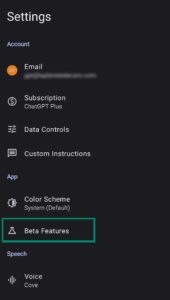 We stumbled upon an unexpected ally in our quest to learn a new language: the mobile version of Chat GPT. More than just an app, it’s a true game-changer for language enthusiasts like us. By choosing the paid, mobile version and activating the voice features, Chat GPT transforms into a tailored language tutor. Simply inform it of your desire to learn a particular language, and it takes care of the rest.
Engage in a conversation, ask questions, and let yourself be guided.
The artificial intelligence corrects your mistakes in real-time, providing you with constructive feedback. It’s like having a private tutor right in your pocket!
For those who, like me, might feel shy about expressing themselves in a new language, this is a godsend. With Chat GPT, you can practice at your own pace, free from fear of judgment, and make progress every day.
Using a Mobile Language Learning App
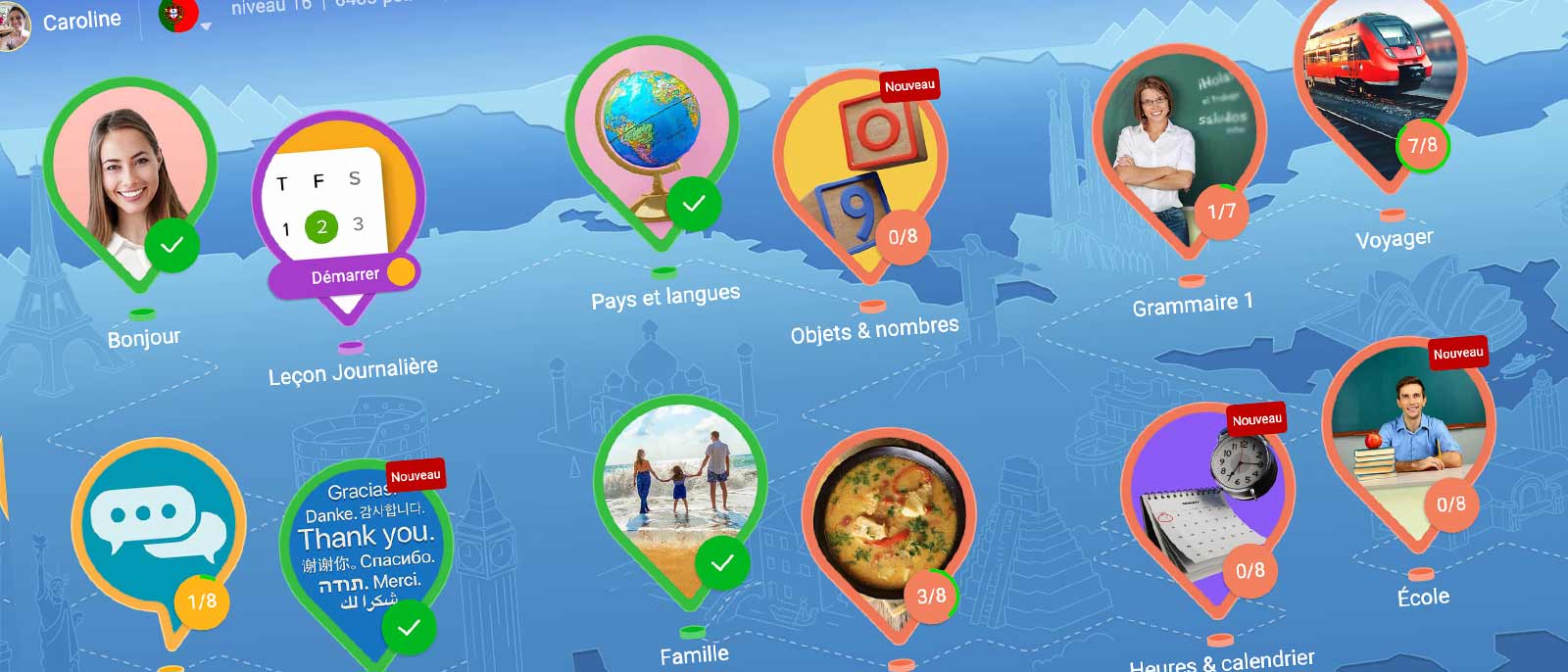
While preparing for our big road-trip adventure, Caroline and I came across Mondly, a language learning app that would reshape our approach to foreign languages. But Mondly is more than just an app—it’s a vision. Hailing from the picturesque Transylvania in Romania, its mission is to bridge cultures through technological innovation.
The difficulty level is progressive—from identifying words with pictures, to fill-in-the-blank sentences, to writing out full phrases, and finally speaking into the phone for comprehension.
With Mondly, language learning becomes a fun experience. It offers courses in 41 languages, designed to be both entertaining and effective. Whether you want to learn Japanese, Arabic, or Norwegian, Mondly is the perfect tool. And the most impressive part? Purchasing a single course grants you access to all 41 languages!
Practice, Practice, Practice
Consistency over intensity. Learning a language is much like maintaining Eddie, our trusty RV. Daily care, even if brief, is better than an occasional major overhaul.
Rather than dedicating two hours a week, aim for 20 minutes daily.
This consistency bolsters memory retention and fluency in speaking. Every conversation, every exchange, even the brief ones, adds a building block to your learning journey. In the linguistic journey, perseverance is your greatest ally.

We're Caroline and Xavier
We got most of it wrong before we got it right. We share what actually holds up day to day in a van, and what we wouldn't do again.
Ce que vous souhaitez recevoir :