


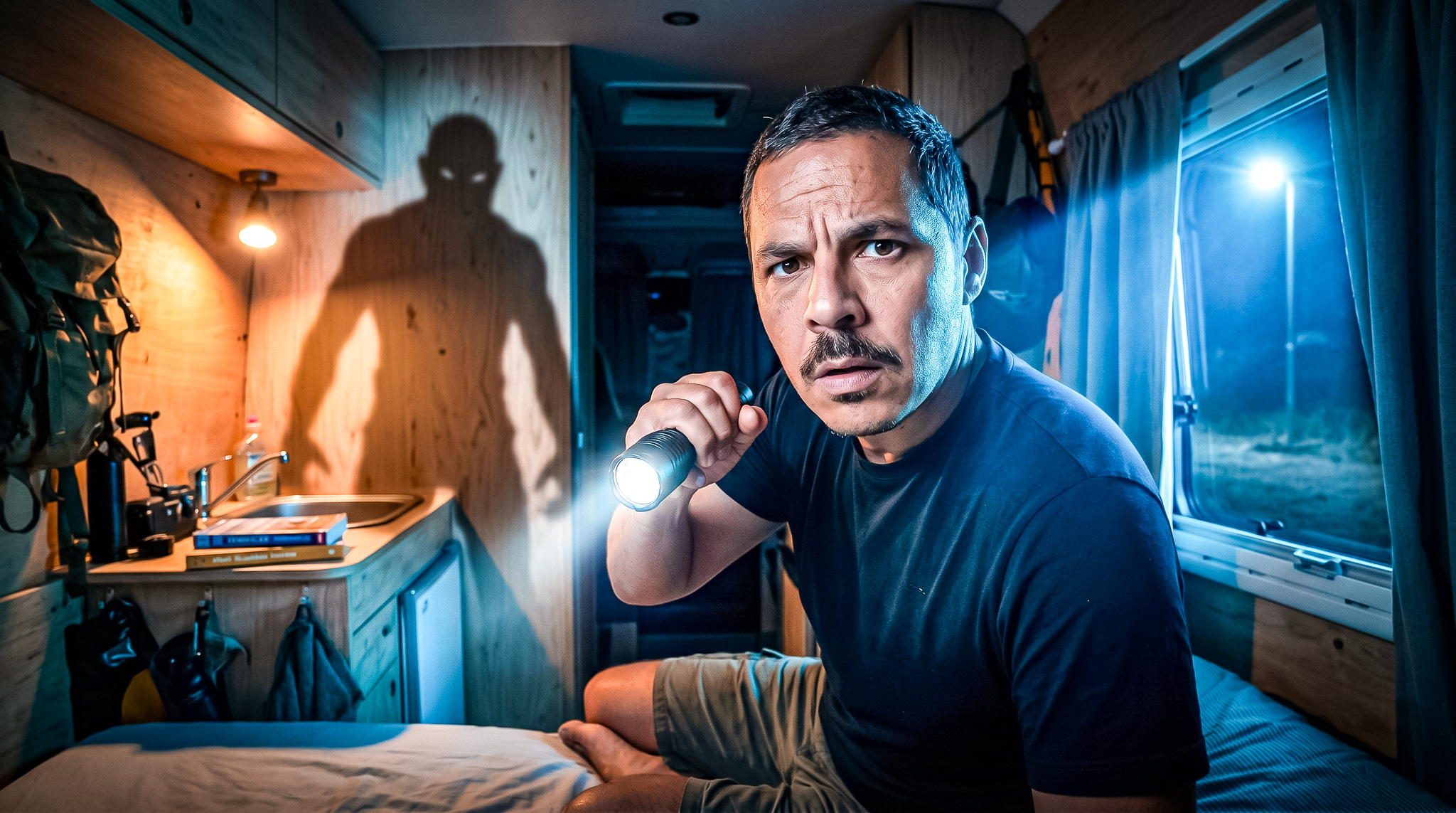
What can really happen to you at night in a metal box parked in the middle of nowhere? We asked ourselves this almost every night during our first month. Three years later, we have the answer, and it’s nothing like what we imagined when we set off.
The only two times we really felt scared in three years of full-time van life were at a paid service area and in a train station parking lot. Not in the woods, not on a lost path, not on a deserted beach. In the two places we specifically chose because they seemed safe (there you go, the whole thesis of the article is in this sentence, you can leave right now if you want).
Well, let’s admit it right away: when we left, we thought the hardest part would be finding where to empty the wastewater. We hardly thought about safety. Then there was that first week in a parking lot, and we realized we had been a bit naive. So we made a video with Caroline, where I mostly unpack the topic (she says I handle it better… I think it’s just that I was the most scared).
And if you’re more of a reading team, we’ll take it easy below, including photos of the gear.
Our real fears in three years of van life (and where they came from)
Before talking about gear and paperwork, let me share what we experienced. Because safety in van life, until you feel it in your gut, remains an abstract idea… and then one evening, it’s not abstract at all.
Four episodes in three years. Three in France, one in Italy, and a border crossing that was nothing dangerous but still emptied our cupboards.
The train station night, the one that marked us the most
We’ll start with the worst, because it’s also the first. A train station parking lot, barely a week after picking up the camper van. An appointment forced us to sleep there (a train station parking lot is not ideal, we knew that, but we did it anyway). And then, in the middle of the night, shouts and sounds of struggle right next to us. Hits, insults. And us, inside, seeing nothing at all. Just sounds.
So naturally, we imagined the worst. A man being beaten on the ground? How many are there? Do they know we’re here? We were frozen in bed, motionless, unable to decide what to do. We even thought, at that moment, that it would be our last night of road trip.
In the early morning, complete calm, no trace of the night before. That night we learned two things. That the world is not quite the Care Bears’ world. And especially that not seeing multiplies fear by ten: our imagination did more damage that night than what was actually happening outside. That’s exactly why we ended up installing a camera, much later.
The “ninjas” at the service area near Narbonne
One night at a service area for camper vans near Narbonne, paid, official, crowded. It’s past 11 PM, we go to bed, and Caroline hears a huge noise on the roof. A big cat, she says (our bed is glued to the ceiling, the slightest thing resonates in there). I wake up with a start, I speak loudly, I bang on the roof just in case… and then nothing.
The next day, we chat with the neighbors a bit further away in the area. And that’s when we learn that an entire row of camper vans had been burgled during the night. By real ninjas, people capable of entering and stealing inside while the owners sleep. Imagine the thing: 10 m², and yet they left with belongings. One guy even told us he felt a presence while he was sleeping, and he didn’t move. That’s unsettling.
What spared us was neither an anti-theft device nor an alarm. It was that Caroline made noise. A thief looks for the least amount of time and trouble, and a van that makes noise is already too much of both.
The car watching us, near Sirmione
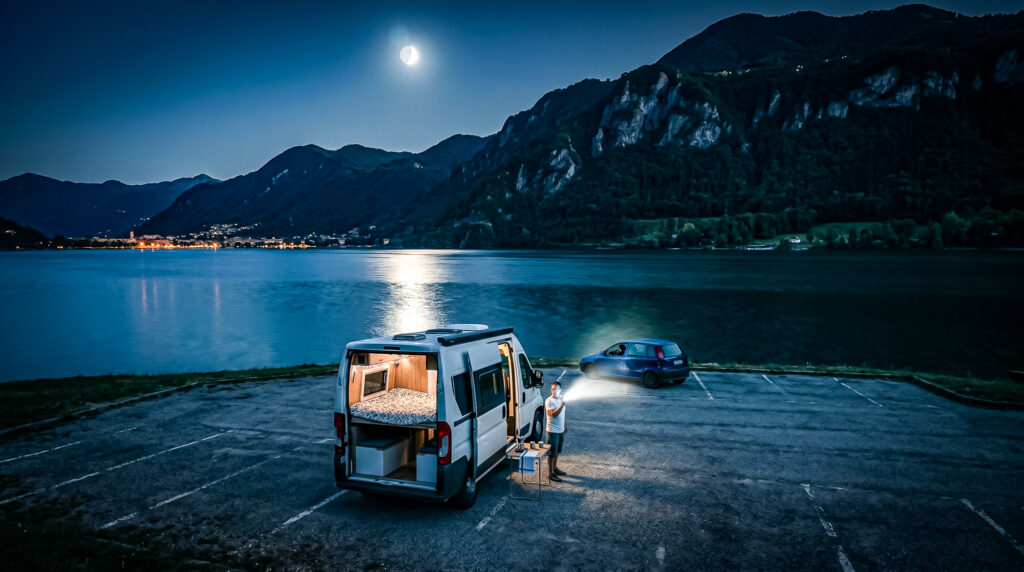
Our only scare outside France led us to an isolated parking lot in Italy, not far from Sirmione. Alone for the night, peaceful, until a car parked oddly right next to us, headlights on. Behind our closed shutters, keeping an eye out, we watched its occupants stay inside without moving, as if they were spying on us.
We didn’t try to understand. Instinct said to leave, so we left. We’ll never know what they wanted, and personally, I’m fine with that. It’s the only time in three years that we started in the middle of the night, and I have no regrets: we slept like babies twenty kilometers away.
And the day Morocco confiscated everything from us
A little administrative twist to finish. Before crossing into Morocco, we checked, and we discovered that a good part of our defense gear is simply prohibited at the border. Our airsoft (a very realistic replica with laser sight) and our pepper spray cans, in particular. The customs officers searched the vehicle and confiscated without discussion.
So we left everything in Portugal for the duration of our stay, and we set off like that, with not much in our pockets (except for the kitchen knives, thank you very much). And you know what? Nothing happened at all. We’ll come back to that later, because the law really does change from country to country, and that’s the kind of detail that can cost you dearly if you learn it on the spot.
Spain, Corsica, Italy, Morocco: the countries that scare you when traveling by campervan
If you type “campervan assault” into Google, you’ll find Spain, Corsica, sometimes Italy or Morocco. It’s the kind of search we did too before leaving, and it keeps you awake for three nights even before you start. So let’s give you our real count, country by country, over three years on the road.
Spain and Portugal are where we spent the most time, by far. Full winters, entire months, dozens of spots. Nothing ever happened. Not a broken window, not a prowler, not a shortened night. I’m not saying the risk is zero, I’m saying that our sample, which is the largest, is the emptiest.
Italy, on the other hand, offered us the car in Sirmione, and that’s it. One scare, no incidents. We’ve been back since, without changing our habits.
Morocco is the only country where we intentionally changed our behavior: only campgrounds and service areas, never off-road. Not out of fear of the people (the welcome was wonderful), but because we didn’t want to discover the local administrative subtleties on a Sunday night. Result: nothing happened either.
As for Corsica, I have nothing to tell you. We’ve never been there in the van, so I won’t copy-paste news articles to pretend (that would be the best way to fuel exactly the fear I’m trying to dismantle here). The only thing I note is that it comes up very often in searches and very rarely in the travel stories we encounter on the road.
And France, then? Three out of four episodes. The country where we know the language, the codes, the number to call, the one where we feel most at home. I’m not saying France is dangerous; that would be as silly as the opposite. I’m saying that the fear map and the incident map do not overlap, and spending six months dreading Andalusia only to end up shaken in a parking lot in Aude puts things in perspective.
Choosing a safe spot: that’s half the job
The spot makes up half of your peace of mind, and it’s the only part of the subject where you really have control. It’s all about finding the right balance between accessibility and discretion, without ever falling into total isolation.
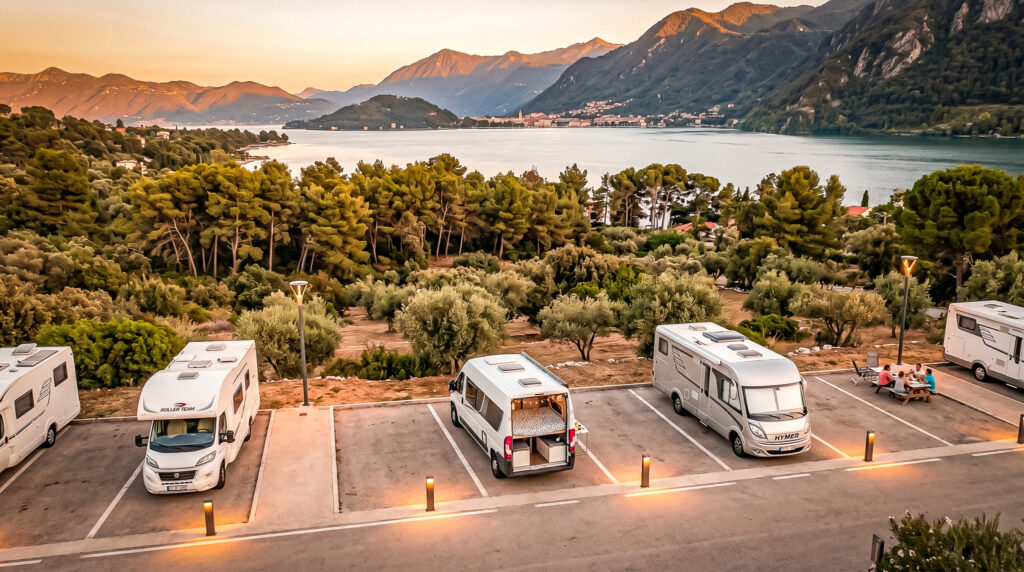
- Aim for monitored parking lots or well-lit streets
- Regular foot traffic, but not too intrusive
- Sometimes it’s better to bike 5 minutes and avoid the sketchy area
- Favor allowed natural spaces
- Avoid complete isolation
- Maintain a minimum visibility from the road
Find your spot before nightfall, always. It may not seem like much, but it’s the most valuable advice in the entire article: during the day you can see the trash on the ground, the broken windows on the pavement, the looks. At night, you only see an empty spot. Vanlife apps help a lot, as long as you read the recent comments and not just the overall rating; we detail our method of reading the listings in our review of Park4night.
And I’ll give you the most important rule of all, the one that has saved us several nights: if you don’t feel good somewhere, don’t discuss it, don’t negotiate with yourself, just leave. It only takes twenty minutes of driving, and you’ll sleep ten times better elsewhere. We’ve done it dozens of times on a simple hunch, without any danger ever being proven, and I’ve never regretted a single one of those departures.
The reflexes that cost nothing and change everything
These are the free gestures, those that become automatic after a few nights and that you don’t even think about after a month:
- Lock every opening: every door, every window, every roof vent before sleeping
- Blackout curtains closed: light on at night, you can see absolutely everything from outside
- Keys always accessible: being able to start without searching is essential
- Parking oriented for exit: park in a way that allows you to leave without maneuvering
- Nothing visible inside: no screen, no bag, no camera on the table
The last point is the one we underestimate the most. The thief doesn’t know what’s in your van; he’s taking a gamble. A tidy and anonymous interior is a gamble he’s less likely to take than a window with a MacBook sitting underneath.

We're Caroline and Xavier
We got most of it wrong before we got it right. We share what actually holds up day to day in a van, and what we wouldn't do again.
Ce que vous souhaitez recevoir :
Self-defence in a van: what we carried in mainland Europe (and a UK warning)
A delicate but necessary subject. When you sleep in an isolated place, wanting to be able to defend yourself is perfectly normal. So here’s what we carry, and especially what we honestly think of it after three years (spoiler: we’ve never had to use it, not once, and that’s information in itself).
The gel pepper spray is our number one reflex. Small, effective, easy to hide almost anywhere: glove compartment, basket near the door, within direct reach from the bed. We have several, in strategic places, because a spray stored in a closet at the back of the van is of no use the day it happens.
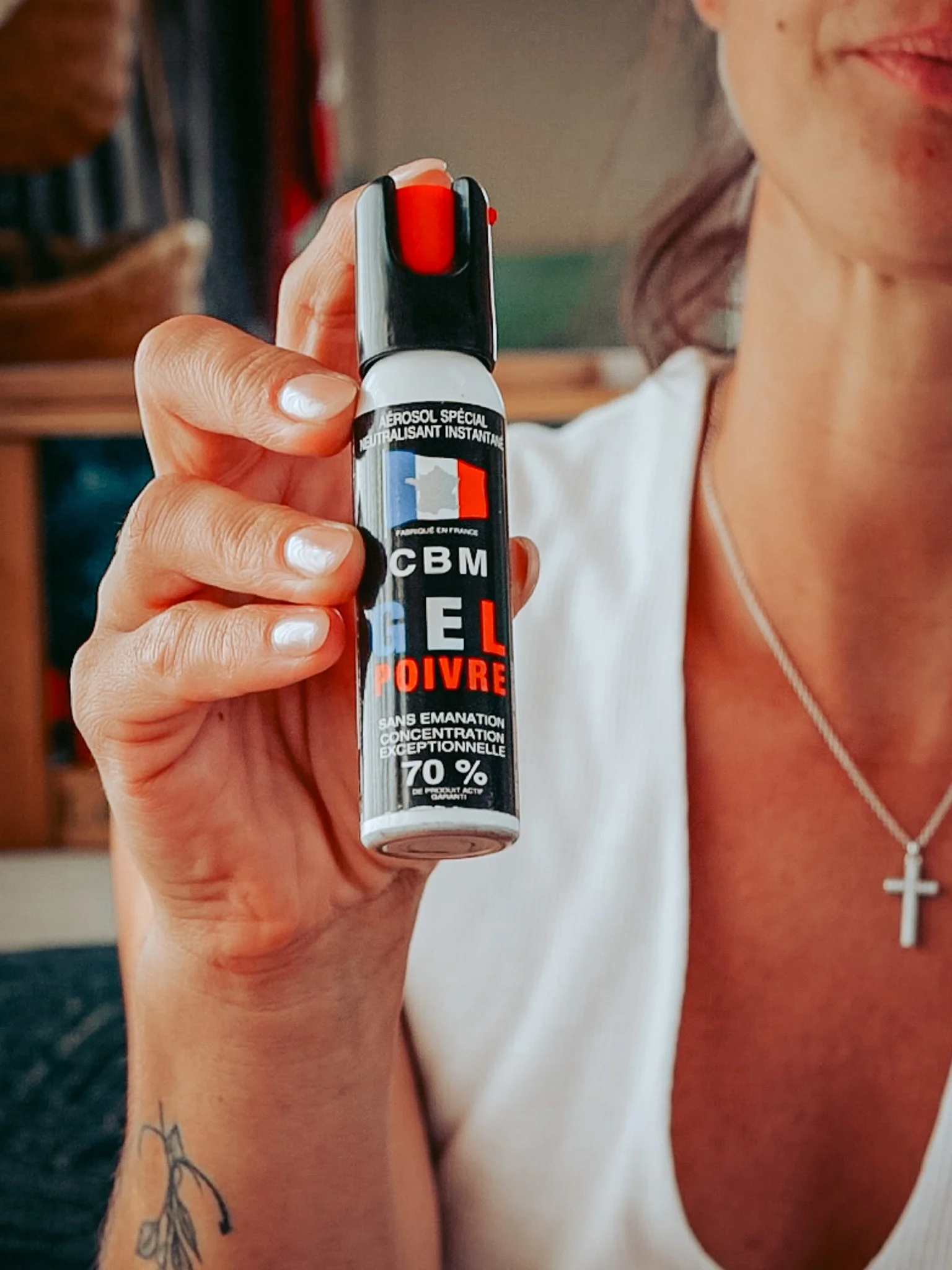
One real trap, and it’s a big one: don’t use it if the person is already inside. In 10 m² it spreads everywhere, and you’ll gas yourself beautifully. The gel, unlike the classic spray, somewhat limits this issue without eliminating it.
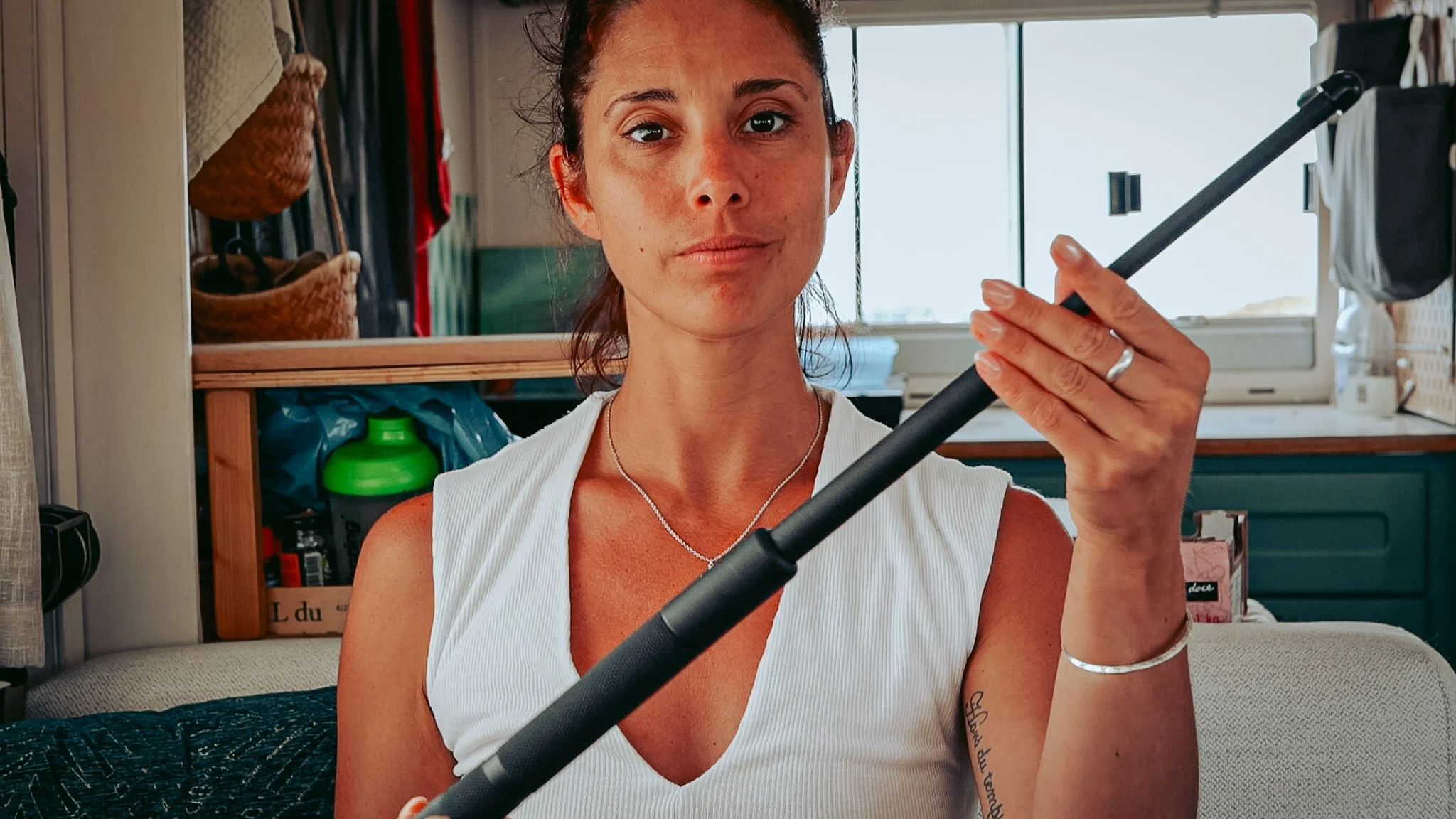
The classic telescopic baton deploys with a flick of the wrist and makes quite an impression for close encounters. We divided the roles: one with the baton if the person is close, the other with the spray to keep them at bay. On paper, it’s well thought out. In real life, we’ve never tested it, and I hope to never have to.
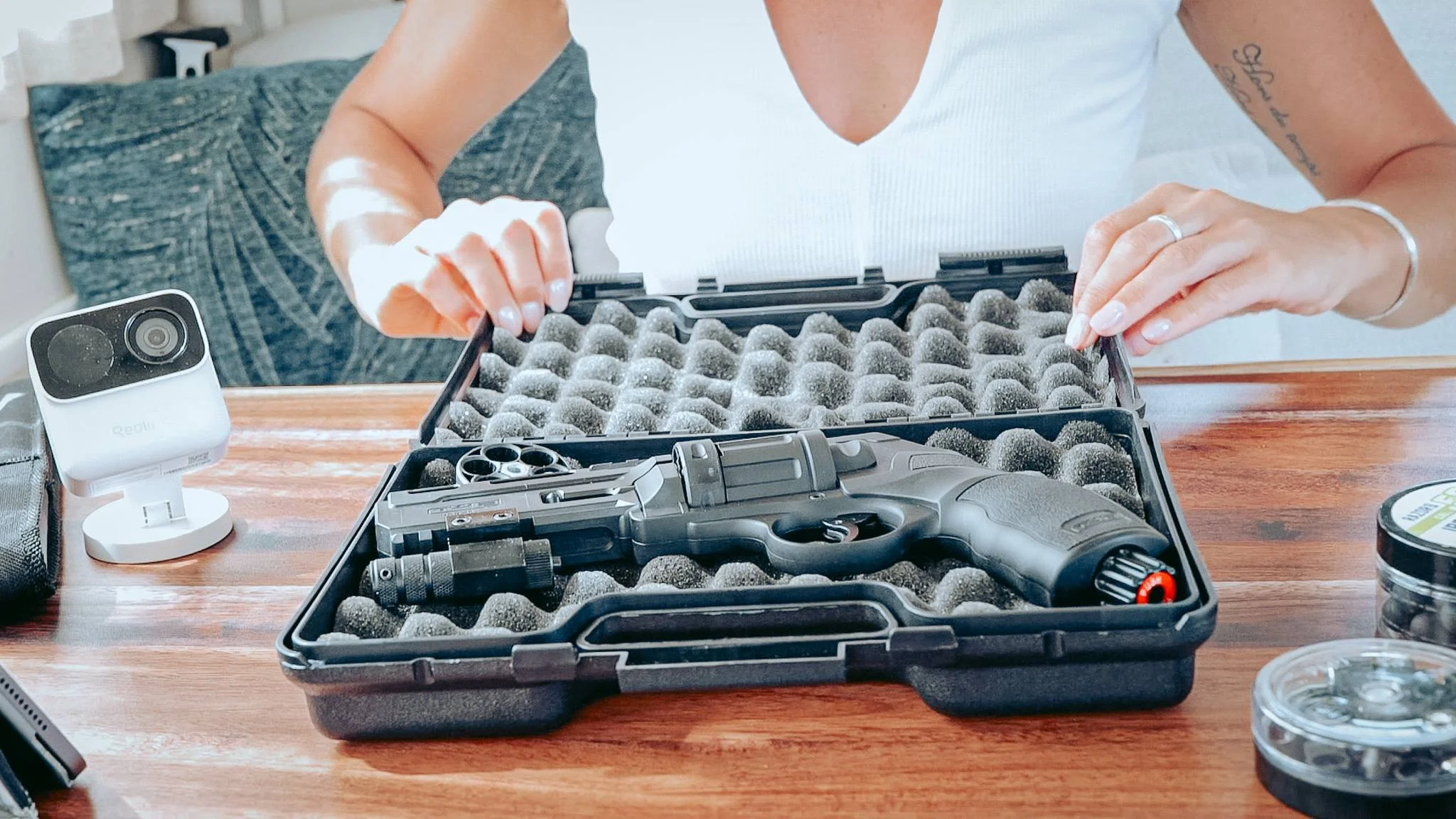
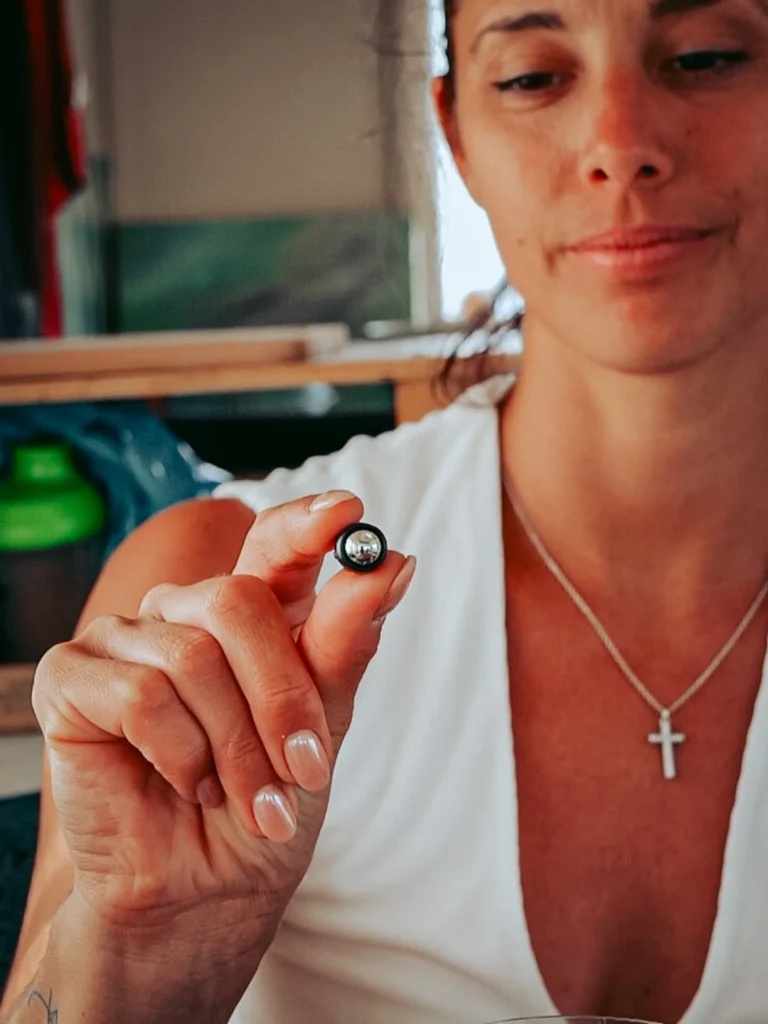
And then there’s the most impressive piece: a gas defense gun of the HDR 50 type. Normally, you never use it, but just the little red laser pointed at an intruder is often enough to make them back off. It’s loaded with rubber balls (it hurts without injuring) or steel (that hits much harder).
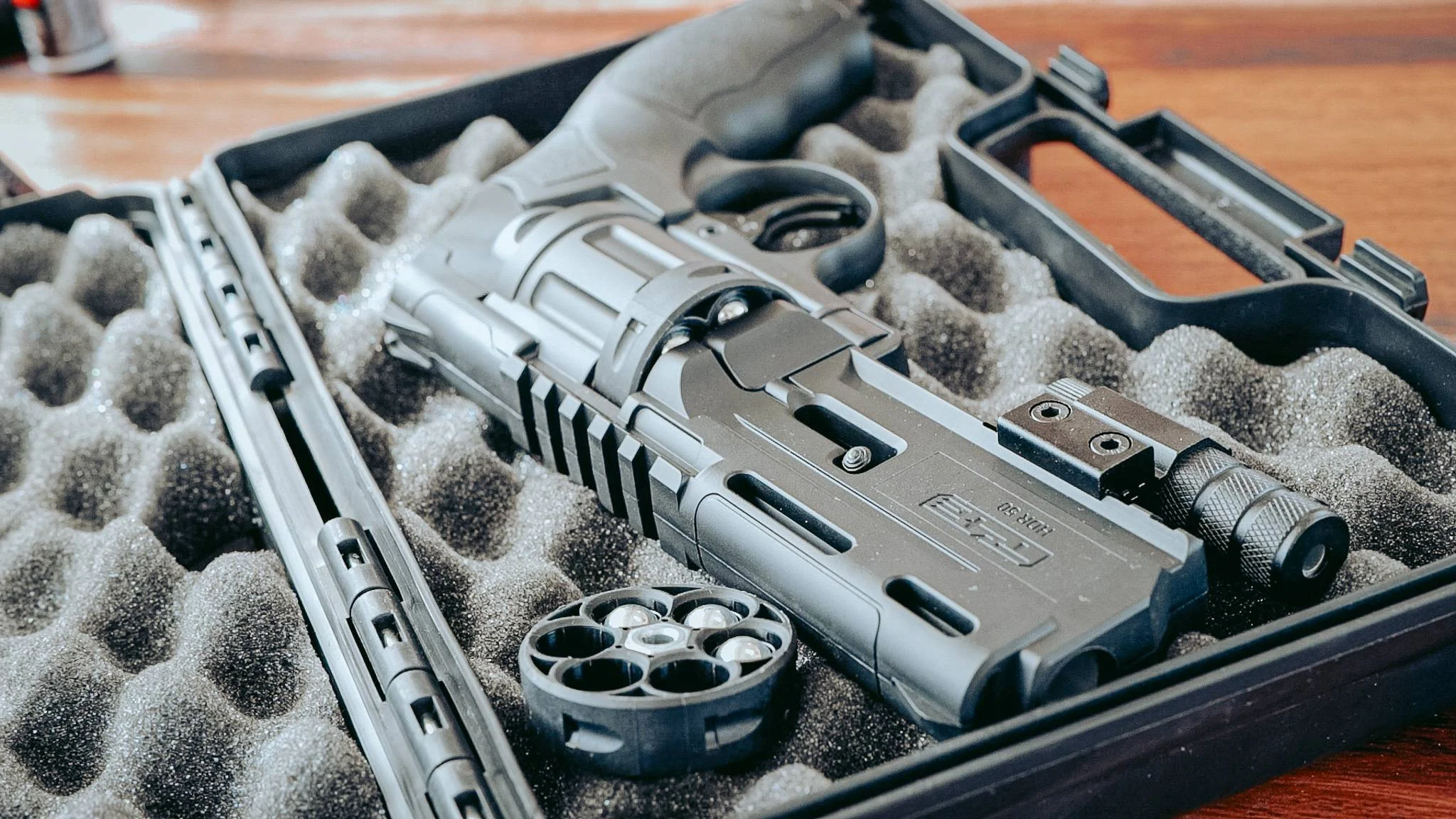

Let’s be honest: something like this requires training. You have six shots, and if you miss your target, you better be very quick with the spray right after. Caroline will tell you herself, under stress she would be completely unable to use it. So if you go down that route, at least get some training; otherwise, you might as well just keep the pepper spray and sleep easy. Besides all that, a simple personal alarm of 120 dB remains the lightest and most universal option, and that’s what I would recommend to someone starting out.
Our two free tips (called “poor man’s tips”)
My favorites because they cost nothing. The first is the technique of the Schrödinger’s dog: you place the largest dog bowl on the market in front of your door, and voilà, everyone thinks there’s a big dog inside. The general idea is to make the other doubt: they also don’t know who they’re dealing with (you know, those vans painted with skulls that you never dare to approach too closely… well, play on that).
The second: your smoke detector. If someone gets too close and you haven’t prepared anything, trigger it intentionally. It screams something crazy, wakes up the entire neighborhood, and most of the time the intruder will flee immediately. Zero euros, and it’s already in your van.
What is actually legal in the UK
Your best tools here are the ones that are not weapons at all. A personal attack alarm of 120 to 140 dB is perfectly legal, costs very little and genuinely works, both to startle someone and to pull attention your way. Add a bright torch, and above all the habit of reading a place before you settle in it. Everything on the vehicle side, meaning locks, alarms, cameras and lighting, is legal everywhere and does most of the work anyway. And rule number one never changes: if somewhere feels wrong, your smartest piece of protection is the ignition key. You drive off.
Legislation: what is allowed and what is not
Big point before you equip yourself: legislation changes from country to country, and sometimes radically. What is tolerated at home can land you in serious trouble at a border, and the customs officer won’t be in the mood to discuss jurisprudence. Here’s a quick overview to check before each trip because things change:
Camper van anti-theft: protecting the vehicle and its contents
The second focus, and by far the more likely of the two. Theft is much more frequent than aggression; it is opportunistic and quick: a poorly closed vehicle, visible items, a secluded parking lot. The thief wants the minimum time and the minimum hassle, so all your work consists of piling visible layers of hassle from the outside.
A thief does not break into a fortress, he chooses the least troublesome vehicle in the row. Every layer you add costs him time, noise, or risk, and he has very little to spend.
- The choice of the spotThe free layer, and the most effective of all. A busy, well-lit place, with other vehicles around. Costs him: the risk of being seen
- DiscretionClosed curtains, nothing visible on the table, an interior that promises no loot. Costs him: the certainty of gain
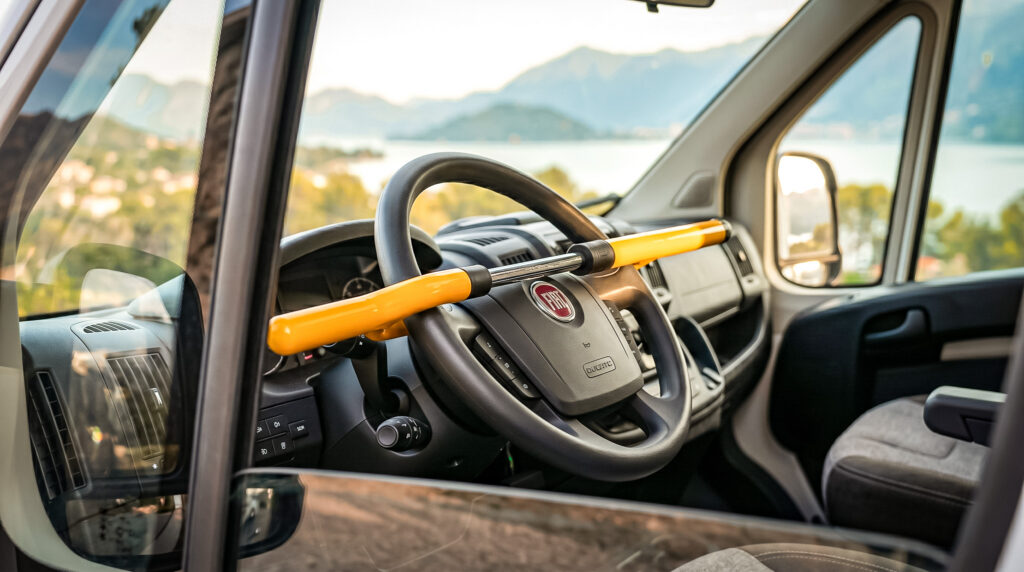
- Visible anti-theft devicesSteering wheel lock, pedal lock, additional locks. They need to be visible from outside, that's the whole point. Costs him: several minutes
- The alarm and the cameraPerimeter, volumetric, and a connected camera that alerts and allows for remote communication. Costs him: noise and a trace
- You, who make yourself knownSpeaking loudly, banging on the roof, turning on lights. This is what saved us near Narbonne, and it costs nothing. Costs him: the element of surprise
No layer is infallible on its own. Stacked, they simply make your vehicle less interesting than the one next to it, and that is exactly the goal.
Mechanical anti-thefts: steering wheel, locks, padlocks
Nothing beats a good old visible mechanical anti-theft. A thief who sees a steering wheel lock or a pedal lock through the windshield often moves on, simply because the van next door doesn’t have one.
- Steering wheel lock: the most visible and deterrent, from £30 to £100
- A mechanical pedal lock: physically prevents engaging the clutch or brake
- Additional locks like Heosafe or Meroni on side and rear doors
- A reinforced padlock for the cell door if it is separate from the cabin
A little tip taken from the previous owners of our Hymer: they had written on the door that there was no video equipment or valuables inside. It doesn’t fool a pro for two seconds… but for a hurried thief, sometimes it’s enough to make them doubt and move on to the next vehicle.
Alarms and intrusion detectors
A good alarm combined with detectors turns your vehicle into a small fortress. There are two types, and they are complementary rather than alternative:
- The so-called perimeter alarm: detects the opening of doors, windows, and hatches
- The so-called volumetric alarm: detects movements inside, using ultrasound or infrared
Surveillance cameras for camper vans
This is the equipment that directly addresses the night at the station: the worst feeling of insecurity comes from not being able to see outside. A connected camera solves exactly this problem. You monitor the vehicle in real-time from your phone, receive an alert at the slightest movement, and you can even talk to a potential intruder through the speaker.
Today it costs almost nothing, and there’s a bonus we hadn’t anticipated: it also helps us keep an eye on the cat and talk to him when we’re away (well, he couldn’t care less, but it reassures us).
GPS Tracker: recovering your stolen vehicle
In case of the entire vehicle being stolen, a well-hidden GPS tracker remains your last resort. Subscription-free models with several months of battery life are best suited for a leisure vehicle, which can remain stationary for weeks. Hide it in a discreet and hard-to-reach place: under the chassis, in a false bottom, behind a panel.
Theft insurance: what does it really cover?
Never underestimate a specific van insurance with theft coverage. This is the boring part, the one you skim through, yet it’s the only one that reimburses you. Check that your contract covers:
- The theft of the vehicle itself
- The theft of contents: electronics, tools, equipment
- Vandalism and glass breakage
- Assistance abroad
To go further, check out our vanlife insurance and social protection guide. And if the underlying question is more about the van’s status as a home, it’s addressed in is it legal to live in a van.
Van security: the questions we're still being asked
Is the soporific gas in campervans true?
Is it more dangerous to travel alone in a van when you are a woman?
Do you need to declare a tear gas canister somewhere in France?
What to do if someone tries to open the door at night?
Does a dog really protect a camper van?
How much does it cost to equip a motorhome against theft?
How do we protect gas bottles and bicycles?
Does an alarm scare away or indicate that there is equipment inside?
Can you film the outside of the van with a camera without any issues?
What to do in the hours following a flight abroad?

Where to Sleep on a Road Trip
Ready to find the best places to park your van for the night? From wild nature spots to service areas, this article explores the top spots for a peaceful night's...
Read the guide
Vanlife insurance: what your policy really pays for when things go wrong
Specialist vs standard cover, full-timing, what breakdown recovery really pays (a real Andalusian breakdown), the GHIC, the 90/180 rule and a nomad's health: the UK guide to insuring a van...
Read the guidePS: since all this, we sleep much better in our van than in most hotels… even if Caroline still hears, from time to time, “big cats” on the roof. (It has never been a cat. Never.) Don’t let fear stop you from leaving: it’s almost always bigger than what really awaits you outside.
Van life day to day, unfiltered
Two years of full-time van life, and the Algarve as our base ever since. We still hit the road, by van or otherwise, and we write up what we find along the way. An email when we have something to say, no more.
Ce que vous souhaitez recevoir :