


Our review of Ben Nevis Bar
Benefits
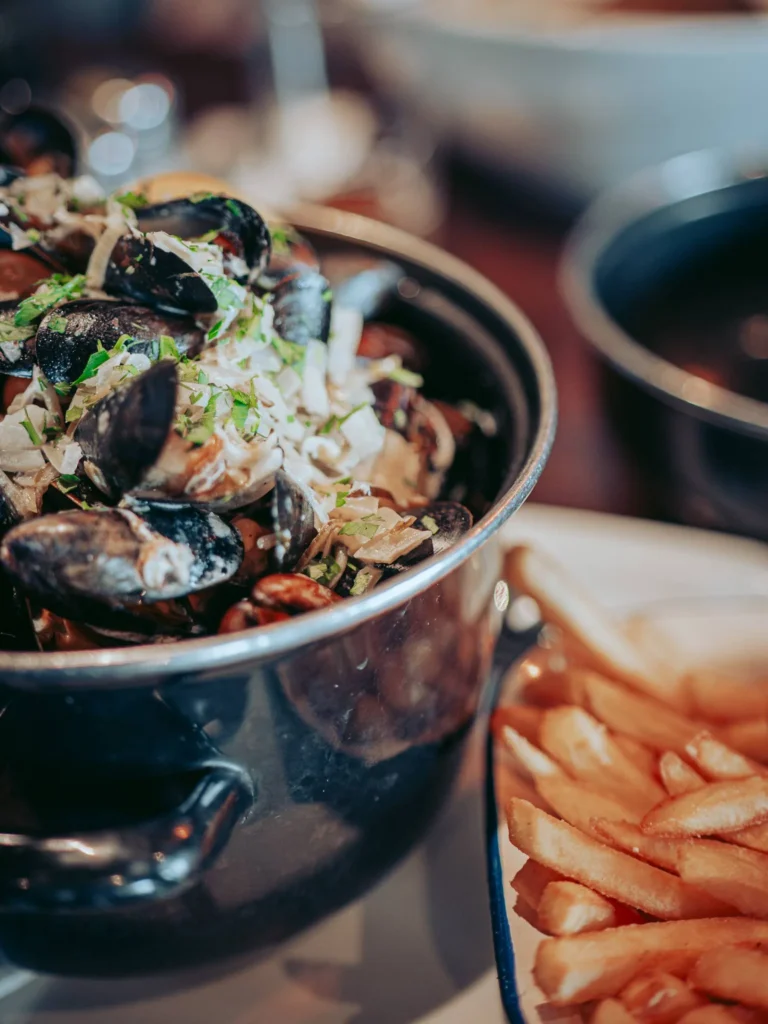
- Fresh Isle of Mull mussels, plump and genuinely fresh
- Generous portions, hard to finish
- The inside of a real Scottish pub: wood, tartan, low ceilings and walls covered in pictures
- A menu built on local produce (west coast smoked haddock, venison, haggis)
- A room quiet enough to hold a conversation
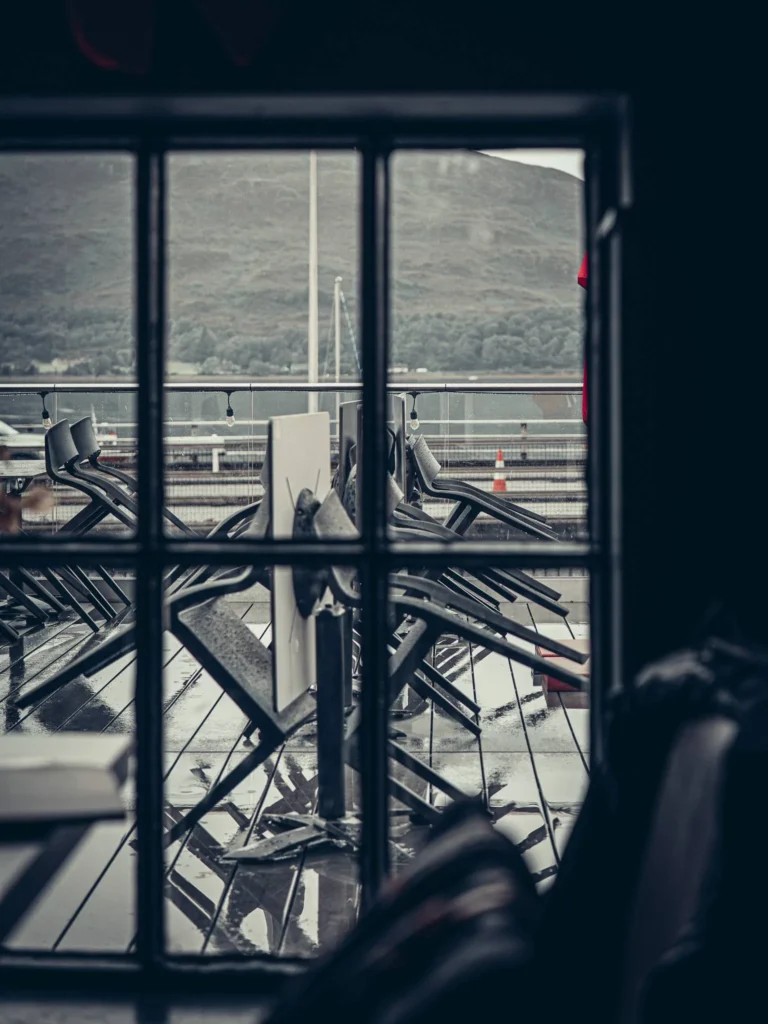
- More than 150 Scottish whiskies and a terrace on the Loch Linnhe side
Disadvantages
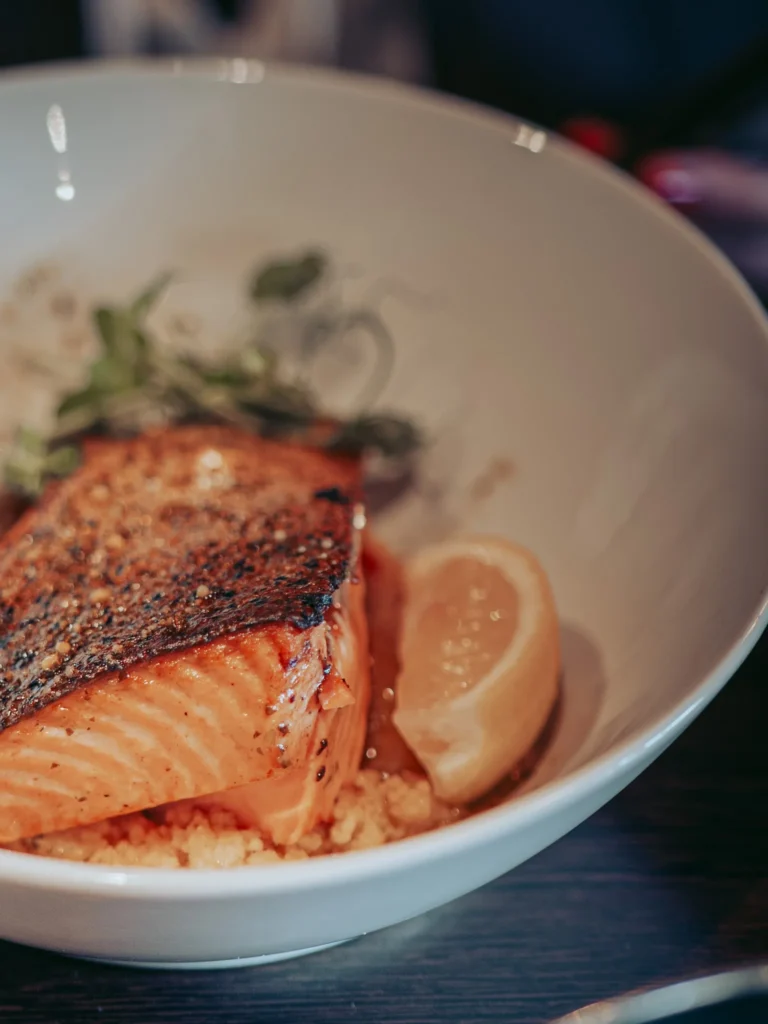
- The salmon can be a touch dry on the first mouthfuls
- The starter looks small when it lands, before turning out to be filling
- In high season the street fills up fast, and a table without a booking stays a matter of luck
Who is this place for?
- Anyone after Scottish seafood
- People who want a real pub rather than a room dressed as one
- Big appetites
- The whisky-curious
The best dish of our entire Scottish trip happened here, in an 1806 drovers' inn we had not even spotted.
On the pavement of the High Street, two restaurants behind us, and the same conversation both times.
Waitress: -Have you got a booking?
Xav: -No.
Waitress: -Ah.
There it is. The Scottish “Ah”, the one that means no but takes the time to say it politely. Twice in a quarter of an hour, at two different places, and the second one stung more because the people right in front of us had just taken the last table. We watched them sit down. We did the very dignified thing of smiling on the way back out.
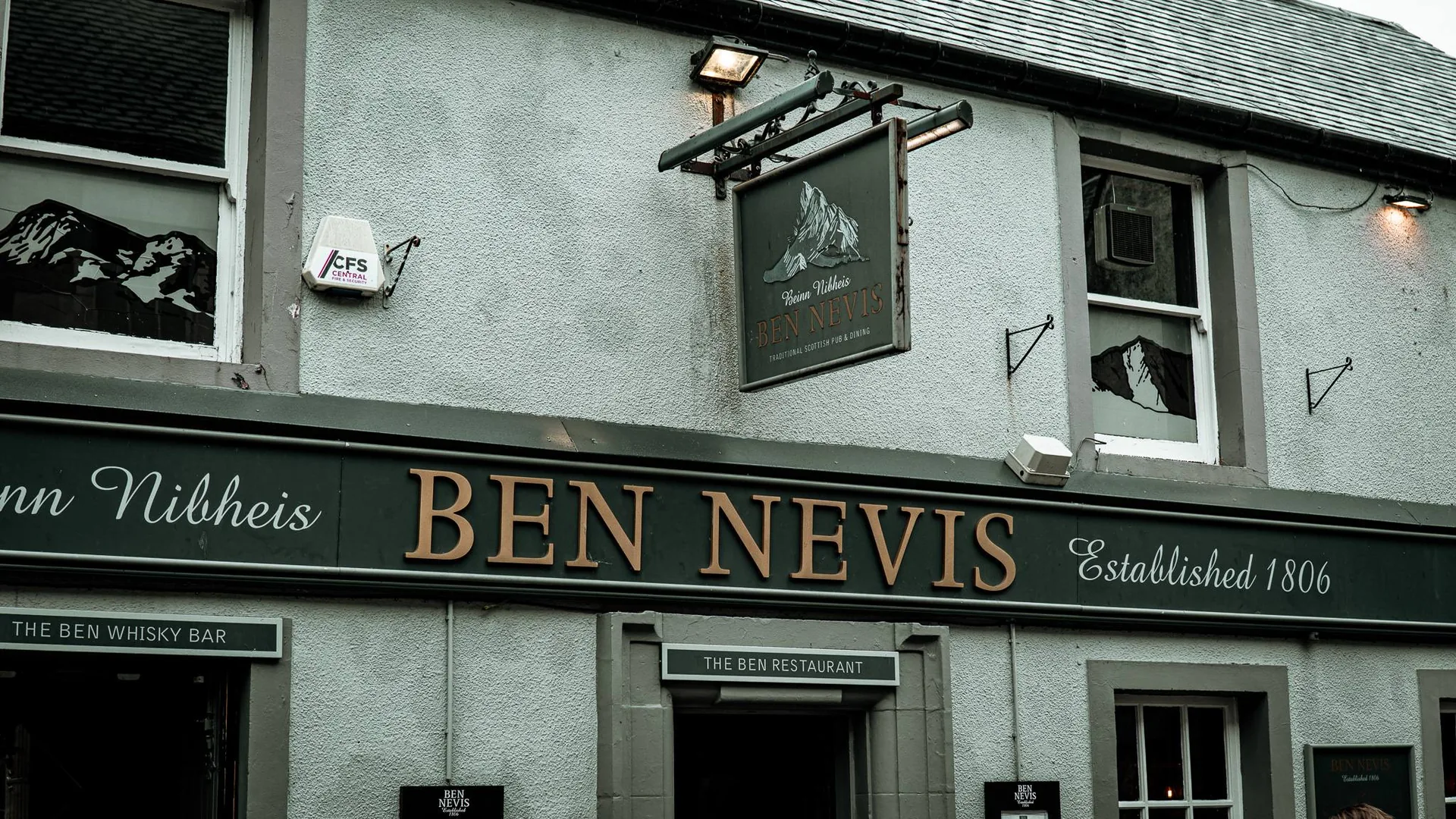
Then we turned round. It was right there across the street, a dark frontage, a sign, and a date painted on the wall: 1806. We went in fully expecting to be knocked back a third time. No. A table, straight away, no booking, no “Ah”. It took two refusals for us to finally look up at the oldest pub in town.
The wood, the pictures, and a bar that took us back to Stirling
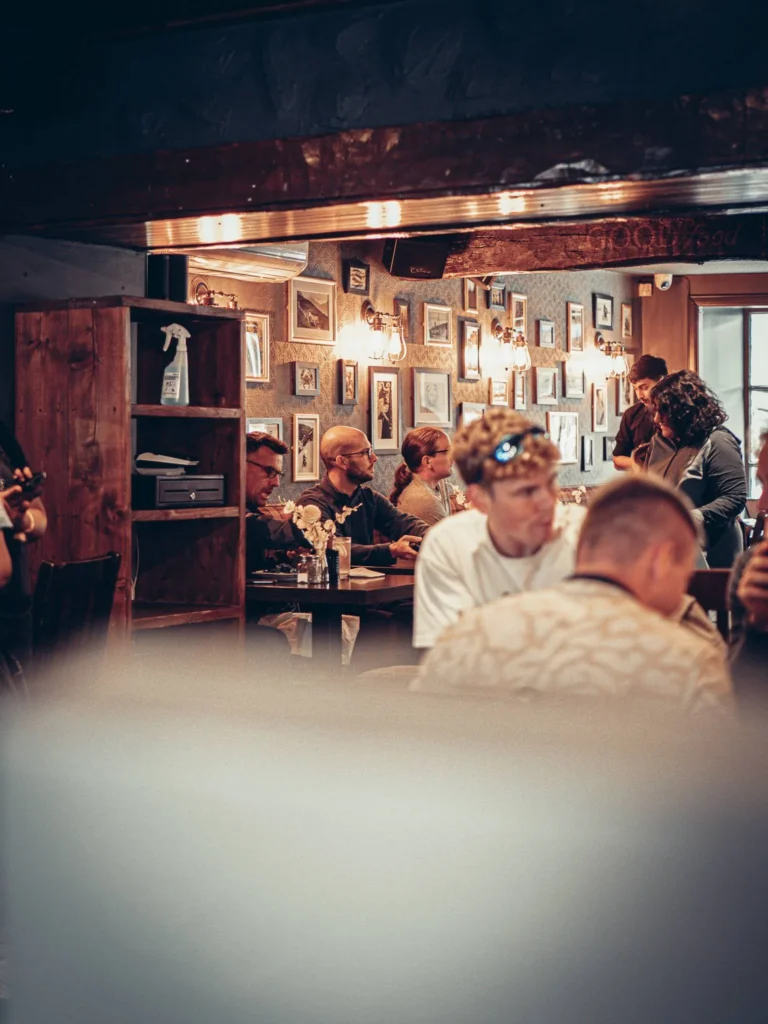
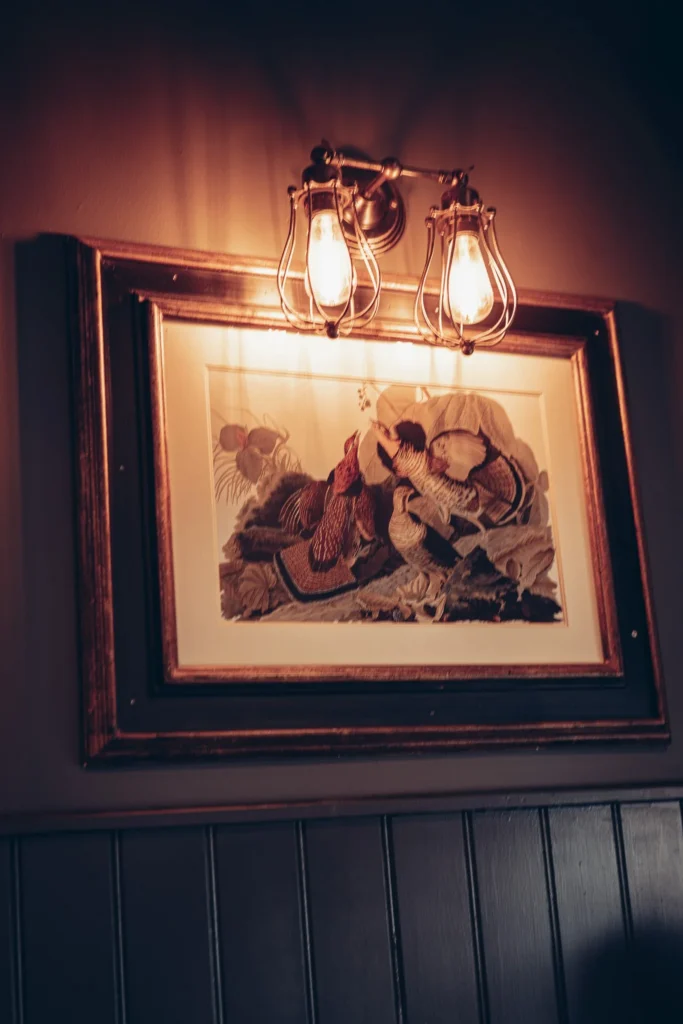
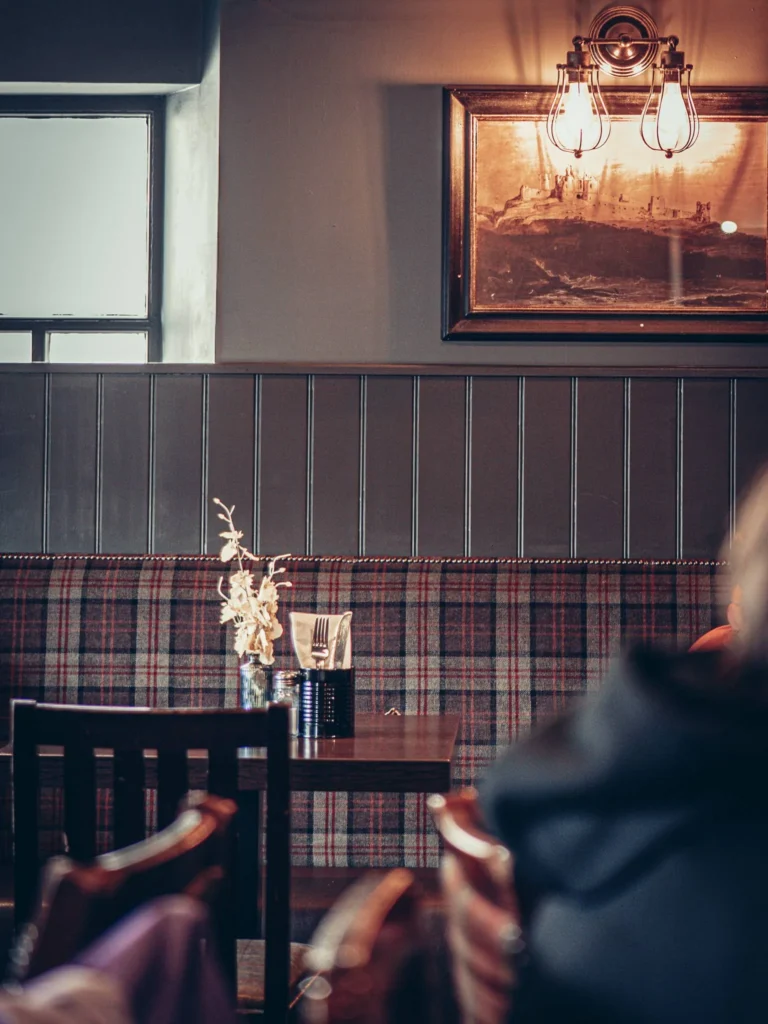
First thing you notice walking in: the ceilings are low. Not oppressive, just low, the way they are in houses that were not built for people standing up straight. Second thing: the walls. There is a mad number of small framed pictures everywhere, hung tight against each other, lit by retro wall lights that throw warm circles onto the wood. It looks like the front room of somebody who has never thrown anything away, and that is a compliment.
And then there is the bar itself, clad in wood, glasses hanging above it. The tones, the wear, the way the light catches on it took us straight back to Alan’s place, the Allan Park in Stirling. Same family of wood, same feeling of coming into somewhere rather than entering a business. That has become our test for telling a real Scottish pub from a room dressed up as one.
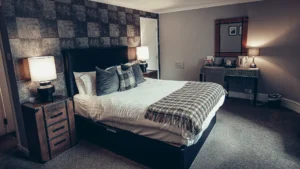
The Allan Park Hotel, the pub-hotel in Stirling where we finally had a proper night.
Our opinion on the Allan Park Hotel, a Georgian gem from 1818 right in the center of Stirling that also serves as a pub and restaurant. Eight rooms, a golden...
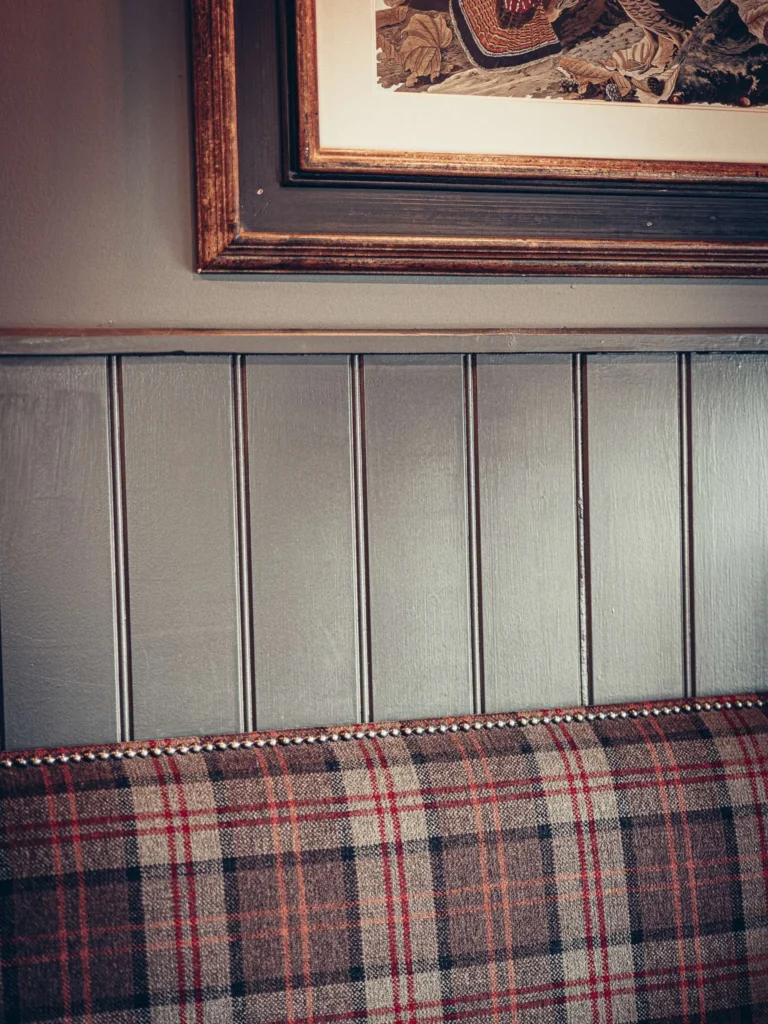
Read moreThe banquettes work two materials: a leather seat and a tartan-patterned fabric back. It is the sort of detail that costs nothing to describe and changes everything once you are sitting in it. The music stays quiet enough that you can hear each other (rare enough to be worth flagging), and around us you could hear a bit of every language. A very international crowd, which, in a town of ten thousand people wedged between mountains, says a fair bit about what Fort William means to the region.
1806, when the town was not even called Fort William
Right, the date on the front. I wanted to know what it actually stood for, because a date painted on a wall can mean plenty of things, including “we repainted the wall”. Not here: the place was built in 1806 as an inn for the drovers. Not a tourist pub that happened to get old, a working inn, for men walking cattle south on foot.
And that changes how you look at the room. Droving was the economy round here: you gathered the cattle of the Highlands and the islands and walked them south, hundreds of miles, to the great trysts at Falkirk. At their peak those trysts saw something like a hundred and fifty thousand beasts on a market day, with two thousand drovers sleeping out with their dogs and their ponies. An inn on that road, in 1806, was not charm, it was logistics.
The best part is why 1806 exactly. Droving boomed at that moment, and it boomed for a fairly unromantic reason: the Napoleonic Wars. The Army and the Navy wanted salt beef by the ton to feed tens of thousands of men under arms. Pull the thread on the lovely Highland inn story and you get a story about military supply. It spoils nothing, it just explains why an inn opens here, at that date, on this street.
Another thing that made me smile: in 1806 the address was not Fort William. The civilian town changed its name four times. Maryburgh first, after Mary II, wife of the William the fort is named for. Then Gordonsburgh, when the Dukes of Gordon held the area, so it was in Gordonsburgh that our inn opened. Then Duncansburgh in 1834, after Duncan Cameron of Fassifern. And it was not until 1875 that the fort’s name swallowed the town’s for good.
Arriving in town that morning I had said to Caroline that Fort William looked like a place people settled long ago, with the water, the head of the loch, the hills all round. On the substance I was right, but not for the reasons I imagined. This is not a site chosen to live well on, it is a site chosen to hold the region: first a timber garrison thrown up at Inverlochy in 1654 to keep an eye on the Camerons, then a stone fort rebuilt in 1690 and named after William III, at the mouth of the Great Glen and the head of Loch Linnhe. A lock, not a village. The town came and gathered round it afterwards.
One last aside on the history: we had already met the oldest-pub claim in Stirling, at the Settle Inn, in a considerably rougher register. Two towns, two oldest pubs, two atmospheres with nothing in common.
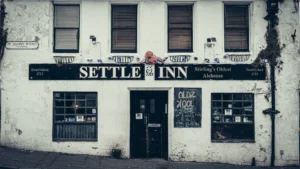
Settle Inn, Stirling’s oldest pub (and the ten seconds we spent wondering what we were doing there)
We walked into this pub wondering whether we were allowed to be there. We walked out being kissed on both cheeks. In between: one hour, two beers, and the kind...
Read moreThe menu, or the end of a hunt that had run all trip
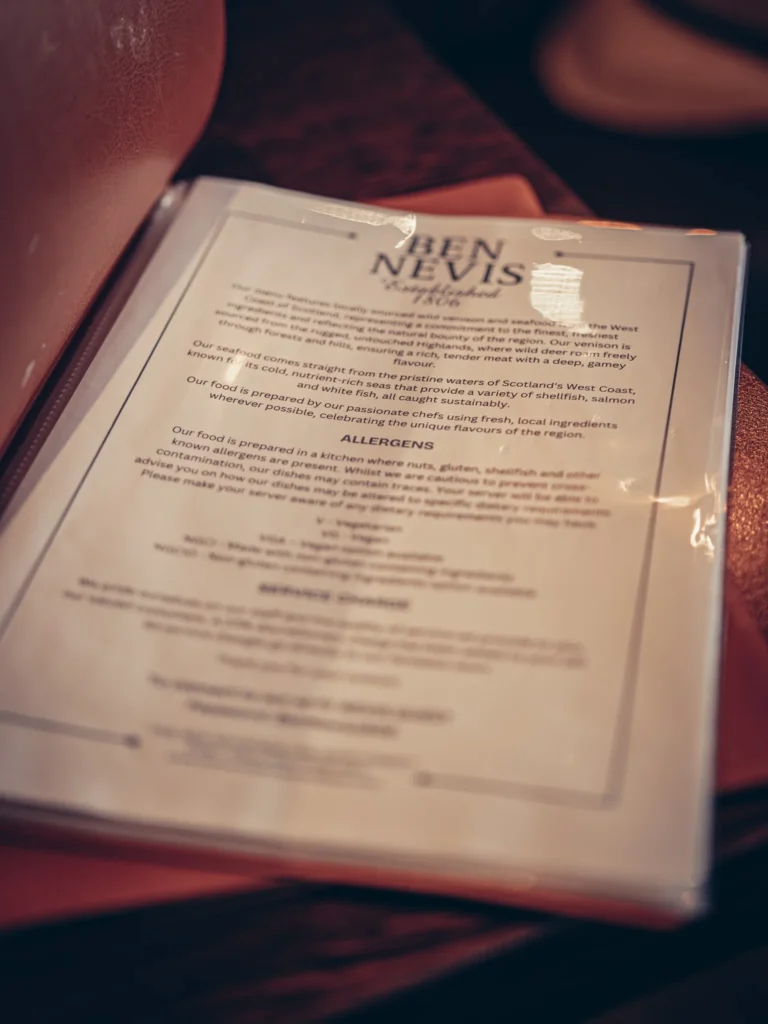
I need to set some context here or none of what follows makes sense. On our first trip to Scotland, four years earlier, I fell for the mussels and the langoustines up here. Since the start of this trip, through Glasgow, Stirling, Glencoe and everywhere in between, I had not managed to find them once. Fort William was my last real go before we moved on. So I opened that menu the way you open exam results.
And there it was. The menu is wide and it is properly Scottish. Cullen skink. Haggis tattie scone nachos, spiced corn ribs, roasted mushrooms with mature cheddar, haddock goujons. Award-winning handmade pies, steak and ale, chicken leek and tarragon, or a vegetable tagine. Wild Highland venison lasagne, venison and black pudding meatballs, a Chicken Lochaber with haggis mash and maple thyme carrots. There is even a Beyond Meat burger, because you have to move with the times. But above all, there is the sea: west coast smoked haddock, Scottish haddock and chips, scampi, baked Scottish salmon, and fresh Isle of Mull mussels, served as a starter with bread or as a main with skinny fries.
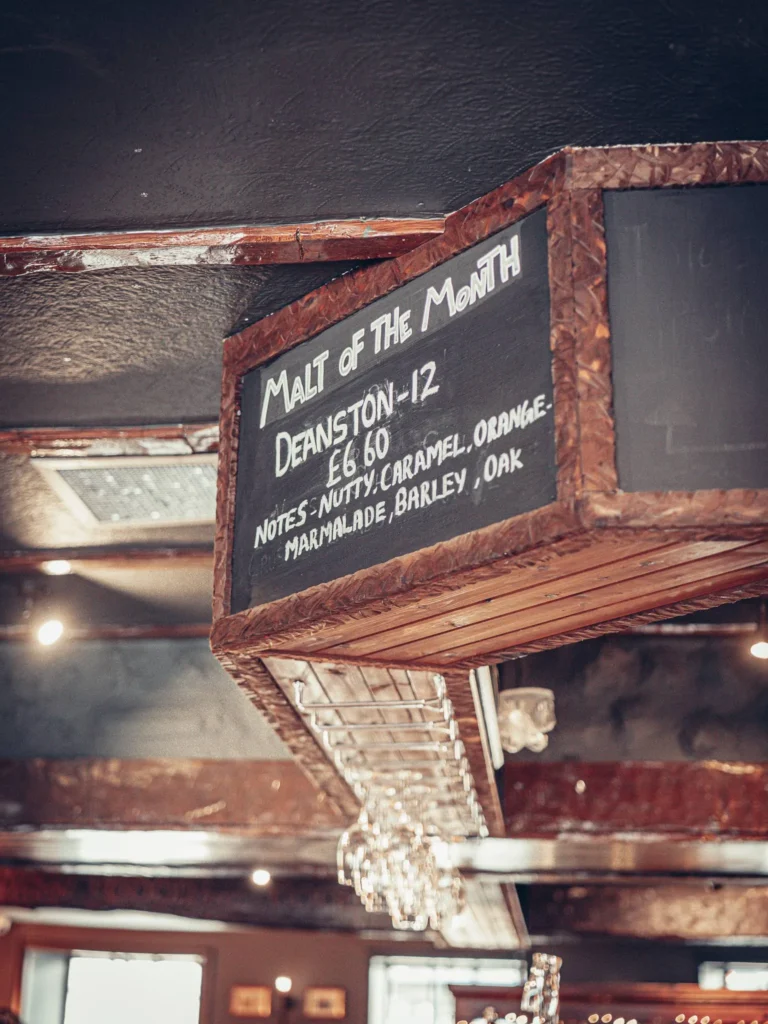
There is a big sharing platter too, the Highland Seafood Sharer, with smoked haddock, haddock pâté, Mull mussels, prawns, oatcakes and chipotle mayo. We hesitated. We will come back to that, because the hesitation had a fairly funny sequel. And while I was reading all this I clocked the malt of the month board by the bar: the house lists more than a hundred and fifty Scottish whiskies. We were clearly in the right place, even though none of it was planned.
A pâté that was not one
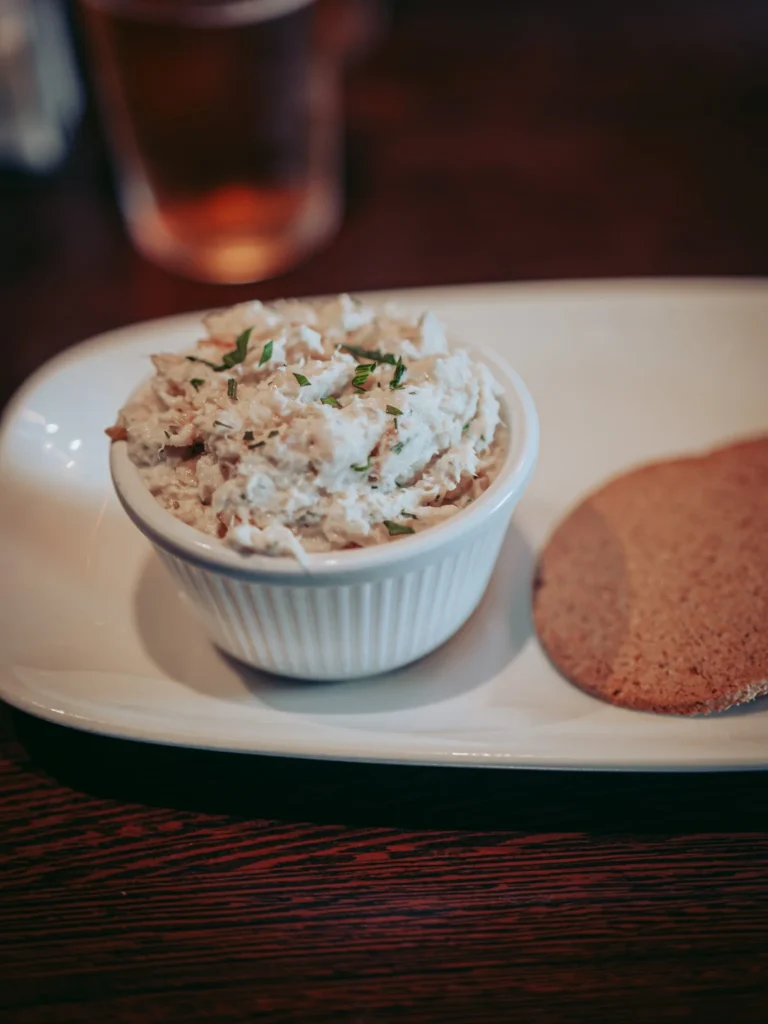
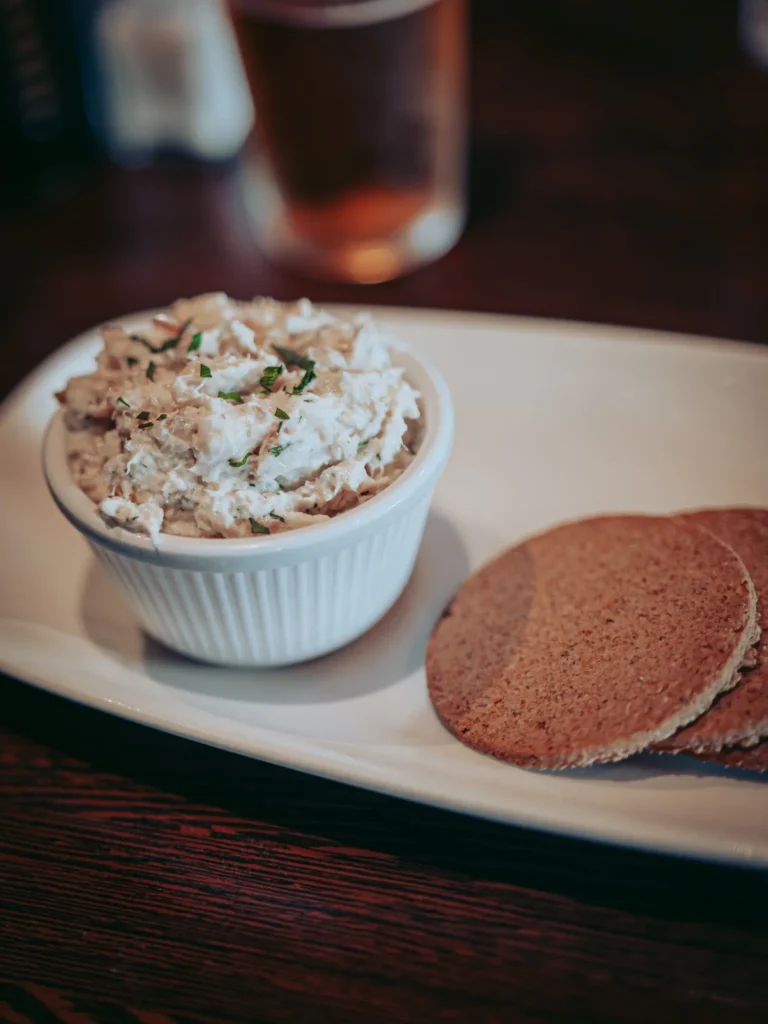
I had the smoked haddock pâté to start, with Highland oatcakes and butter. Except what the menu calls smoked haddock pâté is not a pâté in the way I pictured it: it is a proper terrine, dense, smoky, a good deal more substantial than a fish rillette. Excellent first impression before I had even touched it.
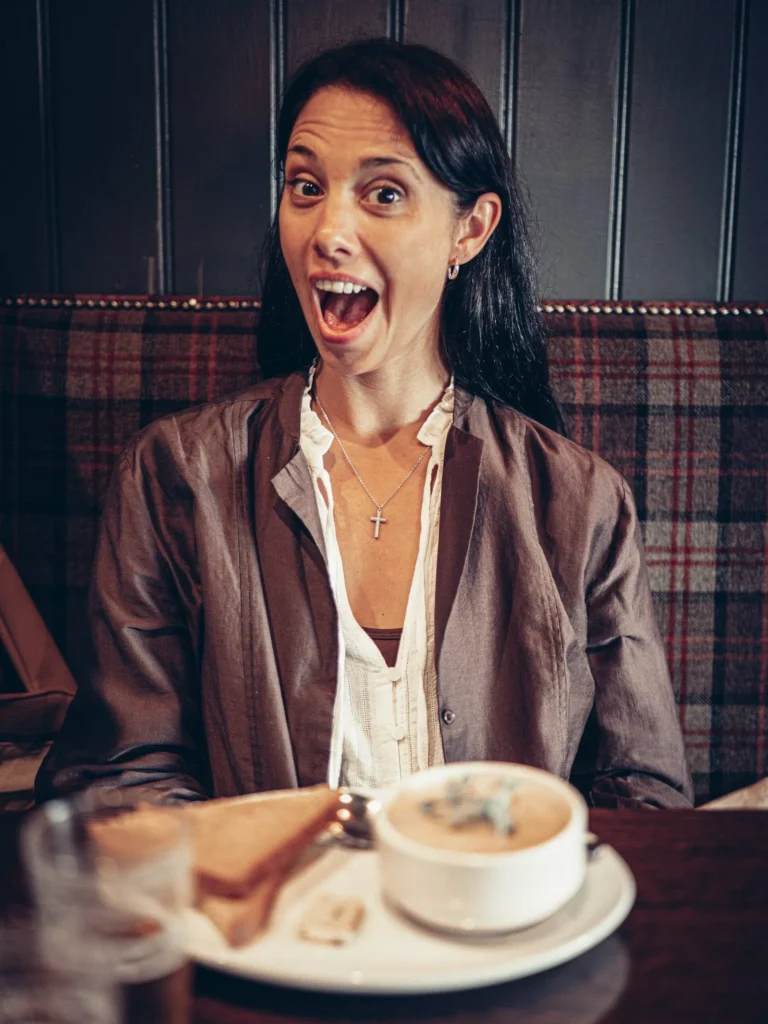
When it landed, mind, I had a wobble. A ramekin, four little oatcakes beside it, and meanwhile Caroline was getting her soup with two thick slices of bread. I pulled the face of a man counting portions. Big mistake: the ramekin is deep, the terrine is dense, and it took several loaded knifefuls before I saw the bottom of it. The quantity was well judged in the end, generous even for a starter. Never judge a ramekin by its circumference (noting that one down for later).
And it is something I keep finding in the good Scottish places on this trip: the plates are nourishing, made of substantial food, with very little of that empty-calorie feeling you get elsewhere. Mind, I am talking about the places we tried, not Scottish cooking in general, and I am obviously not counting the frankly junk food stops of the trip, which also happened and which I stand by entirely.
Caroline’s soup, and its mussel stock
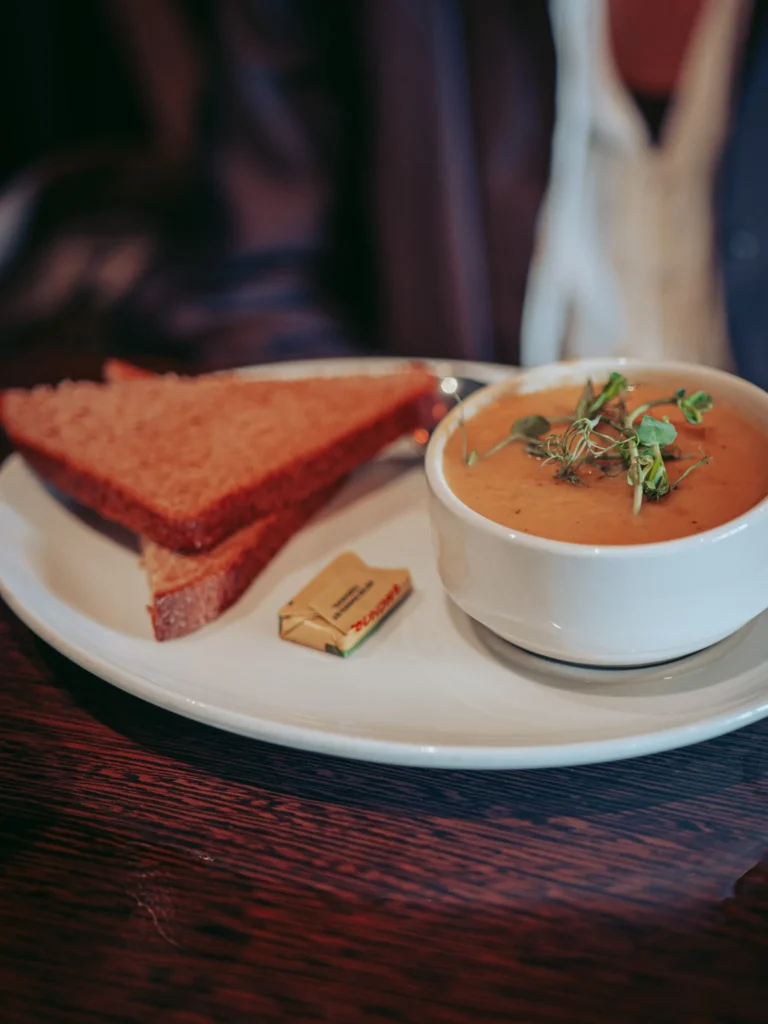
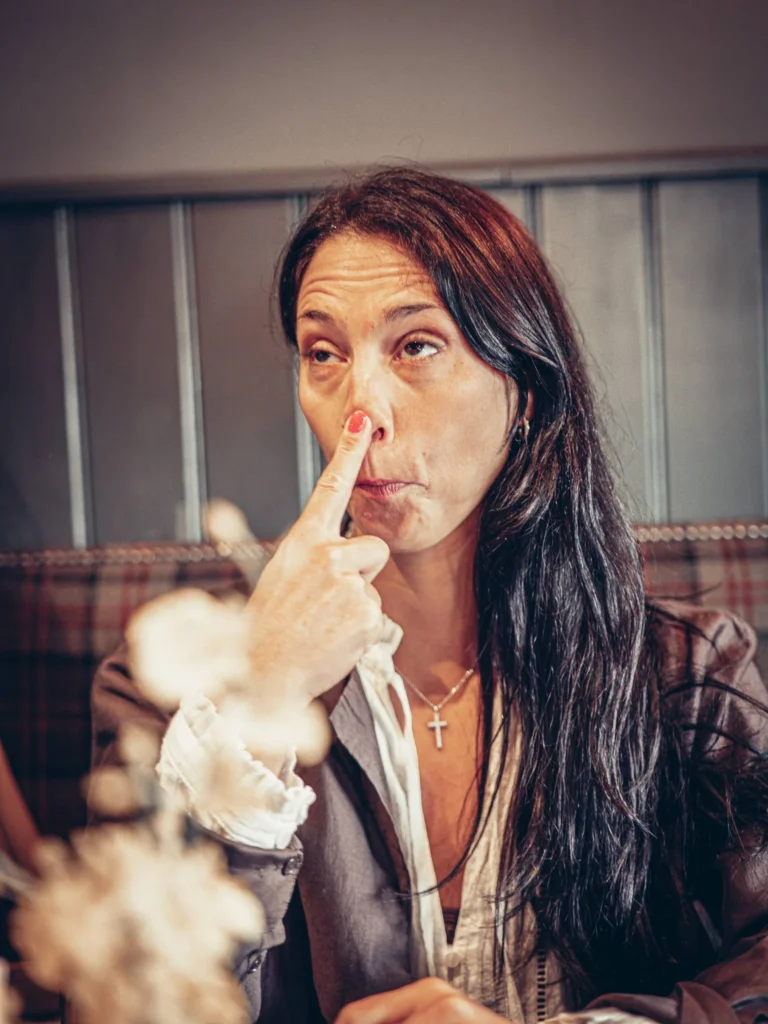
Caroline had the soup of the day. Neither of us could tell you today exactly which vegetables were in it, and honestly that is not what stayed with her. What stayed with her was a clear taste of mussels in it, a sea stock trailing behind the vegetables as if the base had passed a tray of shellfish on its way.
She was not expecting it at all, and that is precisely what she liked. Vegetables and mussel liquor, on paper she would not have bet on it; in the bowl it works very well and gives a plain vegetable soup a real seaside character. Two starters, two good surprises, and the mains had not even arrived.
The Isle of Mull mussels, finally
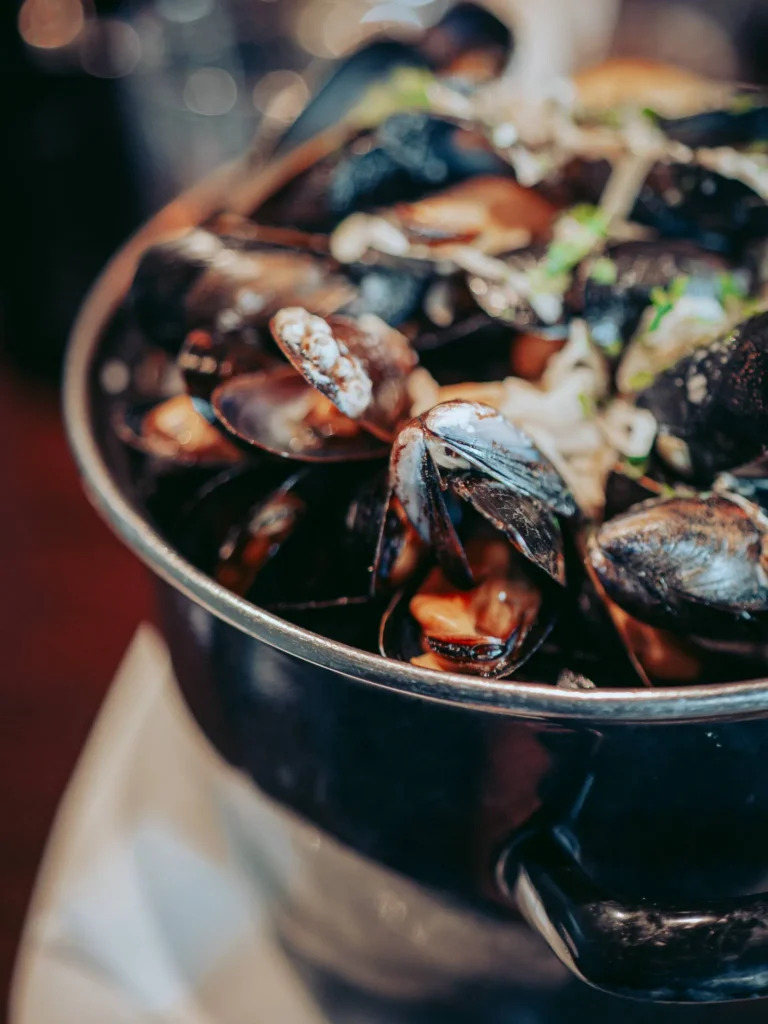
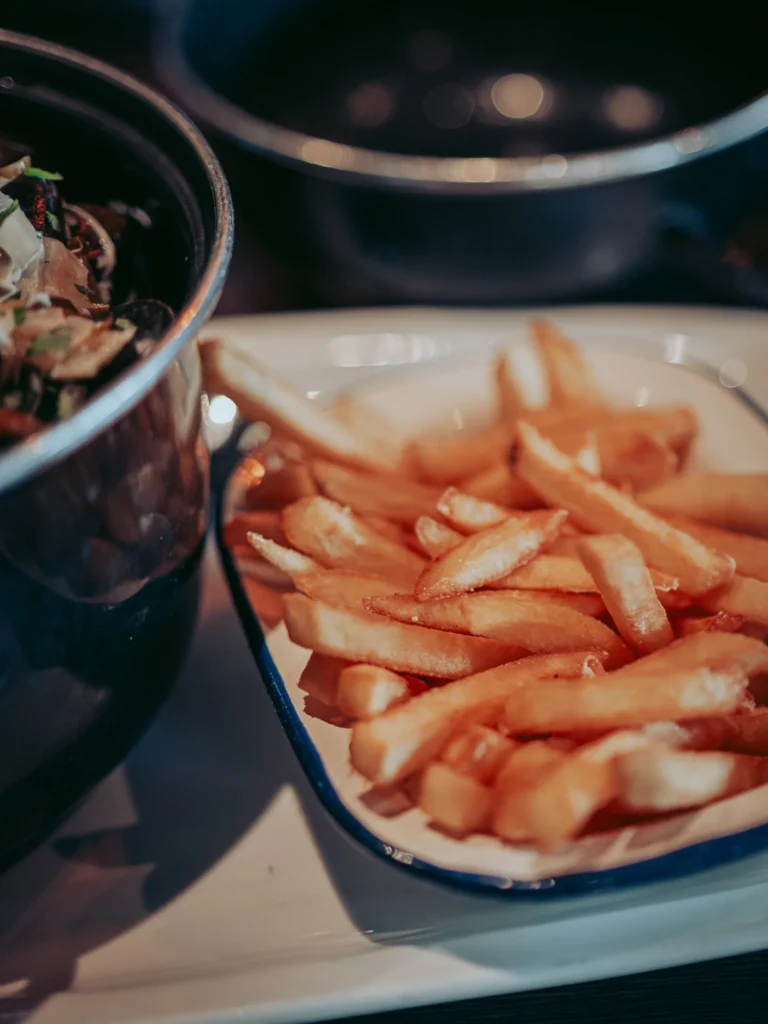
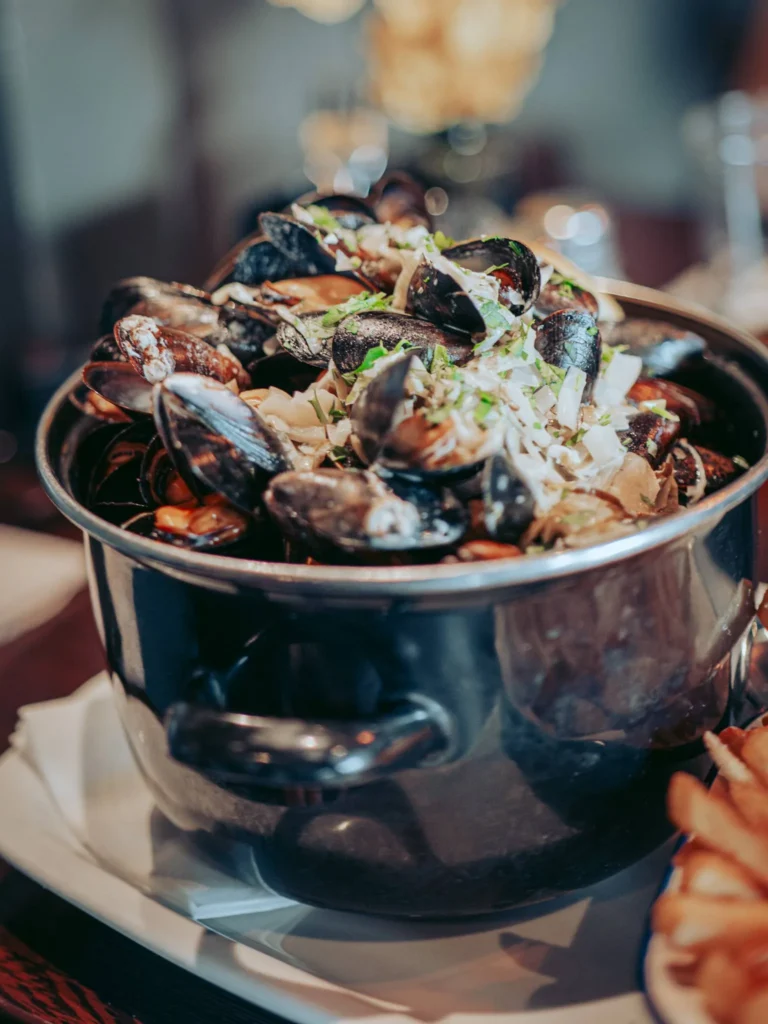
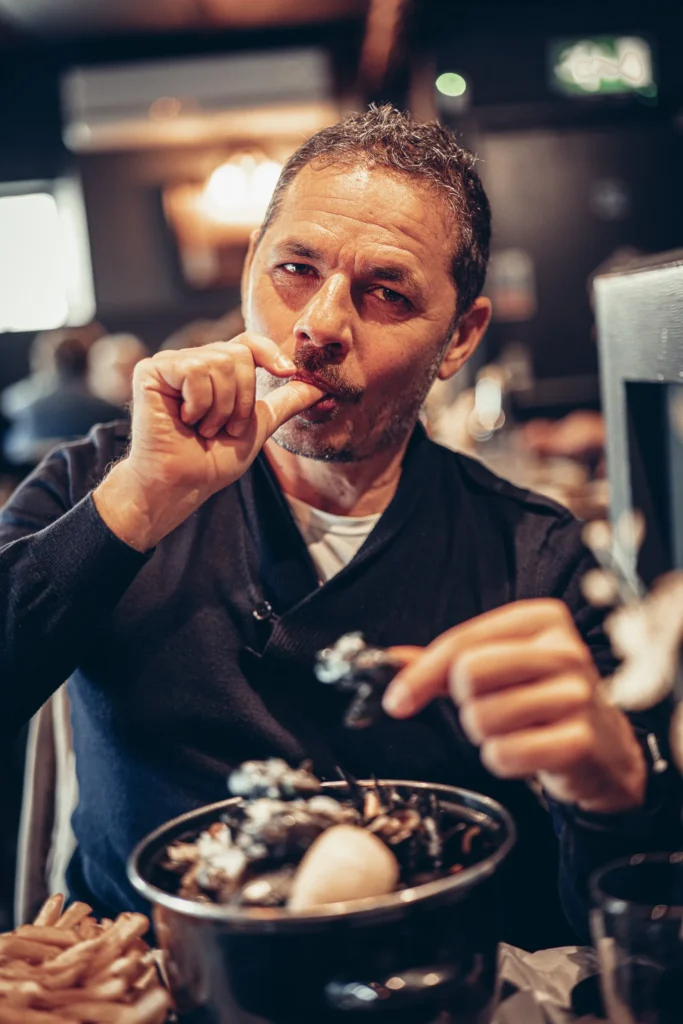
Right. The mussels. I had the main portion, with skinny fries, done chowder-style with cream, white wine, leek, fennel, onion and garlic, and a lot of herbs. The first shock was not even the taste, it was the volume: the pot that arrives is enormous. I did not finish it, which, for anyone who knows me, is close to front page news.
The second shock is the texture. They are exactly as I remembered them from that first trip: plump, sweet, silky, nothing like the tiny rubbery things you sometimes get on a platter. And the freshness is genuinely striking. I found it hard to believe they had travelled far before landing in my pot, and sure enough the menu says Isle of Mull, an island sitting right there off the west coast. You can taste it, and that is not a blogger’s line, it is simply that the journey was short.
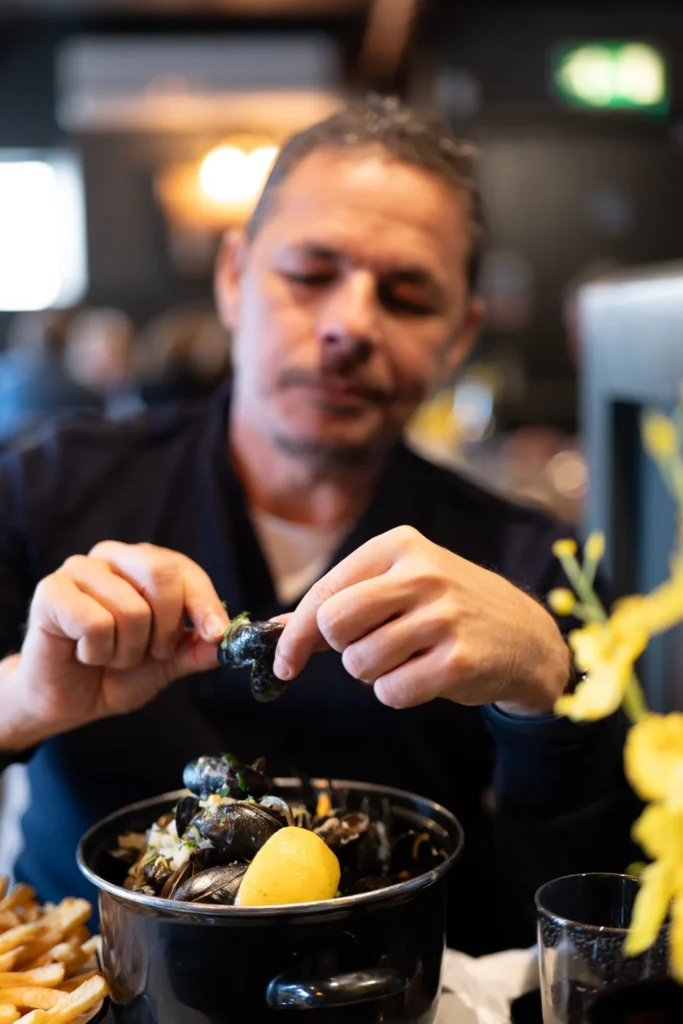
These went straight to the top of the trip
The day before I would have named a different dish as the best of the trip. These mussels settled it in three spoonfuls of broth. They went past everything, and I cannot see what would take the place off them before the end. This is exactly what I came back to Scotland for, four years on, and I had spent several days starting to think I would go home without it.
What makes the story dafter is how we got there: two restaurants that did not want us, a turn on a pavement, and a door pushed more or less at random. If a table had come free somewhere else, I would never have eaten those mussels. I am not going to spin you a life lesson about travel and letting go, but let us say it puts in perspective the idea that a ruined meal starts with an “Ah”.
Caroline’s salmon, and the neighbours’ platter
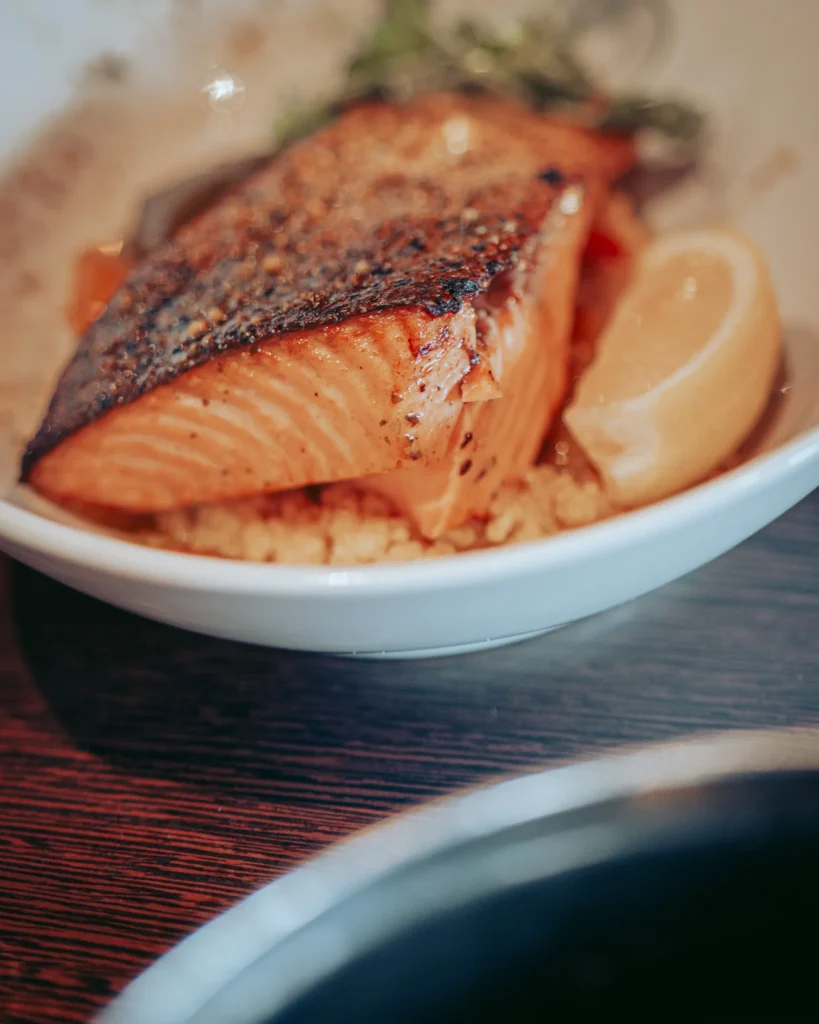
Caroline went for the baked fillet of Scottish salmon, and there was nothing considered about the decision: she simply watched the salmon go past to the next table and wanted the same. Verdict: she demolished it, the lot. She found the salmon a touch dry on the first mouthfuls, her only complaint of the meal, but plainly not enough to slow her down, because she finished with fairly impressive appetite.
And since we are on the neighbours, I have to tell you about the other table. A couple next to us order the Highland Seafood Sharer as a starter, the one we had hesitated over. The platter arrives. Caroline and I look at each other. That platter on its own would have filled the two of us comfortably, and it was meant to be their starter.
Then they ordered two fish and chips. Two. I watched them with a mixture of admiration and genuine concern, and said to Caroline the only thing that came to mind: they are not going to walk out of here, they are going to roll out. I have no idea how it ended for them, we left first. But if you had doubts about the portions here, there is your answer.
Practical information
ps: to whoever took the last table ahead of us in that second restaurant, no hard feelings, you handed me the best mussels of my trip without knowing it.