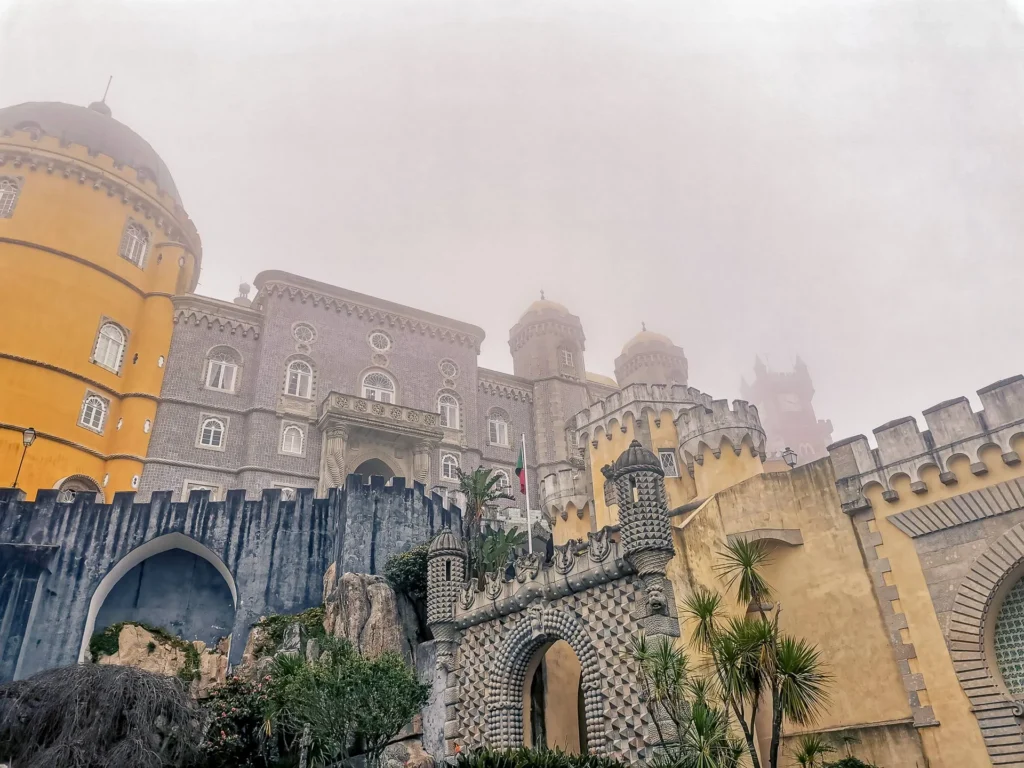
You arrive at Sintra station, you look up at the hill, and somewhere up there, perched in the mist, there is a yellow and red castle that looks more like a Disneyland attraction than a medieval fortress. That’s it, the Pena Palace.
A royal fantasy fully embraced, built by a king who clearly had no urban planning restrictions and who evidently indulged himself. We arrived one February morning under incredible mist, during the second Portuguese lockdown, and we were among the only visitors to the park. As a result, we had this rare thing: a major tourist site without crowds. And even in these privileged conditions, the verdict after the visit was quite clear: the exterior overwhelms everything, the interior is frankly disappointing. Let us explain why.

Mario, the tuk-tuk driver who took us up
If you take the train from Lisbon (and that’s what we did, more details in our guide to visiting Sintra), you arrive at Sintra station with an immediate question: “Well, how do we get to Pena now?”. The hill climbs steeply, bus 434 exists but moves quickly, and renting a car for this is a no. The tuk-tuk option remains.
We stumbled upon Mario just outside the station. An adorable guy, a tuk-tuk driver from Sintra, who offered to take us all the way up the hill to the Palace, stopping at a few improvised spots along the way (like the famous fountain, we’ll get back to that). A completely improvised ride, terrible sound for the video we were shooting (sorry in advance if you come across the link), but clearly one of the highlights of the tour.
Without Mario, we would have missed half of the interesting things along the way. So if, like us, you arrive by train and want to save your legs for the visits themselves, the tuk-tuk at the station is a real option to consider. It also allows you to share your life story with the driver for 20 minutes, which, personally, is exactly what I love when I travel.
The Sabuga Fountain (hidden drinking water)
First stop with Mario: a small fountain halfway up, in the Sintra forest. Not spectacular at first glance, but Mario explains to us that it is one of the purest springs in the area, the famous Sabuga fountain, and he fills his bottle with the air of someone who knows. We do the same, of course.
What’s interesting is that this fountain is a 10-minute walk from the Pena Palace, but you would never come across it if you take bus 434 or drive up. It’s typically the kind of spot we would never have discovered on our own. So, bonus tip: fill your water bottle here before the final ascent, it saves you from buying bottled water for 3 euros at the Palace snack bar (because yes, of course, there is a Palace snack bar).
A Walt Disney castle among the 7 wonders of Portugal
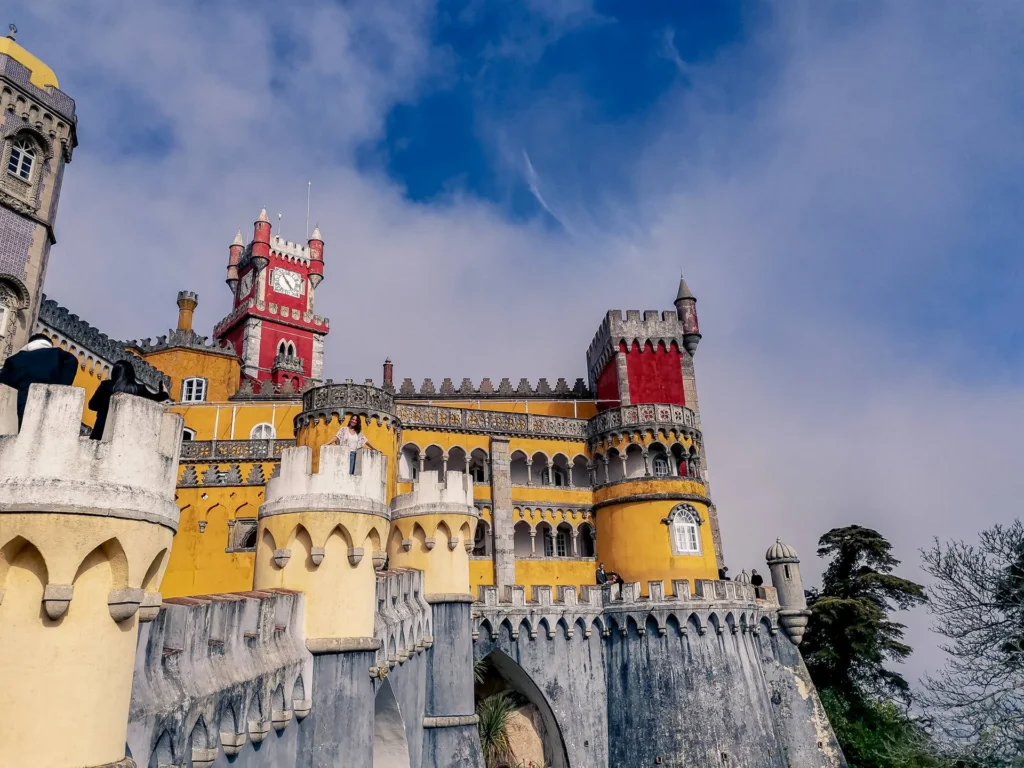
Well, let’s talk a bit about the palace itself. First shock upon arrival: the colors. Bright yellow, ochre red, purple, gray. A mix of architectural styles that should have been a disaster (Renaissance, Baroque, Gothic, Neo-Gothic, Manueline, Moorish, German Romantic, it’s all there) and yet it works. It holds together because the one who had it built, King Ferdinand II, was clearly a creative and somewhat crazy guy, and he had free rein to do what he wanted.
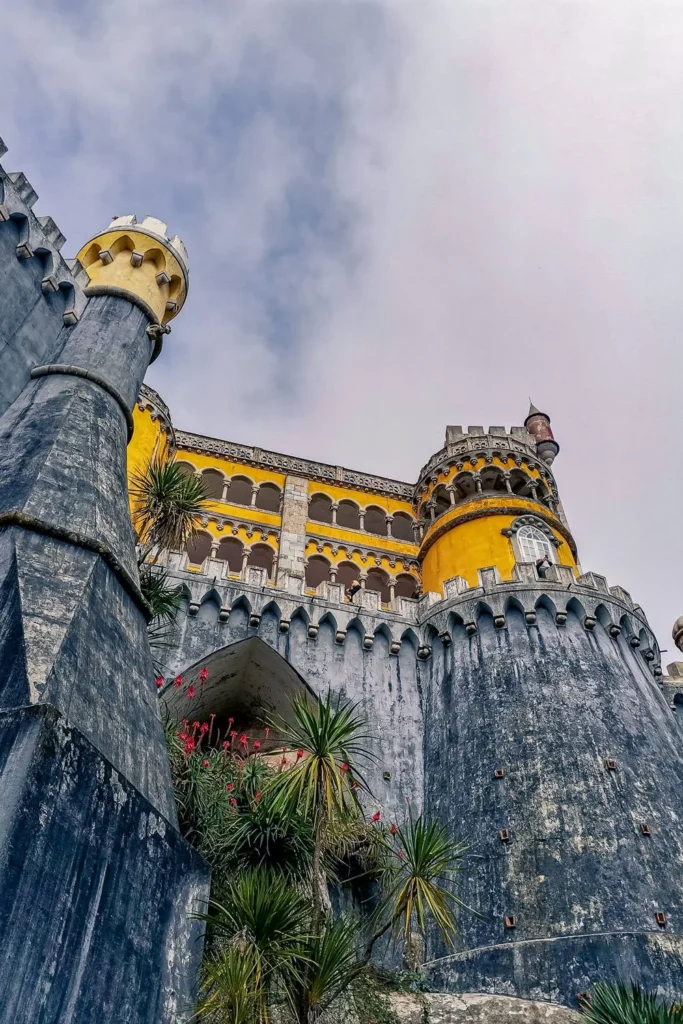
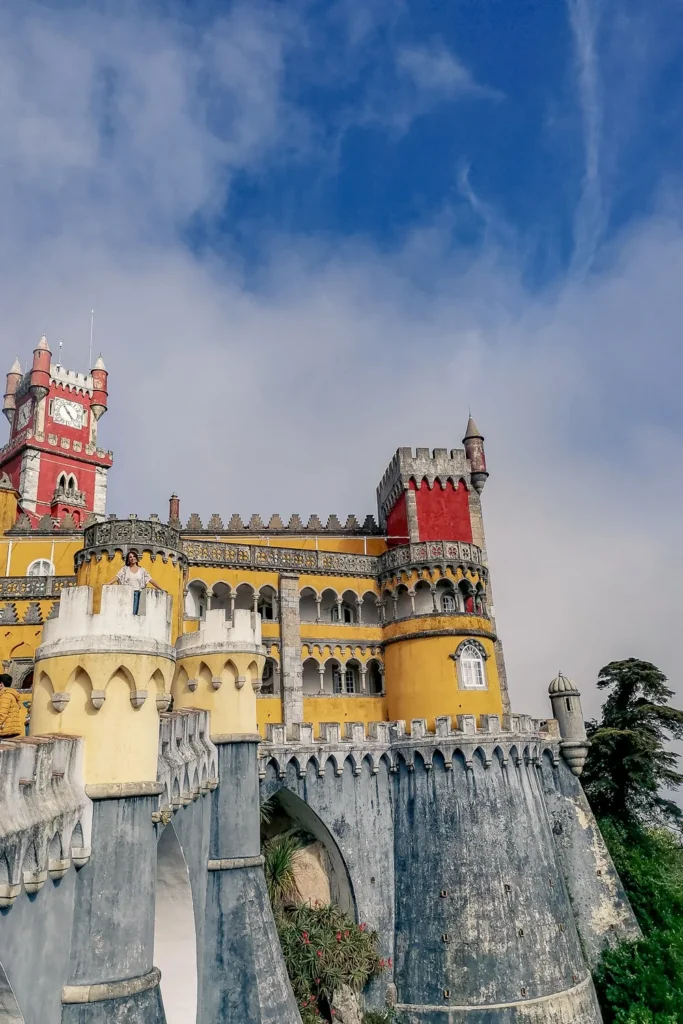
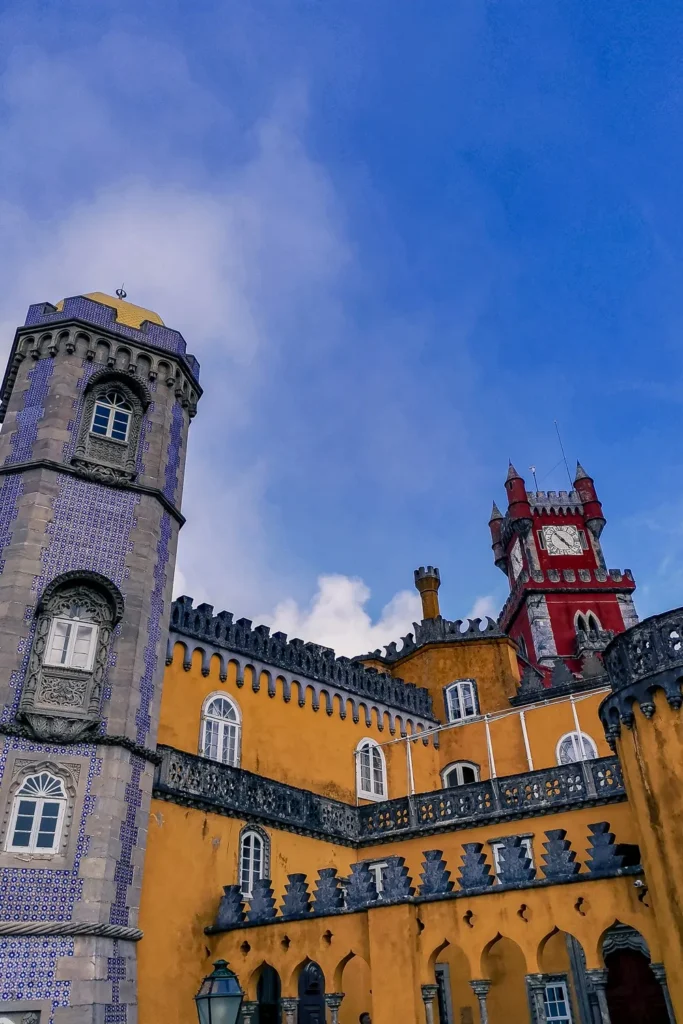
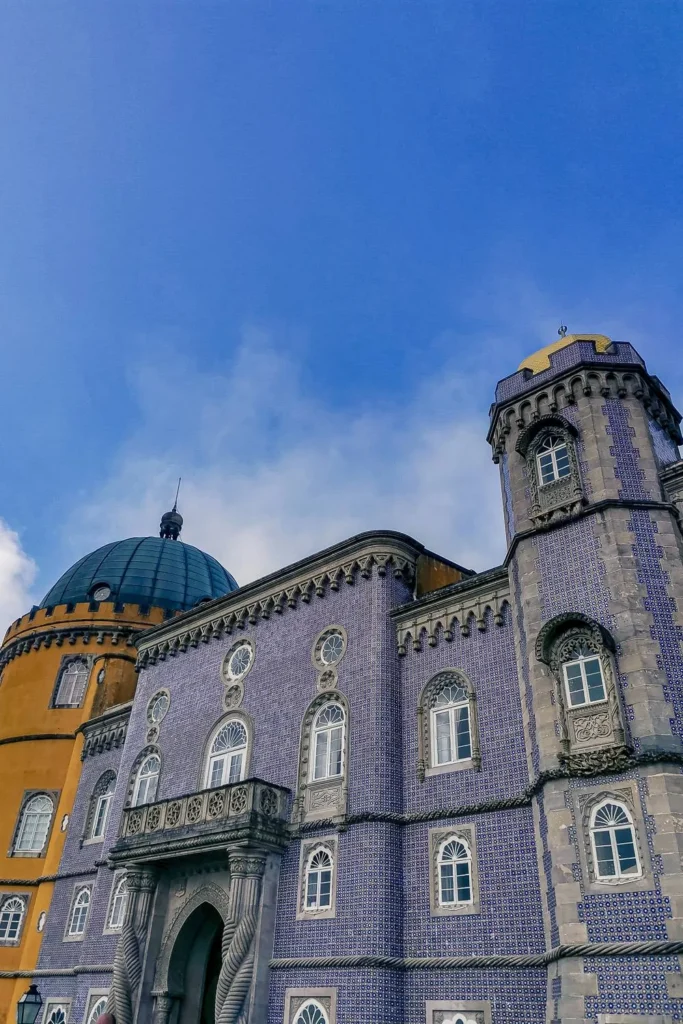
Quick history point, because I find it interesting. Ferdinand II was of German origin (from the House of Saxe-Coburg-Gotha), he married Queen Maria II of Portugal, and he transformed a ruined former Jeronymite monastery into this architectural madness between 1842 and 1854. Clear influence of German Romanticism, and of the Neuschwanstein castle which would be built later, so Pena probably inspired the famous Bavarian castle more than the other way around. Nice to know when you stroll around.
The palace is part of the 7 wonders of Portugal, a popular election organized in 2007, where the Portuguese voted for their favorite monuments. Pena is included, alongside the Jerónimos Monastery in Lisbon and Mafra. So yes, it’s a subjective ranking, but it gives you an idea of the local attachment to the site. Seen from below, from above, from afar, it’s spectacular. That’s its number one asset.
Interior or exterior: where is the real spectacle?
Now the part that disappoints. The interior visit of the palace.
After passing through the outdoor terraces, the ramparts, and the insane views over the entire Serra de Sintra and the Atlantic in the distance, we entered the palace. And there, disappointment. Not catastrophic, but clearly below expectations. We compare it with other things we’ve seen in Portugal to give a scale: the library of the University of Coimbra, for example, is baroque lace, carved wood, frescoes, it takes your breath away. Or even the Moorish Castle right next to Pena, which tells a real military story with its ramparts and walkways. Well, the interior of Pena is below that. Lots of disparate objects, knick-knacks stored rather than staged, and above all things you absolutely do not expect in a 19th-century romantic palace: visible fire extinguishers in every room, surveillance cameras sticking out from the ceiling, very 21st-century museum signage. Naturally, it breaks the illusion.
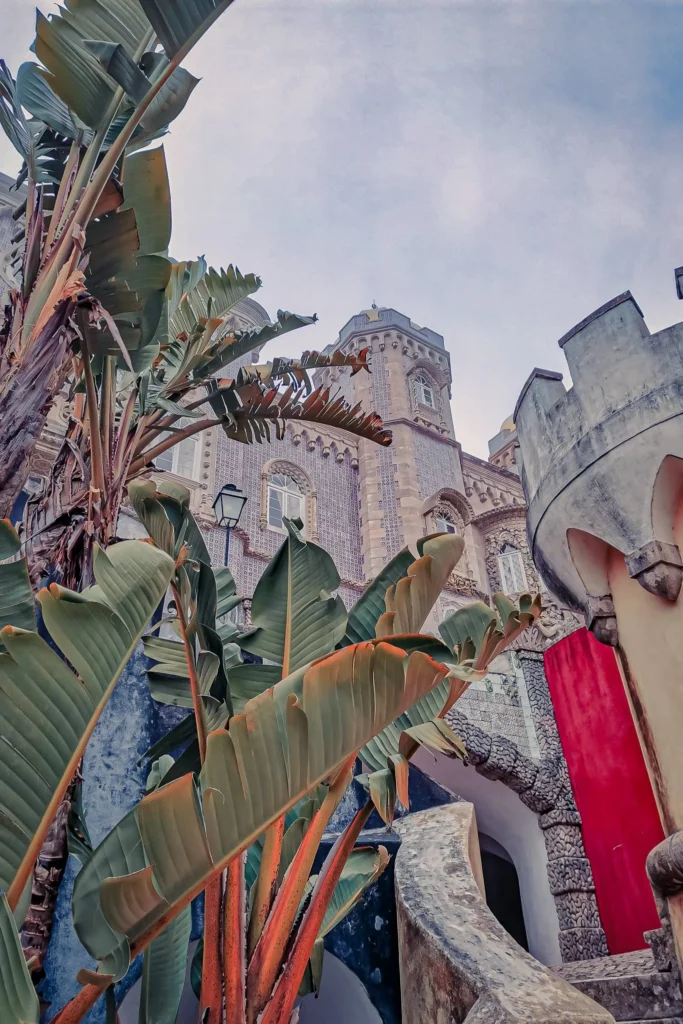
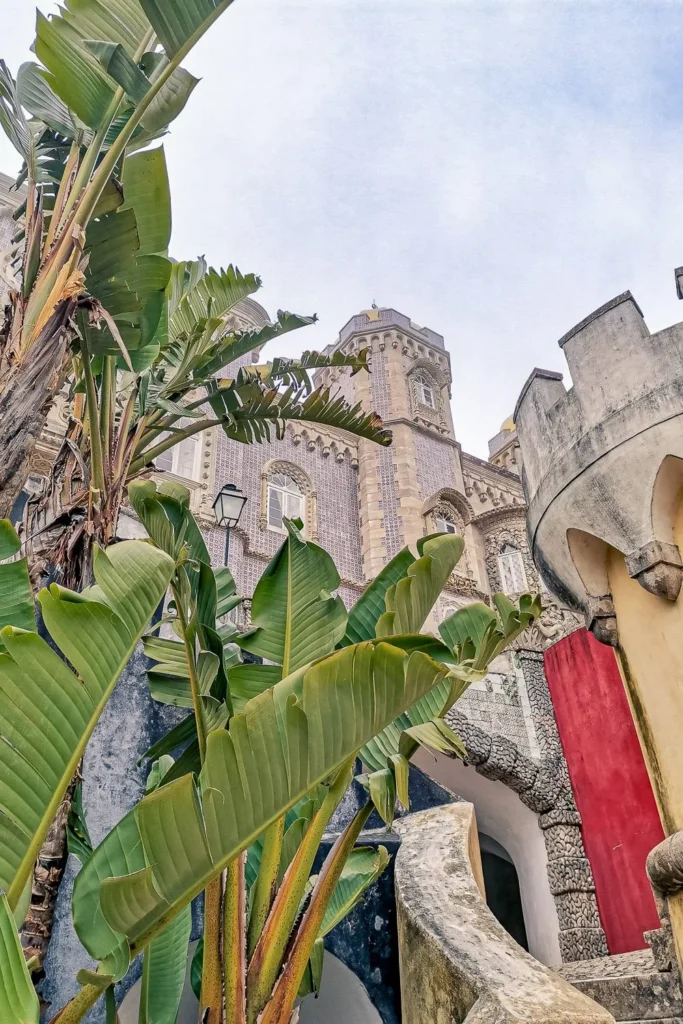
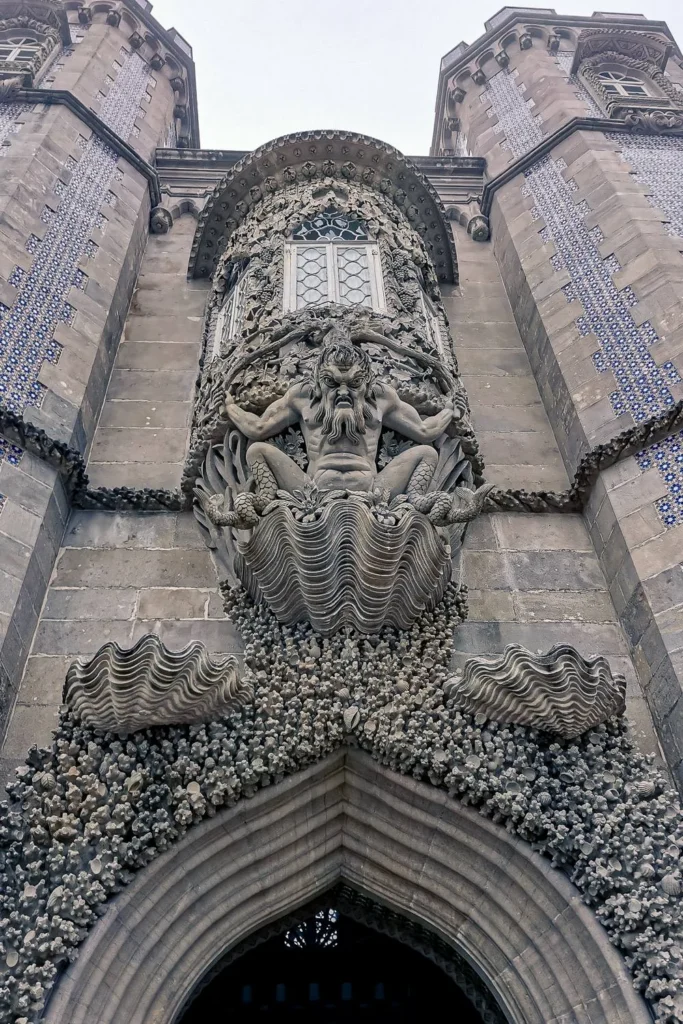
Our decisive advice: if you’re hesitating between a “park only” ticket and a “park + palace” ticket, and your budget is tight, take the park only. The real spectacle is outside. The facades, the crenellated ramparts, the terraces, the Moorish statues, that’s the show. The interior, you can skip without missing anything fundamental. After, if you’re going for the first time and want to say “I did it,” take the combo. But know what to expect.
The vegetation: sequoias, Chinese trees, and mystical mist
The park around the palace is another level. The Serra de Sintra has a super humid microclimate that allows a ton of exotic species to grow here like nowhere else in Portugal. Over the centuries, and particularly under Ferdinand II who was crazy about botany, the park has hosted species from all over the world: California sequoias, tree ferns from New Zealand, Chinese trees, camellias, magnolias.
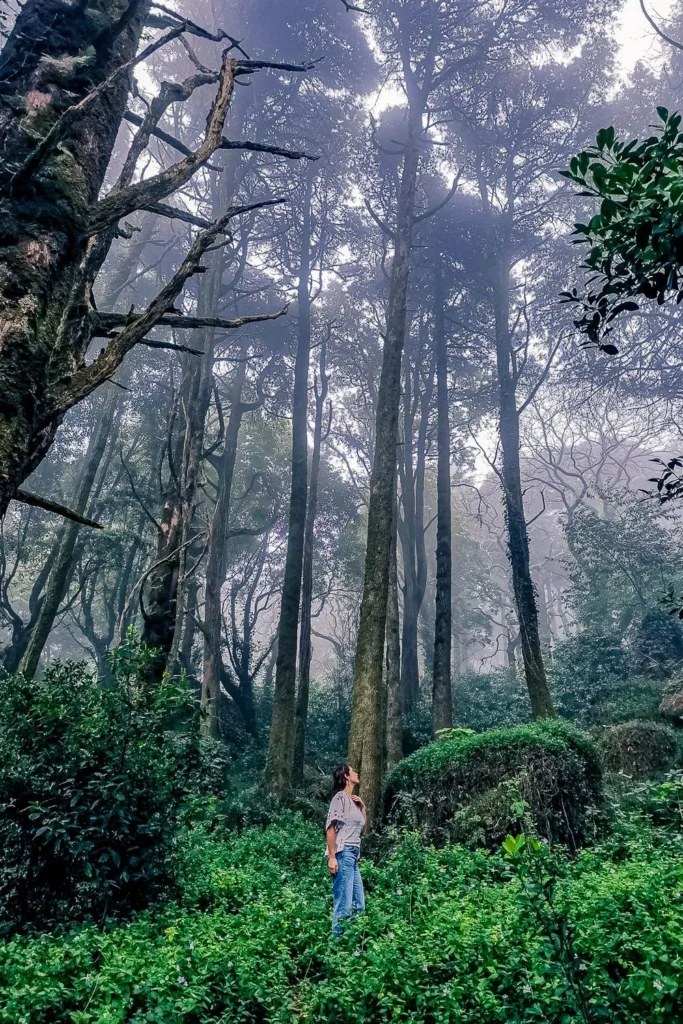
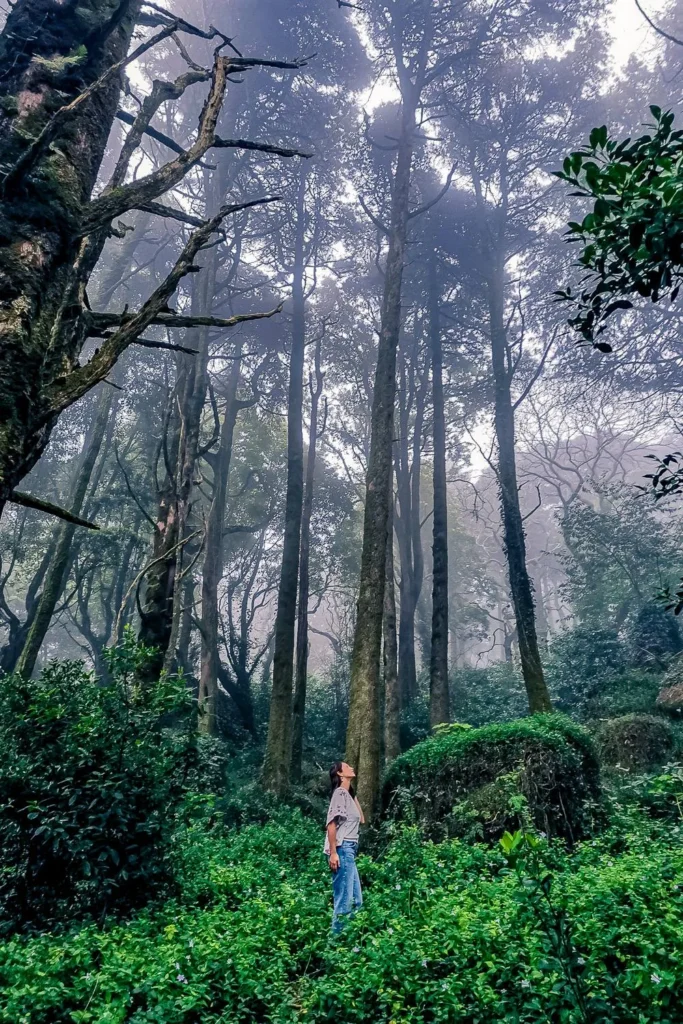
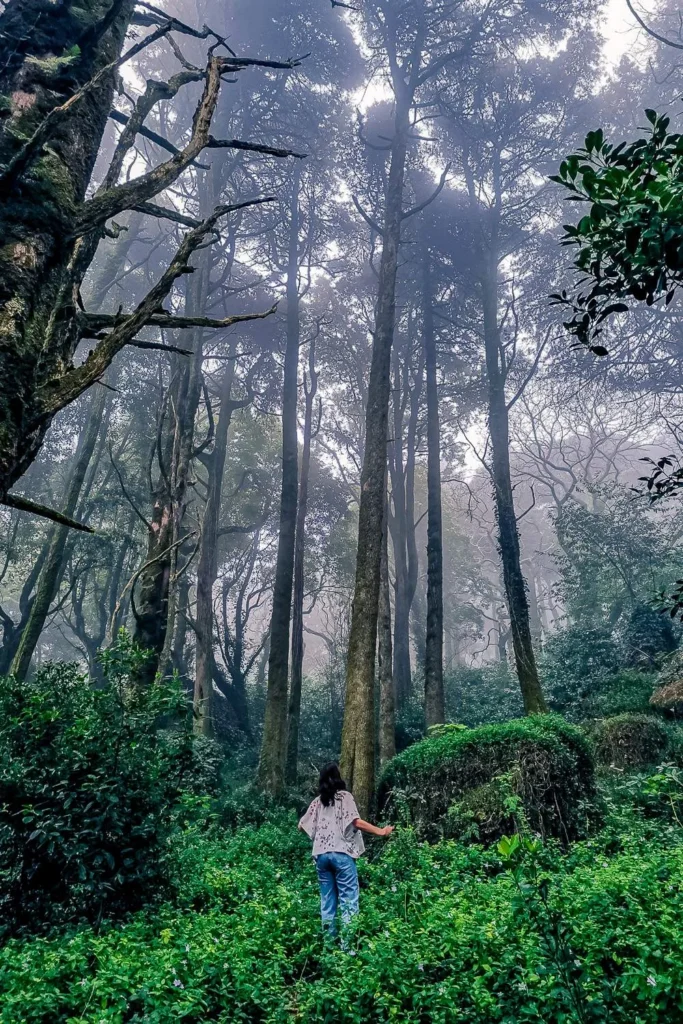
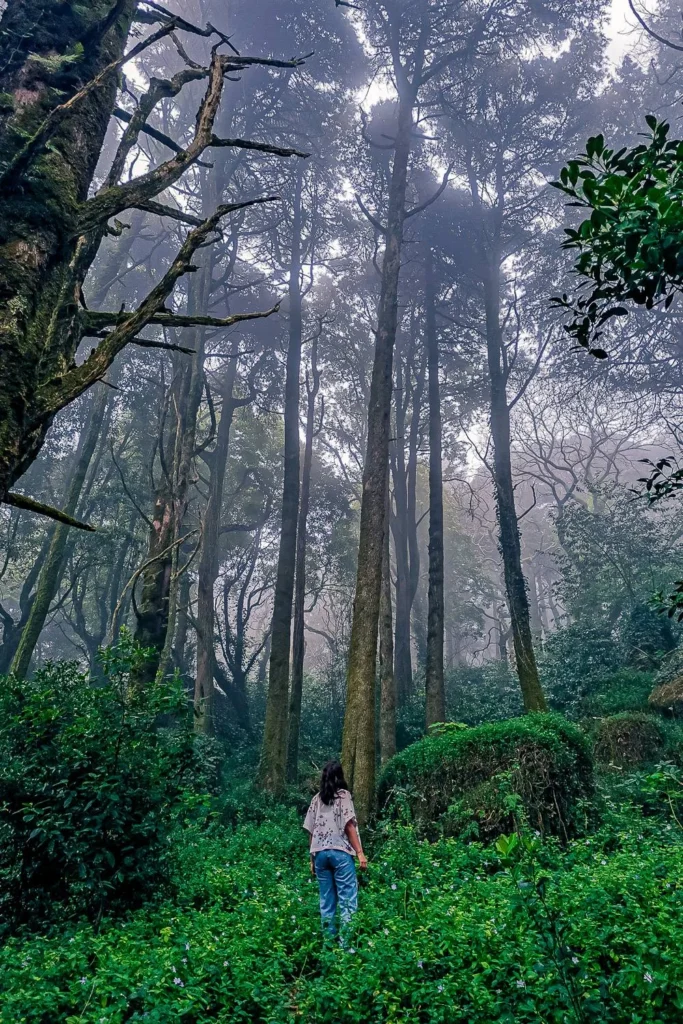
As a result: you stroll through a forest that looks more like a botanical garden from a Tolkien hero than a Portuguese forest. Huge trunks, tall trees, species you’re not sure you’ve seen elsewhere. And with the morning mist clinging to the foliage, the mystical aspect is guaranteed. It’s totally the kind of place where you expect to run into a druid.
Along the paths, you also come across colorful little pavilions, hidden ponds, romantic corners typical of 19th-century aesthetics. The park is not just trees: it’s a whole universe of landscaped staging.
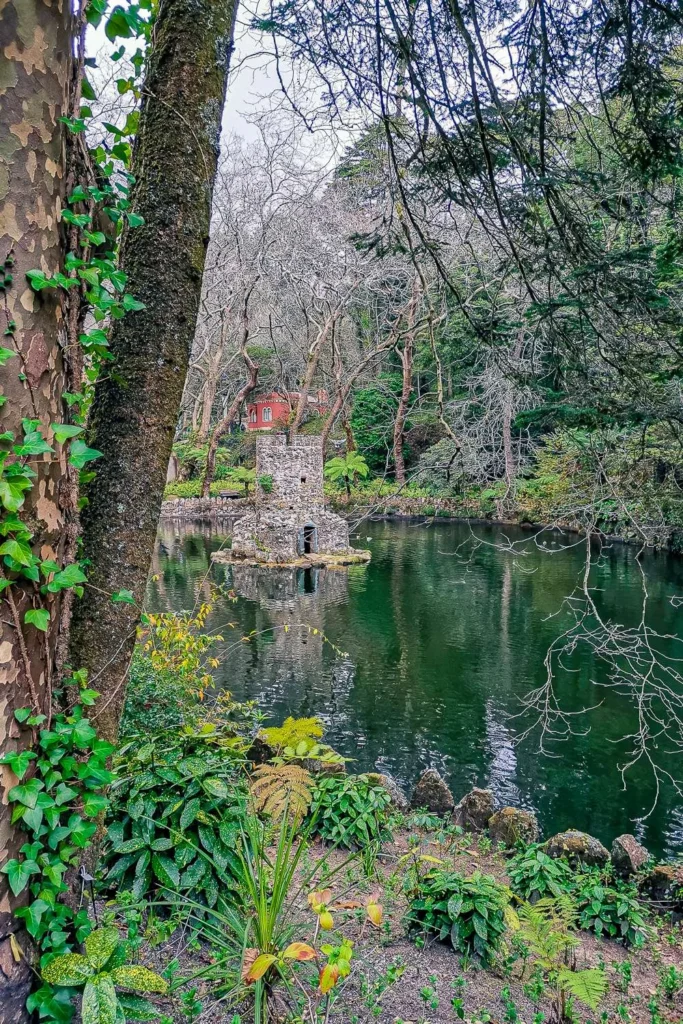
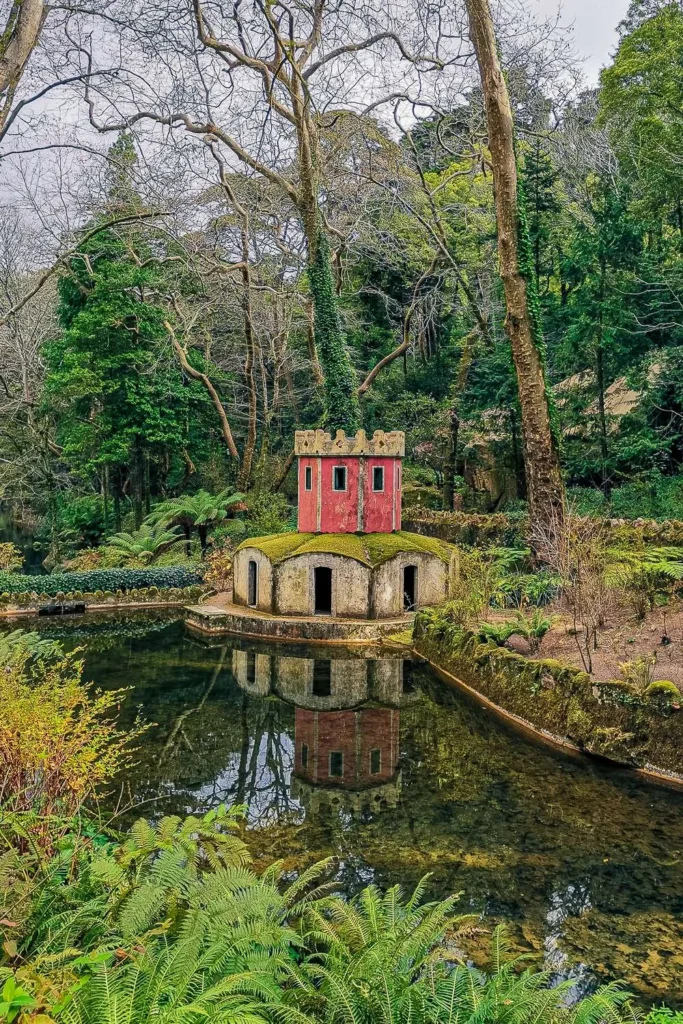
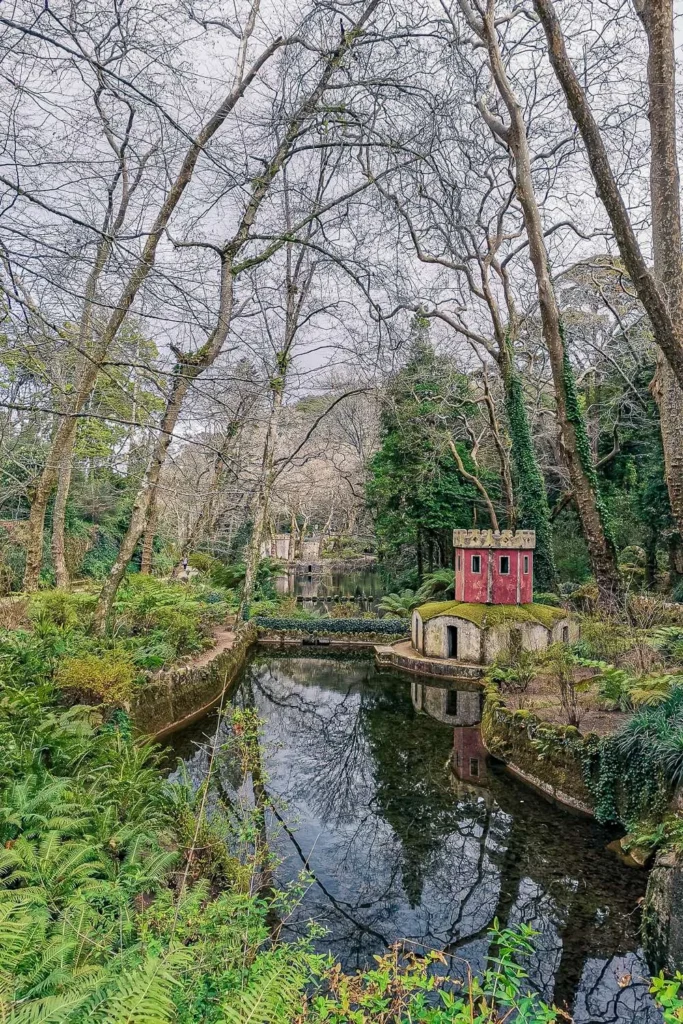
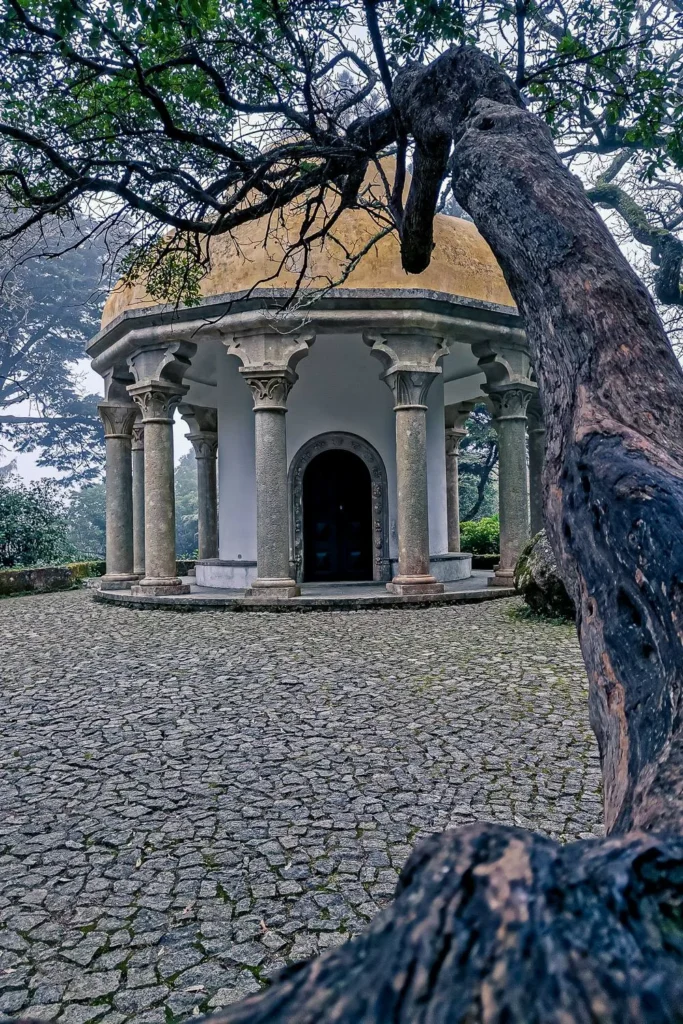
If you love nature, the Pena park is worth as much the detour as the palace itself. Give yourself an hour of free walking on the trails, not just the main avenue, and you will stumble upon magical spots.
The pétanque court of the monks and knights
Well, I have to tell you a running gag from this day, because here it is. At one point, crossing a flat area a bit cleared between the forest and the ramparts, we said: “Hey, this looks like a pétanque court.” And from there, it took off.
On site in the video, we jokingly threw out with maximum seriousness that “this is where the monks and knights played pétanque between inter-palace tournaments, exclusive info found nowhere else.” Well, obviously, it’s completely made up. There’s no historical pétanque court at Pena Palace, medieval knights didn’t play pétanque, and even if they had, they wouldn’t have held inter-palace tournaments (among other things because pétanque was codified in the Var in the early 20th century, but I’ll stop nitpicking).
But there you go, it made us laugh. And personally, when I watch the video again, it’s typically the kind of detail that makes me remember the walk very well. So if you ever pass by a flat area under the ramparts, know that it is OFFICIALLY the historical pétanque court of the monks and knights, and you can tell your friends about it when you return. (No, obviously, don’t do that. But the idea is there.)
Seasonality and practical tips
Practical information

Pena, it’s cliché, it’s crowded, it’s in all the guides, but there you go, it’s also really worth doing at least once. For the yellow facade that looks like nothing else, for the crazy botanical park, for the view from the terraces that sweeps across the entire Serra de Sintra to the Atlantic. To be able to say that you walked on the ramparts of one of the 7 wonders of Portugal, even if you find the ranking a bit arbitrary.
Our final advice: combine it with Quinta da Regaleira on the same day if you are really tight on your schedule (that’s what we did, and we came back exhausted, we won’t do it again so rushed). Otherwise, spread it over 2 days, take your time, and really enjoy the morning mist.
PS: if you see Mario at the station exit, say hello from us. There’s little chance he’ll remember, we were two French people in the mist among hundreds of tourists, but we’ll give it a try.