


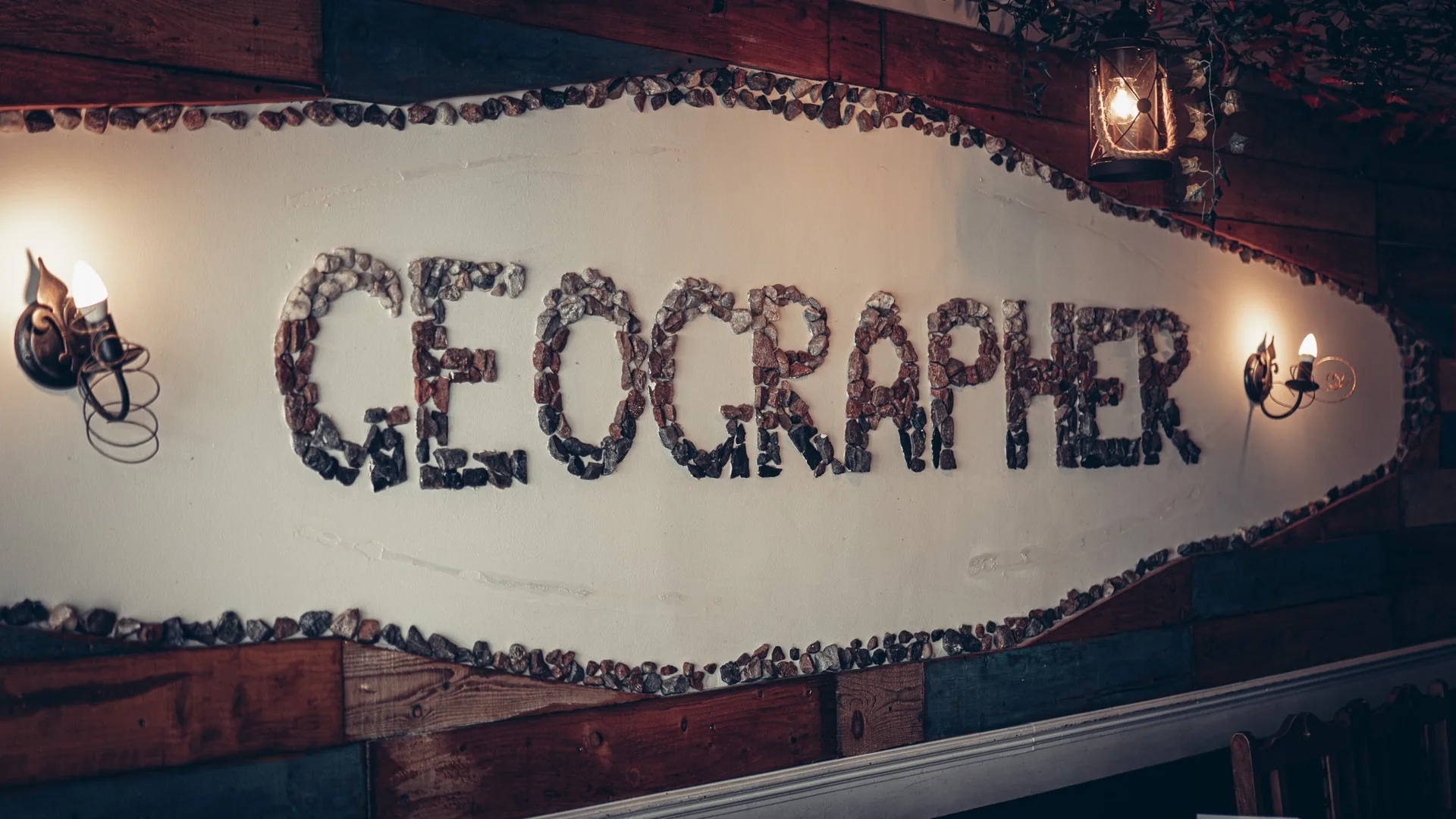
Our review of The Geographer
Benefits
- Local langoustines grilled in garlic butter, meaty and tender
- A dining room dressed like a travel journal, and the theme is the restaurant
- Warm, unhurried welcome and service
- A genuine local product on the daily slate
Disadvantages
- The langoustine portion is tight for what the plate costs
- No bookings at all from April to October, so you have to turn up early
Who is this place for?
- Anyone chasing Scottish shellfish where it is actually landed
- Travellers who like a room with something to read on the walls
- Couples happy to share two good plates rather than order four
One of the best things on the High Street, as long as you turn up at the start of service and are willing to share.
1.35pm: we push open the door of the Geographer.
1.36pm: the couple who walked in just ahead of us take the last table.
1.37pm: we are back out on the High Street pavement, counting up the places that have turned us away in the past hour.
We came back the next day. At noon exactly, on opening, an hour and a half earlier than the failure of the day before. And this time we were among the very first in for the service, which in this story is not a detail: it is the whole of the strategy.
Some context if you are joining halfway. The day before, we spent most of lunchtime being turned away in Fort William. The first place said no because we had not booked. The Geographer did not exactly say no: it simply had nothing left, by about thirty seconds. We stepped back out, turned round, and ended up at the Ben Nevis Bar directly opposite, where I had the best mussels of the whole trip. That lunch, in other words, ended very well, which does nothing whatsoever to remove the urge for a rematch.
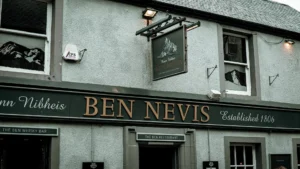
Ben Nevis Bar, Fort William: turned away twice, then the best mussels of the trip
On the pavement of the High Street, two restaurants behind us, and the same conversation both times. Waitress: -Have you got a booking? Xav: -No. Waitress: -Ah. There it is....
Read moreWe could not have booked anyway
I looked it up afterwards, because it had been nagging at me, and the answer made me smile. They do not take bookings from April to October. Not “it is difficult in summer”, not “ring back nearer the time”: no bookings at all for the whole season, walk in, and if it is full you wait or you come back another time.
Which means we had not missed anything the day before. There was no phone call we had forgotten to make, no box left unticked. There was an order of arrival, and two people ahead of us in it. The only variable we had any say over was the hour, and that is precisely the one we changed the next day. Rarely has a rematch demanded so little imagination.
The second thing that came up when I pulled on the thread: what they sell is street food with a story, flavours carried home from the owners’ own travels, a stated commitment to local suppliers, and a daily shellfish special right through the summer. I thought I was walking into a themed restaurant. In fact the theme is the restaurant. That sounds like nothing written down, but once you are inside the room it changes entirely how you look at the walls.
A room that reads like a travel journal
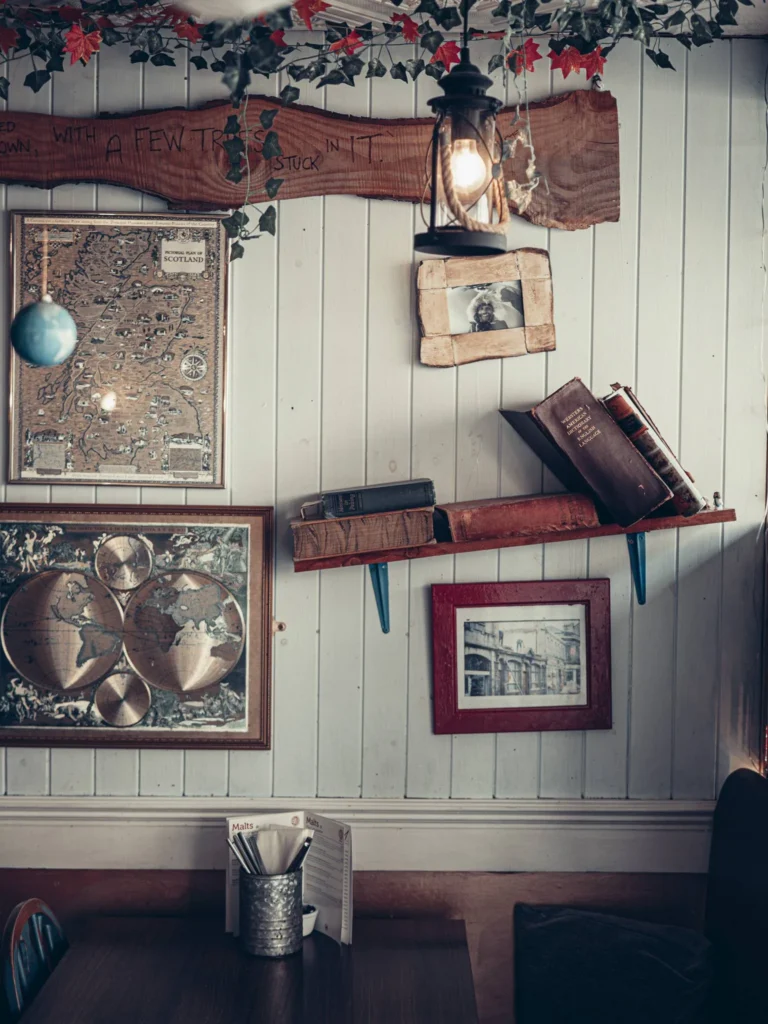
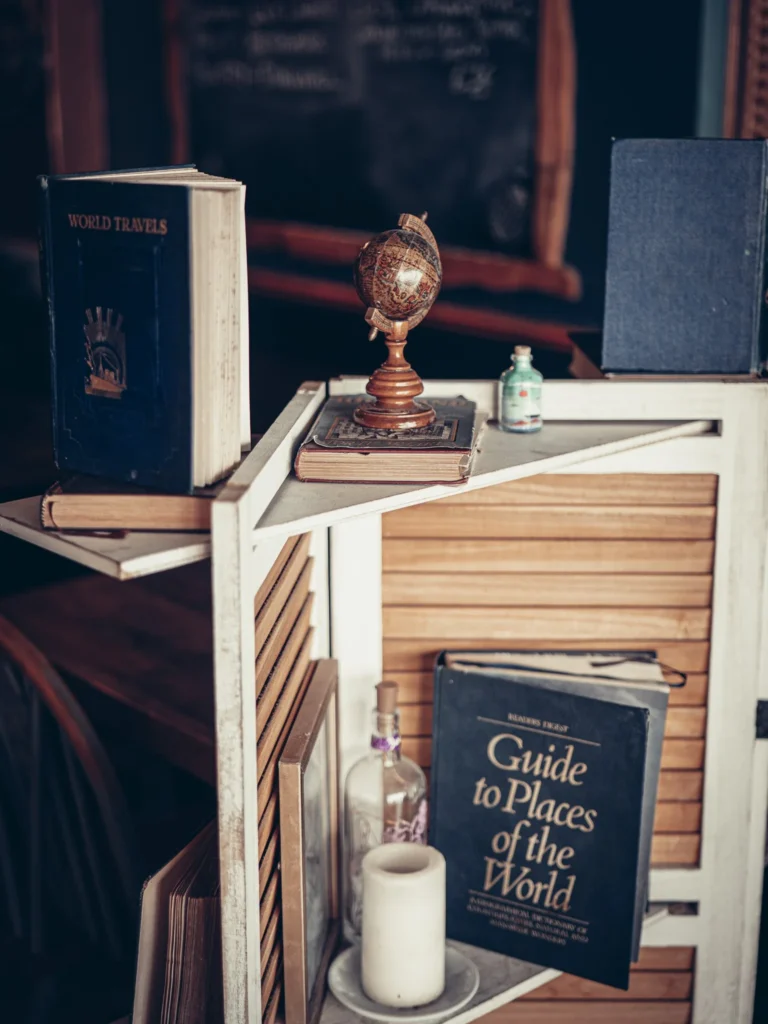
Because there is décor here. A great deal of it. It is busy in the good way: there is something to look at wherever you turn, and you take a while to actually sit down, because your head keeps going every few feet. Wall maps, framed old charts, travel guides and place guides stacked on shelves, a globe on its stand, and books with titles you can read from your table. Guide to Places of the World is one of them, which is about the most honest summary of the place you could ask for.
And then there are the details that cost nothing and set the whole tone. My favourite: the cutlery is not laid on the table or rolled into a napkin, it is stood up in little metal watering cans, one per table. Anywhere else that would be a gimmick. Here, among the maps and the globes, it reads as obvious, as though somebody had emptied an entire loft with a genuine sense of staging.
There is even a frame on a boarded wall filled with foreign banknotes brought back from all over, a heart chalked underneath it and the word love written by hand. It is exactly the sort of thing that would look twee in a photograph and lands as touching in the actual room, under the fairy lights. Nobody here is trying to be smart, and that turns out to be very restful.

Globes on the ceiling and a Saltire in the window
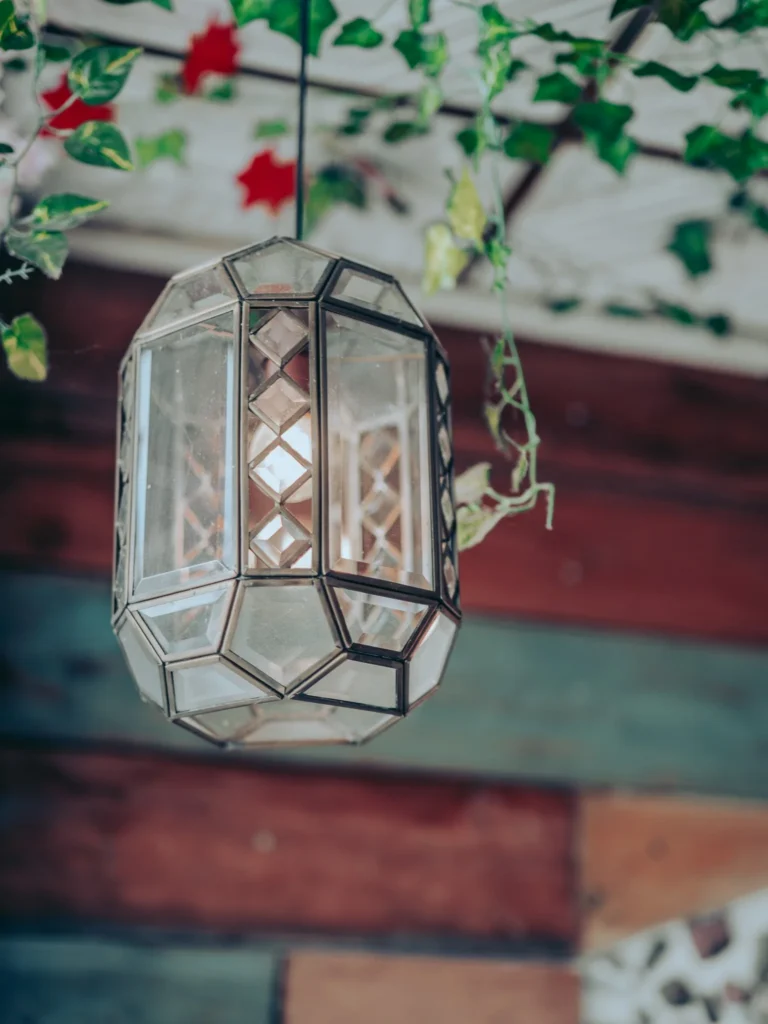
You have to look up as well, or you miss half the work. On the ceiling, between the fairy lights and the artificial foliage, there are small globes hanging on threads, turning slowly, next to faceted glass pendants and lanterns. In a room that is already low lit, it puts points of light all over the place, and you understand fairly quickly why everybody photographs this restaurant.
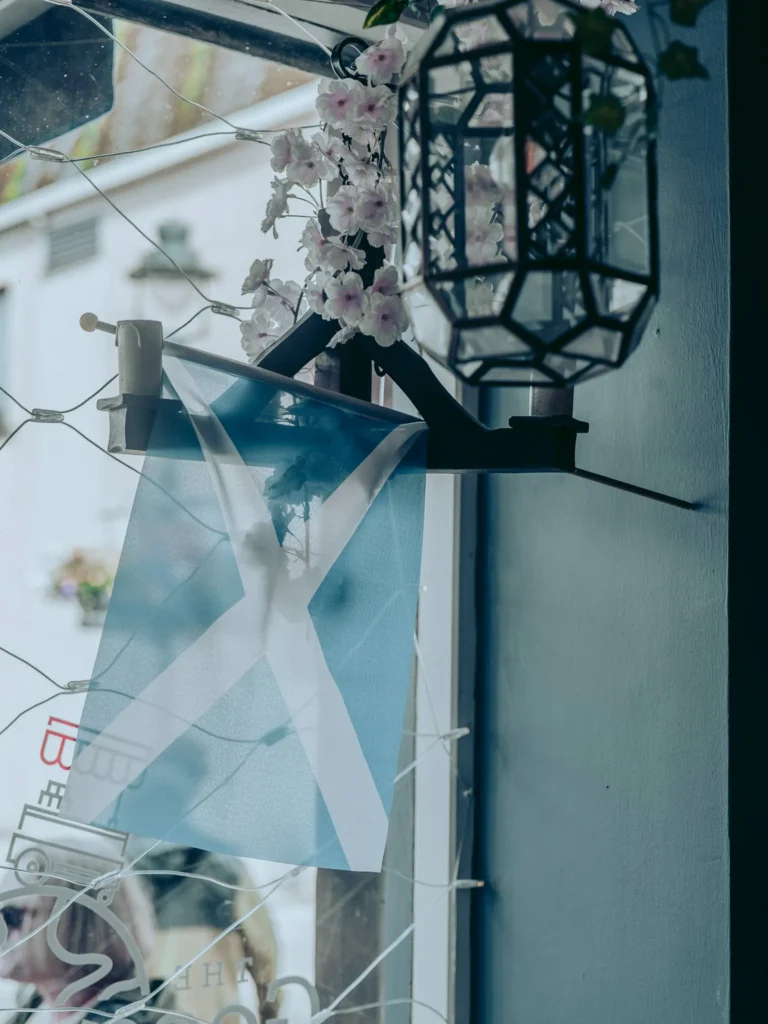
At the windows, a different register: a Saltire stretched flat against the glass, artificial flowers, an iron lantern hung off the frame. The mix ought to be a mess, a globalised travel theme plus a local flag plus plastic plants. Except that it holds, most likely because nothing was bought as a set. Every object looks as though it turned up on its own, which is probably the shortest working definition of décor that works.

The daily slate and the Travellers’ Corner
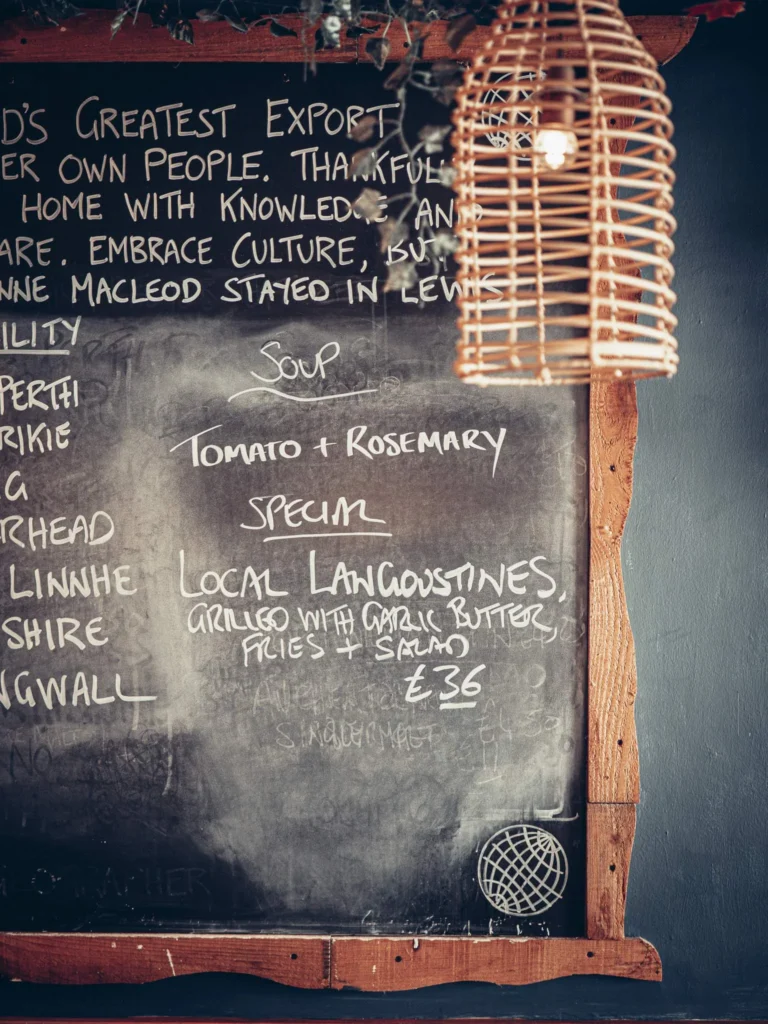
The real centre of gravity in the room is still the slate. A large wall slate in a wooden frame, chalked up, with the soup of the day, tomato and rosemary, and just below it the special. And the special that day was local langoustines, grilled in garlic butter, with fries and salad. We knew what we were ordering before we had so much as looked at the menu.
What kept me busy for the rest of the meal was the rest of that slate. Down the short side runs a column of place names, half rubbed out by earlier chalk, and you can make out Perth, Dingwall and Loch Linnhe. Across the top there is a line whose ending is hidden behind a wicker pendant, and it starts from the idea that Scotland’s greatest export is her own people, with the wish that they come home again with knowledge. I could not read the end of it, the lamp was in the way. I came back to it later, and so will we.
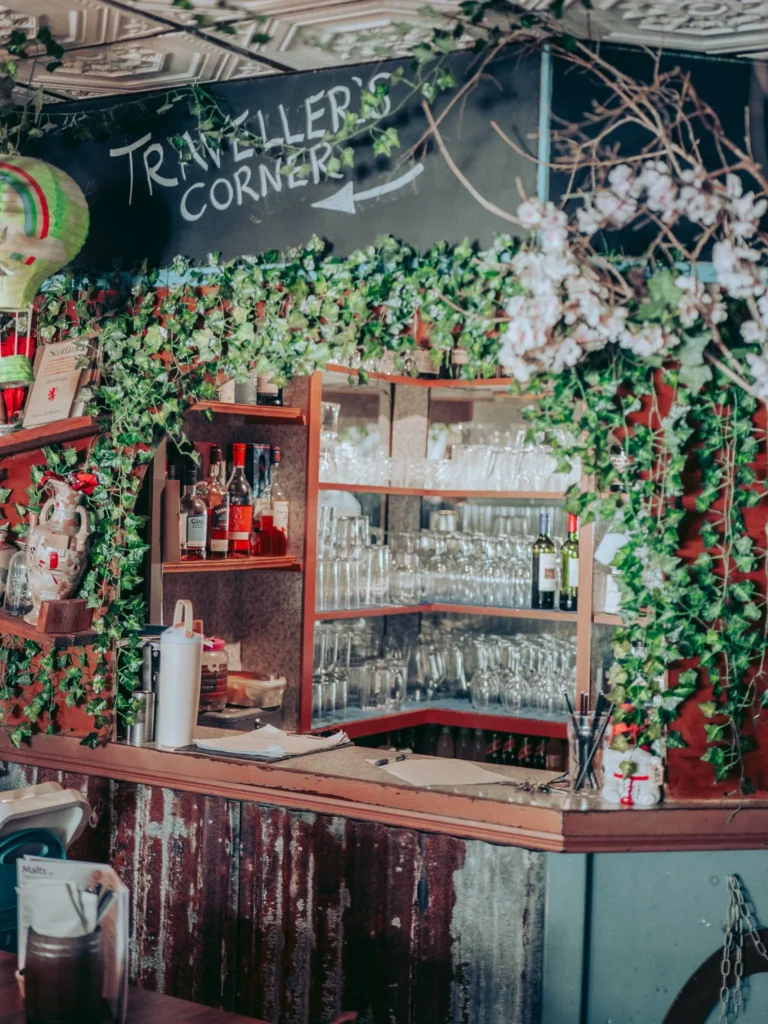
A little further along, above the back bar, another stretch of black wall carries two chalked words: Travellers’ Corner. The bar itself vanishes under artificial ivy, bottles lined up, glasses hanging. It is also the only spot in the room where I saw a man working, but we will come to that.
Scottish langoustines are rarer on a Scottish table than they should be
I should explain why a line of chalk about langoustines put us in that state. You very likely half know the reason already, so let us just settle it rather than make a revelation of it. Since the start of the trip I had been after Scottish shellfish of the kind I ate on our first trip here, four years earlier. Glasgow, Stirling, Glencoe: nothing. And the same bafflement every time, standing in a country ringed by water and unable to eat what lives in it.
The langoustine, the same animal that turns up in pubs as scampi and in older cookbooks as the Dublin Bay prawn, is Nephrops norvegicus. Scotland lands roughly sixty per cent of the UK catch on its own, most of it off the west coast. And the great majority of that catch leaves alive for the continent, for Spain, France and Italy, where a kilo fetches considerably more than it does at home. Which is how you end up with Scots who have never eaten one.
The detail that makes the whole thing better is the geography. Loch Linnhe, the one you drive along coming into town and look out at from the promenade, is langoustine habitat: cold, clear, deep water. On the west coast some of it is creel caught, baited pots set in long lines about twenty yards apart, hauled every twenty-four hours, nothing dragged across the seabed. Which is to say they had been living at the end of the street, and on the balance of probability they should have gone to a Spanish market rather than onto my plate.
And that is where the line on the slate turns genuinely funny. Scotland’s greatest export is her people, says the wall. A few feet along, on the same board, the area’s other great export is chalked up for lunch, and for once it has stayed put. I have no idea whether anyone here meant to put the two together. I would like to think so.
On the plate, and a real taste of too little
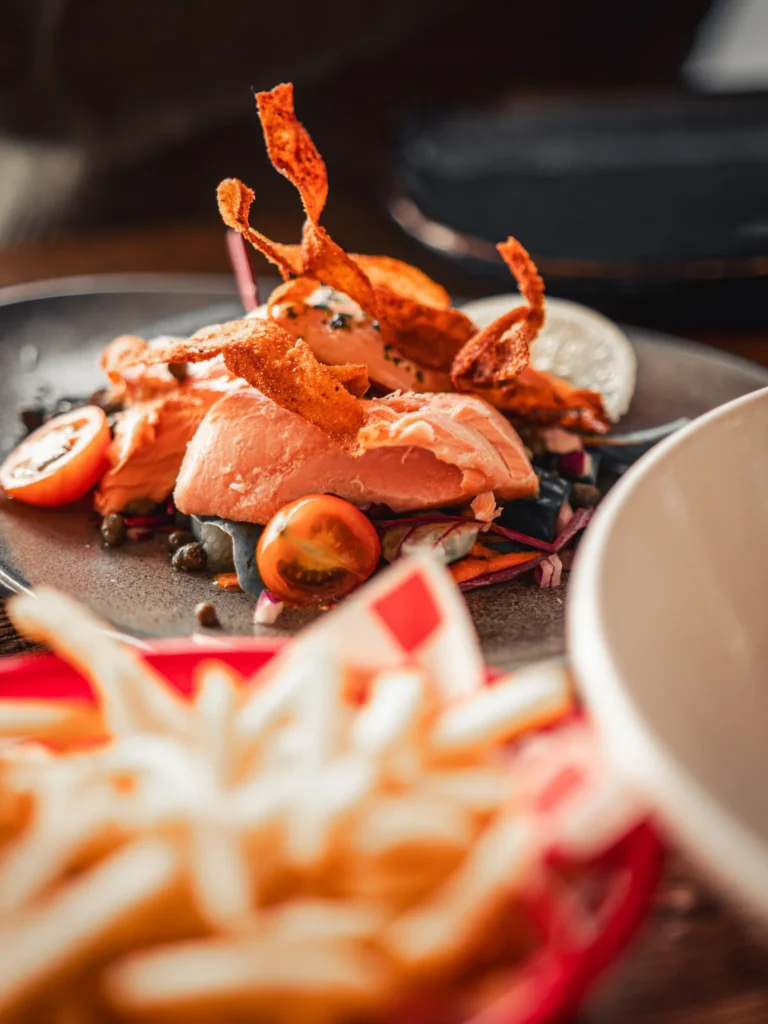
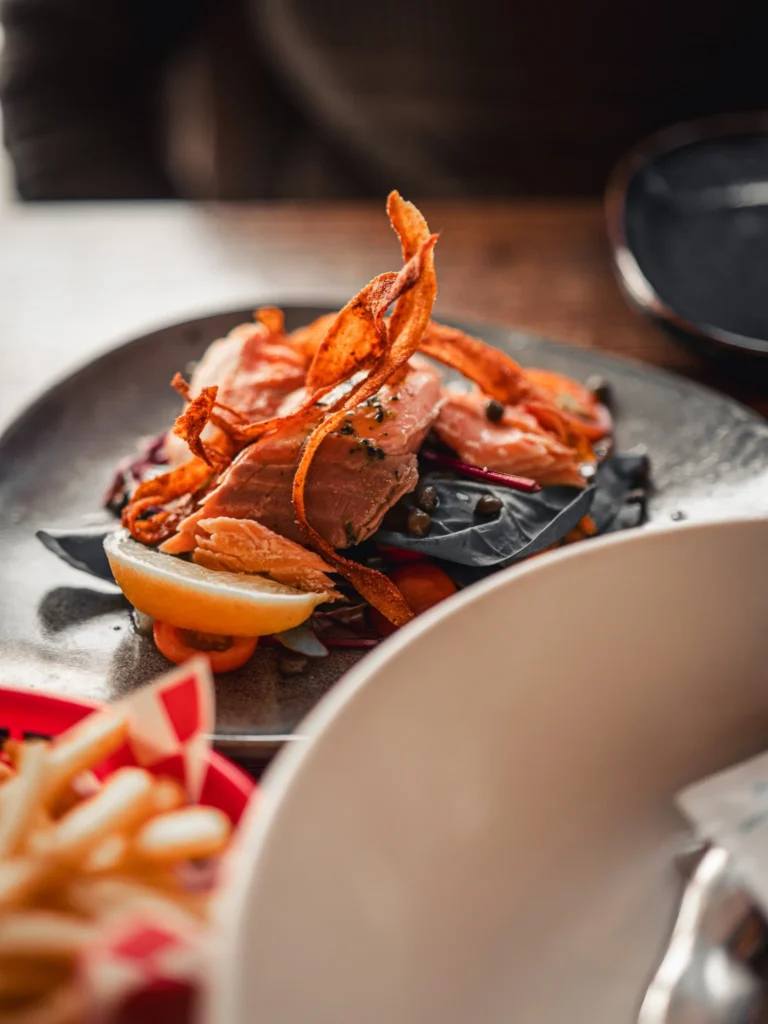
We ate early, and we decided not to order much: two things, shared between the two of us. Hot-smoked salmon to start, then the langoustines. Caroline needed to keep a bit of room and a bit of time for the rest of the afternoon, so for once we ate sensibly, which is not exactly the signature of this trip.
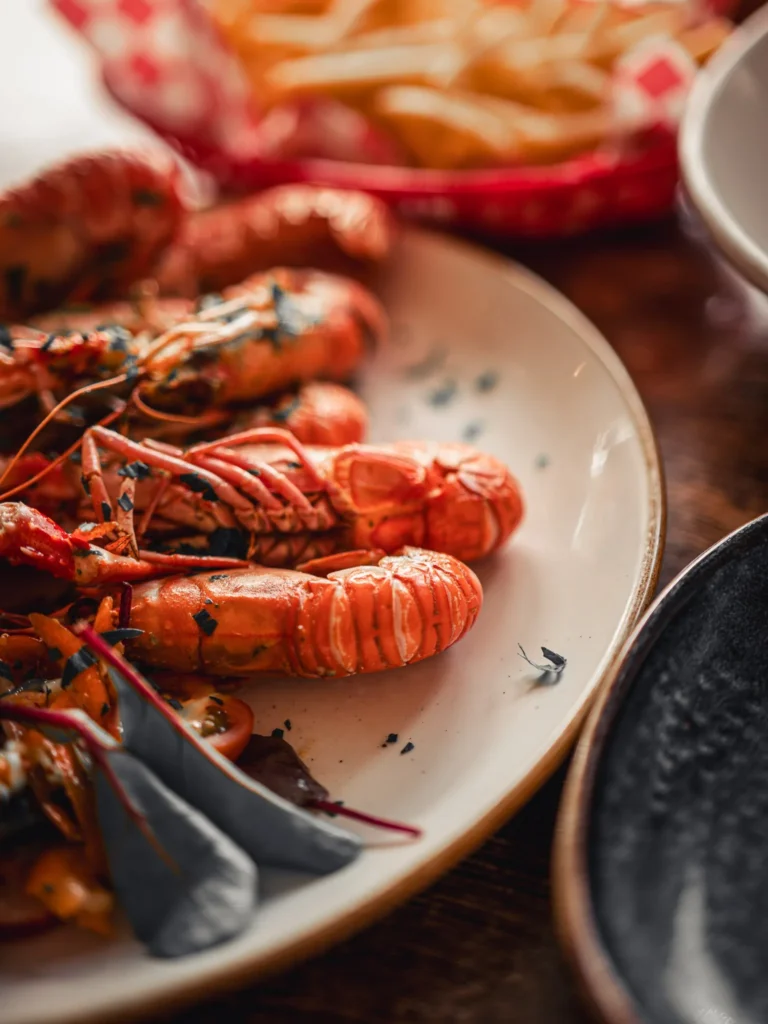
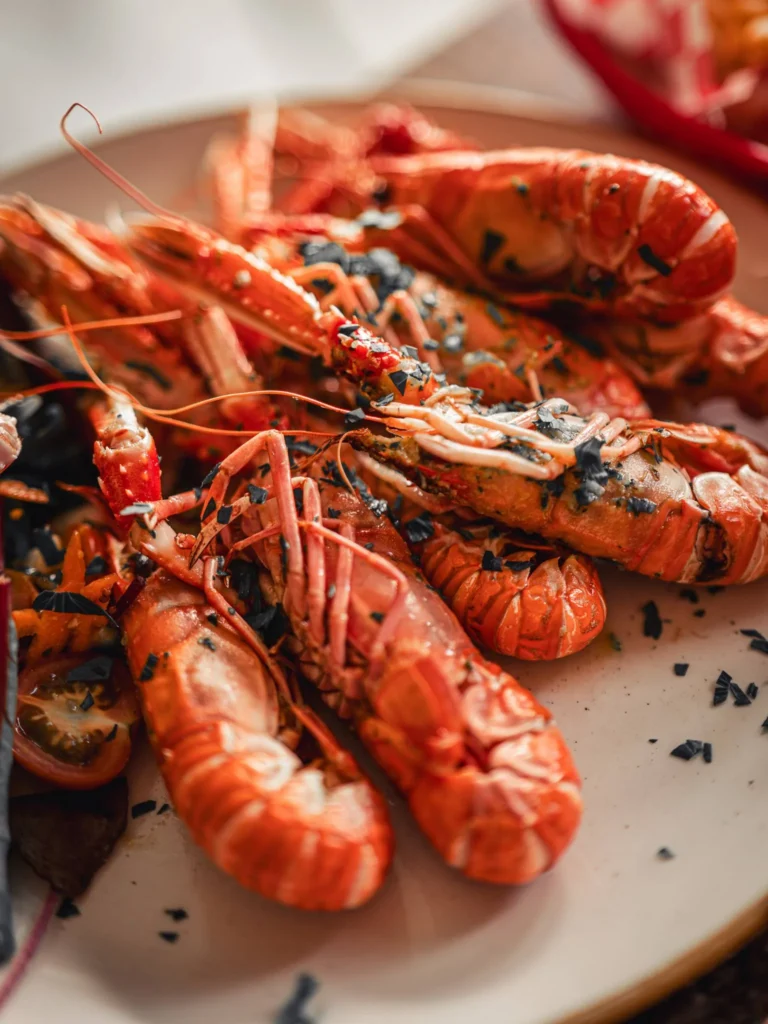
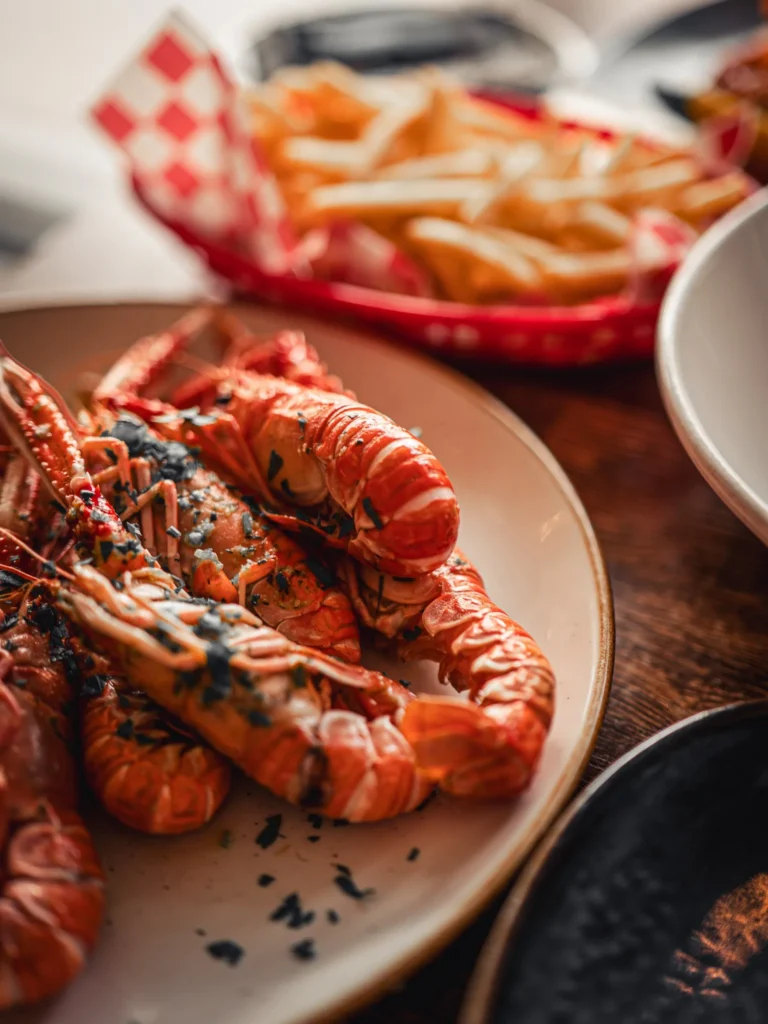
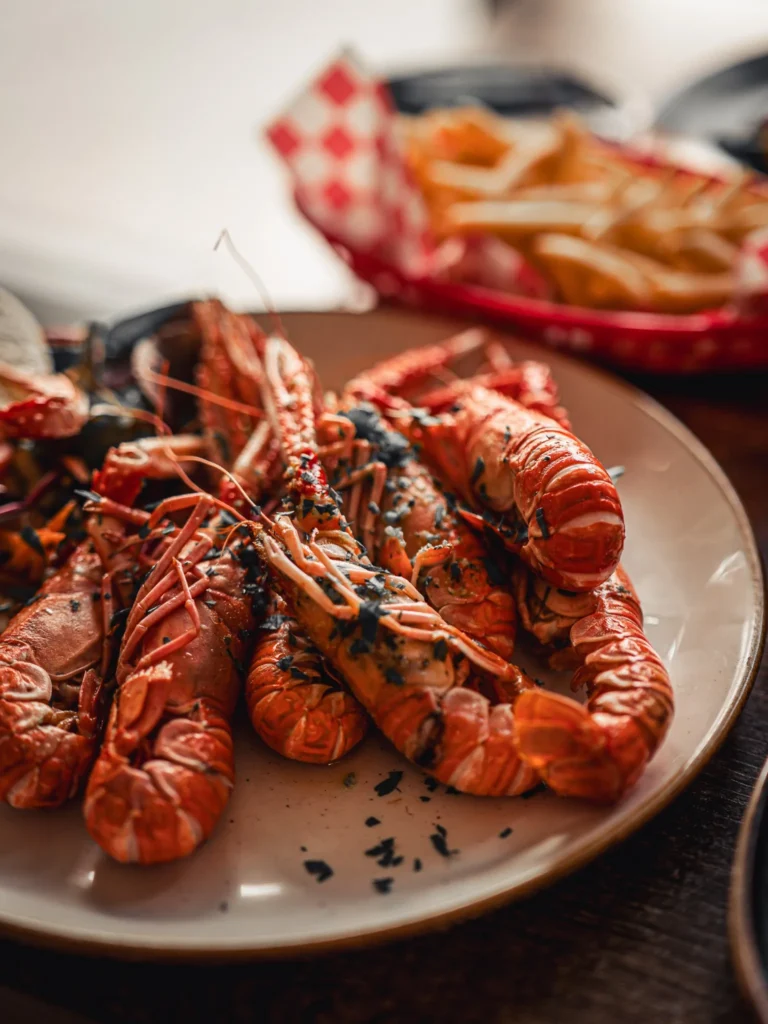
The langoustines, then. They come out on a pale plate, whole, split, scattered with herbs and flecks of seaweed, a basket of fries alongside and a little salad. And they are very good indeed. Meaty and tender at once, which is not easy to pull off on a grilled crustacean, with the clean flavour I had been chasing since the start of the trip. On the quality of the thing itself there is nothing at all to say against it.
On the quantity there is, and it is the only complaint of the entire meal: it leaves you with a real taste of too little. One more langoustine, two ideally, and the plate would have been perfect. We were left with that very particular small frustration, finishing something very good and thinking you would happily have carried on a while longer.
With one rather comic side effect. Langoustines have to be shelled, and shelling is slow. You cannot fall on them, you work through piece by piece with your fingers. So the meal stretches, and while it stretches you fill up anyway, on your own, without noticing. We left the table content, which five minutes after the last langoustine had looked very unlikely.
The salmon comes cold, the langoustines come scalding
There was a small moment of confusion at the start of the meal, and it may be the sharpest thing we remember from this lunch. We had expected the exact opposite of what arrived: langoustines cold, seafood platter fashion, and the salmon hot. We got langoustines straight off the grill and salmon served cold. Hot-smoked, of course, describes the curing and not the serving temperature, a distinction we managed to hold in theory and lose completely in practice.
And the salmon is worth having whatever its temperature. The fillet sits on lentils and beetroot, with halved cherry tomatoes, a wedge of lemon, dots of cream, and above all large crisp tuiles planted upright in it like sails. On the slate plate it is genuinely good to look at, and it is nothing like the flat slice of cold smoked salmon we had pictured when we ordered.
A word on the bill, without figures, because it counts in the verdict. The langoustine plate sits well above anything we had paid for a single dish since the start of the trip, and it is the first time on this journey that one dish on its own crossed that line. Sharing it makes the bill sit right, by a distance. And it reframes the small complaint above: the product is excellent, but at that level one or two more langoustines on the plate would not have been extravagant.
The floor team, and the moment we worked out everyone was French
The floor is run by an almost entirely female team. We did spot one man behind the bar right at the back, but the welcome and the service come almost exclusively from women, and the first impression is excellent: very kind and very welcoming, the sort to give you their time even with the service barely under way.
And then there was the running joke of the lunch. We were among the first in. Second table arrives: French. Third table arrives: also French. At which point, in a restaurant still three quarters empty in Fort William, we had the distinct feeling that the Geographer had collected every French person passing through the Highlands that day. We did not investigate. We simply exchanged the look.
And it did not stop at the dining room. I get up at some point for the gents, and there is a small queue in the corridor. Two French people ahead of me. So the three of us did the most British thing available in a Scottish corridor, in French: we talked about the weather, and then about how bad it was. In August in the Highlands that is more or less the one topic that needs no preparation at all.
As for the food, the menu plays in a genuinely different register from the Ben Nevis Bar the day before, while keeping some of the same local produce and specialities. They are two addresses facing each other across the same pedestrianised street, a few yards apart, and there is no reason to choose between them: we did both, a day apart, somewhat against our will the first time, and we regret neither.
Practical information
ps: in our piece on the Ben Nevis Bar I thanked whoever it was who took the last table off us. Well, it was here. I stand by the thanks, but now that I have eaten the langoustines, I stand by them slightly less firmly.