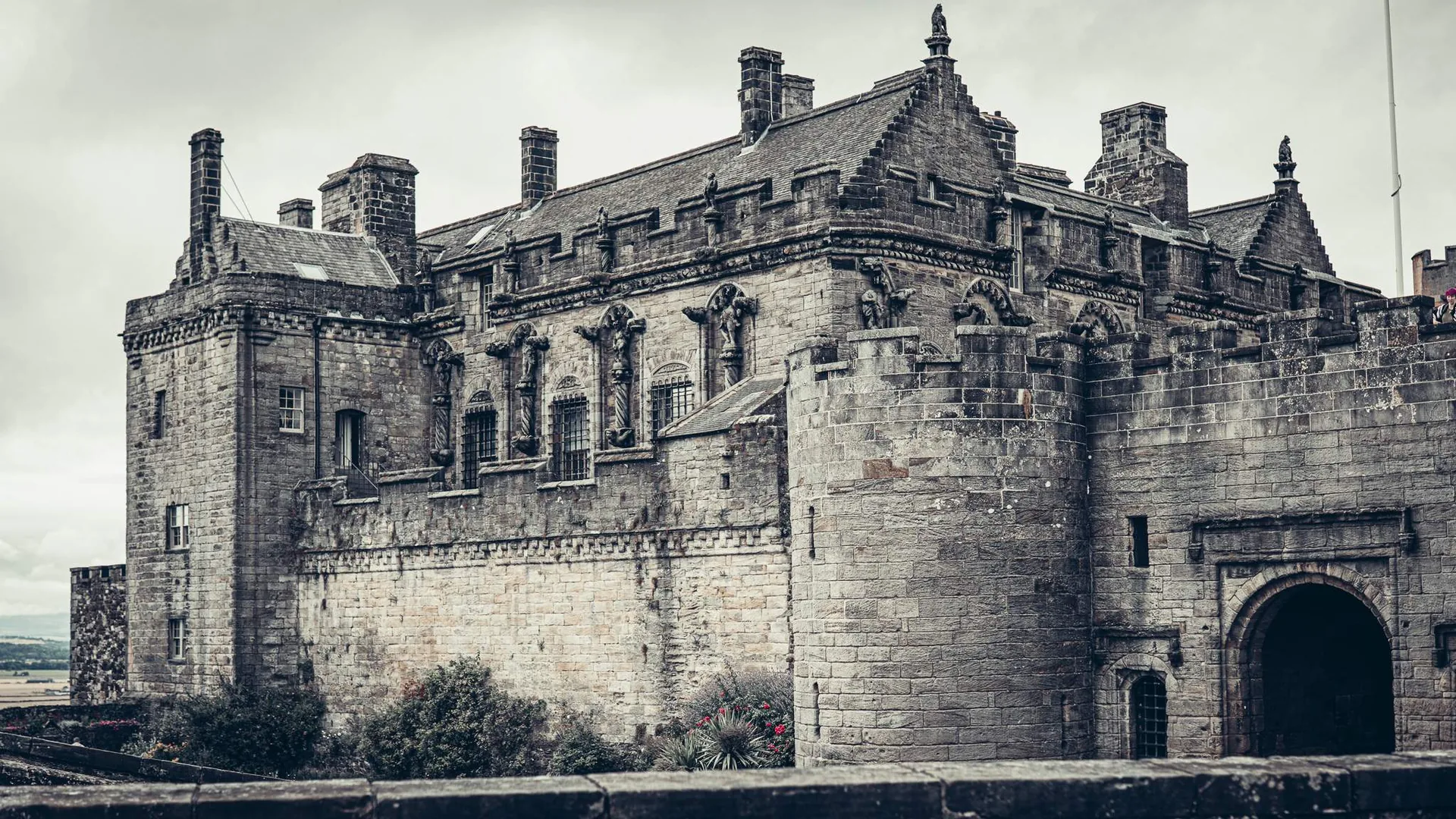
Our review of Stirling Castle
Benefits
- A route that genuinely explains itself, from the Casemates to the royal apartments
- The costumed performers, who hold children better than any display case
- The commanding position and the view over the whole Forth plain
- A case study in restoration: the 1999 timber roof, the palace reopened in 2011, the replica Stirling Heads
Disadvantages
- Just over £20 per person, which is not nothing
- Very busy in summer, you are never alone in it
- A lot of what you admire is reconstruction rather than original, which the site could say more loudly
Who is this place for?
- Anyone who wants to understand a castle rather than just photograph it
- Families, thanks to the costumed interpretation
- Anyone curious about restoration and building archaeology
Yes, it is worth the £20. Allow two hours minimum, and do the Church of the Holy Rude first.
In 2022 we walked up to the gate of Stirling Castle, read the price board, looked at each other, and walked away. Four years later we came back specifically to pay.
Back then we were travelling in a campervan, we were earning a good deal less, and the budget went on food and diesel first. We had arrived late on top of that, with an hour left before closing for a site that asks for four. The maths did itself. We walked the outside, took the view over the plain, and went back down. Except we never quite digested that turnaround.
So in August 2026, passing back through Stirling, there was no discussion. We climbed the whole old town on foot, got to the top, and took the card out. £20 each. Here is what was behind the ramparts.
The first thing you see on the way in is flowers
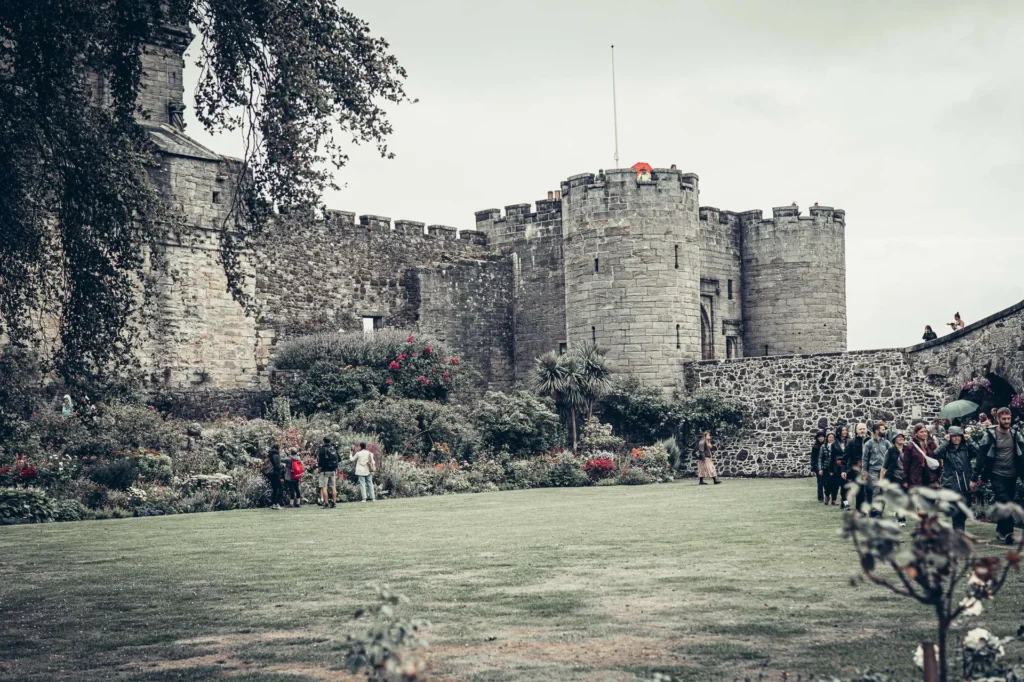
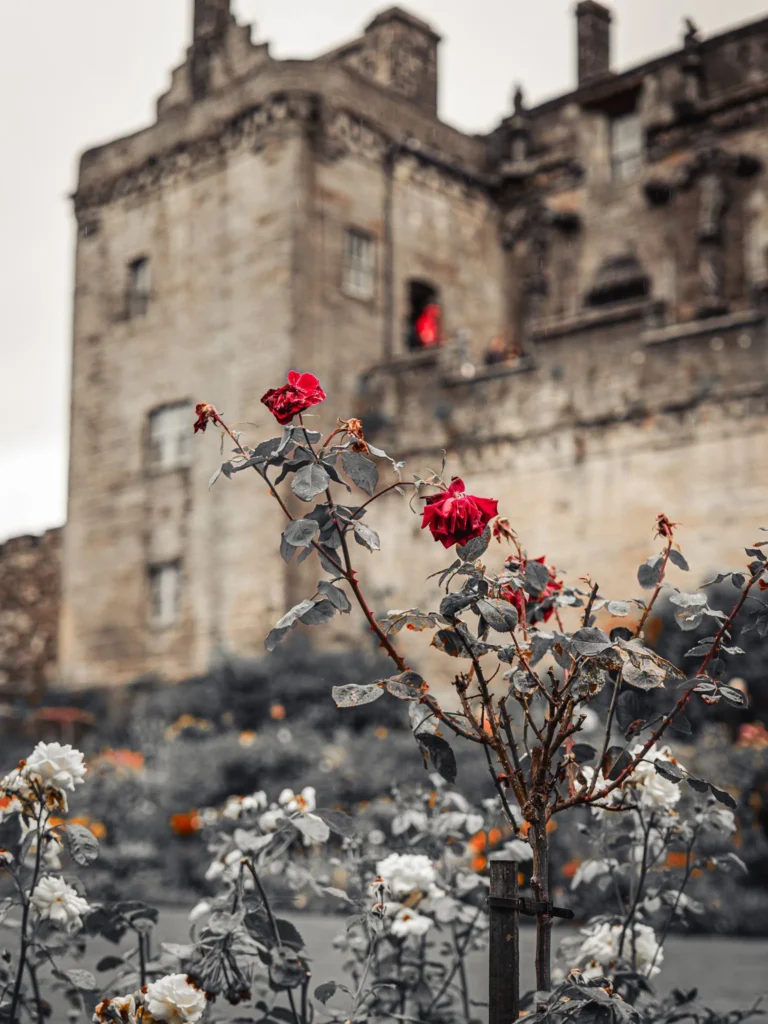
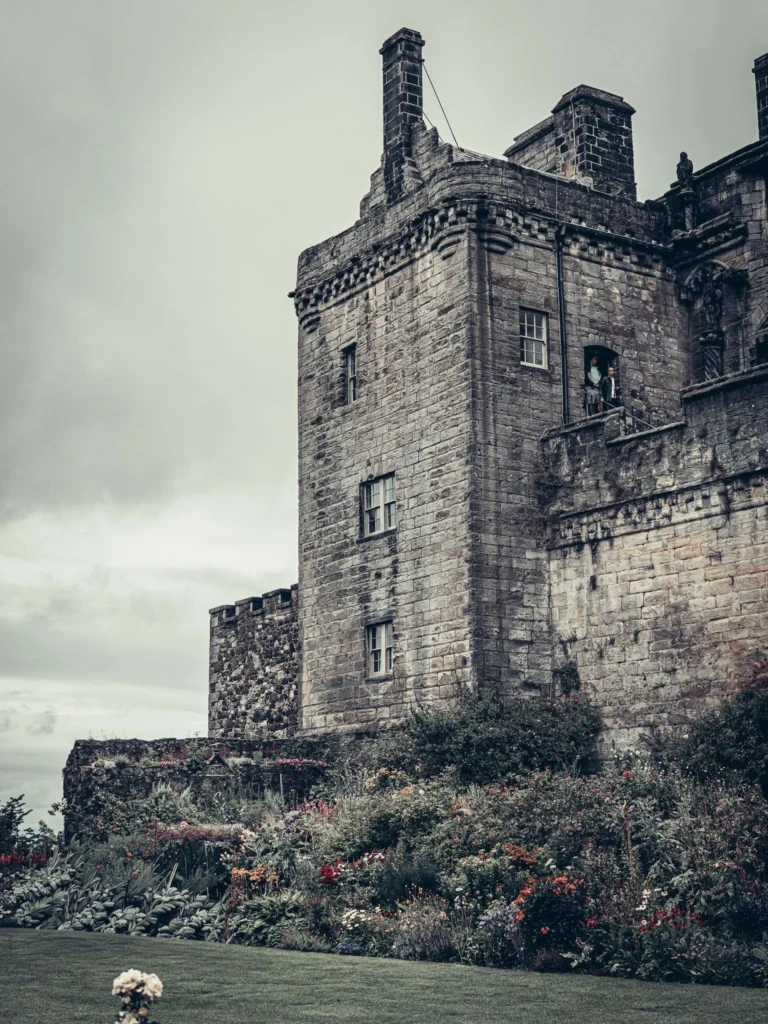
That is the first surprise, and it is total. You brace for cannon, stone, something martial. And barely past the ticket check, on the left, there is an immaculate lawn and a garden full of colour. Roses against the walls, beds, perennials. The contrast lands straight away: colour and clipped grass on one side, on the other the grey mass of the castle, its thick walls and an architecture built to impress and to defend.
The garden has a name. It is the Queen Anne Garden, and it once served as a bowling green. There is a beech in it around two hundred years old. And the cellars along its edge are exactly where the visit starts: on site they are signed as the Casemates.
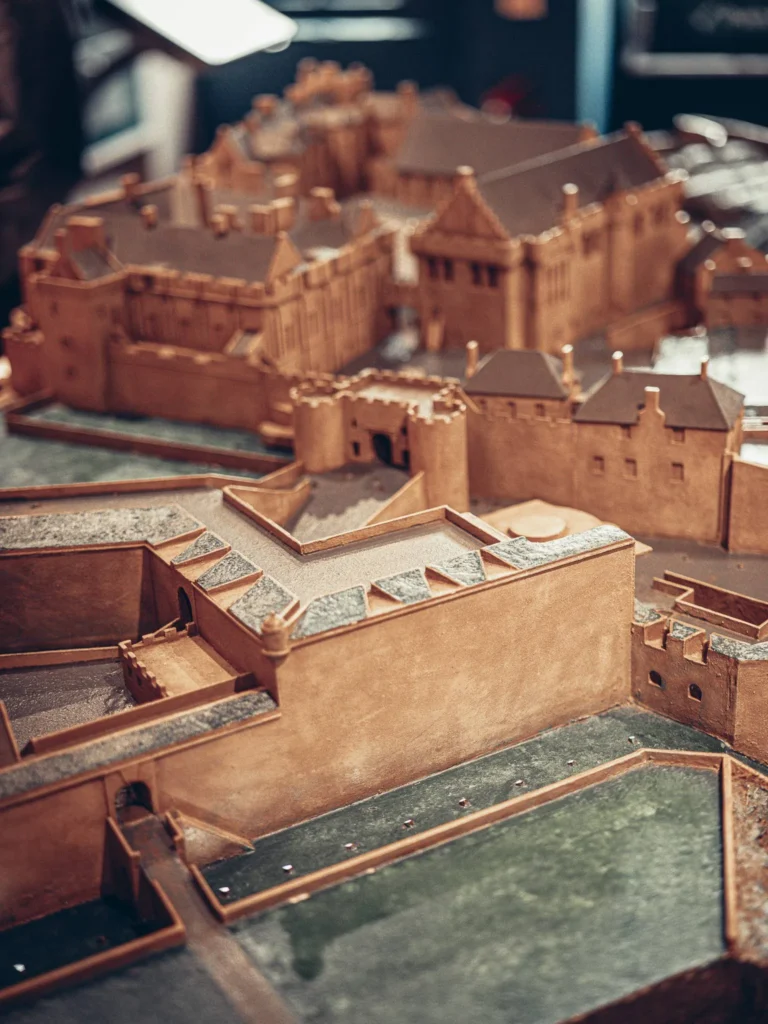
Do not skip them, that is the best advice we can give for this visit. There are panels tracing the castle reign by reign, and above all a large lit model that lets you read the layout of the site before you get lost in it. Honestly, once you are among the buildings you stop understanding anything. Here you see it all at once: where the palace sits, where the great hall sits, where the lower ward drops away. Ten minutes that make the next two hours far more legible.
The Great Hall, and the timber roof that is only twenty-six years old
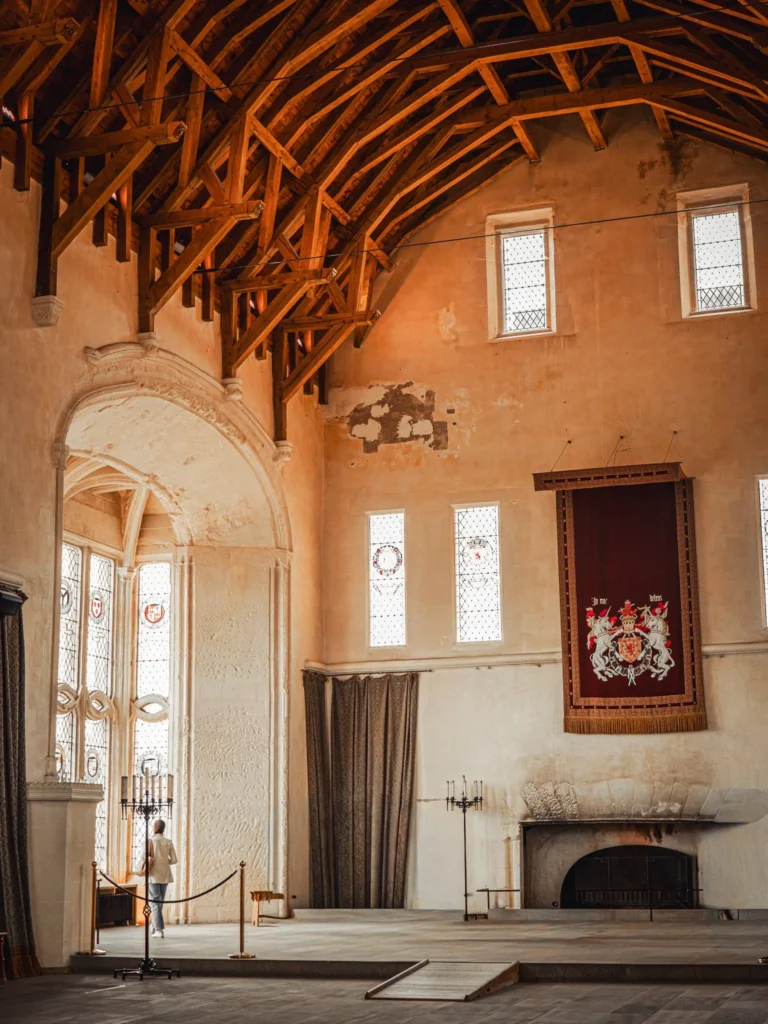
You then step into an enormous room that served as the banqueting hall. What hits first is the huge timber roof overhead, the long hangings down the sides, and the row of fireplaces along the lower wall. The hall runs 42 metres by 14.25, with five fireplaces, and it was built by James IV, with the plasterwork under way in 1503.
And here we have to be straight with you, because it caught us out on the day. That roof is not medieval. The original was taken down in 1800 when the army carved the great hall into barracks. What you look at today is a reconstruction finished in 1999: 57 hammerbeam trusses, green oak from 350 Perthshire trees, opened by Elizabeth II on 30 November 1999.
None of which takes anything away from it, the carpentry is genuinely mad. But it changes the story you tell about it. And it also explains the small mystery of our visit: the fireplaces were cold, we could feel no heating, and yet it was properly comfortable inside while it was chilly out. A hall whose entire roof was redone twenty-six years ago behaves a lot better than a bare stone shell.
The Chapel Royal, built in under a year for one christening
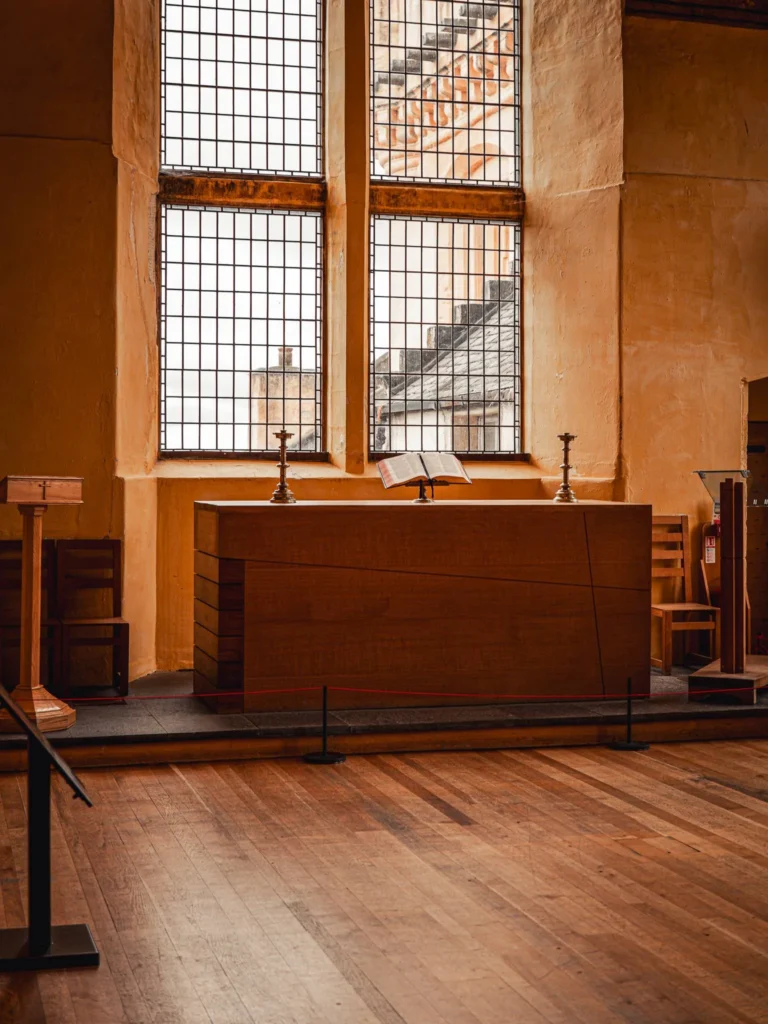
Coming out of the great hall, on the Inner Close, the building to your right is the Chapel Royal. Its story is faintly ridiculous: the current building was commissioned by James VI in 1594, handed to William Schaw, the Royal Master of Works, and put up in under a year. Not out of any love of architecture, but because a chapel big enough was needed for the christening of Prince Henry, his son, in front of a crowd of foreign ambassadors. The banquet followed next door, in the Great Hall.
Standing in it, we felt immediately that the interior had been refitted rather than preserved. That impression is correct, and it is a good lesson in being careful about what you think you are seeing in a castle: the building has been altered repeatedly and was restored in the 1990s to recover as much of its original appearance as possible.
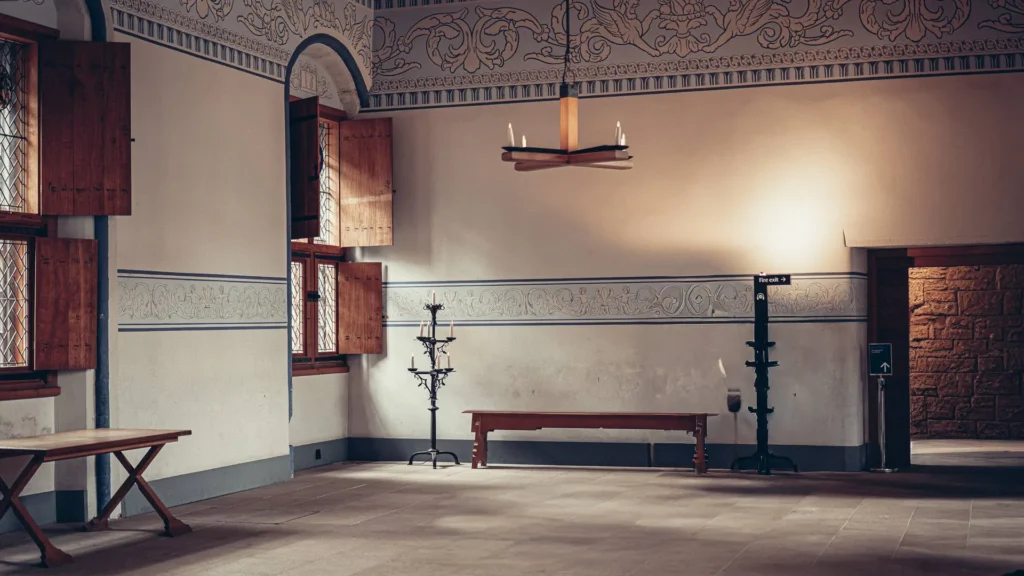
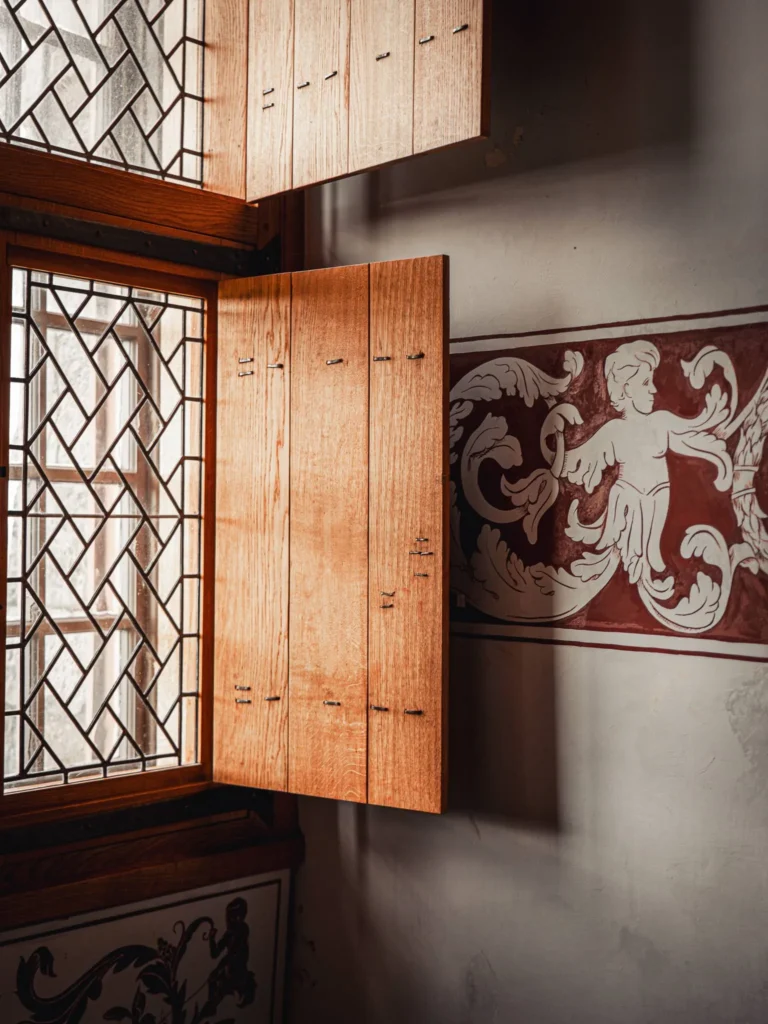
Some of it is genuinely old, and that is what gives the room its colour: fragments of the painted scheme by Valentine Jenkin, done in 1628-1629, just before Charles I came to Scotland. That frieze of ochre and blue grotesques running along the top of the walls is seventeenth century, not a reconstruction.
The royal apartments, and why those heads on the ceiling are copies
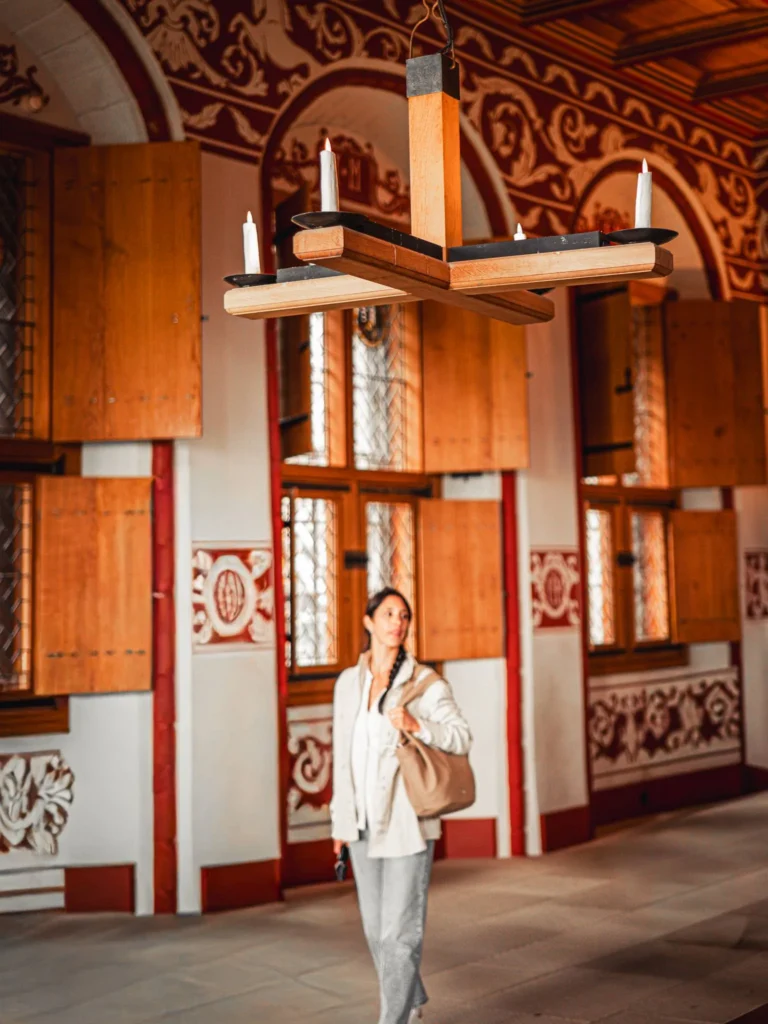
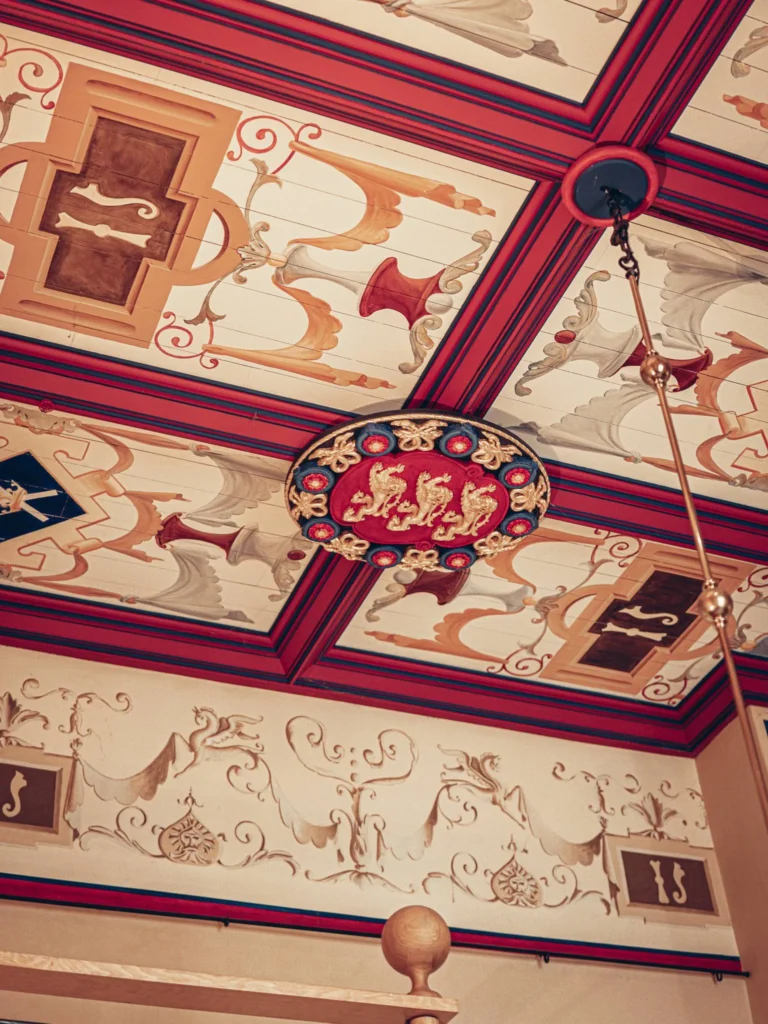
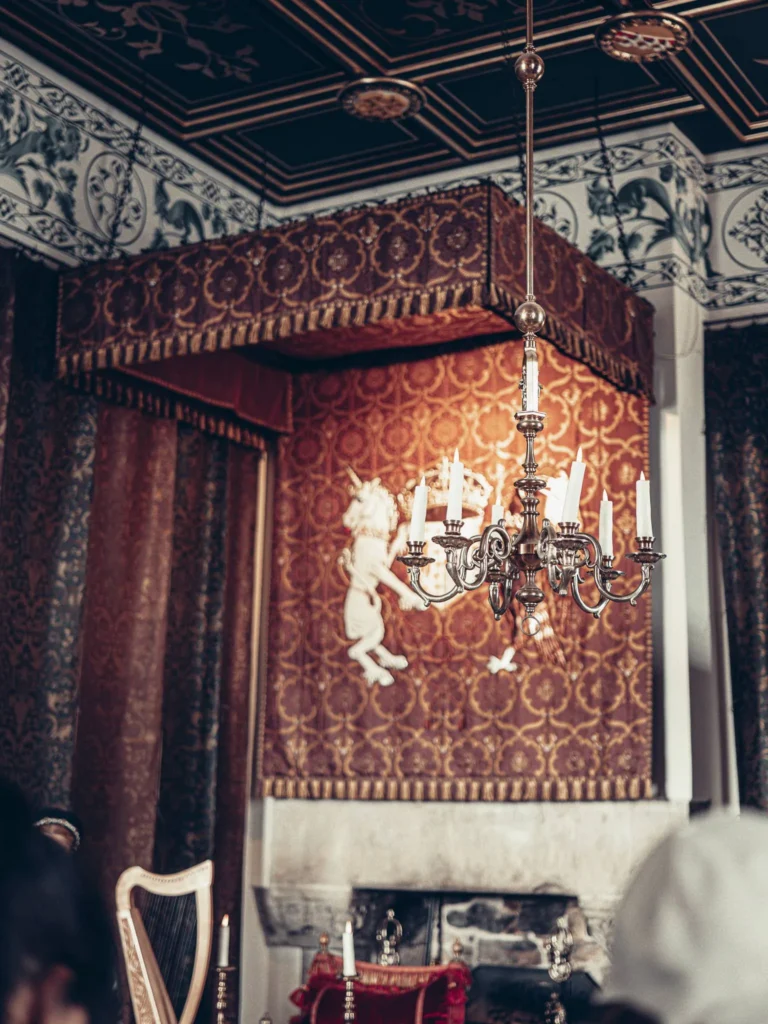
Complete change of register. You leave the mineral, the cold and the defensive, and walk into tall rooms, warm and full of colour, with ceilings covered in roundels that look like coats of arms. In several rooms, costumed performers explain how the place was lived in. It beats every interpretation panel ever printed, and it shifts the visit from fortress to household.
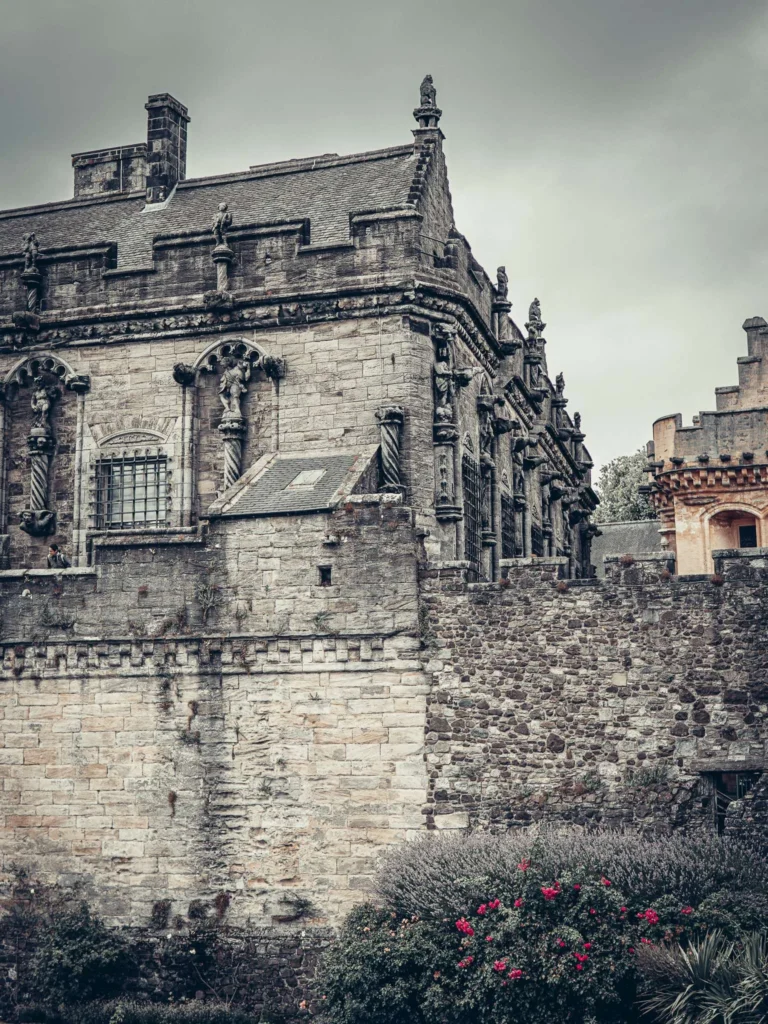
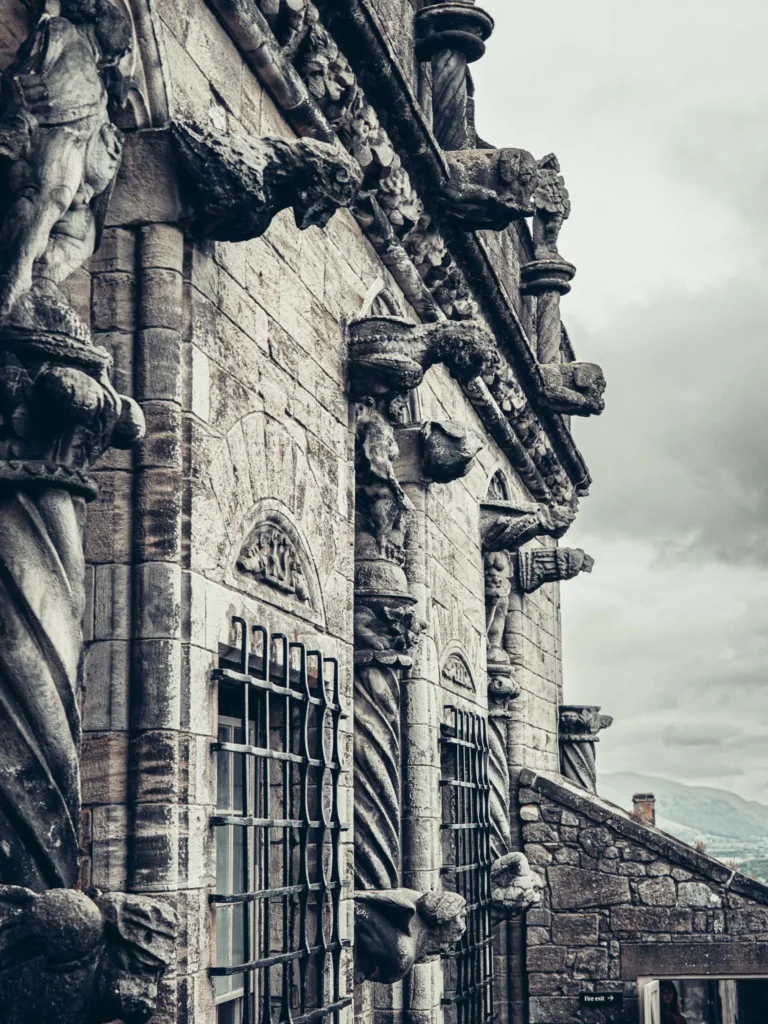
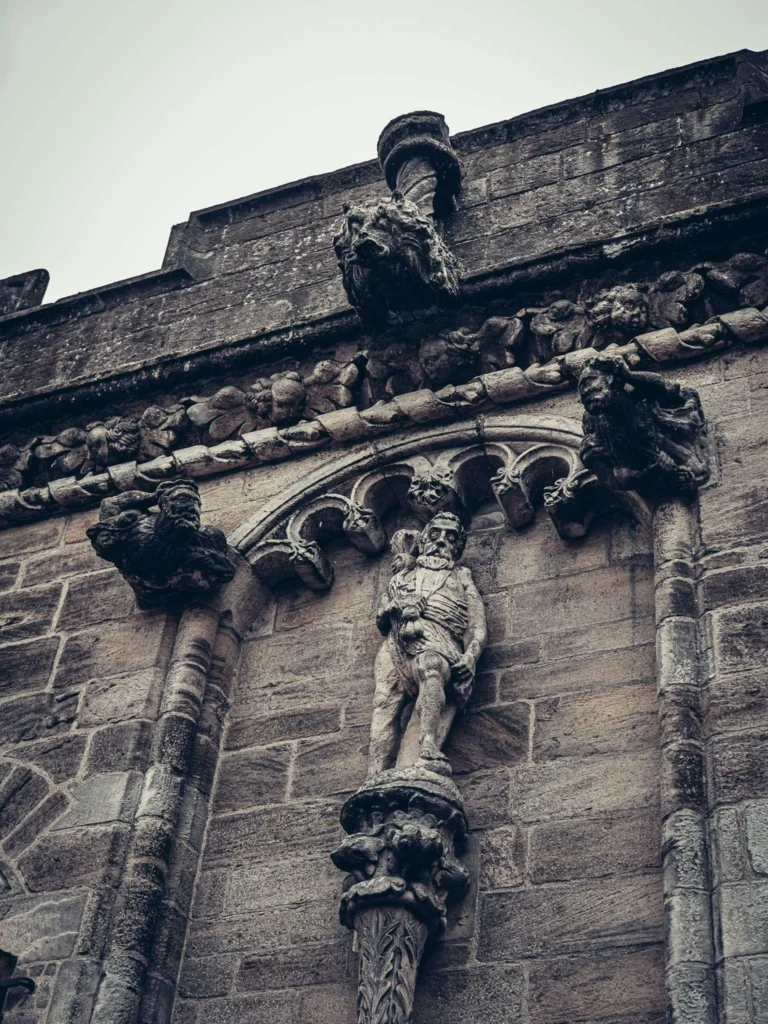
The palace is James V, begun in the 1530s and broadly finished by the end of the 1540s. What you walk through today is the result of a £12 million project reopened in June 2011, which returned six royal apartments to their presumed state in the 1540s.
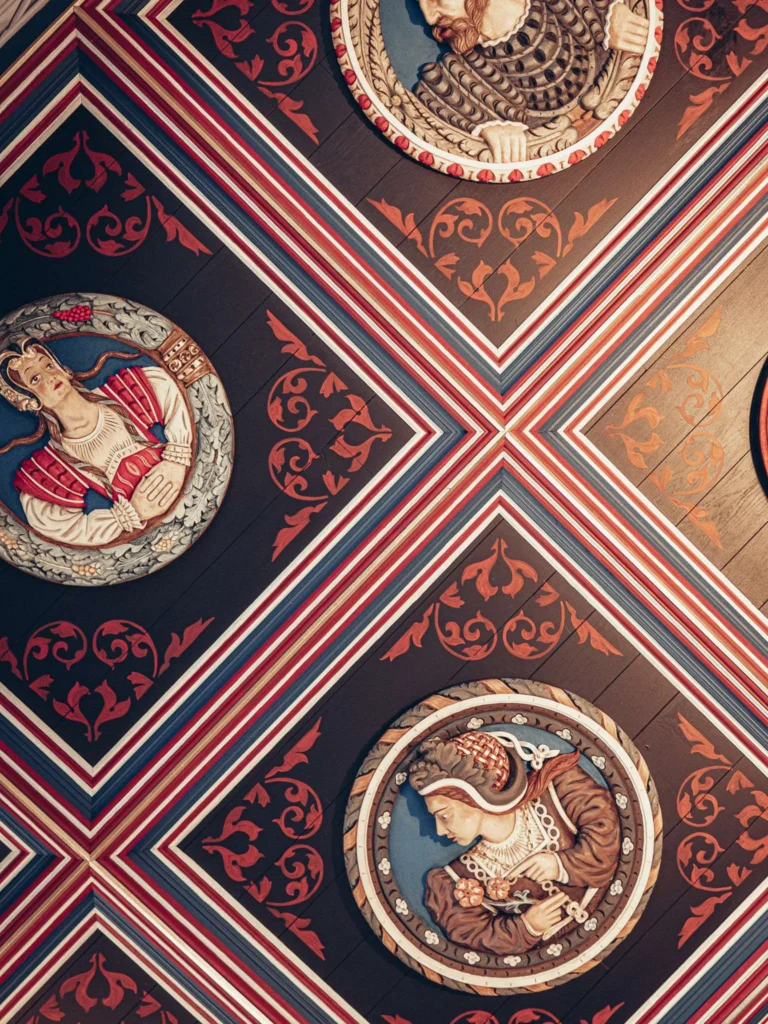
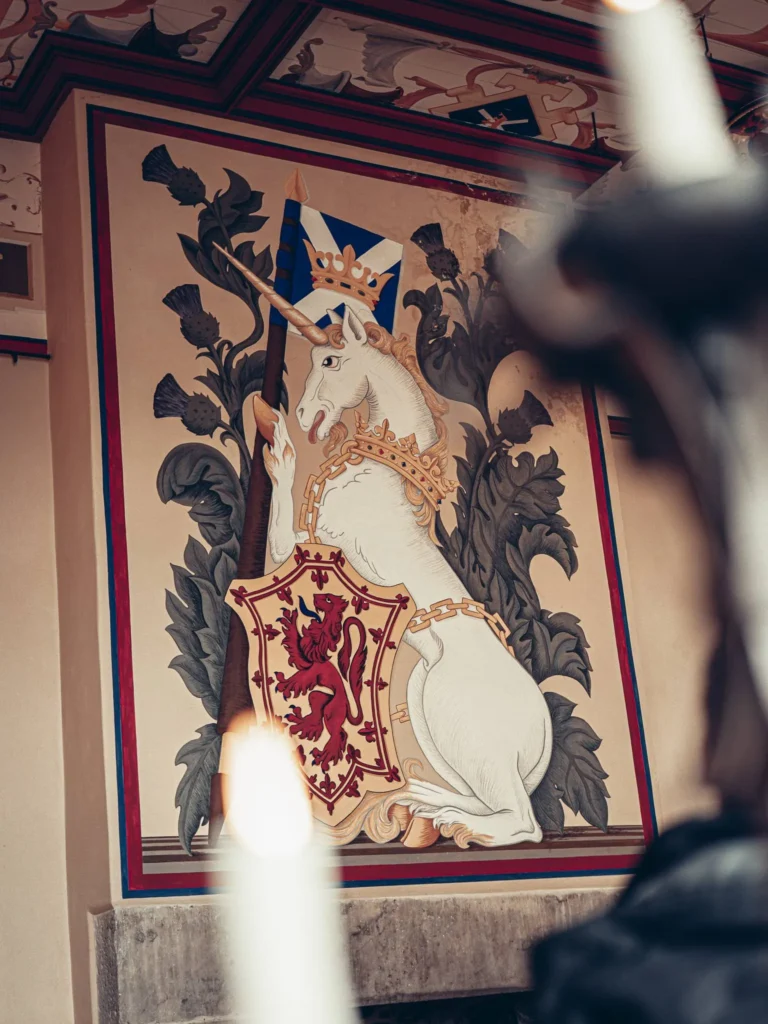
And here is the part nobody tends to mention, which seems a shame. Those famous carved wooden roundels on the ceiling, the Stirling Heads, are not the originals. They are 37 replicas cut by the sculptor John Donaldson, who allowed himself one joke: a head invented outright, into which he slipped a portrait of his daughter. The real ones, 38 survivors out of around 56, are displayed separately in the castle.
Same goes for the colours, which are startling and almost too bright. They are reconstructions, worked up from surviving traces of pigment and from what is known of sixteenth-century practice. The Scots of the period did not live in the greys and browns we picture, they lived in this. But what you are looking at stays a documented hypothesis rather than original paintwork, and knowing that is more interesting than believing in an intact interior.
The Nether Bailey, or backstage at the castle
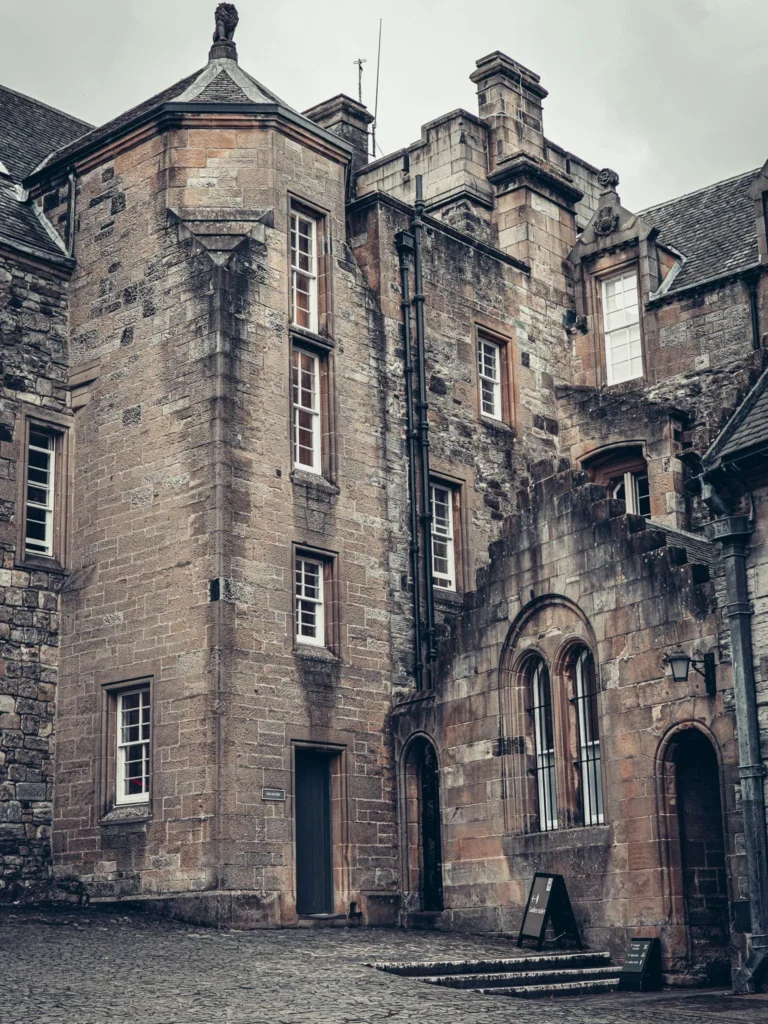
After the apartments you pass under an arch and drop down. The feeling is odd, as if you were leaving the castle while still being inside its walls. Below there are small stone buildings, far plainer than the palace, pointed roofs, picnic tables now. It reads like a hamlet wedged under the ramparts.
This is the Nether Bailey, the lowest part of the rock, and Historic Environment Scotland describes it flatly as the old service area of the castle: workshops, stores, the people who kept the thing running. You leave the stage set of monarchy for the wings, and our impression of a small working village was not so daft after all.
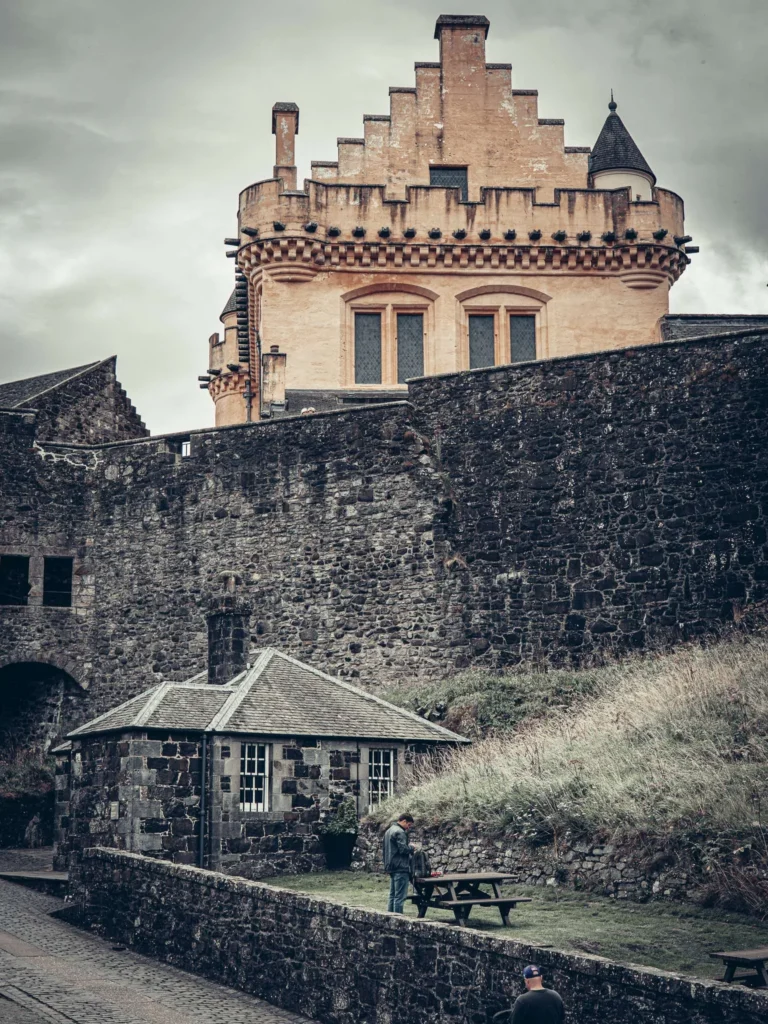
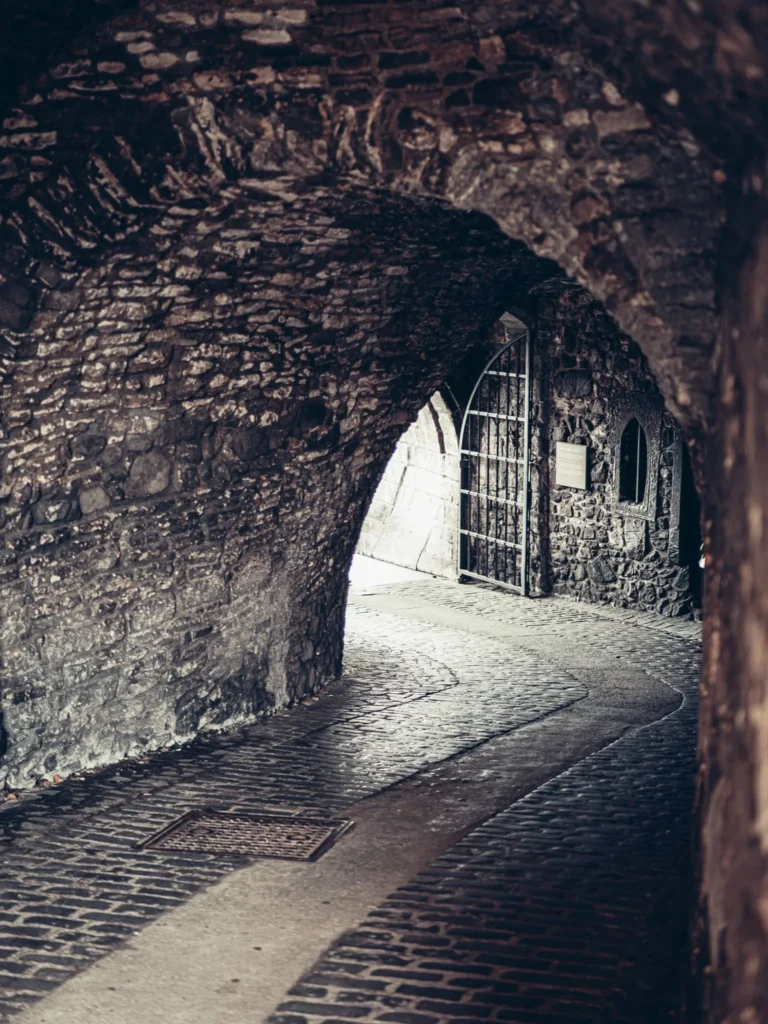
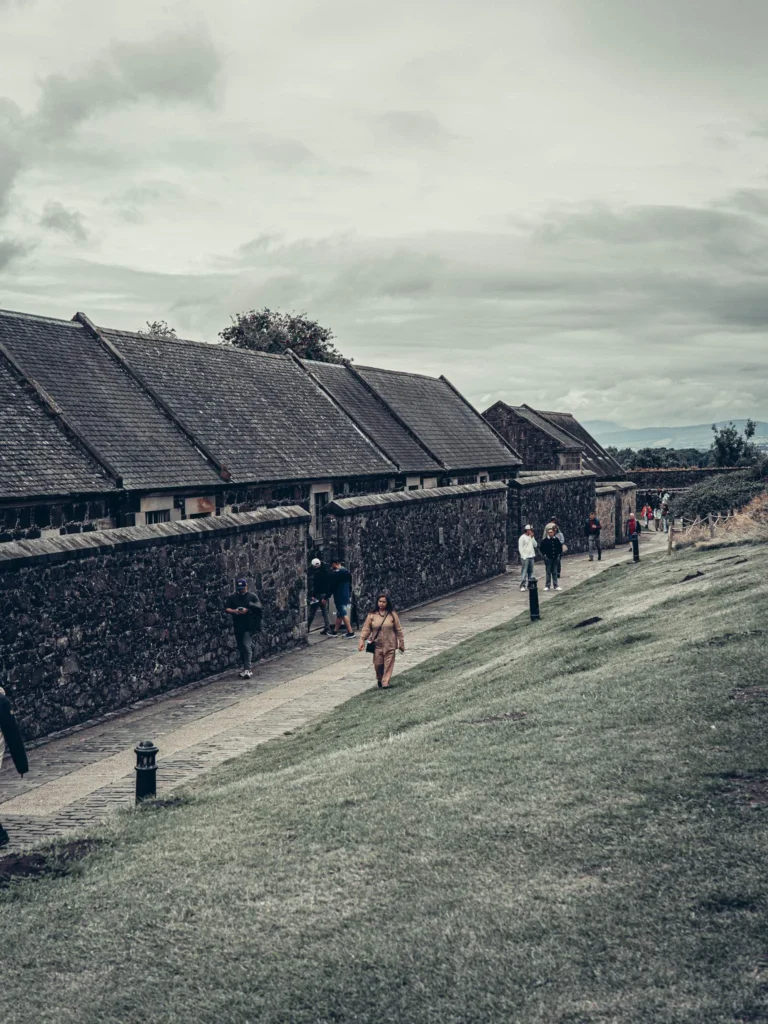
Careful not to romanticise it, though. These small houses are not the lodgings of sixteenth-century servants: when the army took the area over, it swept away the medieval buildings still standing. What survives is mostly nineteenth-century powder magazines, a guardhouse and the remains of a rifle range. It used to be reached through the North Gate, part of which probably goes back to 1381.
The quiet little garden where one king stabbed another
This is our best story from the visit, and we only understood it once we got home. One of the vaulted passages practically dares you to walk through without knowing where it comes out. We took it, and emerged into a walled garden at the very top of the rock: old trees furred with moss, white hydrangeas, a bench, a stone wall. After the courtyards, the ramparts and the powder magazines, the place feels sheltered, private, almost secret. We stood there thinking that anyone living in the castle would surely have come here for five minutes of peace.
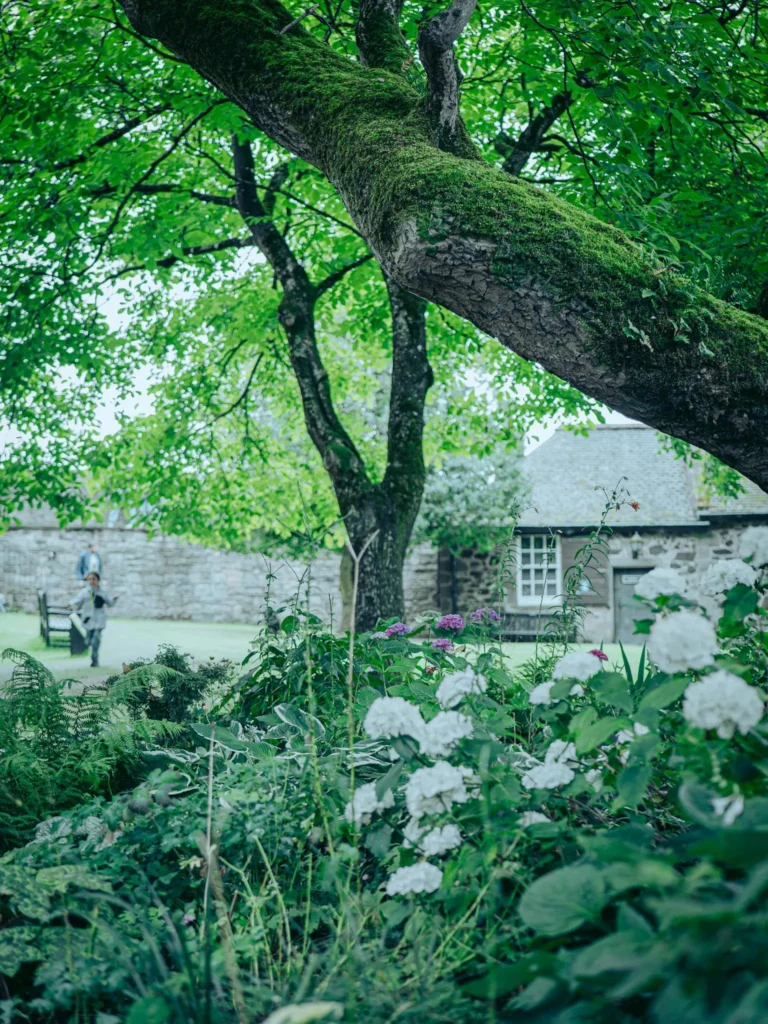
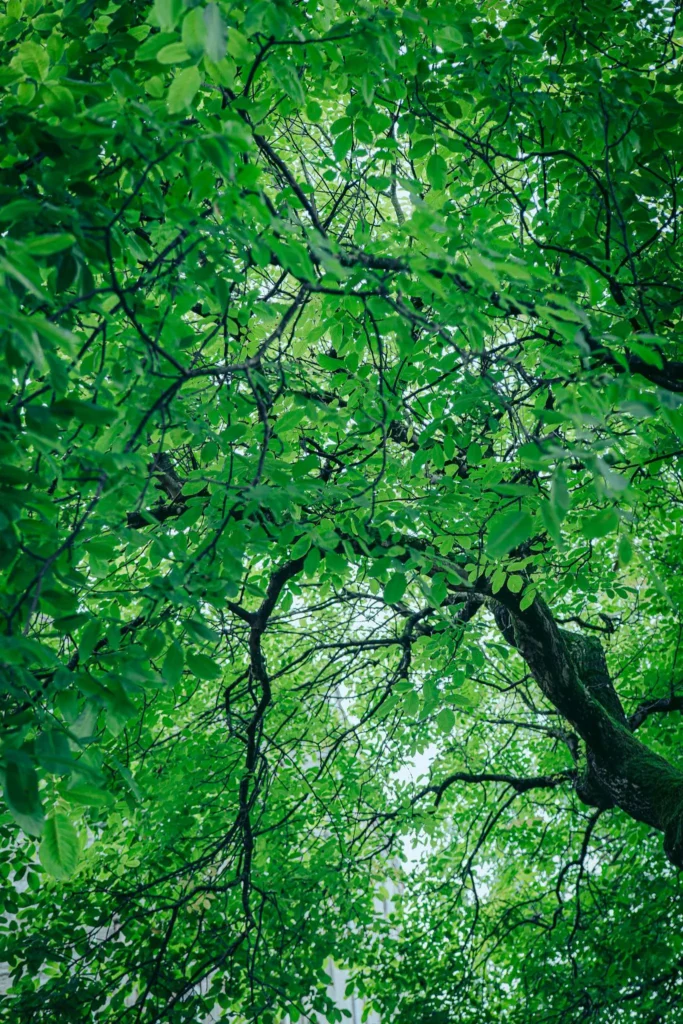
Except this garden is the Douglas Garden, and it carries that name for a very specific reason. On 22 February 1452, James II received William, 8th Earl of Douglas, under safe conduct. The king asked him to break the alliance he had made with the Earls of Crawford and Ross. Douglas refused. The king lost his temper and stabbed him, twenty-six times in the neck and shoulder, before his courtiers finished the job. Then they threw the body out of the window.
It landed there. On that lawn, beside the hydrangeas. The spot is still marked on the ground. So yes, we did feel something particular in that garden. It just was not serenity.
Why they built it up there, and not somewhere else
This is the question I always end up asking in front of a site like this, and at Stirling it answers itself because you feel it in your legs. Having climbed the entire old town to get there, you register the height physically. The castle is not sitting up there for the view. It is sitting up there because at the time you needed to be hard to reach and able to watch a long way off.
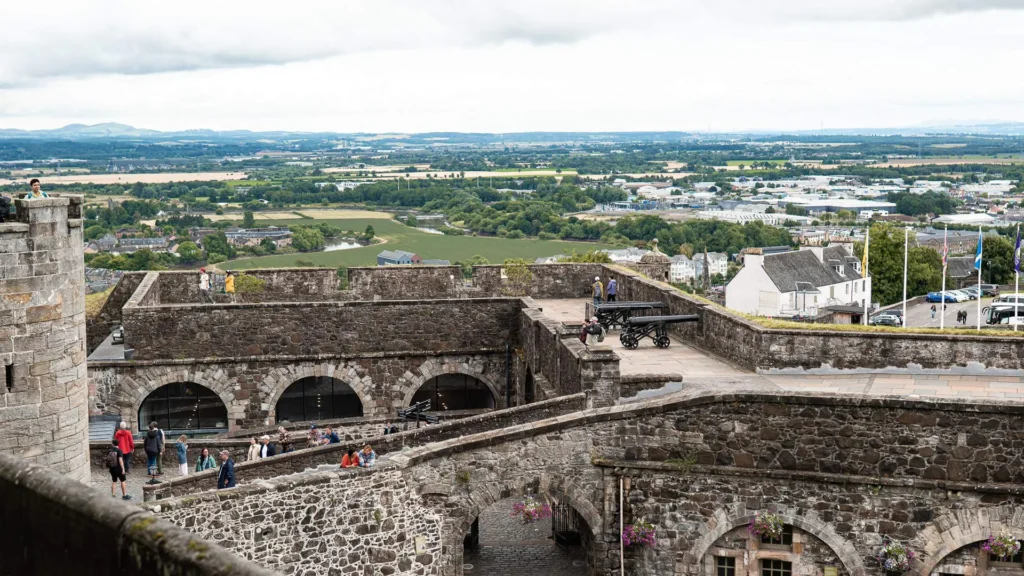
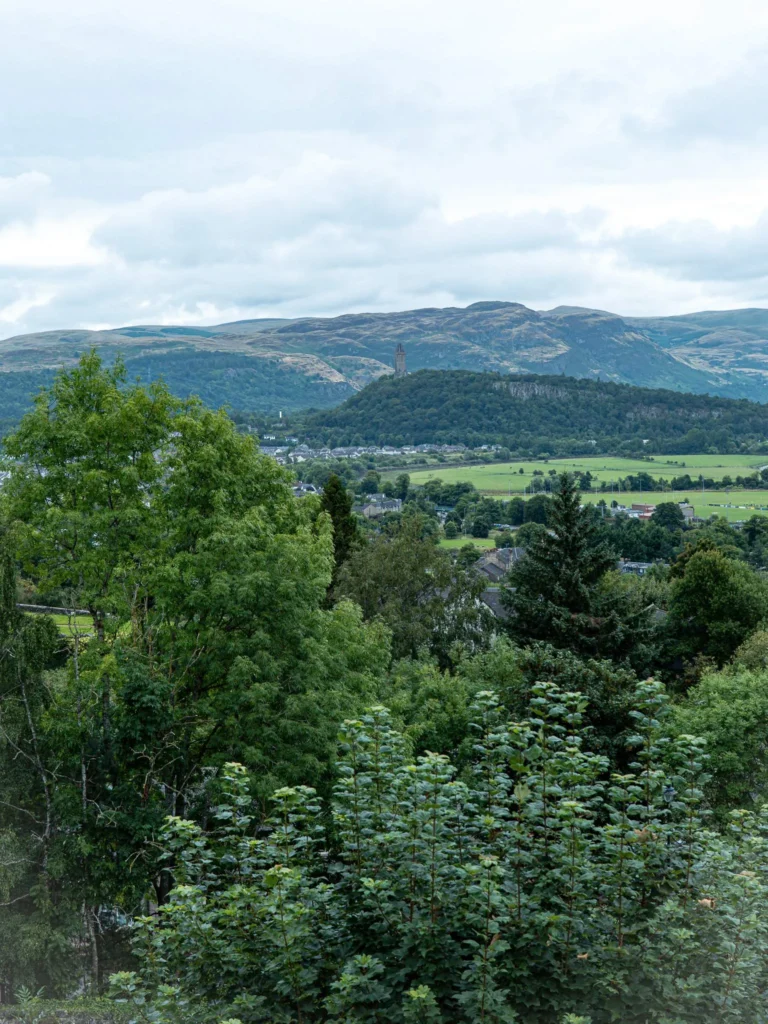
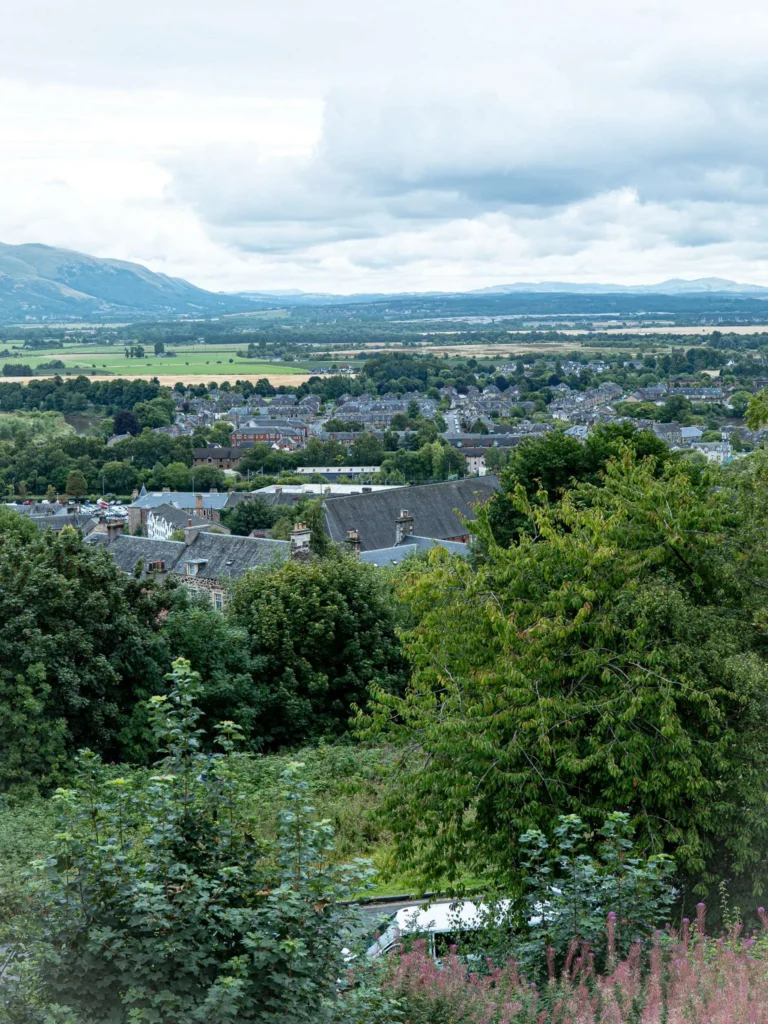
From the ramparts it is immediate. The whole Forth plain runs out below, its fields, its looping river, its roads. Nothing crosses it without being seen from up here. And on the ridge opposite stands the Wallace Monument, plain as day. One position, two monuments, and some seven centuries of argument between them.
One more thing struck us, and it is a comparison with another Scottish stop: at Dunnottar you walk among shattered ruins and infer that it was lived in. Here you do not have to infer anything. The spaces are distinct, the buildings have obvious functions, and you work out as you walk that people genuinely lived here. Not just a king and his family either: in a great Scottish castle of the period, Historic Environment Scotland notes there could be up to 150 servants simply to run the household. Add the court, the guards, the craftsmen and the visitors when the king was in residence, and you get several hundred people behind these walls. Near enough a gated neighbourhood.
No, Braveheart was not filmed here
You very likely half know this already, so let us just settle it rather than make a revelation of it. Mel Gibson, the kilt, the blue face, the battle at the bridge: none of it was shot at Stirling Castle.
The Battle of Stirling Bridge sequence was filmed on farmland near Cumbernauld, north of Glasgow, because the real site is far too built up now to film on. A good part of the rest of the film was shot in Ireland. And for anyone chasing Outlander, it is not Stirling either: Castle Leoch is Doune Castle, about six miles away.
A second correction while we are here, because we repeated this one ourselves for years. Stirling often gets called one of the greatest fortresses in Europe. The serious sources say one of the largest and most important castles in Scotland. Which is already enormous, and has the advantage of being true. Europe is just varnish.
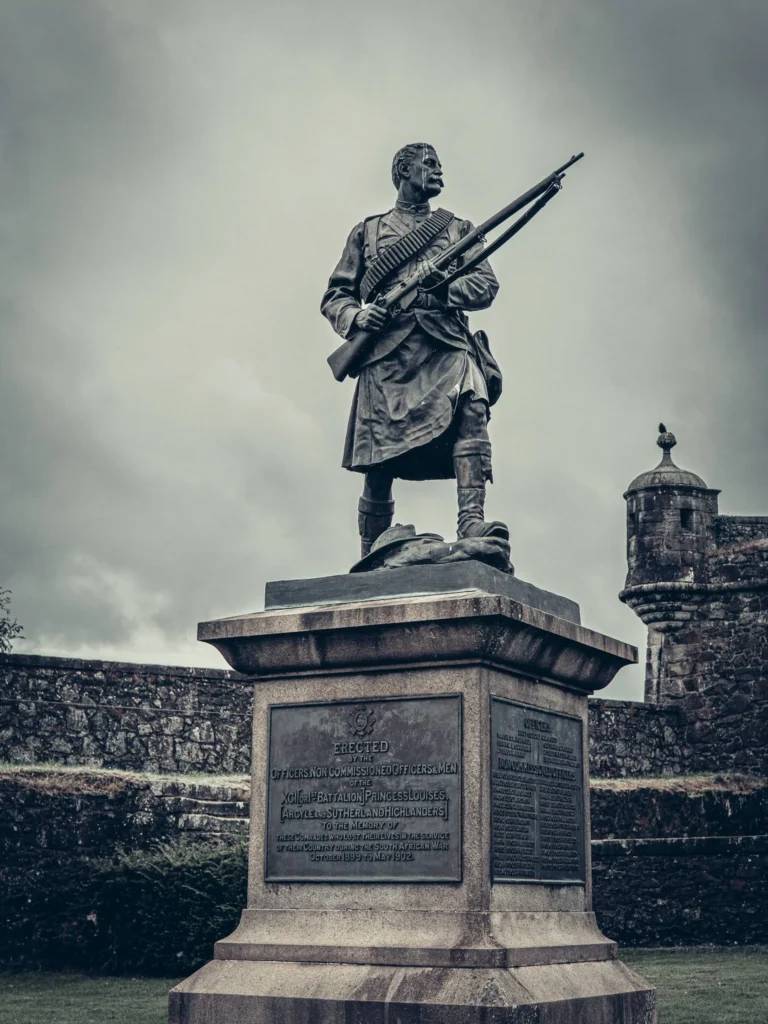

So, is it worth £20?
Yes, without hesitating. That is exactly the answer we would have wanted in 2022, standing at the gate about to turn round. What you pay for here is not access to a viewpoint, it is two hours inside a place that has been in turn a fortress, a royal court, a barracks and a restoration project. The value is good, particularly next to other Scottish sites where you pay well for a walk around three walls.
The one real piece of advice is the one we failed to apply ourselves: do not turn up an hour before closing. Allow half a day, or two solid hours at the very least. Otherwise you will do precisely what we did in 2022, which is turn round and then spend four years regretting it.
Who it is for
- Anyone who wants to understand a place rather than tick it off: the Casemates, the model, the costumed performers and the panels do real explanatory work. You come out having learned something.
- Families: the costumed performers in the royal apartments hold children far better than any display case.
- Anyone interested in restoration: between the 1999 roof, the palace reopened in 2011 and the replica Stirling Heads, Stirling is a case study in what gets rebuilt, and why.
- Much less so if what you want is a romantic, deserted ruin. This is restored, colourful, busy and alive. For the windswept ruin you want Dunnottar.
And while you are in Stirling
The castle is the end of a climb, not a starting point. Just below it, on St John Street, sits the Church of the Holy Rude and its old kirkyard. This is where a thirteen-month-old baby was crowned King of Scots in 1567, and it is also where you find the only genuinely medieval timber roof in the area. Do it before the castle, in that order, the story reads better.
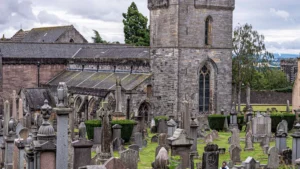
We came for the church, we stayed in the kirkyard
We came up to Stirling to see a church. We ended up spending most of the day in its kirkyard, and we are not going to apologise for it. The...
Read moreOn the way back down, the Settle Inn is on the same line, towards St Mary’s Wynd. It is the pub that claims to be the oldest in Stirling, and it is exactly what you want after two hours of stone.
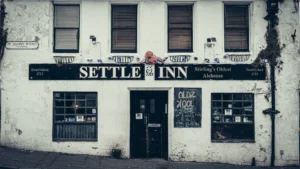
Settle Inn, Stirling’s oldest pub (and the ten seconds we spent wondering what we were doing there)
We walked into this pub wondering whether we were allowed to be there. We walked out being kissed on both cheeks. In between: one hour, two beers, and the kind...
Read moreAnd if you are staying the night, we had two nights at Allan Park, at the foot of the old town, in a listed Georgian building with eight rooms.
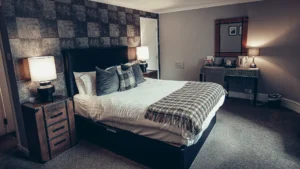
The Allan Park Hotel, the pub-hotel in Stirling where we finally had a proper night.
Our opinion on the Allan Park Hotel, a Georgian gem from 1818 right in the center of Stirling that also serves as a pub and restaurant. Eight rooms, a golden...
Read moreThe rest of the stop, the climb up Spittal Street and St John Street, the old jail, and what we made of Stirling coming back four years on, is in our full guide to Stirling.
Practical information
Visiting Stirling Castle: your practical questions
Should you book your ticket in advance?
Yes, and this is the easiest mistake to avoid. Historic Environment Scotland asks that all visits to Stirling Castle be booked ahead to guarantee entry. This is not a site where you turn up at the ticket window and hope. Book your slot online before you travel, especially in summer, or you risk making exactly the U-turn we made in 2022, for a completely different reason.
Is there a way to pay less?
Three, and they stack with a little planning. If you are already an Historic Scotland member, entry is included and you walk straight in, which changes the whole calculation. If you are not, Historic Environment Scotland gives a discount on the standard rate when you book online and arrive without a car: show your train or bus ticket, or your bike, at the gate, and enter the code GOOD25 when you book. And if Stirling is one stop among several Scottish sites, the Historic Scotland Explorer Pass comes in 5-day and 14-day versions and pays for itself around the third castle.
Are the unicorn tapestries the originals?
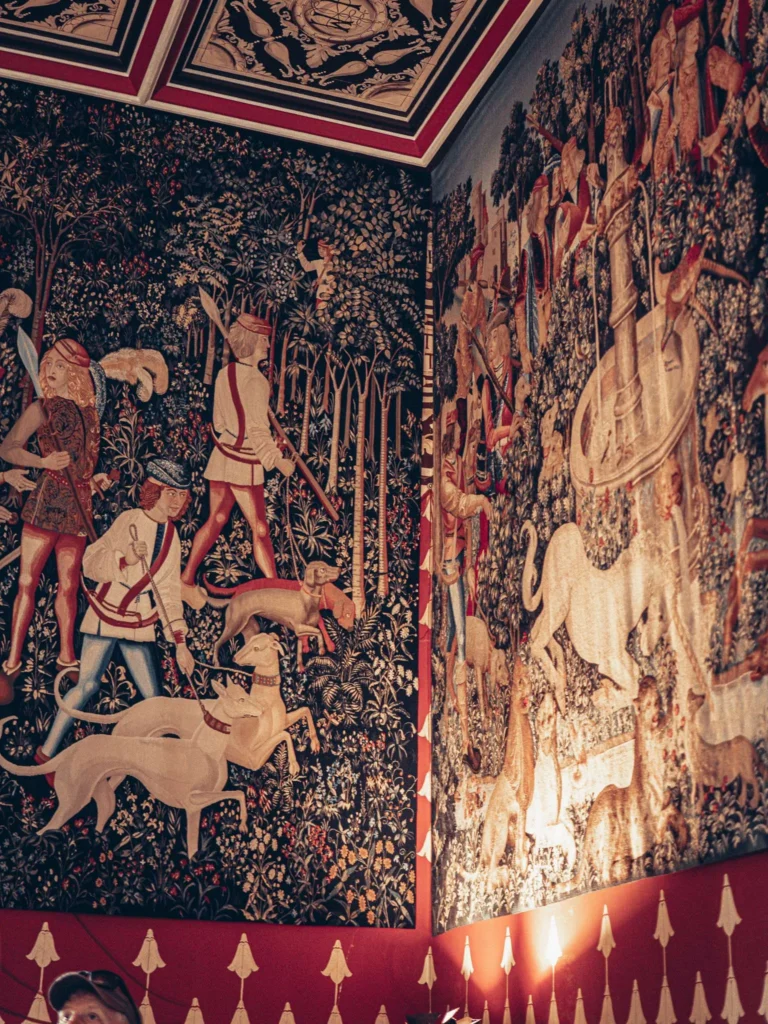
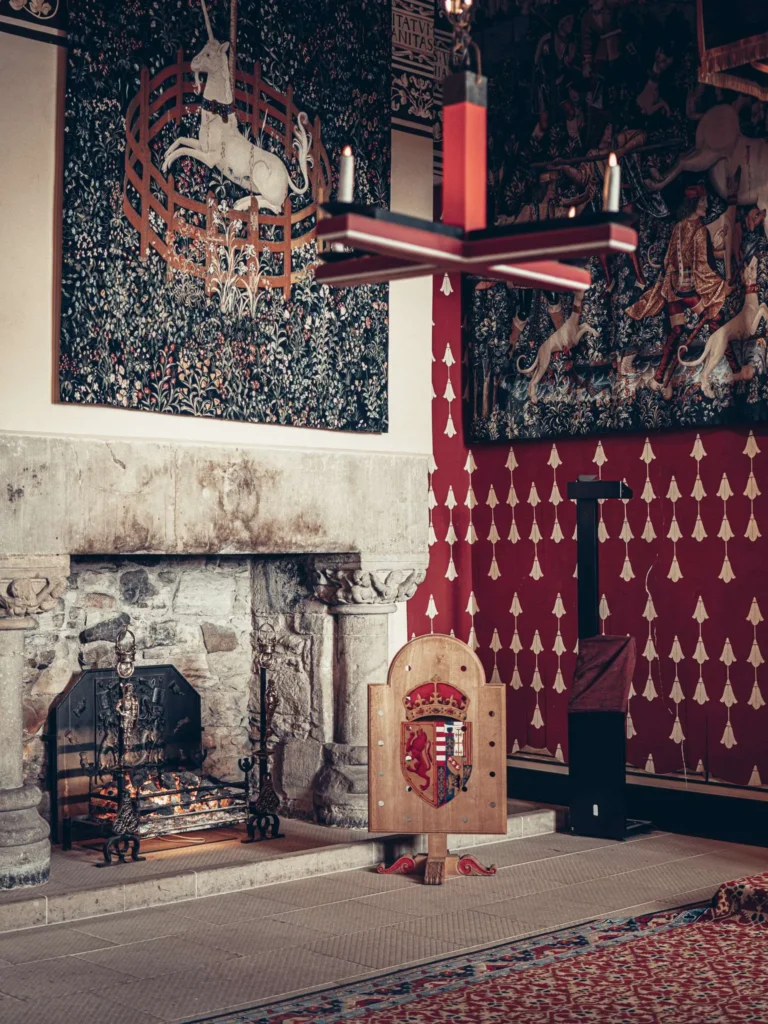
No, and this might be the best story in the castle. The seven Hunt of the Unicorn tapestries hanging in the royal apartments are hand-woven replicas, made by the West Dean Tapestry Studio for Historic Scotland. The project ran for around fifteen years, and the last panel was unveiled in 2016. The originals, woven between 1495 and 1505, are at the Metropolitan Museum of Art in New York. So you are not looking at medieval tapestries. You are looking at fifteen years of work by living weavers, which is at least as good a reason to stop and stare.
Where do you park when you go up to the castle?
There is a car park on the esplanade, right in front of the entrance, but it is small and cannot be booked: first come, first served, and it fills early in the day. Around ten accessible spaces sit roughly 65 metres from the entrance, free with a Blue Badge. For everyone else the safe play is to leave the car in the lower town and walk up through the old town. That is not a consolation prize, it is the better arrival: the climb is what makes the position of the castle make sense.
Can you do it as a day trip from Edinburgh or Glasgow?
Easily. Stirling is on the train line from both cities and buses run too, and the journey is under an hour either way. From Stirling station to the castle gate is about 800 metres, but it is uphill and it means it, so wear something sensible on your feet. The bonus: arriving without a car earns you the discount above, so the train wins twice.
Is it wheelchair accessible?
Better than you would expect for a castle sitting on a volcanic plug. A mobility vehicle runs up to the Inner Close on request, arranged with staff at the entrance, and it takes most manual and powered wheelchairs and scooters depending on dimensions. A companion ticket is free for anyone who needs assistance to visit. The cafe is on the level with ramp access. Be aware that some vaulted passages and the descent to the Nether Bailey stay cobbled and steep.
Is there a cafe on site?
Yes, the Unicorn Cafe, and it earns its place for the room as much as the food. It sits in old vaulted casemates cut into the thickness of the outer defences, the ones built to absorb artillery fire. Hot and cold drinks, light lunches, snacks and Scottish standards. And if the weather holds, there is a roof terrace above the cafe looking north-east towards the Wallace Monument and the Ochils.
Can you bring a dog?
Only assistance dogs are admitted, indoors included. They stay on a lead throughout and must never be left alone. For an ordinary pet you will need another plan: the visit runs to two hours comfortably and there is no on-site facility for dogs.
Stirling Castle or Edinburgh Castle, if you can only do one?
Honestly, for most people it is not either-or. Stirling is under an hour by train from Edinburgh and from Glasgow, so it is a day out rather than a whole trip, and the two castles do not compete for the same weekend. But if you genuinely have to choose, and what you want is to understand how people actually lived inside, take Stirling. The Renaissance interiors are more complete and far better staged, the crowds are thinner, and you leave having seen royal apartments rather than queues. Edinburgh keeps the advantages of being the national symbol, the Honours of Scotland and that absurd position above the city. And if you are a member or you hold an Explorer Pass, the question disappears entirely.
PS: four years spent brooding over a turnaround, only to find out we had missed, among other things, the garden where a King of Scots stabbed an earl twenty-six times before throwing him out of a window. We probably should have paid back in 2022.