


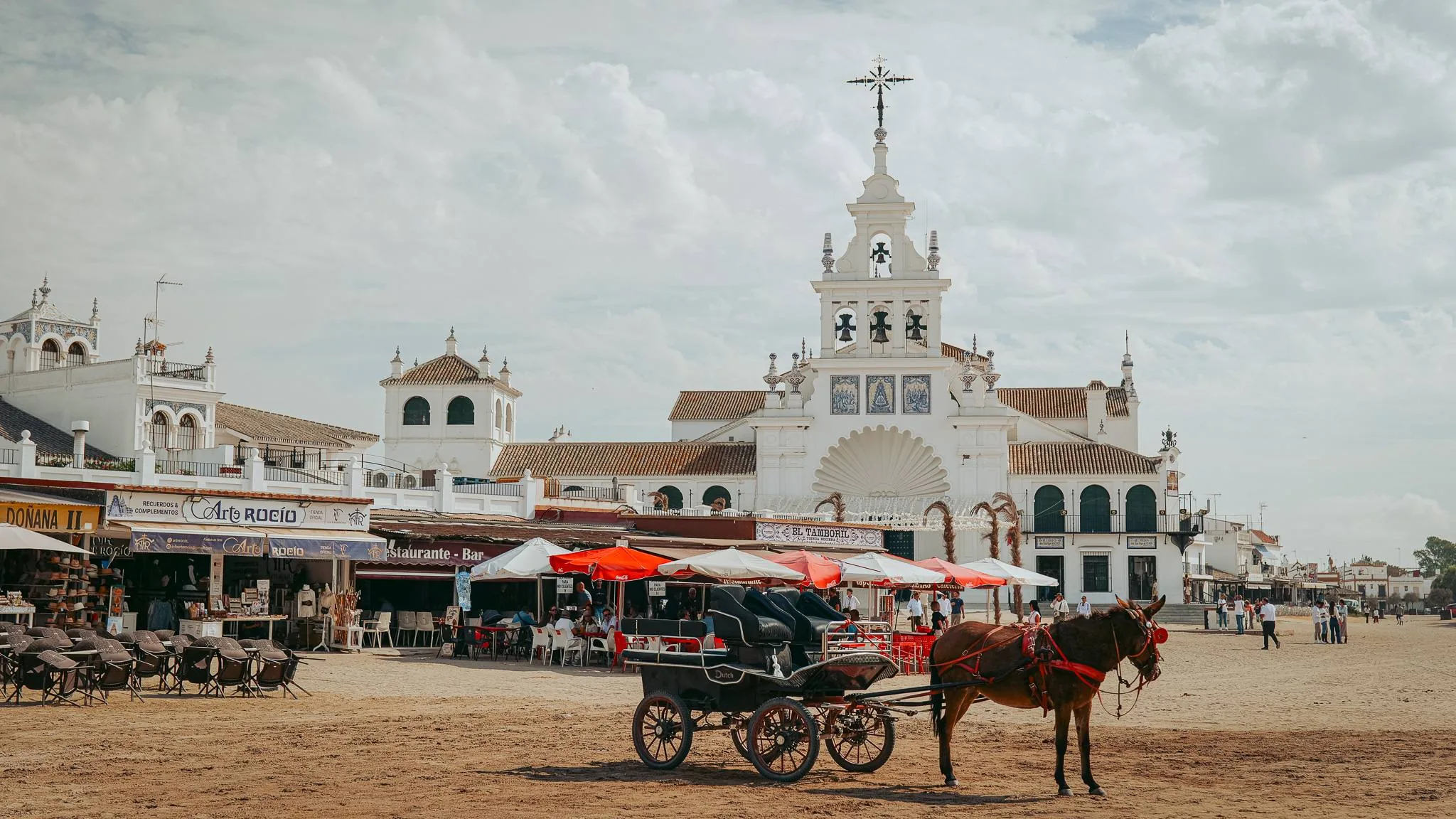
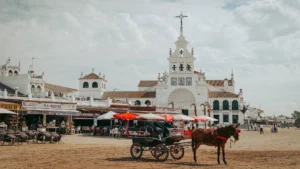
Well… let’s not kid ourselves, El Rocío is not a town. It’s not really even a village in the sense you might imagine. It’s more like a unique place, situated on the edge of the Doñana National Park, in the province of Huelva in Andalusia, where you move around on horseback or in a carriage on sandy streets, where the houses all have a hitching post in front of their facades, and where the white sanctuary stands in the middle as if it had been dropped there by chance.
We passed through in December with Édouard (our camper van, our beloved home after all), just before Seville for Christmas. And we returned on 17 October 2026 by car, for a morning stroll and lunch at La Tata. Same village, different season… and quite a change in front of the marsh. Here are our landmarks, with photos from these two visits.
What exactly is El Rocío?
A little history before I share our experience, because otherwise you won’t understand why everyone is walking around in Andalusian shirts and Cordoban hats at 4 PM on a Tuesday in December.
El Rocío is a pilgrimage hamlet that administratively belongs to Almonte. Its sanctuary is the heart of the Romería del Rocío at Pentecost, when the brotherhoods come to the village. The rest of the year, you also discover El Rocío through its streets, its houses, and the very tangible place that horses hold there.
During our first visit, the atmosphere made us think, “hey, I’m in a western.” On our return in October, the terraces were fuller and horses were moving among the cars. We even saw riders appear between two vehicles, just like that. The feeling of the Wild West remains intact, with modern parking in the backdrop.
Plan your trip: Spain
Tours, tickets and day trips in Madrid.
5% off with code PLANETEDECAROT
Booked on Trip.com — partner link.
Compare rental companies and book at the best price.
10% off with code PLANETECAROLOC
Booked on Trip.com — partner link.
Provided by Holafly, our partner.
5% off with code LAPLANETEDECARO
Booked on Holafly — partner link.
How to get to El Rocío
El Rocío is tucked away between Seville and the Huelva coast, so you inevitably arrive by car, van, or bus. No direct train line, the nearest airport is Seville.
Coming from the UK, decide first whether this is a longer journey with your own motorhome or a flight followed by a hire car or motorhome. Seville and Faro are useful gateways for this part of Andalusia. Our own approach was from Portugal, so the border and time-zone story below describes our route.
Without a doubt the best way. From Portugal (Algarve), you cross the border on the A22 / A49 bridge over the Guadiana (very pretty by the way, be sure to take a look on the right), you lose an hour because you change time zones, and then it’s a 1.5-hour drive to El Rocío. From Seville, it’s exactly 1 hour on the A-49 then A-483.
The main road that crosses the village is paved, so you can access it without any issues, even with a large vehicle. All other streets are sandy, but you’re not supposed to venture there with a camper van anyway. We park on the edge of the village, on the sand, for free, with other vans for the most part.
Rental car from Seville (the classic option), or from Faro in Portugal if you’re combining the Algarve and Andalusia. Free parking at the entrance of the village, right next to the vans. No need to overthink it, just park where you can and that’s it.
Damas Autocares connects El Rocío to Seville and Huelva 2 to 4 times a day. Journey takes 1 to 1.5 hours, tickets historically quoted at 7-10 €; check the current fare. Less flexible, but it helps if you don’t want to rent.
Climate: When to visit El Rocío by camper van?
Andalusia has a Mediterranean/sub-desert climate. In short, it’s hot when it’s hot, and in winter you still wear a jumper. Here’s our seasonal breakdown.
El Rocío : a glimpse of the weather
5-day forecast
Fancy a last-minute trip? Here's the 5-day forecast to help you decide.
Monthly climate
We prefer sunny days without too much rain, but everyone has different tastes! Here's the monthly climate to help you choose your ideal time.
| Month | Min temp | Max temp | Rain | Weather | Rating |
|---|---|---|---|---|---|
| November | 10°C | 20°C | 97 mm | 🌦️ | |
| December | 7°C | 16°C | 101 mm | 🌦️ | |
| January | 7°C | 15°C | 193 mm | 🌧️ | |
| February | 10°C | 18°C | 113 mm | 🌦️ | |
| March | 9°C | 20°C | 42 mm | ☀️ | |
| April | 12°C | 25°C | 25 mm | ☀️ | |
| May | 14°C | 28°C | 23 mm | ☀️ | |
| June | 19°C | 34°C | 0 mm | ☀️ | |
| July | 20°C | 36°C | 0 mm | ☀️ | |
| August | 19°C | 34°C | 3 mm | ☀️ | |
| September | 19°C | 35°C | 6 mm | ☀️ | |
| October | 15°C | 28°C | 21 mm | ☀️ |
- December to February: cool nights (3 to 8 °C at night), mild days (12 to 18 °C in full sun). That’s what we experienced, and honestly, it’s perfect for visiting on foot, sleeping in the van without roasting, and having the sites to yourself. On December 21, we were at 16 °C out of the wind in long-sleeve shirts. Conversely, Caroline caught a cold…
- March to May: theoretically the best time. Spring can be pleasant for walking; the presence of water and birds, however, depends on the rains and conditions of the year. Warning: this period also overlaps with the Pentecost Romería (dates vary by year). If you’re aiming for those specific dates, be prepared for 1 million pilgrims. Otherwise, it’s probably the best compromise of the year.
- June to August: very hot (35 to 40 °C during the day, 25 °C at night). The sand heats up, the village comes alive at night. On June 26, it’s the Saca de las Yeguas, the gathering of wild mares in the Doñana park, a raw equestrian spectacle not to be missed if you’re in the area (but crowded).
- September to November: the landscape depends a lot on the rains. On 17 October 2026, we found the terraces fuller than during our December visit, warm wind, and the Madre de las Marismas completely dry in front of the promenade. Don’t choose this period thinking you’ll definitely see a large body of water.
The village that refused asphalt
Well, we need to talk about this in a bit more depth. Because the first time you set foot in El Rocío, there’s something that strikes you even before the horses.
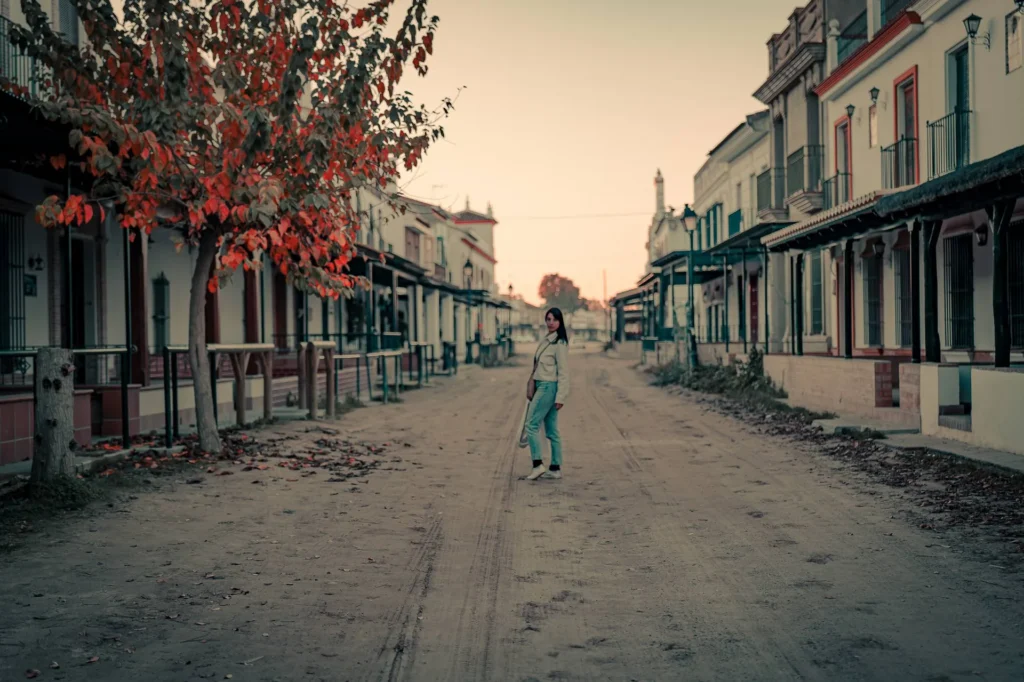
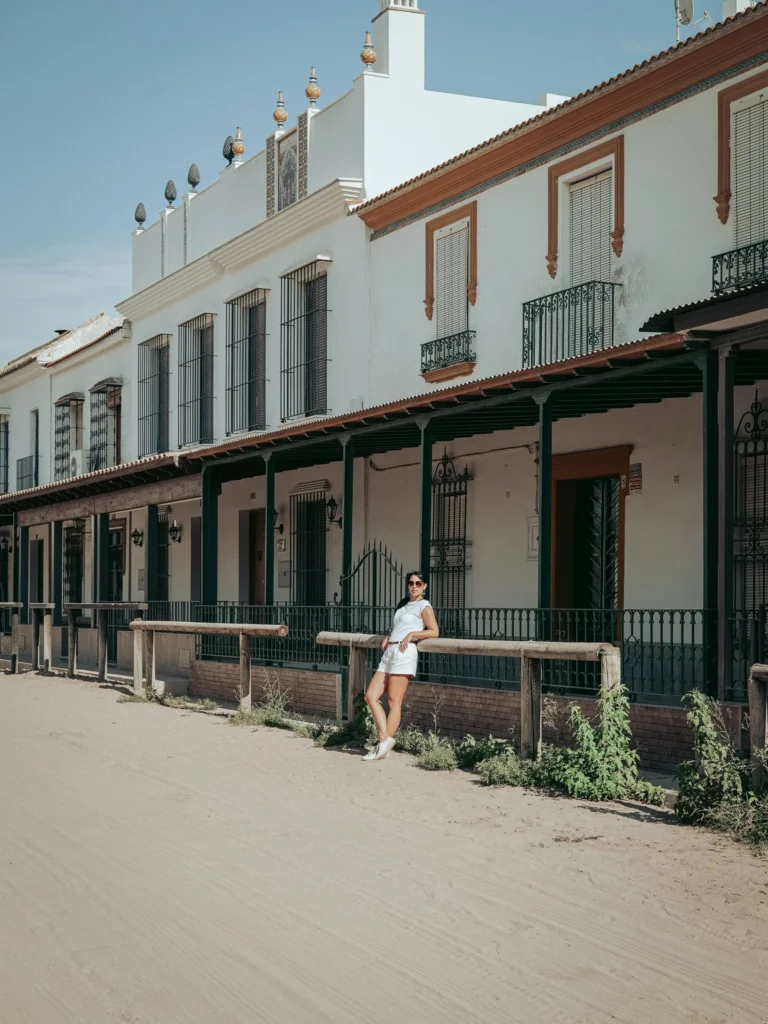
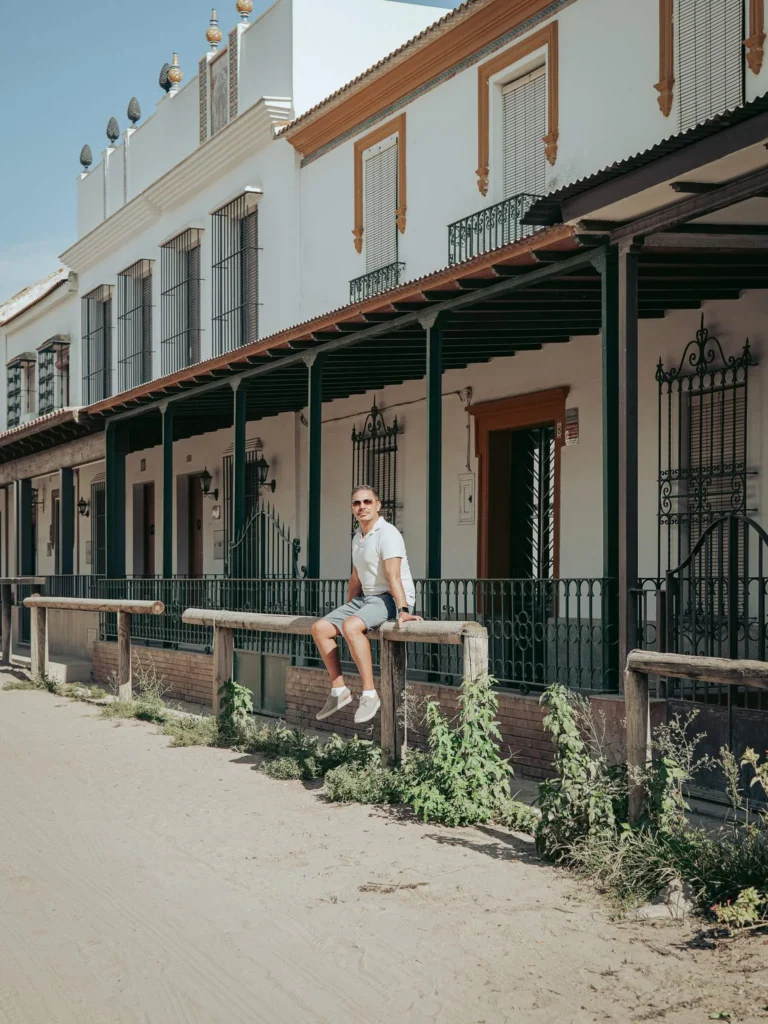
It’s the sand underfoot. The main road is paved, then you turn and find these sandy streets. In front of the facades, the bars and hitching posts for the horses still amuse us. In October, with the warm wind, we also felt the dust all around. I ended up saying, “It’s better to have hooves than wheels.”
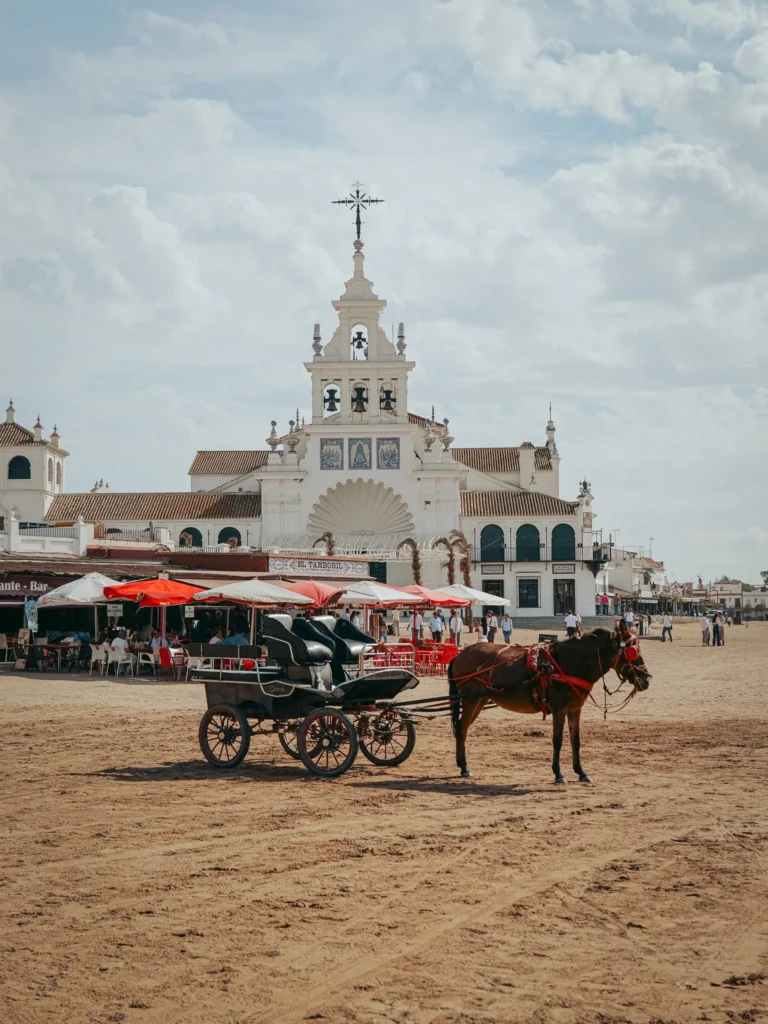
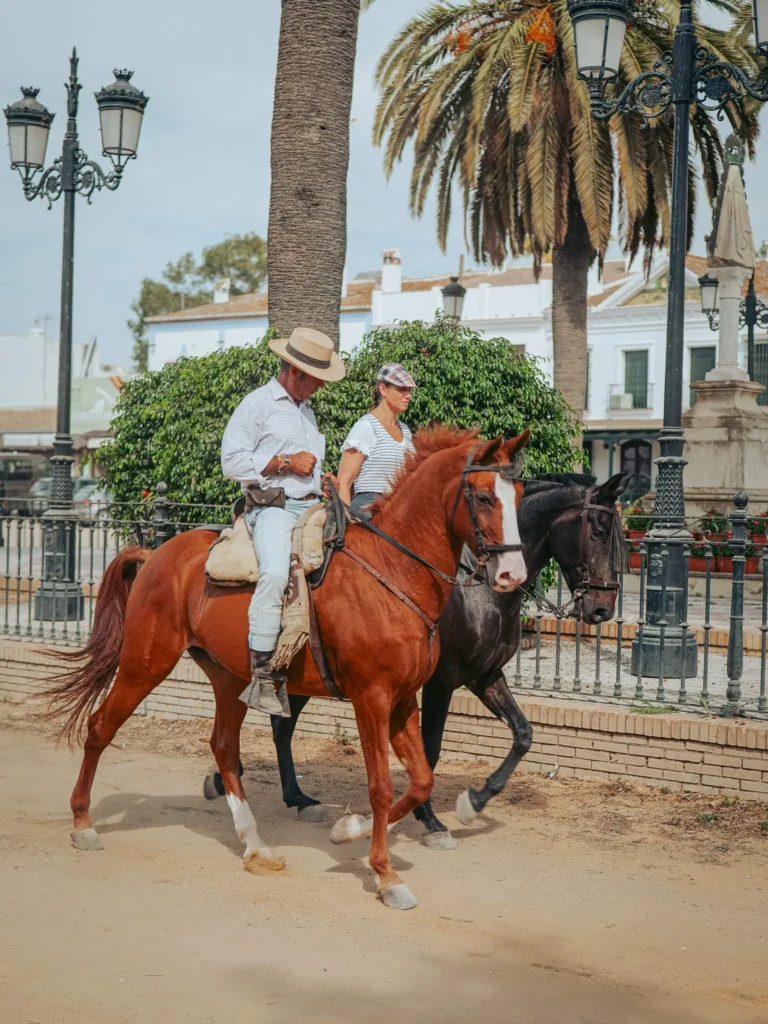
Caroline immediately said “time travel in the present,” and personally I thought that was a perfect description. You’re in 2024, your phone is running on 5G in the background, and yet you wonder if you might not run into Clint Eastwood around the corner with his cigarillo. I even said, “it’s a sand resort actually,” like we say ski resort but without the snow (Caroline added: “yeah, except the snow is brown”). So there you go, sand resort, we’re registering the trademark.
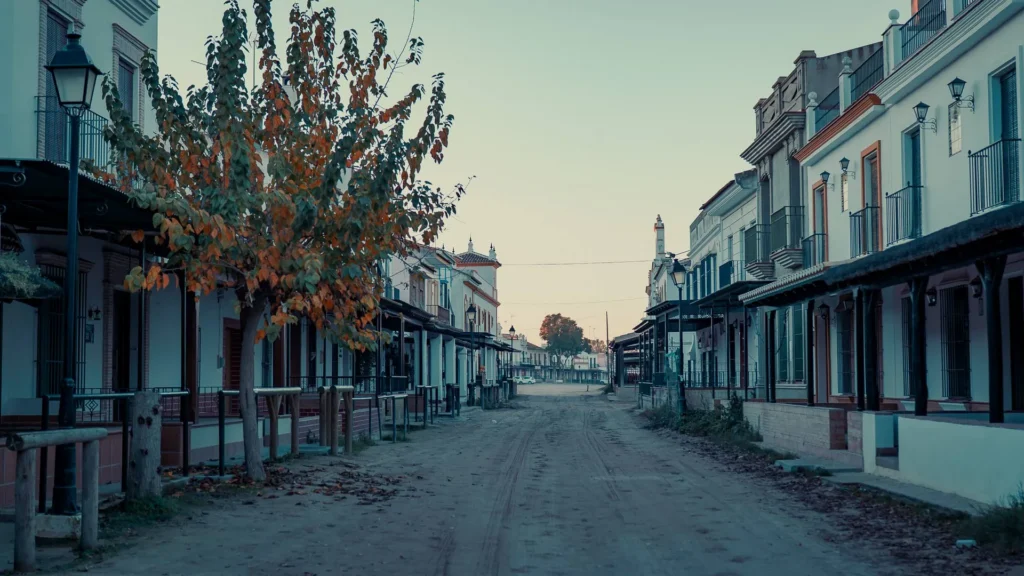
The other striking detail is the facades and ironwork. White walls, ochre, orange, or red frames, grilles on the windows, and sometimes a religious ceramic above a door. In October, I stopped again to admire the balconies and these grilles. And depending on where we passed, there was also that smell of frying… The village is visited with more than just the eyes.
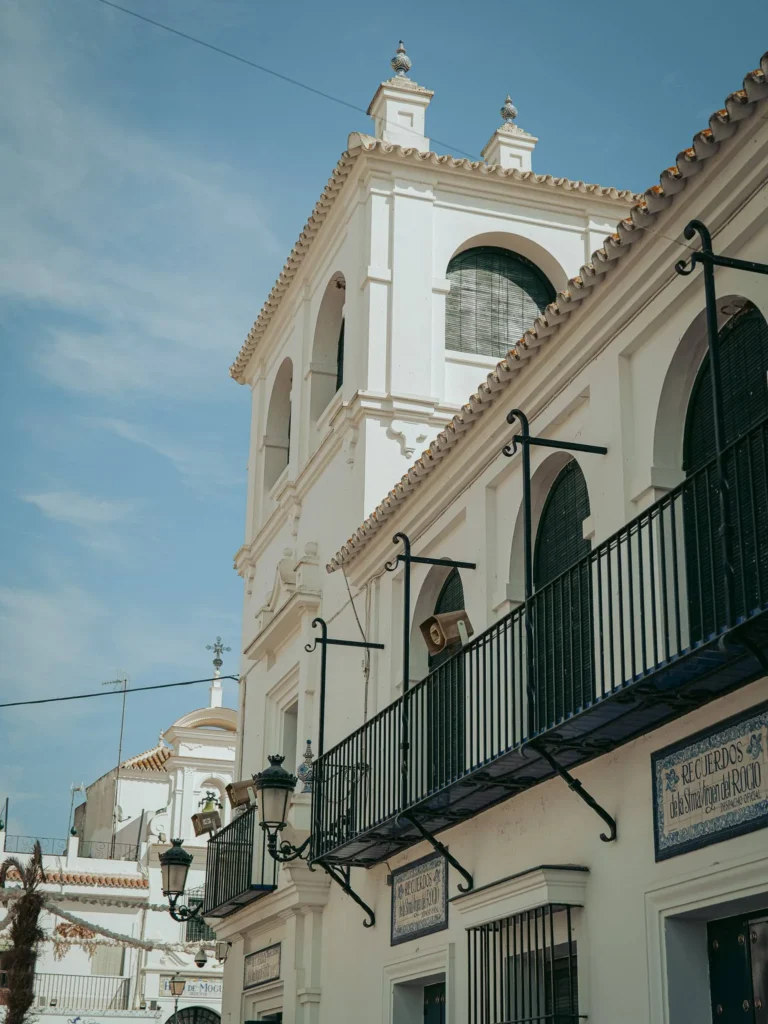
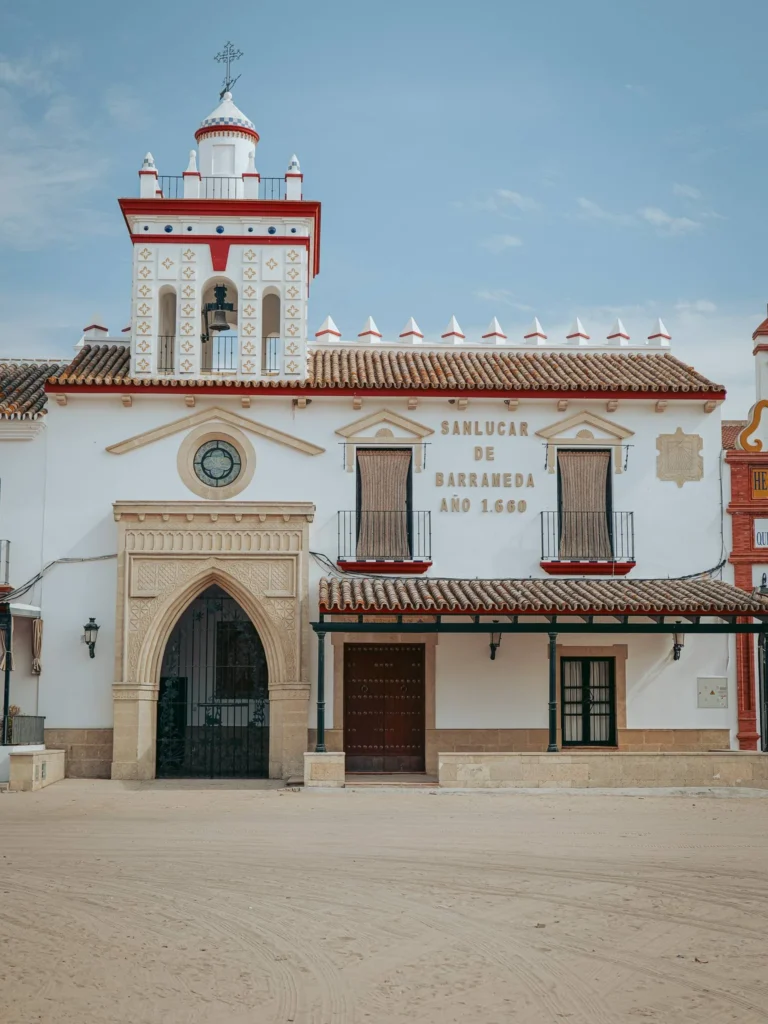
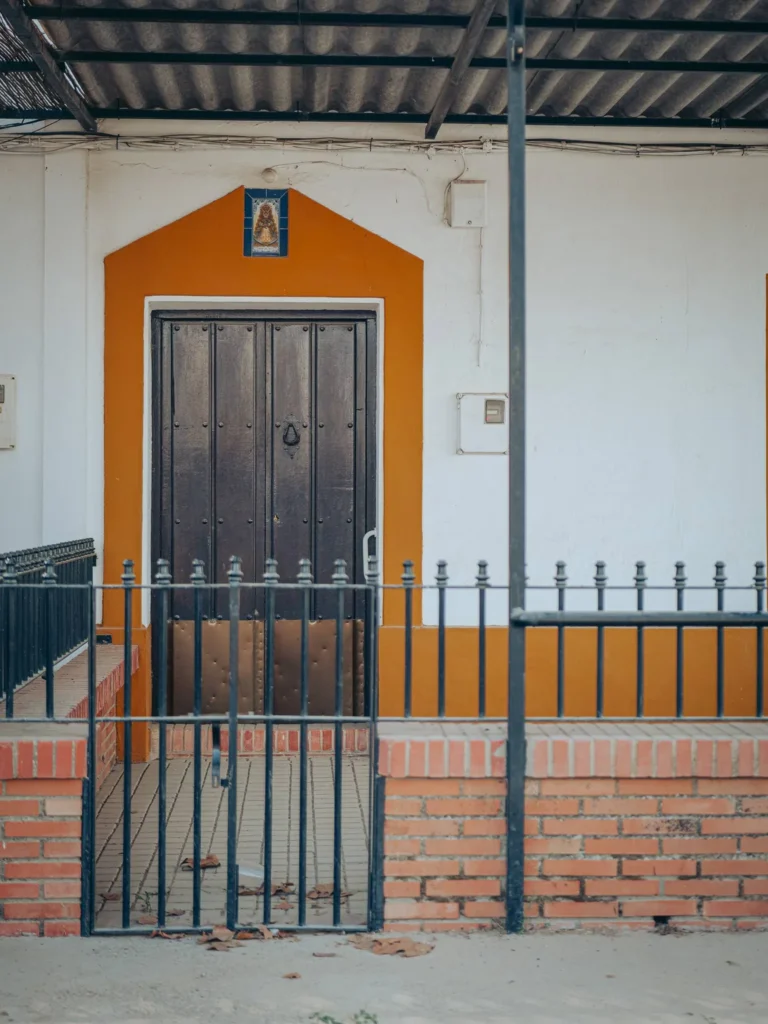
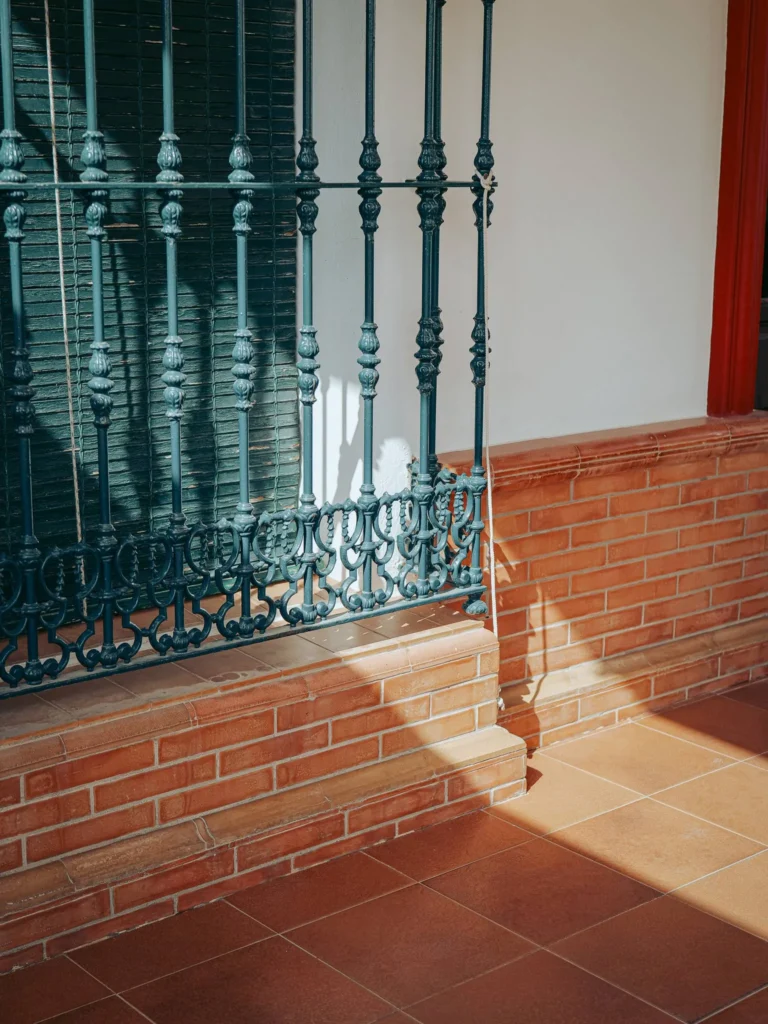
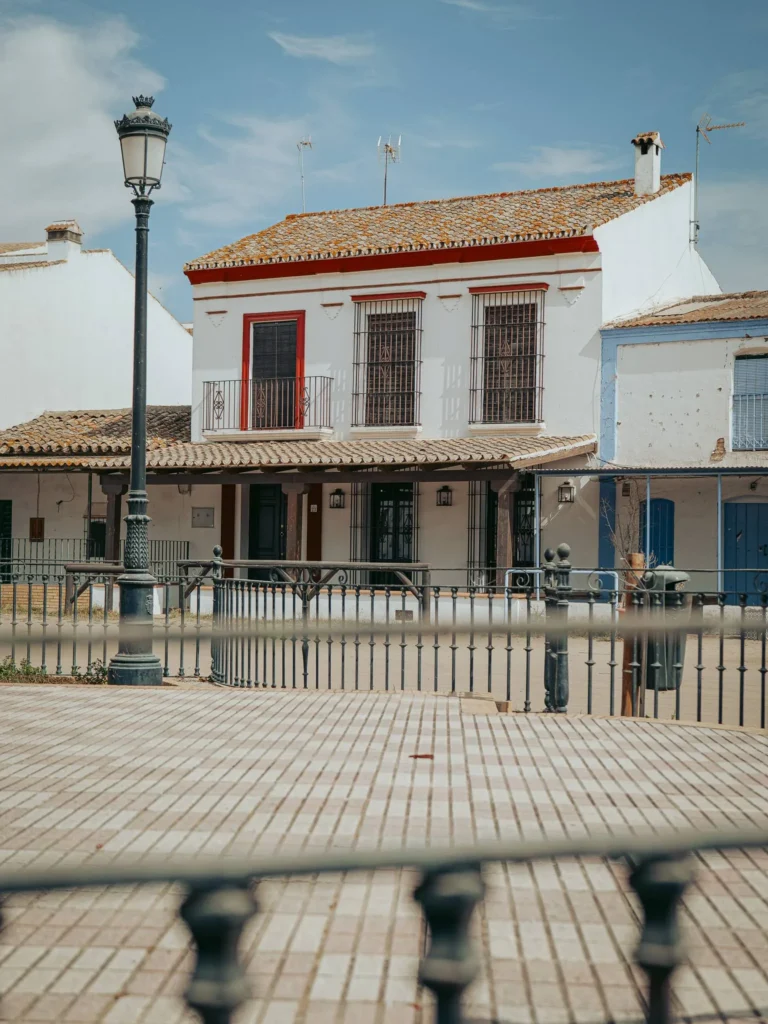
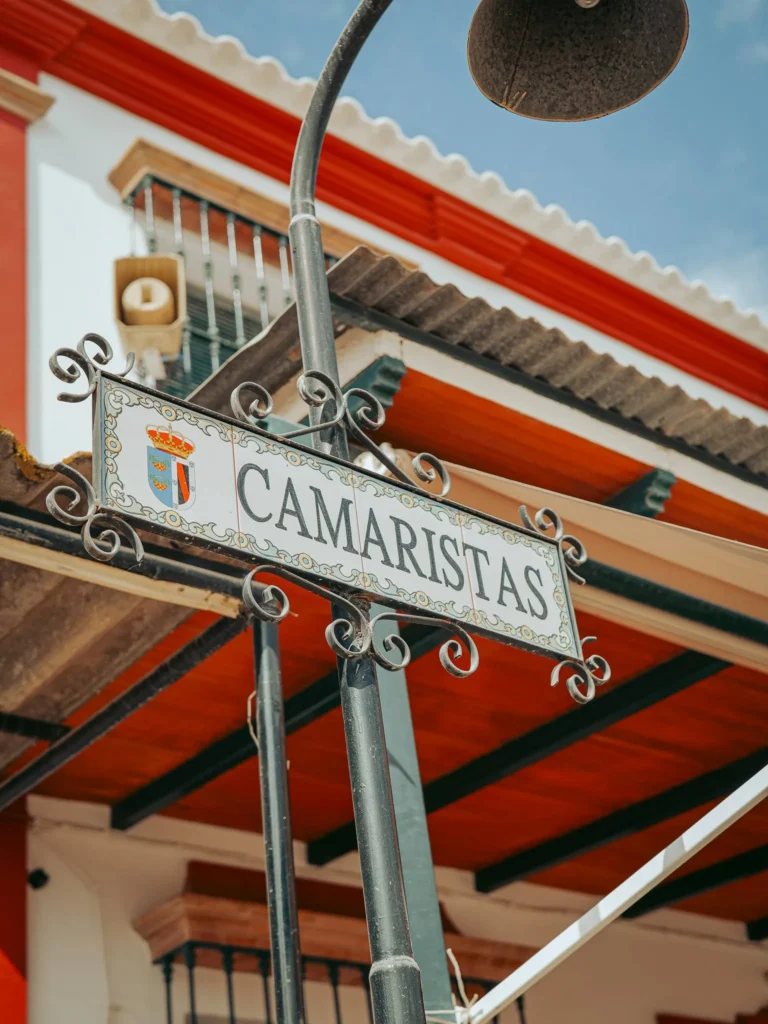
One thing really disappointed me on our return: the cigarette butts in the sand. We saw many in the streets, and I find it unfortunate in a village associated with nature and such a landscape. The houses and horses are beautiful, yes, but that doesn’t make that detail disappear.

We're Caroline and Xavier
We drive to a place, stay long enough to get it wrong a few times, then write the guide we wish we'd had: parking, timing, what's worth the detour.
Ce que vous souhaitez recevoir :
Important spots for vans and camper vans in El Rocío
To prepare your stop, clearly distinguish between parking and overnight stays. Our night on the edge of the village belongs to the story of our first stay: it does not grant permission for your trip. The map gathers accommodations and places in the village, with their coordinates.
El Rocío : Places we can tell you about
Here's our selection of places in El Rocío: spots we've visited that might be useful to you. Use the list view to discover each address in detail, and export everything to add to Google Maps or your favorite GPS app.
| Place | Address | Download |
|---|---|---|
| Camping La Aldea | Carretera de El Rocío, km. 25, 21750 El Rocío, Huelva, Espagne | |
| Kampaoh El Rocío | Carretera de El Rocío, km. 25, 21750 El Rocío, Huelva, Espagne |
| Place | Address | Download |
|---|---|---|
| Our Lady of El Rocío: the white interior that stopped us in our tracks | Calle Ermita, s/n, 21750 El Rocío, Almonte, Huelva, Spain |
| Place | Address | Download |
|---|---|---|
| Madre de las Marismas (the Lagoon) | Bord sud du village, El Rocío, 21750 Huelva, Espagne |
| Place | Address | Download |
|---|---|---|
| Restaurante Casa Marcelo | El Rocío, 21750 Huelva, Espagne | |
| Punto de Encuentro | El Rocío, 21750 Huelva, Espagne | |
| Restaurante Toruño | El Rocío, 21750 Huelva, Espagne | |
| Restaurante d'María | El Rocío, 21750 Huelva, Espagne | |
| Bar Er Peregrino del Ajolí | El Rocío, 21750 Huelva, Espagne |
Our landmarks for sleeping, distinguishing our parking from accommodations to book:
- Camping La Aldea: a camping option at the entrance of the village, shown on the map. For our stay with Édouard, the documented memory is that of parking on the edge of the village, with other camper vans; we do not present La Aldea as a campsite we have stayed at.
- Kampaoh El Rocío: right next to the previous one. Comfortable safari tents if you don’t have a van and still want to live outdoors. A good alternative for a couple or a family in glamping mode.
- Our previous parking: we parked on the edge of the village, on the sand, with other camper vans and our neighbour with his dog Watson. It’s a travel memory, not an approved overnight area nor a recommendation to sleep on public roads.
Where and what to eat in El Rocío
First of all: we eat late in Andalusia. Late late. Like, dinner service rarely starts before 8:30 PM. If you arrive at 7 PM thinking “I’m starving, I want some jamón,” you’ll find the lights off and a guy who will tell you “no, at eight-thirty” before going back to his cigarette. We experienced it, we laughed about it, and we mention it because you might want to avoid it (or not).
Our most recent recommendation is lunch at La Tata, on 17 October 2026. There were three of us, seated under the wood with air circulating, plants everywhere, and the square in front of us. We started with a half portion of bravas, good and less spicy than they seemed, then the seafood rice arrived in its jar… and we couldn’t finish it.
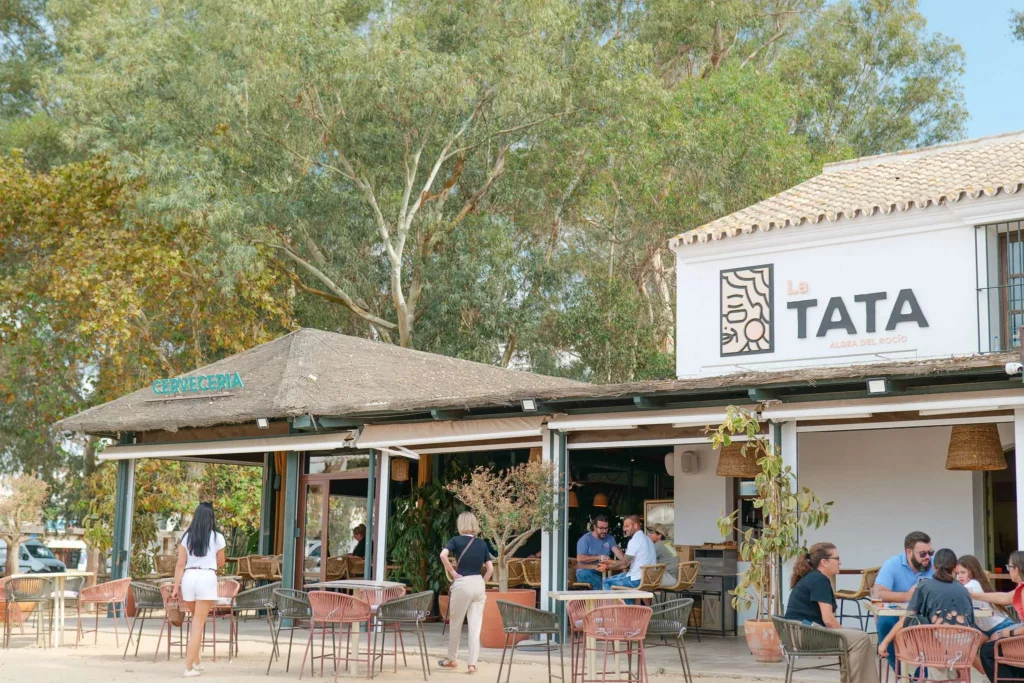
The rice was very generous in broth, with mussels, octopus, and large prawns. We could practically serve ourselves two plates each. The prices seemed well placed compared to Portugal given the quantities, and we ate better there than during our first visit to the village. The details of lunch, the room, and the menu are in our review of La Tata in El Rocío.
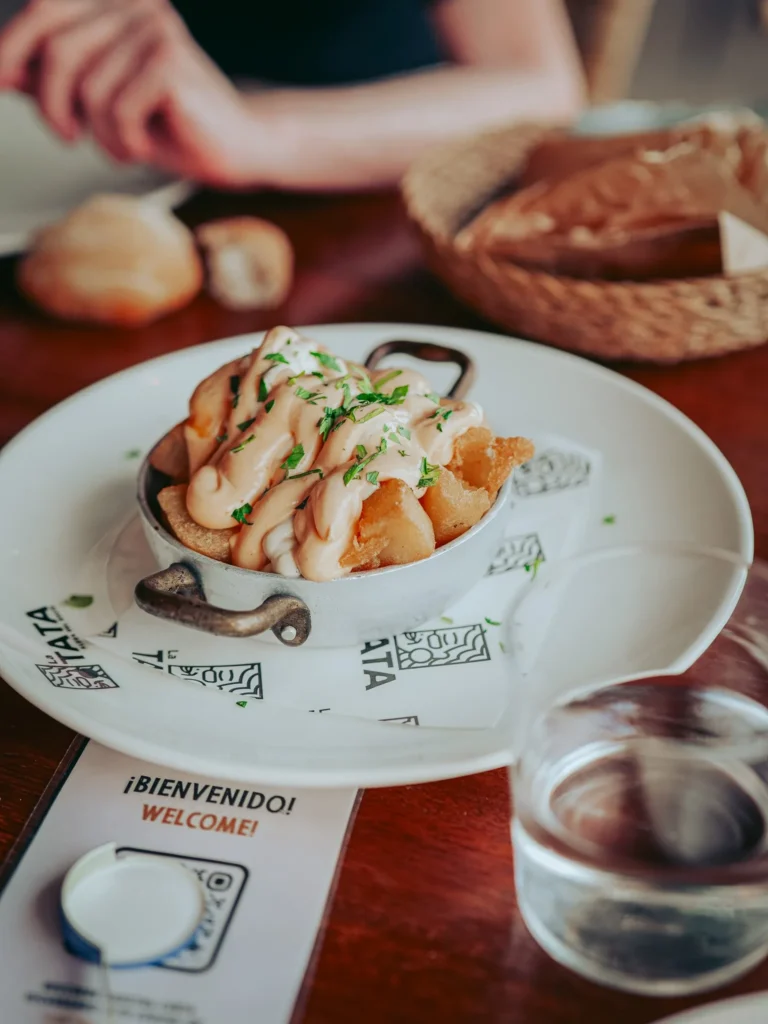
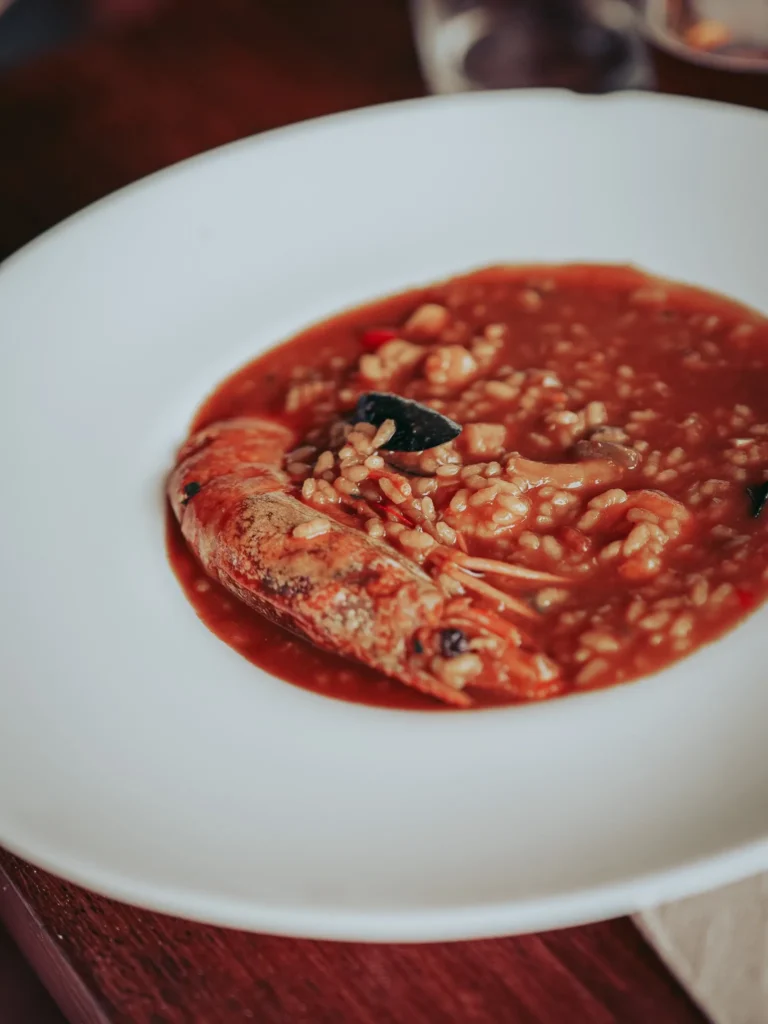
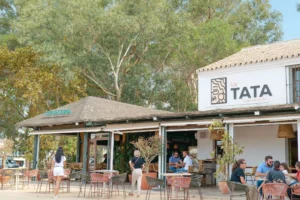
La Tata in El Rocío: three of us, and the rice still won
Lunch at La Tata in El Rocío: wood and plants, generous bravas and seafood rice served in an earthenware pot that defeated three of us.
Available on 26 November 2026During the first stay, we also remembered the table with a brazier, the mesa camilla: artichokes for Caroline, jamón, a glass of red wine, and heating under the tablecloth. The name of the restaurant for that dinner is not confirmed in our notes. The other addresses on the menu remain leads to check according to your desires, not a list of restaurants all tested by us:
- Restaurante Casa Marcelo: address already on our map; we do not confirm that it is the restaurant of our dinner at the mesa camilla.
- Punto de Encuentro: friendly, central, for a quicker meal.
- Restaurante Toruño: more typical, local specialties, terrace by the lagoon.
- Bar Er Peregrino del Ajolí: picturesque tapas bar, good for having a drink + snacking in the “real village” atmosphere.
Our first stay: two days in El Rocío in December
So… we arrive at the part where I tell you what we actually did, because personally, when I read a guide, that’s what I want to know.
We arrived in the mid-afternoon after a tapas stop in Ayamonte (the first Spanish town after leaving Portugal, recommended for a hassle-free lunch, with mini fried octopuses and jamón). First shock upon entering the village: the sand. Second shock: the silence. Third: Caroline stopping dead in front of the first carriages saying, “there, I know what I want for Christmas.”
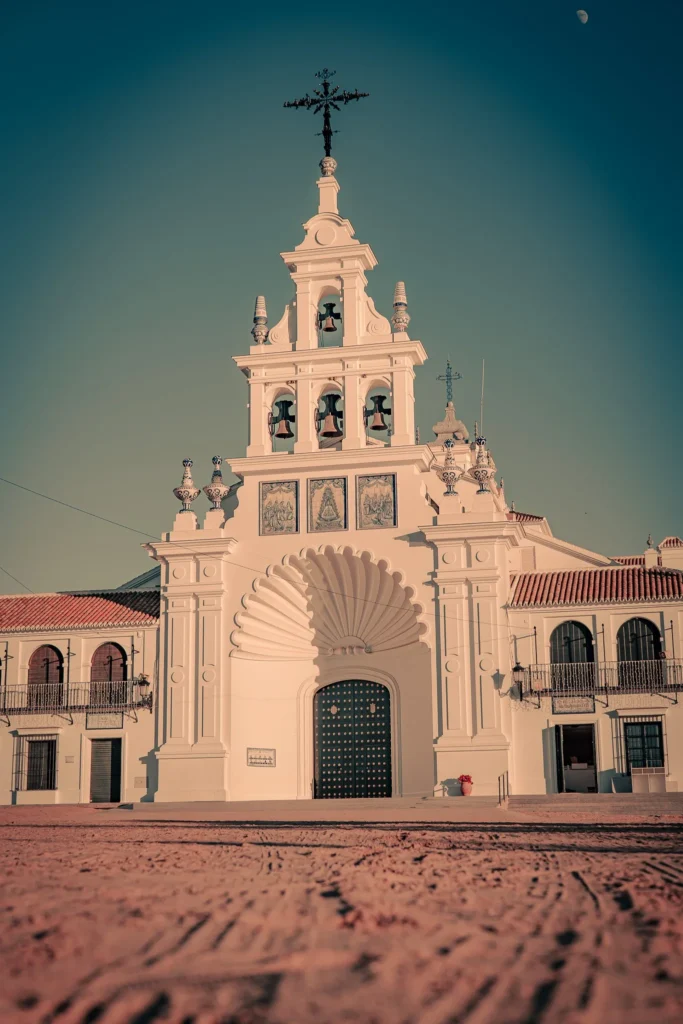
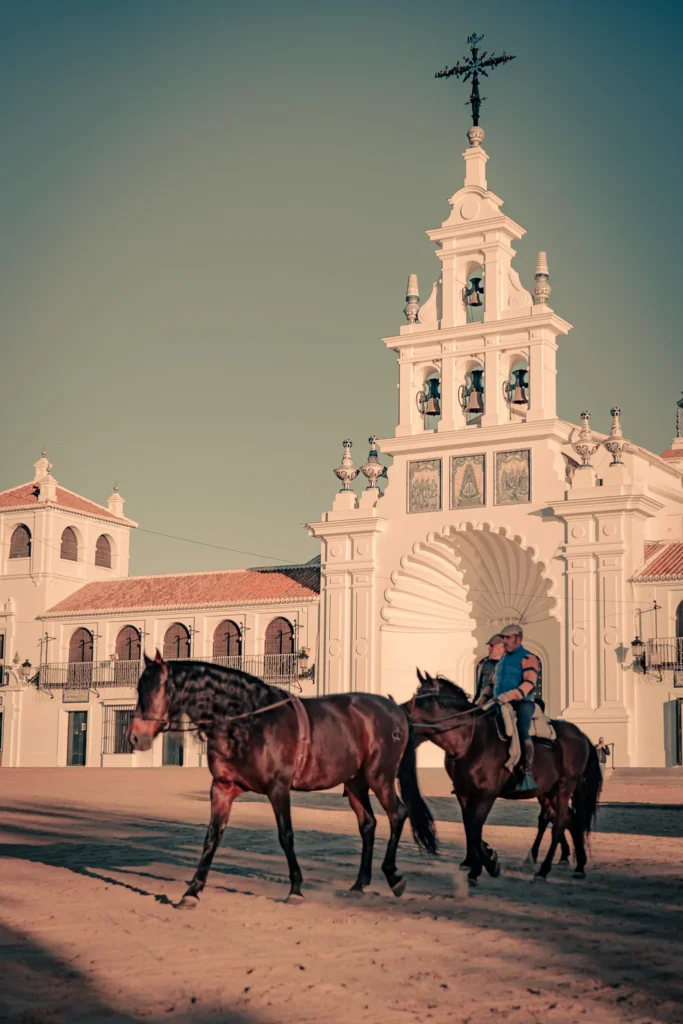
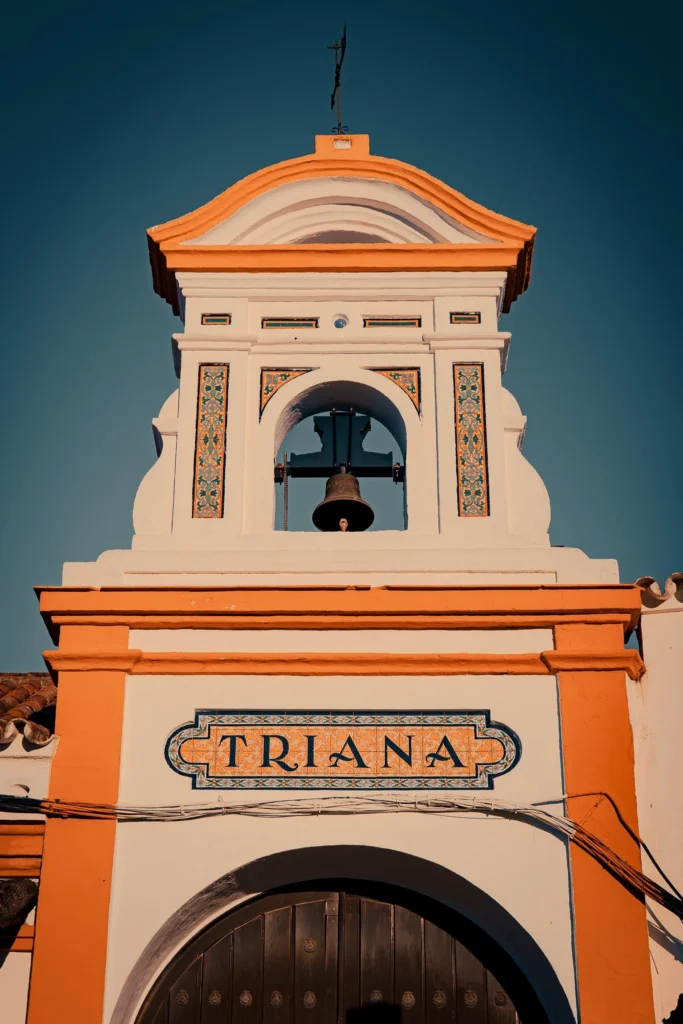
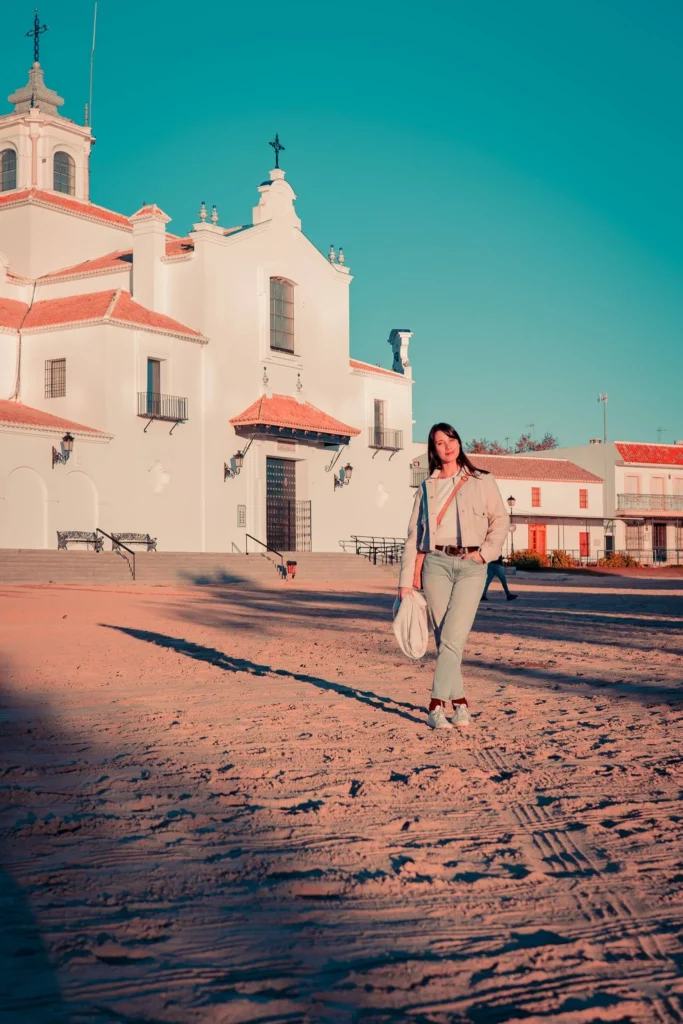
We parked on the edge of the village with Édouard, chatted for 10 minutes with the French neighbour in the next camper van (him and his dog Watson), and went for a 2-hour stroll. Destination: the main street, then the white sanctuary that stands in the middle (the Ermita del Rocío, we’ll get back to that shortly), then the edge of the lagoon for the sunsets. Caroline in photographer mode, me in commentator mode. We repeated “it’s so beautiful” so many times that it became a running gag (self-deprecation is our friend).
In the evening, as agreed, restaurant at 8:30 PM. Mesa camilla, Caroline’s burned leg, jamón, Tinto, Salud. Good night in the van. And the next morning, that’s when we caught the thing we would have missed without neighbour Watson: he told us “they’re renovating the Virgin’s statue, they’re putting it back in the church at 10 AM, there will be cannon shots.”
These images of horses by the water and reeds belong to our December visit. They do not represent the landscape of our return in October.
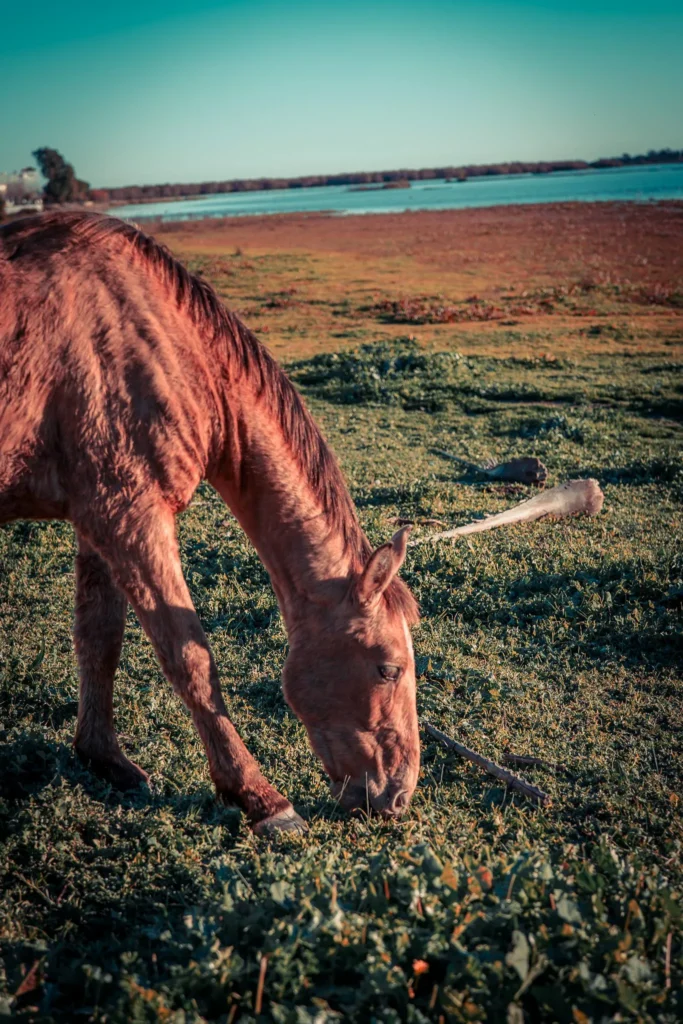
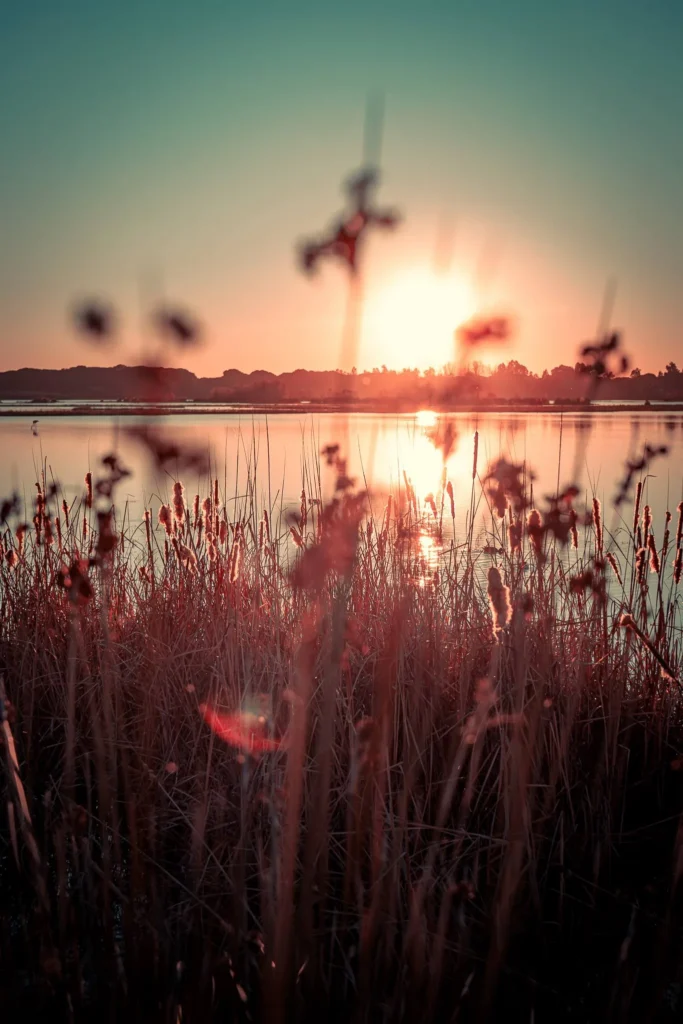
Well, we went. At exactly 10 AM, BOOM, cannon salvo. The church opens. People inside singing along with a guitar (I still don’t know if it’s technically flamenco, sevillanas, or something else, I admit my Spanish musical ignorance, sorry). Sacred atmosphere. It’s one of the moments that stays with us from this visit, the songs in the sanctuary, after the silent ambiance of the day before.
That’s the real vanlife advice I can give you for El Rocío: talk to your van neighbour. You change plans, learn something, and leave with an anecdote for life. That’s what makes this way of travelling so special, and personally, I never get tired of it.
Our return on October 17: the dry marsh
Returning at the end of the promenade, we had a real shock before us. In our memory, it was a vast expanse of water, almost a lake, with birds and horses grazing at the edge. This time, in front of us, everything was dry. The promenade no longer had the same charm in our eyes.
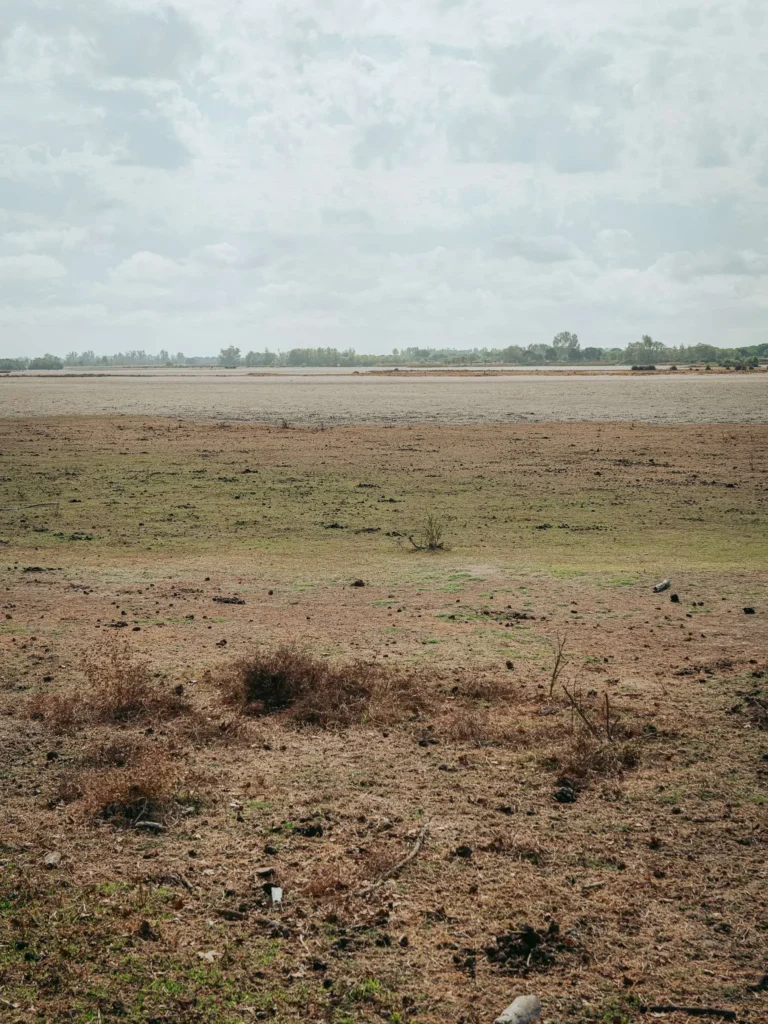
The Madre de las Marismas is a seasonal wetland. The Junta de Andalucía explains that it usually dries out in summer; MITECO describes the wetland cycle, driven by rainfall and evaporation. The water returns with autumn and winter rain, rather than on a fixed date.
That explains the difference between our visits. A photograph of one dry stretch cannot tell us whether every part of Doñana is dry, or measure the park’s ecological condition. For your walk, remember that the horses and sandy streets remain, but the great expanse of water and birds in front of the promenade are seasonal.
The village itself felt busier on this visit: more people on terraces, riders among the cars, and the same Wild West atmosphere. We had come by car, without Édouard, for the morning and lunch. This return visit therefore gives us no new evidence about overnight motorhome parking.
What to do in El Rocío
This is a place to take your time and look. Walk, photograph the streets and watch the horses. These are the places and activities we would consider for a visit.
The Sanctuary of Our Lady of El Rocío, also called the Ermita del Rocío, remains one of our village landmarks. In October, the white interior and gilded altarpiece struck me all over again. Construction of the current building began in 1964 and it was blessed in 1969. Our sanctuary article shows the interior and explains the details we photographed.
Our Lady of El Rocío: the white interior that stopped us in our tracks
Our return to the Rocío sanctuary: white interior, gilded altarpiece, heraldic hangings and the story behind the Rocío Chico ceramic panel.
Read more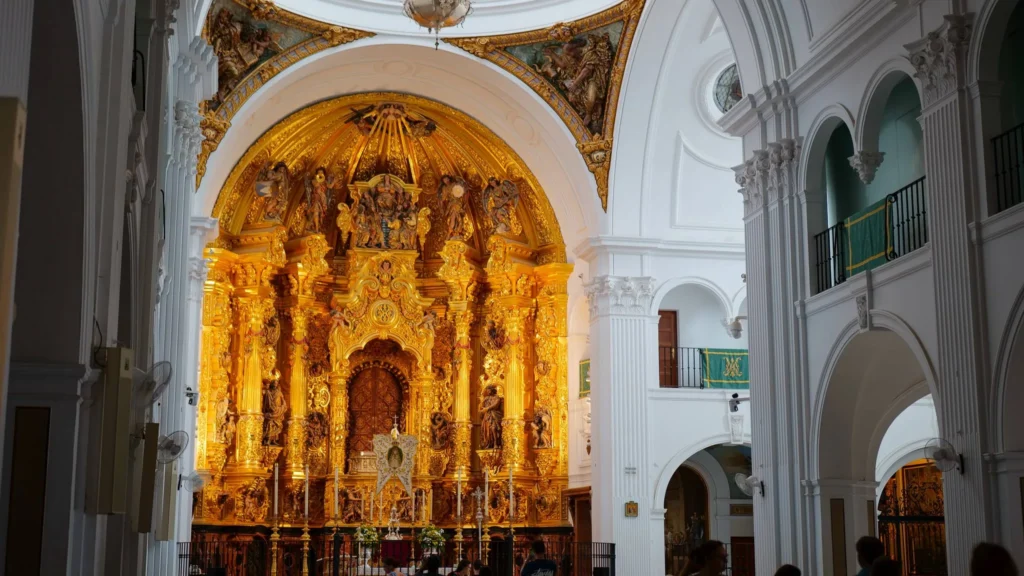
Check the official visiting information, particularly around services and events.
During our December stay, we saw water, birds and horses beside the village. On 17 October 2026, the area in front of the promenade was dry. Water levels and birdwatching depend on rainfall and the season. Enjoy the walk without treating flamingos as a guaranteed appointment.
Local operators offer rides around the marshland near Doñana. Caroline did not try it, despite having ridden years ago, so we have not tested a ride. Ask the operator about the route, duration, experience required and current price. Our earlier guide quoted 25-40 € as an indicative range, rather than a current offer.
El Rocío is a gateway to Doñana’s protected landscapes, a UNESCO World Heritage Site. Guided 4×4 excursions are available, but check the departure point, route and booking conditions with the organiser. The flamingos, Iberian lynx and other wildlife associated with Doñana are not guaranteed sightings on an individual trip.
Along the main street, look for traditional equestrian equipment: Cordoban hats, boots, harnesses and clothes for the Romería. Caroline asked a shopkeeper whether we could film and received a smile and a yes. One day we will apparently have to bring a carriage home.
Planning a budget for El Rocío
Which Unlimited SIM Plan for Spain? (Holafly promo code)
What kind of internet connection should you use during a stay in Spain? It’s a question we often ask ourselves before heading off on a trip. Caroline and I, Xavier,...
Read moreThe amounts you pay here are local prices in euros. We do not have a verified total for our visits, so use the current menus and accommodation quotes to build your own budget. The table is a planning aid; check the establishment’s price for your dates.
Quota RapidAPI dépassé (limite par minute/mois). Réessayez plus tard.
- Parking: our first stay was beside other motorhomes on the edge of the village. This does not establish present-day permission to stay overnight.
- Restaurants: check portion sizes and minimum orders. At La Tata, the seafood rice required at least two diners, and the order for three was more than enough for us.
- Campsites and accommodation: request a quote for your dates, especially around the Romería.
- Rides and excursions: compare routes, duration and conditions directly with the operators.
What I remember from October is how generous the portions were. For the quantity, the meal felt good value compared with what we know in Portugal. If you have a small appetite, look carefully at the portion sizes before adding starters: even our half portion of bravas was generous.
The Romería and village celebrations
To understand the village’s pilgrimage tradition, you need to know about its main celebrations. We describe the contrast with our quieter visits, rather than claiming to have attended these events ourselves.
- Romería del Rocío: the great pilgrimage around Pentecost. Brotherhoods arrive from across Andalusia and further afield, on foot, horseback and in horse-drawn vehicles. Expect very different access and accommodation conditions from an ordinary visit. Arrange an authorised overnight pitch and check the local traffic measures.
- Saca de las Yeguas, 26 June: the mares are brought out of the Doñana marshes, through El Rocío and on towards Almonte. Check the programme and viewing arrangements before travelling for the event.
- Rocío Chico, August: the annual thanksgiving observance associated with Almonte’s vow of 1813. Our sanctuary article explains the commemorative ceramic panel and its history.
For a wider Andalusian trip, El Rocío combines naturally with other stops in the region:
Cádiz on foot: a day between the market, old town and Atlantic
I would explore Cádiz on foot, from the market to Pópulo and La Caleta. Here are the visits to choose, access details to check and practical ways to plan a...
Read more
Discovering Seville by Camper Van: Complete Guide
Sevilla (Seville) in Vanlife: Routes, Tips, and Tricks for an Unforgettable Road Trip in Spain!
Read moreFAQ: planning your visit to El Rocío
Does El Rocío’s lagoon hold water all year?
No. The Madre de las Marismas is a seasonal wetland, usually dry in summer. On our return on 17 October 2026, the area in front of the promenade was dry. Water returns with autumn and winter rainfall, so winter photographs do not show what you can expect throughout the year.
Are flamingos guaranteed on every visit?
We saw some during our December visit, but their presence in front of the village is not guaranteed. The season, available water and conditions on the day affect what you can see. Our October photograph shows one dry area, rather than the condition of every wetland in Doñana.
Do you need a motorhome to visit El Rocío?
No. We first visited with Édouard, our motorhome, and returned by car on 17 October 2026 for a walk and lunch. For an overnight stay, choose a campsite or an explicitly authorised pitch. Our previous parking experience is not permission to sleep on public roads; check the municipal rules for your dates.
Where did we eat in El Rocío?
In October 2026 we had lunch at La Tata. We shared a half portion of patatas bravas and ordered seafood rice for three, served in a large earthenware pot. We could not finish it. At the time of our visit, the rice had a minimum order of two people.
When can you visit the Sanctuary of Our Lady of El Rocío?
When we checked on 17 October 2026, the Hermandad Matriz’s official page listed daily opening hours of 8.30 am–2.30 pm and 5–8 pm. Check the official information before travelling, as services and events can affect access. The Museo-Tesoro is a separate visitor space.
Is the village always quiet?
Our two visits felt different. The terraces seemed busier in October than during our December stay. Major pilgrimage celebrations, particularly the Romería around Pentecost, also change visitor numbers substantially. This comparison describes our visits, rather than a rule for every week.
Why we would visit El Rocío again
For us, El Rocío is a memorable stop between Huelva and Seville, rather than somewhere to fill an eight-day itinerary. The sanctuary, horses and sandy streets brought us back. This time, we ate better at La Tata and discovered just how much the wetland changes the view with the seasons.
Our Christmas journey continued in Seville. You can read our Seville motorhome guide for the next stop. Spoiler: the Airbnb was colder than the motorhome.
ps: visiting between December and February? Bring a jumper. Sunset photographs without one look romantic on Instagram. Standing there feels rather colder.
ps 2: Watson the dog, if you are reading this, hello from us.
The next route, straight to your inbox
Two years of full-time van life, and the Algarve as our base ever since. We still hit the road, by van or otherwise, and we write up what we find along the way. An email when we have something to say, no more.
Ce que vous souhaitez recevoir :