


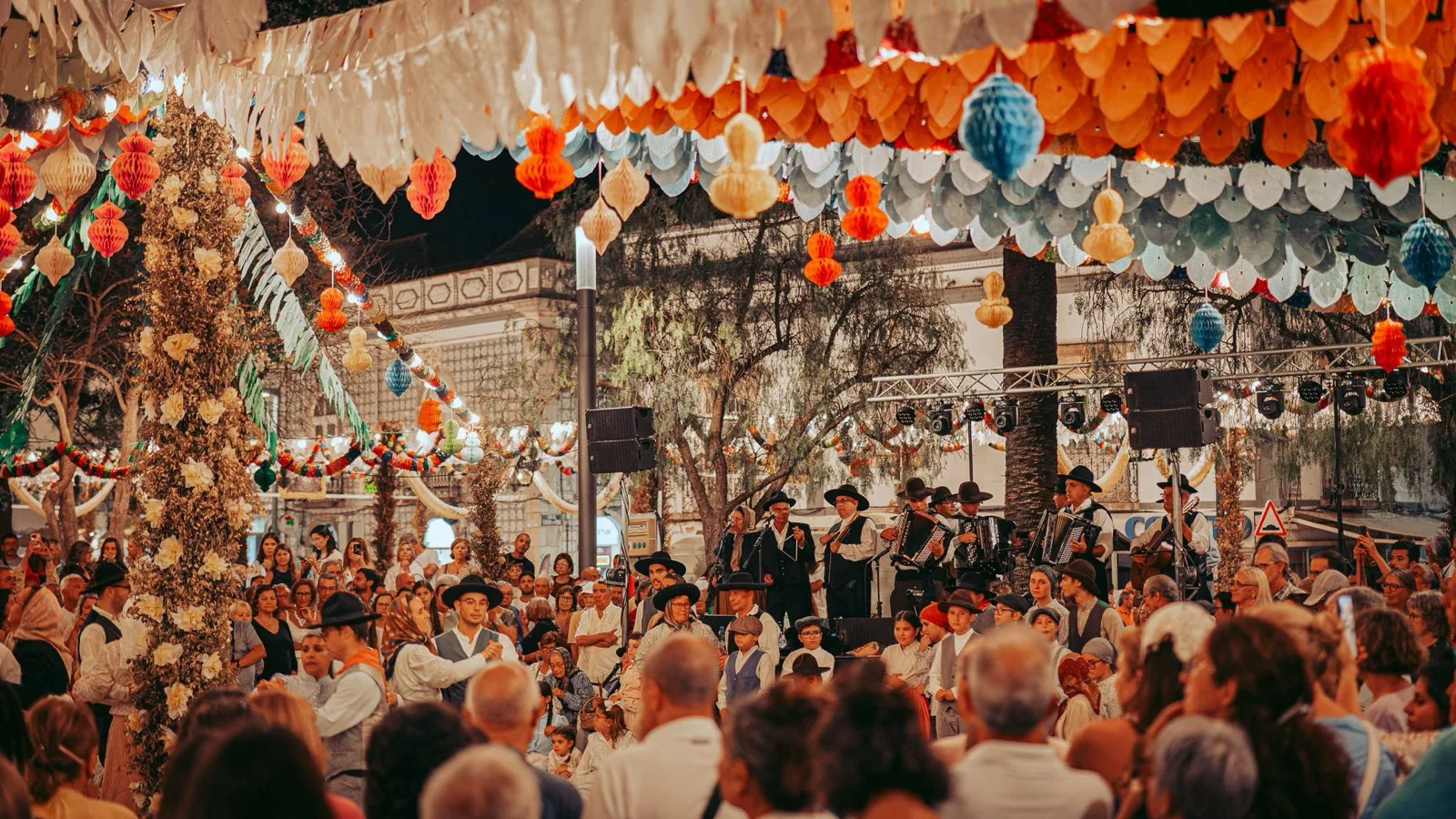
Being able to celebrate a São João at the same time as a national football match doesn’t happen every day, and yet that’s exactly what we experienced that night. We’re in Tavira, in the east of the Algarve, at the end of June, it’s already quite warm, and at 6 PM the large wooden tables start to be set up right in the middle of Rua da Liberdade. Without being indiscreet, this isn’t our first Saint-Jean here; it must even be our third… but it’s really the first time we’re trying to share it with you from the inside, TV on and jersey on our backs.
By the way, as I heard the first chants rising, I asked myself the only real question of the evening: would it be a joyful one, or a tearful one? Because with a World Cup match coinciding with the celebration, everything could tip one way or the other. We would find out soon enough.
A little calendar clarification before diving in, because I often get asked: the real São João is on June 24. In reality, the celebration spills over several days, and we started on the 23rd in the late afternoon. The official holiday remains the 24th, but the atmosphere doesn’t wait for the starting signal.
São João, Santo António, São Pedro: the trilogy of June festivities
If you arrive in Portugal in June and find entire streets covered in garlands, you’re not hallucinating: it’s the peak season for Santos Populares, the popular festivals. Everything revolves around three saints, and it’s mostly a matter of dates. Santo António, on June 13, especially in Lisbon. São João, our star of the evening, on June 24, with Porto and Braga as the main attractions. And São Pedro closing the festivities on June 29, near Setúbal or Sintra. Three saints, one single state of mind: we bring out the tables into the street, light the coals, and sing until the end of the night.
And if I rewind a bit (I promise, I’ll be quick, I’m not a historian), São João falls right on the summer solstice, around the shortest night of the year. It originally started as an old festival of fire and light, which was eventually Christianized in honor of Saint John the Baptist, born on June 24. That’s why it smells so much like embers and a bit of wild celebration: deep down, we celebrate light long before we celebrate the saint.
The undisputed capital of the party is Porto. Up there, São João is serious business: plastic hammers to gently hit each other on the head, glowing balloons rising above the Douro, bonfires to jump over for good luck, steaming caldo verde, and the famous manjerico, a little pot of basil accompanied by a funny quatrain that we give to the one we love. We, let’s be honest, are far from Porto. In Tavira, no hammers or basil, no jumping over fires either, but definitely glowing balloons and a more intimate, local version. That’s also Portugal: the same celebration, experienced in a thousand ways depending on whether you’re in the North or with your feet in the South.
Tavira dresses up: garlands, coat of arms, and associations running bars
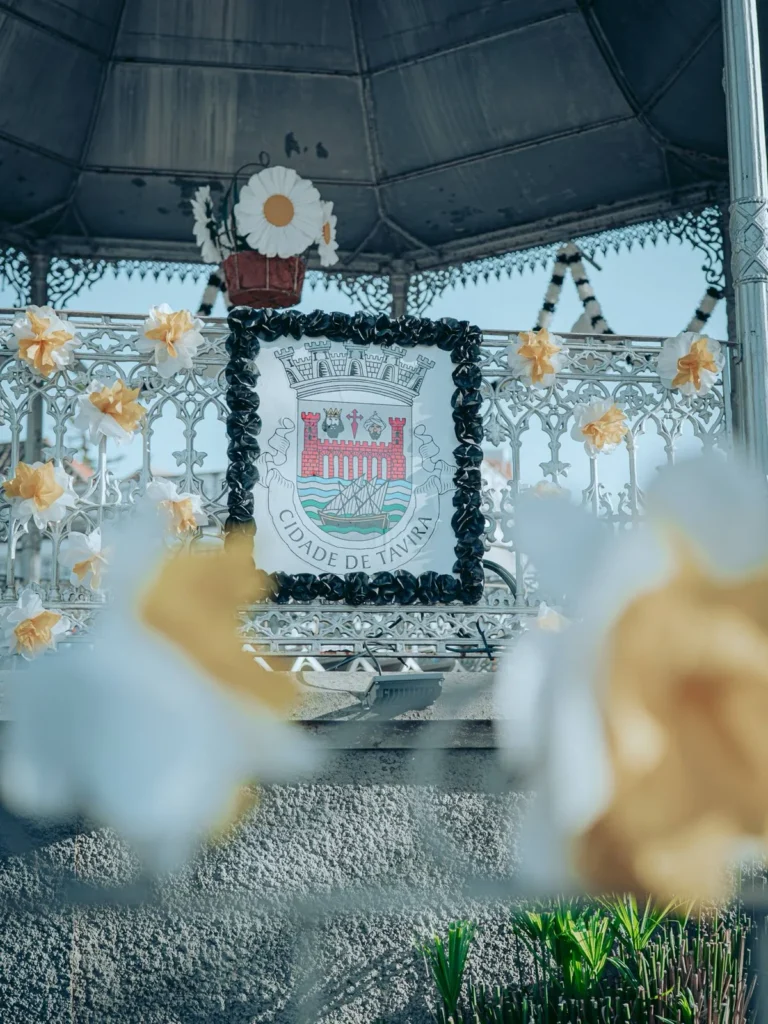
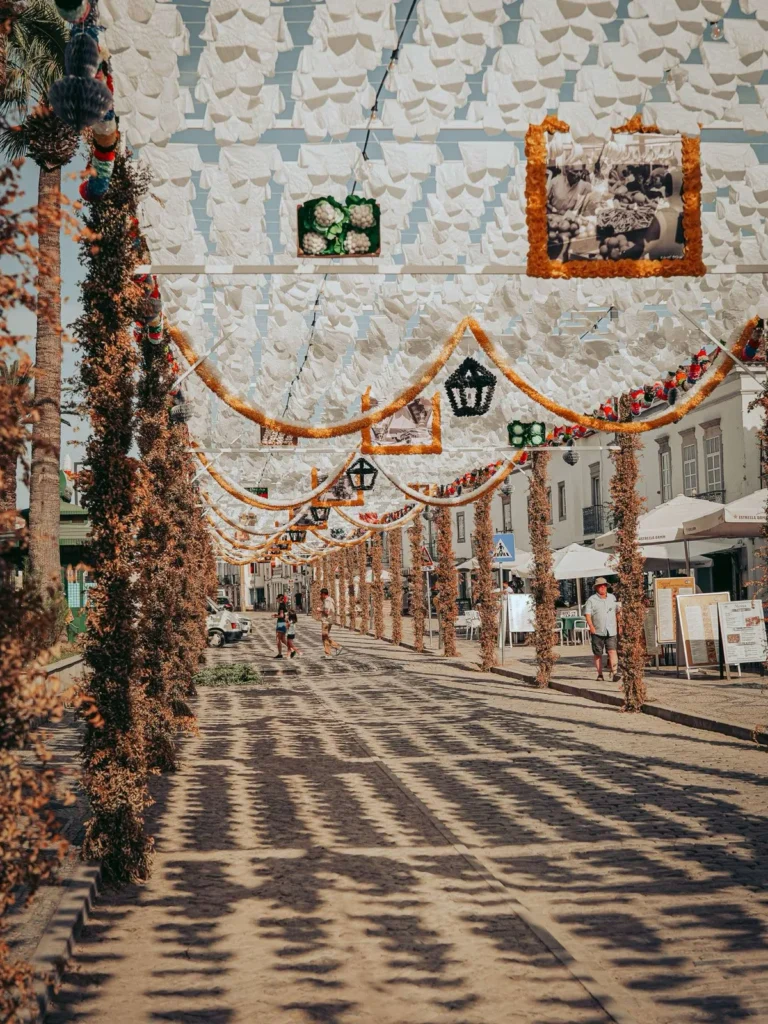
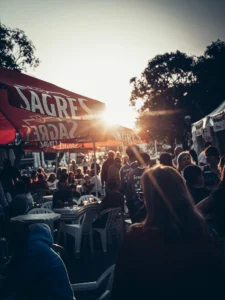
At the beginning of the evening, the city completely changes its costume. There are entire flower-filled alleys, garlands everywhere, paper decorations hanging from one balcony to another, sometimes a whole street covered in colorful pom-poms. Even the old music kiosk is dressed in flowers around the “Cidade de Tavira” coat of arms. And the part along the Rio Gilão transforms into a village of stalls, with a crazy number of tables set up where people usually stroll peacefully.
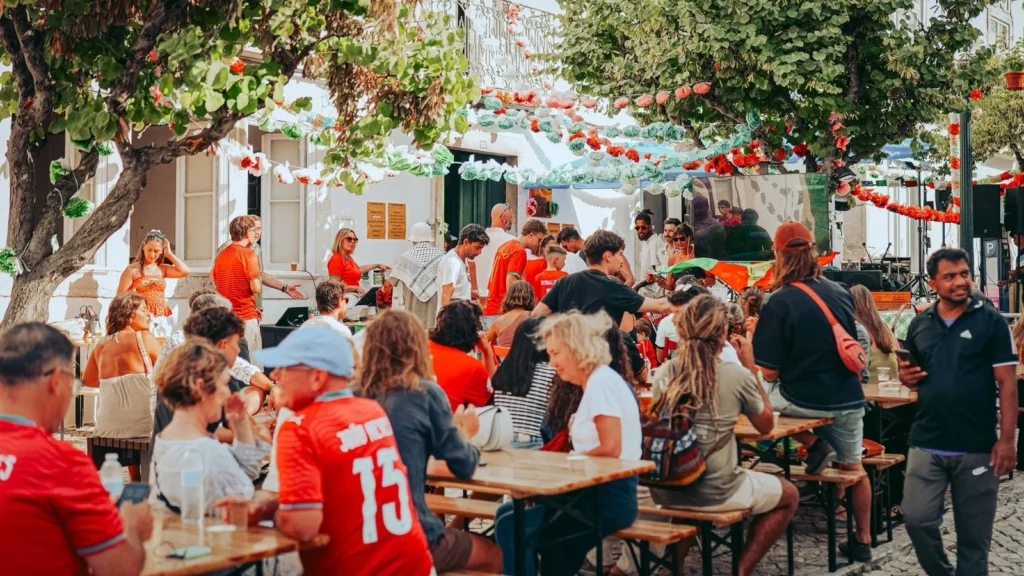
And hold on tight, because these stalls are run by the city’s associations. We encounter the skating club, the music band, the sailing club, a culture and sports center, the cycling club, and especially the Leões Futebol Clube de Tavira, the local Lions. There are really associations for everything and anything. Officially, these are stands for drinks and food. Unofficially, they are mostly small hidden bars with barbecues running continuously.
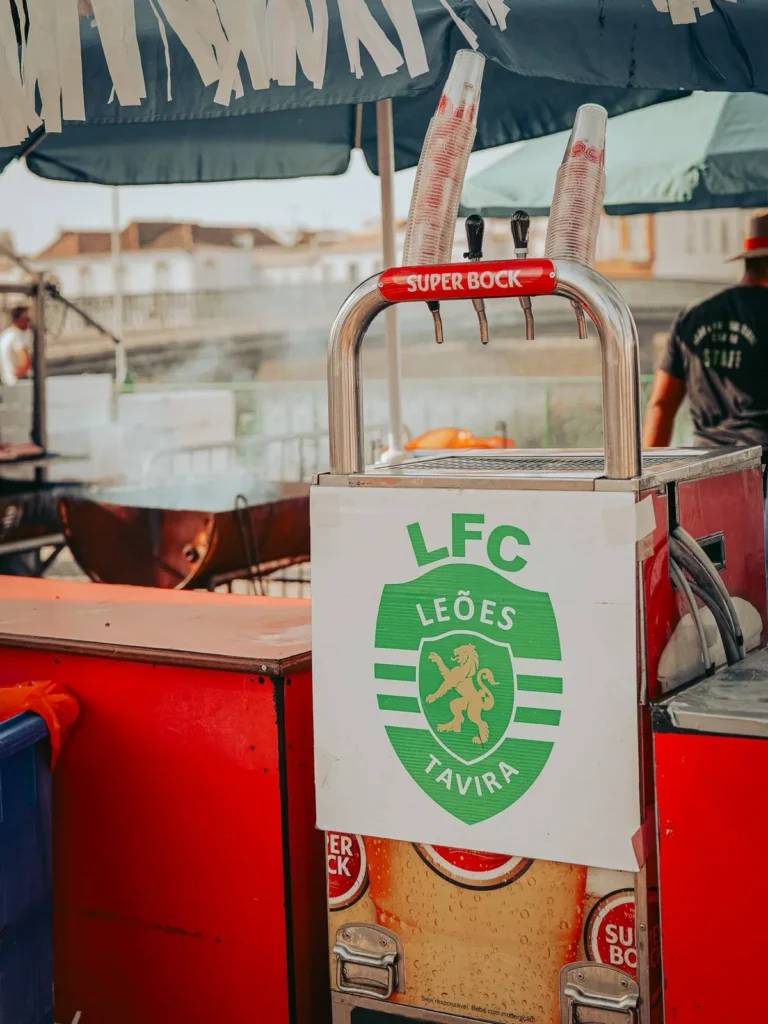
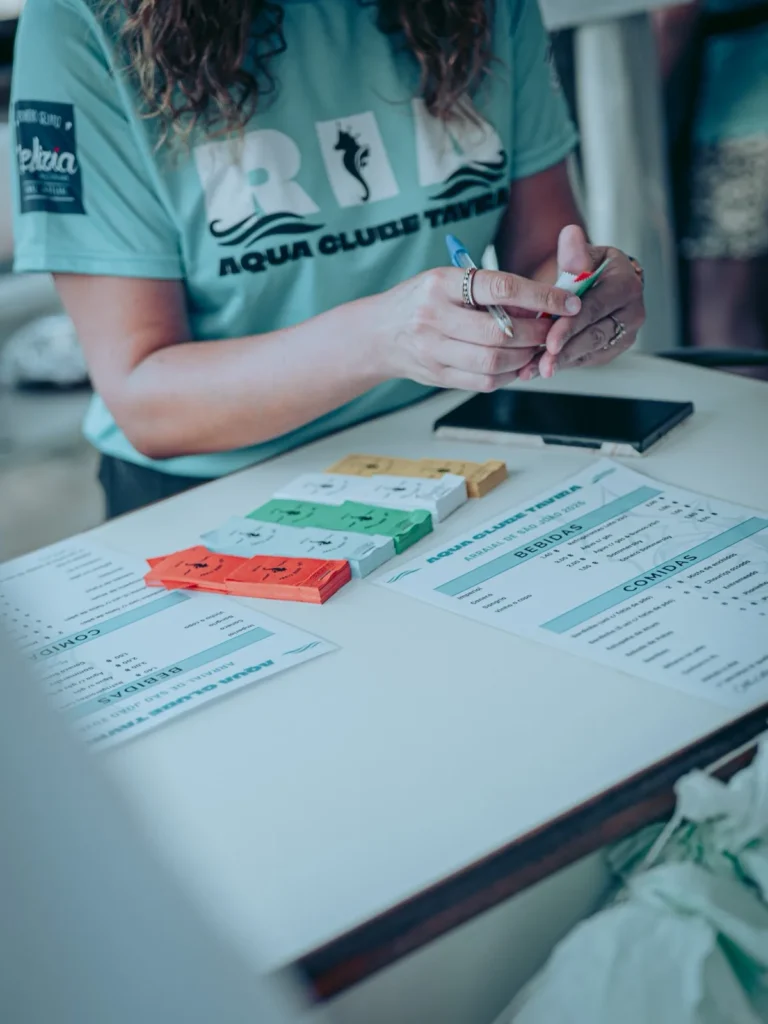
And there’s a real logic behind all this. A Portuguese association isn’t taxed like a regular commercial company: according to the texts, its occasional fundraising events can even be exempt from VAT, including on the buffet, the bar, or the rental of stalls. Concrete translation: everyone can buy their beer cheaper and resell it cheaper than in regular bars. The official drink of the evening is therefore the imperiale, the small beer served in a Superbock cup, around €1.20 at all the stalls (the associations agree on the price, it’s nice to see solidarity). The ritual never changes: you pay a volunteer in advance, you get a little colored ticket, and you wait for the barbecue chef to do their work before going to get your portion.
Plan your trip to Tavira
Provided by Holafly, our partner.
5% off with code LAPLANETEDECARO
Booked on Holafly — partner link.

We're Caroline and Xavier
We drive to a place, stay long enough to get it wrong a few times, then write the guide we wish we'd had: parking, timing, what's worth the detour.
Ce que vous souhaitez recevoir :
Sardines (sometimes free) and everything that goes on the grill
Around 7 PM, everything suddenly comes together: the first half of the match ends, the coals have finished glowing, and the first sardines of the season arrive on the grill at the same time as the first pieces of pork and sausage. At this hour, the sun is still high enough that you have to choose your table carefully to avoid burning up, and there are clearly more people than in previous years, surely thanks to the match and the TVs. The large wooden tables where we used to sit comfortably to eat? By 7 PM, it’s already cooked, everything is taken.
But let’s get back to our sardines, because they are the star of the plate. It’s no coincidence that we eat so many at São João: June marks the beginning of the sardine season, when they are fatty, abundant, and cheap. We grill them covered with coarse salt from the Algarve harvested in the salt flats of Tavira itself, just a few minutes from where we are. They are still small at the beginning of the season, but this year they are particularly good, and in a sandwich with a piece of bread, I can honestly say it’s a little delight.
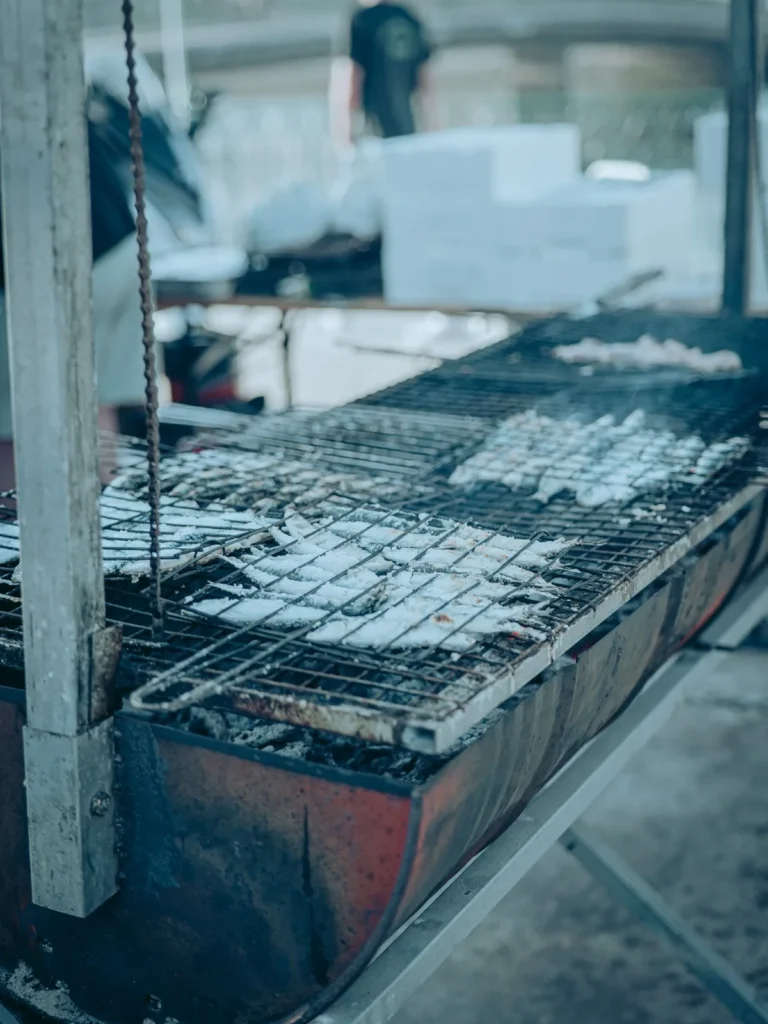
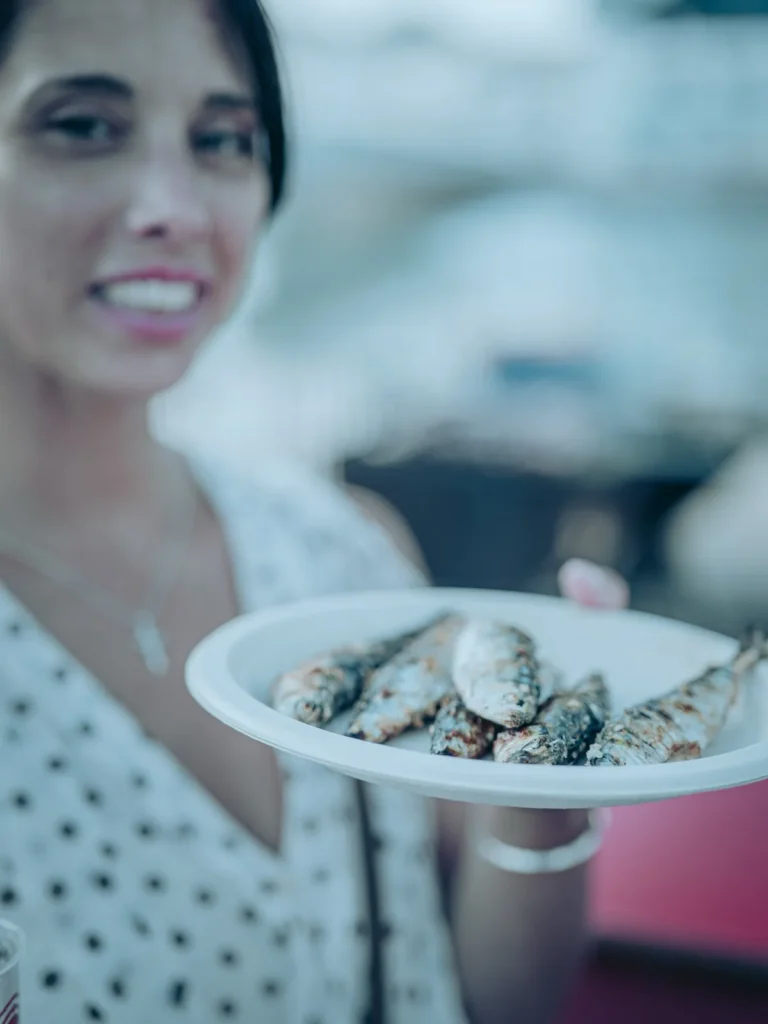
Now, the killer anecdote. The week before, at the hairdresser’s, someone had slipped that if you went to get sardines the day before São João, they were free. And on-site, it was confirmed: the plate of five sardines, normally priced at €8, was indeed offered to us; we only paid for the bread, which was €0.50. I don’t know if it’s reserved for locals or for those who can speak a bit of Portuguese, but it helps to understand why there are so many people. Free sardines also mean tables taken by storm, guarded like in a game of capture the flag. For every spot we asked for, the same answer: no, sorry, it’s full. We will know for next year that we need to arrive very, very early the day before if we want to sit down and eat as much as we want.
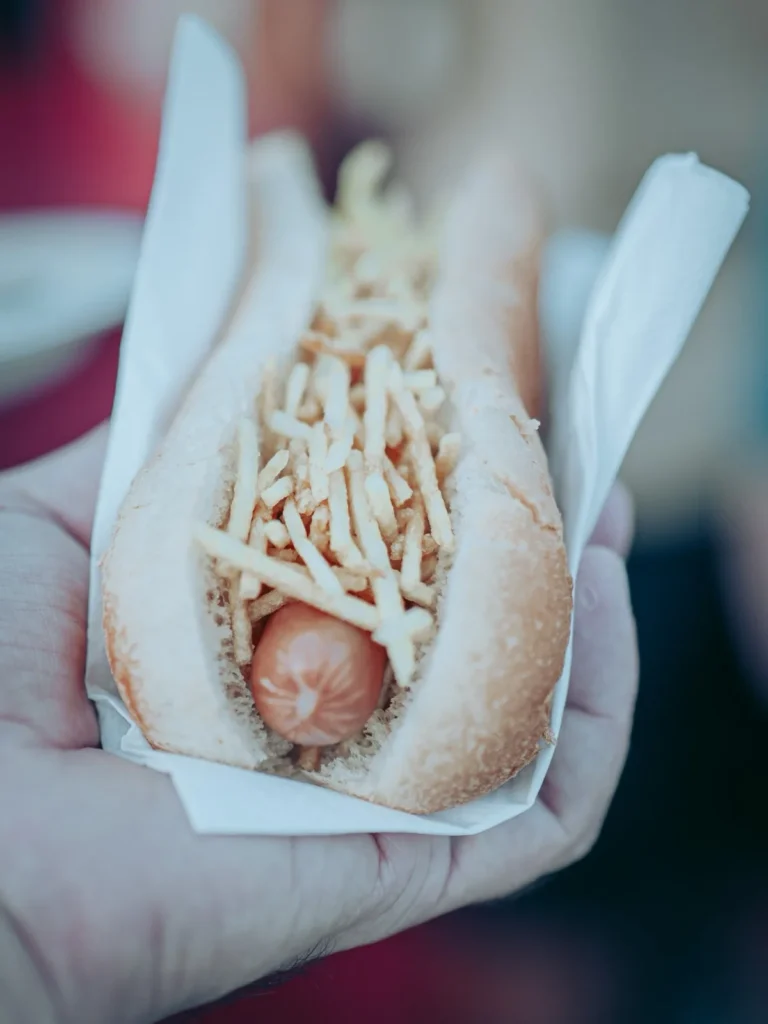
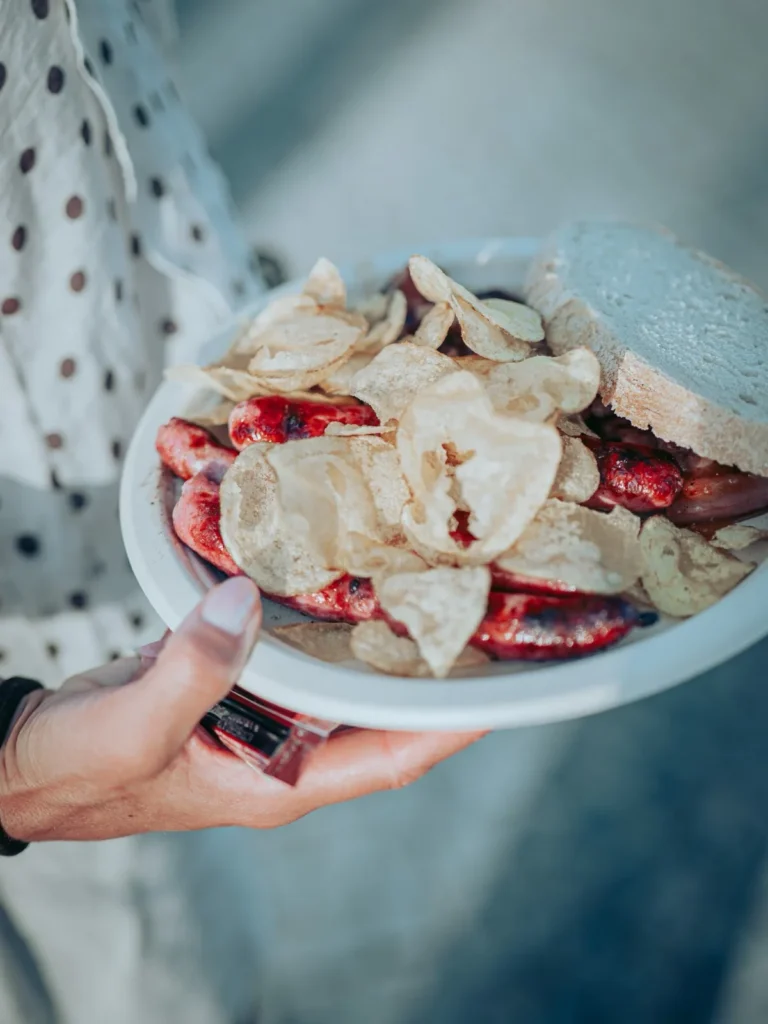
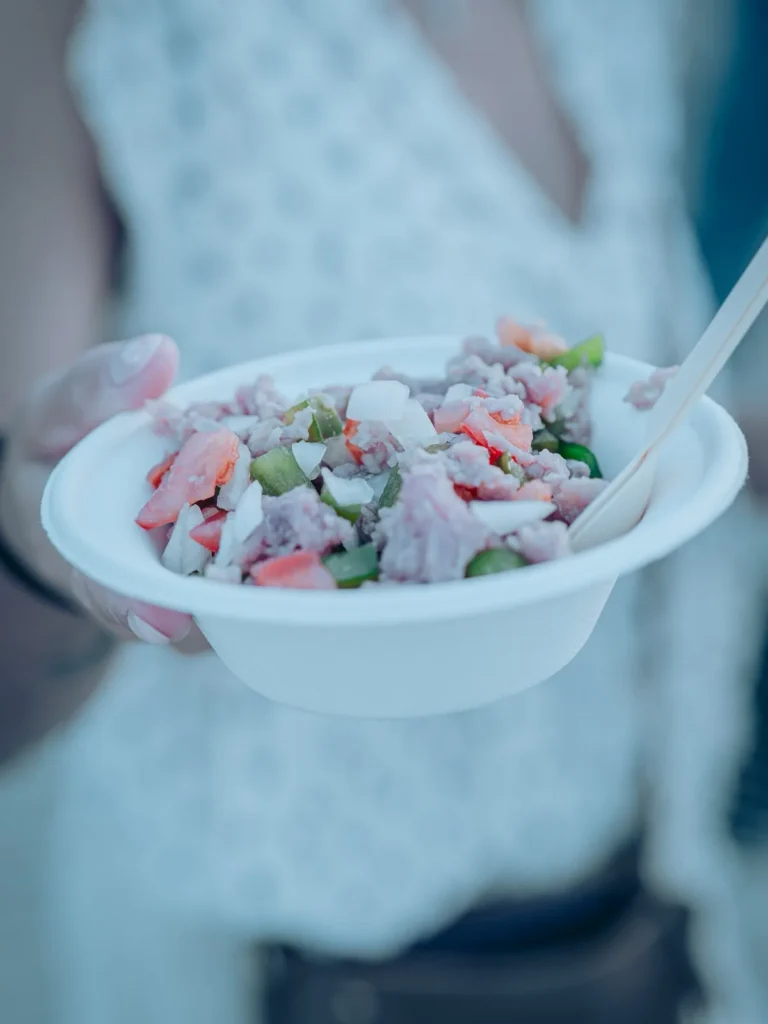
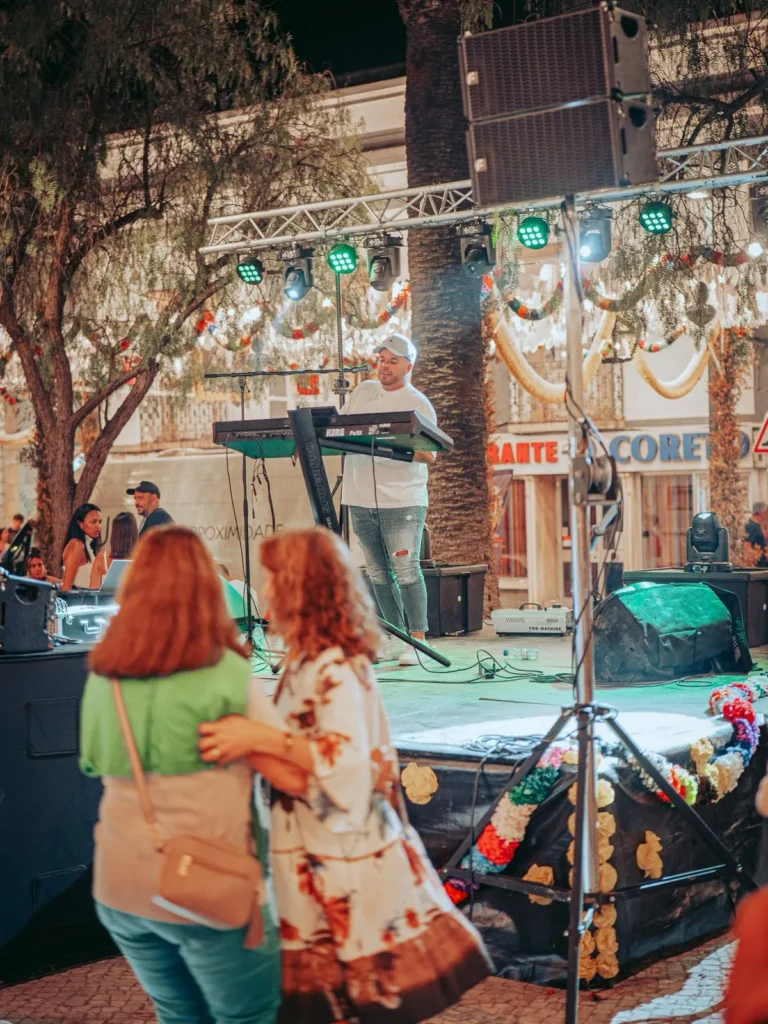
Beyond the sardines, the grill spits out everything: chouriço, bifanas, espetadas, grelhadas mistas, and even some local salads. I complemented my sardines with a cachorro, the Portuguese hot dog stuffed to the brim, while Caroline went for a grelhada mista, the mixed grilled meat plate, followed by a local salad: a salada de estupeta de atum, tuna preserved in brine and then shredded, mixed with tomato, pepper, and onion. This is a specialty from the eastern Algarve, coming from Vila Real de Santo António, just nearby, at the Spanish border. And to finish on a sweet note, we opted for a bolo de coco or a bolo de chocolate. The detail that doesn’t lie: while we were eating, a small stage set up further away was already welcoming a group, because summer in Tavira is full of local singers, and the very first song was one of those traditional national tunes, the kind you don’t understand but hum along anyway.
Staying Connected in Portugal: Visitor or Resident?
What internet connection to use during a stay in Portugal? This is a common question we ask ourselves before leaving. Caroline and I, Xavier, have explored the different options available...
DiscoverThe craft stands and the atmosphere of a summer in Tavira
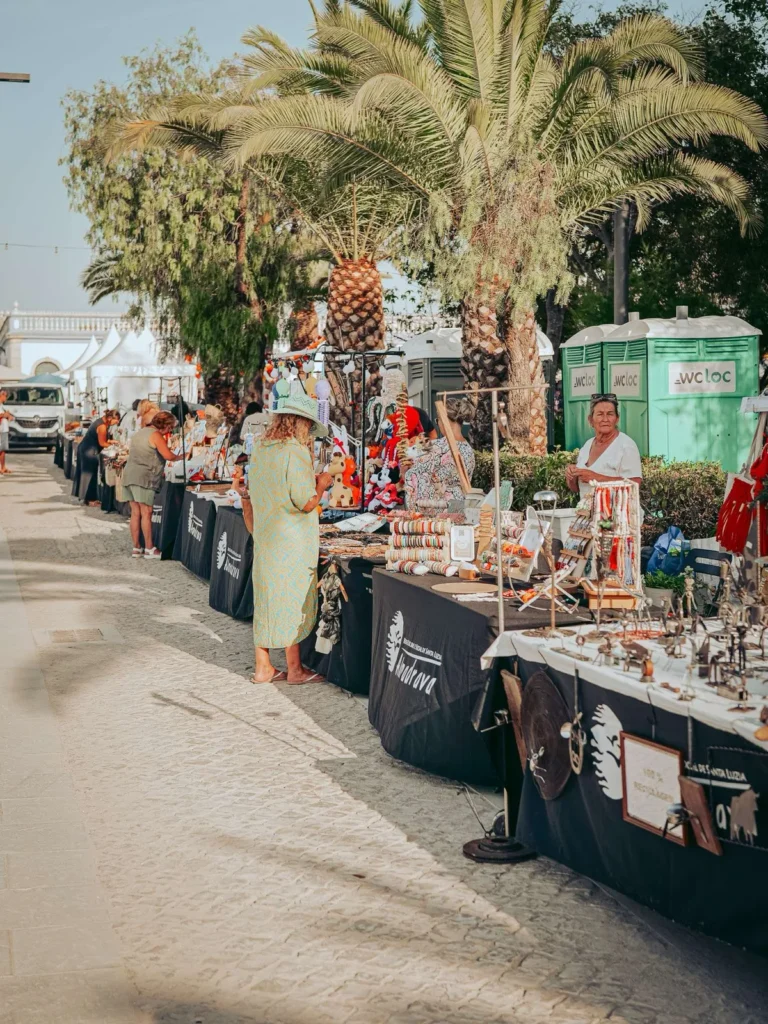
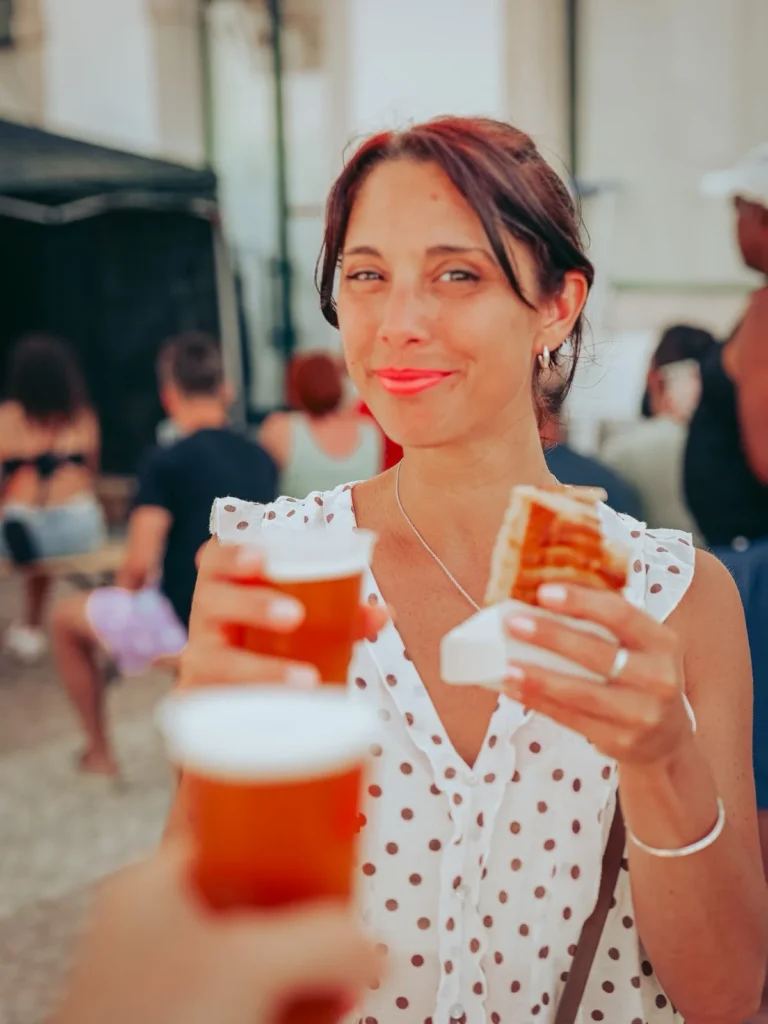
Because a São João is not just about eating and drinking. Between two plates, we also linger in front of the craft stands, set up under the palm trees. You can find wicker baskets, necklaces, bracelets, postcards, little teddy bears, sometimes some sweet snacks, and even 100% recycled creations. It’s exactly the kind of little summer stands you find everywhere, with plenty of things you’d almost want to take a photo of… except we refrain, out of respect for the artists.
And what’s beautiful is that all of this coexists harmoniously: families, teenagers, the elderly, passing tourists, and us in the middle, a pint in hand. We wander from one stand to another, tasting, looking, listening to the music in the distance, and letting ourselves be carried away by the sweetness of a summer evening where no one is in a hurry. That’s also why we come back.
A São João in a World Cup year
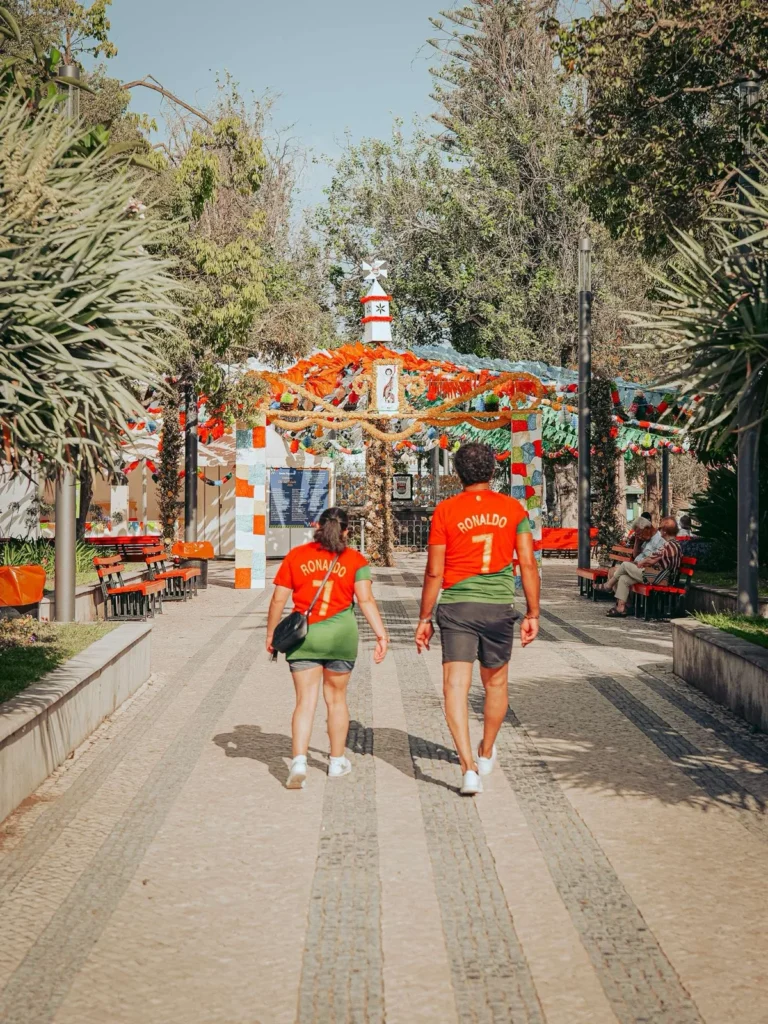
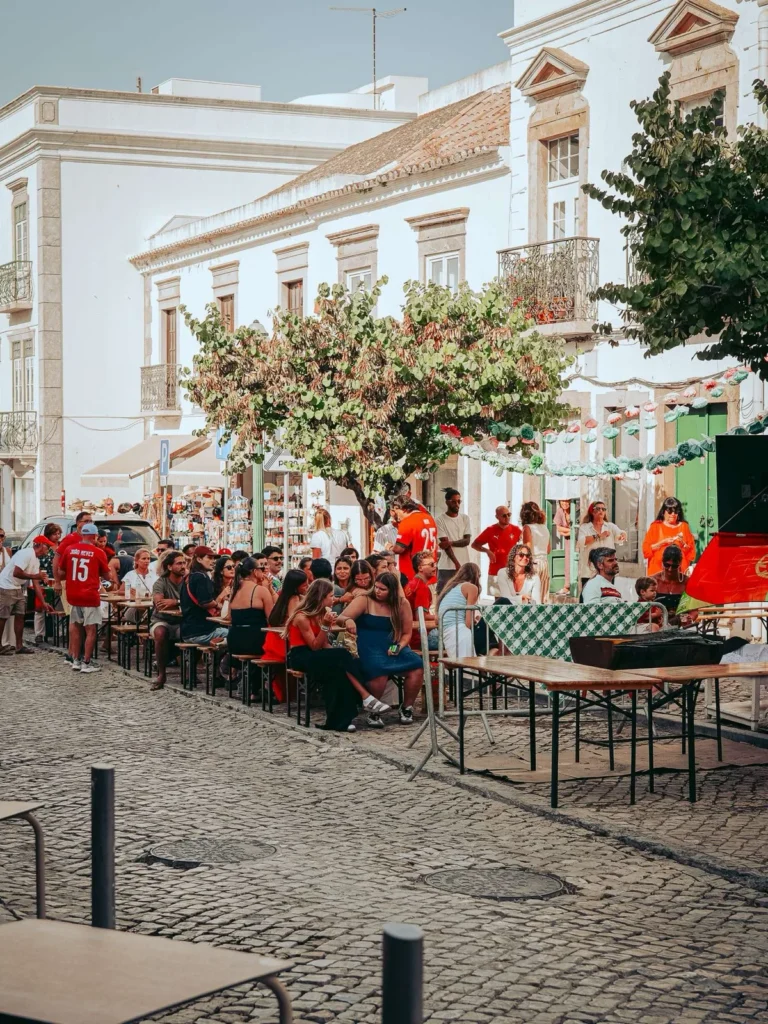
What made this evening truly special was that it was a World Cup year, and Portugal was playing right during the festivities. So, as soon as we heard the first anthems rise, we understood: the associations had brought out the TVs, and the São João was going to double as a football night. The red jerseys were out, the flags too, and everywhere you could see the names of Ronaldo and João Neves. The latter, a little local nod: João Neves, born in Tavira, spent his entire childhood there before heading to Paris Saint-Germain. Let’s just say that in the area, it’s a real pride, and his jersey was everywhere.
Football didn’t just stay as background noise; it became a game within the game. In some stands, supporters were having fun shouting as if there was a goal, just to tease the neighbors. The joke lasted only five minutes before becoming almost prophetic: Cristiano Ronaldo actually opened the scoring just after, against Uzbekistan, becoming the first player to score in six different World Cups. Nuno Mendes, the PSG full-back, doubled the lead a quarter of an hour later. There was a slight panic when Uzbekistan seemed to come back to 2-1… before the goal was disallowed and everyone applauded. On paper, Portugal was 5th in the world and Uzbekistan 50th, which made this scare all the more delicious. Verdict on my initial question: it was indeed a joyful evening.
The night, the songs, and the corridinho in the garden of Tavira
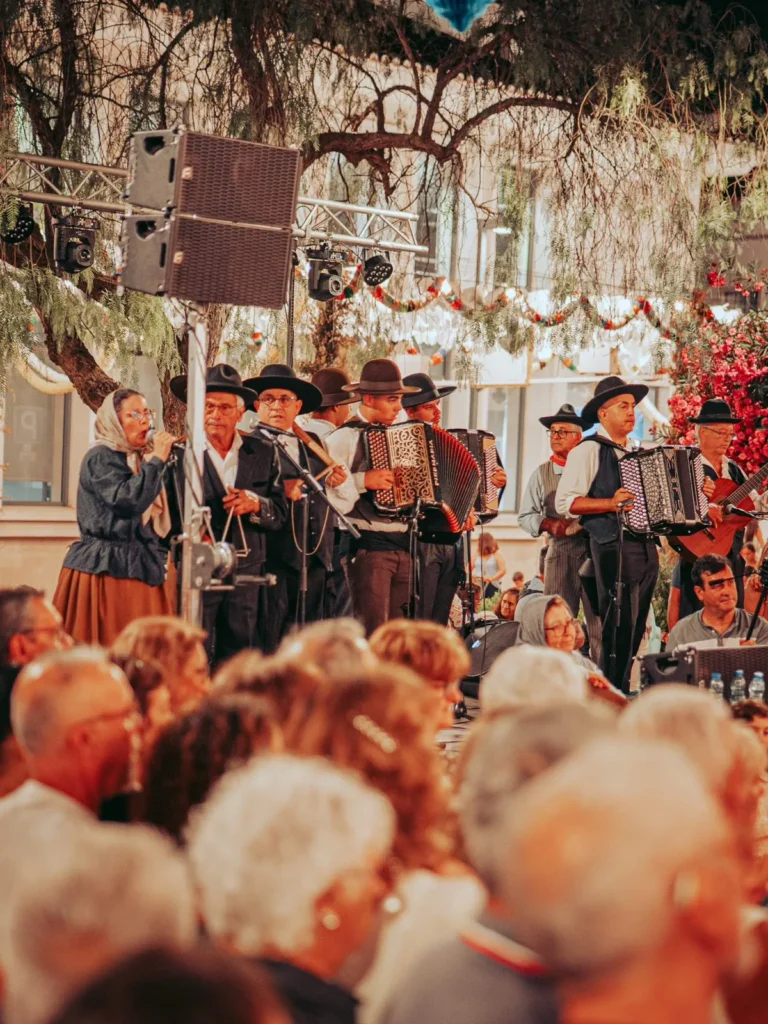
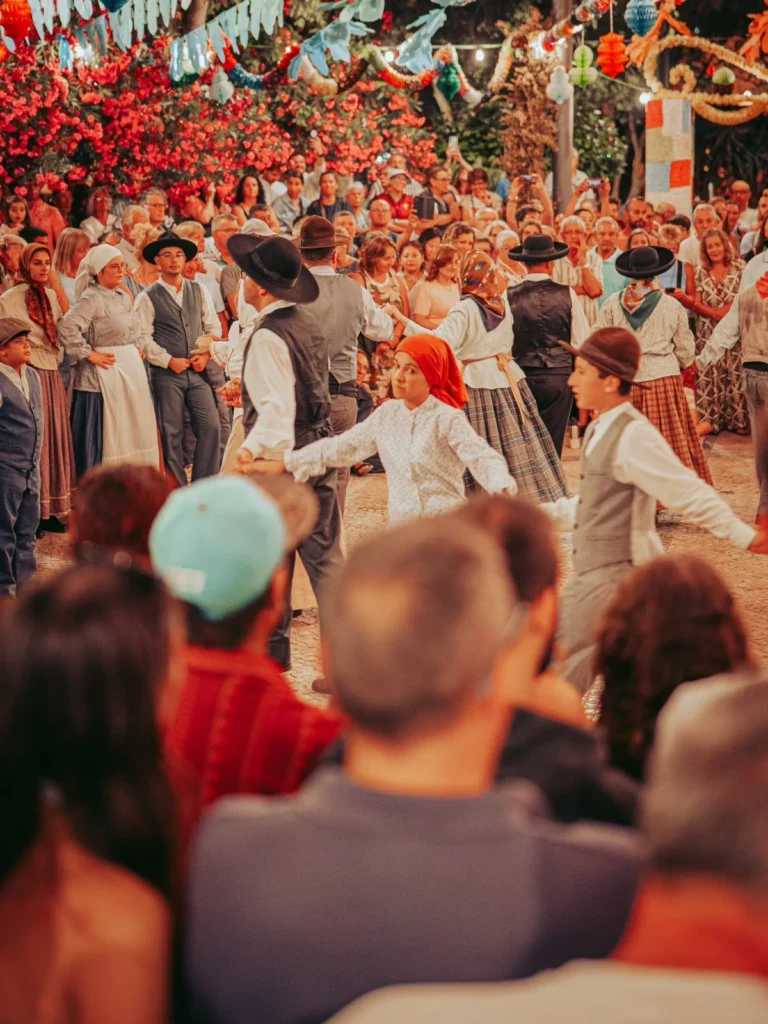
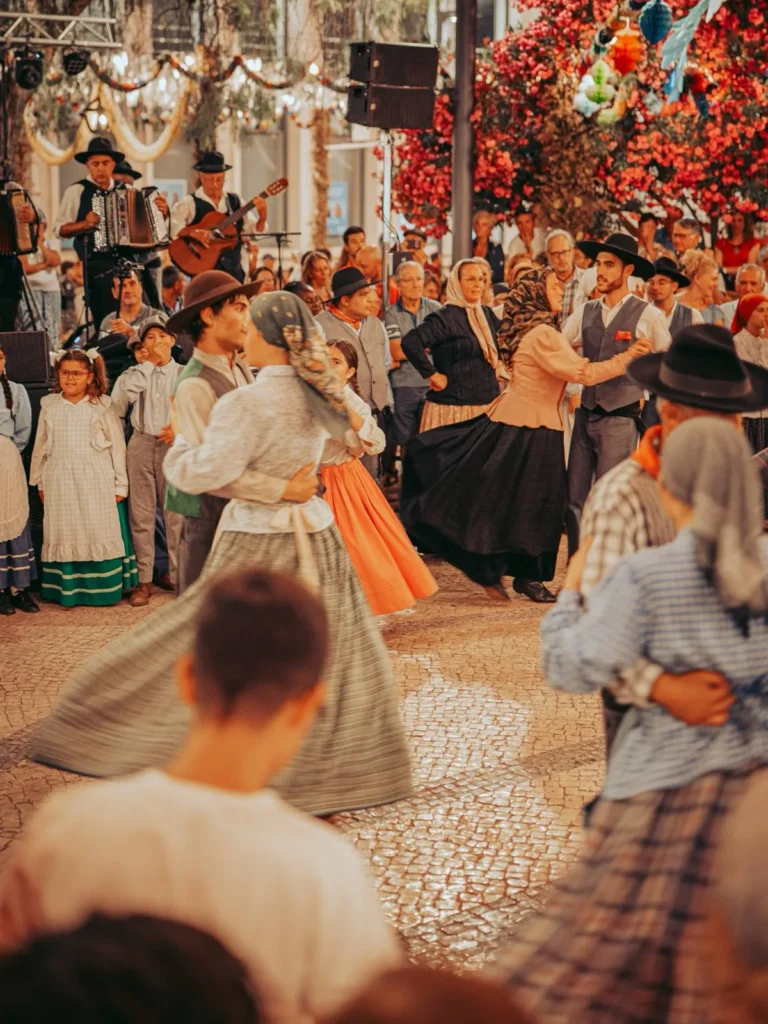
Once our bellies were full and night had fallen, we migrated to the garden of Tavira, where we stumbled upon traditional songs and dances. You know, those dances where couples spin super fast in period costumes: it has a name, it’s the corridinho, the emblematic dance of the Algarve. The dancers are in traditional southern outfits, and there are even children dressed the same dancing with adults of all generations. One might think that folklore is a bit outdated, gently dusty… well, not at all, you can feel a country that truly loves its tradition and passes it on without any complexes.
And the best part is the end. During the last dance, even the spectators are invited to join the circle: everyone spins in a circle while others watch, and it turns into a big, cheerful farandole. That’s when you realize, once again, that you feel safe, with all generations mixed together, never feeling oppressed even when drinking. The kind of atmosphere you wish you could take with you everywhere.
Midnight, the fireworks from the bridge

And then time passes, and it’s time to head to the bridge for the highlight of the evening. Not the old Roman bridge, the other one, the one from where we watch, because the fireworks are launched from yet another bridge, the one by the market. At midnight sharp, above the river bursts a whole wall of sparks, and the crowd gathered on the quays lifts their heads in unison. Naturally, we could have stood there for hours.
Except that we had work the next day (real life always takes over, even on a São João night). So we didn’t linger long: just enough time to head back to the stage, dance a song or two together, and then make our way home. A São João wrapped up just right, without excess but without missing anything.
To extend the Tavira experience, we’ve already told you about the caracois festival and, further north, the São João in its grand format in Porto:
Tavira Caracois Festival: back again this year with the village scouts
Saturday, May 16, 2026, past 7 PM. Caroline is wearing sunglasses that are no longer much use, while I have an appetite that has been serving her since the morning....
Read more
City Trip to Porto in a Camper Van
In this article, we will guide you through this magnificent city for a day. You'll discover its architectural treasures, picturesque streets, and lively atmosphere. Get ready to fall in love...
Read moreSão João in Portugal: your questions (and our on-the-ground answers)
What is São João in Portugal?
São João is the feast of Saint John, celebrated on the night of June 23rd to 24th. It is part of the Santos Populares, the popular festivities of June, and falls on an old summer solstice celebration Christianized in honor of Saint John the Baptist. The program everywhere includes: grilled sardines, music, dances, neighborhood stalls, and fireworks. Its capital is Porto, but it is celebrated throughout the country, all the way down to the Algarve.
What is the difference between Santo António, São João, and São Pedro?
These are the three Santos Populares of June. Santo António is celebrated on June 13, especially in Lisbon. São João is on June 24, with Porto and Braga in the spotlight. São Pedro closes the month on June 29, near Setúbal, Sintra, or Póvoa de Varzim. The same spirit everywhere: street parties, barbecues, basil, and popular good cheer.
Why do we eat sardines at São João?
Because we are in the middle of sardine season: in June, they are fatty, abundant, and cheap, making them perfect for feeding an entire street party. They are grilled over coals, covered in coarse salt, and are often eaten on a slice of bread. In the Algarve, the salt even comes from the nearby salt pans, like those in Tavira.
Where to celebrate São João in Portugal?
Porto remains the reference, with its plastic hammers, its luminous balloons, and its fire jumps. Braga and all of Minho follow closely. But each city has its version: we experience it in Tavira, in the east of the Algarve, in a more intimate atmosphere, without hammers or basil, but with luminous balloons and a fireworks display shot over the river.
What are the plastic hammers of São João?
It’s the iconic tradition of Porto: we gently tap each other on the head with small squeaky plastic hammers. The object is said to have appeared in the early 1960s; before that, people would rather tickle each other with garlic flowers or leeks. Good news for sensitive heads: in the Algarve, we don’t have this habit at all.
Can you experience São João in a camper van?
Yes, and it's even a perfect step at the end of June. The best is to arrive early in the day, because the spots in the city and the large tables at the stands go very quickly, especially during match years. In Tavira, you can park around the Rio Gilão or towards the Quatro Águas, and walk to the party to enjoy the beers without taking the wheel again.
PS: the true souvenir we bring back from a São João is neither a photo nor a jersey, it’s the smell. We come back smelling like sardines, our hair and clothes infused with smoke, and the next day at work we still carry that little barbecue scent. There you go, you’ve been warned: at São João, you never come back quite the same… nor quite fresh.
Portugal, we live here
Two years of full-time van life, and the Algarve as our base ever since. We still hit the road, by van or otherwise, and we write up what we find along the way. An email when we have something to say, no more.
Ce que vous souhaitez recevoir :