


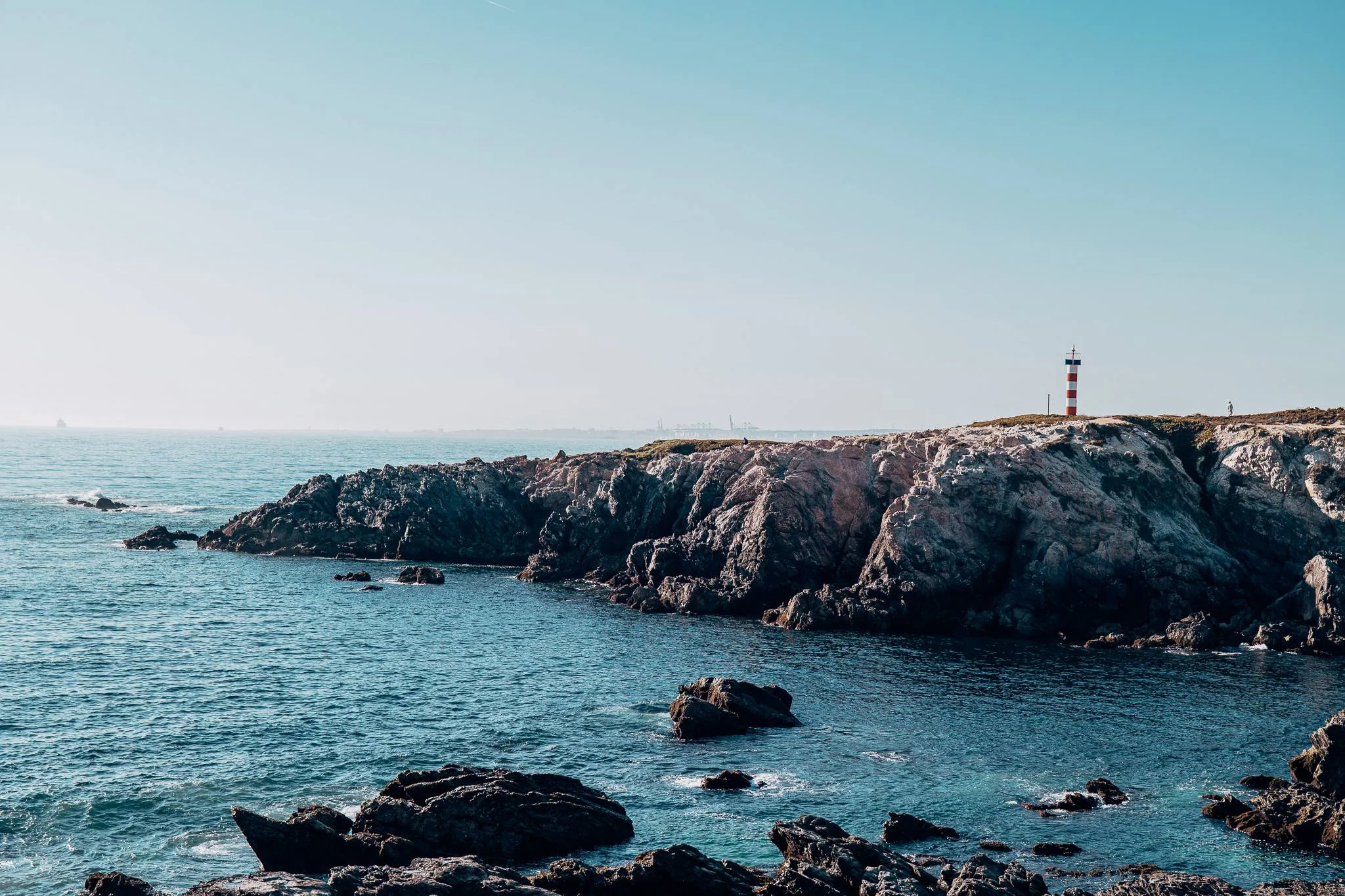
There are places you think you know because you’ve passed through them ten times… and then one day you really stop, and you realize you’ve never seen anything. Porto Covo, for us, is exactly that. For years, this small village on the Alentejo coast, located in the municipality of Sines between Sines to the north and Vila Nova de Milfontes to the south, right in the heart of the Costa Vicentina about 170 km south of Lisbon, we summed it up in one thing: its beach. The spot where we would stop while traveling down Portugal, period. We loved it so much from afar that at first, I swear, we even called it “Porto Corvo,” with an R in the middle (who knows why, the brain does what it wants). And then this time, we let go of the camper van and entered the real village… there, surprise.
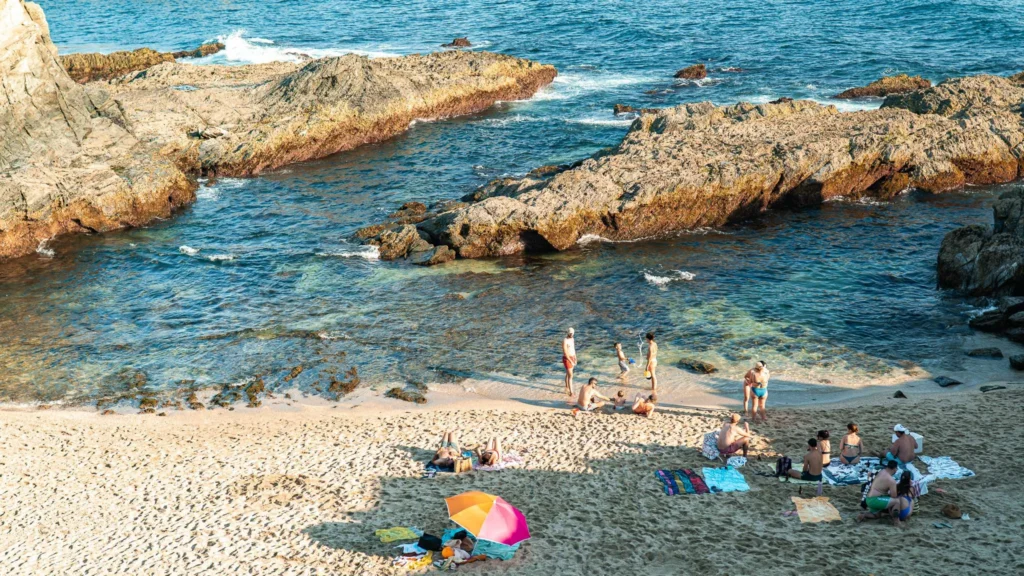
Porto Covo, the village we reduced to its beach
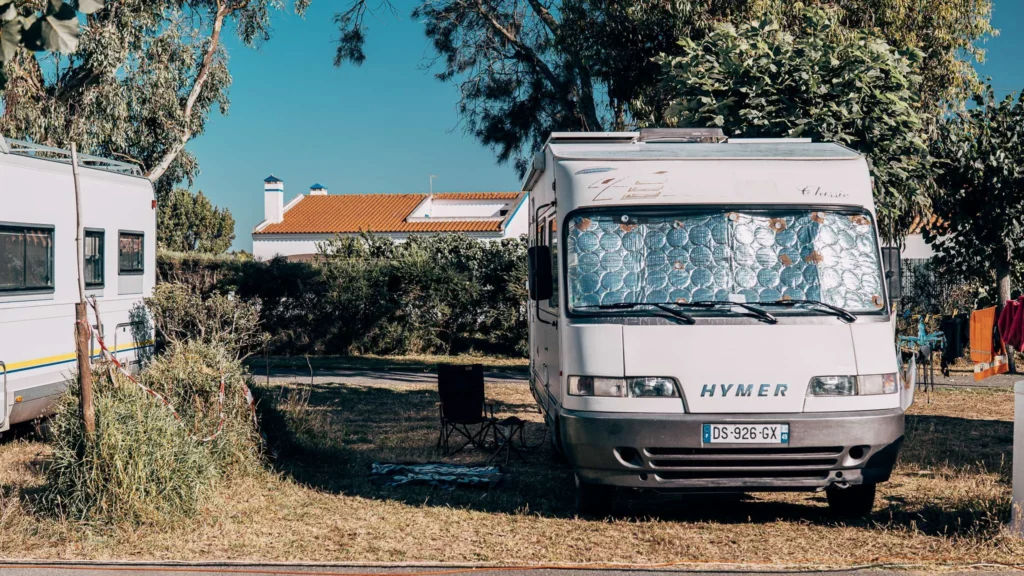
This time, therefore, we weren’t just coming to dip our feet. We settled at the campsite, and the first little shock: it was packed. Full to the brim. Which, personally, immediately intrigued me because Porto Covo gives the image of a quiet seaside resort, the kind of place where nothing happens… and there, a crowded campsite, at 28 euros a night with electricity (and the cat), which for Portugal is starting to be a real price. There seems to be a disconnect between the ultra-peaceful appearance of the area and the actual influx. Caroline and I looked at each other, saying: what do they all know that we don’t?
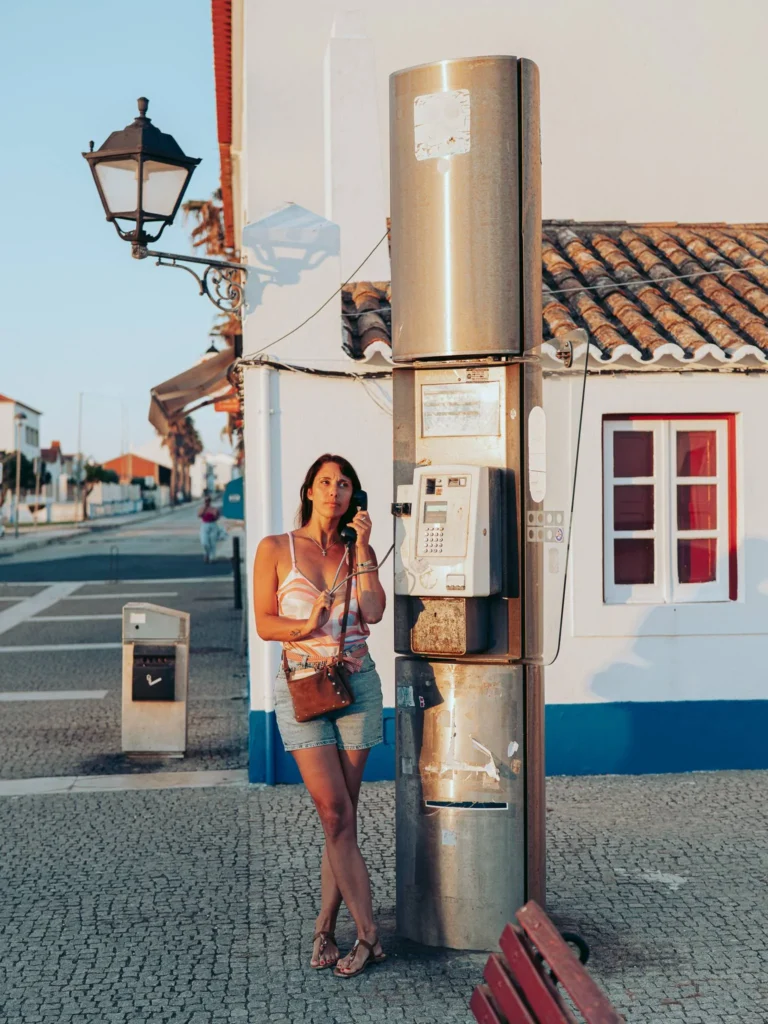
In any case, the sea is a ten-minute walk away, so we parked the van and went to explore. And that’s when we discover that Porto Covo has two faces. When you arrive from the outside, you first come across quite a few recent constructions, new houses with flat roofs, almost modern, nothing very typical. You think “okay, fine”… and then you continue towards the ocean, and the scenery changes completely: the houses seem to rejuvenate as they age, if I may say so, whitewashed facades, orange tiles, and especially those famous blue stripes, low bands at ground level about 30-40 cm high, around the windows, on the outlines. All punctuated with striking red touches: red doors, red frames, red benches. The white-blue-orange trio, plus the red, is Alentejo in all its postcard glory.
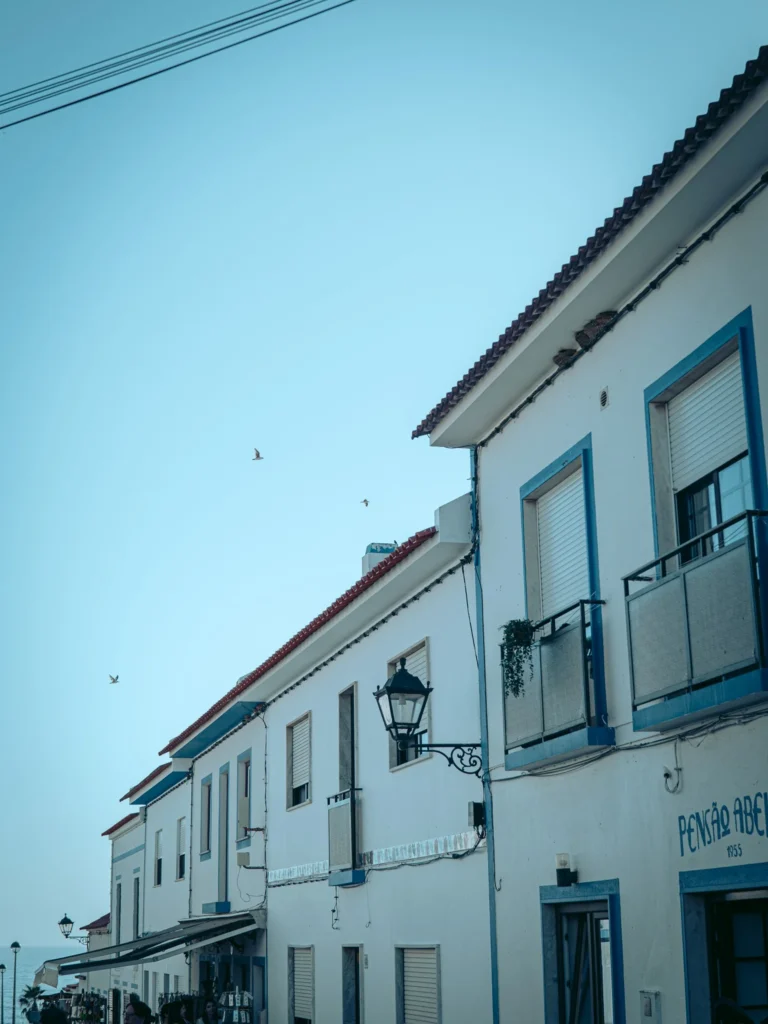
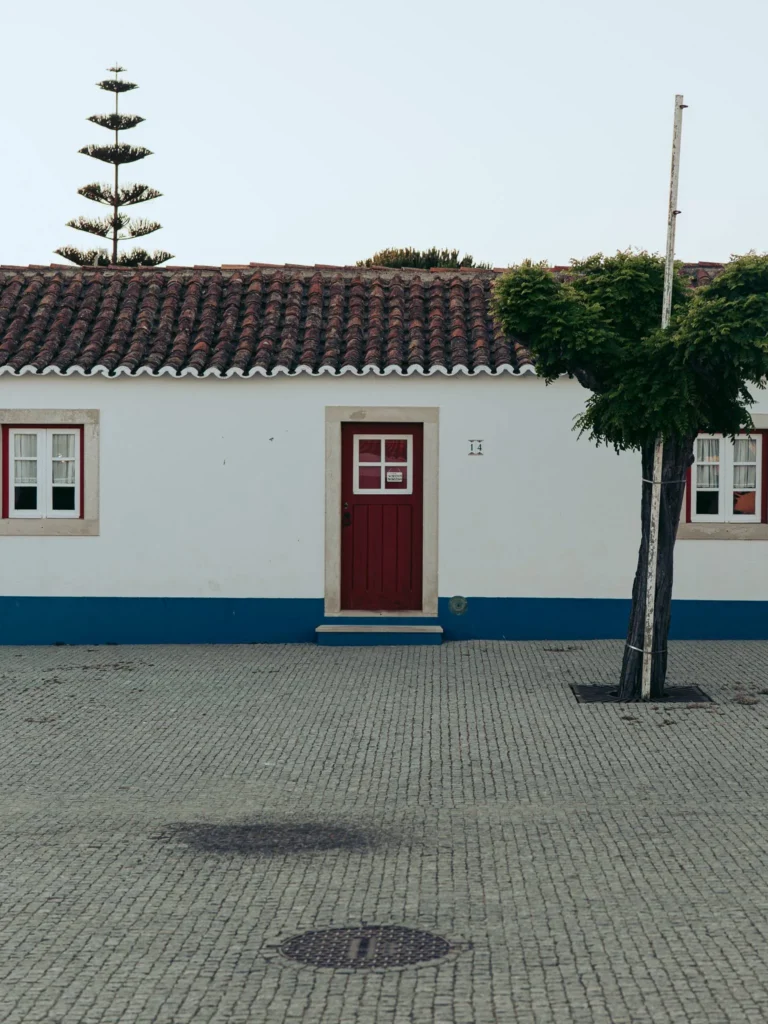
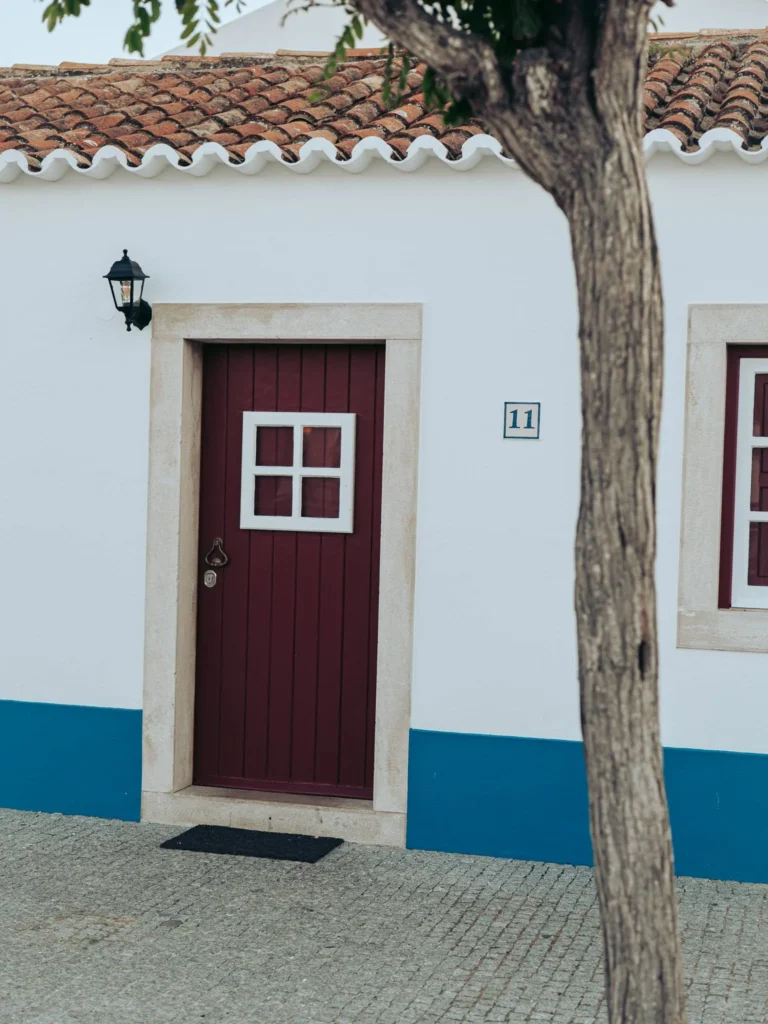
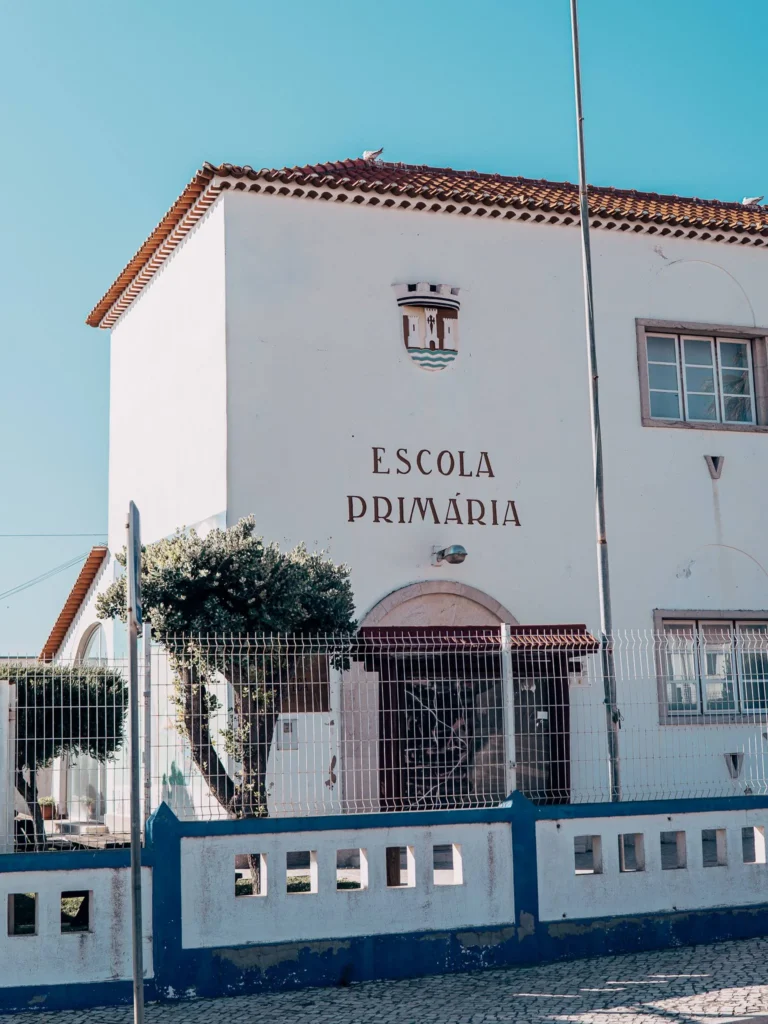
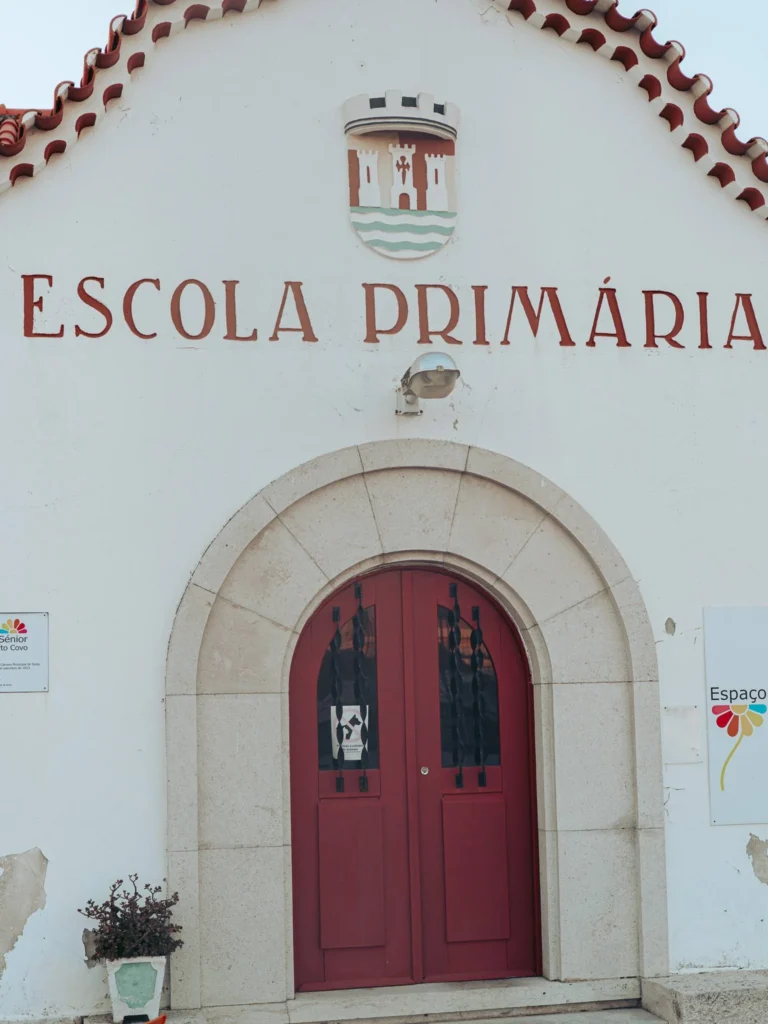
And there’s even a primary school right in the middle, which changes everything: you understand that there is real local life behind the holiday decor, kids, year-round residents, not just a showcase village that shuts down in September.
Plan your trip: Portugal
Compare rental companies and book at the best price.
Booked on Trip.com — partner link.
Provided by Holafly, our partner.
5% off with code LAPLANETEDECARO
Booked on Holafly — partner link.
The white and blue heart of Porto Covo
Descending another fifty meters towards the sea, you come out onto a square that suddenly shifts the atmosphere: the Jardim do Largo Marquês de Pombal. A fountain in the center, a patch of grass, low houses all around, background music coming from the little bistros, and an almost unreal calm. Nothing exceeds in height, everything remains at a human scale, and frankly, we just wanted to sit down and slow down. Here, the color code is pushed to the max: red doors, blue band on the ground, red benches, it’s coherent, it’s photogenic, it’s calming by design.
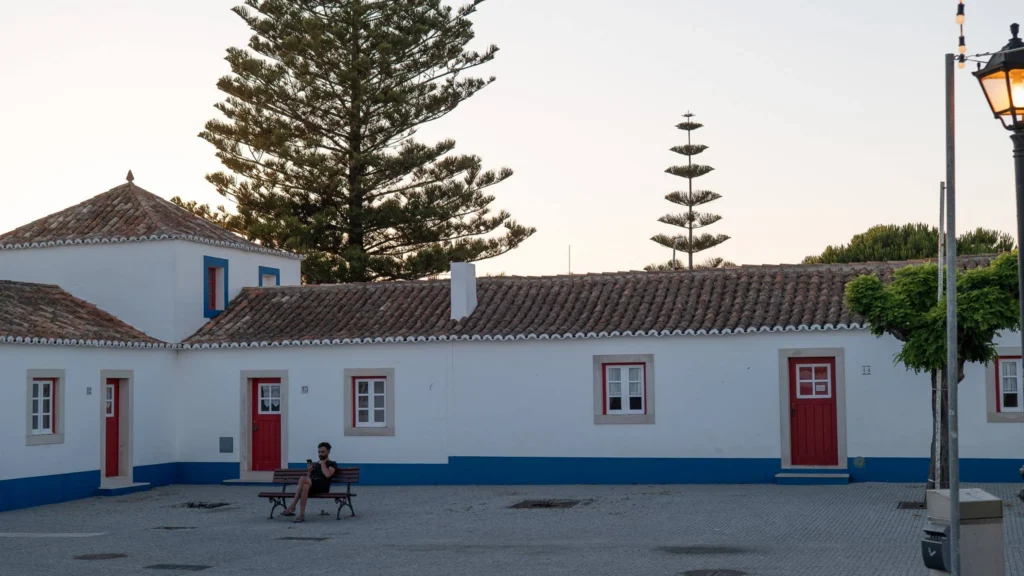
What we didn’t know while sipping in the atmosphere is that this square has a history that explains its shape. If Porto Covo is so square, so “well-organized,” with its parallel streets and central square, it’s not by chance: the heart of the village was rebuilt at the end of the 18th century in the spirit of Pombaline urbanism, this checkerboard plan born in Lisbon after the great earthquake of 1755. The Largo itself dates from the years 1789-1794, and it was a wealthy merchant, Jacinto Fernandes Bandeira (future baron of Porto Covo in 1805), who pushed for the development of the town. In other words, we are in one of the few places where the “Lisbon post-earthquake” style has spread far from the capital. Not bad for a fishing village whose name supposedly comes from “covos,” the traps used to catch lobsters and crabs.
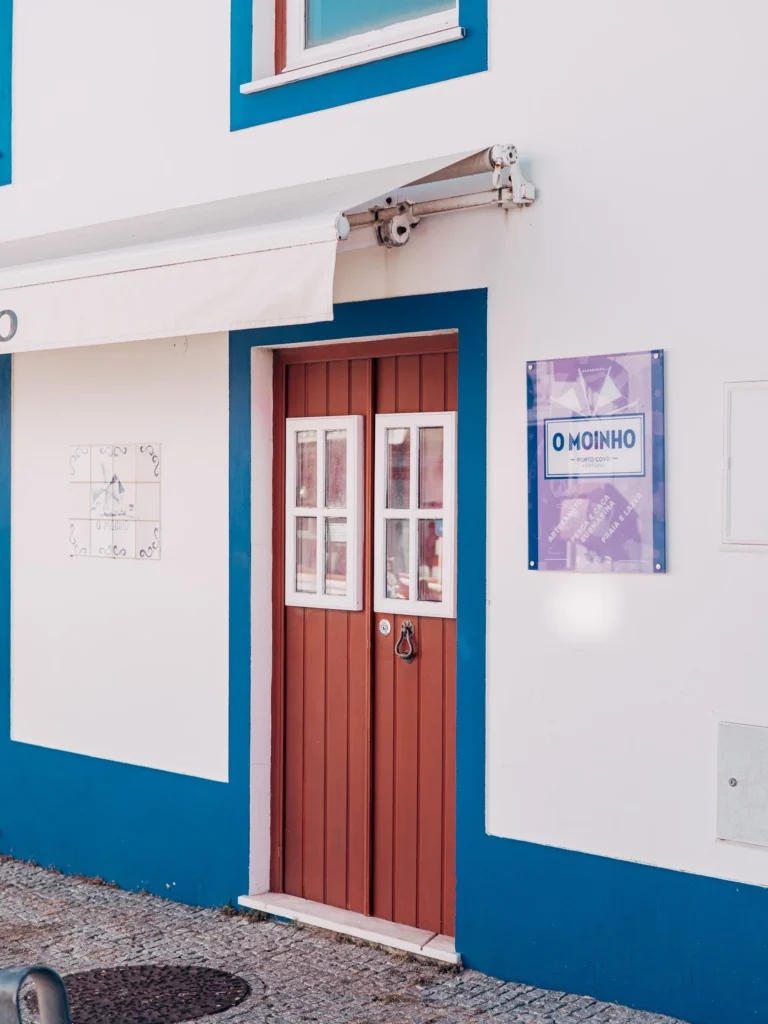
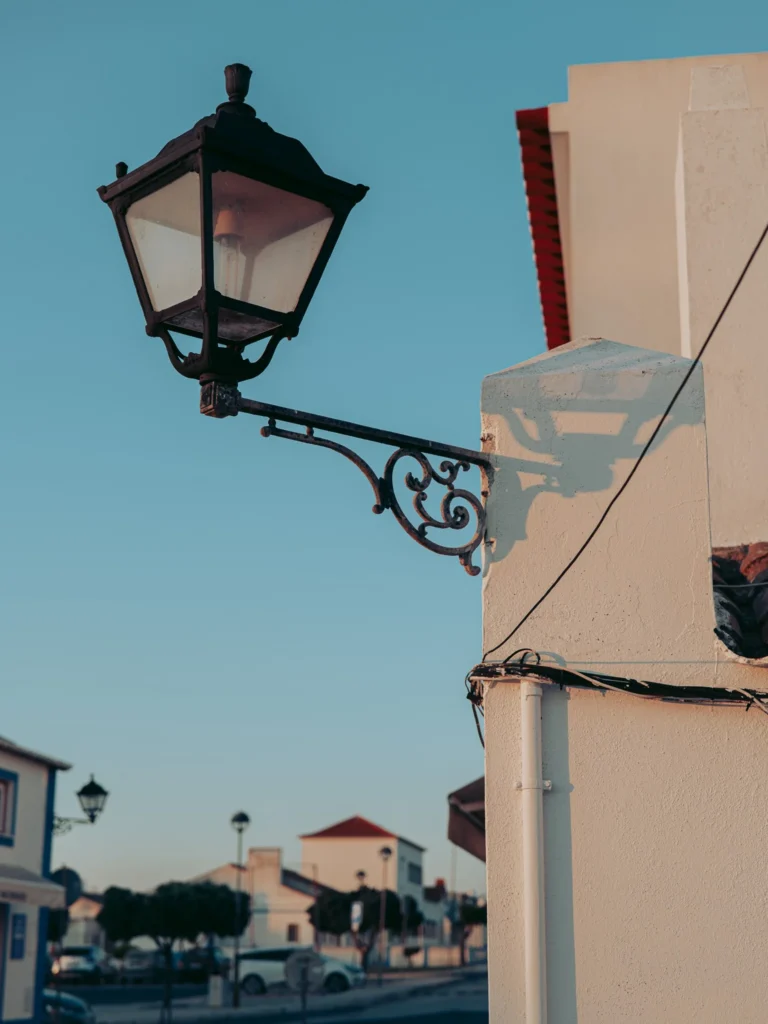
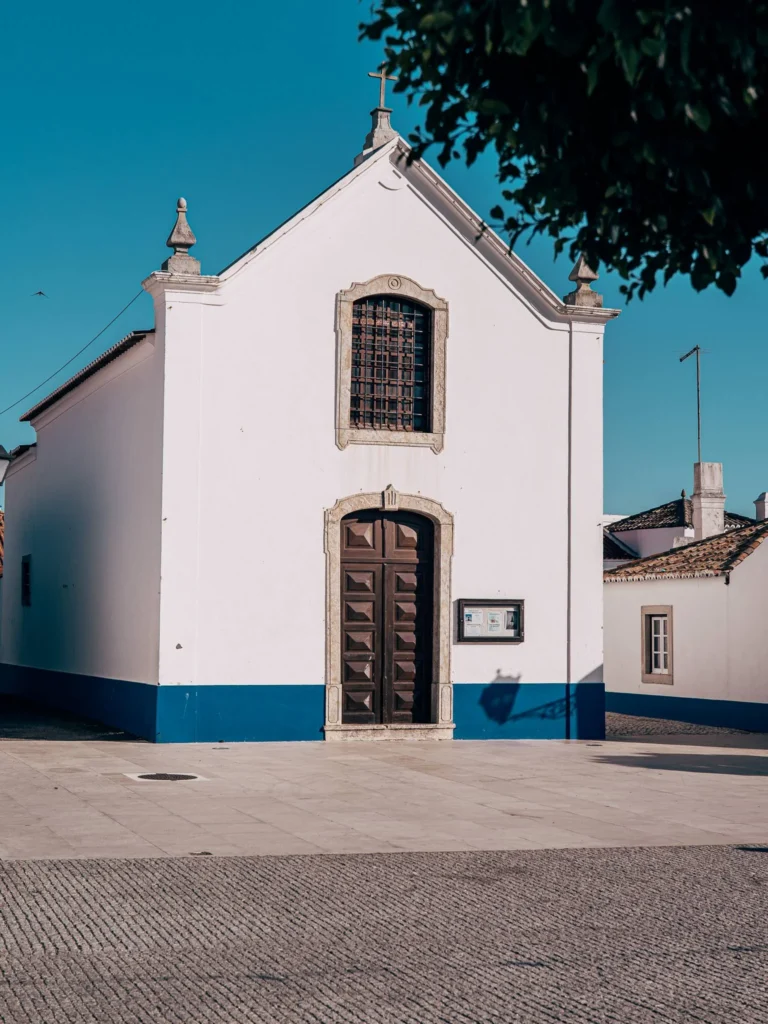
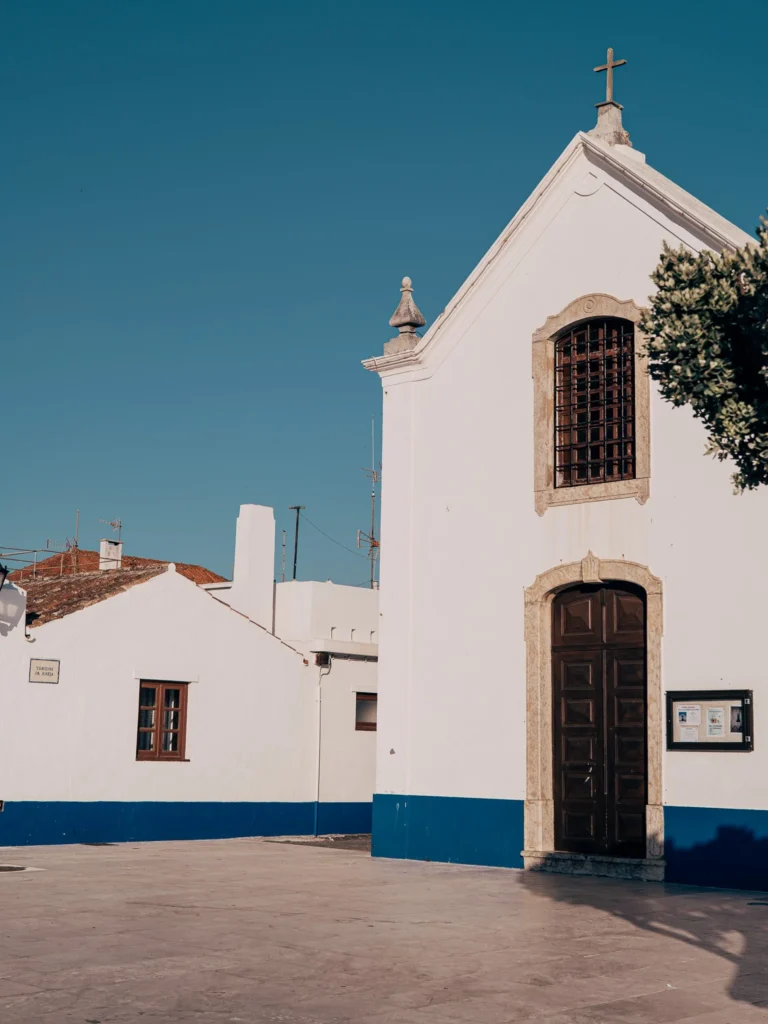
And at the corner of a narrow street, the little white church with a blue base, it’s the Igreja de Nossa Senhora da Soledade, 18th century, dedicated to the patron saint of fishermen (logical, in a village that has always lived off the sea). Nothing grandiose, just this simple, clean elegance that sums up the place well.
The oceanfront: wild coves and a large beach
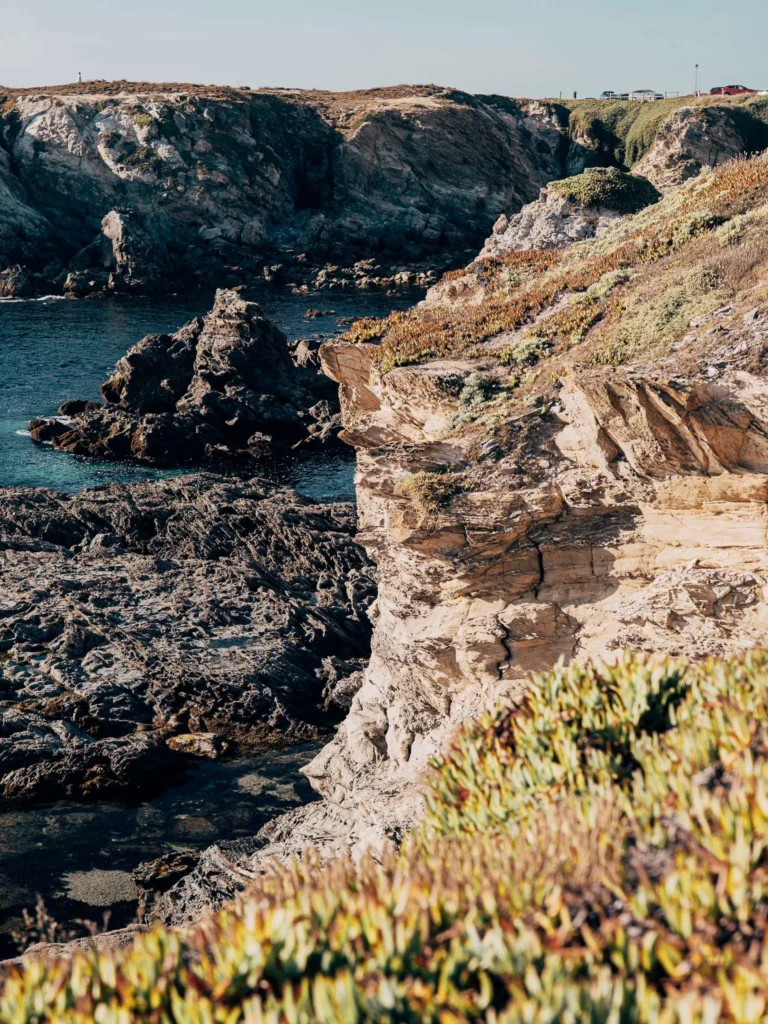
When you finally arrive at the waterfront (the oceanfront, rather, because here we are facing the Atlantic unfiltered), you are not at all in the cliché of the endless beach. It’s a mix of rocks and small beaches, rocky outcrops plunging into the water, paths to walk and breathe. The first contact with the sea is mostly about cut-out coves, wedged between cliffs, almost secret sandy spots that you have to seek out, with plenty of rocks beneath the surface.
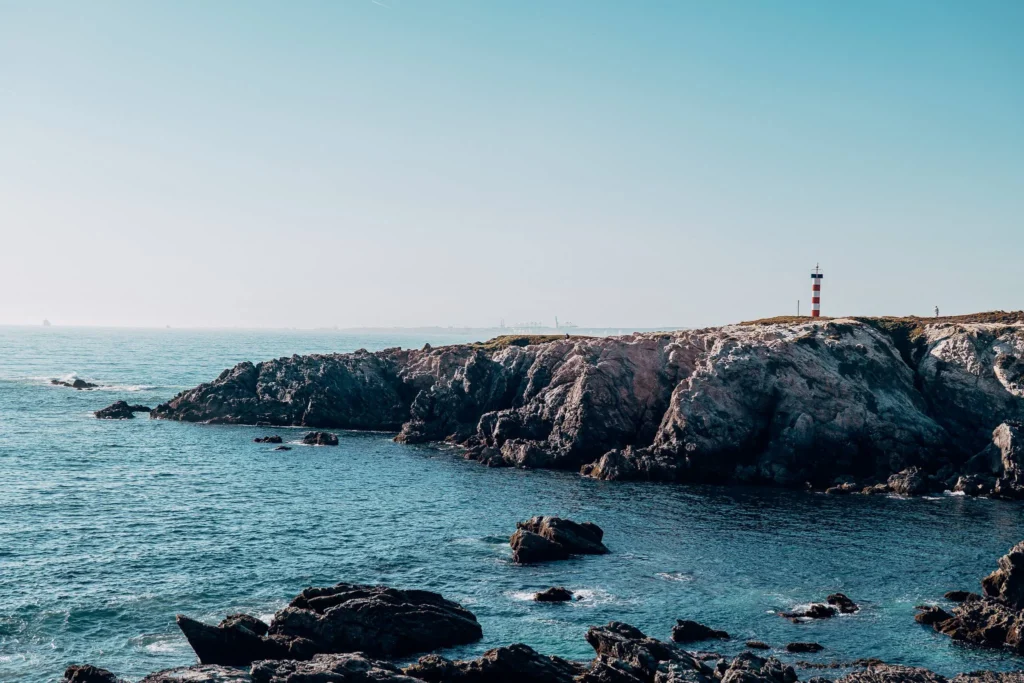
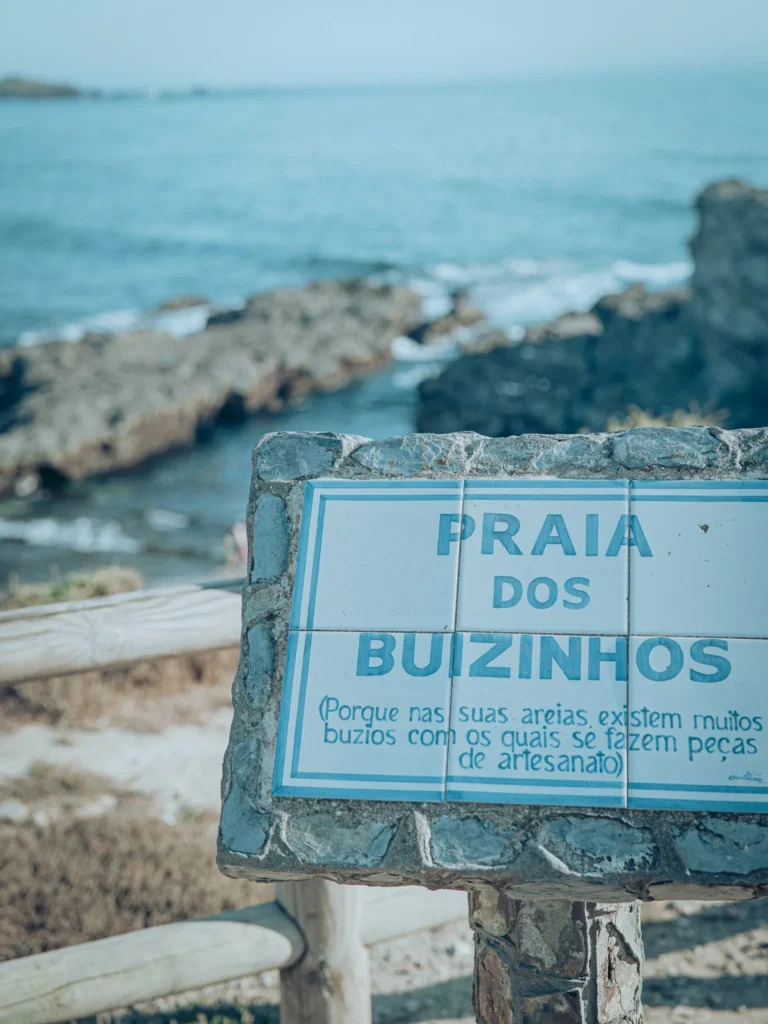
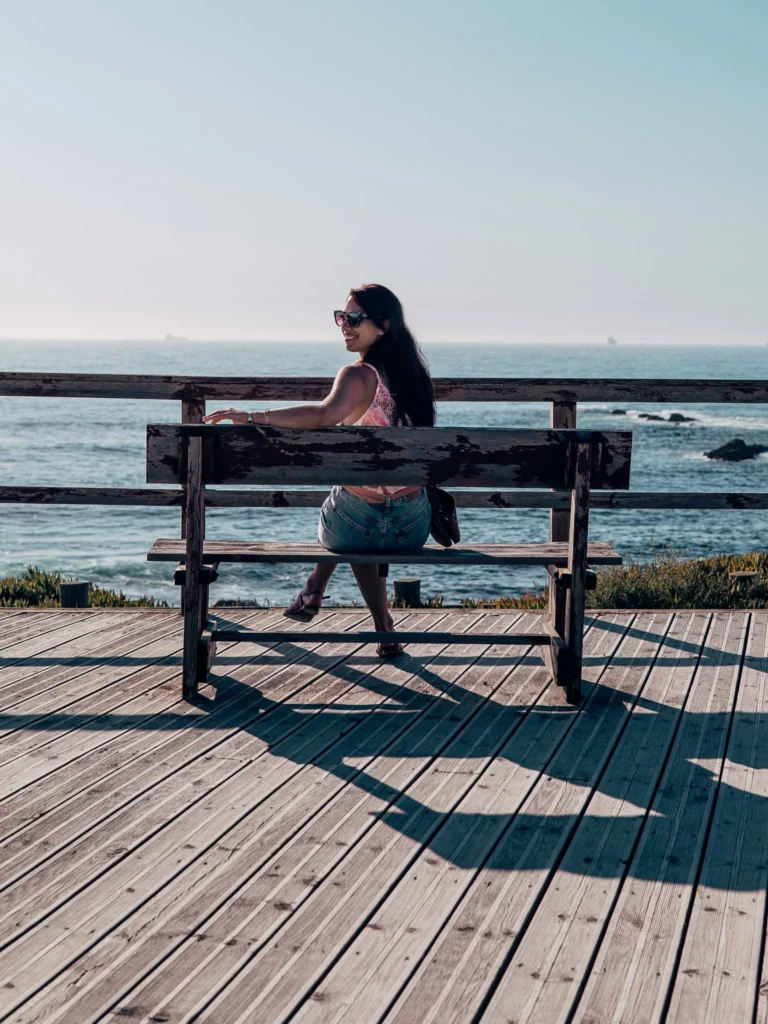
But let’s be clear: there is indeed a large beach in Porto Covo, and it bears its name very well, the Praia Grande de Porto Covo. Right next to it, the tiny Praia dos Buizinhos is nestled in the bay. We strolled on the pier, sitting on a bench facing the water, watching people head down to the sand… and that’s when we felt a little pang. Because with a real large beach, plus all those new constructions we saw while walking around, we have only one hope: that Porto Covo stays like this, human-sized. But given how the village seems to already be expanding in all directions, we fear that in a few years it will have almost doubled in size. For now, it’s probably the rocky and fragmented coastline that has helped it keep its soul, and it sheds light on the mystery of the crowded campsite: people come here for the atmosphere and the coves, not to cram onto a square meter of towel. Let’s hope it lasts.
Staying Connected in Portugal: Visitor or Resident?
What internet connection to use during a stay in Portugal? This is a common question we ask ourselves before leaving. Caroline and I, Xavier, have explored the different options available...
DiscoverThe Ilha do Pessegueiro, the island that keeps the horizon
It’s impossible to talk about Porto Covo without looking up at the Ilha do Pessegueiro, this rock sitting just 250 meters from the coast, just south of the village. From afar, it looks like an unremarkable chunk of rock… except that this island has seen centuries go by. The Romans were already exploiting fish salting workshops there from the 1st to the 4th century (tanks carved into the rock, the industrial ancestor of garum, the condiment the Romans loved). So we are facing a fishing village whose activity, no more no less, dates back to antiquity.
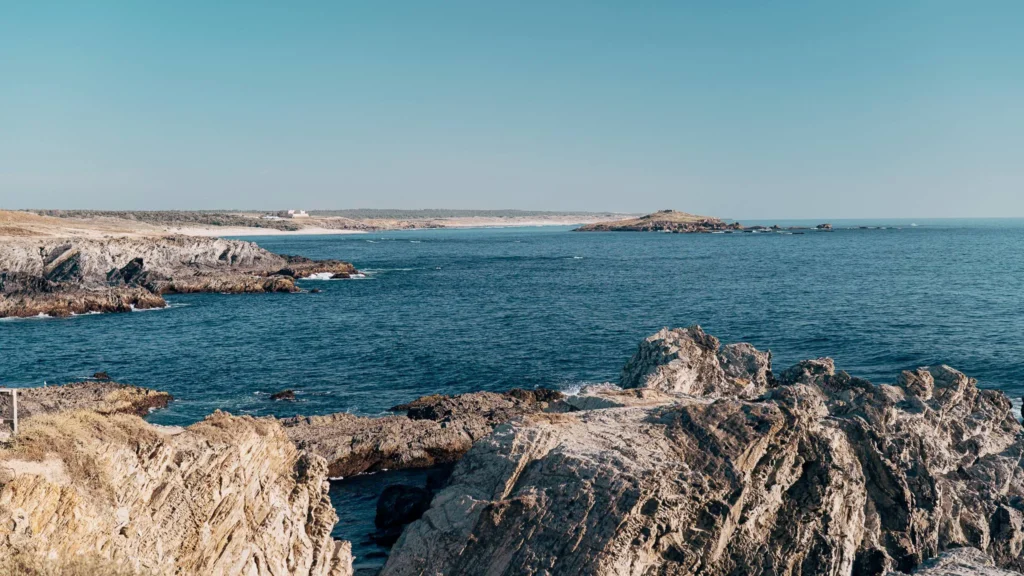
And then there are the forts, because yes, there are two: one on the island (the Forte de Santo Alberto) and one on the mainland facing it (the Forte de Nossa Senhora da Queimada). They date back to the same turbulent period as the fort of Milfontes, just to the south, and even to the same Italian military engineer, Alexandre Massai, who resumed work starting in 1590 (the world is small, even in the 16th century). We were then under Spanish rule, and it was necessary to prevent corsairs of all kinds, North African, French, Dutch, English, from using this natural anchorage as a base. A tasty detail: neither of the two forts was ever really completed, which doesn’t stop them from still standing today.
And if the name Porto Covo rings a vague bell without you knowing why, it might be thanks to Rui Veloso, the “father of Portuguese rock,” who immortalized the place in a song, “Porto Côvo,” recounting the legend of a peach tree (“pessegueiro”) planted on the island by a vizier from Odemira who supposedly committed suicide there out of love. There you go, we managed to fit a suicidal vizier into a camper guide, my mission for the day is accomplished.
Where to eat in Porto Covo (and our little mishap at Vasco da Gama)
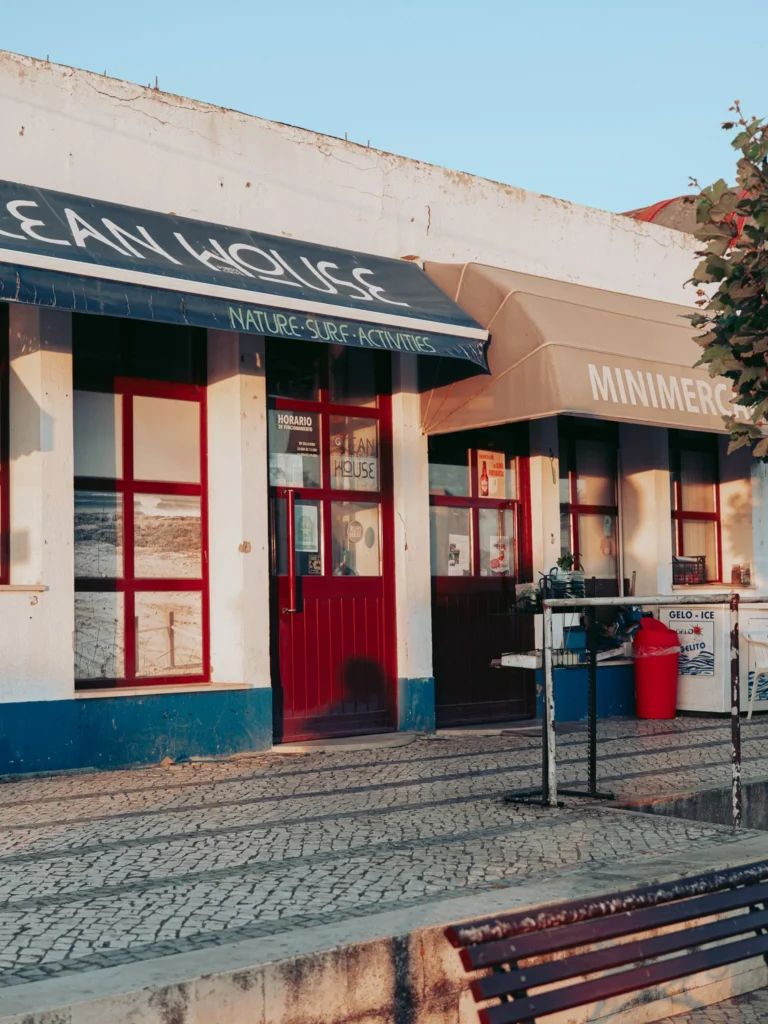
As for restaurants, Porto Covo is organized around two cobbled avenues lined with terraces, and here we find the classic of the seaside village: a row of restaurants for all tastes, including quite a few Italian ones, and of course that little wary reflex that sets in, the famous “well, we’re not going to fall into a tourist trap?”.

And indeed, a little mishap that illustrates the point well. We wanted to try a restaurant called Vasco da Gama, next to a pizzeria. The pizzeria was not really what we were looking for, while Vasco da Gama was empty (and we, as wary customers, thought “empty = suspicious or = gem,” so we went for the gem). Except that… bad surprise: the Italian next door had actually bought Vasco da Gama. The “Portuguese” we aimed for had, in fact, become the same Italian. We were already seated, we weren’t going to act like divas and leave, so we stayed. We won’t say more about that restaurant (out of charity, and frankly, what we ate didn’t make history enough for me to inflict the menu on you). We paid, smiled, and promised to come back to try the real good fish restaurants in Porto Covo properly (next time, we’ll do our homework before sitting down, I swear).

We're Caroline and Xavier
We drive to a place, stay long enough to get it wrong a few times, then write the guide we wish we'd had: parking, timing, what's worth the detour.
Ce que vous souhaitez recevoir :
Is it worth stopping at Porto Covo?
Honestly? Yes. We arrived reducing Porto Covo to its beach, and we leave with the image of a real, vibrant, coherent village, with its white and blue heart, its quiet square, its rocky front, and its island steeped in history. It’s not a spectacular spot that hits you in three seconds; it’s more the kind of place that you earn: you go down, you slow down, you soak it in. And the mystery of the full campsite, in the end, we understand it very well now. The only “trap” is to do like us for years and never leave the beach… don’t make that mistake.
What to do around Porto Covo
If you stay more than half a day, the area unfolds. Porto Covo is actually the starting point of the Trilho dos Pescadores, the “fishermen’s trail” of the Rota Vicentina, which runs along the cliffs closest to the ocean, from wild cove to breathtaking panorama. As for beaches, whether going up or down the coast, you’ll chain the coves (Praia da Samoqueira and its natural pools in the rocks, among others). To the north, about 17 km away, is Sines, the birthplace of Vasco da Gama, the real one (around 1469, at least he wasn’t bought by a pizzeria). And to the south, about thirty minutes away, Vila Nova de Milfontes and its Mira estuary are worth the detour alone; we talked about it at length in our dedicated article. Pushing further along the Costa Vicentina, other gems await you in a camper, like Bordeira and Sagrès at the very end of the cape. Not to mention, in summer, the boat crossing to Ilha do Pessegueiro to see the forts up close.
Vila Nova de Milfontes, the town we hated before falling head over heels in love with it
There are towns you fall for instantly, and then there's Vila Nova de Milfontes... that one, I'll be honest, I started out properly hating, to the point of swearing we'd...
Read more
Discover Sagres in a Campervan: Complete Guide
Explore Sagres, the perfect destination for an unforgettable road trip! Practical tips, camping spots, sports activities, and great places to visit: get ready for unique experiences in Sagres!
Read moreSleeping and parking a camper in Porto Covo
Porto Covo : a glimpse of the weather
5-day forecast
For spontaneous travelers ready to leave tomorrow, here's what to expect this week.
Monthly climate
Between us, we love sunshine and warmth. But not everyone shares our preferences, so here's the climate data to plan according to your wishes.
| Month | Min temp | Max temp | Rain | Weather | Rating |
|---|---|---|---|---|---|
| September | 16°C | 24°C | 19 mm | ☀️ | |
| October | 16°C | 23°C | 41 mm | 🌦️ | |
| November | 12°C | 18°C | 153 mm | 🌧️ | |
| December | 10°C | 16°C | 140 mm | 🌦️ | |
| January | 10°C | 15°C | 221 mm | 🌧️ | |
| February | 11°C | 17°C | 246 mm | 🌧️ | |
| March | 11°C | 19°C | 68 mm | 🌦️ | |
| April | 12°C | 20°C | 27 mm | ☀️ | |
| May | 15°C | 22°C | 38 mm | ☀️ | |
| June | 17°C | 24°C | 3 mm | ☀️ | |
| July | 18°C | 26°C | 3 mm | ☀️ | |
| August | 18°C | 25°C | 19 mm | ☀️ |
We passed through Porto Covo in June, and the campsite was already packed… not even the full summer, and yet it was bursting at the seams, which says a lot about the area’s popularity. The village has two campsites and the advantage of being a ten-minute walk from the ocean, which makes a big difference for parking the van and doing everything on foot afterwards.
Porto Covo : Places we can tell you about
Here's our selection of places in Porto Covo: spots we've visited that might be useful to you. Use the list view to discover each address in detail, and export everything to add to Google Maps or your favorite GPS app.
| Place | Address | Download |
|---|---|---|
| Jardim do Largo Marquês de Pombal | Largo Marquês de Pombal, Porto Covo |
| Place | Address | Download |
|---|---|---|
| Igreja de Nossa Senhora da Soledade | Travessa da Igreja, Porto Covo | |
| Ilha do Pessegueiro and its forts | Ilha do Pessegueiro, Porto Covo |
| Place | Address | Download |
|---|---|---|
| Praia Grande de Porto Covo | Praia Grande, Porto Covo | |
| Praia dos Buizinhos | Praia dos Buizinhos, Porto Covo | |
| Praia da Samoqueira | Praia da Samoqueira, Porto Covo | |
| Oliveirinha Beach, the wild beach that we called Porto Covo for four years | Praia da Oliveirinha, Porto Covo, Sines, Portugal |
| Place | Address | Download |
|---|---|---|
| Fishermen's Trail (departure) | Porto Covo |
| Place | Address | Download |
|---|---|---|
| Porto Covo Camping | Porto Covo, Sines |
| Place | Address | Download |
|---|---|---|
| Sines (birthplace of Vasco da Gama) | Sines, Portugal |
As for access, Porto Covo is about 170 km south of Lisbon, and fits very well into a descent of the west coast in a camper, between Sines and Milfontes.
Quota RapidAPI dépassé (limite par minute/mois). Réessayez plus tard.
Porto Covo: Frequently Asked Questions
Where is Porto Covo in Portugal?
Porto Covo is a village on the Alentejo coast, in the municipality of Sines, in the heart of Costa Vicentina, about 170 km south of Lisbon. It is located between Sines (about 17 km to the north) and Vila Nova de Milfontes (around thirty minutes to the south).
What is Porto Covo beach?
The village beach is Praia Grande de Porto Covo, complemented by small coves like Praia dos Buizinhos. The coastline is mostly rocky: there are several cut-out coves rather than a single large sandy beach.
What to see in Porto Covo?
The white and blue heart of the village, the Jardim do Largo Marquês de Pombal and its fountain, the church Nossa Senhora da Soledade, the Ilha do Pessegueiro and its forts offshore, and the start of the Trilho dos Pescadores, the coastal path of the Rota Vicentina.
Can you visit Ilha do Pessegueiro?
The island is located about 250 m off the coast, south of the village. There are Roman remains (fish salting workshops) and two forts from the 16th-17th centuries. Boat trips are offered in the summer from Porto Covo.
Can you sleep in a camper van in Porto Covo?
Yes, the village has two campsites, about a ten-minute walk from the ocean. Expect to pay around £28 per night with electricity in season. The area is in high demand from June, so it's better to book or arrive early.
PS: it took us years to understand that “Porto Corvo” (with its imaginary R) hid a real village behind its beach… and that we could be fooled by a Vasco da Gama who was no longer one. Next time, we’ll come back for the coves, for the real fish restaurant, and to check if the vizier still haunts his island. We’ll tell you about it (without the R this time).
Portugal, we live here
Two years of full-time van life, and the Algarve as our base ever since. We still hit the road, by van or otherwise, and we write up what we find along the way. An email when we have something to say, no more.
Ce que vous souhaitez recevoir :