



The Zero Breeze Mark 3 is generating a lot of buzz in the vanlife community, and for good reason: it’s one of the most advanced portable battery-powered air conditioners available right now. So we dug into the technical specifications, looked at the field tests from various users, and compared all of that to what we know about these machines. Here’s our opinion, highlighting its true strengths and weaknesses.
Who is the Zero Breeze Mark 3 for?
Let’s be clear, this is not a device for the vacationer who goes away for a week each year. At this price, it targets those who drive a lot, or even live in a van year-round, for whom every kilo counts. There’s also a use we love: the versatile device for home and van. You cool a non-air-conditioned room at home (an office, a garden shed) during the week, and take it with you in the van on the weekend. One purchase, two uses, and that’s where the budget becomes worthwhile.
What creators who tested it say
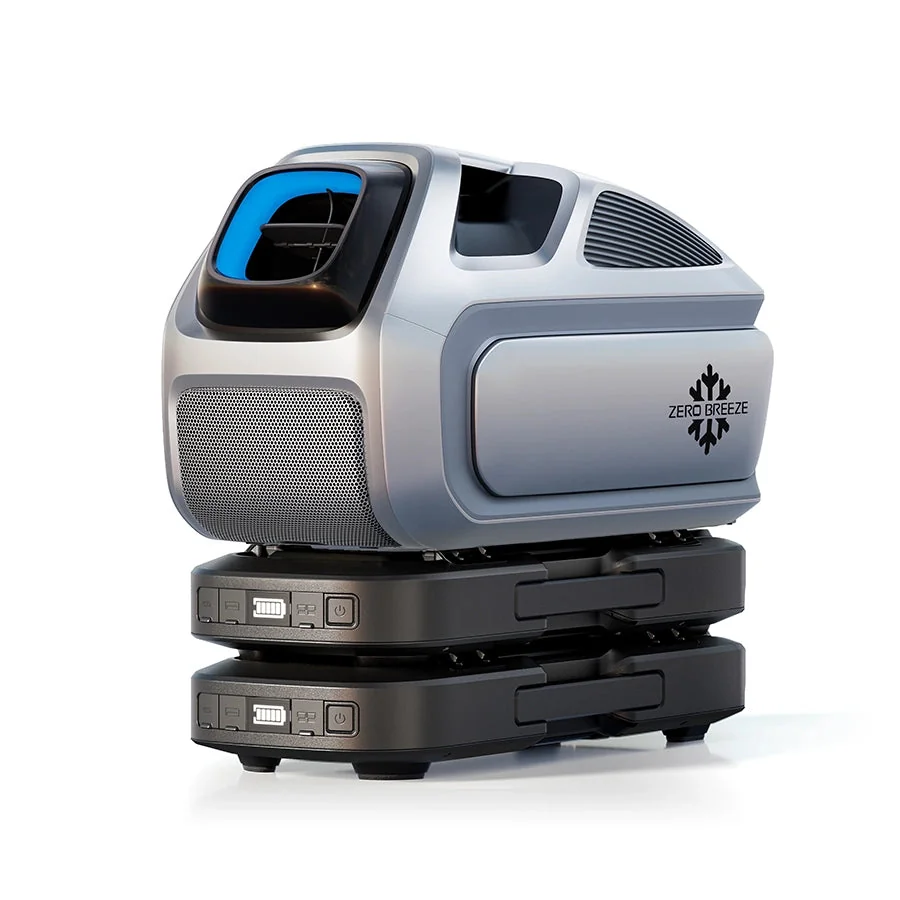
On the ground, one point comes up in almost all tests: the active drain pump. No more spilled water when moving the device, a real improvement for van use where the AC is often moved. Testers also praise the integrated cable batteries that stack to last through the night, the recharge time of about two hours, and especially the very cold air blown out, among the coolest in its category.
One videographer even ran it for eight hours on solar power to keep his cabin cool for his elderly dog, a common use case for those traveling with pets. In short, for the core task of efficiently cooling a bubble of air, the Mark 3 delivers on its promises.
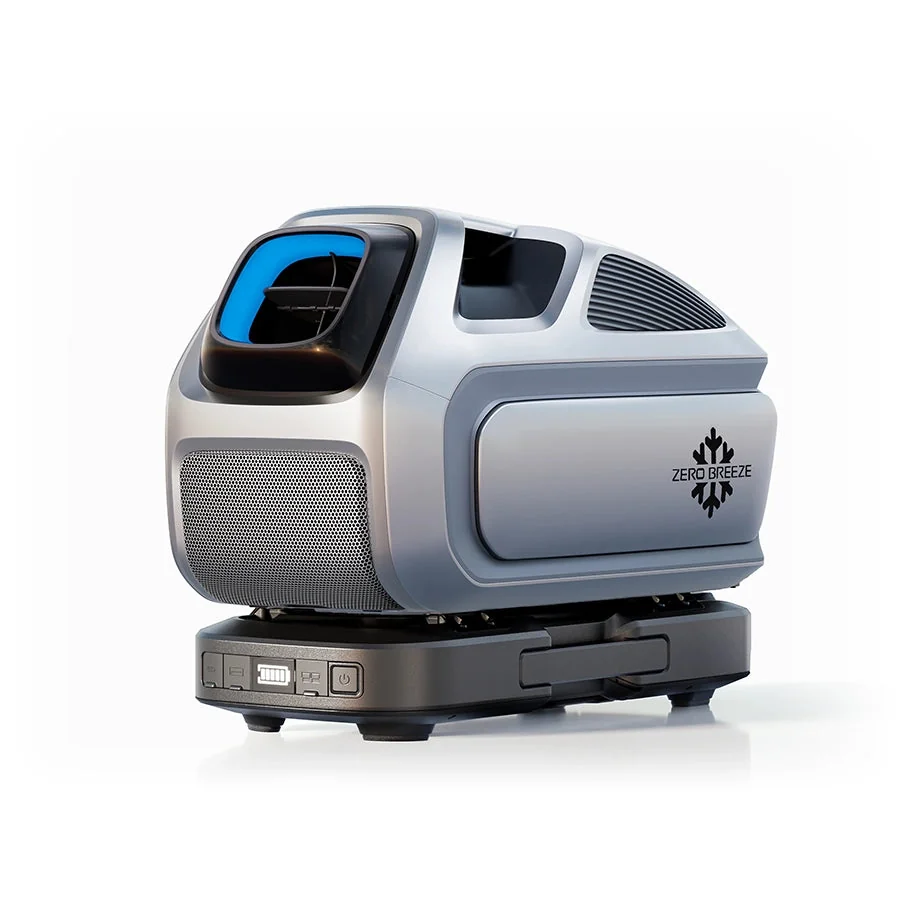

Cooling, heating, and dehumidification
The Mark 3 boasts 5,280 BTU for cooling and 5,800 BTU for heating: it’s a true reversible AC, not a disguised fan. It cools a sleeping area or living space of 9 to 14 m2, heats during mid-season, and dehumidifies, which is just as important as cooling when the air is heavy. All this with an R290 fluid, cleaner than conventional gases.
As with all these devices, keep in mind the golden rule: in full sun, you’re cooling a localized bubble, not the entire van. The famous “minus 8 degrees in fifteen minutes” are lab numbers; the reality is a few degrees gained over an hour.
Battery life and stackable batteries
This is one of its strong points. The dedicated 1,022 Wh battery provides two to three hours at full power and much more in night mode. But the real advantage is the stacking of batteries: you can add a second, a third, and last the entire night, even several days off-grid. The AC also recharges while operating, via mains, car charger, or solar. For the nomad looking for extendable autonomy, this is a great feature.
The real downsides to know
We won’t give you a disguised ad, so here’s what’s problematic according to the tests. First, the app struggles offline: several testers report an unavailable registration message without a connection, which is a drawback in the great outdoors (fixable in an update). Next, the battery connection is proprietary, no universal standard. The shiny black front scratches during transport, the cables are a bit tedious to screw in, and there’s no solar port directly on the unit. Nothing prohibitive, but it’s better to know before paying.
Zero Breeze Mark 3 or EcoFlow Wave 3?
This is the match of the year in this niche. In summary, the Mark 3 is the lightest and most compact, with its stackable batteries; the EcoFlow Wave 3 blows more BTU and integrates into the EcoFlow ecosystem. We detailed everything in our comparison of Zero Breeze Mark 3 vs EcoFlow Wave 3, worth reading before making a choice.

I'm Xavier
I test gear over months, in the van and day to day, and I say what doesn't work. If that saves you one bad purchase, leave me your address.
Ce que vous souhaitez recevoir :
Our opinion: should you buy it?
If you live in a van for a good part of the year, or if you want a single device that serves both at home and while traveling, the Mark 3 is an excellent choice: lightweight, discreet, enduring thanks to stacking, and honest about what it can do. The vacationer who goes away for a week each year will do just fine without it and would be better off playing with shade and a fan. We, with our EcoFlow history, would also look at the Wave 3, but we completely understand why one would be tempted by the lightness of the Mark 3.
You can find it directly from the brand on our Zero Breeze Mark 3 page, and gain perspective with our guide on air conditioning in campervans.
Before making your decision, take a look at the complete page, the duel against the Wave 3, and our broader AC guide:

Zero Breeze Mark 3: battery-powered portable air conditioner
The Zero Breeze Mark 3 is the air conditioner you take everywhere: into the campervan when you hit the road, and into the room at home that has no cooling...
Discover
Zero Breeze Mark 3 vs EcoFlow Wave 3: which portable AC?
Honest comparison of the two battery-powered portable air conditioning units: Zero Breeze Mark 3 vs EcoFlow Wave 3. Cooling, weight, battery life, ecosystem, and price, to choose based on your...
Discover
Campervan air conditioning: which AC to choose
Roof air conditioning, built-in 230V or battery-powered: the honest guide to choosing the air conditioning for your motorhome or van, including consumption, autonomy, 12V while driving, and reversible heating.
DiscoverZero Breeze Mark 3: your questions before buying
Does the Zero Breeze Mark 3 work without an internet connection?
Does the Mark 3 have a solar port on the unit itself?
How much does the Mark 3 weigh with its battery?
Can you use it in a tent?
Are the Mark 2 batteries compatible with the Mark 3?
Where can you buy the Zero Breeze Mark 3 with a discount code?
PS: we will eventually order one to test it for real, as we have done with others. In the meantime, we prefer to honestly tell you what we know and what we don’t know, rather than invent a test we haven’t conducted.
Our gear tests, in real conditions
Batteries, solar, conversion, security. What we found after months of real use, and what we would not buy again. An email when we have actually tested something, not before.
Ce que vous souhaitez recevoir :