


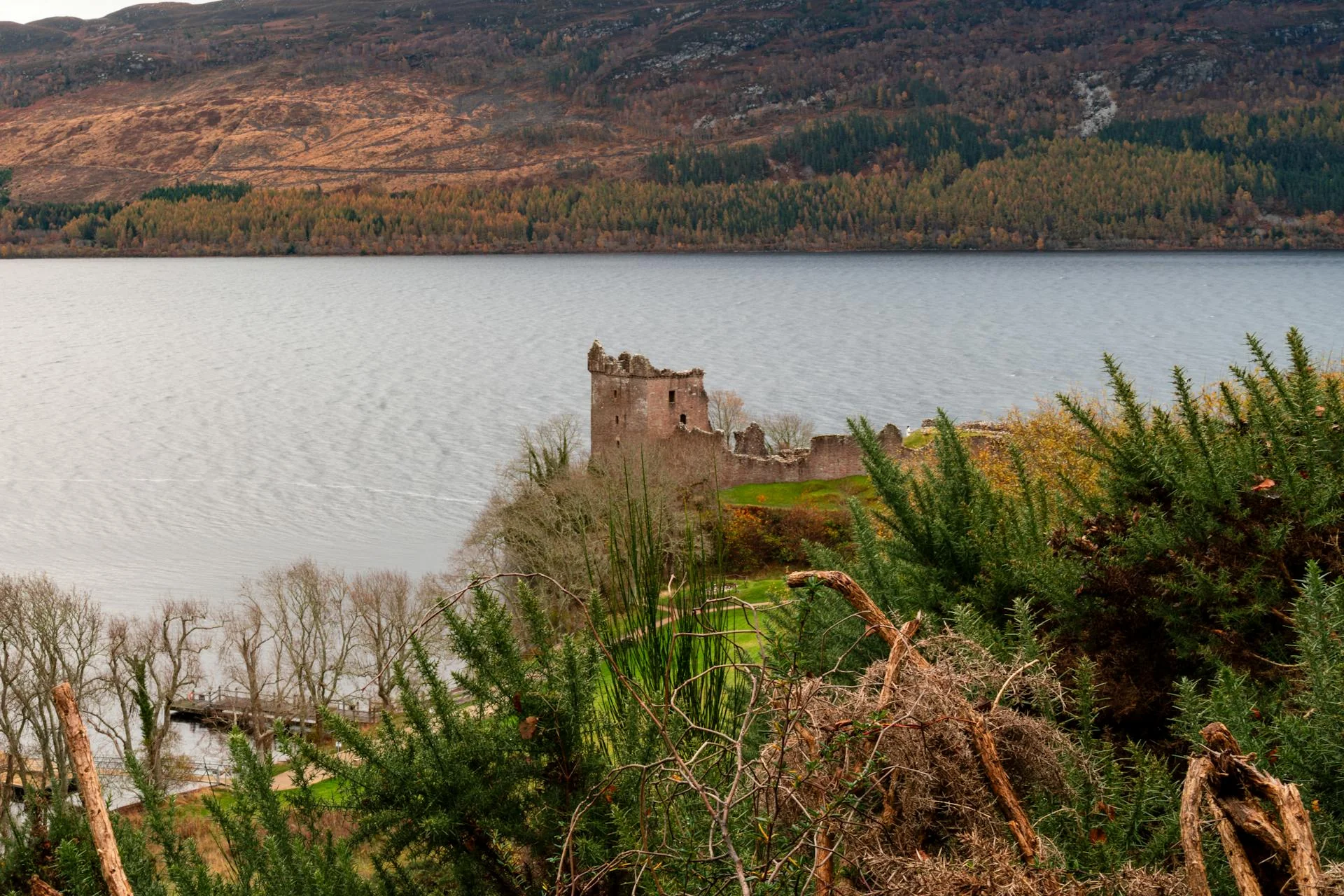
Well, let’s be honest right away, Inverness is the unofficial capital of the Scottish Highlands, the must-stop crossroads where everyone passes before heading to the great north. The historic starting point of the famous NC500 (the North Coast 500, dubbed “the Scottish Route 66”), the perfect base to explore Loch Ness, Culloden, Cawdor, and the Moray Firth coast. In short, a stop you can’t skip.
So, we went there on a road trip with Édouard, our trusty camper van, in the middle of summer. With a bit (a lot) of luck with the weather, a drone that ended up… elsewhere, and a great range of experiences that I will share with you here, unfiltered. Come on, join us, we’re taking you on an honest tour.
Inverness : Places we can tell you about
Here's our selection of places in Inverness: spots we've visited that might be useful to you. Use the list view to discover each address in detail, and export everything to add to Google Maps or your favorite GPS app.
| Place | Address | Download |
|---|---|---|
| Inverness Castle | Inverness Castle, Scotland | |
| Saint Andrew's Cathedral | Cathédrale Saint-André, Scotland | |
| Leakey's Bookshop | Leakey's Bookshop, Scotland | |
| Loch Ness | Loch Ness, Scotland | |
| Urquhart Castle | Château d'Urquhart, Scotland | |
| Culloden Battlefield | Culloden Battlefield, Scotland | |
| Chanonry Point (dolphins) | Chanonry Point (dauphins), Scotland | |
| Fort George | Fort George, Scotland | |
| Caledonian Canal | Canal Calédonien, Scotland | |
| Clachnaharry Sea Lock | Clachnaharry Sea Lock, Scotland | |
| Dochgarroch Lock | Dochgarroch Lock, Scotland | |
| Torvean Caravan Park | Torvean Caravan Park, Scotland | |
| Cawdor Castle | Cawdor Castle, Scotland |
Inverness : a glimpse of the weather
5-day forecast
For those who love last-minute adventures, here's what the weather has in store.
Monthly climate
Personally, we always choose warm and dry periods. But everyone has their ideal weather! Here's the info to make your choice.
| Month | Min temp | Max temp | Rain | Weather | Rating |
|---|---|---|---|---|---|
| October | 7°C | 12°C | 127 mm | 🌧️ | |
| November | 2°C | 7°C | 116 mm | 🌧️ | |
| December | 3°C | 6°C | 93 mm | 🌦️ | |
| January | -1°C | 3°C | 93 mm | ❄️ | |
| February | 1°C | 6°C | 48 mm | 🌦️ | |
| March | 3°C | 9°C | 117 mm | 🌦️ | |
| April | 4°C | 12°C | 92 mm | 🌦️ | |
| May | 6°C | 13°C | 67 mm | 🌦️ | |
| June | 10°C | 16°C | 109 mm | 🌧️ | |
| July | 11°C | 18°C | 66 mm | 🌦️ | |
| August | 11°C | 17°C | 130 mm | 🌧️ | |
| September | 10°C | 15°C | 85 mm | 🌧️ |
Quota RapidAPI dépassé (limite par minute/mois). Réessayez plus tard.
Inverness on a road trip: capital of the Highlands and gateway to the NC500
First, a little identity card to set the scene. Inverness has about 70,000 inhabitants, making it the largest city in the Scottish Highlands (but still human-sized, we’re not in Glasgow). The city is located at the northeast end of Loch Ness, where the River Ness flows into the Moray Firth, which is connected to the North Sea. Geographically, it’s the crossroads: from Inverness, you can head to the west coast (Ullapool, Skye), go down towards the Cairngorms, head back up to the northern NC500 (John o’Groats, Wick, Durness), or retrace your steps to Edinburgh via the A9.
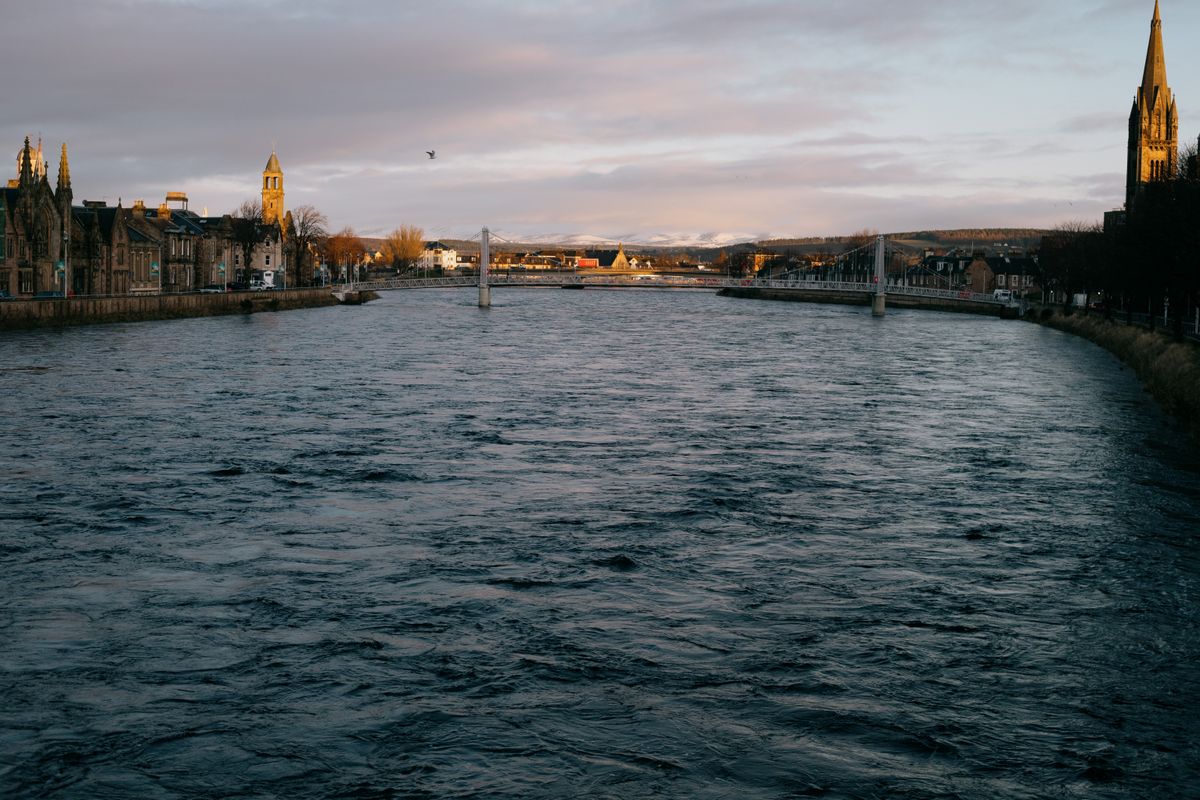
To get there from continental Europe, we did like for the rest of our UK road trip: leaving from the Netherlands, not from the Tunnel or the Calais ferry (it didn’t suit our route). From Rotterdam, ferry to Newcastle and then we gradually made our way up. If you’re coming from Britain, the classic option is the Channel Tunnel and then crossing England via the motorway (expect 12-14 hours of driving from the tunnel to Inverness, with a mandatory break, of course).
Plan your trip to Inverness
Compare rental companies and book at the best price.
Booked on Trip.com — partner link.
Provided by Holafly, our partner.
5% off with code LAPLANETEDECARO
Booked on Holafly — partner link.

We're Caroline and Xavier
We drive to a place, stay long enough to get it wrong a few times, then write the guide we wish we'd had: parking, timing, what's worth the detour.
Ce que vous souhaitez recevoir :
Visiting downtown Inverness: castle, River Ness, and hidden treasures
So, let’s start with the Inverness Castle. It is perched high, overlooking the River Ness, and gives that “postcard” feel we all imagine when picturing a Scottish city. A little disillusionment though: the current castle dates from the 19th century (1836 to be precise) and houses the city courts. So no grand medieval interior visit, but the exterior is worth a detour, especially for the view of the river and the center.
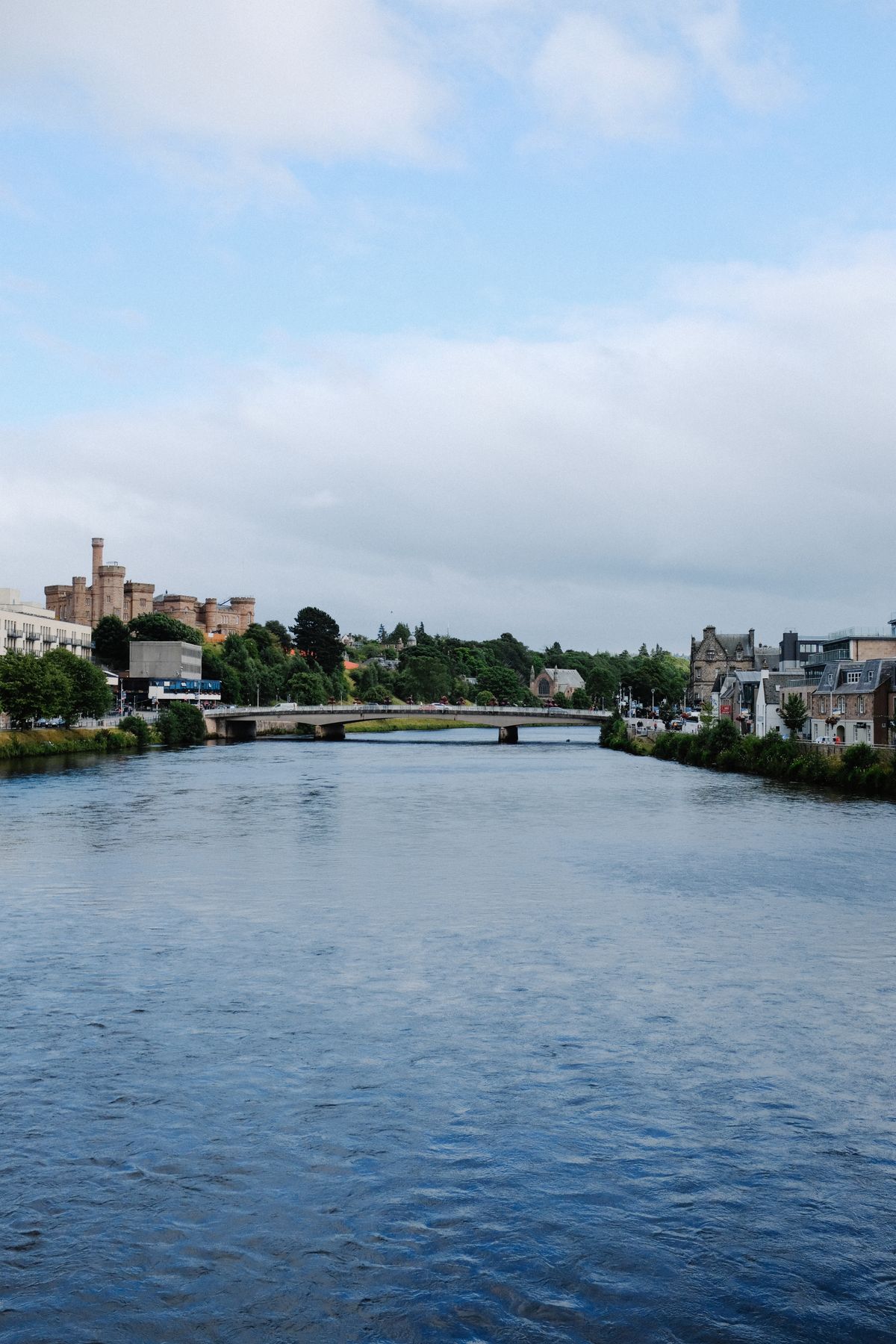
Right next to it, cross the bridge to see the St. Andrew’s Cathedral (1866-1871, so barely older than the castle, many buildings in Inverness are from the 19th century). Neo-Gothic architecture, really beautiful interior, stained glass windows worth a look. And it’s free, so we appreciated that.
But our real favorite in the center is Leakey’s Bookshop. A second-hand bookstore located in an old Gallican chapel. Cathedral ceiling, wooden stairs leading to a mezzanine, thousands of old books reaching up to the ceiling, a wood stove in the middle in winter… If you love old books or just places with a soul, go there. We stayed almost two hours (you know how it is, once you go in, you never come out on time).
For the rest of the stroll, the Old Town consists of a few alleys around the castle. Count on a leisurely 1.5 hours to tour around. And above all, take the time to head down to the banks of the River Ness, either by following Ness Walk (west bank) or by passing through the Ness Islands (two small wooded islands in the middle of the river, connected by footbridges, almost fairy-tale atmosphere). We thought it was worth the stop in Inverness by itself.
Loch Ness and Urquhart Castle: the must-see and our drone gone swimming
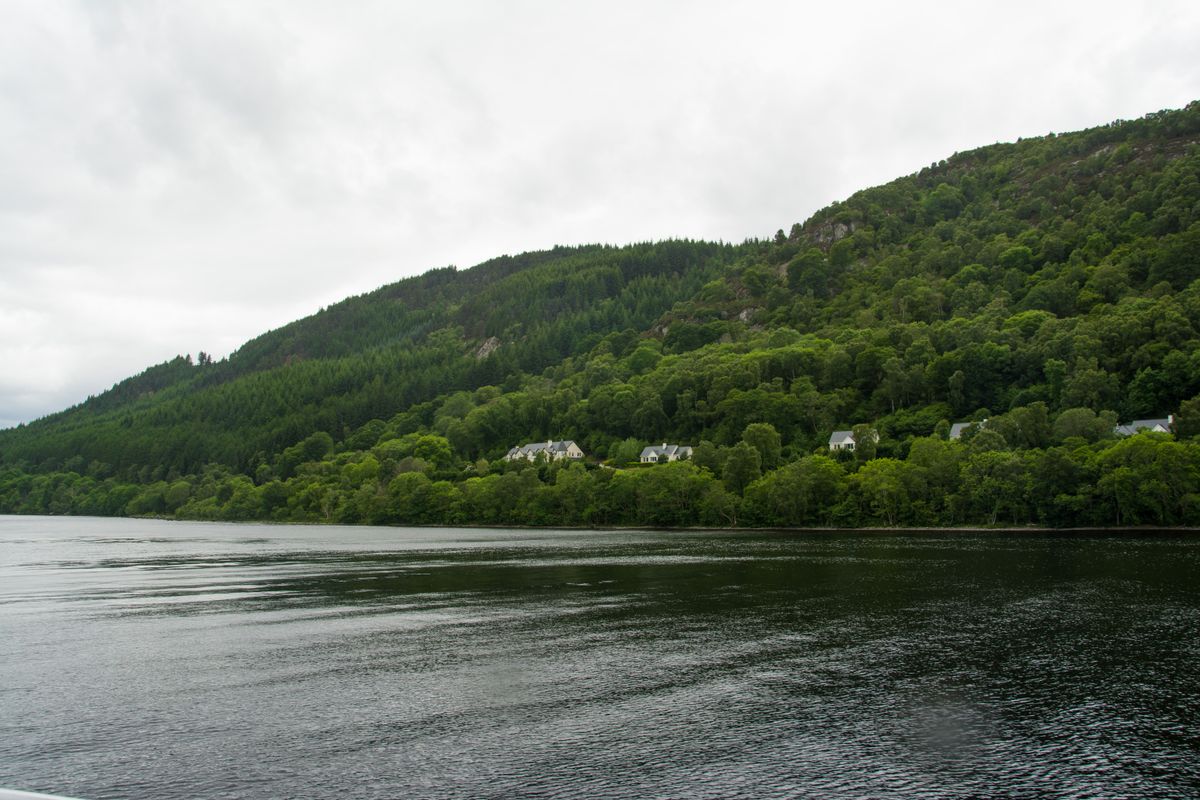
So here we go, tackling THE thing that’s sold to you along with Inverness: Loch Ness. The second largest lake in Scotland by area (but the largest by volume of water, worth mentioning to impress), 21 miles long, maximum depth 230 m. The kind of place where you expect a bit of everything, including seeing Nessie pop up.
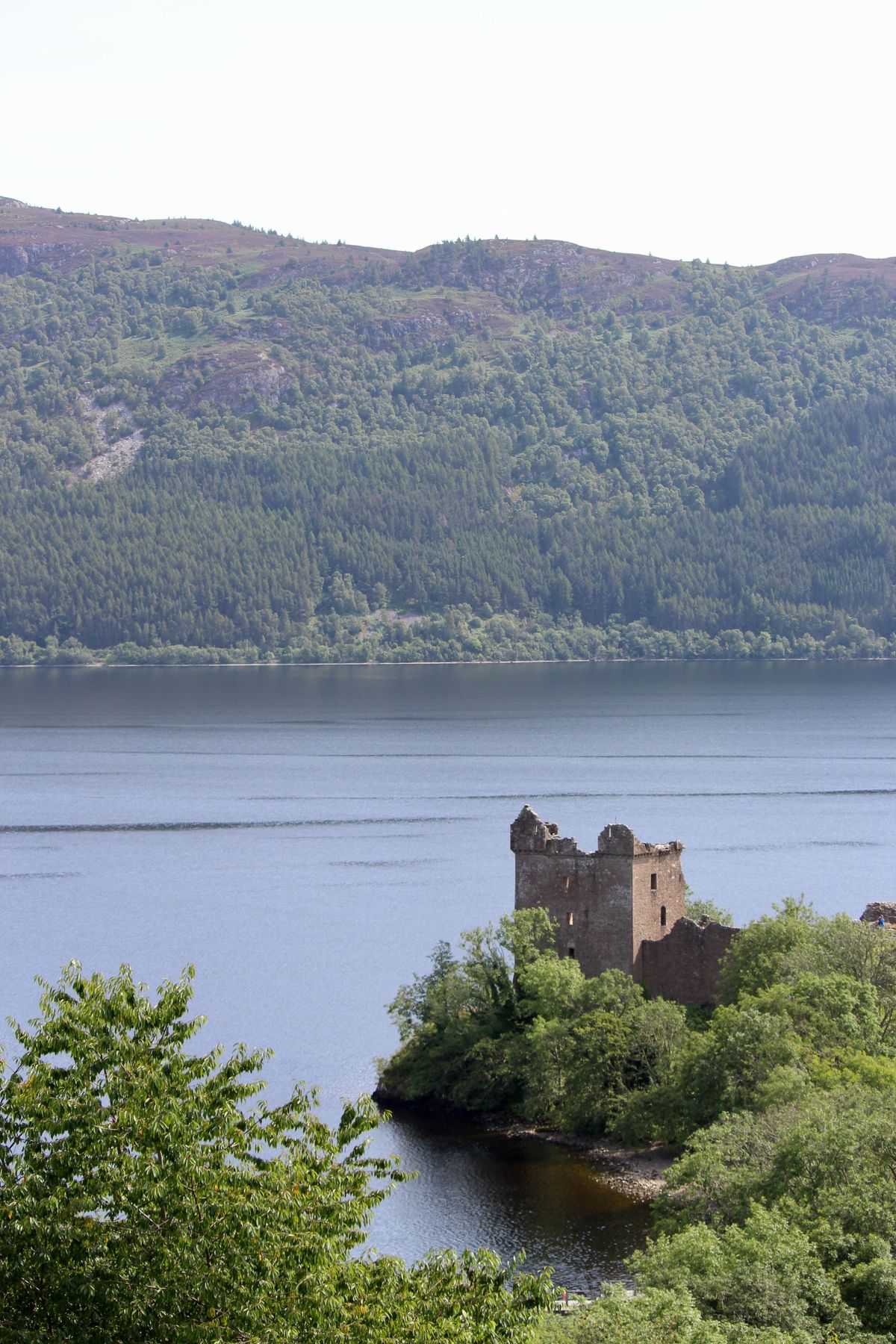
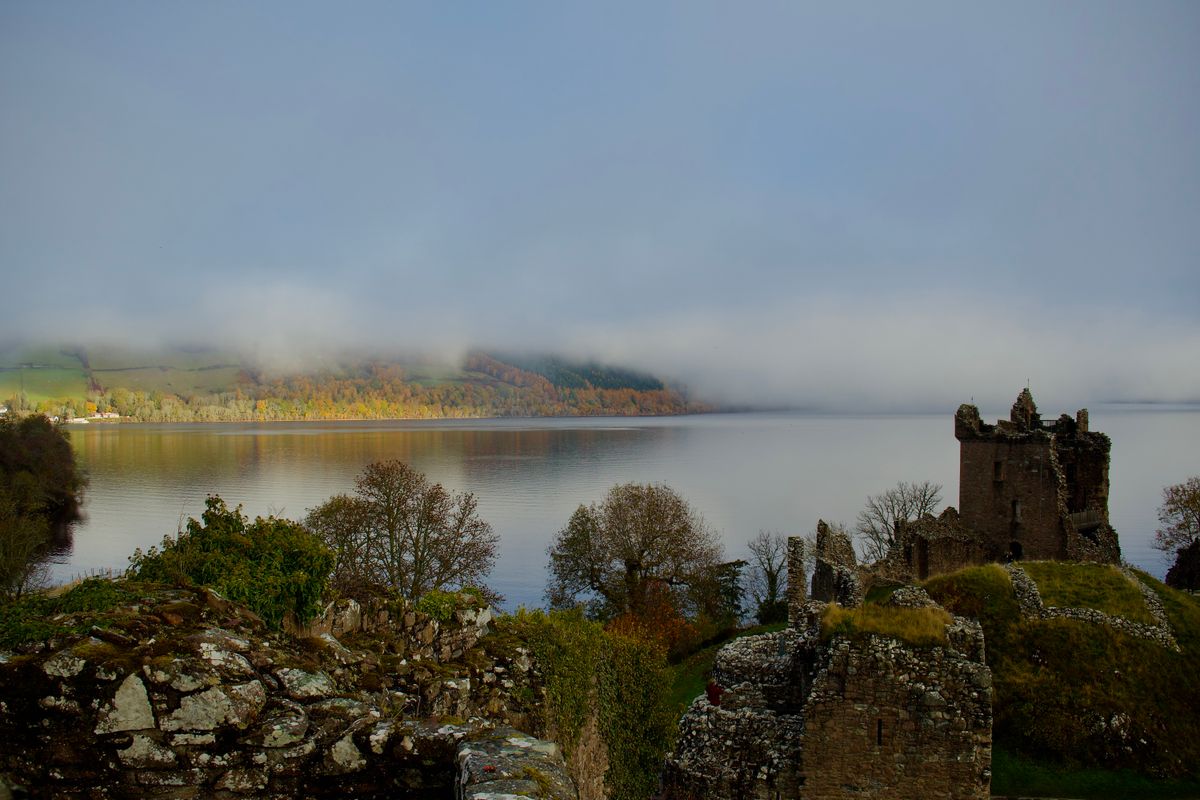
The best way to enjoy the loch is to follow the west bank via the A82, a scenic road that runs along the lake’s entire length to Fort Augustus. A must-stop: the Urquhart Castle (or what remains of it, namely magnificent ruins perched on a promontory by the loch). The entrance is paid (about £14 per adult, free for Historic Scotland members), and yes, it’s expensive for a ruin… but the view of the loch from the ramparts is truly worth it. Plan for 2 hours on site to fully enjoy.
And so here we are, this is where our running joke of the Scottish session comes in: we lost our drone in Loch Ness. Not literally, we didn’t try to sink it. But the wind blew a bit harder than expected during an aerial shot (to be fair, above a loch nestled between hills, the wind does what it wants), the drone got swept away, and we watched it land in the middle of the dark waters. Never seen again. All the footage from the day was stored on it. The only thing we salvaged were the low-resolution files already synced to our phones… which means our best images of Loch Ness are in degraded quality. Life.

Best UK SIM for a Scotland Road Trip: Highlands, Skye and NC500 Coverage
What internet connection to use during a stay in Scotland? Often questioned by travelers, we explored the various options available in Scotland in this comprehensive article. As always, each solution...
DiscoverCulloden Battlefield: 1746, the tragic end of the Jacobite uprising
So, we’re completely changing gears… Culloden is the other must-see around Inverness, but not for the same reasons as Loch Ness. It’s a battlefield. Not a castle, not a monument, just a windswept moor, with flags marking the locations of the clans. And yet, it’s probably the most emotionally charged site we visited in Scotland.
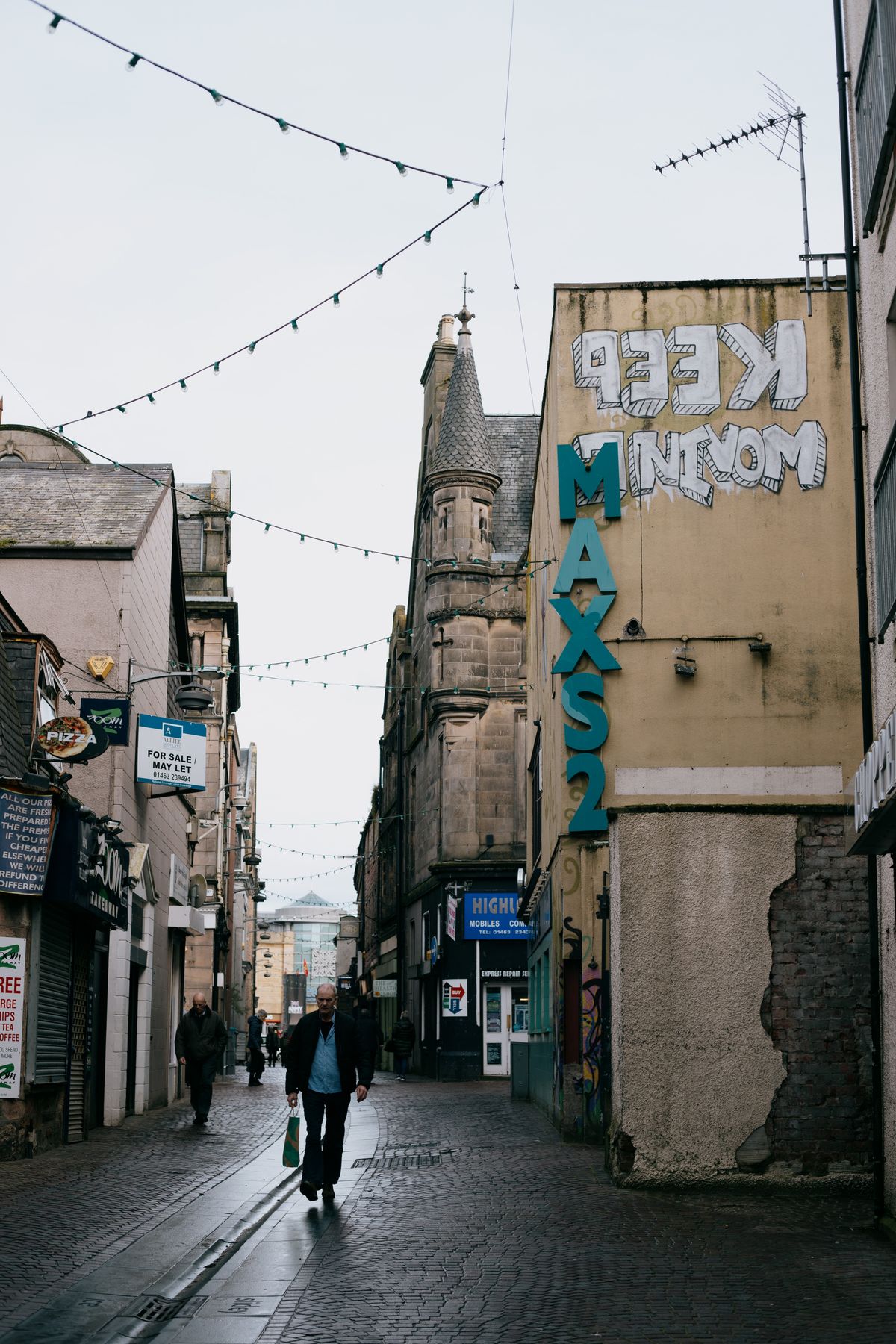
Quick history lesson: on April 16, 1746, the Jacobite army led by Bonnie Prince Charlie (Charles Edward Stuart, the Stuart claimant to the throne) was crushed in 40 minutes by the British government army of the Duke of Cumberland. The end of Stuart hopes to regain the throne of Scotland and England, the beginning of a brutal repression against the Highland clans (prohibition of tartan, kilt, Celtic languages, deportations to the colonies, all over decades). The moment when a good part of Highland culture was broken, basically.
On site, two things to do:
- The battlefield itself is freely accessible and free. You can walk among the flags (blue for the Jacobite side, red for the government side), walk on the moor where about 1500 Jacobites fell in less than an hour. It’s striking, especially when the wind dies down and silence returns.
- The interpretation center of the National Trust for Scotland is paid (about £14 adult), but really well done: 360° reconstruction, objects found on site, audio testimonies, immersive tour. If you are a member of NTS or English Heritage, it’s free.
Plan for about 2-3 hours to visit everything. And be prepared, it’s emotionally heavy. We came out silent.
Chanonry Point: see wild dolphins for free
Alright, let’s move on to something much more joyful. Chanonry Point is a small point on the Black Isle (which isn’t an island by the way, it’s a peninsula, don’t ask me why), about 25 minutes north of Inverness. And it’s said to be one of the best spots in the world to observe wild dolphins from the shore.
The thing is, the dolphins of the Moray Firth (a local population of about 200 individuals) come to hunt salmon just off this point at high tide. The current pushes the fish against the coast, and the dolphins just have to help themselves. And we are on the beach, 30 m away from them. A free show, just plan to arrive 1 to 2 hours after low tide (check the times online, it’s easy).
Practical tips:
- Free parking at the end of the road (but small, arrive early in summer).
- White lighthouse at the tip (Chanonry Lighthouse), a visual landmark.
- Bring binoculars if you have them, otherwise the dolphins come out of the water and can be seen with the naked eye.
- Good weather recommended but not mandatory (the dolphins don’t care).
We went one morning, and we saw about ten dolphins in the space of an hour. Caroline almost cried. In short, not to be missed, really.
Fort George and the Moray Firth coast: the militarization after Culloden
On this same Black Isle, and more generally on the Moray Firth coast, you also have Fort George. To link it with what we said about Culloden: after the Jacobite crushing of 1746, the British crown decided it was necessary to lock down the Highlands. Hence the construction of this massive military garrison, completed in 1769, designed by Robert Adam (a well-known architect), capable of housing 1600 soldiers.
The cool thing: the outer walls are freely accessible. You can walk the entire fortification, walk on the walls, enjoy a panoramic view of the Moray Firth on one side and the Highlands on the other. The interior (barracks, military museum, garrison chapel) is paid, about £9.
Bonus: from Fort George, you can regularly spot the Moray Firth dolphins (the same ones as Chanonry, but further away). Make a detour to Cawdor Castle on the way back to Inverness, if you have time: a real inhabited castle, linked to Macbeth by Shakespeare (Macbeth is named thane there in the play). The gardens are remarkable (with a maze, perfect for kids). Combined ticket for castle + gardens about £14.
Where to sleep in a camper van in Inverness and around
Alright, let’s tackle the practical part. Inverness is not the most camper-friendly city in Scotland, let’s be honest. The center is dense, the streets are narrow, and central parking often prohibits vehicles over 2m high. But options do exist, and some are even quite nice.
Our favorite option: the locks of the Caledonian Canal. The Caledonian Canal runs through Inverness to connect the North Sea to Loch Ness (and continues to Fort William). Several spots along the canal are tolerant of camper vans:
- Clachnaharry Sea Lock: the sea lock at the north entrance of the canal, stunning view of the Moray Firth, tranquil atmosphere, free. 15 min by bike from the center via the bike path along the canal.
- Dochgarroch Lock: a bit further south, even quieter, by the canal. Ideal for one or two nights.
- Bught Park (parking close to the center): known for tolerating camper vans during the day and some nights, but to be confirmed on site.
Classic organized camping: the Torvean Caravan Park (full services, 15 min walk from the center, about £30 a night) remains a safe bet. It’s also the most practical base if you plan to stay more than 2-3 days.
Our vanlife tip: do your waste disposal and water refill at Torvean (even if you don’t sleep there), and spend the nightFAQ Inverness on a road trip
When to visit Inverness by camper van?
Where to park for free in a campervan in Inverness?
How much time should you plan to visit Inverness and its surroundings?
How to see the Loch Ness monster?
Should you pay to visit the Culloden battlefield?
Where to see wild dolphins near Inverness?
Is Inverness worth the detour or is it just a stop on the NC500?
What budget to plan for Inverness in a camper van?
PS: if you spot a drone floating somewhere over Loch Ness, that’s probably ours — home delivery accepted, we’re still hoping.
After Scotland, we keep going
Two years of full-time van life, and the Algarve as our base ever since. We still hit the road, by van or otherwise, and we write up what we find along the way. An email when we have something to say, no more.
Ce que vous souhaitez recevoir :