


Why the Highland Games are worth the detour when crossing Scotland
Well, let’s be clear: if you’re planning a road trip in Scotland during the summer and you come across the dates of the Highland Games in a village, make sure to attend, you won’t regret it. It’s one of those days where, when you go out in the evening, your head is buzzing (a bit too much in our case, we’ll get back to that), your notebook is full of notes, and you feel like you’ve really touched what makes Scotland… well, Scottish.
Caroline and I experienced the Highland Games on August 11th in Ballater, a small village in Aberdeenshire in the Dee Valley. We arrived three days earlier with Édouard (our trusty Hymer B544), parked the van facing the church (ample parking, public toilets, a gift for an event weekend), and enjoyed the setup. And well, we loved it so much that we decided to dedicate an entire article to it, because beyond the tourist folklore, it’s a real human experience.
Plan your trip: United Kingdom
Tours, tickets and day trips in London.
5% off with code PLANETEDECAROT
Booked on Trip.com — partner link.
Compare rental companies and book at the best price.
10% off with code PLANETECAROLOC
Booked on Trip.com — partner link.
Provided by Holafly, our partner.
5% off with code LAPLANETEDECARO
Booked on Holafly — partner link.
What exactly are the Highland Games?
Originally, these are sports and cultural competitions organized by clans to celebrate Scotland’s Celtic culture. Not to be confused with a simple folk festival for tourists: the Highland Games are a true Scottish institution, vibrant, codified, that gathers over sixty events across the country every summer (from May to September, peaking in July and August).
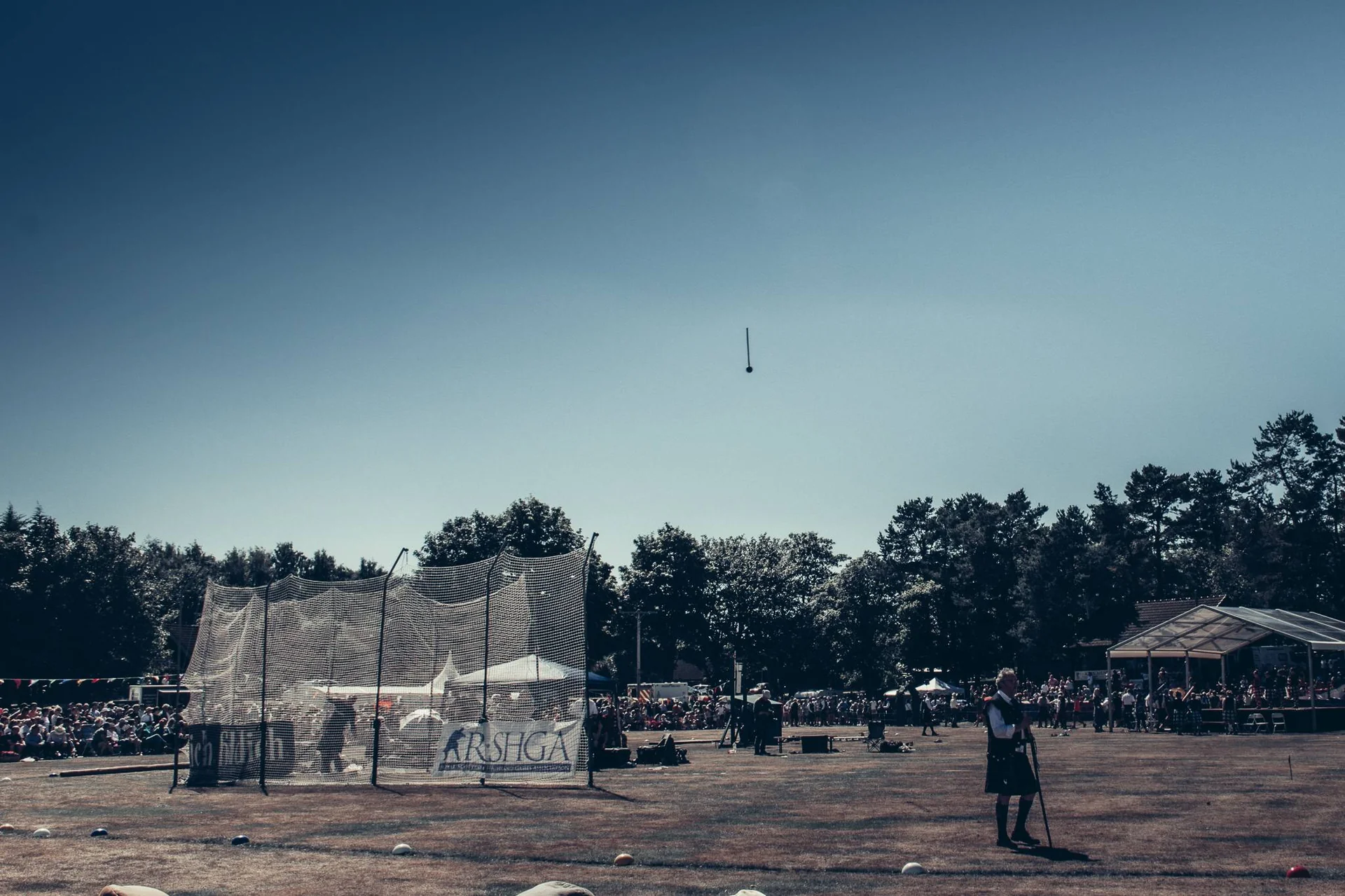
There are several major categories of events… the caber toss (the famous log toss), weight and hammer throw, traditional dance competitions (often performed by children, particularly little girls), a simultaneous bagpipe competition, and a whole day of parades punctuated by drums and clan fanfares. It’s also an economic showcase: honey, wood, whisky producers all have their little stands away from the main field.
Our morning on D-Day in Ballater: the bagpipes tuning in the distance
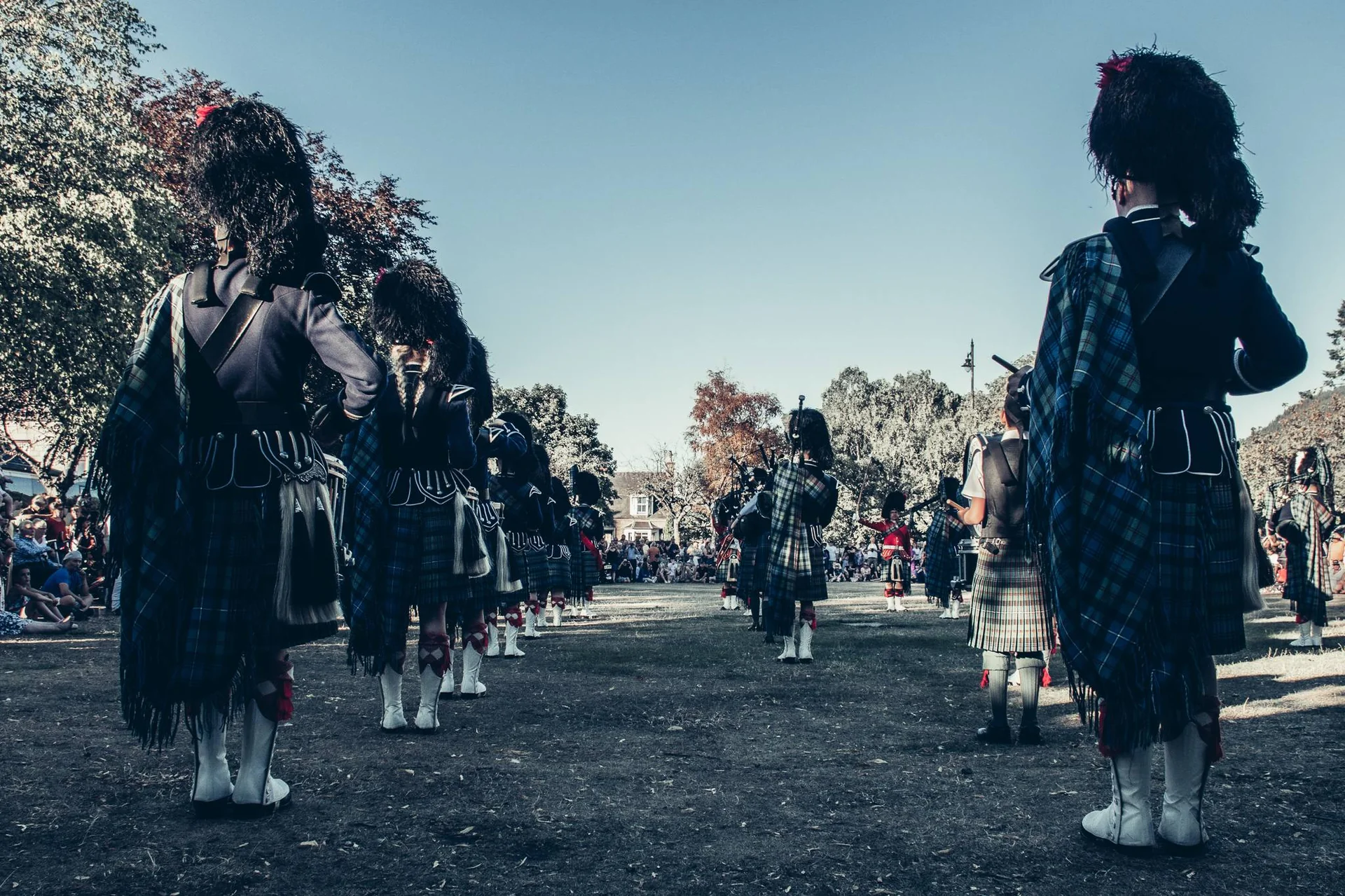
It’s funny how some memories stick with you. On the morning of D-Day, we had breakfast in Édouard with the sound of bagpipes tuning in the distance. One note held, then another, then three, then a chord that gently settles. You understand why this instrument is associated with Scotland: it really has something that grips you when you hear it linger in the air on an August morning in the hills.
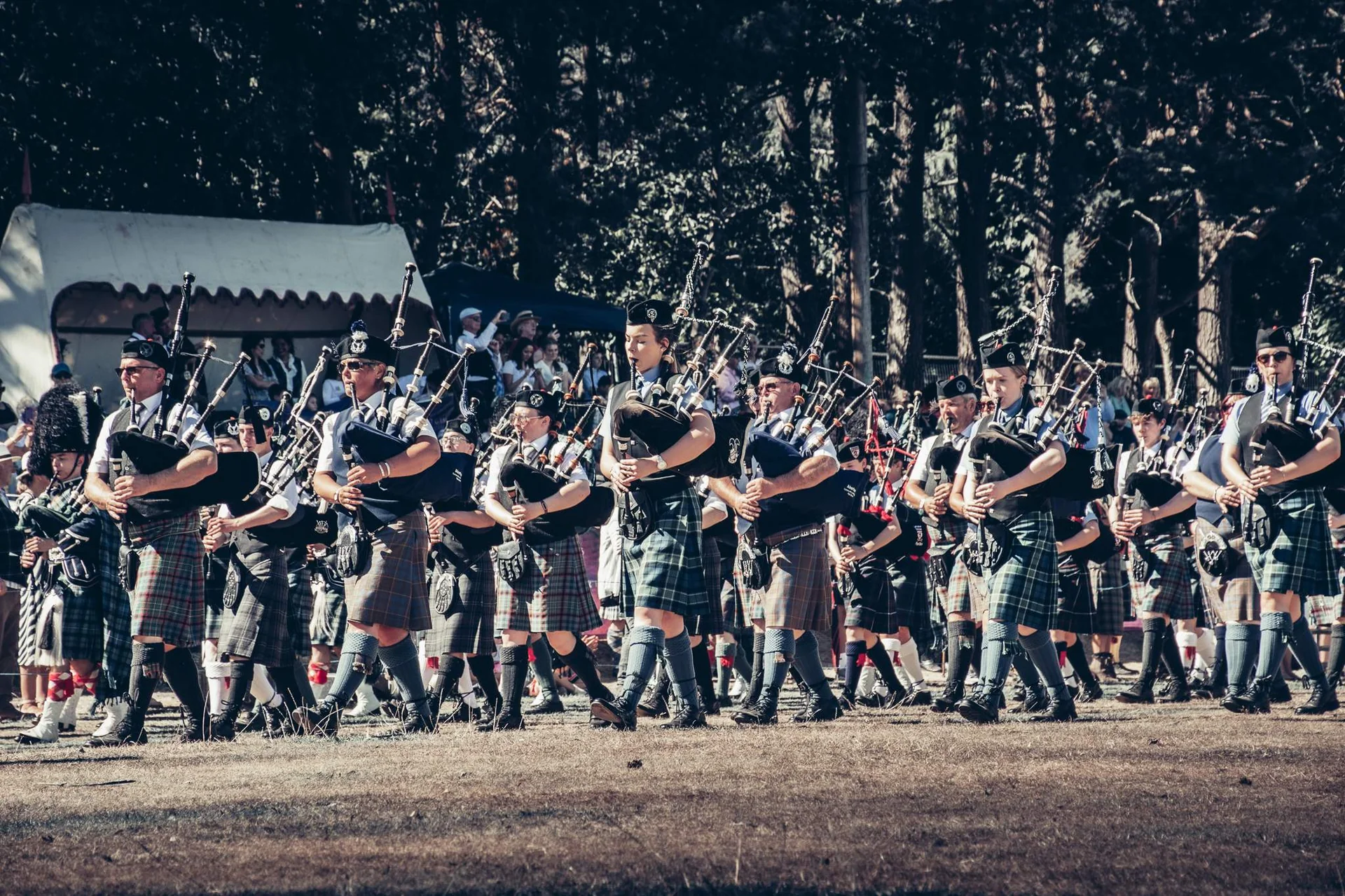
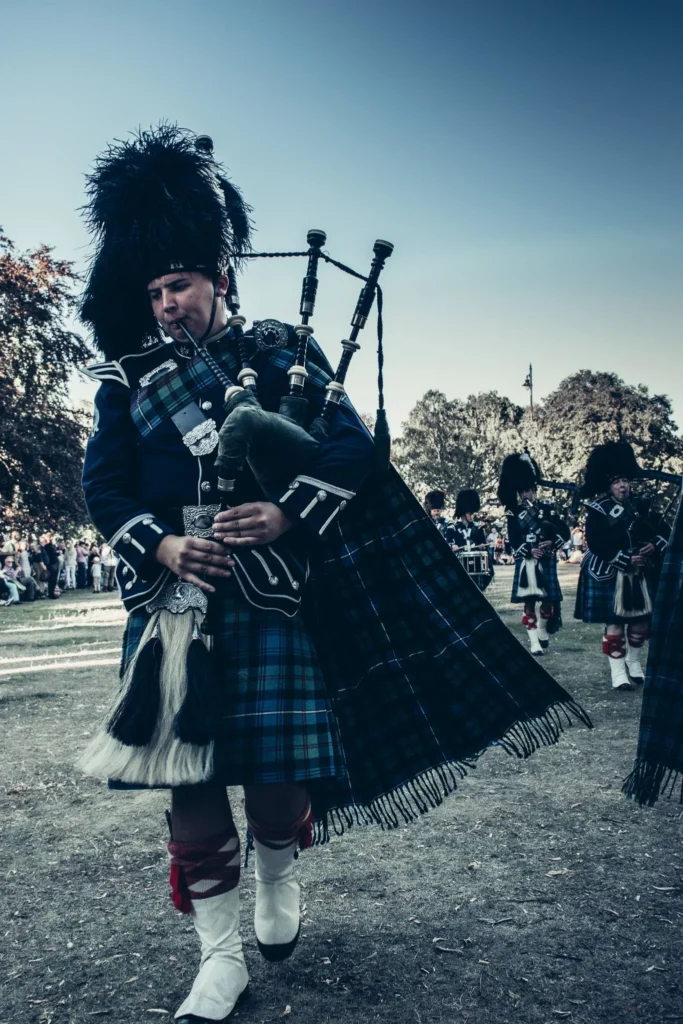
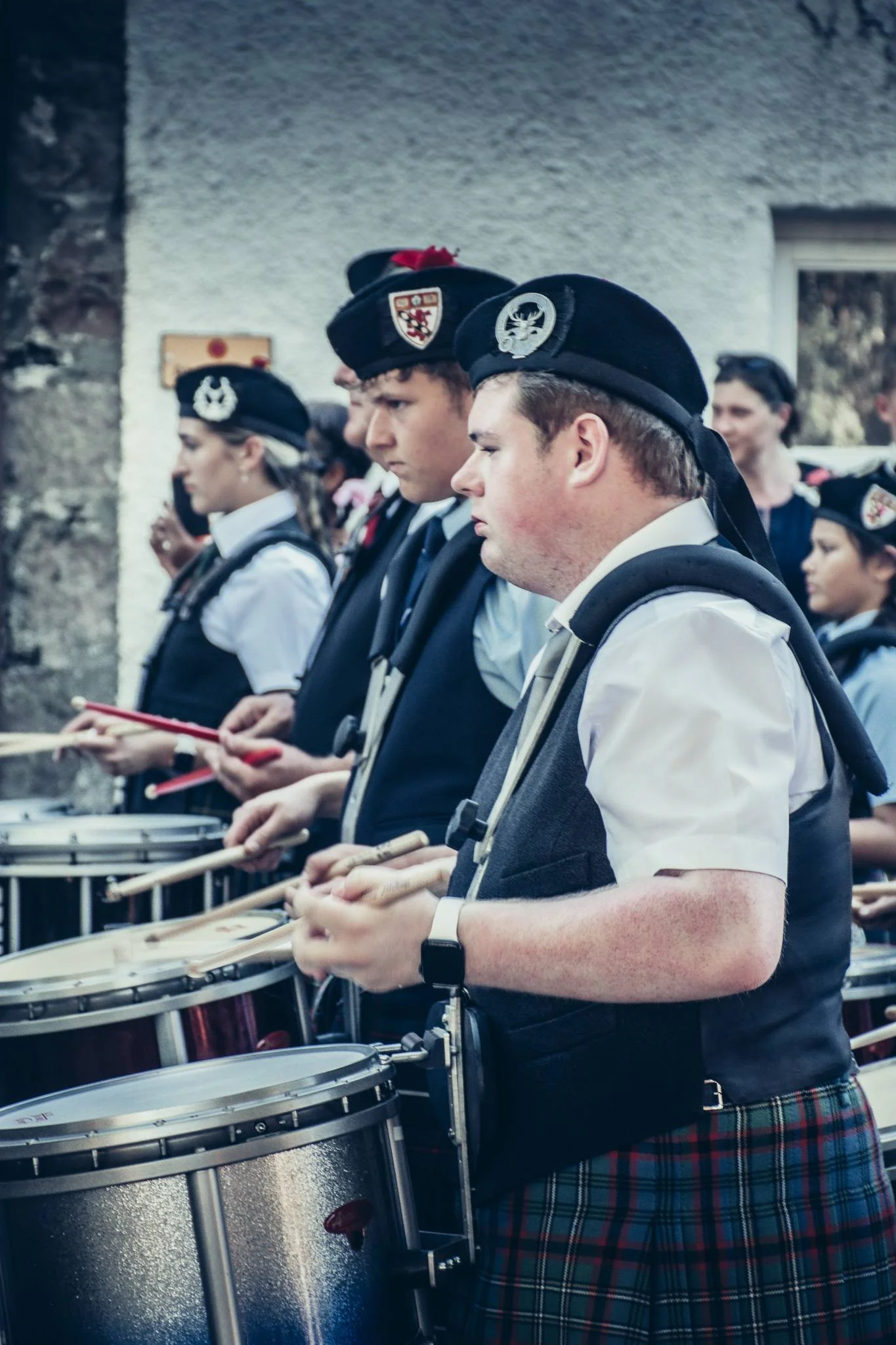
The kickoff is around 11:30 AM, but everything starts well before that. The whole village gradually wakes up, people converge towards the center, and there… surprise. Everyone sets off together. A collective, organized procession that walks from the village to the park where all the games will take place. Bagpipers in front, drums behind, and the crowd following. We’re no longer in a village; we’re in a parade.
“Why not? I seem too old?” : the encounter that sums it all up
On our way to the park, we were taken under the wing of a local lady who offered us a shortcut. She said, “you follow me, I go this way as well.” Caroline and I followed her. I kindly told her, in broken English, to try not to walk too fast (we were already loaded with video gear, in full sun, with big backpacks). Her immediate, witty response: “Why not? I seem too old?” Huge. Everyone burst out laughing. We got a lesson in Scottish humor on the fly, and we understood in two minutes the warmth of the locals we would meet all day.
The atmosphere on site: between funfair and codified competition
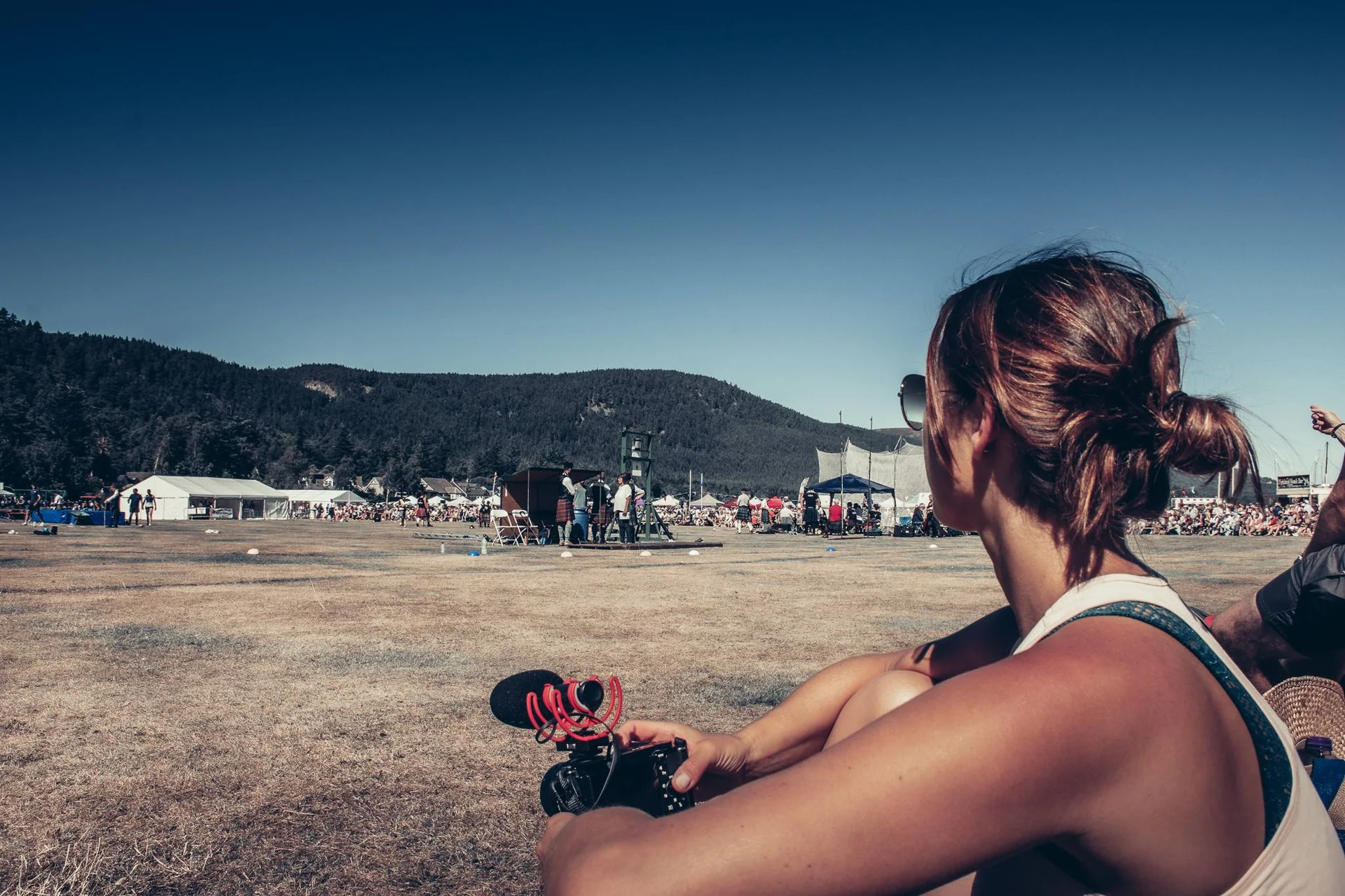
When we arrive at the field, the first mandatory step: the ticket queue. Under a blazing sun. Without a cloud. That day, we realized that yes, you can get serious sunburns deep in Scotland (spoiler: we ended up red, burned, buying sunscreen on our way back to the village in the evening). Well, we wait, enjoy, and observe the locals arriving in line too, many in kilts, many in tartan, some with matching hairstyles.
Once inside, we discover a site that resembles… a mix between a funfair and a sports field. On one side, stands for eating, drinking, rides, games for children (a lot, in fact, it’s very family-oriented). On the other, the main field where events take place all day long. And further away, on the sidelines, the small artisan stands run by the different clans.
The star events of the Highland Games
The caber toss
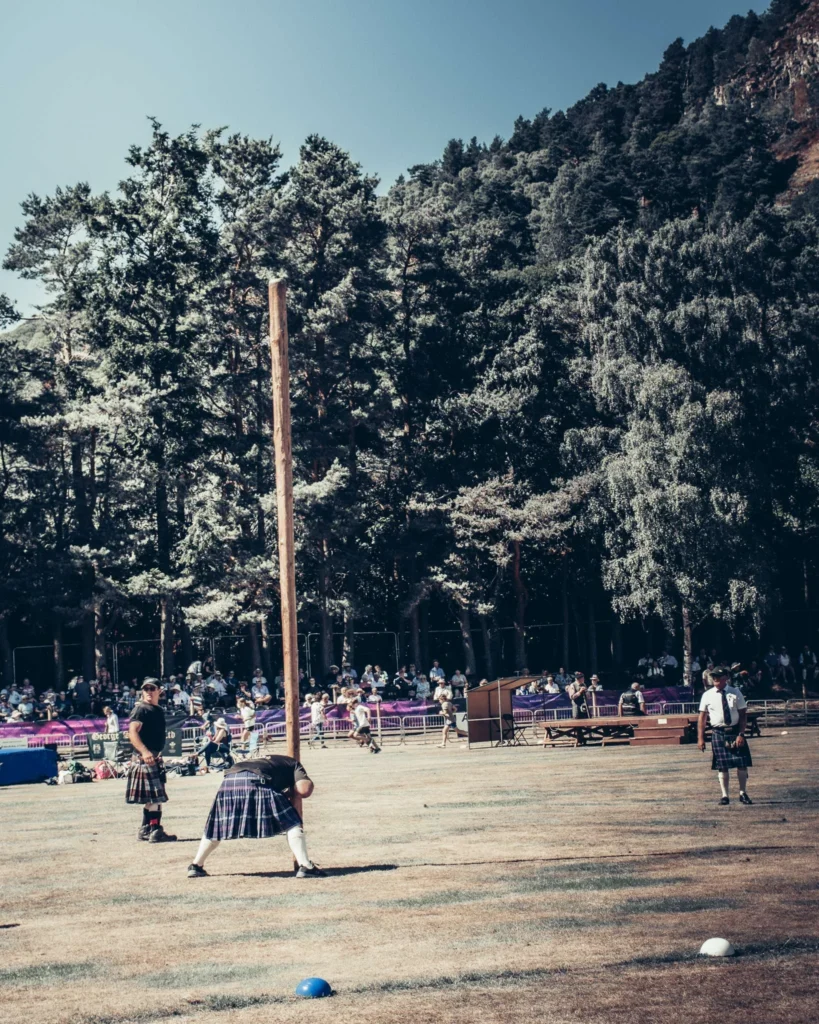
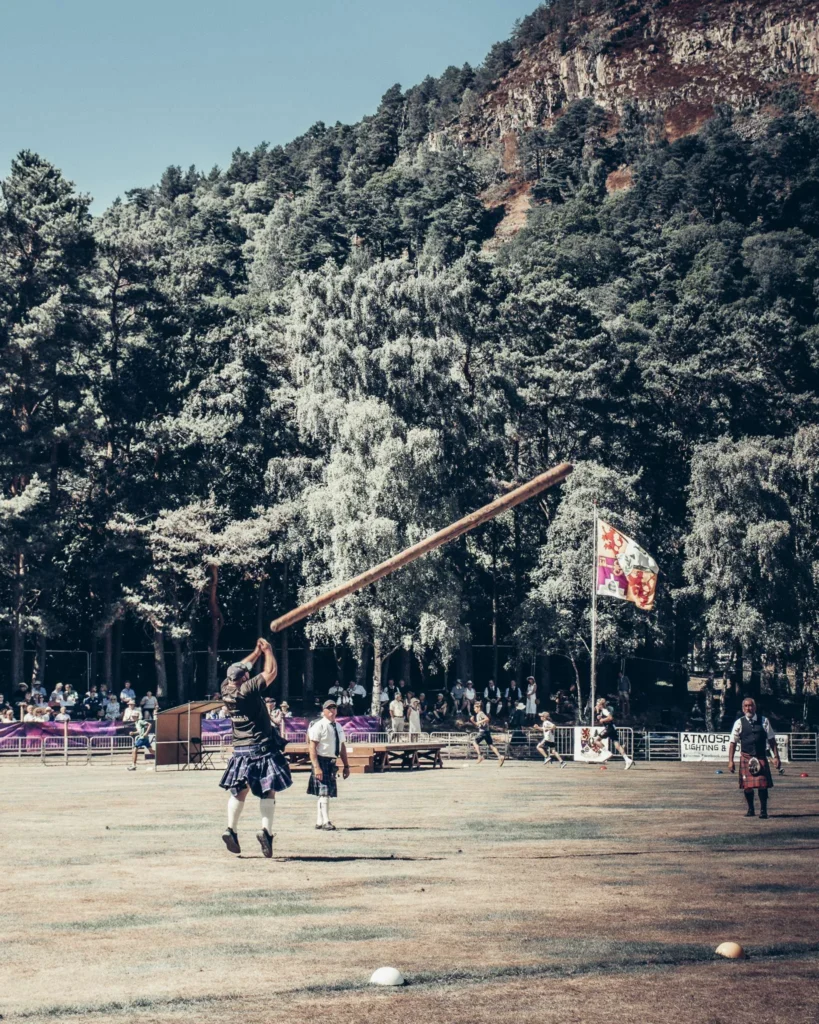
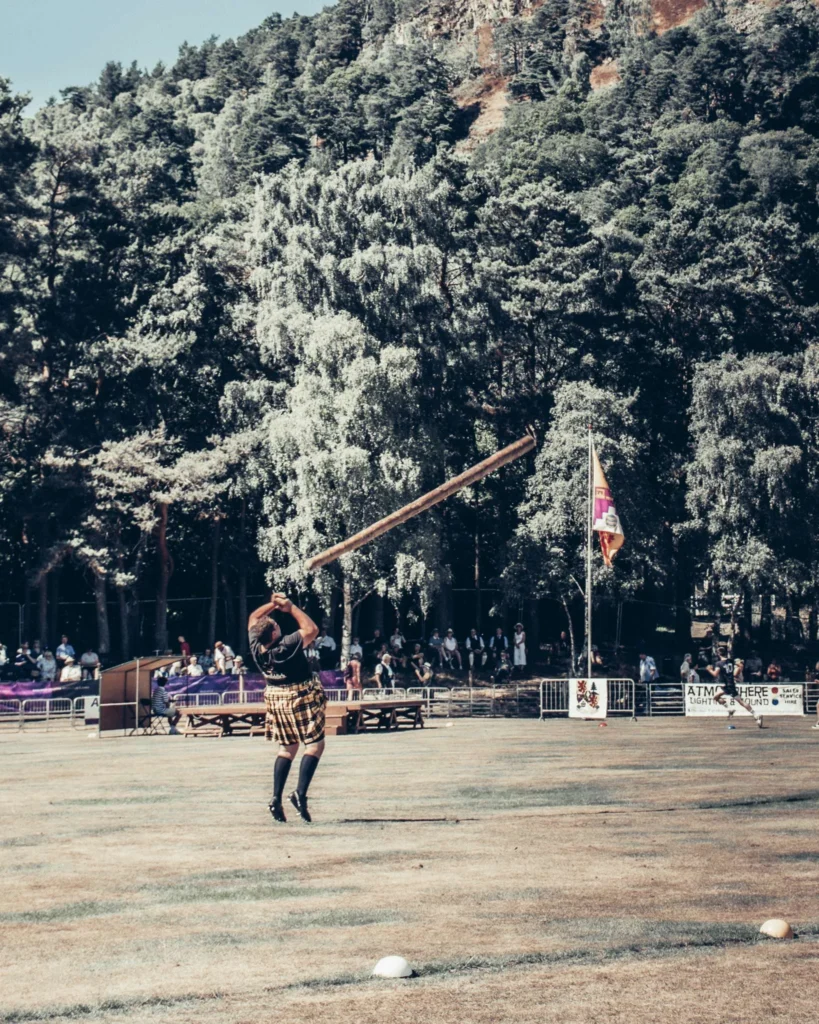
It’s the emblematic event. A stripped pine log about 5.5 meters long and weighing 80 kilograms. The competitor lifts it vertically, holds it for what seems like a quarter of an hour, runs a few meters, and throws it trying to make it complete a full rotation in the air. And there, surprise for the novice: it’s not judged by distance, but by the alignment of the fall. A successful caber toss falls at 12 o’clock, perfectly aligned with the thrower. Caroline watched, fascinated, and asked me, “but why are they happy when it falls right in front of them?” Not so simple to understand when you first discover it.
The weight throw, hammer throw, and “toilet plunger”
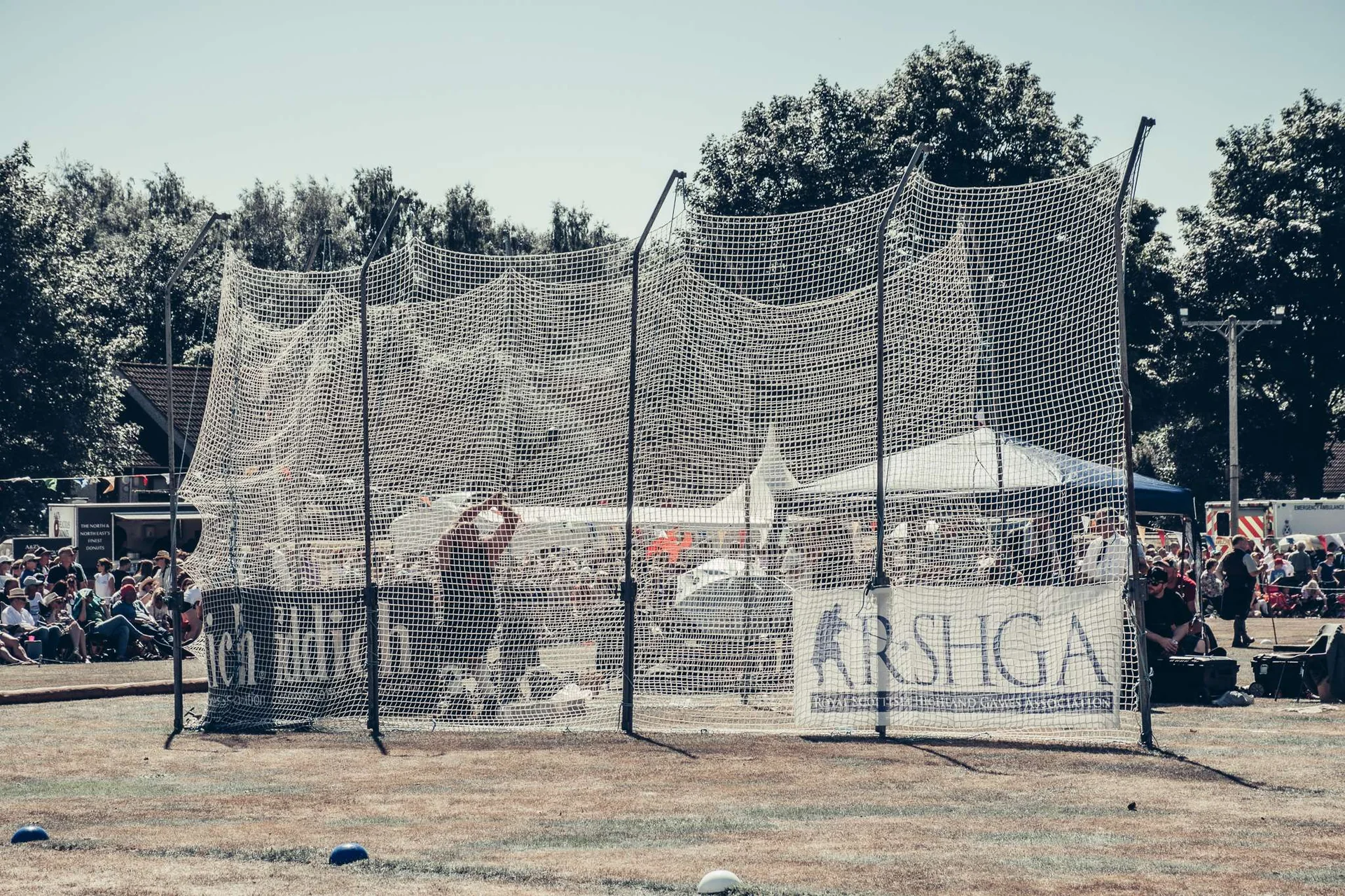
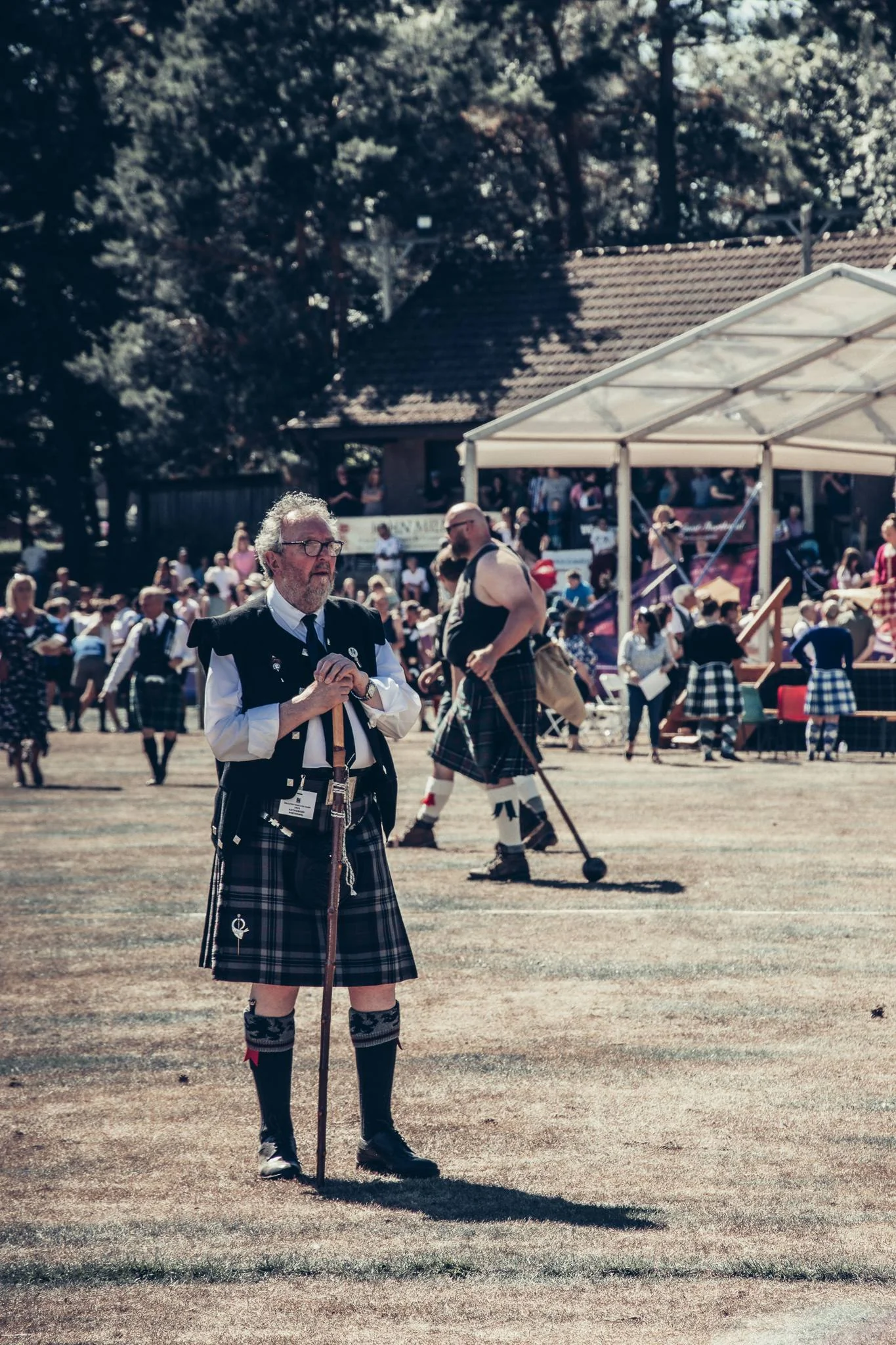
Several other throwing events follow. The weight, a classic (a large metal ball). The Scottish hammer, more spectacular (a ball on the end of a chain). And then what I dubbed on-site “the toilet plunger throw,” because it looked strikingly similar: a stick with a large ball at the end, the competitor spins around to gain momentum, and throws it as far as possible. The guy we were watching, I wouldn’t have dared to say anything bad about his mom, he must have weighed 120 kilos.
Scottish traditional dances (with little girls)
While the strength events take place in the center of the field, in one corner… there are dances. And here, we are surprised: it’s little girls dancing, not big bearded men. The Highland Fling (a dance in place, precise jumps), the Sword Dance (over two crossed swords placed on the ground), and several other coded choreographies. Caroline thought they “danced a bit like crabs,” with a surprising rhythm when you discover it. I was waiting for the moment when it would change (the girls would go throw logs, the guys would dance to the bagpipes), but it never happened. Not that year, at least.
The bagpipe competition, in parallel
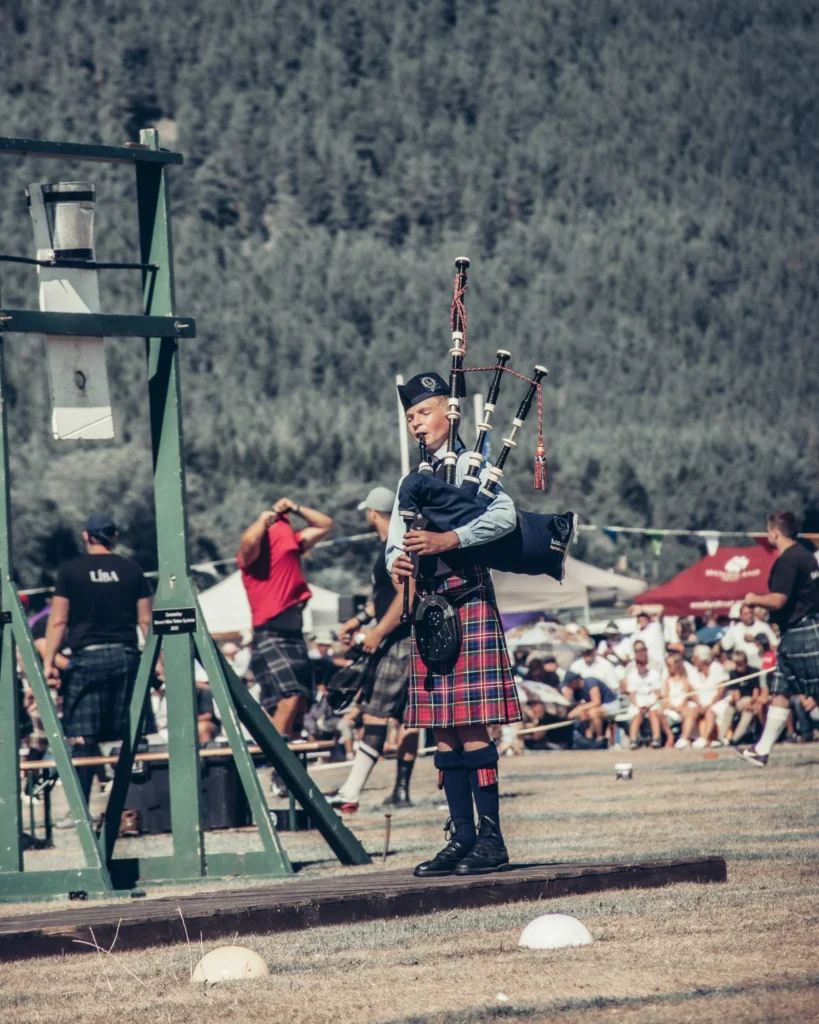
And then in a quieter corner of the site, a continuous bagpipe competition. Young people take turns in front of a jury. We see one, focused, in full practice. This is the most subdued atmosphere of the day, and we stop for a few minutes to catch our breath between two strength events.
Tug of war and sack race
Two other classics: the tug of war, where two teams sweat it out to pull the opponent down; and the sack race… which is only for children, and it’s too cute to watch. All day long the events follow one another, in every corner of the site, and the band passes several times to set the tempo.
Clan stands: honey, wood, whisky, craftsmanship
This is probably the part we underestimated upon arrival, and which turned out to be the most enriching. Around the main field, the different clans each hold a small stand to showcase their local craftsmanship. Honey producers, wood producers, whisky producers (and yes, in great variety, because we are in Scotland), tartan crafts (scarves, cushions, decorative items), miniatures.
And this is where we realize that the Highland Games are not just a sporting competition: it’s also an economic and cultural showcase for each clan/community. People come to win, of course, but also to show what they can do every day. We chatted with two or three producers, tasted local honey, and talked about tartans with a very patient gentleman who explained the differences between the clan colors. Caroline fell for a tartan scarf, not the Burberry scarf, mind you, the real one. Perfect souvenir.
Eating on-site: the big Black Angus disappointment
Well, let’s be frank. Stomach growling mid-morning, we look for something to eat. On-site, a meat stand seems to offer THE specialty of the day: the Black Angus Steak & Cheese Burger. We order two (yes, because we are greedy, and Scotland has a reputation for good meat). Verdict: not good. Really not good. We were disappointed. And the worst part (the original audio of our video was unusable due to wind and background noise, we ended up commenting in voice-over during editing), is that this would be our only Black Angus experience for the entire stay in Scotland. No point in insisting, we settled under the drinks tent with a small beer, and our spirits immediately lifted.

Best UK SIM for a Scotland Road Trip: Highlands, Skye and NC500 Coverage
What internet connection to use during a stay in Scotland? Often questioned by travelers, we explored the various options available in Scotland in this comprehensive article. As always, each solution...
DiscoverThe third half in town: three bagpipe bands in the streets
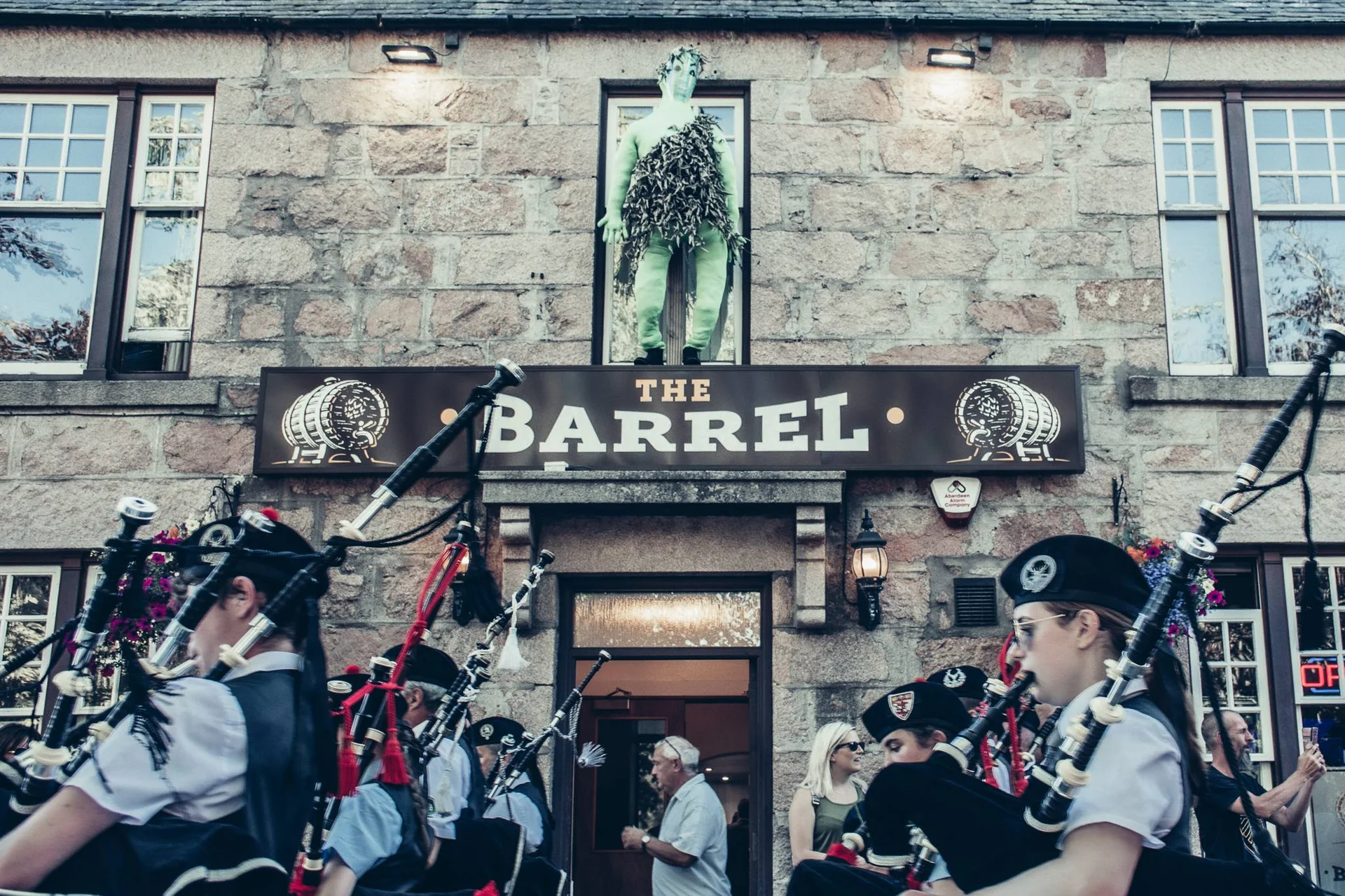
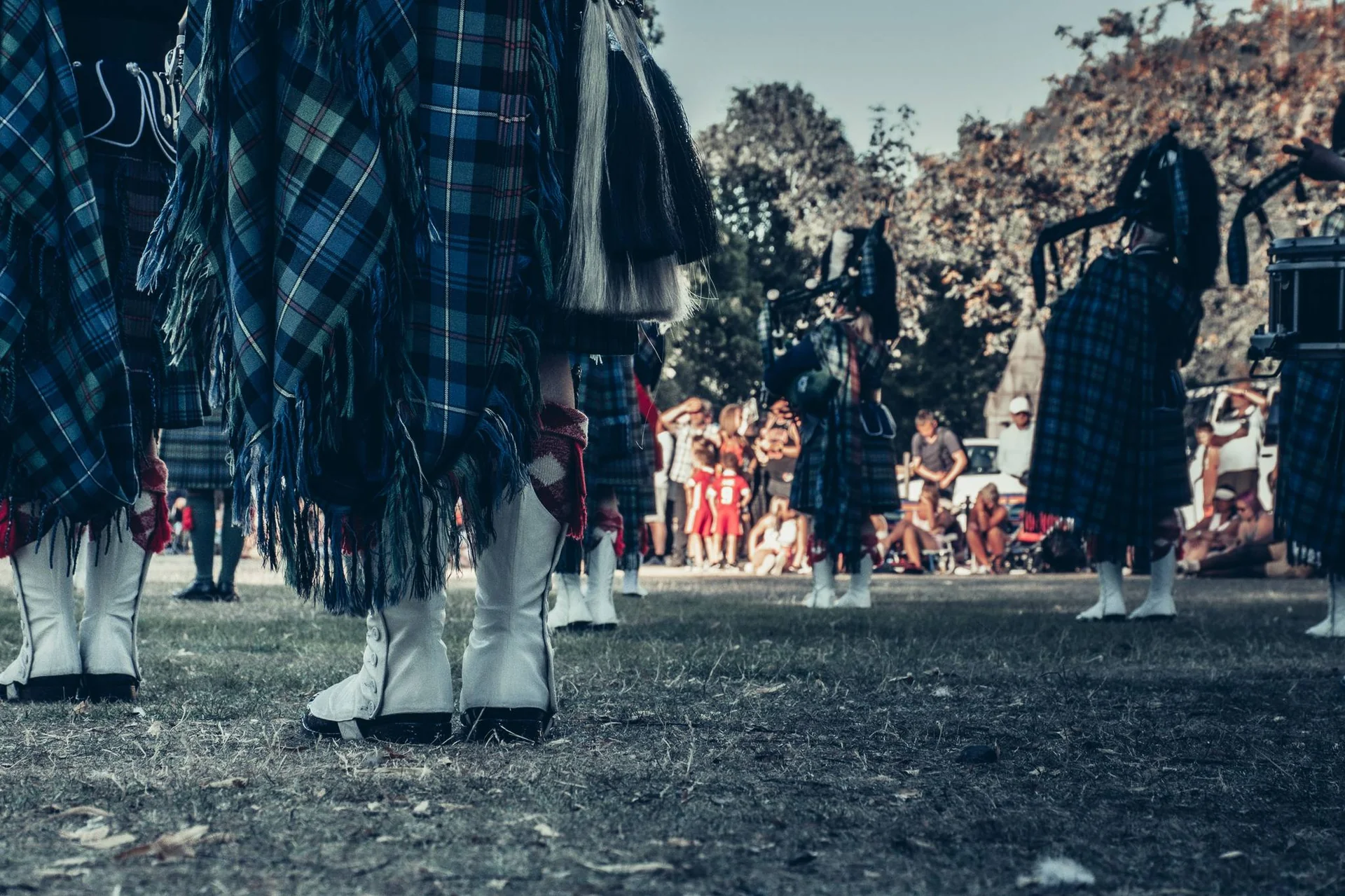
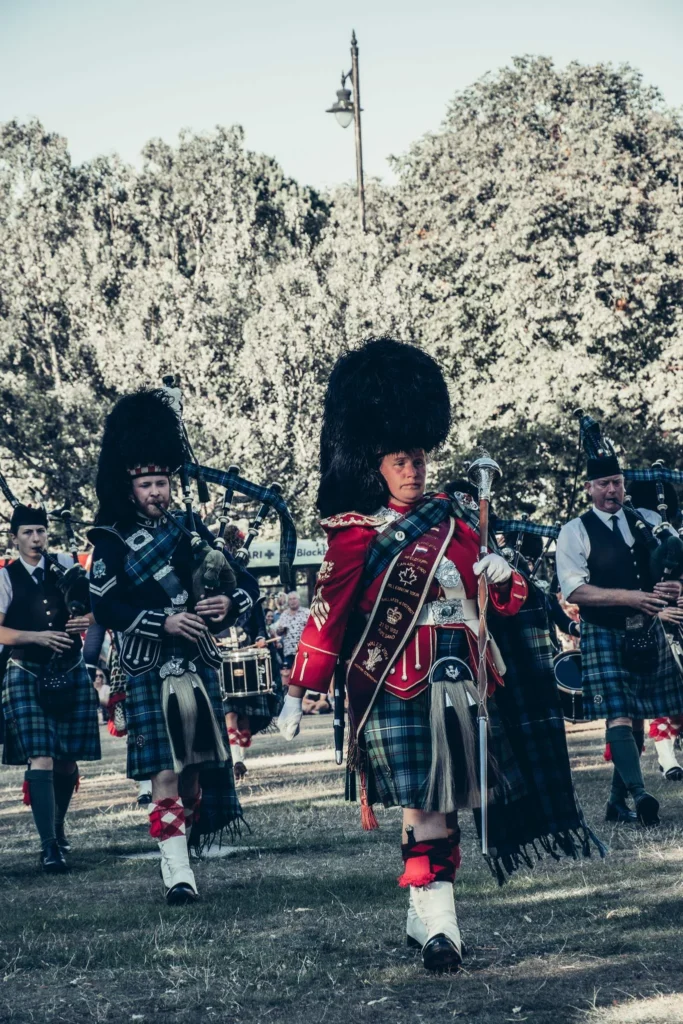
Well, at the end of the day, the field starts to empty. The clans pack up their stands, the competitors put away their gear, and we head back to town for the “third half” as the locals call it. And there… another surprise. Instead of ending quietly with a pint at the pub, we witness three different groups of pipers and drummers parading one after the other in the streets of Ballater. Probably the different clans doing their victory lap in town.
Caroline, round as an egg after two pints and the sun doing its work, says, “Metallica bagpipes… Macarena bagpipe… come on, listen to him honestly.” I don’t know them, I don’t have their CD, they’re on Spotify. A little running gag between us, which we kept for the video.
Honestly, it’s this moment that truly wraps up the day. Not the last event on the field, but this late parade where the whole village comes out on their doorstep with a drink in hand to greet the passing bagpipes. We’re there. We understand why the Scots cherish their Games.
The clans and their tartans: Campbell, MacDonald, Stewart, MacGregor
Finale of the Highland Games (and cultural summary for those interested): the different clans parading in their respective kilts and tartans. Among the most famous: Campbell, MacDonald, Stewart, MacGregor. Each has its own tartan pattern, colors, history, and historical territory in the Highlands. Tartans are not just for dressing: they can be found on scarves, cushions, and a whole range of handcrafted items that can be brought back as souvenirs.
A bit of history to understand why the tartan is so symbolically charged. After the Jacobite defeat at Culloden in 1746, wearing the kilt and playing the bagpipes was banned by the laws of proscription, with the idea of crushing the Gaelic identity of the Highlanders. For several decades, wearing these clothes became an act of resistance. When the laws were eventually lifted and the 19th century restored a central place to Scottish identity (with a serious boost from Queen Victoria who loved the Highlands), the kilt and tartan became both a national symbol and a marker of belonging to a clan. Today, the Highland Games are one of the few places where this culture is still visibly alive, not in a museum.
Where do the Highland Games really come from?
The tradition dates back a long way. Legend attributes their creation to King Malcolm III in the 11th century, who supposedly organized a race on the slopes of Craig Choinnich, near Braemar, to select the best messengers of his kingdom. It’s probably more complex than that historically, but the root is there: very ancient, linked to clans, the Highlands, and contests of strength and speed among members of the same community.
The modern Games, on the other hand, were mainly codified in the 19th century. Queen Victoria, who spent her summers at Balmoral just next to Ballater (and at Braemar for the Games), greatly contributed to popularizing them by attending the Braemar Games every year since 1848. Her royal endorsement made the Highland Games a fashionable event, and every small town began to organize its own.
Today, the Highland Games are:
- a serious sports competition (with a real national association, the Scottish Highland Games Association, that standardizes the events);
- a cultural festival (traditional dance, bagpipe, and drumming competitions);
- a means of transmitting the Gaelic identity of the Highlands and the clans, which otherwise might have become purely folkloric.
People come for both the events and the rest, and it’s precisely this depth that makes the experience so memorable.
Which Highland Games to choose for your road trip?
Our choice. A small village in the Dee valley, family atmosphere, warm welcome, parking in front of the Church that accommodates motorhomes for several nights with public toilets on site. The size of the Games is medium, allowing you to see everything in one day without rushing, and to really feel the atmosphere of the clan stands. The proximity to Balmoral (10 minutes by car) is a bonus if you want to make a detour to the castle.
Verdict: ideal for a first Highland Games on a vanlife road trip, accessible atmosphere, simple logistics.
The most historical and probably the most prestigious: the Braemar Gathering, early September. These are the ones popularized by Queen Victoria in the 19th century, and the British royal family traditionally attended (the site is right next to Balmoral). Very crowded, it’s advisable to book your spot well in advance, and expect higher prices (entry + parking).
Verdict: for history enthusiasts, more solemn atmosphere, stronger budget and crowd expectations.
The largest in the world. Over 3,500 competitors each year in dance, bagpipe, and sports events. Three days of events, crazy atmosphere, but also a large crowd.
Verdict: for those who want to see THE big show. Less ideal for a first Games on a vanlife road trip (denser organization, more complicated logistics for motorhomes).
Inverness, Pitlochry, Dornoch, Aboyne, Lonach… the list is long. The Scottish Highland Games Association publishes the official calendar each year on shga.co.uk. Note: Lonach (late August, near Strathdon) has the particularity of featuring a parade of armed “Lonach Highlanders” (swords, halberds) marching through the valley, which is very specific.
Verdict: each Games has its own personality. We recommend medium-sized Games for a better experience of the atmosphere and encounters.
Road trip and vanlife tips for the Highland Games
And here is our checklist after our experience in Ballater, to be adapted according to the chosen event:
FAQ Highland Games in Scotland
When do the Highland Games take place in Scotland?
What are the most famous Highland Games?
What is the caber toss?
What is a clan and what are tartans used for?
Where do the Highland Games come from?
How much does it cost to enter the Highland Games and what budget should you plan for?
How to dress for the Highland Games?
How to get to the Highland Games on a road trip or in a camper van?
To go further on the Scottish road trip
Discovering Ballater on a road trip and in a van: Complete Guide
Prepare your RoadTrip to Ballater with our complete guide. History, climate, budget, where to sleep, we cover everything so you can make the most of your trip to Ballater.
Read more
Discovering Edinburgh by road trip and van: Complete Guide
Discover Edinburgh in this travel guide for everyone, perfect for van road trip enthusiasts. Explore the history, budget, where to sleep, where to park, where to eat, and what to...
Read more
Discovering Arbroath on a Campervan Road Trip: Complete UK Guide
Red sandstone cliffs, the famous Smokie, Arbroath Abbey and a working harbour. Our UK guide to Arbroath by campervan, with overnight spots, Smokie tasting and Angus coast walks.
Read more
Discovering Stonehaven and Dunnottar by Campervan: Complete UK Guide
Dunnottar Castle on its sea cliff, a working fishing harbour, the seals and the most photogenic ruin in Scotland. Our UK guide to Stonehaven and Dunnottar by campervan.
Read moreOur PS that adds nothing
We fidgeted so much during the bagpipe events that we had a song stuck in our heads for the rest of the stay. We hummed it while doing the dishes in Edward. We hummed it while starting in the morning. At one point, Caroline said, “OK stop, let’s change the song.” I replied, “Yeah, but we don’t have their CD, they’re on Spotify.” She didn’t speak to me for 10 minutes. Very good Highland Games.

We're Caroline and Xavier
We drive to a place, stay long enough to get it wrong a few times, then write the guide we wish we'd had: parking, timing, what's worth the detour.
Ce que vous souhaitez recevoir :