


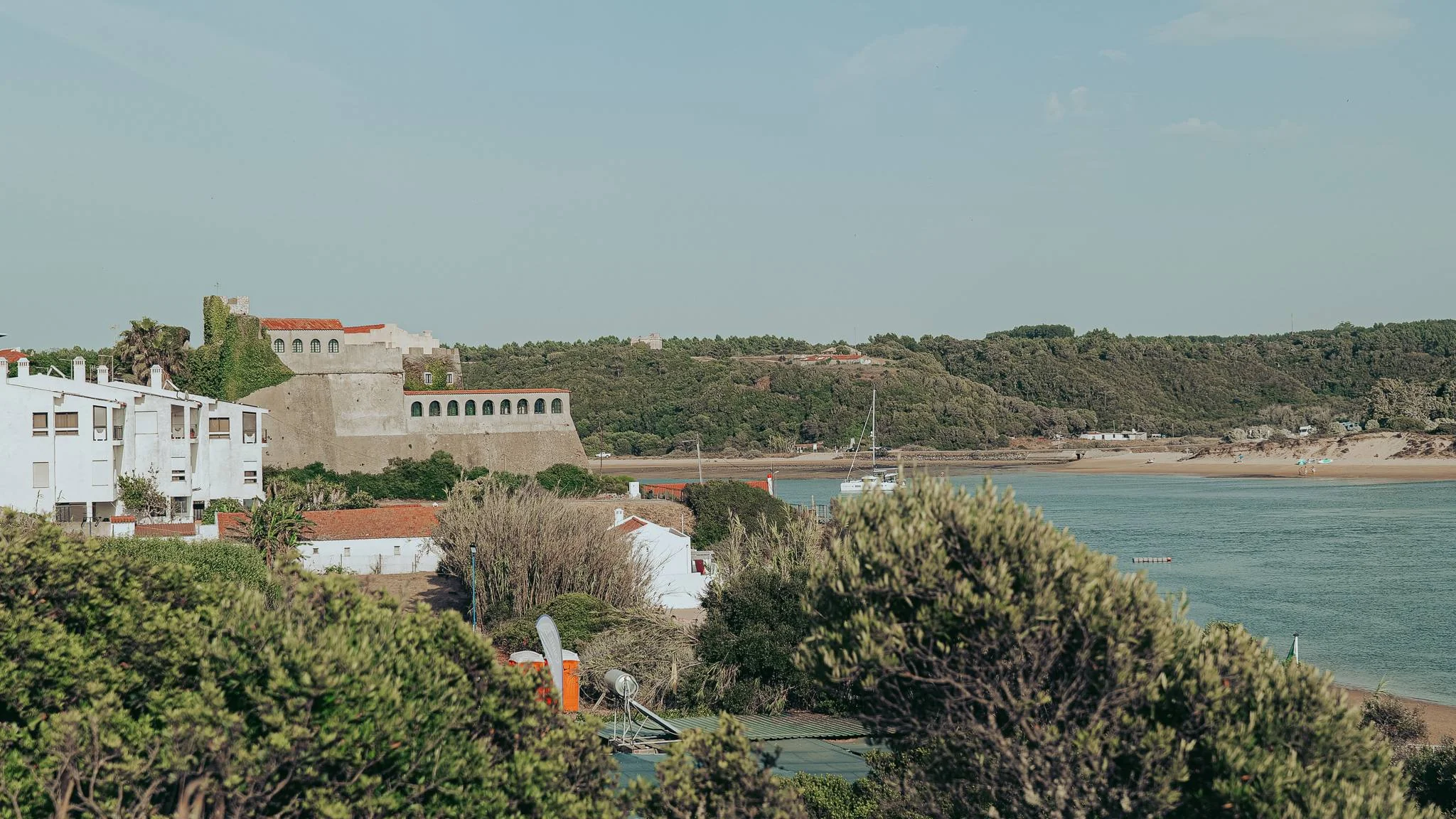
There are towns you fall for instantly, and then there’s Vila Nova de Milfontes… that one, I’ll be honest, I started out properly hating, to the point of swearing we’d never set wheels there again. And yet, on paper, it had everything going for it: a small town perched on the Alentejo coast, at the mouth of the River Mira, halfway between Porto Covo to the north and Almograve to the south, right in the heart of the Costa Vicentina. Best of all if you’re holidaying in the Algarve: it’s barely 1.5 to 2 hours from Faro airport, where most of us land, and about two and a half hours from Lisbon. In other words, the kind of easy escape you can tack onto a classic Algarve trip, the sort of stop you inevitably bump into when driving down Portugal’s west coast in a motorhome. But it took us a while to work out what it was really worth, because the first time, everything started… very badly.
Vila Nova de Milfontes: our worst first contact
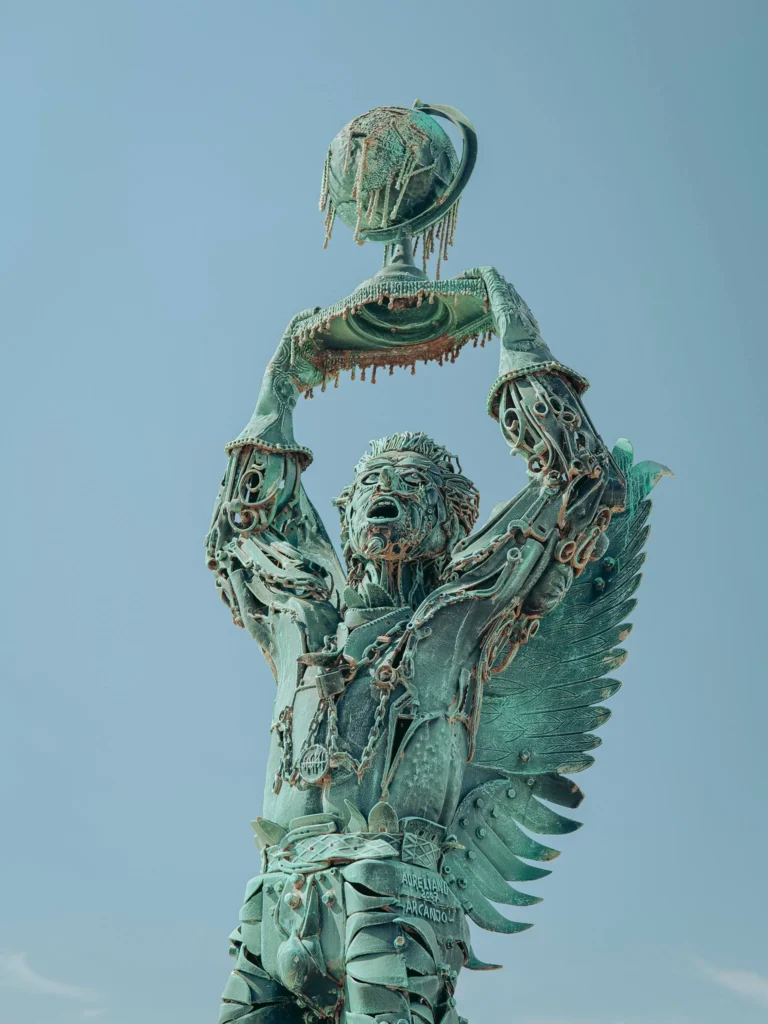
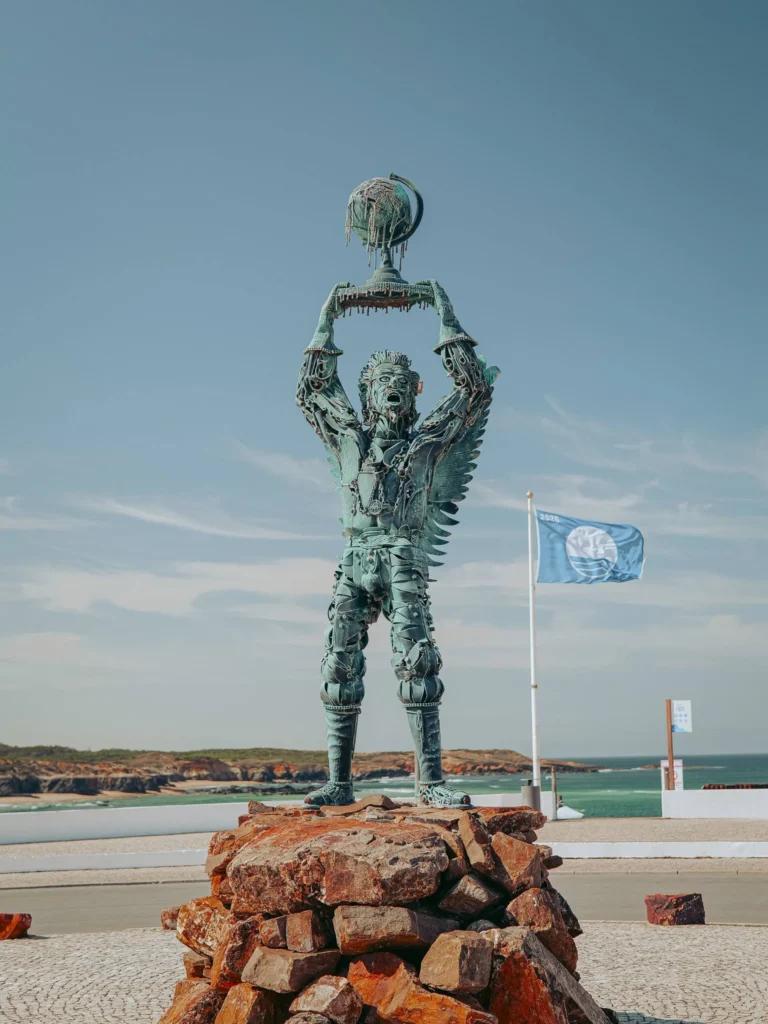
It was back in 2021, on our first drive down through Portugal. We were rolling along the coast thinking, go on, let’s stop in Milfontes, and I stupidly turned down a little road heading towards the lighthouse, the maritime police and a curious winged statue… a road closed to motorhomes, of course, only I didn’t know that yet.
And there they were, the GNR (the Portuguese rural police, for the uninitiated), who’d been quietly tailing us, waiting until we’d gone all the way round the roundabout before pulling us over. The kind of patience that smells of a fine. And because I’ve got a name that sounds Portuguese but barely speak a word of the language, the officers reckoned I was taking the mickey, pretending not to understand… lovely atmosphere. We didn’t even set foot in the town, just paid the fine and left fuming (alongside the one we’d picked up in the Netherlands, it stayed one of our first big mishaps of the trip). That’s how Milfontes came into our lives: through the worst door possible.
The funniest bit is that I’d only learn much later that this cursed roundabout is actually the finest viewpoint in town… but I’ll come back to that at the end.
Plan your trip: Portugal
Compare rental companies and book at the best price.
Booked on Trip.com — partner link.
Provided by Holafly, our partner.
5% off with code LAPLANETEDECARO
Booked on Holafly — partner link.
What to see in Vila Nova de Milfontes: the old town and the São Clemente fort
We came back through much later, one autumn evening in 2025, arriving late and parking more or less at random on a patch of open ground that turned out to be rather well placed, on the edge of the old town. And instead of waiting for the next day, we did something very simple: we hopped out of the van and went straight for a wander into the falling dark. That was the exact moment Caroline and I looked at each other and thought the same thing… actually, it’s beautiful here.
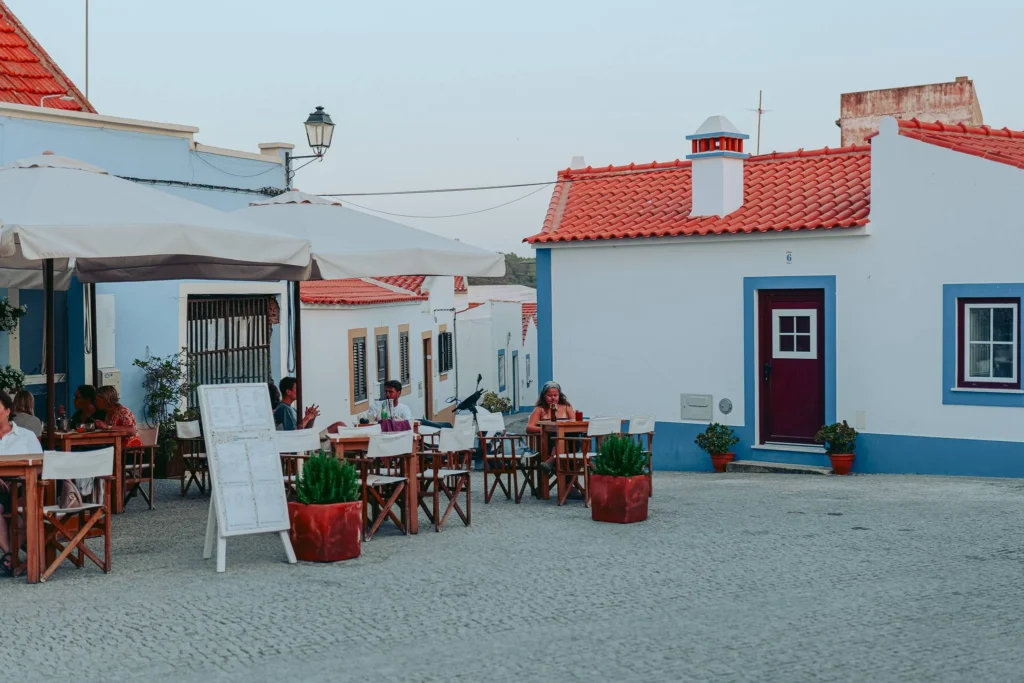
The old town is tiny, compact, and that’s precisely its charm: white facades, orange roofs and those coloured borders around the windows and along the base of the walls that we’d already clocked in Porto Covo. Nothing spectacular, nothing polished up for tourism, just something real. We rounded off the evening in a small unpretentious eatery (Projecto Papaya, address further down), and by the next morning we were already leaving, half-hooked on the place without even realising it.
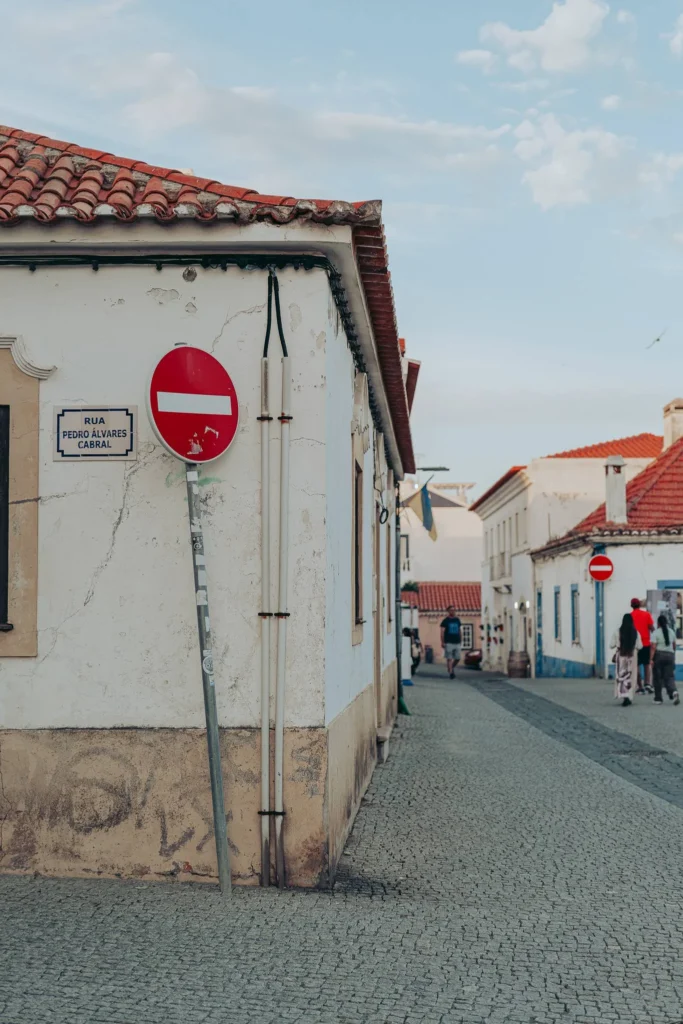
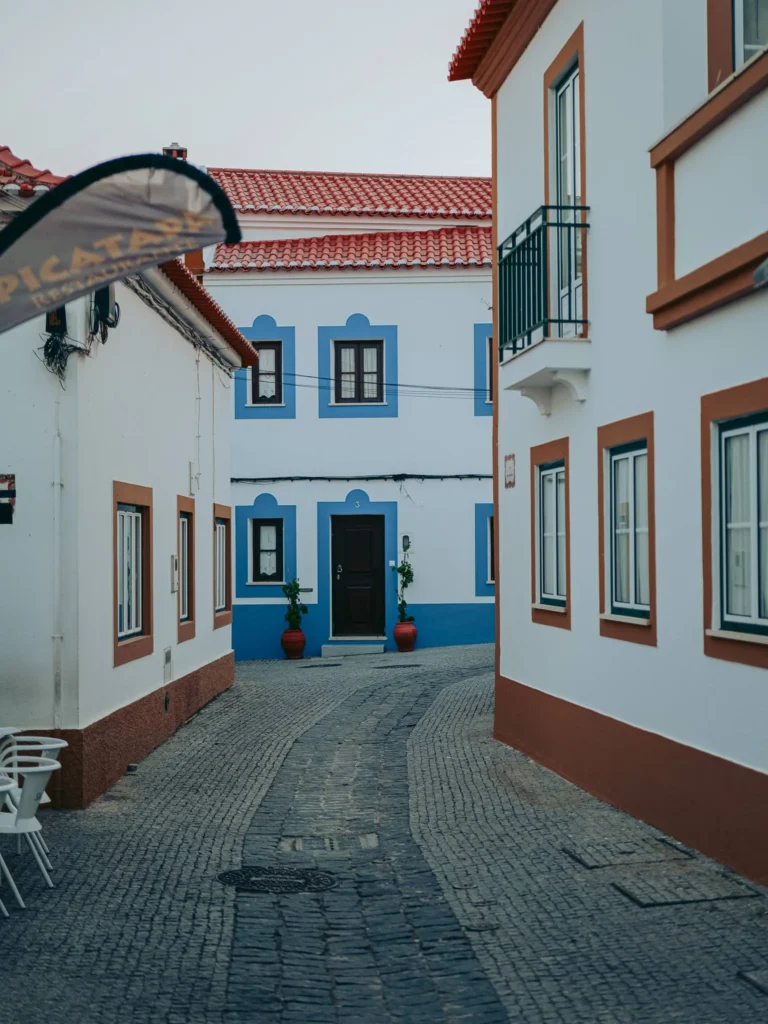
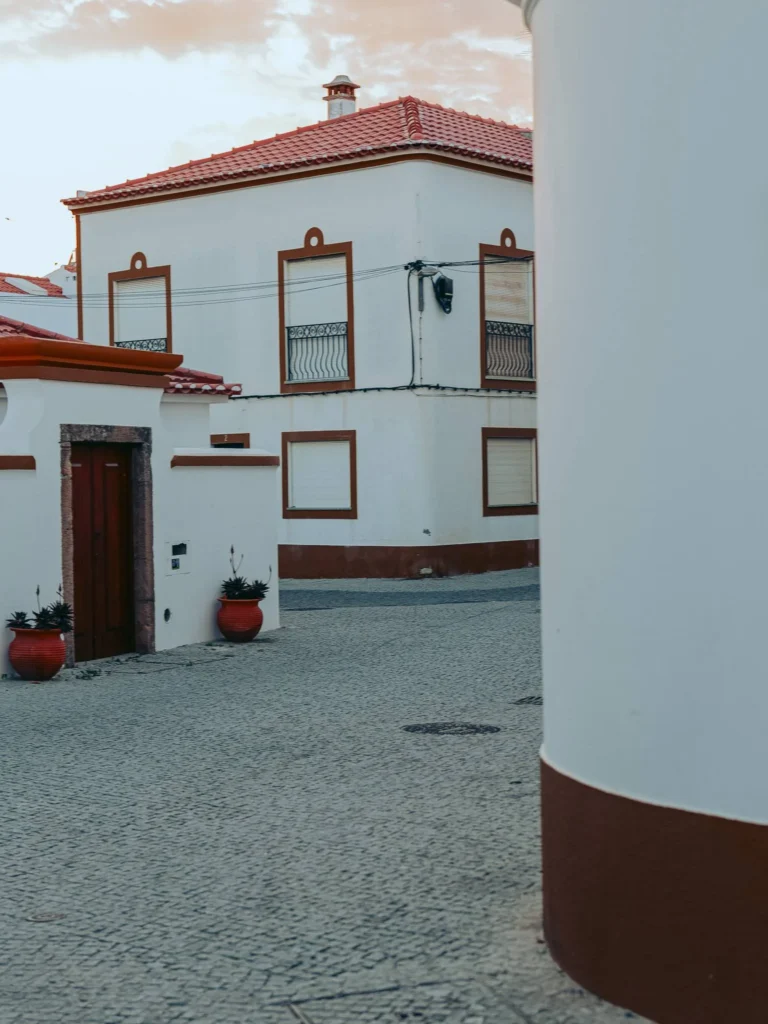
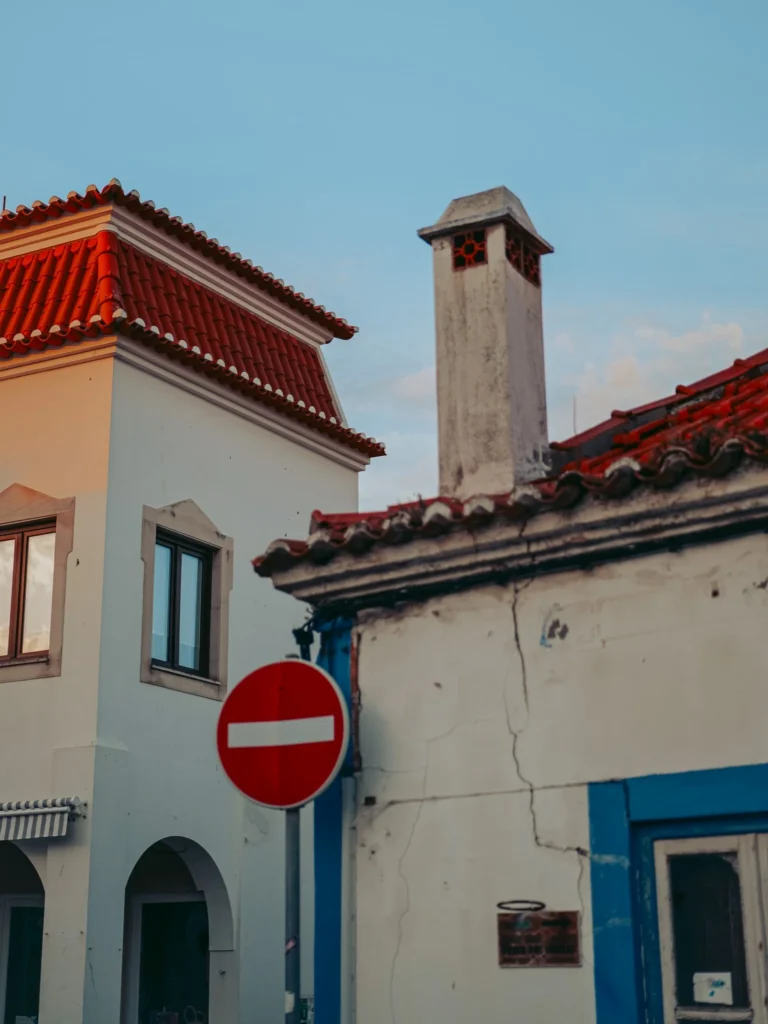
Wandering about with our heads in the air, we kept stumbling on the little details that make up Alentejan charm: chipped blue wooden doors, whitewashed walls picked out with colourful stripes, the very plain church on the corner of an alley. We snapped away, naturally.
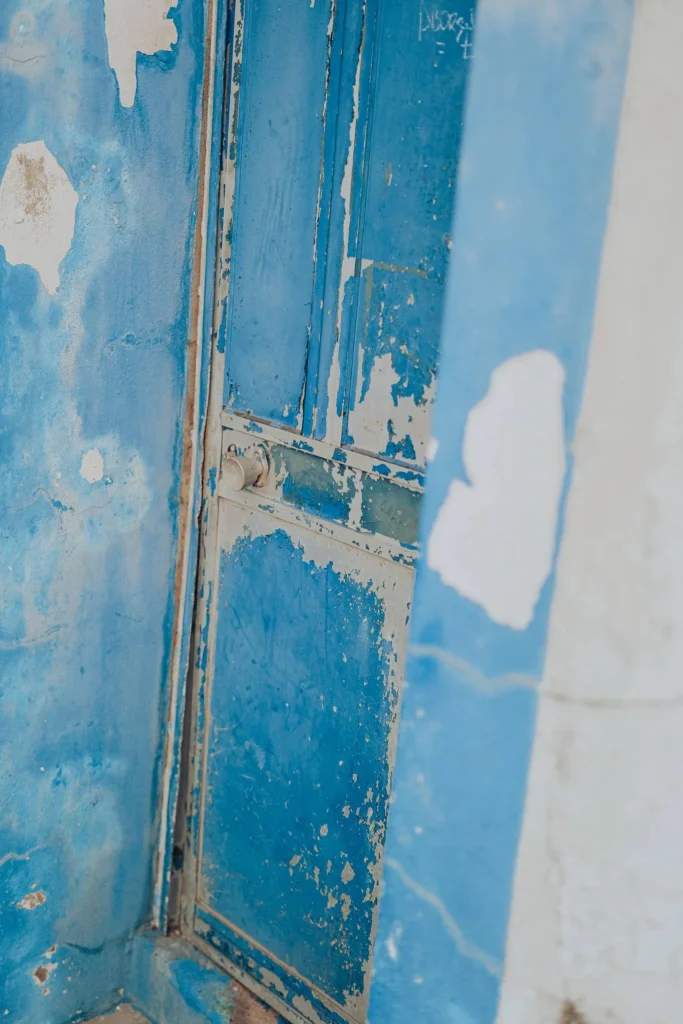
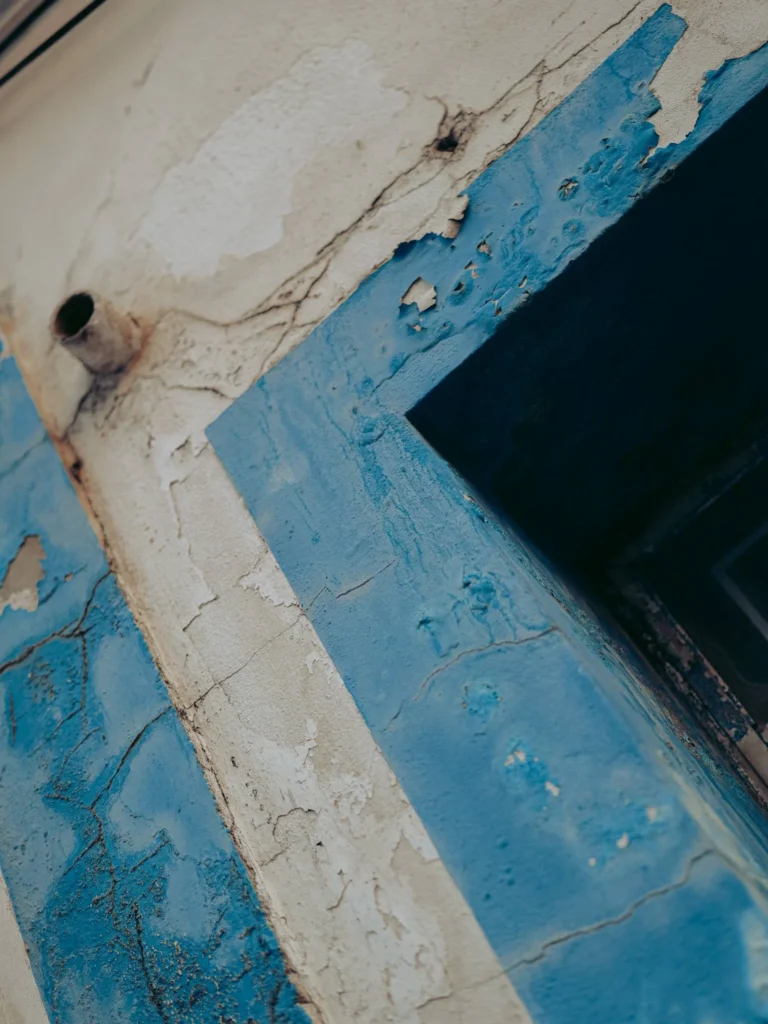
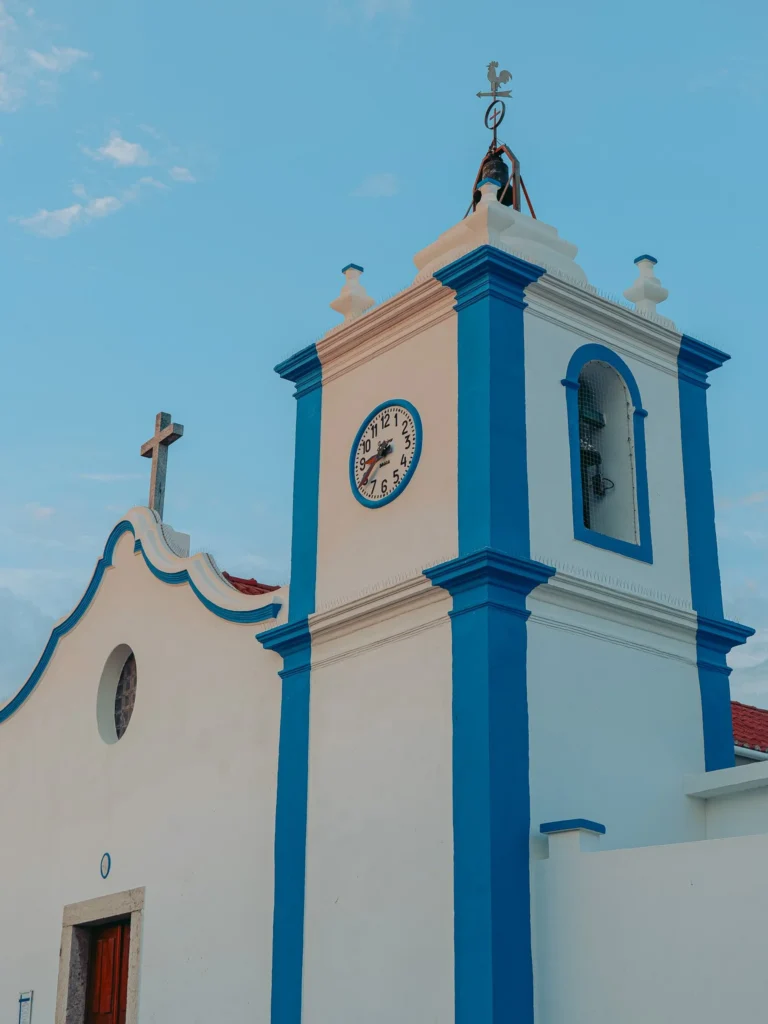
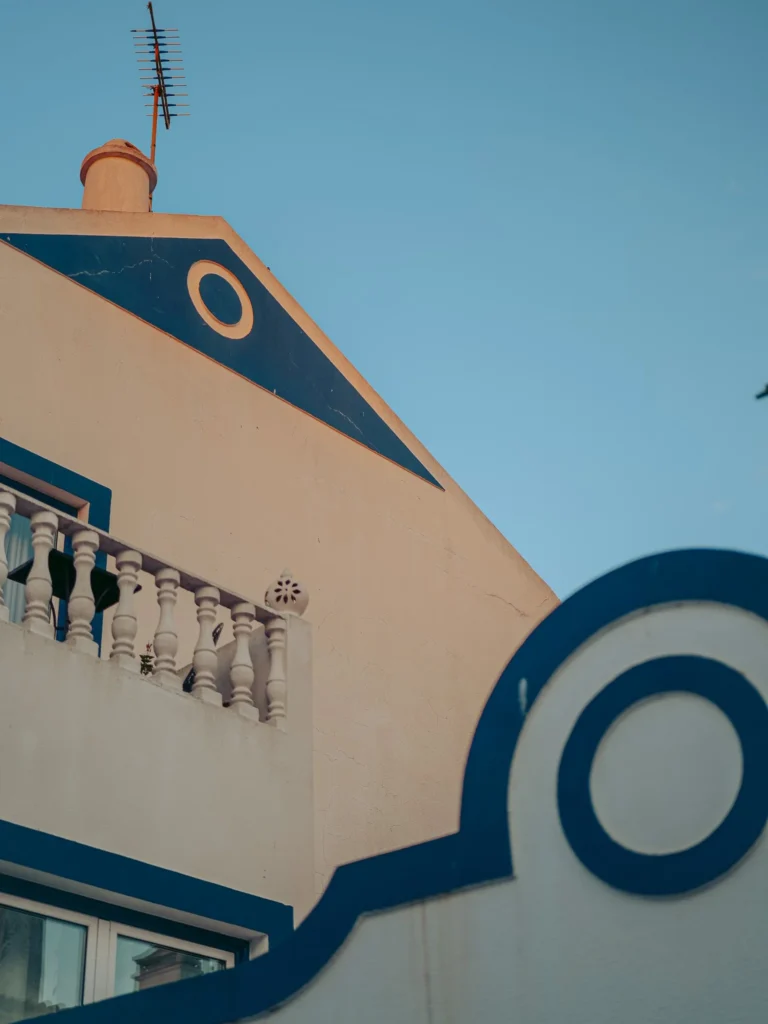
What we didn’t know yet is that this little village has quite a past. Founded in 1486, it grew prosperous thanks to its port on the Mira, which today earns it the rather lovely nickname of “Princess of the Alentejo”. Trouble is, a port also attracts trouble: between the 16th and 18th centuries, Milfontes was raided by privateers from North Africa, to the point of being all but razed in 1590.
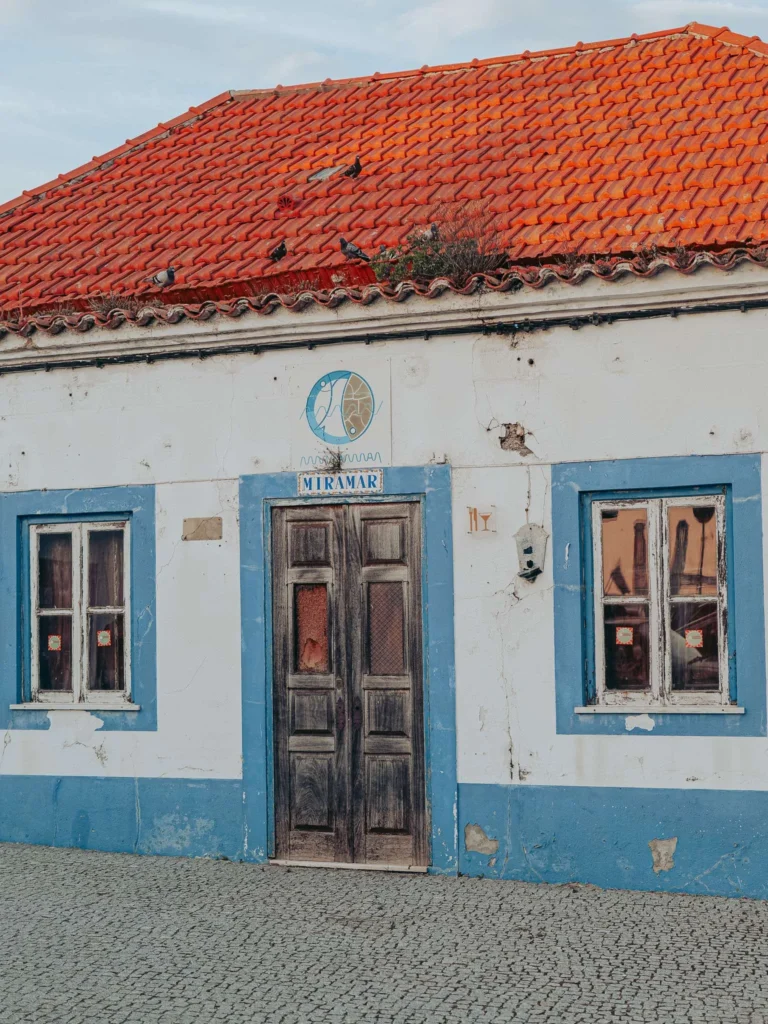
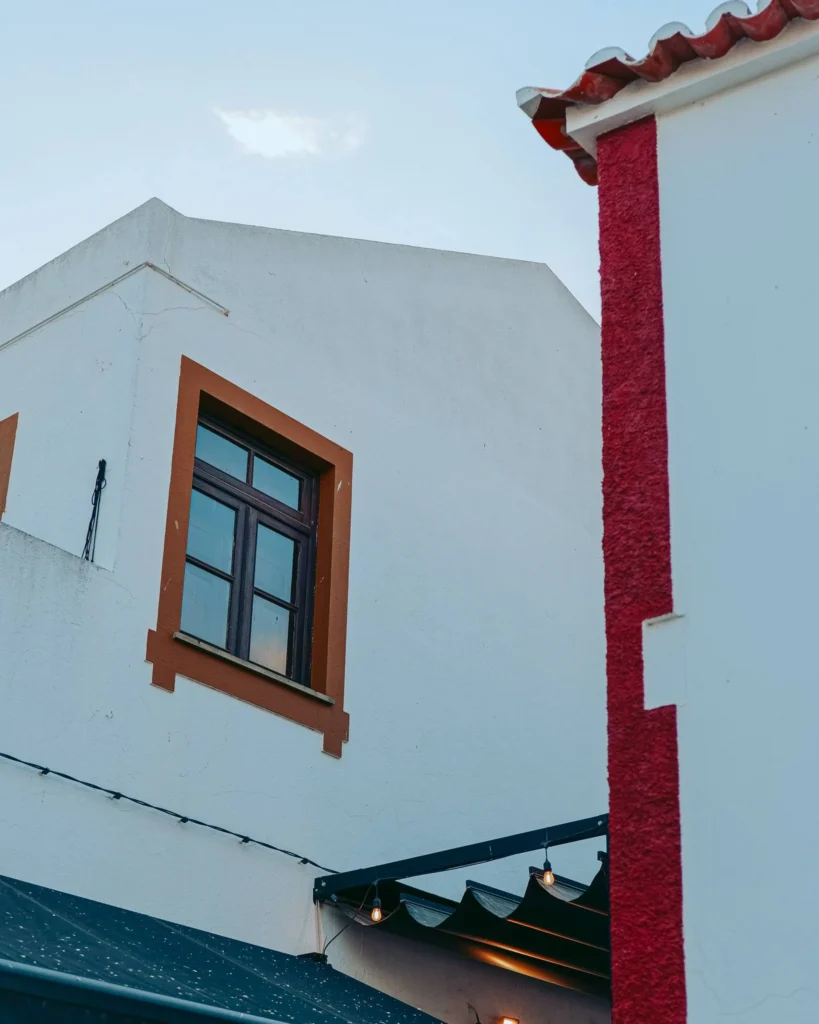
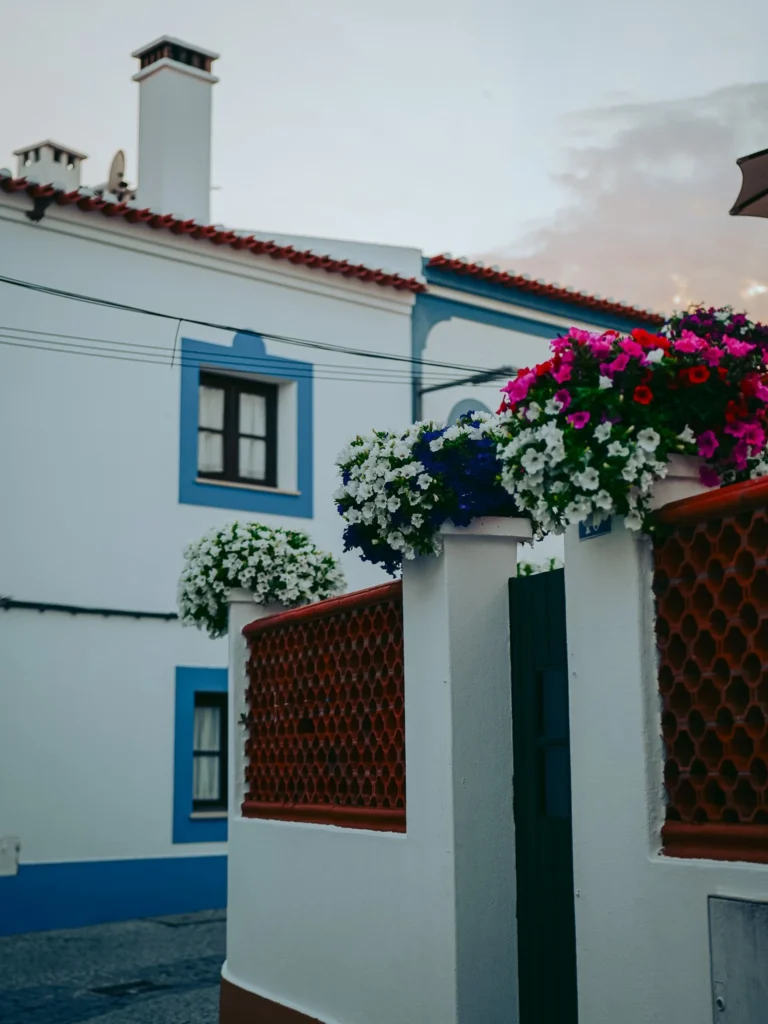
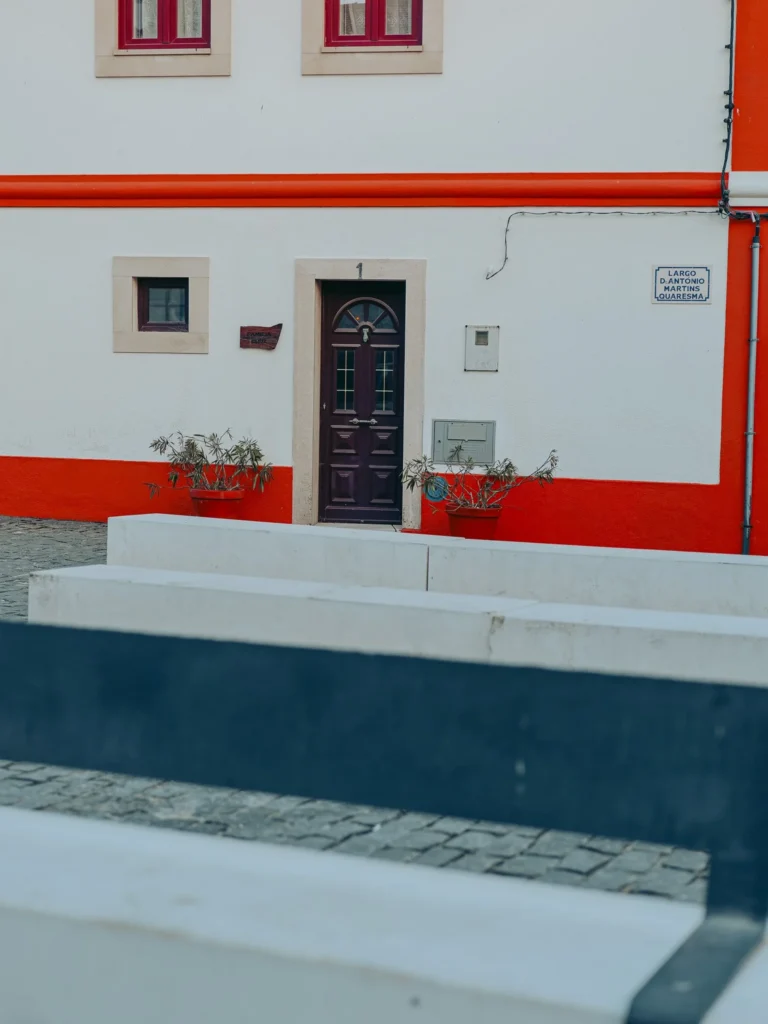
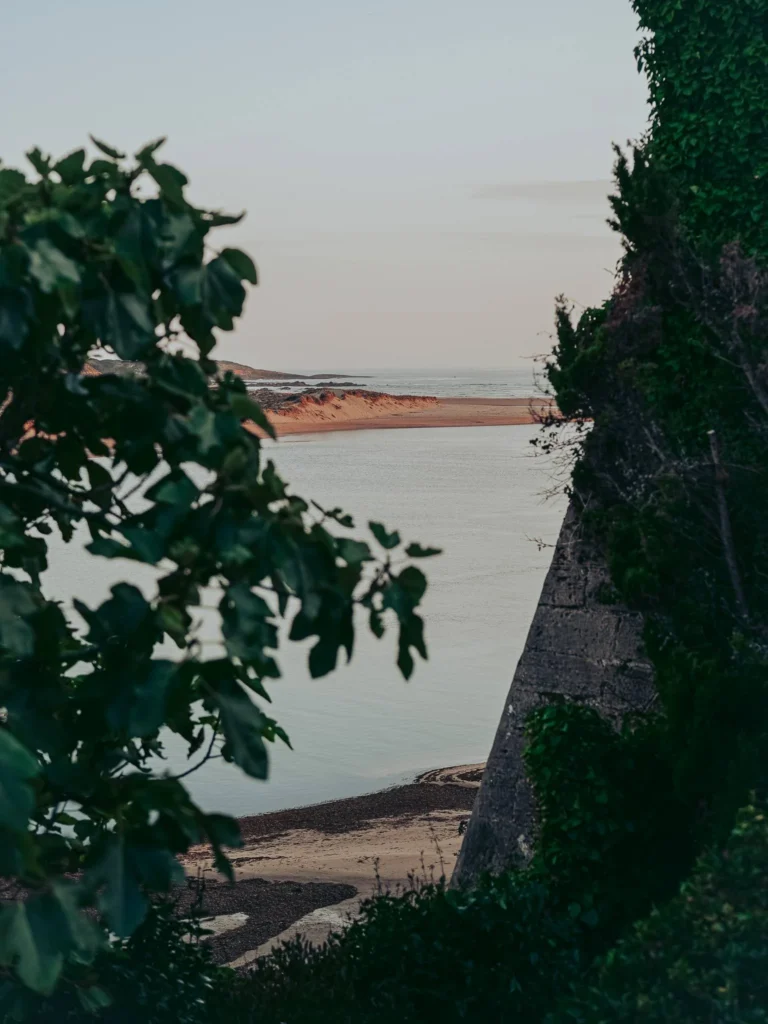
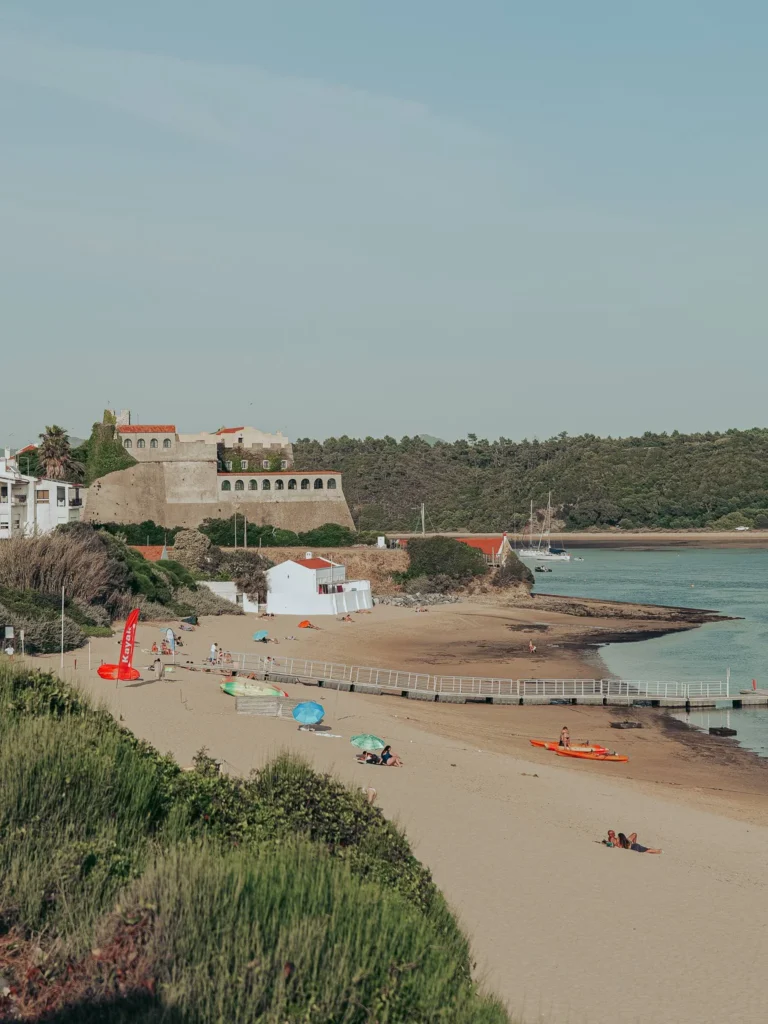
Which is where the fort still standing guard over the river mouth comes in, the São Clemente, built straight afterwards between 1599 and 1602 by the Neapolitan engineer Alexandre Massai (the same man who fortified the nearby Pessegueiro island) to protect the port and the river route up to Odemira. Dedicated to Saint Clement, patron of all things maritime, it lost its military role in the 19th century and was even sold off to private owners in 1903, before being listed as a site of public interest in 1978. These days it’s no dead backdrop: grasses climb the ramparts, storks have built their nests right at the top, the whole thing feels alive. The sort of place where you catch yourself staring at the water far longer than you meant to.
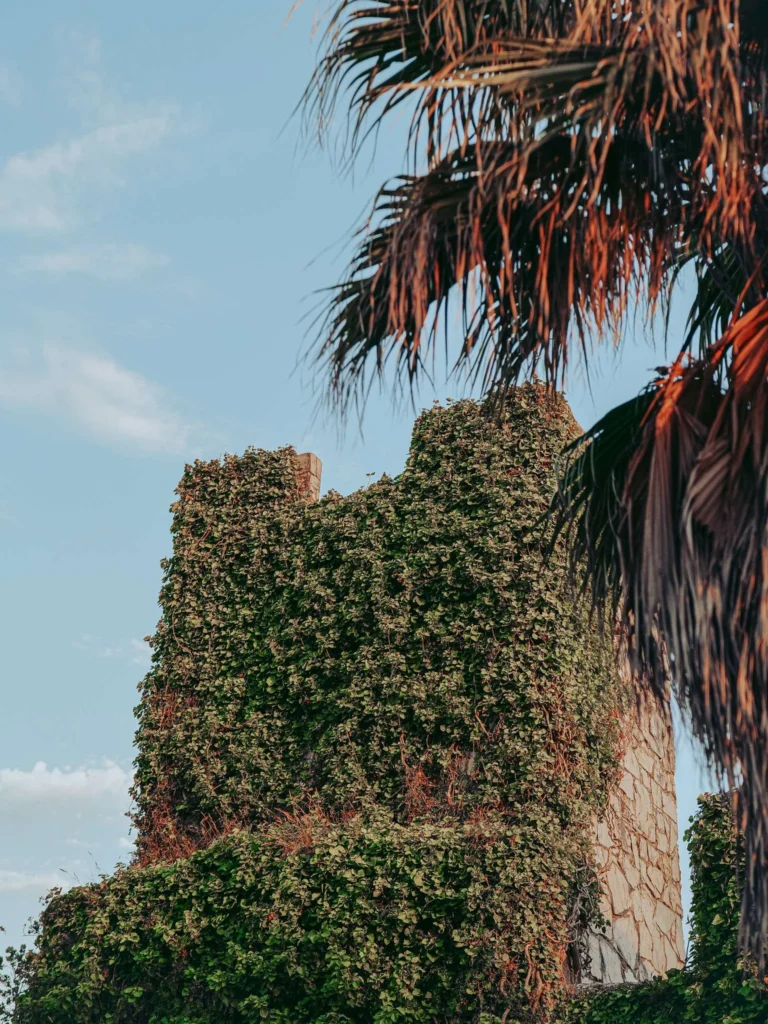
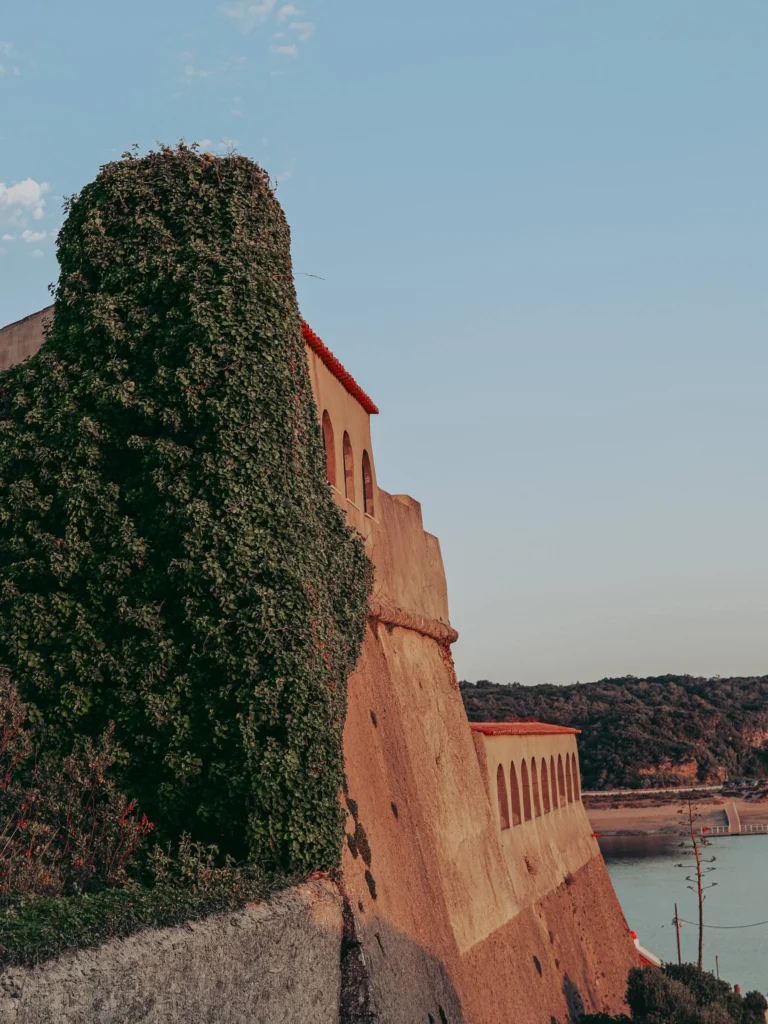
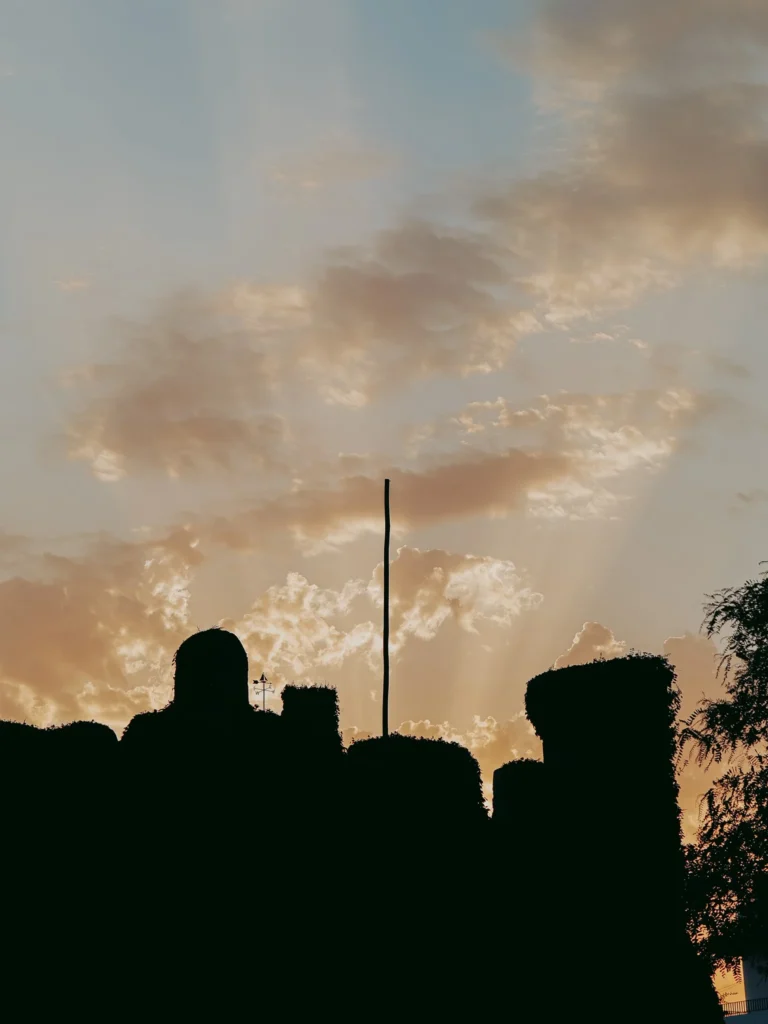
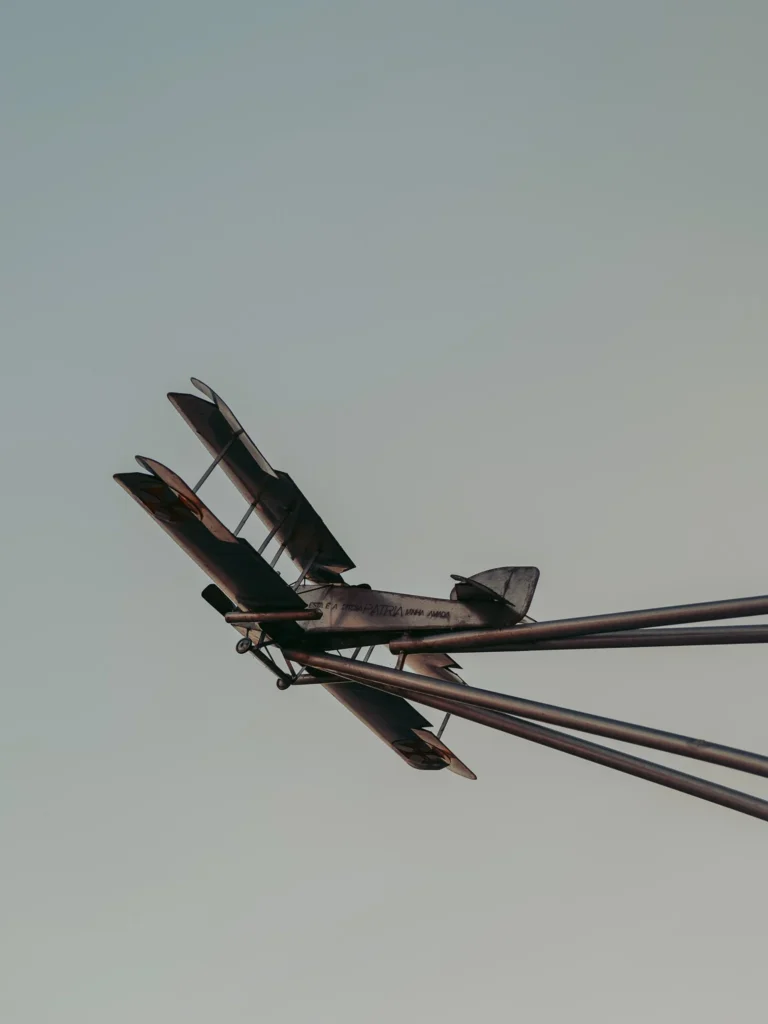
Right beside the fort, another little monument catches the eye: it looks like a Templar cross paired with an aeroplane. Digging around, I turned up a cracking story: it’s a tribute to the seaplane “Pátria” and the aviators Gago Coutinho and Sacadura Cabral, who pulled off the first aerial crossing of the South Atlantic, Lisbon to Rio de Janeiro, back in 1922. The “Templar cross” is in fact the Cross of the Order of Christ, the symbol painted on Portuguese aircraft of the day.

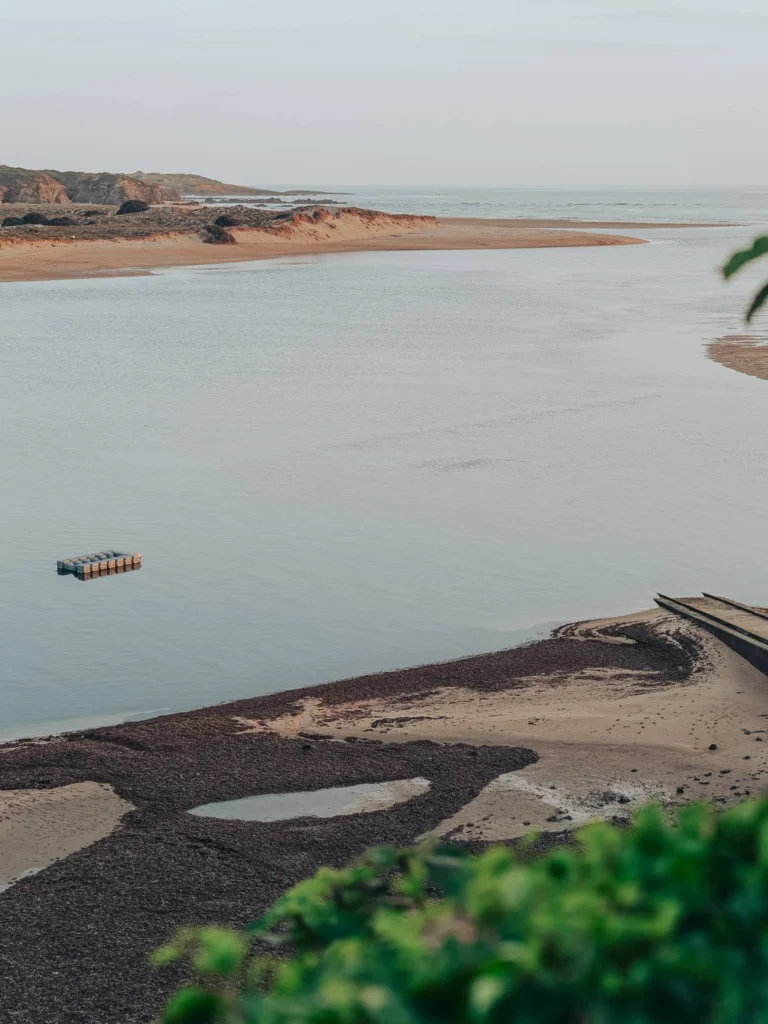
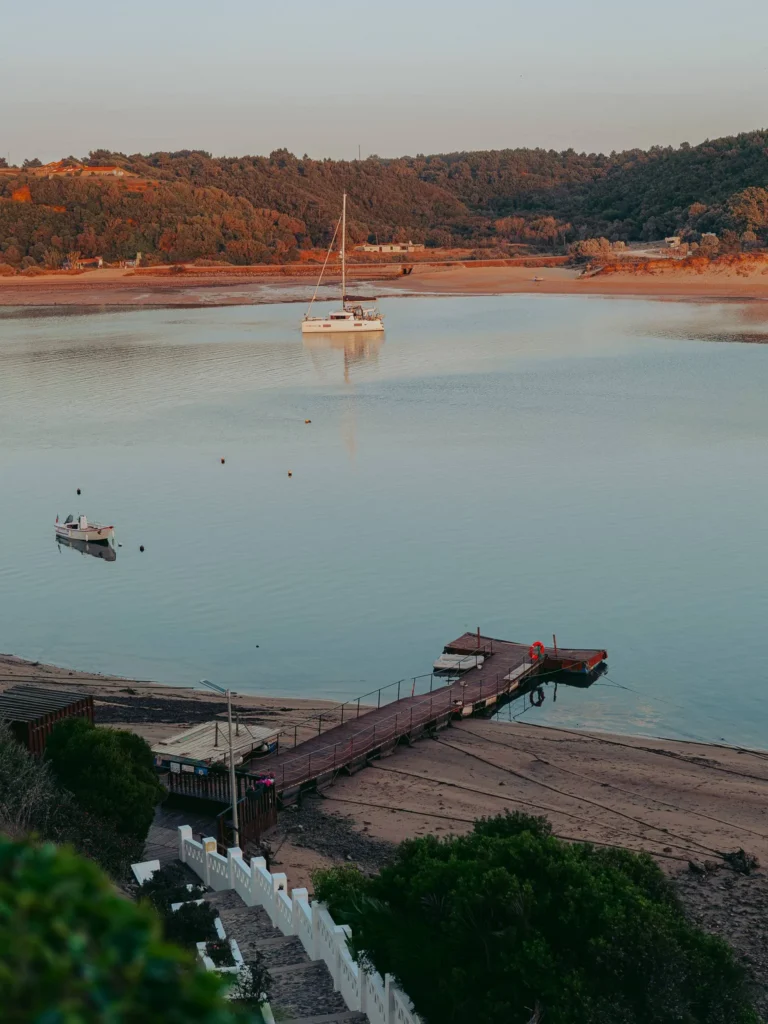
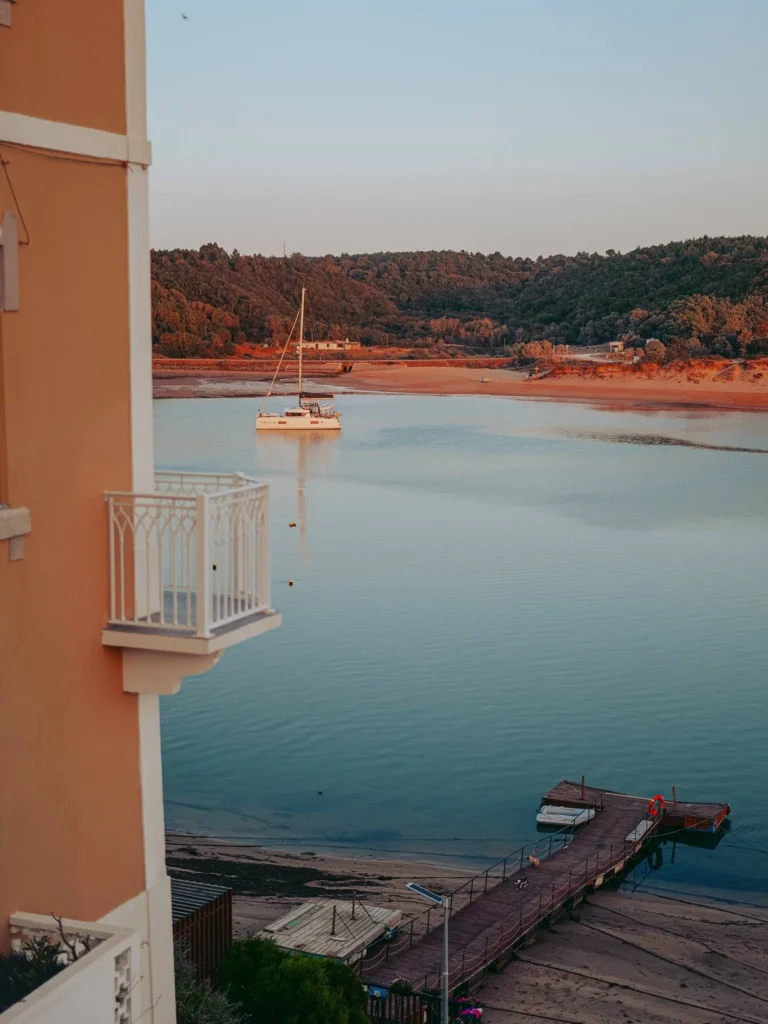
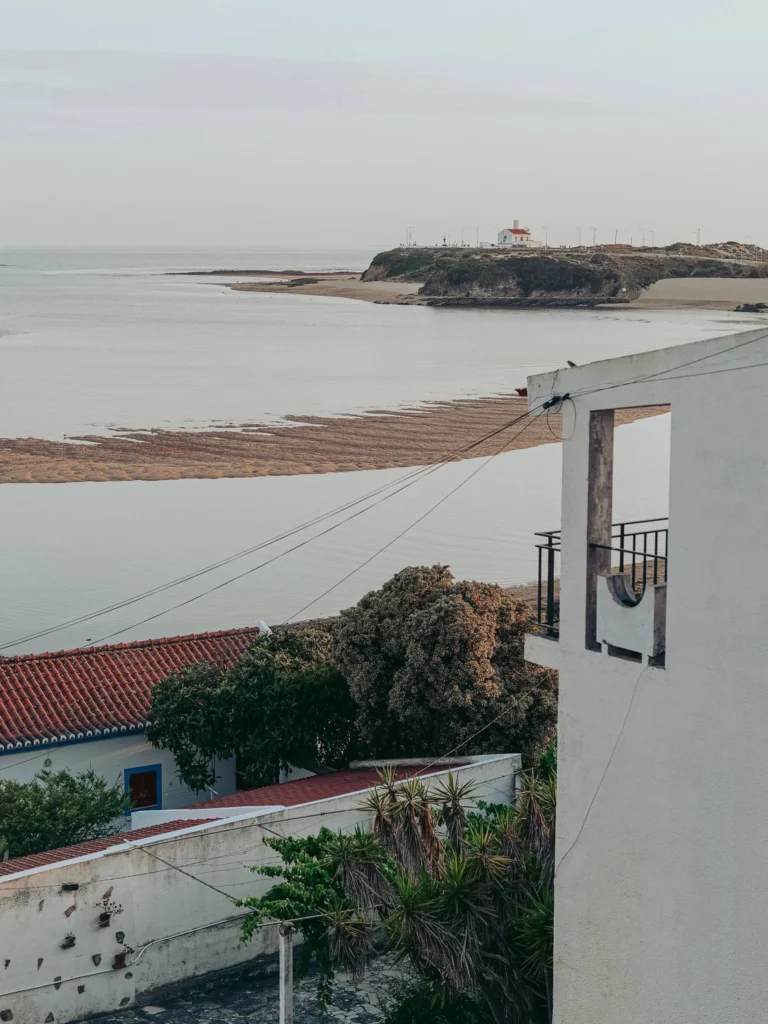
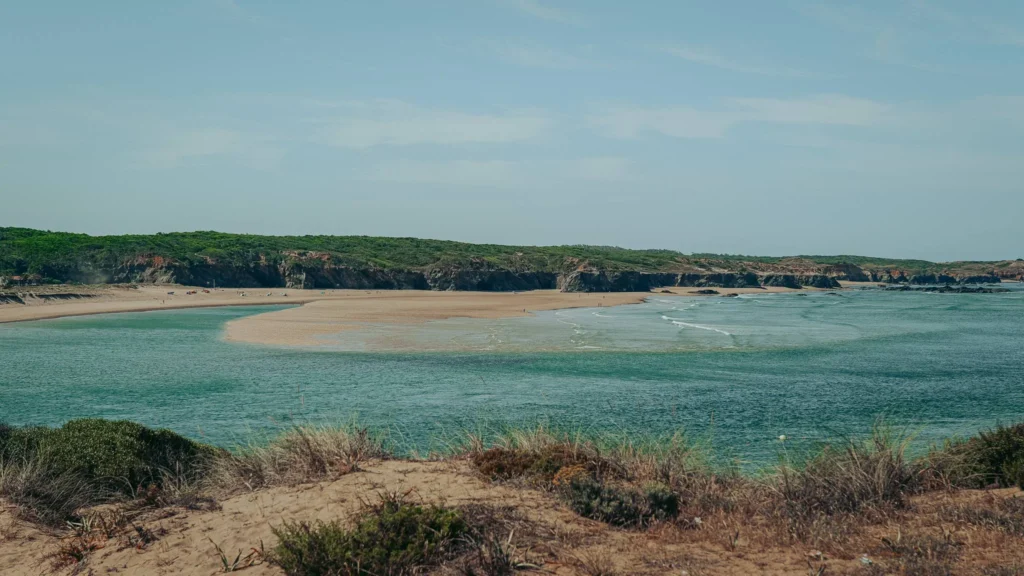
And then there’s the thing that really got us: the shape of the water. Just before the ocean, the estuary traces out a rounded, calm, legible stretch of water that almost looks like a lake spilling into the sea. It reminded us of the Ria Formosa, only far more concentrated. No surprise, really: Milfontes sits at the mouth of the Rio Mira, one of the few Portuguese rivers to flow from south to north, and it runs so slowly that its waters look more like a lagoon than a river. The whole valley is protected within the Southwest Alentejo and Costa Vicentina Natural Park. So no, we weren’t imagining that “lake” feel.
The beaches and the Mira estuary, our true love at first sight
The third time sealed the deal. In June 2026, on the way back from a little loop through Bordeira and Porto Covo (a road trip cut slightly short because the cat had treated us to two horrendous nights out of three, but that’s another story…), we pulled back onto our now-familiar spot and set off on foot with one simple plan: find a good restaurant to try and write up for you. The town, though, had other ideas.
As we reached the avenue running along the water, we walked straight into a festival. At first it looked odd to me, the stalls felt very “official”, very corporate, I couldn’t work out what it was… and then the penny dropped: it was almost certainly the FEI-TUR, the Southwest’s tourism fair, taking place right there in mid-June, with food, crafts, wine tastings and music, free entry. Hence my “trade fair” impression, and the travelling bookseller we came across between two stalls.
So, never mind the restaurant (another time), we ate on the spot: something that looked suspiciously like a French mountain sandwich done Portuguese-style, presunto and gooey local cheese, all washed down with a few ice-cold cervejas. And I walked off with a treasure from the bookseller: a copy of Asterix in Lusitania in Portuguese (Asterix speaking Portuguese, it could only happen to me).
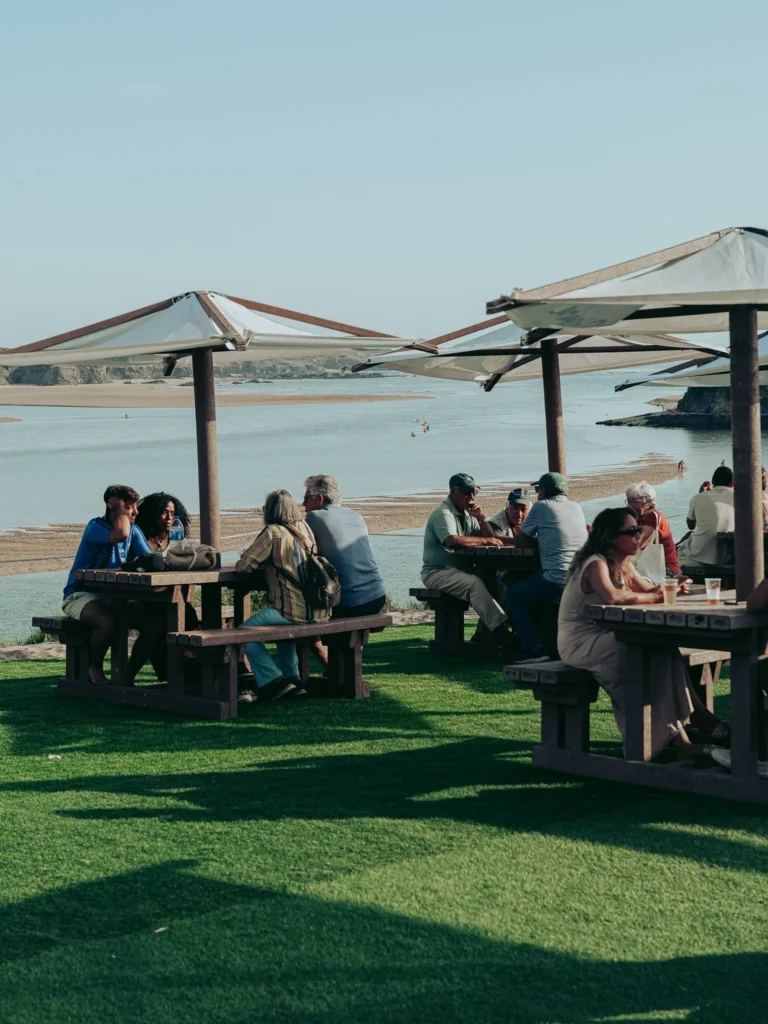


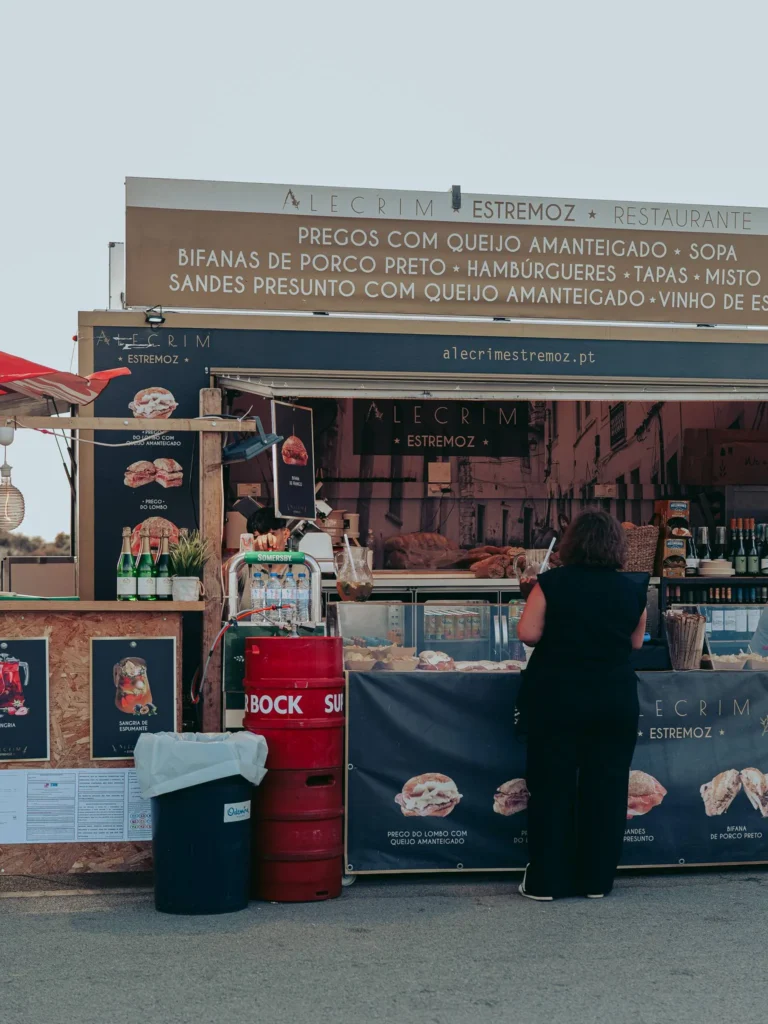
And it was right there, beer in hand, facing the mouth of the Mira, that it was confirmed for good. Sometimes a town fights you off, sometimes it slaps you with a fine, sometimes it makes you wait five years to put things right… and there, in front of that calm water slowly opening towards the ocean, it was making good for real. Caroline didn’t even try to hide it: utterly spellbound, a little tear in the corner of her eye because it was so beautiful, and already itching to come back and unpack for two or three days. Her line stuck with me: maybe there genuinely are no bad surprises here, and that’s exactly what makes the place so mad.
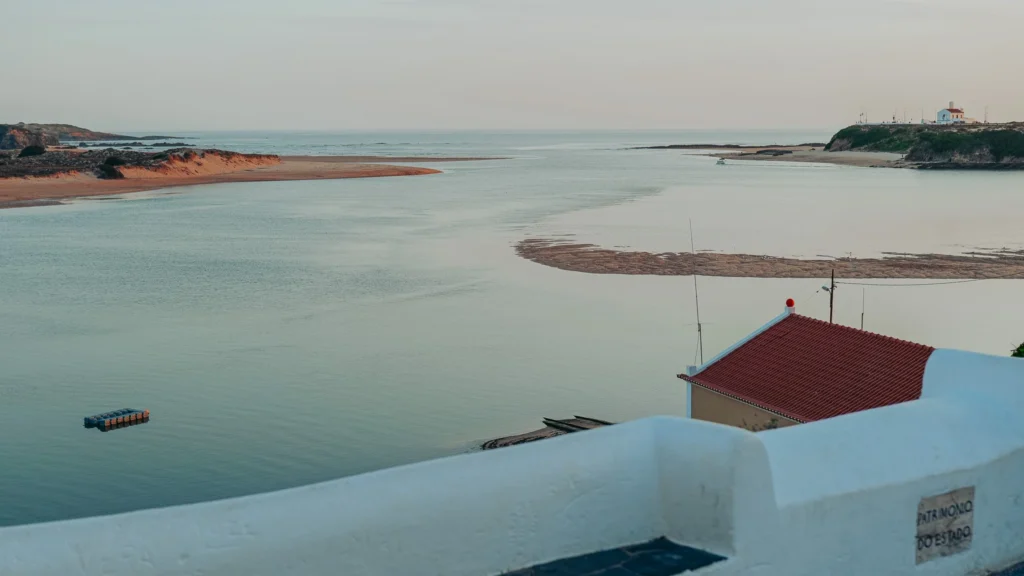
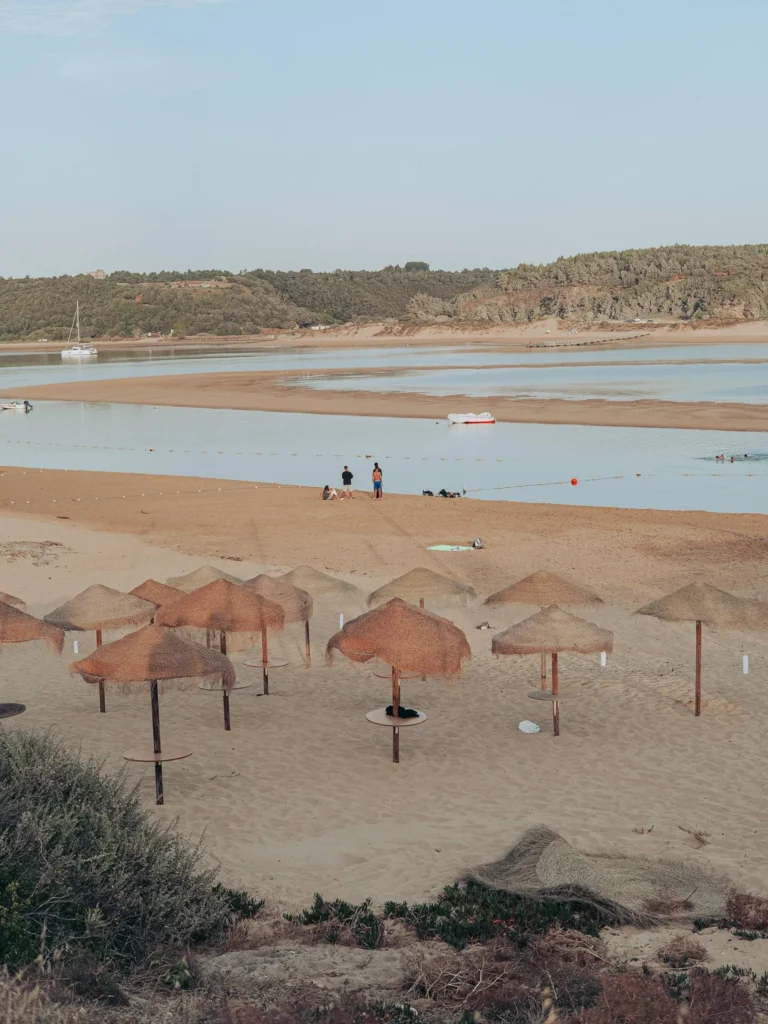
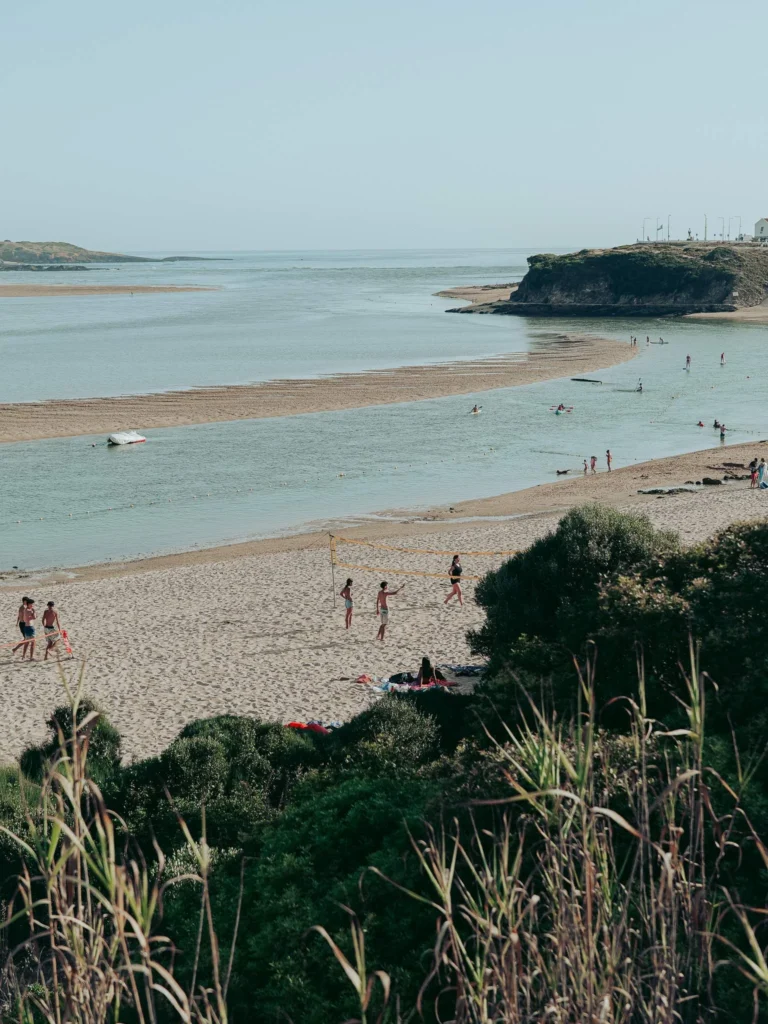
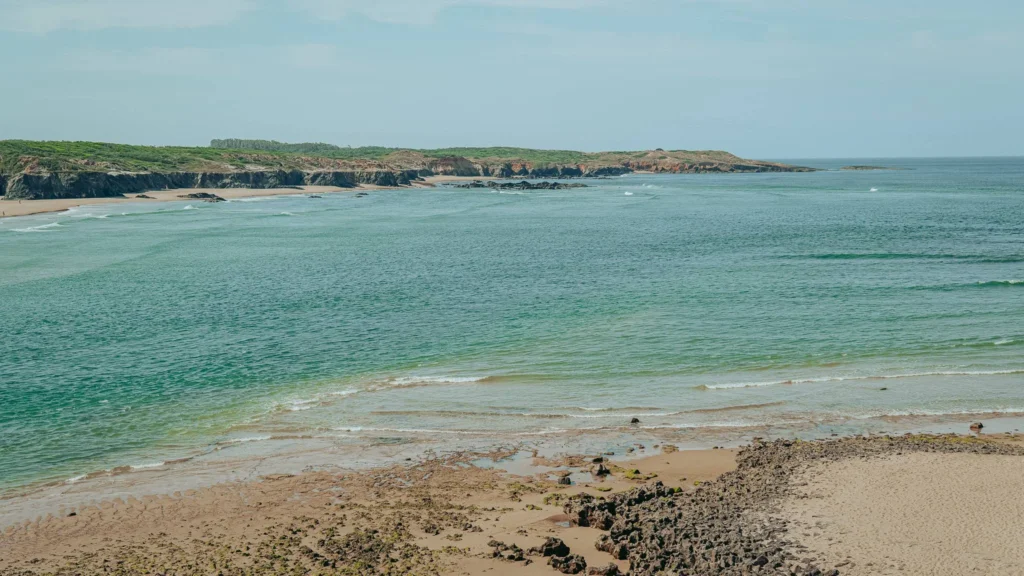
This stretch of water isn’t just pretty, it’s properly alive: because it’s so calm, almost waveless, you’ll see people rowing, paddleboarding, pottering about in little boats, pedalos, and there are even volleyball nets on the sand. The town beach, on the north bank, is the Praia da Franquia, lake-calm water, blue flag, lifeguarded in season, ideal for families and for a first go at kayaking or paddleboarding. For the proper ocean, rougher and wilder, you cross to the other side towards the Praia das Furnas, or push a little further (Praia do Farol and Carreiro das Fazendas round off the swimming options).
One last thing that might surprise you while you linger here, and reassure you if you’re coming over from the UK: you’ll hear an awful lot of English spoken, and meet people from all over. You really won’t feel out of place. On the festival night, mind you, the Portuguese turn-out was huge (the gravel lot was jammed with cars, which is what tipped us off in the first place). This slightly unexpected cosmopolitan streak comes from the area itself: the municipality of Odemira lives off tourism but also off large-scale export farming, especially greenhouse berries, which has drawn in a sizeable workforce, mainly from Nepal, India and Thailand. Which is how, in the middle of the Alentejo, you can quite happily end up ordering in English.

Staying Connected in Portugal: Visitor or Resident?
What internet connection to use during a stay in Portugal? This is a common question we ask ourselves before leaving. Caroline and I, Xavier, have explored the different options available...
DiscoverWhere to eat in Vila Nova de Milfontes (and the cracking breakfast plan)
Let’s be honest, our food-hunting tally is still pretty thin: we came to try a restaurant and ended up eating at the festival. But we do have our addresses. Projecto Papaya (Antiga Praça do Município), our little evening eatery, does a fine job for a simple no-fuss meal with a nice terrace. And Milfontes is still a fishing town, so in the old quarter you’ll easily turn up fresh fish and regional dishes (we’ll be back to test all that properly, promise).




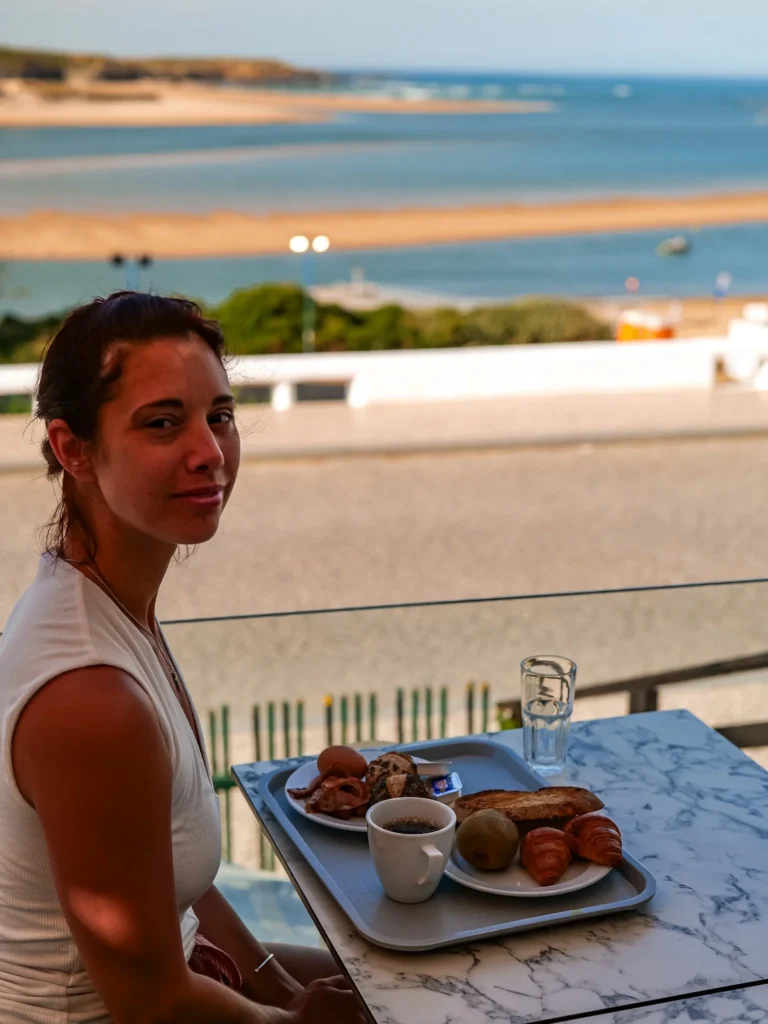
The real food highlight, though, is a breakfast. The morning after the festival we treated ourselves to the buffet at the Duna Parque Beach Club, and it’s far and away our best food memory here.


We're Caroline and Xavier
We drive to a place, stay long enough to get it wrong a few times, then write the guide we wish we'd had: parking, timing, what's worth the detour.
Ce que vous souhaitez recevoir :
Is it worth visiting Vila Nova de Milfontes?
So, hand on heart: yes, and not by a small margin. For us it’s become a no-brainer, to the point where we’ll go just for that, even as a day trip from Lisbon or Faro. And that’s exactly the angle if you’ve flown into Faro for the Algarve: an hour and a half or so up the coast and you swap the resort crowds for something far wilder. What makes the place so strong is its concentrated landscape: in one single spot you’ve got the river, the estuary, the cliffs, the beaches and the rocks, as if it were far bigger than it actually is.
And if I had to leave you with just one argument, it’d be that famous viewpoint I mentioned at the start: the Miradouro do Farol, yes, the very roundabout of our 2021 fine. From up there the panorama is a full 360 degrees, cliffs, beaches, rocks and the whole story of the water between estuary and ocean. It’s the best summary of the place, and on its own it explains why Milfontes is so much more than your average seaside resort.
The only snag is that you almost don’t want to talk about it too much… you know, one of those still-authentic spots you long to recommend while keeping a little of it for yourself. Well, that plan’s gone out the window, since I’ve just written a whole article about it (obviously).
What to do around Vila Nova de Milfontes
If you stay more than a day (and you should), the area opens right up. Walkers will be in their element on the Rota Vicentina, and especially its famous Trilho dos Pescadores (the “fishermen’s trail”), which hugs the cliffs closest to the ocean, between wild coves and jaw-dropping views. Beach-wise, the Praia do Almograve, just to the south, is worth the detour for its big rollers and golden sand. Head north and the charming white village of Porto Covo makes an easy half-day, while further south again Zambujeira do Mar carries on the postcard. And then, just 5 km up the Mira, there’s the area around the Moinho da Asneira, perched by the river with its own lagoon: a quiet spot for canoeing and fishing, and a different, more secret view of the river, well away from the beach bustle.
Sleeping and parking a motorhome in Vila Nova de Milfontes
On the seasons: we’ve passed through Milfontes in December (a quick motorhome hop), in autumn and in June, and each time the weather played ball. The one thing to bear in mind is that we’re on the coast, so wind comes with the scenery (gorgeous but breezy in autumn; clear afternoons and fairly blustery mornings in June). The town feels pleasant all year round, with just, as across much of Portugal, a damper feel in winter. For access, reckon on about 2.5 hours from Lisbon, 1.5 to 2 hours from Faro and around 2.5 hours from Tavira by motorway, which makes it an easy getaway, even for a weekend.
Vila Nova de Milfontes : a glimpse of the weather
5-day forecast
For those who love last-minute adventures, here's what the weather has in store.
Monthly climate
Personally, we always choose warm and dry periods. But everyone has their ideal weather! Here's the info to make your choice.
| Month | Min temp | Max temp | Rain | Weather | Rating |
|---|---|---|---|---|---|
| September | 16°C | 25°C | 11 mm | ☀️ | |
| October | 16°C | 24°C | 40 mm | 🌦️ | |
| November | 11°C | 18°C | 145 mm | 🌦️ | |
| December | 10°C | 16°C | 128 mm | 🌧️ | |
| January | 10°C | 15°C | 236 mm | 🌧️ | |
| February | 11°C | 17°C | 233 mm | 🌧️ | |
| March | 10°C | 19°C | 83 mm | 🌦️ | |
| April | 12°C | 21°C | 39 mm | ☀️ | |
| May | 14°C | 23°C | 44 mm | ☀️ | |
| June | 17°C | 25°C | 5 mm | ☀️ | |
| July | 18°C | 26°C | 2 mm | ☀️ | |
| August | 18°C | 26°C | 23 mm | ☀️ |
For the van, here’s what we know:
Vila Nova de Milfontes : Places we can tell you about
Here's our selection of places in Vila Nova de Milfontes: spots we've visited that might be useful to you. Use the list view to discover each address in detail, and export everything to add to Google Maps or your favorite GPS app.
| Place | Address | Download |
|---|---|---|
| Fort São Clemente | Largo da Barbacã, Vila Nova de Milfontes | |
| Statue Arcanjo (Miradouro do Farol) | Miradouro do Farol, Vila Nova de Milfontes | |
| Monument to the seaplane Pátria | Vila Nova de Milfontes |
| Place | Address | Download |
|---|---|---|
| Old town (historic center) | Centro histórico, Vila Nova de Milfontes |
| Place | Address | Download |
|---|---|---|
| Praia da Franquia | Praia da Franquia, Vila Nova de Milfontes | |
| Praia das Furnas | Praia das Furnas, Vila Nova de Milfontes | |
| Praia do Almograve | Almograve, Odemira |
| Place | Address | Download |
|---|---|---|
| Projecto Papaya | Antiga Praça do Município 5, Vila Nova de Milfontes |
| Place | Address | Download |
|---|---|---|
| Duna Parque Beach Club | Av. Marginal, Vila Nova de Milfontes |
| Place | Address | Download |
|---|---|---|
| Municipal market (Mercado) | Vila Nova de Milfontes |
| Place | Address | Download |
|---|---|---|
| Free motorhome parking | R. António Mantas, Vila Nova de Milfontes | |
| Camping Campiférias | Rua da Praça, Vila Nova de Milfontes | |
| Milfontes Campsite | Estrada das Pousadas, Vila Nova de Milfontes |
| Place | Address | Download |
|---|---|---|
| Moinho da Asneira | Foros do Galeado, Vila Nova de Milfontes |
And do take our 2021 lesson to heart: the coastal road running out to the lighthouse, the Arcanjo and the maritime police is closed to motorhomes. Steer clear of circling that roundabout under the watchful eye of the GNR, it’ll save you a fine and a small dose of linguistic humiliation…
Quota RapidAPI dépassé (limite par minute/mois). Réessayez plus tard.
Vila Nova de Milfontes: frequently asked questions
How to get to Vila Nova de Milfontes from Lisbon?
Count about 200 km, or 2 to 2.5 hours by car via the A2 and then the IC1. By bus, Rede Expressos connections link Lisbon (Sete Rios) to Vila Nova de Milfontes in about 3 hours.
How long does it take to visit Vila Nova de Milfontes?
One day is enough for the heart of the city (old town, Fort São Clemente, Praia da Franquia), but 2 to 3 days allow you to fully enjoy the beaches, the Mira estuary, and the trails of the Rota Vicentina.
Is Vila Nova de Milfontes suitable for families?
Yes, especially thanks to Praia da Franquia: this estuary beach with calm waters, almost like a lake, is supervised during the season and ideal for children as well as for beginners in kayaking or paddleboarding.
Is there a market in Vila Nova de Milfontes?
Yes, a covered municipal market in the city center (the Camping Campiférias is right across), convenient for fresh produce and local fish.
Can you visit Vila Nova de Milfontes without a car?
The city center and beaches are very walkable. To reach Almograve, Porto Covo, or Zambujeira do Mar, local buses are available but remain limited: a vehicle is more practical.
PS: the first time, in 2021, it was still the Covid era, borders shut, we could probably have had this spot almost to ourselves… and we left within five minutes with a fine under our arm. If only we’d known about this patch of waste ground back then, we’d have stayed for days. We came to try a restaurant and left with an Asterix in Portuguese and a little tear from Caroline. The town we cursed still owes us a dinner… and we’ll be back to collect it (on foot, this time).
Portugal, we live here
Two years of full-time van life, and the Algarve as our base ever since. We still hit the road, by van or otherwise, and we write up what we find along the way. An email when we have something to say, no more.
Ce que vous souhaitez recevoir :