Our review of Stravaigin
Benefits
- Nothing is bland: every condiment tastes of something
- The house haggis, traditional and vegetarian alike
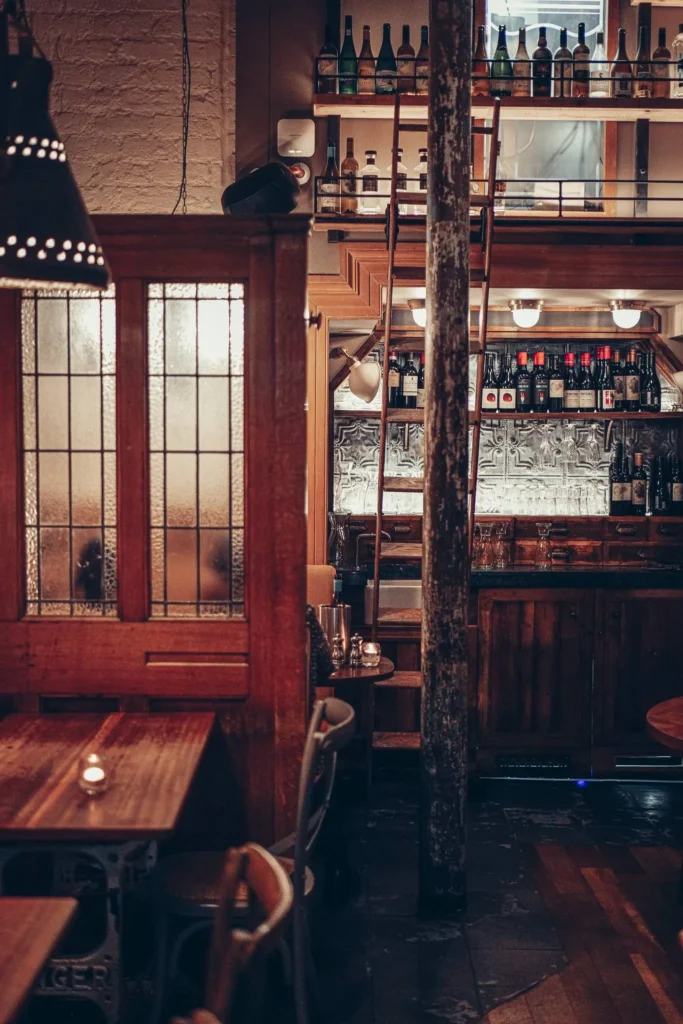
- A dining room over several levels with real character
- Vegetarian and vegan dishes treated seriously, not as an obligation
Disadvantages
- A steep bill, especially from the bigger section
- You need to book at the weekend
- The famous chilli mussels are off the menu
Who is this place for?
- Travellers who want to try haggis in the best possible conditions
- Vegetarians tired of being offered one dish per menu
- Anyone who likes a restaurant with volume and salvaged decoration
A West End institution that is not just about the room: you really do eat very well here.
For years I have been going on about it. For years I have used exactly the same words the moment anyone says Glasgow in front of me: the best mussels of my life, with chilli, I am still drooling over them now. Caroline has heard that sentence more times than she is willing to count.
So when we came back through Glasgow, there was an address on the list before we had even worked out where we were sleeping. Stravaigin, 28 Gibson Street, in the West End. We were going back to check a memory, which is about the worst idea you can have on a trip: memory flatters everything, and the real thing never agreed to keep up.
Going back to a restaurant you loved is a risk
The first visit was not our choice. It was Caroline’s friend, the one who lives here, who took us along after cocktails at the Òran Mór, without asking what we fancied, in the manner of we-are-eating-here-and-you-will-understand-shortly. We went down to the basement, we ate mussels, and I have never quite closed the file since. Caroline had a vegetarian curry and mostly remembers the look on my face.
This time we arrived under our own steam, walking up Gibson Street from the University of Glasgow, ten minutes on foot. That whole end of town holds together: the university, the cafés, the bookshops and this sloping street of blond sandstone tenements. If you want the rest of our stops, we put the whole city into our Glasgow road trip guide, but that evening everything fitted into one street.

University of Glasgow
Under the arches the light switches on and off every fifteen seconds. It is the Glasgow weather holding the switch, and we just stood there, doing nothing but watching the...
Read moreStravaigin literally means to wander about with no particular aim
I had never looked the name up. Mistake. This is one of those words half the readership has known all its life and the other half has never once needed, so here it is either way: to stravaig, in Scots, is to wander, to knock about, to go off with no fixed destination. It comes from the medieval Latin extravagari, to stray outside the limits, and the same root gives us extravagant, which turns out to be fair warning about the menu. The word is in print by the late eighteenth century in Robert Fergusson. The restaurant made it the motto it prints in full under the logo: “wandering since 1994”.
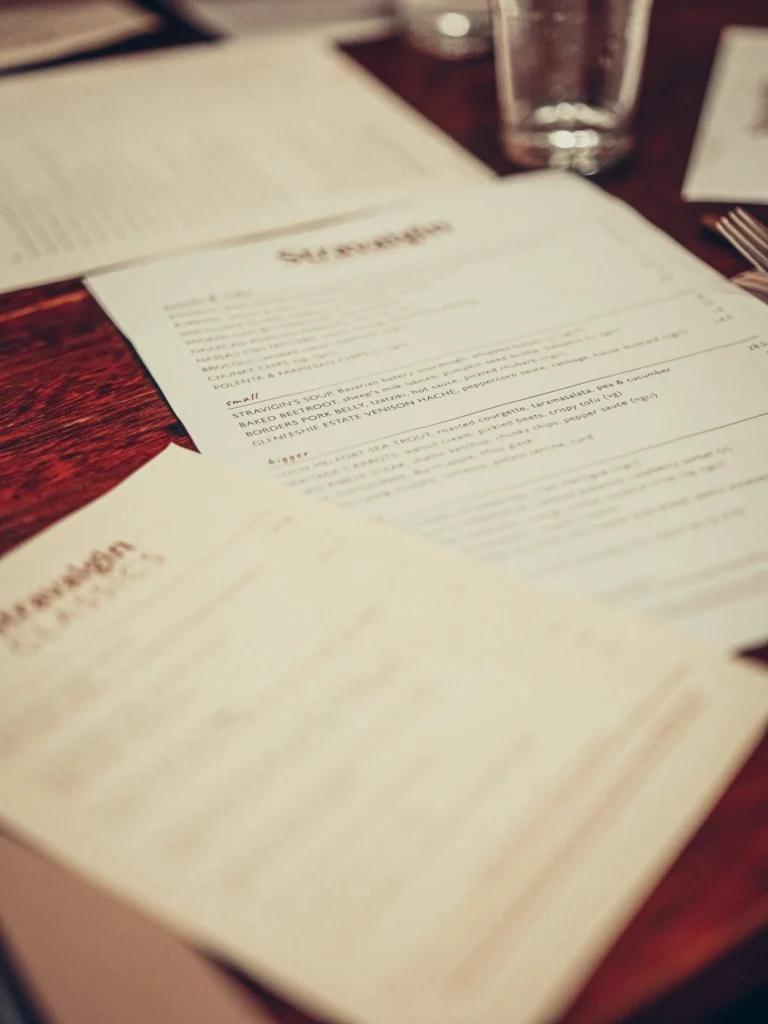
And that is when it all makes sense. Because the menu, read cold, goes off in every direction at once: Oaxacan roasted peanuts, Dutch bitterballen with smoked ham, fish fritters with scotch bonnet, burrata with a sherry fondue, Greek gigantes plaki, and in among all that, Glenfeshie Estate venison and Loch Melfort sea trout. I took it at first for a kitchen that could not decide what it wanted to be. It is precisely the opposite: it is the concept, and it has been sitting in the name since day one.
The founders, Colin Clydesdale and Carol Wright, opened in 1994 on a formula they have never let go of: “think global, eat local”. Scottish produce on the plate, the idea borrowed from anywhere on the planet. It reads like brochure copy, except that thirty years on you can still taste it, and it is what keeps the place from becoming another Scottish bistro frozen in its own classics.
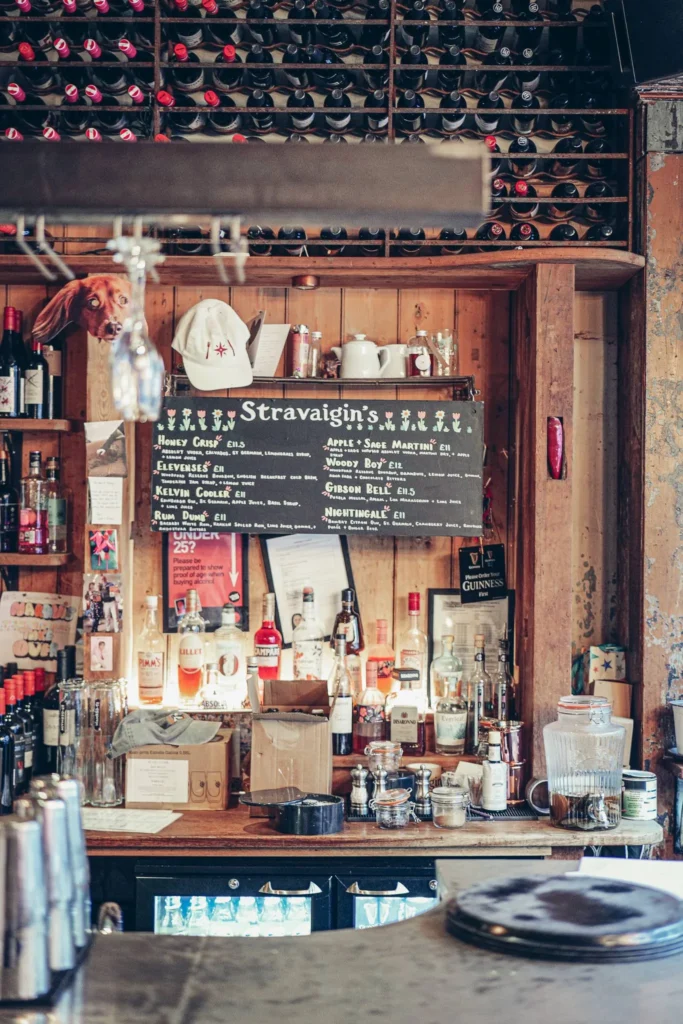
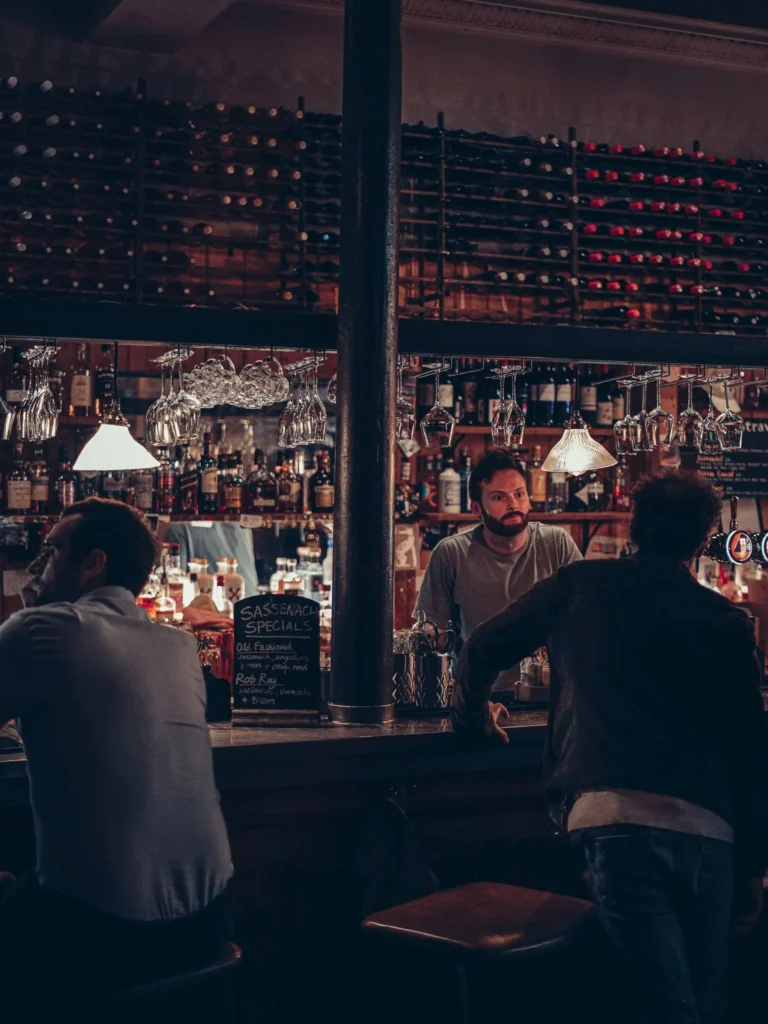
A restaurant that unfolds across several levels
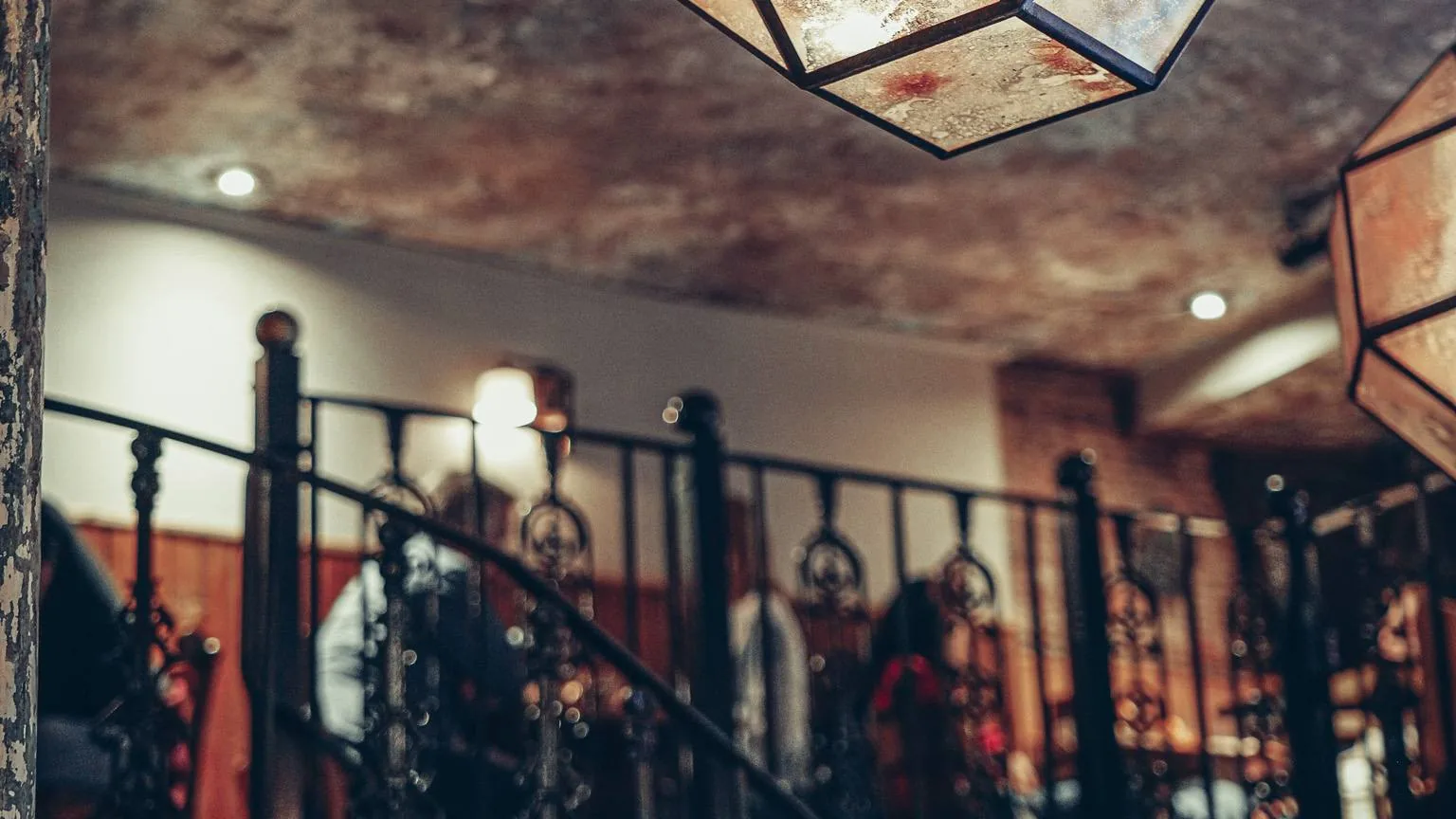
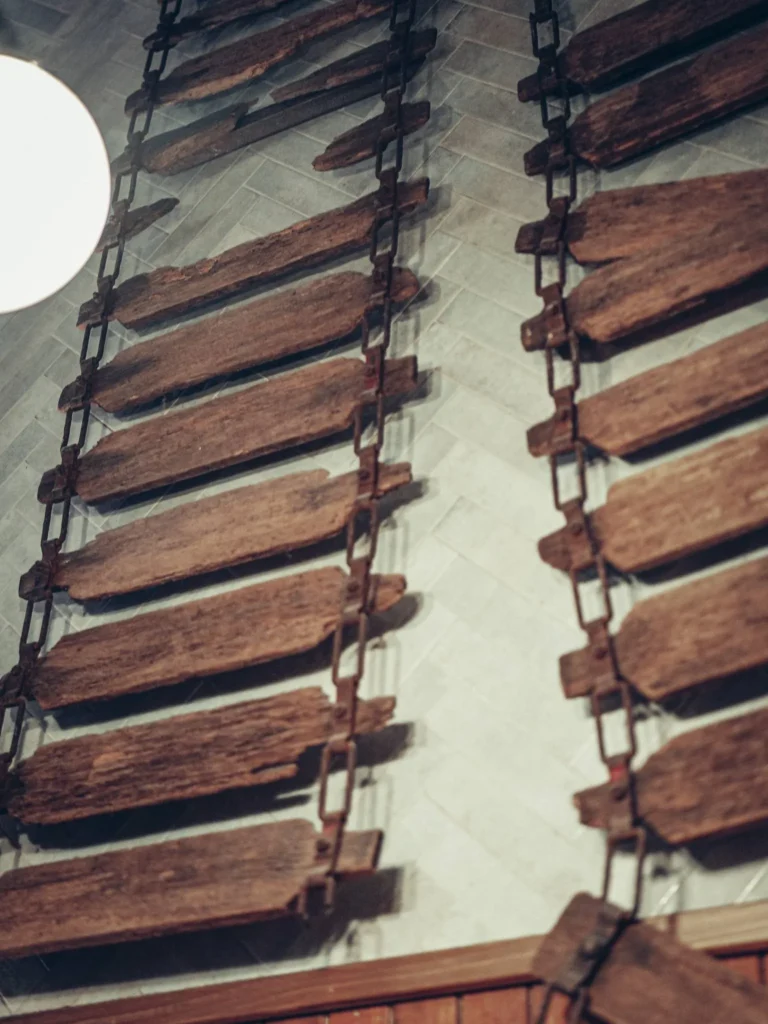
The second thing that hits you, and this one I had kept: the place has an enormous amount of character. It is not a room, it is a volume. You come in, you can go down, you can go up, and the upper levels are a sort of indoor balcony looking over the rest. Heavy pillars run through the room, wrought-iron balustrades link the floors, and hanging off them are old bicycles, a clock, a wooden ladder on a chain.
The kind of place that ought to be unbearable on paper, because decorative bric-a-brac has become a worldwide tic. Except that here it holds. It does not feel ordered out of a catalogue, and it does not feel like a designer came in for an afternoon and left. We were put upstairs, in a wooden alcove, and we spent a fair while watching the room below before we so much as opened the menu.
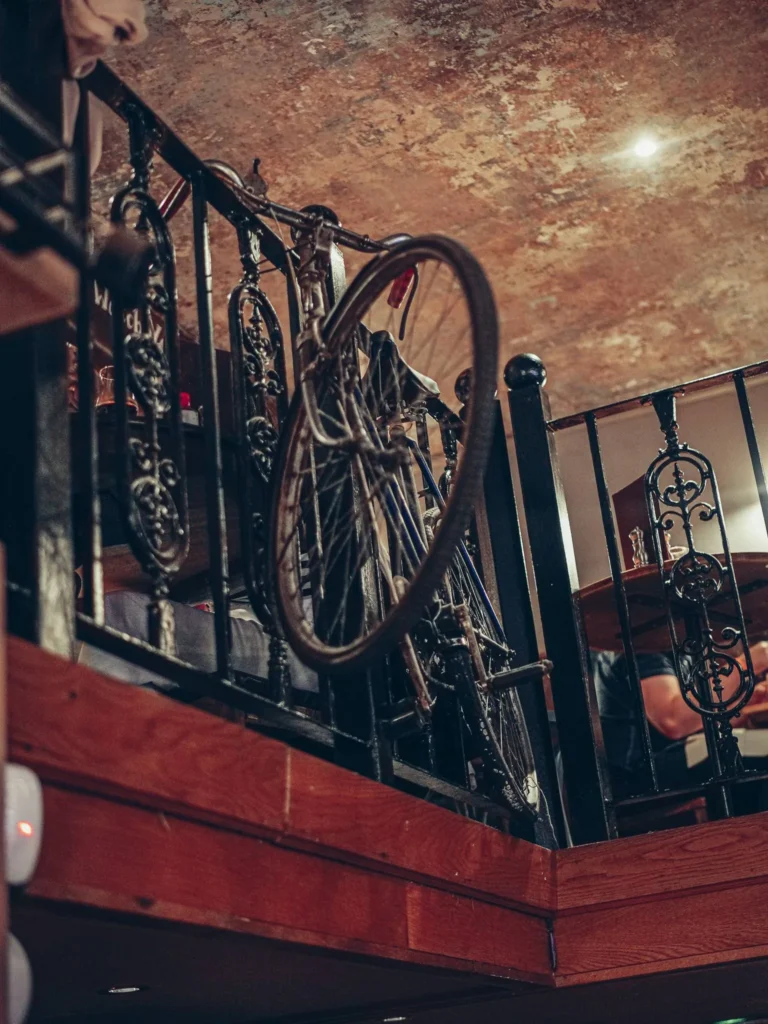
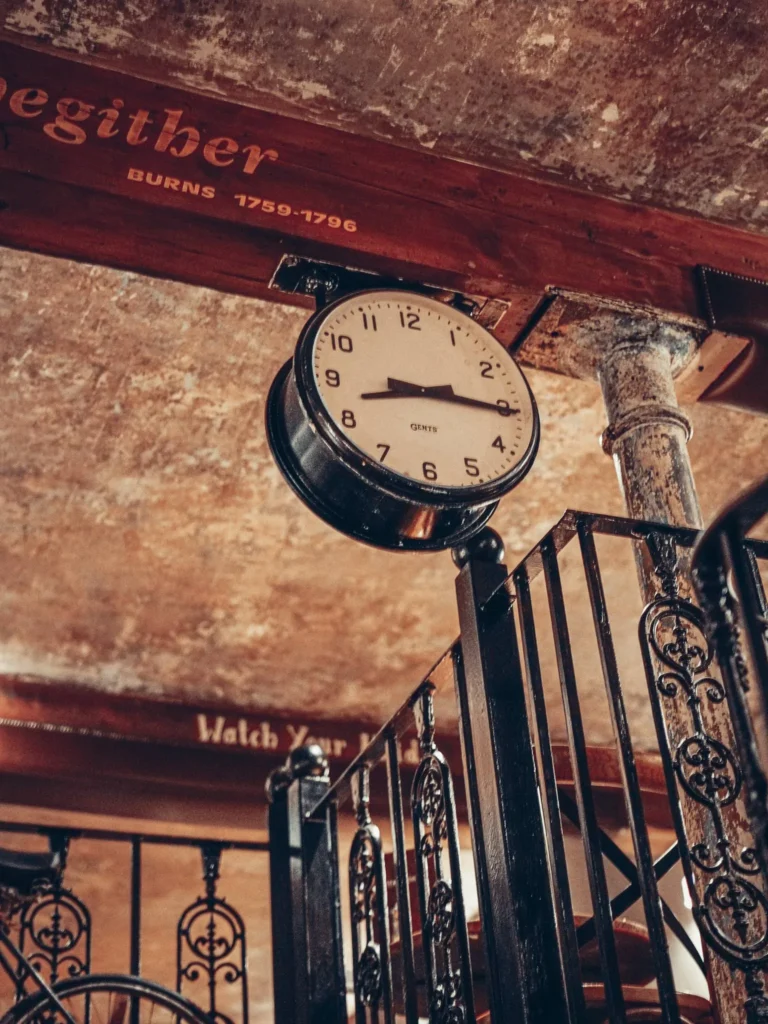
In Scotland, the inside is part of the meal
I have a private rule of thumb that works across several southern European countries: the more a restaurant spends on a spectacular interior, the less the plate delivers. It is unfair, it is a caricature, and it has rarely let me down. In Scotland I feel almost exactly the reverse, and Stravaigin is the best example I met on the whole trip.
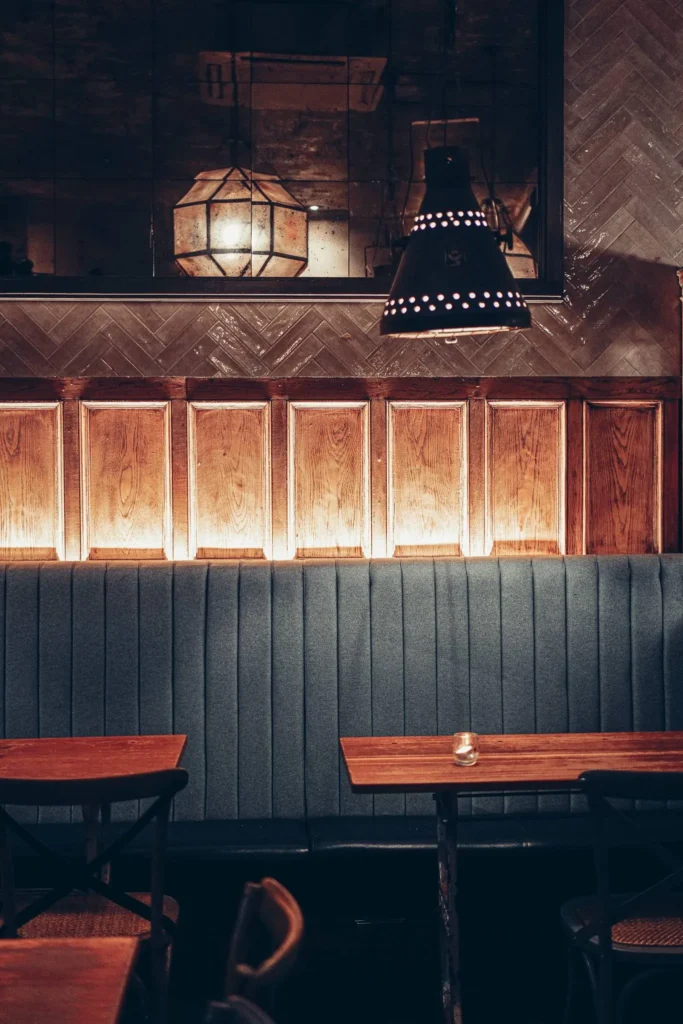
The explanation seems simple enough after a few weeks up here, and you will have worked it out long before we did: social life happens indoors. Not on a terrace, not at a pavement table in the sun, indoors. So the interior is not decoration arranged around the meal, it is part of what you came for, on equal footing with what is on the plate. We made exactly the same note at Waxy O’Connor’s and in the Hidden Lane, and it ended up being how we read the whole country.
The basement we ate in no longer exists
A small detail that is not a small detail, and I only checked it once we were home. The basement we had dinner in the first time is not a dining room any more. It has been stripped out and reopened as The Cellar: a vaulted wine bar, terracotta floors, raw marble tables, candlelight, mostly used for private hire and as an overflow from the bar. The restaurant itself has reorganised onto the upper floors.
So when I said the two spaces were different but every bit as good as each other, that was not an impression. We did not eat in two corners of the same restaurant: we ate in two successive restaurants, at the same address. Between our two visits the place also changed hands, taken over by a group that holds two other West End institutions. Normally that is the sort of news that makes you fear the worst, and that evening it did not show up on the plate.
Ah, and the famous mussels. They are not on the menu. Not a line, nowhere, not in snacks, not in small, not in bigger. Menus turn, chefs move on, that is the deal, but I still spent a long time rereading all four pages convinced I had missed them. There, it is said: I came back for a dish that no longer exists.
The starters: nothing spectacular, everything tastes of something
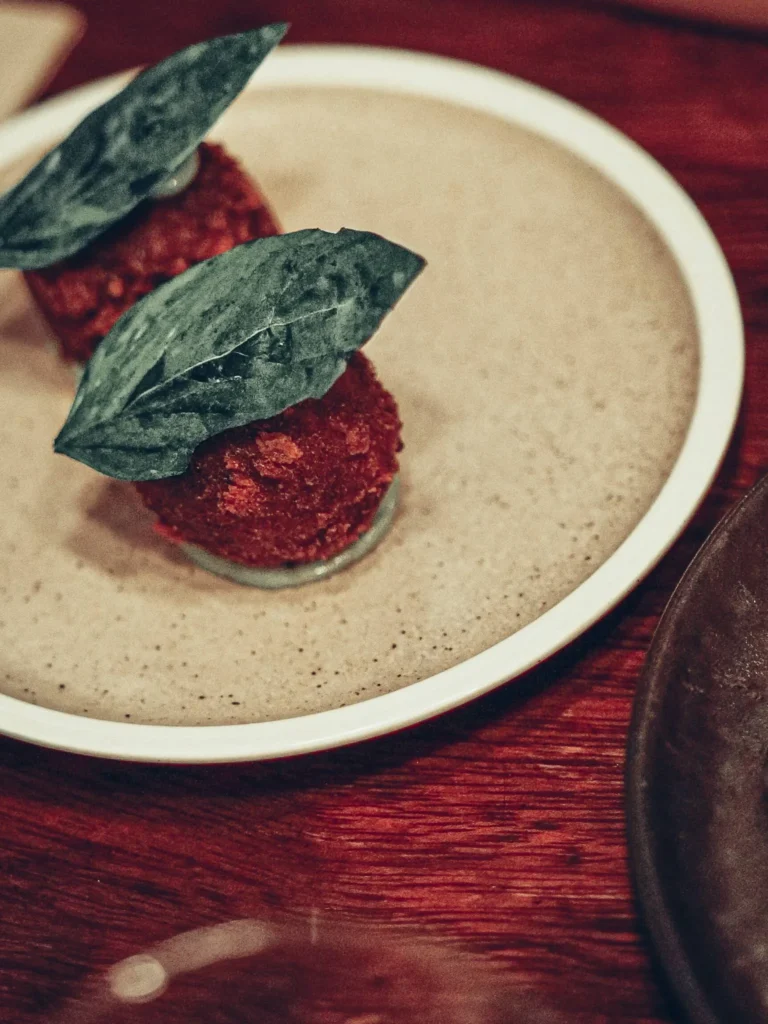
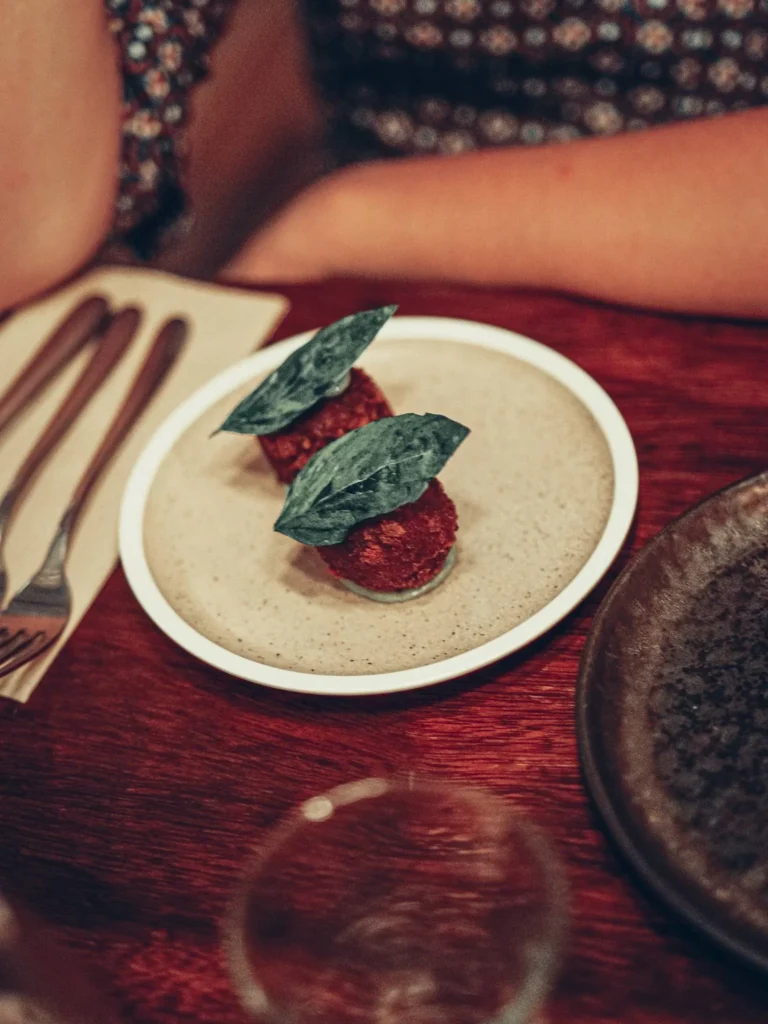
Caroline had the Broccoli, at £6.50, and I had the Bavarian Bake House sourdough, at £6. Two starters off the snacks and sides section, so the cheapest things on the menu, and honestly the best place to judge a kitchen: there is no noble ingredient to hide behind. Neither of them is trying to impress anybody.
The sourdough is very good, served on a board with two things to put on it. The whipped butter is soft, creamy, almost sweet. Next to it the gigantes, big white beans that look to me like outsized butter beans, come in a tomato sauce that is strong and genuinely good. The contrast is what makes it work: you go from the very mild to the very pronounced on the same slice of bread.
Caroline’s broccoli arrives under a sauce with a smoky flavour turned right up. The menu calls it a smoked Caesar, we both swore at the table it had smoked fish in it, and we still have not settled it. It does not much matter: it gives real character to broccoli, which is not the most obvious win in cooking. Crushed hazelnuts do the rest.
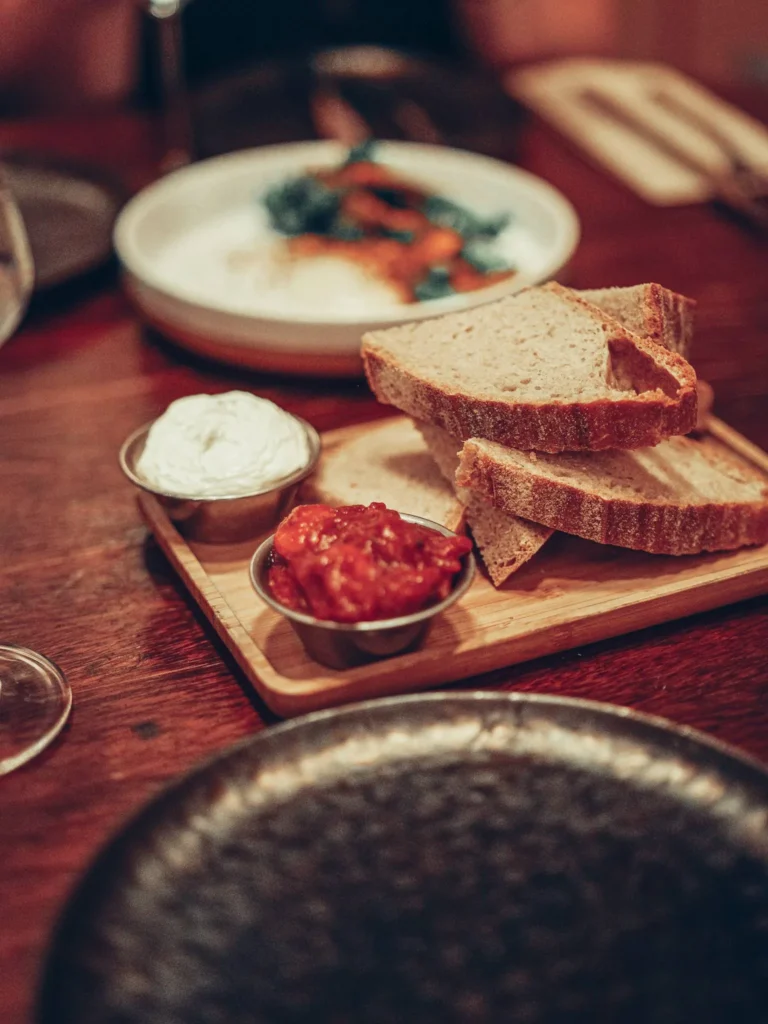
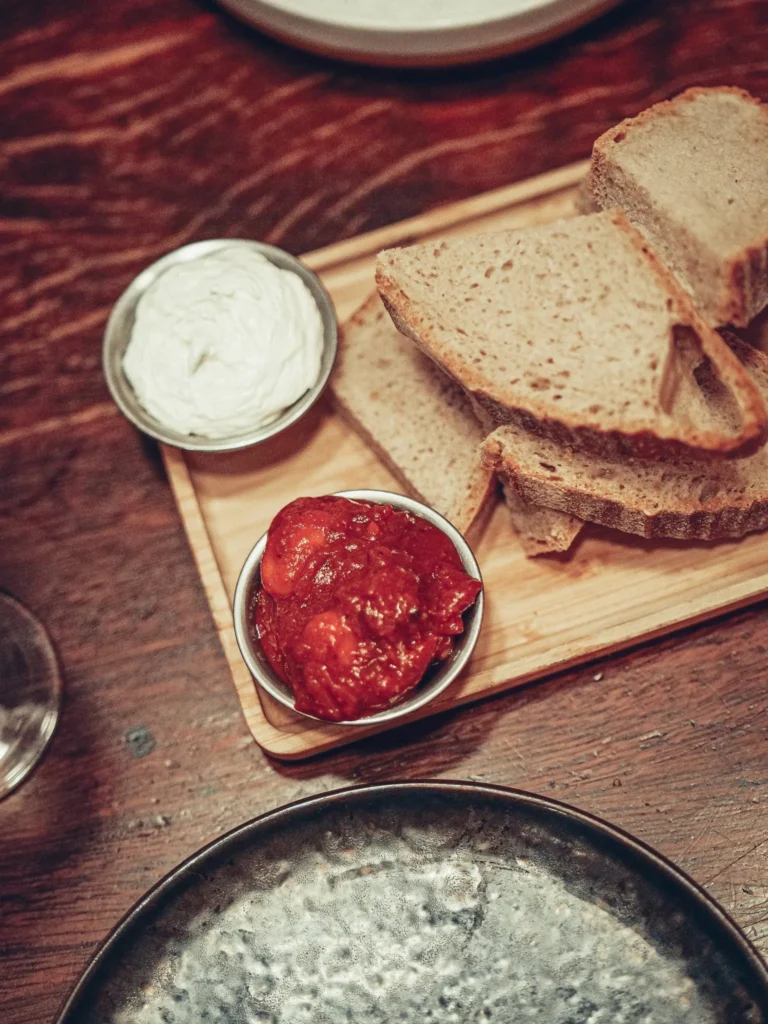
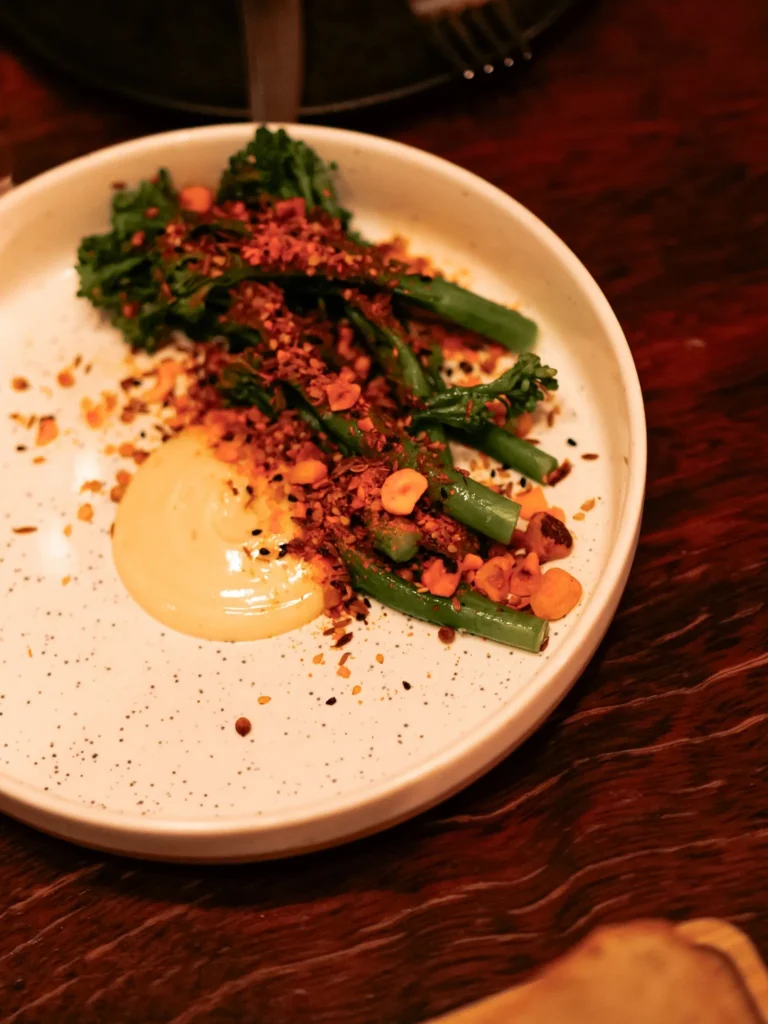
The verdict at that stage of the meal comes down to one line: nothing is bland. Not one element, not one condiment is there to look pretty on the plate. This is a kitchen that does not chase the effect and never gives an inch on flavour. We went into the next course with a confidence we had not had sitting down.
The haggis, and why I was wrong
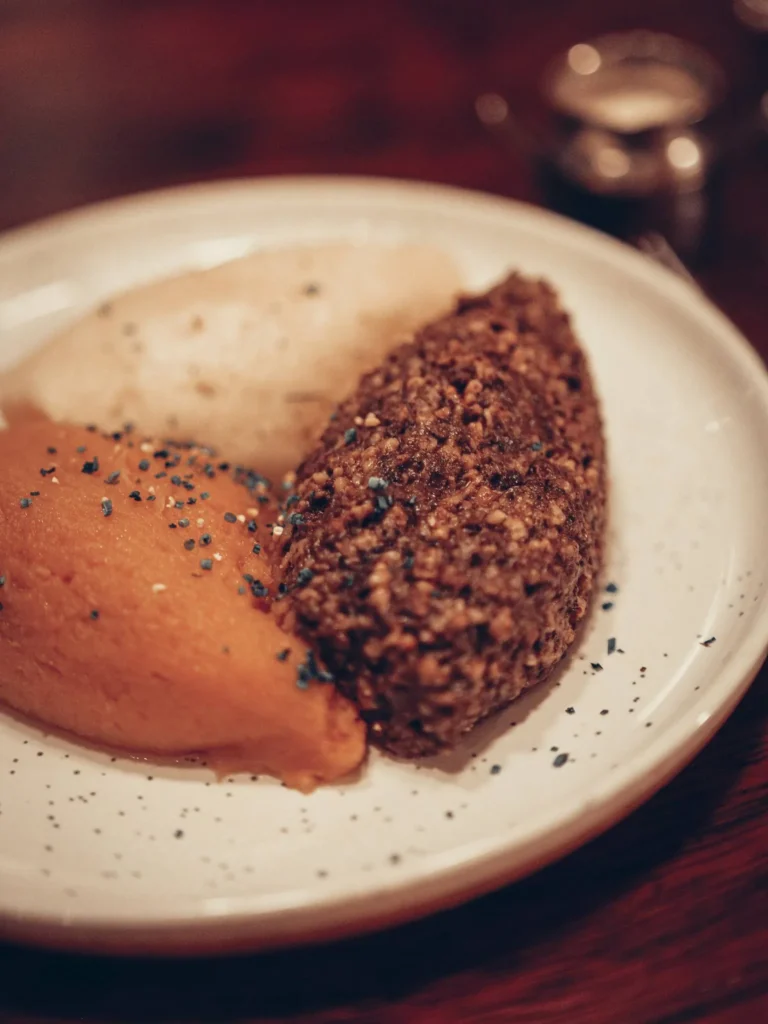
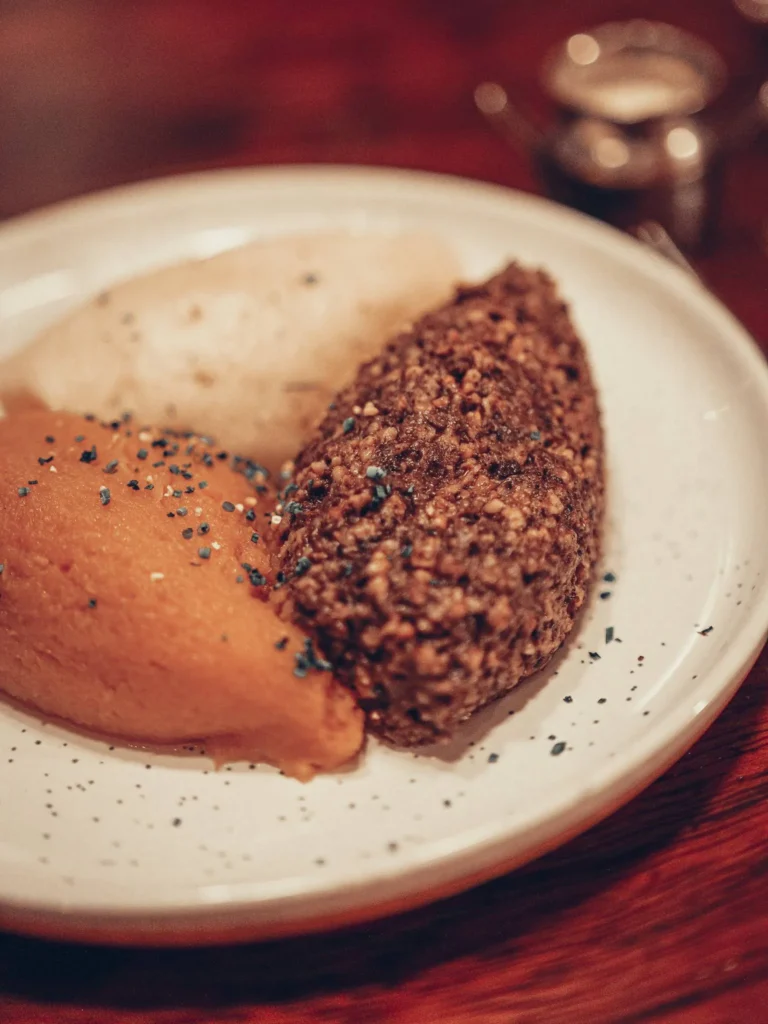
We both had the Stravaigin’s Own Haggis, mine the traditional one, Caroline’s the vegetarian, with neeps and mash tatties. It is the house dish, the one carrying the restaurant’s name on the menu, and that is a statement when you run a contemporary Scottish kitchen.
Haggis starts every service with a reputation problem, and you do not need the ingredients read back to you to know why. You have watched people who grew up two streets from a butcher that makes a good one order the fish and chips instead. I had tried one in Edinburgh on the previous trip and come away thinking I had understood the idea without wanting a second go. Polite, but unconvinced, let us say.
This one is superb. Heavily spiced, properly peppery, and above all full of flavour, exactly in line with the starters. It changed my reading of the dish completely, to the point where I now wonder whether the Edinburgh problem was simply an average haggis, competently served. Caroline says the same about the vegetarian version, which was not a given either.
And there is one thing I want to say, because it explains half the good surprises of the trip. We did not go to Scotland expecting to eat well. It was not in the contract, we came for the landscapes. That very low expectation is the best ally going: the reverse of the film everyone swore was fantastic, which can then only disappoint. You turn up with nothing built up in your head, and you land on cooking that is honestly very good.
Is haggis actually Scottish?
Having just made my peace with the dish, I wanted to know where it came from. The answer is more awkward than expected for national pride: the oldest known recipe that looks like haggis is not Scottish. It is called hagese, it sits in the Liber Cure Cocorum, a cookery collection written around 1430 in north Lancashire, so in England.
What is Scottish is what was made of it. Robert Burns writes the Address to a Haggis in 1786 and crowns it “great chieftain o the puddin’-race”, which remains the finest compliment ever paid to offal. That poem is what puts haggis at the centre of a Burns supper and turns it into a national emblem. Scotland did not invent the dish, it gave it a reason to exist, which is a good deal stronger.
Last detail, and it always goes down well at the table: traditional haggis has been banned from sale in the United States since 1971. Not out of ill will towards Scotland, but because a federal rule bars livestock lung from human food, and lung is in the recipe. Americans eat reformulated haggis as a result, and Scottish producers are still negotiating to get the barrier lifted.
What it costs, and what to expect
No pretending otherwise: this is not a cheap address. You may well have Glasgow filed as the city you name when you want to argue that eating out has not gone mad everywhere, and that is a fair filing. We came at it from the continent, with a different set of numbers in our heads, and the bill landed differently on us than it will on you. Snacks and sides run £5 to £10, starters from the small section £8 to £14.50, and the bigger section goes from £18 for the vegetarian to £38 for the aged ribeye. The house haggis comes in two sizes, so you can take it as a starter or as a main, and it is the right way into the menu.
The café-bar upstairs is simpler and cheaper than the restaurant, which is worth knowing if you want to try the place without putting a whole evening’s budget into it. Book for the weekend, seriously: thirty years a West End institution, and it fills up fast.
Who we would send to Stravaigin
Anyone arriving in Scotland convinced they are going to eat badly and rather hoping to be proved wrong. The curious who have never quite dared the haggis and want the best possible conditions to try it. Vegetarians, genuinely, because the menu treats them as customers rather than as an obligation. And anyone who likes a restaurant with a soul and a few staircases. If you want somewhere quiet and cheap for a Tuesday night, though, this is not the night.
Practical information
PS: if anyone from Stravaigin passes through here, I have one question and it haunts me. When are the chilli mussels coming back?