



So, let’s set the scene right away, because this one memory drives the whole article. End of January, a Saturday night, we were driving towards Portugal with Édouard (our Hymer B544, a 1999 coachbuilt, the kind of vehicle that has a soul and a mileage)… and then the clutch went. In the middle of nowhere. You find yourself on the hard shoulder, your home on wheels broken down, in a country where you don’t speak the language, on an evening when absolutely everything is shut. And the only question that matters at that moment is: what does my insurance cover, right here, right now, for real?
We’ll come back to that (spoiler: the answer calmed me down a bit). But let’s start at the beginning, because that’s where it all comes from: a van you live in is not insured like a car.
Why a lived-in van isn’t insured like a car
The thing we all forget at first is that a converted van is two things at once: a vehicle AND a home. You’re carrying your kitchen, your bed, your electrical setup, sometimes 450 W of solar on the roof and a leisure battery worth a small fortune… and a standard car policy only sees a chassis. Everything you’ve built inside? As far as it’s concerned, it doesn’t exist. So on the day of a claim, you can end up paying for everything yourself while you thought you were covered.
Third-party cover remains the minimum legal requirement, just like for any motor vehicle. It covers the damage you cause to others, full stop. It won’t repair your van, your fridge, or the work laptop tucked in the cupboard. For a vehicle you live in, stopping at third-party is a bit like insuring a house only against it falling on the neighbour.
And then there’s the touchy subject: how you use it. Plenty of “leisure” or “touring” motorhome policies are built for the person who takes the van out three weekends and a fortnight in August. If you live in it year-round, you have to say so. The classic fear is: “if I declare I live in it, they’ll refuse me or void the policy.” Honestly? We declared full-time use and it was no problem at all. The real danger is the opposite: an undeclared touring policy that’s worthless precisely when you need to claim. So declare your actual use honestly, don’t hide it, that’s the real protection.
Third-party, third-party plus, or comprehensive: which one for a van you live in?
Between bare third-party and full comprehensive there’s a whole gradient, and the right level depends mainly on two things: the value of your vehicle and whether or not it’s your main home. To help you find your way without ploughing through ten quotes sideways, I’ve summed up the three main tiers and what they actually cover.
What each motorhome insurance tier covers
| What is covered | Third-party | Third-party plus | Comprehensive |
|---|---|---|---|
| Damage caused to others (third-party, compulsory) | Included | Included | Included |
| Theft and fire | No | Included | Included |
| Glass / windscreen | No | Included | Included |
| Damage to YOUR van (at-fault accident) | No | Depends on policy | Included |
| Conversion and contents (kitchen, electrics, beds) | No | Optional | Must declare |
| Personal effects and work equipment | No | Optional | Optional |
| Breakdown, recovery, towing | Limited | Included | Nationwide |
| Payout on a total loss | — | Market value | Agreed value |
Indicative table: always compare the exact cover and limits on each quote. For a van lived in year-round, the detail that matters most is usually the accommodation cap and proper long-distance European recovery.
What changes everything for a leisure vehicle are the bits of cover you never look at until you need them: the contents and conversion cover (so your kitchen, your sleeping area and your electrical setup are paid out, not just the bodywork), personal effects cover (the digital nomad’s work kit, the bikes, the scooter), and the value paid in the event of a total loss. On a newer vehicle, push for agreed value cover rather than market value. On an older one like Édouard, you negotiate an agreed value at the outset, because the trade book value of a 1999 Hymer doesn’t reflect what the thing is really worth once it’s been converted and looked after.
The last lever, and not the least: the status of your vehicle. Getting your van reclassified by the DVLA as a “Motor Caravan” (the body type listed on your V5C) helps prove it’s a genuine leisure vehicle rather than a plain panel van, which is what specialist insurers want to see; the rules tightened back in 2019, it isn’t strictly compulsory, but it counts. Either way, the single most important word for someone living in their van is “full-timing”: specialist insurers (the likes of Comfort, Adrian Flux or Safeguard) offer full-time cover, and you MUST declare that you live in the van continuously, or a standard touring policy is voided the day you claim. If you convert your van yourself, keep your invoices and photos and ask for agreed value, so a self-build is paid out at a figure you fixed up front rather than a lowball market figure.
How much it costs (and how I cut my bill by two-thirds)
Right, let’s talk money, because that’s the real question on your mind. Motorhome insurance broadly runs from a few hundred pounds a year for third-party on an older vehicle, up to £1,000 to £2,000 or more for comprehensive on a big, recent coachbuilt with agreed value. The spread is huge depending on the age of the vehicle, your no-claims discount, where you park it overnight and the cover you pick, so be wary of “from £X” headlines: only a quote on your actual vehicle means anything.
And here, against all odds, I’ve got some good news from experience. By going nomadic, I cut my bill by two-thirds. Before, it was the classic combo: house + car + scooter, three policies, three premiums. Switching to the van, I got rid of the car and the scooter, and only the motorhome (and the house) were left. I put everything with the same insurer, on comprehensive cover, and all in Édouard costs me about £551 a year. An older vehicle, a driver with no claims, one vehicle instead of three… vanlife, on this line of the budget at least, genuinely lightens the load. A small bonus of bundling, and it’s concrete: the more you pool, the more breakdown cover and leverage you get when you negotiate.
Breakdown cover: the day the recovery truck just dropped us at the nearest garage
Back to Andalusia. The clutch goes, Saturday night, end of January. You call out the recovery service, and here’s the first lesson: yes, they came. Phew. But the recovery just took us to the nearest garage… while we were aiming for Portugal, hundreds of miles away. The repair? Entirely on us. And the “accommodation” line of the policy was capped at around sixty pounds: let’s just say, given what came next, it wasn’t enough to pop the champagne.
Because when the garage says “two days,” you know how that ends… We spent a week in the only hotel in the small town, next to the garage, for about £600 out of our own pocket (and even then, the hotel was nearly empty, so it was cheap; over a long stay, aim for an Airbnb rather than a hotel, it hurts less). Cherry on top, the garage did a mediocre job and the clutch went again two months later: all told we racked up nearly two months in accommodation while it was being fixed. It was the savings we’d put aside before leaving that saved us, not the policy. If you take one thing away: make sure nothing stops your journey, because the mechanics couldn’t care less about your plans.
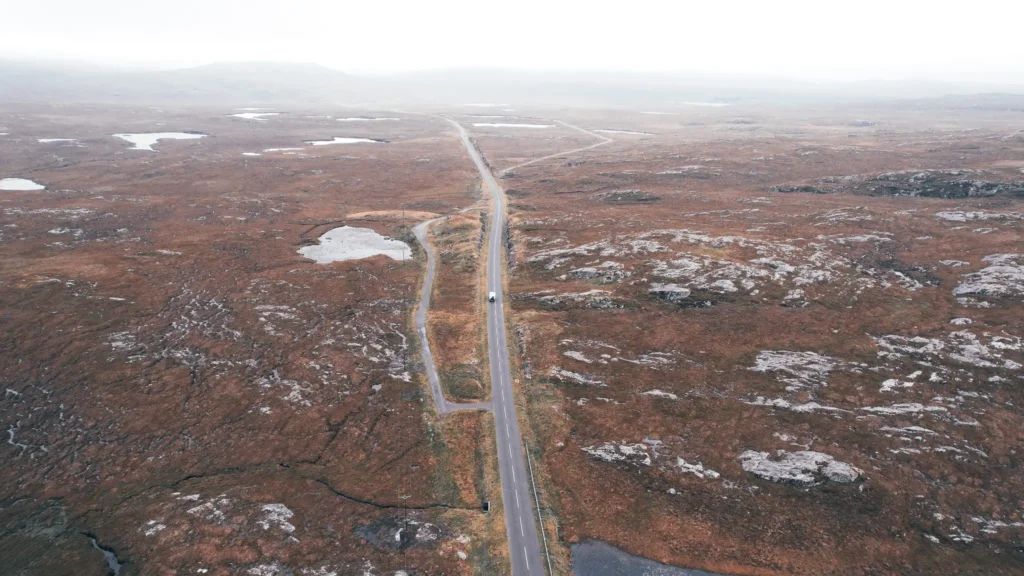
So what was insurance actually good for in the end? The recovery. And that’s already huge, because long-distance recovery can add up fast. But it taught me to read a policy differently. The three lines that really matter for someone living on the road are: nationwide breakdown cover (being recovered even from your own doorstep, with no mileage exclusion, because breakdowns don’t only happen at the far end of the continent), proper European long-distance recovery, and above all the cap on accommodation and ancillary costs, which in our case was laughable. The rest, the long bit about diagnosing mechanical faults and what to do, I’ll point you to our dedicated breakdown story, because here we’re talking insurance, not spanners.
Crossing borders: post-Brexit paperwork and cover
Within the EU and the EEA, most UK motorhome policies still include a stretch of European cover, but you must check the exact number of days and the territorial limits written into yours. And since 2 August 2021 you no longer need a Green Card to drive in the EU on a UK policy. What you DO need is a “UK” identifier (the sticker, or a number plate with the UK flag), plus a VE103 form only if the vehicle is hired or leased.
Here’s the harder ceiling nobody likes to mention: the 90/180 Schengen rule. On a UK passport you can only spend 90 days in any rolling 180 across the whole Schengen area; the days pool across every country and leaving doesn’t reset the clock. So “just living in Europe” in your van isn’t legally a thing for a Brit anymore, whatever your insurance allows. Morocco, outside Schengen, is a popular reset trip, but it’s non-EU: you’ll likely need a Green Card and border insurance bought at the crossing, because most UK policies don’t stretch that far. Wherever you head outside the EU, read the territorial limits in black and white and keep proof of valid insurance on you.
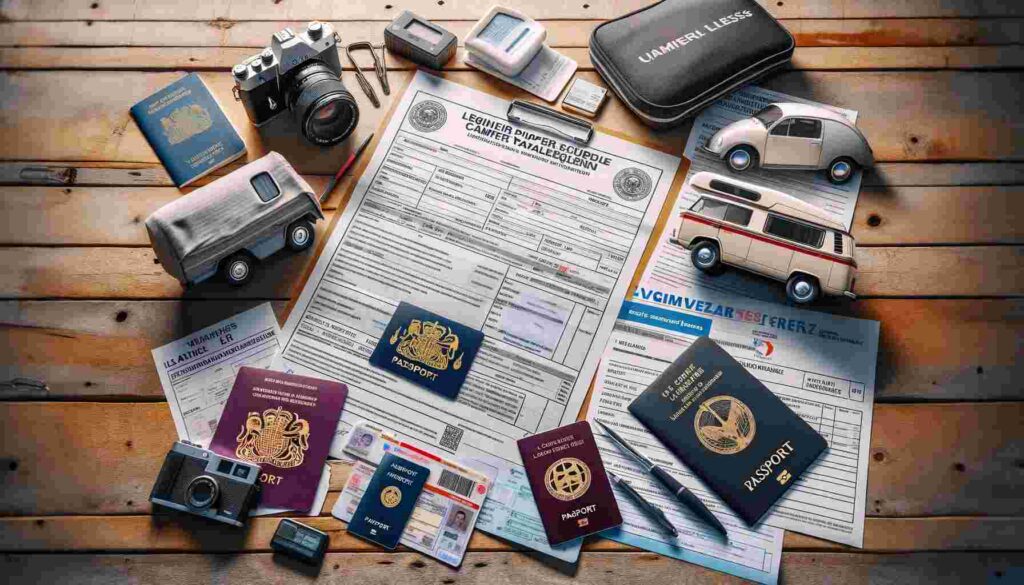
The lifesaving reflex that costs nothing: digitise all your documents. Certificate of insurance, V5C, accident report form, GHIC… scan the lot, store it in a Drive or OneDrive you can open offline, and keep a paper copy in the glovebox. The day you end up lost in a village with no signal and a mechanic who speaks neither French nor English (hello Andalusia, “el embrague está roto”), you’ll be glad it’s all in one place.

We're Caroline and Xavier
We got most of it wrong before we got it right. We share what actually holds up day to day in a van, and what we wouldn't do again.
Ce que vous souhaitez recevoir :
And what about health when you live on the road?
I’ll be straight with you, because it’s more honest: on the health front we got lucky, we never had to lean on anything for a real problem. So I’m not going to spin you a tale of heroic hospital dashes. But here’s how to cover yourself before you need it, because it’s exactly the sort of thing you don’t think about… until you do.
Here’s what throws a lot of vanlifers: in the UK, healthcare isn’t a policy you buy, it’s the NHS, and it runs on residency. There’s no monthly health contribution, no top-up “mutuelle” like on the continent, it’s free at the point of use as long as you’re ordinarily resident in the UK. Which raises the real question for a full-timer: how long can you be away before you stop counting as “ordinarily resident” and lose that entitlement? Worth checking before you disappear for a year.
For travel inside the EU, your card is the GHIC, the Global Health Insurance Card that replaced the old EHIC. It’s free from the official NHS website (never pay a third-party site for it), valid up to five years, and it covers medically necessary state healthcare in the EU at local rates. But, just like before, it does NOT cover repatriation, private treatment or anything non-urgent, so a proper travel insurance policy on top is non-negotiable.
Outside the EU the GHIC is worthless, and a hospital bill can reach eye-watering sums (a medical repatriation runs into the tens of thousands of pounds). For long trips, take out long-stay travel insurance and check the medical cap, the repatriation cover, and whether your work kit is included. And if you genuinely become resident in another EU or EEA country, look into the S1 form, which can have your healthcare costs covered locally instead. Teleconsultation, now totally normal, is also a lifesaver for a quick medical opinion when you’re three hours from the nearest surgery.
One last word, and it applies to the whole article: anything to do with your residency, your day-to-day social cover and a nomad’s tax position is a separate subject we cover in detail elsewhere. Here we’ve stuck to insurance and travel health. The rest is waiting for you in the dedicated articles, so we don’t mix apples and oranges (and, incidentally, so I don’t hand you an 8,000-word wall of text).
Vanlife insurance: your questions
Does a standard car policy cover a converted van?
No. A standard car policy only sees the chassis: it ignores your conversion (kitchen, electrics, beds) and your belongings. For a van you live in you need specialist campervan or motorhome cover with contents and conversion protection, and you have to declare those fittings to be paid out if something goes wrong.
Third-party, third-party plus or comprehensive for a van you live in?
It depends on the value of the vehicle and whether it's your main home. On a newer van, or one lived in full-time, comprehensive with agreed value makes sense. On an older one, third-party or third-party plus can be enough, as long as you sort solid breakdown and long-distance recovery.
How much does motorhome insurance cost?
Roughly from a few hundred pounds a year for third-party on an older vehicle, up to £1,000 to £2,000 or more for comprehensive on a large, recent coachbuilt with agreed value. Age, no-claims discount and cover make all the difference. Tip from experience: bundling your vehicle and home with one insurer often brings the bill down.
Do I have to declare that I live in the van full-time?
Yes, and it's the right move. "Full-timing" cover from specialist insurers exists exactly for this, and declaring continuous residential use is accepted. The real risk is the opposite: a standard touring policy that hasn't been told you live in the van is voided the day you claim.
What does breakdown cover actually cover?
Often less than you'd hope. Recovery usually takes you to the nearest garage, not your destination, and the accommodation cap can be tiny (ours was about £60). The lines to check: nationwide recovery with no mileage exclusion, proper European long-distance recovery, and a realistic cap on accommodation and extra costs.
Is the GHIC enough for health abroad?
In the EU, the GHIC (which replaced the EHIC) gives you medically necessary state healthcare at local rates, and it's free from the official NHS website. But it does not cover repatriation, private treatment or anything non-urgent, so a proper travel insurance policy on top is non-negotiable. Outside the EU it's worthless.
Should I reclassify my van as a "Motor Caravan" with the DVLA?
It helps. A "Motor Caravan" body type on your V5C proves it's a genuine leisure vehicle rather than a panel van, which is what specialist insurers want to see. The rules tightened in 2019 and it isn't strictly compulsory, some insurers will cover a "camper in conversion", but it does affect how easily you get specialist cover.
How do I insure a self-build conversion?
Declare the conversion clearly and keep your invoices and photos: that's what the insurer uses to set the value. Ask for agreed value so a self-build is paid out at a figure you fixed up front, not a lowball market figure. Specialist insurers such as Comfort, Adrian Flux or Safeguard are set up for this.
Do I still need a Green Card to drive in the EU?
No. The Green Card was scrapped for driving in the EU on a UK policy on 2 August 2021. You do need a "UK" identifier (sticker or a number plate with the UK flag), and a VE103 form only if the vehicle is hired or leased. A Green Card may still be required for some non-EU countries, such as Morocco.
How long can I stay in the EU in my van?
On a UK passport, 90 days in any rolling 180 across the whole Schengen area. The days pool across every country and leaving doesn't reset the clock, so you can't simply live in Europe full-time anymore. It shapes how you plan both your health cover and your trips.
Will I lose NHS access if I'm away a long time?
The NHS is based on being "ordinarily resident" in the UK, so a long, settled absence can put that entitlement at risk. If you genuinely become resident in another EU or EEA country, look into the S1 form, which can have your healthcare costs covered there instead. Worth checking before you disappear for a year.
What do I do if I have a claim abroad?
Report it to your insurer within the policy deadline, keep the accident report, photos and every receipt, and call your insurer's international helpline. The reflex that saves you: having scanned all your documents (certificate of insurance, V5C, GHIC) onto a cloud you can open offline.
To dig deeper into the topics that sit closest to your policy, I’ve set aside the articles that round this one out.

When a breakdown turns your struggle into an unforgettable road trip
Breakdowns are the worst thing that can happen during your road trip, so in this article, we give you all the tips to make this moment easier to accept!
Read more
Van safety: what scares us, and what really happens
Discover how to live in a van safely. Tips on choosing spots, using security gadgets, and preparing for any eventuality to travel peacefully.
Read more
Vanlife Taxes and Admin in the UK: The Complete Guide
Living in a van means almost total freedom, but it also involves juggling administrative obligations. From tax domicile to mail management, and specific tax implications, this guide helps you navigate...
Read morePS: to this day, my best-value insurance spend remains that Andalusian recovery… and my worst remains the £600 hotel bill that the policy covered to the tune of one pizza night. As they say, you always learn more on the hard shoulder than from the brochures.
Van life day to day, unfiltered
Two years of full-time van life, and the Algarve as our base ever since. We still hit the road, by van or otherwise, and we write up what we find along the way. An email when we have something to say, no more.
Ce que vous souhaitez recevoir :