


How we ended up crossing the Cairngorms park by van
Well, let’s be honest: on the map, while planning the Scotland road trip, we were looking at the east coast and the west coast, and the center was… a big “thing” in between, a bit vague. We knew there were the Highlands, we knew Inverness was to the north, and that was about it. Then Caroline spotted “Cairngorms National Park” while reading an article (I think it was on AllTrails) and asked the simple question: “Shall we go?”. Answer: yes, of course.
So here’s how we approached it. After the coastal stop in Stonehaven and Dunnottar Castle, we left the coast to head inland. The transition is clear: fewer people, fewer houses, just fields and a few cows. At one point, Caroline looked at me and said, “Don’t you feel like we’re getting more and more lost?”. Yes, totally, that’s exactly what we were looking for, nothingness, nature, hiking.
Plan your trip: United Kingdom
Tours, tickets and day trips in London.
5% off with code PLANETEDECAROT
Booked on Trip.com — partner link.
Compare rental companies and book at the best price.
10% off with code PLANETECAROLOC
Booked on Trip.com — partner link.
Provided by Holafly, our partner.
5% off with code LAPLANETEDECARO
Booked on Holafly — partner link.
The Cairngorms in numbers (to understand the scale)
A bit of numerical context, because we tend to underestimate the size of the park before going there:
- 1,748 square miles in area, the largest national park in the UK (twice the size of the English Lake District).
- 5 out of 6 peaks over 1,200 meters in Scotland are in the Cairngorms. The highest point within the park, Ben Macdui, reaches 1,309 meters, making it the 2nd highest peak in Scotland.
- The largest Caledonian pine forest in Europe (the native tree of Scotland, which has almost disappeared elsewhere in Western Europe).
- About 150 free-ranging reindeer, the only herd in the UK, reintroduced by a Swedish farmer in 1952.
- Dozens of whisky distilleries, the heart of Speyside, the most productive region in Scotland for single malt.
And in the middle of all this: us, in Édouard (our trusty Hymer B544), wondering if we would encounter a reindeer, a deer, a golden eagle, or just sheep. Spoiler: mostly sheep. Lots of sheep.
Our first stop: the isolated service-farm area in the heart of the park
We made our first stop at a service-camping area run by a local family (in the British sense of “farm camping”, meaning a farm that opens part of its land to vans and motorhomes). And there, the first cultural shock of the day. First glance, I said to Caroline: “Okay, this is definitely different from French service areas. This is impressive, right?”. We were on a huge, hilly piece of land, next to a field of sheep, with a few cows in the distance, and a small family house that seemed lost in the middle of it all.
For the logistics: huge land. When you don’t need services (water, waste disposal), you can literally set up in a secluded corner of the field, almost at the edge of the meadow. For about £15-25 a night depending on the chosen services, it’s an absolutely ideal vanlife option that changes everything we know in France.
Meeting Lauren, the owners’ daughter
Caroline went to meet Lauren, the owners’ daughter (yes, the name is important, the word was long mistakenly transcribed as “Lorraine” in our notes, we updated that). A long and lovely exchange. She told us about life here, why her family wanted to create this little campsite, how she grew up quite isolated in this area. And then she mentioned that it was time for her to find a job and leave the place to settle elsewhere with her boyfriend, to start her own life. A moment we found meaningful, without forcing anything. A thread of connection between a childhood in the moors and a life that will begin elsewhere.
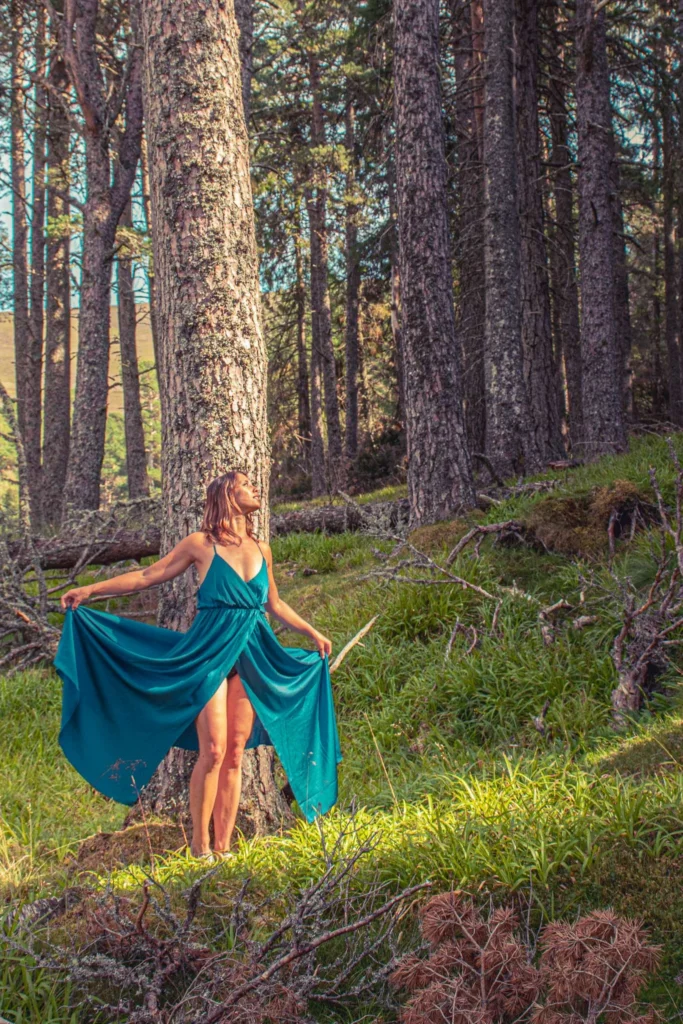
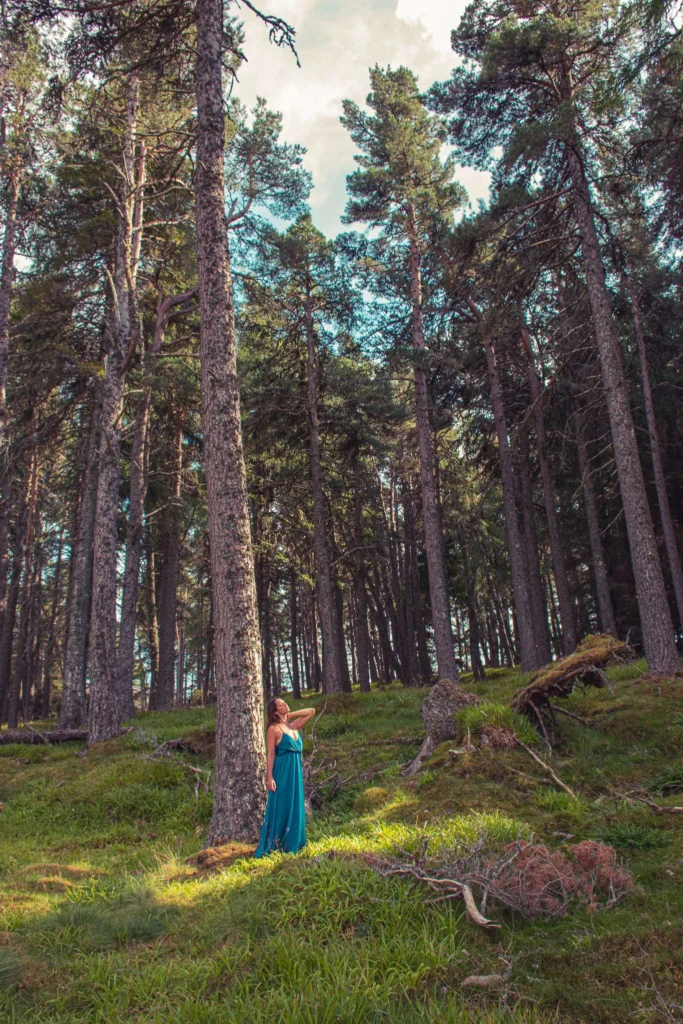
The animals’ outing at 8 PM: Jimmy, Dumbell, Echo, and the others
Lauren had told us before we settled: “at 8 PM tonight, animals are coming, we can pet them“. Caroline was thrilled, we set up for drinks to be ready. And right on time, the cohort came out. Hello to:
- Jimmy the donkey, with a spectacular mohawk (yes, a donkey with a mohawk, we laughed a lot),
- Dumbell, a tiny goat so funny that he almost stole the show from the donkey,
- Echo the pony, more discreet but very cuddly,
- a few ducks, some sheep, and total surprise: llamas that let themselves be gently petted.
Caroline summed it up: “It’s clear that this is a real little paradise for children, like me, who love feeding the animals.” Not a sentence, an official declaration. We stayed much longer than expected.
The heather covering the valleys
From the site, we could see in the distance a purple field covering an entire hill. Doubt, hesitation, then local confirmation: it was flowering heather. The purple flowers that blanket the hills of the Highlands in August, giving that “painting from another planet” vibe we associate with mystical Scotland. If you go in August, you’ll definitely come across it. It’s very pretty, peaceful, perfect for a break.
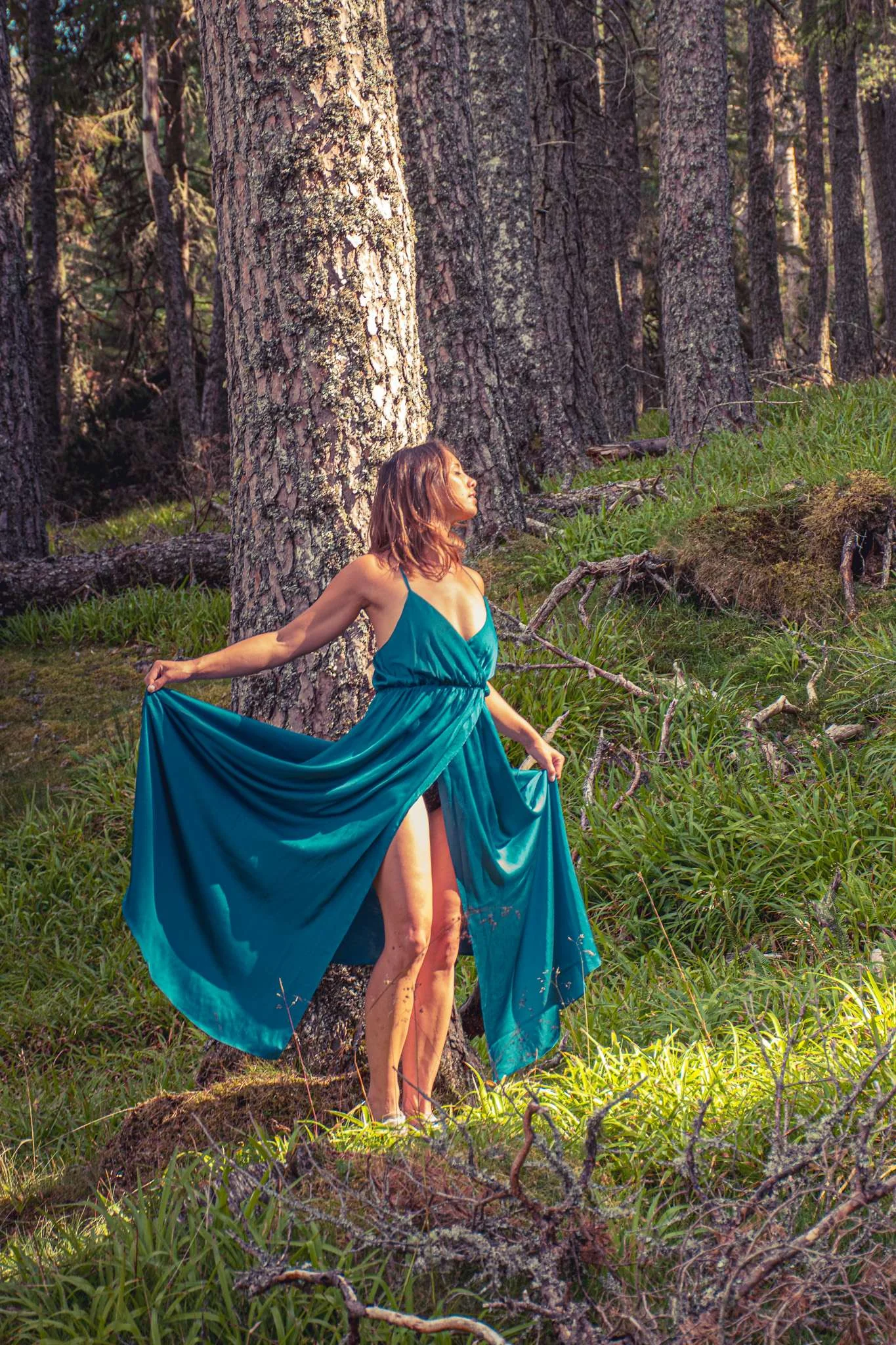
Drone attempt: too windy, photos only
A word for weekend videographers like us: the highlands of the Cairngorms are very windy. We tried to launch our drone to capture some aerial landscapes, but we ended up launching and landing it right away; it was impossible. The wind was far too strong. Result: only photos with the camera, no aerial shots of this beautiful place. A real heartbreaker at the moment, but in hindsight, it’s a good lesson to avoid crashing a drone (and we had already lost the previous one in Loch Ness, another story).
Stop at Balmoral: the royal summer residence
Resuming the road towards Balmoral, the historic castle in the Dee Valley, just a few kilometers from Ballater. One thing to know before coming: Elizabeth II mostly stayed there in the summer, and the weekend we passed by, she was there. Direct consequence: no interior visit, the castle was closed to the public that day, we could only see the outside.
Upon arrival, a pleasant surprise: a dedicated parking area for motorhomes, buses, and trucks. Five pounds is what you need to pay (to be reconfirmed on the day of your visit, the rate may change). We went up to the entrance, and two uniformed guards kindly let us shoot some footage… of the queen’s dog’s stuffed toys. A minimalist visit, but nice to check off.
Bivouac in the park: “We’re going to be invaded by sheep! Barbecue!”
We found an authorized spot for the next night near a parking area with a view of the park’s valleys (important point: wild motorized camping is prohibited in Scottish national parks, more on that below). While I was working on YouTube and TikTok posts in Edward, Caroline went outside. And there, the typical early morning scene of the Cairngorms: the sheep had completely taken over the road. Not one, ten, twenty. They had claimed the place, feeling completely secure, as if they were in the wild… because they were in the wild.
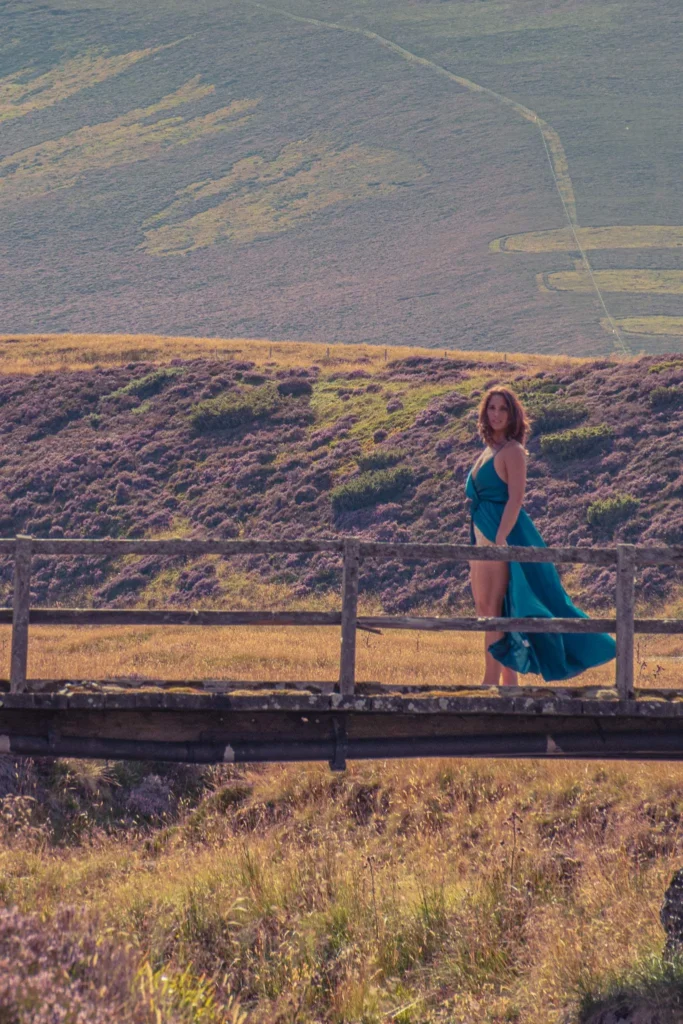
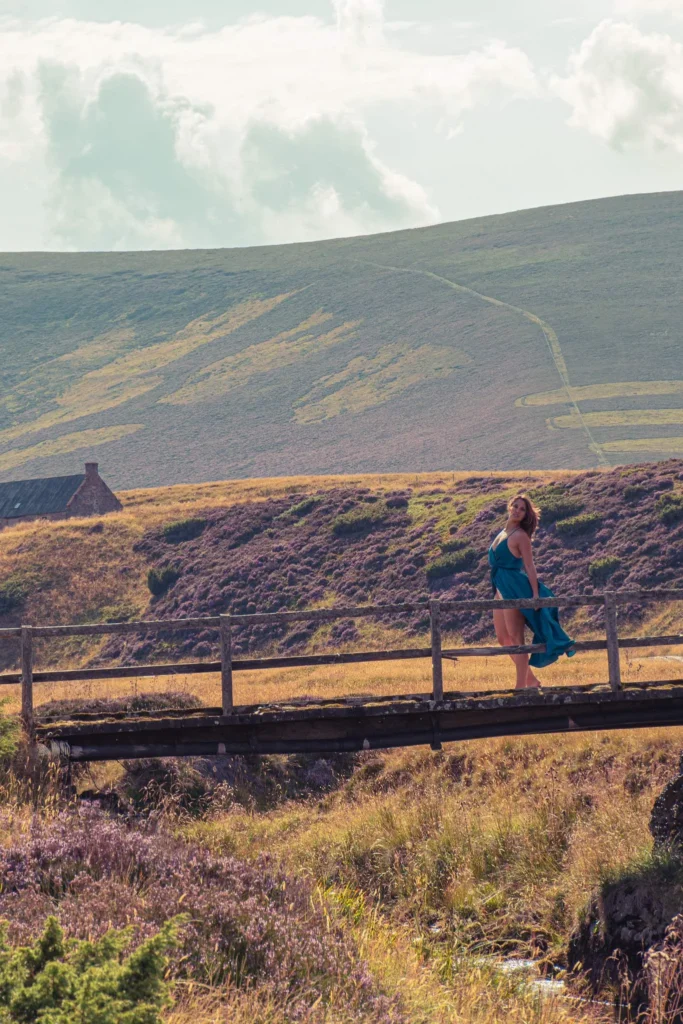
Caroline returned to Edward with a big smile and said to me: “You know what, Mr. Kitten? We’re going to be invaded by sheep!“. Instant response from me, without a second of thought: “Barbecue!“. Instant running gag. As the sheep approached (really), we cooked: a small stir-fry of white cabbage and grated carrots, turmeric and olive oil, and a little clove of garlic. Minimalist vanlife cooking, effective, that smells good throughout the van. We always have our little spices with us, which helps add more flavor to recipes with fewer than 3 ingredients.

Best UK SIM for a Scotland Road Trip: Highlands, Skye and NC500 Coverage
What internet connection to use during a stay in Scotland? Often questioned by travelers, we explored the various options available in Scotland in this comprehensive article. As always, each solution...
DiscoverBike ride: from the forest to the plains without a single tree
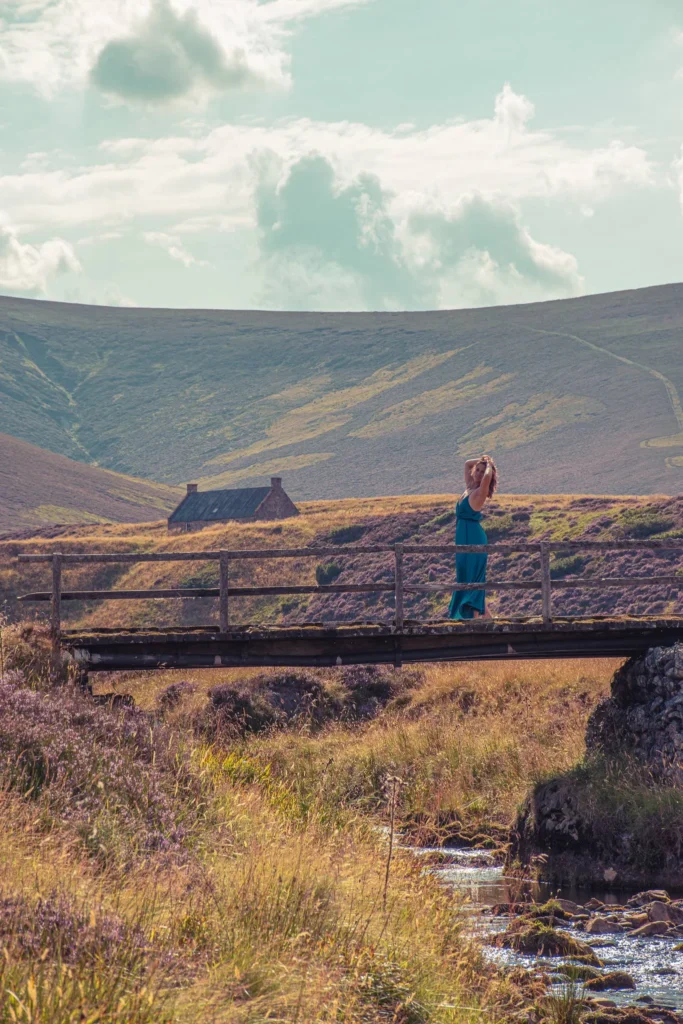
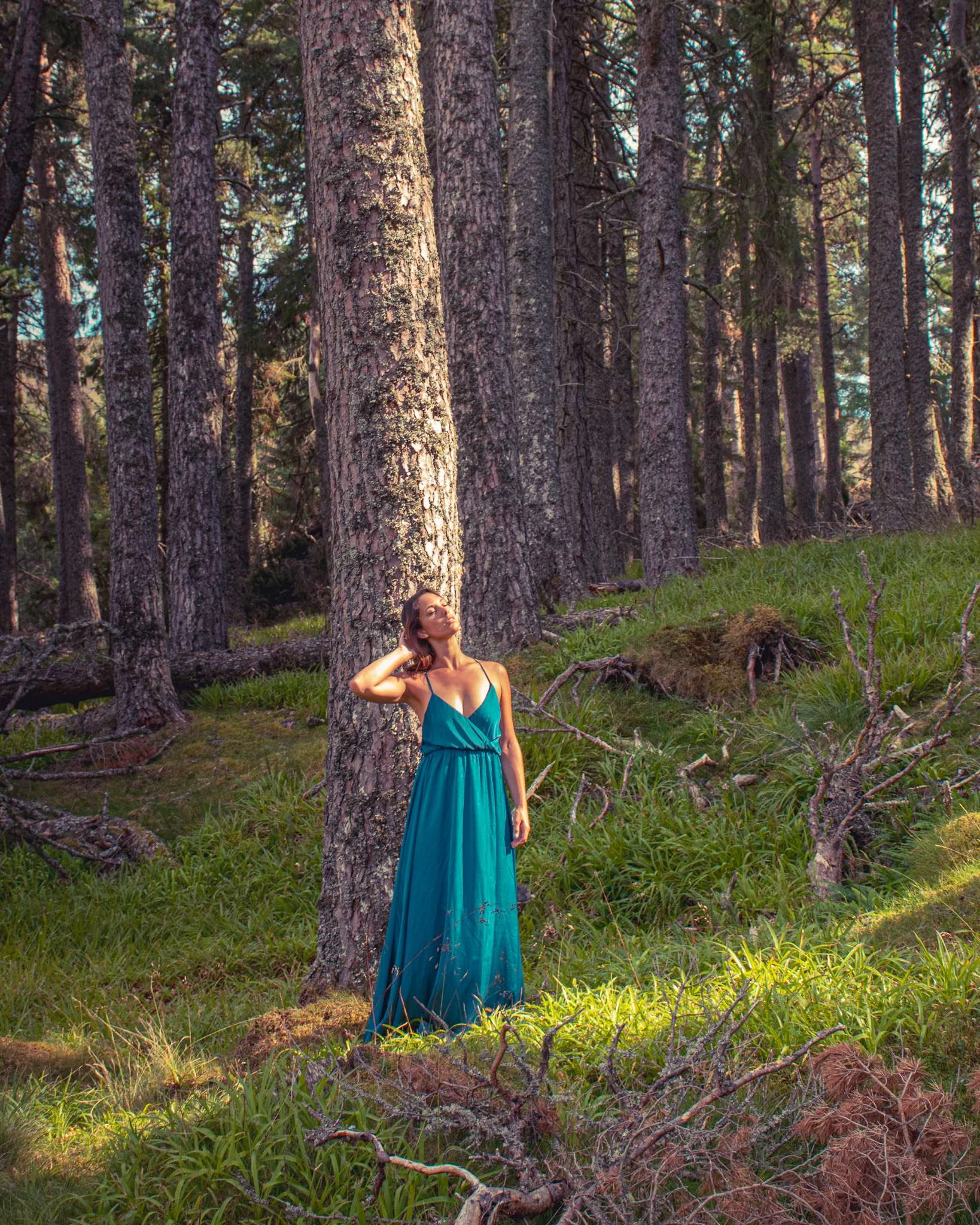
Later in the day, we took the bikes off the bike rack and set off for a ride. And the scenery that unfolds over the kilometers is striking: we go from a dense forest of Caledonian pines to completely bare plains, without a single tree, just heather, moorland, and a few sheep bleating “beeeh”. We only hear the wind and our own wheels on the pavement.
We found quiet spots, all alone (we didn’t meet anyone during 1.5 hours of riding), to take some photos. It’s exactly what we were looking for: silence, space, and a sky that takes up all the room.
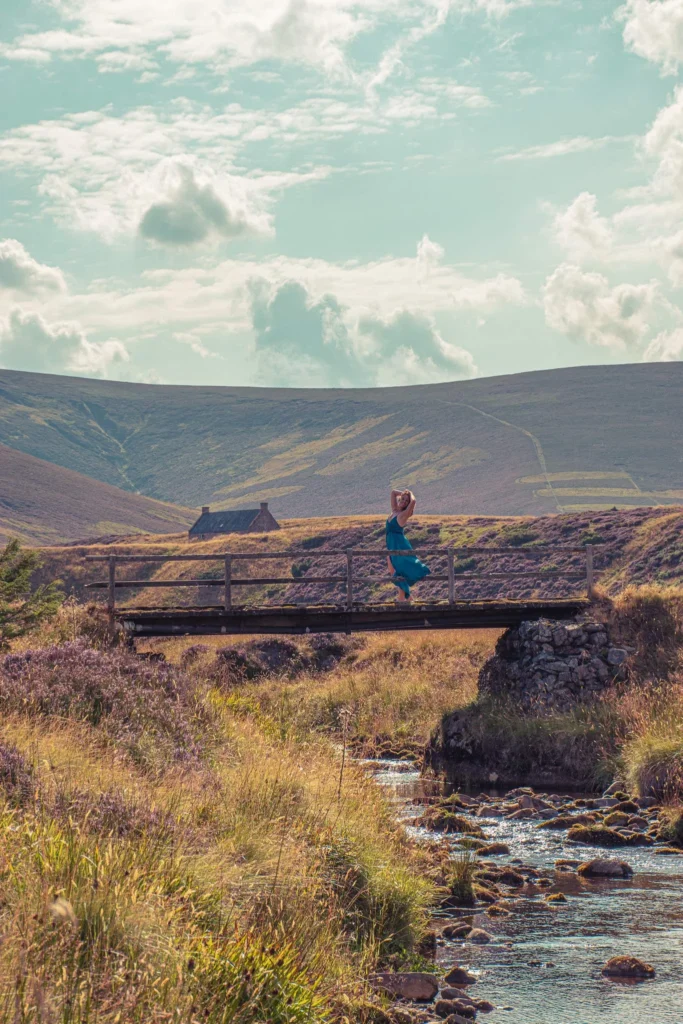
The stream “at the end of Scotland”
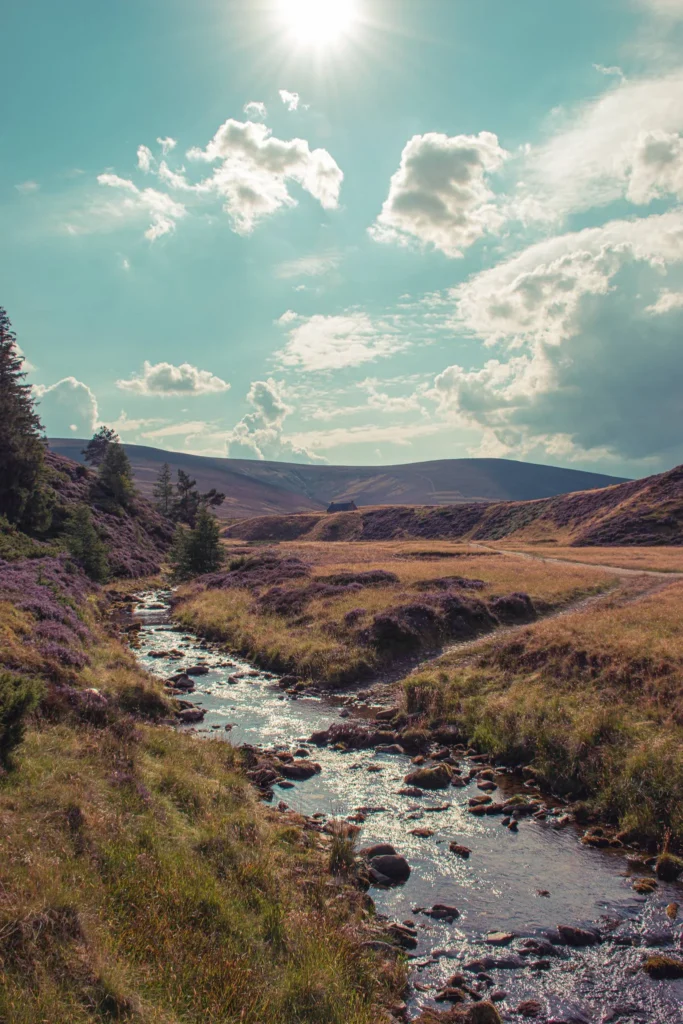
At the end of the bike ride, we arrived at what we dubbed “the end of Scotland”: a small shallow stream, clear water, flowing from a nearby spring. Caroline tasted the water: “Honestly, we could swim since it’s so warm, and I think we could even drink it.” She dipped her feet and little bottom in it, not cold at all, at a good temperature. An ideal pause in nature after biking.
(Honest note: we do not recommend drinking spring water without filtering it, unless you are in an isolated high altitude area and are sure of its quality. Caroline tried it, we didn’t get sick, but we can’t say it’s guaranteed.)
The mystical setting: the house of “Mr. All-alone”
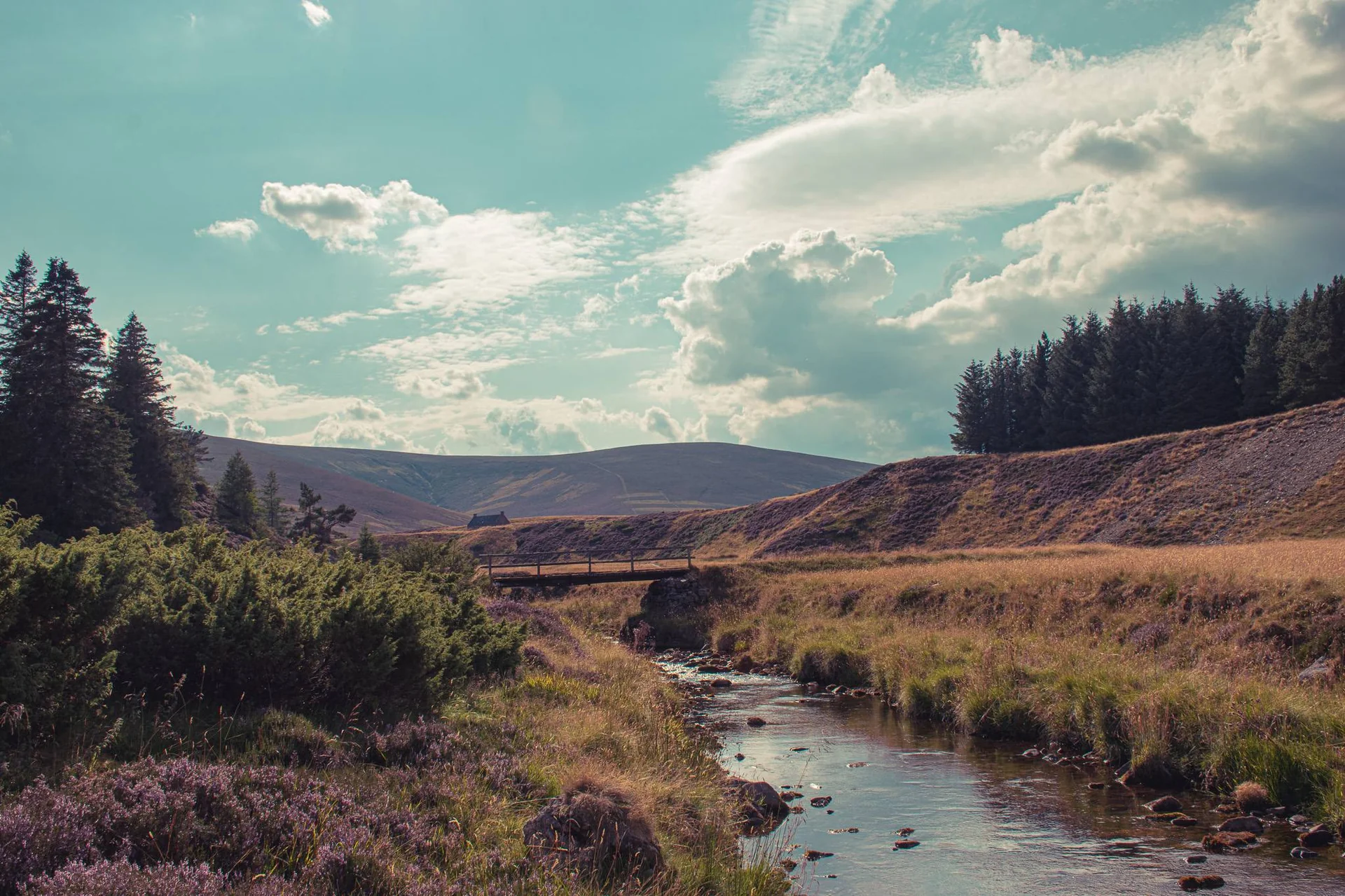
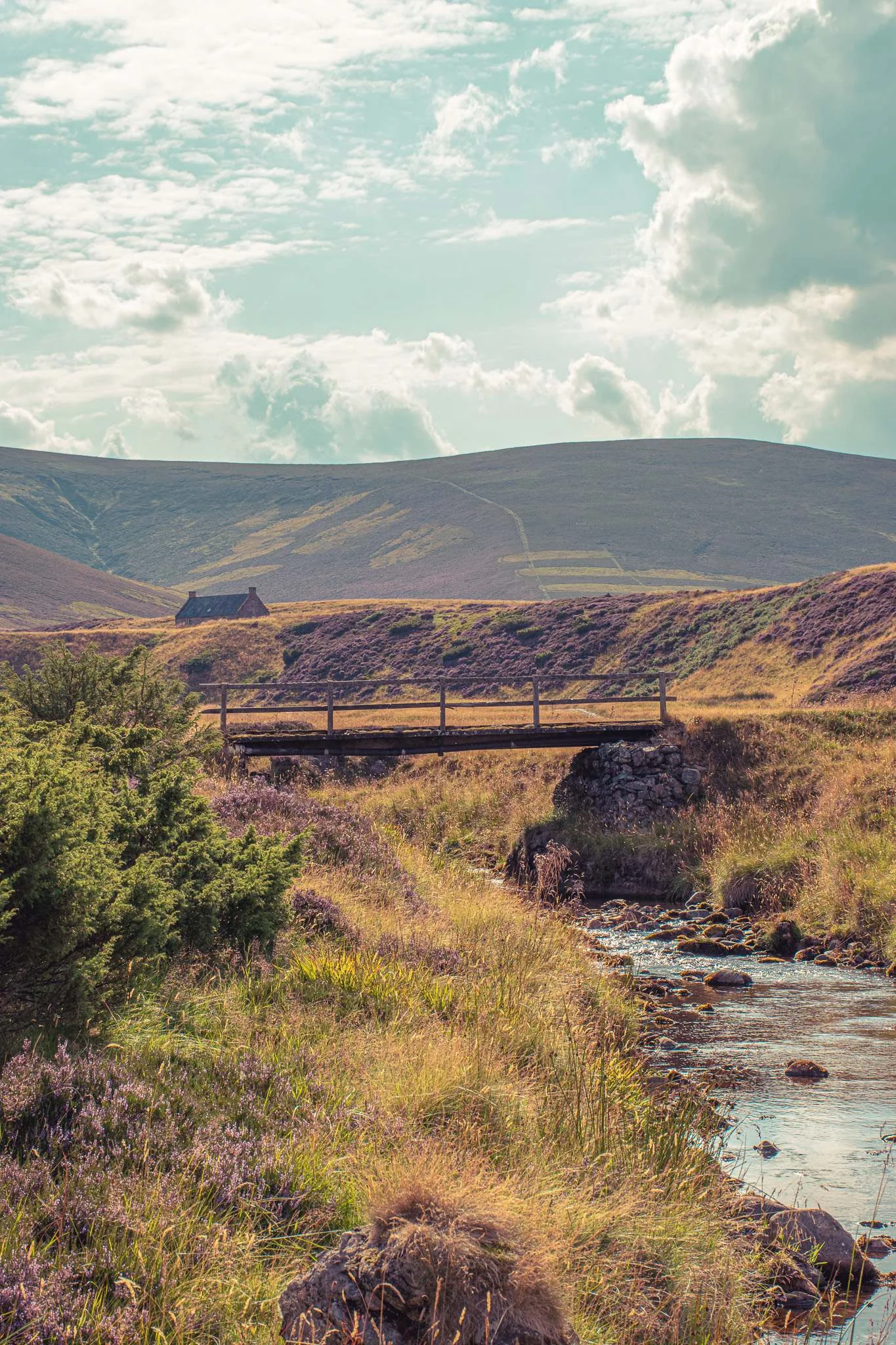
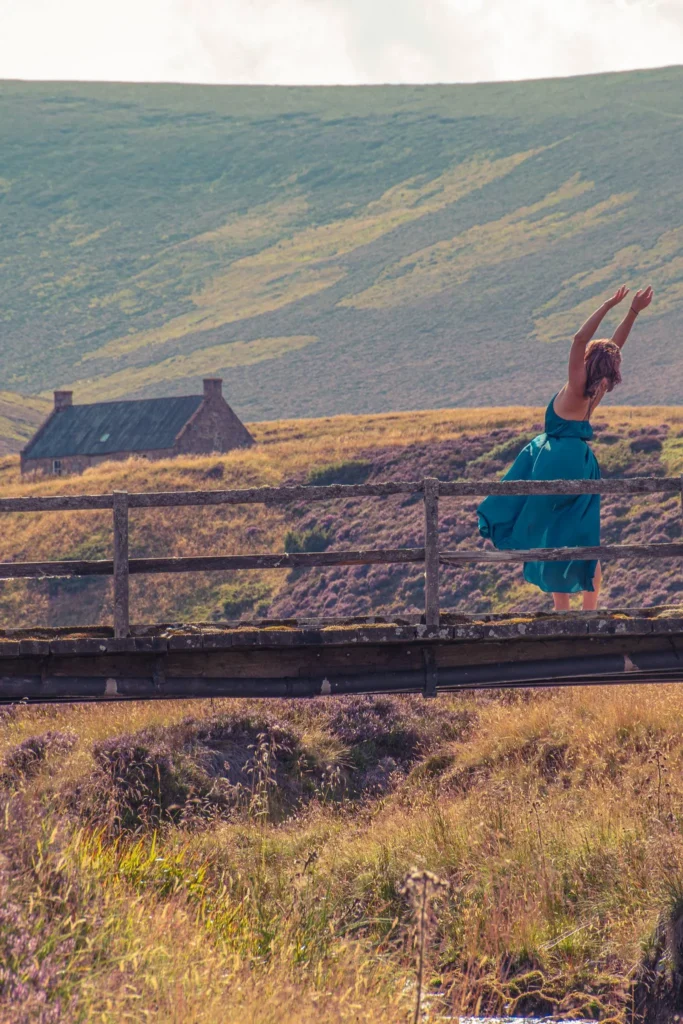
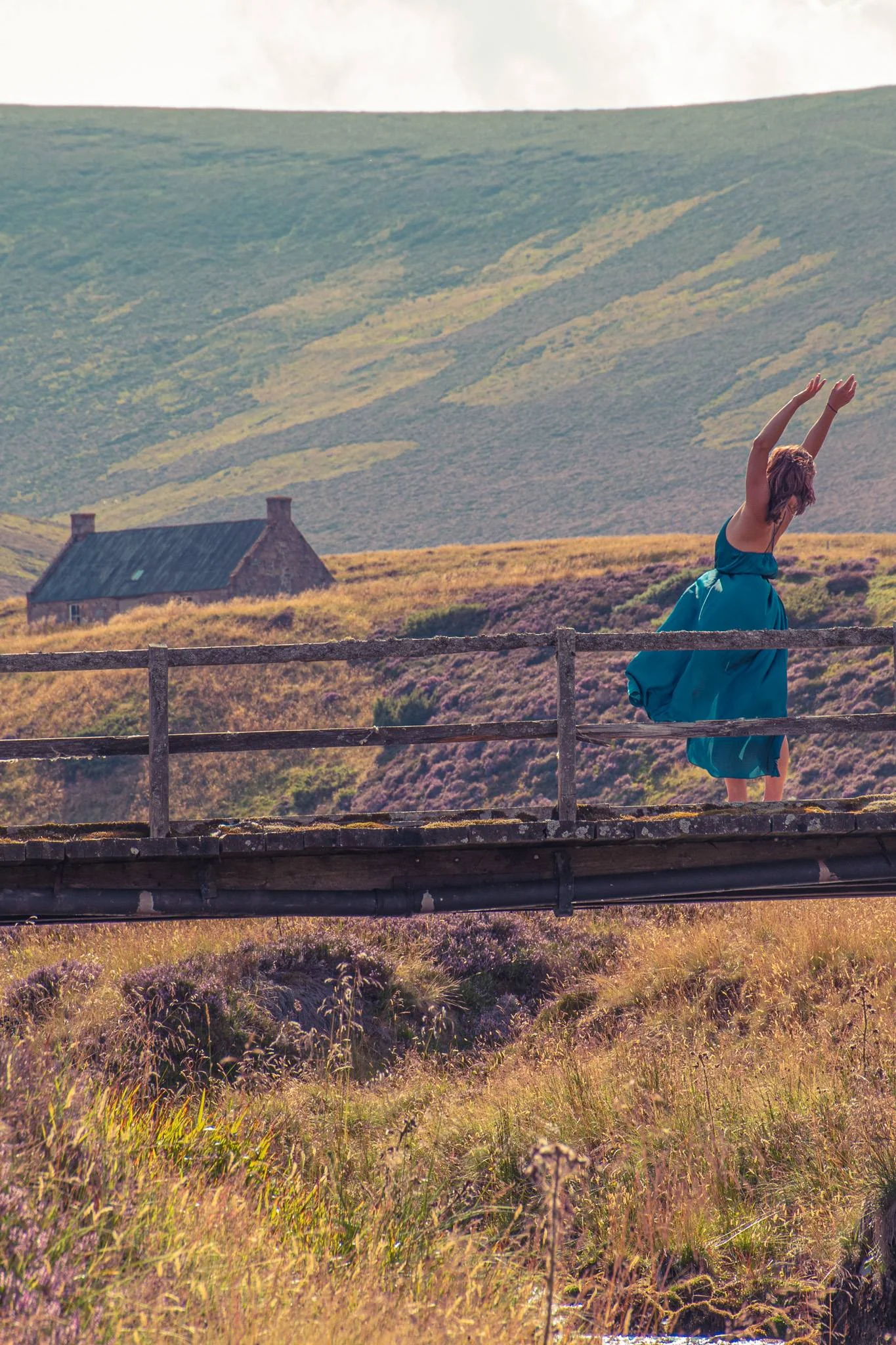
Well, at one point during the ride, we stopped dead in front of a panorama that summed up everything we imagined about Scotland. A bit of moorland in the foreground, a winding stream, a few fir trees, and in the distance, on a small hill… a lost house, all alone, with no neighbors. The scenery we all know from the internet or series (Outlander at the forefront), but in real life, right in front of us. That mystical side we associate with Scotland, we stumbled upon it on foot from our bikes, in complete silence, in the middle of nowhere.
In fact, we came for that, I believe. I came for that anyway: to see the houses of Mr. All-alone, I told Caroline. It became an internal expression that we passed around for the rest of the trip. A magical place, good for the soul, as they say.
The drought context: “the driest July in a long time”
One element to mention to situate what we saw: at the time of our visit, the UK had just been declared in a state of drought. It was a historically dry July, one of the driest in decades (to be confirmed with exact figures, that’s what was announced on site). For the Cairngorms, this means a drier landscape than usual, moors a bit more yellow than green, and higher temperatures than the average 15°C one would expect.
Unexpected consequence: we got serious sunburns in Scotland. Not just in the Cairngorms (the Highland Games in Ballater also got us burned), but it was in the park that we realized the classic Scottish weather of rain/mist is not a guarantee. Be sure to pack sunscreen and a hat in your backpack, even on a vanlife road trip, even in Scotland. And of course, a raincoat as well, because the next day can turn.
Activities not to miss in the Cairngorms National Park
The trails, the summits, the distilleries and the three villages that work as a base are all pinned on the map. Tap a marker for the details.
Highland : Places we can tell you about
Here's our selection of places in Highland: spots we've visited that might be useful to you. Use the list view to discover each address in detail, and export everything to add to Google Maps or your favorite GPS app.
| Place | Address | Download |
|---|---|---|
| Aviemore | Aviemore, Highland, Scotland | |
| Pitlochry | Pitlochry, Perth and Kinross, Scotland | |
| Ballater | Ballater, Aberdeenshire, Scotland |
| Place | Address | Download |
|---|---|---|
| Loch an Eilein | Rothiemurchus, Aviemore, Scotland | |
| Ryvoan Pass | Glenmore, Highland, Scotland | |
| Glenmore Forest Park | Glenmore, Aviemore, Scotland | |
| Cairngorm Reindeer Centre | Glenmore Lodge Road, Glenmore, Aviemore, Scotland |
| Place | Address | Download |
|---|---|---|
| Ben Macdui | Cairngorms, Scotland | |
| Cairn Gorm | Cairngorm Mountain, Aviemore, Scotland |
| Place | Address | Download |
|---|---|---|
| The Glenlivet Distillery | Glenlivet, Moray, Scotland |
| Place | Address | Download |
|---|---|---|
| Strathspey Steam Railway | Dalfaber Road, Aviemore, Scotland | |
| Balmoral Castle | Balmoral Estates, Ballater AB35 5TB, Royaume-Uni | |
| Royal Lochnagar Distillery | Crathie, Ballater AB35 5TB, Royaume-Uni |
More than 750 miles of marked trails. For beginners: Loch an Eilein (3 miles loop around a loch with a ruined castle), Ryvoan Pass, Glenmore Forest Park. For the experienced: ascent of Ben Macdui (1,309 m, the 2nd highest in Scotland), Cairn Gorm via the funicular. The park has 5 of the 6 Scottish peaks above 1,200 m, 4 of which are in the Cairngorms. Map + compass are mandatory off the classic trails (the weather changes quickly, signage is sparse).
Speyside is the epicenter of Scottish whisky. Several famous distilleries are in or on the edge of the park: The Glenlivet (the oldest legal distillery in Scotland, 1824), Tomintoul, Glenfiddich, Cardhu, Macallan. On the east side, near Balmoral: Royal Lochnagar, smaller and more intimate. Expect 1.5 to 2 hours per visit + tasting, £25-40 depending on the standing. Reservations recommended in high season.
The only free-ranging reindeer herd in the UK (about 150 animals), reintroduced to the Cairngorms in 1952 by a Swedish farmer. The center, near Aviemore, offers “hill trips” (guided walking tours on the pasture) to meet the herd, priced around £20 per adult. Very popular with families, reservations recommended. It’s the moment when you wonder if you are in Lapland or Scotland.
A line of historic steam railway that connects Aviemore to Broomhill, through the typical landscapes of Speyside. For train enthusiasts and children: it’s the “family” attraction of the park. Price around £17-22 per adult round trip. More details on strathspeyrailway.co.uk.
Several lochs accessible for kayaking and canoeing: Loch Morlich (with a sandy beach, strange but true), Loch Insh, Loch an Eilein. Rentals on site £20-30 for half a day. A nature + sport combo, perfect with children old enough to paddle.
Road trip and vanlife tips for the Cairngorms
And if your van has a few years on it, check the plate before you drive into Aberdeen for the big shop. The city has run a low emission zone since 2024, like Glasgow, Edinburgh and Dundee. It is diesel Euro 6 and petrol Euro 4, which in practice means a diesel registered before roughly September 2015 does not get in, and the cameras read your plate whether you live round the corner or not. The penalty starts at £60 and doubles on a repeat. Ballater and Aboyne are both outside it, so most of us just shop on the way in and never think about it again.
Highland : a glimpse of the weather
5-day forecast
Hesitating about leaving now? Here are the forecasts for the coming days.
Monthly climate
Let's be honest, we prefer beautiful sunny days. But if you enjoy cooler weather or rain, here's everything you need to find your perfect time.
| Month | Min temp | Max temp | Rain | Weather | Rating |
|---|---|---|---|---|---|
| October | 3°C | 8°C | 142 mm | 🌧️ | |
| November | -1°C | 3°C | 124 mm | ❄️ | |
| December | -0°C | 3°C | 112 mm | 🌧️ | |
| January | -4°C | -1°C | 230 mm | ❄️ | |
| February | -3°C | 0°C | 83 mm | ❄️ | |
| March | -2°C | 4°C | 126 mm | ❄️ | |
| April | -0°C | 7°C | 108 mm | 🌦️ | |
| May | 3°C | 9°C | 101 mm | 🌧️ | |
| June | 6°C | 13°C | 116 mm | 🌧️ | |
| July | 8°C | 16°C | 82 mm | 🌧️ | |
| August | 7°C | 13°C | 104 mm | 🌧️ | |
| September | 5°C | 11°C | 134 mm | 🌧️ |
And on the budget side, here is what a stop in the park actually costs.
Quota RapidAPI dépassé (limite par minute/mois). Réessayez plus tard.
FAQ Cairngorms National Park on a road trip
How many days to visit the Cairngorms National Park?
Can you wild camp freely in the Cairngorms National Park?
What hikes for which level in the Cairngorms?
Which whisky distilleries to visit in the Cairngorms National Park?
How to see the reindeer at the Cairngorm Reindeer Centre?
When to visit Balmoral Castle and what is the price?
Where to sleep in a van or campervan legally in the Cairngorms National Park?
What is the best time to visit the Cairngorms?
To go further on the Scottish road trip
Discovering Ballater on a road trip and in a van: Complete Guide
Prepare your RoadTrip to Ballater with our complete guide. History, climate, budget, where to sleep, we cover everything so you can make the most of your trip to Ballater.
Read more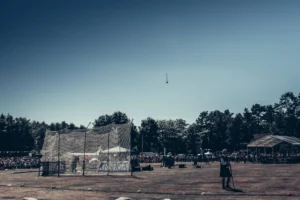
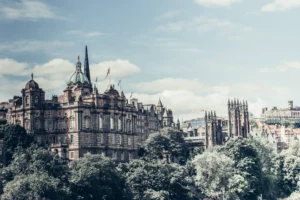
Discovering Edinburgh by road trip and van: Complete Guide
Discover Edinburgh in this travel guide for everyone, perfect for van road trip enthusiasts. Explore the history, budget, where to sleep, where to park, where to eat, and what to...
Read more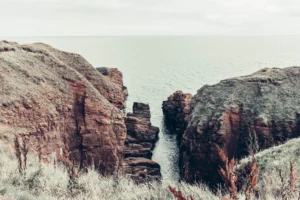
Discovering Arbroath on a Campervan Road Trip: Complete UK Guide
Red sandstone cliffs, the famous Smokie, Arbroath Abbey and a working harbour. Our UK guide to Arbroath by campervan, with overnight spots, Smokie tasting and Angus coast walks.
Read moreOur PS that adds nothing
When we got home, Caroline asked, “Do you remember the name of the donkey?” I said, “Jimmy.” She said, “Are you sure? Not Jimmy the pony?” We spent half an hour reconstructing the cast (Jimmy the donkey, Echo the pony, Dumbell the goat). This proves that these animals meant more to us than we wanted to admit. Barbecue? No. They’re just nice.

We're Caroline and Xavier
We drive to a place, stay long enough to get it wrong a few times, then write the guide we wish we'd had: parking, timing, what's worth the detour.
Ce que vous souhaitez recevoir :