


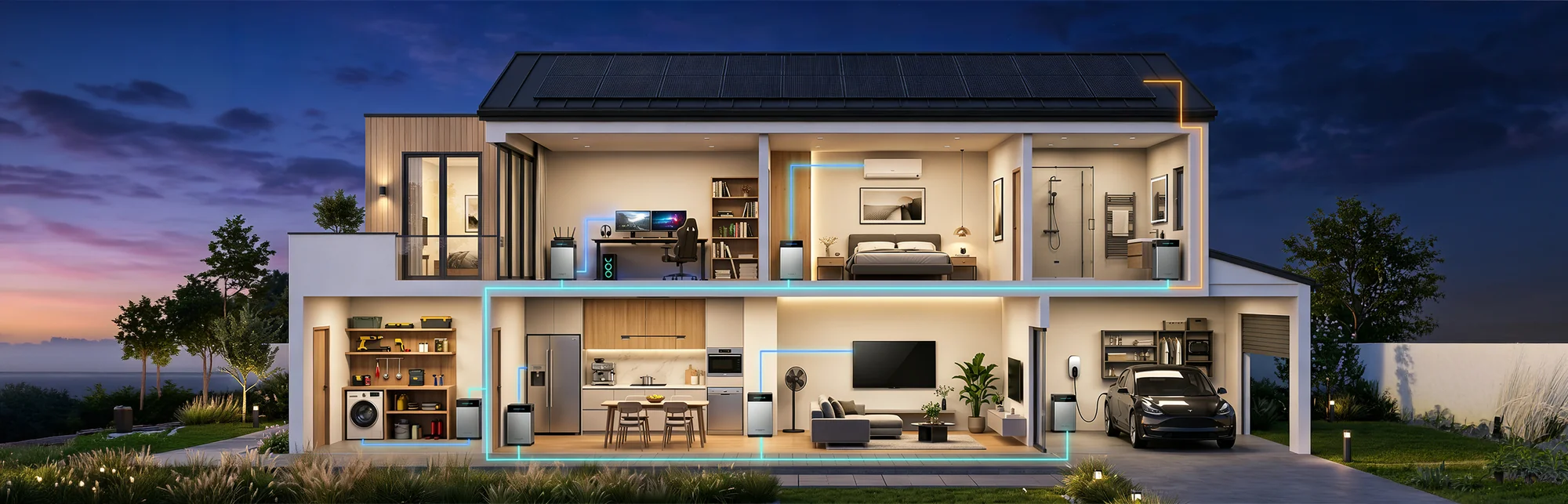
Here are two devices that I’ve kept in the back of my mind for a while, because they represent a real turning point for AllPowers, the battery brand we’ve been working with since 2024. Until now, we mainly talked about portable power stations to take anywhere. Now, we’re completely changing direction: the BS2500 and BS5000 are batteries that stay at home, plugged into the grid, to help you during power outages and reduce your electricity bill. Two sizes, one idea, and plenty to say about them.
I’ll be honest with you from the first line, because that’s the rule here: I don’t have these two machines in my hands yet. What follows is therefore an expert opinion based on the technical specifications, visuals provided by the brand, and especially my experience with AllPowers batteries and everything related to energy, from portable to residential.
Let me tell you right away: I think it’s pretty great that AllPowers is getting into residential storage. It’s a brand I’ve liked for a while, with some small advantages that I haven’t always found elsewhere and products that seem well-finished. And above all, the more players there are in this niche, the more competition will push everyone to move and lower prices. This is exactly what has happened with portable batteries in recent years, and that’s good for us.
Before diving into the details model by model, here are the two home storage batteries put side by side, to see right away who targets what.
Comparison of ALLPOWERS BS5000 PRO Home Solar Storage System Plug & Play and ALLPOWERS BS2500 PRO Home Solar Storage System Plug & Play
£1999,00
See the product
|

£1199,00
See the product
|
|
|---|---|---|
| Capacity | 5,200.00 Wh | 2,600.00 Wh |
| Net Weight | 65.00 kg (143.30 lb) | 38.80 kg (85.54 lb) |
| Dimensions | 456 x 284.3 x 587.5 | 300 x 284.3 x 587.5 |
| Total Output Power | 2,400.00 W | 2,400.00 W |
| Application | ✓ | ✓ |
| Warranty | 5.00 an | 5.00 an |
| Life Cycles | 6000+ | 6000+ |
| Operating Temperature | -20 to +60 | -20 to +60 |
| UPS Function | ✓ | ✓ |
| Waterproof Rating | IP65 | IP65 |
| Number of MPPT Inputs | 2.00 | 2.00 |
| Maximum Input Voltage | 100.00 V | 100.00 V |
| Grid-Tied AC Output | 2,400.00 W | 2,400.00 W |

I'm Xavier
I test gear over months, in the van and day to day, and I say what doesn't work. If that saves you one bad purchase, leave me your address.
Ce que vous souhaitez recevoir :
Two batteries for the home, not for the road
Let’s start by setting the scene, because this is the point that is often misunderstood at first glance. More and more brands that used to make portable batteries are getting into energy storage for the home, simply because the price of cells has dropped and performance has exploded. AllPowers is exactly following this trend with its BS series.
Specifically, these two devices are designed to stay in place and connect to the grid. They play on two fronts: on one side, backup (if the power goes out, they take over), and on the other, smart self-consumption (they store solar energy during the day and release it at the right time to lower the bill). It’s a real energy management system, not just a big battery sitting in the garage.
What I find really practical is the dual use: you can reinject energy into your grid when it suits you, but also plug your most power-hungry devices directly into it. You can feel that the home storage category is becoming increasingly clever, and it’s the kind of flexibility that starts to change the game.
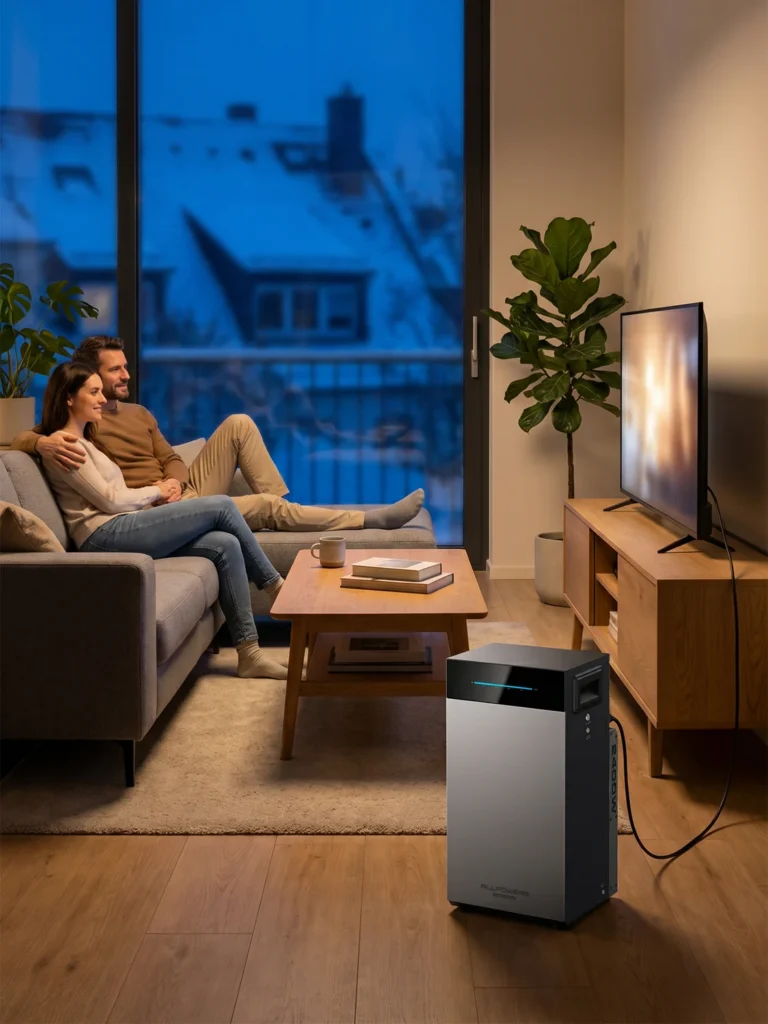
If you’re looking for something to power a fridge in a van or a cooler while camping, this isn’t the place: here, we’re in a different category, that of fixed equipment for housing.
AllPowers BS5000 PRO, the big backup block
The BS5000 PRO is the beefed-up version, the one that plays in the high-capacity backup arena (a segment still quite rare on the market, it should be noted). We’re starting with 5.2 kWh of base capacity, a serious value already, but the real argument is the extension: by chaining up to three units, we climb to 15.6 kWh of total storage. Enough to power an entire house for a good part of the day.
On the technical side, the specs are solid: 2,400 W of output power, two MPPT solar inputs, a semi-solid LFP battery rated for over 6,000 cycles, IP65 certification, and an operating range of -20 to +60 degrees. In other words, you can leave it outside without stress. And the switch to backup mode happens in less than 15 milliseconds, which means that in case of a power outage, your sensitive devices won’t even notice.
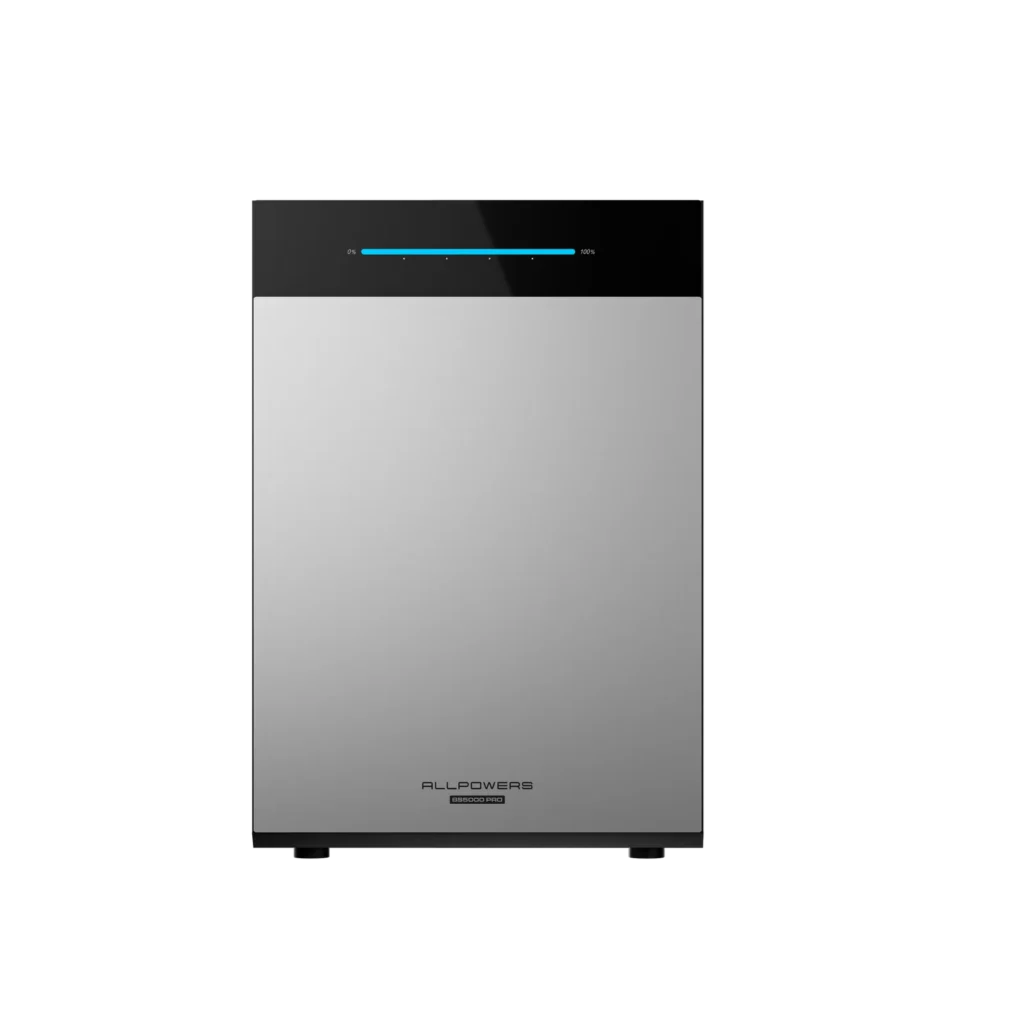
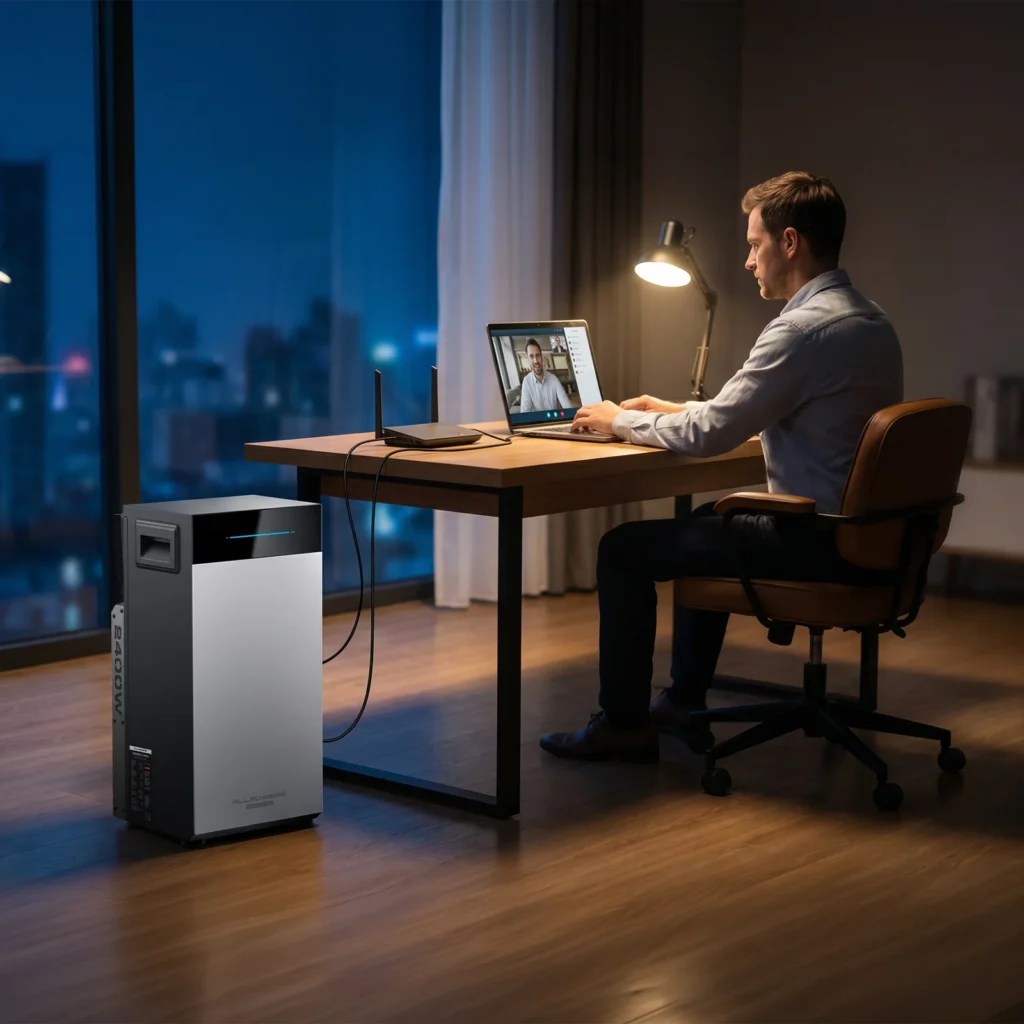
First impression from the visuals: I honestly find the device very nice for what it is. We’re more used to seeing storage blocks that come out of a boiler room than this kind of neat finish. The downside is the weight: 65 kg, we’re clearly dealing with equipment that you install once and don’t move again.
AllPowers BS2500 PRO, the accessible entry point
The BS2500 PRO is the little sister, and it’s probably through her that many people will start. Same philosophy of home storage connected to the grid, but in a more affordable format: 2.6 kWh of capacity, expandable to 7.8 kWh by chaining three units. Perfect for an apartment or a small house that wants to start without doing everything at once.
It retains the essential advantages of the larger model: 2,400 W output, dual solar input, IP65, UPS backup under 15 milliseconds, management via the app. The difference on the battery side is a standard LiFePO4 cell rated for up to 15 years of lifespan, while the BS5000 uses semi-solid. Nothing prohibitive, it’s just the logic of a range that is tiered.
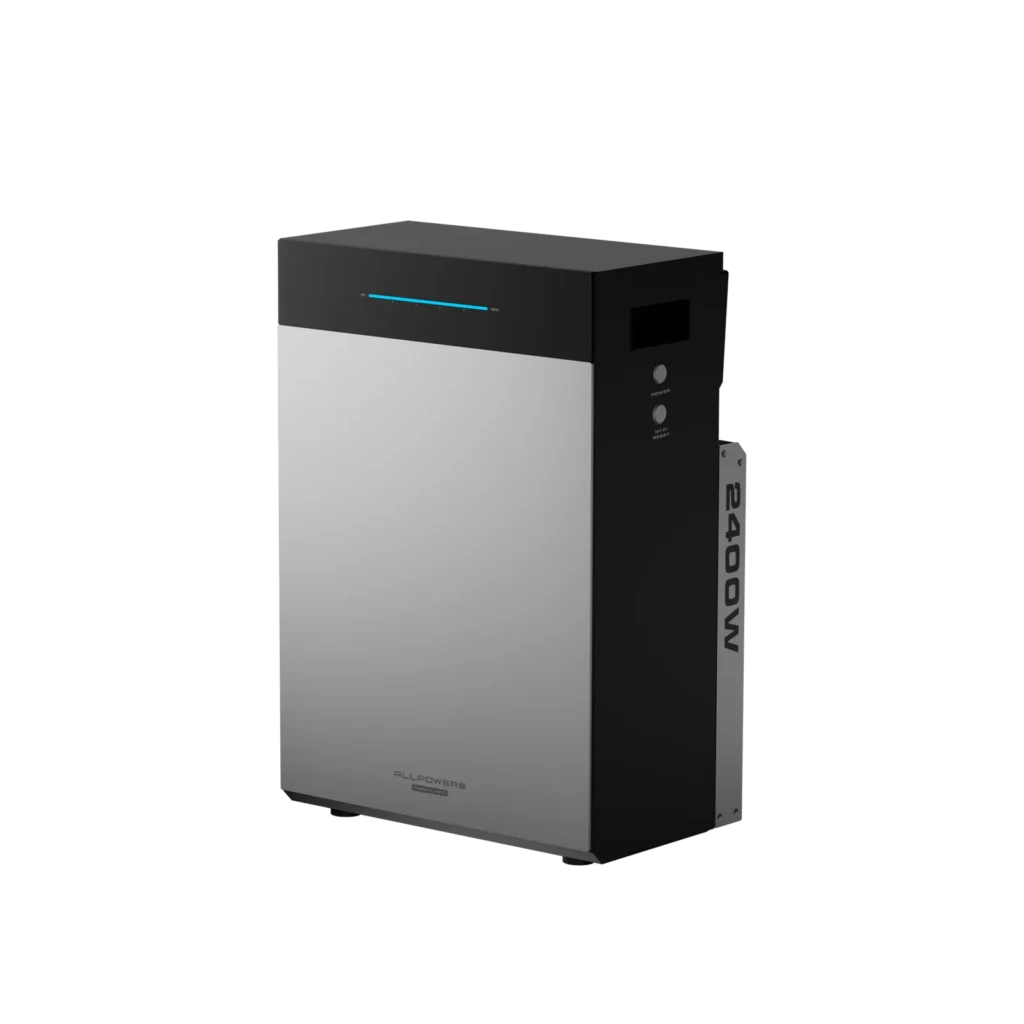
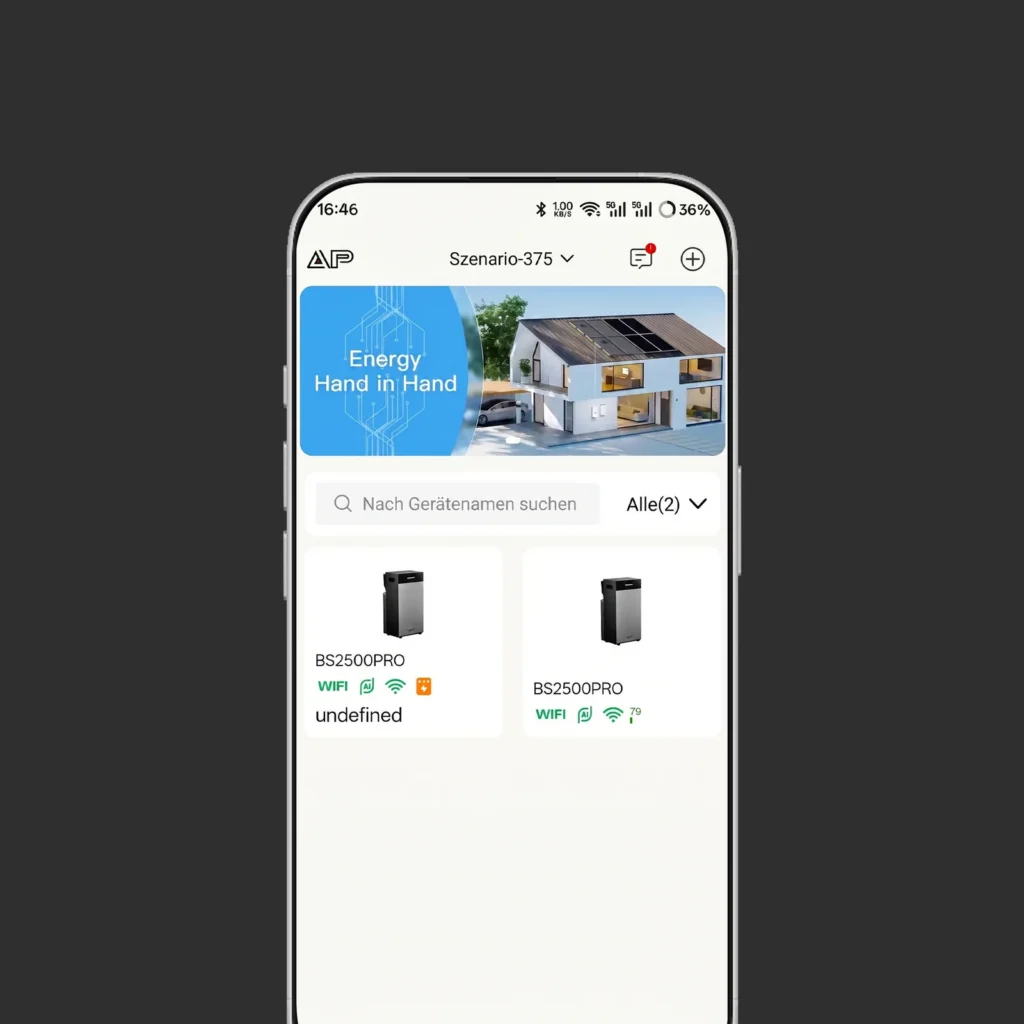
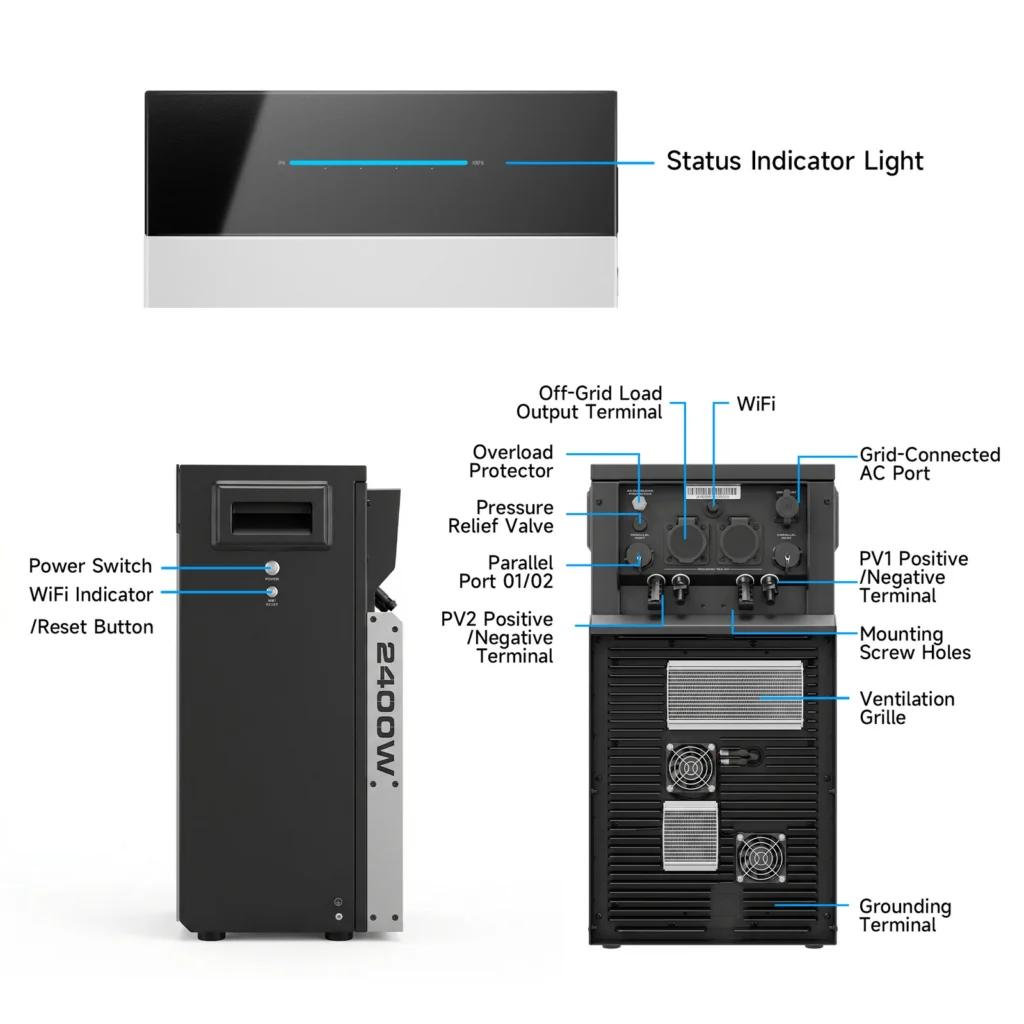
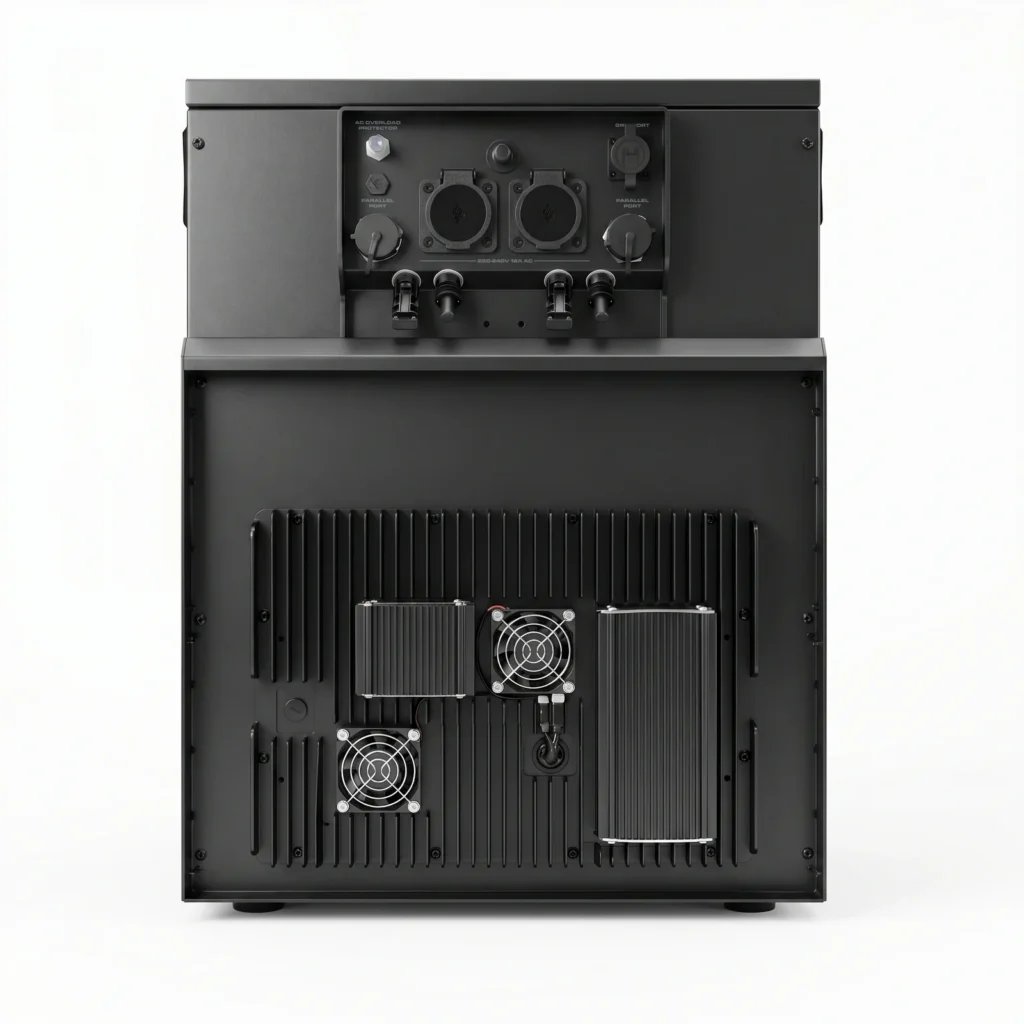
I also see more and more of these kinds of devices installed in garages, to give a boost to charging a car. Let’s be honest, 5 kWh won’t fill a car battery on its own, but as a supplement, it can be very nice. And of course, there’s all the interest in areas poorly served by the grid, where a power outage is not uncommon. On paper, AllPowers checks the right boxes for the category (grid connection, smart management, expandability), and it honestly makes me want to plug it all in for real. We had already had good surprises testing a portable Aferiy battery, so I’m curious to see what the brand delivers on fixed.
Our provisional verdict
On paper, the overall impression is frankly positive. AllPowers is entering the home storage market with a coherent and well-thought-out range: the BS2500 to start without breaking the bank, the BS5000 for a real backup system at home, and an expandability that allows the installation to grow over time.
The two product sheets are already online with us, with the partner discount applied directly via our link. So you can take a look at the details and the updated prices below.
No products found.
In the meantime, if the topic of energy at home or in the van interests you, we also discuss consumption in our file on air conditioning in camper vans, which raises exactly the same questions of autonomy. There you go, we’ll see you very soon for the next part.
Frequently Asked Questions about AllPowers Home Storage
Can you take a BS2500 or a BS5000 in a van or a motorhome?
No, and it's important to say this right away: these are not portable stations. These are home storage systems designed to stay in place (count 38.8 kg for the BS2500 and 65 kg for the BS5000). For travel, we stick to a classic portable station.
Do you need an electrician to install an AllPowers storage battery?
The solar side and sockets are Plug & Play. However, as soon as we talk about injection into the grid (connection to the panel and management with the meter), the intervention of an electrician is strongly recommended, and often required by local regulations. We will confirm the actual procedure during our field test.
Does the house remain powered during a power outage?
Yes, it's even one of the central arguments of these batteries: the UPS function switches to battery in less than 15 milliseconds. In short, your sensitive devices do not notice the power cut.
Can we start small and grow later?
Yes, and it's a real plus. The two models can be chained up to three units, which raises the BS2500 to 7.8 kWh and the BS5000 to 15.6 kWh. So you can invest gradually instead of laying everything out at once.
Can these batteries stay outside?
They are IP65 certified and advertised to operate from -20 to +60 °C, so they can handle the outdoors. Personally, I would still keep them protected from constant heavy rain, but on paper they are designed not to stay warm in a closet.
Our gear tests, in real conditions
Batteries, solar, conversion, security. What we found after months of real use, and what we would not buy again. An email when we have actually tested something, not before.
Ce que vous souhaitez recevoir :